
Primitive Country Kitchen Decor Ideas: 18 Cozy Farmhouse Looks
Primitive country kitchen decor ideas draw from pre-industrial American farmhouse life — the late 1700s through the early 1900s — to create a kitchen that feels handmade, weathered, lived-in, and connected to the land. Primitive country style celebrates imperfection, natural materials, muted earth tones, handcrafted objects, and functional simplicity, producing a kitchen that looks as though it has been used and loved by generations rather than assembled from a catalog.
The 18 primitive country kitchen decor ideas below cover statement furniture pieces, layered textures, gingham and plaid textiles, vintage accessories, antique furniture, enamelware, open shelving, natural materials, hanging pot racks, warm color palettes, country wallpaper, vintage linens, functional decor, distressed finishes, decorative shelves, cozy nooks, organic decorative items, and wrought iron lighting. Each idea includes specific products, sourcing tips, and styling guidance for building an authentic primitive country kitchen that balances rustic character with modern livability.
1. Choose a Statement Piece
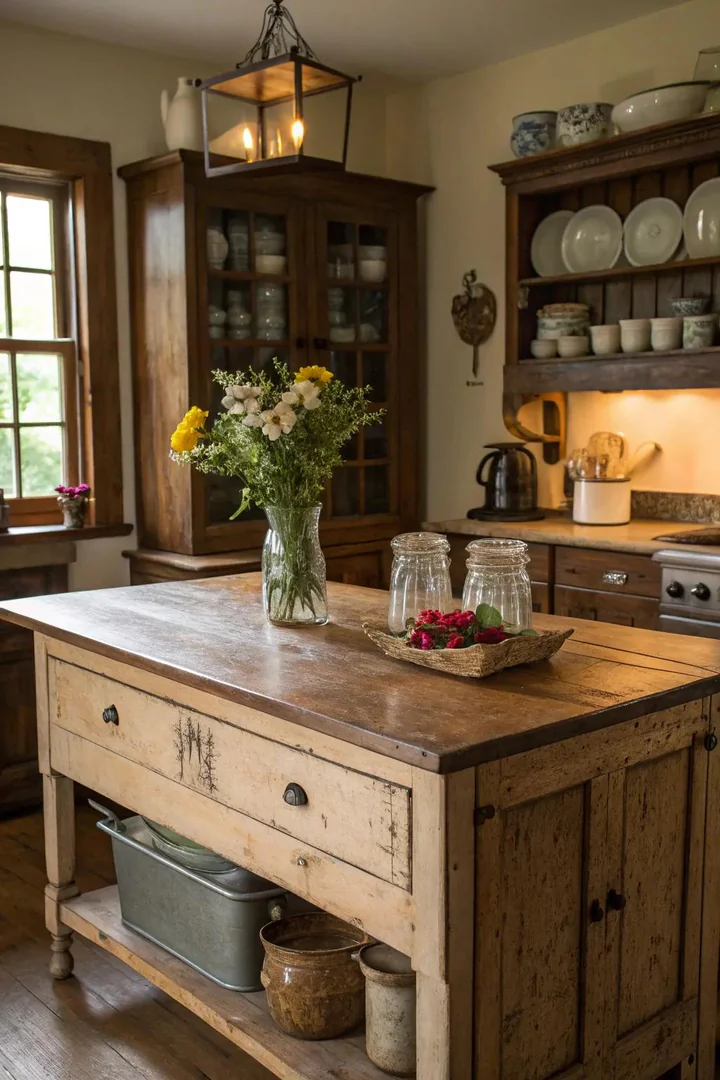
A single large statement piece — a farmhouse harvest table used as a kitchen island, an antique dry sink repurposed as a prep station, a massive wooden butcher block on turned legs, or a reclaimed barn door mounted as a pantry slider — anchors the primitive country kitchen with a focal point that immediately establishes the room’s character and era. The statement piece should be the oldest, most visually commanding, and most authentically primitive object in the kitchen.
Source statement pieces from antique shops, architectural salvage yards (like Olde Good Things, Rebuilding Exchange, or local salvage dealers), farm auctions, and estate sales in rural areas. A genuine 19th-century farmhouse table (6 to 8 feet long, solid pine, oak, or maple with turned legs and a scrubbed top) serves as an island and a gathering point. A dry sink (a shallow, zinc- or copper-lined wooden cabinet originally used for washing before indoor plumbing) works as a bar, a plant stand, or a prep counter. A large antique hutch, pie safe, or jelly cupboard (with punched tin door panels) provides storage and display space while serving as the room’s visual anchor.
2. Textured Layers
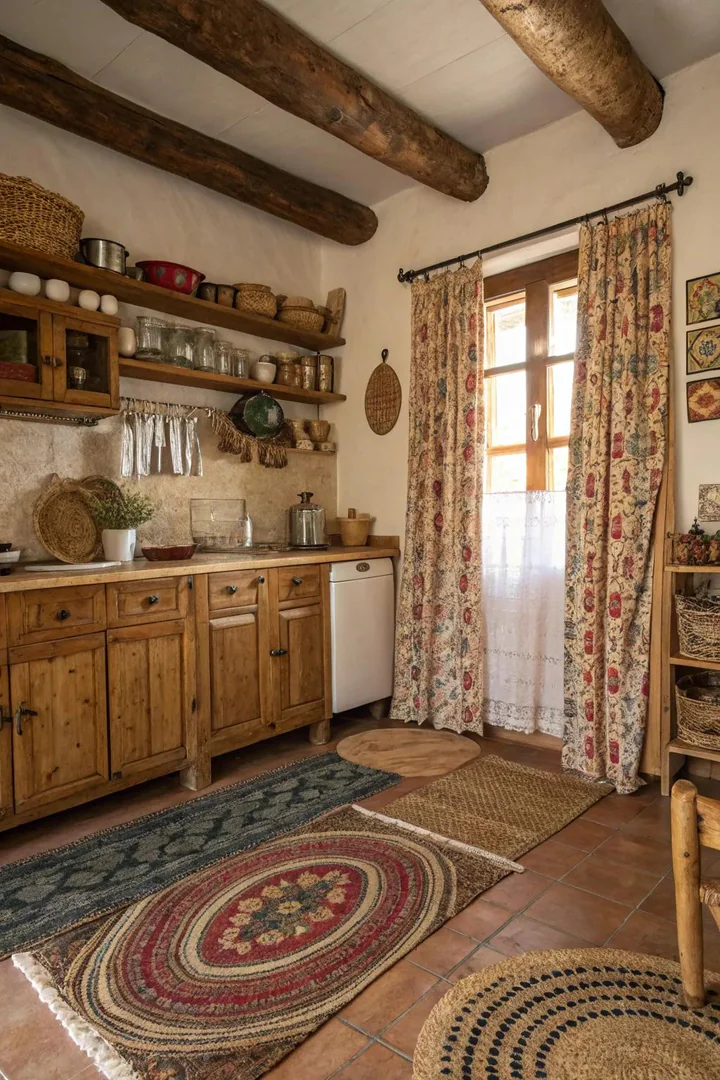
Layering multiple textures — rough-sawn wood, woven baskets, hand-thrown stoneware, linen towels, braided rugs, hammered metal, and unfinished pottery — throughout the kitchen creates the tactile richness and visual complexity that defines primitive country style. A primitive kitchen should feel like it can be experienced through touch as much as through sight, with every surface offering a different material quality.
Start with the largest surfaces and work down to the details: a wide-plank wood floor (pine, oak, or reclaimed hardwood), a beadboard or shiplap backsplash (painted or left natural), butcher block or soapstone countertops, and open wood shelving with wrought iron brackets. Layer in medium-scale textures: woven baskets on the counter and shelves, a braided or hooked rug (from L.L.Bean, Capel Rugs, or a local weaver) in front of the sink, and stoneware crocks and jugs (from Rowe Pottery, Beaumont Brothers, or antique sources) on the countertop. Add small-scale texture with linen dish towels (from Fog Linen Work, Coyuchi, or LinenMe), hand-dipped candles in tin holders, and a hand-woven table runner on the kitchen table.
3. Opt for Gingham or Plaid Drapes
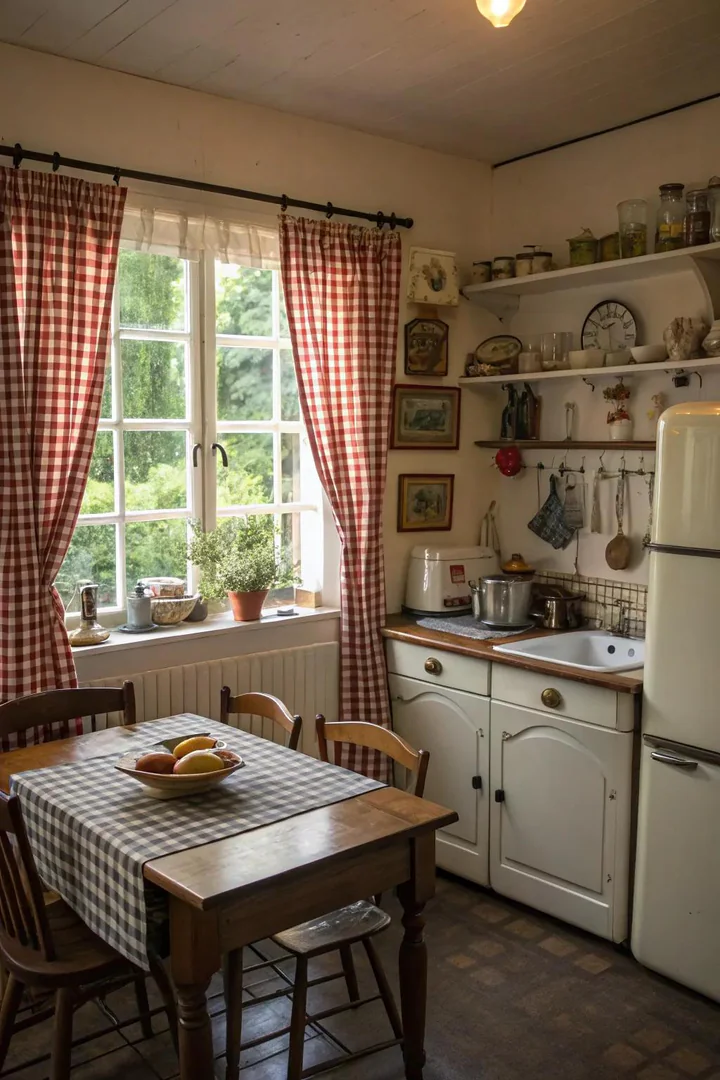
Gingham (a woven check pattern) and plaid (a woven tartan or crossed-stripe pattern) curtains in cotton, linen, or a cotton-linen blend bring the soft, homespun textile tradition of rural American and British country homes into the kitchen window. These woven patterns have been staples of country kitchens since the 18th century, and their familiar, comforting geometry signals “country” immediately without any other decor cues needed.
Choose curtain fabric in a traditional color combination: red and white gingham (classic Americana), black and tan check (primitive and understated), blue and white gingham (French country), or a muted green and cream plaid (English cottage). Hang curtains as cafe curtains (covering only the lower half of the window for privacy while allowing light through the upper half) on a simple wrought iron or painted wood rod. Cafe-length curtains are the most authentic format for a primitive country kitchen — full-length drapes read as formal and out of place. Source gingham and plaid fabrics from Country Curtains, Piper Classics, or Waverly for ready-made panels, or buy yardage from JoAnn Fabrics, Robert Kaufman (Carolina Gingham), or Moda Fabrics and sew simple panels.
4. Showcase Retro Accessories
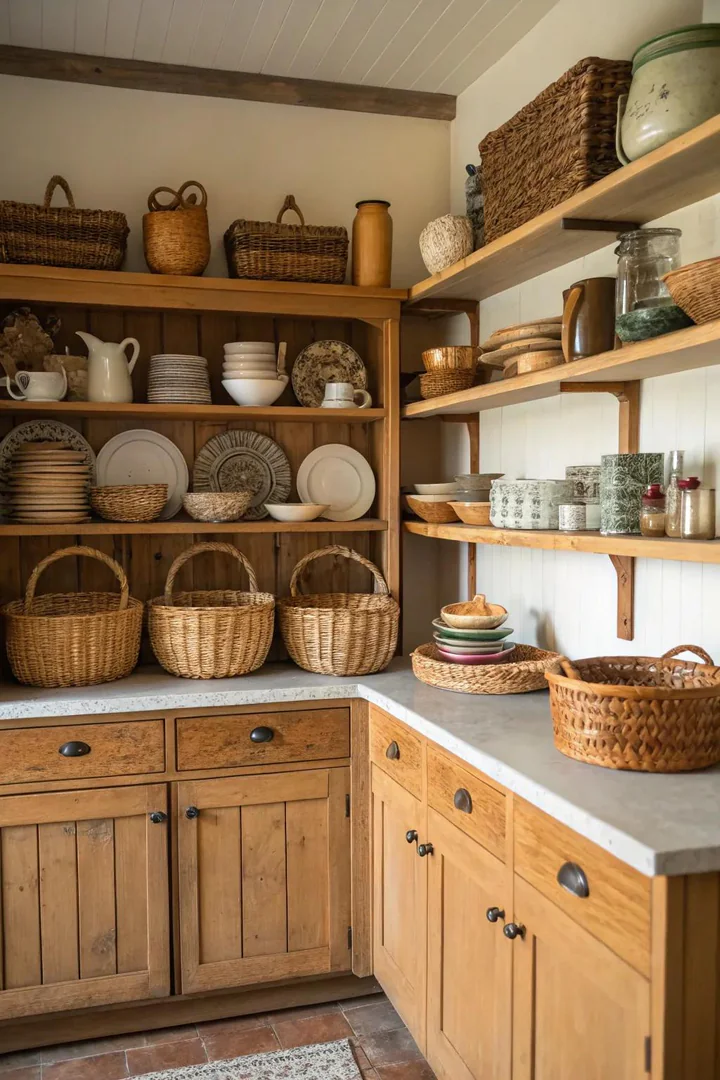
Displaying vintage kitchen accessories — old rolling pins, wooden dough bowls, tin cookie cutters, cast iron trivets, butter molds, sugar nippers, wooden spoons, glass Mason jars, and hand-cranked coffee grinders — on open shelves, countertops, and wall hooks fills the kitchen with the tools and objects of pre-industrial domestic life. These accessories are the artifacts of a slower, handmade era when every kitchen tool was made by a blacksmith, a cooper, a potter, or a woodworker.
Source vintage kitchen accessories from antique shops, flea markets, estate sales, and online dealers on Etsy, eBay, and Ruby Lane. Key categories for primitive kitchen accessories: wooden ware (dough bowls, trenchers, pantry boxes, cutting boards, butter paddles), tinware (candle molds, cookie cutters, colanders, measure cups, graters), ironware (trivets, kettles, hooks, ladles, toasting forks), and stoneware (crocks, jugs, bowls, pie plates). Display accessories in groupings of 3 to 5 related items rather than scattering them individually — a cluster of wooden spoons in a stoneware crock, a stack of wooden bowls beside a rolling pin, or a row of tin cookie cutters hung on a peg rail.
5. Integrate Vintage Furniture
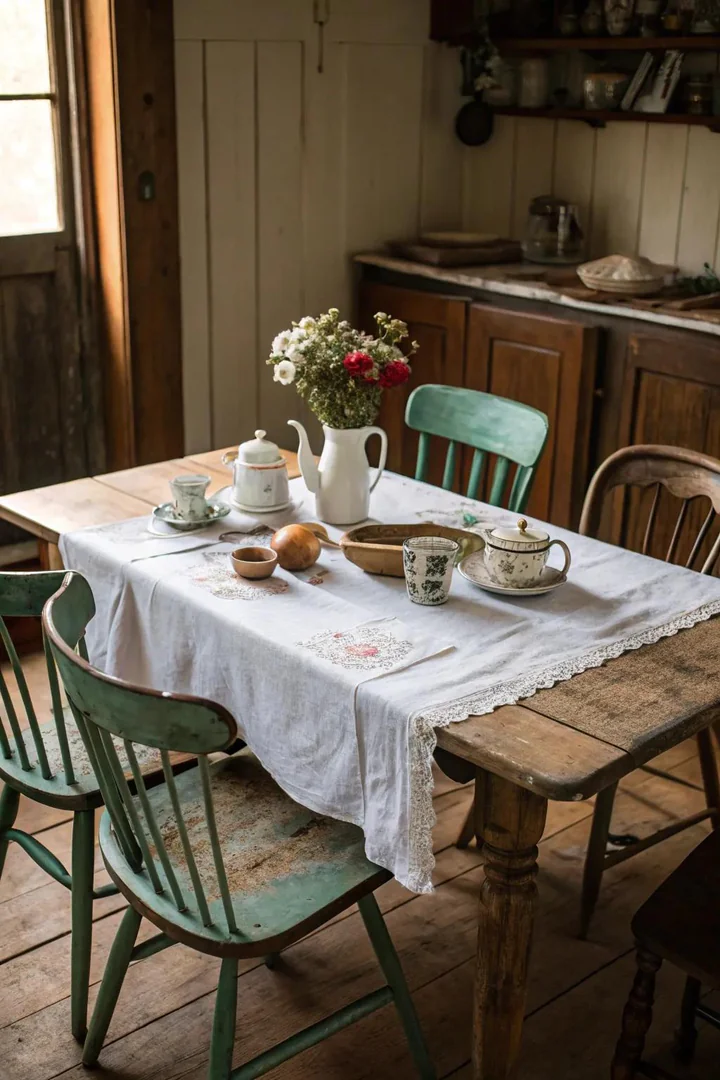
Placing genuine antique furniture — a step-back cupboard, a Hoosier cabinet, a corner hutch, a cobbler’s bench, a Windsor chair, or a tavern table — in the kitchen adds history, craftsmanship, and one-of-a-kind character that new reproduction furniture cannot replicate. The patina, wear marks, hand-cut dovetails, and hand-forged hardware on an authentic antique tell the story of the piece’s age and use, grounding the kitchen in real history.
A Hoosier cabinet (a self-contained kitchen workstation manufactured by the Hoosier Manufacturing Company and others from the 1890s through the 1940s) provides flour bin, spice rack, pull-out work surface, and storage in a single piece of furniture. A step-back cupboard (a two-part cabinet with a deeper lower section and a shallower upper section set back from the front) is the quintessential primitive country storage piece. Windsor chairs (with spindle backs and saddle seats, handmade since the 1720s) provide seating with unmistakable early American character. For cabinet styling ideas that complement antique furniture, see our farmhouse kitchen cabinet ideas guide.
6. Select Enamelware Details
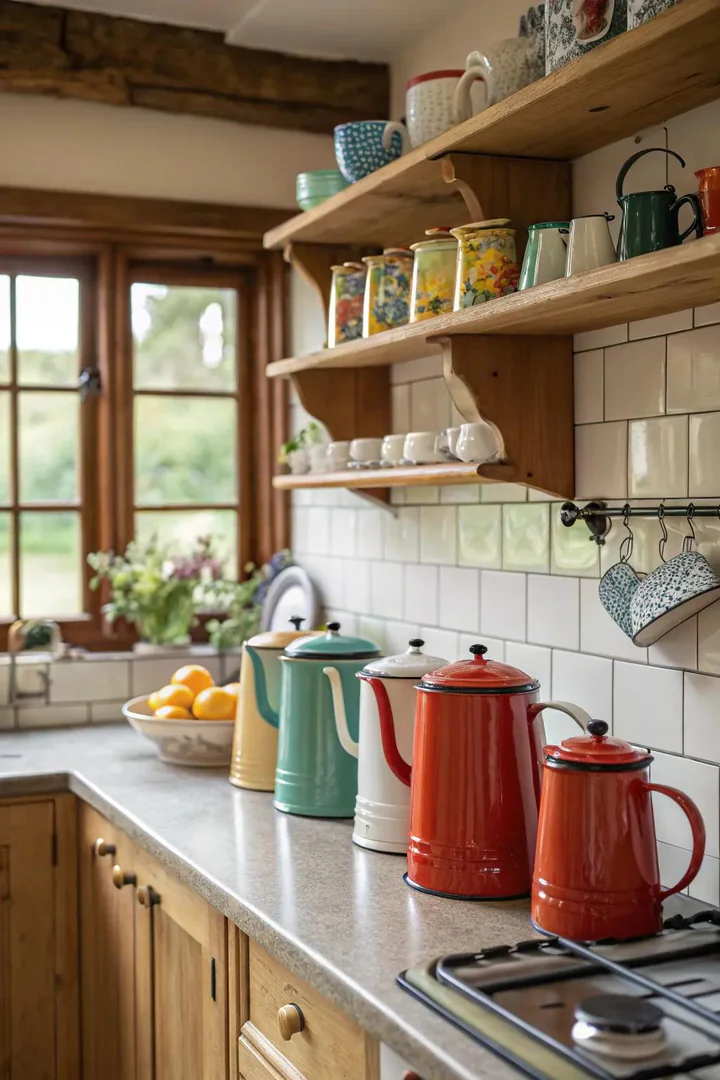
Enamelware — steel or iron cookware and serving ware coated with a vitreous enamel glaze in white, cream, blue, green, or red, often with visible chips that reveal the dark metal underneath — is the signature kitchenware of the primitive country kitchen. Enamelware was the standard kitchen material from the mid-1800s through the mid-1900s, and its chipped, worn, well-used appearance is the visual shorthand for “old country kitchen.”
Collect enamelware in a single color family for a cohesive display: white with black trim (the most common and most primitive-looking), cream with red trim (cheerful and classic), or solid blue or green (French countryside). Source vintage enamelware from antique dealers, flea markets, and online sellers, or purchase new reproduction enamelware from Crow Canyon Home (speckled designs), Falcon Enamelware (British-made), or Enamelware Direct. Display enamelware on open shelves, hang pitchers and colanders from hooks, or stack nesting bowls on the countertop. An enamelware coffeepot, a wash basin, and a set of mixing bowls on a wooden shelf instantly establishes the primitive country atmosphere.
7. Set Up Open Shelves
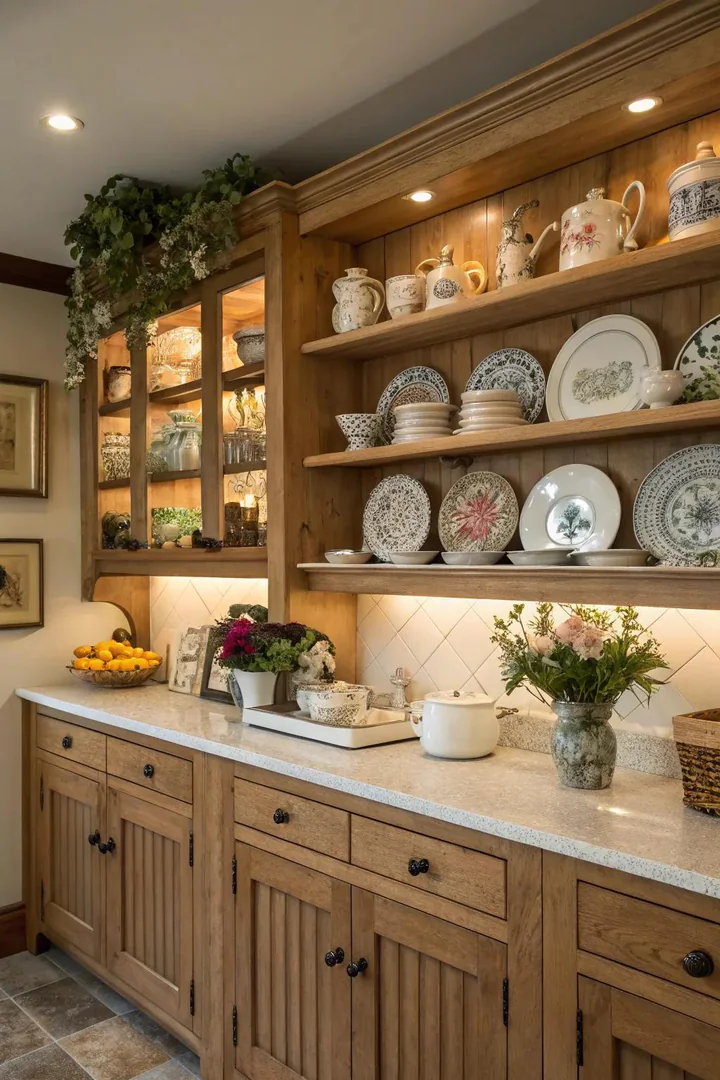
Open shelving — rough-hewn wood planks supported by wrought iron brackets, wooden pegs, or simple L-shaped metal supports — replaces upper cabinets with visible, accessible storage that displays the kitchen’s collection of stoneware, enamelware, wooden bowls, and dry goods in glass jars. Open shelves are historically accurate (closed upper cabinets were uncommon in rural kitchens before the 20th century) and they allow you to display the primitive objects that would otherwise be hidden behind cabinet doors.
Use reclaimed wood (barn board, pallet wood, or salvaged planks from a local demolition) or new rough-sawn lumber (from a sawmill or lumber yard) for the shelves. Mount with hand-forged iron brackets (from Forge Hardware Studio, Wisteria, or blacksmith shops on Etsy) for the most authentic primitive look. Limit the number of shelves to 2 or 3 per wall section — too many shelves make the kitchen look like a store rather than a home. Style each shelf with a mix of functional items (stacked plates, mugs, dry goods in Mason jars) and decorative items (a crock, a candlestick, a small plant, a framed print) with breathing room between groupings.
8. Adopt Organic Materials
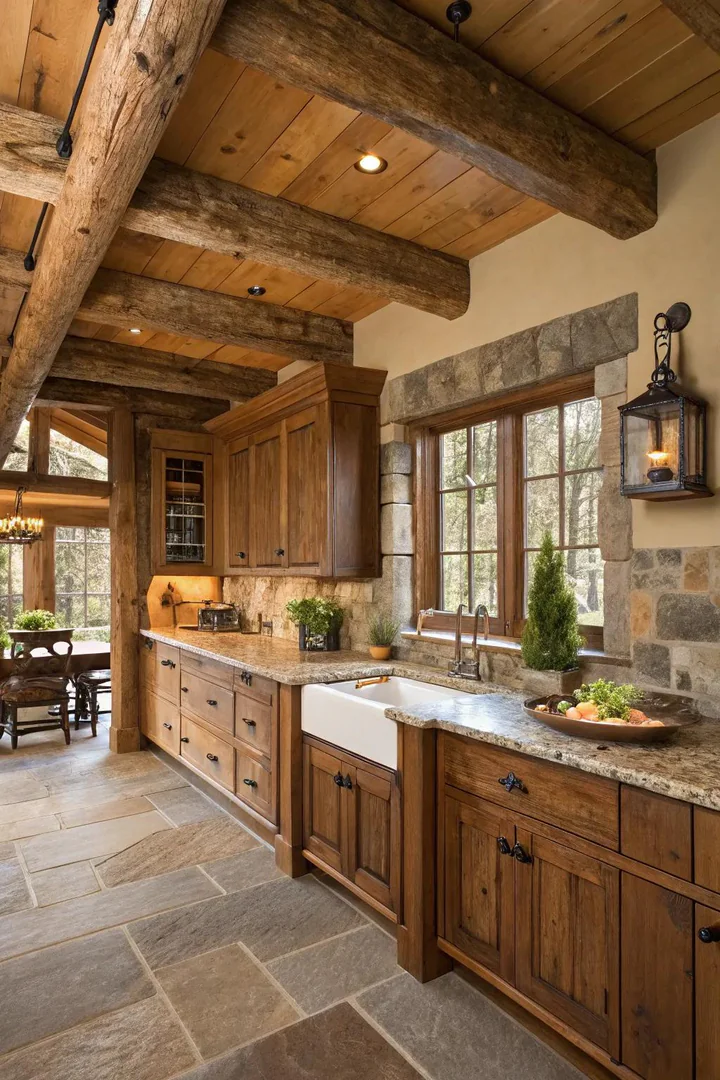
Building the kitchen from natural, minimally processed materials — solid wood (pine, oak, maple, cherry), natural stone (soapstone, slate, fieldstone), fired clay (brick, terracotta), hand-forged iron, tin, copper, and natural fibers (cotton, linen, wool, jute) — grounds the primitive country kitchen in the same material palette that rural craftspeople had available before the industrial revolution. No plastic, no laminate, no composite, no synthetic materials.
Countertops: soapstone (the historically accurate choice — dark gray, heatproof, ages to a deep black with use), butcher block (end-grain maple from John Boos or Michigan Maple Block), or reclaimed wood. Floors: wide-plank pine or oak (from Carlisle Wide Plank Floors or a local sawmill), flagstone, or brick pavers. Sink: a soapstone or fireclay farmhouse sink (from Rohl, Blanco, or Vermont Soapstone). Hardware: hand-forged iron pulls, latches, and hinges (from Acorn Manufacturing, Crown City Hardware, or blacksmith shops). Every surface should look and feel like a material that existed in 1830.
9. Pot Racks for Hanging Features
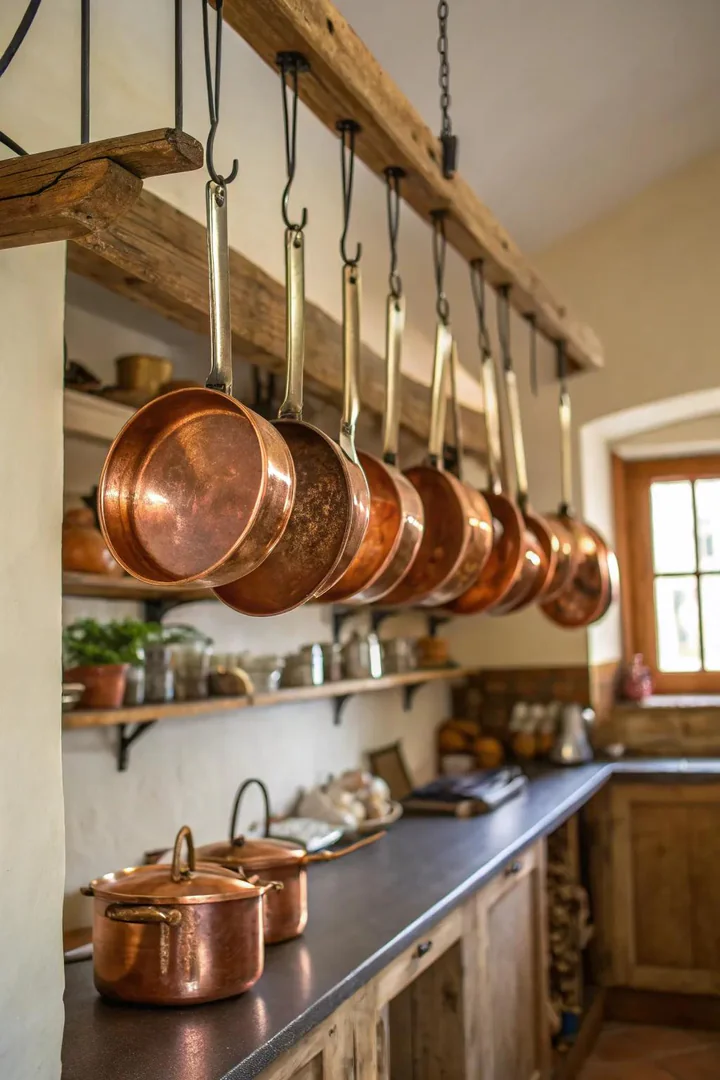
A hanging pot rack — a wrought iron, forged steel, or wooden frame suspended from the ceiling by chains or rods, fitted with S-hooks for hanging pots, pans, skillets, and utensils — provides visible, accessible cookware storage while filling the kitchen’s upper airspace with the warm, burnished glow of copper, cast iron, and seasoned steel. Hanging pot racks have been standard fixtures in working kitchens since the medieval period and they remain the most space-efficient and visually dramatic way to store heavy cookware.
Choose a pot rack style that matches the kitchen’s size and ceiling height: a rectangular grid rack (from Enclume, Old Dutch, or Cuisinart) for above an island or a central work table, a round or oval pot ring for a compact kitchen, or a wall-mounted rack with a shelf (from Enclume or Rogar) for kitchens with low ceilings. Hang cast iron skillets (Lodge, Le Creuset, or Staub), copper pots (Mauviel, Ruffoni, or vintage French copper), and heavy-gauge stainless pans from the S-hooks. The weight of cookware on a ceiling-mounted rack requires secure installation into ceiling joists or a structural beam — use lag bolts, not drywall anchors.
10. Choose Warm Hues
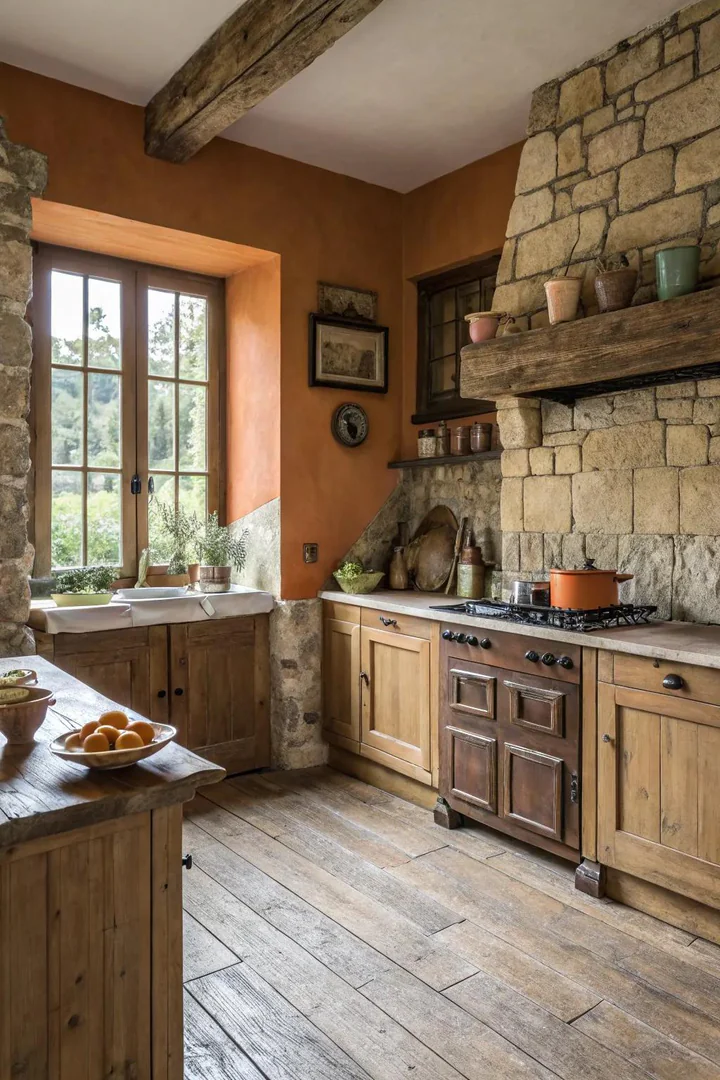
The primitive country color palette is warm, muted, and earthy — drawn from natural pigments and milk paints that were available in rural 18th- and 19th-century America: mustard yellow, barn red, sage green, colonial blue, pumpkin orange, cream, tallow white, and deep brown. These colors are soft and chalky rather than bright and saturated, giving the kitchen a quiet, aged warmth that feels like firelight and candlelight rather than fluorescent showroom lighting.
Use milk paint (from The Old Fashioned Milk Paint Company, Miss Mustard Seed’s Milk Paint, or General Finishes) on cabinets, shelves, and furniture for the most historically accurate finish — milk paint produces the slightly uneven, chalky, aged appearance that is impossible to replicate with latex paint. Key primitive colors: Mustard (Old Fashioned Milk Paint “Mustard”), Barn Red (Miss Mustard Seed “Tricycle”), Bayberry Green (Old Fashioned Milk Paint “Bayberry”), and Federal Blue (Old Fashioned Milk Paint “Federal Blue”). For more on pairing historic wall colors with kitchen elements, see our kitchen color ideas guide.
11. Decorate with Rustic Country Charm Wallpaper
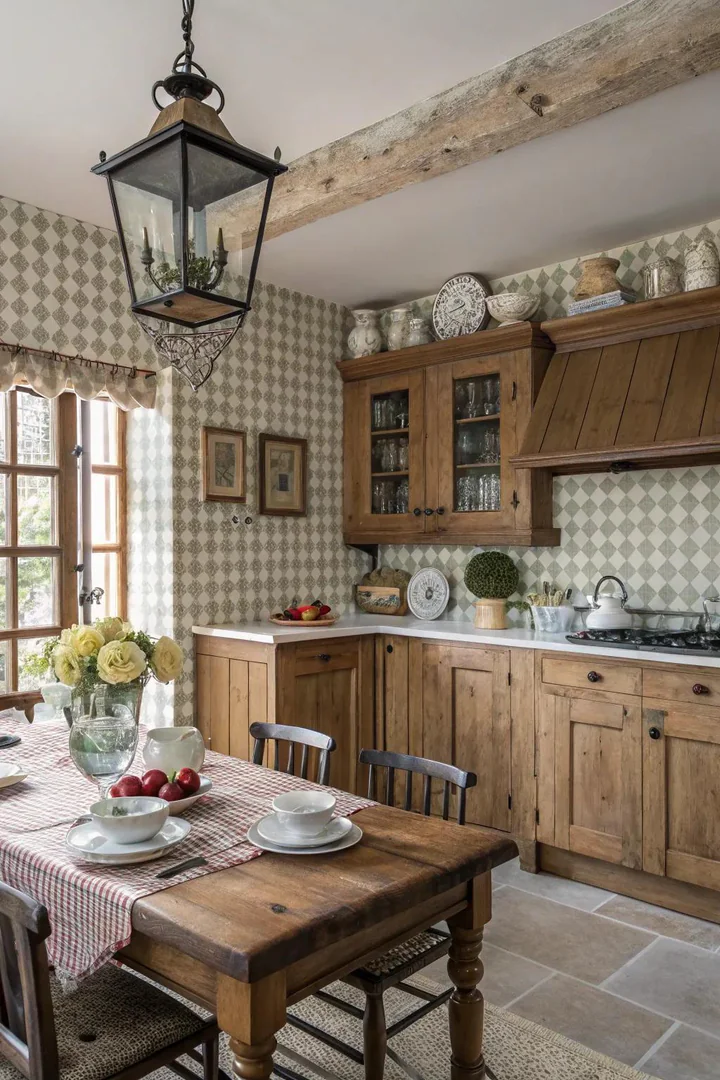
Country wallpaper — small-scale floral prints, toile de Jouy scenes, gingham checks, berry and vine patterns, or folk art motifs on a cream, tea-stained, or parchment-colored background — adds pattern, color, and period character to kitchen walls that paint alone cannot achieve. Wallpaper was a common wall treatment in American country kitchens from the 18th through the early 20th century, and choosing a period-appropriate pattern instantly establishes the primitive atmosphere.
Choose patterns with a small repeat and muted, aged-looking colors (faded red, dusty blue, olive green, mustard, brown on cream) rather than bright, modern colors. Suitable wallpaper sources: York Wallcoverings (Americana and Colonial collections), Thibaut (Historic Homes collection), and Bradbury & Bradbury (historical reproduction wallpapers). For a less permanent option, use peel-and-stick wallpaper (from Tempaper or NuWallpaper) that can be removed without wall damage. Apply wallpaper to one accent wall, inside a built-in cabinet or hutch, or above a chair rail — full-room wallpaper in a small kitchen can feel overwhelming.
12. Incorporate Antique Fabrics
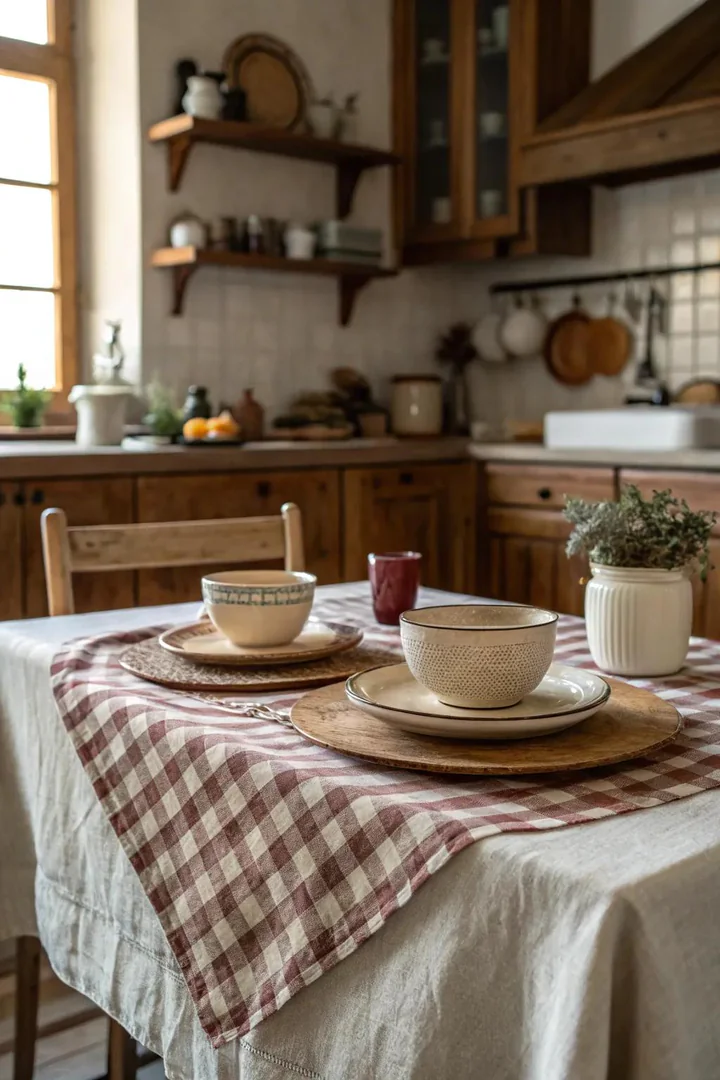
Vintage linens — old flour sack towels, hand-embroidered tea towels, cross-stitched samplers, crocheted potholders, quilted table runners, and woven coverlets — add the handmade, hand-stitched character of domestic needlework to the primitive kitchen. These textiles represent hours of skilled handiwork and carry the maker’s personality in every stitch, making them some of the most personal and emotionally resonant objects in the kitchen.
Source vintage linens from antique textile dealers, estate sales, Etsy sellers specializing in vintage textiles, and grandmother’s linen closet. Display linens where they can be seen and appreciated: hang embroidered towels from a wooden peg rail (a Shaker-style rail from Peg and Rail or Schoolhouse), drape a quilted runner across the table, mount a framed cross-stitch sampler on the wall, and stack folded grain sack towels (with their original red or blue stripes) on an open shelf. Vintage flour sack towels (stamped with old brand names like Gold Medal, Pillsbury, or King Arthur) serve as both functional dish towels and decorative displays of Americana.
13. Incorporate Practical Decor
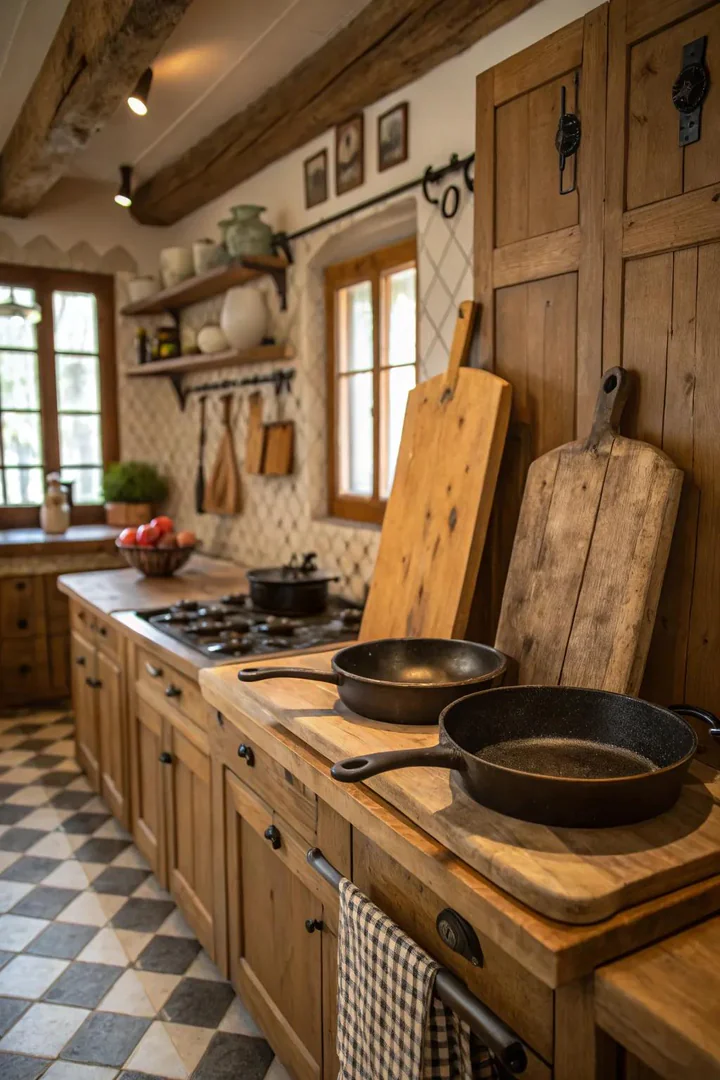
In a primitive country kitchen, the most effective decor is functional — objects that serve a daily purpose and look beautiful at the same time. Cutting boards leaned against the backsplash, a wooden dough bowl filled with seasonal fruit, a row of speckled stoneware crocks holding wooden utensils, a cast iron skillet hung from a wall hook, and a glass Mason jar filled with dried beans or homemade preserves are all working kitchen items that double as primitive country decor.
The principle of functional decor means every visible object in the kitchen should either be in active use or historically represent active use. Remove purely decorative items (mass-produced figurines, fake flowers, novelty signs) and replace them with real tools that happen to be beautiful: a hand-carved wooden spoon, a copper colander, a set of nesting yellowware bowls, a tin candle lantern, or a hand-thrown pottery pitcher holding fresh wildflowers. This approach keeps the kitchen looking authentic — a working country kitchen, not a country-themed showroom.
14. Add Distressed Furniture
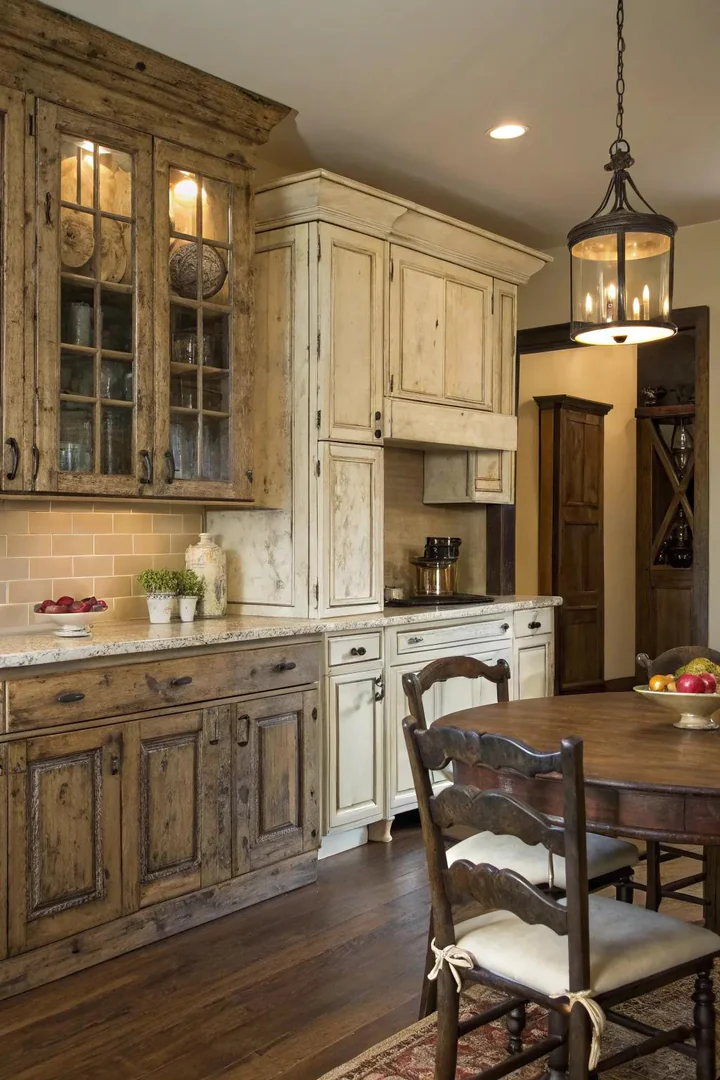
Distressed furniture — cabinets, tables, chairs, and storage pieces with intentionally aged, worn, chipped, and weathered paint finishes that reveal layers of old paint and bare wood underneath — creates the appearance of decades of use and wear that makes the kitchen feel genuinely old rather than newly decorated. Authentic wear tells a story; distressing mimics that story on new or newer pieces.
The most convincing distressing comes from actual age — genuinely old furniture with original worn paint is always more authentic than new furniture artificially distressed. When working with new or reproduction pieces, apply milk paint (which naturally chips and wears unevenly as it ages) rather than latex paint, which must be artificially sanded and chipped. For a convincing two-layer distressed finish: paint the piece in a dark base coat (black, dark brown, or barn red), let it dry, apply a layer of wax or petroleum jelly in the areas that would naturally wear (edges, corners, handles, around hardware), then paint the top coat in a lighter color (cream, sage, or mustard). Sand through the top coat at the waxed areas to reveal the dark base coat and bare wood below.
15. Use Ornamental Shelves
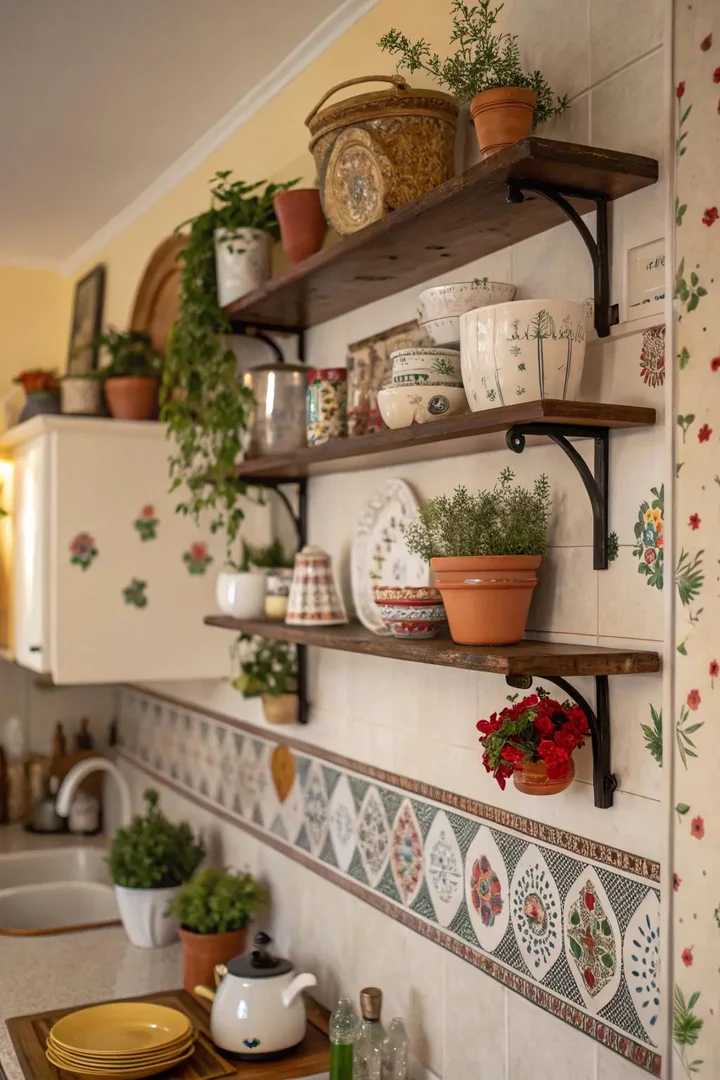
Decorative shelves — small, carved, shaped, or scrollwork-embellished wall shelves designed primarily for display rather than heavy storage — provide dedicated perches for the kitchen’s most treasured primitive objects: a favorite crock, a hand-carved bird, a framed tintype photograph, a small collection of redware plates, or a candle in a tin holder. Decorative shelves are the picture frames of the primitive kitchen, drawing attention to the specific objects they hold.
Choose shelves with hand-carved or scroll-cut profiles (scalloped edges, heart cutouts, or shaped bracket supports) in natural wood, painted wood, or distressed finishes. Small plate shelves with grooved rails (designed to hold plates upright for display) are a classic country kitchen shelf type that displays a row of decorative plates, saucers, or shallow bowls. Peg shelves (a shelf with Shaker-style wooden pegs along the bottom edge) provide dual-purpose display and hanging — items sit on the shelf above while hats, mugs, dried herb bundles, or utensils hang from the pegs below.
16. Design a Comfortable Corner
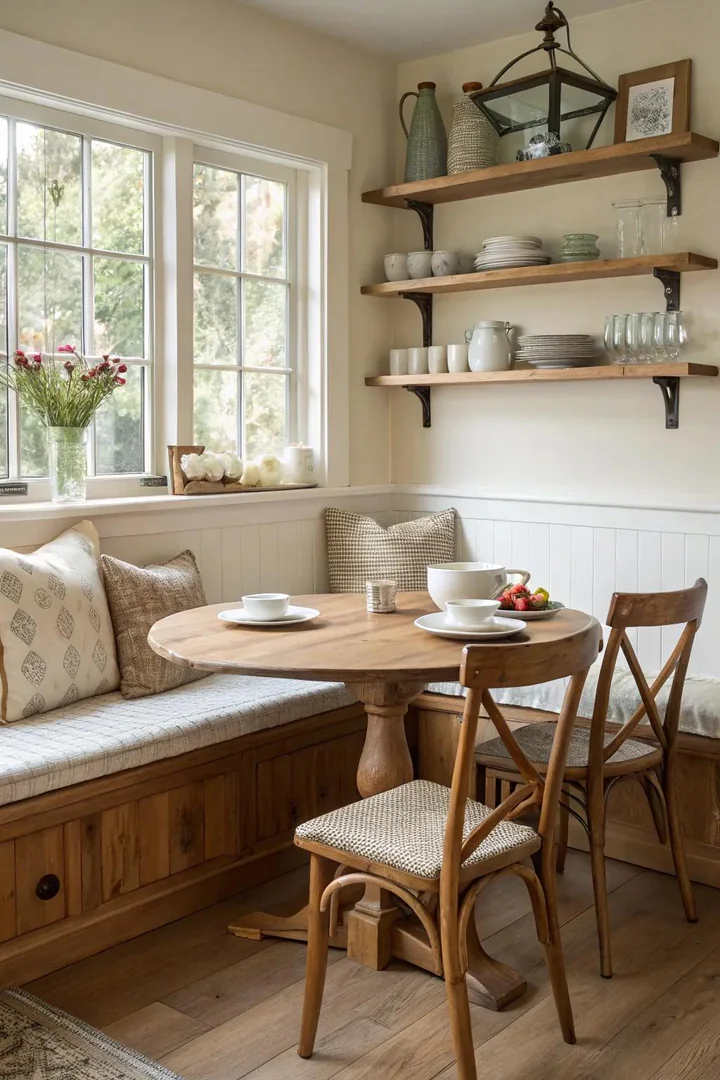
A cozy nook — a small, enclosed or semi-enclosed seating area with a built-in bench, a cushioned settle, or a rocking chair tucked into a corner, beside a window, or near the woodstove or fireplace — provides a warm, intimate spot within the kitchen for sitting, reading, sipping coffee, or watching the cook work. In historic country kitchens, the kitchen was the warmest room in the house (heated by the cooking fire) and the nook was the family’s primary sitting area during cold months.
Create a nook with a built-in window bench (a storage bench built into a window alcove, with a hinged top for blanket and linen storage underneath), a pair of Windsor chairs flanking a small tavern table beside the window, or a single rocking chair (from a traditional maker like S. Bent & Bros. or a vintage rocker from an antique dealer) beside a small side table. Add a hand-quilted cushion or a wool throw (from Pendleton, Swans Island, or a local weaver) for warmth and texture. Place a candle in a tin holder, a small stack of books, and a stoneware mug on the side table for a lived-in, used-every-day look. For more ideas on creating warm and inviting kitchen spaces, see our kitchen lighting ideas guide.
17. Add Organic Decorative Items
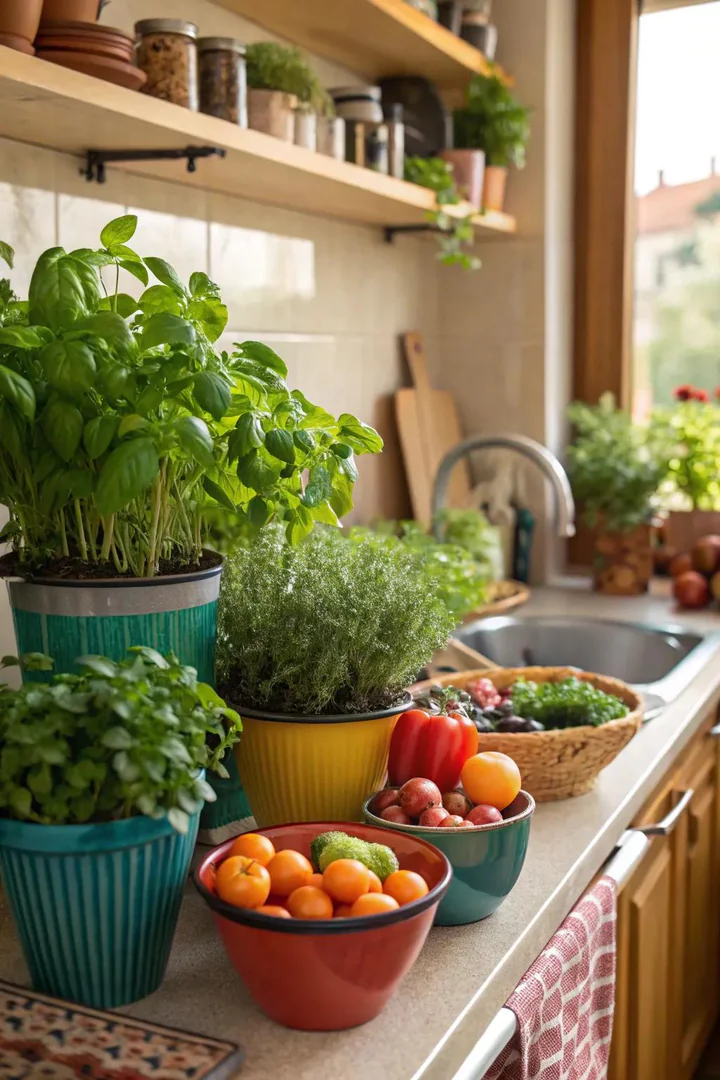
Organic decorative pieces — dried herb bundles hung from ceiling hooks, a bowl of seasonal fruit on the table, a windowsill herb garden, dried flower arrangements in stoneware crocks, a wreath of dried bay leaves or lavender on the wall, and a basket of fresh eggs on the counter — bring the living, growing, seasonal character of the garden and the farm into the kitchen. Organic decor changes with the seasons and keeps the kitchen feeling alive and connected to the natural world outside.
Hang bundles of dried herbs (rosemary, thyme, sage, oregano, lavender) from the ceiling beams, a pot rack, or a wooden peg rail using twine or raffia — the herbs dry naturally in the warm kitchen air and can be crumbled directly into cooking. Display a wooden dough bowl (from an antique source or a reproduction from Pottery Barn or Terrain) filled with seasonal items: dried gourds and Indian corn in autumn, pinecones and holly in winter, fresh lemons and limes in spring, and sunflowers and garden herbs in summer. Place a simple windowsill herb garden in terracotta pots for year-round fresh herbs and living greenery. Visit The Designers Company for more kitchen decor and styling ideas.
18. Set Up Wrought Iron Lighting
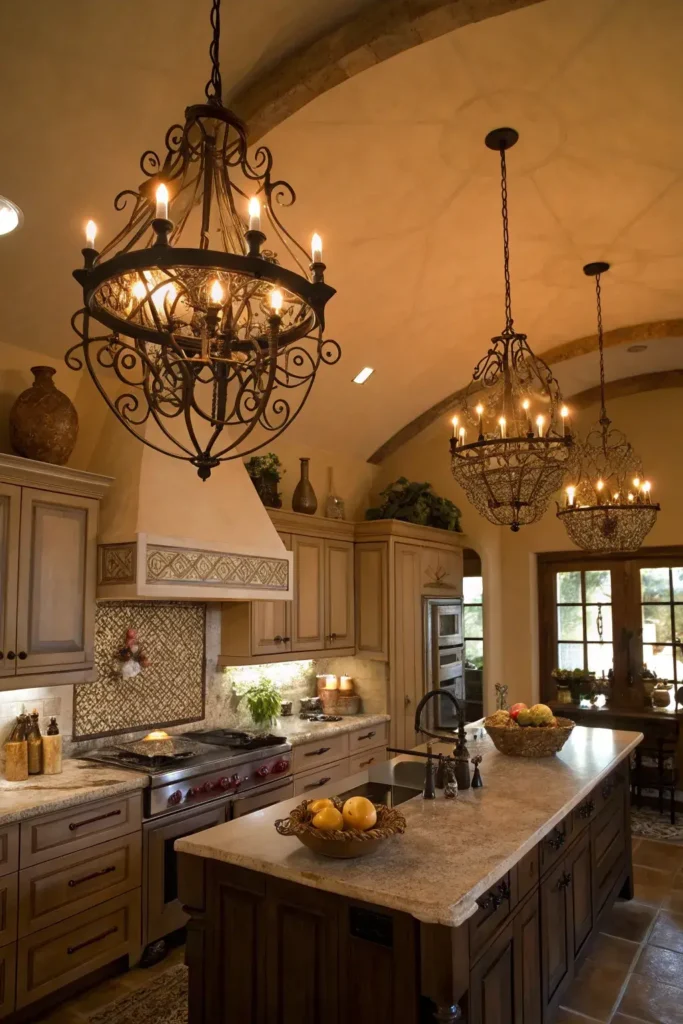
Wrought iron lighting — chandeliers, lanterns, sconces, and pendant lights made from hand-forged or cast iron with a blackened, aged, or rust-finish surface — provides the most historically authentic and visually striking lighting for a primitive country kitchen. Iron lighting fixtures have been made by blacksmiths since the colonial era, and their dark, heavy, hand-forged appearance anchors the primitive kitchen’s upper zone with unmistakable period character.
Choose fixture styles that reference historical lighting: a wrought iron candle chandelier (with real or electric candle-style bulbs), a tin punched lantern (perforated tin panels that cast patterned light on the ceiling and walls), a simple iron ring chandelier, or a pair of wrought iron wall sconces flanking a window or doorway. Historical reproduction lighting from Hammerworks, Period Lighting Fixtures, Hubbardton Forge, and Troy Lighting offers hand-forged and cast iron fixtures in authentic early American and colonial designs. Use warm-white LED candelabra bulbs (2200K to 2700K) in candle-style fixtures to replicate the warm, golden glow of candlelight and firelight. For more on coordinating lighting with kitchen decor, browse our kitchen decor ideas gallery.
How to Create a Primitive Country Kitchen
Starting with the Right Foundation
The foundation of a primitive country kitchen is the floor, the walls, and the ceiling — these large surfaces set the baseline character for everything else. Floors should be wide-plank hardwood (pine or oak, 6 to 12 inches wide, in a natural or dark stain), flagstone, or brick. Walls should be plaster (real lime plaster or plaster-look textured paint), beadboard, or shiplap, painted in a muted, period-appropriate color. Ceilings should expose the structural beams (if they exist) or add faux beams (from Volterra Architectural Products or a local carpenter) for the overhead timber framework that defines the primitive country look.
Sourcing Authentic Primitive Pieces
The most authentic primitive country kitchens are furnished with genuine antiques and vintage pieces, not new reproductions. Build your collection over time from local antique shops, rural auction houses, estate sales in farming communities, flea markets, and online dealers (eBay, Ruby Lane, 1stDibs, and Etsy’s vintage category). Focus on pieces made before 1900 for the most primitive character — anything from the 1700s through the 1880s in original paint or finish is ideal. Accept imperfections: cracks, chips, worn surfaces, missing hardware, and faded paint are part of the appeal, not defects to be repaired.
Balancing Primitive Charm with Modern Function
A primitive country kitchen must still function as a modern cooking space. The key is to hide modern appliances (dishwasher behind a cabinet panel, microwave inside a pantry, modern fridge in an enclosure or a separate utility room) while keeping the visible surfaces, materials, and objects authentically primitive. Modern necessities like electrical outlets, under-cabinet LED lighting, and a range hood can be disguised with period-appropriate materials — an iron cover plate on outlets, a tin hood over the range fan, and LED candle-style bulbs in wrought iron fixtures.
Primitive Country Decor Elements Comparison
| Decor Element | Cost Range | Source | Impact Level |
|---|---|---|---|
| Milk paint on cabinets | $50-200 (DIY) | Specialty paint suppliers | High — changes room’s tone |
| Antique furniture piece | $200-2,000+ | Antique shops, auctions | High — statement anchor |
| Open wood shelving | $100-500 | Lumber yard, salvage | High — replaces upper cabinets |
| Wrought iron lighting | $150-800 | Specialty lighting, blacksmiths | High — defines overhead zone |
| Enamelware collection | $30-200 | Antique shops, new reproductions | Medium — counter and shelf accent |
| Gingham/plaid curtains | $20-100 | Fabric stores, country curtain shops | Medium — window treatment |
| Vintage linens and textiles | $10-100 | Estate sales, Etsy | Medium — soft accents |
| Braided or hooked rug | $50-300 | L.L.Bean, specialty rug makers | Medium — floor warmth |
Common Primitive Country Kitchen Mistakes to Avoid
Making it look like a themed gift shop. The biggest risk with primitive country decor is over-decorating with mass-produced “country” items — factory-made wooden signs with folksy sayings, cheap tin stars, mass-produced roosters, and dollar-store gingham everything. A genuine primitive kitchen is filled with real tools, real antiques, and real handcrafted objects, not themed merchandise. Every item should look like it could have existed in an 1830 farmhouse kitchen.
Using too many brand-new reproduction pieces. A kitchen furnished entirely with new, reproduction primitive furniture and accessories looks like a stage set — everything is too clean, too uniform, and too perfect. Mix genuine antiques (with their authentic wear and patina) with a few well-chosen reproductions, and age the reproductions with milk paint, wax, and natural wear before installing them.
Ignoring modern lighting needs. Period-authentic lighting (candle chandeliers, tin lanterns) produces minimal light output compared to modern kitchens’ requirements for safe, well-lit food preparation. Install modern recessed LED lighting (hidden in the ceiling or under upper shelving) for functional task light, and use the wrought iron fixtures for ambient and decorative lighting. Dimmers on all circuits let you switch between bright task lighting during cooking and low, warm ambient lighting for dining and gathering.
Cluttering every surface. Primitive country style uses carefully curated collections and grouped displays, not a random accumulation of every antique and vintage item you own. Edit ruthlessly: display 5 to 7 items on a shelf, not 15. Leave breathing room between objects. Rotate seasonal displays. The goal is a lived-in farmhouse kitchen, not an antique shop warehouse.
Frequently Asked Questions
What is the difference between primitive and farmhouse kitchen style?
Primitive country style is a subset of farmhouse style that specifically references the pre-industrial era (roughly 1750 to 1880) and emphasizes handmade, hand-hewn, and hand-forged objects with visible tool marks, worn finishes, and a muted, aged color palette. Modern farmhouse style is broader and more polished — it incorporates shiplap, subway tile, stainless steel, and contemporary furniture with a “farmhouse-inspired” look that is cleaner, brighter, and more production-oriented. Primitive is darker, rougher, older, and more specific; farmhouse is lighter, smoother, newer, and more flexible.
Where can I find authentic primitive kitchen antiques?
The best sources for authentic primitive kitchen antiques are rural auction houses in New England, Pennsylvania, Virginia, and the Mid-Atlantic states (where early American antiques are most plentiful), local antique shops that specialize in Americana and folk art, farm estate sales, and annual antique shows like Brimfield (Massachusetts), Round Top (Texas), and the Country Living Fair. Online, search eBay, Ruby Lane, 1stDibs, and Etsy’s vintage category using specific terms (“primitive,” “early American,” “colonial,” “19th century kitchen”) rather than generic terms.
What colors are most authentic for a primitive kitchen?
The most historically authentic primitive colors are those available as natural pigments and milk paint in the 18th and 19th centuries: mustard yellow, barn red (iron oxide red), sage or bayberry green, indigo or federal blue, pumpkin or butternut orange, cream (tallow white), and lamp black. These colors are muted and chalky rather than bright and saturated — they look as though they have been fading in sunlight for 200 years. Avoid bright, pure, or neon colors that were not available before synthetic pigments were developed in the mid-1800s.
Can I create a primitive kitchen in a modern house?
Yes. The key is to layer primitive elements over the modern structure rather than trying to make the entire room look old. Start with the easiest, highest-impact changes: replace cabinet hardware with hand-forged iron pulls, install open wood shelving, add a wrought iron chandelier, paint cabinets with milk paint, and display a collection of primitive objects (stoneware, enamelware, wooden tools) on counters and shelves. These changes overlay a primitive character without requiring structural modification to the modern kitchen’s plumbing, electrical, and appliance layout.
How do I maintain the primitive look without sacrificing functionality?
Hide modern appliances behind cabinet panels or inside dedicated enclosures (a built-in microwave cubby, a dishwasher panel matching the cabinetry, a refrigerator encased in a wooden hutch surround). Use modern materials with a primitive appearance: porcelain farmhouse sinks that look like old soapstone, quartz countertops with a honed (matte) finish that mimics aged stone, and LED candelabra bulbs that mimic the warm glow of candles. Install modern recessed task lighting in the ceiling (invisible from normal viewing angles) for food prep safety, and use the primitive fixtures (candle chandeliers, tin lanterns) for ambiance.
Is primitive country decor expensive?
It can range from very affordable to very expensive depending on your sourcing approach. Genuine museum-quality antiques (18th-century painted furniture, early American stoneware, hand-forged lighting) command high prices at specialized dealers and auction houses. However, many primitive items are affordable at local flea markets, thrift stores, and garage sales — old wooden tools, basic stoneware crocks, simple enamelware, fabric remnants, and common kitchenware from the 1800s can be found for $5 to $50 per piece. The most cost-effective approach: buy genuine antiques affordably at local sources and supplement with a few key reproductions (milk paint, new wrought iron hardware, reproduction lighting) where authentic pieces are too expensive or too rare.
Conclusion
A primitive country kitchen is a kitchen that tells a story — the story of handmade tools, natural materials, seasonal rhythms, and the daily work of cooking and eating that has defined domestic life for centuries. The 18 ideas above provide a complete toolkit for building that story in your own kitchen, from the statement furniture piece and the wrought iron chandelier that anchor the room’s character to the stoneware crock, the gingham curtain, and the dried herb bundle that fill in the details.
Start small: choose one or two high-impact elements (a wrought iron light fixture, a set of open shelves, a coat of milk paint on the cabinets) and build from there. The most convincing primitive kitchens are collected over time, not assembled in a single shopping trip. Visit antique shops, attend auctions, browse estate sales, and let the collection grow piece by piece until the kitchen feels genuinely old, genuinely handmade, and genuinely yours.