
Fruit Basket Ideas for Your Kitchen: 15 Stylish Ways to Organize Now
The right fruit basket does two jobs at once: it keeps your produce fresh by allowing air to circulate, and it turns a pile of apples and bananas into something worth looking at on your counter. A cheap plastic bowl shoved against the backsplash does neither. Whether you cook in a compact apartment galley or a wide-open family kitchen, there is a basket, bowl, or stand below that fits your counter space and your style.
We gathered 15 fruit basket ideas for your kitchen that cover every material from hammered wire to polished marble, every mounting option from countertop to ceiling-hung, and every budget from under $15 to splurge-worthy. If you are also rethinking the smaller details of your cooking space, our broader kitchen decor ideas guide is a good companion read.
Scroll through each option, then check the storage guide and buying tips near the end before you order.
1. Dual-Layer Countertop Basket
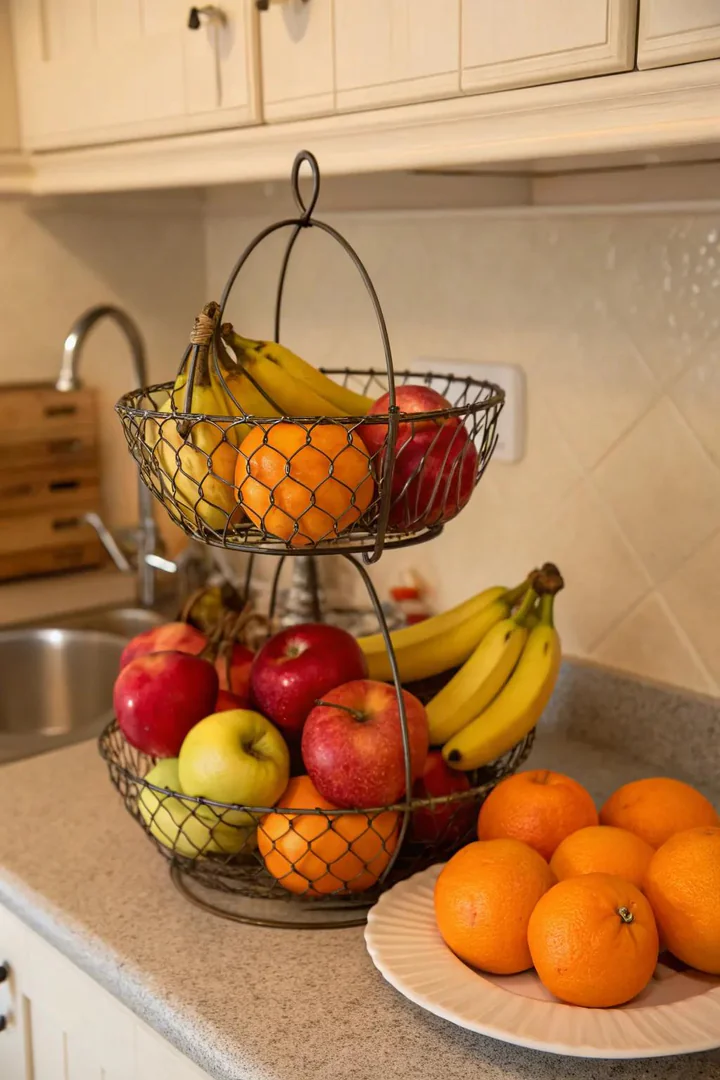
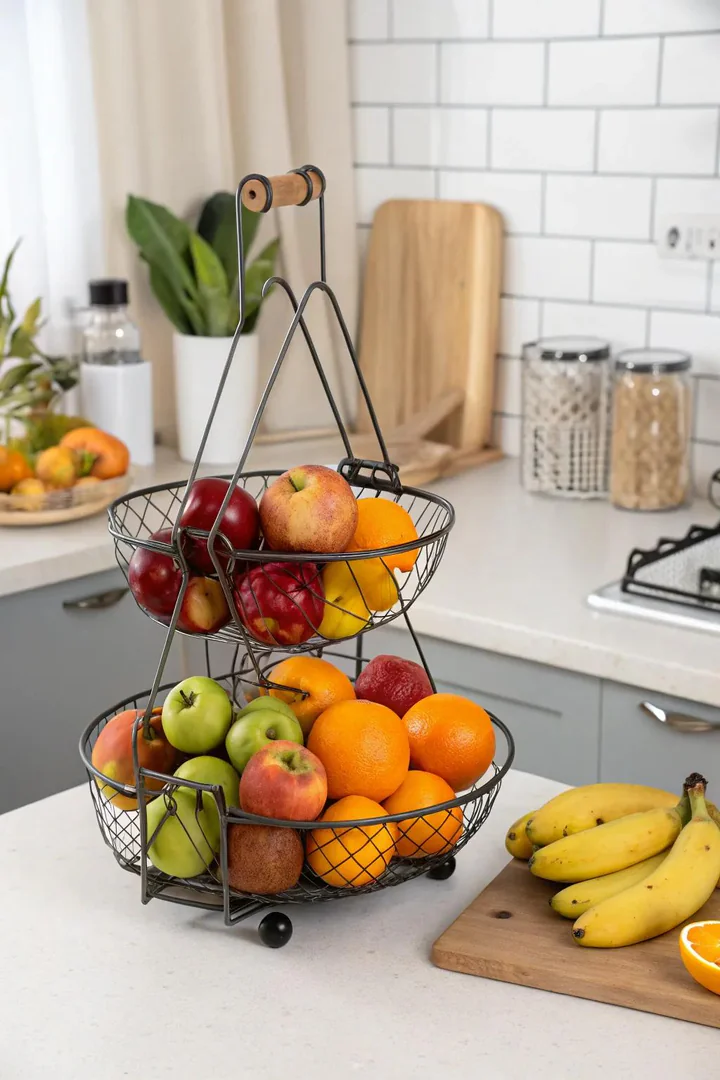
A two-tier countertop basket stacks your fruit vertically instead of spreading it across the counter, reclaiming several inches of prep space in the process. The upper tier is ideal for lighter items like bananas and stone fruit, while the lower tier handles heavier citrus and apples. Most two-tier models stand 14 to 16 inches tall and occupy no more counter footprint than a dinner plate.
Brands like Mikasa and Gourmet Basics produce powder-coated wire versions in matte black, antique bronze, and satin nickel that match common kitchen hardware finishes. For a warmer look, woven rattan two-tier baskets from West Elm or World Market pair well with wood countertops. Keep ethylene-producing fruit like bananas on the top tier and ethylene-sensitive fruit like berries on the bottom to slow ripening across both levels.
2. Bowl for Fruit with Bamboo and Hook
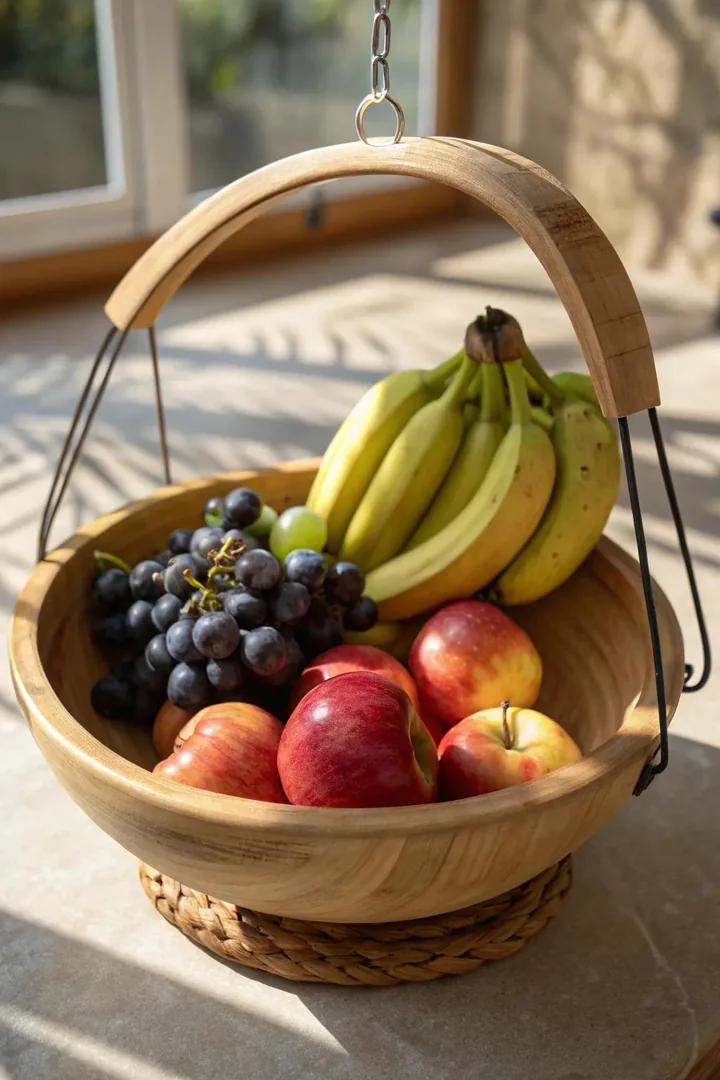
A bamboo bowl with an integrated banana hook solves two problems with one piece: the bowl holds apples, oranges, and pears while the hook lets bananas hang free so they ripen evenly and avoid pressure bruising. The hook typically arches 10 to 12 inches above the bowl rim, keeping the bunch at eye level and easy to grab.
Bamboo is naturally antibacterial, which matters for a surface that stays in constant contact with fruit skins. Look for bowls finished with food-safe mineral oil rather than lacquer, since lacquer can crack and trap moisture over time. Lipper International and Totally Bamboo both make well-reviewed models in the $20 to $35 range. Wipe the bowl with a damp cloth weekly and re-oil it every few months to prevent the bamboo from drying out and splitting.
3. Retro Wire Basket
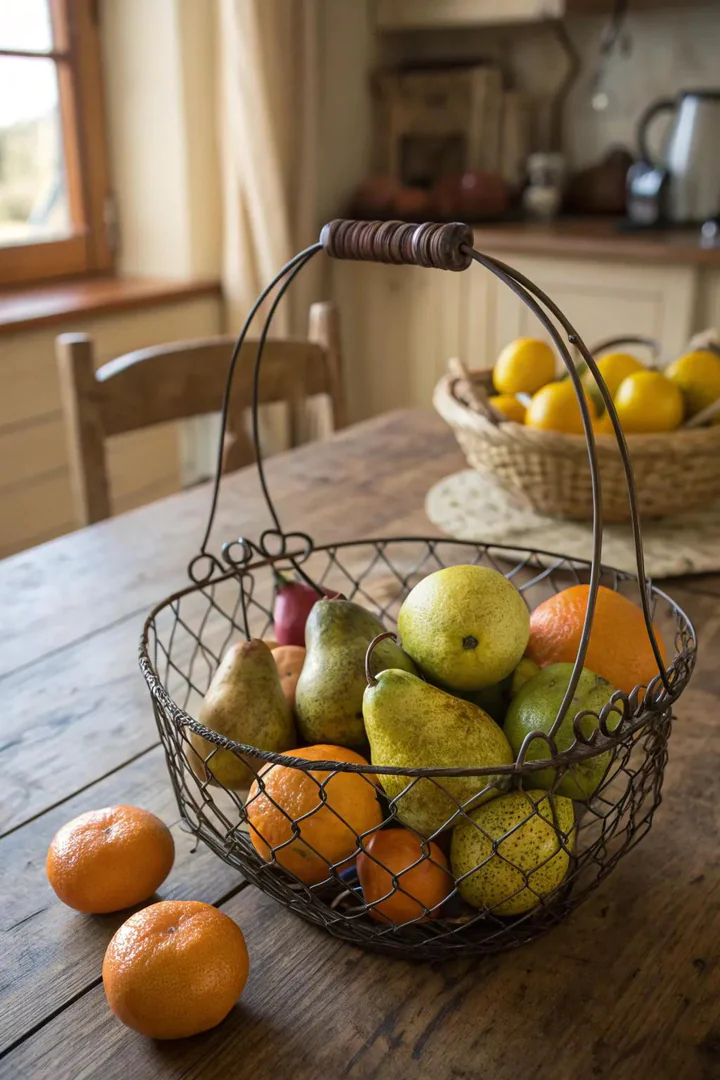
Vintage-style wire baskets deliver maximum airflow and a farmhouse look that works in both rustic and industrial kitchens. The open wire grid lets air reach every piece of fruit from every angle, which slows mold growth and keeps produce firm days longer than a solid bowl would. Round baskets with a slight pedestal base are the most common shape, though oblong trays fit better on narrow counters.
Genuine antique wire baskets turn up at flea markets and estate sales, but reproductions from brands like Creative Co-Op and Park Hill offer the same patina finish without the hunt. If your kitchen leans toward the grey and beige palette, a matte grey wire basket blends in without drawing too much attention away from your cabinetry and countertops.
4. Sleek Glass Bowl
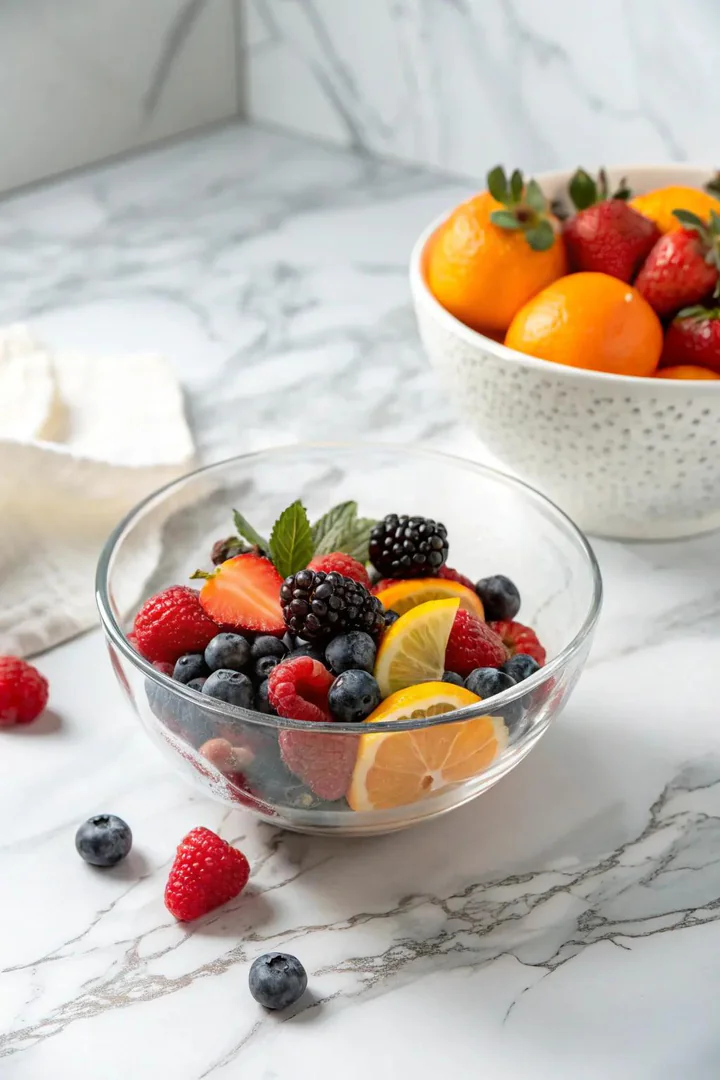
A clear or lightly tinted glass bowl lets the color of the fruit itself become the decor. Red apples, green limes, and yellow lemons stacked inside a transparent vessel create a living color display that changes every time you restock. Glass is non-porous, so it will not absorb odors or stains the way unfinished wood or ceramic can.
Choose tempered or borosilicate glass for durability. Standard soda-lime glass chips easily when it bumps against a granite counter. LSA International and Crate and Barrel both sell wide-mouth glass fruit bowls in the 10- to 12-inch diameter range that hold a week’s worth of produce for two people. The only downside of glass is weight: a loaded bowl can be heavy to move, so place it in a permanent spot near your prep area rather than shifting it around the kitchen daily.
5. Multi-Level Hanging Baskets
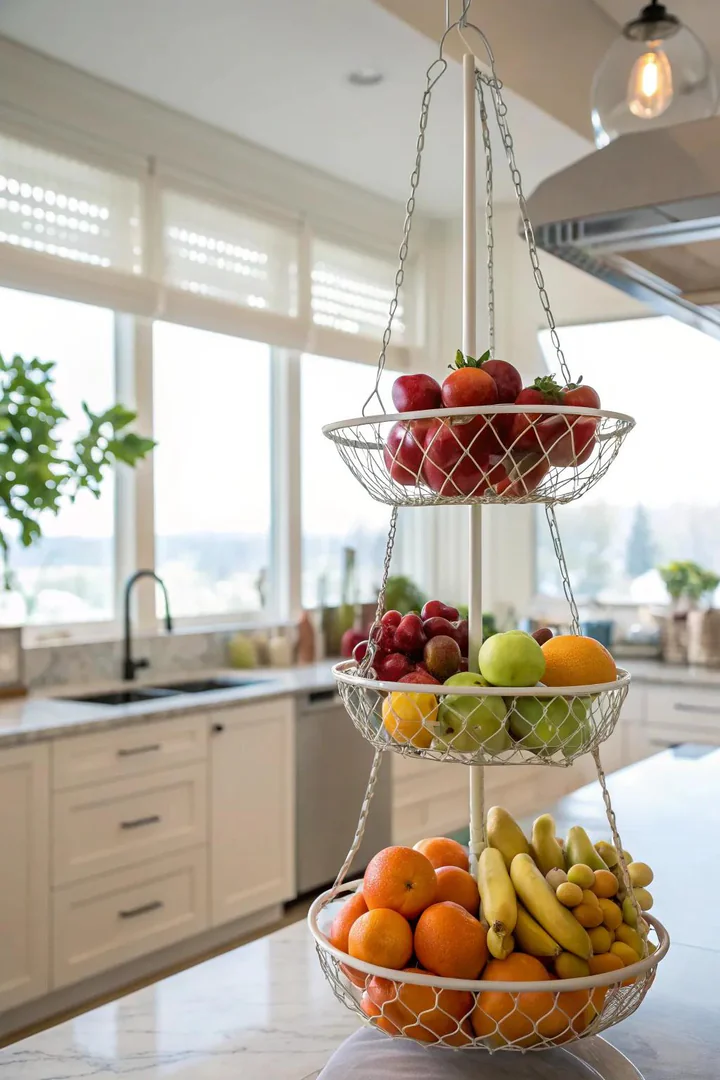
Tiered hanging baskets mount from a ceiling hook or the underside of a cabinet and use vertical space that would otherwise go empty. A three-tier set gives you separate compartments for fruit types that should not touch each other: bananas on top, citrus in the middle, and softer stone fruit on the bottom where any drips fall into the lowest basket rather than onto other produce.
Macrame hangers add a boho texture to the kitchen, while chain-link versions suit modern and industrial layouts. Make sure the ceiling anchor can handle the weight of a fully loaded set, typically 8 to 12 pounds. If drilling into the ceiling is not an option, look for a freestanding floor-to-ceiling tension pole with clip-on baskets. These work well in rentals and can be repositioned without patching drywall. If counter space is your main constraint, our small kitchen storage ideas guide covers more vertical solutions.
6. Berry Box Made of Ceramic
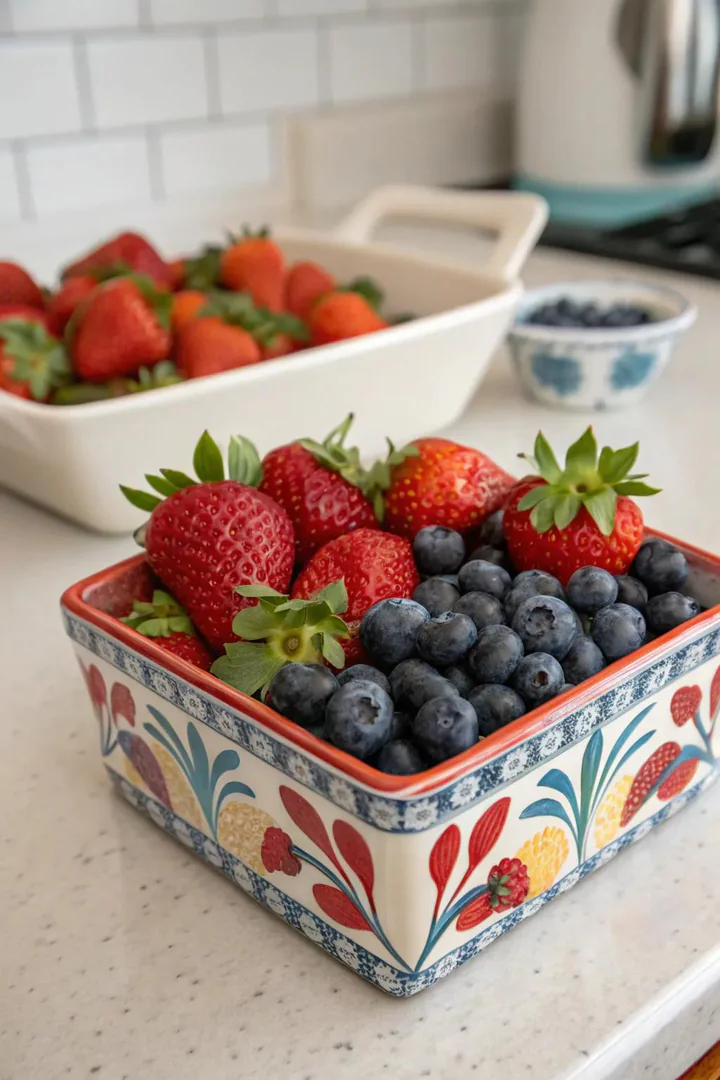
Ceramic berry boxes mimic the shape of a traditional cardboard berry basket but are made from glazed stoneware with drainage holes in the bottom. You can rinse berries directly in the box, let them drain, and then set the whole thing on the counter or in the fridge without transferring to another container. This one-step workflow cuts down on handling, which reduces bruising on delicate raspberries and blackberries.
Most ceramic berry boxes hold about a pint and come in cheerful glazes like cobalt blue, sunflower yellow, and speckled white. Anthropologie, Terrain, and small-batch potters on Etsy produce the widest selection. Stack two or three boxes for a colorful countertop display, or use them as serving dishes when guests come over. They are dishwasher safe and last for years, which makes them far more sustainable than the single-use plastic clamshells from the grocery store.
7. Spinning Fruit Display
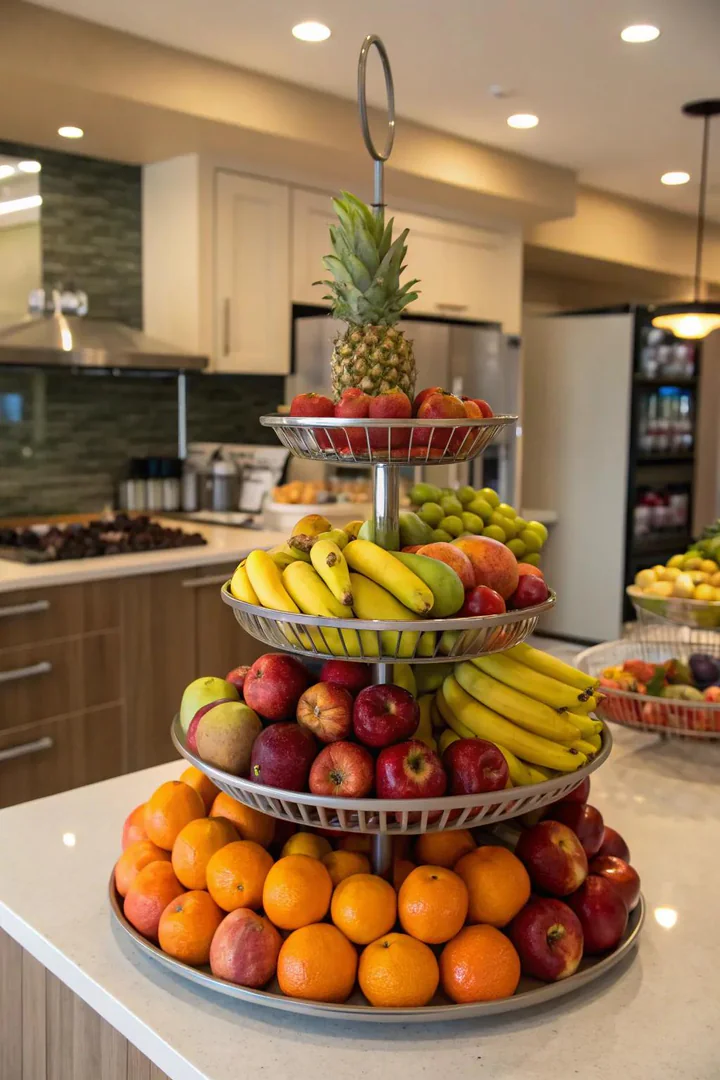
A rotating fruit stand sits on a lazy-Susan base so you can spin the entire display to reach whatever you need without digging through the pile. Two- and three-tier rotating stands are the most practical, offering enough capacity for a full weekly haul of mixed fruit while keeping every piece visible and accessible from any angle.
Stainless steel and powder-coated wire versions are the easiest to clean since fruit juice wipes off without staining. Place the stand near your breakfast station or coffee bar so family members see fresh fruit first thing in the morning, which naturally encourages healthier snacking. The spinning action also helps you spot overripe pieces before they affect the rest of the batch. One maintenance tip: wipe the bearing mechanism underneath with a damp cloth monthly to prevent it from getting sticky and grinding to a halt.
8. Display of Wooden Crates
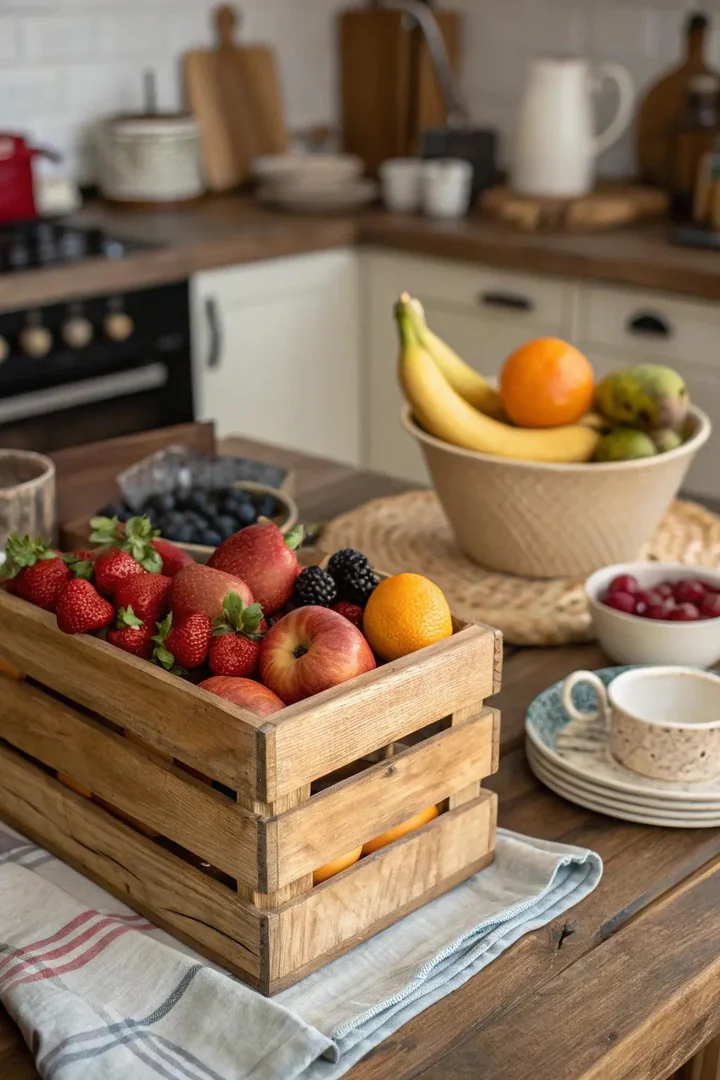
Wooden crates bring an old-world market feel into your kitchen, especially when stacked on open shelving or lined up along a windowsill. Pine and pallet-wood crates are the cheapest options, while acacia and mango wood versions have tighter grain and richer color. The slatted sides allow air to pass through, keeping fruit ventilated and dry.
You can leave the wood raw for a weathered farmhouse aesthetic or stain it to match your cabinetry. Line the inside with a strip of natural linen or burlap to prevent smaller fruit from rolling through the gaps. Crates also stack well, so you can build a mini produce rack in a pantry corner or on a countertop shelf. If you grow your own herbs, a matching wooden crate doubles as a planter box that ties the whole display together visually.
9. Transparent Acrylic Bowl
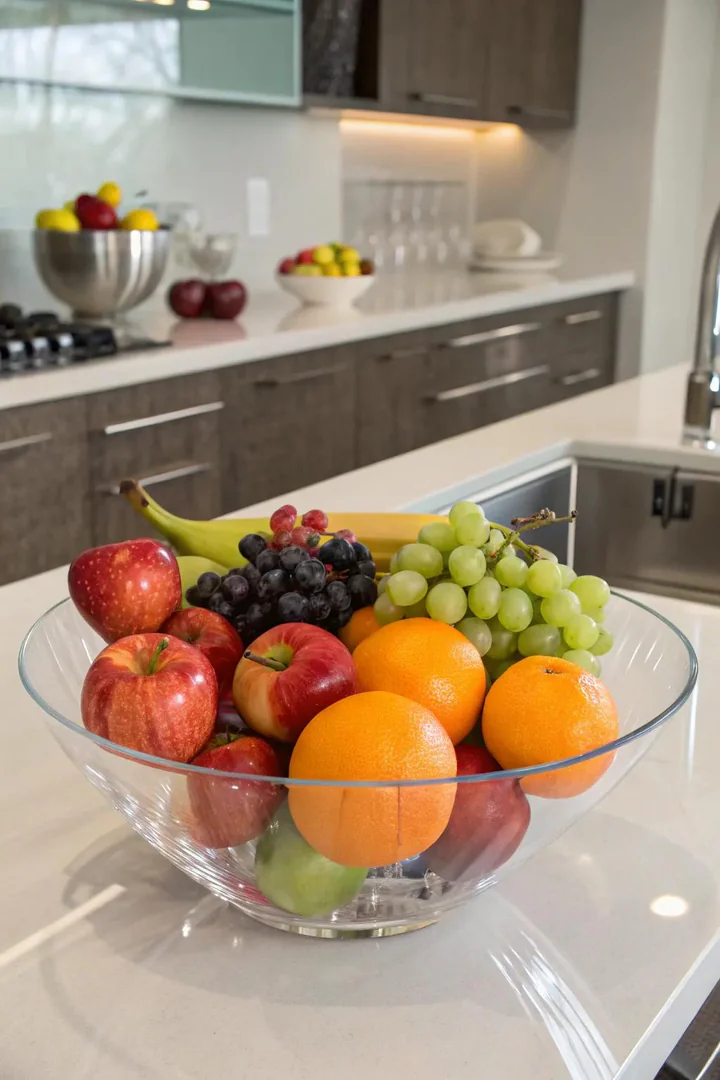
Clear acrylic gives you the same see-through effect as glass at a fraction of the weight and with far less breakage risk. A loaded acrylic bowl is easy to pick up and move, which matters if you regularly shift your fruit display to make room for meal prep. Acrylic also resists shattering if it gets knocked off the counter, making it a smart choice for households with young children.
The tradeoff is scratch resistance. Acrylic scuffs more easily than glass, so hand-wash it with a soft cloth rather than tossing it in the dishwasher alongside metal utensils. High-quality brands like Design Ideas and CB2 produce thick-walled acrylic bowls that stay crystal-clear for years with proper care. Avoid placing acrylic bowls in direct sunlight on a south-facing counter, as prolonged UV exposure can yellow the material over time.
10. Wire Mesh Basket
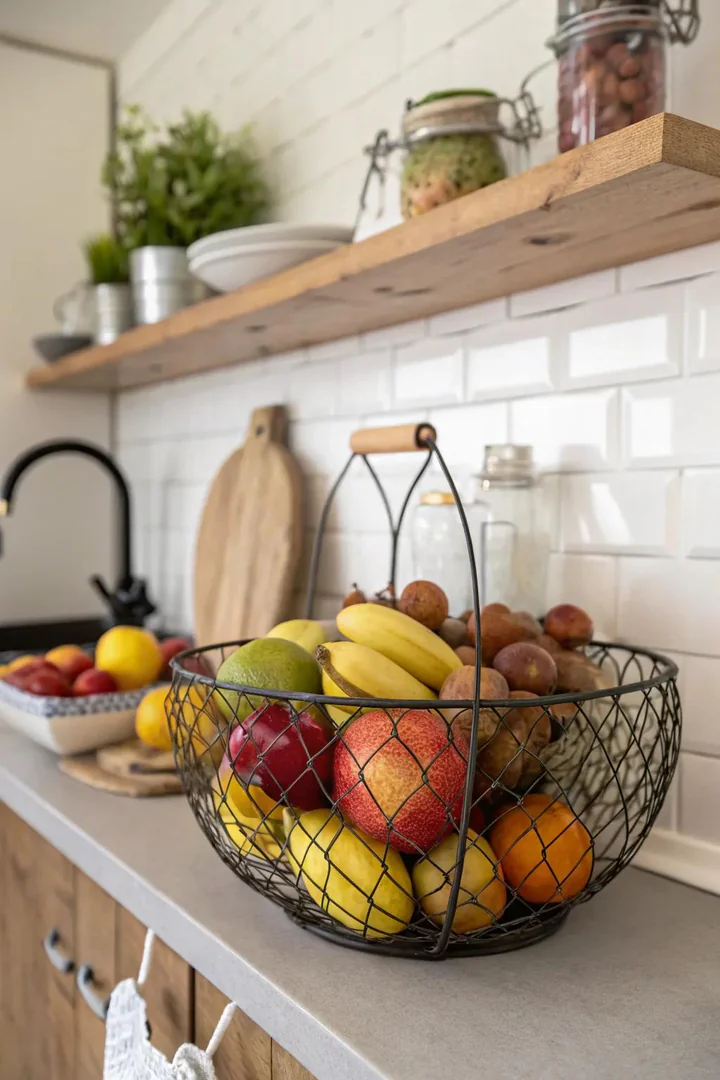
Wire mesh baskets use a finer grid than standard wire baskets, which keeps smaller fruit like plums, apricots, and kiwis from slipping through the gaps. The tighter weave still allows full airflow, so produce stays dry and mold-free. Black and copper mesh finishes are the most popular, and both pair well with modern and industrial kitchen styles.
Mesh baskets come in flat, round, and rectangular profiles. Rectangular mesh trays work particularly well as drawer inserts or shelf liners inside a pantry, organizing fruit in rows so nothing gets buried behind the pile. Round mesh bowls sit nicely on a kitchen island where they act as a casual centerpiece during weekday dinners. Keep an eye on the welded joints at the rim: cheaper mesh baskets develop rough spots that can scratch countertops, so run your finger along the base before buying.
11. Modular Fruit Storage Bins
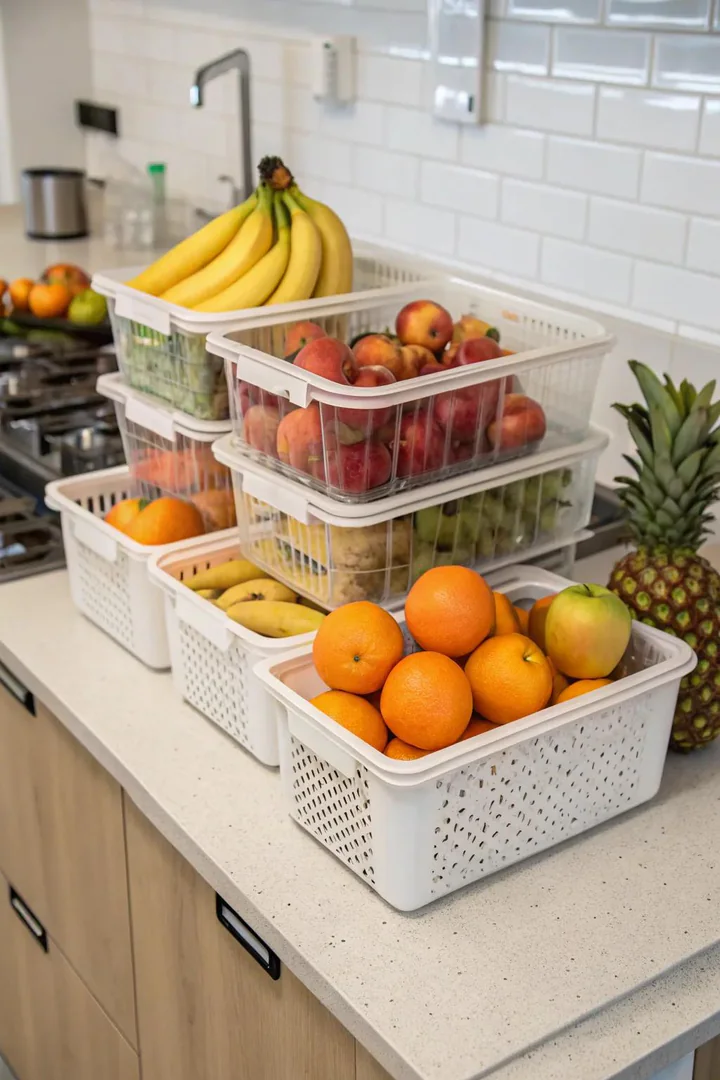
Stackable bins let you build a custom fruit storage system that grows or shrinks with your grocery haul. Each bin slots onto the one below it using interlocking tabs, creating a stable tower that holds three to four tiers of produce in the footprint of a single basket. Brands like YouCopia and SimpleHouseware sell modular sets with ventilated sides and removable dividers.
The modular approach is especially useful if you buy fruit in bulk from warehouse stores. After a Costco run, stack four bins high to absorb the extra volume, then remove the top tier as you eat through the supply during the week. Place the tower in a pantry, on a countertop, or inside a deep cabinet with enough vertical clearance. Clear bins let you check stock levels at a glance, while opaque bins in neutral colors keep the look tidy.
12. Ornamental Wooden Bowl
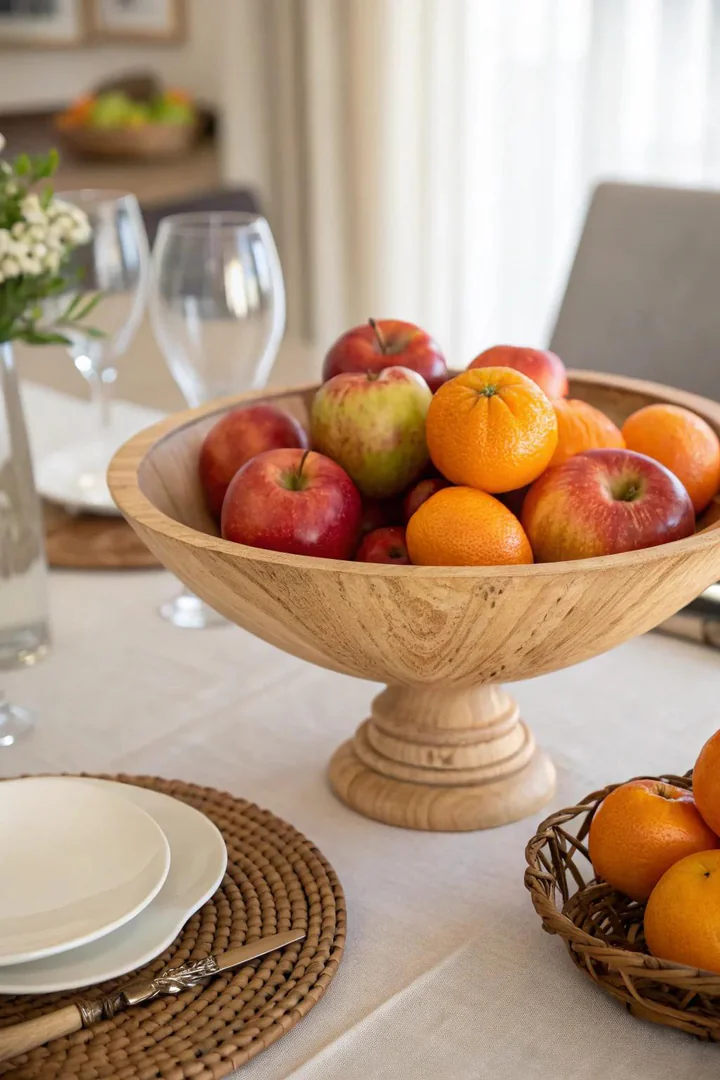
A hand-turned wooden bowl doubles as a fruit holder and a sculptural accent piece. Each bowl carries unique grain patterns, knots, and color shifts that reflect the species of timber used. Acacia, olive wood, and teak are the most common choices for kitchen bowls because they resist cracking in fluctuating humidity better than softer woods like pine or birch.
Treat the bowl with food-safe mineral oil or beeswax finish every month or two to prevent the wood from drying out and developing hairline cracks. Avoid soaking a wooden bowl in water or putting it in the dishwasher. For the best visual effect, choose a bowl diameter that matches or slightly exceeds the width of your centerpiece zone, typically 12 to 14 inches. Fill it loosely rather than packing it tight so the shape of the bowl itself remains visible and contributes to the display.
13. Adjustable Fruit Storage Container
Expandable fruit holders use an accordion or telescoping frame that stretches out when you have a full haul and collapses flat when the bowl is nearly empty. This flexibility prevents the half-empty-basket problem where two lonely apples rattle around in a container built for twenty. Most expandable models are made from bamboo slats or powder-coated steel rods connected with elastic cord.
The collapsed profile is thin enough to slide into a drawer or tuck behind the toaster when not in use, which is a genuine advantage in small kitchens. Extended, the holder typically reaches 14 to 18 inches across, holding a full week’s fruit for a couple. Check the elastic tension before buying: if the cord is too loose, the holder sags under the weight of heavy fruit like mangoes and grapefruits. Tighter cord or metal hinges hold their shape better long-term.
14. Fruit Tray Made of Marble
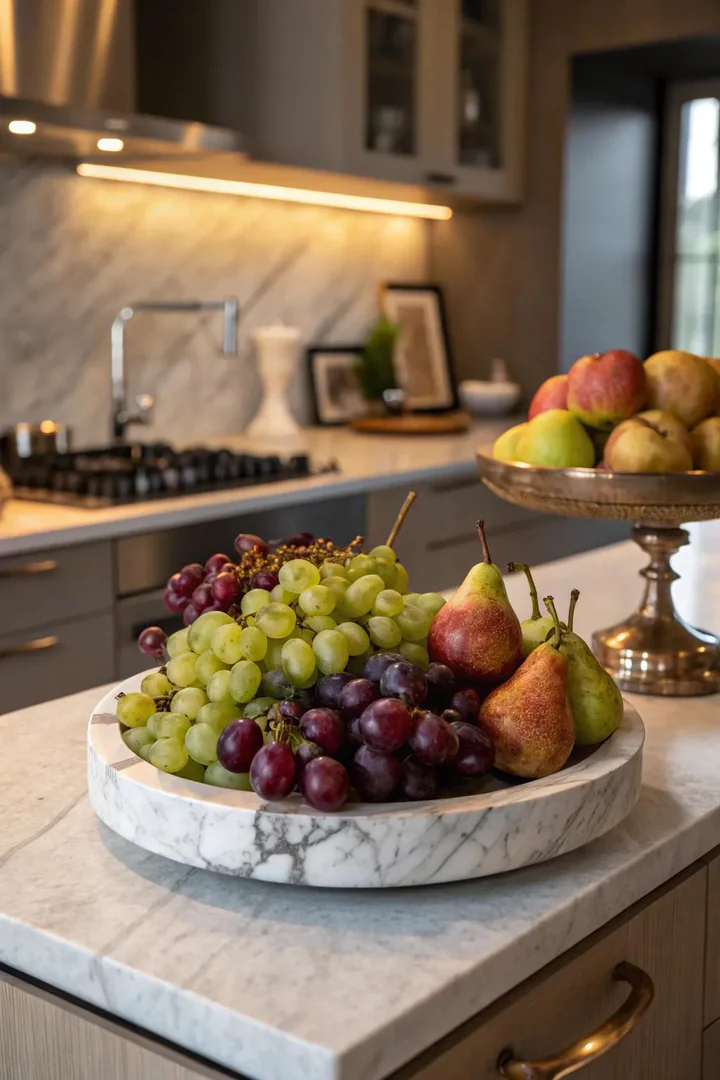
A marble tray keeps fruit naturally cool thanks to the stone’s thermal mass, which absorbs ambient heat and maintains a surface temperature a few degrees below room level. This slight chill helps slow ripening on warm summer days when a wire basket on a south-facing counter would let bananas brown overnight. White Carrara, grey Bardiglio, and green Verde marble are popular choices that pair well with most kitchen color schemes.
Marble is porous, so seal the surface with a food-safe stone sealer once a year to prevent citrus juice and berry stains from setting in. Use felt pads on the underside to protect your countertop from scratches. A rectangular marble tray also works as a cheese board or a serving platter when you host, making it one of the more versatile pieces in this list. Expect to pay $30 to $80 depending on size and stone origin.
15. Fruit Bowls Organized by Color
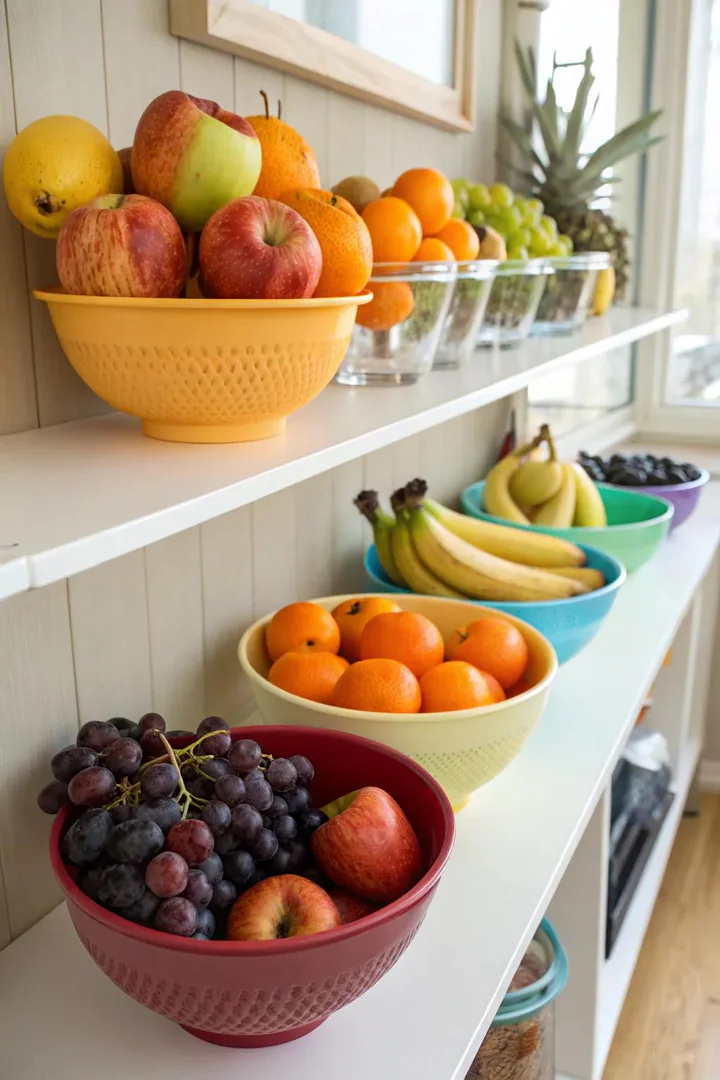
Color-coded bowls assign a specific color to each type of fruit, making the display both a storage system and a visual feature. A red bowl for apples, a yellow bowl for citrus, and a green bowl for limes and kiwis turns the countertop into a color-blocked arrangement that reads as intentional rather than cluttered. This approach also helps family members, especially kids, quickly identify what is available without rifling through a mixed pile.
Ceramic and melamine bowls work best for color coding since both materials come in a wide range of solid hues. Stick to matte finishes rather than high-gloss to keep the setup looking coordinated without competing with the fruit’s natural sheen. Three bowls is the sweet spot for most households: enough variety to separate ethylene producers from sensitive fruit, but not so many that the counter feels overloaded. If your kitchen already leans toward a cohesive accessory palette, match the bowl colors to your existing hardware or textile tones.
How to Choose the Right Fruit Basket
With fifteen styles on the table, narrowing down to one or two comes down to three practical factors.
Material and Durability
Wire and metal baskets are the most durable and easiest to clean. Wood and bamboo add warmth but need periodic oiling. Glass and marble look striking but are heavy and breakable. Acrylic splits the difference with light weight and shatter resistance, though it scratches more easily. Choose the material that matches both your kitchen’s look and your willingness to maintain it over time.
Size and Counter Space
Measure the spot where the basket will live before you shop. A 12-inch-diameter bowl is the standard for a household of two to three people. Families that buy fruit in bulk should step up to a 14- to 16-inch bowl or a two-tier stand. If counter space is tight, wall-mounted or ceiling-hung baskets remove the footprint entirely and free up your work surface.
Airflow and Fruit Freshness
Open structures like wire baskets, mesh bowls, and slatted wooden crates promote airflow around each piece of fruit, slowing moisture buildup and mold growth. Solid bowls made of glass, ceramic, or marble look beautiful but trap humidity at the bottom, which can cause soft spots on the fruit that sits lowest. If you prefer a solid bowl, line the bottom with a paper towel and swap it out every few days to absorb excess moisture.
Fruit Storage Quick-Reference Guide
Use this table to decide what goes in the basket versus the fridge.
| Fruit Type | Best Storage Method | Keep Separate? | Room-Temp Shelf Life |
|---|---|---|---|
| Bananas | Countertop hook or top tier | Yes — high ethylene producer | 4-6 days |
| Apples | Countertop bowl or fridge | Yes — moderate ethylene | 5-7 days |
| Citrus (oranges, lemons) | Countertop bowl | No — ethylene resistant | 7-10 days |
| Berries | Ceramic berry box, then fridge | No — ethylene sensitive | 1-2 days (fridge: 5-7) |
| Stone fruit (peaches, plums) | Countertop until ripe, then fridge | No — keep away from bananas | 2-4 days |
| Melons | Countertop until ripe, then fridge | Yes — moderate ethylene | 3-5 days |
| Grapes | Fridge only | No | 1 day (fridge: 7-10) |
| Avocados | Countertop until ripe, then fridge | No — keep near bananas to speed ripening | 3-5 days |
Common Fruit Storage Mistakes to Avoid
A few habits quietly shorten the life of your produce. Fixing them costs nothing and saves you from throwing away soft, spotted fruit every week.
Storing Bananas with Everything Else
Bananas release more ethylene gas than almost any other fruit. When they sit in the same bowl as peaches, avocados, or kiwis, those neighbors ripen and spoil much faster. Give bananas their own hook, their own tier, or at least the opposite end of the counter from your main fruit bowl.
Washing Fruit Before Storing It
Pre-washing adds surface moisture that accelerates mold growth, especially on berries and grapes. Wash fruit right before you eat it, not when you unpack the grocery bags. If you prefer the convenience of grab-and-go clean fruit, dry each piece thoroughly with a paper towel before placing it in the basket.
Overcrowding the Bowl
Stacking fruit three layers deep blocks airflow and creates pressure points where bruising starts. A single layer with a little breathing room between each piece lasts noticeably longer than a packed pile. If your weekly haul exceeds your basket’s single-layer capacity, use a second smaller bowl or store the overflow in the fridge until counter space opens up.
Frequently Asked Questions
What is the best material for a kitchen fruit basket?
Wire and mesh offer the best airflow and the longest produce life. Bamboo and wood add warmth and are naturally antibacterial but need periodic oiling. Glass and marble look polished but trap moisture at the bottom. For most households, a powder-coated wire basket in a finish that matches your kitchen hardware is the most practical starting point.
Should fruit be stored on the counter or in the fridge?
Tropical and subtropical fruit like bananas, mangoes, and citrus ripen best at room temperature. Berries, grapes, and cut fruit belong in the fridge from day one. Stone fruit like peaches and nectarines can sit on the counter until ripe, then move to the fridge to hold that ripeness for a few extra days.
How do I stop my fruit from going bad so quickly?
Separate ethylene producers (bananas, apples, avocados) from ethylene-sensitive fruit (berries, kiwis, stone fruit). Store produce in a single layer with space for air to circulate. Do not wash until you are ready to eat. Check the basket daily and remove any piece that is overripe before it affects its neighbors.
Can I hang a fruit basket from an apartment ceiling without drilling?
Yes. Adhesive ceiling hooks rated for 10 to 15 pounds hold a three-tier hanging basket filled with light to medium fruit. Tension-pole fruit stands that press between the counter and the underside of a cabinet are another drill-free option. Both remove cleanly when you move out, leaving no holes or marks.
How often should I clean my fruit basket?
Wipe wire, mesh, and acrylic baskets with a damp cloth once a week. Wooden and bamboo bowls should be hand-washed with mild soap and dried immediately, never left to soak. Marble trays need a food-safe stone cleaner monthly to prevent juice stains from setting into the pores. If you notice sticky residue, clean the basket right away rather than waiting for your weekly wipe-down.
How many fruit baskets does a typical kitchen need?
Most households do well with one primary basket on the counter for everyday fruit and one smaller secondary container, either a berry box in the fridge or a hanging basket near the prep area. If you buy in large quantities, add a stackable bin set in the pantry as overflow storage. Three separate baskets is usually the practical maximum before the counter starts feeling crowded.
Conclusion
A well-chosen fruit basket keeps your produce fresher, makes healthy snacking easier, and adds a finished look to the counter with zero renovation. The 15 ideas above cover every style from rustic wooden crates to polished marble trays and every price point from a $10 wire basket to a $80 stone slab. Pick the option that matches your counter space, your weekly fruit volume, and the finish palette you have already committed to in your kitchen.
If you are updating more than just the fruit display, browse our full collection of ideas on the homepage for room-by-room guides that cover every surface and accessory. A single smart swap on the countertop often sparks a chain of small upgrades that make the whole kitchen feel considered rather than cobbled together.