Budget Friendly Above Ground Pool Deck Ideas: 14 Affordable Picks

Budget-friendly above-ground pool deck ideas help you build a safe, code-compliant surround for a 12 to 24-foot round or oval pool without spending $5,000 to $15,000 on a contractor-built wraparound deck. Below are 14 affordable pool deck designs with specific lumber choices, hardware costs, railing options, and construction shortcuts that keep the total build under $500 to $2,000 for most standard above-ground pool sizes.
1. Minimalist Single-Level Deck Platform
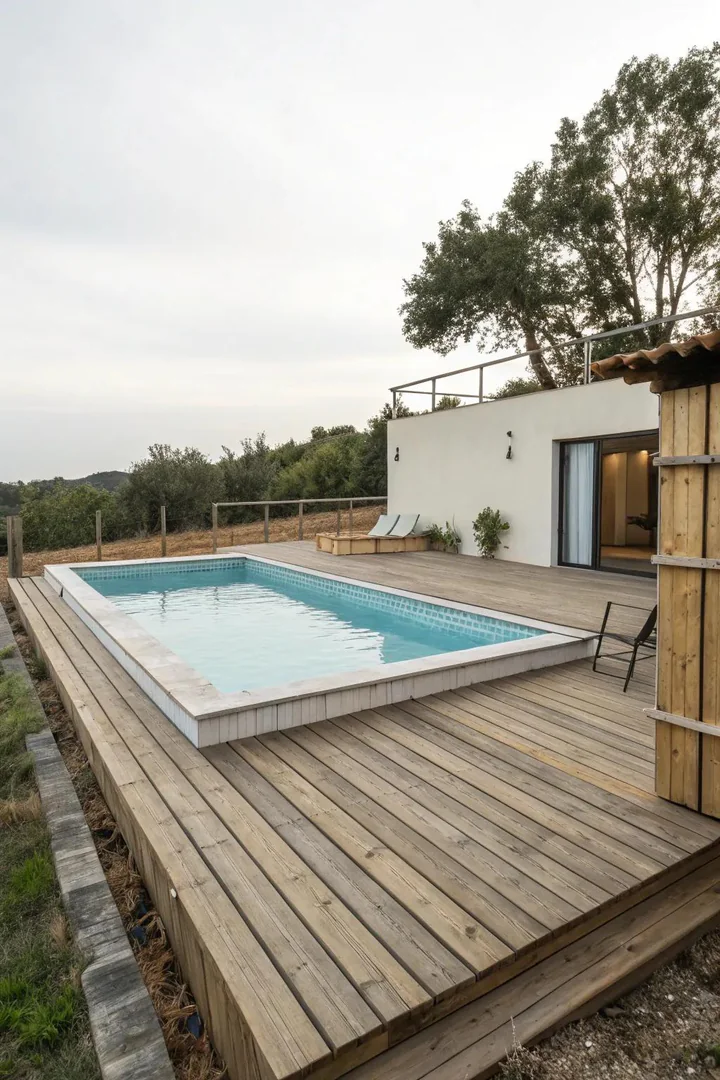
A flat 8 x 12-foot deck platform attached to one side of the pool wall provides a sunbathing and entry zone without wrapping the entire perimeter. Build the frame from pressure-treated 2 x 8 joists on 16-inch centers, supported by 4 x 4 posts on concrete deck blocks ($6 each from Home Depot), and top with 5/4 x 6 pressure-treated decking boards at $1.50 to $2.50 per linear foot.
Total lumber cost for an 8 x 12 platform runs $250 to $400 including joists, decking, posts, and hardware. Skip the railing on platforms under 30 inches above grade (most above-ground pool decks sit 48 to 52 inches high, so a railing is typically required). Screw the deck frame to the pool’s top rail with pool deck brackets (Kayak Pool Deck Bracket Kit, $30 to $50) for lateral stability without penetrating the pool wall.
2. Gravel Surround Pool Deck
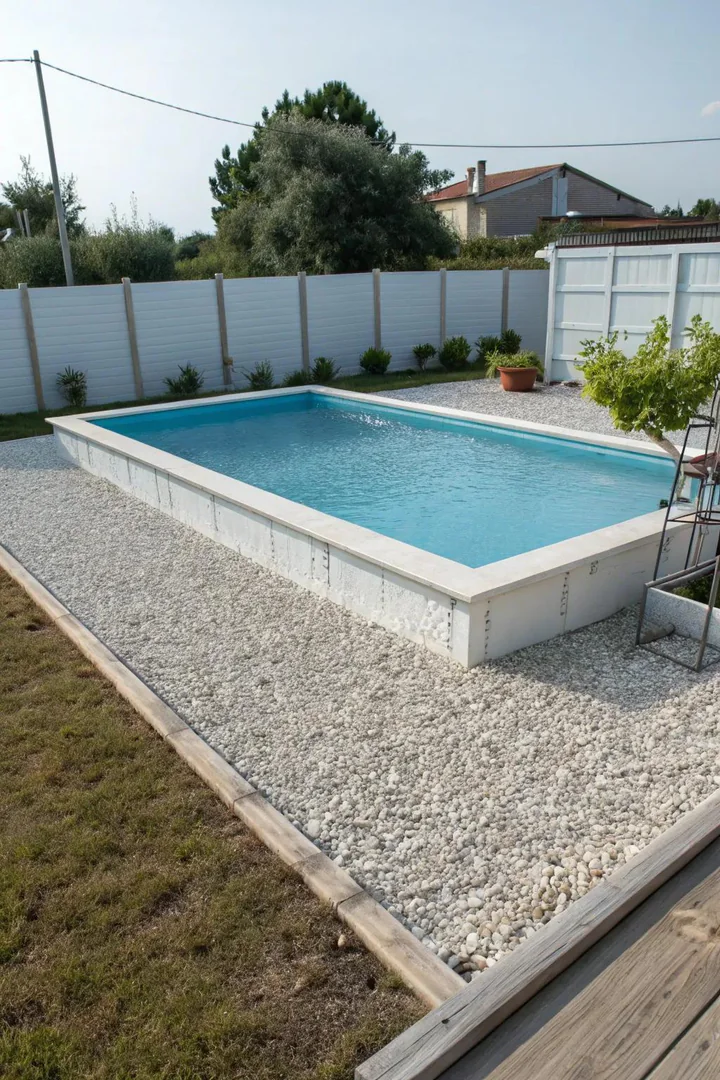
A 3 to 4-foot-wide compacted gravel border around the pool costs $100 to $300 for a standard 15-foot round pool and installs in a single afternoon. Excavate 4 inches deep, line with heavy-duty garden fabric to prevent weed growth, and fill with 3/4-inch pea gravel or decomposed granite at $35 to $50 per ton (one ton covers roughly 80 square feet at 3-inch depth).
Edge the gravel border with steel or aluminum edging (Col-Met or EasyFlex, $2 per linear foot) to prevent stone migration into the lawn. Add three to four 18-inch round stepping stones ($5 to $8 each) from the back door to the pool entry ladder for a clean walking path through the gravel. A gravel surround drains instantly during rain and eliminates the muddy bare-ground zone that forms around pools on exposed soil.
3. Artificial Grass Pool Deck
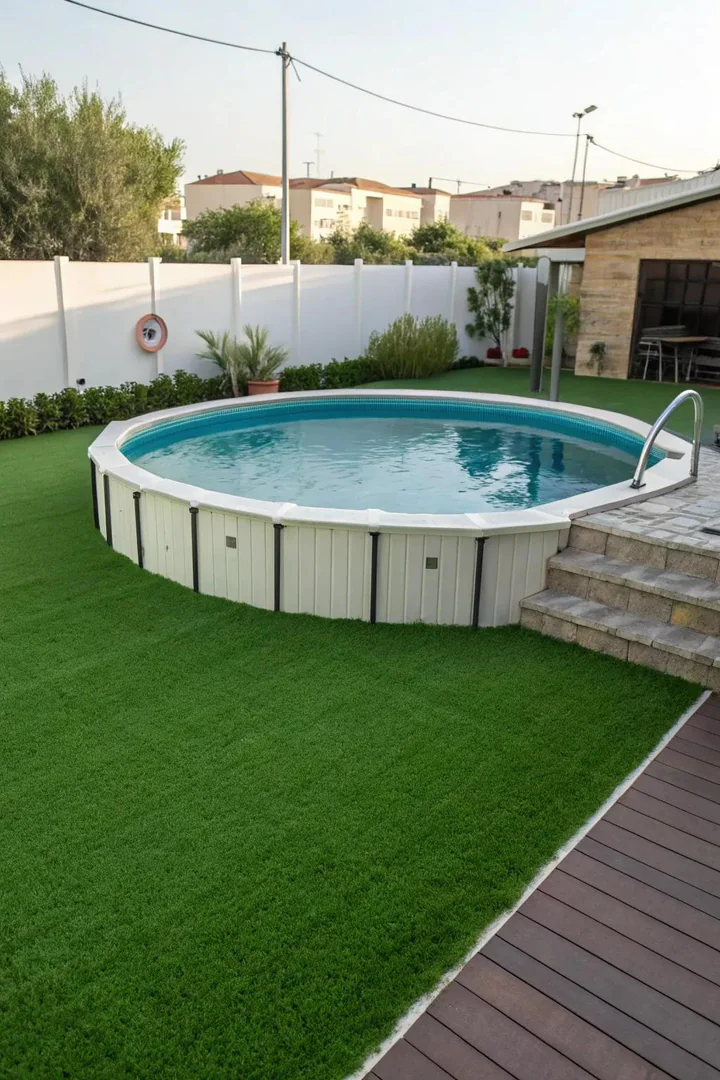
Artificial turf ($3 to $6 per square foot for residential-grade products from Petgrow, SunVilla, or Goasis) creates a soft, always-green surface around the pool that never needs mowing, watering, or chemical treatment. A 150-square-foot turf surround for a 15-foot round pool costs $450 to $900 in materials plus $50 to $100 for infill sand and seam tape.
Lay the turf on a 2-inch base of compacted decomposed granite or crushed limestone for drainage, and secure the edges with 6-inch galvanized turf nails every 6 inches. Choose a product with a drainage rate of 30 inches per hour or higher so pool splash-out and rainwater pass through immediately without puddling. Rinse the turf weekly with a garden hose to wash away chlorine residue that can break down the backing over time.
4. Pool Deck with Planter Boxes
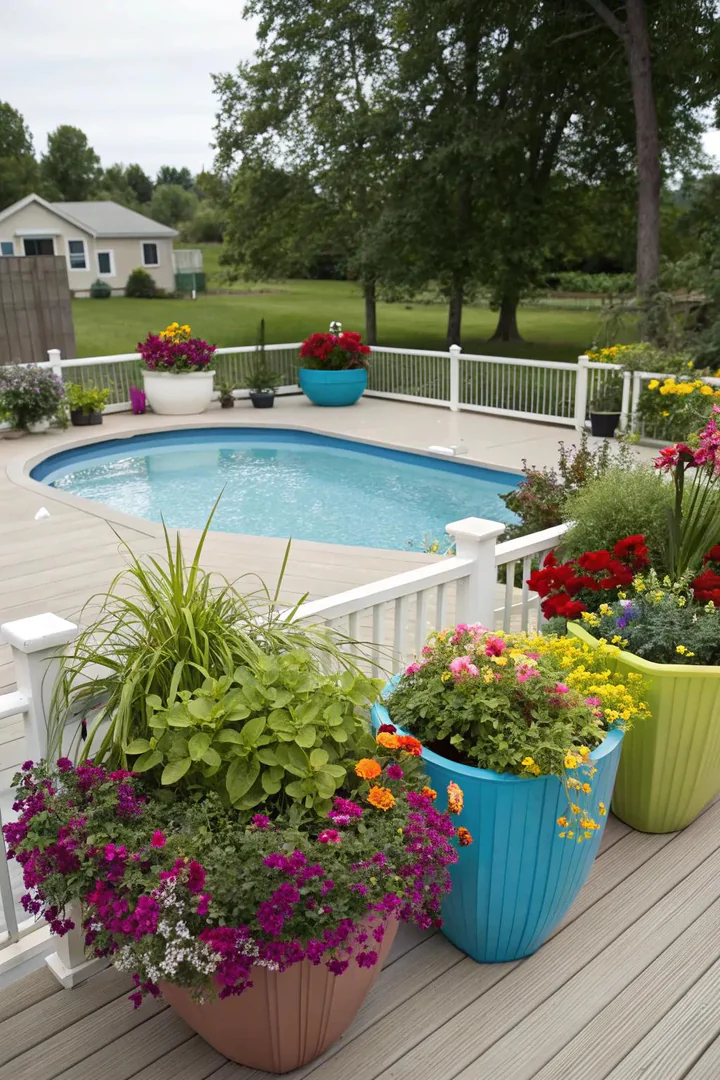
Building planter boxes directly into the deck railing posts adds greenery without reducing usable deck space. Construct each planter from 1 x 6 cedar boards forming a 12 x 12 x 12-inch box, line the inside with pond liner or a plastic insert, and mount the box on top of a 4 x 4 railing post with four L-brackets.
Plant each box with sun-loving ornamental grasses (Blue Fescue, Mexican Feather Grass) or trailing annuals (sweet potato vine, calibrachoa, verbena) that drape over the edge and soften the railing line. Six planter boxes spaced evenly along a 12-foot railing section cost $60 to $90 in cedar lumber and hardware. Add drainage holes in the bottom of each liner so standing water does not rot the wood or breed mosquitoes.
5. Composite Decking Pool Surround
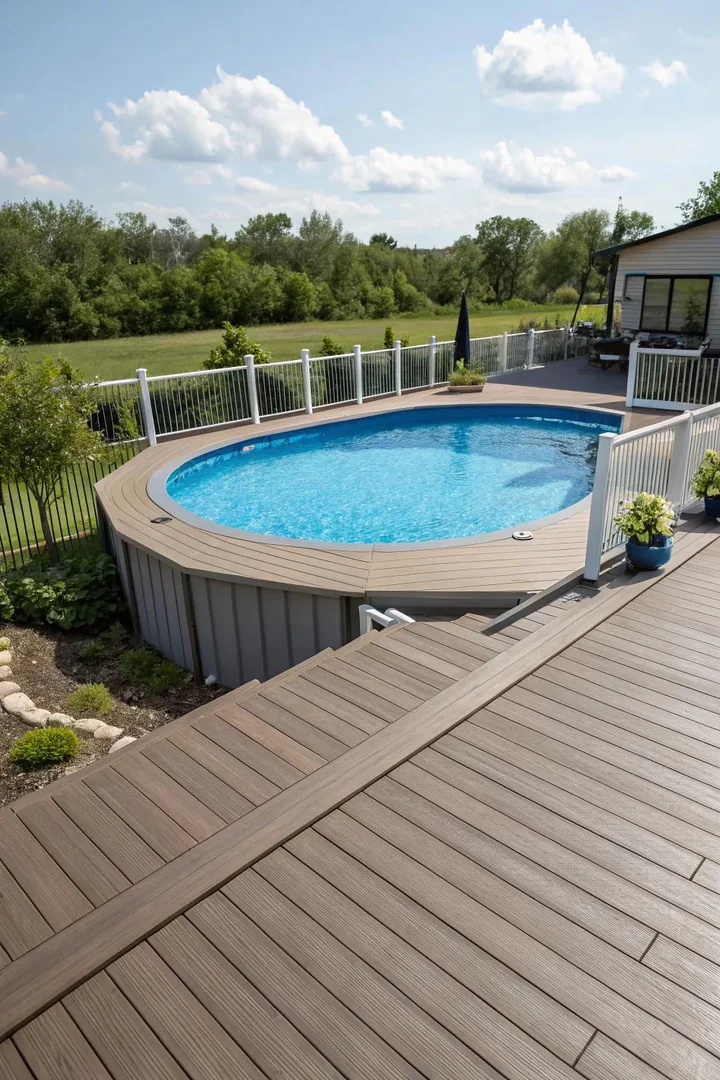
Composite decking boards (Trex Select Basics at $2.50 per linear foot, TimberTech Edge Prime+ at $3 per foot, or NewTechWood UltraShield at $3.50 per foot) cost more upfront than pressure-treated pine but never need staining, sealing, or sanding, saving $100 to $200 per year in maintenance supplies and labor. A 96-square-foot pool deck (8 x 12 feet) needs roughly 100 linear feet of 5.5-inch-wide boards at $250 to $350 total.
Composite boards resist chlorine splash, UV fading, and mold growth better than natural wood, making them ideal for the wet poolside environment. Fasten boards with hidden clip systems (Camo Edge, $40 per 90-clip bucket) for a screw-free surface that is comfortable underfoot. Leave 1/4-inch expansion gaps between boards because composite expands more than wood in direct sun.
6. Raised Deck at Pool-Rim Height
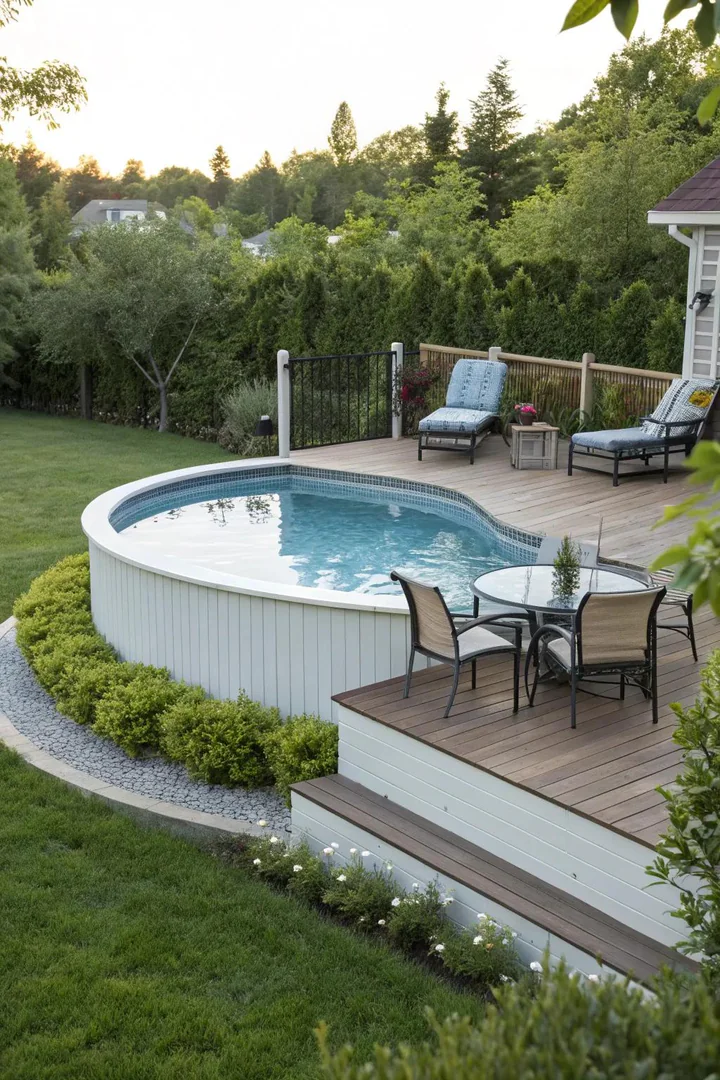
Building the deck surface flush with the top rail of the pool (typically 48 to 52 inches above ground) creates a walk-on entry point that eliminates the need for a separate pool ladder. Support the raised deck on 6 x 6 posts set in 42-inch-deep concrete footings, with a ledger board lag-bolted to the house rim joist (using 1/2 x 4-inch lag screws and Simpson Strong-Tie DTT2Z tension ties for code compliance).
A raised deck requires a 36 to 42-inch railing on all open sides per IRC R312.1 and stairs with a maximum 7.75-inch rise and 10-inch tread per IRC R311.7. Total lumber cost for a raised 8 x 16-foot deck with railing and stairs runs $600 to $1,200 in pressure-treated pine, making the raised option the most expensive DIY approach but also the most functional for daily pool access. Browse more backyard play and recreation builds for additional outdoor project ideas.
7. Curved Railing Pool Deck
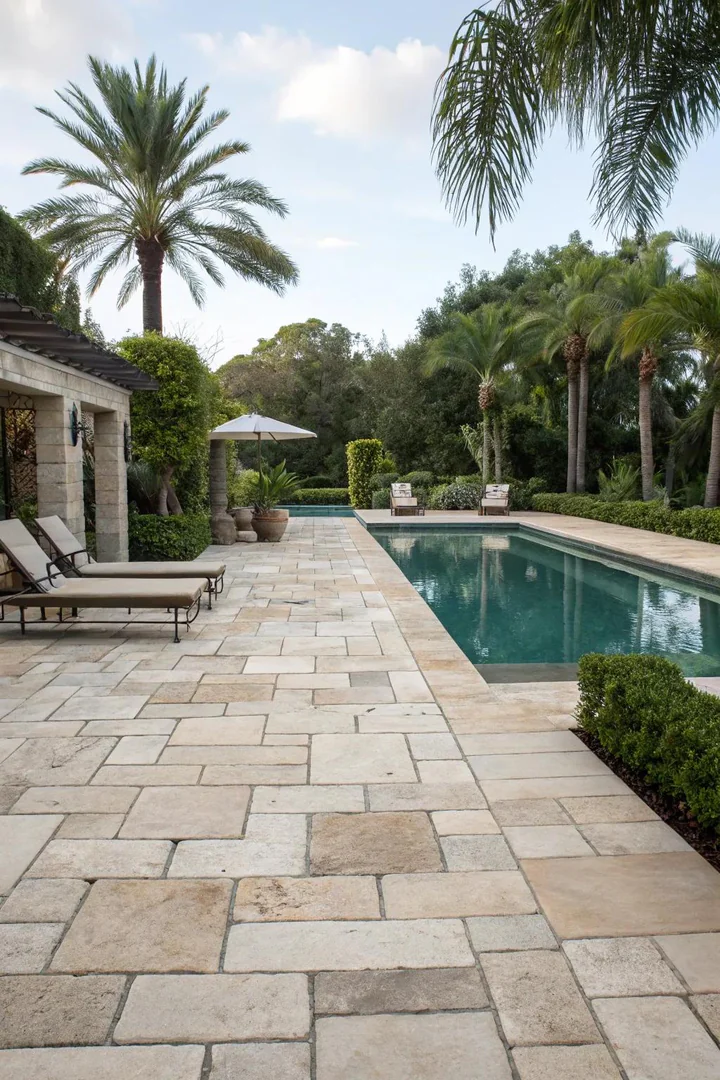
Adding a curved railing section that follows the pool’s round shape gives the deck a polished, custom-built appearance. Bend a top rail to match the pool radius by kerfing the underside of a 2 x 4 (saw cuts every 1/2 inch, 3/4 of the way through the thickness) and bending it gently around the curve, or use a flexible PVC vinyl railing system (Deckorators Flex Rail, $8 to $12 per linear foot) that follows curves without cutting.
Mount turned balusters (36-inch aluminum or composite spindles, $3 to $6 each) at 3.75-inch center spacing to meet the 4-inch maximum gap code requirement. A 16-foot curved railing section costs $150 to $300 in materials depending on whether you choose wood, vinyl, or composite components. Pre-drill all baluster holes to prevent splitting on curved sections where the wood grain runs at an angle to the fastener.
8. Extended Existing Deck
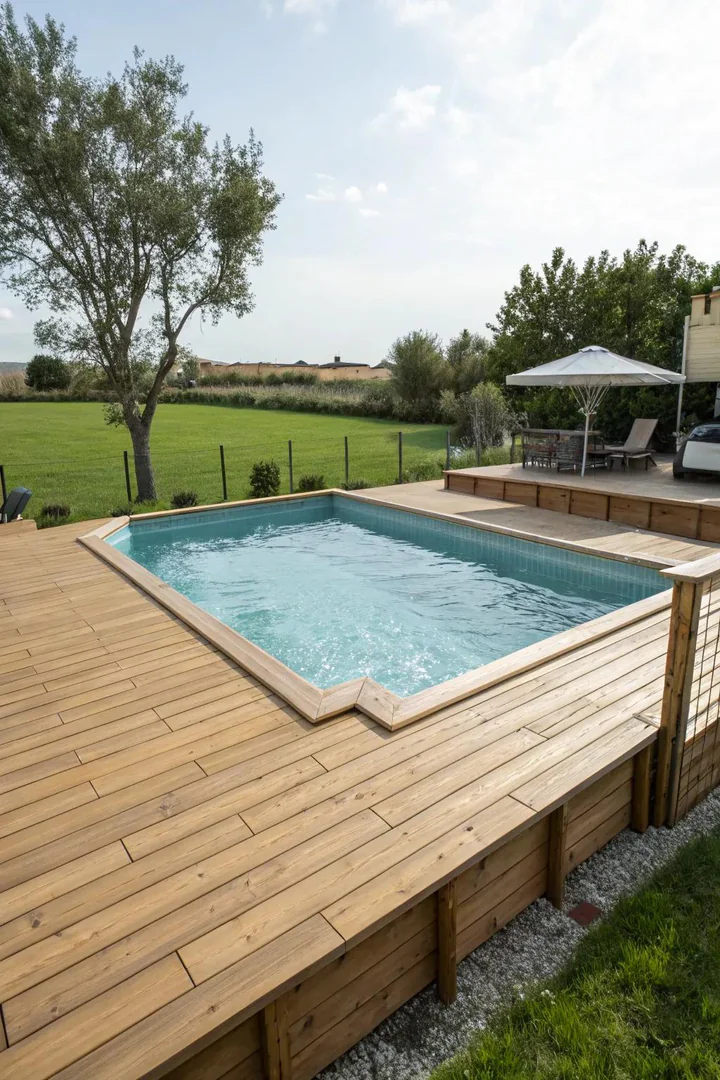
Connecting a new deck section from an existing backyard deck to the pool wall is the cheapest way to add pool access because the existing structure already provides the ledger connection, stairs, and part of the framing. Extend the existing joist system by sistering new 2 x 8 or 2 x 10 joists to the original frame with 1/2 x 4-inch carriage bolts every 16 inches.
Match the new decking boards to the existing species and color as closely as possible, or stain both sections the same shade (Cabot Semi-Solid Stain, $35 per gallon) for a unified look. A 6 x 8-foot deck extension costs $150 to $300 in lumber if the existing deck already reaches within 6 feet of the pool wall. Check the existing deck’s footer and joist condition before adding load; replace any cracked, warped, or soft boards before building outward.
9. Low-Cost Vinyl Railing Pool Deck
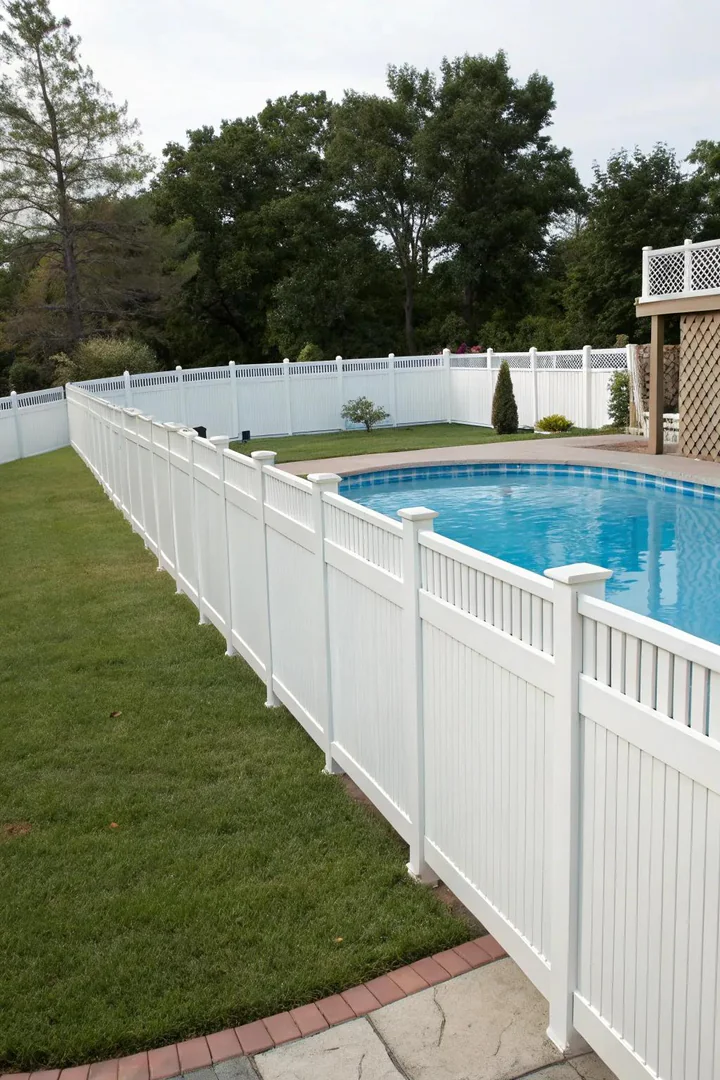
Pre-assembled white vinyl railing kits ($40 to $80 per 6-foot section from Veranda at Home Depot or Freedom at Lowe’s) snap together without painting or staining and resist chlorine splash, sun bleaching, and mildew growth for 15-plus years. A 24-foot railing run (one long side and two short returns) costs $160 to $320 in vinyl kits versus $300 to $500 for equivalent composite railing.
Add solar-powered post cap lights ($10 to $20 per cap from GreenLighting or Davinci) to the top of each railing post for automatic nighttime deck lighting that runs entirely on sunlight. Solar caps charge during the day and glow for 6 to 8 hours after dark, eliminating the need for wired lighting or battery changes. A set of six solar caps adds $60 to $120 to the total deck cost.
10. Pool Deck with Built-In LED Lighting
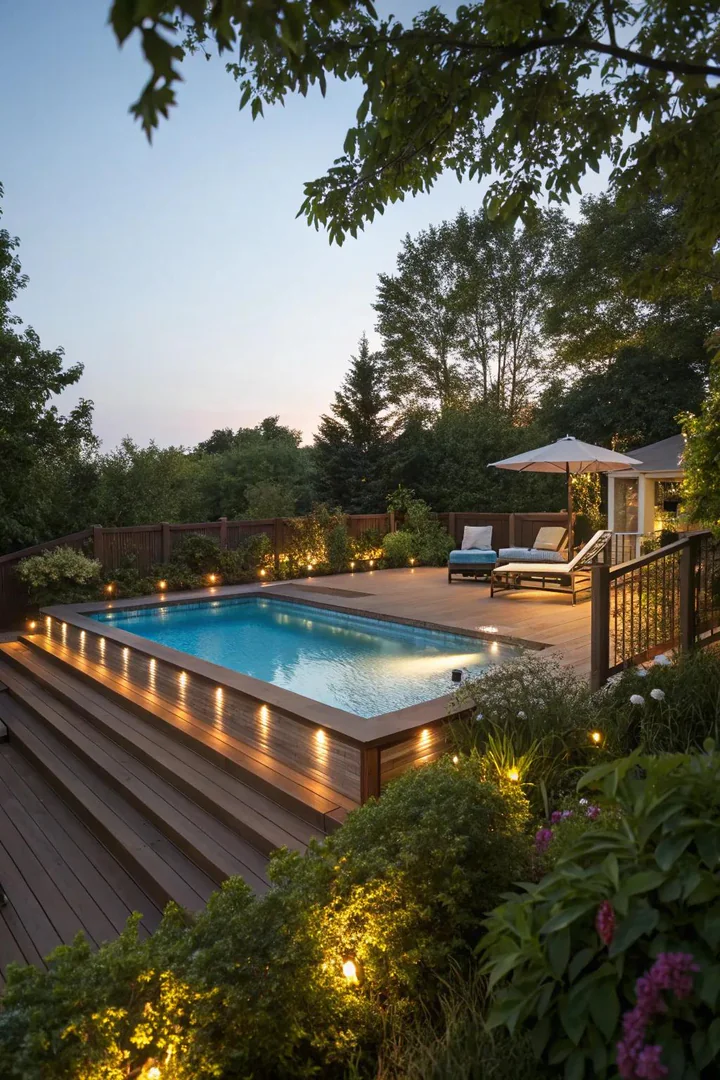
Recessed LED strip lights ($20 to $40 for a 16-foot waterproof IP65-rated strip from HitLights or Philips Hue Outdoor) installed under the railing cap or along the step risers provide safe nighttime pool access and a glowing visual accent. Run 12V LED strips in a routed channel under the top rail and cover with a snap-in frosted diffuser lens, or adhere the strip to the step riser face using the built-in 3M adhesive backing.
Power the 12V system from a weatherproof low-voltage power supply ($15 to $25) plugged into a GFCI outdoor outlet at least 6 feet from the pool edge per NEC code 680.22. Choose warm white (2700K) for a golden evening glow or RGB color-changing strips ($30 to $50) with a remote control for pool party ambiance. The full LED setup draws under 15 watts and costs less than $5 per year in electricity running 6 hours per night.
11. Contrasting Color Deck Boards
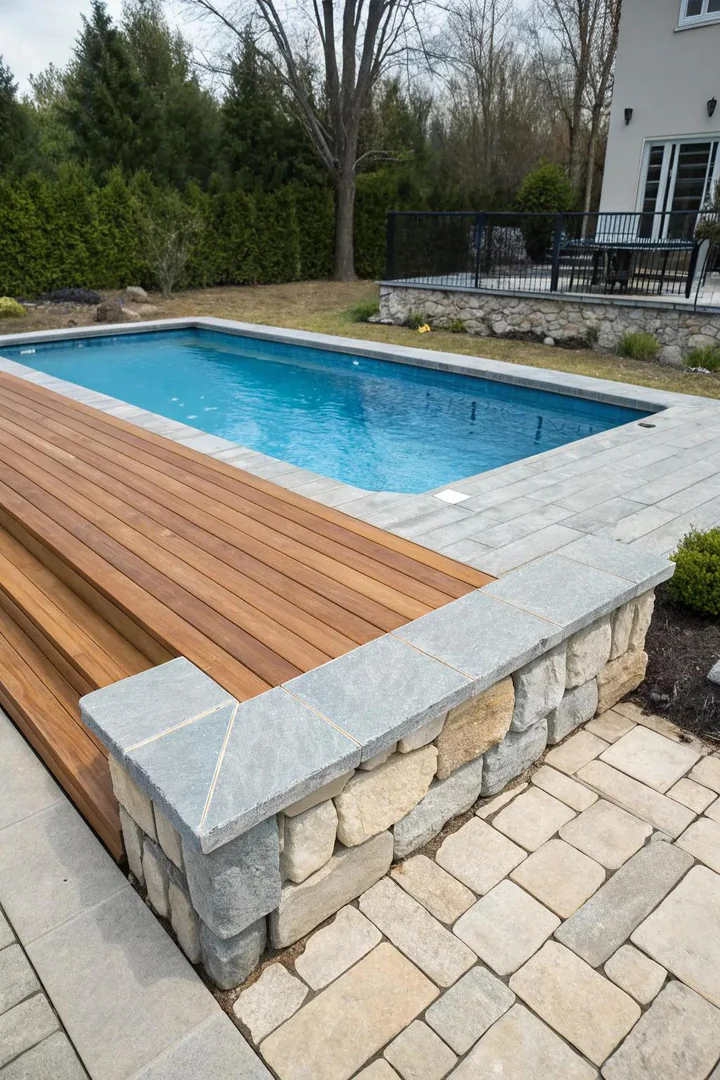
Alternating two stain colors on the decking boards (light cedar and dark walnut, gray and natural, or white and charcoal) creates a two-tone striped pattern that adds visual interest for zero extra material cost. Stain boards before installation by setting them across sawhorses, applying one coat of semi-transparent stain (Cabot, Ready Seal, or TWP), and allowing 24 hours of drying time.
Alternate colors every two to three boards for a wide stripe or every single board for a narrow pinstripe effect. Mark each board with painter’s tape during pre-staining so the pattern stays consistent during installation. A two-tone deck costs the same as a single-color deck (add only $35 to $70 for a second gallon of stain) but produces a finished look that appears custom-designed.
12. Multi-Level Pool Deck
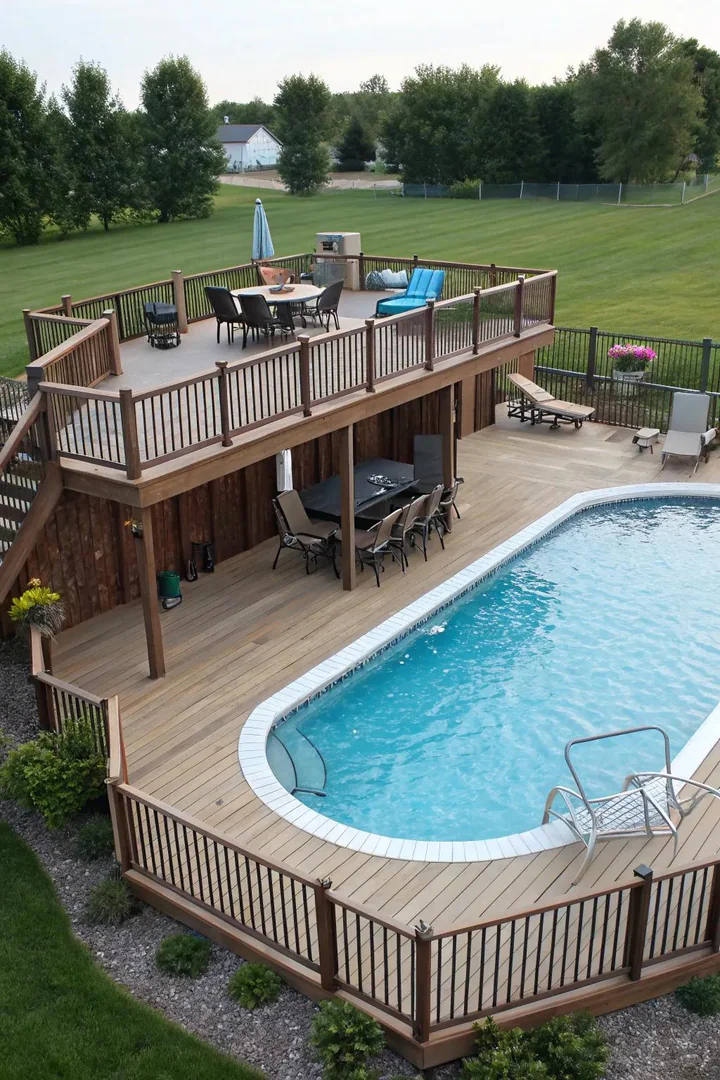
A two-tier deck with a lower sunbathing platform (12 to 18 inches above grade) and a raised pool-entry level (at pool-rim height, 48 to 52 inches) separates the wet zone from the dry zone and creates built-in seating along the step between levels. Connect the two tiers with a single set of three to four wide stairs (48 inches minimum width) built from 2 x 12 stringers and 5/4 x 6 tread boards.
The lower tier costs less per square foot because its shorter posts need fewer footings and less bracing. A 10 x 10-foot lower tier plus a 6 x 10-foot upper tier costs $500 to $1,000 in pressure-treated lumber, roughly 30 percent less than building the entire surface at full pool-rim height. Add a covered porch section over the lower tier for shaded seating next to the pool.
13. Recycled Material Pool Deck
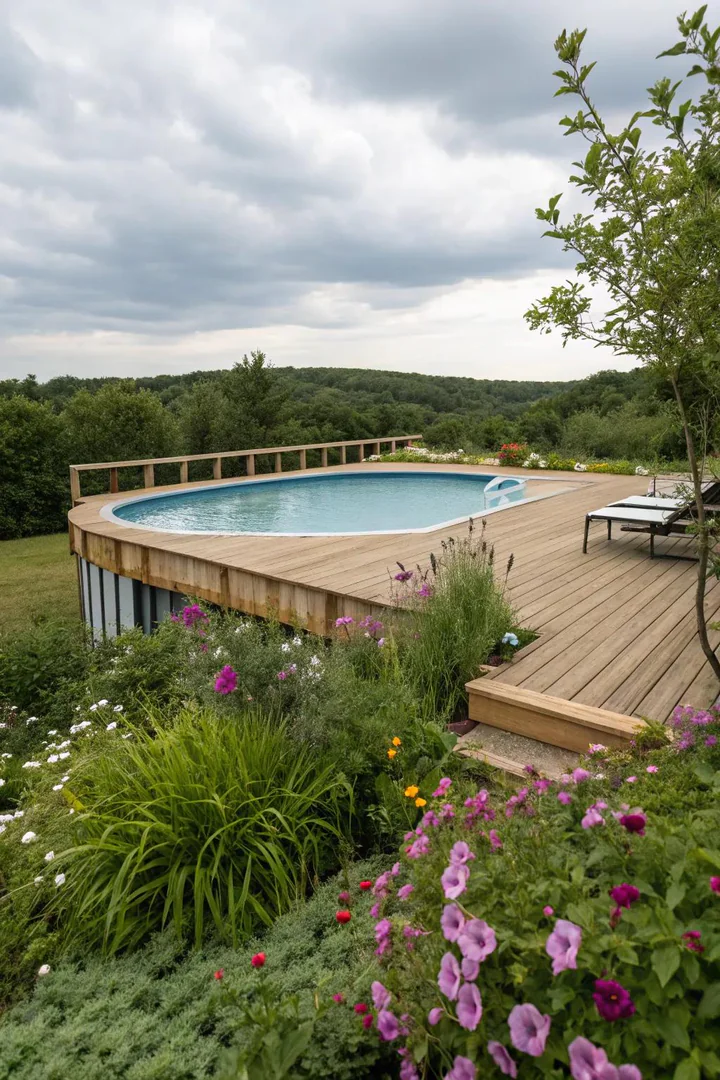
Building a pool deck from salvaged lumber (fence boards, pallet wood, barn siding, or demolition-site framing) cuts the decking material cost by 50 to 80 percent. Source free or cheap lumber from Craigslist, Facebook Marketplace, Habitat ReStore, or construction dumpsters (ask permission first). HT-stamped pallets and untreated fence boards are the safest salvage choices for poolside use.
Sand all reclaimed boards to 80 grit to remove splinters and nail holes, seal with two coats of Thompson’s WaterSeal or Cabot Clear Solution, and install on a new pressure-treated frame (never reuse structural lumber from unknown sources for joists or posts). A fully recycled deck surface on a new frame costs $100 to $200 for a 96-square-foot platform versus $300 to $500 for the same size in new lumber. Check more outdoor space designs for additional budget-saving ideas.
14. Pool Deck with Outdoor Rug Zone
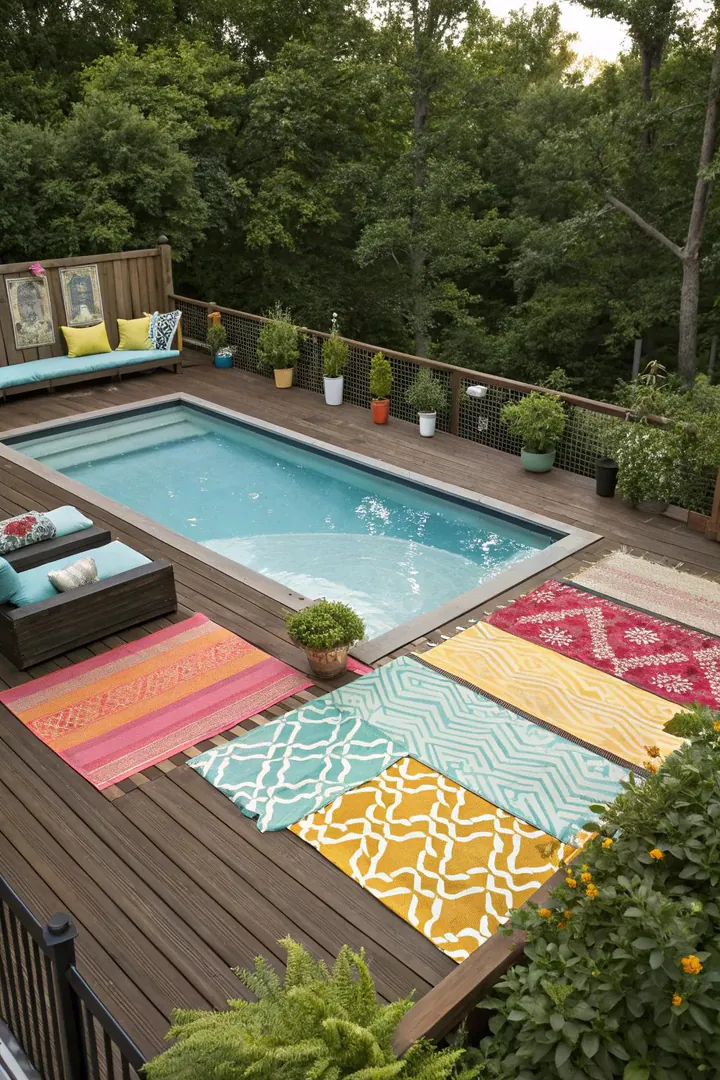
An outdoor polypropylene rug ($30 to $80 for a 5 x 8-foot size from Safavieh, nuLOOM, or Unique Loom) placed on the dry section of the pool deck defines a lounge zone, adds color and pattern, and keeps bare feet off hot wood during peak sun hours. Choose a rug with a UV-stabilized polypropylene weave that resists chlorine splash, fading, and mildew.
Place the rug on the lower tier or the section farthest from the pool edge to reduce water exposure. Flip the rug weekly to prevent moisture buildup underneath, and hose it clean monthly with dish soap and water. A single 5 x 8 rug plus two folding lounge chairs ($50 to $100 per pair from Amazon Basics or Mainstays) creates a poolside relaxation zone for under $150 total. Browse more design ideas at The Designers Company for outdoor living projects on any budget.
How to Build a Budget Above-Ground Pool Deck
1. Measure the Pool and Plan the Deck Size
Measure the pool’s outside diameter (round) or length and width (oval/rectangular) at the top rail and add 4 to 6 feet on the side where the deck will sit. A 15-foot round pool with a 6-foot-wide deck platform needs a finished deck roughly 6 x 12 feet (72 square feet). Sketch the layout on graph paper at 1/4-inch scale, marking the pool edge, deck boundaries, stair location, and railing runs.
2. Set the Footings and Install Posts
Dig post holes 24 to 42 inches deep (below frost line in your zone) at 6-foot intervals along the deck perimeter and at every beam-support point. Set 4 x 4 or 6 x 6 posts in concrete (Quikrete Fast-Setting, $6 per 50-pound bag, two bags per hole) and level each post plumb with a torpedo level while the concrete sets. Alternatively, use surface-mount concrete deck blocks ($6 each) for decks under 30 inches high that do not require frost-depth footings per local code.
3. Frame the Deck and Install Decking
Bolt a doubled 2 x 8 beam across the post tops, hang 2 x 8 joists on 16-inch centers using joist hangers (Simpson Strong-Tie LUS28, $1.50 each), and screw 5/4 x 6 decking boards perpendicular to the joists with 3-inch coated deck screws (GRK R4, $45 per box of 100). Pre-drill the last 1 inch of each board end to prevent splitting. Leave 1/8-inch gaps between boards for drainage and expansion.
4. Add Railings and Stairs
Install 36 to 42-inch railings on all open sides per local building code (IRC R312.1 requires guards on decks 30 inches or more above grade). Mount 4 x 4 railing posts every 6 feet with carriage bolts through the rim joist, and attach top and bottom rails with 2 x 4 horizontal members. Space balusters no more than 4 inches apart. Build stairs with notched 2 x 12 stringers, 5/4 x 6 treads, and a graspable handrail (1.25 to 2-inch diameter round or oval profile).
5. Finish and Weatherproof
Sand all surfaces to 120 grit, round over sharp edges with sandpaper or a router, and apply two coats of exterior deck stain or sealer (Ready Seal Natural Cedar, $40 per gallon, or Olympic Maximum, $35 per gallon). Allow 24 to 48 hours of drying time before placing furniture. Inspect the pool-to-deck connection points for any gaps or movement after the first week, and add shims or brackets as needed to eliminate any lateral play.
Pool Deck Material Cost Comparison
| Material | Cost per Sq Ft | 96 Sq Ft Total | Lifespan | Maintenance |
|---|---|---|---|---|
| Pressure-Treated Pine | $3 to $6 | $290 to $575 | 10 to 15 years | Stain every 2 to 3 years |
| Cedar | $5 to $9 | $480 to $865 | 15 to 20 years | Oil annually or let gray |
| Composite | $6 to $12 | $575 to $1,150 | 25+ years | Soap and water only |
| Recycled Pallet/Fence | $0.50 to $2 | $50 to $190 | 5 to 8 years | Seal annually |
| Gravel Surround | $1 to $3 | $100 to $290 | 5 to 10 years | Rake and top-dress yearly |
| Artificial Turf | $3 to $6 | $290 to $575 | 8 to 12 years | Hose rinse weekly |
Frequently Asked Questions
Do you need a permit to build a deck around an above-ground pool?
Most municipalities require a building permit for any deck over 200 square feet or over 30 inches above grade, and pool-adjacent decks typically fall under both the deck code (IRC Chapter 5) and the pool barrier code (IRC R326 or local equivalent). Contact your local building department before starting construction to confirm permit requirements, setback distances, railing height minimums, and gate/latch specifications for pool access points. Permit fees typically range from $75 to $300 depending on the jurisdiction and deck size.
What is the cheapest way to deck around an above-ground pool?
A compacted gravel border ($100 to $300 for a 15-foot round pool) is the absolute lowest-cost option. A single-side deck platform in pressure-treated pine (8 x 12 feet) costs $250 to $400 in materials for a DIY build. Using recycled pallet or fence-board decking on a new frame cuts the surface material cost to $50 to $100. Pair the pool deck with a metal roof patio cover for year-round shade without increasing the deck framing budget.
How far should a deck extend from an above-ground pool?
A minimum 4-foot-wide deck provides comfortable single-person walking space and room for one lounge chair. A 6-foot width accommodates two chairs side by side and allows two people to pass each other. An 8-foot depth gives room for a small table and two chairs. The deck should extend the full width of the pool entry point (at least 4 feet on each side of the ladder) for safe mounting and dismounting.
Can you attach a deck directly to an above-ground pool wall?
Never bolt or screw through the pool wall itself, as any penetration can cause leaks, structural failure, or void the manufacturer’s warranty. Use pool deck brackets (Kayak Pools, Cornelius Pools, or universal-fit kits, $30 to $80 per set) that clamp over the top rail without drilling. Alternatively, build the deck frame as a freestanding structure that wraps against the pool exterior and supports itself on independent footings. A 1 to 2-inch gap between the deck frame and pool wall allows for pool expansion and contraction with temperature changes.
What kind of wood should you avoid near a chlorinated pool?
Untreated softwoods (white pine, spruce, hemlock) rot within two to three seasons from constant chlorine splash and moisture exposure. Douglas fir holds up slightly better but still needs aggressive sealing to prevent surface graying and fungal decay. Stick with pressure-treated Southern Yellow Pine (ACQ or MCA treatment), Western red cedar, or composite decking for any surface within 6 feet of the pool edge where chlorinated water contacts the wood regularly.