DIY Swing Set Ideas: 16 Amazing Builds Your Kids Will Love Forever

DIY swing set ideas range from a single tree-mounted rope swing and a basic A-frame build to multi-station play sets with climbing walls, trapeze bars, and platform swings, all using standard lumber and hardware from any home center. Below are 16 swing set designs with specific lumber lists, hardware counts, weight ratings, and step-by-step assembly notes so you can build a safe, code-compliant swing structure in your backyard this weekend.
1. Simple Wooden A-Frame Swing Set
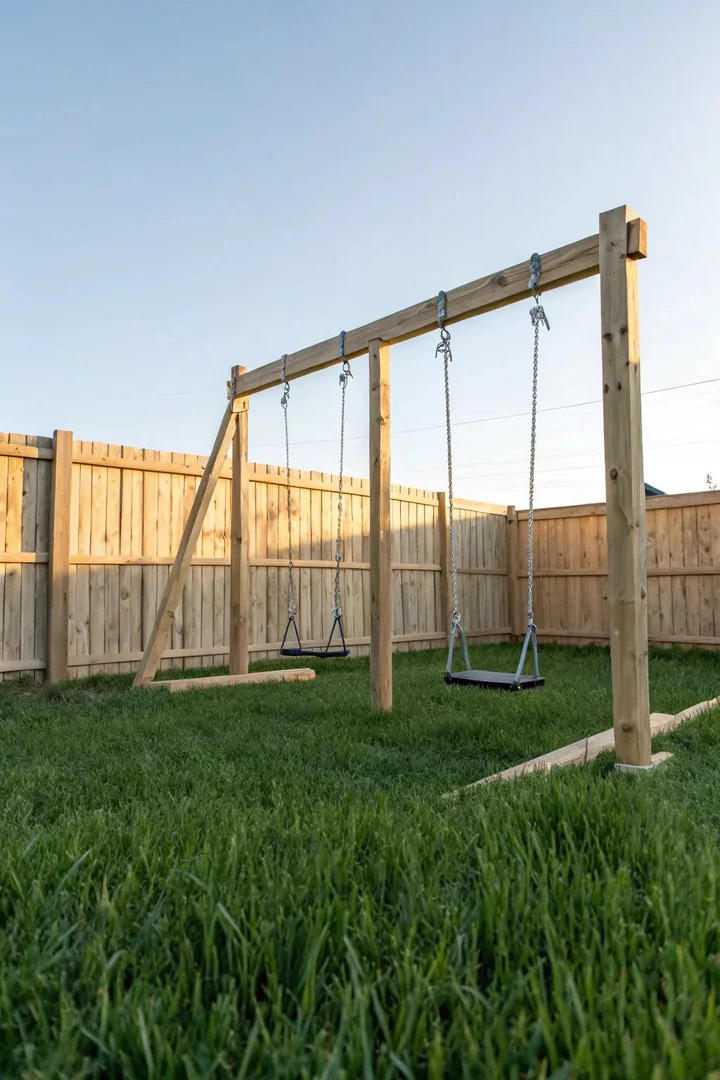
A basic A-frame swing set uses six boards (four 4 x 4 x 10-foot legs and one 4 x 6 x 12-foot top beam) plus two swing hangers, two belt swings, and eight 3/8 x 7-inch carriage bolts. Pressure-treated Southern Yellow Pine #2 grade costs $15 to $25 per board, putting the total lumber bill at $90 to $150. Add $40 to $60 for swing hardware (heavy-duty ductile iron swing hangers rated to 800 pounds per pair from Eastern Jungle Gym or Swing-N-Slide).
Cut the four legs at 10 degrees on each end to form the A-frame angle, bolt two legs together at the top with a single carriage bolt, and repeat for the other pair. Lift both A-frames upright, set the 4 x 6 beam across the tops, and bolt through with two carriage bolts per joint. Anchor the leg bottoms with concrete footings (12-inch Sonotube forms, Quikrete 5000) or bolt-down post bases (Simpson Strong-Tie ABU44) on a poured pad.
2. Tree-Mounted Swing
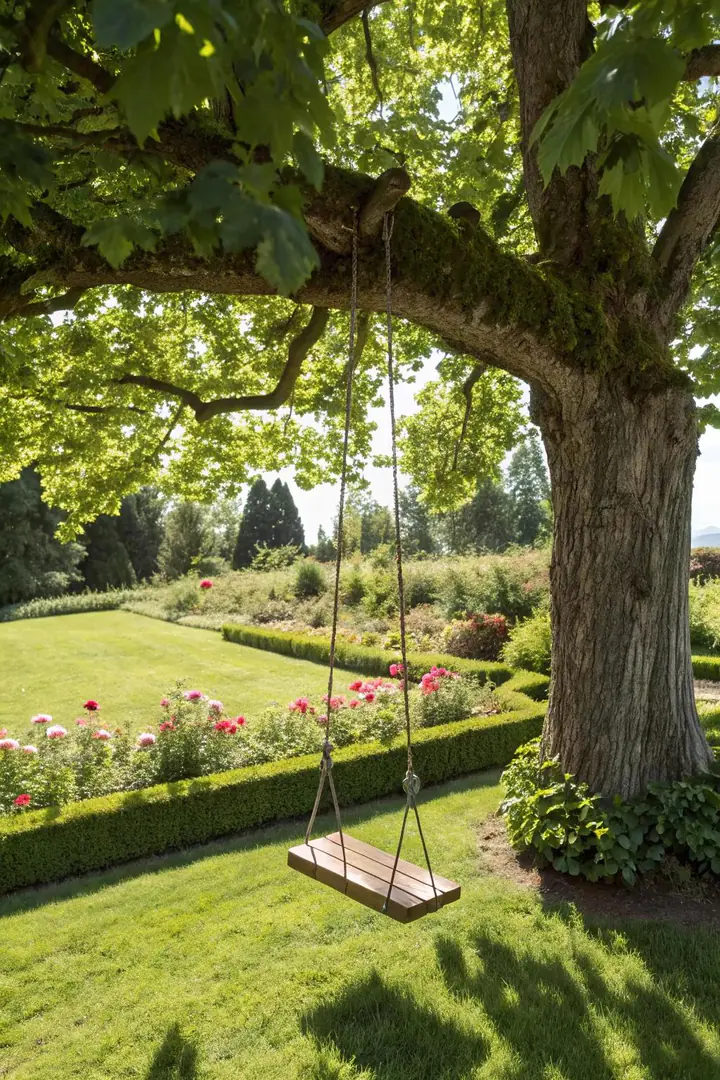
A tree-mounted swing costs under $50 in materials and installs in 30 minutes using a single horizontal branch at least 8 inches in diameter and 10 feet or more above the ground. Use a 5/8-inch stainless-steel eye bolt (lag screw style, $8 to $12) drilled through the branch center with a 1/2-inch pilot hole, and hang the swing from the eye bolt with a carabiner-style quick link rated at 1,000 pounds.
Choose a branch on a healthy, established hardwood tree (oak, maple, hickory, or black walnut) with no signs of decay, splitting, or dead wood. Softwood species like pine, spruce, or willow are too brittle for swing loads. Leave at least 6 feet of clearance in front of and behind the swing arc, and maintain 8 feet of ground clearance at the highest point of the swing’s forward motion. Place a brick patio pad nearby for a parent seating area.

3. Tire Swing
A horizontal tire swing spins, bounces, and holds two to three kids at once, making a used car tire one of the most versatile DIY swing seats available. Source a clean used tire (15 to 17-inch passenger car size, free from most tire shops) and drill four 3/8-inch drainage holes in the bottom tread to prevent standing water and mosquito breeding.
Hang the tire horizontally from three 3/16-inch galvanized chains ($3 to $5 per foot from hardware stores) connected to a single-point swivel bearing (Swing-N-Slide Tire Swing Swivel, $20) mounted on the beam. Each chain should be the same length (5 to 6 feet) and spaced equally around the tire’s circumference using 3/8-inch S-hooks and quick links rated at 400 pounds each. A tire swing needs a 20-foot-diameter clear zone because of its 360-degree rotation.
4. Pergola Swing Set for Adults
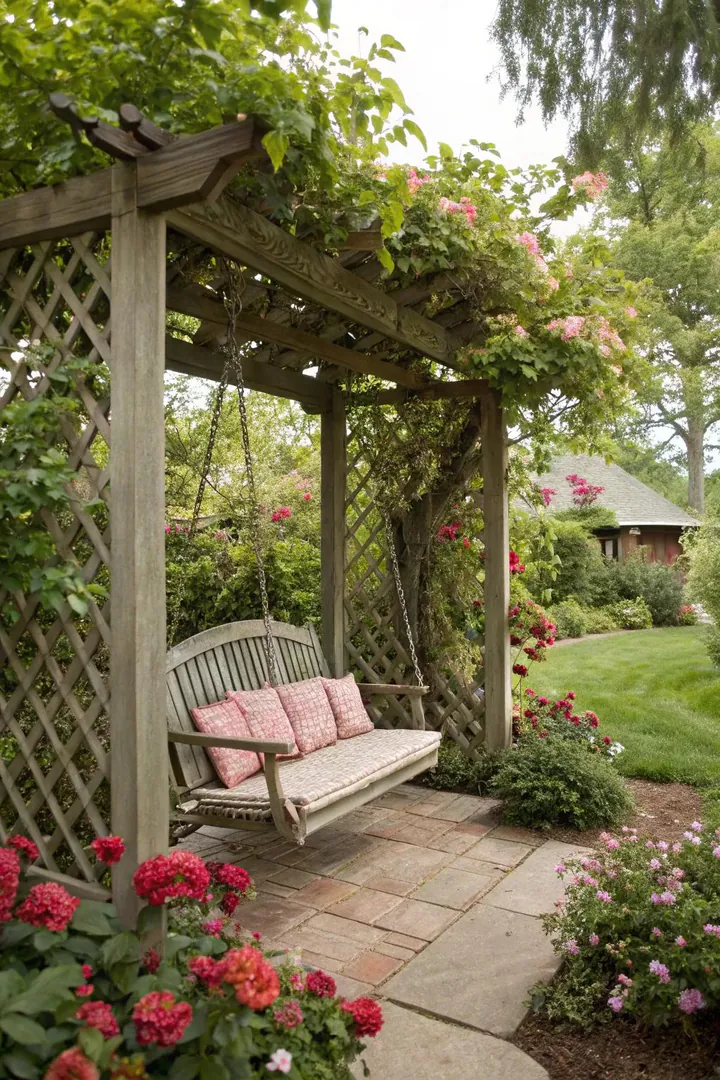
A pergola-style frame built from 6 x 6-inch posts and a doubled 2 x 10 beam supports adult-weight porch swings (300 to 500 pounds per swing) while serving double duty as a shade structure. Space the posts 10 to 12 feet apart, set them in 42-inch-deep concrete footings (below frost line in most US zones), and bolt the doubled beam across the top with 1/2 x 10-inch through-bolts and structural washers.
Hang two 4 to 5-foot porch swings from heavy-duty ceiling-mount swing spring hangers (Porch Swing Hanging Kit, $25 to $40 per pair) bolted through the beam with 3/8-inch carriage bolts. Leave 4 feet between swings and 3 feet between each swing and the nearest post. Add 2 x 6 rafters across the top for a finished pergola look and train climbing roses, wisteria, or grape vines along the structure for natural shade.
5. Rope Swing with Disc Seat
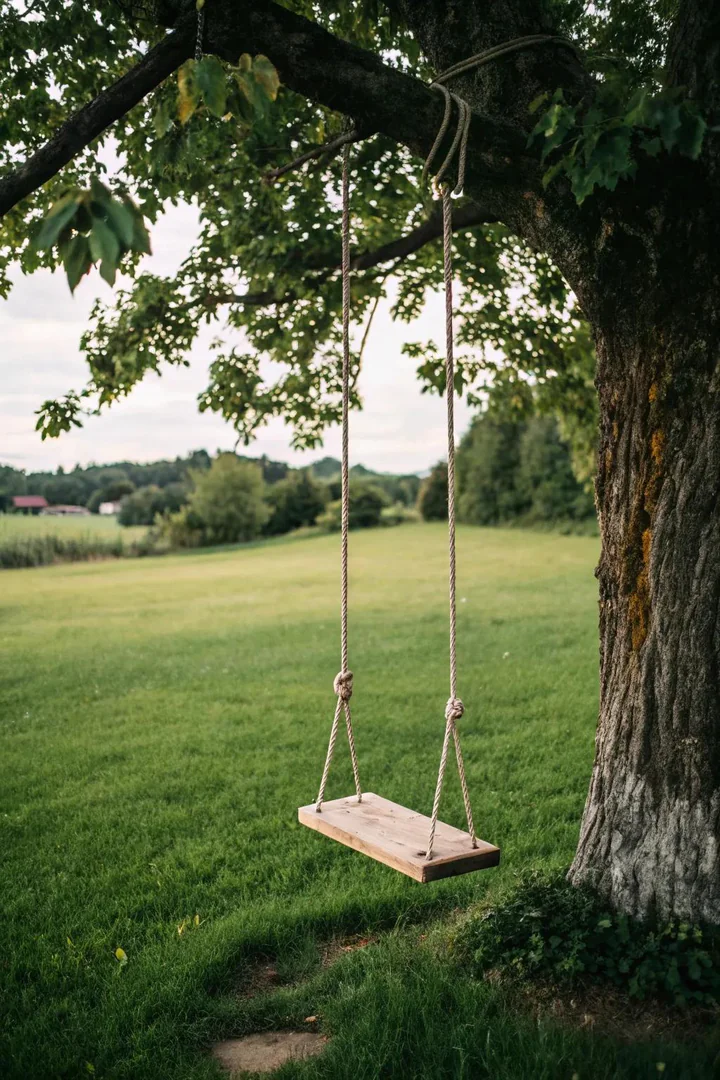
A wooden disc seat (12-inch diameter, 1.5-inch thick hardwood round cut from a log section or purchased pre-made for $10 to $20) threaded onto a single 3/4-inch braided polyester rope ($0.50 to $1.00 per foot from marine supply shops) creates the simplest possible swing with zero metalwork. Drill a 1-inch center hole through the disc, thread the rope through, and tie a figure-eight stopper knot below the seat.
Attach the rope to the branch with a running bowline knot that cinches tight under load and releases when slack. Use marine-grade polyester rope (not polypropylene, which degrades in UV light within one season) rated at 4,000 pounds minimum breaking strength. Cut the rope long enough to allow a 30-degree forward swing arc with the seat starting at 18 to 24 inches above ground for children or 24 to 30 inches for adults.
6. Platform Swing
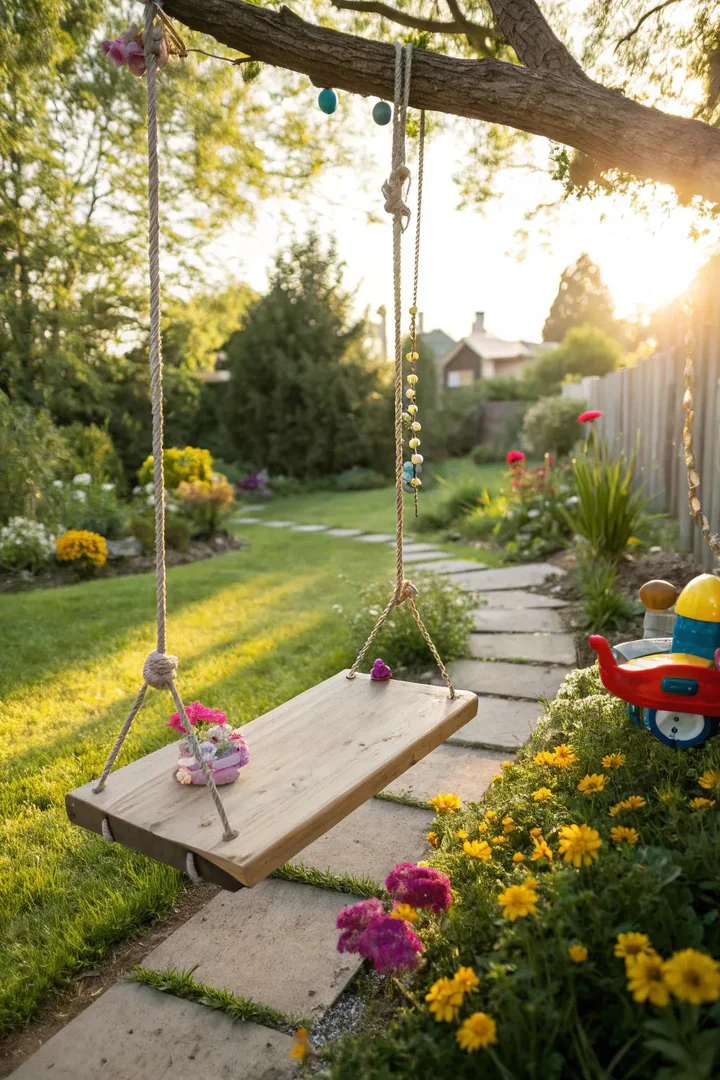
A platform swing (40 x 30-inch rectangular frame or 40-inch circular net) holds two to three children lying down or one adult sitting cross-legged, creating a floating lounger that swings gently without the pumping motion of a belt swing. Build a rectangular platform from a 2 x 4 frame covered with 3/4-inch exterior plywood and topped with a 2-inch foam pad wrapped in outdoor canvas.
Suspend the platform from four 5/16-inch galvanized chains connected to four eyebolts at the platform corners, meeting at a single spring clip on the beam. Commercial platform swings from Juegoal ($40, 700-pound capacity) or CO-Z ($50, 600-pound capacity) come pre-assembled with ropes and a steel frame, cutting build time to 15 minutes. Hang the platform 18 to 24 inches off the ground and set the swing zone over a 6-inch layer of rubber mulch or engineered wood fiber.
7. Garden Swing Bench
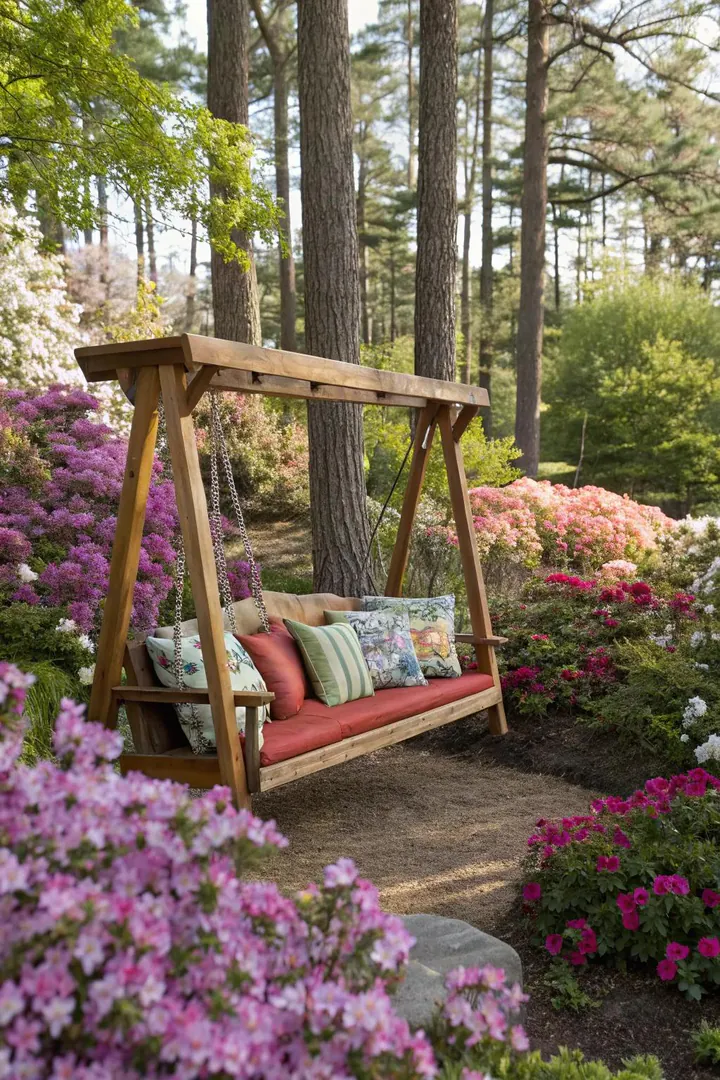
A freestanding swing bench frame holds a 4 to 5-foot wooden bench seat at porch-swing height and installs anywhere in the yard without needing a tree or a permanent structure. Build the A-frame supports from 4 x 4 posts with a 4 x 6 crossbeam, and hang a slatted cedar bench (1 x 4 seat boards on a 2 x 4 frame) with 3/16-inch proof-coil chain rated at 800 pounds working load.
Place the swing bench at the edge of a covered porch or garden zone surrounded by flowering perennials for a relaxing reading or conversation spot. A freestanding frame with bench costs $200 to $400 in lumber and hardware, or buy a pre-made version from Outsunny ($250 to $400) or Jack Post Jennings ($200 to $300) in stained or painted hardwood. Apply two coats of Cabot Australian Timber Oil annually to maintain wood color and prevent cracking.
8. Colorful Pallet Swing
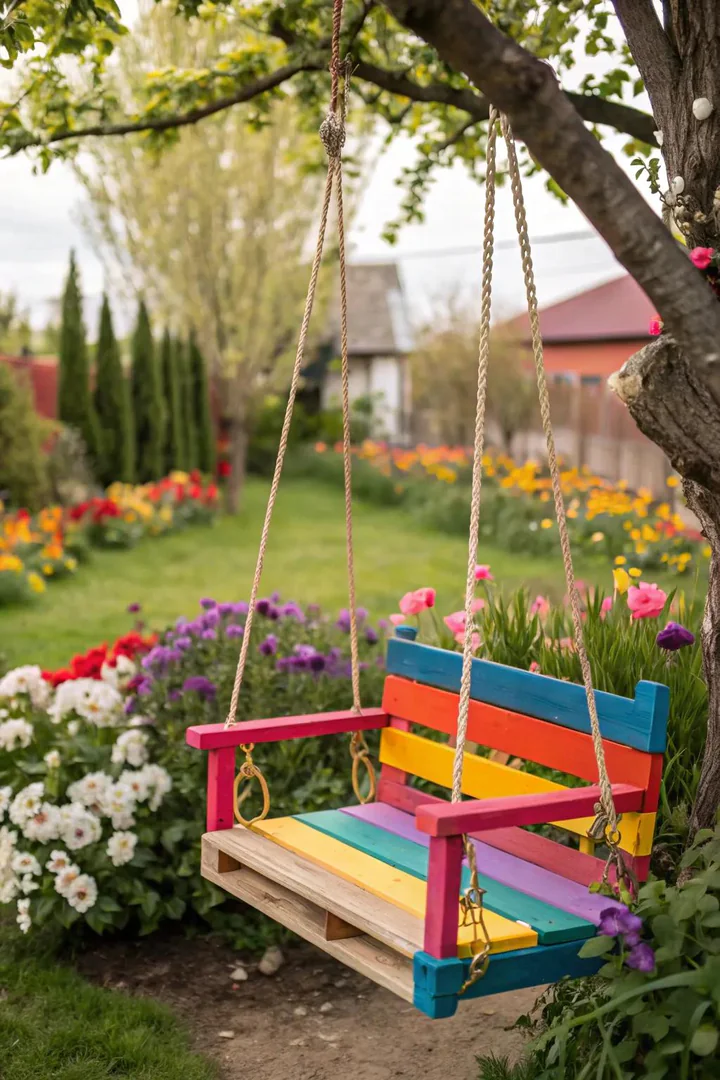
A standard 40 x 48-inch shipping pallet makes a wide, flat swing seat that costs nothing if you source pallets for free from warehouses, garden centers, or Craigslist (look for HT-stamped pallets, which are heat-treated rather than chemically fumigated). Sand all surfaces to 120 grit, paint with Rust-Oleum Painter’s Touch outdoor spray paint in your chosen color ($5 per can), and drill four 1-inch holes through the top deck boards at each corner.
Thread 3/4-inch braided nylon rope through the corner holes, tie a bowline knot under each hole, and gather the four ropes to a single attachment point on the beam using a forged steel O-ring ($5, rated at 3,000 pounds). Add a 3-inch outdoor foam cushion and pillow covers from Target or IKEA ($20 to $40 total) for comfort. A pallet swing supports up to 300 pounds and works as both a seat swing and a lying-flat lounger.
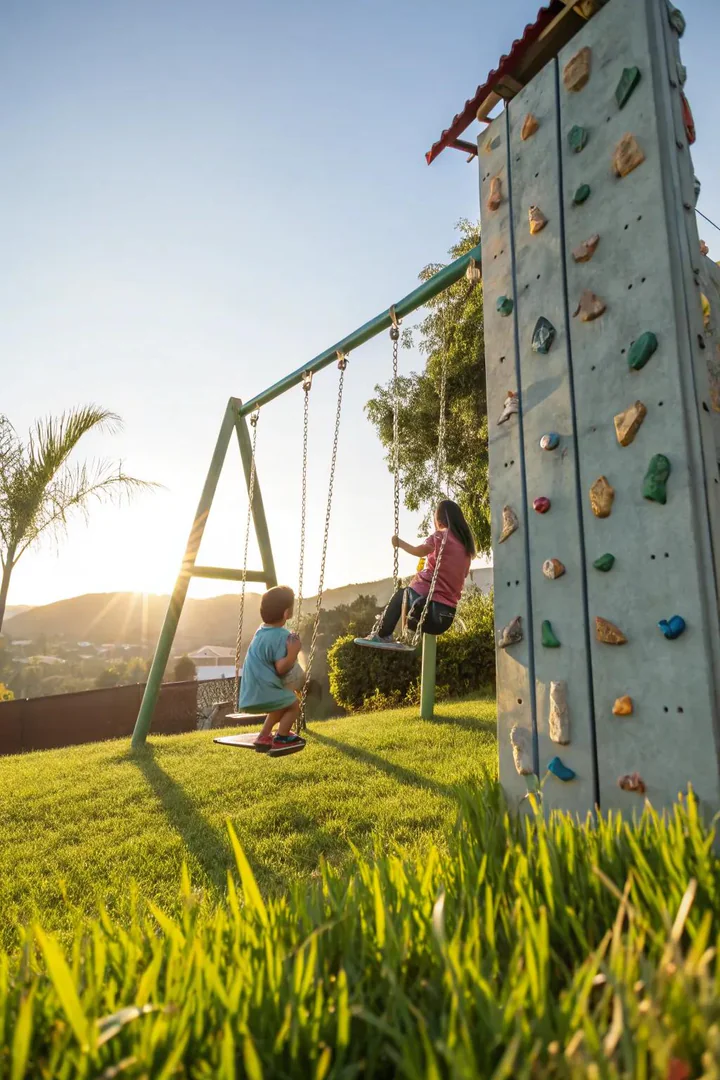
9. Swing Set with Climbing Wall
Adding a 4 x 8-foot climbing wall panel to one end of a swing set frame gives kids a second activity without expanding the footprint. Screw a sheet of 3/4-inch exterior plywood to the inside face of one A-frame pair, and bolt 15 to 20 colored climbing holds ($25 to $45 for a set of 20 from Atomik or Rocky Mountain) through the plywood with T-nut backing hardware.
Space holds 8 to 12 inches apart in a staggered pattern that creates a climbable route for ages 4 and up. Angle the climbing wall 5 to 10 degrees past vertical (overhanging slightly) for a greater challenge, or keep it straight vertical for younger children. Extend the rubber mulch fall zone 6 feet beyond the base of the climbing wall per CPSC playground safety guidelines (Publication 325).
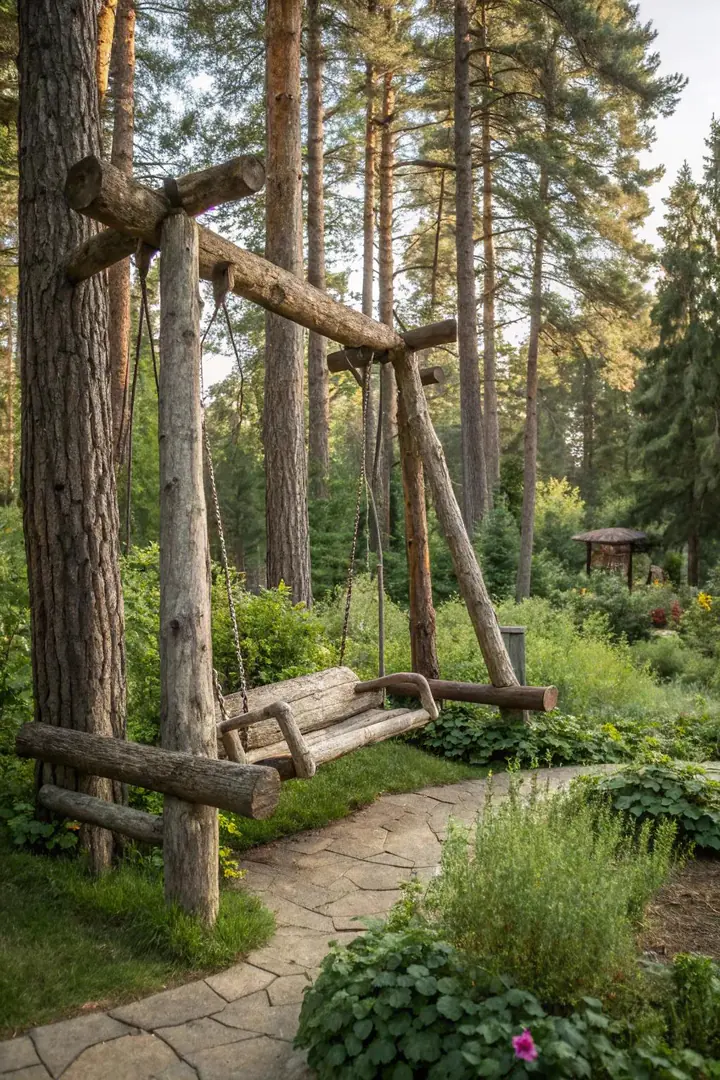
10. Natural Log Swing Set
Using whole peeled logs instead of dimensional lumber gives a swing set a rustic campground look that blends into wooded backyards. Source 6 to 8-inch diameter logs (cedar, locust, or treated pine) from local tree-service companies, sawmills, or woodlot clearings at $2 to $5 per linear foot. Peel the bark with a drawknife or bark spud within two weeks of cutting to prevent insect boring.
Notch the tops of the four A-frame legs with a saddle joint cut by chainsaw or reciprocating saw, and seat the crossbeam log (8 to 10-inch diameter, 12 feet long) into the saddle. Drill through and bolt with 1/2 x 12-inch galvanized lag bolts at each joint. Treat all cut surfaces with Bora-Care or copper naphthenate wood preservative to prevent rot at the ground contact point.
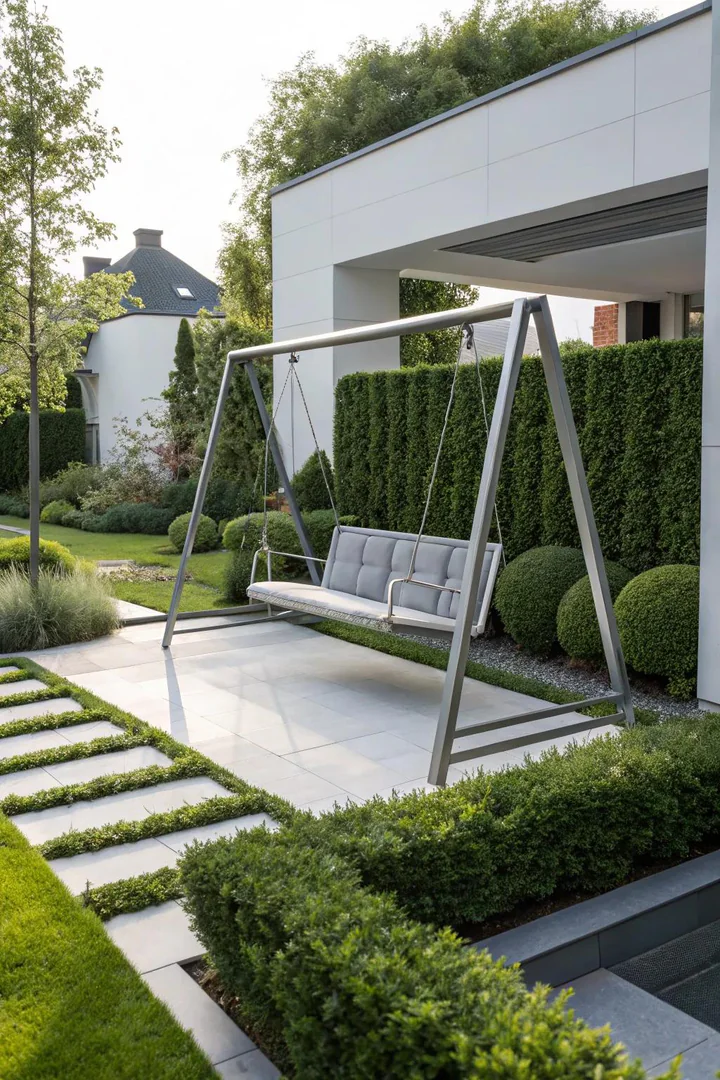
11. Modern Metal Frame Swing
A welded steel tube swing frame supports heavier loads than wood (1,000+ pounds per beam versus 400 to 600 for a 4 x 6 wood beam) and never warps, splits, or rots. Build the frame from 2 x 2-inch square steel tubing (11-gauge wall thickness) cut and welded into an A-frame shape, or buy a pre-fabricated commercial-grade frame from Swing Kingdom ($500 to $900) or Ironclad Swings ($400 to $700).
Finish bare steel with Rust-Oleum Hammered spray paint in black, bronze, or silver ($6 per can, two cans per frame) or have the frame powder-coated at a local shop ($100 to $200) for a factory-quality finish that resists chipping and UV fading for 10-plus years. Bolt the frame legs to concrete pad footings with 1/2-inch wedge anchors for a permanent installation that holds up to commercial playground standards.
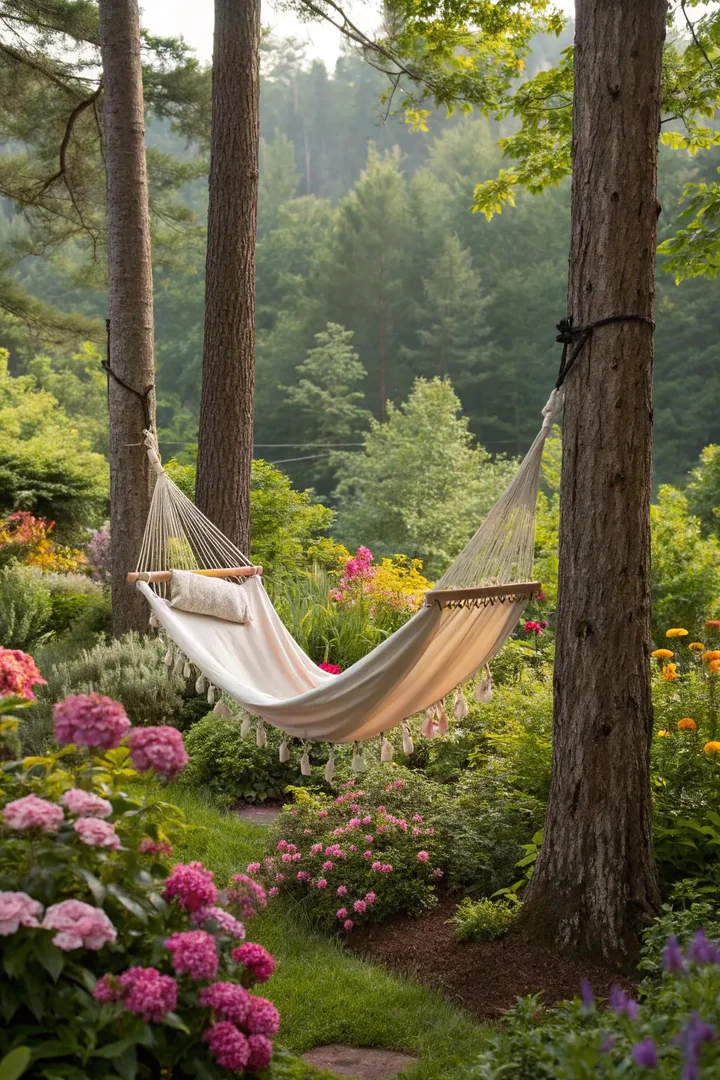
12. Hammock Swing Set
A hammock-style swing seat wraps around the rider like a cocoon and sways gently in all directions, making a relaxing alternative to rigid belt or board swings. Buy a pre-made hammock swing chair (Y-STOP Hammock Chair, $30 to $50, 330-pound capacity) or sew one from a 4 x 6-foot piece of Sunbrella outdoor canvas folded into a sling shape with reinforced grommets at the top corners.
Hang the hammock from a single-point ceiling swivel or a spreader bar (36-inch hardwood dowel with eye screws at each end) to prevent the fabric from bunching. A freestanding hammock frame (Sunnydaze Steel Stand, $50 to $80, or a DIY 4 x 4 post frame) lets you set up anywhere in the yard without a tree or existing structure. Place the hammock swing under a shade tree or next to a pool deck area for a lounging station.
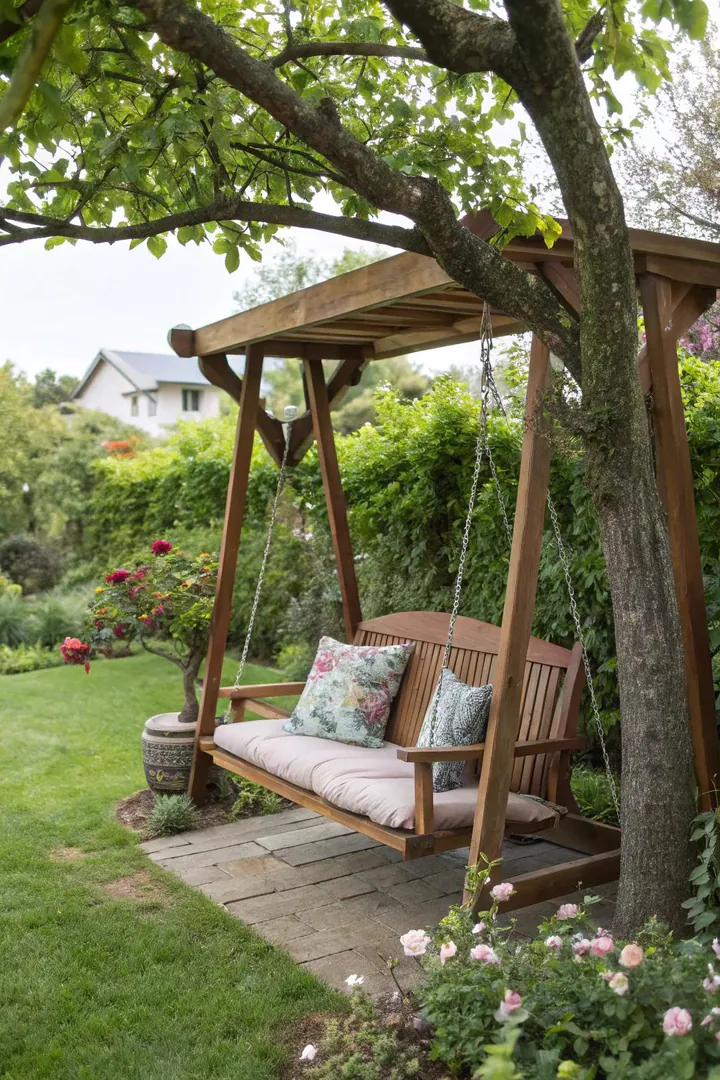
13. Convertible Swing-to-Bench
A convertible swing-bench design uses a hinged seat that swings when suspended from chains and locks flat as a garden bench when lowered to the ground. Build the bench frame from 2 x 6 cedar with 1 x 4 seat slats and install folding chain hooks (snap shackles, $10 per pair) at the armrest corners that clip to the overhead beam for swinging and unclip for bench mode.
The dual-purpose design works well on porches and covered patios where floor space is limited and the same piece of furniture needs to serve both active and stationary use. A convertible swing-bench costs $150 to $250 in materials to build, and commercial versions from Outsunny or Christopher Knight Home sell for $200 to $400 with cushions included.
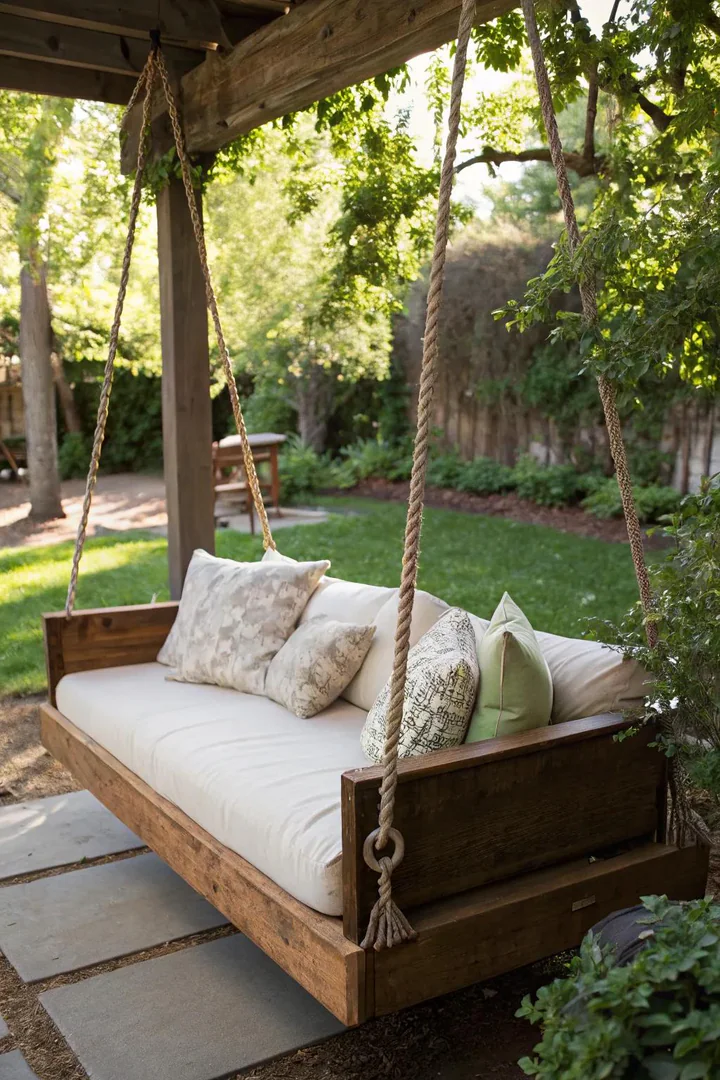
14. Porch Swing Bed
A twin or full-size swing bed hangs from the porch ceiling and provides a floating daybed for reading, napping, or sleeping outdoors on warm nights. Build a 75 x 39-inch (twin) or 75 x 54-inch (full) frame from 2 x 6 cedar or treated pine with 1 x 4 slat decking, and hang from four 3/8-inch galvanized eyebolts lagged into ceiling joists with proof-coil chain rated at 800 pounds per line.
Add a 6-inch outdoor foam mattress with a zippered water-resistant cover ($80 to $150 from Amazon or Foam Factory Direct) and layer with outdoor pillows and a light throw. A porch swing bed supports 400 to 600 pounds total (mattress plus two adults) when hung from four properly rated connection points. Keep the bed 18 to 20 inches off the floor for easy on-off access and place a small rug underneath to catch any dirt from shoes.
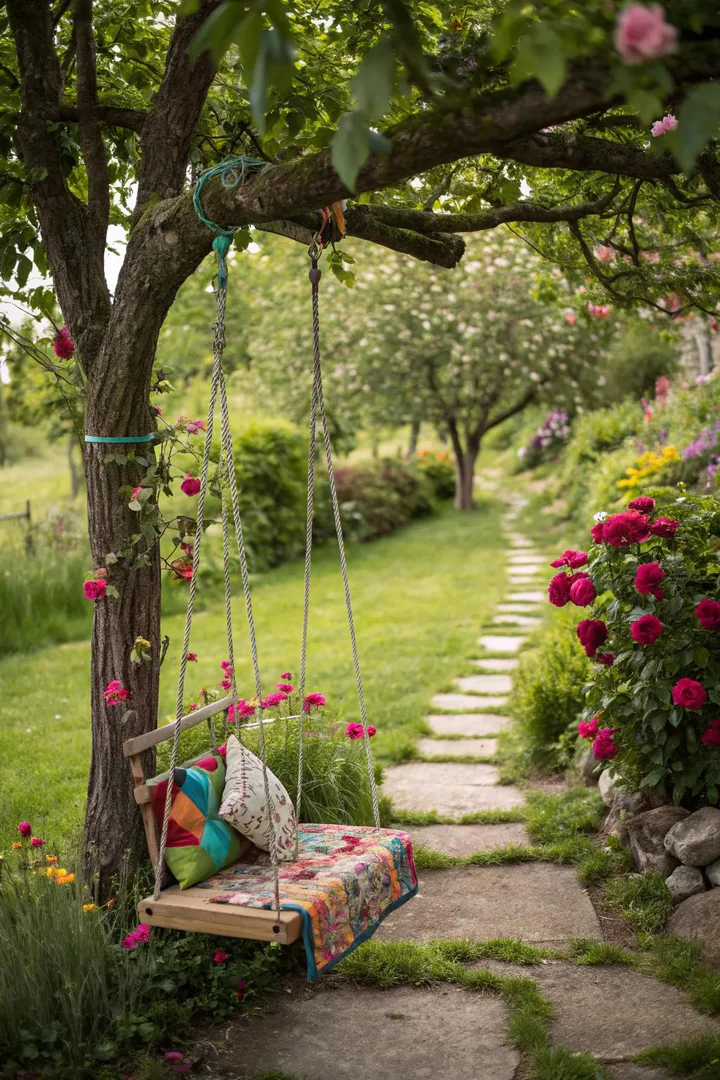
15. Sensory Swing for Kids
A sensory swing wraps a child in stretchy, compressive fabric that provides calming deep-pressure input and vestibular stimulation for kids with autism, ADHD, sensory processing differences, or anyone who finds gentle rocking soothing. Buy a pre-made therapy swing from SENSORY4U ($30 to $50, 80-pound capacity) or Harkla ($40 to $60, 100-pound capacity), or sew one from 2 yards of 4-way stretch lycra/spandex fabric ($10 to $15 per yard).
Mount the swing from a single ceiling point using a heavy-duty swing mount kit with a spring snap hook. Indoor mounting into a ceiling joist is most common (using a 3/8-inch lag eye bolt, 4 inches minimum thread into solid wood), but outdoor mounting to a swing set beam or porch ceiling works equally well. Leave 3 feet of clearance in all directions so the cocoon rotates freely.
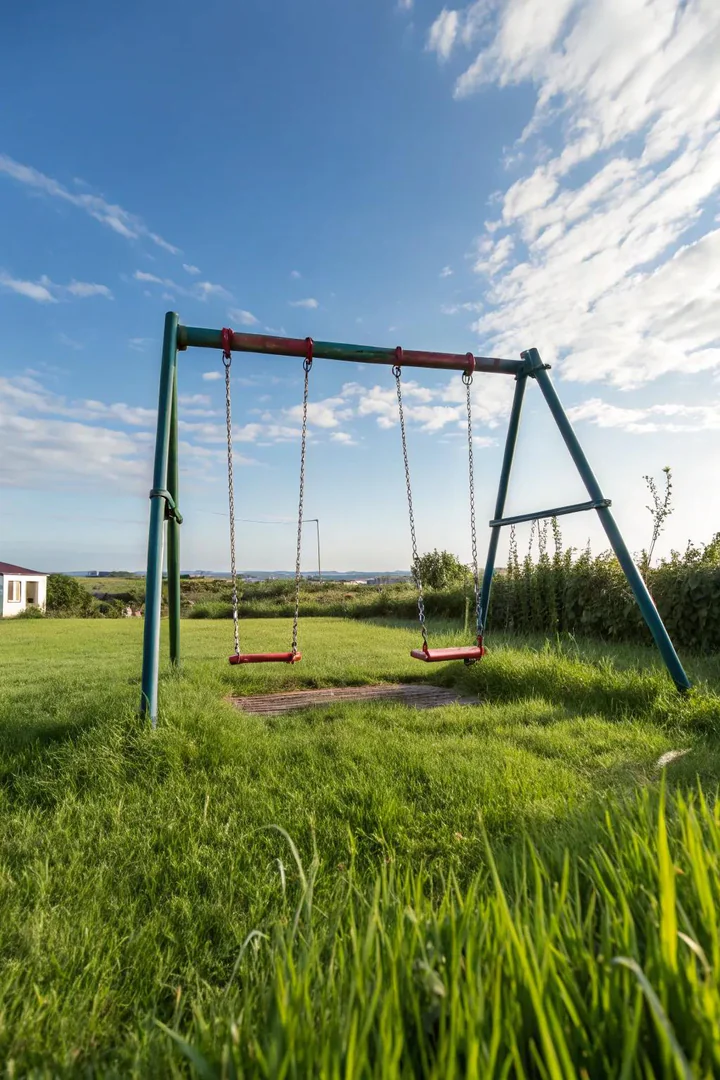
16. Swing Set with Trapeze Bar
Adding a trapeze bar and a pair of gym rings to an existing swing set beam turns a standard play structure into a backyard gymnastics station. A 24-inch steel trapeze bar with vinyl-coated grips and chains (Swing-N-Slide, $20 to $30) hangs from standard swing hangers and supports up to 115 pounds for children ages 3 to 10.
Wooden gym rings (Titan Fitness, $25 per pair, or Rogue Fitness Wooden Rings, $35) attach with adjustable nylon straps and hold 600-plus pounds for adult use as pull-up or dip stations. Space the trapeze bar and rings at least 30 inches apart from adjacent swings to prevent mid-air collisions. Visit front yard and porch designs for more ways to upgrade your outdoor living space. Explore all outdoor building projects at The Designers Company.
How to Build a Basic Backyard Swing Set
1. Choose the Location and Clear the Ground
Select a flat area with at least 6 feet of clear space in every direction from the swing set footprint (front, back, and sides). Remove all rocks, roots, and debris from the swing zone and level the ground to within 1 inch over 12 feet using a garden rake and a long straight board with a level on top. Avoid placing swing sets under power lines, within 6 feet of fences, or on slopes steeper than 5 percent grade.
2. Cut and Assemble the A-Frame Legs
Cut four 4 x 4 x 10-foot pressure-treated posts at a 10-degree angle on the top end using a compound miter saw. Pair two posts together with the angled cuts meeting at the top, drill a 3/8-inch hole through both boards at the peak, and bolt with a 3/8 x 7-inch carriage bolt, washer, and lock nut. Repeat for the second A-frame pair. The 10-degree splay angle places the leg bottoms 48 inches apart for a stable base.
3. Mount the Top Beam and Secure the Frame
Lift both A-frames upright (use a helper or temporary bracing) and lay the 4 x 6 x 12-foot beam across the tops. Drill two 3/8-inch holes through each leg-beam joint and bolt with carriage bolts. Check that the frame is plumb (vertical) and square (equal diagonals) before tightening all bolts to final torque. Anchor the bottom of each leg with a concrete footing (dig 24 inches deep, pour Quikrete Fast-Setting Concrete around the post base) or a surface-mount bracket bolted to a concrete pad.
4. Install Swing Hangers, Chains, and Seats
Drill pilot holes and bolt heavy-duty swing hangers (ductile iron, not stamped steel) through the top beam at 20-inch center spacing per swing, 20 inches minimum from each end of the beam. Connect 3/16-inch proof-coil galvanized chain to each hanger with a forged connecting link, adjust the chain length so the swing seat hangs 18 to 24 inches above ground, and attach the seat (belt swing, bucket seat, or disc) with S-hooks pinched closed with pliers so they cannot detach under load.
5. Install Fall-Zone Surfacing
Cover the entire swing zone (footprint plus 6-foot extension in all directions) with 6 inches of rubber mulch ($8 to $12 per cubic foot from Rubber Mulch Inc. or Vigoro), engineered wood fiber ($3 to $5 per cubic foot), or pea gravel ($35 to $50 per ton). Contain loose fill with a 6-inch-tall timber border (4 x 6 pressure-treated garden timbers or composite edging) staked every 4 feet. A proper fall surface reduces the critical head-injury risk height to under 200 HIC per ASTM F1292 standards.
Swing Set Materials Comparison
| Frame Material | Cost (DIY) | Weight Capacity | Lifespan | Maintenance | Best For |
|---|---|---|---|---|---|
| Pressure-Treated Pine | $150 to $300 | 400 to 600 lbs | 10 to 15 years | Stain every 2 to 3 years | Budget builds, standard yards |
| Western Red Cedar | $300 to $500 | 400 to 600 lbs | 15 to 20 years | Oil annually or let gray | Natural-look builds |
| Peeled Logs (Cedar/Locust) | $100 to $250 | 500 to 800 lbs | 15 to 25 years | Check for splits annually | Rustic, wooded settings |
| Welded Steel Tube | $200 to $500 | 1,000+ lbs | 20 to 30 years | Touch up paint as needed | Heavy-duty, commercial grade |
| Recycled HDPE Composite | $500 to $1,200 | 600 to 800 lbs | 20+ years | Soap and water only | Zero-maintenance builds |
Frequently Asked Questions
What is the best wood for a DIY swing set?
Pressure-treated Southern Yellow Pine is the most affordable option at $2 to $3 per linear foot for 4 x 4 posts and $4 to $6 for 4 x 6 beams, and the chemical treatment (MCA or ACQ) protects against rot and insects for 10 to 15 years with regular staining. Western red cedar costs twice as much but resists decay naturally and does not require chemical treatment, making it a better choice if kids will chew or mouth the wood. Black locust and white oak are the strongest domestic hardwoods for outdoor frames but are harder to source and more expensive ($5 to $10 per linear foot).
How far apart should swing seats be spaced?
The CPSC recommends a minimum 20-inch gap between adjacent swing chains at rest and a minimum 20-inch gap between the outermost swing chain and the frame support post. Measure from chain center to chain center, not from seat edge to seat edge. A 12-foot beam fits two standard belt swings with proper spacing, while a 16-foot beam accommodates three swings or two swings plus a trapeze bar.
How deep should swing set post holes be?
Dig post holes a minimum of 24 inches deep for standard residential swing sets and 36 to 42 inches deep (below the local frost line) for permanent installations in cold climates. Each hole should be three times the post width (12 inches wide for a 4 x 4 post). Fill with Quikrete Fast-Setting Concrete mixed with water directly in the hole, mound the concrete 1 inch above grade for water runoff, and wait 4 hours before applying load to the frame.
What is the safest ground surface under a swing set?
Rubber mulch (shredded recycled tires) provides the best impact absorption per ASTM F1292 testing, reducing head-injury risk at fall heights up to 12 feet with a 6-inch layer. Engineered wood fiber (EWF) is the second-best option and costs roughly half the price of rubber mulch. Pea gravel works for fall heights up to 7 feet. Bare grass, packed dirt, and concrete are not acceptable fall surfaces per CPSC guidelines and should never be used under swing sets.
How much weight can a DIY swing set hold?
A properly built 4 x 6 top beam spanning 12 feet supports a total distributed load of 400 to 600 pounds (enough for two adults or three children swinging simultaneously). Doubling the beam to a 4 x 6 + 4 x 6 sandwich increases the capacity to 800 to 1,000 pounds. Heavy-duty swing hangers rated individually at 250 to 500 pounds are the weakest link in most setups, so always check the rated capacity on the hanger packaging and replace stamped-steel hangers with ductile iron or forged steel versions for adult-weight use.