Cool Decking Ideas: 13 Brilliant Ways to Upgrade Your Outdoor

Cool decking ideas range from bold painted surfaces and natural stone inlays to built-in hot tubs and retractable shade systems that make your deck usable year-round. Composite boards from Trex, TimberTech, and Fiberon start at $3-$6 per linear foot, while premium hardwoods like ipe and tigerwood run $8-$15 per linear foot for a 5.5-inch-wide plank. Your choice of material, finish, and accessories determines whether you end up with a $2,000 weekend refresh or a $25,000 full outdoor living build.
The 13 ideas below cover every style from painted color statements and minimalist platforms to water features, planters, and smart furniture layouts. Each entry includes real product names, material costs, and sizing details so you can plan your deck project with a clear budget in mind. For hundreds of additional outdoor and interior projects, visit The Designers Company.
1. Add a Splash of Color with Painted Decks
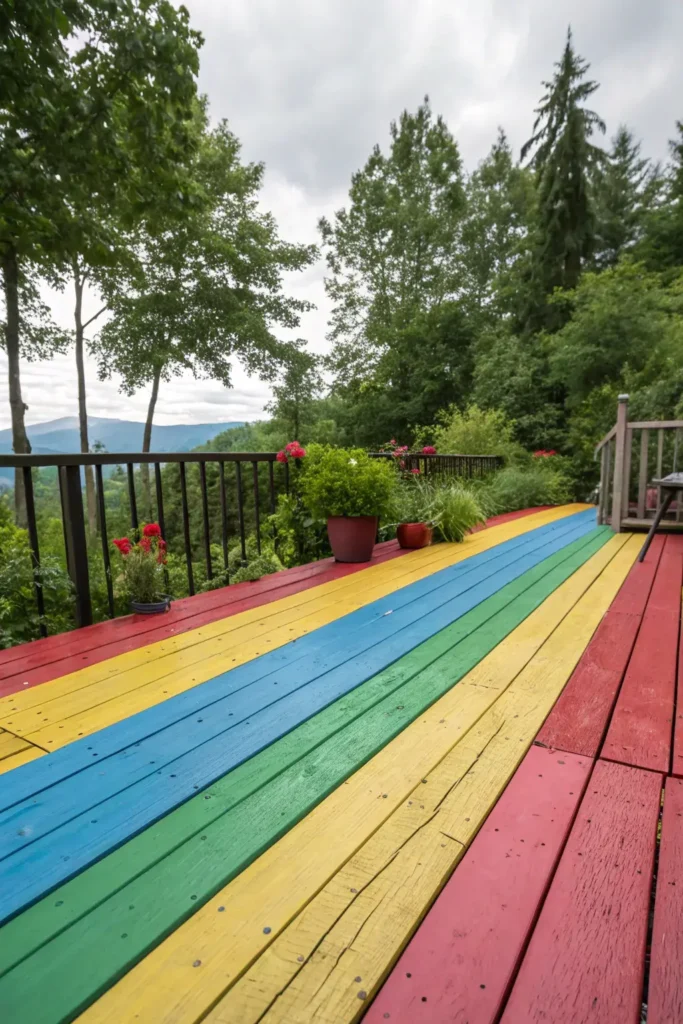
Deck paint turns a plain pressure-treated pine surface into a statement floor for $30-$60 per gallon, covering roughly 200-400 square feet per coat. Behr Premium Porch and Patio Floor Paint and Sherwin-Williams SuperDeck both offer 30+ colors rated for foot traffic and UV resistance, with a 5-7 year lifespan before recoating.
Apply two coats over a clean, sanded surface using a 3/8-inch nap roller for smooth boards or a 1/2-inch nap for rough-sawn lumber. Color blocking with painter’s tape creates geometric patterns, stripes, or checkerboard layouts without any specialized tools. A contrasting border color (2-3 boards wide) around the deck edge adds a finished frame look for under $20 extra in paint.
Avoid dark colors on south-facing decks in hot climates because dark pigments absorb more heat and make barefoot walking uncomfortable. Benjamin Moore’s Arborcoat Solid Stain in lighter shades like Silver Gray or Coastal Fog reflects enough heat to keep surface temperatures 10-15 degrees lower than black or navy finishes.
2. Lean into Minimalist Design
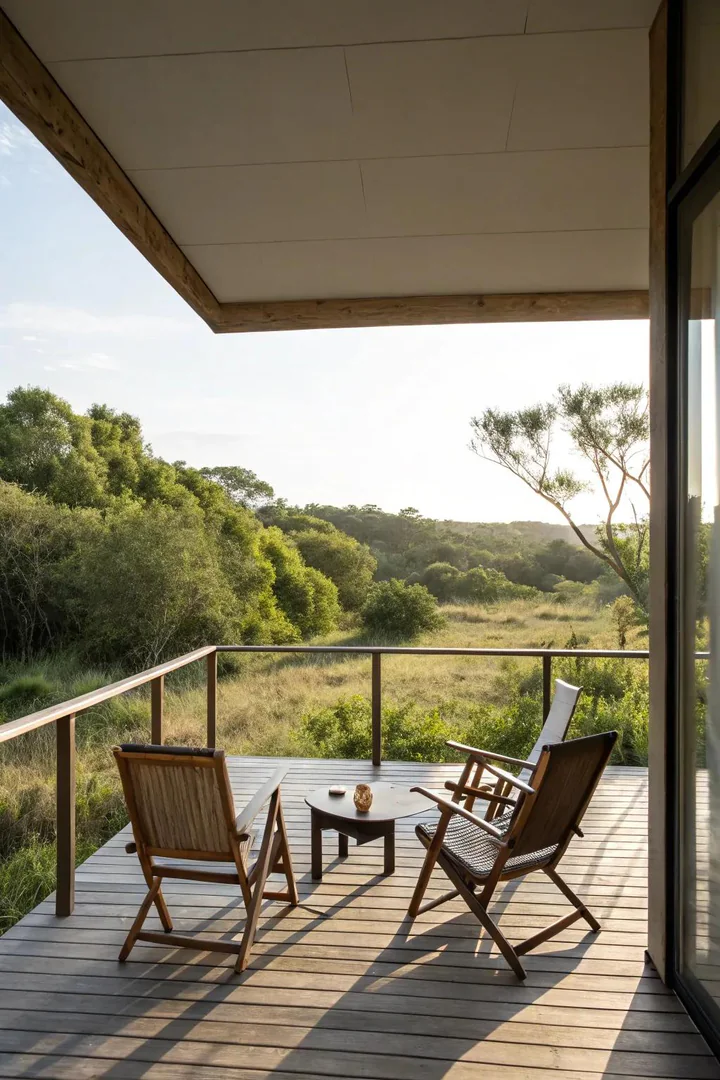
A minimalist deck strips away railings, trim, and ornamental details in favor of clean lines and flush surfaces. Use hidden fastener systems like Camo Edge and Tiger Claw to eliminate visible screw heads, creating an unbroken plane of composite or hardwood boards that reads as a single continuous surface.
Stick to a single neutral color for all boards. Trex Transcend’s Gravel Path and TimberTech’s Ashwood both deliver a warm gray tone that pairs with concrete, steel, and glass without competing visually. Run boards in a single direction (typically perpendicular to the house wall) rather than mixing patterns, and use a picture-frame border in the same color for a subtle edge definition.
Skip decorative post caps, spindle railings, and lattice skirting. Replace traditional railings with horizontal cable wire ($15-$25 per linear foot) or frameless glass panels ($80-$150 per linear foot) to maintain sightlines and keep the deck visually open. A minimalist deck typically costs 10-15% less than a decorated build because you buy fewer accessories.
3. Incorporate Natural Stone for a Rustic Feel
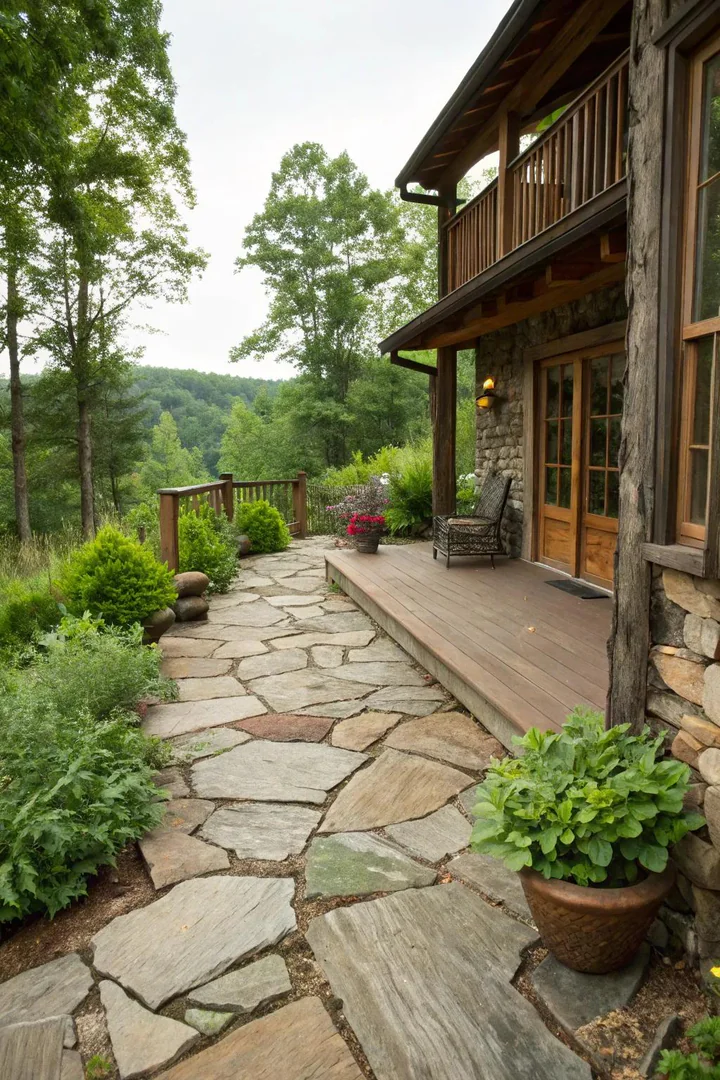
Mixing natural stone with wood or composite decking creates a textured, organic surface that suits mountain cabins, lakefront homes, and rustic-style properties. Flagstone pavers ($3-$7 per square foot) or travertine tiles ($5-$15 per square foot) set into gaps between deck sections work as landing zones, fire pit surrounds, or transition strips between the deck and yard.
Set stone sections on a compacted gravel base with polymeric sand joints to prevent shifting. Pennsylvania bluestone and Tennessee fieldstone both handle freeze-thaw cycles well and develop a natural patina over 2-3 seasons. Dark stone tones against lighter wood create the same grounded contrast that works well in black living room ideas, bringing interior design principles to your outdoor space.
Seal natural stone annually with a penetrating impregnator like Miracle 511 to prevent water absorption and staining from fallen leaves or grill grease. Natural stone weighs 10-15 pounds per square foot, so confirm your deck framing can support the added load before installation by checking joist spacing (12 inches on center minimum for stone areas).
4. Creative Screening for Privacy
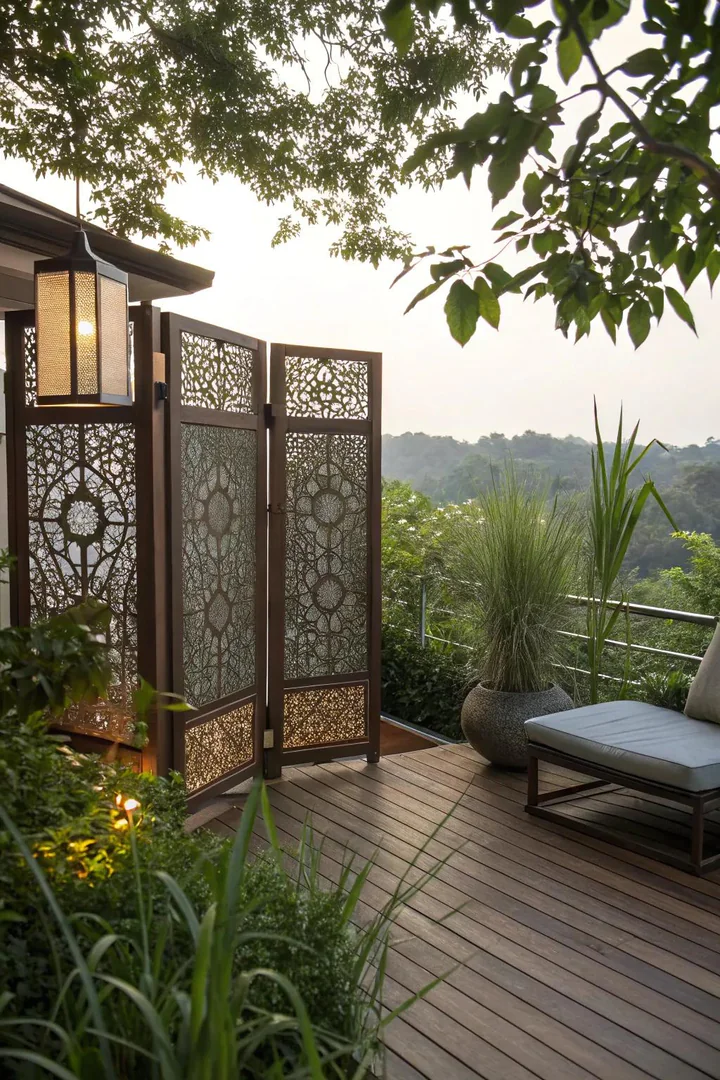
Privacy screens mounted along one or two sides of your deck block sightlines from neighbors without closing off airflow. Horizontal cedar slat screens with 1/2-inch gaps between boards cost $8-$15 per linear foot for materials and let 40-50% of the breeze pass through. Vertical metal panel screens from brands like Outdeco and Modinex run $20-$40 per 4×8-foot panel and come in laser-cut patterns.
Mount screen panels between 4×4 steel posts set in concrete footings for maximum wind resistance, or bolt them directly to existing deck railing posts using 3/8-inch carriage bolts. Screen heights of 5-6 feet block seated sightlines from neighboring yards while staying below most residential fence height limits (6 feet in most jurisdictions).
Living screens using planter boxes filled with ornamental grasses (Miscanthus, Karl Foerster grass) or bamboo (Fargesia rufa, non-invasive clumping variety) add greenery and movement. A 4-foot-wide planter with three mature clumping bamboo plants reaches 8-10 feet tall within two growing seasons and costs $150-$300 for the planter and plants together.
5. Design a Deck with Water Features
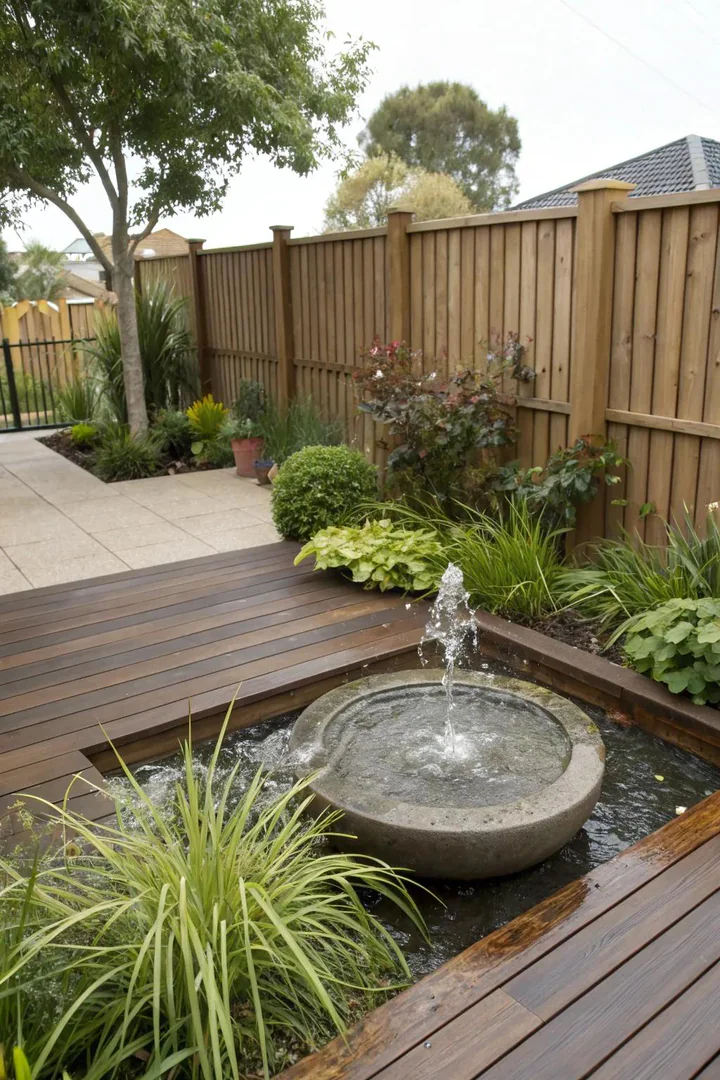
A built-in water feature on your deck adds ambient sound and a visual focal point without requiring a full pond installation. Recirculating deck fountains from Aquascape and Blue Thumb run $200-$800 for a complete basin-and-pump kit that sits on the deck surface and plugs into a standard outdoor GFCI outlet.
For a flush-mounted look, cut a section of decking and install a recessed basin lined with EPDM rubber, surrounded by river rocks or polished black pebbles. A Pondmaster Mag-Drive 350 pump ($40-$60) circulates 350 gallons per hour and draws just 35 watts, keeping operating costs under $3 per month at average electricity rates.
Protect the deck framing beneath any water feature with a waterproof membrane (Peel-and-Seal or Grace Ice & Water Shield) extending 12 inches past the basin edges in every direction. Drain the feature and store the pump indoors during winter in freeze-prone climates to prevent cracking. Copper-based algaecide tablets ($8-$12 for a season’s supply) keep the water clear without harming nearby plants.
6. Opt for Eco-Friendly Materials
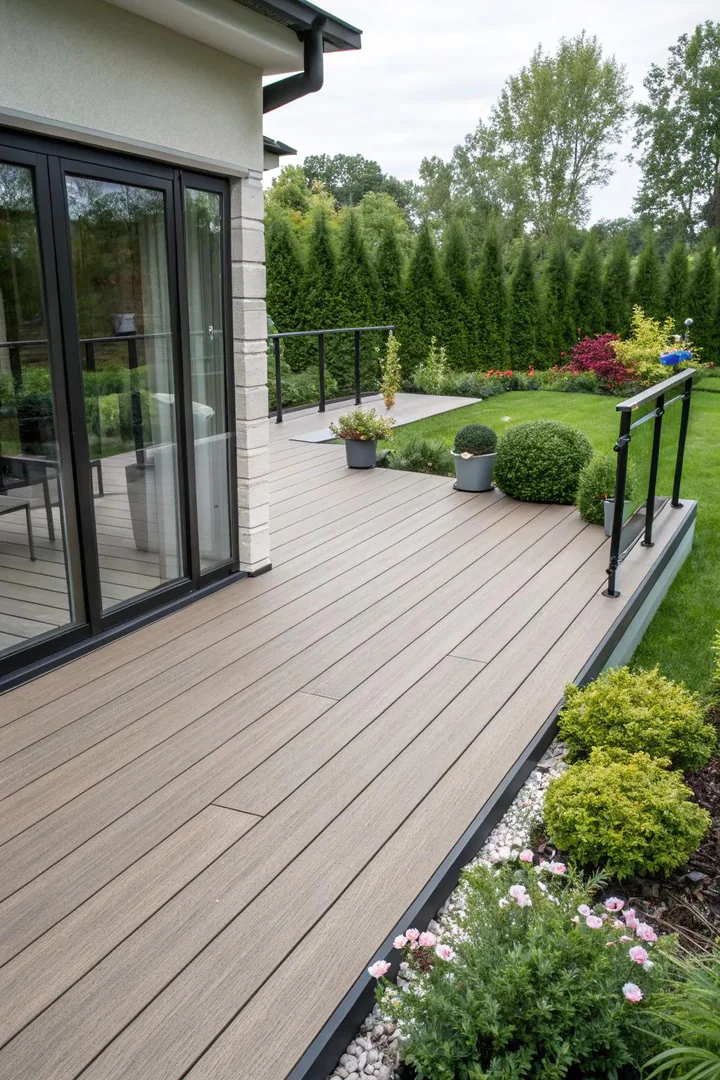
Recycled composite decking uses 95% post-consumer and post-industrial materials (reclaimed wood fiber and recycled HDPE plastic) to produce boards that look and feel like natural wood. Trex Enhance Basics ($2.50-$3.50 per linear foot) contains 95% recycled content, while Fiberon Good Life ($3-$4 per linear foot) uses reclaimed wood from pallet mills and recycled polyethylene from grocery bags.
Bamboo decking from Cali Bamboo ($4-$7 per linear foot) grows to harvest height in 3-5 years versus 20-60 years for traditional hardwoods, making it one of the fastest-renewable building materials available. Strand-woven bamboo boards match the hardness of ipe (Janka rating 3,000+ lbf) and resist moisture, insects, and UV fade for 20-25 years without chemical treatment.
Reclaimed lumber from demolition projects, barn dismantles, and dock removals gives your deck a weathered character that new boards can’t replicate. Reclaimed heart pine, Douglas fir, and white oak run $5-$12 per board foot at salvage dealers. Sand and seal reclaimed boards with a UV-protective oil like Penofin or Australian Timber Oil before installation to lock in the aged patina.
7. Incorporate a Pergola for Shade and Style
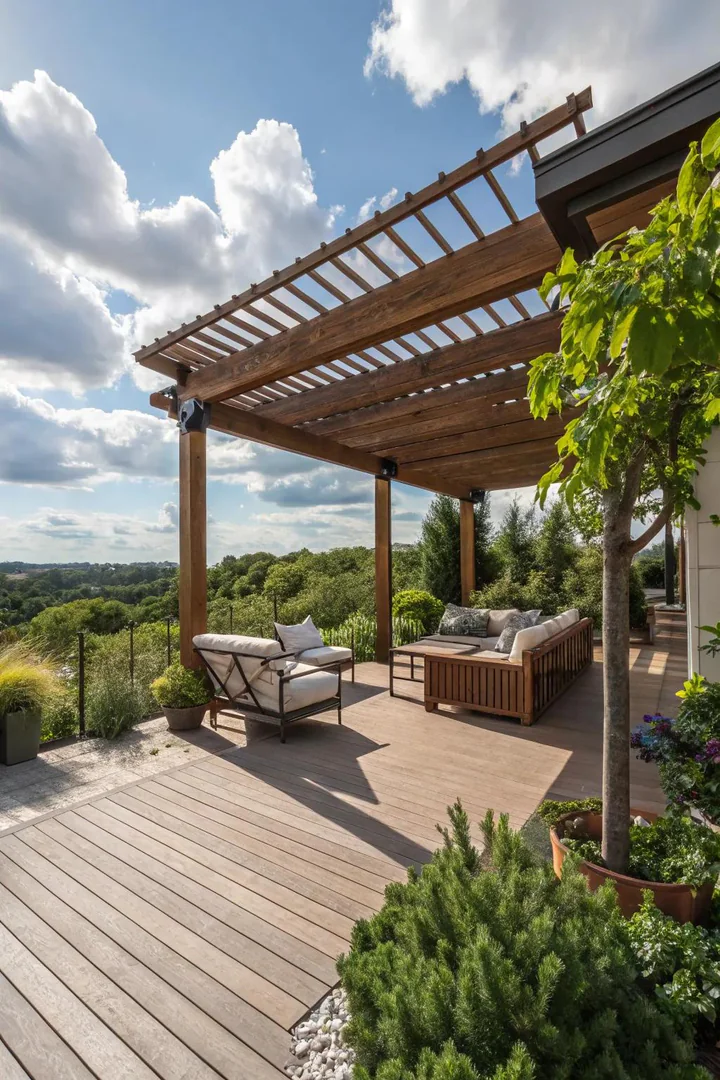
A pergola mounted directly over your deck creates a defined outdoor room with partial shade from the overhead rafters. Pressure-treated pine pergola kits from Pergola Depot and The Home Depot start at $1,500-$3,000 for a 10×12-foot freestanding unit, while cedar and redwood upgrades run $3,000-$6,000 for the same footprint.
Attach a ledger-mounted pergola to your home’s rim joist using 1/2-inch lag bolts and flashing tape to create a direct indoor-outdoor connection. Space rafters 12-16 inches apart for 50-60% shade coverage, or tighten spacing to 8-10 inches for denser shade. Add climbing plants like wisteria, trumpet vine, or Clematis armandii to the posts for living shade that fills in over 2-3 growing seasons. For blind and shade options that pair with pergola structures, check out pergola blinds ideas.
Aluminum pergola kits from Alumawood and StruXure ($4,000-$10,000) require zero maintenance and resist rot, termites, and paint peeling. Add string lights (commercial-grade S14 LED bulbs on 48-foot strands, $25-$50) along the rafters for warm ambient lighting that extends deck use into the evening hours.
8. Incorporate Planters for a Green Touch
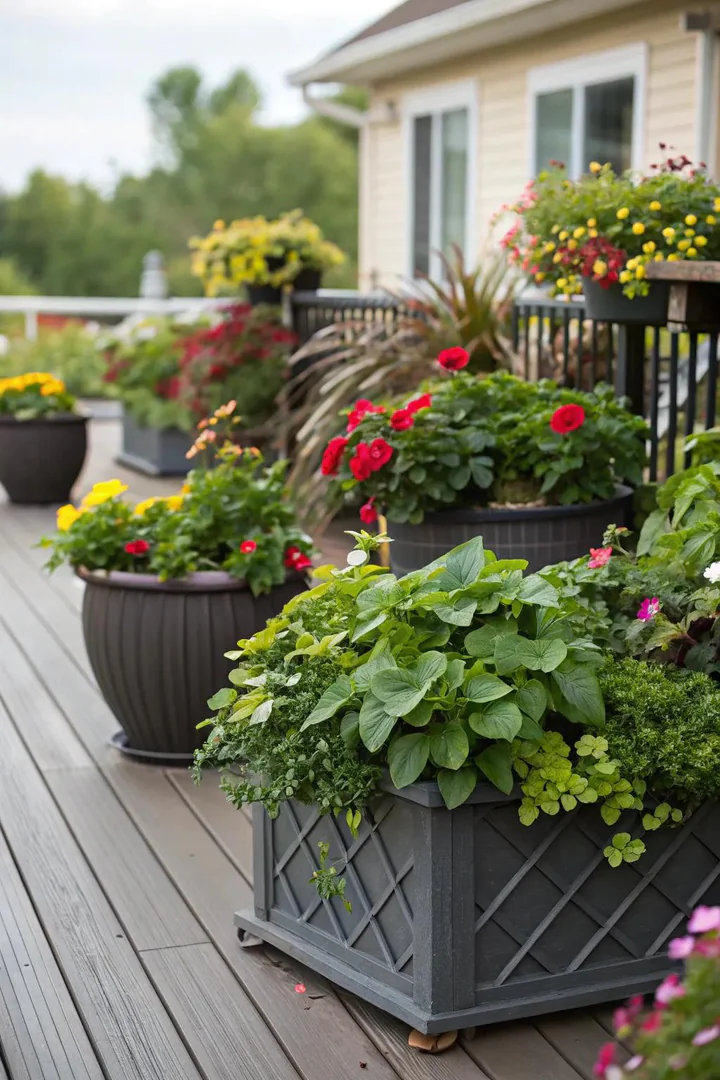
Built-in planters integrated into your deck railing or perimeter framing add greenery without taking up floor space. Construct planter boxes from composite decking scraps or cedar boards (1×8 or 1×10) lined with weed barrier fabric and a 1/2-inch drainage layer of pea gravel at the bottom. A 4-foot-long built-in planter costs $30-$60 in materials to build yourself.
Railing-mounted planters from Bloem and Mayne attach to 2×4 or 2×6 railing caps with adjustable brackets ($15-$30 each) and hold 2-3 gallons of soil per planter. Fill with trailing plants like sweet potato vine, Wave petunias, or trailing rosemary that spill over the railing edge and soften the hard lines of the deck structure. Outdoor structures like a backyard pavilion give you even more vertical growing space for climbing and hanging plants.
Self-watering planters from Lechuza and EarthBox ($40-$90 each) have built-in reservoirs that keep soil consistently moist for 3-5 days between refills, reducing maintenance on a busy deck with 10-15 containers. Group planters in odd numbers (3, 5, or 7) and vary heights using plant stands or stacked pavers for a layered, collected look.
9. Create a Smooth Indoor-Outdoor Transition
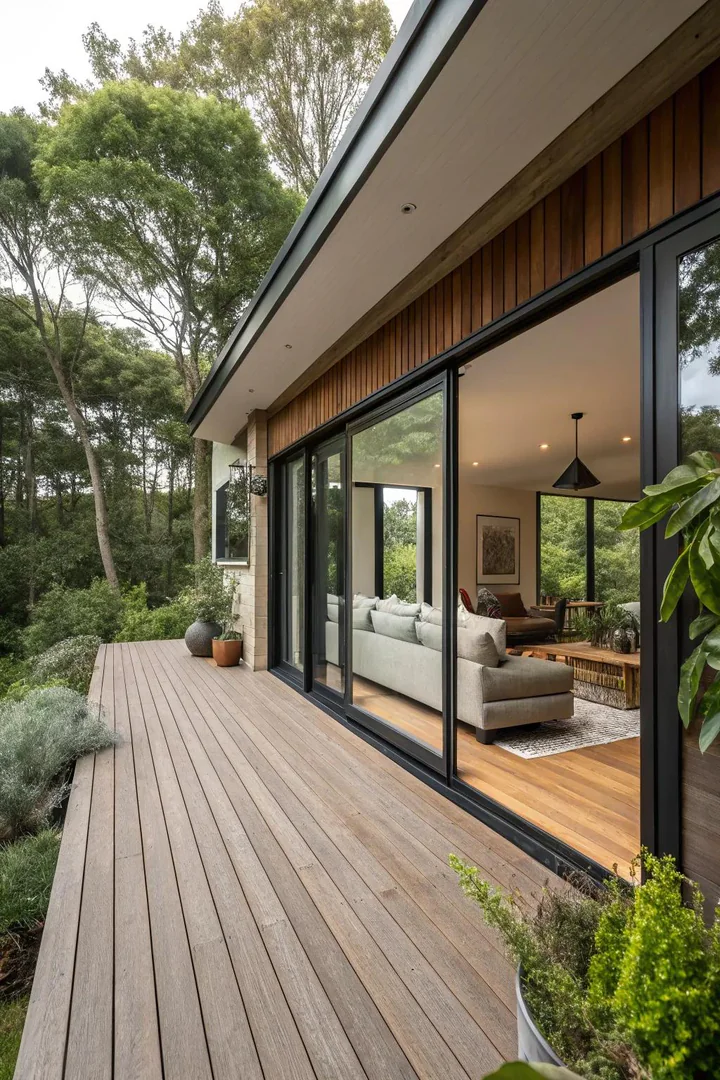
Setting your deck surface at the exact same height as your interior floor eliminates the step-down threshold and makes the outdoor space feel like an extension of the room. Achieve a flush transition by framing the deck 1-1.5 inches below the door sill to account for decking board thickness, then install composite or hardwood boards that bring the walking surface level with the interior tile or hardwood.
Match deck board width and color tone to your indoor flooring for a continuous visual line. Trex Transcend’s Havana Gold pairs well with white oak interiors, while TimberTech’s Mocha runs parallel to dark walnut floors. Run deck boards in the same direction as the interior planks to reinforce the connection through the doorway.
Install a multi-slide or pocket door system (Milgard, Pella, or Marvin brands, $3,000-$12,000 for a 12-16 foot opening) that stacks glass panels completely out of the way when open. A recessed track threshold ($200-$400) sits flush with both floor surfaces and channels rainwater away from the interior. Add a 1/4-inch-per-foot slope to the first 4 feet of deck away from the door to direct water runoff.
10. Add a Touch of Luxury with a Hot Tub
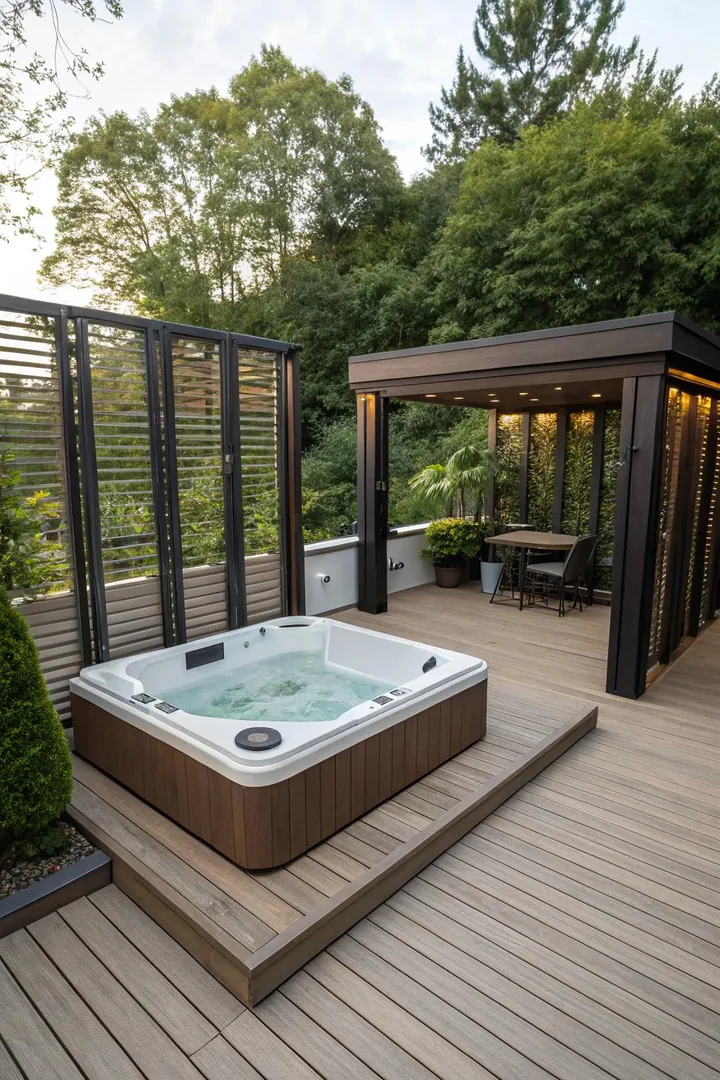
A hot tub built into your deck creates a resort-style focal point that adds year-round use to the space. Standard acrylic hot tubs from Jacuzzi, Hot Spring, and Bullfrog Spas weigh 500-800 pounds empty and 3,000-4,500 pounds filled, requiring reinforced framing with doubled 2×10 joists on 8-inch centers and concrete footings beneath the tub location.
A flush-mount installation sinks the tub below deck level so the rim sits even with the walking surface, and wrap-around steps on two or three sides provide easy entry. Budget $1,000-$3,000 for the framing reinforcement, electrical hookup (most 6-person tubs need a dedicated 240V/50A circuit), and plumbing connections in addition to the tub price ($3,000-$10,000). For more ways to integrate a hot tub with your yard, see hot tub landscaping ideas.
Surround the hot tub area with slip-resistant composite boards or textured stone pavers rather than smooth wood, which becomes dangerously slick when wet. Install an automated hardcover lift system ($200-$500) that swings the insulated cover off with one hand, and add LED strip lighting ($20-$40 for a 16-foot waterproof roll) under the deck overhang around the tub for safe nighttime access.
11. Incorporate Weather-Resistant Furniture
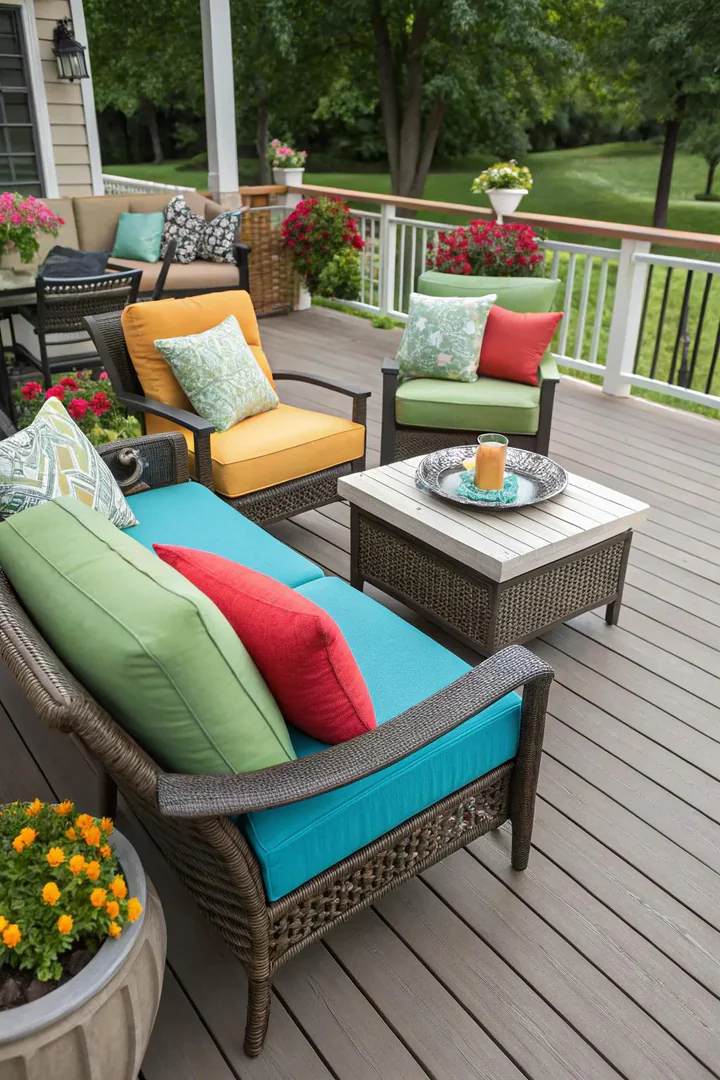
Weather-resistant furniture made from HDPE lumber, powder-coated aluminum, or synthetic wicker stays on the deck year-round without covers, rust, or rot. Polywood and Trex Outdoor Furniture both manufacture Adirondack chairs ($250-$400), dining sets ($1,200-$2,500), and chaise lounges ($500-$800) from recycled HDPE that carries a 20-year residential warranty.
Synthetic wicker (resin wicker) from Lloyd Flanders and Sunset West withstands rain, snow, and UV exposure without the cracking and fading that natural rattan develops after one outdoor season. Pair resin wicker frames with Sunbrella fabric cushions ($60-$120 per seat cushion) for a combination that handles 10+ years of full outdoor exposure.
Teak furniture from Kingsley Bate and Country Casual ($1,000-$5,000 per piece) develops a silver-gray patina naturally and lasts 30-50 years without treatment. Apply teak oil twice a year only if you prefer the original honey-gold color. Anchor lightweight furniture to the deck in wind-prone areas using anti-tip furniture straps ($10-$15 per set) bolted to the deck framing through a pre-drilled hole.
12. Add Personality with Unique Decor
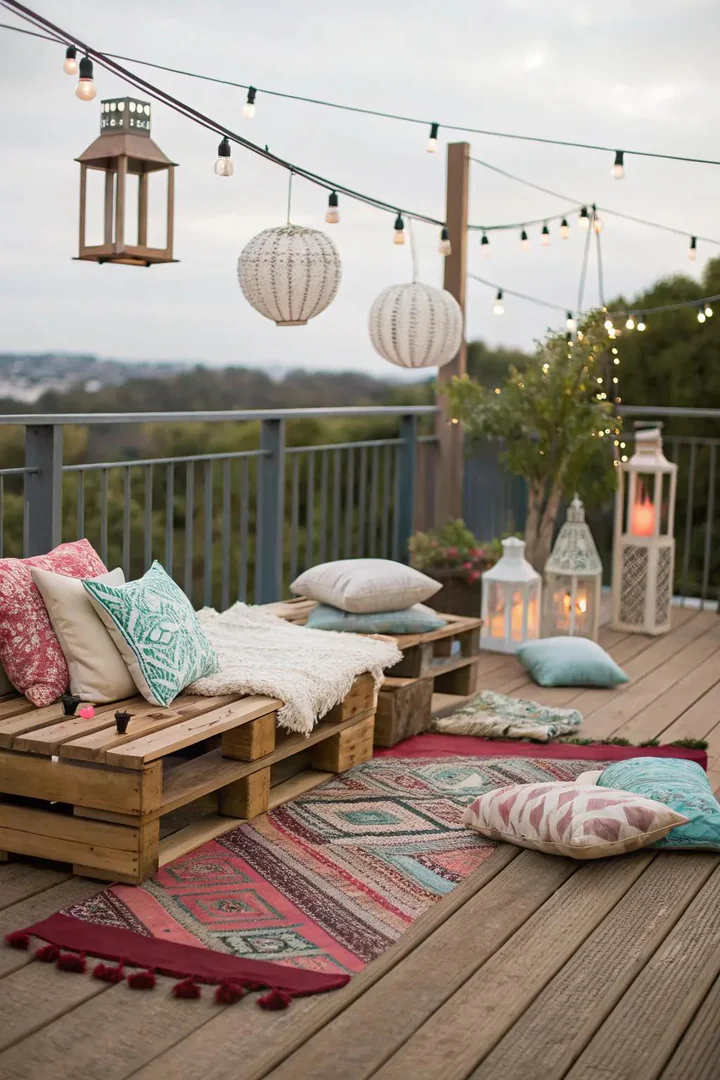
Outdoor rugs, wall art, and decorative accessories bring your personal style to the deck the same way you would dress an indoor room. Safavieh and nuLOOM polypropylene outdoor rugs ($50-$200 for a 5×8-foot size) resist moisture, mold, and UV fade while adding color and pattern underfoot. Place a rug beneath your dining table or seating group to define zones on a large, open deck.
Outdoor-rated metal wall art ($30-$100 per piece) mounts directly to the house wall, a privacy screen, or a freestanding panel behind your seating area. Powder-coated steel and aluminum wall sculptures handle rain without rusting, while Cor-Ten steel pieces develop a controlled rust patina that adds warmth and character over the first 6-12 months of exposure.
Add functional accessories like a freestanding towel rack near the pool or hot tub ($40-$80), a rolling bar cart in stainless steel or teak ($150-$400), and weatherproof Bluetooth speakers from JBL or Sonos ($100-$300) mounted under the pergola rafters. Layer candles in hurricane glass holders ($15-$30 each) along the railing for a warm glow that doesn’t compete with string light overhead.
13. Install Retractable Awnings for Versatility
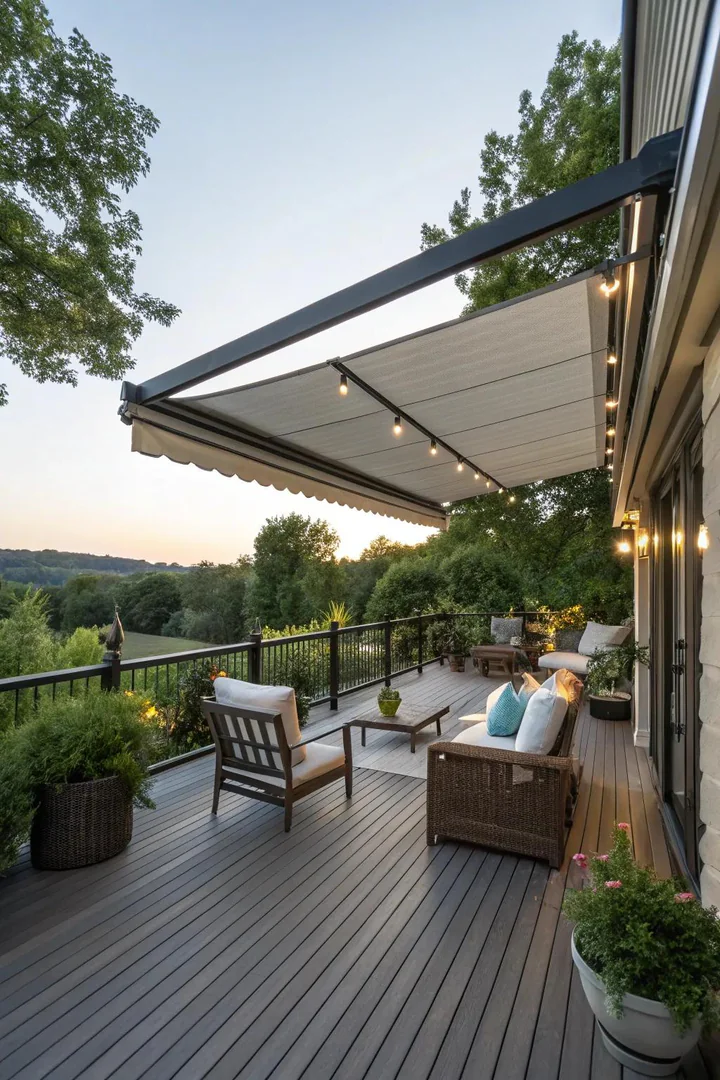
A retractable awning mounted to the house fascia or soffit provides on-demand shade over your deck with a single pull of a crank handle or press of a remote button. SunSetter, Advaning, and Awntech make residential retractable awnings in widths from 8 to 24 feet, with manual crank models starting at $400-$1,200 and motorized versions running $1,500-$4,000 installed.
Motorized awnings with Somfy or Elero motors extend and retract in under 30 seconds and include built-in wind sensors that automatically retract the fabric during gusts above 25 mph to prevent damage. Choose Sunbrella or Dickson acrylic fabric (120+ colors and stripe patterns) for a 10-15 year fabric lifespan with no color fade, or go with polyester covers ($200-$400 less) that last 5-7 years.
Mount the awning cassette at least 7 feet above the deck surface for comfortable headroom when the arm extends. A 12-foot projection (how far the awning reaches from the wall) shades a standard 4-person dining table, while a 14-16 foot projection covers a full lounge area. Pair your retractable awning with a valance drop ($50-$100 add-on) along the front edge that blocks late-afternoon sun at a low angle.
Decking Material Comparison
| Material | Cost per Linear Foot | Lifespan | Maintenance | Best For |
|---|---|---|---|---|
| Pressure-Treated Pine | $1.50-$3.00 | 10-15 years | Stain/seal every 2-3 years | Budget builds |
| Cedar | $3-$5 | 15-20 years | Seal every 1-2 years | Natural wood look |
| Trex Composite | $3-$6 | 25-30 years | Soap and water wash | Low maintenance |
| TimberTech Composite | $4-$7 | 25-30 years | Soap and water wash | Color variety |
| Fiberon Composite | $3-$5 | 25 years | Soap and water wash | Eco-friendly builds |
| Ipe Hardwood | $8-$15 | 40-75 years | Oil annually (optional) | Premium durability |
| Tigerwood | $6-$10 | 25-30 years | Oil annually (optional) | Exotic appearance |
| Bamboo (Cali Bamboo) | $4-$7 | 20-25 years | Annual cleaning | Sustainable projects |
| PVC (Azek) | $5-$9 | 30+ years | Soap and water wash | Moisture-heavy areas |
How to Plan and Build a Cool Deck
1. Set Your Budget and Footprint
Measure the area where your deck will sit and multiply length by width to get the total square footage. A 12×16-foot deck (192 square feet) costs $3,000-$5,000 in materials for composite or $1,500-$3,000 for pressure-treated pine. Add 10-15% to your material estimate for waste from cuts, and budget separately for railings ($15-$40 per linear foot), stairs ($75-$200 per tread), and hardware ($200-$400 for a standard deck).
2. Check Local Permits and Codes
Most municipalities require a building permit for decks over 200 square feet or higher than 30 inches above grade. Submit a site plan showing setback distances from property lines (typically 5-10 feet minimum), the deck footprint, and footing locations. Permit fees range from $100-$500 depending on your jurisdiction, and inspections are required at the footing, framing, and final completion stages.
3. Choose Your Framing and Foundation
Set concrete footings below the frost line (36-48 inches deep in northern climates, 12-18 inches in southern regions) using 12-inch diameter Sonotube forms filled with 3,000 psi concrete. Pressure-treated 2×10 or 2×12 joists spaced 16 inches on center handle composite and hardwood decking loads. Use joist tape (Trex Protect or G-Tape) on the top edge of every joist to prevent moisture from penetrating the end grain.
4. Install Decking Boards and Fasteners
Start board installation from the house wall and work outward, using hidden fastener clips (Camo, Tiger Claw, or manufacturer-specific clips) between each board for a screw-free surface. Leave a 1/8-inch gap between boards for drainage and seasonal expansion. Stagger end joints by at least 2 joists (32 inches minimum) to prevent a visible seam line running across the deck.
5. Add Finishing Details and Accessories
Install fascia boards around the deck perimeter to cover exposed joist ends, and add a skirting panel (lattice, horizontal boards, or solid panels) beneath the deck to conceal the understructure. Mount post sleeves and caps on railing posts, run low-voltage LED riser lights ($8-$15 each) on stair faces, and seal any exposed cut ends of composite boards with a color-matched touch-up pen provided by the manufacturer.
Frequently Asked Questions
How much does a new deck cost per square foot?
Pressure-treated pine decks cost $15-$25 per square foot including labor and materials, while composite decks run $25-$45 per square foot. Premium hardwood (ipe, cumaru) decks start at $40-$60 per square foot installed. All three tiers include framing, footings, basic railings, and one set of stairs but exclude features like built-in seating, pergolas, or lighting.
What is the lowest-maintenance decking material?
PVC decking from Azek and Wolf requires the least maintenance because the solid synthetic material contains no wood fiber to absorb moisture, stain, or support mold growth. Clean PVC boards once or twice a year with soap and water. Capped composite from Trex and TimberTech ranks second, needing the same cleaning schedule but occasionally developing mold on the surface in heavily shaded areas.
Can you build a deck directly on the ground?
Ground-level decks (also called floating decks or platform decks) sit on concrete deck blocks or adjustable pedestals placed directly on compacted gravel. Building codes in most areas allow freestanding decks under 30 inches high and under 200 square feet without a permit, though you should check your local jurisdiction. Use ground-contact rated lumber (UC4A or UC4B) or composite boards rated for ground contact to prevent rot.
How long does composite decking last?
Major composite brands (Trex, TimberTech, Fiberon) offer 25-year limited structural warranties and 25-30 year fade and stain warranties on their premium lines. Real-world lifespan reaches 30-40 years with periodic cleaning. First-generation composites from the early 2000s had mold and fade issues, but current capped-composite technology wraps the board in a polymer shell that prevents moisture absorption and surface degradation.
What deck board width looks best?
Standard 5.5-inch-wide boards work on most residential decks and create a traditional plank appearance. Wide-plank boards (7.25-8 inches) from TimberTech’s Reserve Collection and Azek’s Vintage line give a more modern, open look with fewer seam lines. Narrow 3.5-inch boards suit small decks and curved sections where tight radius bending is needed. Wider boards cost 20-30% more per linear foot but reduce installation time because fewer boards cover the same area.
Should you stain or paint a wood deck?
Stain penetrates the wood grain and protects from within, showing the natural wood texture while adding color. Paint sits on the surface and hides the grain completely but offers more color options and better UV protection. Semi-transparent stain lasts 2-3 years between coats, solid stain lasts 3-5 years, and deck paint lasts 5-7 years. Stain works better on new wood, while paint covers older boards with imperfections.
How do you prevent a deck from getting too hot in summer?
Light-colored decking boards reflect more solar radiation than dark tones, staying 10-20 degrees cooler on the surface. Trex Transcend’s Island Mist and TimberTech’s Coastline test among the coolest composite options. Retractable awnings, pergola shade covers, and strategically placed shade trees also reduce surface temperatures. Misting systems ($50-$150 for a DIY kit) mounted along the deck perimeter can drop ambient air temperature by 10-15 degrees during dry heat.