Small Patio Paver Ideas: 14 Brilliant Designs for Tiny Spaces

Small patio paver ideas let you build a functional outdoor floor on a tight budget, using affordable materials like recycled brick, gravel-and-stone combos, interlocking deck tiles, and standard concrete slabs that cover 50 to 150 square feet for under $500. Below are 14 small paver patio designs with specific product names, material costs per square foot, base-prep steps, and layout patterns that work in compact backyards, side yards, and apartment courtyards.
1. Gravel and Stone Paver Patio
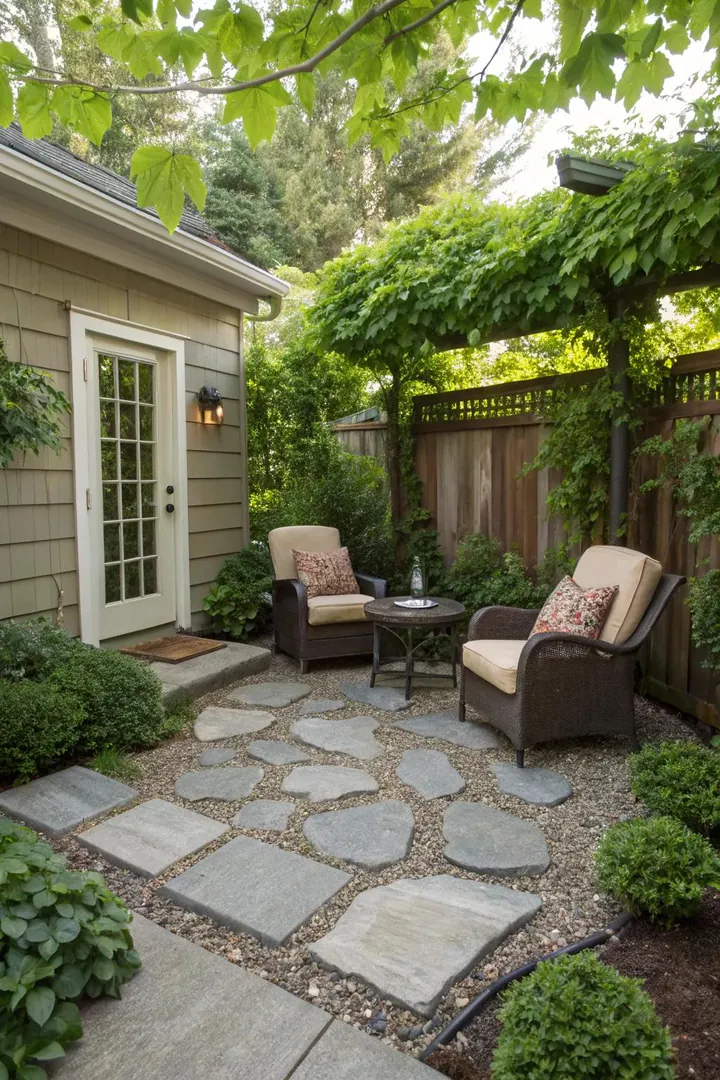
Combining large format pavers (16 x 16-inch or 24 x 24-inch concrete squares) with surrounding pea gravel costs 40 to 60 percent less than a fully paved surface because the gravel fills the gaps between stones. Lay the pavers on a compacted 3-inch gravel base at 24-inch center-to-center spacing, then fill the remaining area with 3/4-inch pea gravel ($35 to $50 per ton delivered) to a depth of 2 inches.
Edge the entire patio with flexible aluminum or steel edging (Col-Met 14-gauge, $2 per linear foot) to contain the gravel and prevent migration into the lawn. Nine 24 x 24-inch pavers ($4 to $8 each from Pavestone or Oldcastle) plus 0.5 tons of pea gravel cover a 10 x 10-foot patio for roughly $80 to $150 in materials. A small brick patio next to the gravel section adds a solid dining surface if needed.
2. Grass and Paver Checkerboard
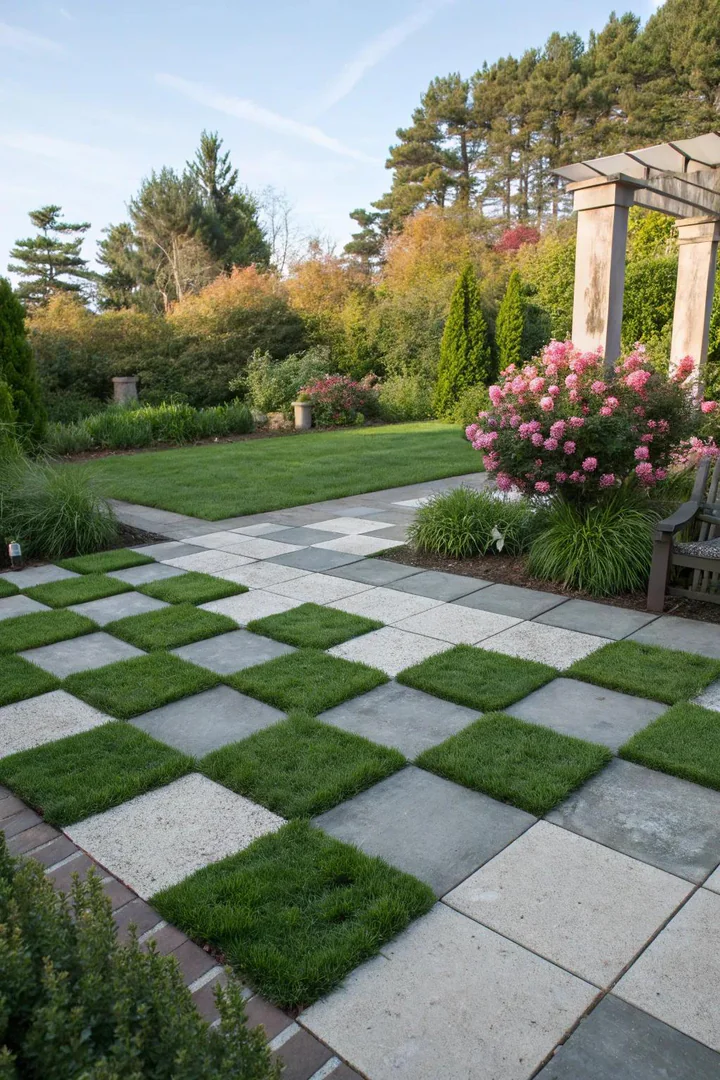
Alternating 12 x 12-inch or 16 x 16-inch concrete pavers with open grass squares creates a green checkerboard pattern that handles foot traffic while keeping 50 percent of the surface as living turf. Set each paver on a 2-inch sand bed so the top sits flush with the surrounding soil level, and plant the open squares with a durable grass variety like Bermuda, zoysia, or dwarf fescue.
A 10 x 10-foot checkerboard patio uses 50 pavers (alternating with 50 grass squares in a 10 x 10 grid) and costs $100 to $200 in pavers plus grass seed or sod plugs. Mow the grass squares at the same height as the rest of the lawn, and edge around each paver monthly with a string trimmer to maintain clean borders between stone and turf.
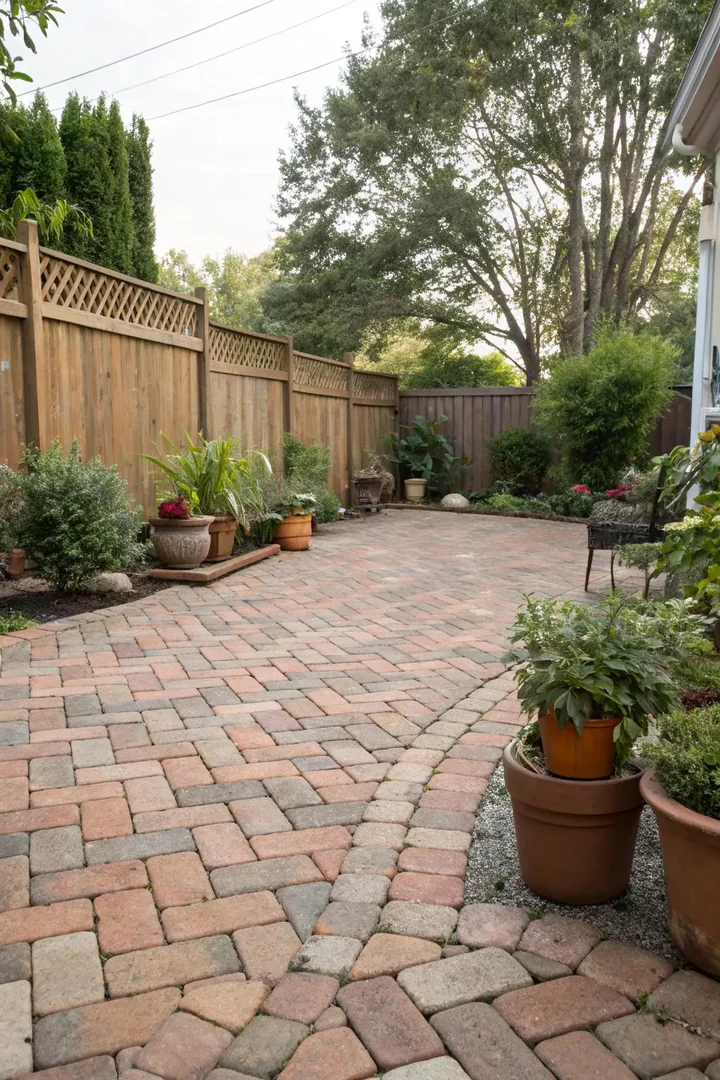
3. Recycled Brick Paver Patio
Salvaged bricks from demolished buildings, old sidewalks, or chimney teardowns cost $0.25 to $0.60 each versus $0.75 to $1.50 for new clay pavers. The natural color variation (red, buff, brown, charcoal) in reclaimed brick adds character that factory-fresh pavers take years to develop. Source them from local salvage yards, Craigslist, Habitat for Humanity ReStores, or specialty dealers like Gavin Historical Bricks.
Sort bricks by size before laying because salvaged stock varies by 1/4 to 1/2 inch in length and width. Lay in a running bond pattern with wider 3/8 to 1/2-inch joints to accommodate size differences, and fill joints with polymeric sand. A 100-square-foot recycled brick patio needs roughly 450 pavers and costs $115 to $270 in brick alone, saving $100 to $200 compared to new pavers.
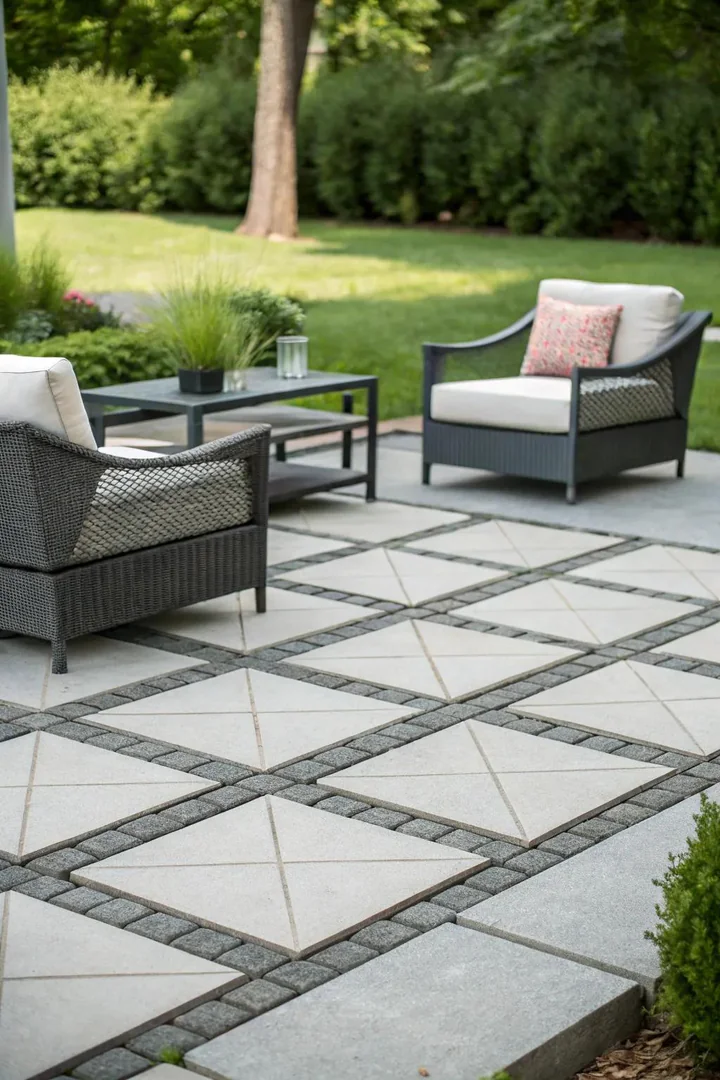
4. Concrete Slab Paver Patio
Pouring individual concrete slab sections (3 x 3-foot or 4 x 4-foot squares) in reusable plywood forms lets you build a patio one section at a time over several weekends without committing to a single large pour. Mix Quikrete 5000 ($6 per 80-pound bag, each bag fills roughly 0.6 cubic feet) in a wheelbarrow, pour into the form, screed flat, and add an exposed aggregate or broom finish before the surface sets.
Space each slab 1 inch apart and fill the gaps with pea gravel or creeping thyme (Thymus serpyllum) for a planted joint. A 10 x 10-foot patio divided into nine 3 x 3-foot slabs uses roughly 27 bags of concrete mix at a total materials cost of $160 to $250 including rebar, sand base, and form lumber.
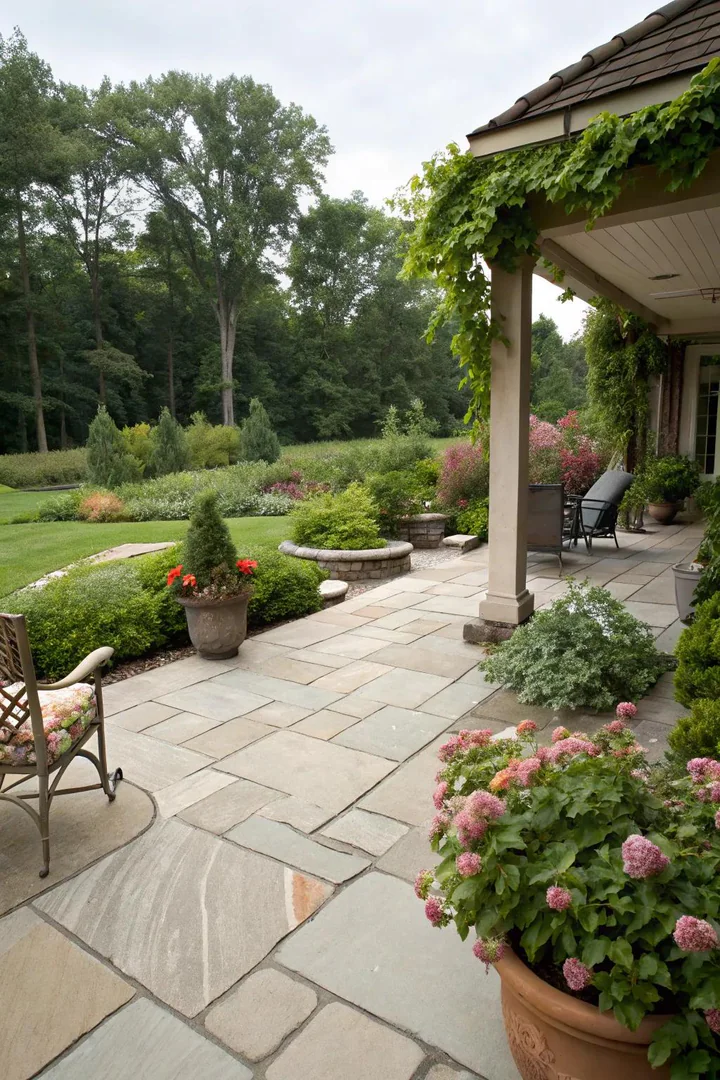
5. Flagstone Paver Patio
Natural flagstone (Pennsylvania bluestone, Arizona sandstone, or Tennessee fieldstone) comes in irregular shapes 1 to 2 inches thick that fit together like a puzzle on a sand or compacted stone-dust bed. Flagstone costs $3 to $8 per square foot from local stone yards depending on species, thickness, and color. A 100-square-foot patio runs $300 to $800 in stone plus $50 to $100 for base materials.
Arrange stones on the ground first (dry-fit) before setting on the bed, and cut pieces to fit tight joints with a 4.5-inch angle grinder fitted with a diamond blade. Fill joints with polymeric sand for a solid surface or plant creeping thyme, blue star creeper (Isotoma fluviatilis), or Irish moss (Sagina subulata) for a softened, garden-floor look.
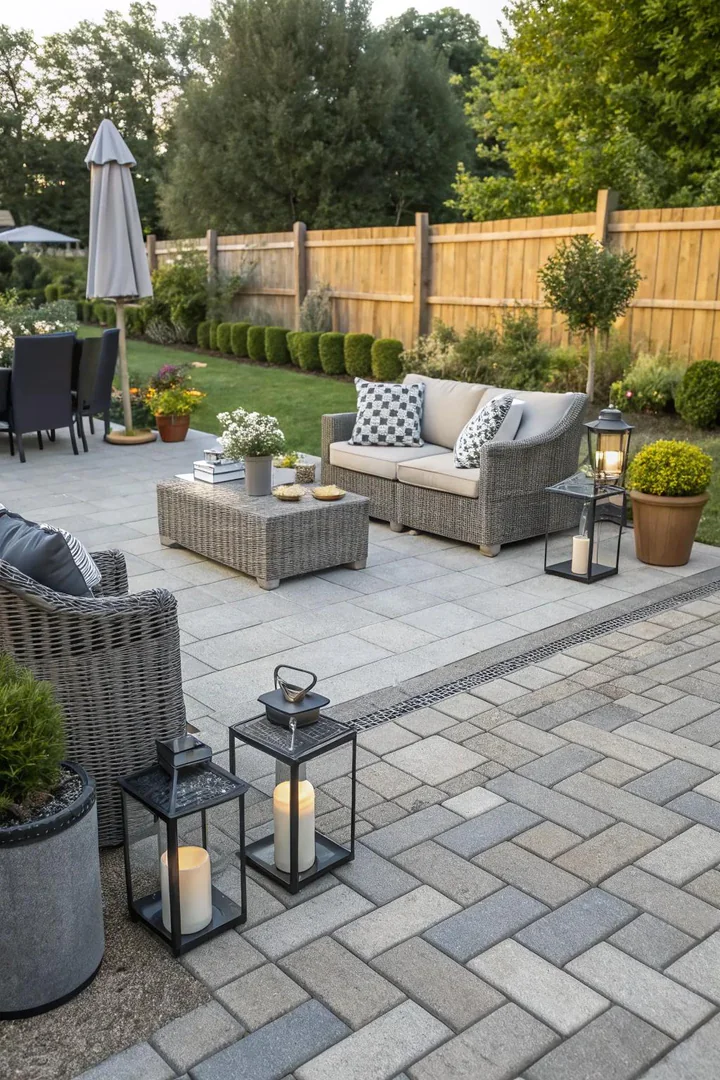
6. Patterned Paver Layout
Using two different sizes or colors of standard concrete pavers in a repeating geometric pattern (pinwheel, basket weave, or herringbone) adds visual interest to a small patio without custom cuts or expensive materials. A pinwheel pattern uses one 12 x 12-inch center paver surrounded by four 6 x 12-inch rectangular pavers, repeating across the surface.
Buy pavers from the same manufacturer and same production lot to ensure color consistency: Pavestone Holland in Charcoal and Buff ($0.50 each), Oldcastle Countryside in two-tone earth blend ($0.60 each), or Belgard Holland Stone in contrasting shades ($0.70 each). Pre-plan the pattern on paper at 1/4-inch scale to calculate exact quantities and minimize waste from partial units at the borders.
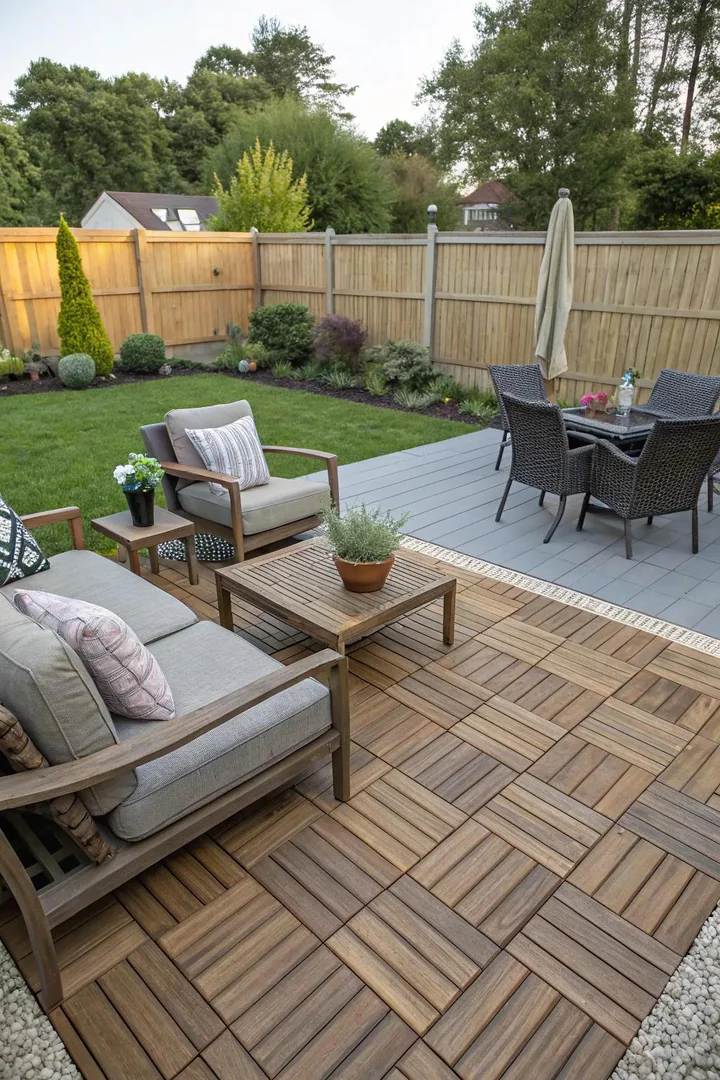
7. Interlocking Deck Tiles
Snap-together deck tiles install directly over concrete, compacted gravel, or any flat outdoor surface in minutes with no tools, mortar, or permanent attachment. Each 12 x 12-inch tile clicks into adjacent tiles through a molded plastic grid on the underside, creating a floating floor that lifts out when you move or want to clean underneath.
Popular brands include Bare Decor EZ-Floor in solid teak ($6 to $9 per tile), BEEFURNI Acacia Wood ($4 to $6 per tile), and Runnen from IKEA ($4 per tile in composite or artificial grass). A 50-square-foot balcony or patio needs 50 tiles at a total cost of $200 to $450, and one person can finish the installation in under two hours. Pair tiles with covered porch furniture for a complete outdoor room setup.
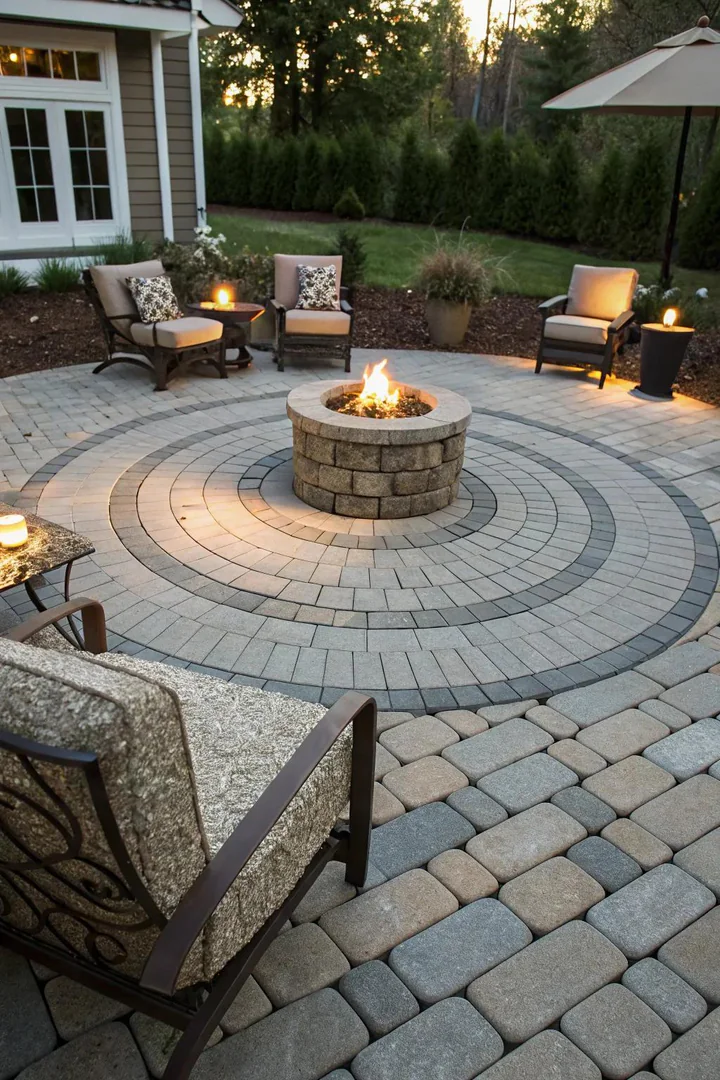
8. Circular Paver Pattern
A circular patio built from standard rectangular pavers arranged in concentric rings creates a strong visual focal point in a round garden clearing or backyard corner. Stake a center pin, tie a string to the paver length, and swing the string to mark each ring. Taper the inner end of each brick with an angle grinder to fit the tighter curve radius of the inner rings.
A 10-foot-diameter circle (78 square feet) uses roughly 350 standard 4 x 8-inch pavers plus 15 to 20 percent extra for tapered cuts, totaling about $200 to $350 in materials. Lay the center circle first (a single paver or a cut medallion stone), then work outward ring by ring, checking spacing with a ruler after each ring to keep the gaps even.
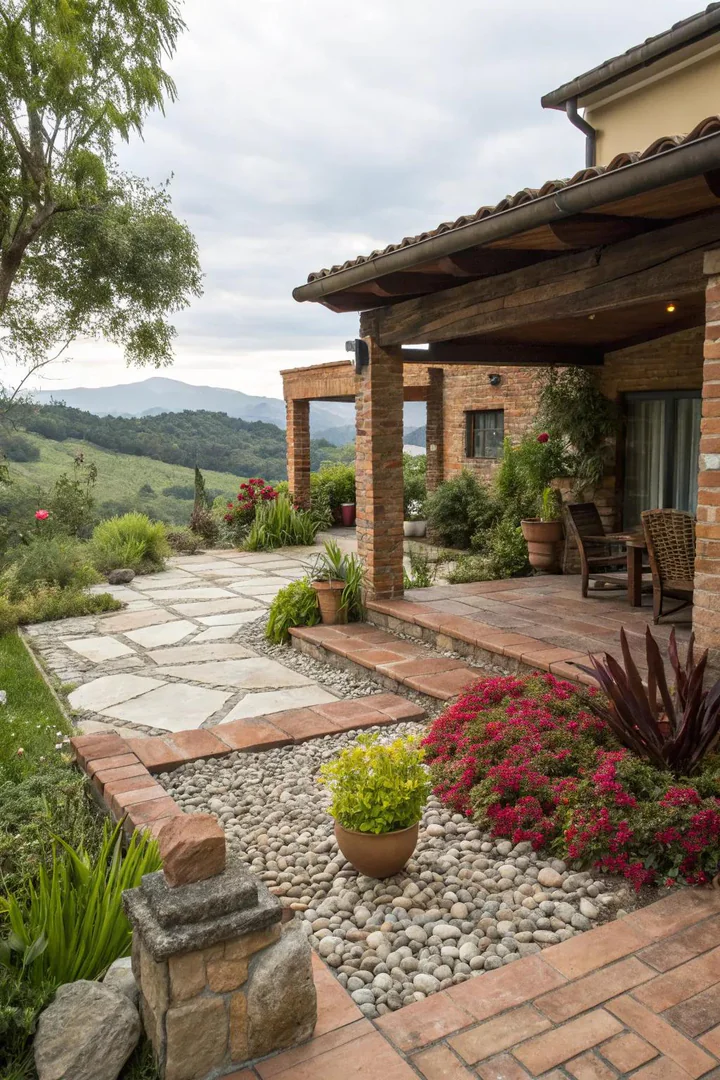
9. Mixed-Material Paver Patio
Combining two or three paving materials (brick, concrete, and natural stone) in a single small patio creates a layered, textured surface that looks more expensive than it costs. Assign each material to a separate zone: brick for the seating area, concrete slabs for the pathway, and flagstone for the accent border.
Separate materials with metal edging strips (aluminum T-bar at $2 per linear foot) to prevent sand migration between different base depths. Keep the finished surface height identical across all materials by adjusting the sand bed thickness: 1 inch under thick flagstone, 1.5 inches under thinner concrete pavers. Match colors to a warm earth-tone palette (red, tan, gray) so the mixed surfaces read as intentional design rather than leftover supplies.
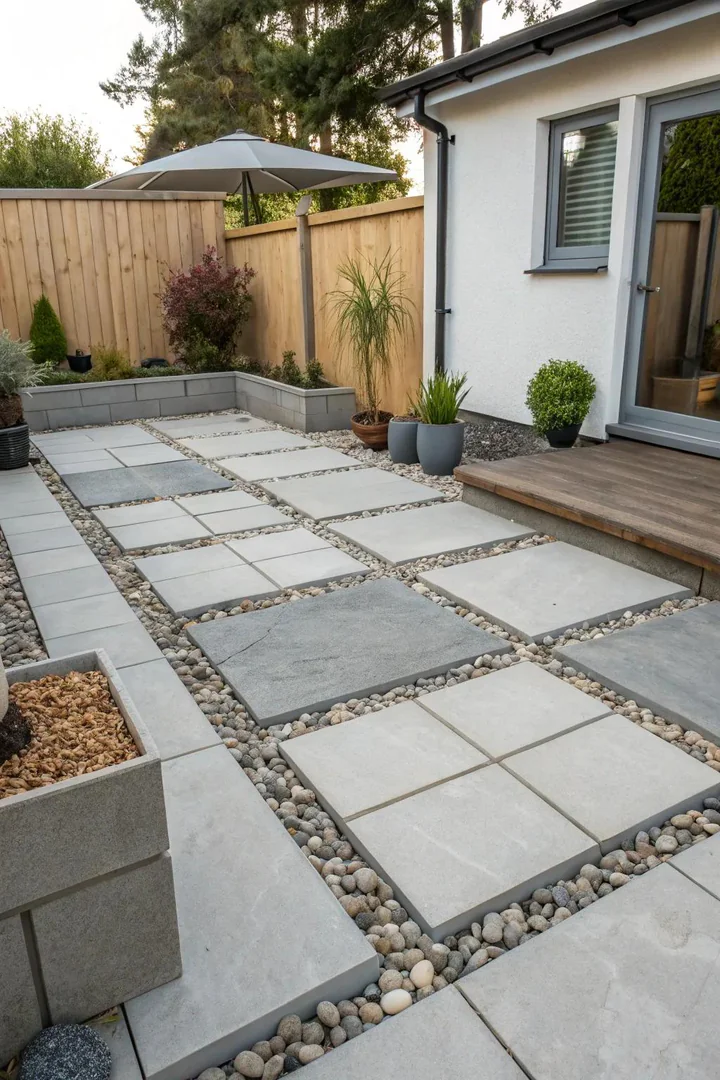
10. Compact Concrete Slab Patio
Four 24 x 24-inch concrete pavers arranged in a 2 x 2 grid create a 4 x 4-foot patio pad that holds two chairs and a side table, taking under 30 minutes to install on leveled ground. Each slab costs $4 to $8 at Home Depot or Lowe’s (Pavestone 24 x 24 Square or Oldcastle Quadra), for a total materials cost of $16 to $32 plus $10 of leveling sand.
Set the four slabs tight together with no gap, or space them 2 inches apart and fill with pea gravel for drainage. A compact 4 x 4 pad works well as a base for a grill station, a potting bench, or a single Adirondack chair in a narrow side yard. Add a fifth and sixth slab to extend the pad to 4 x 6 feet ($8 to $16 more) if you need room for two chairs side by side.
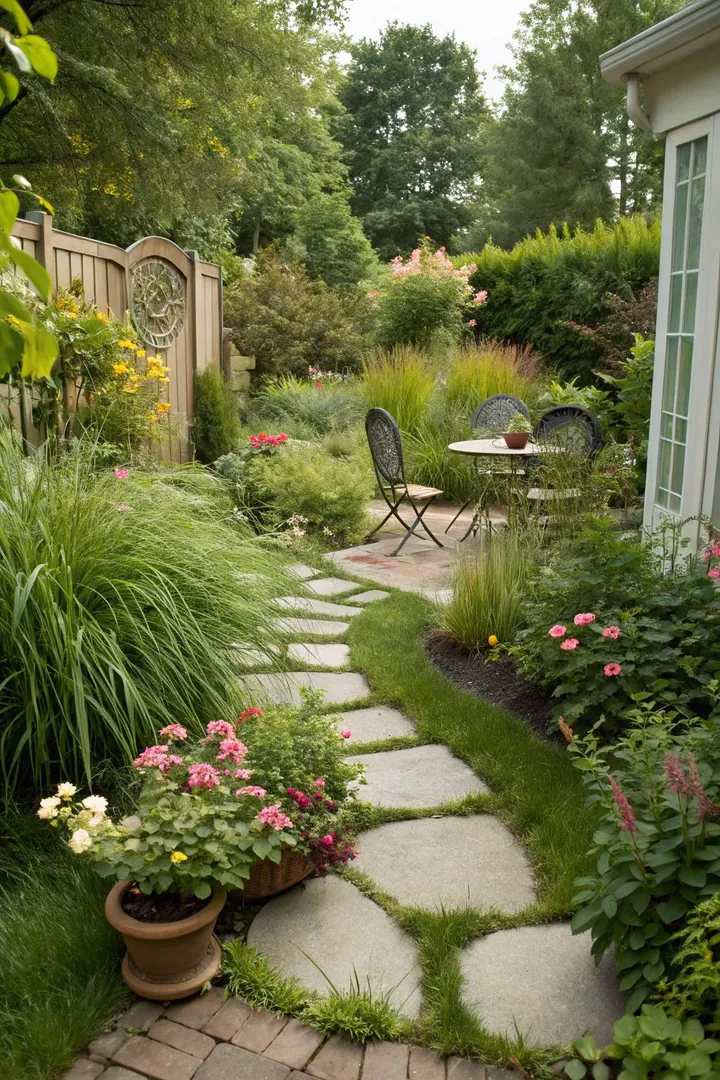
11. Stepping Stone Patio Path
Round or irregularly shaped stepping stones laid in mulch, gravel, or ground cover create a casual garden-path patio that costs less per square foot than any fully paved surface. Place 16 to 18-inch diameter concrete stepping stones ($3 to $6 each) at 6-inch intervals so each step lands naturally during a normal walking stride (roughly 24-inch center-to-center spacing).
Set each stone on a 2-inch sand pad so the top sits flush with the surrounding mulch or gravel surface. A 12-stone path from the back door to a seating area costs $36 to $72 in stones, and the surrounding area fills with 2 inches of cedar bark mulch ($30 to $40 per cubic yard) or 3/4-inch river rock ($40 to $60 per ton delivered). Add a picnic table at the path endpoint for a complete garden dining destination.
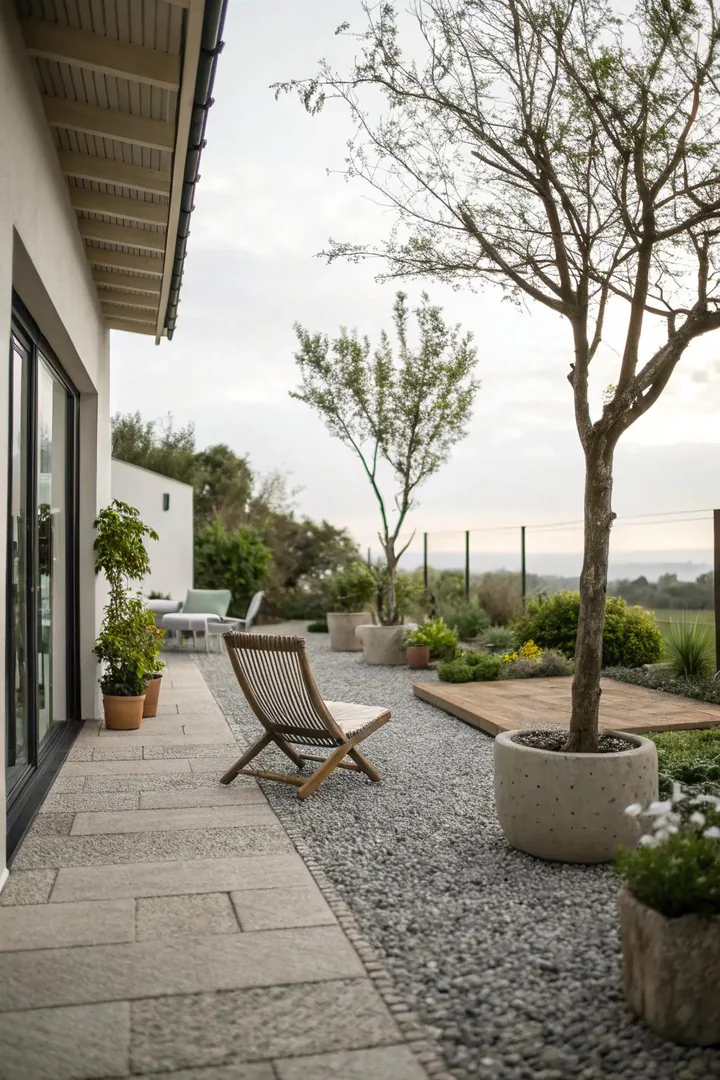
12. Crushed Stone Patio
A crushed stone patio (decomposed granite, crushed limestone, or compacted stone dust) creates a semi-permeable surface that drains rainwater naturally and costs $1 to $3 per square foot installed, the lowest price point for any permanent patio surface. Excavate 4 inches deep, install steel or aluminum edging, and fill with 3 inches of crushed stone compacted in two 1.5-inch lifts with a plate compactor.
Decomposed granite in Gold Fines, Buff, or Gray ($30 to $50 per ton, one ton covers roughly 80 square feet at 3-inch depth) produces a firm, walkable surface that resists rutting once compacted to 95 percent density. Refresh the surface every two to three years with a 1/2-inch top dressing of fresh material to replace what weather and foot traffic dislodge.
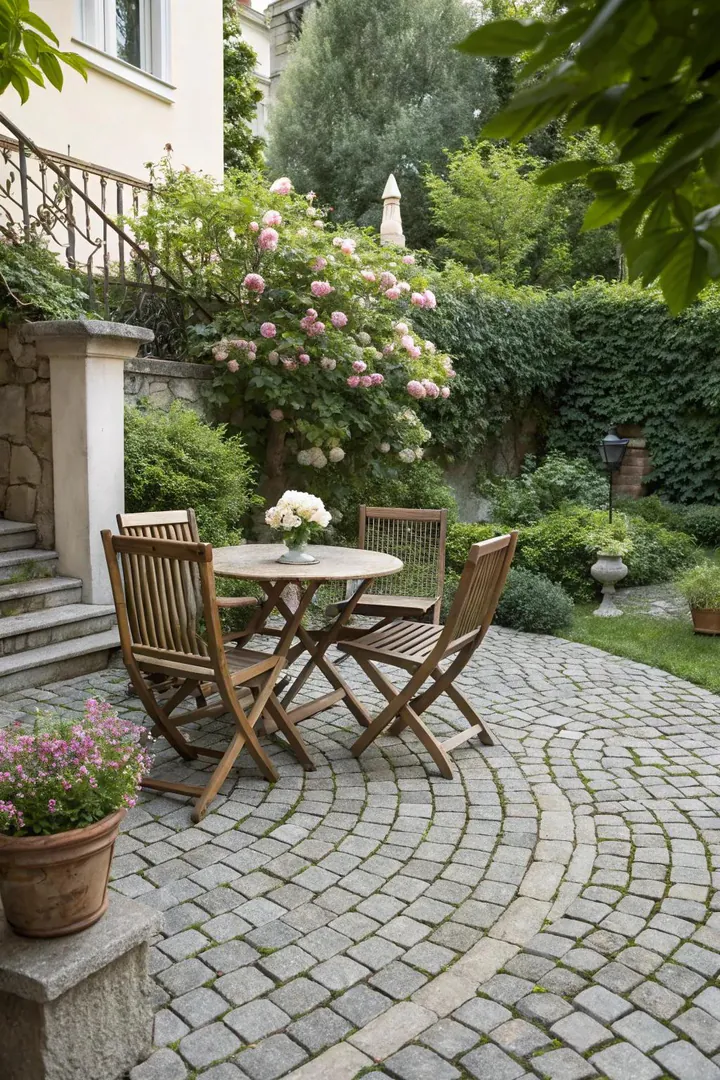
13. Cobblestone Paver Patio
Cobblestones (4 x 4-inch or 6 x 6-inch granite setts) produce a durable, Old World surface that handles freeze-thaw cycles and heavy furniture without cracking. Belgian-style granite cobbles cost $3 to $7 per square foot from stone supply yards, and their natural gray, pink, or charcoal tones deepen when wet for a rich color shift after rain.
Set cobbles on a 1-inch mortar bed over a 4-inch compacted gravel base, or dry-lay them on stone dust for a sand-set installation that allows individual stone replacement later. A fan pattern (arcing rows radiating from a center point) is the traditional European layout and uses rectangular setts laid in curved lines. A 100-square-foot cobblestone patio costs $300 to $700 in stone plus $100 to $150 for base materials, mortar, and edging.
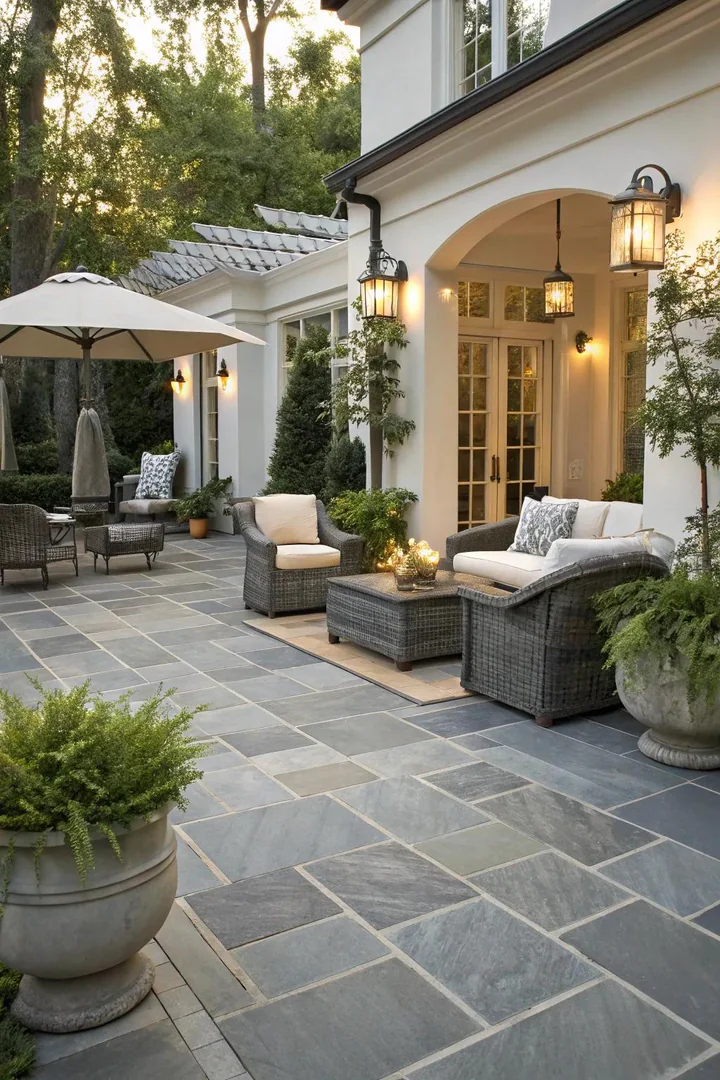
14. Slate Paver Patio
Natural slate tiles (12 x 12-inch or 12 x 24-inch, 3/4 to 1 inch thick) produce a smooth, dark-toned surface with a naturally cleft texture that grips shoe soles even when wet. Black, charcoal, and multicolor slate costs $4 to $10 per square foot from stone yards, and the material splits easily along grain lines for irregular-edge cuts using a cold chisel and mallet.
Lay slate on a 1-inch mortar bed or on compacted stone dust for a dry-laid installation. Seal the surface with a penetrating stone sealer (Miracle Sealants 511 Impregnator, $25 per quart) to prevent water staining and moss growth in shaded areas. A 100-square-foot slate patio costs $400 to $1,000 in tile plus base materials. Visit pallet furniture designs for budget-friendly outdoor seating that pairs well with a new slate surface. Check The Designers Company for more patio material guides and installation tutorials.
How to Build a Small Paver Patio
1. Mark and Excavate the Area
Outline the patio with spray paint or a garden hose, drive stakes at each corner, and run mason’s line between them at the planned finished height. Dig 6 to 8 inches deep (4 inches for gravel base + 1 inch for sand + 1 to 2.25 inches for paver thickness) with a flat-bottom spade and remove all organic material, roots, and loose soil. Slope the base 1/4 inch per foot away from any adjacent building foundation.
2. Install the Gravel Base and Sand Bed
Fill the excavation with 4 inches of crushed limestone (#411 dense-grade or AASHTO #57) compacted in two 2-inch lifts using a manual hand tamper or rented plate compactor. Spread 1 inch of coarse concrete sand on top and screed level using two 1-inch-diameter metal conduit pipes as guides and a straight 2 x 4 board pulled across them.
3. Lay Pavers and Install Edging
Set pavers directly on the screeded sand bed starting from one corner, maintaining 1/8 to 1/4-inch joint spacing. Cut edge pavers with a diamond-blade wet saw or a 4.5-inch angle grinder with a masonry cutting disc. Install rigid paver edging (Dimex EasyFlex or SnapEdge) along all exposed borders, staked every 12 inches with galvanized ground spikes.
4. Fill Joints and Compact
Sweep polymeric sand (Techniseal HP2, $25 per 50-pound bag) into all joints using a push broom, then run a plate compactor across the entire surface to seat the pavers and settle the sand. Mist the surface lightly with a garden hose to activate the polymer binder, and keep foot traffic off the patio for 24 hours while the sand cures and hardens.
Paver Material Cost Comparison
| Material | Cost per Sq Ft | 100 Sq Ft Total | DIY Difficulty | Lifespan | Best For |
|---|---|---|---|---|---|
| Concrete Pavers (standard) | $1.50 to $3 | $150 to $300 | Easy | 25+ years | Budget patios, any pattern |
| Recycled Brick | $1 to $2.50 | $100 to $250 | Easy-Moderate | 20+ years | Rustic, character patios |
| Gravel + Stepping Stones | $0.80 to $2 | $80 to $200 | Easy | 10 to 15 years | Casual garden paths |
| Flagstone | $3 to $8 | $300 to $800 | Moderate | 30+ years | Natural, organic shapes |
| Cobblestone | $3 to $7 | $300 to $700 | Moderate-Hard | 50+ years | Old World, formal entries |
| Slate | $4 to $10 | $400 to $1,000 | Moderate | 30+ years | Modern, dark-toned surfaces |
| Interlocking Deck Tiles | $4 to $9 | $400 to $900 | Very Easy | 8 to 15 years | Balconies, rentals, quick install |
| Crushed Stone (DG) | $1 to $3 | $100 to $300 | Easy | 5 to 10 years (top-dress) | Budget, permeable surface |
Frequently Asked Questions
What is the cheapest paver option for a small patio?
Crushed stone (decomposed granite or compacted limestone screenings) is the least expensive patio surface at $1 to $3 per square foot installed, followed by gravel-and-stepping-stone combinations at $0.80 to $2 per square foot. Standard concrete pavers from Pavestone or Oldcastle run $1.50 to $3 per square foot and offer a solid, low-maintenance surface at a modest price point. A 100-square-foot patio in any of these materials costs under $300 in materials for a DIY install.
Do you need a gravel base under patio pavers?
A 4-inch compacted gravel base is required for any paver installation expected to last more than two to three years. The gravel layer distributes weight evenly, prevents pavers from sinking into soft soil, and provides drainage so water does not pool under the surface and cause frost heaving in cold climates. Skip the gravel base only for temporary installations like snap-together deck tiles on an existing concrete slab.
How long does it take one person to build a small paver patio?
One person can build a 100-square-foot paver patio in six to ten hours spread over a weekend: two to three hours for excavation, one to two hours for base compaction and sand screeding, two to three hours for paver laying and cutting, and one hour for joint filling and final compaction. Renting a plate compactor ($80 to $100 per day) cuts the compaction time in half compared to using a hand tamper.
Can you put pavers over an existing concrete patio?
Pavers can overlay an existing concrete slab if the concrete is structurally sound (no major cracks, heaving, or settling), the added 1 to 2.5 inches of height does not create a trip hazard at the door threshold, and the slab drains properly. Spread a 1/2-inch layer of coarse sand on the concrete, lay the pavers directly on top, and fill joints with polymeric sand. The concrete acts as the base, eliminating the need for excavation and gravel.
What paver pattern makes a small patio look bigger?
A running bond pattern (bricks offset by half like a wall) laid lengthwise along the longest dimension of the patio draws the eye forward and makes the space appear longer. Diagonal herringbone (pavers set at 45 degrees to the border) also adds perceived depth because the angled lines prevent the eye from measuring the exact width and length. Avoid stack bond (all pavers aligned in a grid) on small patios because the straight grid lines emphasize the exact boundaries and make the area feel boxed in.