Picnic Table Ideas: 21 Stunning Designs to Transform Your Yard

Picnic table ideas range from rustic reclaimed-wood builds and multi-shape geometric designs to convertible bench sets and bamboo eco-friendly options, so every backyard size and budget has a match. Below you will find 21 picnic table designs broken down by material, shape, and function, each paired with real dimensions, wood species, hardware choices, and finish recommendations to help you plan your next outdoor dining setup.
1. Rustic Reclaimed Wood Picnic Table
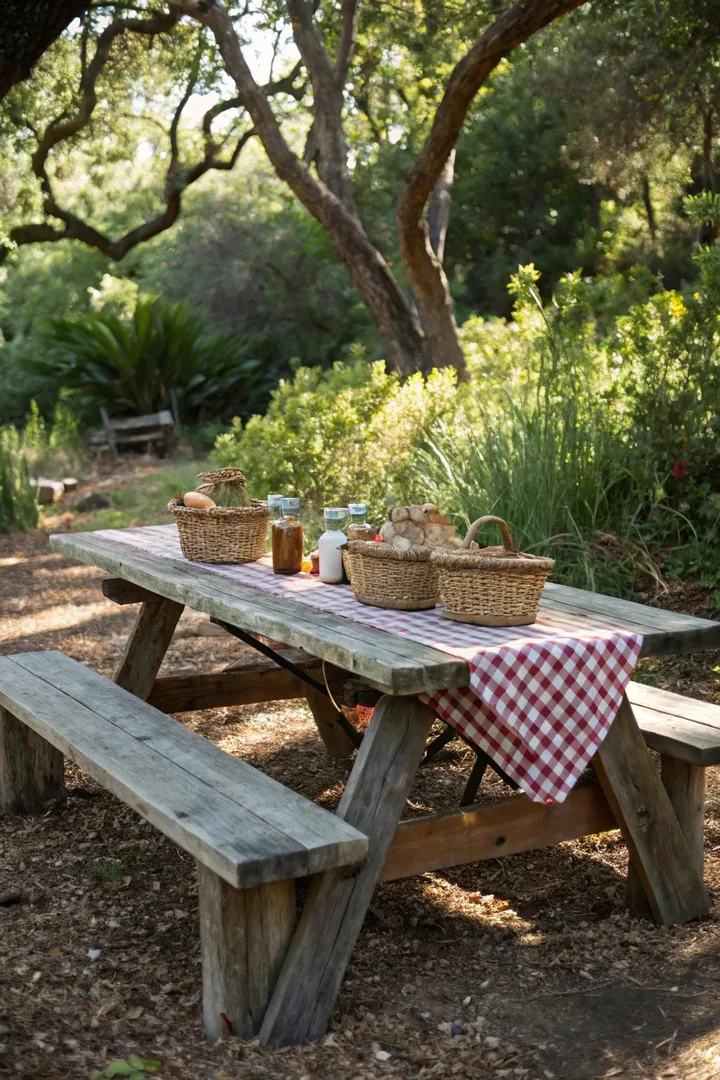
Old barn boards, shipping pallets, and salvaged fence planks make excellent picnic table material because the wood already carries decades of character. A standard 6-foot reclaimed-pine top uses five to six boards at 2 x 8 inches, joined with 3-inch stainless-steel carriage bolts and sealed with Varathane Spar Urethane for UV and water protection.
Sand each board to 120 grit before assembly to remove splinters while keeping the original saw marks visible. Pair a reclaimed tabletop with a pallet garden furniture set on the same patio for a matched weathered look. Expect to spend $80 to $150 on salvaged lumber from local demolition yards or Facebook Marketplace.
2. Picnic Table with a Pergola
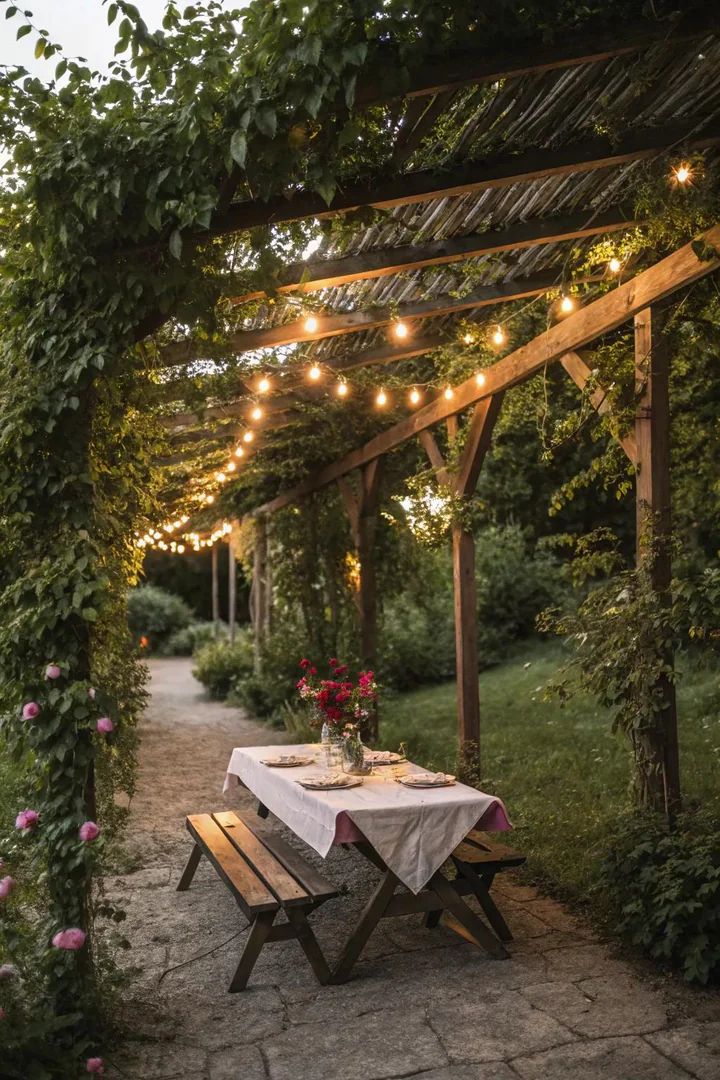
Pairing a picnic table with an overhead pergola gives permanent shade and a spot to hang string lights or planters. A 10 x 12-foot pressure-treated Southern Yellow Pine pergola with 6 x 6-inch posts and 2 x 8-inch rafters costs about $1,200 to $2,400 for lumber alone, and an 8-foot picnic table fits comfortably beneath with two feet of clearance on each side.
Anchor the pergola posts in 12-inch Sonotube footings filled with Quikrete 5000 and embed Simpson Strong-Tie post bases for a code-compliant connection. Train climbing plants like jasmine, wisteria, or grape vines along the rafters for natural shade. Check out more covered porch and pergola layouts for additional overhead structure designs.
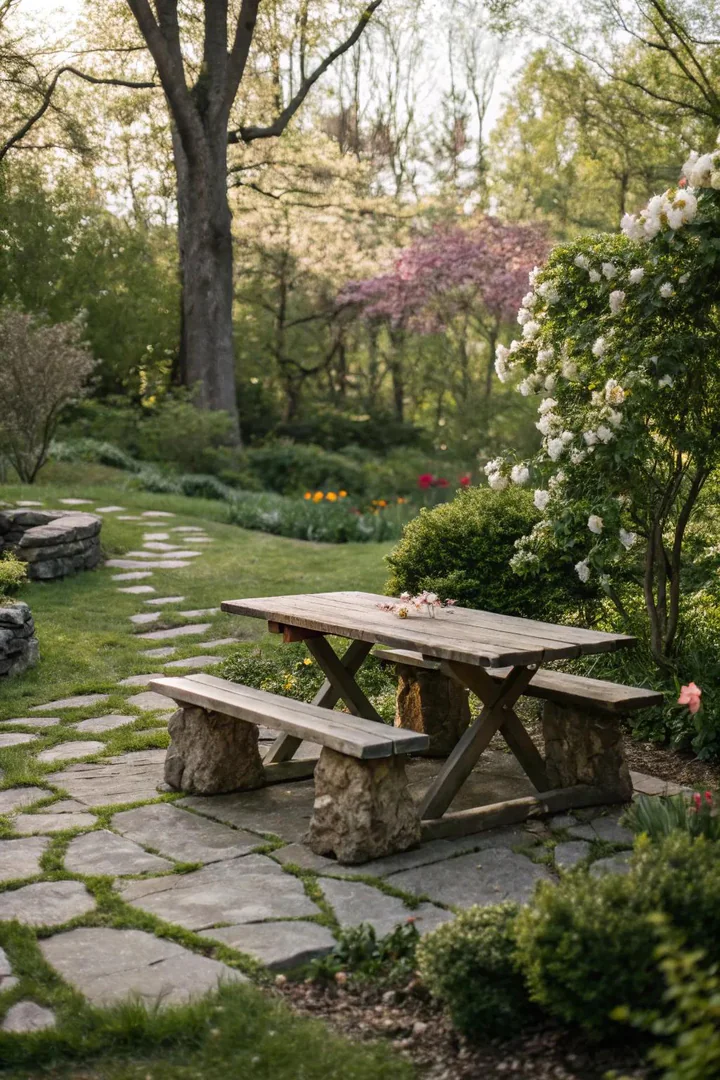
3. Stone and Wood Combination Picnic Table
Pairing natural stone legs with a solid-wood top creates a heavy, wind-resistant table that stays put without ground anchors. Common stone choices include stacked bluestone slabs at $8 to $12 per square foot, cut granite blocks at $15 to $25 per square foot, or poured concrete pedestals formed in plywood molds.
Attach the wood top to stone supports with L-brackets and masonry anchors rated for outdoor use. A 2-inch-thick redwood or Douglas fir top weighing 60 to 80 pounds balances well on two 24-inch-tall stone column bases spaced 48 inches apart. Seal the wood with Penofin penetrating oil and leave the stone untreated for natural drainage.
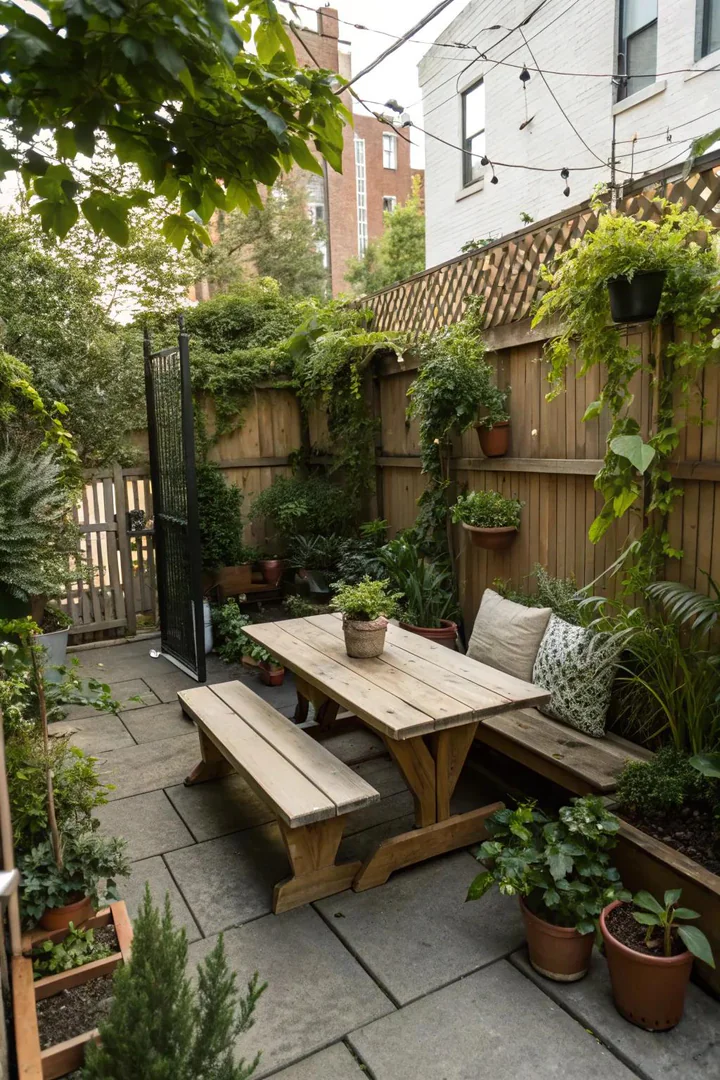
4. Convertible Bench-to-Table Set
A convertible bench-table folds from two separate benches with backrests into a single picnic table in under ten seconds, using a dual-hinge rotating mechanism. The 2-in-1 design saves deck space because one piece of furniture handles both lounging and dining without needing storage for extra chairs.
Most commercial versions use Select grade cedar or redwood slats on a powder-coated steel frame, seat four to six adults, and sell for $250 to $500 from retailers like Wayfair or Overstock. Build a DIY version for around $120 using 2 x 6 treated pine and a pair of heavy-duty T-hinges rated at 200 pounds per leaf.
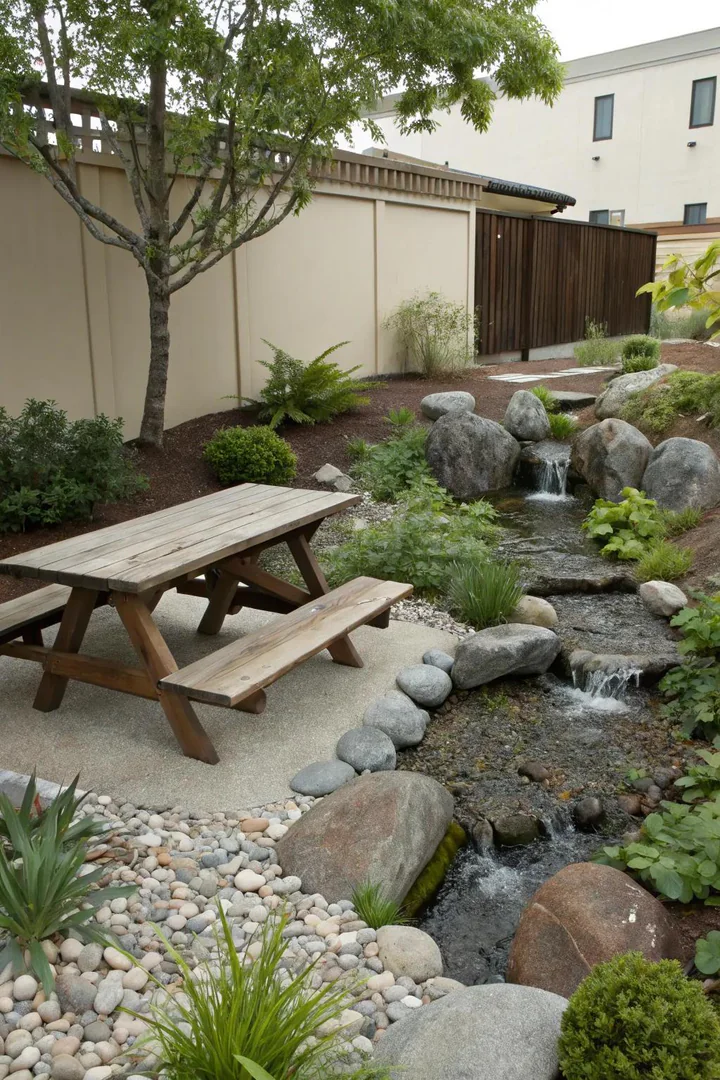
5. Zen Garden Picnic Table
A Japanese-inspired picnic table sits lower than standard height, usually 18 to 22 inches off the ground versus the typical 30 inches, with clean straight lines and minimal hardware. Use smooth-planed hinoki cypress or Western red cedar for the top, and pair the table with floor cushions or zabuton mats instead of attached benches.
Surround the table with raked pea gravel, stepping stones, and low-growing mondo grass to complete the garden room. Keep the finish natural with a single coat of Tung oil to let the wood grain show through. Place a few bonsai or potted Japanese maple nearby for shade and vertical interest.
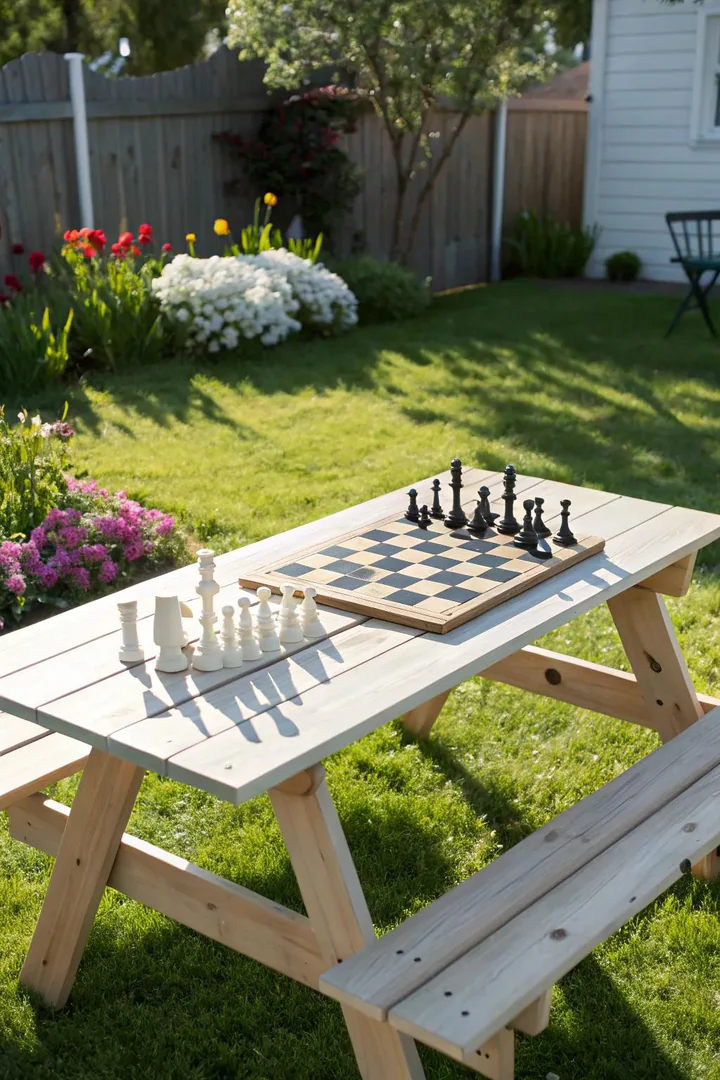
6. Picnic Table with Chessboard Top
A built-in chessboard turns a standard picnic table into a permanent game station without loose boards that blow away or get lost. Cut sixty-four 2 x 2-inch squares from contrasting wood species like hard maple (light) and black walnut (dark), glue them to a plywood backer with Titebond III waterproof adhesive, and rout a shallow recess in the tabletop center to set the board flush.
Finish the playing surface with five coats of marine-grade polyurethane for a smooth, moisture-proof surface that withstands rain and spilled drinks. Store chess or checker pieces in a waterproof bin attached under the table with a hook-and-loop strap. A 16 x 16-inch board fits perfectly in the center of a standard 30-inch-wide tabletop.
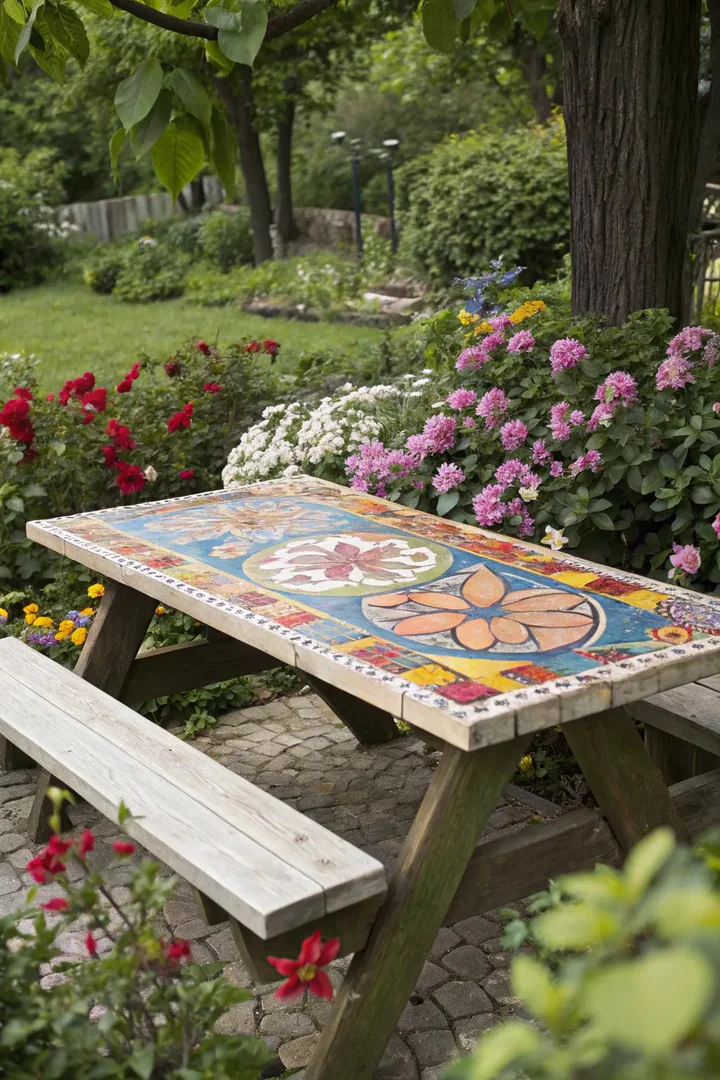
7. Colorful Hand-Tiled Tabletop
Covering a picnic table surface with ceramic or glass tiles produces a heat-resistant, easy-to-clean top that handles hot pots straight from the grill. Use 1 x 1-inch square tiles or broken tile pieces arranged in a free-form pattern on a cement-board substrate, set with Mapei Kerabond thinset mortar, and grouted with Polyblend Plus sanded grout in a contrasting color.
Choose tiles rated for outdoor freeze-thaw cycles (look for porcelain with a water absorption rate below 0.5 percent) to prevent cracking in cold climates. A 6 x 3-foot tabletop needs roughly 1,100 to 1,300 individual 1-inch tiles, which costs $40 to $90 for domestic ceramic or $120 to $200 for imported Italian porcelain.
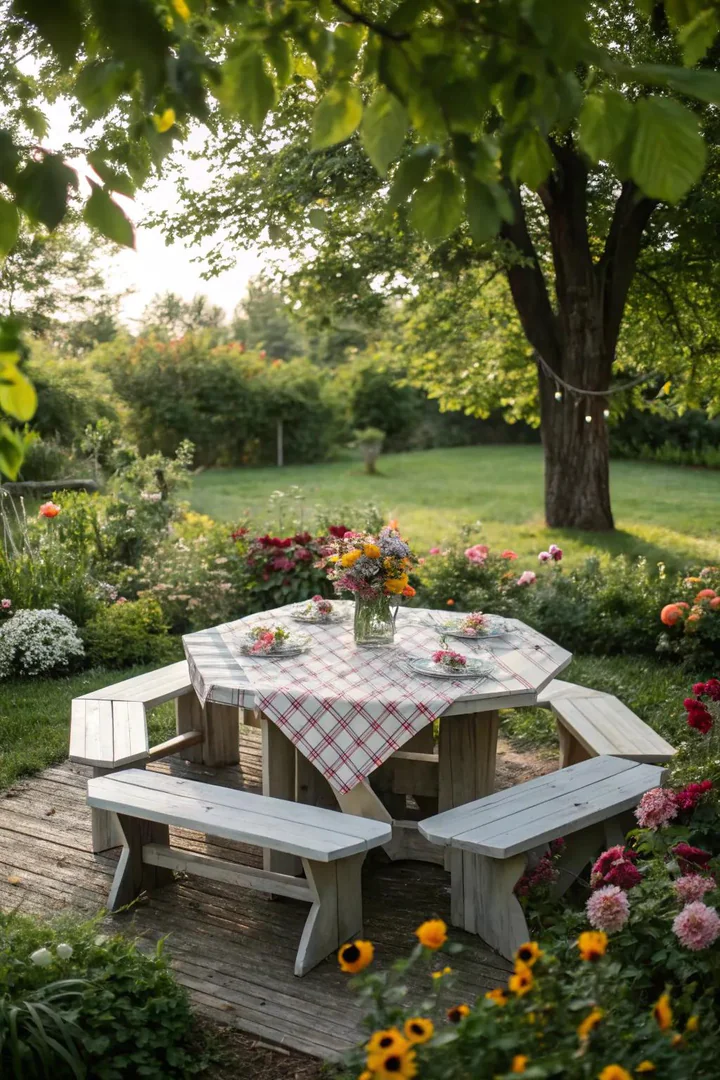
8. Octagon Picnic Table
An eight-sided design seats eight adults evenly around the table, each person getting a 22-inch-wide section of bench. The octagon shape eliminates the “end seat” problem of rectangular tables where corner guests feel squeezed. Standard octagon plans call for a 5-foot diameter across opposite edges, using 2 x 6 boards cut with 22.5-degree miters on each end.
Build the frame from doubled 2 x 8 joists meeting at a central hub, and bolt the hub with a single 5/8-inch galvanized through-bolt. Pressure-treated Southern Yellow Pine #2 grade runs about $180 in lumber for this shape. Pre-drill every screw hole to prevent splitting on the miter cuts, and countersink all fasteners flush with the surface.
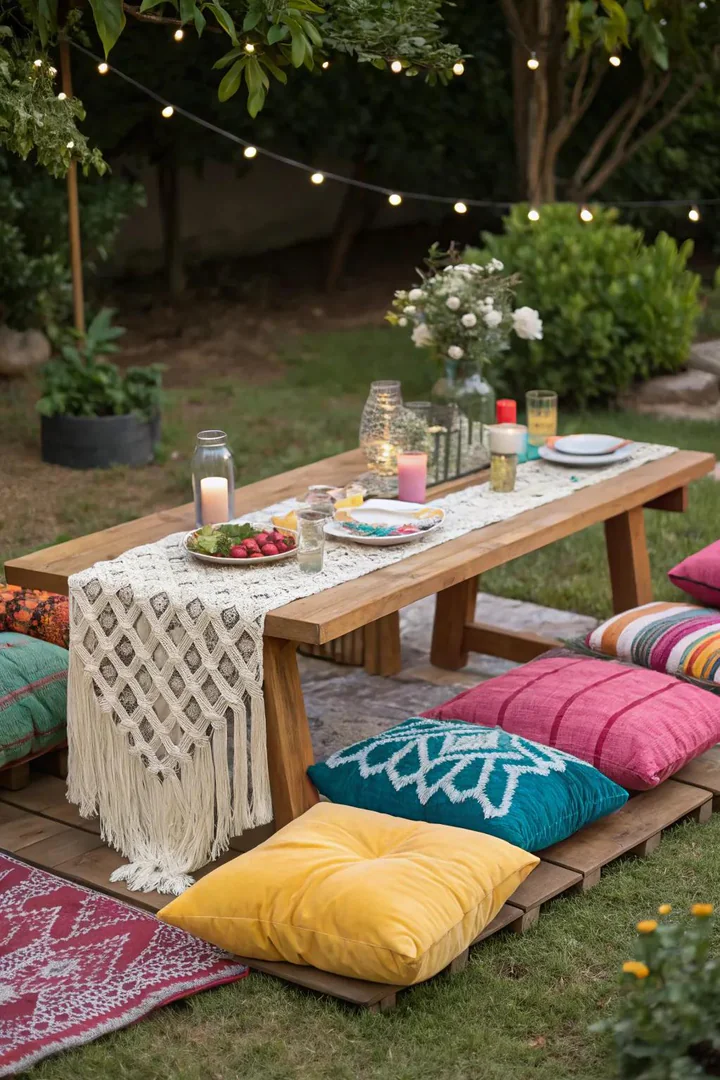
9. Boho-Style Low Picnic Table
A boho outdoor dining setup uses a low table at 14 to 18 inches tall paired with layered textiles, floor pillows, and woven accessories for a relaxed ground-level meal. Build the table from rough-sawn cedar boards with tapered splayed legs angled at 15 degrees outward, and leave the wood unfinished or lightly whitewashed with diluted latex paint at a 1:3 paint-to-water ratio.
Layer a macrame table runner down the center, add woven rattan charger plates at $3 to $5 each from Target or World Market, and scatter Moroccan-style pouf cushions around the perimeter. The low height works best on flat grass, a leveled gravel pad, or a deck where guests can sit cross-legged.
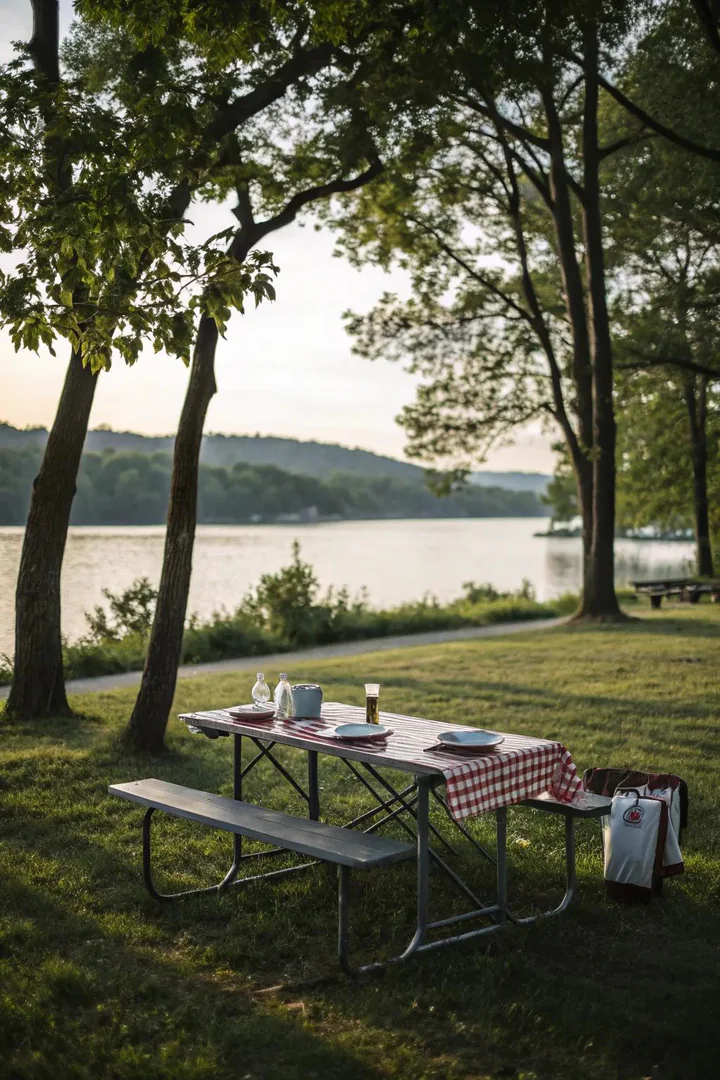
10. Folding Picnic Table for Portability
A folding picnic table stores flat against a wall or inside a car trunk and sets up in under 30 seconds, making the design ideal for camping trips, tailgating, and small patios that need flexible space. Lifetime Products model 22119 (6-foot HDPE top, powder-coated steel frame, 60-pound weight capacity per seat) sells for about $170 and folds to 3 inches thick.
For a wood alternative, build a folding version using 1 x 4 cedar slats on a scissor-hinge frame made from 1-inch aluminum angle stock and 1/4-inch carriage bolts at the hinge points. Add rubber foot caps to protect deck surfaces and prevent sliding on concrete. A folding design seats four to six and weighs 35 to 55 pounds depending on materials.
11. Hexagon Picnic Table
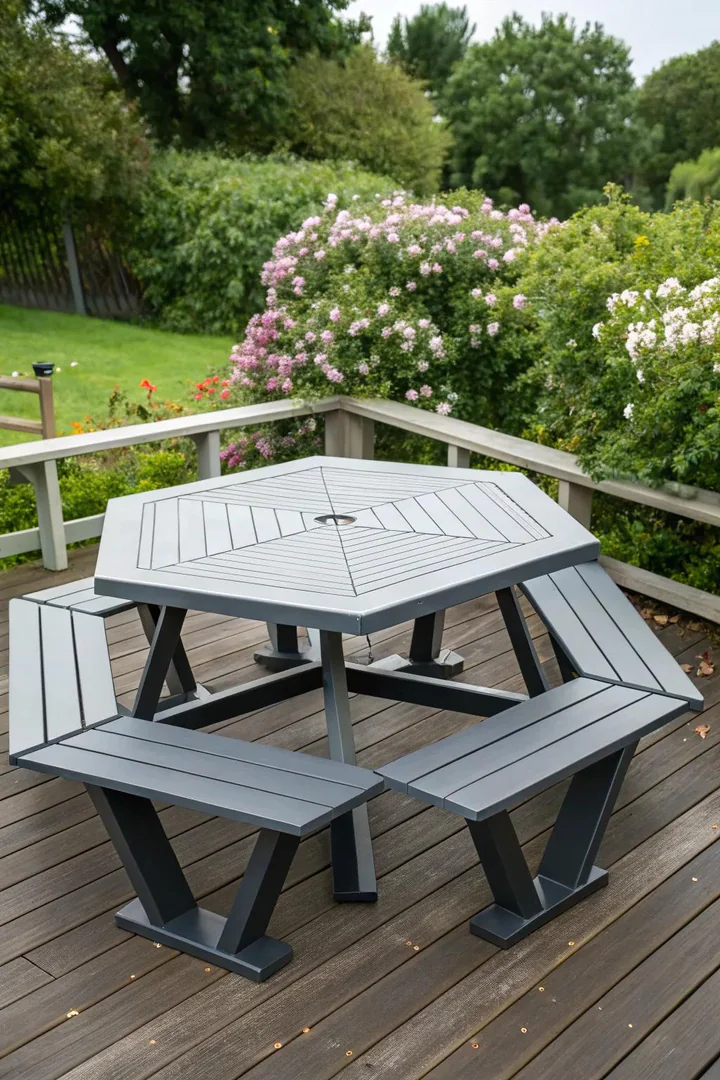
A six-sided hex table seats six guests with equal spacing and works particularly well in round garden clearings or on circular paver pads. Each of the six bench sections spans 24 inches, and the tabletop measures roughly 52 inches across opposite points. Cut the 30-degree miter angles on a miter saw set to the complementary 60-degree stop.
Composite decking boards from Trex (Enhance Naturals line, about $3.50 per linear foot) or TimberTech (Legacy collection) make a maintenance-free hex table that never needs staining or sealing. Fasten composite boards with hidden clip systems or color-matched composite screws from GRK (R4 Multi-Purpose, $45 per box of 100).
12. Picnic Table with Potted Plant Centerpiece
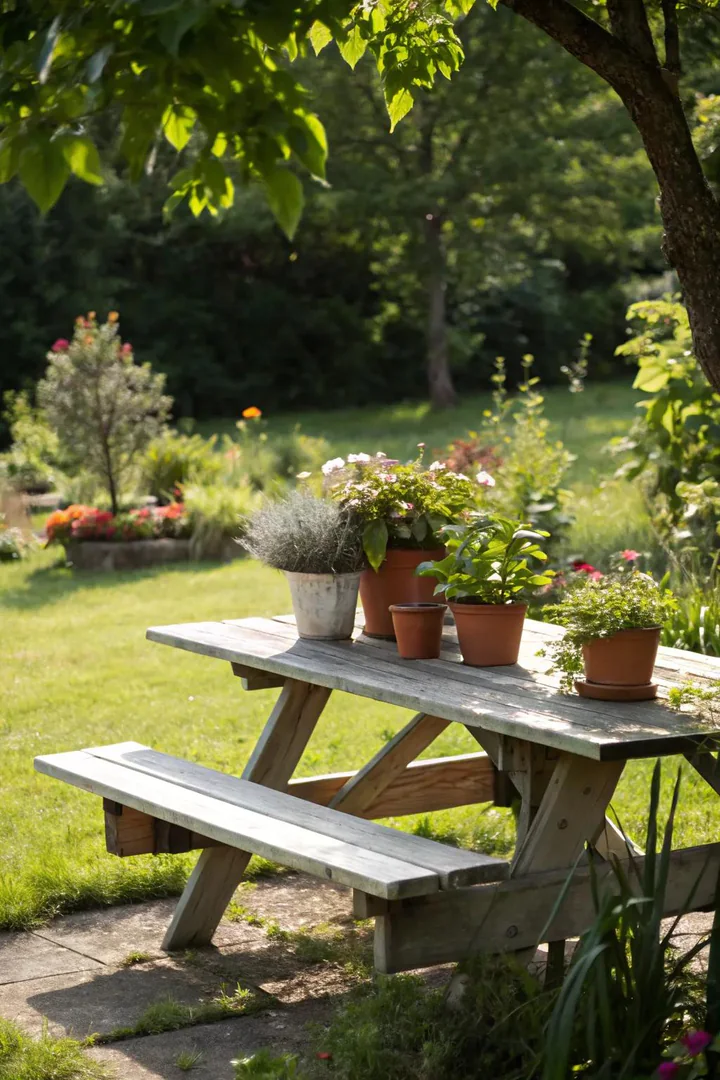
A built-in planter trough running down the center of the table holds herbs, succulents, or trailing flowers and doubles as a natural centerpiece that never needs replacing. Frame the planter from 1 x 6 cedar boards lined with pond liner or a galvanized sheet metal tray, and drill three 1/2-inch drainage holes in the bottom.
Plant edible herbs like rosemary, basil, thyme, and oregano so guests can pick fresh garnishes while eating. A 36 x 8-inch center trough fits neatly between two 10-inch eating surfaces on a 30-inch-wide tabletop. Fill the planter with a 50/50 mix of potting soil and perlite for fast drainage during rainstorms.
13. Wood and Metal Industrial Picnic Table
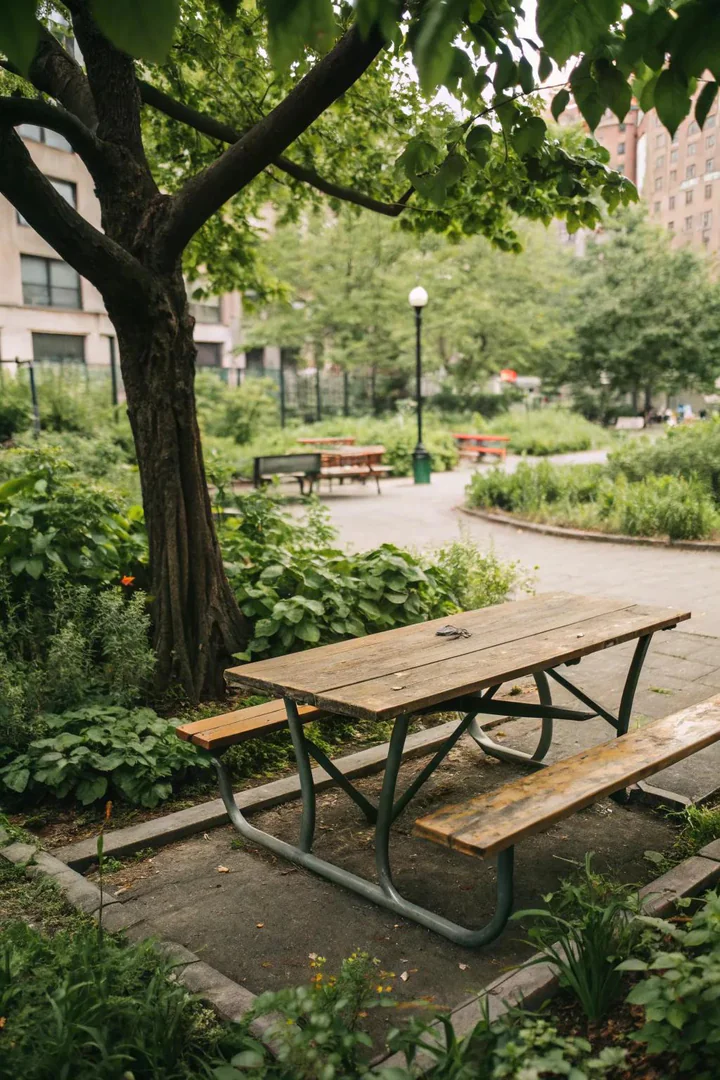
Welded steel tube legs paired with a thick hardwood slab top deliver an industrial look that works on urban rooftops, brewery patios, and modern backyards. Use 2 x 2-inch square steel tubing (11-gauge wall thickness) for the base, cut and welded into an A-frame or trestle shape, then finished with Rust-Oleum Hammered spray paint in black or dark bronze.
Top the frame with a 2.5-inch-thick live-edge walnut, white oak, or hickory slab from a local sawmill, priced at $8 to $15 per board foot depending on species and figure. Attach the slab to the steel frame with threaded inserts and machine screws so the top can be removed for refinishing. A 7-foot slab table seats eight adults comfortably.
14. Picnic Table with Umbrella Hole
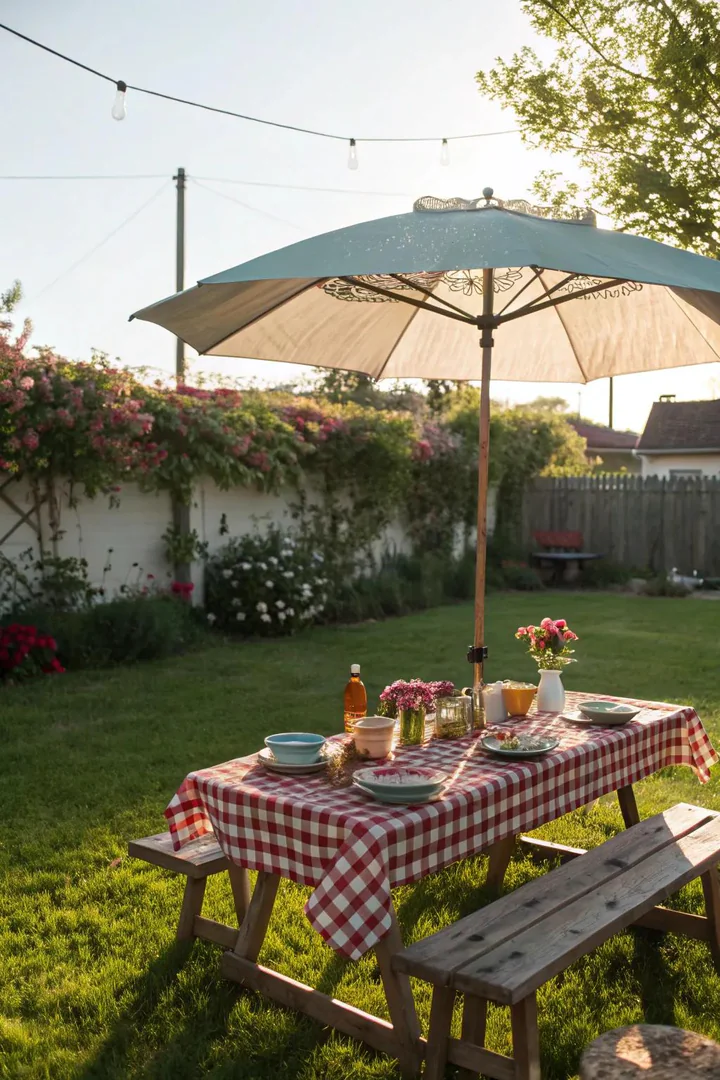
A center umbrella hole turns a standard picnic table into an all-day dining station by adding overhead shade without building a permanent structure. Drill a 2-inch or 2.5-inch hole through the table center using a hole saw, and install a flush-mount umbrella base sleeve from Abba Patio or Sunnyglade ($15 to $30) to keep the pole stable.
A 9-foot market umbrella with a 1.5-inch pole diameter provides roughly 60 square feet of shade, enough to cover a 6-foot table and both benches. Choose a Sunbrella-fabric canopy (fade-resistant to 1,000 hours of UV exposure) in a neutral color like canvas or navy. Position the table near your poolside cabana or outdoor dining area for shaded meals next to the water.
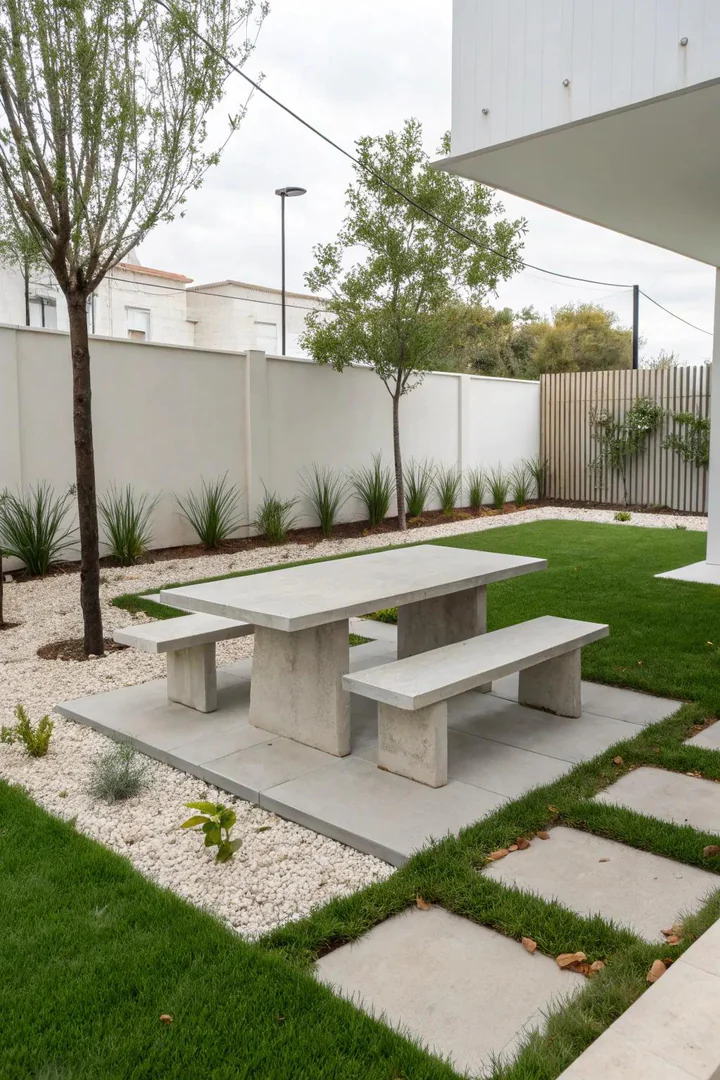
15. Minimalist Concrete Picnic Table
A poured-concrete picnic table weighs 400 to 800 pounds and never blows over, rusts, or needs refinishing. Build the formwork from melamine-coated MDF for a glass-smooth surface, reinforce the pour with 3/8-inch rebar on 8-inch centers, and use a high-strength concrete mix like Quikrete 5000 (5,000 PSI at 28 days).
Add Quikrete Liquid Cement Color in charcoal, buff, or terra cotta during mixing for an integral color that goes all the way through the slab. After curing for seven days, seal the surface with a penetrating silane/siloxane sealer to prevent water absorption and freeze-thaw spalling. A concrete table pairs well with a small brick patio base for a unified hardscape look.
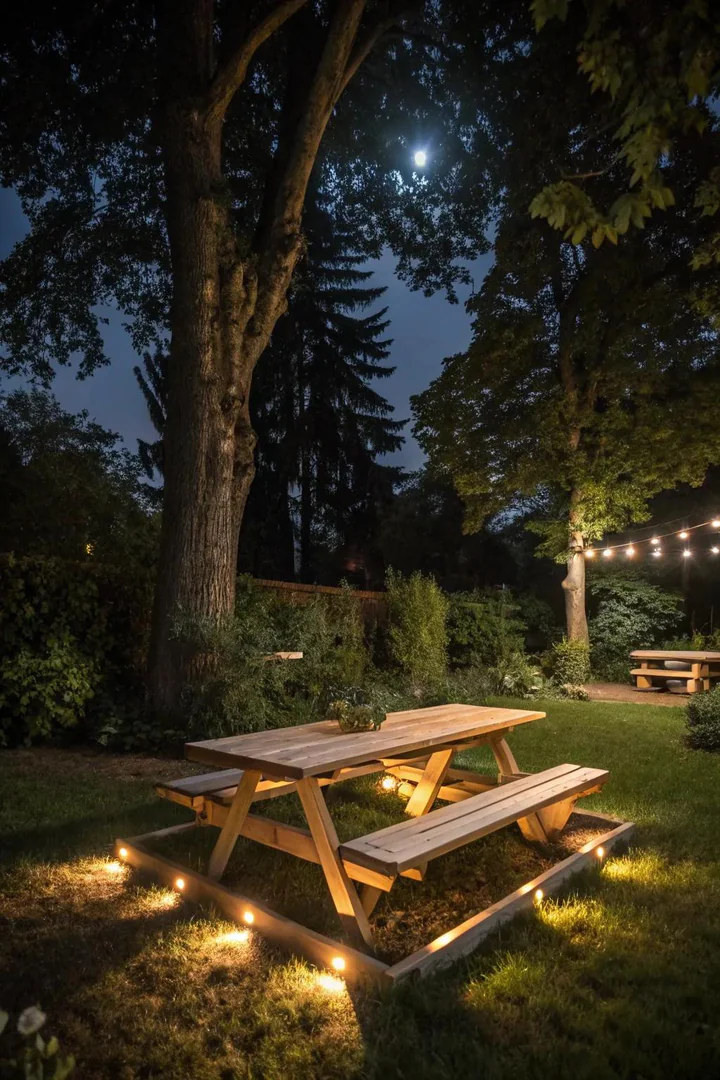
16. Wooden Picnic Table with Built-In Lighting
Recessed LED strip lights along the underside of the tabletop edge turn a picnic table into a glowing outdoor dining surface after dark. Rout a 3/8-inch-wide channel along the outer edge of the tabletop, press in a waterproof IP65-rated LED strip (warm white 2700K, 12V DC), and cover the channel with a snap-in frosted diffuser lens for even light distribution.
Run the 12V power cable through a hollow table leg down to a weatherproof junction box at ground level, and connect to a low-voltage outdoor lighting power supply plugged into a GFCI outdoor outlet. The entire LED setup costs $30 to $60 for a 16-foot strip kit from HitLights or Philips Hue Outdoor, and draws less than 15 watts.
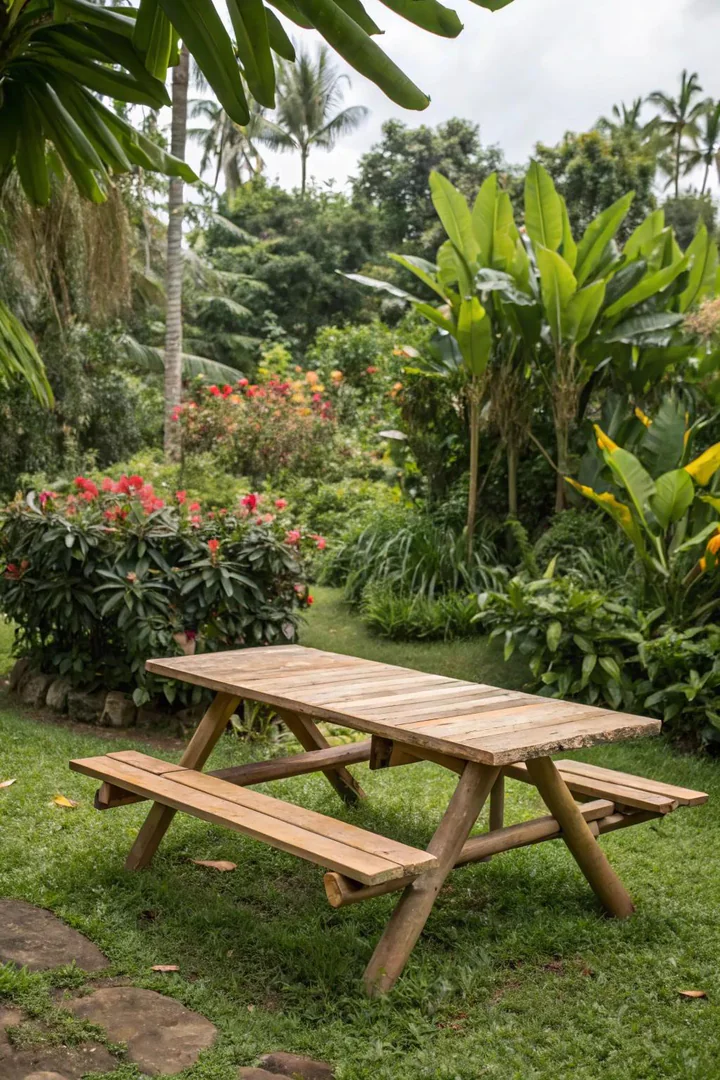
17. Eco-Friendly Bamboo Picnic Table
Bamboo grows up to 36 inches per day and reaches harvest maturity in three to five years, making bamboo poles one of the most renewable building materials available. A picnic table built from 3-inch-diameter Moso or Guadua bamboo poles uses traditional lashed joints tied with tarred marline twine or secured with stainless-steel through-bolts at each connection.
Treat raw bamboo with a borax-boric acid solution (a 1:1 ratio dissolved in hot water, soaked for 48 hours) to prevent insect boring and fungal decay. A finished bamboo table weighs roughly half as much as an equivalent pine version, making relocation easy. Source bamboo poles from specialty suppliers like Bamboo Import or Cali Bamboo at $5 to $15 per 8-foot pole.
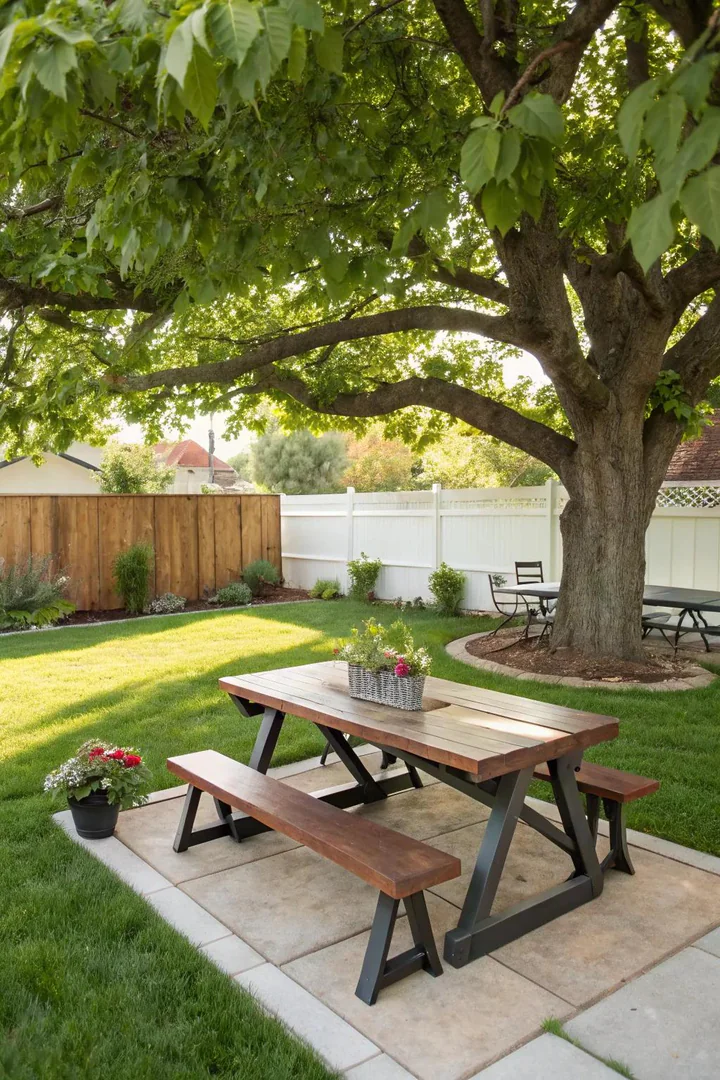
18. Fold-Out Picnic Table and Bench Combo
A fold-out combo stores as a compact bench against a wall or fence and opens into a full picnic table when guests arrive. The mechanism uses a four-bar linkage with hinge bolts at four points, allowing the backrest to flip forward and become the tabletop while the seat splits into two opposing benches.
Build the linkage arms from 1 x 4 hardwood (oak or ash for strength) or 1/8-inch flat steel bar stock, and use self-lubricating nylon bushings at each hinge to keep the action smooth without squeaking. The folded profile measures roughly 24 inches wide x 60 inches long x 36 inches tall, and the unfolded table spans 60 x 54 inches. Seal all wood surfaces with Thompson’s WaterSeal Advanced before final assembly.
19. Vintage Picnic Table with Painted Details
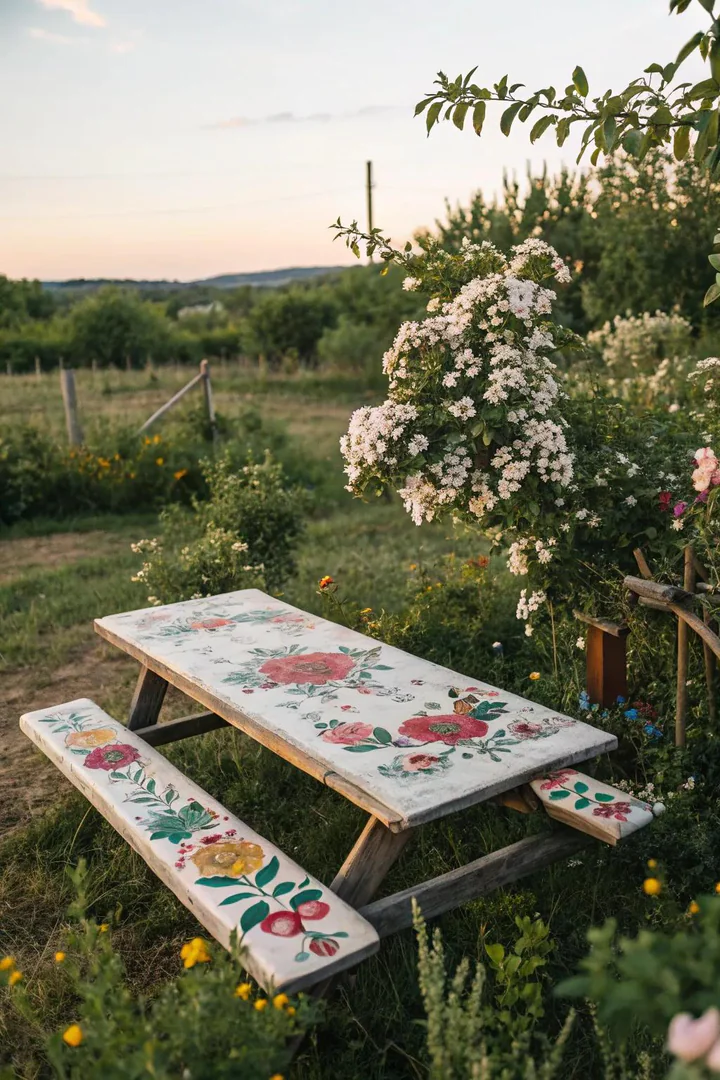
A painted picnic table in a muted palette like sage green, dusty blue, butter yellow, or barn red adds personality that bare wood cannot match. Apply Sherwin-Williams Exterior Acrylic Latex in your chosen color over a coat of Zinsser Bulls Eye 1-2-3 primer for maximum adhesion on outdoor wood.
Add stenciled patterns along the bench aprons or table edges using Mylar stencils and FolkArt Outdoor acrylic paint in a contrasting shade. Lightly sand the edges and corners with 220-grit paper after painting to create a distressed, worn appearance that looks naturally aged. Finish with two coats of Minwax Helmsman Spar Urethane in satin sheen to protect the paint from fading and peeling.
20. Picnic Table with Modular Seating
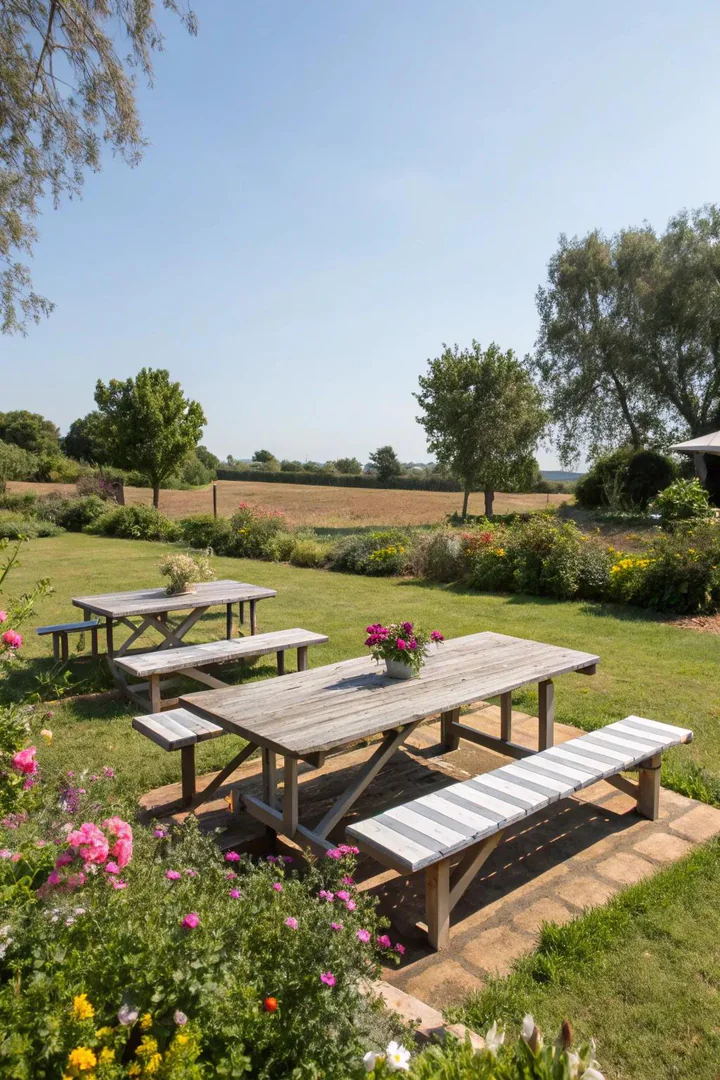
Modular seating breaks the benches into individual segments that bolt to the table frame with quick-release pins, so you can rearrange the layout from a traditional parallel-bench setup to an L-shape, U-shape, or single-sided configuration. Each bench module spans 24 to 30 inches and seats one to two adults.
Use aluminum quick-release clevis pins ($3 to $5 each from McMaster-Carr) at the connection points so guests can reconfigure seating without tools in under a minute. Weld or bolt receiver brackets to the table frame at 6-inch intervals along both long sides and one short side for maximum arrangement flexibility. A six-module set around a 6-foot table handles two to eight guests without needing extra furniture.
21. Circular Picnic Table
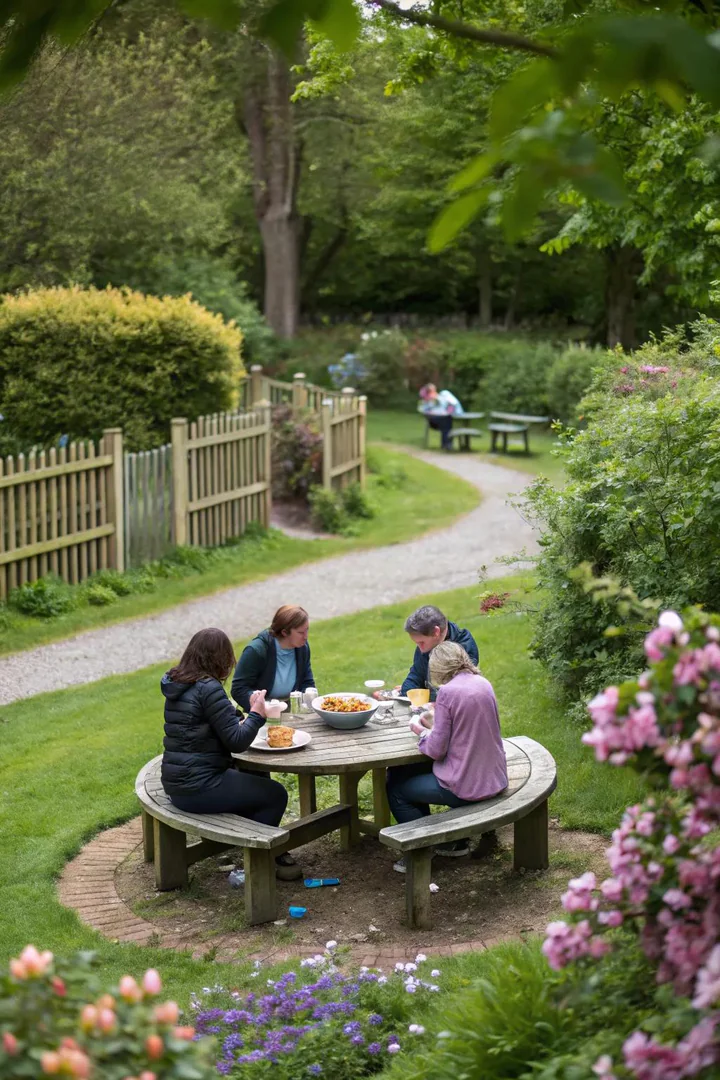
A round table with a curved wraparound bench seats six to eight adults with no corners and equal access to the center, making every seat a good seat. Build the circular top from edge-glued 2 x 6 boards trimmed with a router and trammel jig set to a 30-inch radius, producing a 60-inch-diameter top.
Curve the bench by kerfing the inside face of 2 x 4 seat boards (cuts every 1/2 inch, 3/4 of the way through the thickness) and bending them around a circular frame made from two layers of 3/4-inch exterior plywood cut in arc segments. Pre-assemble four quarter-circle bench sections and bolt them to the center pedestal base for easier transport and winter storage.
How to Build a Custom Outdoor Picnic Table
1. Choose Your Lumber and Cut the Parts
Select pressure-treated Southern Yellow Pine for budget builds ($2 to $3 per linear foot for 2 x 6 boards), Western red cedar for natural rot resistance ($4 to $6 per foot), or white oak for maximum hardness and weather durability ($7 to $10 per foot). A standard 6-foot picnic table needs approximately 50 linear feet of 2 x 6 for the top and seats, plus 16 feet of 2 x 4 for bracing, and 8 feet of 4 x 4 for legs.
Cut the tabletop boards to 72 inches, bench boards to 72 inches, legs to 36 inches with a 30-degree angle on each end, and cross braces to 28.5 inches. Use a compound miter saw for accurate angle cuts on the legs.
2. Assemble the Frame and Attach Legs
Lay two A-frame leg assemblies on a flat surface and connect them with a 2 x 4 stretcher running the full 72-inch length at 16 inches above ground level. Fasten each leg to the stretcher with two 3/8 x 5-inch carriage bolts, flat washers, and nylon-insert lock nuts. Square the frame by measuring diagonals and adjusting until both measurements match within 1/8 inch.
3. Install the Tabletop and Bench Boards
Lay five 2 x 6 boards across the top frame with 1/4-inch gaps between boards for water drainage and wood expansion. Fasten each board with two 3-inch GRK R4 exterior screws at every joist crossing point. Pre-drill pilot holes 1/2 inch from board edges to prevent splitting. Repeat the same process for the bench boards, fastening three 2 x 6 boards on each side to the seat supports.
4. Add Cross Bracing for Stability
Cut two diagonal braces from 2 x 4 stock at a 45-degree angle and bolt them between the tabletop frame and the stretcher in an X pattern. Tighten each brace with a single 3/8 x 4-inch carriage bolt at each end. Cross bracing prevents the table from racking side to side when adults lean against the benches during meals.
5. Sand, Seal, and Finish
Sand all surfaces with 80-grit paper first to remove mill marks, then follow with 120-grit for a smooth finish. Round over all exposed edges with a 1/4-inch roundover router bit or by hand-sanding at 45 degrees to eliminate sharp corners that catch clothing or skin. Apply two coats of exterior wood stain (Cabot Australian Timber Oil in natural or honey teak) or a clear penetrating sealer (Ready Seal Natural Cedar) and allow 24 hours of dry time between coats.
Picnic Table Materials Comparison
| Material | Cost per 6-ft Table | Weight | Lifespan (Outdoor) | Maintenance | Best For |
|---|---|---|---|---|---|
| Pressure-Treated Pine | $100 to $200 | 120 to 160 lbs | 10 to 15 years | Stain every 2 to 3 years | Budget-friendly backyards |
| Western Red Cedar | $250 to $400 | 80 to 110 lbs | 15 to 20 years | Oil annually or let gray naturally | Natural-look patios and gardens |
| White Oak | $400 to $700 | 140 to 180 lbs | 25 to 30 years | Seal every 3 to 5 years | Permanent outdoor dining spots |
| Composite (Trex/TimberTech) | $350 to $600 | 100 to 130 lbs | 25 to 30 years | None beyond soap-and-water cleaning | Low-maintenance commercial areas |
| Bamboo Poles | $80 to $150 | 50 to 70 lbs | 5 to 10 years (treated) | Reapply borax treatment every 2 years | Tropical-themed yards and events |
| Poured Concrete | $300 to $600 | 400 to 800 lbs | 30+ years | Reseal every 5 years | Permanent public or park settings |
Frequently Asked Questions
What is the standard size for a picnic table?
A standard rectangular picnic table measures 72 inches (6 feet) long, 28 to 30 inches wide at the tabletop, and 30 inches tall from ground to table surface. Bench height sits at 17 to 18 inches. A table of these dimensions comfortably seats six adults, three on each side, with roughly 24 inches of bench space per person.
What type of wood lasts longest for outdoor picnic tables?
White oak ranks among the most durable domestic hardwoods for outdoor furniture, lasting 25 to 30 years without chemical treatment because of its closed-cell grain structure that resists water absorption. Western red cedar and old-growth redwood also perform well at 15 to 20 years due to their high natural tannin and thujaplicin content. Pressure-treated pine costs less but requires reapplication of stain or sealant every two to three years to reach a 10 to 15-year lifespan.
How much does building a picnic table cost compared to buying one?
A DIY pressure-treated pine picnic table costs $100 to $200 in lumber and hardware, while a comparable ready-made version from a retailer like Home Depot or Lowe’s sells for $250 to $500. Cedar and hardwood builds cost $250 to $700 in raw materials, while pre-built cedar tables from brands like All Things Cedar or Outsunny retail for $400 to $1,200. Building saves 30 to 50 percent on average and lets you customize dimensions, shape, and finish to match your outdoor space.
How do you protect a wooden picnic table from rain and sun damage?
Apply a penetrating oil-based sealer like Cabot Australian Timber Oil or Ready Seal to all six faces of every board before assembly for maximum protection. Reapply the finish every 12 to 24 months depending on sun exposure and rainfall. During winter or extended wet seasons, cover the table with a fitted polyester cover from Classic Accessories or KoverRoos ($30 to $60) or flip the table upside down to prevent standing water from pooling on the top surface. Visit The Designers Company for more outdoor furniture care and maintenance guides.
Can you attach a picnic table to the ground to prevent theft or wind movement?
Anchor a picnic table to concrete with 3/8-inch wedge anchors (Hilti Kwik Bolt 3 or Red Head Trubolt) drilled through L-brackets on each leg, or to a grass surface with 18-inch galvanized auger-style ground stakes ($8 to $12 per pair). For portable setups, fill hollow steel legs with sand or attach 25-pound cast-iron weights to the base frame with U-bolts. Ground anchoring adds 15 to 20 minutes of installation time but prevents tipping in winds up to 50 mph.
What are the best picnic table shapes for small backyards?
Round and hexagon picnic tables fit small spaces better than rectangular designs because they occupy a roughly circular footprint with no wasted corner area. A 48-inch-diameter round table seats four to five adults in a 7 x 7-foot floor area, while a standard 6-foot rectangular table needs a 10 x 7-foot zone for comfortable bench access. Folding and convertible designs also work well since they collapse to under 4 inches thick and store vertically against a fence or garage wall.
How do you remove mildew and green algae from a picnic table?
Mix one cup of oxygen bleach (OxiClean Versatile Stain Remover) per gallon of warm water and apply the solution with a stiff nylon brush, scrubbing in the direction of the wood grain. Let the mixture sit for 10 to 15 minutes, then rinse with a garden hose at full pressure. For heavy growth, use a pressure washer set below 1,500 PSI with a 40-degree fan tip held 12 inches from the surface. Avoid chlorine bleach, which breaks down lignin in wood fibers and causes fuzzy raised grain.