Concrete Pool Deck Ideas: 13 Inspiring Designs That Wow Guests
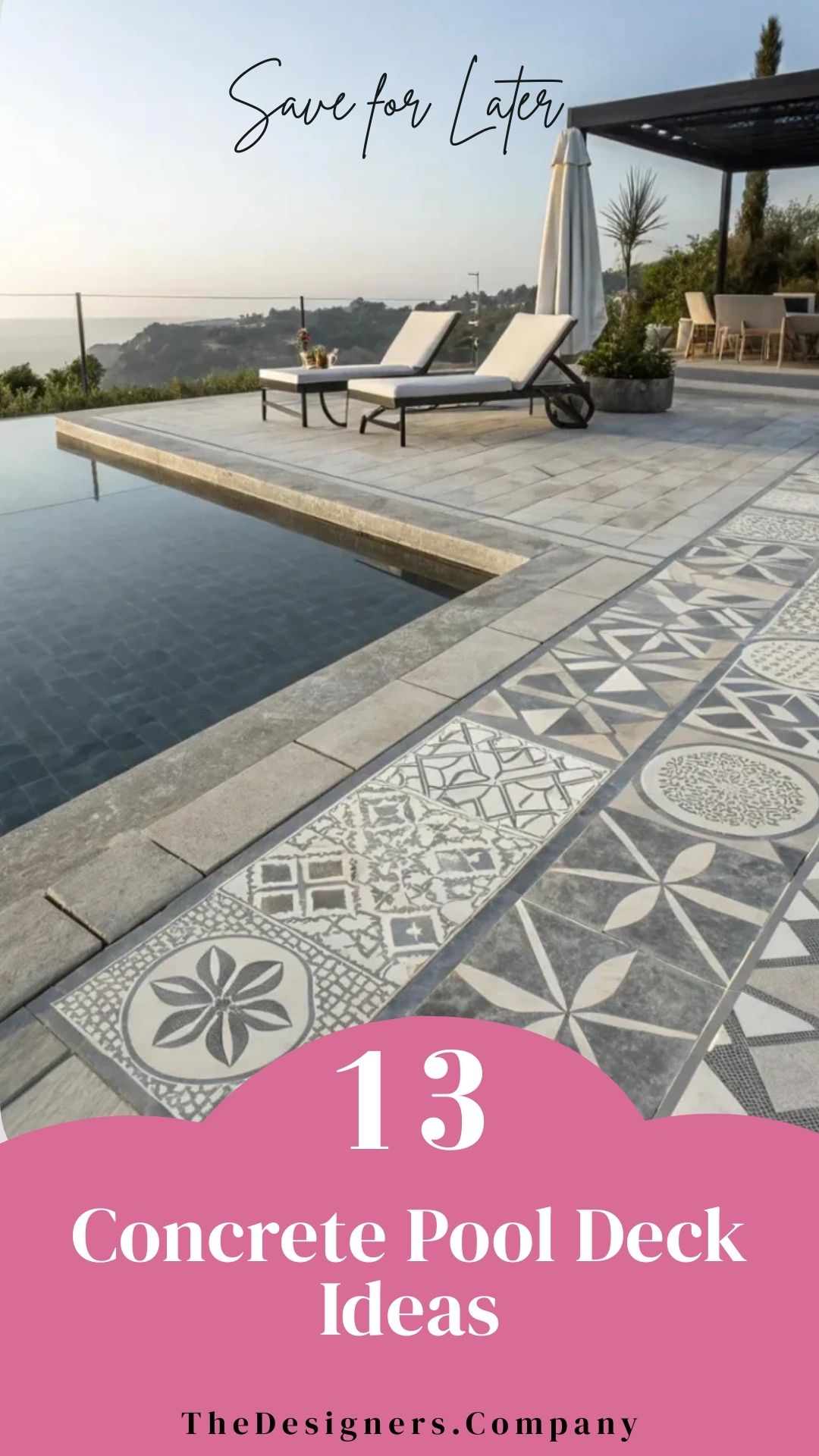
A concrete pool deck costs 40 to 60 percent less than natural stone or porcelain pavers and accepts stamped patterns, acid stains, exposed aggregate, and coloured overlays that mimic travertine, slate, flagstone, or brick. The material stays cool underfoot when finished with a light-coloured broom or knockdown texture, drains properly with a 1/4-inch-per-foot slope away from the coping, and lasts 25 to 40 years before needing resurfacing. Below are 13 concrete pool deck ideas with finishes, products, cost ranges, and installation details for each style.
1. Stamped Concrete Patterns

Stamped concrete presses a rubber texture mat into fresh concrete to replicate the look of natural stone, brick, or wood plank at a fraction of the cost. Ashlar slate, random stone, and herringbone brick are the three most popular stamp patterns for pool decks, and each requires a base colour (integral colour or colour hardener, $0.50 to $1.50 per square foot) plus a release agent in a contrasting shade ($25 to $40 per pail from Brickform or Proline Concrete) to define the grout lines and texture. A stamped pool deck runs $8 to $18 per square foot installed, compared to $15 to $30 for natural travertine pavers.
Apply the stamp mats within 30 to 60 minutes of the final bull-float pass, while the concrete is still plastic enough to take a 1/4-inch-deep impression but firm enough to support the stamper’s weight. A 400-square-foot pool deck needs 6 to 8 stamp mats ($100 to $200 each, reusable for 100-plus jobs) and takes a crew of 3 to stamp in one session. Seal the finished surface with a solvent-based acrylic sealer ($30 to $50 per 5-gallon pail from Euclid Chemical or Super Seal) every 2 to 3 years to maintain the colour depth and protect against chlorine splash-out, UV fading, and freeze-thaw spalling.
2. Geometric Concrete Designs

Sawing control joints into the fresh concrete in geometric patterns (diamonds, hexagons, or offset rectangles) turns a plain slab into a patterned deck with no stamps, stains, or overlays needed. Use a walk-behind concrete saw ($50 to $75 per day rental) with a 1-inch-deep diamond blade to cut the pattern 24 to 48 hours after the pour, while the concrete is hard enough to hold a clean edge but soft enough to saw without excessive dust. Space the cuts 18 to 24 inches apart for a tight grid or 36 to 48 inches for a bolder, larger-scale pattern.
Fill the sawcuts with a semi-rigid polyurea joint filler ($8 to $12 per cartridge from Sika or PolyTek) that stays flexible in summer heat and does not crack in winter cold. Stain alternate sections with two tones of acid stain or water-based concrete stain ($30 to $60 per gallon from Kemiko or DirectColors) to create a checkerboard or two-tone geometric field. A geometric-cut pool deck adds $2 to $4 per square foot over a standard broom-finish pour and gives the deck a custom look that holds up for the life of the concrete.
3. Coloured Concrete Deck

Integral concrete colour ($8 to $15 per bag of powdered pigment, one bag per cubic yard) mixes directly into the truck or mixer and tints the full depth of the slab, so chips and wear never expose a different colour underneath. Davis Colors and Solomon Colors offer 60-plus shades, and the most popular pool-deck tones are sandstone, desert tan, terra cotta, and cool grey. Pair the integral colour with a colour hardener broadcast on the surface ($0.75 to $1.50 per square foot) for a richer, more UV-stable top layer.
Order a test batch or pour a sample slab (2 x 2 feet) at least two weeks before the main pour because integral colour cures 20 to 30 percent lighter than it looks wet, and the final shade depends on cement brand, water-to-cement ratio, and curing conditions. A coloured concrete pool deck costs $6 to $12 per square foot installed (versus $4 to $8 for plain grey), and the colour lasts 15 to 20 years before needing a stain touch-up or overlay. Granite walkway entries in a matching warm tone connect the pool deck to the rest of the yard for a unified look.
4. Concrete and Wood Combination

Alternating concrete panels with wood or composite decking strips creates a two-material pool deck that breaks up the mass of a large slab and adds the warmth of wood grain next to the pool edge. Pour 4-foot-wide concrete panels separated by 2-to-3-foot-wide decking bays built on a treated-lumber sleeper frame (2 x 6 sleepers on 16-inch centres, resting on gravel pads). Use Trex Select ($3 to $5 per linear foot), TimberTech AZEK ($5 to $8 per linear foot), or ipe hardwood ($8 to $12 per linear foot) for the wood sections.
Slope the concrete panels 1/4 inch per foot toward a French drain or yard drain between the panels and the wood bays so rainwater and splash-out drains away from both surfaces. Flash the joint between concrete and wood with a 4-inch aluminium Z-flashing ($0.80 per linear foot) to prevent water from pooling under the decking. A mixed concrete-and-wood pool deck costs $12 to $22 per square foot overall and gives the barefoot-friendly feel of wood where loungers sit and the durability of concrete in the high-splash zone closest to the water.
5. Built-In Concrete Planters

Pouring 18-to-24-inch-tall planter walls directly into the pool deck slab creates permanent raised beds that define zones, screen pool equipment, and add greenery without movable pots that blow over or stain the concrete. Form the planter walls from 2-inch-thick concrete (reinforced with #4 rebar on 12-inch centres) and waterproof the inside with a brush-applied membrane ($20 to $30 per gallon from Drylok or RadonSeal) to prevent moisture from wicking through the walls and staining the outside face.
Fill the planters with a lightweight potting mix ($10 to $15 per 2-cubic-foot bag) over 4 inches of gravel drainage at the bottom, and plant ornamental grasses (Miscanthus, fountain grass), bird of paradise, or agave for year-round structure. Drill 1-inch drain holes through the planter walls 2 inches above the deck surface so excess water drains onto the pool deck and away to the yard, not into the pool. A pair of 3-foot-long, 2-foot-wide built-in planters adds $800 to $1,500 to the pour cost and replaces $200 to $600 worth of decorative pots that crack, fade, and tip over.
6. Pool Deck Lighting in Concrete

Recessed LED puck lights ($5 to $15 each from WAC Lighting or Kichler) set flush into the concrete pool deck at the coping edge, along step risers, and beside planter walls create a ground-level glow that lights the deck for nighttime swimming without overhead glare. Lay the low-voltage cable and conduit in the gravel base before the concrete pour, and set the light housings in the wet concrete so only the stainless-steel trim ring and lens sit flush with the finished surface.
A 12-fixture recessed deck-light kit with a 150W low-voltage power supply ($120 to $250) runs on 12V DC and draws about $3 to $5 per month in electricity at 6 hours of nightly use. Space the lights 4 to 6 feet apart along the pool coping for even coverage, and run the cable through 1/2-inch schedule-40 PVC conduit ($0.30 per linear foot) so the wiring stays accessible for future repairs without cutting the concrete. Covered patio roofs with matching low-voltage downlights tie the deck lighting into the broader outdoor living area for a unified evening ambiance.
7. Fire Pit in the Pool Deck

A gas or propane fire pit built into the concrete pool deck creates a focal point that extends pool season into fall and winter evenings. Pour a 4-foot-diameter circular opening in the deck slab, build a 12-inch-tall CMU (concrete masonry unit) wall inside the opening, line it with a stainless-steel fire ring ($80 to $200 from Stanbroil or Celestial Fire Glass), and run a 1/2-inch gas line from the house meter to the fire ring with a shutoff valve at the deck edge.
Fill the fire ring with lava rock ($15 to $25 per 10-pound bag) or tempered fire glass ($10 to $20 per 10-pound bag in reflective copper, sky blue, or midnight black from American Fireglass) for a clean, modern look. Set the concrete deck surface around the fire pit 1/2 inch higher than the fire ring lip so rainwater drains away from the burner, and allow 18 inches of clearance between the fire ring edge and any combustible material (furniture cushions, umbrellas, wood decking sections). A built-in gas fire pit costs $1,500 to $4,000 installed and adds the warmth, light, and gathering-point effect that a pool area loses once the sun goes down.
8. Pebble Stone Finish

Exposed-aggregate concrete embeds river pebbles, crushed granite, or coloured glass into the surface of a standard slab, then washes away the top layer of cement paste to reveal the aggregate texture and colour. Seed the aggregate ($0.50 to $2 per square foot for stone, $2 to $6 for recycled glass) into the fresh concrete surface, tamp it flush, and spray a surface retarder ($20 to $30 per gallon from Brickform) that delays the top 1/8-inch from curing. Pressure-wash the retarded surface 12 to 24 hours later to expose the aggregate.
Exposed aggregate provides slip resistance without a broom finish because the rounded pebble surfaces create micro-texture underfoot. Choose aggregate colour to match the pool interior: tan and gold pebbles complement a sand-bottom pool, while black basalt pebbles pair with dark-plaster pool finishes like PebbleTec midnight blue. An exposed-aggregate pool deck costs $10 to $16 per square foot installed and requires re-sealing with a penetrating silicone or siloxane sealer ($25 to $40 per gallon) every 3 to 5 years to maintain the colour depth and repel chlorine staining.
9. Beach Entry Pool Deck

A zero-depth (beach entry) pool deck slopes gradually from the dry deck surface down into the shallow end, replacing a vertical wall and ladder with a gentle walk-in grade that feels like stepping into the ocean from a sandy shore. Pour the sloping section at a 6-to-8-percent grade (about 3/4 inch per foot) with a knockdown or shell-aggregate finish for barefoot traction on the wet slope. Colour the sloped section in a sand or warm tan tone to reinforce the beach effect.
The beach-entry slope needs a rougher surface than the flat deck (coefficient of friction 0.65 or higher, tested with a BOT-3000 slip meter) because bare feet walk through 1 to 6 inches of standing water on the slope. Add a non-skid aggregate broadcast ($0.25 to $0.50 per square foot from SureCrete or Saf-T-Deck) to the sealer coat on the slope for extra grip. A beach-entry feature adds $3,000 to $8,000 to a new pool build (or $5,000 to $12,000 as a retrofit) and eliminates the need for a pool ladder in the shallow end, making the pool accessible to toddlers, older adults, and anyone with mobility limits.
10. Mosaic Tile Accents in Concrete

Setting a band of glass, porcelain, or natural-stone mosaic tile into the concrete pool deck at the coping edge, around the spa, or along a walkway break adds colour and pattern without tiling the entire surface. Use pool-rated frost-proof mosaic tile ($8 to $25 per square foot from Daltile, Lunada Bay Tile, or Artaic) bonded to the concrete with a polymer-modified thinset ($15 to $20 per 50-pound bag from Laticrete or Mapei) and grouted with an epoxy grout ($30 to $40 per unit) that resists chlorine, pool chemicals, and freeze-thaw cycles.
Recess the tile band 1/8 inch below the surrounding concrete surface so the grout joint sits flush and no tile edge catches bare toes. A 6-inch-wide mosaic border running the full perimeter of a 20 x 40-foot pool (120 linear feet) costs $600 to $1,500 in tile, thinset, and grout, and installs in 1 to 2 days after the concrete has cured for 28 days. Balcony railings and tiles use similar mosaic accents to connect upper-level outdoor spaces to the pool deck colour scheme below.
11. Natural Stone and Concrete Blend

Pouring concrete panels between sections of natural stone coping or pavers gives the deck the look of an all-stone surround at 50 to 60 percent of the cost. Use travertine ($6 to $15 per square foot), bluestone ($8 to $18 per square foot), or limestone ($7 to $14 per square foot) for the coping band (the first 12 to 18 inches around the pool edge) and pour stamped or stained concrete for the remaining deck area. The stone coping handles the wet, high-traffic zone where swimmers grip the pool edge, while the concrete serves the dry lounging area.
Match the concrete colour and stamp pattern to the natural stone so the two materials blend rather than clash: a Travertine Plank stamp pattern in a warm cream colour sits next to real travertine coping with barely a visible seam. Set the stone coping on a mortar bed over the reinforced concrete bond beam, and pour the deck slab tight against the back edge of the coping with a 1/4-inch expansion joint filled with colour-matched polyurethane sealant ($6 to $8 per tube). A blended stone-and-concrete pool deck costs $12 to $20 per square foot versus $20 to $35 for an all-stone installation.
12. Concrete Paver Pool Deck

Pre-cast concrete pavers ($3 to $8 per square foot from Belgard, Tremron, or Pavestone) set on a compacted sand bed offer the look of cut stone with the affordability and colour range of manufactured concrete. Popular pool-deck paver styles include Old World cobble (tumbled edges, random sizes), Holland stone (uniform 4 x 8-inch rectangles in a running bond), and Cambridge XL (large-format 18 x 18-inch slabs for a modern look). Pavers are individual units, so a cracked or stained paver pops out and replaces in 5 minutes without cutting or patching.
Lay the pavers on a 4-inch compacted gravel base topped with 1 inch of coarse sand, and sweep polymeric sand ($15 to $25 per 50-pound bag from Alliance Gator or SEK Surebond) into the joints to lock the pavers, resist weed growth, and prevent ant mounding. Edge the deck perimeter with a concrete or aluminium paver restraint ($3 to $5 per 8-foot section) staked into the gravel base to prevent the outer pavers from creeping outward. A concrete-paver pool deck costs $8 to $16 per square foot installed and drains better than a poured slab because water filters through the sand-filled joints into the gravel base.
13. Pool Deck with Pergola

A freestanding or attached pergola over one section of the concrete pool deck creates a shaded lounging zone where swimmers cool down without going indoors. Build a cedar or pressure-treated pine pergola (four 6 x 6 posts, two 2 x 10 beams, 2 x 8 rafters at 16-inch spacing) on concrete footings poured 36 inches deep (below the frost line in cold climates) at the deck edge, or bolt the posts to Simpson Strong-Tie post bases ($15 to $25 each) anchored to the deck slab with wedge anchors.
A 12 x 12-foot pergola covers two chaise lounges and a side table, costs $1,500 to $4,000 in materials (or $4,000 to $10,000 professionally installed), and cuts direct sun by 50 to 60 percent while still allowing breezes to flow through. Add a retractable shade canopy ($150 to $400 from Coolaroo or Sunnydaze) that slides on the rafters for full shade when needed and rolls back for full sun. Small porch pergolas use the same post-and-rafter structure scaled down to 6 x 8 feet for a shaded entry that matches the poolside overhead. Visit The Designers Company for more pool deck and outdoor surface design guides.
How to Pour a Concrete Pool Deck
1. Excavate and Set Forms
Dig out the deck area to a depth of 8 to 10 inches (4 inches of gravel base plus 4 inches of concrete) and slope the subgrade 1/4 inch per foot away from the pool coping toward the yard or a deck drain. Set 2 x 4 lumber forms along the deck perimeter, staked every 3 feet with steel form stakes and levelled with a string line. Apply form-release oil ($8 to $12 per quart) to the inside face of the forms so they strip cleanly without chipping the concrete edge.
2. Build the Gravel Base and Place Reinforcement
Fill the excavation with 4 inches of 3/4-inch minus crushed gravel, compacted in two 2-inch lifts with a plate compactor ($50 to $75 per day rental). Lay 6 x 6 W2.9 x W2.9 welded wire mesh on 2-inch rebar chairs across the gravel base, and tie #4 rebar dowels into the pool bond beam at 18-inch spacing to lock the deck slab to the pool structure. Place control joints (1/4 to 1/3 of slab depth) every 8 to 10 feet in both directions to manage shrinkage cracking.
3. Pour, Finish, and Cure
Order 4,000-PSI air-entrained concrete ($120 to $160 per cubic yard) with a 4-to-5-inch slump for workability. Pour, screed, and bull-float the slab, then apply the chosen finish (broom, stamp, exposed aggregate, or knockdown) within the working time of the concrete (30 to 90 minutes depending on temperature and humidity). Cure the slab for 7 days under a curing compound ($20 to $30 per gallon) or wet-cured under plastic sheeting, and wait 28 days before applying sealer or stain.
Pool Deck Finish Comparison
| Finish Type | Cost per Sq Ft | Slip Resistance | Maintenance | Best For |
|---|---|---|---|---|
| Broom finish | $4 – $8 | High | Seal every 3-5 years | Budget decks, rental properties |
| Stamped concrete | $8 – $18 | Medium-high | Seal every 2-3 years, re-colour every 5-7 | Custom look on a budget |
| Exposed aggregate | $10 – $16 | High | Seal every 3-5 years | Natural stone look, high-traffic areas |
| Knockdown (spray texture) | $5 – $10 | High | Re-coat every 5-8 years | Cool surface in hot climates |
| Acid stain | $6 – $12 | Medium | Seal every 2-3 years | Colour variation, marbled effects |
| Concrete pavers | $8 – $16 | High | Re-sand joints every 2-3 years | Easy repairs, drainage, pattern variety |
Frequently Asked Questions
Does concrete pool decking get too hot for bare feet?
Standard grey broom-finish concrete reaches 120 to 140 degrees Fahrenheit in direct summer sun, which is uncomfortable but not unsafe for most adults. Light-coloured finishes (white, cream, sandstone) stay 10 to 20 degrees cooler than dark colours, and a knockdown or spray-deck texture stays 20 to 30 degrees cooler than a smooth trowel finish because the textured surface increases airflow across the slab. Misting systems ($20 to $50 for a deck-mount misting ring from Orbit or Mistcooling) drop the surface temperature another 15 to 25 degrees for the price of a garden hose.
How thick should a concrete pool deck be?
A standard residential pool deck needs a 4-inch-thick slab reinforced with welded wire mesh or #3 rebar on 18-inch centres. Driveways or areas that carry vehicle weight (pool-cleaning trucks, golf carts) need 5 to 6 inches with #4 rebar on 12-inch centres. The gravel base should be a separate 4-inch compacted layer under the slab, bringing the total excavation depth to 8 to 10 inches.
How do you prevent cracks in a concrete pool deck?
Control joints cut to one-quarter of the slab depth and spaced every 8 to 10 feet in both directions guide shrinkage cracks to invisible locations under the joint. Air-entrained concrete (5 to 7 percent air) resists freeze-thaw damage in cold climates. Proper curing (7 days under a curing compound or wet cover) prevents rapid moisture loss that causes surface crazing. And a well-compacted gravel base distributes loads evenly so the slab does not settle and crack over voids in the subgrade.
Can you resurface an old concrete pool deck?
A bonded concrete overlay ($3 to $7 per square foot from SureCrete, Ardex, or Saf-T-Deck) applies a 1/4-to-3/8-inch-thick polymer-modified cementitious coating over the existing slab, covering stains, minor cracks, and worn finishes without demolition. The overlay accepts stamps, stains, and textures just like fresh concrete and lasts 10 to 15 years before needing a re-coat. Pressure-wash and acid-etch the old slab first to ensure the overlay bonds mechanically and chemically to the substrate.
How soon after pouring can you use the pool deck?
Light foot traffic is safe after 48 to 72 hours. Place patio furniture after 7 days. Full use with heavy loads, pool covers, and equipment takes 28 days, which is when the concrete reaches its rated compressive strength. Applying sealer or stain before 28 days traps moisture in the slab and causes the finish to peel, bubble, or discolour, so wait the full cure period regardless of how dry the surface looks.