Balcony Ideas: 19 Inspiring Solutions for Small Outdoor Living

A balcony becomes usable outdoor living space when you treat it like a small room: pick furniture that fits the footprint, add plants for greenery and privacy, and layer in lighting and textiles that make you want to sit outside. Below are 19 balcony ideas covering container gardens, compact seating, privacy screens, dining setups, and decor themes that work on balconies from 20 square feet to 100 square feet.
1. Start a Container Garden
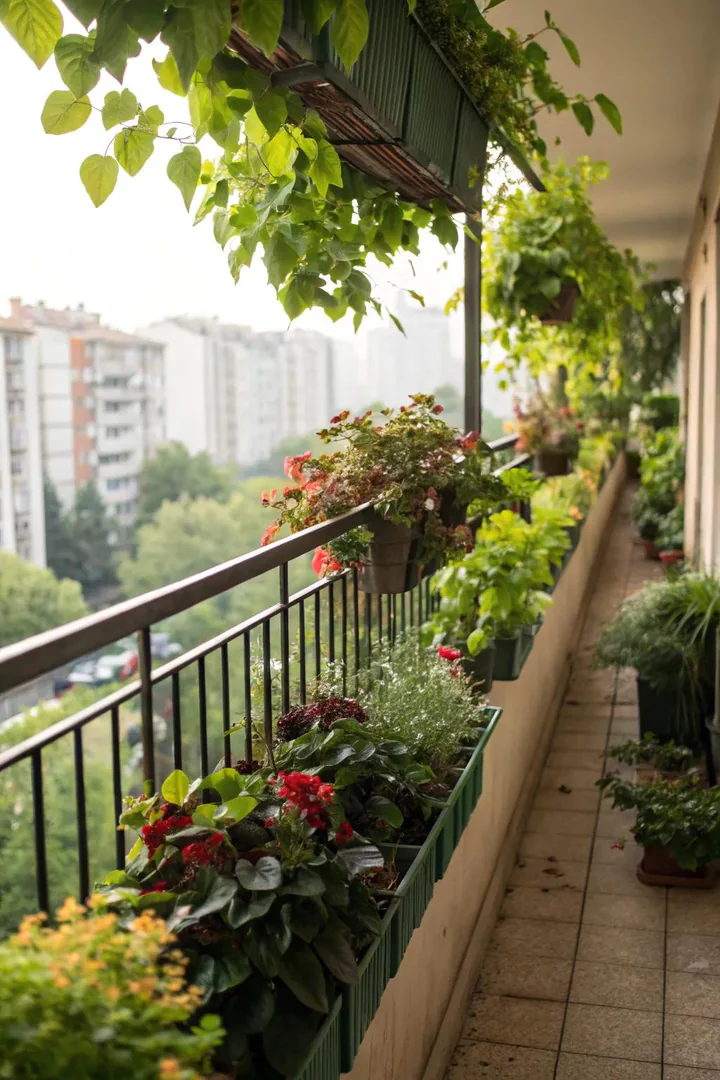
A cluster of 5 to 8 pots in staggered sizes turns one corner of the balcony into a lush green pocket. Plant tall centrepieces (snake plant, fiddle-leaf fig, or dwarf citrus in a 14-to-16-inch pot) in the back, medium fillers (geraniums, petunias, or lavender in 10-to-12-inch pots) in the middle, and trailing spillers (creeping Jenny, sweet potato vine, or trailing rosemary) in 6-to-8-inch pots at the front edge. Lechuza self-watering planters ($25 to $60) keep roots hydrated for 3 to 5 days between refills, which matters on a sun-baked south-facing balcony that dries soil fast.
Keep total pot weight under the balcony load rating (typically 40 to 60 pounds per square foot for a residential concrete balcony). Use lightweight resin or fibreglass pots instead of ceramic or concrete, and fill the bottom third of large pots with packing peanuts or empty plastic bottles to cut weight without losing root depth. Place drip trays ($2 to $5 each) under every pot to protect the balcony floor and avoid water dripping onto the neighbour below.
2. Set Up Cozy Seating
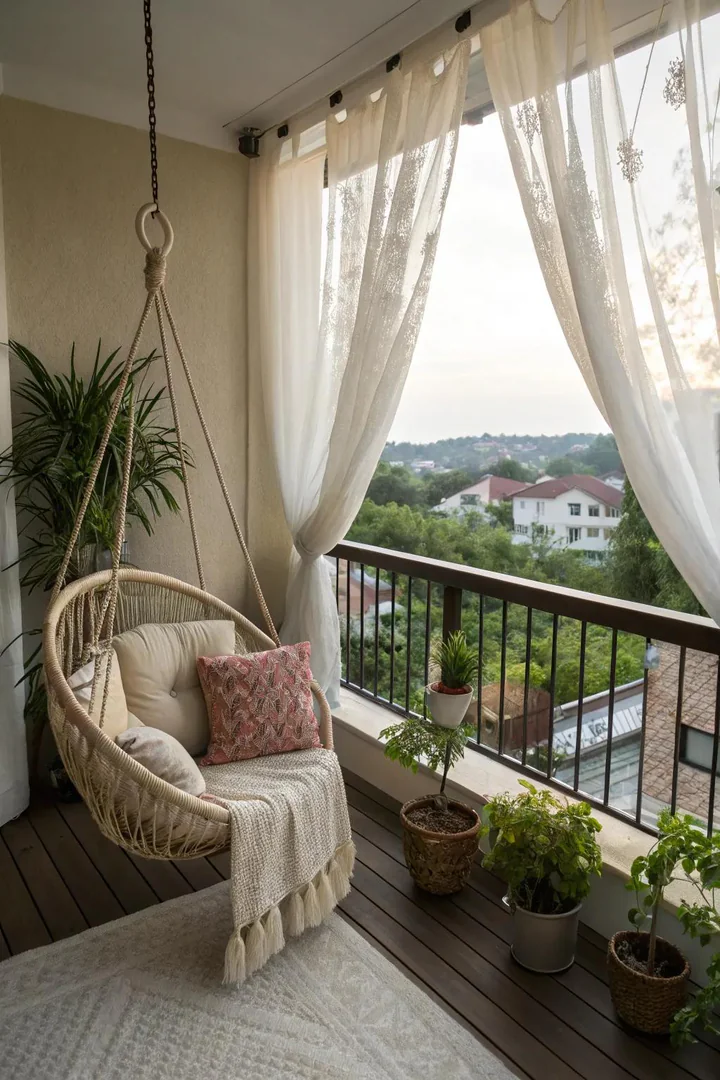
A single hanging egg chair ($200 to $500 from Modway or Christopher Knight Home) bolted to the ceiling joist or a freestanding stand turns a balcony into a reading pod without taking up any floor space. For balconies wider than 5 feet, a compact loveseat or a pair of stackable sling chairs ($40 to $80 each from Room by Room at Target) provides seating for two that folds flat against the wall when not in use.
Add a 2-inch-thick outdoor seat cushion ($20 to $40 from Arden Selections) and two lumbar pillows ($10 to $15 each) in a weather-resistant fabric. Keep a lightweight throw blanket ($15 to $25) draped over the chair back for cool evenings. A small folding side table ($20 to $35) tucked beside the chair holds a mug and a phone without blocking the walkway. Leave at least 24 inches of clear path between the seating and the railing so you can move through the space without stepping over furniture.
3. Install String Lights
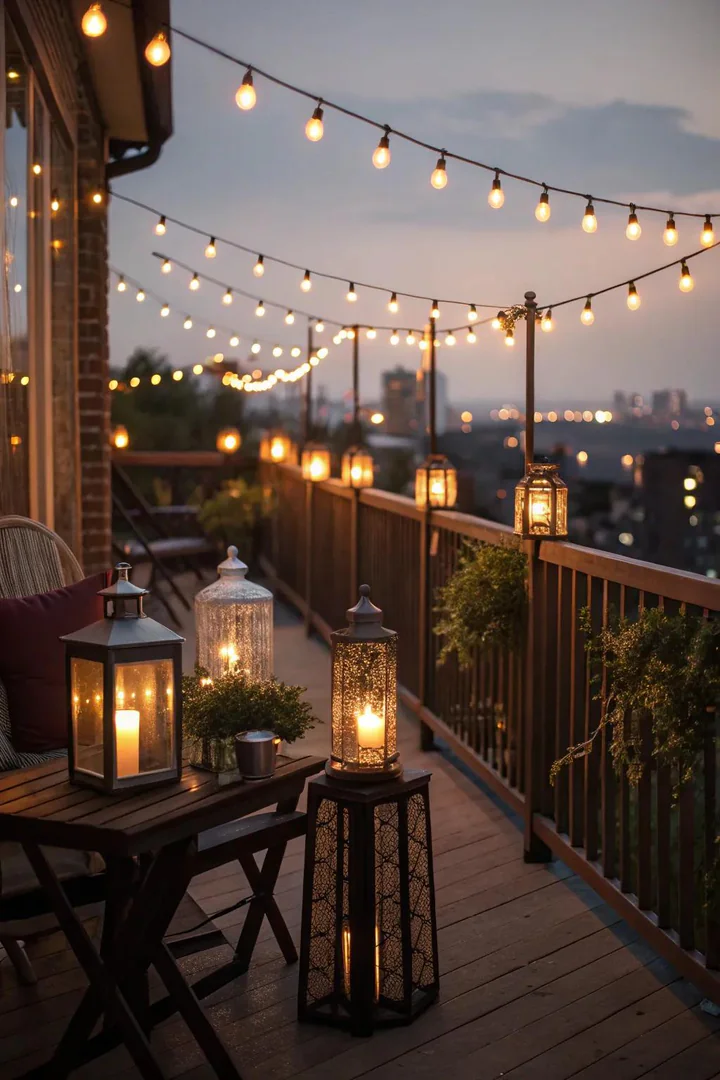
One 25-to-48-foot strand of LED globe string lights draped along the railing or ceiling edge turns a dark balcony into a warm, inviting space after sunset. Brightech Ambience Pro and Newhouse Lighting sell weather-rated strands for $20 to $40 with shatterproof bulbs that last 20,000 hours. A solar-powered version ($25 to $35) clips to the railing and charges during the day, which solves the problem on balconies with no outdoor outlet.
Loop the strand in a gentle zigzag pattern overhead (not pulled taut, which looks industrial) using small adhesive cup hooks ($5 per 10-pack) on the ceiling or railing brackets. A warm-white colour temperature (2700K to 3000K) creates a soft glow for relaxing, while a cooler white (4000K) works better for a reading or working balcony. Pair the string lights with one battery-operated LED lantern ($10 to $20) on the side table for a second layer of task light when you need to read a book or see a plate.
4. Add a Bistro Table and Chairs
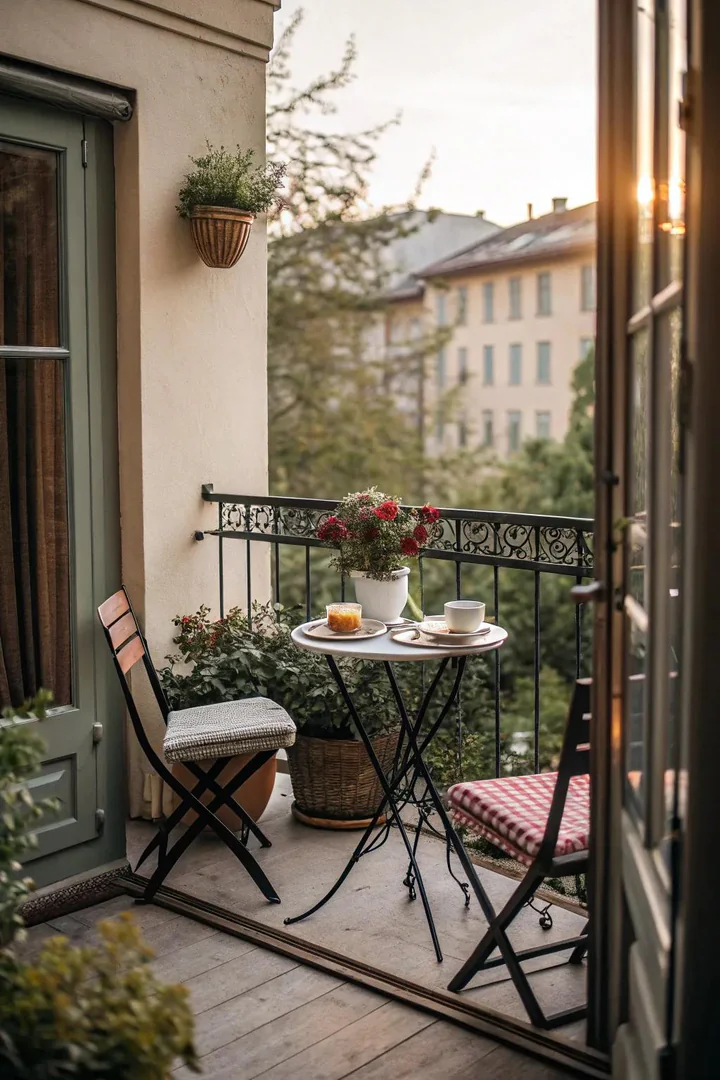
A 24-to-28-inch round bistro table with two folding chairs fits on balconies as small as 4 x 6 feet and gives you a proper surface for morning coffee, a laptop, or a dinner plate. Grand Patio and PHI VILLA sell powder-coated steel bistro sets for $80 to $200 that weigh under 25 pounds total and fold flat for storage. A slatted teak or acacia wood set ($120 to $250 from World Market or IKEA) adds warmth but weighs more and needs an annual coat of teak oil to prevent greying.
Position the table against the railing rather than in the centre of the balcony so both chairs face outward and the view becomes part of the dining experience. A clip-on umbrella ($20 to $40) attached to the railing or table edge provides shade on a south- or west-facing balcony without a fixed overhead cover. Keep the chair backs under the railing height so the furniture does not block the sightline from inside the apartment looking out through the balcony door.
5. Add Bold Colour Accents
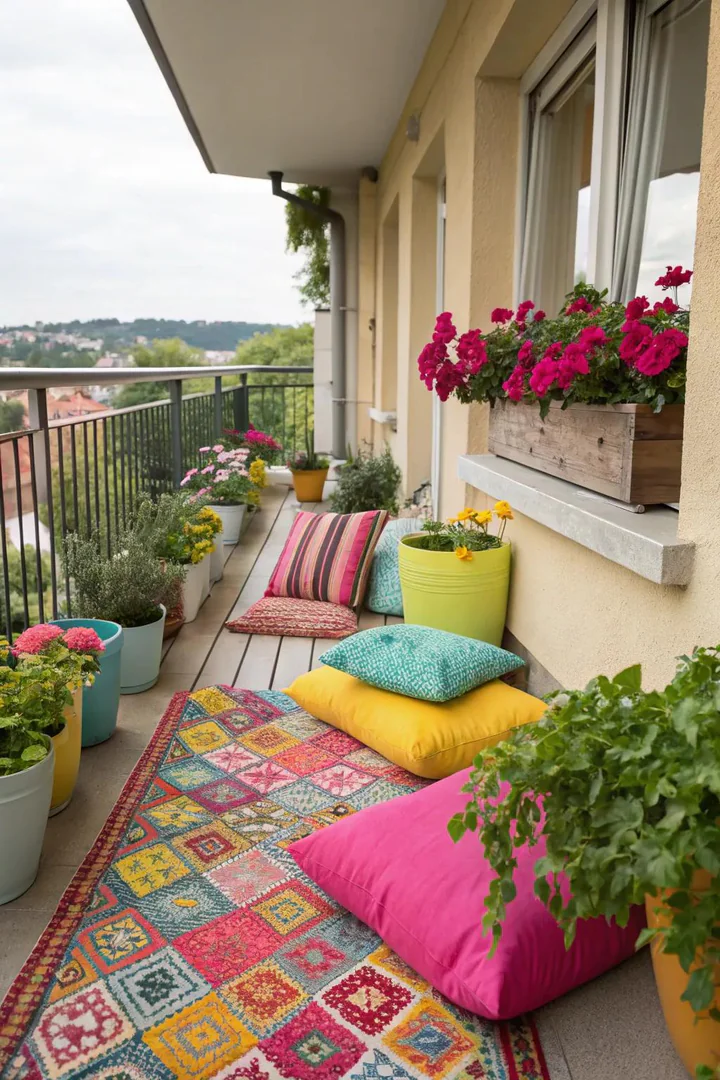
A bright cushion, a painted planter, or a colourful doormat injects personality into a neutral concrete or grey-railing balcony for under $50. Pick one accent colour (coral, mustard, teal, or cobalt) and repeat it across three items: a seat cushion, a pot, and a throw pillow. Marimekko and Deny Designs sell bold-print outdoor pillows ($15 to $35) that resist UV fading for 2 to 3 seasons, and a $3 can of Rust-Oleum spray paint turns a plain terracotta pot into a matching accent piece in 15 minutes.
Keep the background palette neutral (black, white, grey, or natural wood) so the colour pops stand out rather than compete. Avoid more than two accent colours on a small balcony because the tight space amplifies visual clutter. Rotate the accent colour with the season (warm tones in fall, cool tones in spring) by swapping just the pillow covers and the annual flowers in the painted pot, keeping the furniture and rug the same year-round.
6. Choose Multi-Functional Furniture
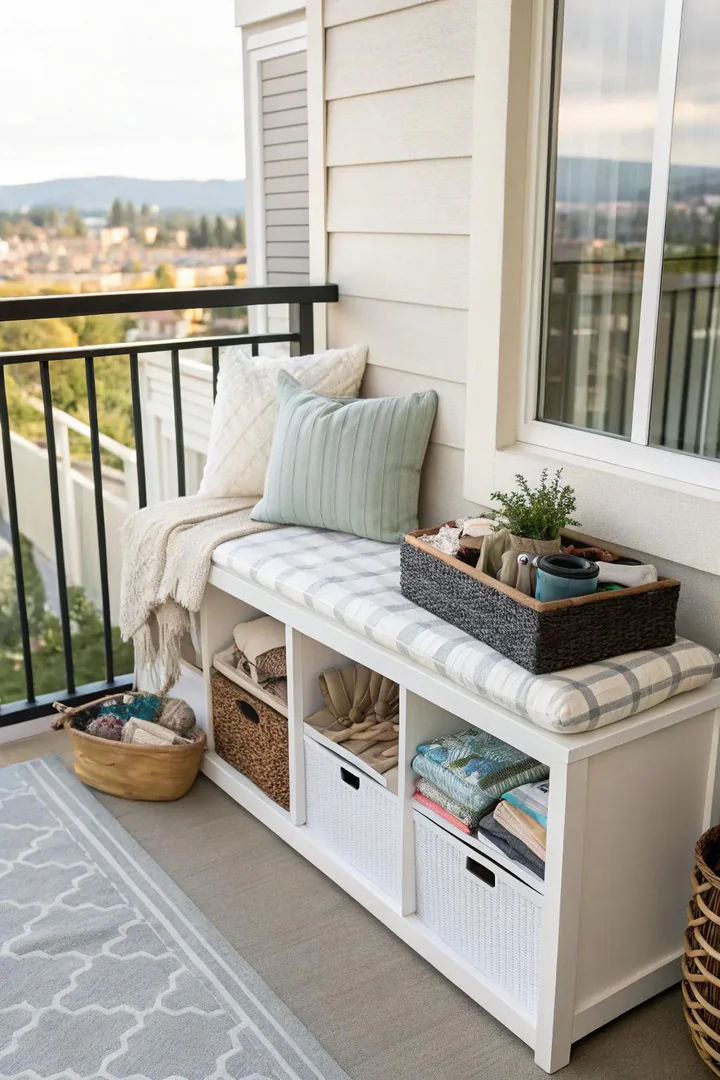
A storage bench ($60 to $150 from Keter or Suncast) serves as seating, a coffee table, and a lockable storage chest for cushions, throws, and small garden tools. A bench rated at 70 to 90 gallons holds a full set of outdoor cushions when not in use and supports up to 500 pounds as a seat. On a narrow balcony (under 4 feet deep), a wall-mounted folding shelf ($25 to $50 from IKEA or Amazon) drops flat to become a desk or dining surface and folds up flush against the wall when the space is needed for standing or stretching.
A bar-height railing table ($30 to $60) hooks over the railing top without fasteners and provides a 12-to-16-inch-wide surface for drinks and plates that hangs outside the footprint of the balcony, freeing all interior floor space. Pair the railing table with two bar stools ($50 to $100 each, stackable) for a two-person bar that looks out over the street or courtyard. Choose furniture pieces that serve at least two purposes on a balcony under 40 square feet: every single-purpose piece costs floor space that a small balcony cannot spare.
7. Go Vertical with Wall Planters
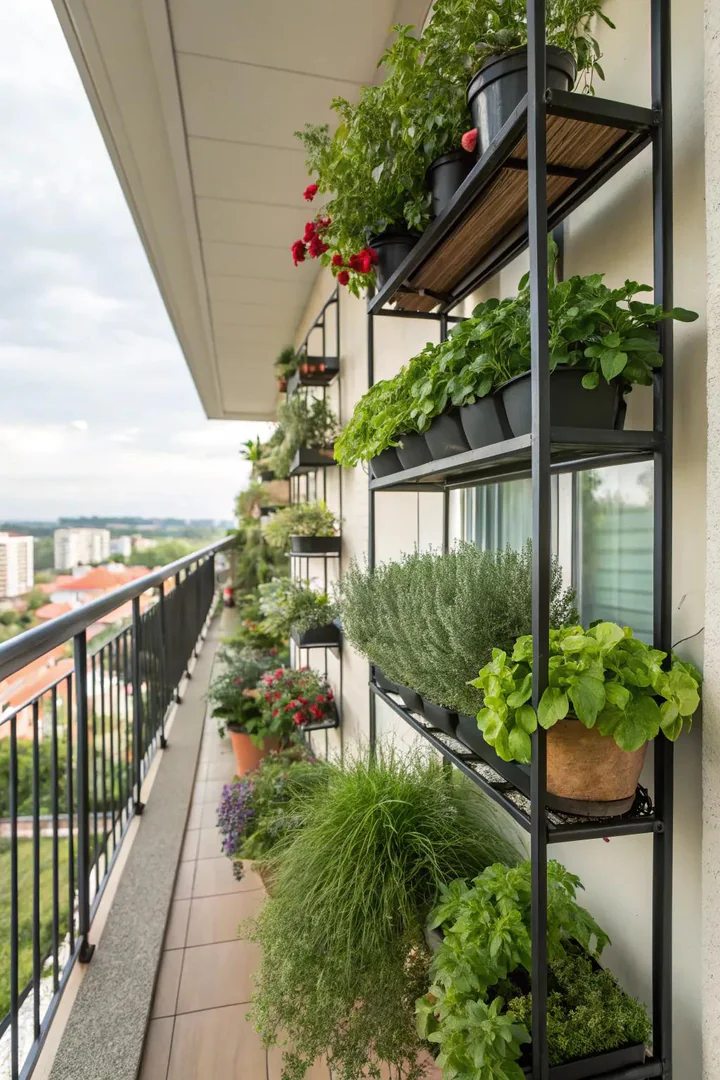
A wall-mounted planter grid or a railing-hung pot system grows herbs, flowers, and trailing vines without using any floor space. Woolly Pocket and WALLY Eco sell modular felt-pocket planters ($15 to $30 each) that mount on screws or over-the-rail hooks and hold 2 to 4 quarts of soil per pocket. Stack three to five pockets vertically on the wall beside the balcony door for a living green column that doubles as a privacy screen from the adjacent unit.
A tiered plant stand ($30 to $60, A-frame or ladder style) leans against the wall and holds 5 to 8 pots on 3 to 4 shelves within a 2 x 1-foot floor footprint. Plant the top shelf with trailing varieties (pothos, string of pearls) that cascade down and fill the gaps between shelves. Water vertical planters with a narrow-spout watering can ($8 to $12) to avoid runoff splashing onto the wall or floor, and place a drip tray or a strip of plastic sheeting behind the planters to protect the building exterior from moisture stains.
8. Install a Privacy Screen
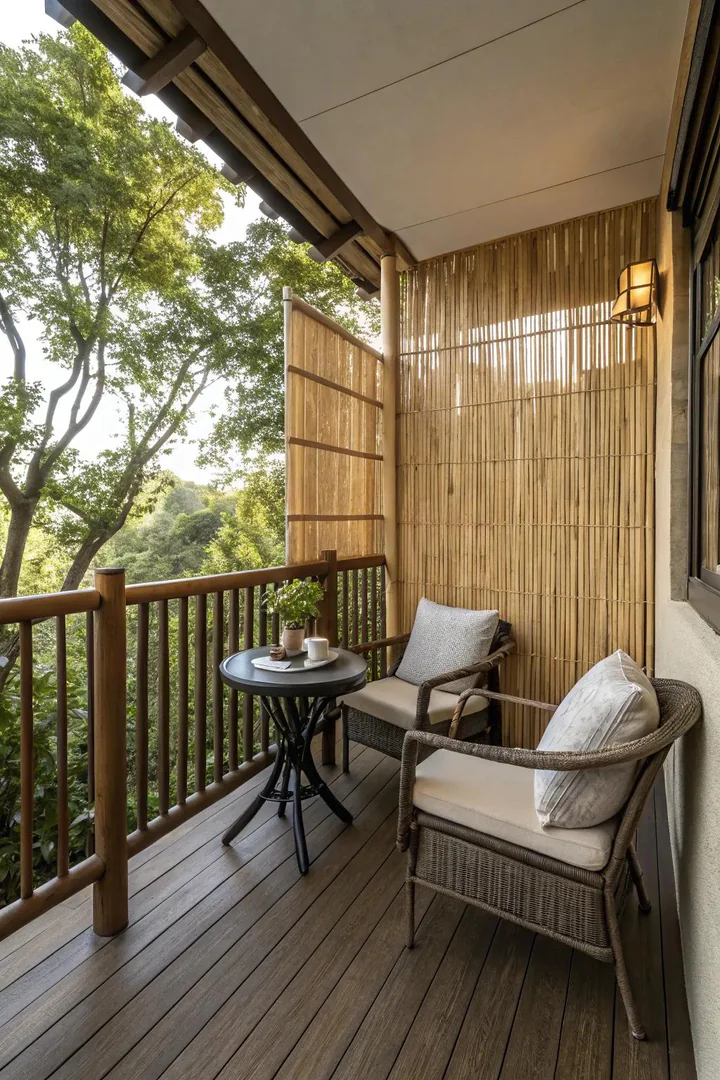
A bamboo reed roll ($15 to $40 for a 6 x 16-foot roll from Forever Bamboo) zip-tied to the railing blocks sightlines from the street or the neighbouring unit while allowing airflow through the gaps. For a greener option, train a fast-growing vine (jasmine, clematis, or morning glory) on a 6-foot trellis panel ($10 to $25 from Home Depot) mounted to the railing with cable ties. The vine fills in within one growing season and adds fragrance (jasmine) or colour (morning glory) to the privacy barrier.
A retractable side awning ($50 to $150 from Patio Paradise or Sunlax) mounts to the wall and pulls out 5 to 10 feet across the balcony opening for on-demand privacy that retracts when you want an open view. Check your lease or HOA rules before installing anything permanent: many buildings allow temporary screens (bamboo rolls, fabric panels, potted trellises) but prohibit permanent attachments to railings or exterior walls. Use zip ties and suction-cup hooks ($5 per pack) for fully removable installations that leave no marks.
9. Lay an Outdoor Rug
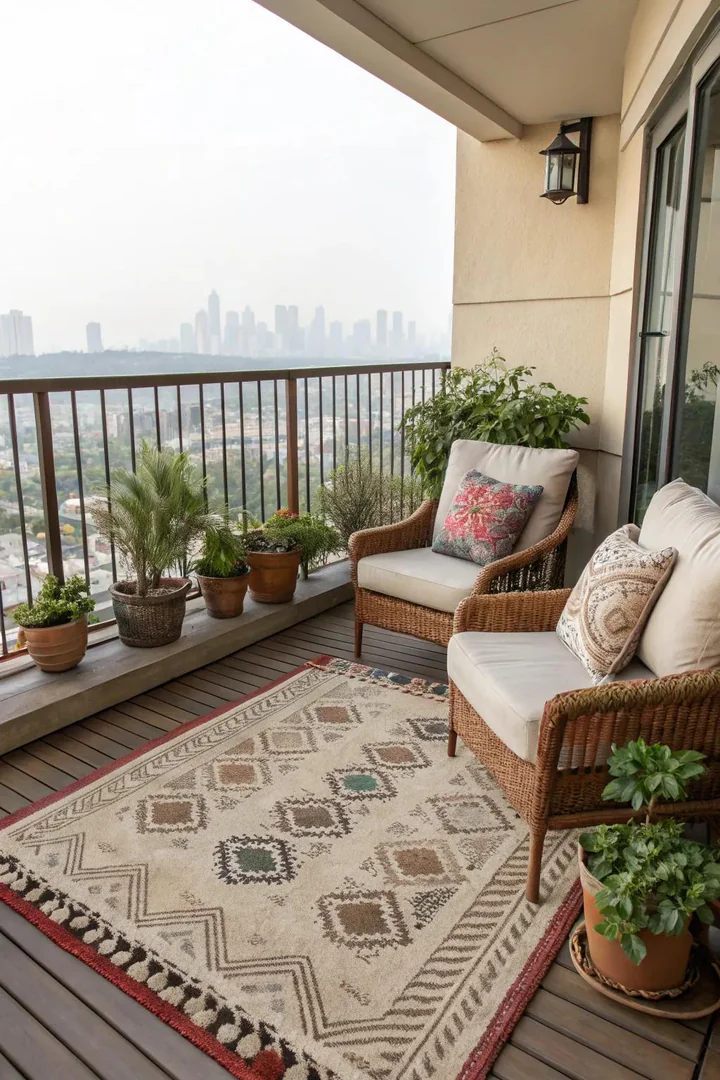
An outdoor rug ($20 to $80 in 3 x 5 or 4 x 6 feet from Safavieh, Nourison, or nuLOOM) softens the concrete floor, defines the seating zone, and adds colour or pattern to an otherwise blank surface. Pick a flat-weave polypropylene rug (under 0.25-inch pile) that drains quickly after rain and resists mould. A 3 x 5-foot rug fits a balcony 4 x 8 feet with 6 inches of bare floor visible around the edges, which prevents the rug from looking wall-to-wall and keeps the space feeling open.
Lift the rug every two weeks and sweep underneath to prevent moisture buildup and mildew, especially on balconies with poor drainage. Use rug grip tape ($8 to $12 per roll from Gorilla Grip) on the underside to keep corners flat in wind. For a layered look on a larger balcony, place a smaller accent rug ($15 to $25) in front of the seating on top of the main rug to separate the walkway from the lounging zone. Roll the rug up and store it inside during extended wet or winter periods to prevent fibre breakdown.
10. Decorate with Lanterns
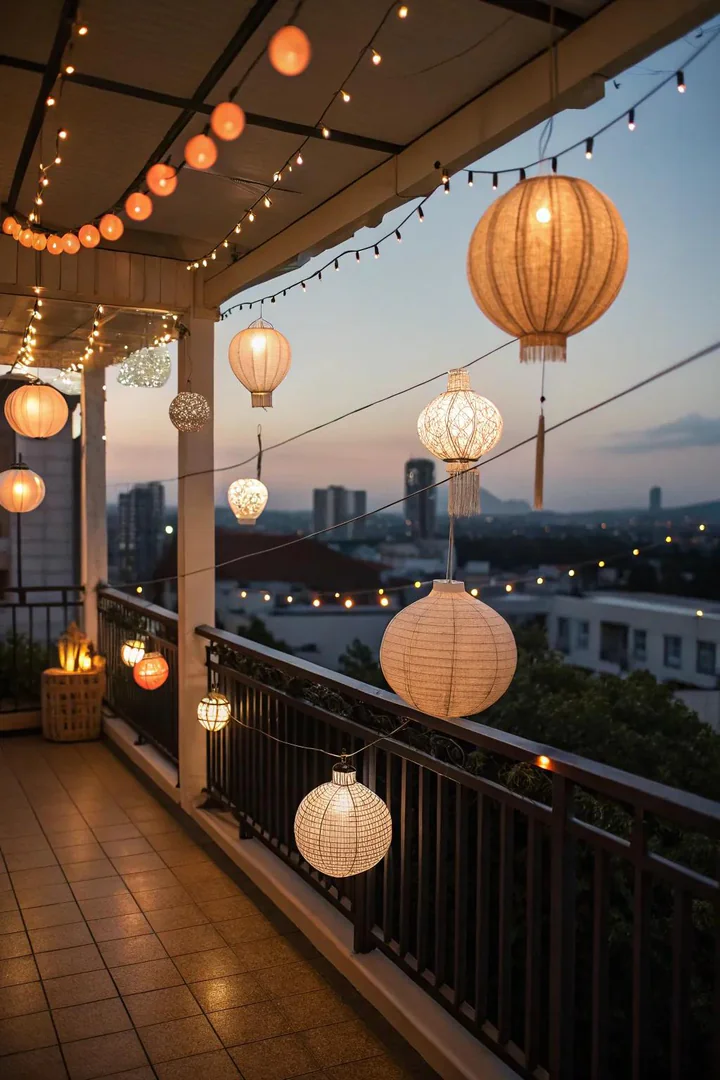
A group of three lanterns in graduated sizes (8-inch, 12-inch, and 16-inch tall) placed in one corner of the balcony creates a warm focal point without wiring. Pottery Barn and West Elm sell glass-and-metal lanterns for $30 to $80 each, while IKEA BORRBY lanterns run $10 to $15 and hold a standard pillar candle or a battery-operated LED pillar ($5 to $10) that flickers like a real flame. Group the lanterns in an odd-numbered cluster (3 or 5) at staggered heights for a natural, collected look.
Hang one lantern from a ceiling hook or a railing-mount bracket ($5 to $10) at eye level to add vertical light, and place the remaining lanterns on the floor or on a low shelf. Use LED candles with a 6-hour on/18-hour off timer ($12 to $20 for a 3-pack) so the lanterns glow automatically every evening. A concrete patio surface benefits from similar lantern clusters to break up the grey, and the same technique scales up to any outdoor space.
11. Build a Relaxation Nook
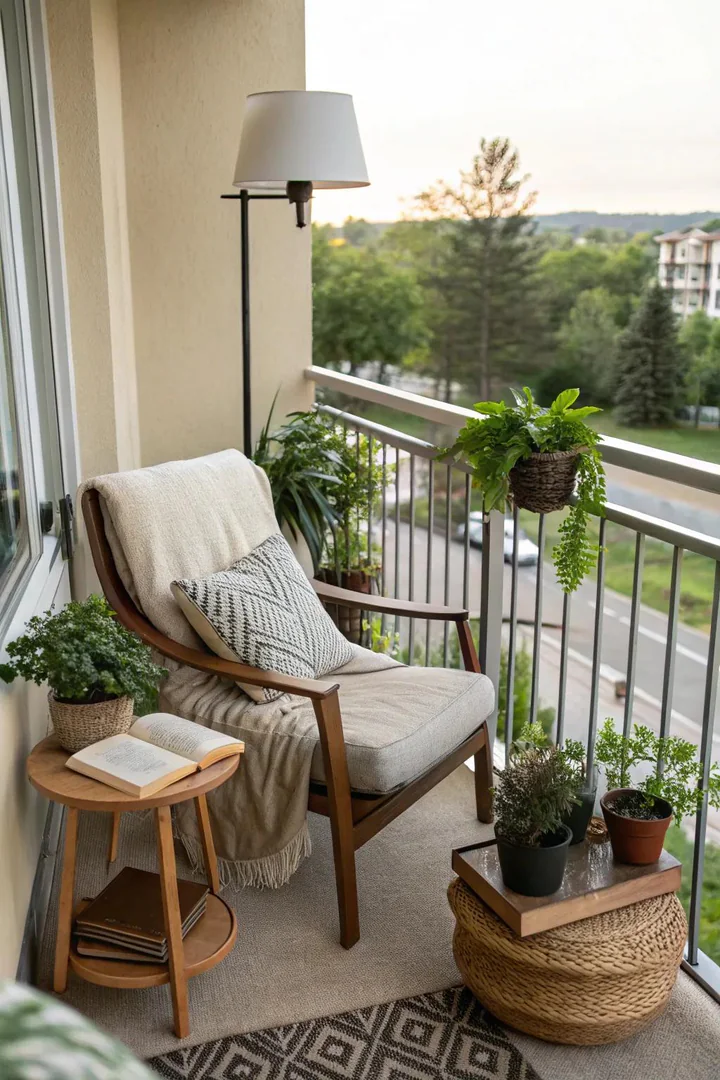
A floor cushion or a bean bag ($30 to $80 from Big Joe or Fatboy) paired with a small side table and a blanket turns one end of the balcony into a spa-like retreat. An outdoor floor cushion (24 x 24 inches, 5 inches thick) in a Sunbrella or Olefin fabric sits directly on the balcony floor or on top of an outdoor rug and supports lounging, meditating, or napping. A hammock chair ($40 to $100) hung from a ceiling hook ($8 for a heavy-duty swag hook rated to 50 pounds) swings gently in the breeze and takes up zero floor space.
Add a white-noise machine or a small tabletop fountain ($15 to $40 from HoMedics or Sunnydaze Decor) for background water sound that masks traffic noise. A potted jasmine or gardenia placed within arm’s reach adds natural fragrance. Keep the nook clutter-free: one seat, one throw, one plant, and one sound source are enough. Store the cushion indoors overnight if the balcony is uncovered, because dew and rain soak through even outdoor-rated fabric and lead to mildew within a week of constant exposure.
12. Pick a Decor Theme
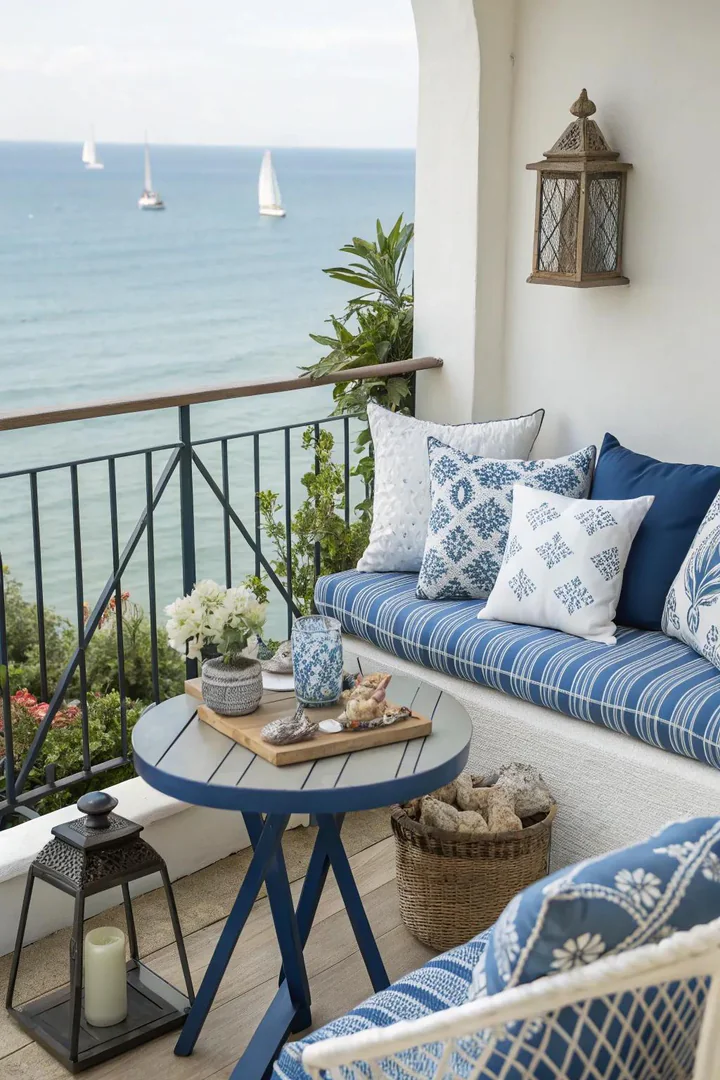
Committing to one decor theme (coastal, bohemian, mid-century, Japanese zen, or tropical) makes a small balcony look intentional rather than random. A coastal theme pairs navy-and-white striped cushions with a rope-wrapped planter and a driftwood accent. A bohemian theme mixes a kilim rug, a macrame plant hanger, and mismatched terracotta pots. A Japanese zen balcony uses a single bonsai, a bamboo mat, a stone lantern, and bare negative space.
Limit the theme to 5 to 7 decor items total because a small surface area cannot hold more without looking crowded. Buy the three most eye-catching pieces first (a rug, a seat cushion, and one statement plant or art piece) and add the remaining items one at a time over the following weeks to avoid impulse over-buying. Photograph the balcony from the interior doorway after each addition: the camera shows clutter that the eye overlooks in person, and removing one item almost always improves the composition.
13. Bring in Natural Materials
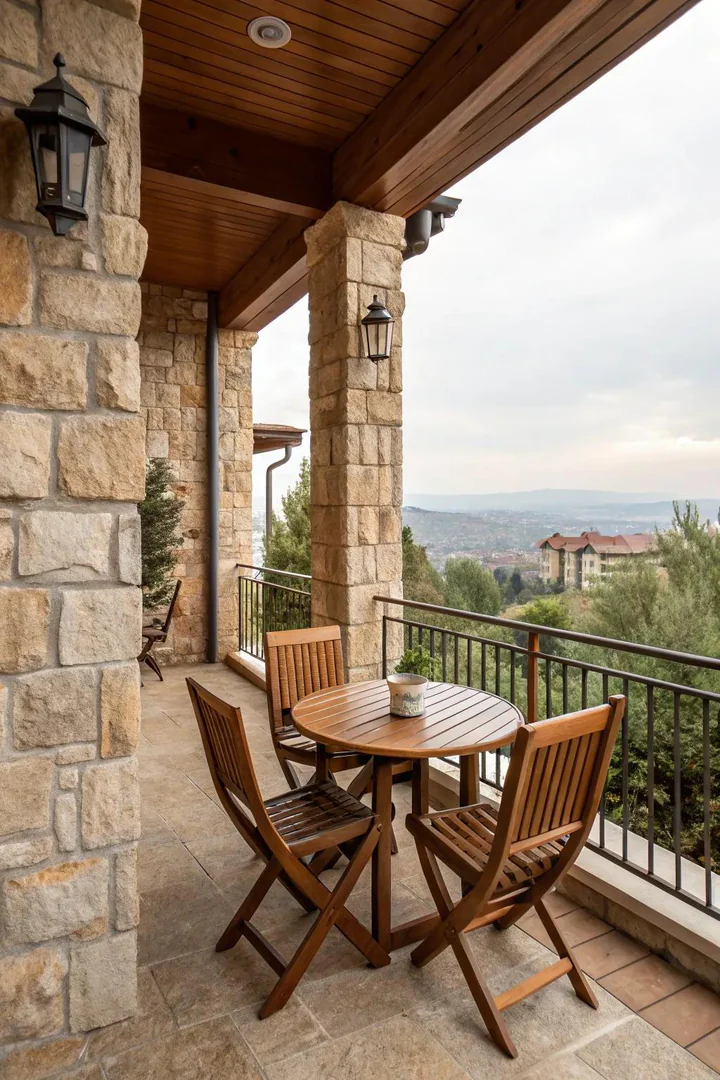
Wicker, rattan, jute, bamboo, and raw wood warm up a concrete-and-steel balcony and connect the space to the outdoors visually. A wicker storage basket ($15 to $30) tucked beside the chair holds throws and magazines. A bamboo tray ($10 to $20) on the side table organises candles, a plant, and a drink into one neat vignette. A set of interlocking acacia wood deck tiles ($3 to $6 per square foot from Bare Decor or IKEA RUNNEN) snaps together over the concrete floor and turns a cold grey surface into a warm wood deck in under an hour with no tools.
Seal natural-fibre items (jute rug, rattan chair, seagrass basket) with Thompson WaterSeal Fabric Guard ($8 per can) to slow moisture damage on an exposed balcony. Bring wicker and rattan furniture inside during heavy rain or cover it with a fitted furniture cover ($15 to $30) because prolonged soaking causes the weave to loosen and the fibres to crack. On a covered balcony, natural materials last 3 to 5 years with minimal care and age into a weathered patina that adds character.
14. Set Up a Dining Area
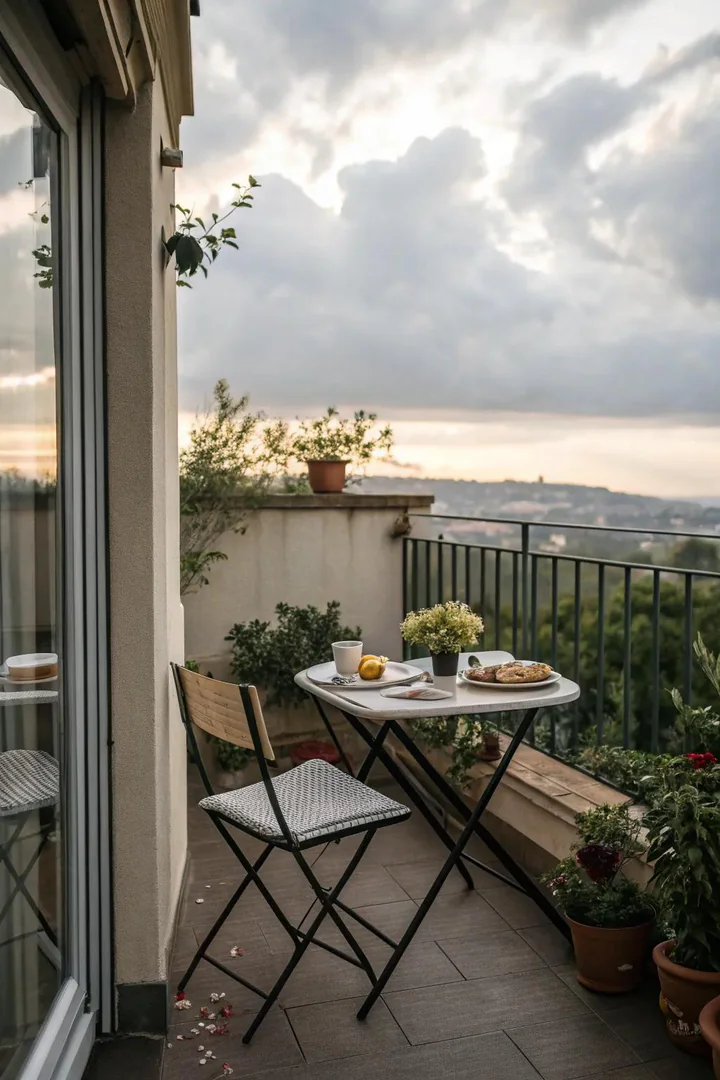
A railing-mount bar table ($40 to $80) paired with two bar stools ($50 to $100 each, stackable) creates a full dining station on a balcony as narrow as 3.5 feet. The table hooks over the railing top and extends 12 to 16 inches into the balcony, leaving the floor underneath clear. For a wider balcony (6 feet or more), a 30-inch round drop-leaf table ($80 to $150 from IKEA or Wayfair) opens to seat four for a dinner party and folds to half its width for daily use.
A small portable charcoal grill ($30 to $60 from Weber Smokey Joe or Lodge Sportsman) fits on a balcony floor with a heat-resistant mat ($10 to $20) underneath, but check your building rules first because many apartment complexes ban open-flame grills on balconies within 10 feet of the building. An electric tabletop grill ($50 to $100 from George Foreman or Ninja Sizzle) avoids the fire rule entirely and plugs into the same outlet as the string lights. Set the dining table so both seats face outward toward the view, not inward toward the building wall.
15. Hang Outdoor Art
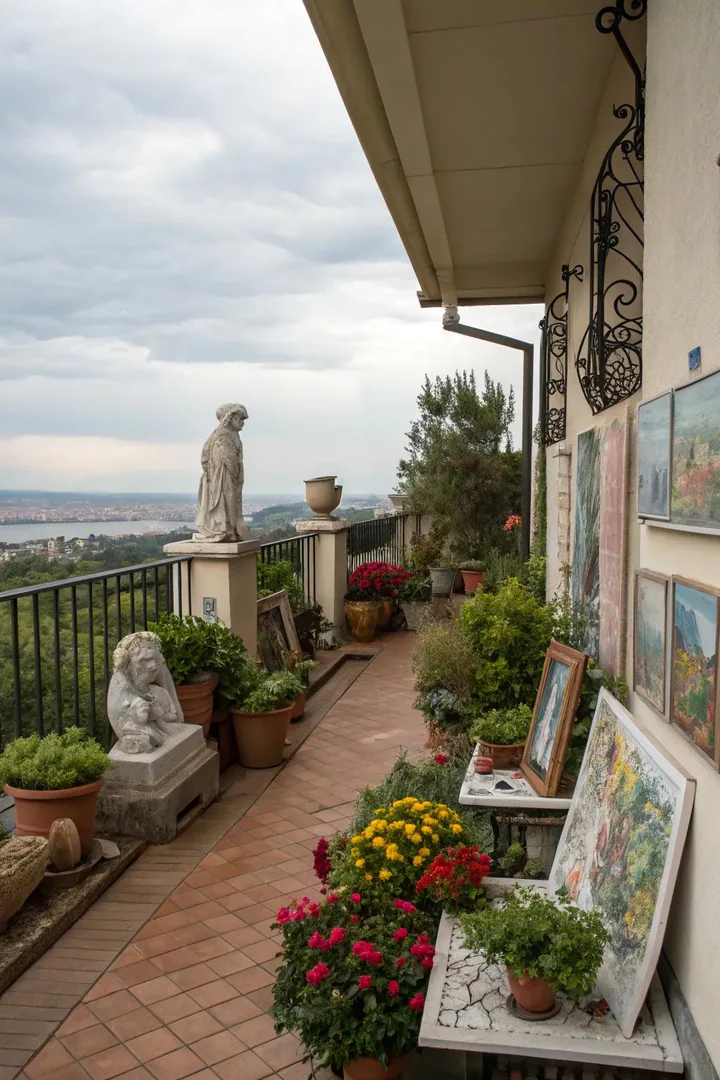
A single weather-resistant print, a metal wall sculpture, or a hand-painted tile panel hung on the balcony wall adds personality and draws the eye upward, making the space feel taller. Pottery Barn Outdoor and West Elm sell UV-resistant canvas prints ($50 to $150) sealed against rain and humidity. A set of three metal sun or leaf wall sculptures ($20 to $50 per set from Amazon or Wayfair) weighs under 2 pounds and mounts with adhesive hooks on a rental balcony where drilling is not allowed.
Hang the art at eye level from a standing position (58 to 62 inches from the floor to the centre of the piece) so the piece reads naturally from the balcony seating. A mirror ($20 to $50, framed in weatherproof resin or powder-coated metal) mounted on the back wall reflects light and the view, making a narrow balcony look twice its depth. Avoid glass-framed prints on upper-floor balconies because wind gusts can knock them off the wall, and a falling glass frame is a safety hazard for anyone below.
16. Mix in Bold Patterns
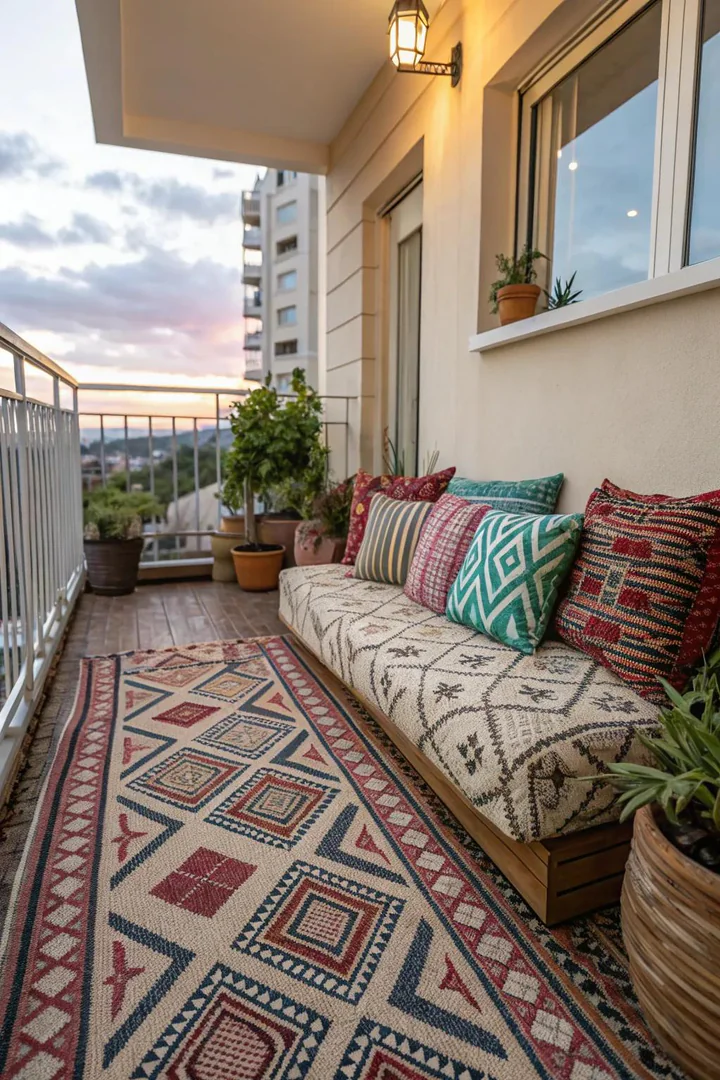
One patterned textile (a striped rug, a geometric pillow, or a botanical-print tablecloth) paired with solid-colour companions gives a small balcony visual energy without overwhelming the space. Pick a pattern scale that matches the balcony size: large-scale prints (4-inch stripes, 6-inch florals) read well on balconies over 50 square feet, while small-scale prints (1-inch stripes, micro-dot) work better on compact balconies under 30 square feet where big patterns look cramped.
Follow the 60/30/10 colour rule: 60 percent neutral (furniture, floor, railing), 30 percent secondary colour (cushions, rug), and 10 percent accent pattern (one statement pillow or a small rug). Stone walkway patterns use the same principle of a dominant surface with accent inlays, and the visual effect scales down to a 4 x 8-foot balcony just as well. Rotate the patterned pieces seasonally (tropical prints in summer, plaid or knit textures in fall) to keep the balcony feeling fresh without replacing the base furniture.
17. Create a Reading Nook
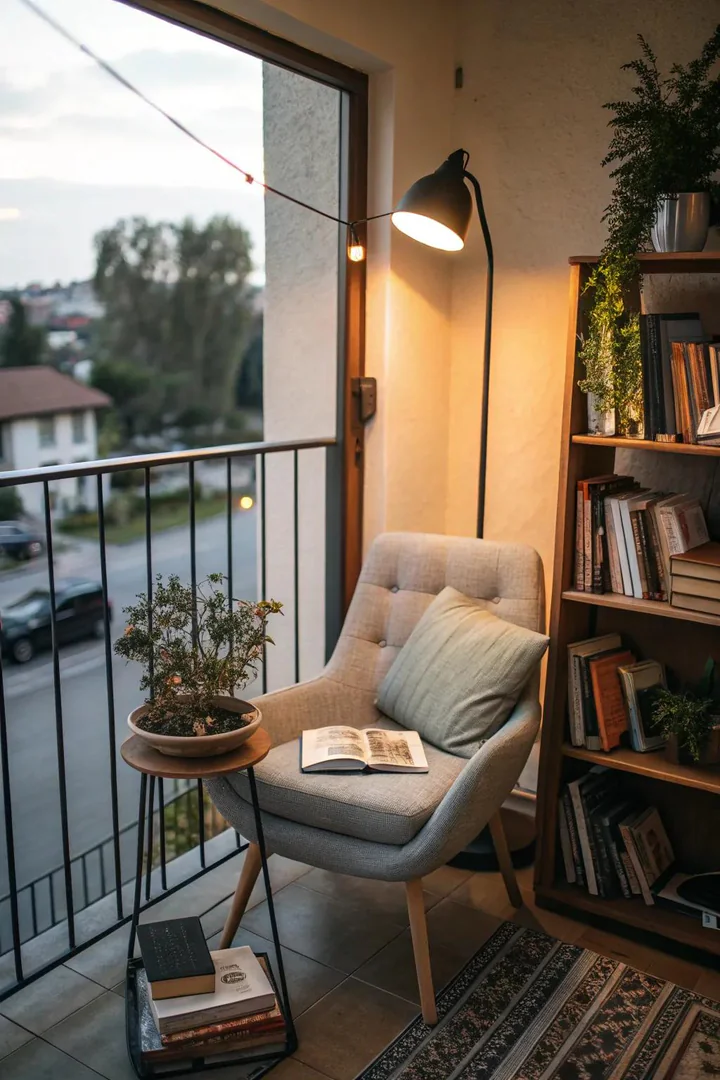
A dedicated reading corner on the balcony needs just three things: a comfortable chair angled toward the best light, a side table for a book and a mug, and a clip-on reading lamp ($15 to $30 from Mighty Bright or Ikea TERTIAL) for evening sessions. Position the chair so morning sun falls over the left shoulder (for right-handed readers) or the right shoulder (for left-handed readers) to avoid glare on the page. A zero-gravity lounger ($60 to $120 from Caravan Sports or Amazon Basics) reclines flat for napping and folds down to 6 inches thick for storage.
Add a small wall-mounted shelf ($10 to $20) beside the chair at elbow height for a 3-to-5-book rotation, a water bottle, and a pair of sunglasses. A small porch uses the same reading-nook layout because the footprint constraints are identical: one seat, one surface, and one light. Keep the reading corner free of extra decor so the eye rests on the book and the view rather than competing accessories.
18. Mount Decorative Screens
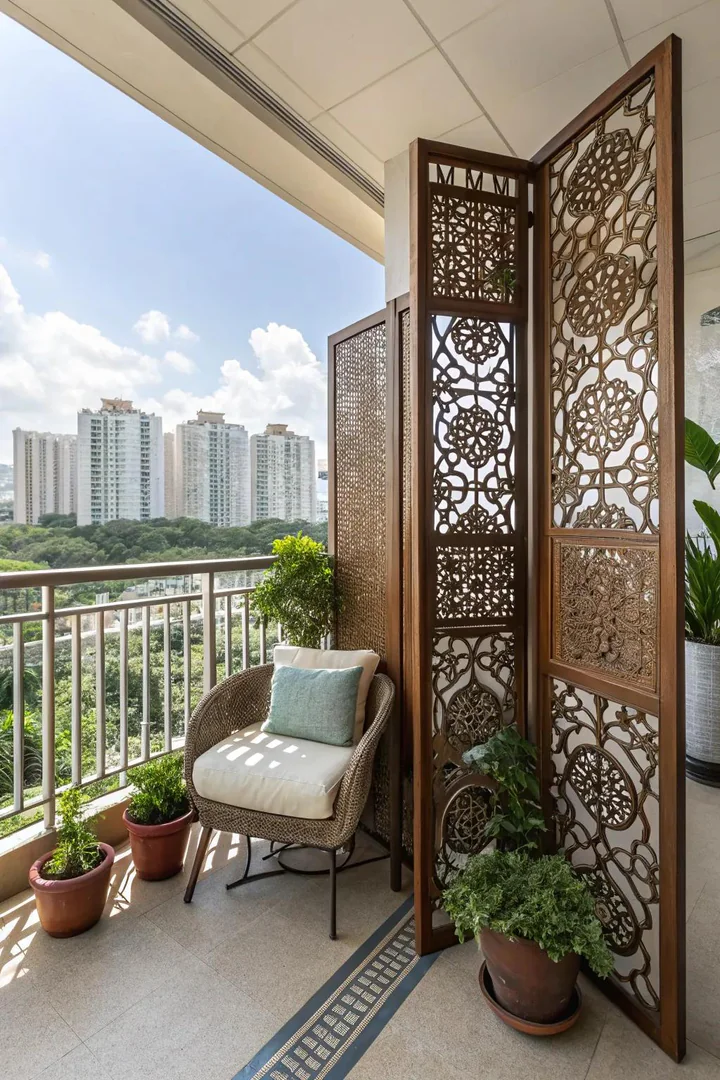
A laser-cut metal privacy panel ($50 to $150 per 2 x 4-foot panel from Matrix or Modinex) mounted on the balcony wall or railing adds a geometric pattern that casts shadows in the afternoon sun and serves as both art and a wind break. Powder-coated aluminium panels weigh 3 to 5 pounds each, resist rust, and mount with four screws or zip ties. Stack two panels vertically for a 4 x 4-foot screen that blocks the adjacent unit sightline while still allowing airflow through the perforations.
A woven-reed or willow screen ($20 to $50 per panel from garden centres) provides a softer, organic texture and supports climbing plants (jasmine, sweet pea, or passionflower) that fill in the gaps within one growing season. Mount the screen 1 inch off the wall with standoff spacers so air circulates behind it and prevents mould on the building exterior. A decorative screen also hides unsightly items (AC condenser, utility boxes, stored bikes) tucked behind it on one end of the balcony.
19. Keep a Minimal Layout
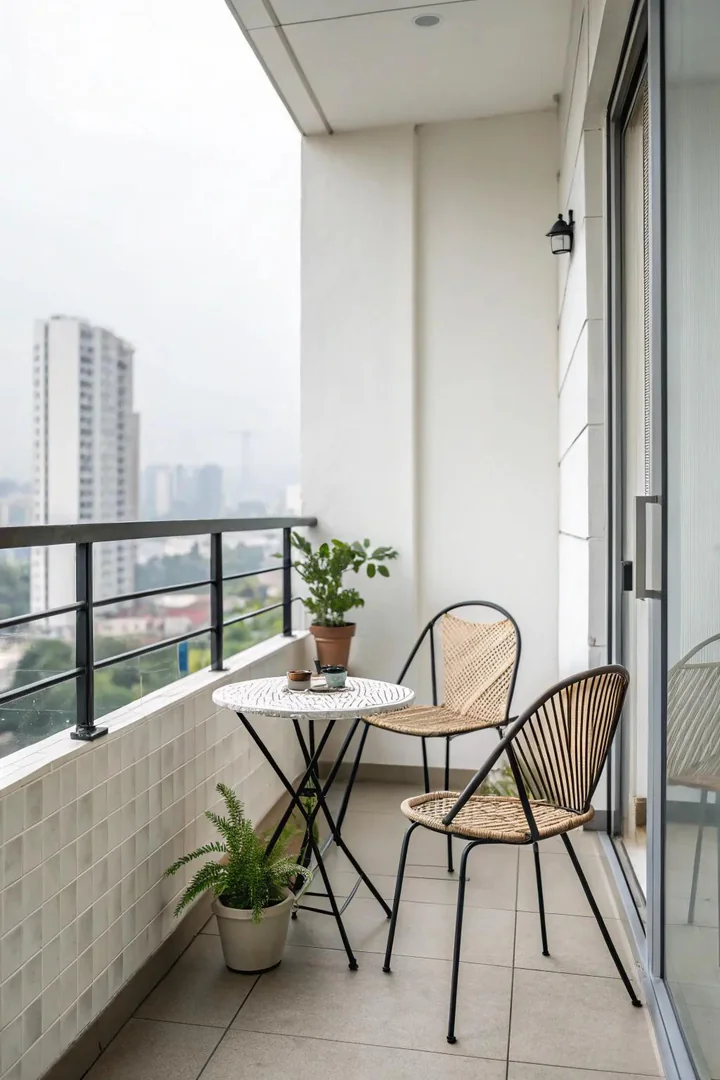
A stripped-back balcony with one chair, one plant, and one light source often feels more relaxing than a fully decorated one because negative space lets the view and the breeze do the work. Pick a single high-quality chair (Acapulco woven-cord chair, $100 to $200, or a teak folding chair, $80 to $150) in a neutral colour, place one large potted plant (a 3-to-4-foot olive tree, bird of paradise, or bamboo palm) in the opposite corner, and hang one string light strand overhead.
Resist the urge to fill the remaining floor space. A minimal balcony works because the open floor makes the space feel larger than it is, and every item earns its spot by serving a clear purpose: sitting, greenery, or light. Store all seasonal accessories (extra cushions, blankets, candles) inside the apartment and bring them out only when you sit down. A clean outdoor stair design follows the same less-is-more principle, and the visual calm carries from the balcony down to the ground level.
How to Set Up a Balcony from Scratch
1. Measure and Check Load Limits
Measure the balcony length, width, and ceiling height (if covered) before buying anything. Check the lease or building specs for the weight load rating, which is typically 40 to 60 pounds per square foot for a residential concrete balcony. A 4 x 8-foot balcony at 40 psf supports 1,280 pounds total, but a large planter full of wet soil can weigh 80 to 100 pounds alone, so calculate total weight before loading the space.
2. Pick a Layout and Anchor Piece
Choose one anchor piece (a chair, a bistro set, or a lounger) that fits the deepest usable dimension of the balcony with at least 24 inches of clearance to the railing. Place the anchor first, then build the layout around it: plants beside it, lighting above it, and a rug underneath it. Dry-fit the furniture before buying a rug so the rug size matches the seating footprint.
3. Add Greenery and Lighting
Place 3 to 5 pots in one cluster (not scattered evenly) for a natural garden look, and hang one strand of string lights along the ceiling or railing for evening use. A single large plant paired with two small pots reads better than five medium-sized pots spread around the perimeter.
4. Layer Textiles and Personal Touches
Add a rug, a cushion, and one personal item (a lantern, a piece of art, or a decorative tray) to finish the space. Stop when the balcony feels comfortable from the chair: the test of a finished balcony is whether you want to sit in it, not whether every surface is decorated. Visit The Designers Company for more small-space outdoor living guides.
Balcony Furniture Size Guide
| Balcony Size | Best Seating | Table Type | Max Pots | Rug Size |
|---|---|---|---|---|
| Under 25 sq ft (Juliet) | Railing-hung seat or floor cushion | Railing-mount tray | 2 – 3 small | 2 x 3 ft |
| 25 – 40 sq ft | One folding chair or hanging chair | Folding side table | 3 – 5 mixed | 3 x 5 ft |
| 40 – 60 sq ft | Bistro set (2 chairs + table) | 24-in round bistro | 5 – 7 mixed | 4 x 6 ft |
| 60 – 80 sq ft | Loveseat + accent chair | Coffee table or bar table | 6 – 8 mixed | 5 x 7 ft |
| 80 – 100+ sq ft | Sectional or daybed | Dining table (30-in round) | 8 – 12 mixed | 5 x 8 ft or 6 x 9 ft |
Frequently Asked Questions
How much weight can a typical apartment balcony hold?
Most residential concrete balconies support 40 to 60 pounds per square foot of live load (furniture, plants, and people combined). A 4 x 8-foot balcony at 40 psf handles 1,280 pounds total. Check your building specs or ask your property manager for the exact rating before adding heavy items like a filled hot tub, a large planter, or a concrete bench.
What plants grow best on a shaded balcony?
Ferns (Boston, maidenhair, bird’s nest), hostas, coleus, begonias, and impatiens thrive in filtered light and produce lush foliage without direct sun. For year-round greenery, snake plants and pothos tolerate low light indoors and move to the balcony during warm months. Avoid sun-loving plants (lavender, rosemary, most succulents) on a north-facing or fully shaded balcony because they will stretch, yellow, and drop leaves within weeks.
Can I install a privacy screen on a rental balcony?
Yes, using removable attachments: bamboo rolls or fabric panels zip-tied to the railing, freestanding trellis panels weighted with heavy planters, and suction-cup hooks for hanging screens. Avoid drilling into walls or railings unless your lease specifically permits modifications. Remove all attachments and patch any marks before move-out to protect your deposit.
How do I waterproof my balcony floor?
Lay interlocking deck tiles ($3 to $6 per sq ft from Bare Decor or IKEA RUNNEN) directly over the concrete. The tiles snap together without adhesive, drain through the gaps, and lift off in minutes for cleaning or move-out. For permanent waterproofing (owned units), apply a Behr Premium Granite Grip or DRYLOK concrete sealer ($30 to $50 per gallon) to the bare slab before placing furniture.
What is the best way to block wind on a high-rise balcony?
A tempered glass wind panel ($100 to $300 per 2 x 4-foot section) mounted to the railing with stainless-steel standoffs blocks gusts while preserving the view. For a budget option, a clear polycarbonate sheet ($20 to $40 per 2 x 4-foot panel from Home Depot) zip-tied to the railing provides the same wind break at a fraction of the cost and weighs under 3 pounds per panel.