
Small Front Porch Ideas: 23 Creative Ways to Maximize Your Space
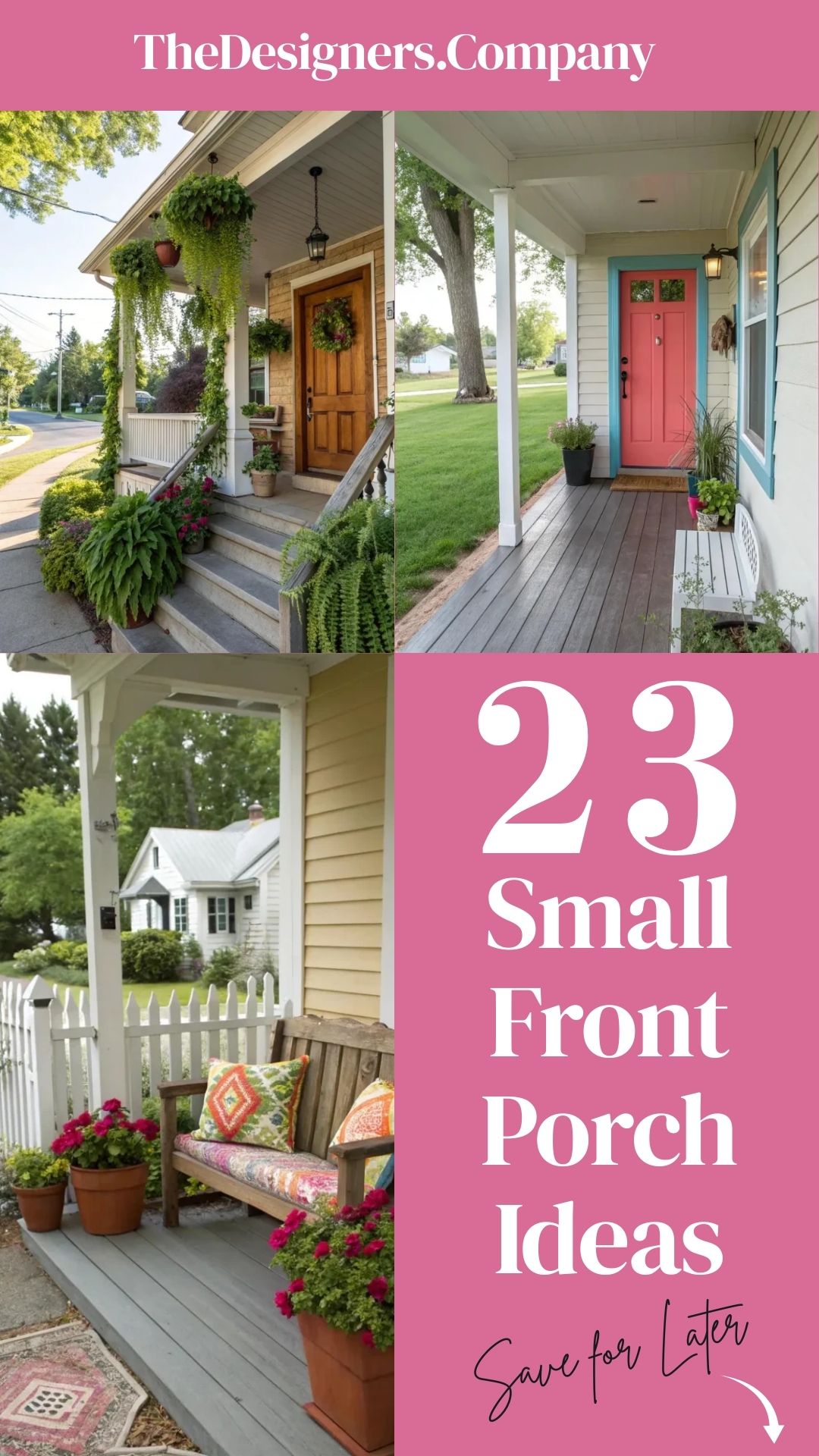
A small front porch (25 to 80 square feet) sets the first impression of the entire house, and the tight footprint means every piece of furniture, plant, and decorative detail counts double. The ideas below work within porches as narrow as 4 feet deep and as short as 6 feet wide, using scaled-down furniture, vertical planting, layered lighting, and colour-driven accents to make the space feel larger and more welcoming than the square footage suggests. Here are 23 small front porch ideas with product names, dimensions, prices, and arrangement tips for each look.
1. Add a Cozy Bench

A 42-to-48-inch outdoor bench fits against the wall of a 4-foot-deep porch and leaves 18 to 24 inches of clear walking space in front. POLYWOOD Vineyard 48-inch bench ($300 to $400) and Trex Outdoor Furniture Yacht Club 48-inch bench ($250 to $350) are both made from recycled HDPE lumber that never needs painting, staining, or seasonal storage. Choose a bench colour that contrasts with the siding: white bench on dark siding, black or navy bench on white or light-grey siding.
Add a 20 x 20-inch outdoor throw pillow ($15 to $30 from Sunbrella or Arden Selections) in a pattern that picks up the front door colour, and tuck a small woven basket ($10 to $20 from Target or World Market) underneath the bench for storing shoes, dog leashes, or delivery packages. A single bench with a pillow turns a bare porch into a sitting area that invites neighbours to stop and talk, which no amount of wreath or doormat achieves on its own.
2. Hang Trailing Plants

Hanging baskets lift greenery off the floor and use vertical space that a small porch wastes otherwise. Mount Achla Designs ceiling hooks ($5 to $8 each) or Panacea swivel hooks ($4 to $6) into the porch ceiling joists at 24-to-30-inch spacing, and hang 10-to-12-inch coco-lined baskets ($6 to $10 each) planted with trailing petunias, sweet potato vine, English ivy, or Boston fern. Keep the basket bottoms at least 7 feet above the porch floor so tall visitors clear them comfortably.
Water hanging baskets every 1 to 2 days in summer (they dry out faster than ground-level pots because of increased air circulation) and feed with a water-soluble fertiliser ($5 to $8 per box of Miracle-Gro or Jack’s Classic) every 2 weeks during the growing season. Three baskets spaced evenly across a 10-foot-wide porch ceiling create a canopy effect that makes the porch feel enclosed and private without adding walls or screens.
3. Paint the Front Door Bold

A front door painted in a bold, saturated colour draws the eye to the centre of the porch and gives the entire entry a focal point that distracts from the small footprint. Benjamin Moore Caliente (AF-290), Sherwin-Williams Naval (SW 6244), and Farrow & Ball Hague Blue (No. 30) are three of the most popular statement-door colours, and each pairs well with neutral siding in white, grey, or cream. One quart of exterior door paint ($15 to $25) covers a standard 36 x 80-inch door with two coats.
Sand the door with 120-grit sandpaper, prime any bare wood with an exterior primer ($12 to $18 per quart from Zinsser or Kilz), and apply two thin coats with a 4-inch foam roller for a smooth, brush-mark-free finish. The door colour sets the palette for every other porch accessory: a red door calls for warm-toned pillows, planters, and a doormat in terracotta, gold, or cream, while a navy or black door works with cool whites, silvers, and greens.
4. Hang a Vintage Light Fixture

Replacing a builder-grade porch light with a vintage-style pendant or lantern ($40 to $150 from Kichler, Progress Lighting, or Savoy House) changes the character of the entire entry for less than the cost of a new doormat. An oil-rubbed bronze or antique brass lantern with seeded glass panels gives a farmhouse or colonial look, while a matte-black cage pendant reads modern industrial. Mount the fixture centred on the porch ceiling (or centred on the door if the porch ceiling is off-centre from the entry) at a height that clears the door swing.
Use a warm-white LED bulb (2700K, 800 lumens, $3 to $5 from Cree or Philips) that gives off the amber glow of an incandescent without the heat or energy cost. A dusk-to-dawn photocell bulb ($6 to $10) turns the light on at sunset and off at sunrise automatically, adding security and curb appeal without any wiring changes. Balcony entries use the same vintage-fixture swap to give an upper-level door the same warmth and personality as a ground-floor porch.
5. Create a Mini Container Garden

Grouping three to five containers of different heights beside the front door builds a garden vignette that fits in 3 to 4 square feet of floor space. Use a tall planter (24 to 30 inches, $20 to $50 from Bloem or La Jolie Muse) in the back, a medium planter (14 to 18 inches, $10 to $25) in the middle, and a low pot (8 to 12 inches, $5 to $15) in front, staggered at an angle from the door frame. Plant the tall container with an upright plant (dracaena spike, ornamental grass, or boxwood topiary), the medium with a bushy flowering plant (geraniums, calibrachoa, or begonias), and the low pot with a trailing plant (creeping jenny or lobelia).
Match all the containers in one material (glazed ceramic, matte concrete, or woven resin) but vary the sizes for a curated, intentional grouping. Set the pots on rubber furniture pads ($3 for a 16-pack from Slipstick) to prevent moisture rings on the porch surface, and drill drainage holes in any container that lacks them. A five-pot grouping costs $50 to $120 in containers and $20 to $40 in plants, delivering more colour and texture per dollar than a single large urn.
6. Install a Porch Swing

A 4-foot porch swing fits a porch as narrow as 5 feet deep (the swing seat is 20 to 22 inches deep, and the arc needs 20 to 24 inches of clear space in front and back). POLYWOOD Nautical 4-foot swing ($350 to $500) and Hinkle Chair Company 4-foot wooden swing ($200 to $350) both use heavy-duty chains rated for 500 to 600 pounds. Mount the ceiling hooks into solid framing (a 2 x 8 header or a 4 x 4 beam) with 3/8-inch lag-screw eye bolts ($3 to $5 each) that penetrate at least 2.5 inches into the framing.
Hang the swing so the seat bottom sits 17 to 19 inches above the porch floor (standard chair-seat height) and test the swing arc with a full load before finishing the installation. Add a 48-inch lumbar pillow ($20 to $35) and a light throw blanket ($15 to $25 from L.L.Bean or Pendleton) draped over one arm for a lived-in look that invites sitting. A porch swing functions as both seating and decoration, replacing a bench, two chairs, and a side table in a single piece.
7. Use Paired Decor

Placing identical items on both sides of the front door (two matching planters, two matching lanterns, two matching topiaries) creates a sense of order and formality that makes a small porch feel polished rather than cramped. Boxwood ball topiaries ($25 to $60 each, real or faux from Nearly Natural or Vickerman) in 14-inch black or white planters flanking the door are the most classic paired arrangement, and the round topiary shape echoes the round doorknob and round porch light for a cohesive geometry.
Keep the paired items within 4 to 6 inches of the door frame on each side so the arrangement reads as a deliberate frame rather than two random objects. Paired decor works best on porches wider than 6 feet because narrower entries look crowded with objects on both sides; on a 5-foot-wide porch, place the paired items on either side of the top step rather than flanking the door. Match the planter or lantern finish to the door hardware (oil-rubbed bronze hardware calls for bronze or dark brown planters, brushed nickel calls for silver or grey).
8. Lay a Statement Doormat

A doormat is the single cheapest porch upgrade ($10 to $30) and the first thing visitors look at as they approach the front door. Size the mat to cover the full width of the door (a 36-inch door needs a 30-to-36-inch-wide mat) and extend at least 18 inches in front of the threshold so both feet land on the mat before stepping inside. Coir doormats ($10 to $20 from Entryways or DII) are the most common material: they scrape dirt effectively, dry quickly, and last 1 to 2 outdoor seasons before needing replacement.
Layer a smaller coir mat (18 x 30 inches) on top of a larger low-pile outdoor rug (24 x 36 or 30 x 48 inches, $15 to $30 from Safavieh or nuLOOM) for a layered look that adds pattern and colour without cluttering the porch. Replace the doormat every spring (faded, crushed coir looks worse than a bare porch) and store seasonal mats in a dry location to extend their life. A doormat with a bold graphic or monogram ($15 to $30 from Nickel Designs or Erin Gates) personalises the entry without any permanent changes to the house.
9. Roll Out an Outdoor Rug

A flat-weave outdoor rug ($20 to $60 from Safavieh, nuLOOM, or Nourison) in a 3 x 5-foot or 4 x 6-foot size covers the centre of a small porch and defines a seating zone the way an indoor rug anchors a living room. Choose a rug with a geometric or stripe pattern in two or three colours that pick up the door colour and the siding colour, creating a visual bridge between the house exterior and the porch furnishings.
Secure the rug with double-sided carpet tape ($5 to $10 per roll from 3M or Gorilla) on smooth porch surfaces or non-slip rug pads ($8 to $15 from Grip-It) on wood or concrete to prevent wind lift and trip hazards. Concrete deck surfaces use the same flat-weave rug material to add colour and softness to a hard patio floor. Roll the rug up and store it indoors during heavy winter weather to prevent mildew and extend the rug life from 2 years to 4 or 5 seasons.
10. Swap Out Seasonal Decorations

Rotating porch decorations four times a year keeps the entry looking fresh without permanent changes or heavy spending. Spring: a grapevine wreath with faux tulips or hydrangeas ($15 to $30) and pastel planters with pansies ($3 per six-pack). Summer: a straw hat hung on a hook, citrus-coloured pillows ($12 to $20 each), and potted herbs. Fall: stacked pumpkins ($3 to $8 each), a corn-husk or dried-flower wreath ($15 to $25), and a plaid throw on the bench. Winter: an evergreen wreath ($20 to $40), LED candles ($10 to $15 per set of 3 from Luminara or Lezonic), and a faux fur throw.
Store off-season decorations in a single large storage bin ($10 to $15 from Sterilite) labelled by season so the swap takes 15 to 20 minutes per quarter. Spend $40 to $80 per season on new items and reuse 60 to 70 percent of the collection year over year, bringing the annual decorating cost to $100 to $200 for a porch that looks different every time the neighbours walk by.
11. Set Up a Bistro Table

A 24-inch-diameter bistro table with two folding chairs fits in a 3 x 4-foot footprint and gives a small porch a café-style morning-coffee spot. Grand Patio folding bistro sets ($80 to $150) and FDW powder-coated steel sets ($60 to $100) both fold flat for seasonal storage. Choose a matte-black, dark green, or antique-white finish that matches the porch railing or the window trim.
Position the table in the corner farthest from the front door so the chair backs face the railing rather than blocking the walkway. Add a small succulent in a 4-inch pot ($5 to $10) as a table centrepiece that stays put in wind and requires watering only once every 10 to 14 days. A bistro set weighs 15 to 25 pounds and can blow over in strong wind, so loop a bungee cord ($2) around the table leg and railing spindle to anchor it during storms.
12. Light with Lanterns

Battery-operated or solar-powered lanterns ($10 to $25 each from LampLust, Lights4Fun, or Glitzhome) placed on the porch floor, on a step, or hung from a shepherd’s hook add warm light without wiring or flame risk. Group two or three lanterns of different heights (12, 16, and 20 inches) in one corner of the porch and set them on a timer ($8 to $12 for a battery timer module) to turn on at dusk and off after 6 hours.
Use warm-white LED pillar candles ($5 to $10 each from Luminara or Homemory) inside the lanterns rather than real candles, because wind blows out real flames on an open porch and wax drips stain the porch surface. Metal lanterns in matte black or weathered bronze pair with any house style, while painted-white wooden lanterns suit coastal or cottage porch themes. Place the largest lantern on the porch floor beside the door and the smaller ones on the top step for a cascading-light arrangement that draws the eye from the walkway up to the entry.
13. Mix In Rustic Accents

A single rustic accent piece (a galvanised metal watering can used as a planter, a vintage milk crate turned into a side table, a reclaimed-wood sign, or a woven tobacco basket hung on the wall) adds farmhouse character to a small porch without overcrowding the space. Source rustic pieces from thrift stores, flea markets, and antique malls ($5 to $30 per item) or from online sellers on Etsy and Amazon Handmade.
Limit rustic accents to one or two items on a small porch because too many distressed or weathered pieces make the space look cluttered rather than curated. Pair the rustic piece with one clean, modern element (a crisp white planter, a sleek black lantern, a geometric doormat) to create contrast that makes both items stand out. A galvanised-metal bucket ($8 to $12) planted with lavender or rosemary doubles as a rustic planter and a natural insect repellent near the front door.
14. Add Soft-Colour Accents

Replacing one or two neutral porch accessories with soft pastels (blush pink, sage green, powder blue, or lavender) lifts the mood of the entry without the commitment of painting the door or siding. A pair of Sunbrella outdoor pillows in Canvas Blush or Spa ($25 to $40 each), a pastel doormat ($12 to $18), or a painted terra-cotta pot ($3 plus $5 in spray paint) adds colour that changes with the season and costs $15 to $50 to swap.
Limit the pastel palette to one or two hues per season (blush and cream for spring, sage and white for summer, dusty blue and tan for fall) so the porch reads as coordinated rather than scattered. Soft colours work best against neutral house exteriors (white, grey, beige, or cream siding) where the pastels pop without competing against a bold siding colour. Test the colour by holding the pillow or pot against the siding in outdoor light before buying, because pastel shades wash out in direct sun more than they do on a store shelf.
15. Mount a Decorative Mailbox

A wall-mounted mailbox ($20 to $60 from Solar Group, Gibraltar Mailboxes, or Whitehall Products) installed next to the front door gives the porch a functional accent that visitors notice every time they approach. Choose a style that matches the house period: a brass letter slot for a colonial, a cast-aluminium wall box for a craftsman, or a stainless vertical box for a modern home. Mount the mailbox at 48 to 54 inches above the porch floor (comfortable reach height) using the lag screws included with the box.
Add matching house numbers ($5 to $15 per number from Hillman or Hy-Ko) above or beside the mailbox in the same metal finish for a coordinated entry. A decorative mailbox replaces the generic builder-installed box that blends into the siding and adds a detail that real estate agents call “curb appeal currency” because buyers notice mailbox quality in listing photos. Keep the mailbox clean with a monthly wipe-down using stainless or brass cleaner ($5 to $8 per bottle) to prevent tarnish and water spots.
16. Go Minimalist

Stripping a small porch down to three items (one plant, one light fixture, and one doormat) opens up floor space, reduces visual noise, and lets the house design and front door speak for themselves. Choose a single tall, sculptural plant (fiddle-leaf fig in a 12-inch pot indoors and on the porch during warm months, or a snake plant year-round on a covered porch) in a clean concrete or matte white planter ($20 to $40 from La Jolie Muse or Kante).
Pair the plant with a flush-mount LED porch light in matte black or brushed nickel ($25 to $60 from Lithonia or Brinks) and a solid-colour coir doormat in black, charcoal, or natural tan ($10 to $15). Resist the urge to add “just one more thing” because the power of the minimalist porch is empty space: the unused floor area reads as intentional restraint, and visitors notice the quality of the three items instead of scanning a crowded surface for the focal point.
17. Layer Textiles and Throws

Adding outdoor-rated textiles (pillows, throws, and seat cushions) to a bench or swing brings indoor comfort to a small porch without permanent upholstery. Sunbrella fabric ($20 to $30 per yard, or $15 to $40 per ready-made pillow) resists fading, mildew, and water for 5 to 7 outdoor seasons, and it machine-washes with a mild detergent. Layer two or three pillows of different sizes (20 x 20, 18 x 18, and a 12 x 20 lumbar) in coordinating patterns (one solid, one stripe, one geometric) against the bench back.
Drape a lightweight outdoor throw ($15 to $30 from L.L.Bean or Sunday Citizen) over one arm of the swing or bench for a magazine-cover look that also keeps early-morning coffee sippers warm. Bring pillows and throws indoors during heavy rain and winter (or store them in a weatherproof deck box, $50 to $100 from Keter or Suncast) because even UV-resistant fabrics degrade faster under constant water exposure. Pallet deck builds use the same outdoor-rated cushions and throws on poolside seating for a matching comfort level across both spaces.
18. Frame the Entry with Matching Planters

Two identical planters flanking the front door establish a formal, balanced entry that works with every house style from Cape Cod to contemporary. Lechuza Cubico self-watering planters (16 x 16 x 30 inches, $80 to $120 each) and Kante lightweight concrete tall planters (13 x 13 x 28 inches, $40 to $60 each) are both slim enough for a 4-foot-deep porch. Plant both with the same species (Italian cypress, lemon cypress, or boxwood column) for a matched, hotel-entrance look.
Position the planters 3 to 5 inches from the door frame on each side with the front face of the planter flush with the front edge of the door frame so the arrangement reads as a built-in feature rather than two random pots. Line the bottom of each planter with 2 inches of gravel or broken terracotta for drainage weight (a lightweight planter with wet soil but no gravel base tips over in 30-mph wind), and set both planters on 1-inch furniture pads to allow water to drain out the bottom without staining the porch.
19. Add a Playful Accent

One unexpected item (a garden gnome, a coloured glass gazing ball on a stand, a wind chime, a pinwheel cluster, or a miniature fairy-garden planter) gives a small porch personality and signals that real people live here, not a staging company. Keep the playful accent to one item, placed off to one side near a planter or beside the bench, so it reads as a deliberate wink rather than a yard sale. Budget $10 to $30 for a single accent piece from Amazon, Wayfair, or a local garden centre.
Wind chimes ($12 to $40 from Woodstock Chimes or Corinthian Bells) hung from the porch ceiling near a corner post add sound as well as visual interest, and the deep-tube models (Corinthian Bells 27-inch, $40) produce a resonant, musical tone rather than the tinny clang of thin-tube chimes. Check with immediate neighbours before hanging a wind chime on a shared-wall porch (duplex, townhouse) because the constant sound annoys some people.
20. Build a Reading Nook

A deep-seated outdoor armchair (28 to 32 inches wide, 30 to 34 inches deep) with a thick seat cushion, a side table for a drink, and a clip-on reading light creates a one-person reading spot that fits in a 3 x 3-foot porch corner. Christopher Knight Home Wicker Club Chair ($150 to $250) and Best Choice Products Wicker Egg Chair ($100 to $200) both have high backs and deep seats that cradle a reader for hours. Set the chair facing the street or garden view, not the front door, so the reader looks outward.
Add a 12-inch round metal side table ($15 to $30 from Threshold at Target) and a rechargeable clip-on LED book light ($8 to $15 from GearLight or Vekkia) that clamps to the chair arm for evening reading. A small outdoor speaker ($20 to $40, JBL Go or Anker Soundcore Mini) on the side table streams audiobooks or ambient sound for readers who prefer listening to page-turning. Outdoor stair landings with a 4 x 4-foot platform can double as a second reading spot using the same chair-and-table formula.
21. Display Art Pieces

Hanging one piece of outdoor-rated wall art ($15 to $60 from Grandin Road, Wayfair, or Etsy) on the porch wall beside the front door adds personality and colour to a surface that usually stays blank. Metal wall sculptures (sun faces, tree-of-life medallions, abstract shapes), ceramic tiles, and resin garden plaques all withstand rain, sun, and temperature swings without fading or warping. Mount the art piece at eye level (58 to 62 inches centre height) using a stainless-steel picture hanger or a heavy-duty Command outdoor hook ($5 to $8 for a 2-pack).
Choose art that contrasts with the wall colour (a dark metal piece on light siding, a bright ceramic tile on a dark or brick wall) so the piece pops from the sidewalk. Limit wall art to one piece on a small porch because multiple pieces on a narrow wall look like a gallery trying too hard; a single focal piece reads as confident and intentional.
22. Upgrade House Numbers

Replacing stick-on or painted house numbers with 4-to-6-inch floating-mount metal numbers ($5 to $15 per digit from Hillman, Distinctions, or Whitehall Products) gives the porch a finished, modern look for under $50 total. Floating numbers mount on standoff screws ($2 to $3 per pair) that hold the digit 1/2 inch off the wall, casting a shadow that adds depth and makes the numbers readable from the street even in flat light. Choose a finish that matches the porch light and door hardware: matte black, brushed nickel, or aged bronze.
Position the numbers at 56 to 60 inches above the porch floor, centred vertically on the wall space between the door frame and the nearest window or corner. Space each digit 1 to 2 inches apart (use a cardboard template to test the spacing before drilling). LED-backlit house numbers ($15 to $30 per digit from LN Signs) add nighttime visibility and a contemporary glow for homes without a dedicated address light.
23. Set Up a Water Feature

A tabletop or floor-standing recirculating water fountain ($30 to $100 from Sunnydaze, Alpine Corporation, or John Timberland) adds the sound of running water that masks street noise and makes the porch feel like a courtyard. A stacked-stone column fountain (12 x 12 x 24 inches, $50 to $80) fits in a porch corner and runs on a small submersible pump plugged into a standard outdoor outlet. Fill with water, plug in, and the pump recirculates 1 to 3 gallons per minute over the stone surface in a continuous loop.
Add 1 tablespoon of white vinegar per gallon of water every 2 weeks to prevent algae growth in the basin, and top off the water level weekly during hot weather to replace evaporation loss. A solar-powered fountain ($15 to $30 for a floating solar disc from Solatec or Ankway) placed in a 16-inch glazed ceramic bowl ($15 to $25) creates a zero-electricity water feature that runs during daylight hours. Position the fountain where late-afternoon sun hits the water surface, because the light reflecting off moving water creates a rippling pattern on the porch ceiling that adds another layer of interest. Visit The Designers Company for more porch, entry, and outdoor living design guides.
How to Decorate a Small Front Porch
1. Measure the Porch and Map Zones
Measure the porch width, depth, and ceiling height with a tape measure, and sketch the footprint on graph paper (1 square = 6 inches). Mark the front door swing arc (a standard door needs 36 inches of clear swing), the path from the steps to the door (keep 30 to 36 inches wide), and any obstacles (a hose bib, an electrical outlet, a window that opens outward). The remaining space after swing and path is the decoration zone.
2. Choose a Colour Palette and Stick to Three Colours
Pick a main colour (usually the front door or the largest planter), a supporting colour (pillows, doormat, wreath), and a neutral (the bench, the porch floor, the siding). Three colours keep the small space from looking busy, and repeating the same three tones across every accessory ties the porch together the way a colour scheme ties a room together indoors.
3. Layer from Tall to Short
Arrange porch items from tallest at the back (hanging baskets, wall art, tall planters) to shortest at the front (doormat, low pots, lanterns on the floor). Layering by height keeps every item visible from the sidewalk and prevents tall pieces from hiding the smaller ones behind them. Step back to the sidewalk or driveway after placing each item and check that the arrangement reads well from the approach distance, not just from the porch itself.
Small Porch Furniture Size Guide
| Porch Size | Max Bench Width | Max Table Diameter | Max Planter Width | Best Layout |
|---|---|---|---|---|
| 4 x 6 ft (24 sq ft) | 42 inches | No table | 12 inches | Bench + 1 planter + doormat |
| 4 x 8 ft (32 sq ft) | 48 inches | 18 inches (side table) | 14 inches | Bench + 2 planters + doormat |
| 5 x 8 ft (40 sq ft) | 48 inches | 24 inches (bistro) | 16 inches | Swing or bistro set + 2 planters |
| 5 x 10 ft (50 sq ft) | 60 inches | 24 inches | 18 inches | Bench + bistro table + 3 planters |
| 6 x 12 ft (72 sq ft) | 60 inches | 30 inches | 20 inches | Swing + 2 chairs + planters + rug |
Frequently Asked Questions
What furniture fits on a 4-foot-deep porch?
A bench or swing up to 48 inches wide and 20 inches deep, a side table up to 14 inches diameter, and planters up to 14 inches wide. Avoid full-size rocking chairs (they need 30 to 36 inches of arc space) and standard dining chairs (they push the table too close to the railing). Folding or stackable chairs work in a pinch for guests and store flat against the wall when not in use.
How do you make a small porch look bigger?
Use three strategies: paint the ceiling sky blue or white to make it feel higher, lay a light-coloured rug that reflects light and opens the floor plane, and keep the railing spindles thin (2 x 2 rather than 4 x 4 balusters) or use cable railing so the eye passes through to the yard rather than stopping at a solid wall. Mirrors rated for outdoor use ($20 to $50) mounted on the siding reflect the yard and double the visual depth.
Should you put a rug on a small porch?
A flat-weave outdoor rug in a 3 x 5-foot or 4 x 6-foot size works on porches 5 feet deep or wider. On a 4-foot-deep porch, a layered doormat (small coir mat on top of a 2 x 3-foot low-pile rug) adds colour and pattern without covering so much floor that the porch feels like an indoor room. Secure all rugs with non-slip pads or double-sided tape to prevent trip hazards.
How often should you update porch decor?
Swap seasonal items (wreaths, pillows, doormats, small plants) four times a year at the start of each season. Replace permanent items (bench, light fixture, mailbox, house numbers) only when they wear out or the house gets a new colour scheme. A 15-minute seasonal swap keeps the porch looking fresh year-round and costs $30 to $60 per change if you reuse 60 to 70 percent of the decorations from the prior year.
What plants survive on a covered porch with low light?
Shade-tolerant plants for covered porches include Boston fern (hanging basket, filtered light), coleus (bright shade, bold leaf colours), impatiens (full shade, continuous blooms May through October), hosta (ground-level pot, partial shade), and rex begonia (covered porch, indirect light). All five grow in USDA zones 3 through 10 as annuals or in containers brought indoors before the first frost.