Deck Ideas for Australia: 17 Stunning Designs to Transform Your Home

Australian decks handle intense sun exposure, heavy rain, and coastal salt air that most other climates never see. The right materials, layout, and finishes keep a deck looking good and performing well through Brisbane summers and Melbourne winters alike.
Outdoor living runs deep in Australian culture, and a well-built deck extends your usable floor space for alfresco dining, pool days, and weekend barbecues. From spotted gum hardwood boards to ModWood composite planks, the options suit every budget and maintenance preference.
Below are 17 deck ideas built around Australian materials, climate, and building codes, so your project meets NCC standards and stands up to local conditions from day one.
1. Blend In Native Plants
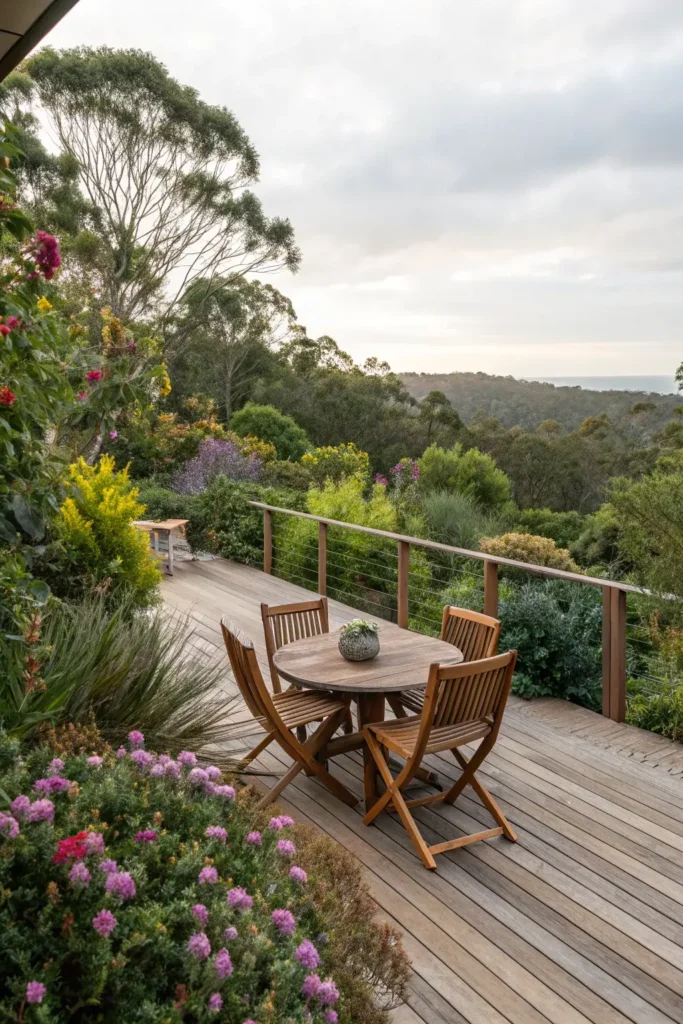
Border your deck with kangaroo paw, grevillea, lomandra, and westringia to create a garden edge that needs almost no watering once established. Native Australian plants thrive in poor soils and handle full sun without wilting, making them far less work than imported ornamentals. A 300mm-deep garden bed along two sides of a 4×6-metre deck costs about $400 to $800 in plants and mulch from Bunnings or a local wholesale nursery.
Lilly pilly hedges grow 1 to 2 metres per year and form a thick screen that doubles as a privacy wall. Banksia and bottlebrush (Callistemon) attract native birds to the deck area, adding movement and colour without any extra effort. Mulch each bed with 75mm of sugar cane mulch to hold moisture and suppress weeds through the dry months.
2. Choose Spotted Gum Timber
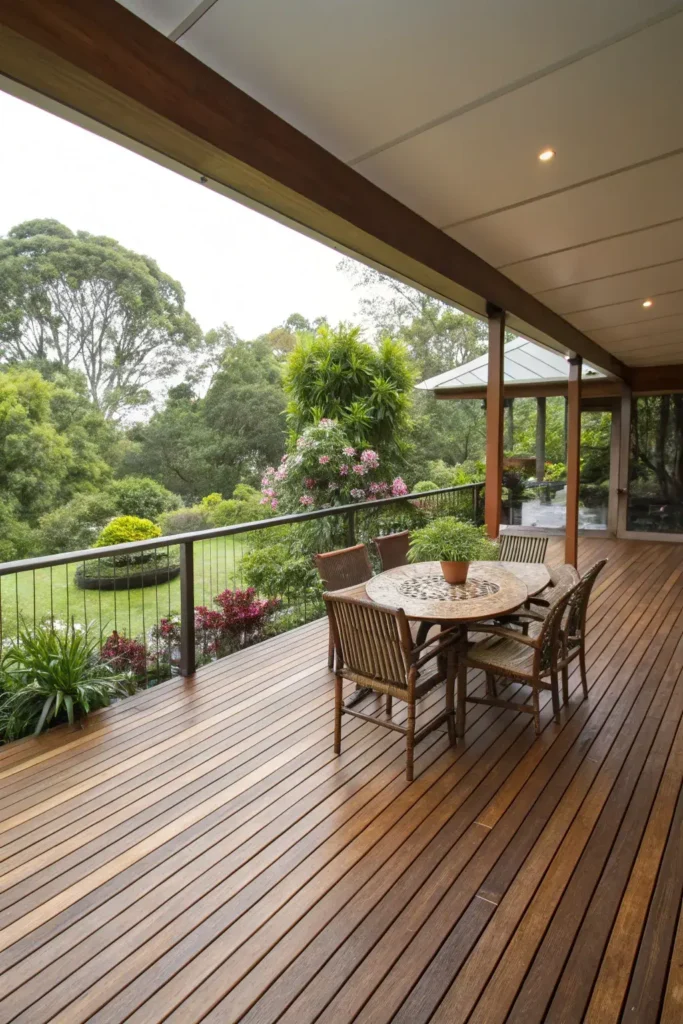
Spotted gum is the most popular Australian hardwood for decking because of its natural durability rating (Class 1 above ground) and rich honey-to-chocolate colour range. Boards come in 86mm, 130mm, and 140mm widths, typically 19mm or 32mm thick, and cost $90 to $140 per square metre from suppliers like Hurford Hardwood and Boral Timber. The timber’s natural oils resist termites, rot, and fungal decay without chemical treatment.
Apply Sikkens Cetol HLSe or Intergrain UltraDeck within 4 to 6 weeks of installation to lock in the colour and prevent greying. Re-oil every 12 to 18 months depending on sun exposure. Other top-tier Aussie hardwoods for decking include blackbutt (lighter colour, Class 1), merbau (imported but widely used, Class 2), and ironbark (the hardest of the lot, Class 1).
3. Create a Multi-Level Layout
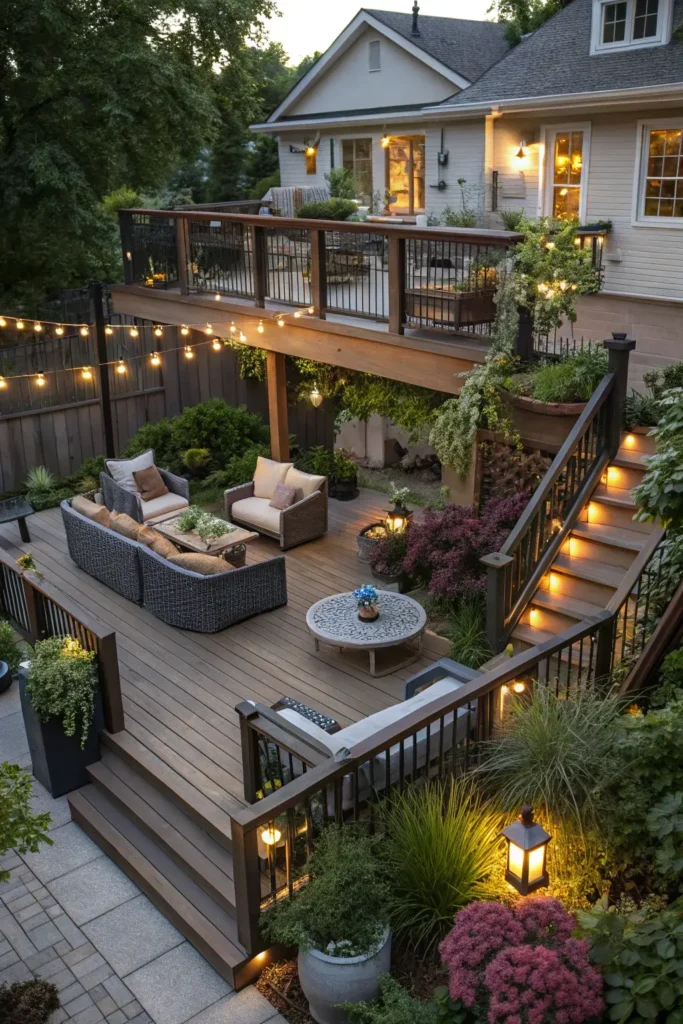
A split-level deck breaks a large outdoor area into distinct zones: a raised dining platform near the kitchen door, a lower lounge area beside the pool, and steps connecting the two. Drop the second level 300 to 600mm below the main deck to create a natural boundary without walls or railings. Multi-level builds add 20 to 30% to the overall cost, but they make sloped blocks usable and add visual depth to flat yards.
Frame each level independently with its own treated pine or steel substructure, and use Mitek or Multinail joist hangers rated for the span. Australian Standard AS 1684 governs timber framing spans, so check the span tables before sizing your joists. Wide steps (1200mm+) between levels double as casual seating during parties and barbecues.
4. Install a Pergola for Shade
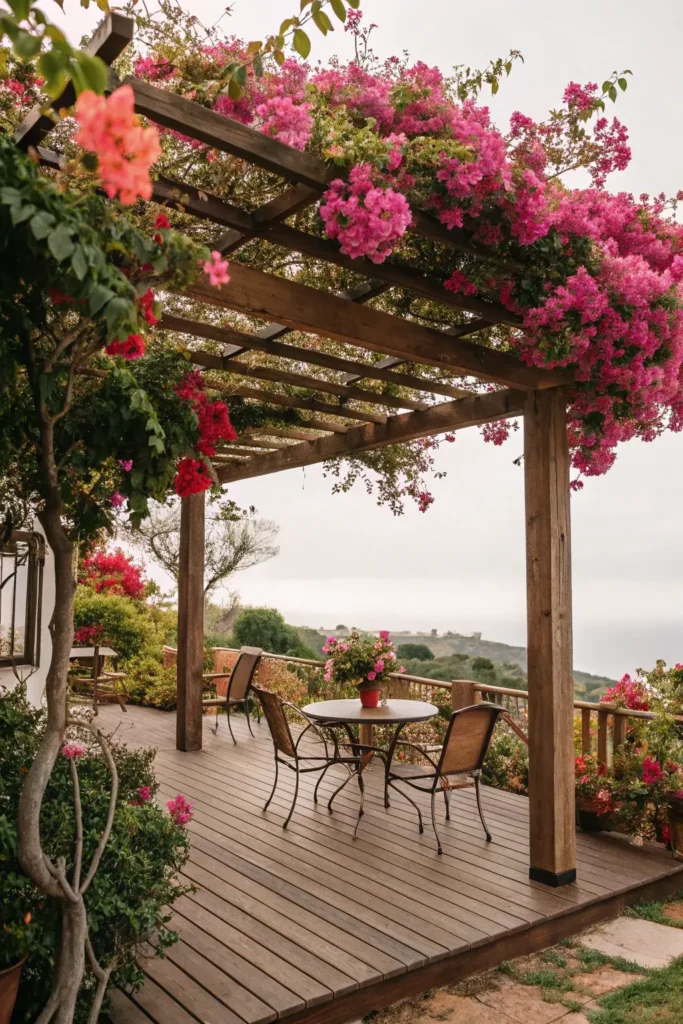
A pergola with shade cloth or polycarbonate roofing turns an exposed deck into a cool, shaded retreat during Australian summers when UV index hits 11+. Outback and Stratco sell flat-roof and gable-roof pergola kits in colorbond steel starting at $3,000 for a 3×4-metre unit. Timber pergolas in spotted gum or treated pine with 150x150mm posts and 200x50mm rafters cost $4,000 to $8,000 built by a local chippy.
Attach the pergola to the house fascia using Ezipier stirrups or bolt the ledger board into the brick wall with M12 Hilti HUS3 screw anchors spaced at 450mm centres. Add Coolaroo shade cloth rated at 90% UV block below the rafters for about $15 per square metre. For enclosed year-round use, a glass sunroom adds walls and windows that keep rain and wind out while holding the heat in during winter.
5. Add a Fire Pit
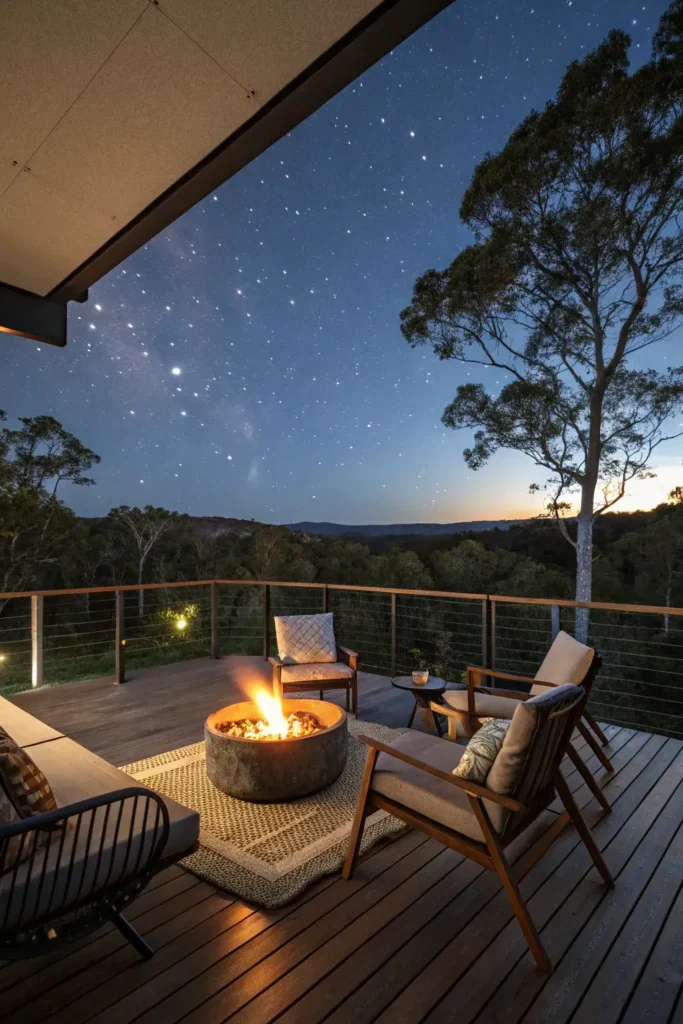
A gas-fired pit set into a non-combustible surround lets you run the deck through cool autumn and winter evenings in Melbourne, Canberra, and Hobart. Ecosmart and Heatmaster make Australian-designed bioethanol and natural gas fire pits that meet local fire safety codes. Prices range from $1,500 for a tabletop unit to $6,000+ for a built-in rectangular pit with a stainless 316 burner tray.
Place the fire pit at least 1500mm from the deck edge, railings, and any overhead structure per AS 1530.1 fire-testing standards. Use a 20mm porcelain or bluestone paver surround rated for high heat, and install a gas shutoff valve within arm’s reach. Avoid wood-burning pits on timber decks entirely, because embers and radiant heat damage boards in minutes even with a protective mat underneath.
6. Choose Composite Decking
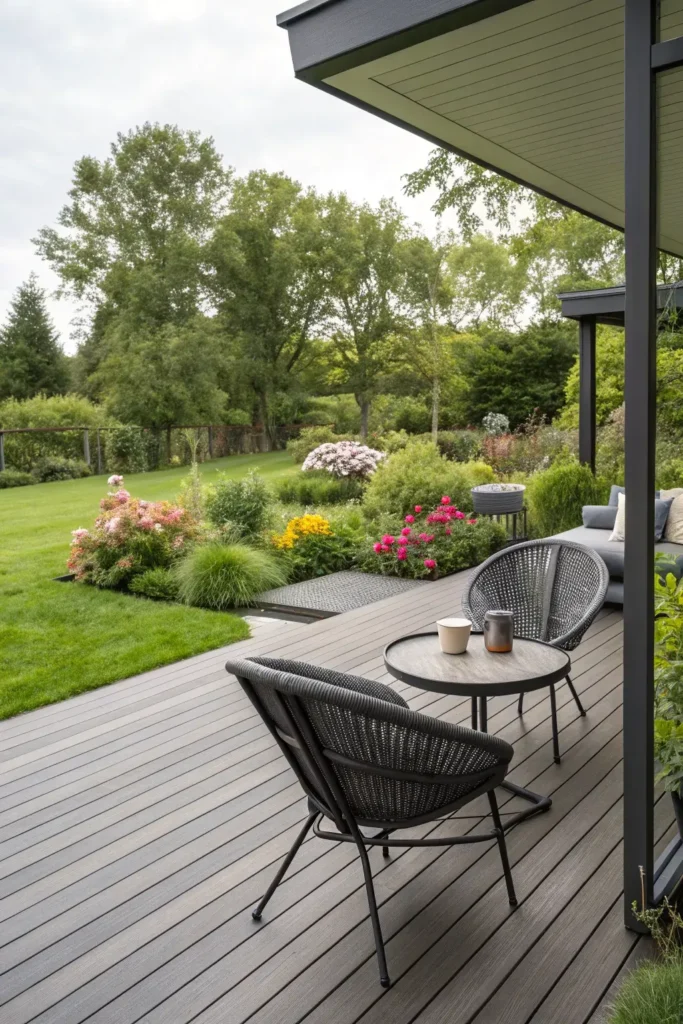
ModWood, CleverDeck, and NewTechWood are the three leading composite decking brands sold through Australian retailers, and all three offer 25-year warranties against rot, splitting, and termite damage. Composite boards cost $100 to $180 per square metre installed, compared to $90 to $140 for spotted gum that needs re-oiling every year. Colours range from coastal grey and charcoal to timber-look walnut and teak.
Composite stays cooler underfoot than dark-stained hardwood, which matters on north-facing decks where surface temperatures hit 60°C+ in direct summer sun. Hidden clip fastening systems like the CleverDeck Click leave no visible screw heads and speed up installation by 30%. Pair composite boards with matching fascia cladding and corner trim from the same manufacturer for clean, finished edges around the deck perimeter.
7. Design an Open-Air Living Space
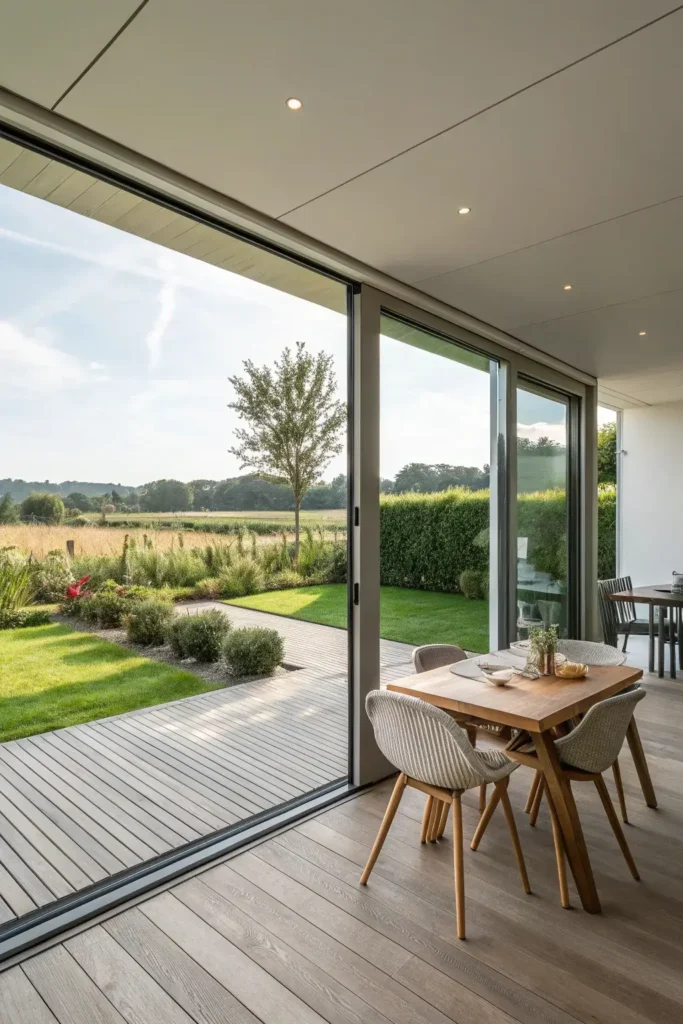
An open-air alfresco area that flows directly from the indoor living room extends the home’s usable footprint without walls or enclosures. Match the indoor floor level to the deck surface using a flush recessed door track so the transition feels continuous. Bi-fold or stacking sliding doors from Stegbar or AWS open a 4-to-6-metre wall completely, merging inside and outside into a single entertaining zone.
Keep the overhead open to the sky, or add a louvre roof from Vergola or Stratco Allure that opens for sun and closes for rain at the push of a button. Position the outdoor dining table and chairs within 3 metres of the kitchen pass-through so food and drinks move between zones without a long walk. Waterproof downlights in the soffit and strip LEDs along the deck edge keep the space usable well after sunset.
8. Install Deck Lighting
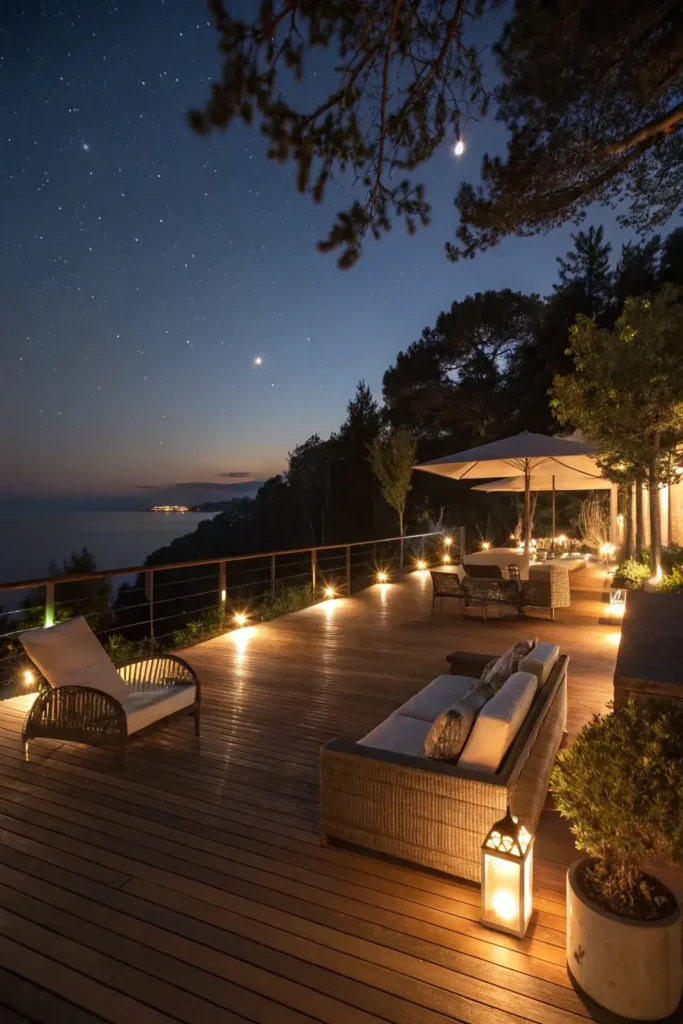
Low-voltage LED deck lights from Havit and Hunza run on 12V or 24V drivers and draw a fraction of the power that old halogen fittings used. Recessed stair lights, post-cap LEDs, and under-rail strip lighting cost $20 to $60 per fitting and last 30,000+ hours before needing replacement. Choose warm white (2700K to 3000K) for a relaxed atmosphere that matches the timber tones of spotted gum or merbau.
Wire all outdoor lighting through an IP65-rated junction box and a dedicated circuit with an RCD safety switch, per AS/NZS 3000 (the Australian Wiring Rules). Only a licensed electrician can install fixed wiring in Australia, so budget $500 to $1,200 for labour depending on the number of fittings. Solar-powered path lights and string lights offer a plug-free alternative for renters or anyone wanting to skip the sparky.
9. Build an Outdoor Kitchen
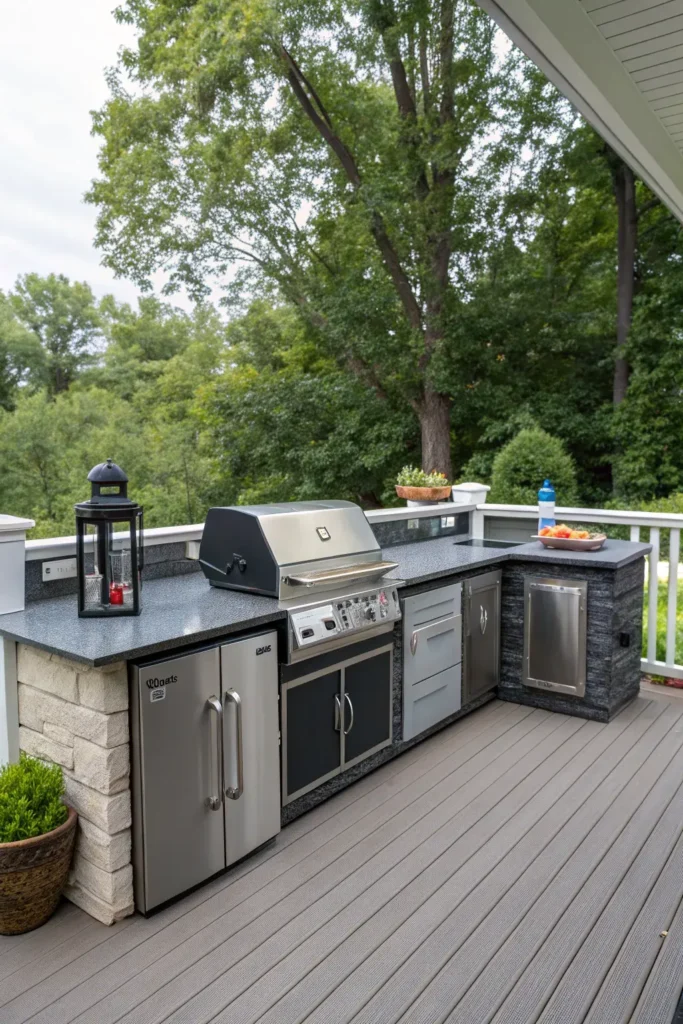
A deck-mounted outdoor kitchen with a built-in BeefEater, Masport, or Ziegler and Brown barbecue turns weekend cookouts into a year-round fixture. A full setup with a 4-burner gas barbie, 316 stainless bench, sink, and under-counter fridge runs $5,000 to $15,000 depending on brand and countertop material. Caesarstone and Dekton benchtops handle heat, stains, and outdoor exposure without sealing.
Run a dedicated gas line from the metre box to the kitchen location, and have a licensed gasfitter install a bayonet fitting with a shutoff valve. Position the cooking area at least 1000mm from the house wall and any combustible cladding. Add a Schweigen or Sirius rangehood above the grill to pull smoke away from the dining area, or angle the barbie so prevailing winds carry smoke off the deck.
10. Add a Water Feature
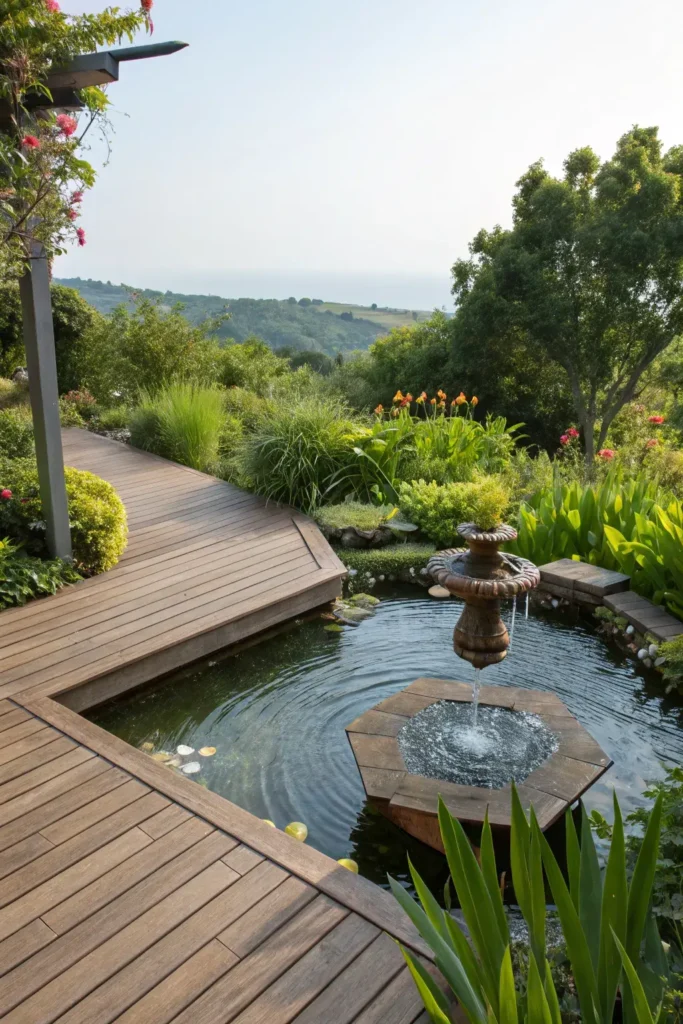
A stainless steel blade waterfall or a stone bowl fountain adds a calming soundtrack to your deck and drowns out traffic noise from nearby roads. Aqua Creations and Water by Design sell self-contained fountain units starting at $300 that plug into a standard outdoor power point and recirculate water through a submersible pump. Larger wall-mounted blade features cost $800 to $2,500 and need a plumber to connect the water supply.
Place the fountain on a solid section of decking or on a 20mm paver pad to distribute the weight evenly. A 600mm-tall bowl feature weighs 40 to 60kg when filled, so check that your joist spacing (typically 450mm centres) can support the concentrated load. Add a mosquito dunk tablet monthly in warmer months to prevent larvae breeding in standing water.
11. Go with a Coastal Theme
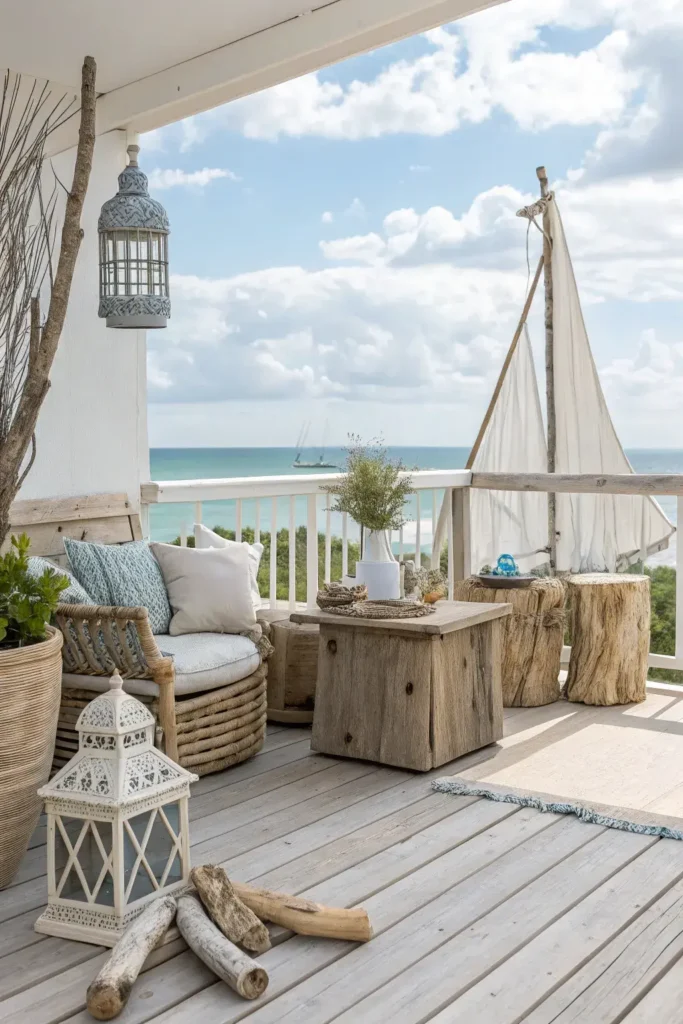
A coastal-themed deck uses bleached or whitewashed timber, white-painted railings, and natural rope accents to match the beach-house vibe common along the Australian coastline. Whitewash deck stains from Feast Watson and Intergrain let the wood grain show through while giving the surface a sun-bleached look without waiting years for UV exposure to do the work.
Pair the light timber with marine-grade 316 stainless steel hardware (bolts, hinges, cable railing fittings) that resists salt spray corrosion in BAL-rated coastal zones. Add Adirondack-style chairs in white or duck-egg blue, and drape natural jute string lights between posts for evening warmth. Keep fabrics in Sunbrella marine-grade acrylic, which shrugs off salt, sand, and UV without fading.
12. Mount Privacy Screens
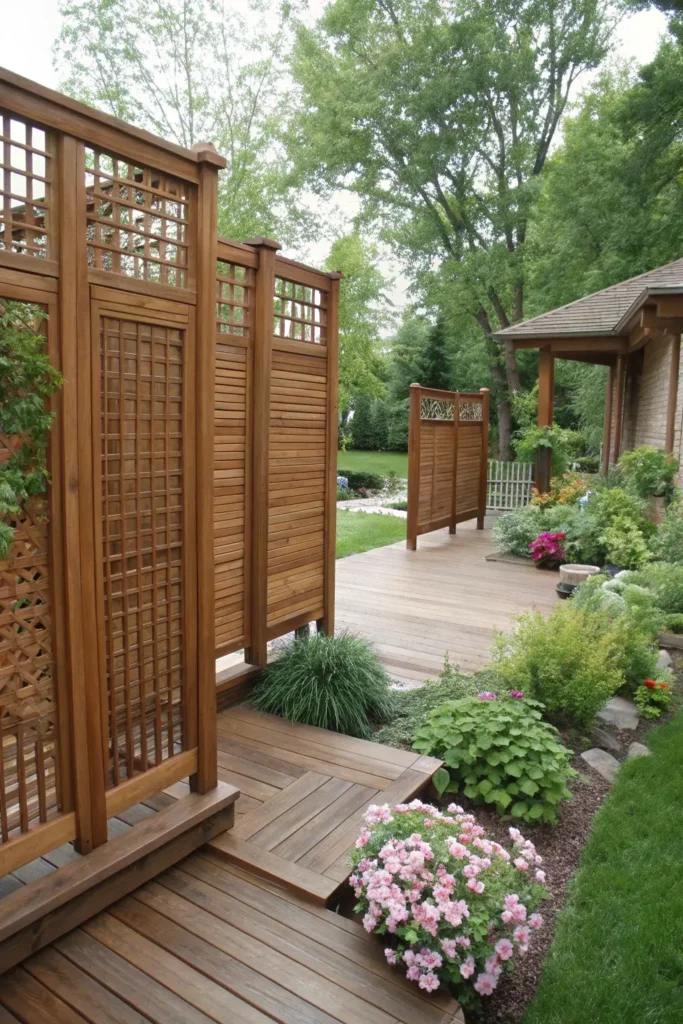
Aluminium privacy screens from Sanctuary Screens, Decorative Screens Direct, and Matrix come in laser-cut patterns that block 60 to 80% of sightlines while allowing airflow through the openings. Standard 1200x2400mm panels cost $150 to $400 each in powder-coated aluminium and bolt directly to steel or timber posts. Common patterns include Sahara, Bungalow, and Rainforest, and colours match the Colorbond range.
Aluminium screens suit BAL-29 and BAL-40 bushfire zones where timber screens are restricted. For a full guide to screening options, covers, and barriers for outdoor areas, browse our deck privacy ideas collection. Fix each panel at top and bottom with M8 bolts through pre-drilled holes, and leave a 10mm gap at the base for drainage and leaf clearance.
13. Try a Modern Minimalist Look
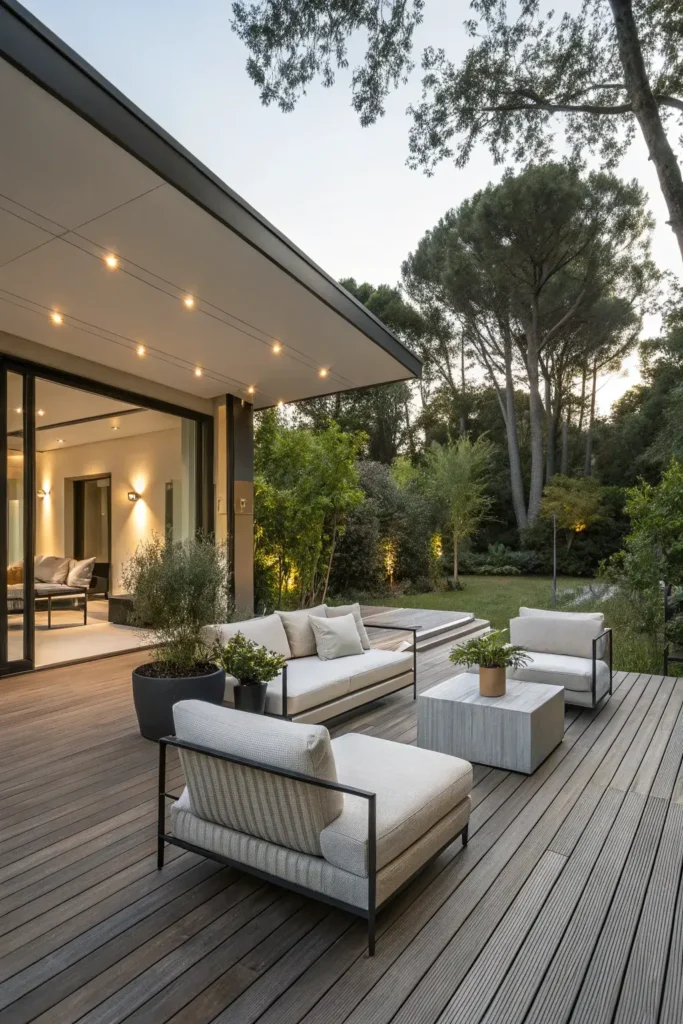
A minimalist deck strips everything back to clean lines, a single decking colour, and no visible clutter. Choose a uniform board width (140mm is the most popular) in charcoal or stone grey composite from ModWood or Futurewood, and run the boards in one direction without pattern changes. Hide all fasteners with a clip system so the surface reads as a single unbroken plane.
Keep railings low-profile or swap them for frameless glass panels on stainless steel spigots, which meet AS 1170.1 load requirements while keeping the visual weight near zero. Limit furniture to two or three statement pieces in black or concrete grey, and store all cushions, toys, and tools in a built-in bench seat with a lift-up lid. A single large concrete planter with a sculptural grass like lomandra adds life without crowding the space.
14. Set Up an Outdoor Lounge
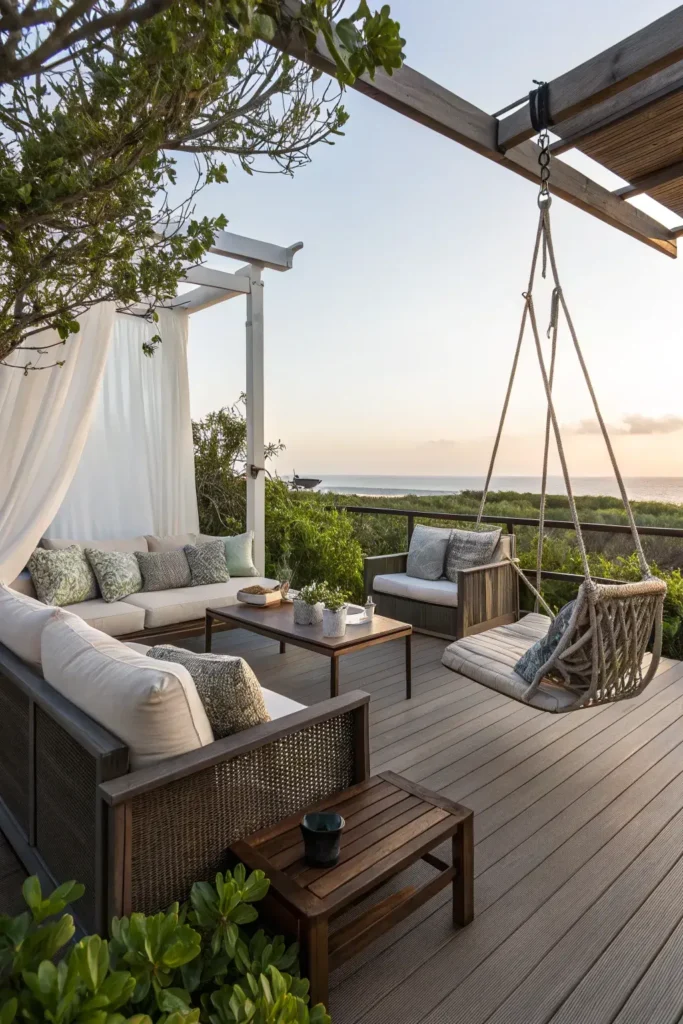
A modular outdoor lounge suite on the deck creates a living room experience in the open air. Eco Outdoor, GlobeWest, and Harbour Outdoor sell powder-coated aluminium and woven rope lounge sets sized for Australian alfresco spaces, with prices from $2,500 to $8,000 for a 3-piece sectional. Choose Sunproof or Warwick Outdoor fabric cushions that resist rain, mould, and UV fading for 5+ years.
Position the lounge away from the barbecue and cooking zone so smoke doesn’t settle into the cushions. A 2400x1500mm outdoor rug underneath the furniture anchors the seating area and keeps bare feet off hot boards in summer. For a fully furnished screened porch setup, explore our screen porch furniture ideas for layout and material guidance.
15. Add a Built-In Bench
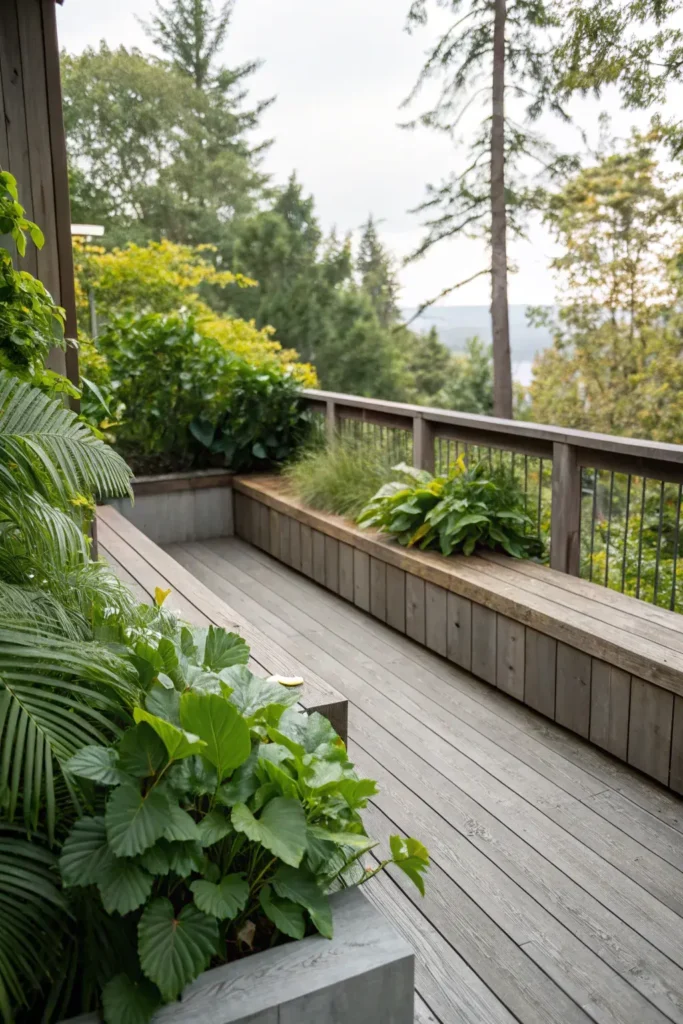
A built-in bench along one or two sides of the deck provides seating for 6 to 10 people without buying standalone chairs, and the space underneath becomes hidden storage for cushions, pool noodles, and garden tools. Build the bench frame from 90x45mm treated pine joists and clad the seat and front with the same decking boards used on the floor for a matched look. Standard seat height is 420 to 450mm, with a depth of 400 to 500mm.
Use a piano hinge or two heavy-duty gate hinges on the seat lid so it lifts cleanly without binding. Line the storage cavity with weed mat or marine carpet to keep insects and debris from collecting inside. A gas strut rated for the lid weight holds the seat open while you rummage for supplies, and a magnetic catch keeps it closed in wind.
16. Pick Eco-Friendly Materials
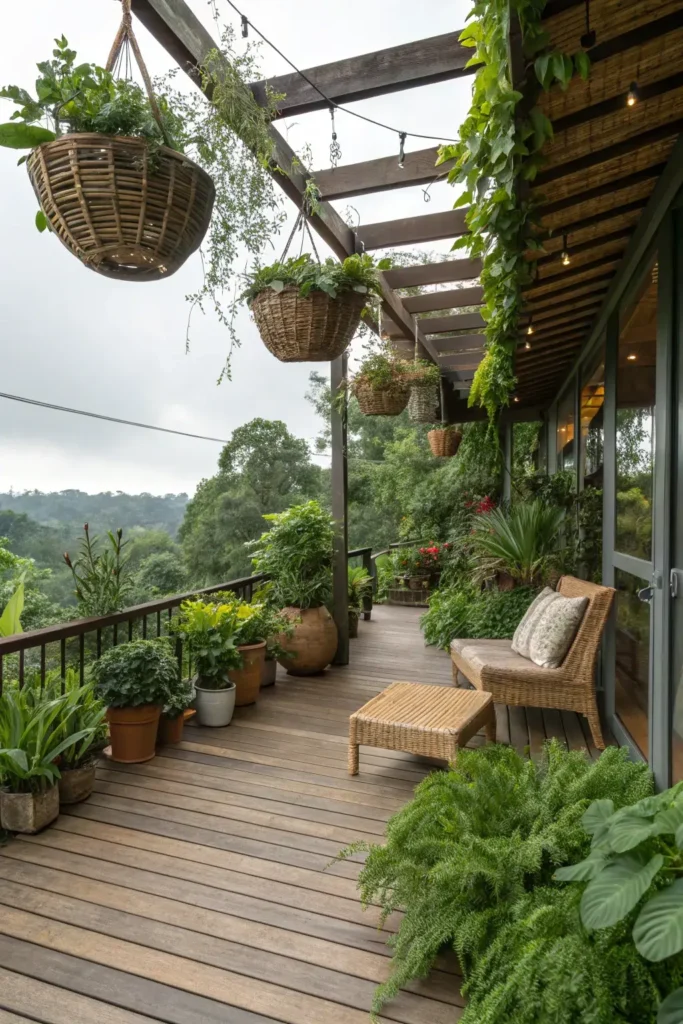
Recycled-plastic composite boards from Futurewood and ModWood contain up to 90% recycled content (HDPE milk bottles and reclaimed timber fibre) and carry GreenTag certification for low environmental impact. FSC-certified Australian hardwoods like blackbutt and tallowwood come from sustainably managed forests and biodegrade at end of life, unlike plastic-based composites that sit in landfill indefinitely.
For substructure framing, galvanised steel bearers and joists from Boxspan or Spantec last 50+ years, resist termites completely, and are 100% recyclable. A painted steel railing in a bold colour adds character, and our painted deck railing ideas cover colour choices and prep steps for both timber and metal railing surfaces. Choose water-based stains and finishes like Intergrain UltraDeck over solvent-based products to reduce VOC emissions during application.
17. Create a Zen Retreat
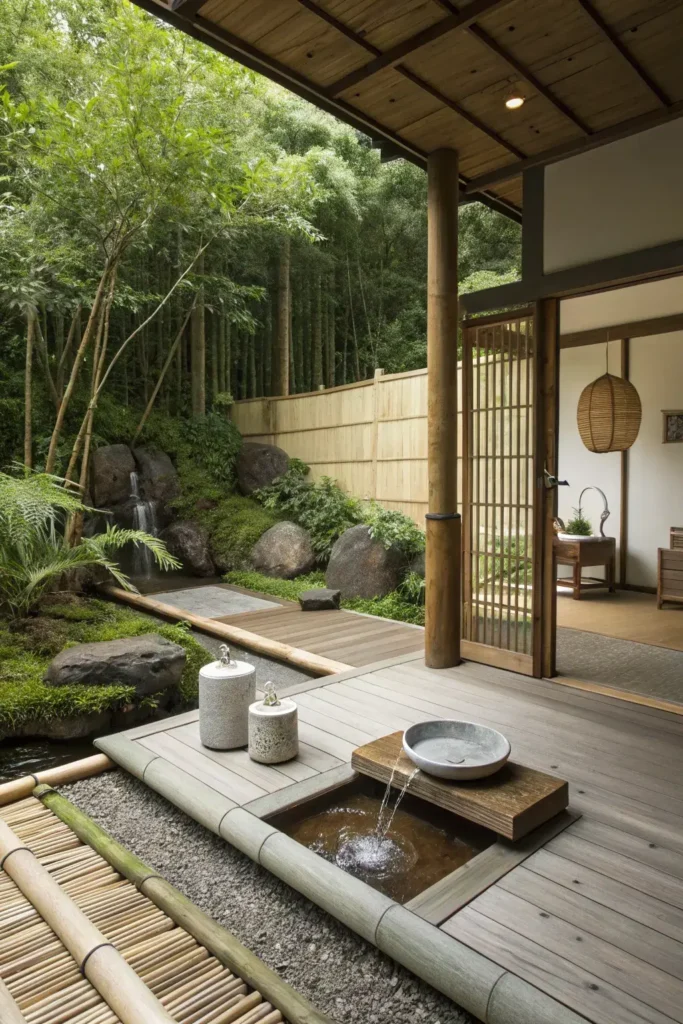
A Japanese-inspired zen deck uses natural stone, raked gravel, and sparse planting to create a calm outdoor space for morning yoga or evening meditation. Border the deck with a 600mm-wide gravel strip filled with 10mm white quartz pebbles over geotextile fabric, and place 2 to 3 large basalt or granite boulders at varying heights for a sculptural centrepiece. Black bamboo (Phyllostachys nigra) in tall planters adds vertical screening without blocking views above eye level.
Keep the decking itself in a dark, muted tone like charcoal composite or oiled ironbark, and avoid busy grain patterns or mixed board widths. A low timber daybed or a single teak meditation bench serves as the only furniture. Add a small recirculating stone basin fountain for the sound of running water, and plant Japanese maple (Acer palmatum) in a 500mm pot near the entry for seasonal colour through autumn.
How to Plan and Build an Australian Deck
1. Check Local Council Requirements
Contact your local council planning department before buying a single board. In most Australian states, decks higher than 800mm above ground level or closer than 1500mm to a boundary require a development application (DA) and a building approval. Some councils also restrict deck coverage as a percentage of your lot, and BAL-rated bushfire zones limit which materials you can use for framing and decking surfaces. Get the written requirements before you start, because removing a non-compliant deck costs more than the original build.
2. Choose Your Framing and Footings
Select treated pine (H4 rated for in-ground contact), galvanised steel, or spotted gum for the substructure. Pour 350mm-diameter concrete footings at each post location, set to a depth of 450mm in stable soil or 600mm in reactive clay, per AS 2870. Drop a galvanised stirrup into each wet footing, let it cure for 48 hours, then bolt the bearers to the stirrups. Space joists at 450mm centres for hardwood boards or 400mm centres for composite, and check each one with a string line for level before fixing the decking.
3. Lay the Decking Boards
Start the first board at the house wall and work outward, leaving a 10mm expansion gap between the board edge and any fixed structure. Use Quik Drive or Tek screws in 65mm length for 19mm hardwood, and pre-drill each hole to prevent splitting near the board ends. For composite boards, slide the hidden clips into the board groove and screw each clip to the joist. Stagger butt joints randomly and avoid aligning them on the same joist across adjacent rows.
4. Finish and Protect the Surface
Sand the entire surface with 80-grit paper using a belt sander to remove mill marks and raised grain, then follow with 120-grit for a smooth finish. Apply two coats of decking oil (Intergrain UltraDeck or Feast Watson Weatherproof) with a 150mm lambswool applicator, working in the direction of the grain. Allow 24 hours between coats and keep foot traffic off the surface for 48 hours after the final coat. Recoat annually in high-traffic areas and every 18 months elsewhere.
Australian Decking Materials Comparison
| Material | Cost (per m²) | Durability Class | Maintenance | Termite Resistant | BAL Suitability |
|---|---|---|---|---|---|
| Spotted Gum | $90–$140 | Class 1 | Oil every 12–18 months | Yes | BAL-29 |
| Blackbutt | $85–$130 | Class 1 | Oil every 12–18 months | Yes | BAL-29 |
| Merbau | $70–$110 | Class 2 | Oil every 12 months | Yes | BAL-19 |
| Treated Pine (H3) | $40–$65 | Class 4 (treated) | Stain every 2–3 years | Yes (CCA/ACQ) | BAL-12.5 |
| Composite (ModWood) | $100–$180 | 25-year warranty | Wash yearly | Yes | BAL-29 |
| Aluminium | $150–$250 | 50+ years | Wash yearly | Yes | BAL-40+ |
Frequently Asked Questions
Do you need council approval to build a deck in Australia?
Most councils require a building permit for decks higher than 800mm above natural ground level or within 1500mm of a side or rear boundary. Freestanding decks under 800mm height and 10 square metres in area are often exempt, but rules vary by state and local government area. Check your council’s online planning portal or call the duty planner before starting work, because an unapproved deck can trigger a demolition order and a fine of $5,000+.
What is the best timber for decking in Australia?
Spotted gum tops the list for Australian decking because of its Class 1 durability rating, natural termite resistance, and attractive colour variation. Blackbutt is a close second with a lighter, more uniform tone and the same durability class. Both species are grown in NSW and QLD forests under sustainable forestry management plans, and both handle coastal, subtropical, and temperate climates without chemical treatment.
How much does it cost to build a deck in Australia?
A standard 20-square-metre hardwood deck with treated pine substructure, concrete footings, and a basic railing costs $8,000 to $14,000 installed by a licensed builder in most metro areas. Composite decking adds $2,000 to $4,000 to that total because the boards cost more per square metre. Labour rates range from $50 to $80 per hour for a carpenter, and a typical 20m² deck takes 3 to 5 days to build from footings to final oil coat.
What deck materials work in bushfire zones?
Decks in BAL-29 zones can use hardwoods rated Class 1 (spotted gum, blackbutt, ironbark) or tested composite products like ModWood. In BAL-40 and BAL-FZ (flame zone), only non-combustible materials qualify, so aluminium decking from AliDeck or NexGen and steel substructure become the only options. Check the AS 3959 bushfire construction standard for the specific BAL rating on your property, which your local council can provide.
How do you maintain a hardwood deck in the Australian climate?
Sweep the deck weekly to remove leaves and debris that hold moisture against the boards. Wash with a Karcher pressure washer on the fan nozzle setting (not the pinpoint jet, which damages softened grain) once per season. Re-oil with a penetrating decking oil every 12 to 18 months, timing the application for a stretch of dry weather with temperatures between 15°C and 30°C. Sand lightly with 120-grit before each re-oil to open the grain and help the oil penetrate. Visit The Designers Company for more outdoor living guides covering maintenance schedules, material comparisons, and project walkthroughs.