Painted Deck Railing Ideas You’ll Love: 12 Bold Designs That Inspire

A fresh coat of paint on your deck railing changes the entire look of the outdoor space for under $100 in materials. Railing paint also seals the wood against moisture, UV damage, and insect entry, so the colour upgrade doubles as a protection layer.
The trick is picking a colour that works with your deck boards, siding, and trim rather than fighting them. Bold choices like navy or black frame the deck like a picture, while softer tones like white or sage green blend the railing into the background.
Below are 12 painted deck railing ideas with specific colour names, paint brands, and application tips that produce a professional result without hiring a contractor.
1. Bold Stripes
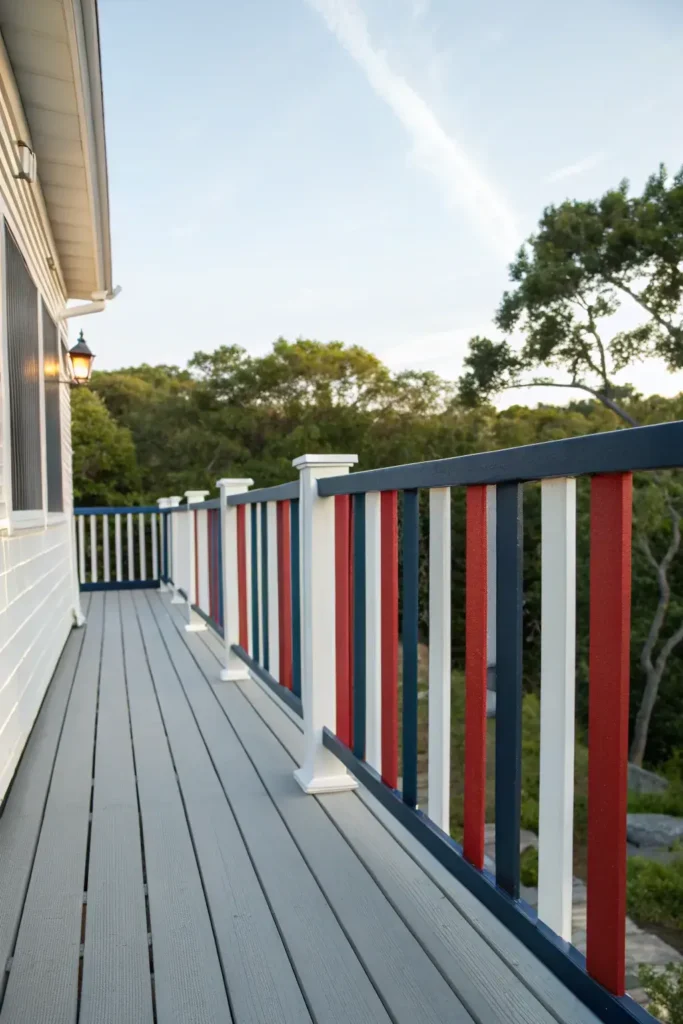
Alternating two colours on individual balusters creates a striped pattern that stands out from any angle. Pair Benjamin Moore Hale Navy (HC-154) with Simply White (OC-17) for a nautical look, or go with Sherwin-Williams Tricorn Black (SW 6258) and Alabaster (SW 7008) for a graphic black-and-white contrast. Paint every other baluster the accent colour, and keep the top rail and bottom rail in the darker shade to anchor the pattern.
Apply FrogTape painter’s tape where each baluster meets the rail to keep lines razor-sharp. Use a 2-inch Purdy XL angled sash brush for the balusters and a small foam roller for the flat rail surfaces. Two coats of Behr Premium Plus Ultra exterior semi-gloss give full coverage on primed wood and hold up for 5 to 7 years before needing a touch-up.
2. Ombre Effect
An ombre railing graduates from a dark shade at the base to a lighter tone at the top, pulling the eye upward and adding depth to a flat railing run. Start with Sherwin-Williams Iron Ore (SW 7069) on the bottom rail and lower third of the balusters, blend into Gauntlet Gray (SW 7019) through the middle, and finish with Mindful Gray (SW 7016) at the top rail. Mix each transition colour by combining the two adjacent shades 50/50 in a separate container.
Work on 3 to 4 balusters at a time while the paint is still wet so the blended section doesn’t dry with hard edges. A damp sea sponge or a wide dry brush feathers the boundary between colours better than a roller. Seal the finished ombre with Minwax Helmsman Spar Urethane in satin finish to lock in the gradient and protect it from rain and UV fading.
3. Two-Tone Contrast
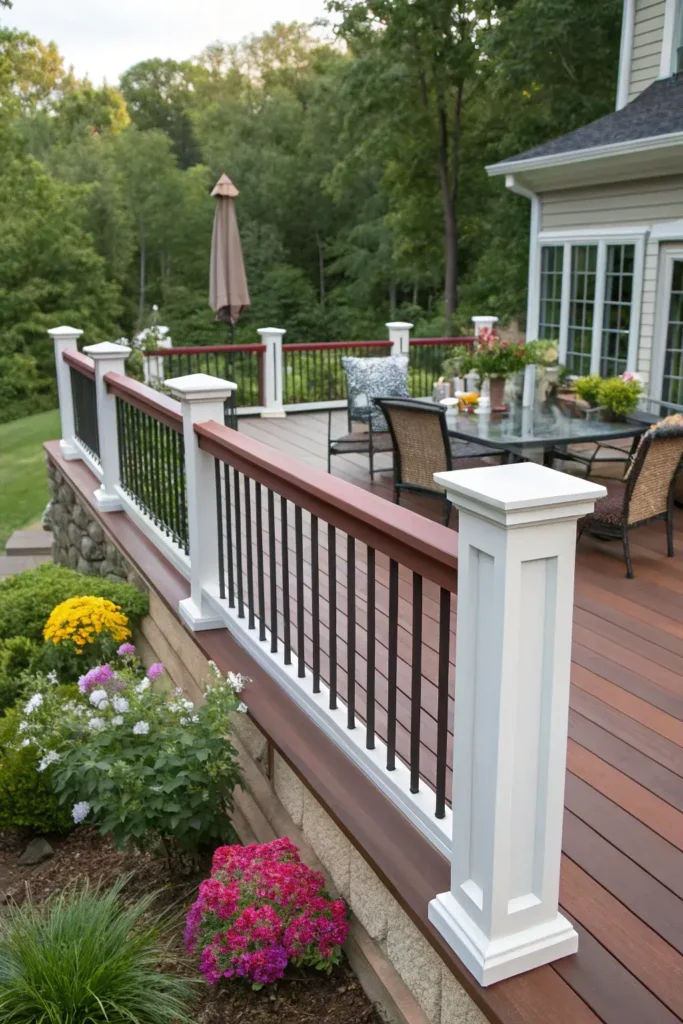
Painting the top rail one colour and the balusters another creates a clean, tailored look without any complex technique. Benjamin Moore Wrought Iron (2124-10) on the posts and top rail paired with White Dove (OC-17) balusters is one of the most popular two-tone combinations among deck builders. The dark frame draws the eye to the railing outline while the white fill keeps the space feeling open and airy.
Paint the balusters first, let them dry overnight, then tape off the baluster tops and paint the rail and posts. Exterior acrylic latex in semi-gloss or satin finish resists scuffing from hands and arms leaning on the top rail. For Australian decks, our deck ideas for Australia guide covers BAL-rated finishes and colour choices that handle intense UV exposure.
4. Geometric Patterns
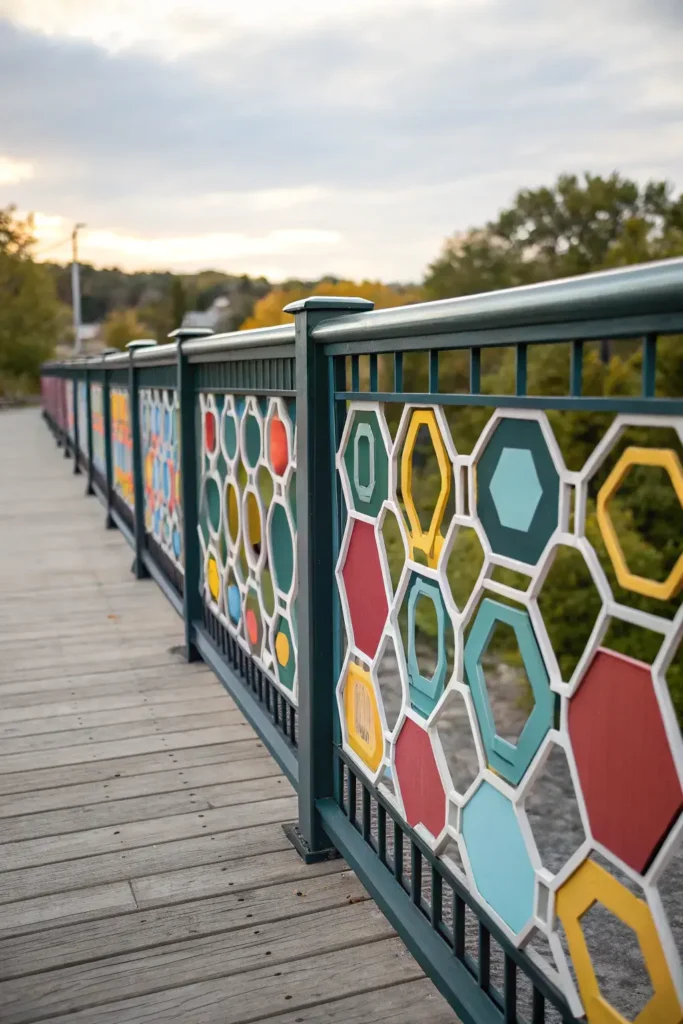
Chevron, herringbone, and diamond shapes painted across flat railing panels turn a plain barrier into a focal point. Use 1/4-inch automotive pinstripe tape to lay out the pattern on primed panels before painting, because standard painter’s tape is too wide for tight geometric lines. Spray the accent colour with a Graco TrueCoat 360 handheld sprayer for smooth, brush-mark-free coverage inside the taped shapes.
Choose two colours within the same colour family (dark teal and pale aqua, or charcoal and silver) for a pattern that reads as textured rather than busy. Sand each panel with 150-grit paper before priming to give the paint something to grip. Pull the tape while the final coat is still tacky so the edges peel cleanly without lifting dried paint.
5. Nature-Inspired Motifs
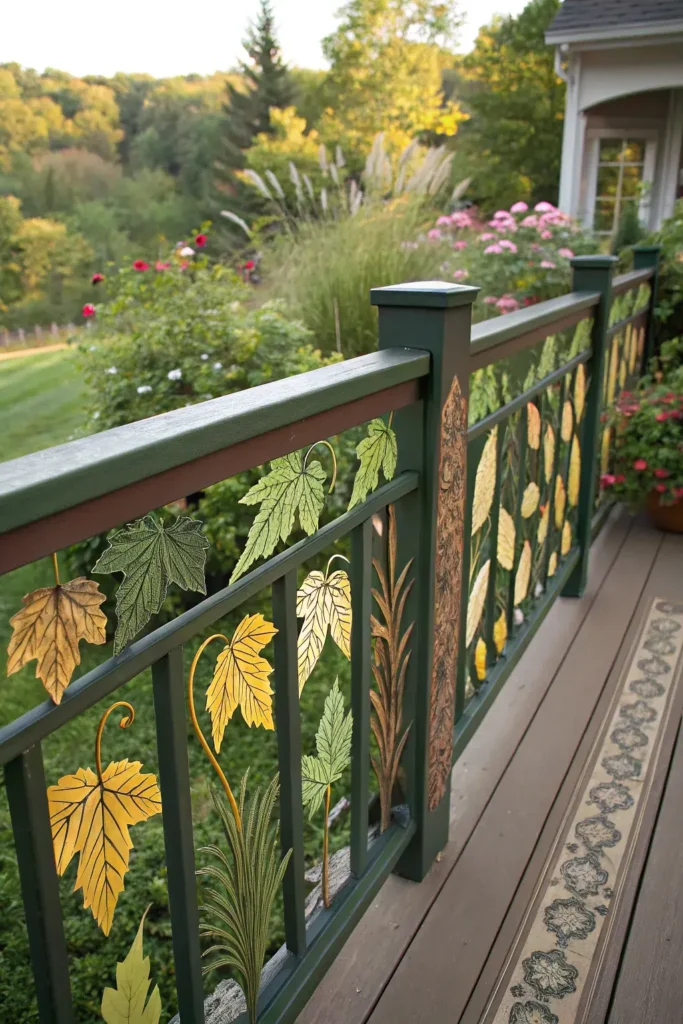
Leaf silhouettes, fern fronds, and vine patterns painted freehand or stenciled onto flat railing panels bring a garden feel to the deck perimeter. DecoArt Americana outdoor acrylic craft paint comes in 2-ounce bottles for $3 to $5 each and bonds to primed wood without a separate sealer. Trace the motif with a pencil first using a purchased stencil or a printed template taped to the panel surface.
A 1-inch flat artist’s brush and a #4 round detail brush handle most botanical shapes. Paint the background panel a solid base colour first (soft sage, cream, or pale grey), let it cure for 24 hours, then add the motifs in a contrasting shade. Seal the finished artwork with two coats of Rust-Oleum Crystal Clear Enamel spray to protect fine brushwork from rain and foot traffic.
6. Classic White with a Twist
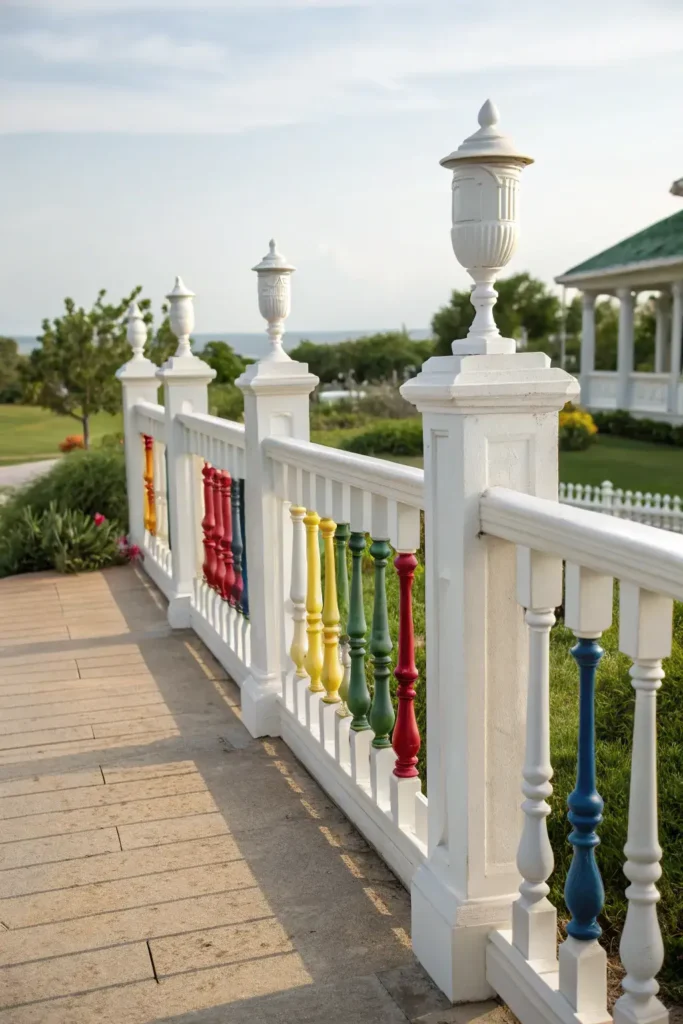
An all-white railing looks timeless on any deck, and the twist comes from the finish or texture rather than a second colour. Paint the railing in Benjamin Moore Chantilly Lace (OC-65) or Sherwin-Williams Extra White (SW 7006), then add a contrasting post cap in brass, copper, or matte black from Deckorators or Maine Ornamental. The metallic cap breaks the white plane and adds a finished, intentional detail at every post.
White railings show dirt faster than darker colours, so use a mildew-resistant exterior paint like Behr Marquee that includes a built-in primer and antimicrobial additive. Clean the railing twice per season with a mix of water and Mold Armor house wash to remove pollen, algae, and grey streaks. White paint on bare wood needs a full-coverage primer coat first to block tannin bleed-through, especially on cedar and redwood.
7. Playful Polka Dots
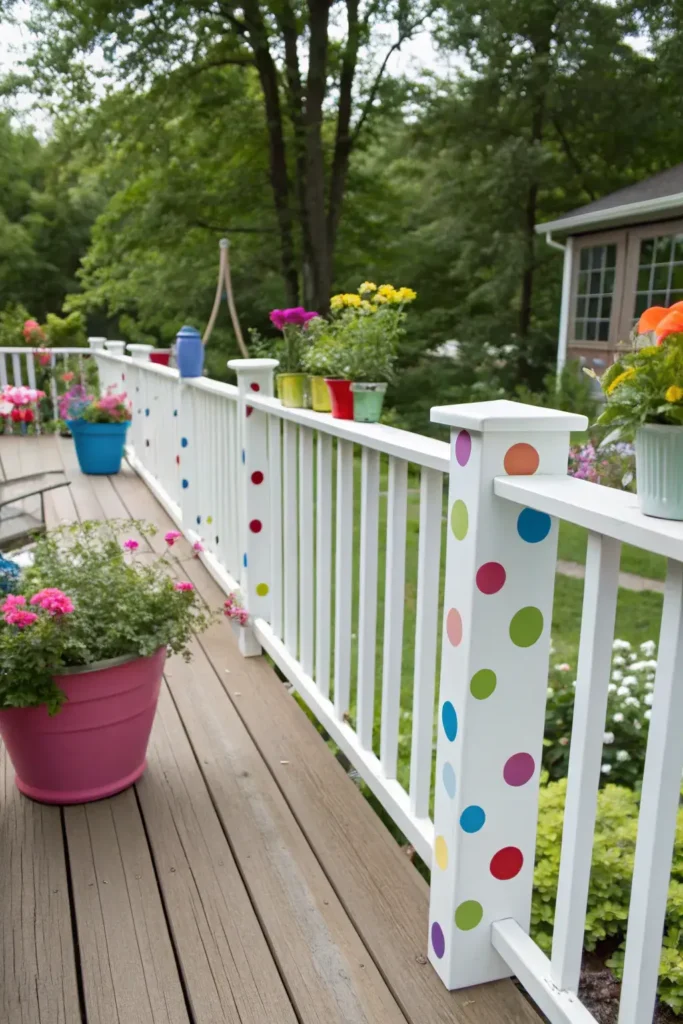
Round dots in 2-to-4-inch diameters spaced evenly across a painted railing panel add a playful, kid-friendly detail to a family deck. Cut a circle template from 1/4-inch MDF using a hole saw or Dremel circle-cutting attachment, then hold the template against the panel and dab paint through the opening with a dense foam pouncer. Space the dots 6 to 8 inches apart in a grid pattern for a polished look, or scatter them randomly for a more casual feel.
Use Valspar Duramax exterior paint in a bold accent colour (coral, yellow, or turquoise) over a white or grey base panel. Each dot takes about 30 seconds to dab, so a 6-foot railing section with 12 dots finishes in under 10 minutes. Let the base coat cure fully (48 hours for latex) before adding the dots, so the template doesn’t pull up the background colour when you lift it.
8. Earthy Tones for Harmony
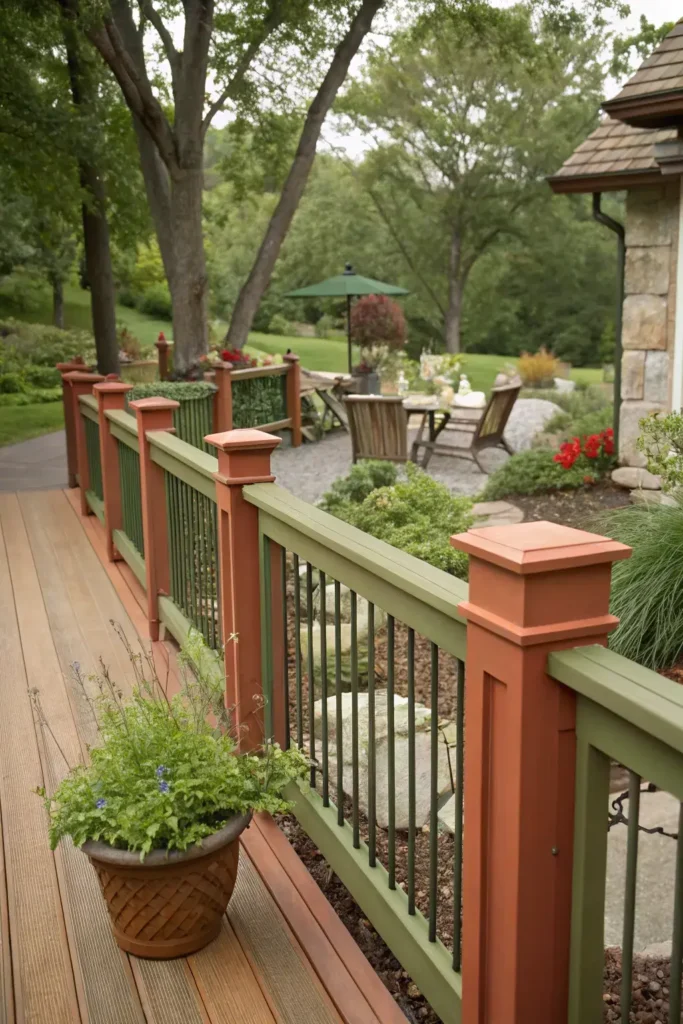
Warm browns, olive greens, and terracotta shades on a railing blend the deck into the surrounding yard and garden beds. Benjamin Moore Kingsport Gray (HC-86), Sherwin-Williams Roycroft Suede (SW 2842), and Behr Moss Green (S380-7) all sit in the earthy palette that works with natural stone, brick, and stained wood decking. Pick a shade one or two tones darker than the deck boards so the railing defines the edge without clashing.
Earthy colours hide dirt and weathering better than white or light grey, which reduces cleaning frequency to once per season. A satin or eggshell finish in these tones looks warmer than semi-gloss, and it hides minor brush marks and surface imperfections. Apply Zinsser Cover Stain oil-based primer before the topcoat on bare wood to block moisture and prevent peeling in exposed locations.
9. Artistic Murals
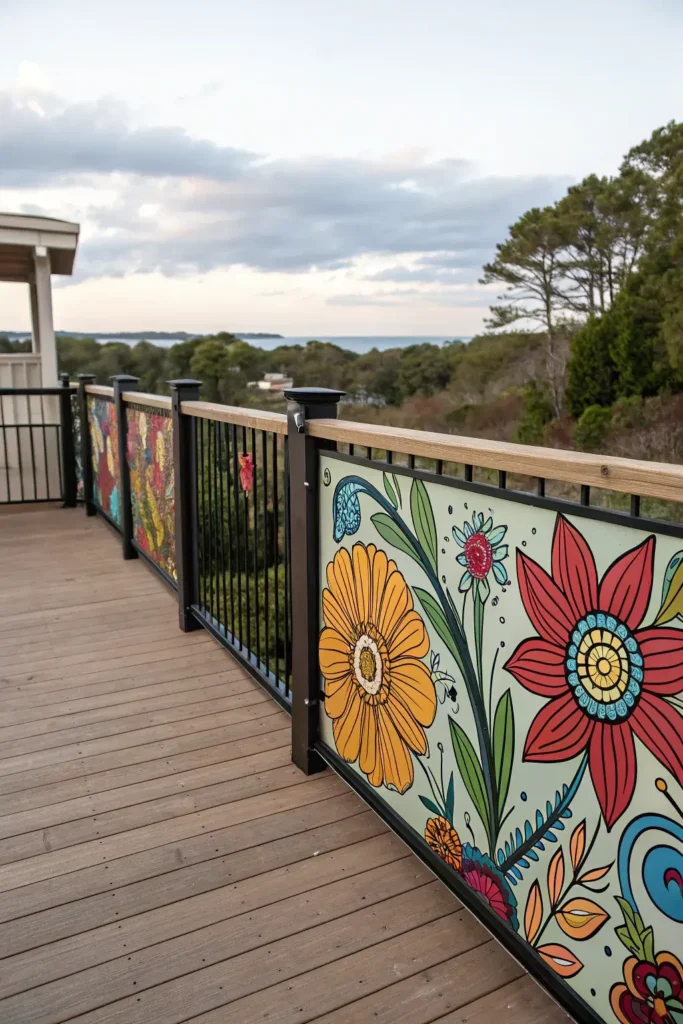
A hand-painted mural across a solid railing panel turns the deck perimeter into a personal art gallery. Mountain scenes, ocean sunsets, and abstract colour fields all work on a 12-to-18-inch-tall panel that stretches 6 to 8 feet between posts. Sketch the design in pencil at full scale, then block in the main colour areas with a 2-inch brush before adding details with smaller artist brushes.
Use exterior artist-grade acrylic from Golden or Liquitex for murals that hold their colour outdoors for 3+ years. Golden’s Open Acrylics dry slower than standard acrylics, giving you more working time for blending skies and water reflections. Finish the mural with two coats of Golden MSA Varnish in satin for UV protection and a museum-quality surface that wipes clean with a damp cloth.
10. Classic Gray Finish
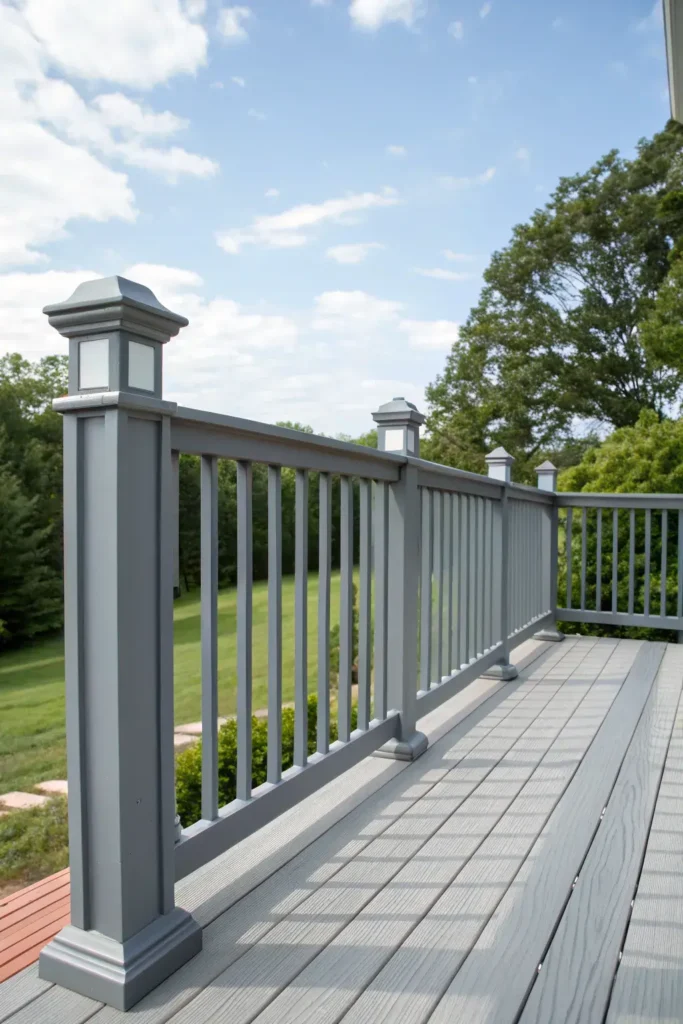
Medium gray sits between the starkness of white and the weight of black, making it the safest colour choice for a railing that coordinates with almost any siding and trim combination. Benjamin Moore Chelsea Gray (HC-168) and Sherwin-Williams Dovetail (SW 7018) are two of the most-specified gray shades among exterior designers. Both read as warm neutrals in direct sun and hold their tone in shade without shifting blue or green.
Gray railings pair naturally with both warm-toned wood decks (cedar, redwood) and cool-toned composites (charcoal, slate). A deck privacy screen painted in the same gray shade ties the railing and screening together into a single cohesive structure. Use semi-gloss for the top rail (easier to wipe down) and satin for the balusters (softer appearance, fewer visible drips).
11. Beachy Blues
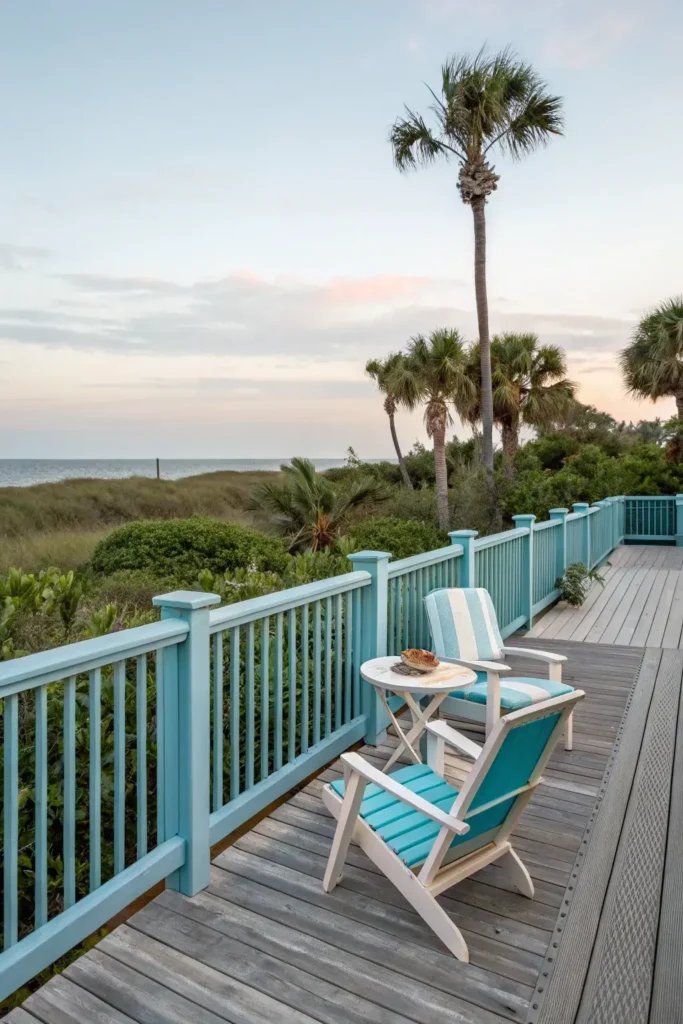
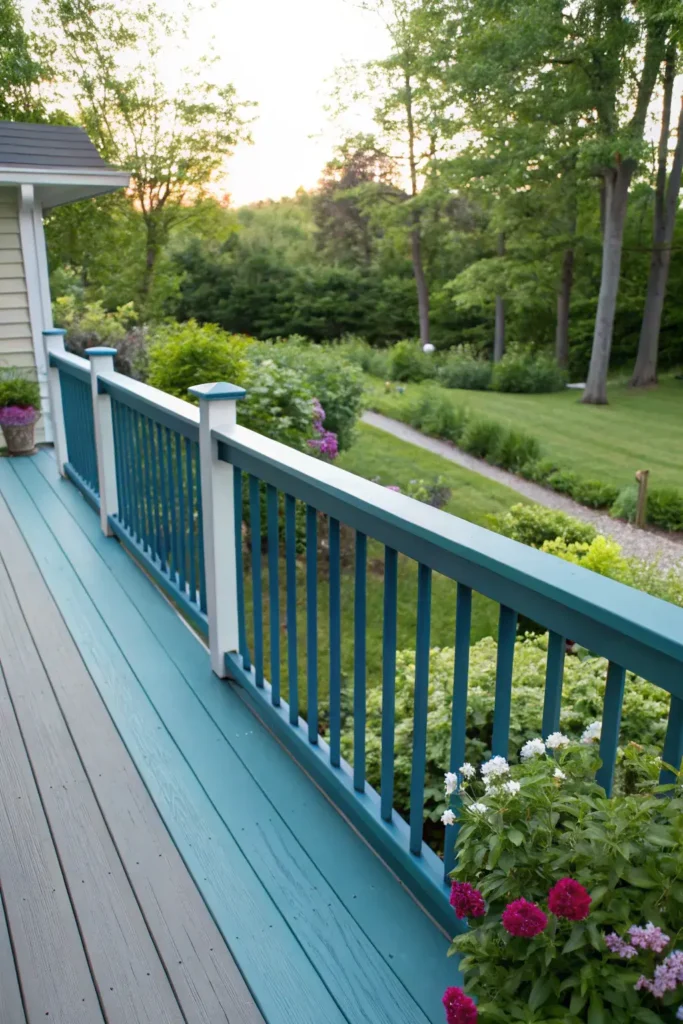
Soft blues and blue-greens bring a coastal feel to the railing without going as bold as a full nautical theme. Benjamin Moore Breath of Fresh Air (806), Sherwin-Williams Tradewind (SW 6218), and Behr Watery (HDC-CT-26) all land in the pale-blue-to-aqua range that suggests sea and sky without overwhelming the deck. Paint the entire railing in one shade, or pair a blue top rail with white balusters for a lighter version.
Blue pigments are more sensitive to UV than earth tones, so choose a paint formula with built-in UV blockers like Behr Dynasty or Benjamin Moore Aura Exterior to slow fading. Expect a light blue to need a fresh coat every 3 to 4 years on a south-facing railing, compared to 5 to 7 years for deeper colours. Complete your furnished porch area with our screen porch furniture ideas guide that covers seating, tables, and accessories for covered outdoor spaces.
12. Bright Multicolor Mix
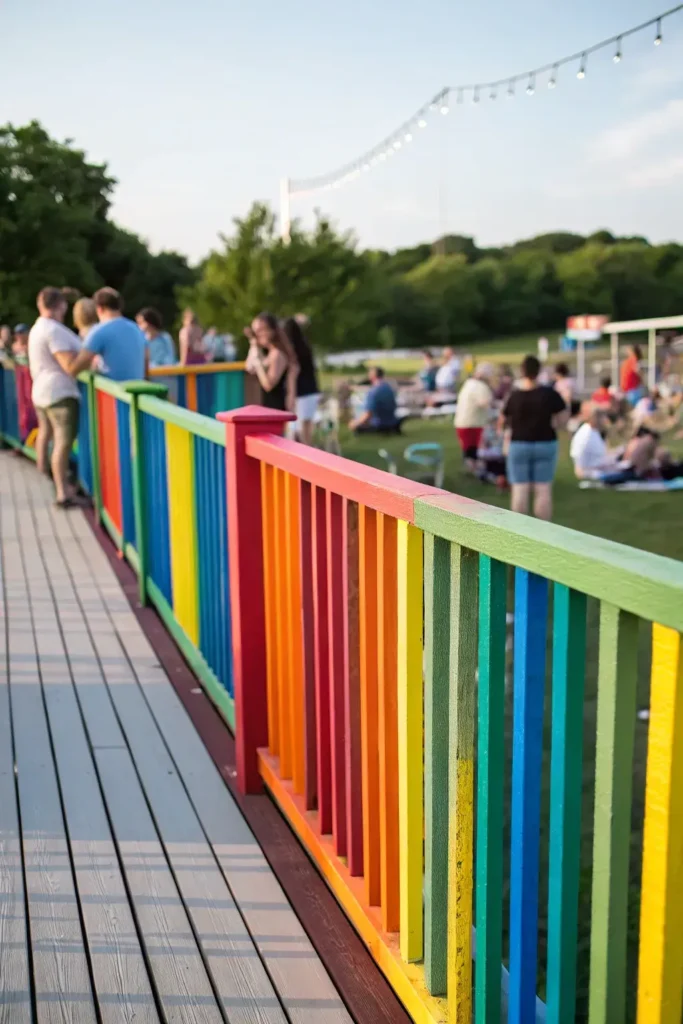
Painting each baluster or railing section a different bold colour creates a rainbow or fiesta-style effect that works on casual decks, poolside areas, and kid-friendly yards. Pick 4 to 6 colours from a single paint brand’s exterior line so the sheen and formula match across all shades. Behr Premium Plus sample pots (8 ounces each) cost under $5 and cover 3 to 4 balusters per pot, keeping the total material cost for a 20-baluster railing under $30.
Apply the colours in a repeating sequence (red, orange, yellow, green, blue, purple, then back to red) for an ordered rainbow, or randomize the order for a more spontaneous look. Keep the top rail and posts in a neutral shade (white, black, or charcoal) so the multicolour balusters pop against a consistent frame. For small deck setups where bold railing colour carries the design, browse our ideas for small decks collection for layout and space-saving tips.
How to Paint a Deck Railing
1. Clean and Prep the Surface
Scrub the railing with a solution of 1 cup Jomax House Cleaner per gallon of water, using a stiff nylon brush to remove dirt, mildew, and loose paint. Rinse thoroughly with a garden hose and let the wood dry for 48 hours before sanding. Sand all surfaces with 80-grit paper to remove the old finish down to bare wood, then follow with 120-grit for a smooth base. Fill any cracks, nail holes, or splits with Bondo Wood Filler and sand the patches flush once cured.
2. Apply Primer
Brush or roll one coat of Zinsser Bulls Eye 1-2-3 Plus exterior primer over all bare wood surfaces. The primer blocks tannin stains from cedar and redwood, seals the grain, and gives the topcoat a uniform base to grip. Allow 2 hours of drying time in temperatures above 50°F (10°C) before topcoating. On previously painted railings in good condition, scuff-sand with 150-grit and skip the primer step.
3. Paint the Balusters First
Slide a piece of cardboard behind each baluster to catch drips and protect the deck boards underneath. Use a 2-inch angled sash brush to coat all four sides of each baluster, working from top to bottom in long, even strokes. Complete every baluster before moving to the rails, so any drips on the rail surface get covered by the rail coat. Apply two coats with 4 hours of drying time between them.
4. Paint the Top Rail and Posts
Tape off the baluster tops with FrogTape Multi-Surface where they meet the rail, then paint the top rail with a 4-inch mini roller for a smooth, brush-mark-free finish. Switch to the angled brush for the post faces, cap joints, and any routed details. Remove the tape after 30 minutes (while the paint is still slightly tacky) to get the cleanest edge possible. Let the entire railing cure for 72 hours before leaning anything against it or placing furniture nearby.
Deck Railing Paint Comparison
| Paint | Type | Price (per gallon) | Coverage | Dry Time | Best For |
|---|---|---|---|---|---|
| Benjamin Moore Aura Exterior | Acrylic latex | $70–$80 | 350–400 sq ft | 1 hour | UV-heavy south-facing railings |
| Sherwin-Williams SuperPaint | Acrylic latex | $55–$65 | 350–400 sq ft | 1 hour | All-around exterior durability |
| Behr Marquee | Acrylic latex | $50–$55 | 250–400 sq ft | 1 hour | One-coat coverage on primed wood |
| Valspar Duramax | Acrylic latex | $40–$50 | 300–400 sq ft | 2 hours | Budget-friendly with flex technology |
| Rust-Oleum Painter’s Touch | Acrylic/alkyd blend | $30–$35 | 120 sq ft (quart) | 30 min | Small projects and detail work |
Frequently Asked Questions
What kind of paint works best for deck railings?
Exterior 100% acrylic latex paint in semi-gloss or satin finish gives the best combination of durability, colour retention, and easy cleanup. Acrylic latex flexes with wood expansion and contraction through seasonal temperature swings, while alkyd (oil-based) paints tend to crack and peel after 2 to 3 years outdoors. Benjamin Moore Aura Exterior and Sherwin-Williams SuperPaint are the top performers in independent fade-resistance testing.
Do you need to sand a deck railing before painting?
Bare wood railings need full sanding with 80-grit followed by 120-grit to remove mill marks and open the grain for primer adhesion. Previously painted railings in decent condition only need scuff-sanding with 150-grit to roughen the surface for the new coat. Skip sanding entirely on a peeling or flaking railing because the new paint will lift with the old coat underneath. Strip those railings down to bare wood with a Citristrip gel or a heat gun before recoating.
How often should you repaint a deck railing?
Expect to repaint every 4 to 7 years depending on sun exposure, climate, and paint quality. South-facing and west-facing railings take the most UV damage and may need a fresh coat a year or two sooner. Dark colours fade faster than light ones, and flat finishes weather faster than semi-gloss. Inspect the railing each spring for chalking (a powdery residue on the surface), cracking, or bare spots, and touch up problem areas before they spread.
Can you paint a composite or vinyl deck railing?
Composite and vinyl railings accept paint when properly prepped. Clean the surface with TSP substitute, scuff with 220-grit sandpaper, and apply a bonding primer like Zinsser Bondz or XIM UMA before topcoating. Use acrylic latex paint only (no oil-based) because it flexes with the composite material. Painting a composite railing voids most manufacturer warranties, so confirm you’re comfortable with that trade-off before starting.
What colour deck railing increases home value?
Black, white, and medium gray are the three safest colours for resale because they match the widest range of siding and trim combinations. Sherwin-Williams Tricorn Black and Benjamin Moore Chantilly Lace consistently appear in real estate staging guides as top exterior accent choices. Bold or unusual railing colours (bright red, purple, neon green) can turn off potential buyers, so save those for railings you plan to repaint before listing. Visit The Designers Company for more outdoor project guides and colour selection resources.