Glass Sunroom Ideas: 17 Stunning Designs to Transform Your Space

Glass sunroom ideas add a fully enclosed, climate-controlled room with floor-to-ceiling windows or walls that floods the space with natural light while keeping rain, wind, insects, and pollen outside. Below are 17 glass sunroom designs with specific frame materials, glass types, insulation ratings, and installed cost ranges for attached and freestanding sunrooms sized from 100 to 400 square feet.
1. Full-Glass Solarium
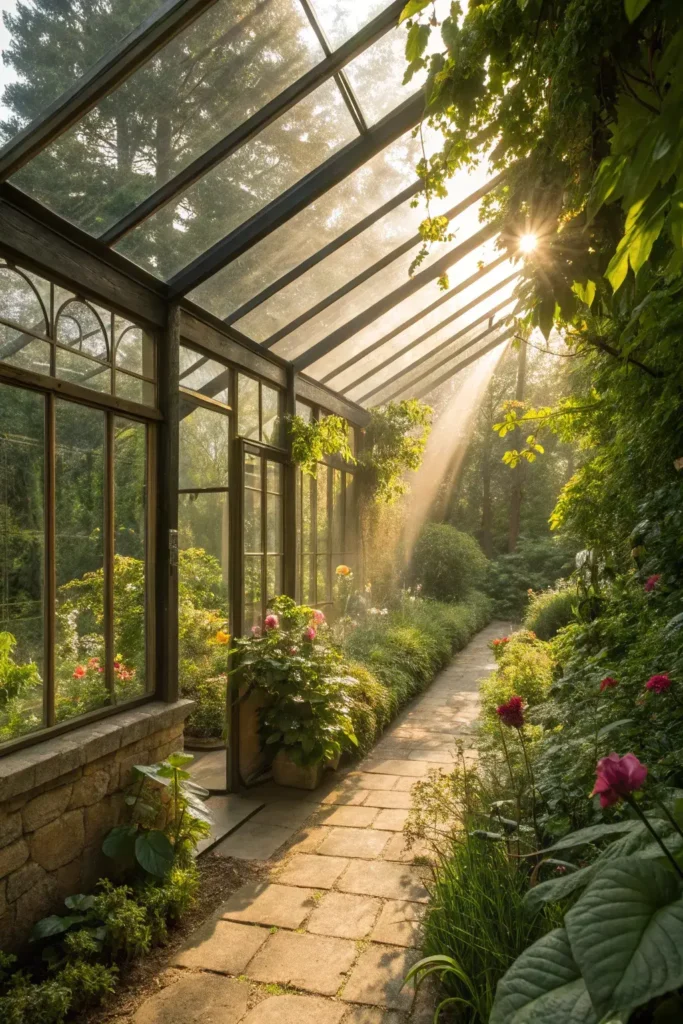
A full-glass solarium uses glass on all four walls and the ceiling, creating a transparent room that feels like sitting outdoors while staying fully enclosed. Solarium kits (Patio Enclosures, Sunspace, or Four Seasons Sunrooms) start at $15,000 to $25,000 for a 10 x 14-foot room with tempered glass walls and a laminated glass roof rated for snow loads up to 30 pounds per square foot.
The all-glass design produces the maximum natural light but also the highest heat gain in summer, so spec the roof glass with a low-E coating (emissivity rating of 0.25 or lower) and a solar heat gain coefficient (SHGC) under 0.30 to reduce cooling costs by 25 to 40 percent compared to clear glass. Add motorized roller shades ($200 to $500 for a set of four roof panels from Lutron or Hunter Douglas) for on-demand shade control during peak afternoon sun.
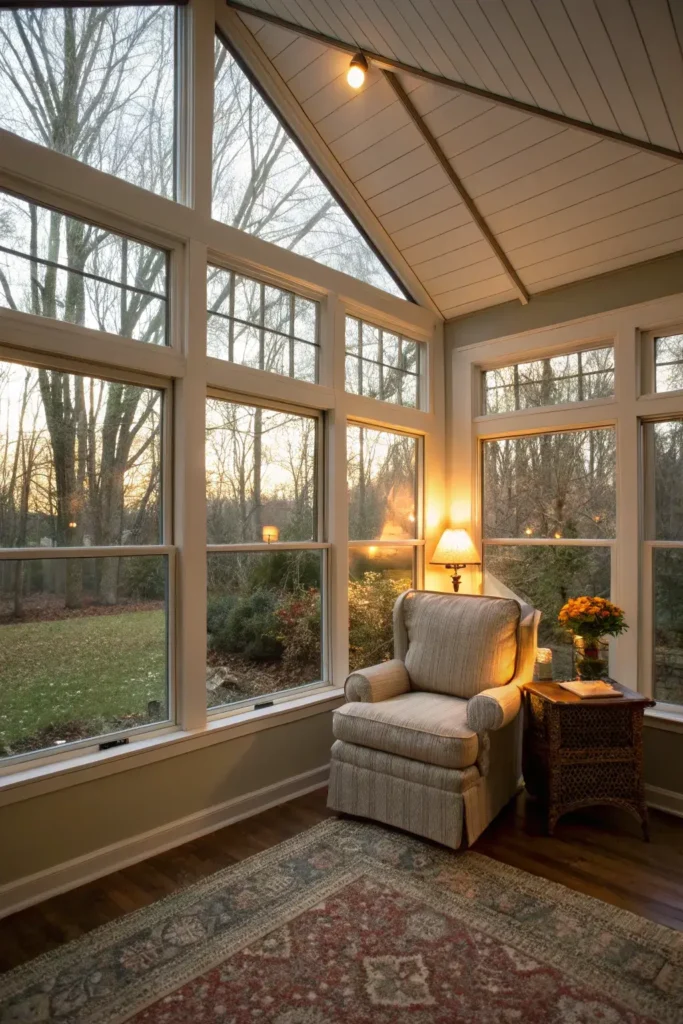
2. Gable-Roof Sunroom Nook
A gable (peaked-roof) sunroom with a solid insulated roof and glass walls gives the room a taller center ceiling (9 to 12 feet at the ridge) that makes a small 10 x 12-foot footprint feel open and spacious. The solid roof eliminates overhead glare and reduces summer heat gain by 60 to 70 percent compared to a glass-ceiling solarium, while the glass walls still provide panoramic views on three sides.
Frame the gable roof with 2 x 8 or 2 x 10 rafters, insulate with R-30 fiberglass batts or spray foam, and finish the ceiling with tongue-and-groove pine or painted drywall. Gable sunroom kits (Patio Enclosures, Temo, or SunPorch Structures) run $12,000 to $20,000 for a 10 x 14-foot room. Furnish the nook with a deep-seat reading chair ($300 to $600 from Pottery Barn or Crate and Barrel), a floor lamp, and a low bookshelf to create a quiet retreat filled with natural light.
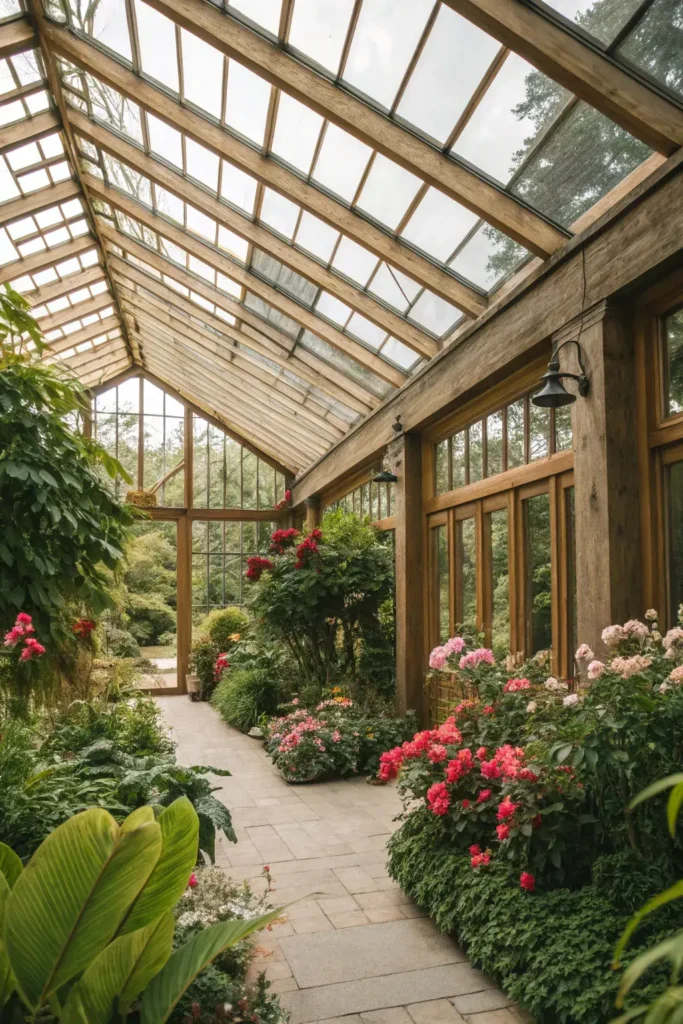
3. Glass-Roof Conservatory
A conservatory-style sunroom features a glass or polycarbonate roof with decorative iron or aluminum cresting, finials, and ridge caps that reference Victorian and Edwardian greenhouse designs. Modern conservatories use double-wall polycarbonate roof panels ($4 to $8 per square foot, R-value of 1.5 to 2.0) or insulated glass units (IGU, $15 to $30 per square foot, R-value of 2.5 to 4.0) mounted in powder-coated aluminum frames.
A 12 x 16-foot conservatory with a glass roof costs $20,000 to $40,000 installed, or $12,000 to $25,000 for a polycarbonate roof version. The glass-roof conservatory works best in climates with mild summers (Pacific Northwest, upper Midwest, northern Europe) because overhead glass creates a greenhouse effect that can push interior temperatures above 100 degrees F in direct summer sun without active cooling. Add a ceiling-mounted exhaust fan (Broan or Air King, 300 to 500 CFM, $100 to $200) and operable roof vents for passive heat venting.
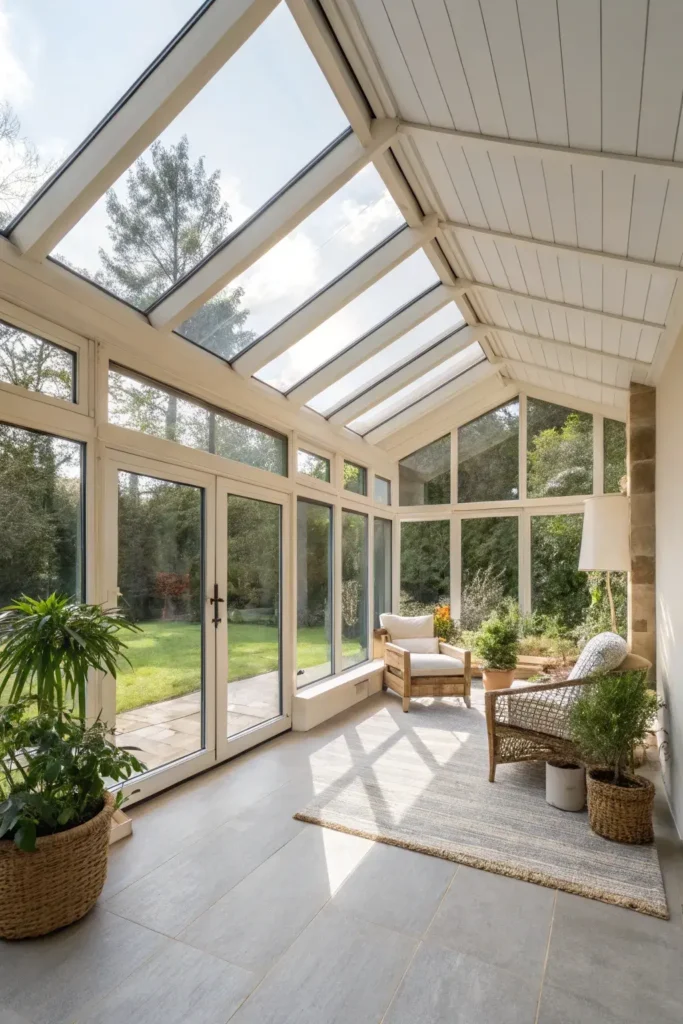
4. Studio Sunroom with Bi-Fold Doors
A studio sunroom with bi-fold or accordion glass doors (Andersen, Pella, or NanaWall, $800 to $1,500 per linear foot of opening) on one or two walls converts from a fully enclosed room to a wide-open covered patio in seconds. Each glass panel folds and stacks against the side wall, opening 8 to 20 feet of wall space to the outdoors.
The studio layout works best for entertaining because the open-wall configuration connects the sunroom directly to the backyard patio, pool, or garden during warm months and closes completely for climate-controlled use in winter. A 12 x 16-foot studio sunroom with one 12-foot bi-fold wall costs $18,000 to $30,000 installed. Choose aluminum-clad or fiberglass frames over bare wood for the bi-fold doors because the exposed hardware and tracks corrode in humid outdoor air faster than sealed window frames.
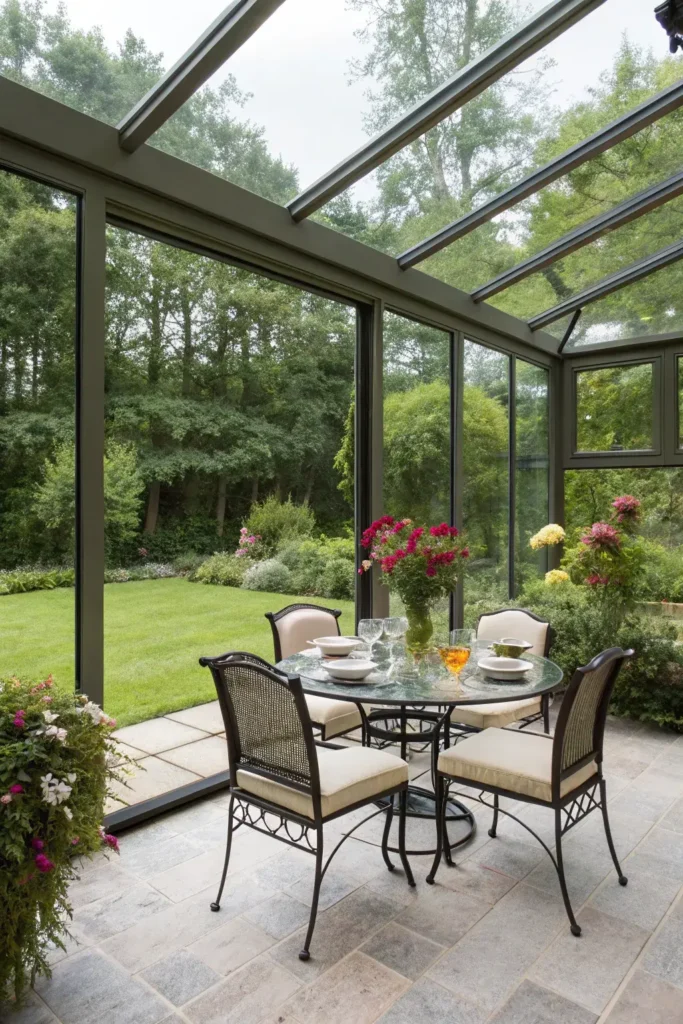
5. Glass Dining Room Sunroom
Converting a sunroom into the primary dining room puts the dining table in the brightest, most scenic room in the house. Size the sunroom at 12 x 14 feet minimum for a 6-seat dining table (36 x 72 inches) with 36-inch clearance on all sides for chair pullback and serving circulation. Larger 8 to 10-seat tables (42 x 96 inches) need a 14 x 18-foot sunroom or larger.
Hang a chandelier or pendant light ($100 to $400 from West Elm, Wayfair, or Pottery Barn) from the ceiling center point for evening dining ambiance. Add sheer curtain panels ($15 to $30 per panel from IKEA or Target) on the glass walls for softened daylight during daytime meals and privacy from neighbors during evening dinners. A sunroom dining room costs $500 to $1,500 in furniture and fixtures beyond the sunroom construction cost. Browse more outdoor dining patio designs for open-air dining alternatives.
6. Custom-Matched Glass Addition
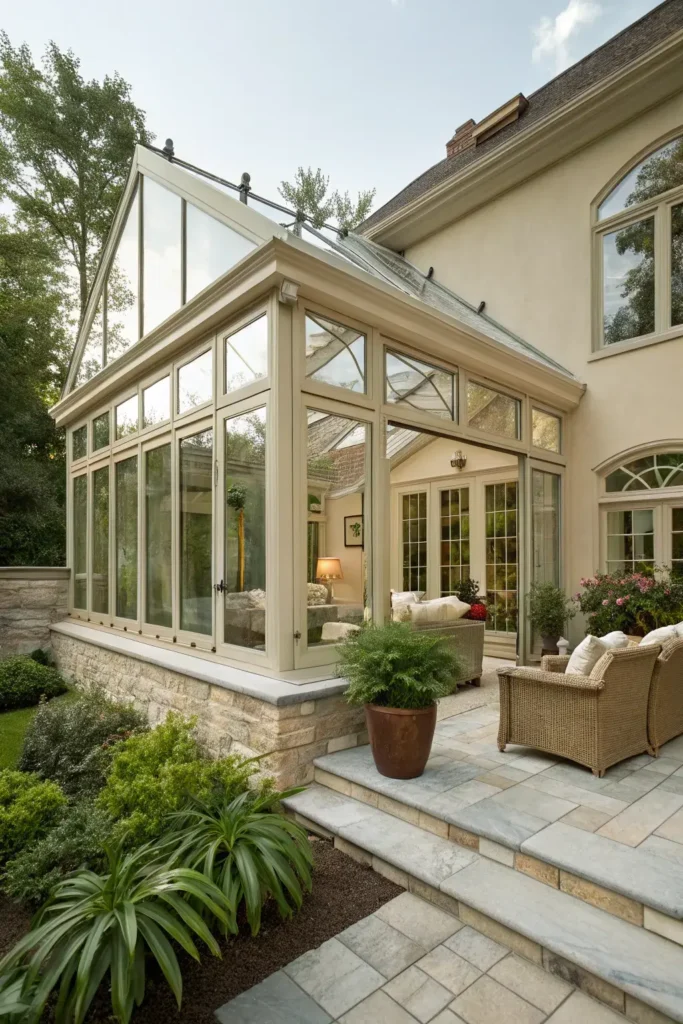
Hiring a local contractor to design a glass sunroom that matches your home’s existing roofline, siding material, trim color, and window style creates a room that looks original to the house rather than an obvious add-on. Match the sunroom roof pitch to the main house roof (typically 4/12 to 8/12), use the same siding on the sunroom’s knee walls (the solid lower wall section below the glass), and install window frames in the same color and profile as the house windows.
Custom-designed sunrooms cost 20 to 40 percent more than standard kit sunrooms ($25,000 to $50,000 for a 12 x 16-foot room) because every component is site-measured and shop-fabricated to fit. The investment pays back at resale because appraisers value a well-matched addition at 50 to 70 percent of its construction cost, while a mismatched kit sunroom may appraise at only 30 to 40 percent.
7. Energy-Efficient Insulated Glass Sunroom
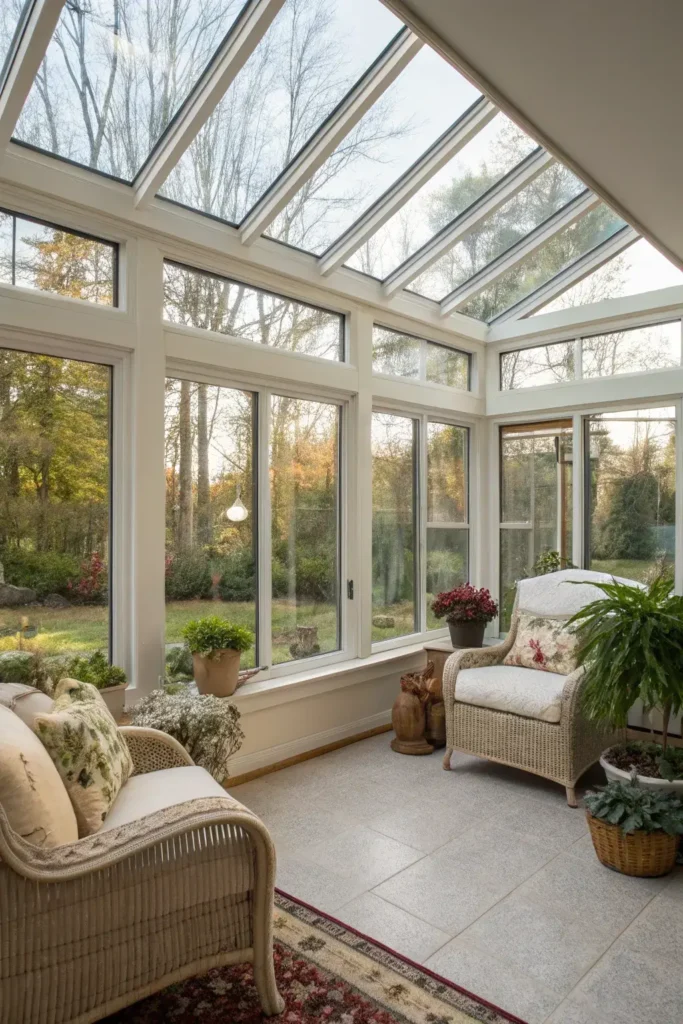
Triple-pane insulated glass windows (R-value of 5 to 7, compared to R-2 for single-pane and R-3 to 4 for double-pane) paired with insulated knee walls (R-13 to R-19 fiberglass or spray foam) and a radiant floor heating system create a sunroom that stays comfortable year-round without driving up heating and cooling bills. Triple-pane windows cost 15 to 25 percent more than double-pane ($400 to $800 per window versus $300 to $600).
Add argon or krypton gas fill between the glass panes for another R-0.5 to R-1.0 of insulation, and specify low-E coatings on surfaces 2 and 5 (counting from the exterior) for maximum thermal performance. A fully insulated 12 x 16-foot sunroom with triple-pane glass and radiant floor heat costs $22,000 to $40,000 but operates as a true four-season room that holds temperature within 5 degrees of the main house in all weather conditions.
8. Vintage-Inspired Arched Glass Sunroom
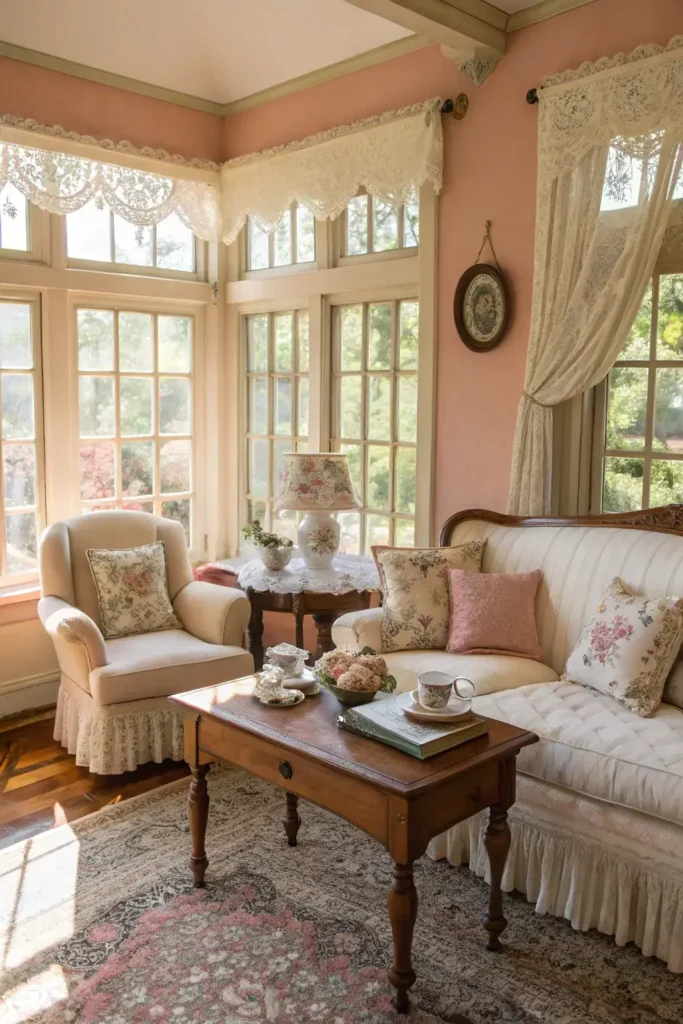
Arched glass windows and transoms (custom-ordered from Pella, Marvin, or Anderson, $600 to $1,500 per arched unit) at the top of each wall section give the sunroom a classical, period-appropriate look for Colonial, Craftsman, Tudor, and Mediterranean-style homes. Pair the arched glass with antique or reproduction wicker furniture (two armchairs at $200 to $400 each, plus a settee at $300 to $600) for a traditional sunroom feel.
Add a vintage-style ceiling fan (Hunter Original or Emerson Crown Select, $150 to $300 in antique brass or oil-rubbed bronze finish) for air circulation without modern air conditioning in spring and fall months. A vintage-inspired sunroom costs 10 to 20 percent more than a standard rectangular design because the arched glass units are custom-made to the curve radius of each opening.
9. Minimalist Floor-to-Ceiling Glass Room
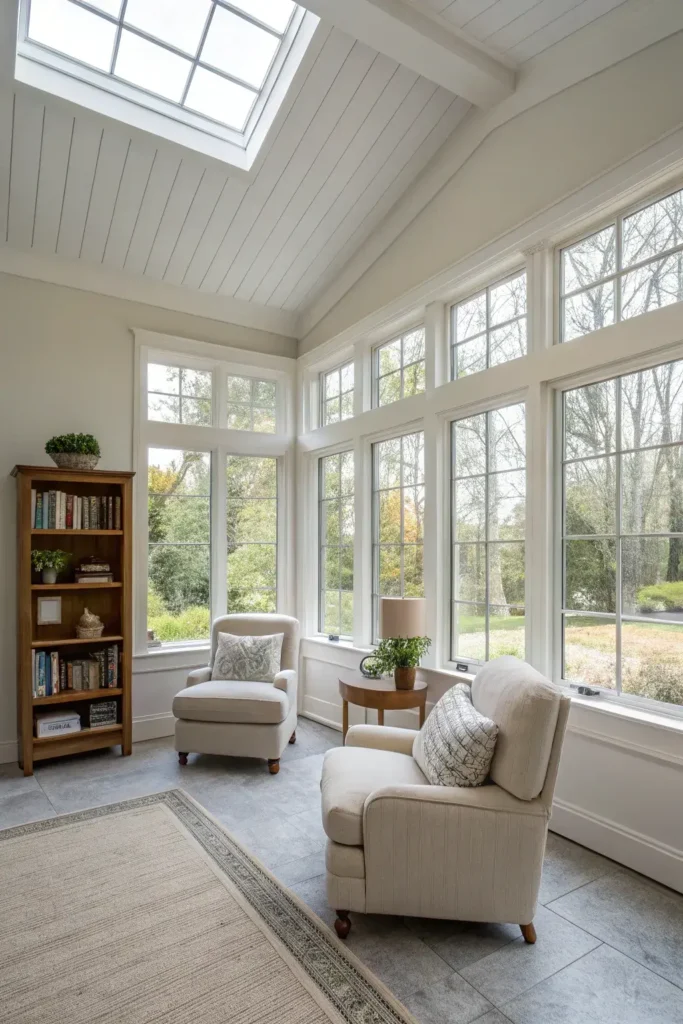
A minimalist sunroom strips the design to its essentials: uninterrupted floor-to-ceiling glass walls (no knee walls, no mullions between panels), a flat white ceiling, polished concrete or large-format porcelain tile floor (24 x 24 or 36 x 36 inches), and two to three pieces of low-profile furniture. The visual effect is a room that disappears into the surrounding yard, with no frame or wall breaking the sightline from the interior to the garden.
Achieve the frameless look with structural glass walls ($50 to $100 per square foot for 1/2-inch tempered glass panels mounted in slim aluminum channels at the floor and ceiling) or with minimal-frame sliding glass systems (Western Window Systems or Fleetwood, $100 to $200 per square foot installed). A minimalist glass sunroom costs $30,000 to $60,000 for a 12 x 16-foot room because the structural glass and slim-frame systems cost considerably more than standard window units.
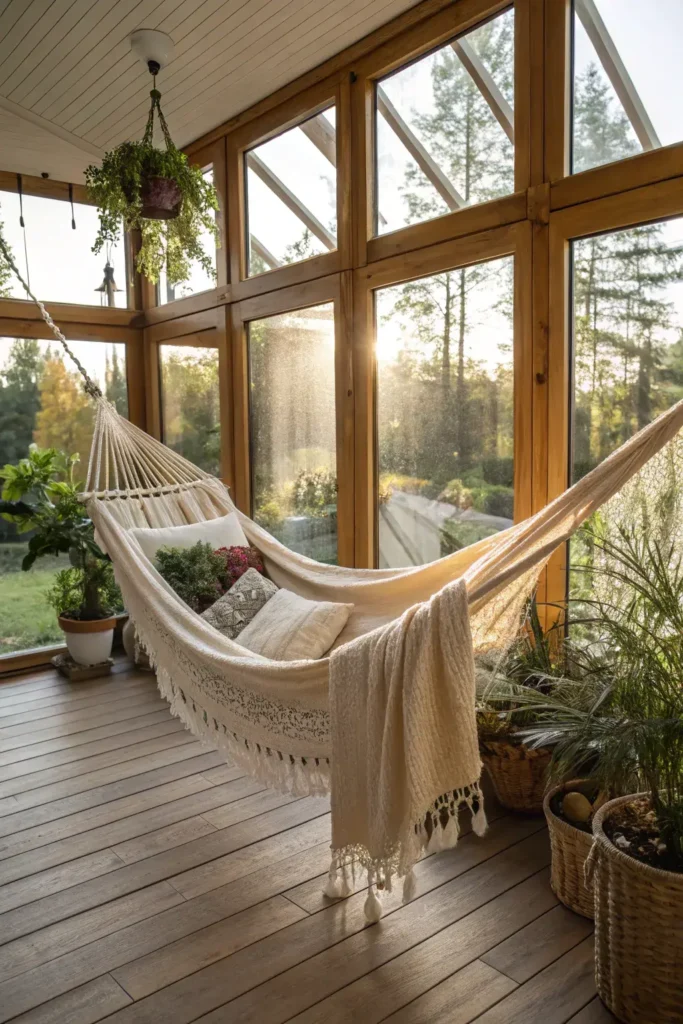
10. Relaxation Retreat with Daybed
Furnishing the sunroom with a wide daybed (full or queen-size, $300 to $800 from CB2, Article, or IKEA) and an indoor hammock chair ($40 to $100 from Amazon or Wayfair, hung from a ceiling joist with a 3/8-inch lag eye bolt rated for 300 pounds) creates a dedicated napping, reading, and lounging space filled with natural light. Position the daybed along the glass wall with the best garden view, and hang the hammock chair in the corner nearest the entrance.
Add a 6 x 9-foot natural fiber rug (jute, sisal, or seagrass, $80 to $200) under the daybed and scatter three to four throw pillows in neutral tones. Keep the rest of the room clear to maintain the restful, uncluttered atmosphere. A relaxation sunroom costs $500 to $1,200 in furnishings beyond the room’s construction budget.
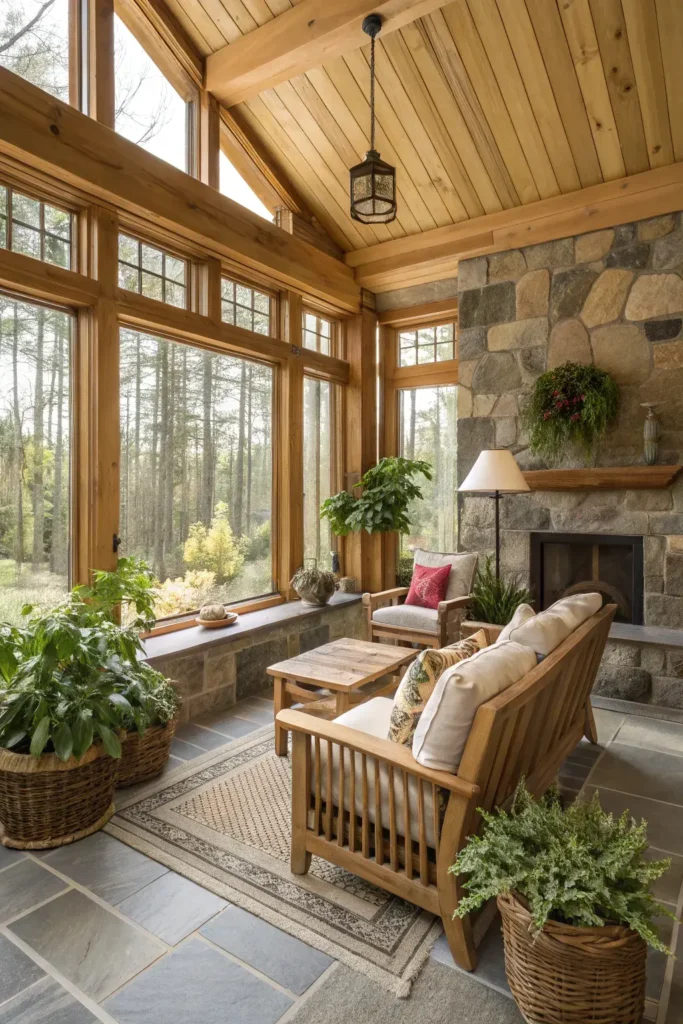
11. Natural Material Sunroom
Building the sunroom with exposed wood beams (Douglas fir, cedar, or reclaimed barn wood), a natural stone or slate floor ($5 to $15 per square foot for slate tiles, $8 to $20 for travertine), and large potted plants creates an indoor garden room that feels like a conservatory without the full-glass ceiling. Leave the ceiling beams exposed and stained rather than hiding them behind drywall.
Place six to ten large potted plants (fiddle-leaf fig, monstera, bird of paradise, rubber plant) in terra cotta or ceramic pots at varying heights around the perimeter. The natural stone floor handles water overflow from plant watering without damage, and the thermal mass of stone keeps the room cool in summer by absorbing heat during the day and releasing it slowly at night. A natural-material sunroom adds $3,000 to $8,000 in upgraded floor, beam, and planting costs above a standard sunroom build. Explore more outdoor entertainment setups for additional indoor-outdoor living ideas.
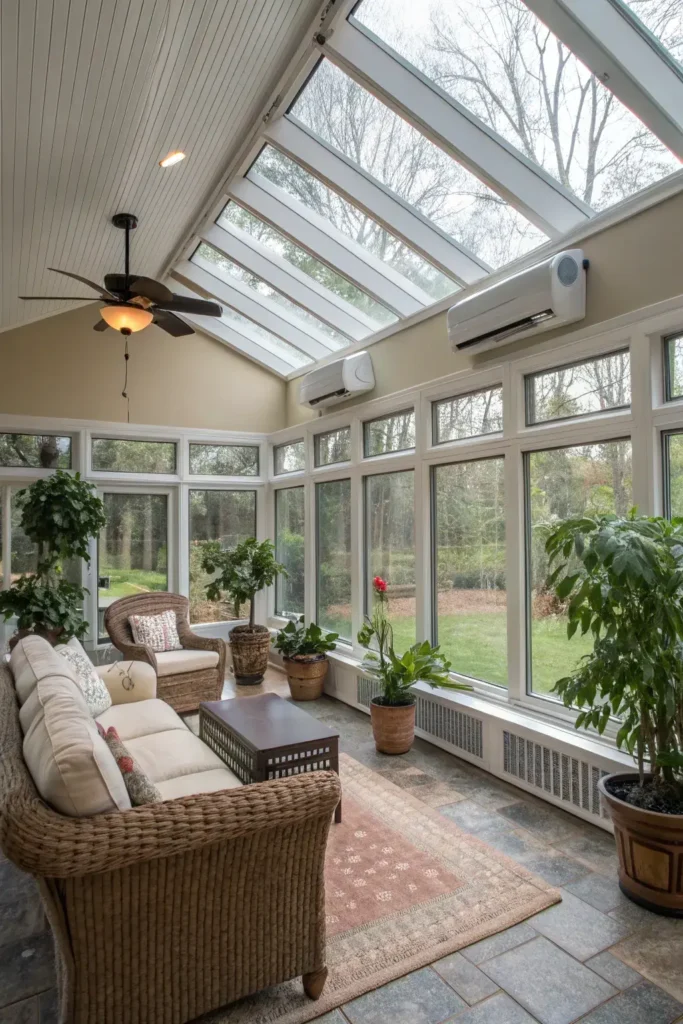
12. Climate-Controlled Four-Season Room
Adding a ductless mini-split heat pump (Mitsubishi, Daikin, or MRCOOL, $700 to $1,500 for the unit, $1,000 to $2,000 installed) and an in-floor radiant heating system ($6 to $12 per square foot for electric mat systems from Warmly Yours or Schluter Ditra-Heat) converts a three-season sunroom into a fully conditioned four-season room usable in subzero winters and 100-degree summers.
The mini-split mounts on the wall above the knee-wall section and provides both heating and cooling from a single outdoor compressor. Size the unit at 9,000 to 12,000 BTU for a 150 to 200-square-foot sunroom, or 12,000 to 18,000 BTU for 200 to 300 square feet. The combination of mini-split air and radiant floor heat keeps the room within 2 to 3 degrees of the thermostat setting even when outside temperatures drop below 0 degrees F.
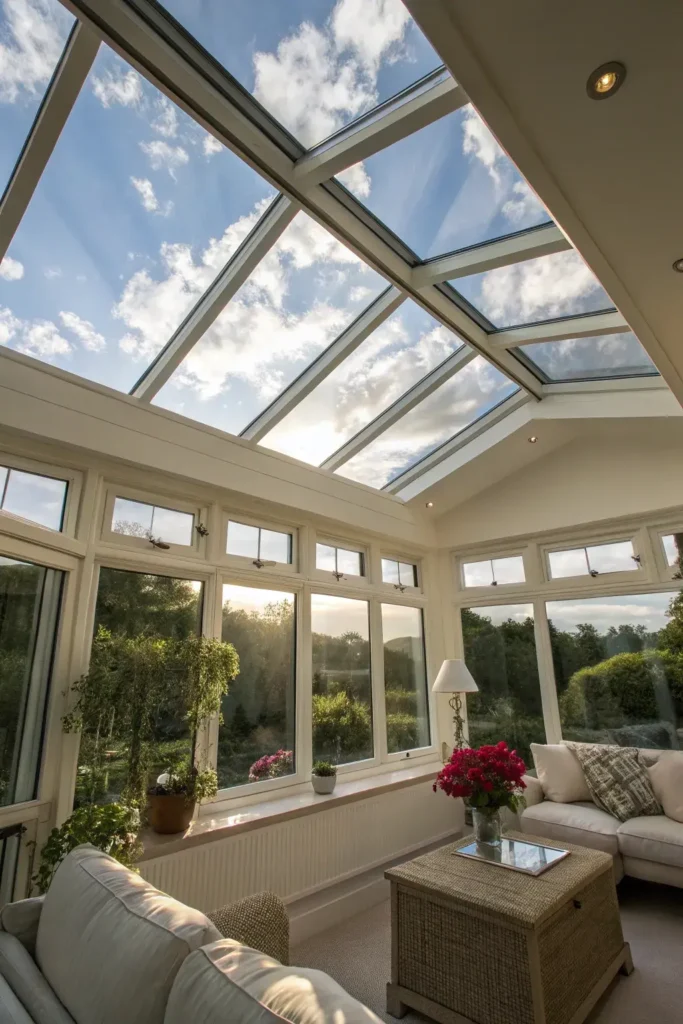
13. Skylight-Accented Sunroom
Adding two to four skylights (Velux FS Fixed at $300 to $500 each, or Velux VS Operable at $500 to $800 each for venting) to the solid-roof section of a sunroom brings in overhead light without the full heat gain and cost of a glass ceiling. Each 21 x 44-inch skylight adds roughly 40 percent more light to the space directly below compared to a same-size wall window because overhead light enters at a steeper angle and reflects off more interior surfaces.
Position skylights on the north-facing roof slope for consistent, glare-free daylight, or on the south-facing slope for maximum brightness with a solar-powered blind (Velux Solar Powered Blind, $100 to $200 per skylight) for shade control. Operable (venting) skylights also provide natural ventilation that exhausts hot air from the room’s ceiling zone, reducing the cooling load by 15 to 25 percent during warm months.
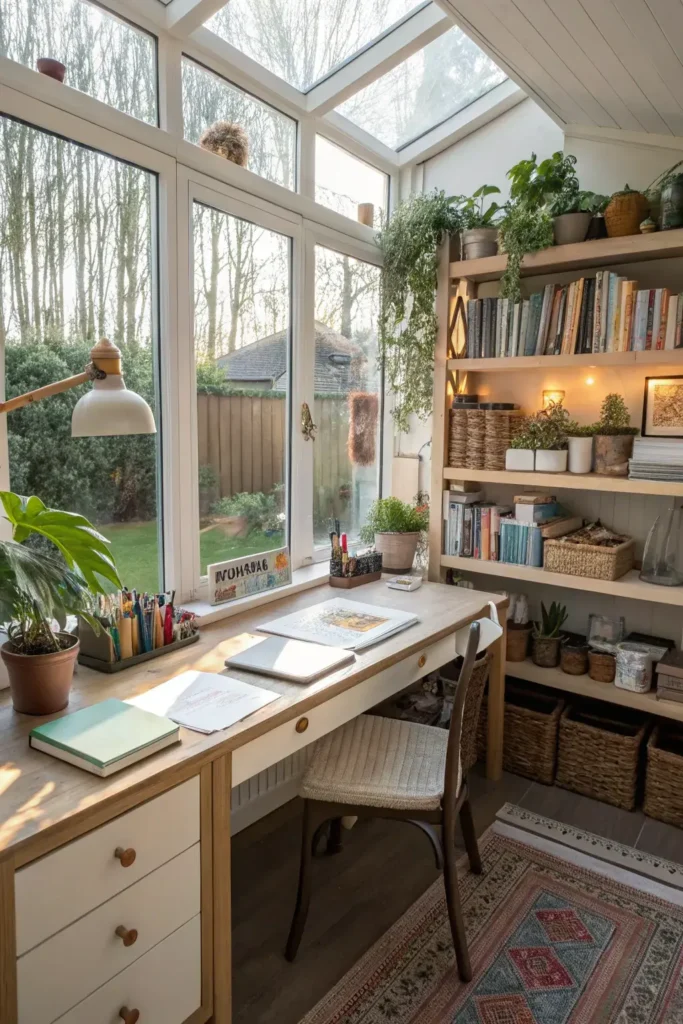
14. Home Office Sunroom
Converting a sunroom into a home office puts the work desk in the brightest room of the house, which studies link to improved mood, productivity, and sleep quality when daytime light exposure exceeds 1,000 lux during working hours (a glass sunroom easily reaches 5,000 to 10,000 lux on a sunny day). Position the desk facing the glass wall for a garden view during video calls, and add a 24 to 27-inch monitor arm ($25 to $60 from VIVO or AmazonBasics) clamped to the desk edge for a clean, cable-free work surface.
Control screen glare with adjustable sheer roller shades ($30 to $60 per window from IKEA SKOGSKLOVER or Select Blinds) that diffuse direct sunlight without blocking the view. Add a standing desk converter ($150 to $300 from FlexiSpot or VIVO) so you can alternate between sitting and standing while facing the windows. A sunroom office conversion costs $300 to $800 in desk, chair, monitor, and shade upgrades.
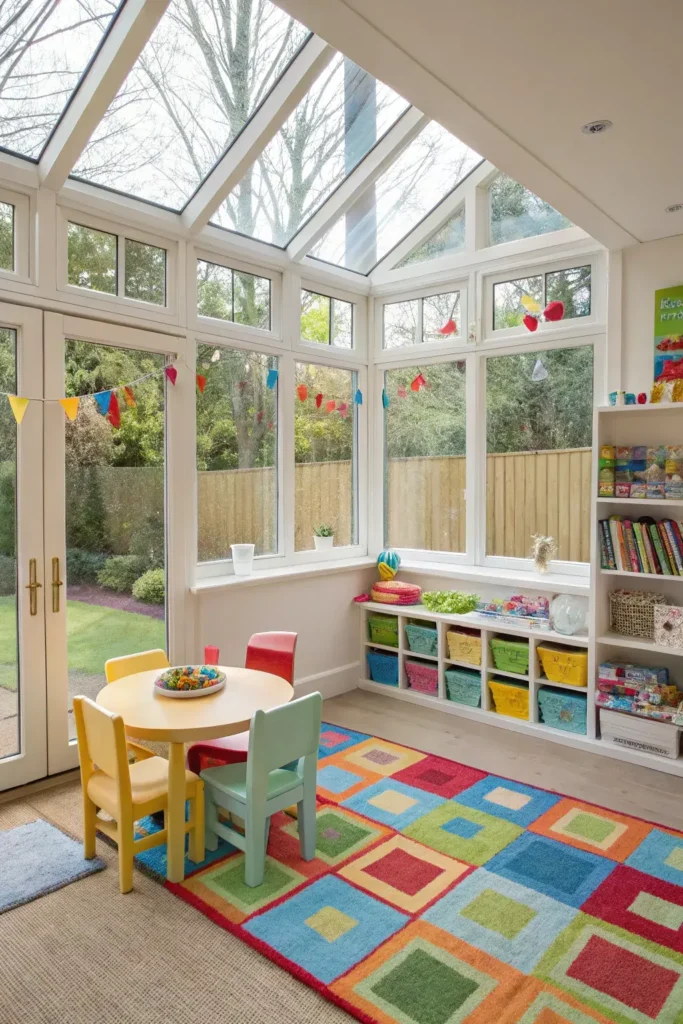
15. Children’s Playroom Sunroom
A sunroom converted into a playroom keeps toys, art supplies, and small furniture out of the main living areas while giving children a bright, enclosed space with full visibility from the kitchen or family room through the connecting doorway. Cover the floor with interlocking foam tiles ($1 to $2 per square foot, EVA foam from BalanceFrom or Amazon Basics) for cushioned play surfaces that wipe clean and protect the sunroom floor from scratches and spills.
Install safety film (3M Ultra Safety and Security Film, $5 to $8 per square foot) on the lower 36 inches of all glass panels to prevent shattering from thrown toys or accidental impacts. Add a low bookshelf ($40 to $80 from IKEA KALLAX) and a child-size table-and-chair set ($30 to $60 from Melissa and Doug or KidKraft) for art projects and snacks. A playroom sunroom conversion costs $150 to $400 in foam tiles, safety film, and child-size furniture.
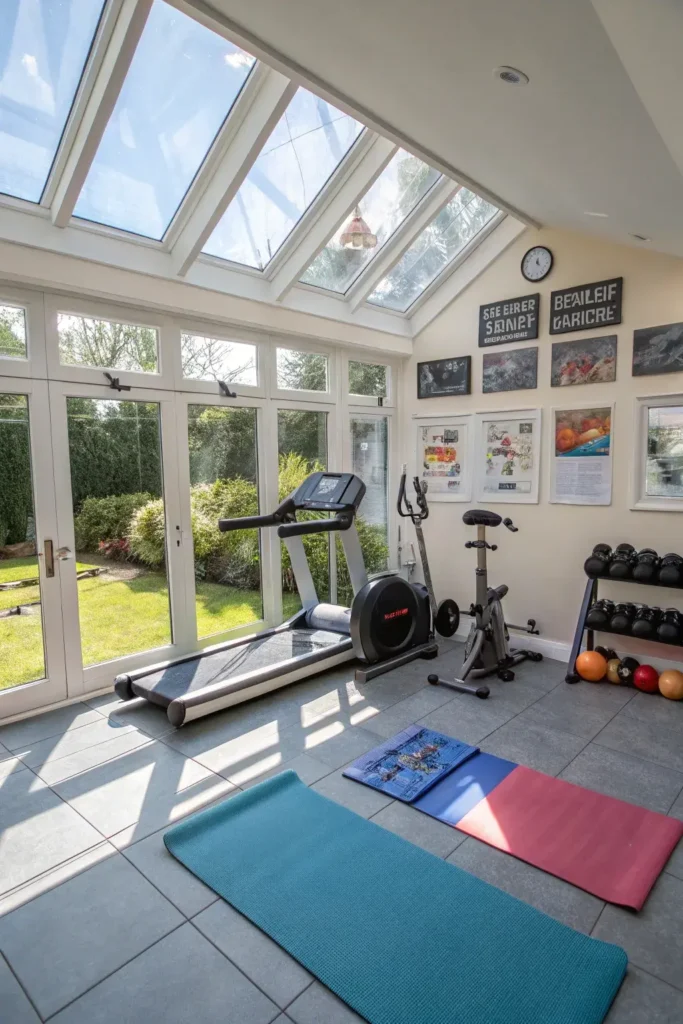
16. Home Gym Sunroom
A sunroom gym puts cardio and strength equipment in a room with natural light, ventilation (through operable windows), and a view that makes treadmill and cycling workouts less monotonous than a basement or garage gym. Cover the floor with 3/4-inch rubber gym tiles ($3 to $5 per square foot from Rubber-Cal or Horse Stall Mats from Tractor Supply at $2 per square foot) to protect the sunroom floor from dropped weights and equipment vibration.
A 12 x 14-foot sunroom fits a treadmill or stationary bike, a set of adjustable dumbbells (Bowflex SelectTech 552 at $400 or PowerBlock Elite at $350), a flat/incline bench ($100 to $200), and a yoga mat area. Open the windows during workouts for fresh-air ventilation, and run a 20-inch box fan ($25 to $40 from Lasko) in the window for additional airflow. A gym sunroom conversion costs $500 to $1,500 in rubber flooring, equipment, and a wall-mounted TV or speaker. See additional deck privacy designs for semi-enclosed workout spaces.
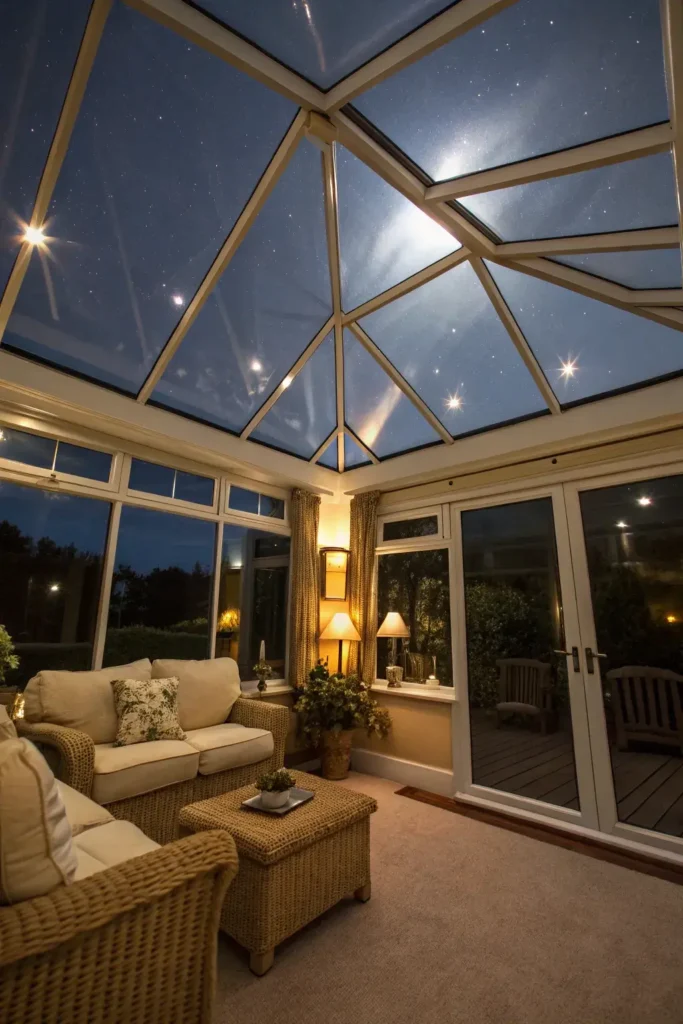
17. Glass Ceiling Stargazing Room
A sunroom with a clear glass ceiling becomes a stargazing room after dark, providing an unobstructed overhead view of the night sky from a climate-controlled, insect-free interior. Use laminated safety glass (two layers of tempered glass with a PVB interlayer, $20 to $40 per square foot) for the roof panels to meet building code for overhead glazing and to protect against hail and falling branch damage.
Install blackout curtains or motorized roller shades on all vertical glass walls to block ground-level light pollution and neighborhood lighting during nighttime viewing. Add a reclining lounge chair or a floor mattress positioned directly under the glass ceiling for comfortable supine stargazing. A glass-ceiling sunroom designed for night viewing should have no interior lights on dimmable circuits or use only red-LED accent lights ($10 to $20 for a 16-foot USB strip) to preserve night vision while moving around the room. Browse all projects at The Designers Company and explore more outdoor room designs for warm climates.
How to Plan a Glass Sunroom Addition
1. Check Zoning and Building Codes
Contact your local building department to verify setback distances (typically 5 to 15 feet from property lines for an addition), maximum lot coverage percentages, and height restrictions before designing the sunroom. Most jurisdictions require a building permit for any enclosed addition, and HOA-governed neighborhoods may require design review board approval for exterior changes visible from the street. Permit and engineering fees typically add $500 to $2,000 to the project budget.
2. Choose Between Three-Season and Four-Season
A three-season sunroom (single-pane or double-pane glass, no insulated walls, no HVAC) costs 30 to 50 percent less than a four-season room and works comfortably from April through October in most northern climates. A four-season sunroom (triple-pane glass, insulated knee walls, mini-split HVAC, radiant floor heat) operates as a true heated and cooled living space year-round but costs $20,000 to $50,000 versus $10,000 to $25,000 for a three-season room of the same size.
3. Select the Frame Material
Aluminum frames ($8 to $15 per linear foot) are the most common for kit sunrooms because they resist rot and insect damage, but aluminum conducts heat rapidly and creates cold spots in winter. Vinyl frames ($10 to $18 per linear foot) insulate better and cost slightly more. Wood frames ($15 to $25 per linear foot) look the most traditional but need staining or painting every 3 to 5 years. Fiberglass frames ($20 to $30 per linear foot) offer the best thermal performance and the lowest maintenance but at the highest upfront cost.
4. Lay the Foundation
A glass sunroom needs a concrete slab foundation (4 inches thick, reinforced with welded wire mesh, on a 4-inch gravel base) with a frost-protected shallow foundation or full-depth frost wall at the perimeter. Pour the slab at least 4 inches above the surrounding grade for drainage, and slope the exterior grade away from the foundation at 1/4 inch per foot for a minimum of 6 feet. A 12 x 16-foot concrete slab foundation costs $1,500 to $3,000 poured by a contractor or $500 to $1,000 for a DIY pour.
5. Install Glass Panels and Finish
Set the glass wall panels into the frame channels according to the manufacturer’s installation sequence (typically start from a corner and work outward in both directions). Apply silicone sealant (GE Silicone II Window and Door, $7 per tube) at all glass-to-frame joints and frame-to-foundation connections for a watertight seal. Install interior trim, baseboard, and flooring (tile, luxury vinyl plank, or engineered hardwood rated for sunroom temperature swings) last.
Glass Sunroom Type Comparison
| Sunroom Type | Cost (12×16 ft) | Seasons | Glass Type | HVAC Needed |
|---|---|---|---|---|
| Screen Room | $3,000 to $8,000 | 3 | Screen mesh only | No |
| Three-Season Glass | $10,000 to $25,000 | 3 | Single or double pane | No |
| Four-Season Insulated | $20,000 to $40,000 | 4 | Double or triple pane | Yes (mini-split) |
| Full Solarium (glass roof) | $25,000 to $50,000 | 3 to 4 | Laminated roof + IGU walls | Yes |
| Custom-Matched Addition | $30,000 to $60,000 | 4 | Triple pane, low-E | Yes (ducted or mini-split) |
Frequently Asked Questions
How much does a glass sunroom cost?
Kit sunrooms from national manufacturers (Temo, Patio Enclosures, Four Seasons) cost $10,000 to $30,000 for a 12 x 16-foot room including materials and installation. Custom-designed sunrooms from local contractors cost $25,000 to $60,000 for the same size. DIY kit sunrooms (Sunspace, EasyRoom) cost $5,000 to $15,000 in materials for a homeowner who handles the installation labor. The biggest cost variable is glass type: single-pane at $8 to $15 per square foot versus triple-pane low-E at $25 to $50 per square foot.
Does a sunroom add value to a house?
A well-built four-season sunroom returns 50 to 70 percent of its cost at resale according to Remodeling Magazine’s annual Cost vs. Value report. A three-season room returns 40 to 60 percent. The ROI is highest when the sunroom matches the home’s style, uses quality materials, and adds usable square footage that appraisers can count toward the home’s gross living area (four-season rooms with permanent HVAC typically qualify; three-season rooms often do not).
What is the difference between a sunroom and a conservatory?
A conservatory has glass walls AND a glass roof, creating a fully transparent structure originally designed for growing plants. A sunroom has glass walls but typically a solid, insulated roof (though some sunrooms include skylights or partial glass ceilings). Conservatories let in more light but gain more summer heat. Sunrooms are more comfortable year-round because the solid roof blocks direct overhead sun. In modern residential use, the terms overlap, and many homeowners use “conservatory” to describe a sunroom with a glass ceiling.
Can you build a sunroom on a deck?
An existing deck can serve as the floor platform for a sunroom if the deck structure is rated for the added wall and roof loads. Most residential decks are designed for 40 to 50 pounds per square foot live load (furniture and people), but a glass sunroom adds 10 to 20 pounds per square foot in dead load (walls, glass, roof). Have a structural engineer inspect the deck’s joists, beams, posts, and footings before adding walls. Reinforcement (sistering joists, adding posts, upgrading footings) typically costs $1,000 to $3,000 if needed.
How do you keep a glass sunroom cool in summer?
Specify low-E glass with a solar heat gain coefficient (SHGC) under 0.30, add motorized roller shades or cellular blinds on all sun-facing glass panels, install a ductless mini-split air conditioner sized to the room’s square footage, and open casement or awning windows on opposite walls for cross-ventilation during mild weather. A ceiling fan (52 to 60-inch blade span, $100 to $300) also helps circulate air and reduce the perceived temperature by 4 to 6 degrees without additional cooling energy.