Pergola Blinds Ideas: 9 Stunning Ways to Transform Your Space

Pergola blinds add adjustable shade and rain protection while giving you full control over sunlight, airflow, and privacy in your outdoor living space. Whether you need a budget-friendly set of roller shades at $50-$100 each or a fully motorized Somfy-powered system running $2,000-$5,000, the right pergola blind setup depends on your local climate, pergola dimensions, and how often you use the space.
The 9 ideas below cover everything from louvered aluminum roofs and weather-resistant Sunbrella curtains to Roman shades, eco-friendly bamboo panels, and custom-printed fabrics. Each option includes material specs, approximate pricing, and installation notes so you can match the right blind system to your pergola.
1. Louvered Roof with Retractable Blinds
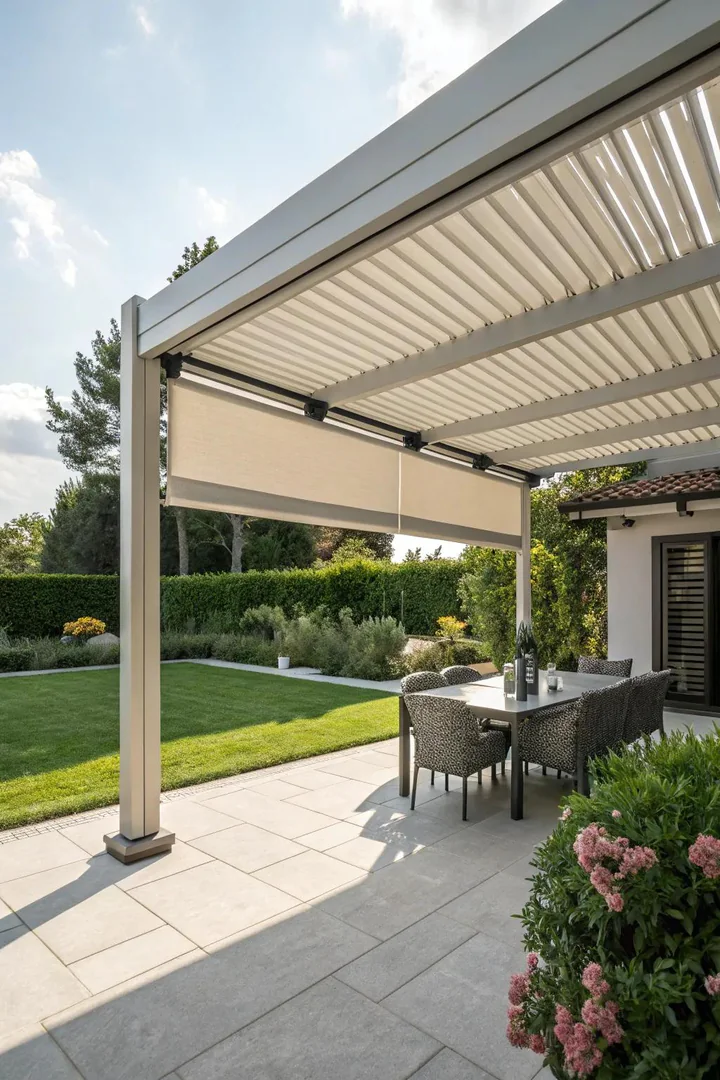
A louvered pergola roof lets you rotate aluminum slats from fully open to fully closed, controlling shade angle without removing any panels. StruXure and Equinox louvered systems typically run $50-$80 per square foot installed, making a 10×12-foot pergola cost roughly $6,000-$9,600 for the roof alone.
Pair the louvered roof with side-mounted retractable blinds from Phantom Screens or ShadeFX for complete weather protection. Most retractable blind systems use Textilene PVC-coated polyester mesh that blocks 90-95% of UV rays while still allowing air circulation. A set of four retractable panels for a standard 10×12 pergola adds $1,200-$3,000 depending on motorization.
The combination of overhead louvers and side blinds works especially well in regions with strong afternoon sun or frequent rain showers. Mount the blind tracks directly to your pergola posts using stainless steel brackets rated for wind resistance up to 45 mph.
2. Outdoor Curtains for a Soft Touch
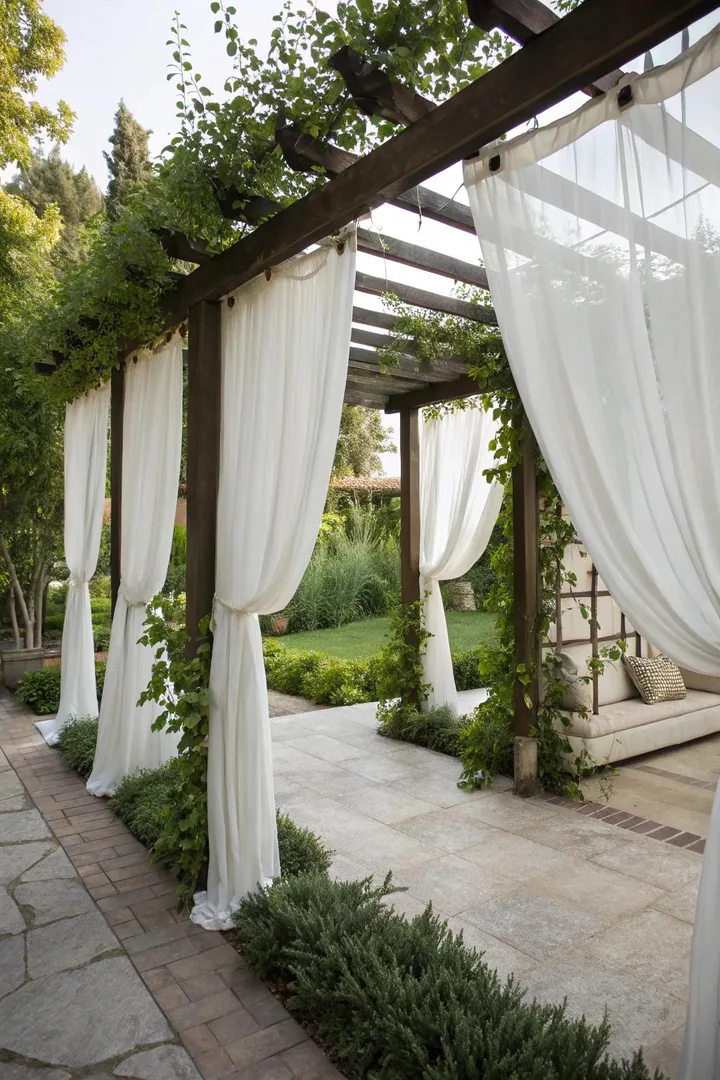
Outdoor curtains made from Sunbrella acrylic or Olefin fabric create a relaxed, flowing look that softens the angular lines of a wooden or metal pergola. A single panel measuring 54 inches wide by 96 inches long runs $30-$80 for Sunbrella fabric, and most pergola owners need 6-8 panels to cover two or three sides.
Hang curtains from a marine-grade stainless steel rod ($20-$50 per 8-foot section) or a heavy-duty outdoor curtain track from Kirsch or Graber for smoother sliding action. Grommet-top curtains slide fastest on rods, while pinch-pleat curtains pair better with track systems for a more finished appearance. Durable outdoor fabrics like these also work well for pontoon furniture ideas where UV protection and water resistance matter equally.
For windy locations, add curtain tiebacks with magnetic closures or install bottom-weighted hems with chain inserts to keep panels from billowing. Sunbrella’s 10,000+ hour UV rating means the fabric holds its color for 5-7 years without fading, even in full southern exposure.
3. Pergola Tent for a Cozy Retreat
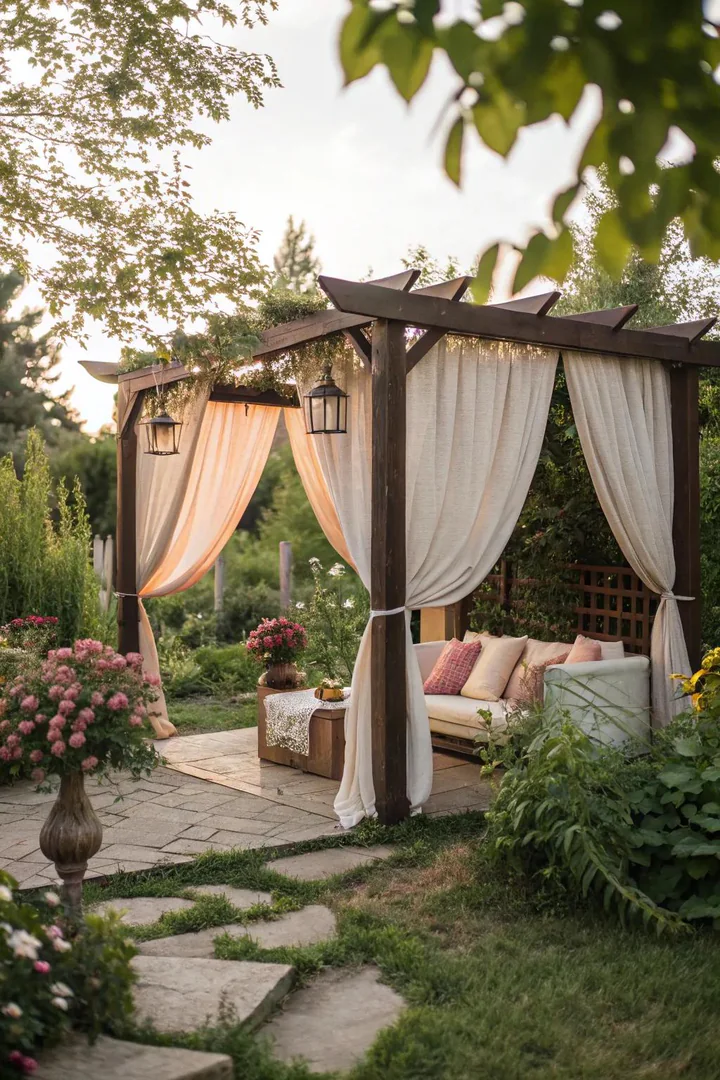
A pergola tent canopy wraps over the top of your structure using a single piece of outdoor canvas or polyester, creating an enclosed cabana-style space. Ready-made pergola tent covers from Sunjoy and ABCCANOPY fit standard 10×10 and 10×12 frames and cost $100-$350 depending on material weight and waterproofing level.
Custom-sewn pergola tents from local awning shops run $400-$1,200 and give you exact measurements for an irregularly sized frame. Specify marine-grade Stamoid or Top Notch fabric for full waterproofing, or choose a mesh-blend tent material for partial shade without blocking all natural light.
Attach the tent to your pergola beams with bungee ball ties, hook-and-loop straps, or aluminum channel tracks for a clean, no-sag installation. Treat the fabric annually with 303 Aerospace Protectant to extend its lifespan from the typical 3-year mark up to 5 years of outdoor use.
4. Roman Shades for a Classic Look
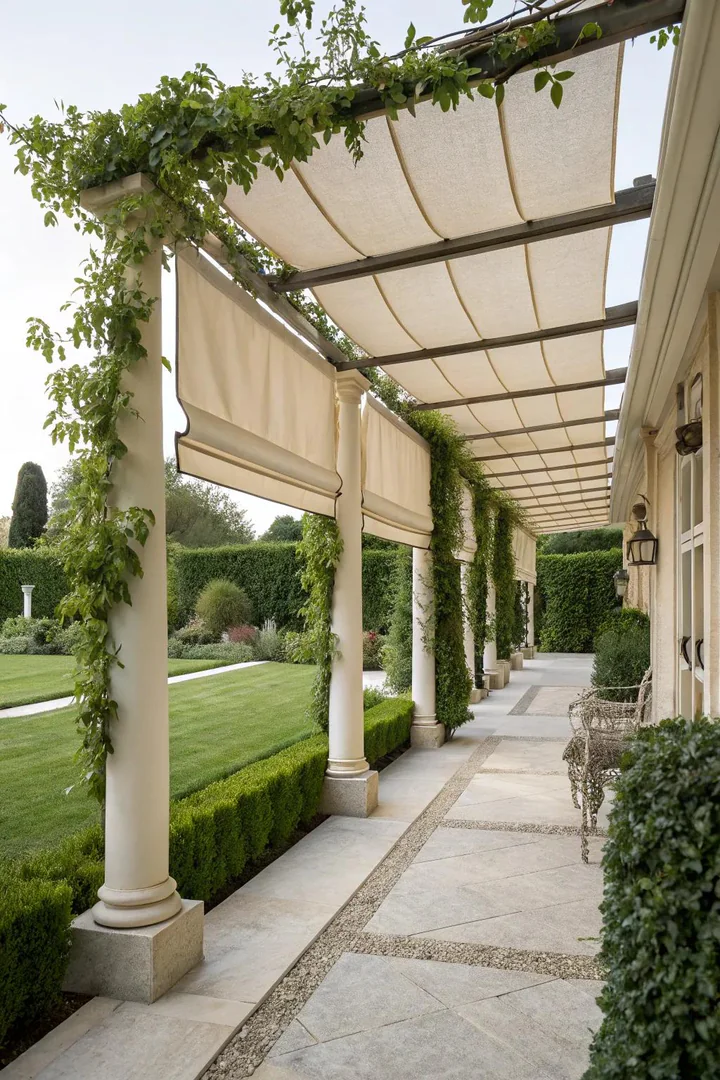
Outdoor Roman shades bring the structured fold pattern of indoor window treatments to your pergola, stacking neatly at the top when raised. Coolaroo and Keystone Fabrics offer UV-resistant Roman shade panels starting at $60-$150 per panel in widths from 36 to 72 inches.
Mount Roman shades on the interior face of your pergola beams using L-brackets and a cord-lock pulley system that lets you adjust shade height in seconds. A flat-fold design gives a contemporary profile, while a hobbled (teardrop) fold adds extra fabric volume for a traditional feel.
A dark-toned Roman shade in charcoal or espresso brings the same moody depth that works well in black living room ideas, extending bold color choices from inside your home to the patio. Water-resistant linings made from PVC-backed polyester add rain protection and help the shades dry quickly after a downpour, preventing mildew buildup in humid climates.
5. Motorized Retractable Canopy for Convenience
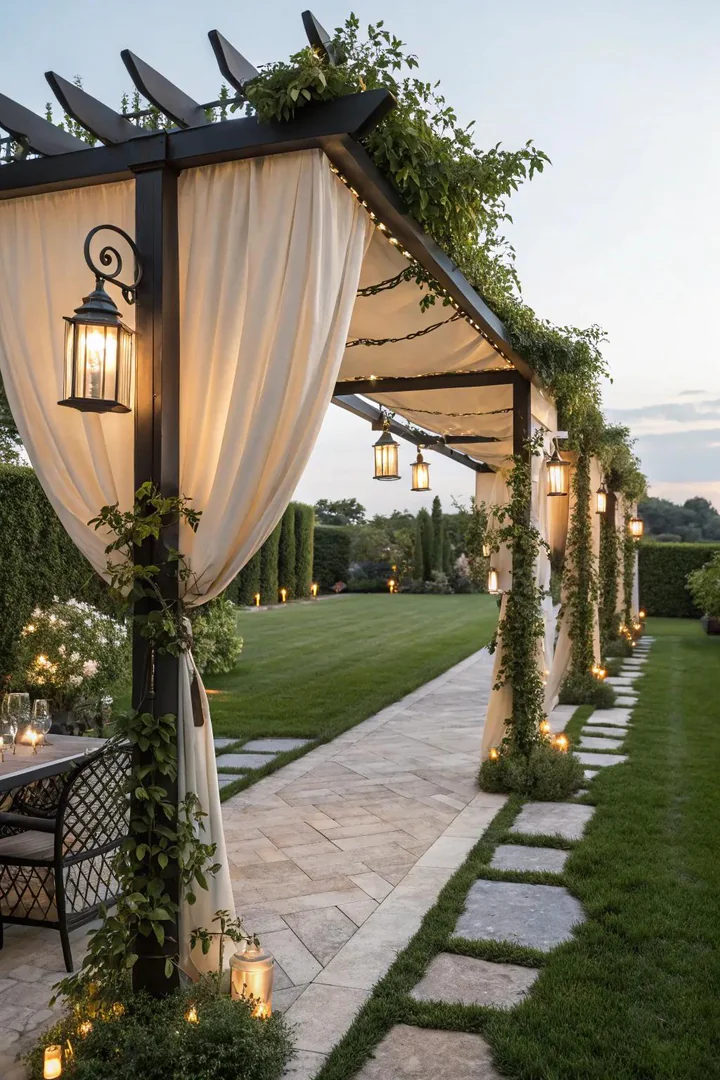
Motorized retractable canopies mount to the top of your pergola and extend or retract at the press of a button, covering spans up to 20 feet wide on a single unit. Somfy and Sunsetter make the most popular residential motors, with a complete motorized canopy system running $1,500-$4,500 installed for a 12×16-foot pergola.
Most motorized canopies use a cassette housing that protects the fabric when retracted, extending the lifespan of the Sunbrella or polyester cover to 8-12 years. Sun and wind sensors ($100-$300 add-on) automatically retract the canopy during high winds above 25 mph and extend the cover when UV intensity peaks at midday.
Run the motor’s power cable through a pergola post hollow or a surface-mounted conduit painted to match your frame color. Wi-Fi-enabled motors from Somfy’s Connexoon line and Sunsetter’s Smart Hub connect to Google Home and Amazon Alexa, letting you control shade coverage by voice command from anywhere on your patio.
6. Fabric Walls for Extra Privacy
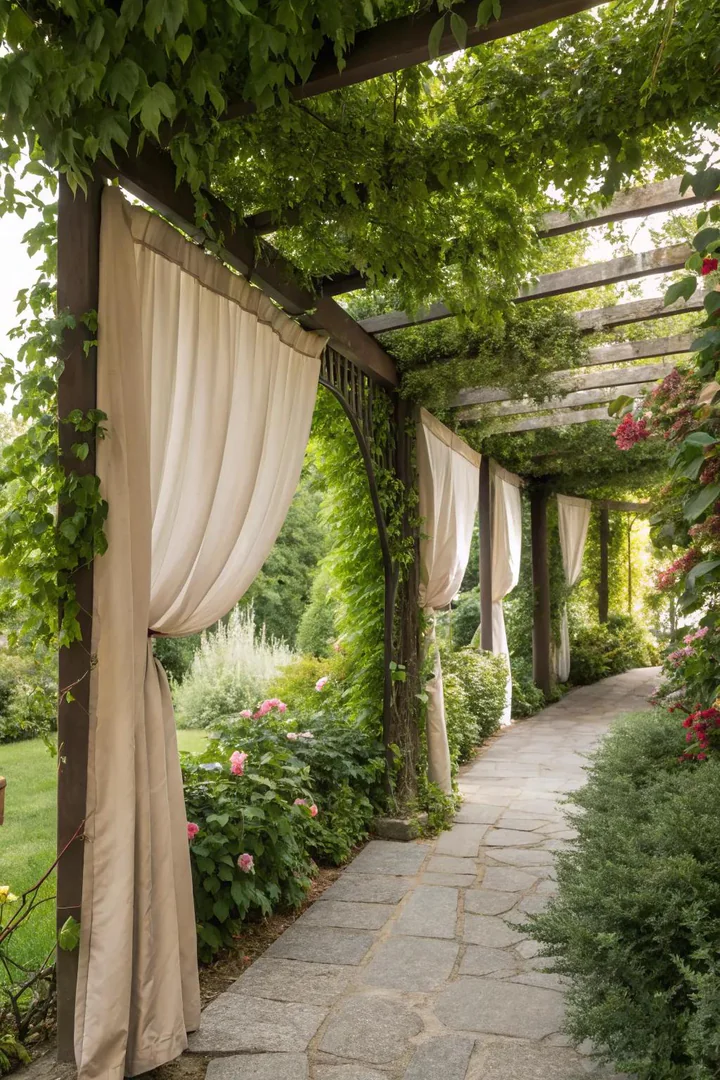
Full-height fabric wall panels turn an open pergola into a private outdoor room, blocking sightlines from neighboring properties without permanent construction. Use heavy-duty outdoor canvas (12-16 oz per square yard) from Phifertex or Textilene, stretched taut between top and bottom rails for a clean appearance.
Zip-track side panels from Ziptrak and Ozsun run in a guided channel that keeps fabric flat in wind speeds up to 60 mph. A complete zip-track system for a 10-foot-wide opening costs $400-$900 per panel installed. For more ideas on creating functional outdoor living spaces, browse The Designers Company for hundreds of project guides.
Combine fabric walls on two or three sides with an open front face for ventilation and access. Add clear vinyl window panels ($30-$60 each) in the upper portion of your fabric walls to preserve natural light while maintaining full wind and rain protection during cooler months.
7. Pergola with Built-In Blinds for Modern Flair
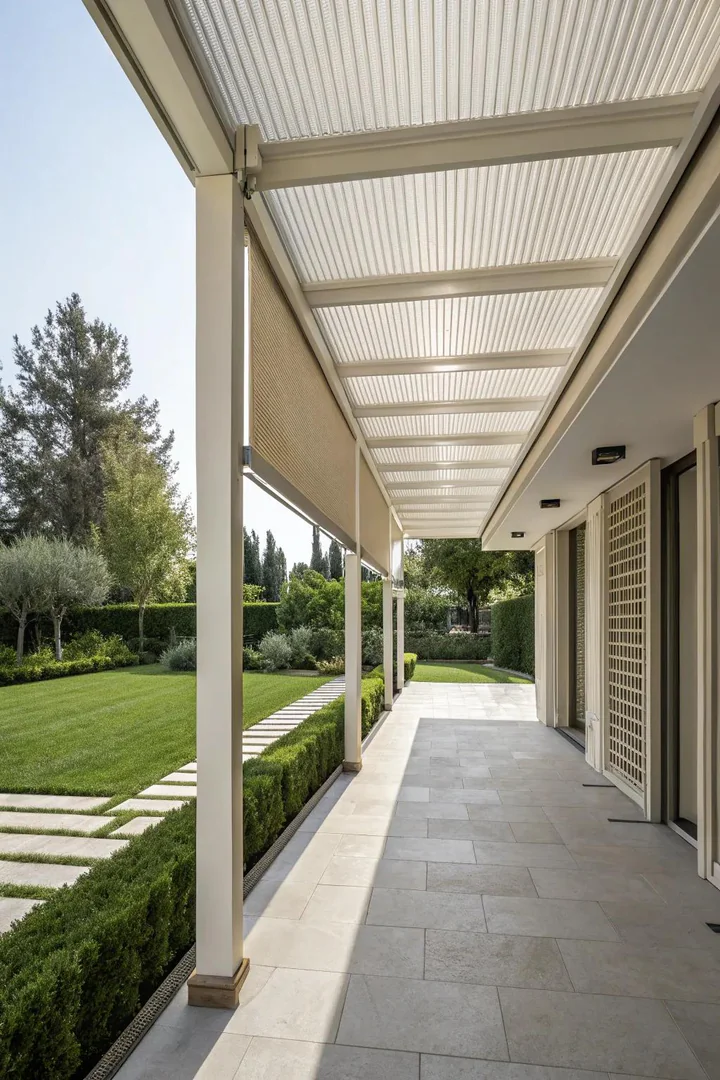
Pergolas with factory-integrated blind channels eliminate the need for aftermarket mounting hardware, giving a clean, flush appearance where the blinds sit inside the beam profile. Renson’s Camargue and Brustor’s B-600 both offer aluminum pergola systems with built-in blind recesses priced at $8,000-$15,000 for a 12×14-foot unit including installation.
Built-in blinds typically use zip-guided screens or roller shades that retract into the beam when not in use, leaving zero visible hardware. The integrated motors run on 24V DC power, keeping energy costs below $5 per year even with daily use. A matching cool decking surface below the pergola ties the modern look together from ground level up.
Factory-integrated systems come with 10-15 year warranties on both the frame and blind mechanisms, compared to 2-5 years for aftermarket add-ons. Order your pergola blind system in a RAL color-matched finish to your home’s exterior trim for a unified outdoor appearance.
8. Custom Fabric Patterns for Personal Touch
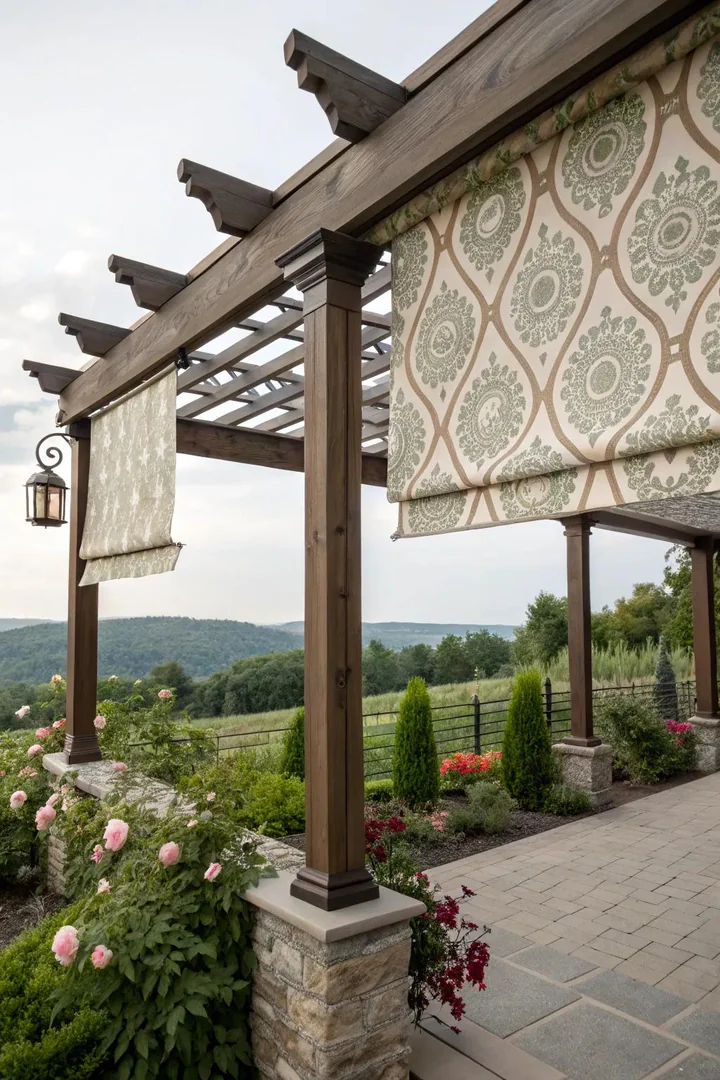
Custom-printed outdoor fabric lets you add original artwork, geometric patterns, or color-matched designs to your pergola blinds. Companies like Spoonflower and Contrado print on outdoor-rated polyester and Sunbrella using UV-stable inks that resist fading for 3-5 years in direct sun exposure.
Pricing for custom-printed outdoor fabric runs $25-$60 per yard depending on the base material and print complexity. A standard pergola blind panel 48 inches wide by 84 inches long requires about 3 yards of fabric, putting the material cost for a single custom panel at $75-$180 before sewing.
Striped patterns in 4-6 inch bands work especially well on roller blinds, while larger botanical prints suit flat Roman shades where the full image remains visible. Coordinate your custom fabric colors with outdoor cushions and throw pillows to build a layered color scheme across your entire patio setup.
9. Eco-Friendly Materials for Sustainable Style
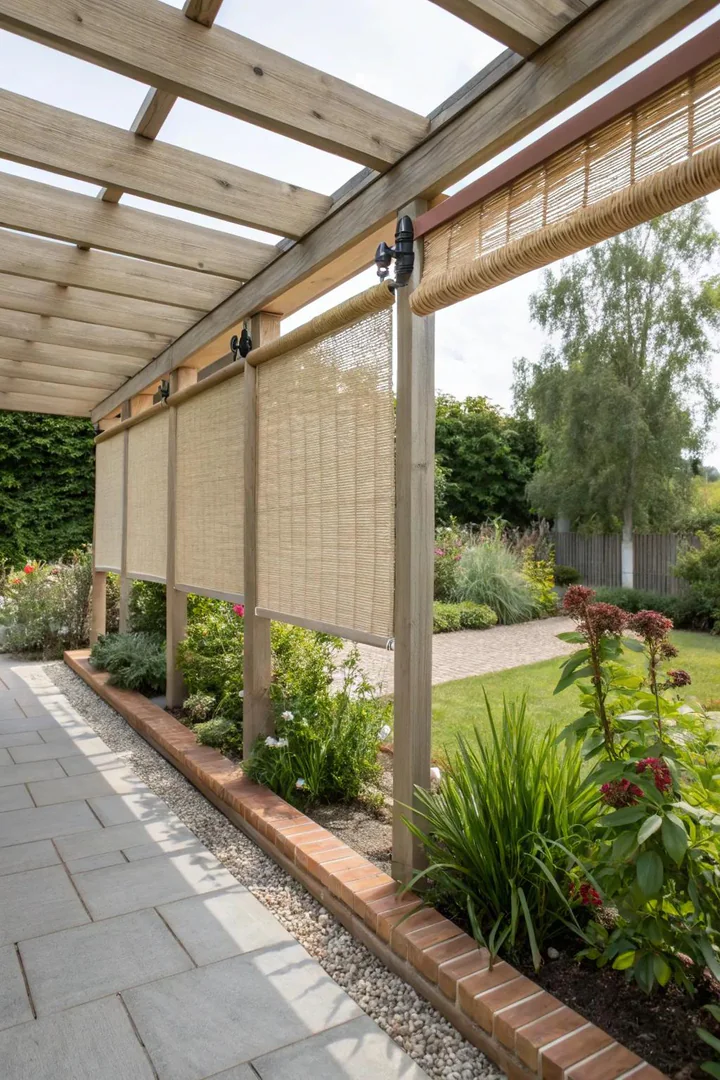
Bamboo roll-up blinds, hemp fabric panels, and reclaimed wood slat screens offer shade coverage with a smaller environmental footprint than synthetic options. Radiance and Lewis Hyman bamboo blinds run $20-$80 per panel for sizes up to 72 inches wide, making them the most budget-friendly option in this roundup.
Bamboo naturally resists mold and mildew, though outdoor bamboo blinds last 2-3 years before needing replacement in wet climates. Apply a coat of marine-grade tung oil annually to extend bamboo lifespan up to 5 years and prevent splitting from repeated wet-dry cycles.
Recycled HDPE (high-density polyethylene) shade cloth from Coolaroo offers a middle ground between natural and synthetic materials. Made from post-consumer plastic, Coolaroo’s HDPE mesh blocks 70-90% of UV rays and comes with a 10-year warranty against color fade. Pair eco-friendly blinds with a backyard pavilion made from sustainably sourced timber for a fully green outdoor structure.
Pergola Blind Types Comparison
| Blind Type | Material | Cost Range | UV Block | Wind Rating | Lifespan |
|---|---|---|---|---|---|
| Louvered Roof + Blinds | Aluminum + Textilene | $7,200-$12,600 | 90-95% | Up to 45 mph | 15-20 years |
| Outdoor Curtains | Sunbrella Acrylic | $180-$640 (6-8 panels) | 80-90% | Low (needs tiebacks) | 5-7 years |
| Pergola Tent Canopy | Polyester / Canvas | $100-$1,200 | 85-95% | Moderate | 3-5 years |
| Roman Shades | PVC-backed Polyester | $60-$150 per panel | 80-90% | Moderate | 4-6 years |
| Motorized Canopy | Sunbrella / Polyester | $1,500-$4,500 | 85-95% | Auto-retract at 25 mph | 8-12 years |
| Fabric Walls (Zip-track) | Phifertex / Textilene | $400-$900 per panel | 90-95% | Up to 60 mph | 8-10 years |
| Built-In Blinds | Aluminum + Screens | $8,000-$15,000 | 90-95% | High (integrated) | 10-15 years |
| Custom Fabric | Printed Polyester | $75-$180 per panel | 75-85% | Moderate | 3-5 years |
| Eco-Friendly Bamboo | Bamboo / HDPE Mesh | $20-$80 per panel | 70-90% | Low-Moderate | 2-5 years |
How to Install Pergola Blinds Yourself
1. Measure Your Pergola Openings
Use a steel tape measure to record the width and height of each opening where you plan to hang blinds. Measure at three points across each span (top, middle, bottom) and use the narrowest measurement to prevent binding. Record the depth of your pergola beams (typically 4-8 inches) to confirm your chosen blind bracket will fit flush against the wood or aluminum.
2. Select the Right Mounting Hardware
For wooden pergolas, use 3-inch stainless steel lag bolts drilled into pre-bored pilot holes to prevent splitting. Aluminum pergolas require self-tapping tek screws rated for outdoor use, while vinyl pergola posts need toggle bolts that spread the load across the hollow interior wall. Match all hardware to marine-grade 316 stainless steel to prevent rust staining on light-colored surfaces.
3. Install the Top Mounting Rail
Level the top rail using a 4-foot spirit level and mark your drill points with a center punch. Space bracket mounts every 24-36 inches along the rail for roller and Roman shade systems. Secure the rail with a minimum of two fasteners per bracket, and verify the rail sits perfectly horizontal before tightening the final bolts.
4. Hang and Adjust the Blind Panels
Clip or slide each blind panel into the rail according to the manufacturer’s instructions. Test the raise and lower mechanism several times, adjusting cord tension or motor limit switches until the blind stops at your desired fully open and fully closed positions. For zip-track systems, feed the fabric edge into both side channels simultaneously to prevent the material from binding or bunching.
5. Seal and Weatherproof All Connections
Apply a bead of outdoor-rated silicone caulk around each mounting bracket where metal meets your pergola surface. Run any electrical wiring for motorized blinds through UV-rated conduit and connect to a GFCI-protected outdoor circuit. Test all electrical connections with a multimeter before first use, and set motor end-stops to prevent the fabric from over-extending or bunching at either end of the track.
Frequently Asked Questions
What is the best material for pergola blinds in high-wind areas?
Zip-track blind systems using Textilene or Phifertex mesh handle wind speeds up to 60 mph because the fabric locks into guided side channels on both edges. Avoid loose curtains or unguided roller blinds in areas with sustained winds above 20 mph, as the fabric will billow and eventually tear at the mounting points.
How much do motorized pergola blinds cost to operate?
A Somfy or Sunsetter 24V DC motor draws about 2-4 watts during operation and costs under $5 per year in electricity with daily use. Solar-powered motor options from Somfy’s Wirefree line eliminate electrical costs entirely, charging from a small panel mounted on the pergola beam that collects enough energy in 2-3 hours of sunlight per day.
Can you install pergola blinds on a vinyl or fiberglass pergola?
Yes, but hollow vinyl and fiberglass posts require toggle bolts or expansion anchors rather than standard screws. Distribute the weight across multiple mounting points and avoid hanging heavy motorized systems from vinyl posts alone. Reinforce hollow posts by inserting a pressure-treated 4×4 timber dowel before mounting brackets for added load capacity.
How do you clean outdoor pergola blinds?
Rinse Sunbrella and polyester blinds monthly with a garden hose to remove pollen and dust. For deeper cleaning, mix 1/4 cup of mild liquid soap per gallon of warm water and scrub with a soft-bristle brush, then rinse thoroughly and allow the fabric to air dry fully before retracting. Bamboo blinds only need a dry dusting with a microfiber cloth and an annual tung oil treatment.
Do pergola blinds add value to a home?
Outdoor living improvements including pergola shade systems return 50-80% of their cost at resale according to the National Association of Realtors’ 2024 Remodeling Impact Report. A motorized blind system on a well-maintained pergola increases the usable square footage of your outdoor space, which appraisers factor into comparable property assessments especially in Sun Belt markets.
What is the difference between roller blinds and Roman shades for pergolas?
Roller blinds wrap around a tube at the top and create a smooth, flat surface when lowered, blocking light and wind efficiently. Roman shades fold horizontally in stacked pleats and offer a more textured, decorative appearance but take up more space at the top when raised. Roller blinds suit modern pergola designs, while Roman shades work better with traditional or Mediterranean-style structures.
How long do bamboo pergola blinds last outdoors?
Untreated bamboo blinds last 2-3 years in exposed outdoor conditions before the reeds crack and discolor. Applying marine-grade tung oil or a UV-protective wood sealer once per year extends that lifespan to 4-5 years. Under a covered or semi-protected pergola where the blinds stay dry most of the time, bamboo can hold up for 6-8 years with proper annual maintenance.