Front Porch Decorating Ideas: 16 Ways to Create Instant Curb Appeal

Front porch decorating starts with a clear plan: pick a colour palette that matches your home exterior, choose weather-resistant furniture sized to the space, and layer in plants, textiles, and lighting that make the entry feel welcoming from the curb. Below are 16 front porch decorating ideas covering seating arrangements, planter setups, colour accents, and lighting layouts that work on porches from 4 feet deep to full wraparound styles.
1. Create a Cozy Seating Area
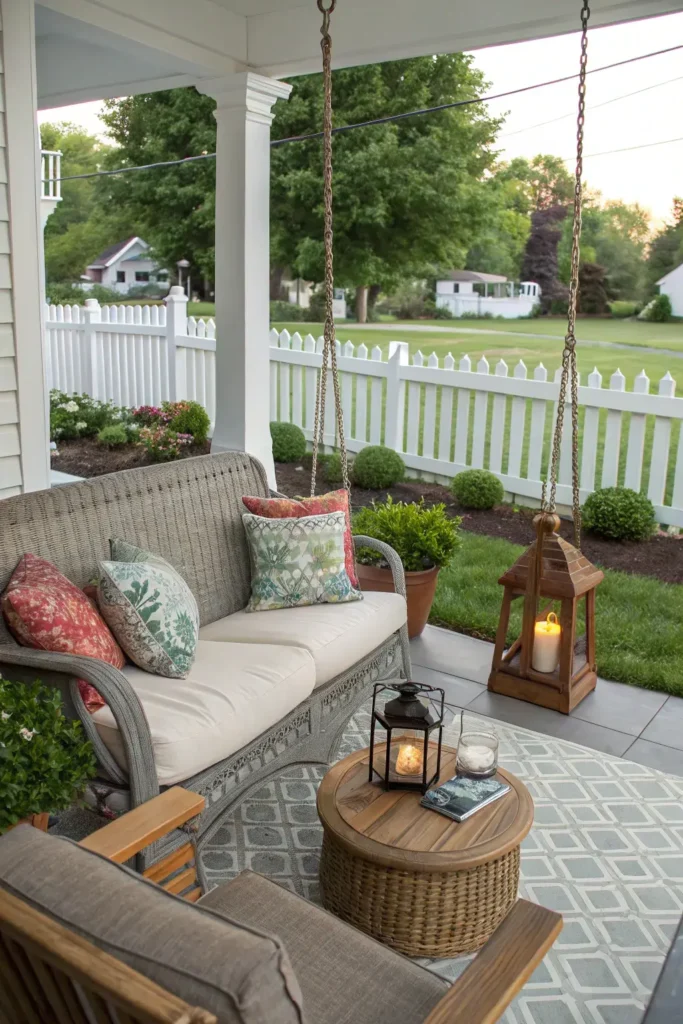
Two Adirondack chairs with a small side table between them is the classic front porch setup, and it works on porches as narrow as 5 feet deep. Polywood sells HDPE recycled-lumber Adirondacks for $250 to $400 each that never need paint or stain and resist rain, UV, and ice. A matching 18-inch side table ($100 to $150) holds drinks and a phone without crowding the walkway.
For deeper porches (8 feet or more), swap the chairs for a loveseat and accent chair set from the Target Threshold line ($400 to $700 for the pair) with all-weather wicker frames and Sunbrella-grade cushions. Add a 4 x 6-foot outdoor rug underneath to anchor the group, and leave at least 30 inches of clear path between the seating and the front door so guests can pass without squeezing past furniture.
2. Arrange Potted Plants
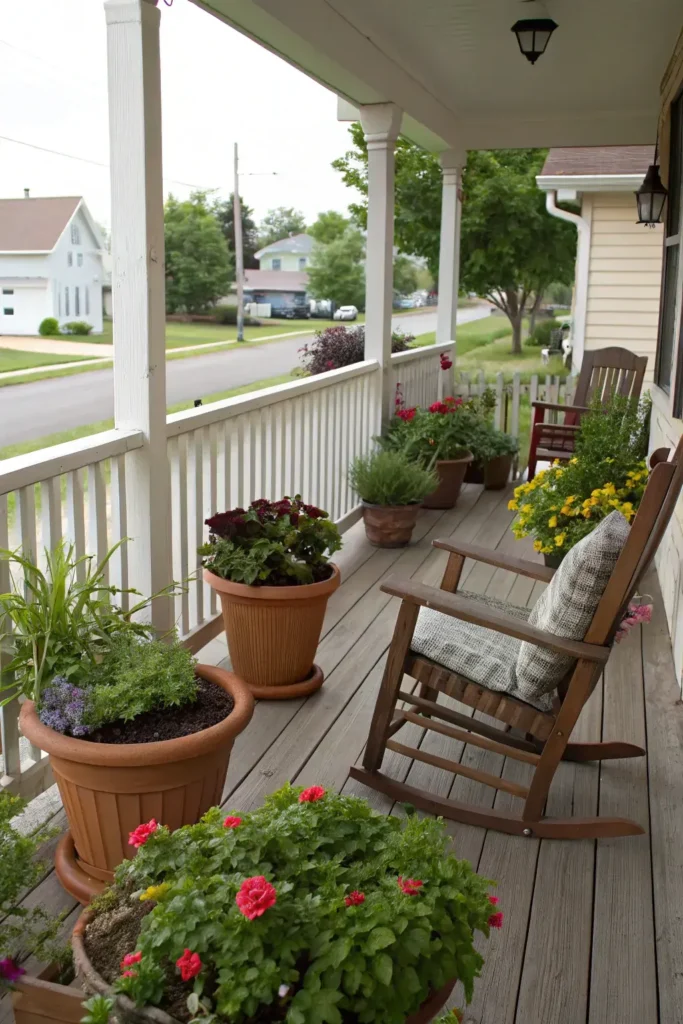
A pair of large planters flanking the front door creates instant symmetry and draws the eye straight to the entry. Bloem and Southern Patio sell 16-to-20-inch resin or fiberglass planters for $30 to $80 each that look like stone or terra cotta but weigh a fraction of the real thing. Plant a tall centrepiece (dracaena spike, purple fountain grass, or Italian cypress) in the middle, fill the edges with trailing sweet potato vine or creeping Jenny, and tuck seasonal colour (petunias in spring, mums in fall, ornamental cabbage in winter) around the base.
Group three to five pots of staggered heights along the porch steps for a layered look. Use odd numbers (groups of 3 or 5) because the asymmetry reads more natural than even pairs. Stick to one or two pot colours (matte black, weathered grey, or warm terracotta) so the planters blend while the plants pop, and make sure every pot has a drainage hole or a drilled insert to prevent root rot.
3. Hang a Porch Swing
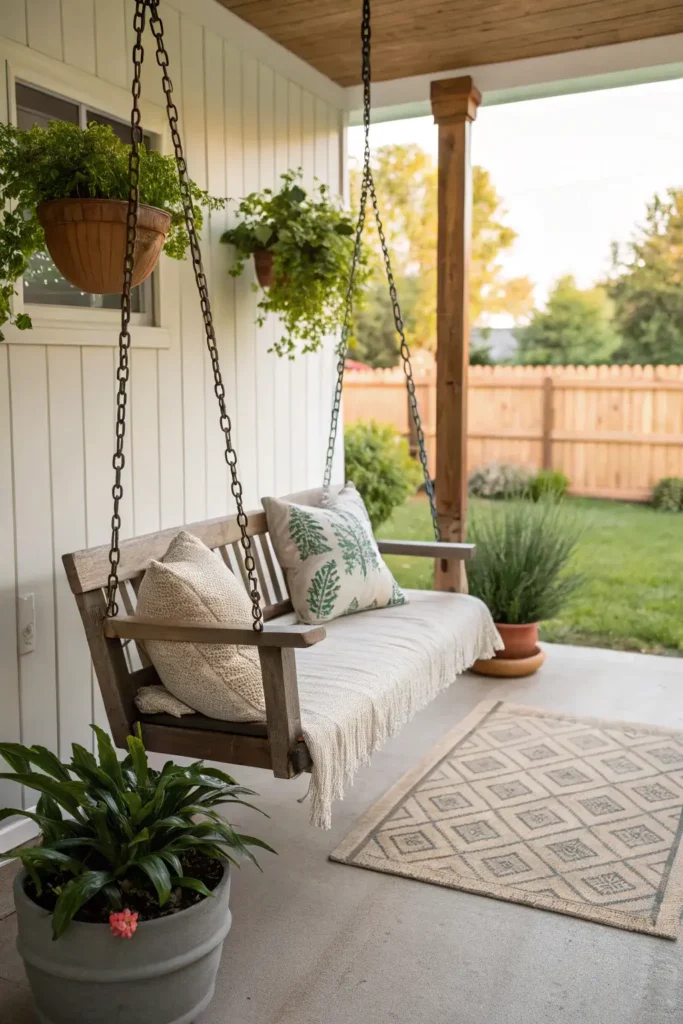
A 4-to-5-foot porch swing seats two adults and becomes the centrepiece of the porch. Hinkle Chair Company and Amish-made cypress or cedar swings run $200 to $500, while Polywood HDPE versions cost $600 to $900 and never need refinishing. Hang the swing from ceiling joists (not just the porch ceiling boards) using 3/8-inch galvanised eye bolts rated for 500 pounds each, with 3 to 4 feet of clearance behind the swing so it can arc freely without hitting the wall.
Add a 2-inch-thick outdoor cushion in a neutral stripe or solid colour ($40 to $80 from Sunbrella or Arden Selections) and two 18-inch lumbar pillows in a contrasting print. A small chain-hung side shelf ($20 to $30 on Etsy) bolts to the swing chain and gives riders a flat surface for a coffee mug. Leave at least 18 inches from the swing seat to the porch floor when loaded so feet can touch the ground for a gentle push-off.
4. String Outdoor Lights
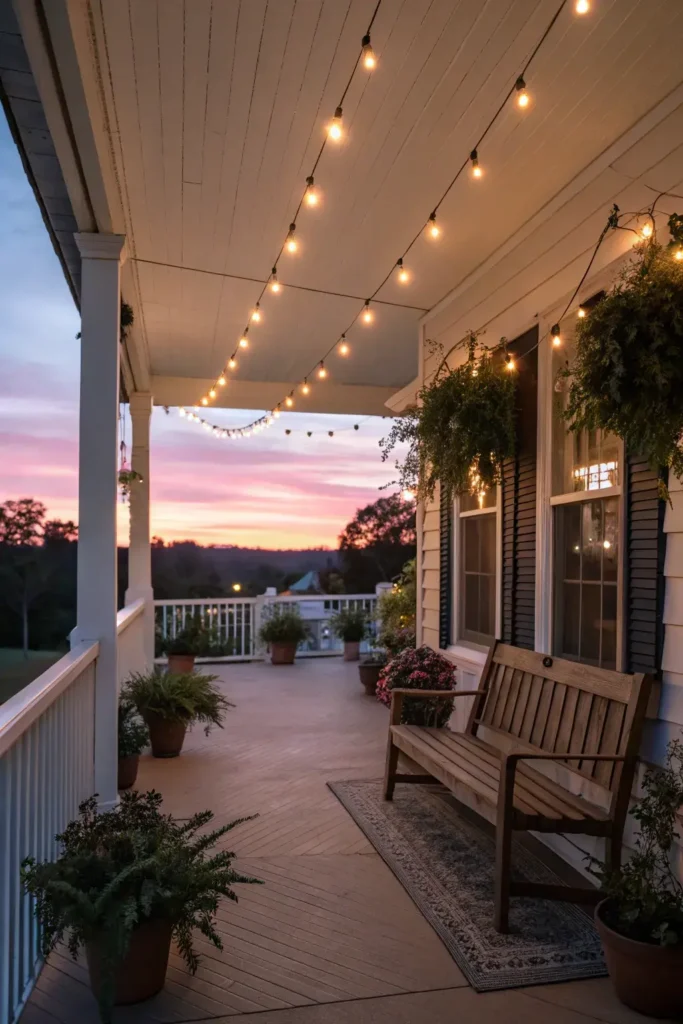
One strand of Edison-bulb string lights draped along the porch ceiling line turns a dark entry into a warm, inviting glow after sunset. Brightech Ambience Pro sells 48-foot commercial-grade strands for $25 to $40 with shatterproof LED bulbs rated for 20,000 hours, and Newhouse Lighting offers a solar-powered version ($35) that charges during the day and runs for 6 to 8 hours each night without any wiring.
Screw cup hooks into the ceiling joists every 3 to 4 feet and loop the strand in a gentle swag pattern rather than pulling it taut. A photo-cell plug adapter ($5 to $10) plugged into the GFCI outlet turns the lights on at dusk and off at dawn automatically, so the porch glows every evening. For a layered look, pair the string lights with a wall-mounted lantern sconce ($30 to $80 from Kichler or Progress Lighting) flanking the front door to create two levels of light: ambient overhead and task-level at the entry.
5. Paint a Bold Front Door
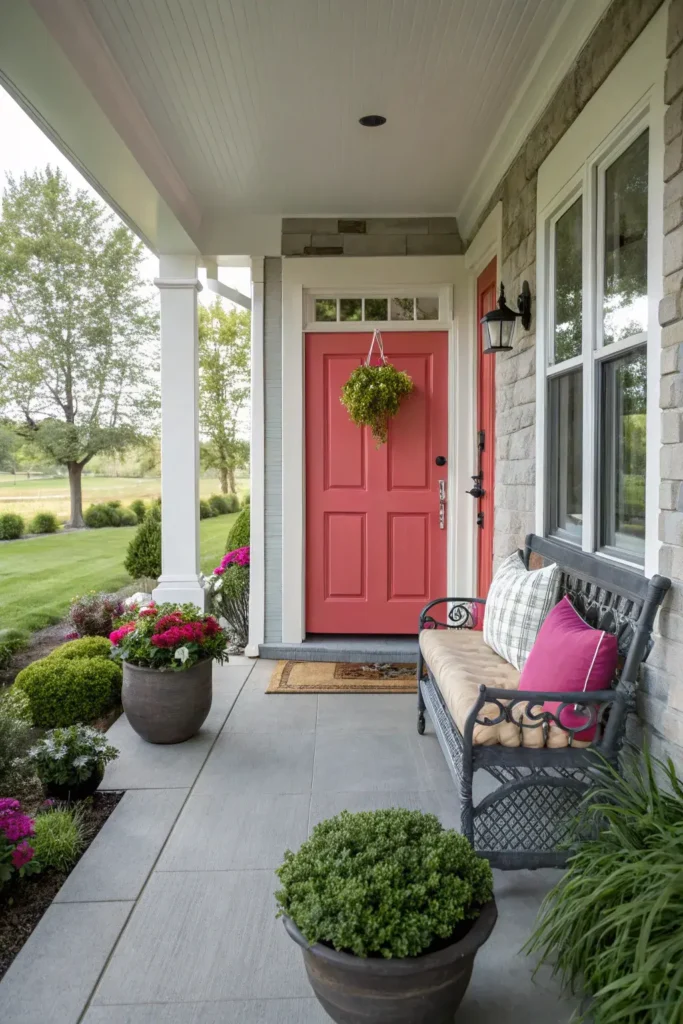
A bright front door on a neutral porch creates a focal point visible from the street. Benjamin Moore Caliente (AF-290) red, Sherwin-Williams Commodore (SW 6524) navy, and Farrow and Ball Hague Blue (No. 30) are top-performing exterior door colours that hold up in direct sun without fading. One quart of premium exterior paint ($20 to $30) covers a standard 36 x 80-inch door in two coats, and the entire job takes under 3 hours with a 4-inch foam roller and a 2-inch angled brush.
Sand the door with 120-grit sandpaper, wipe it down with a tack cloth, apply one coat of bonding primer ($15), and then roll on two coats of semi-gloss or high-gloss paint with 4 hours of drying time between coats. Pull the door colours into small accents elsewhere on the porch (a matching planter, a doormat border, or pillow piping) to tie the look together. Avoid painting the entire porch trim the same bold colour because it overwhelms the space and competes with the door.
6. Lay an Outdoor Rug
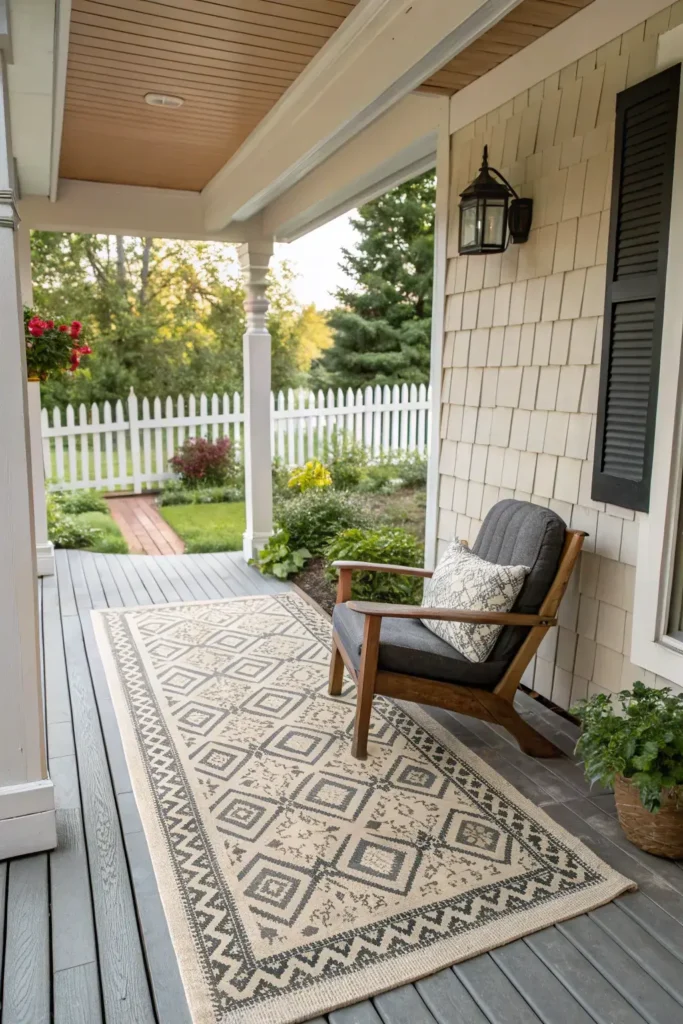
An outdoor rug anchors the porch furniture, softens the concrete or wood floor, and adds pattern without any permanent changes. Safavieh Courtyard and Nourison Aloha polypropylene rugs ($50 to $150 in 5 x 7 feet) resist moisture, mildew, and UV fading and rinse clean with a garden hose. A 4 x 6-foot rug fits a small porch with two chairs, while a 5 x 8-foot size works under a larger seating group with a coffee table.
Pick a rug with a flat weave or low pile (under 0.25 inches) because thick shag traps water and breeds mould on covered porches. Use rug grip tape ($8 to $12 per roll from Gorilla Grip) underneath to keep the rug flat against the floor, especially on painted wood where rubber-backed rugs can trap moisture and peel the paint. Roll the rug up and store it inside during extended winter months in freeze-thaw climates to prevent fibre breakdown.
7. Use Symmetrical Design
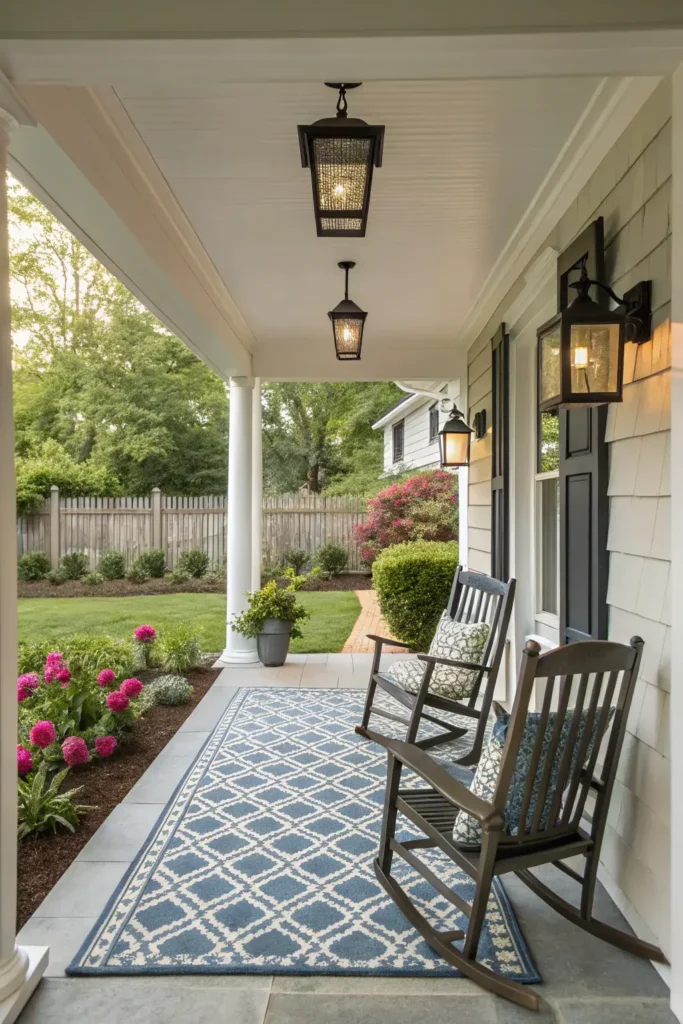
Matching pairs on each side of the front door, identical planters, identical lanterns, identical topiaries, gives a porch a formal, pulled-together look with zero decorating risk. Place two 24-inch boxwood topiaries ($40 to $80 each, live or faux) in matching black or white ceramic pots flanking the doormat, and hang two identical wall sconces ($30 to $60 each from Hampton Bay or Sea Gull Lighting) at the same height on either side of the door frame.
Symmetry works best when the porch itself is centred on the front of the house with the door in the middle. On an off-centre door, use one larger statement piece (a big planter or a bench) on the wide side and a smaller matching pair on the narrow side to balance the visual weight without forcing a mirror image that looks awkward. Keep all paired items at the exact same height and distance from the door: even a 2-inch offset breaks the mirrored effect and looks accidental rather than intentional.
8. Mix in Vintage Finds
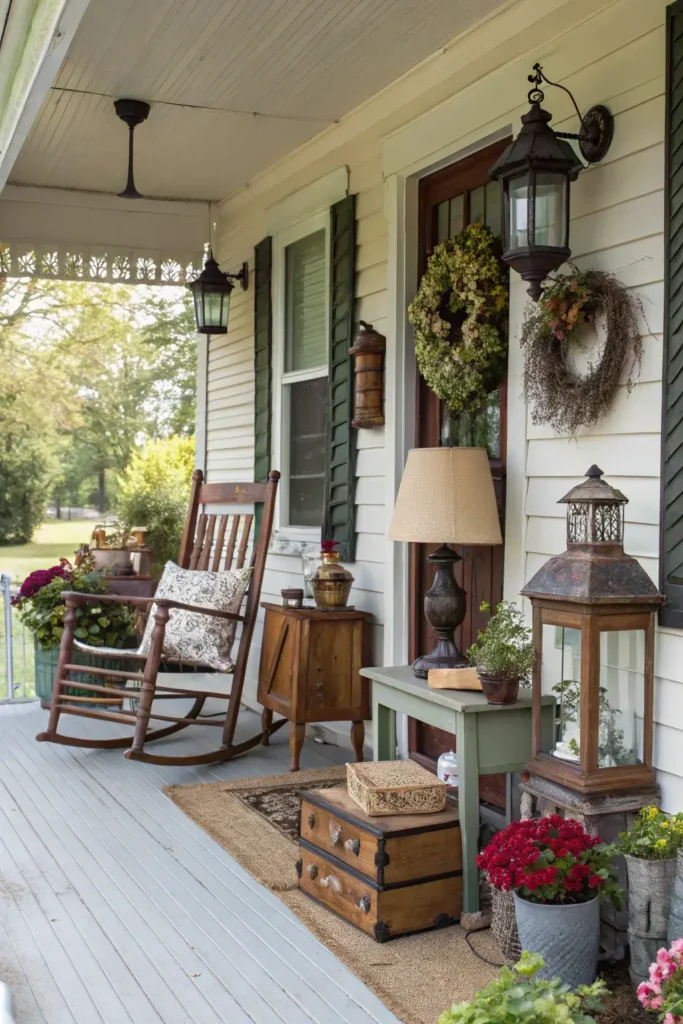
An old milk can, a salvaged shutter, a vintage metal watering can, or a weathered wooden crate costs $10 to $50 at flea markets and thrift stores and gives the porch a one-of-a-kind character that mass-produced decor cannot match. Stack two or three wooden crates vertically beside the front door to create an instant plant stand, or lean a pair of salvaged shutters against the wall behind a bench to add height and texture.
Pair vintage metal pieces (old signs, iron brackets, galvanised buckets) with fresh greenery to keep the look lively rather than cluttered. A rusted watering can filled with dried lavender, a cast-iron boot scraper at the bottom of the steps, or a repurposed window frame hung as wall art each adds personality without taking up floor space. Limit the vintage accents to three or four pieces so the porch reads collected rather than chaotic. Seal raw metal pieces with Rust-Oleum Clear Coat spray ($6 per can) to freeze the patina and prevent rust from bleeding onto the porch floor.
9. Install Built-In Benches
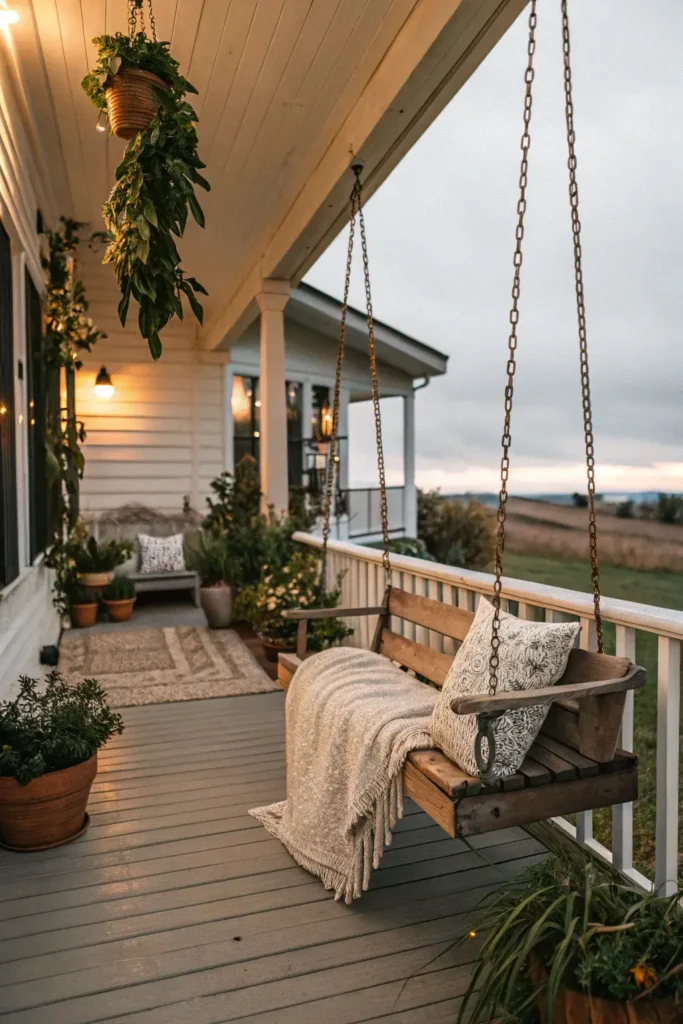
A built-in bench along one wall of the porch saves floor space and doubles as concealed storage when built with a hinged seat lid. A standard porch bench runs 4 to 6 feet long, 18 inches deep, and 18 inches tall, which fits against the railing or house wall without blocking the door path. A carpenter charges $400 to $1,000 for a basic painted pine bench with a plywood lid and piano hinge, while pressure-treated southern yellow pine or cedar bumps the material cost to $150 to $300 for a DIY build.
Top the bench with a 3-inch-thick custom cushion ($60 to $120 from Cushion Source or Sunbrella Direct) in an outdoor fabric, and add two or three throw pillows for colour. Store the bench cavity with off-season pillow covers, small garden tools, or outdoor throws so everything stays tidy. A built-in bench also works as a shoe station near the door: tuck a boot tray ($15 to $25 from Pottery Barn or Target) under the seat to catch muddy shoes and keep the porch floor clean.
10. Hang a Statement Lantern
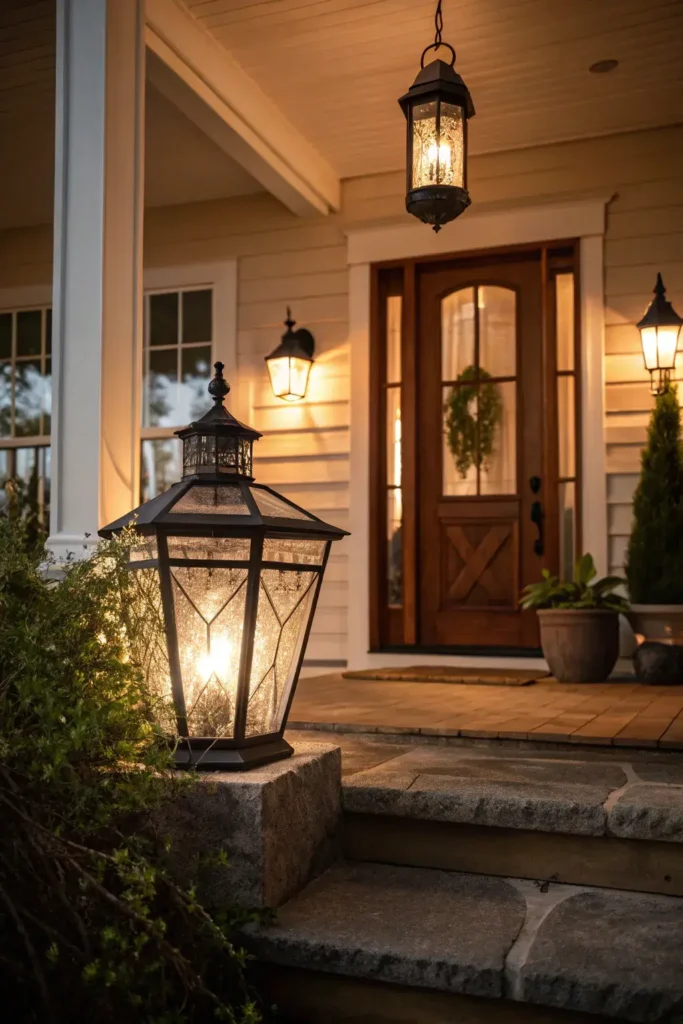
One oversized pendant lantern centred above the porch seating area replaces a standard builder-grade ceiling light and gives the entry a custom look. Capital Lighting and Troy Lighting sell 20-to-30-inch outdoor-rated lantern pendants in aged brass, matte black, or weathered zinc for $200 to $600. Hang the lantern at least 7 feet above the porch floor (measured to the bottom of the fixture) so tall guests can walk under it without ducking.
Pair the pendant with a dimmer switch ($15 to $25 from Lutron) so the light level can drop from full brightness for package reading to a low glow for evening socialising. A single large lantern reads more intentional than three small ceiling fans or flush mounts, and the scale draws the eye upward, making a low porch ceiling feel taller. For porches without a ceiling electrical box, a battery-operated LED lantern ($25 to $50) with a remote-control timer gives the same look with no wiring.
11. Set Up a Mini Container Garden
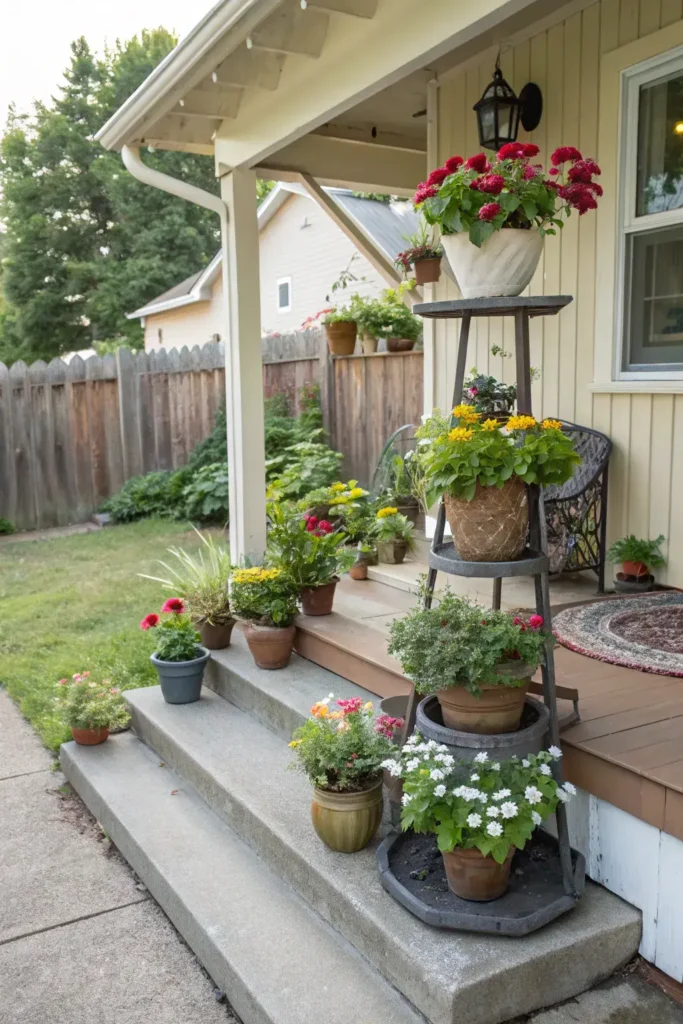
A group of 5 to 7 containers in mixed sizes (6-inch herbs, 12-inch annuals, 16-inch shrubs) creates a lush green corner that fills the porch with colour and scent. Plant rosemary, basil, and mint in the small pots for kitchen-ready herbs near the door, fill the medium pots with geraniums or lantana for continuous blooms May through October, and anchor the group with a tall snake plant or bird of paradise in the large pot for vertical height.
Use a rolling plant caddy ($10 to $20 from Amazon or Home Depot) under the heaviest pot so the group can shift for sweeping or seasonal rearrangement. Place drip trays under every container to protect the porch floor, and water with a narrow-spout watering can rather than a hose blast that splashes soil onto the siding. Swap the seasonal colour pots every 3 months (petunias to mums to pansies to geraniums) and keep the permanent green centrepieces year-round for a porch that never looks bare.
12. Layer Contrasting Textures
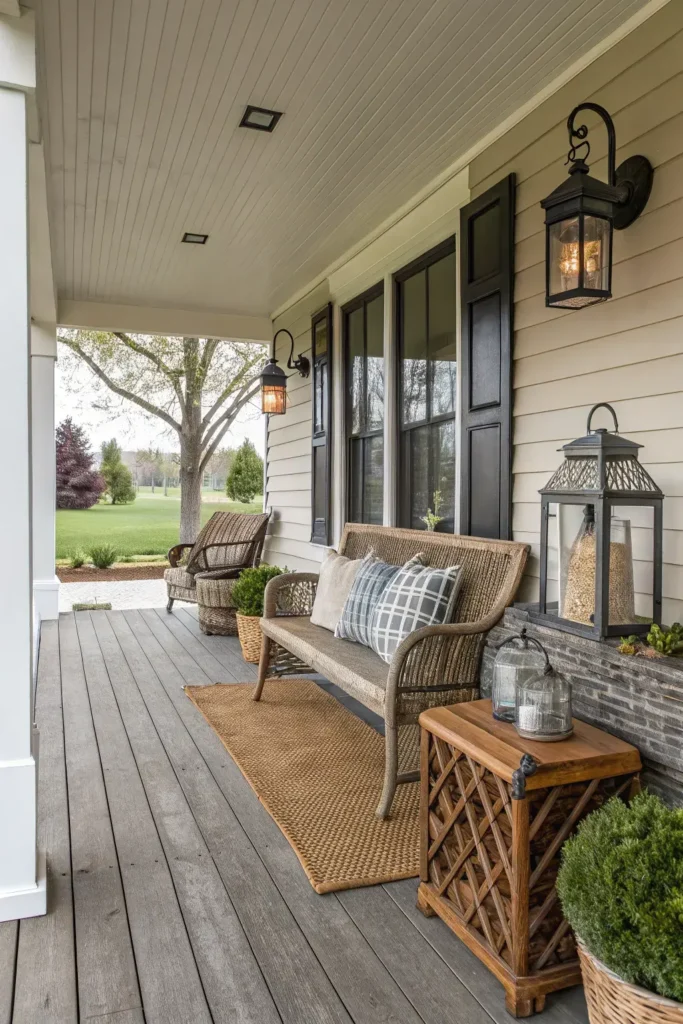
Mixing at least three different textures, smooth metal, rough wicker, soft fabric, gives the porch visual depth that a single material cannot deliver. Pair a wrought-iron plant stand ($30 to $60) with a woven seagrass basket ($15 to $40) holding a throw blanket, and set both beside a smooth ceramic planter. A jute doormat ($20 to $35 from Pottery Barn or World Market) layered under a patterned outdoor rug adds another tactile layer right at the entry.
Keep the colour palette tight (two or three colours max) when mixing textures so the porch reads cohesive rather than chaotic. A black iron bracket, a natural wicker chair, and a white linen pillow hit three textures in a clean black/tan/white scheme. Avoid mixing more than four textures on a small porch (under 6 feet deep) because the tight space amplifies visual clutter. On a larger wraparound porch, a fifth texture (smooth stone, raw wood, or hammered copper) adds richness without overwhelming the eye.
13. Add a Short Decorative Fence
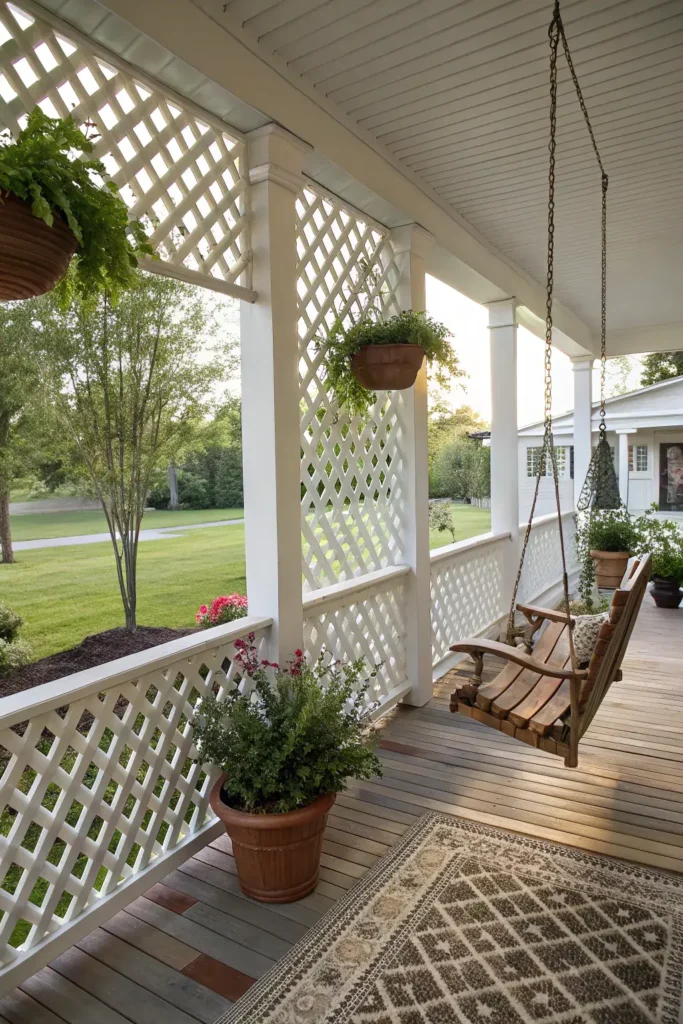
A low decorative fence (2 to 3 feet tall) along the porch perimeter defines the space from the yard, keeps small pets contained, and adds curb appeal without blocking sightlines. Zippity Outdoor Products sells snap-together vinyl picket fence panels ($40 to $70 per 3-foot section) that stake into the ground beside the porch without posts or concrete. A painted wood spindle fence in a matching house trim colour costs $10 to $20 per linear foot in materials for a DIY build with pressure-treated 2×2 pickets and a 2×4 top rail.
Run the fence along the open sides of the porch only, leaving the steps and main walkway clear. Top the fence rail with a flat cap ($2 to $5 per cap) for a finished look and a ledge to set a drink. Plant low shrubs (dwarf boxwood, lavender, or liriope) along the outside face of the fence to soften the hard line and blend the porch into the yard. A decorative gate ($50 to $100) at the top of the steps adds a cottage feel and a physical cue that tells visitors to come in.
14. Place a Rocking Chair
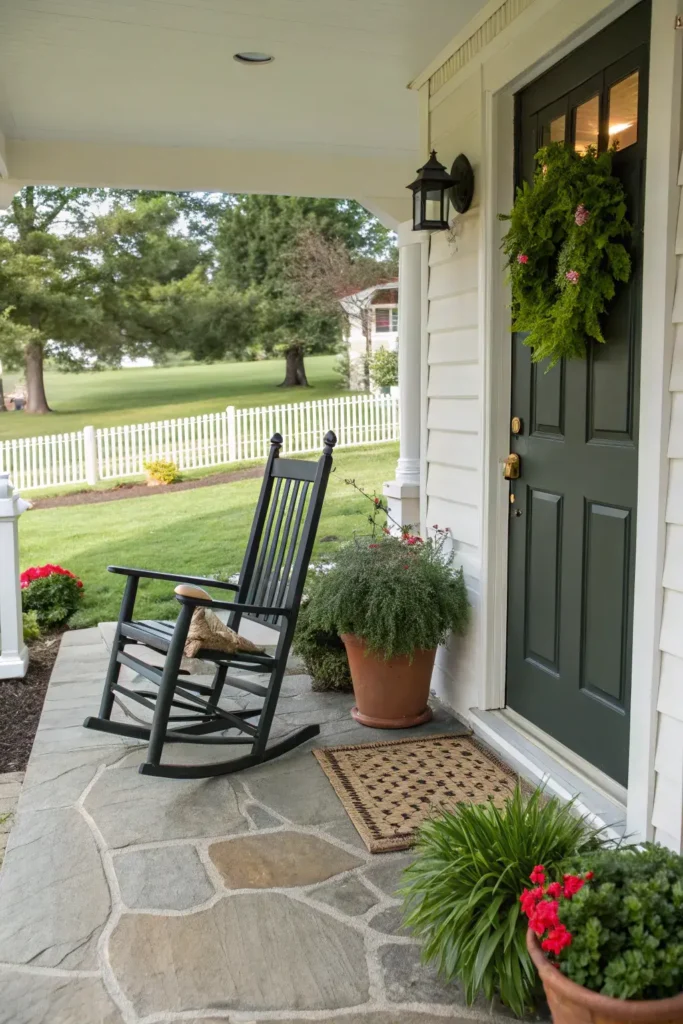
A single rocking chair on the porch is the oldest front porch tradition in American residential design, and a good rocker still outperforms any other single-seat option for comfort and curb appeal. Troutman Chair Company makes solid Appalachian hardwood rockers ($250 to $450) that last 30-plus years outdoors with an annual coat of spar urethane, while Polywood HDPE Presidential Rockers ($350 to $450) weigh 40 pounds, never splinter, and come in 15 colours that match any exterior scheme.
Position the rocker so it faces slightly toward the street (about 15 degrees off the wall) rather than straight out or toward the door, because that angle lets the sitter watch the neighbourhood while still greeting arrivals. Leave 3 feet of arc space behind the rocker so the runners do not hit the wall or siding. A small drum side table ($30 to $60) beside the rocker holds a book and a glass, and a woven throw blanket ($20 to $35) draped over the back adds warmth for cool mornings.
15. Display Personal Touches
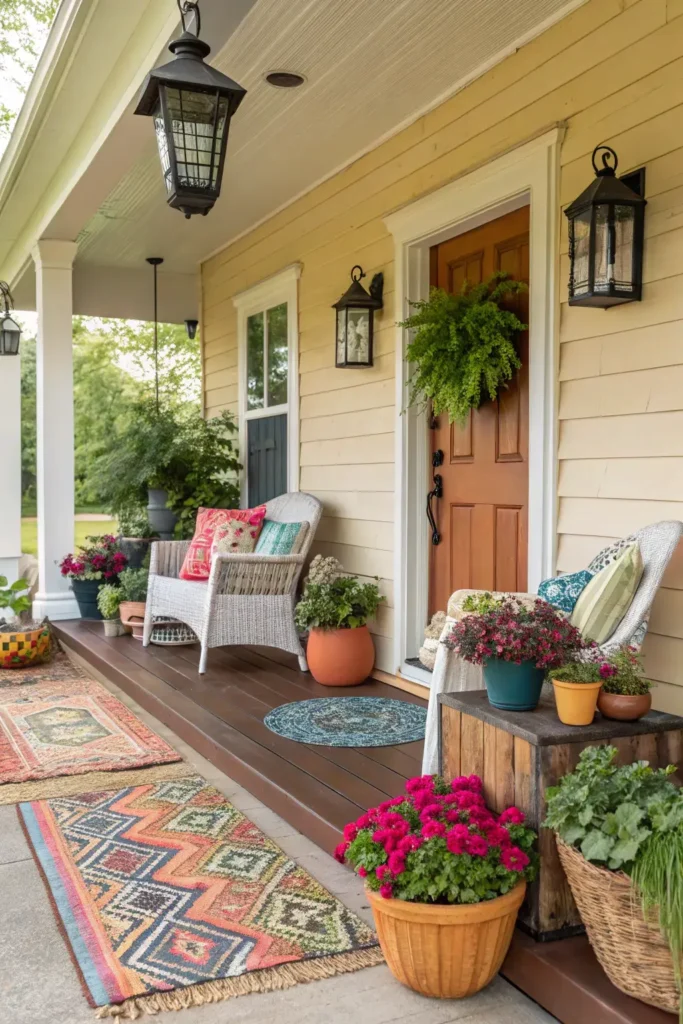
A custom house number plaque, a monogrammed doormat, or a hand-lettered welcome sign makes the porch feel like yours rather than a catalogue set. Etsy sellers offer custom-cut metal address signs in steel, aluminium, or copper for $30 to $100 that mount with standoff bolts for a floating effect. A personalised coir doormat ($25 to $45 from Nickel Designs or Erin Gates) printed with the family name or a short phrase wears for 1 to 2 seasons before needing a replacement.
Hang a seasonal wreath ($20 to $60, live or artificial) on the front door with an over-the-door hook ($5) and swap the wreath four times a year: fresh greenery and berries in winter, tulips or forsythia in spring, a sunflower or hydrangea ring in summer, and a dried wheat or maple leaf wreath in fall. A backyard tiki hut brings the fun to the rear of the house, but the front porch is where personal style greets every visitor first. Add one more layer by placing a small chalkboard easel ($10 to $15) by the door for a rotating message.
16. Create Zones with Furniture
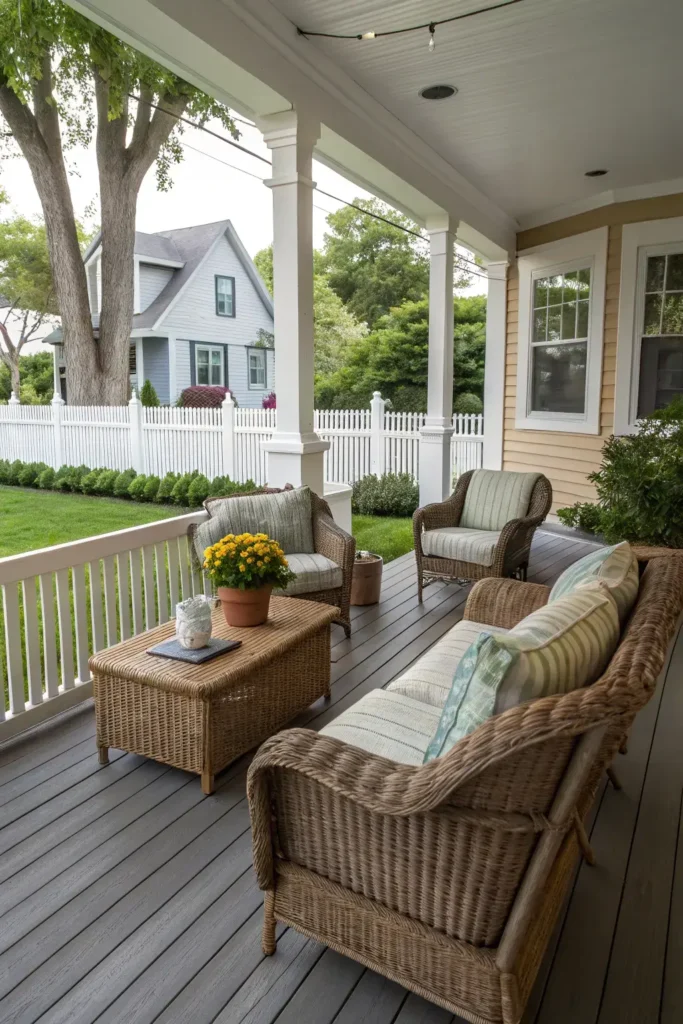
On a wraparound or deep (10-plus feet) porch, splitting the space into two or three zones, a sitting zone, a plant zone, and a dining or work zone, prevents the porch from looking like a furniture showroom where everything faces the same direction. Position the primary seating group near the front door for conversation and greeting, place the container garden cluster at the far end for a green backdrop, and set a small bistro table and two folding chairs ($80 to $200 from Wayfair or World Market) in between for morning coffee or laptop work.
Separate zones with a change in rug or a low plant stand rather than walls or screens, because open sightlines keep the porch feeling spacious. A wraparound L-shaped porch naturally creates a corner zone that suits a swing or a dining set tucked out of the main walkway. Keep the walking path (at least 30 inches wide) running through all zones from the steps to the front door, and angle furniture slightly toward the path so each zone feels connected rather than walled off.
How to Decorate a Front Porch on a Budget
1. Start with a Clean Slate
Power-wash the porch floor, railings, and ceiling with a 1,500 to 2,000 PSI pressure washer ($90 to $150 rental for a half day from Home Depot or Sunbelt Rentals) to strip away dirt, mildew, and old cobwebs. Sweep the entire space, remove any broken or faded decor, and evaluate what stays and what goes. A clean porch already looks 50 percent better than a dirty porch with expensive furniture on it, so starting here gives you the biggest return for zero material cost.
2. Choose a Colour Palette
Pick two or three colours that complement the house exterior and stick to them across every decor choice: cushions, pots, doormat, door paint, and wreath. Grab three paint chip samples from the hardware store, tape them to the porch wall, and live with them for a day before committing. Limiting the palette makes budget pieces look coordinated and intentional rather than random.
3. Add Seating and Textiles
Buy or repaint one or two chairs, add a cushion and two throw pillows in the chosen palette, and place an outdoor rug underfoot. Shop end-of-season clearance (September for summer furniture, March for winter decor) to save 40 to 60 percent on retail prices. Dollar stores and discount retailers (HomeGoods, TJ Maxx, Marshalls) carry outdoor pillows and throws for $8 to $20 that last two seasons.
4. Layer in Plants and Lighting
Group three potted plants of staggered heights beside the seating, hang one strand of string lights along the ceiling, and place a doormat at the entry. Small deck setups follow the same layering principle: seating first, then greenery and light. A $50 budget covers two 6-inch herb pots ($4 each), one 12-inch annual planter ($15), a 48-foot string light strand ($25), and a coir doormat ($10), filling the porch with life and light for less than a single designer pillow.
Front Porch Decor Style Comparison
| Style | Key Materials | Colours | Best For | Budget Range |
|---|---|---|---|---|
| Farmhouse | Reclaimed wood, galvanised metal, linen | White, grey, sage | Craftsman, colonial, Cape Cod homes | $100 – $400 |
| Coastal | Rope, driftwood, wicker, canvas | Navy, white, sand, seafoam | Beach houses, bungalows | $150 – $500 |
| Modern | Powder-coated steel, concrete, glass | Black, white, charcoal | Contemporary, mid-century homes | $200 – $600 |
| Cottage | Painted wood, floral fabric, ceramic | Pastels, cream, blush | Victorian, Tudor, cottage homes | $100 – $350 |
| Bohemian | Macrame, rattan, kilim, terracotta | Rust, mustard, teal, cream | Eclectic, ranch, bungalow homes | $75 – $300 |
| Traditional | Wrought iron, brick, brass, hardwood | Hunter green, burgundy, navy | Colonial, Georgian, Federal homes | $200 – $700 |
Frequently Asked Questions
What is the best furniture material for a front porch?
HDPE recycled lumber (sold by Polywood and Trex Outdoor) is the top all-around choice because it resists rain, UV, mould, and insects without any painting, staining, or sealing. Cedar and teak are strong natural-wood options but need an annual coat of spar urethane or tung oil to prevent greying. Avoid untreated pine and MDF, which rot within one to two seasons on an exposed porch.
How do I decorate a small front porch under 5 feet deep?
Use a narrow bench (14 to 16 inches deep) against the wall, one tall planter beside the door, and a wall-mounted shelf or hook rack for a lantern and a wreath. Skip a rug wider than 3 feet, and keep the colour palette to two tones so the tight space does not feel cluttered. A deck inlay pattern on the porch floor itself can add visual interest without taking up any floor space.
How often should I change front porch decor?
Swap seasonal accents (wreath, pillow covers, doormat, and potted annuals) four times a year at each season change. Keep the big-ticket items (chairs, bench, rug, and permanent planters) year-round and rotate only the smaller accessories. A quick 30-minute seasonal swap keeps the porch looking fresh without a full redesign or a large budget hit each quarter.
Can I use indoor furniture on a covered porch?
Only if the porch is fully covered, screened, and protected from wind-driven rain. Indoor wicker, unfinished wood, and standard fabric cushions degrade fast when exposed to humidity and temperature swings. Spray indoor pieces with Thompson WaterSeal Fabric Guard ($8 per can) and keep them on furniture pads ($5 per set) to prevent moisture wicking, but expect a shorter lifespan (1 to 2 years) compared to purpose-built outdoor furniture rated for full exposure.
What lighting works best for a front porch?
A single pendant lantern (200 to 400 lumens, 2700K warm white) centred on the ceiling provides general ambiance, while two wall-mount sconces flanking the door (100 to 150 lumens each) light the entry for keys, packages, and guests. Add a strand of Edison string lights along the roofline for a second layer. Connect all fixtures to a dusk-to-dawn photo sensor or a smart plug ($15 to $20 from Kasa or Wyze) so the porch lights up automatically every evening. Visit The Designers Company for more outdoor lighting and porch design guides.