L-Shaped Front Porch Ideas: 19 Stunning Designs for Every Home

An L-shaped front porch wraps around a corner of the house, giving you two separate zones connected by a single covered walkway. One arm faces the street for curb appeal and guest arrivals, while the side arm becomes a private sitting area shielded from direct street view.
The corner where the two arms meet is the natural focal point, and how you treat that junction sets the tone for the entire porch. A rocking chair pair, a corner planter, or a hanging swing at the bend turns the angle into the porch’s best seat rather than dead space.
Below are 19 L-shaped front porch ideas that cover finishes, furniture, lighting, and decorating details for both arms and the all-important corner.
1. Go with Classic White
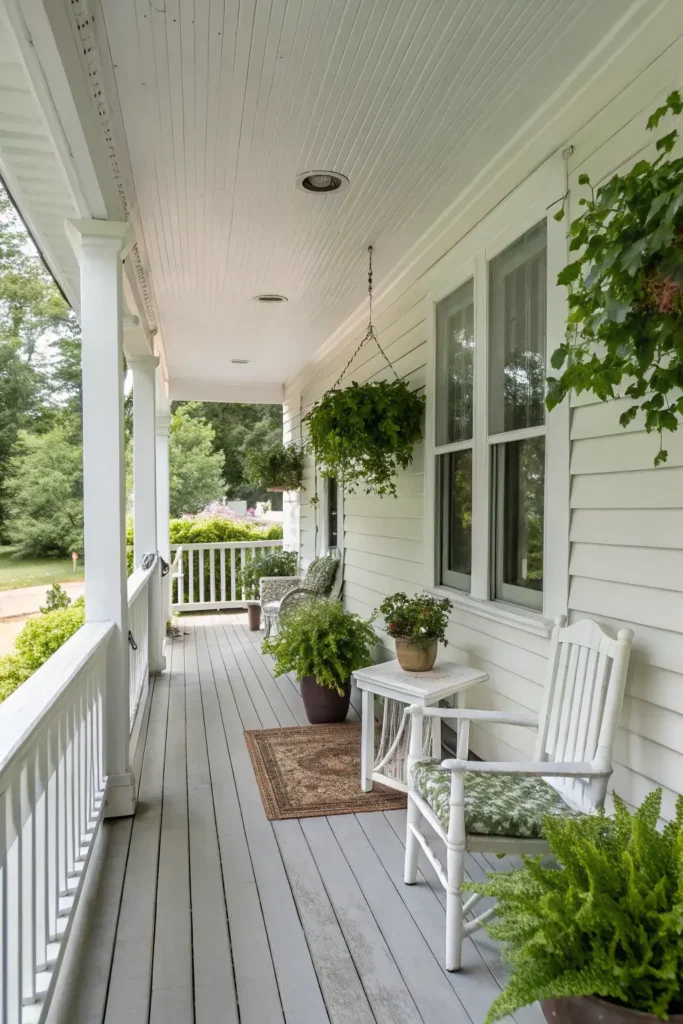
White-painted columns, railings, ceiling, and trim give an L-shaped porch a clean, traditional look that suits Colonial, Craftsman, and Farmhouse home styles. Use Benjamin Moore Chantilly Lace (OC-65) or Sherwin-Williams Extra White (SW 7006) in exterior semi-gloss for the trim, and paint the ceiling in haint blue (a pale blue-green like SW Quietude 6212) for a classic Southern porch tradition that also discourages insects.
White porches show dirt quickly, so choose a mildew-resistant paint formula like Behr Marquee and plan on a power wash twice per year. Add a dark-stained or natural wood porch floor (tongue-and-groove fir or mahogany) to ground the white trim and prevent the space from feeling washed out. The contrast between a warm floor and white walls reads as timeless from the curb.
2. Add Rustic Wood Accents
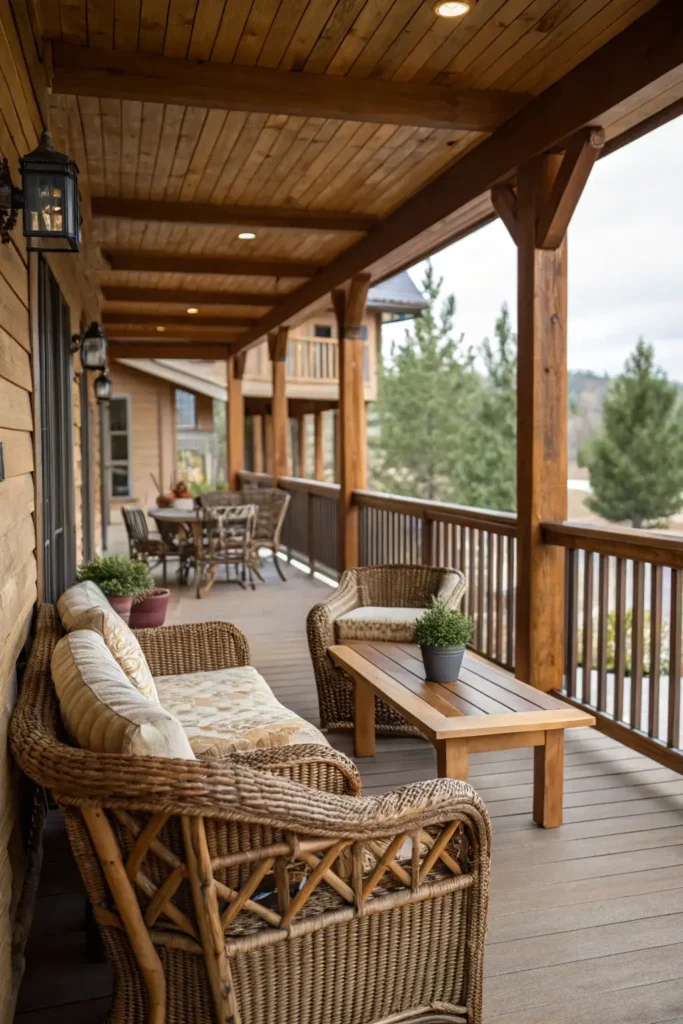
Rough-sawn cedar beams, reclaimed barnwood wall panels, and a live-edge console table bring a rustic warmth that works especially well on porches attached to log homes and mountain cabins. Wrap the existing porch columns with 1×6 rough-sawn boards and add a matching corbel bracket at the beam connection for a timber-frame look that costs under $100 per column.
Keep the wood finishes in the same tone family (honey, walnut, or grey weathered) so the porch reads as cohesive rather than cobbled together. A single coat of Penofin or TWP 1500 penetrating stain protects raw wood from moisture while preserving the natural grain texture. Pair the wood accents with black iron hardware (lantern hooks, strap hinges, railing brackets) for a rustic contrast that holds up outdoors.
3. Set Up Lantern Lighting
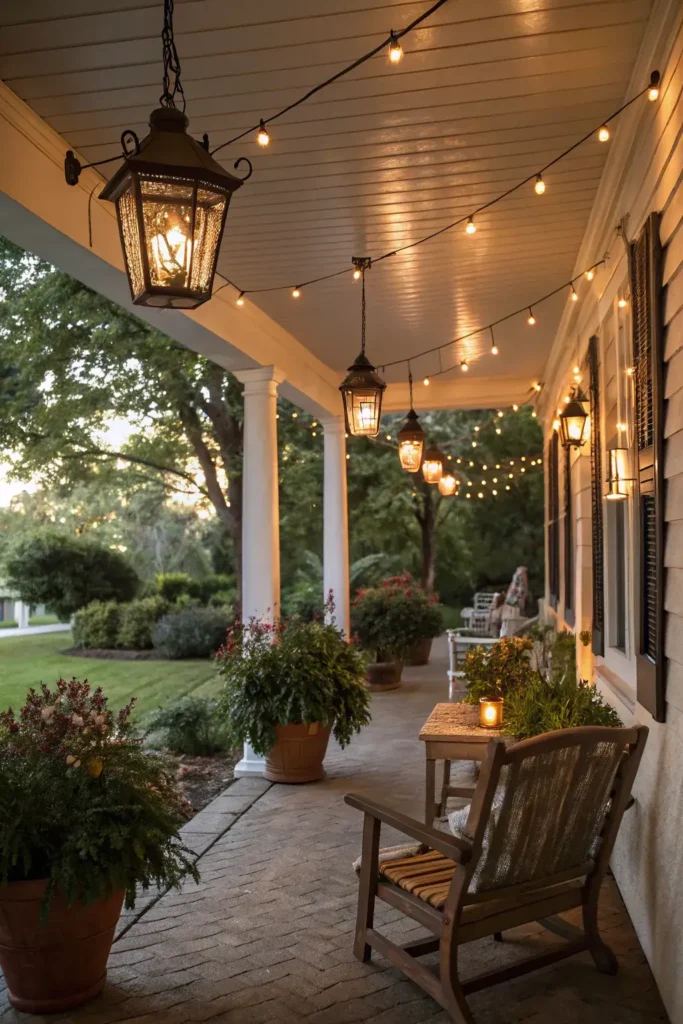
Wall-mounted coach lanterns on each column and a hanging lantern at the corner bend create pools of warm light that guide visitors along the full L-shaped path. Troy Lighting, Hinkley, and Sea Gull Lighting sell outdoor wall lanterns in oil-rubbed bronze, matte black, and brushed nickel for $50 to $250 each. Choose a lantern with a warm LED bulb (2700K) for a candlelit glow that complements evening porch sitting.
Mount one wall lantern flanking the front door and one at the far end of each porch arm so the entire L stays lit after dark. A solar-powered pathway lantern at the porch steps adds ground-level light without wiring. For string lights along the roofline, use commercial-grade S14 or G40 bulbs on a weatherproof cord from Brightech or Newhouse Lighting for a warm overhead glow.
4. Install a Statement Front Door
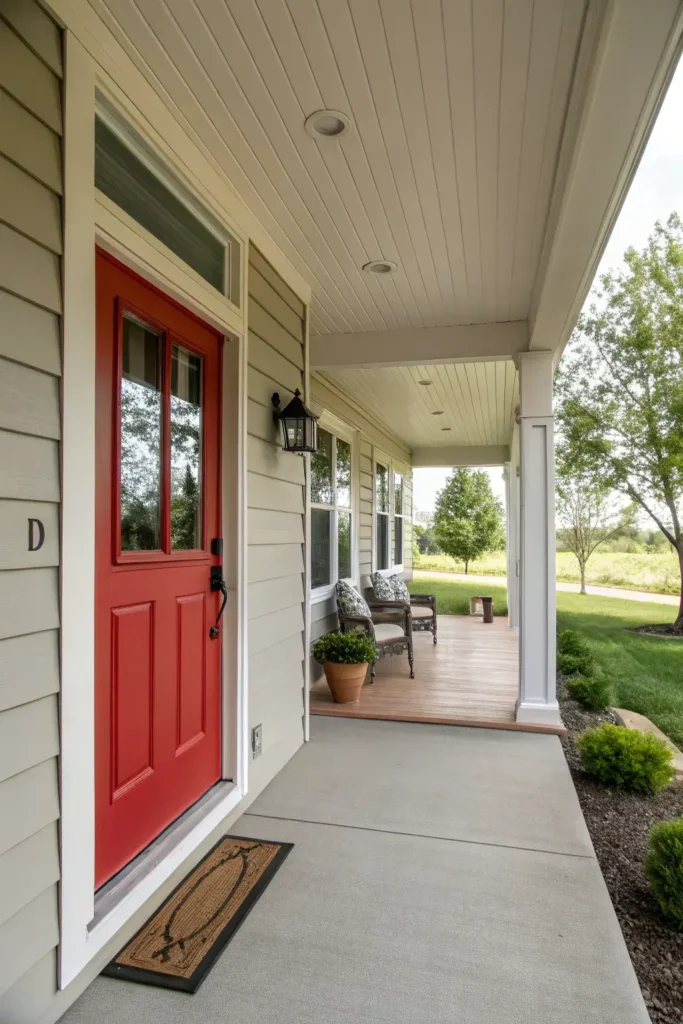
The front door anchors the street-facing arm of the porch, and a bold colour or distinctive panel design draws the eye to the entry from the curb. Therma-Tru, Masonite, and Simpson Door sell fibreglass and solid wood entry doors with decorative glass inserts, raised panels, and plank-style faces for $300 to $3,000. Paint the door in a colour that contrasts the porch trim: Benjamin Moore Caliente (AF-290) (bold red), Hale Navy (HC-154) (deep blue), or Newburyport Blue (HC-155) (teal).
Match the door hardware (handleset, deadbolt, knocker, house numbers) in a single finish: matte black, satin nickel, or antique brass. A Schlage Encode or Yale Assure smart lock adds keyless entry without changing the door’s appearance. Frame the door with potted plants or tall planters on each side to widen the visual entry and make the door look proportional on a long porch wall.
5. Warm Up with Outdoor Rugs
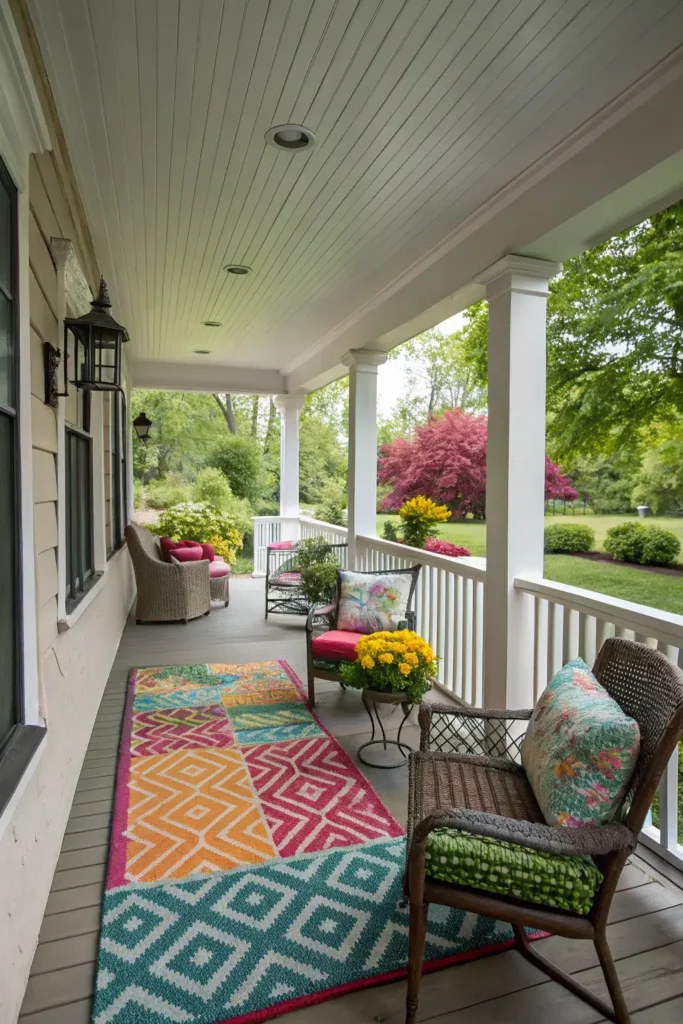
Place a separate rug under each sitting area (one on the front arm, one on the side arm) to define the two zones and add warmth underfoot. A 5×7-foot polypropylene rug from Dash and Albert or Safavieh costs $80 to $200 and resists moisture, fading, and mould. Choose coordinating patterns (not identical) for the two rugs so the porch reads as one space with two areas rather than two separate porches.
A coir doormat ($15 to $30) at the front door and a layered rug approach (smaller rug on top of a larger solid one) at the seating area add texture and depth. Shake and hose off the rugs monthly to prevent dirt buildup, and store them inside during heavy winter weather to extend their lifespan past 3 to 4 seasons.
6. Mix Materials for Texture
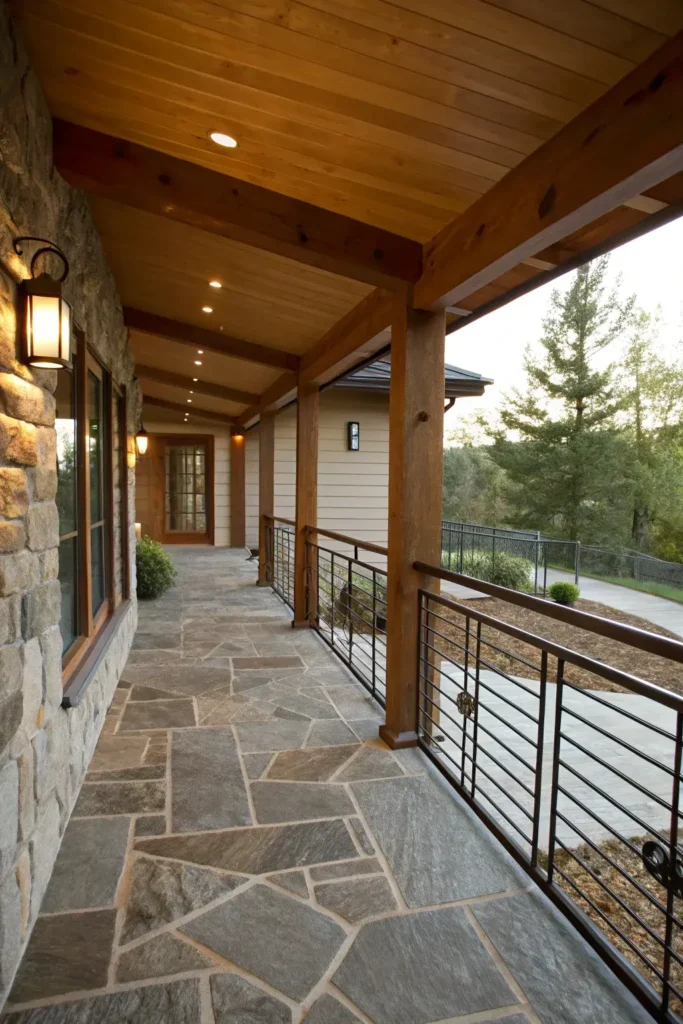
Combining two or three surface materials (stone, wood, and metal) on the same porch adds depth that a single-material approach can’t match. Lay a bluestone or travertine tile floor on one arm and tongue-and-groove fir on the other, with a natural stone threshold where the two surfaces meet. Powder-coated steel railings and brackets contrast the organic textures and keep the mixed palette grounded.
Match the grout or mortar colour to the stone for a clean joint line, and seal the stone surface with a penetrating impregnator like Miracle Sealants 511 to prevent moisture staining. Carry one of the porch materials into an adjacent accent wall or step riser for continuity, and limit the total material count to three so the mix stays intentional rather than chaotic.
7. Add a Pop of Colour
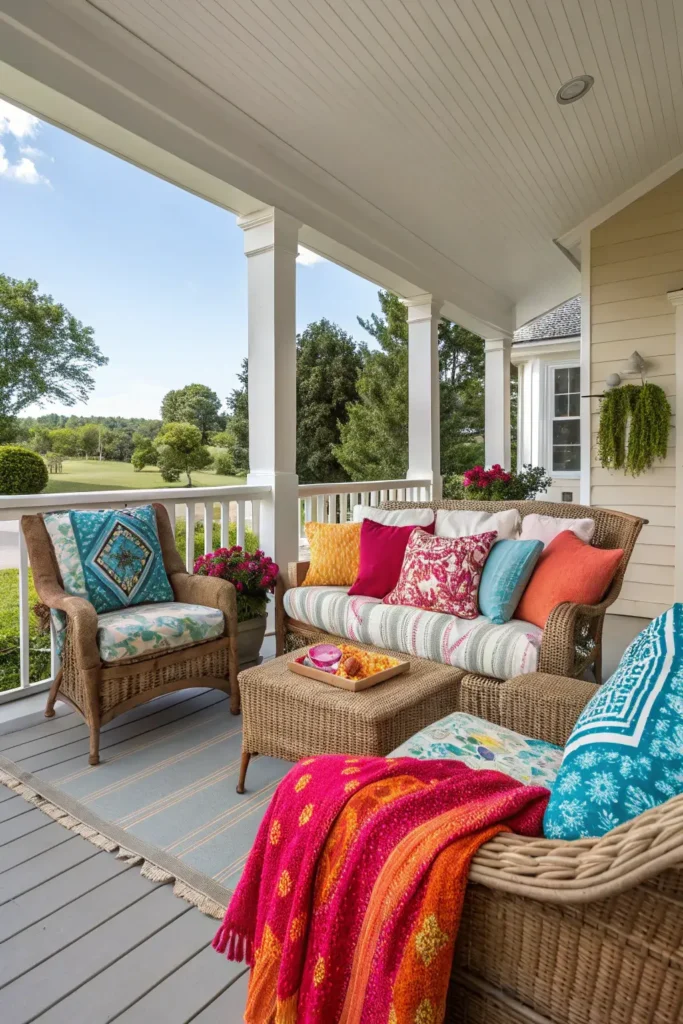
A single bold accent colour on the front door, planters, or throw pillows against a neutral porch background creates a focal point without overwhelming the street view. Coral, lemon yellow, turquoise, and hunter green all pop against white or grey trim. Limit the accent to 10 to 15% of the total porch surface area so the colour draws the eye without dominating. For broader front porch decorating direction, our front porch decorating ideas guide covers seasonal colour schemes and accessory choices.
Repeat the accent colour in at least two spots (door + pillows, or planters + rug border) so it looks planned rather than random. Swap the accent seasonally: warm tones (coral, terracotta, gold) for fall, cool tones (navy, sage, icy blue) for spring and summer. Outdoor-rated spray paint from Krylon or Rust-Oleum refreshes a metal planter or chair in under an hour.
8. Create a Dining Nook
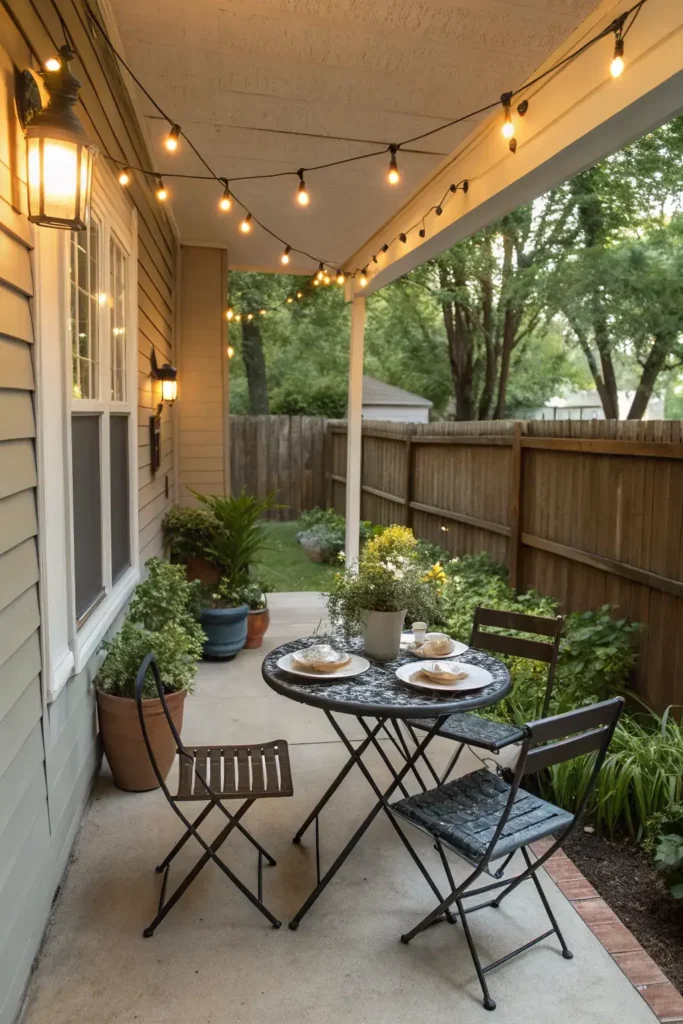
The side arm of an L-shaped porch, partially hidden from the street, makes a natural spot for a small dining table and two to four chairs. A 36-inch round bistro table or a 48×30-inch rectangular table fits the typical 8-foot-wide porch arm with room to walk behind the chairs. World Market and Wayfair stock powder-coated aluminium and teak porch dining sets for $200 to $600.
Hang a pendant light or battery-powered chandelier above the table to separate the dining nook from the rest of the porch. Add a console table or bar cart against the house wall for serving and storage. For compact dining setups that work in tight outdoor areas, our ideas for small decks guide covers tables, benches, and fold-away options.
9. Place a Water Feature
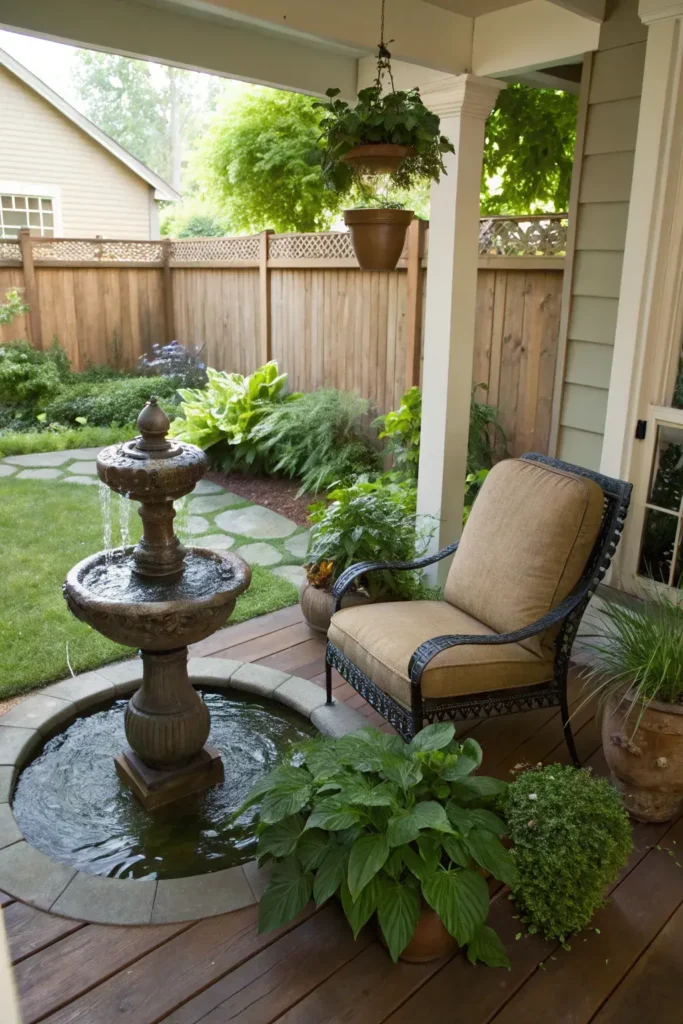
A small tabletop or pedestal fountain at the corner bend of the L adds a calming water sound that masks street noise and gives the intersection a purpose. Sunnydaze Decor and Alpine Corporation sell self-contained tabletop fountains for $30 to $100 that plug into any standard outdoor outlet. A taller 3-tier column fountain ($100 to $300) works as a freestanding centrepiece at the corner.
Position the fountain where guests pass as they walk from the front arm to the side arm, so the sound welcomes them at the transition point. Add a few drops of Fountec algaecide weekly to keep the water clear, and unplug the pump before the first hard freeze to protect the motor.
10. Screen with Trellises
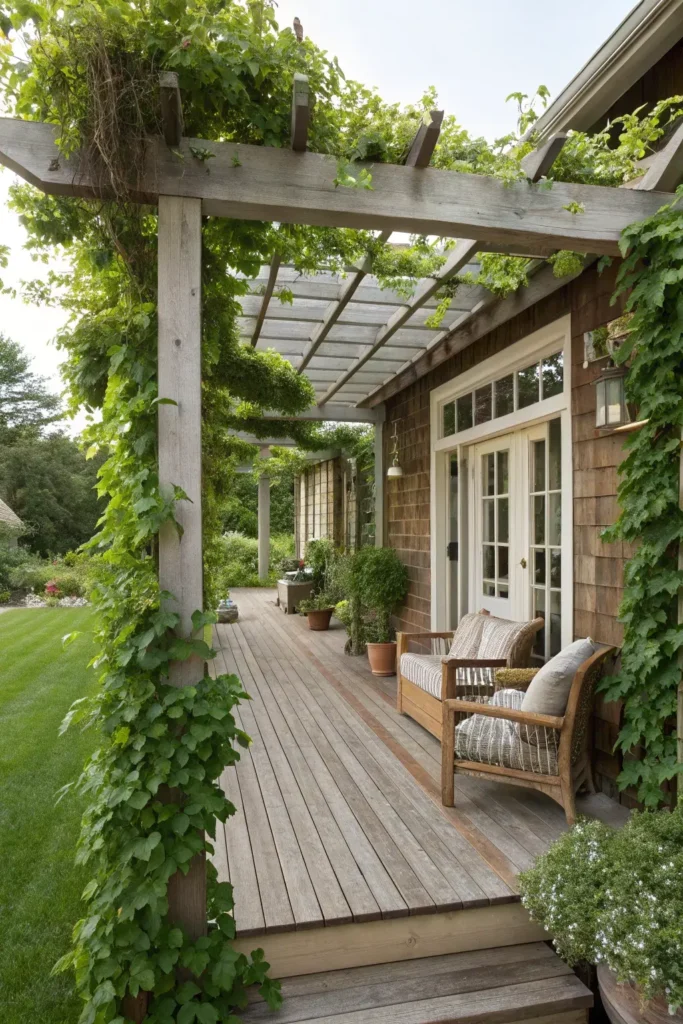
A 6-to-8-foot cedar or vinyl trellis panel on the open side of the porch arm blocks the neighbor’s sightline while letting air and dappled light through. Train clematis, jasmine, or trumpet vine up the trellis for a living screen that fills in over a single growing season. Pre-made trellis panels from Vita or Dura-Trel cost $30 to $120 per 4×8-foot section and mount with lag bolts to the porch posts.
Place the trellis on the side arm (the private seating side) rather than the street-facing arm, so curb appeal stays open while the lounging area stays screened. A second shorter trellis (4 feet tall) mounted below the porch railing fills the gap between the floor and the railing cap and adds privacy at seated eye level.
11. Add Cushioned Seating
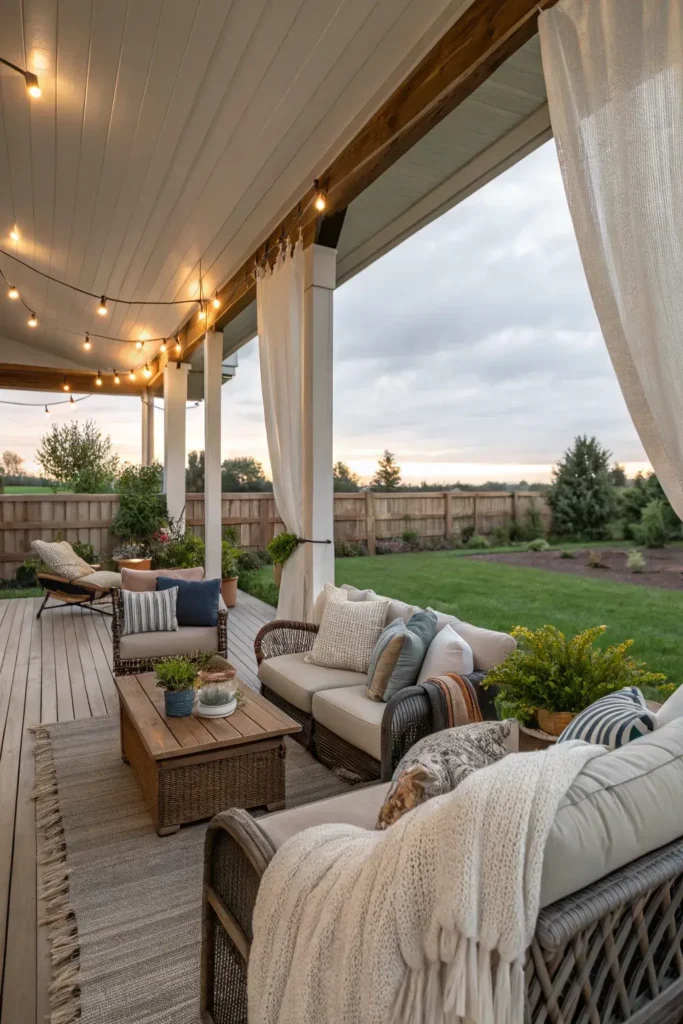
Deep-cushion rocking chairs, porch swings, and gliders turn a covered porch into a spot you linger on for hours rather than passing through. Polywood deep-seat rockers ($400 to $600) and Trex porch swings ($800 to $1,200) come with all-weather cushions that resist UV fading and mildew. Choose 5-to-6-inch-thick seat cushions in Sunbrella fabric for the best combination of comfort and durability.
Place rocking chairs on the street-facing arm where you can watch the neighbourhood, and put the porch swing or glider on the quieter side arm for relaxing. Coordinate the cushion colours with the front door and accent pillows so the porch reads as one designed space from the curb.
12. Accent the Column Work
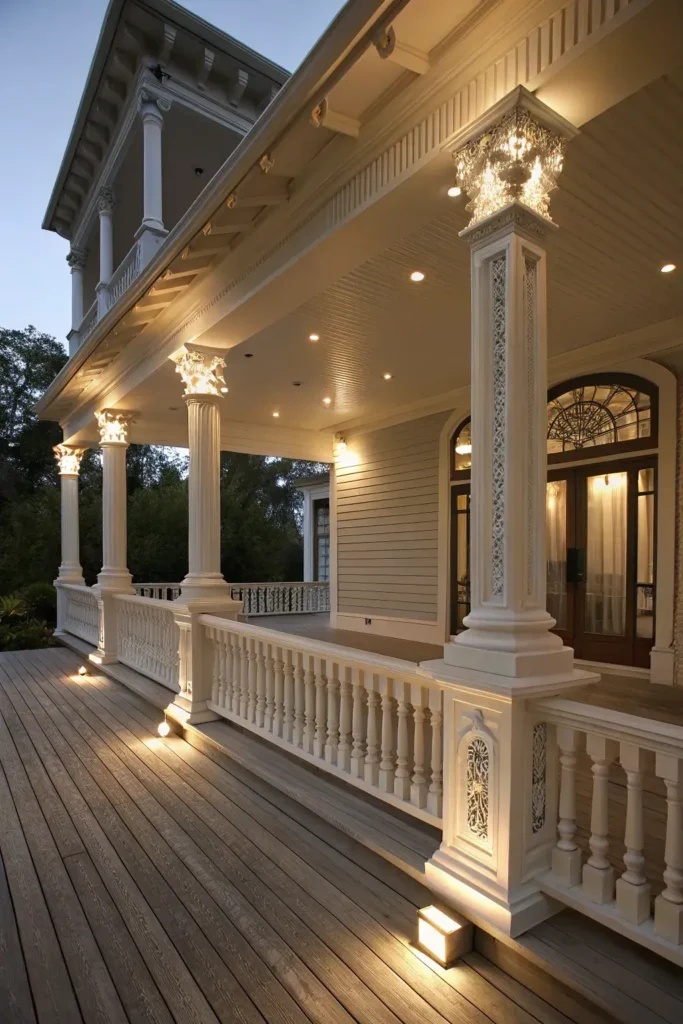
An L-shaped porch typically has 4 to 6 structural columns, and dressing them up with PVC column wraps, stone veneer, or decorative moulding turns plain posts into the porch’s defining feature. Turncraft and HB&G Building Products sell fibreglass and PVC column wraps in round tapered, square fluted, and Craftsman tapered profiles for $150 to $500 per column. Wrap installation takes 2 to 3 hours per column with adhesive and trim nails.
Add a decorative capital (top detail) and base moulding to each column for a finished look that matches the house’s period style. Fypon crossheads and pilasters in polyurethane ($30 to $80 per piece) install with construction adhesive and resist moisture without rotting. For columns near the screened porch area, browsing our screen porch furniture ideas helps coordinate the column style with the furnishings inside.
13. Lay Natural Stone Flooring
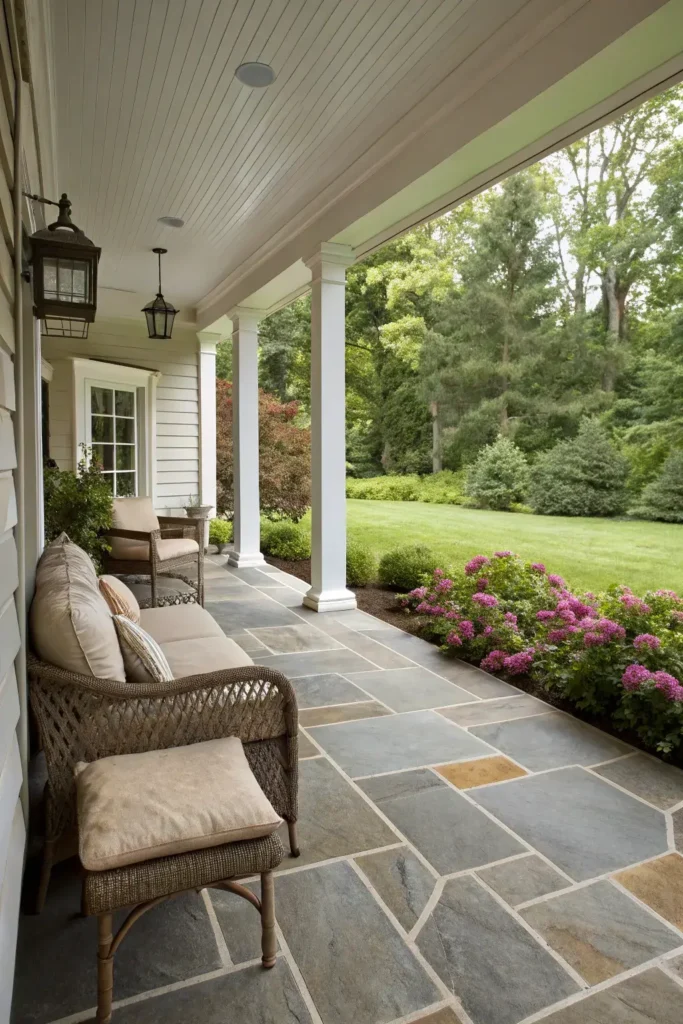
Bluestone, flagstone, and travertine porch floors look rich and last decades without refinishing. Bluestone pavers in 12×12-inch or random rectangular patterns cost $8 to $15 per square foot for materials, plus $8 to $12 per square foot for installation on a concrete or mortar bed. The natural colour variation in each stone slab creates a floor that looks custom without pattern planning.
Seal the stone surface within 30 days of installation with a penetrating sealer like StoneTech BulletProof to prevent water staining and efflorescence. Choose a honed (matte) finish rather than polished for outdoor porches, because honed stone provides better traction in wet weather. Set each stone on a 1-inch mortar bed over a 4-inch concrete slab for a permanent, crack-resistant installation.
14. Design with Symmetry
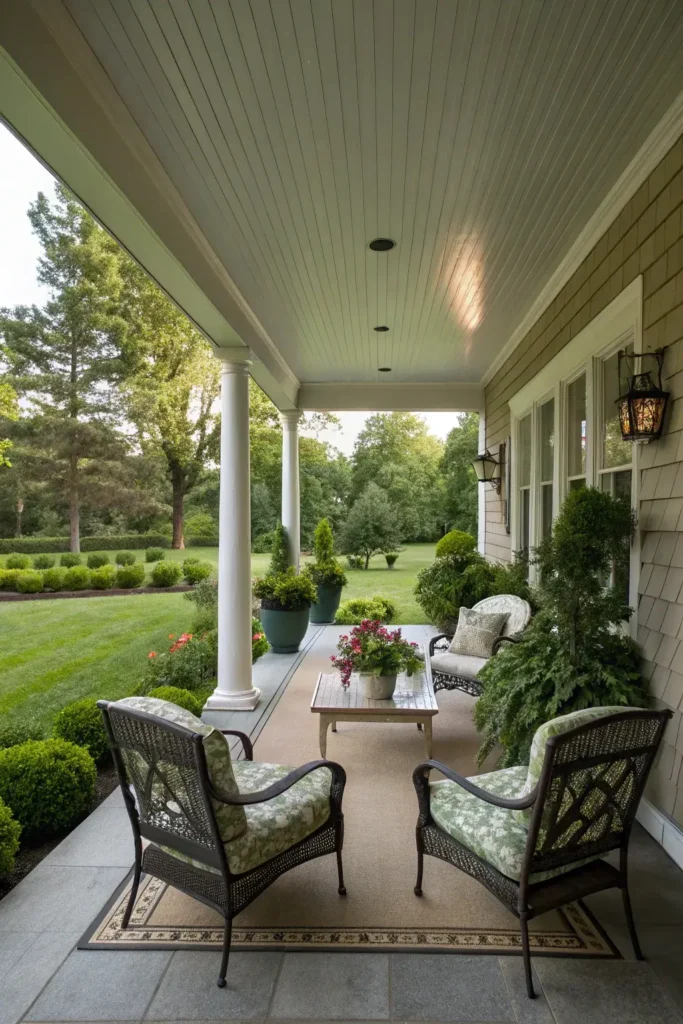
Matching furniture, planters, and lighting on each side of the front door creates a balanced entry that reads as intentional and polished from the street. Place identical 28-inch tall planters flanking the door, identical wall lanterns at the same height on each side, and matching rocking chairs or benches spaced equally from the entry. Symmetry works best on the street-facing arm where curb appeal matters most.
Break the symmetry on the side arm for a more relaxed, lived-in feel. A single lounge chair, an off-centre side table, and an asymmetrical plant grouping tell visitors the side arm is for casual sitting rather than formal display. The contrast between the symmetrical front and the relaxed side makes the L-shaped porch feel larger because each arm has its own character.
15. Mount Vertical Garden Panels
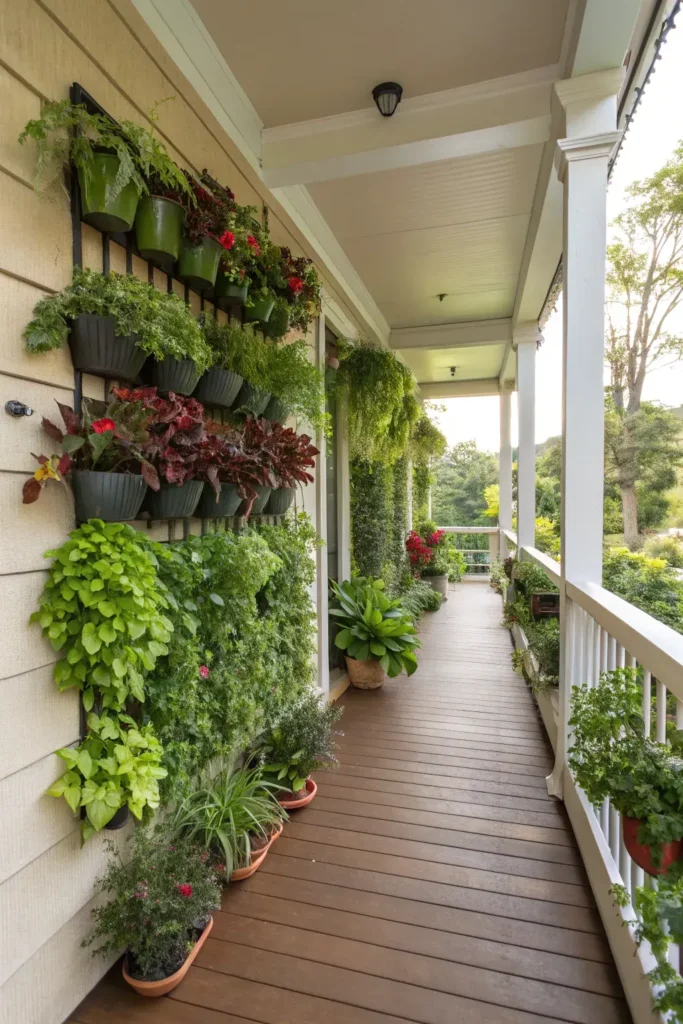
A wall-mounted Florafelt or Woolly Pocket vertical planter system turns a blank wall section into a living art piece filled with ferns, succulents, and trailing pothos. Mount the planter frame on the house wall at the inner corner of the L where the two arms meet, so the green wall becomes the porch’s centrepiece. A 2×4-foot panel holds 12 to 16 plants and costs $100 to $250 for the frame plus $40 to $80 in starter plants.
Connect a drip irrigation line to a hose bib with a battery-powered timer so the wall waters automatically twice per week. Choose shade-tolerant species for covered porches (Boston fern, creeping fig, lipstick plant) and sun-tolerant varieties for uncovered sections (sedum, hens-and-chicks, string of pearls). A vertical garden on a porch wall adds green space without using any floor area.
16. Create a Pet-Friendly Zone
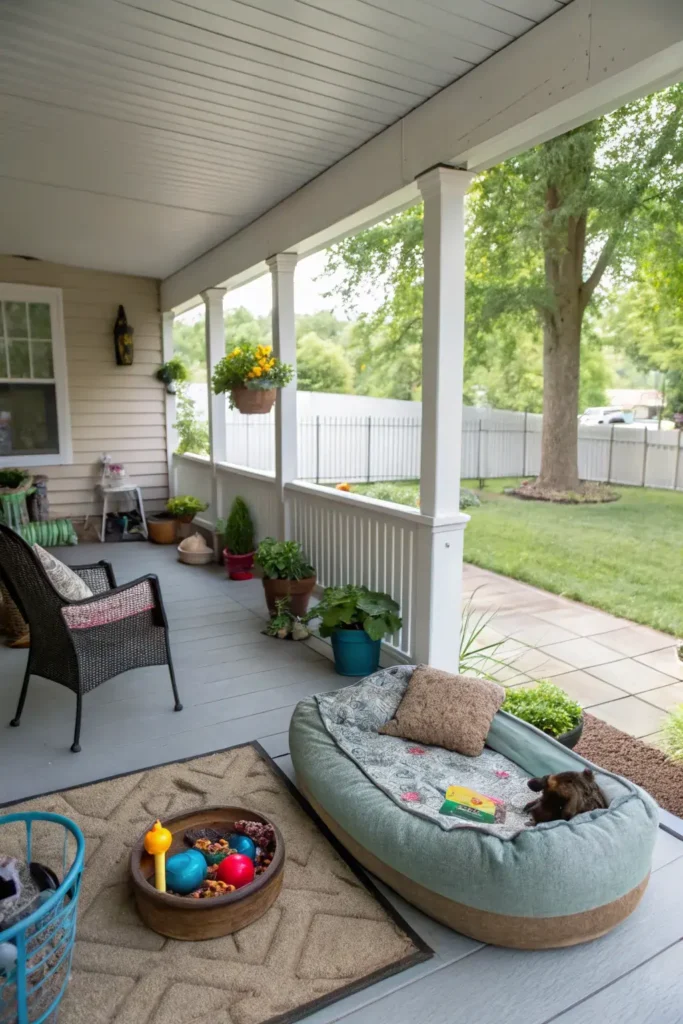
The side arm of an L-shaped porch makes a built-in outdoor room for dogs and cats when you add a baby gate at the corner, a waterproof pet bed, and a ceramic water bowl. Kuranda and Coolaroo sell raised pet cots ($30 to $60) with breathable mesh fabric that keeps animals cool in summer and dries fast after rain. Mount a leash hook at seated height on the column for walks-ready convenience.
Use outdoor-rated pet turf or a washable Ruggable rug under the pet zone so cleanup stays simple. Keep all plants in the pet area non-toxic (avoid sago palm, oleander, and lily of the valley), and stick with pet-safe options like Boston fern, spider plant, and marigolds. A second baby gate at the porch steps keeps pets safely enclosed while the main gate at the corner lets you close off just the side arm.
17. Blend In Cultural Accents
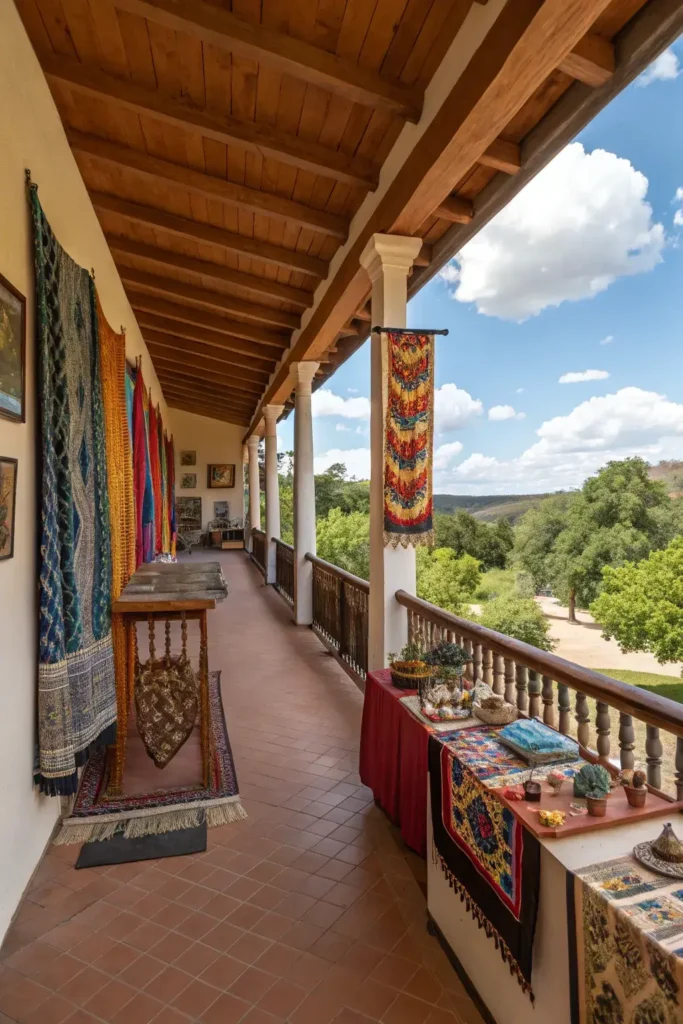
Hand-painted Talavera tiles on step risers, a Moroccan lantern hanging at the corner, or a pair of Japanese-style shoji screens on the side arm bring a personal cultural touch that makes the porch feel distinctly yours. Mexican Tile Designs and Fireclay Tile sell handmade ceramic tiles for $8 to $25 per piece that mount on step risers or as a decorative band along the porch wall.
Limit the cultural accents to one style per porch so the theme stays clear. A Mediterranean porch might combine terracotta pots, wrought-iron furniture, and blue-and-white tile, while a Coastal New England porch uses white wicker, navy striped cushions, and rope-wrapped accessories. Pull the accent into at least three spots (door, seating, and decor) for a layered look that reads as curated rather than a single souvenir.
18. Use Mirrors to Add Depth
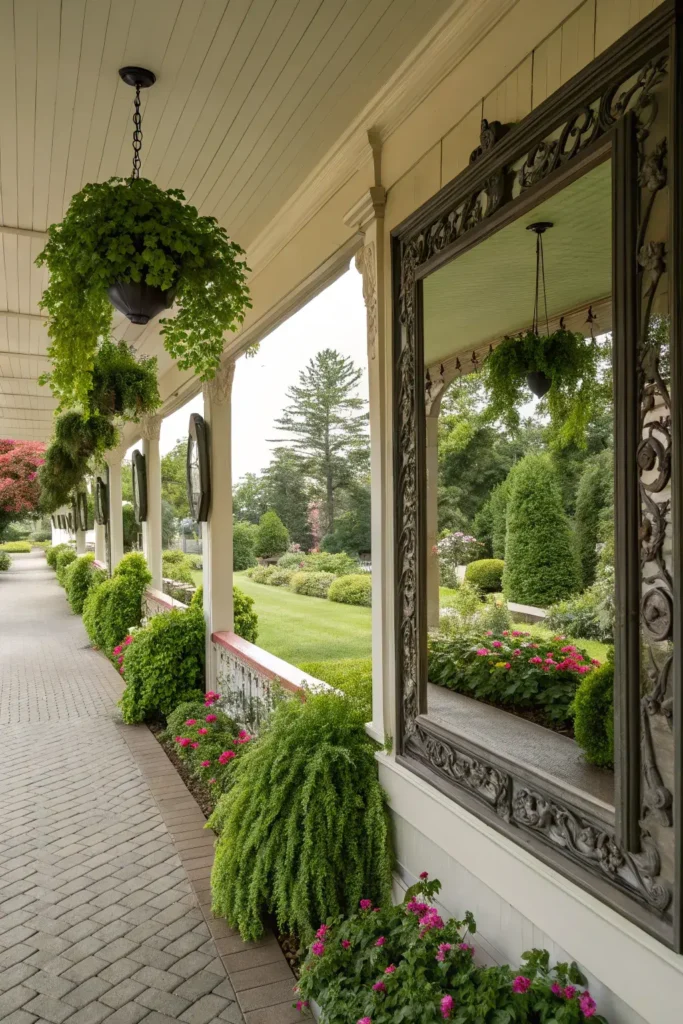
A large outdoor-rated mirror on the house wall doubles the visual depth of a narrow porch arm and reflects natural light into shaded corners. A 24×36-inch or 30×40-inch mirror in a powder-coated steel or teak frame costs $60 to $200 from Pottery Barn, Target, or At Home. Mount the mirror at seated eye level (centre at 50 to 55 inches) using heavy-duty French cleats rated for the mirror’s weight.
Place the mirror on the wall opposite the porch’s best view (yard, garden, or tree canopy) so it reflects the outdoor scenery back into the sitting area. Avoid positioning mirrors where they catch direct afternoon sun, because the reflected glare can heat nearby cushions and blind passersby. A pair of smaller mirrors (18×24 inches) in matching frames creates a gallery effect that adds depth without a single large sheet of glass.
19. Personalize with Art
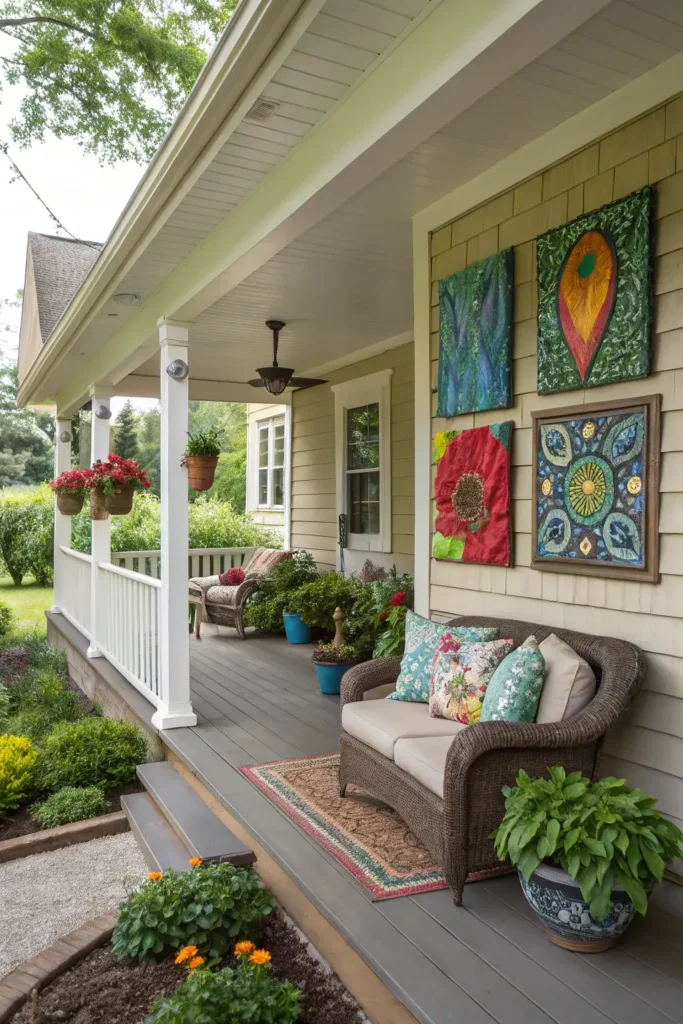
Metal wall sculptures, painted signs, and framed prints mounted on the porch walls make the space feel like an extension of your living room rather than a bare outdoor corridor. Use aluminium or acrylic frames that resist humidity, and choose prints on metal panels rather than paper to prevent moisture damage. Minted, Society6, and local artists on Etsy sell outdoor-safe art prints starting at $30 to $80.
Hang art on the house-wall side of the porch (the solid wall) rather than on columns or railings where wind can knock it loose. Group 3 to 5 pieces in a gallery wall arrangement centred on the seating area so the art faces the person sitting, not the person walking past. A tiki hut theme with carved wood masks, woven wall hangings, and bamboo frames gives the side arm a resort-inspired personality.
How to Furnish an L-Shaped Front Porch
1. Measure Each Arm Separately
Measure the length, width, and ceiling height of each porch arm independently, because L-shaped porches often have different dimensions on each side. Record the location of every door, window, light fixture, and outlet on a sketch, and mark the corner junction where the two arms meet. Most L-shaped porches have a 6-to-8-foot-wide arm on the front and a slightly narrower 5-to-7-foot arm on the side.
2. Assign a Function to Each Arm
Give the street-facing arm the formal role (entry, symmetrical display, curb appeal) and the side arm the casual role (lounging, dining, pet space, or reading). The corner junction works best as a transition zone with a single accent piece: a large planter, a corner shelf, or a wall-mounted lantern. Avoid placing heavy furniture at the bend, because it blocks the walkway between the two zones.
3. Place Furniture and Check Clearance
Set the largest piece in each arm first (a rocker pair on the front, a loveseat on the side), then add side tables, rugs, and accessories. Keep at least 36 inches of clear walkway along the front arm for guest traffic, and 30 inches on the side arm for personal use. Walk the full L-path from front steps to side steps (or side door) and confirm that no furniture blocks a doorway or narrows the passage below 30 inches.
L-Shaped Porch Flooring Comparison
| Flooring | Cost (per sq ft) | Maintenance | Slip Resistance | Lifespan |
|---|---|---|---|---|
| Tongue-and-Groove Fir | $4–$7 | Stain every 2–3 years | Good (stained) | 20–30 years |
| Composite Decking | $8–$14 | Wash yearly | Excellent | 25+ years |
| Bluestone Pavers | $16–$27 | Seal every 3–5 years | Excellent (honed) | 50+ years |
| Concrete (stamped) | $8–$18 | Seal every 2–3 years | Good | 25–30 years |
| Brick Pavers | $10–$20 | Re-sand joints every 3 years | Excellent | 50+ years |
Frequently Asked Questions
What is the best furniture layout for an L-shaped front porch?
Place a pair of rocking chairs or a bench on the street-facing arm near the front door, and put a loveseat or porch swing on the side arm for private lounging. Keep the corner junction clear or use a single accent piece (planter, fountain, or corner shelf) so foot traffic flows smoothly between the two zones. A 36-inch walkway along the main arm ensures guests can pass without squeezing past furniture.
How do you light an L-shaped front porch?
Install a wall-mounted lantern on each side of the front door, one at the far end of the front arm, and one at the far end of the side arm. Add a ceiling pendant or hanging lantern at the corner junction so the bend stays lit and visible at night. String lights along the ceiling edge of each arm create a warm overhead glow that connects both zones into one continuous space.
How wide does an L-shaped porch need to be?
Each arm needs a minimum of 6 feet of clear width to fit a chair and a side table with room to walk past. A width of 8 feet accommodates a full-depth rocking chair (3 feet) and a 36-inch walkway side by side, which is the most comfortable layout for daily use. Porches wider than 10 feet can support a dining table and chairs without blocking the walkway.
Can you screen in one arm of an L-shaped porch?
Screening the side arm while leaving the front arm open is a common approach that gives you a bug-free sitting room on one side and an open, welcoming entry on the other. Use screen panel kits from Screen Tight or ScreenEZE that mount between existing columns and railings for $300 to $800 per arm. Add a screen door at the corner junction so you can move between the open and screened sections freely.
What colour should an L-shaped porch ceiling be?
The most traditional choice is haint blue (a soft blue-green like Sherwin-Williams Quietude SW 6212 or Benjamin Moore Palladian Blue HC-144), a Southern porch tradition that also creates the illusion of sky overhead. White and pale grey ceilings reflect more light into the porch, making narrow arms feel wider. Paint the ceiling in flat or matte finish to hide seams and fastener heads in the beadboard or plywood panels. Visit The Designers Company for more porch design and outdoor living guides.