Backyard Desert Ideas: 22 Beautiful Ways to Create Your Dream Oasis
Backyard desert design replaces water-hungry lawns with drought-tolerant plants, natural stone, and gravel surfaces that thrive in arid and semi-arid climates while cutting water bills by 50-75%. Homeowners in USDA hardiness zones 7-10 (covering the Southwest, Southern California, and parts of the Southeast) spend $3,000-$8,000 on a full desert backyard conversion for a typical 1,500-3,000 square foot yard, with many local water utilities offering $1-$3 per square foot in turf replacement rebates.
The 22 ideas below cover native plantings, rock gardens, succulents, dry stream beds, fire pits, hardscape textures, zen elements, and recycled materials that turn a bare or browning yard into a low-maintenance outdoor living space. Each entry includes specific plant names, material costs, and sourcing details. Visit The Designers Company for hundreds of additional outdoor and interior project guides.
1. Native Desert Plants
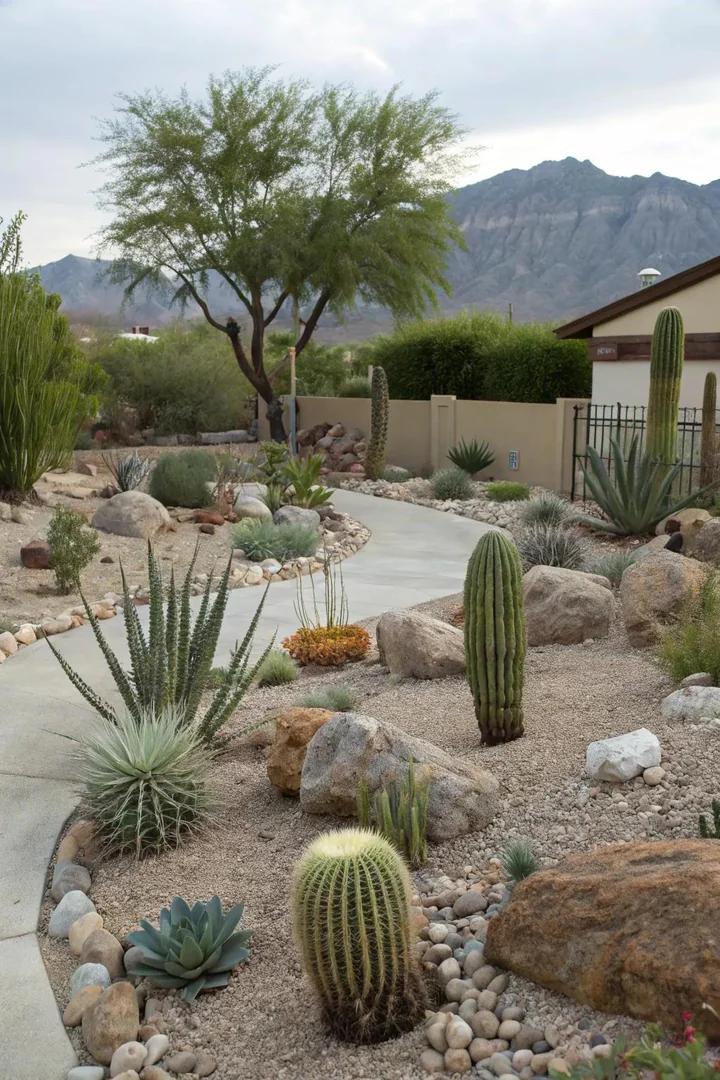
Native plants adapted to your region’s rainfall and temperature extremes need zero supplemental irrigation after their first growing season. Arizona favorites include desert marigold (Baileya multiradiata, $5-$10 per gallon pot), red yucca (Hesperaloe parviflora, $10-$20), and palo verde tree (Parkinsonia florida, $30-$80 for a 5-gallon specimen). California natives like white sage (Salvia apiana, $8-$15) and California fuchsia (Epilobium canum, $6-$10) attract hummingbirds and butterflies year-round.
Source native plants from specialty growers like Mountain States Wholesale Nursery, High Country Gardens, or Plants of the Southwest rather than big-box stores where desert selections run limited. Space plants at their mature width (printed on the tag) because overcrowded desert plantings trap humidity and promote root rot in species that depend on dry soil between watering events.
2. Rock Garden
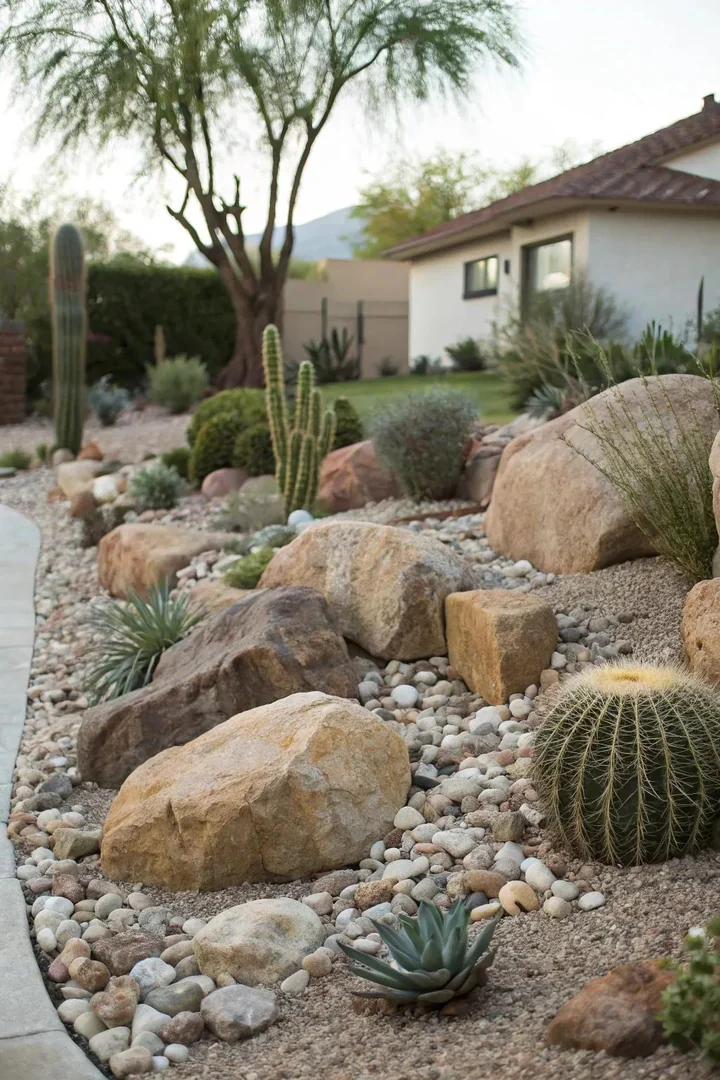
A rock garden uses boulders, cobblestones, and decomposed granite to create a maintenance-free ground plane that needs no mowing, watering, or fertilizing. Decorative boulders ($50-$200 each delivered) anchor the design, while 3/4-inch desert gold or Arizona river gravel ($30-$60 per ton, covering 50-70 square feet at 3 inches deep) fills the spaces between.
Bury boulders one-third of their height into the ground for a natural, established look rather than setting them on top of the gravel where they read as placed. Group rocks in odd numbers (3, 5, or 7) at varying heights and angles to mimic natural desert outcroppings. Add a few low-growing plants (desert spoon, blackfoot daisy, damianita) between rocks for pockets of green that soften the stone composition.
3. Succulents
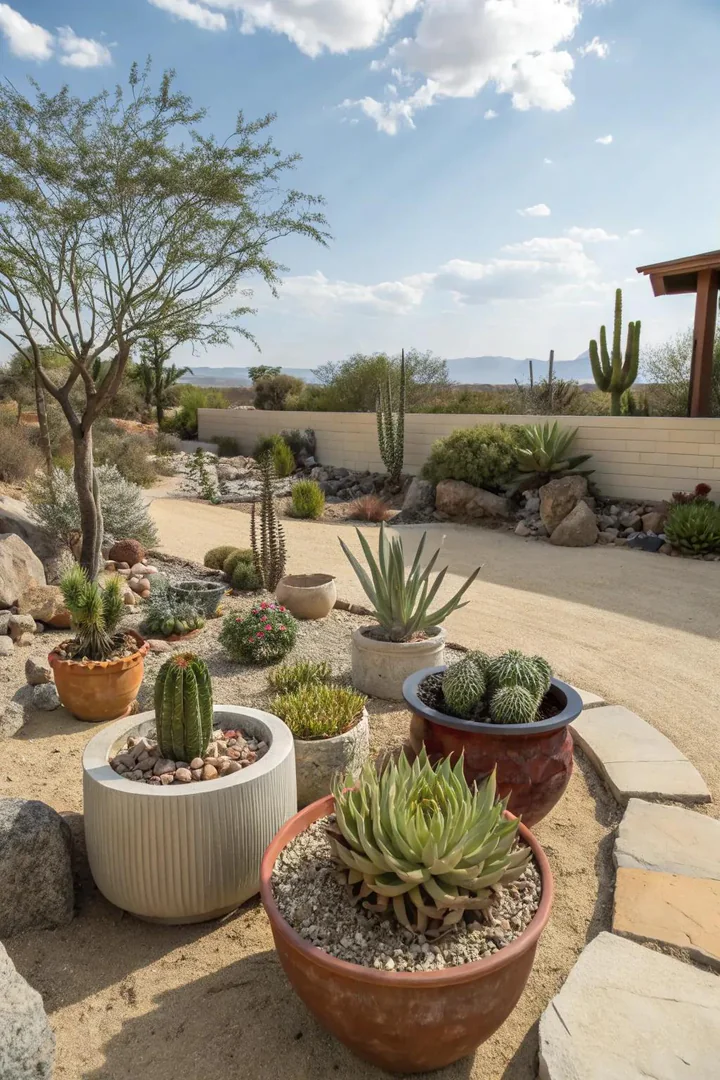
Succulents store water in their leaves and stems, making them the most drought-tolerant plant group for desert backyards. Large specimen agave (Agave americana, $30-$80 for a 5-gallon size) anchors a succulent bed, while trailing varieties like burro’s tail (Sedum morganianum, $5-$10) and hens-and-chicks (Sempervivum, $3-$8) fill in between larger plants.
Plant succulents in well-draining soil amended with coarse sand or pumice (50% native soil, 50% amendment) to prevent root rot during monsoon season. Arrange by height with tallest plants (agave, yucca, ocotillo) at the back and low growers (echeveria, sedum, ice plant) at the front for a tiered display. A 4×8-foot succulent bed costs $100-$300 in plants and soil amendments and needs water only once every 2-4 weeks during the hottest months.
4. Pergola for Shade
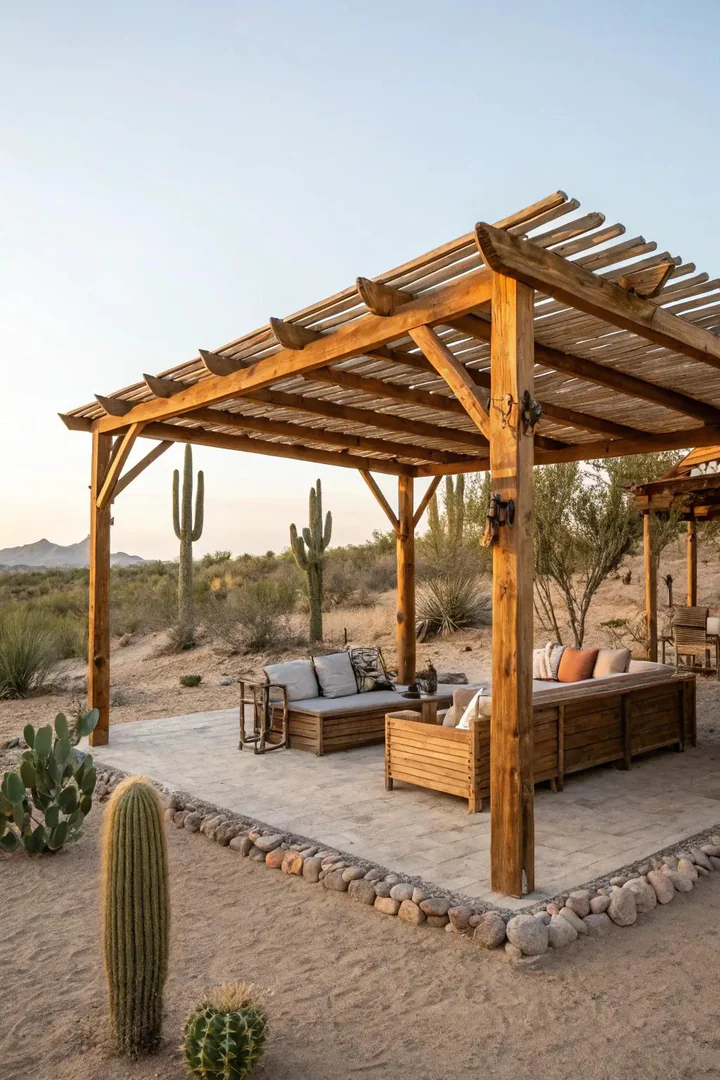
A pergola creates a shaded outdoor room in a desert backyard where summer temperatures regularly exceed 100 degrees. Pressure-treated pine pergola kits ($1,200-$3,000 for a 10×12-foot unit) provide the lowest cost entry, while cedar and aluminum upgrades ($3,000-$10,000) resist the intense UV and dry heat that breaks down lesser materials faster in desert climates.
Space rafters 6-8 inches apart (tighter than the standard 12-16 inches) for 70-80% shade coverage in full sun. Add a shade sail or retractable canopy across the top for complete sun blocking during peak afternoon hours. Train a fast-growing desert vine like Arizona grape ivy (Cissus trifoliata) or queen’s wreath (Antigonon leptopus, $8-$15) along the rafters for living shade that flowers from spring through fall.
5. Dry Stream Bed
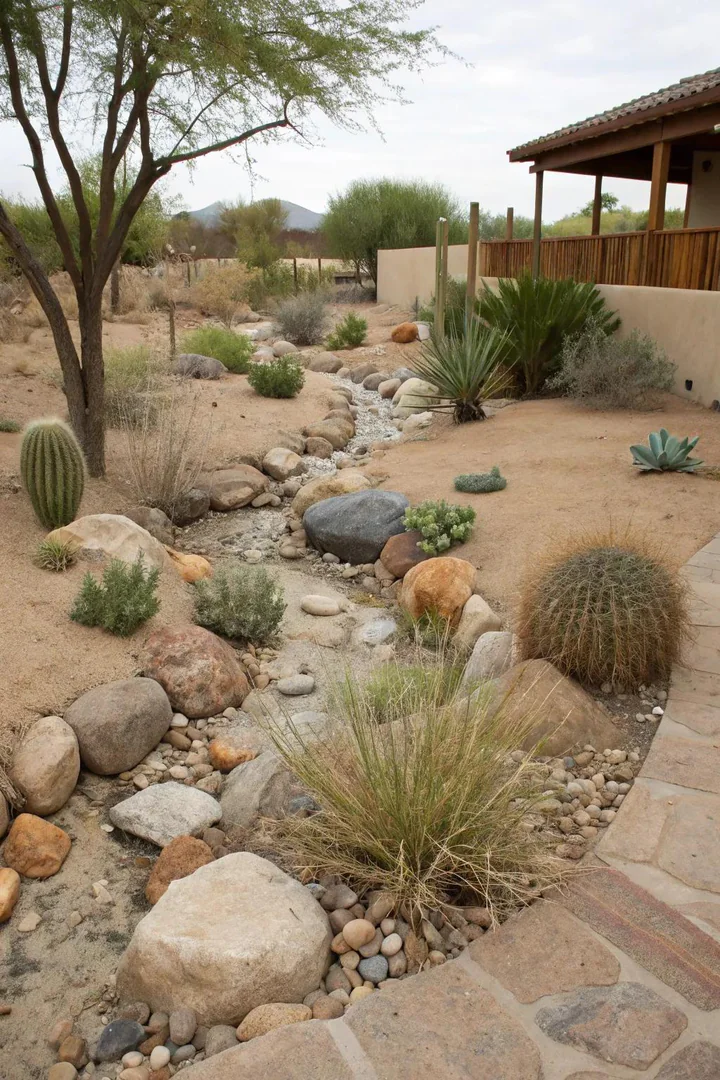
A dry stream bed mimics a natural desert wash using graded river rock, cobblestones, and boulders laid in a shallow trench that channels rainwater during storms and looks decorative the rest of the year. Dig a 6-8 inch deep, 2-4 foot wide trench along the natural drainage path of your yard. Line with weed barrier fabric and fill with 3-4 inch river rock ($40-$80 per ton) in the center channel and smaller 1-2 inch gravel along the edges.
Place 3-5 larger accent boulders ($50-$150 each) at bends in the stream bed to slow water flow and create pooling points where sediment collects naturally. Plant moisture-loving desert species like desert willow (Chilopsis linearis, $20-$40) and Arizona sycamore at the downstream end where water accumulates during monsoon rains. A dry stream bed across a small backyard doubles as a drainage solution and a decorative garden feature that looks good year-round.
6. Water Feature
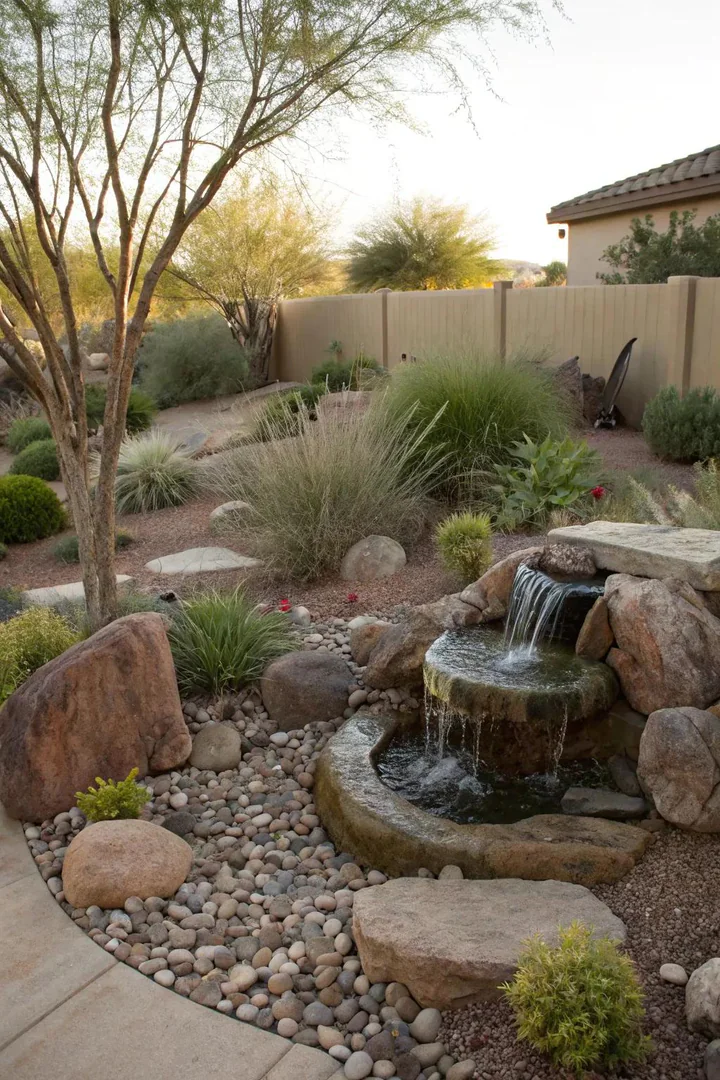
A recirculating fountain uses the same small volume of water continuously, adding sound and movement to a desert garden without wasting resources. A bubbling rock fountain (drilled basalt column, $100-$300 for the stone, $30-$50 for the pump) recirculates 2-5 gallons through a buried reservoir and loses only 1-2 gallons per week to evaporation in dry climates.
Choose a fountain style that matches the desert setting: stacked sandstone, carved granite, or a copper spillway rather than a classical tiered design. Run the fountain during evening hours when evaporation rates drop 60-70% compared to midday operation. A small recirculating fountain also works as a birdbath that draws quail, roadrunners, and hummingbirds to your yard, adding wildlife activity to the garden.
7. Natural Mulch
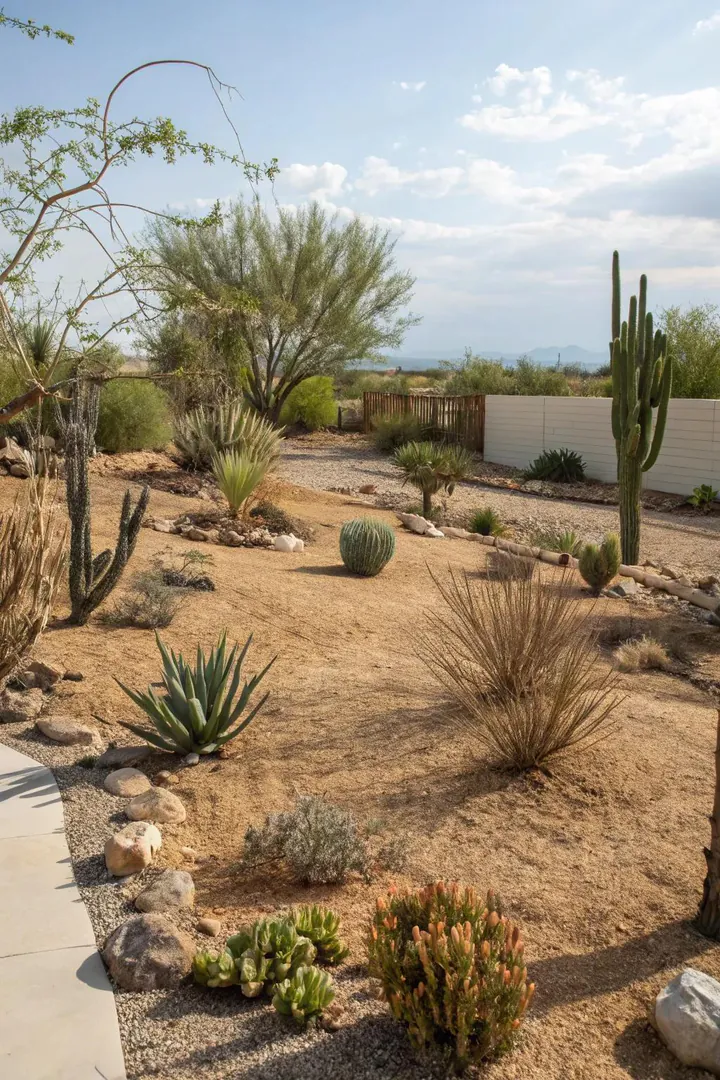
Gravel and decomposed granite (DG) work better than organic bark mulch in desert gardens because they don’t decompose, blow away, or harbor termites. Decomposed granite ($25-$45 per ton, covering 50-70 square feet at 2-3 inches deep) comes in tan, gold, brown, and reddish-brown tones that blend with natural desert soil colors. Spread DG 2-3 inches deep around plants and over weed barrier fabric for a clean, permanent ground cover.
For areas where you want organic mulch (vegetable beds, fruit trees, and moisture-loving plants), use shredded cedar bark ($4-$6 per 2-cubic-foot bag) that resists termites and decomposes slowly in dry heat. Avoid rubber mulch and dyed wood chips in desert gardens because they absorb and radiate heat, raising soil temperature around plant roots. Replenish DG every 2-3 years as foot traffic and rain wash compact it below the target depth.
8. Experiment with Gravel Sizes
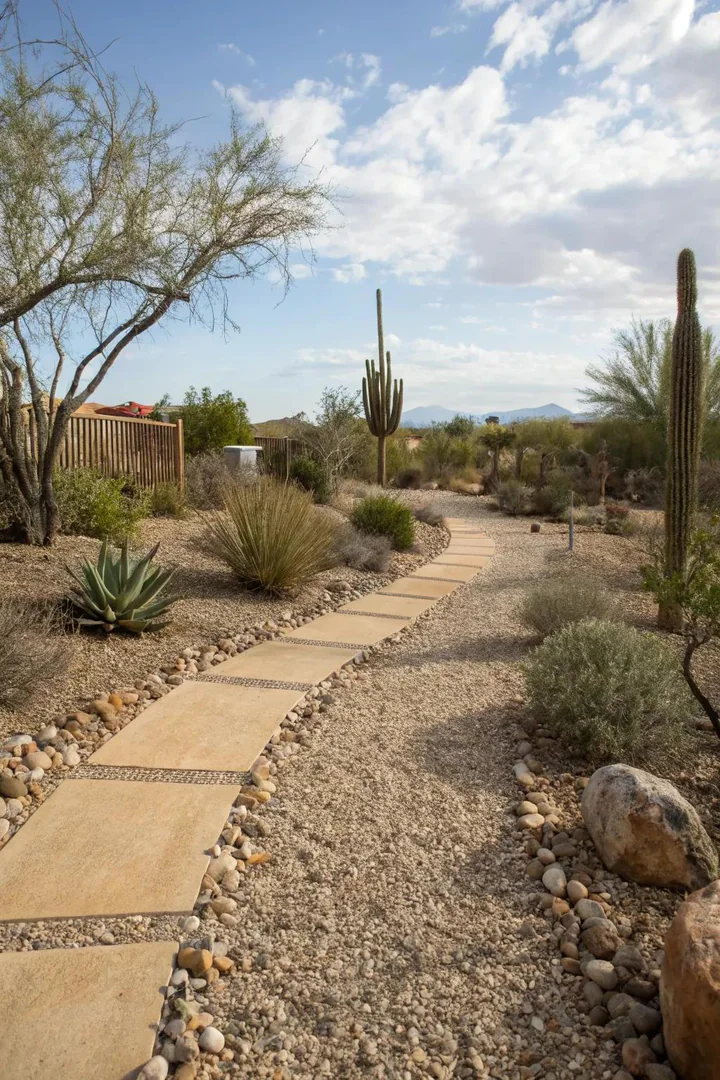
Mixing 2-3 gravel sizes in the same garden creates visual texture and helps define separate zones without edging or borders. Use fine decomposed granite (1/4 inch) for pathways and seating areas where barefoot comfort matters, medium pea gravel (3/8 to 1/2 inch) for planting beds, and larger river rock (2-4 inch) for accent borders and drainage channels.
Separate gravel zones with aluminum or steel garden edging ($1-$3 per linear foot from EasyFlex or Dimex) pressed 3-4 inches into the ground to prevent different sizes from mixing. Color contrast adds another layer of interest: pair tan DG with charcoal Mexican beach pebbles ($60-$100 per ton) or white marble chips ($50-$80 per ton) for a two-tone ground pattern that reads as designed from any viewing angle.
9. Ornamental Grasses
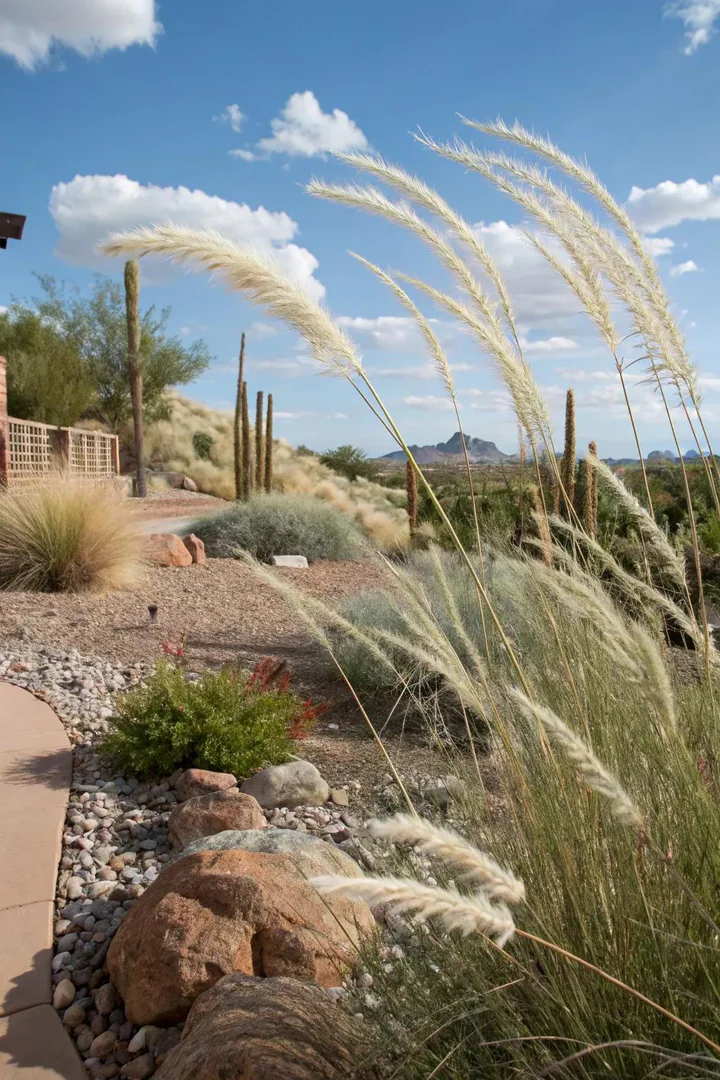
Ornamental grasses add height, movement, and seasonal color to a desert garden with minimal water needs. Deer grass (Muhlenbergia rigens, $10-$20 per gallon pot) grows 3-4 feet tall and produces feathery seed heads from late summer through winter. Mexican feather grass (Nassella tenuissima, $8-$15) forms a 2-foot mound of hair-fine blades that sway in the slightest breeze.
Plant grasses in groups of 3-5 at the specified spacing (2-3 feet apart for most species) for a natural, flowing look. Cut ornamental grasses back to 4-6 inches above the ground once per year in late winter before new growth emerges. After establishment (1-2 growing seasons), most desert-adapted grasses need supplemental water only during extended drought periods exceeding 3-4 weeks without rain.
10. Desert Wildflowers
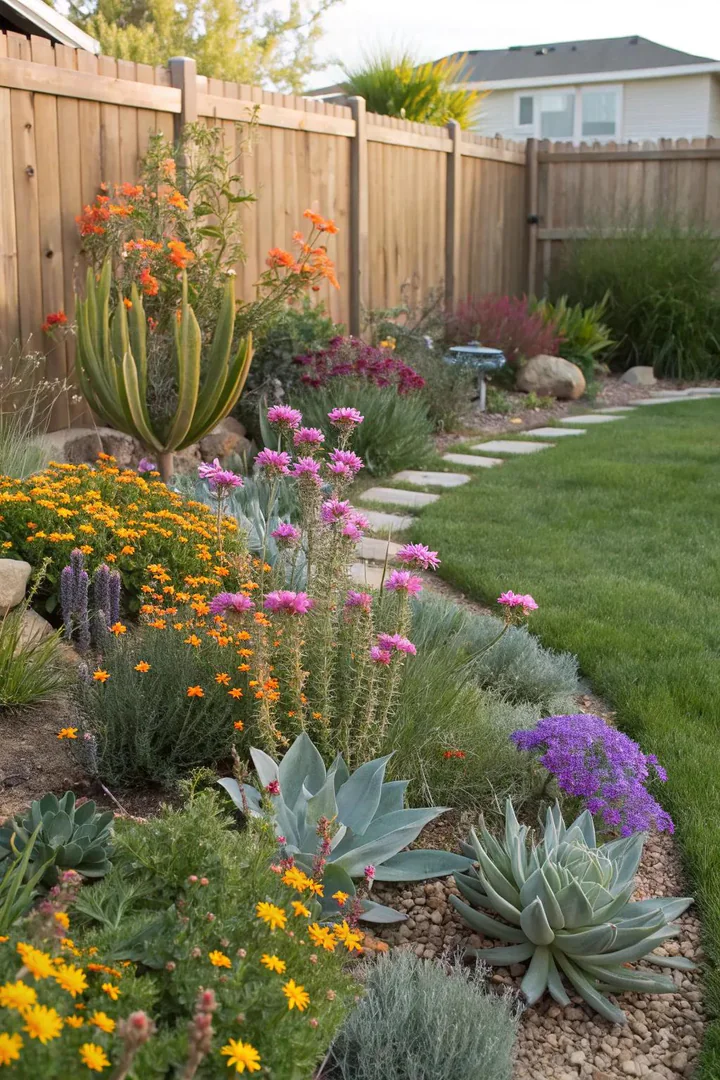
Seeding a wildflower meadow area with desert-adapted species produces a burst of color every spring for under $30 in seed. Scatter a Southwest wildflower mix (from Wildseed Farms or Botanical Interests, $5-$15 per packet covering 200-500 square feet) over raked soil in late fall so winter rains trigger germination naturally. Mexican gold poppy, desert lupine, globe mallow, and fairy duster all germinate reliably from seed.
Prepare the seed bed by removing existing vegetation and raking the soil surface to expose bare dirt. Mix seeds with sand at a 1:4 ratio for even distribution, then press seeds into the soil surface with a lawn roller or by walking over the area. Most desert wildflowers are annuals that complete their lifecycle in 8-12 weeks, so let seed heads dry and scatter naturally for a self-renewing display year after year.
11. Fire Pit for Evening Warmth
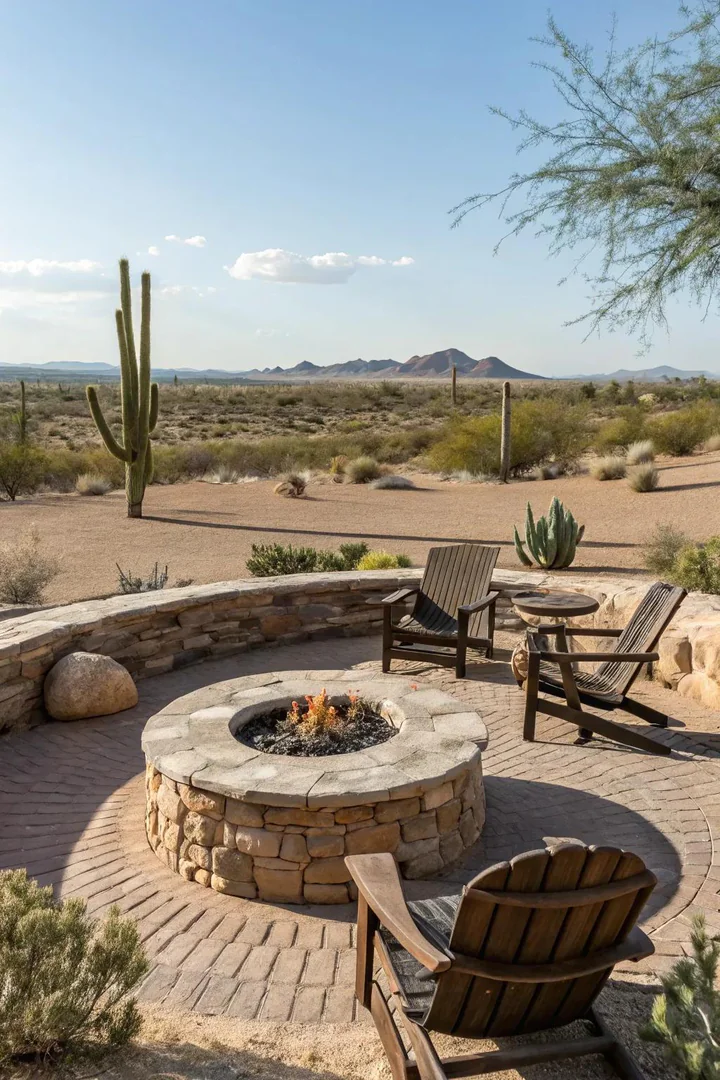
Desert nights drop 30-40 degrees from daytime highs, making a fire pit the centerpiece of evening outdoor use. A propane fire table from Outland Living ($150-$400) or a natural gas fire pit plumbed to your home line ($500-$2,000 installed) produces 40,000-60,000 BTU of smoke-free heat. Place the fire pit on a non-combustible surface (concrete, stone, or gravel pad) at least 10 feet from structures and vegetation.
Use fire glass beads ($20-$40 per 10-pound bag) or lava rock ($15-$25 per bag) as the fire media rather than wood logs, which are scarce and expensive in many desert communities. Position seating 3-4 feet from the fire ring so warmth reaches guests without the heat becoming uncomfortable. A cooling option like those in ideas for small backyard pools paired with a fire pit creates a hot-and-cold contrast that extends backyard use into both summer and winter evenings.
12. Outdoor Seating Areas
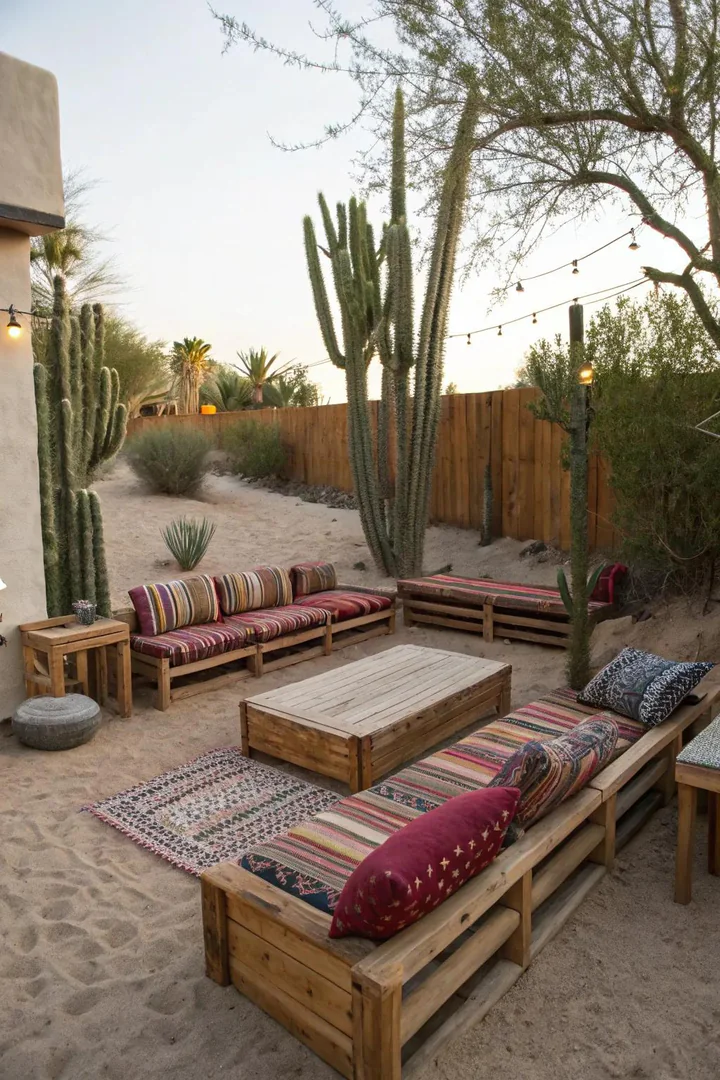
Outdoor furniture in a desert backyard must handle extreme UV exposure, 100+ degree surface temperatures, and occasional monsoon rain. Polywood HDPE furniture ($250-$600 per piece) resists UV fade and heat absorption better than metal or dark-colored resin. Aluminum frames from Castelle and Brown Jordan ($500-$2,000 per piece) stay lightweight and won’t rust, though the metal heats up under direct sun and needs shade or cushion coverage.
Position seating under a pergola, shade sail, or mature tree canopy to avoid direct sun during afternoon hours. Light-colored Sunbrella cushion fabrics ($60-$120 per seat cushion) stay 15-20 degrees cooler than dark fabrics in direct sunlight. Place furniture on a gravel or paver pad rather than directly on DG, which compacts under chair legs and creates uneven divots over time.
13. Artificial Turf
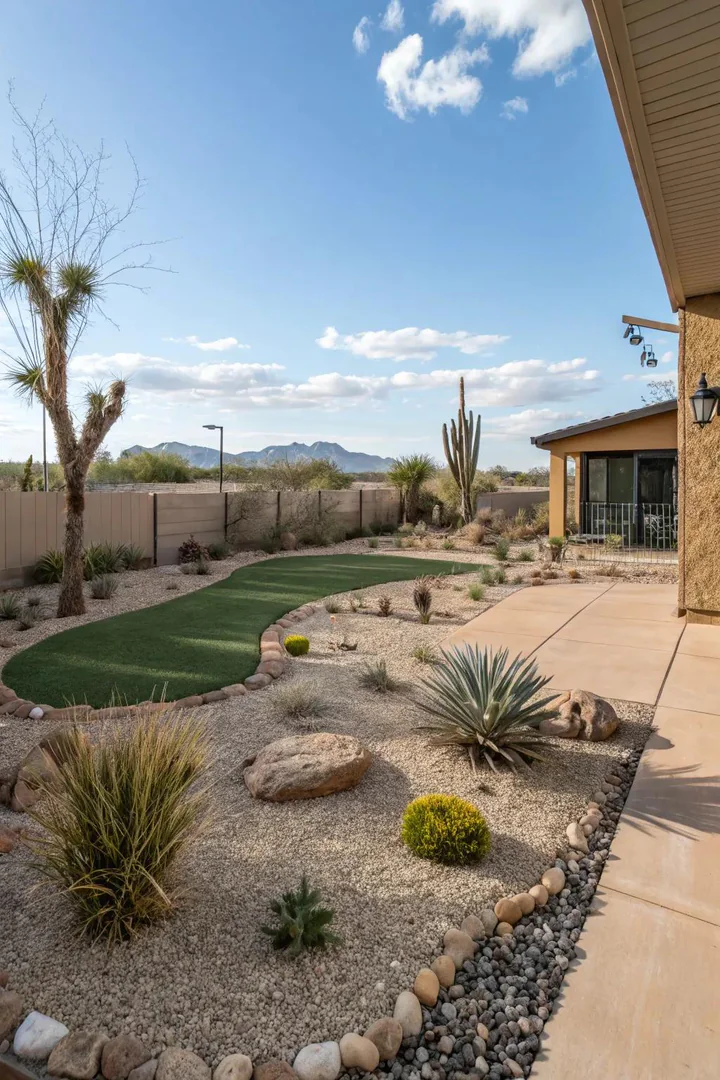
Artificial turf gives you a green lawn appearance year-round without a single drop of irrigation water. SYNLawn, ForeverLawn, and Bella Turf make residential artificial grass ($5-$12 per square foot installed) with blade heights from 1 to 2.5 inches that replicate the look of bermuda, fescue, or ryegrass. A 500-square-foot turf area costs $2,500-$6,000 installed and eliminates $50-$150 per month in water, mowing, and fertilizer expenses.
Install turf over a compacted base of 3-4 inches of decomposed granite with a 1/4-inch-per-foot slope for drainage. Use an infill material (silica sand, $10-$15 per 50-pound bag, or ZeoFill zeolite, $25-$40 per bag) to keep blades upright and cool the surface temperature by 10-15 degrees compared to unfilled turf. Rinse the turf monthly with a garden hose to remove dust and pollen buildup common in desert climates.
14. Raised Garden Beds
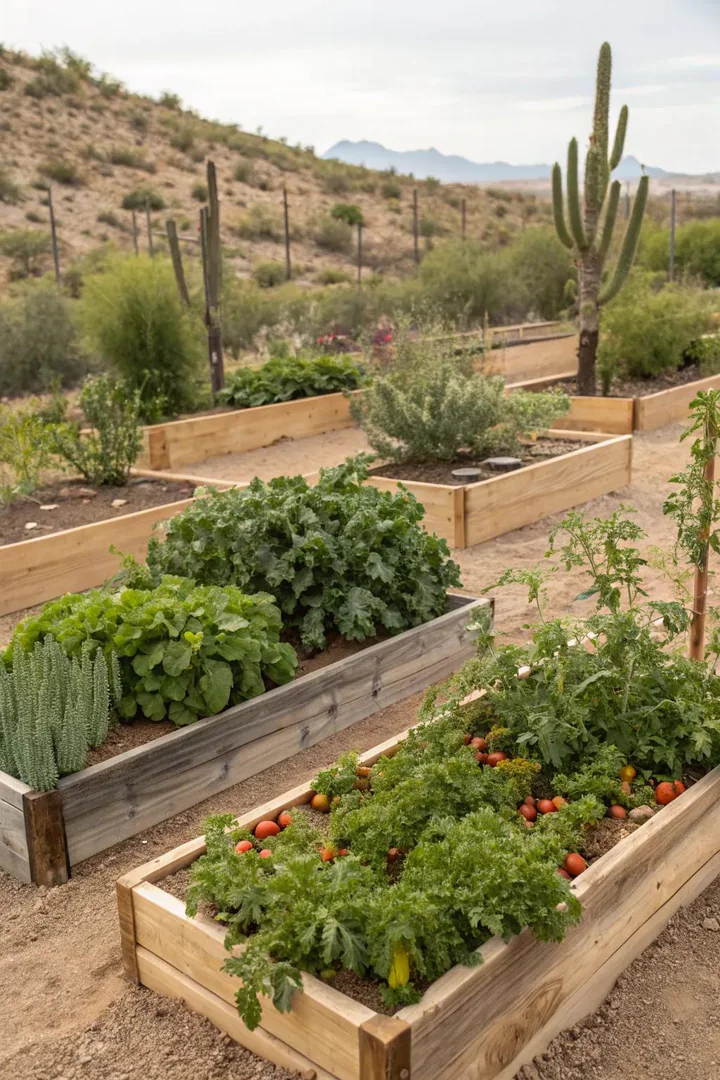
Raised beds lift plant roots above the native caliche and clay soils common in desert regions, giving you control over drainage, soil composition, and root zone temperature. Build beds from cedar boards ($40-$80 for a 4×8-foot bed, 12 inches tall) or stack cinder blocks ($1-$2 each) for a permanent, fireproof planting structure. Fill with a 60/40 mix of compost and native soil for vegetables, or a 70/30 mix of DG and pumice for succulents and cacti.
Position raised beds where they receive morning sun and afternoon shade to protect heat-sensitive crops (lettuce, spinach, cilantro) from 100+ degree afternoon temperatures. A drip irrigation system ($20-$40 for a DIY micro-drip kit) connected to a battery-powered timer ($15-$25) waters each bed precisely without waste. Raised beds measuring 18-24 inches tall double as bench seating around the perimeter, saving the cost of separate outdoor furniture.
15. Zen Garden Element
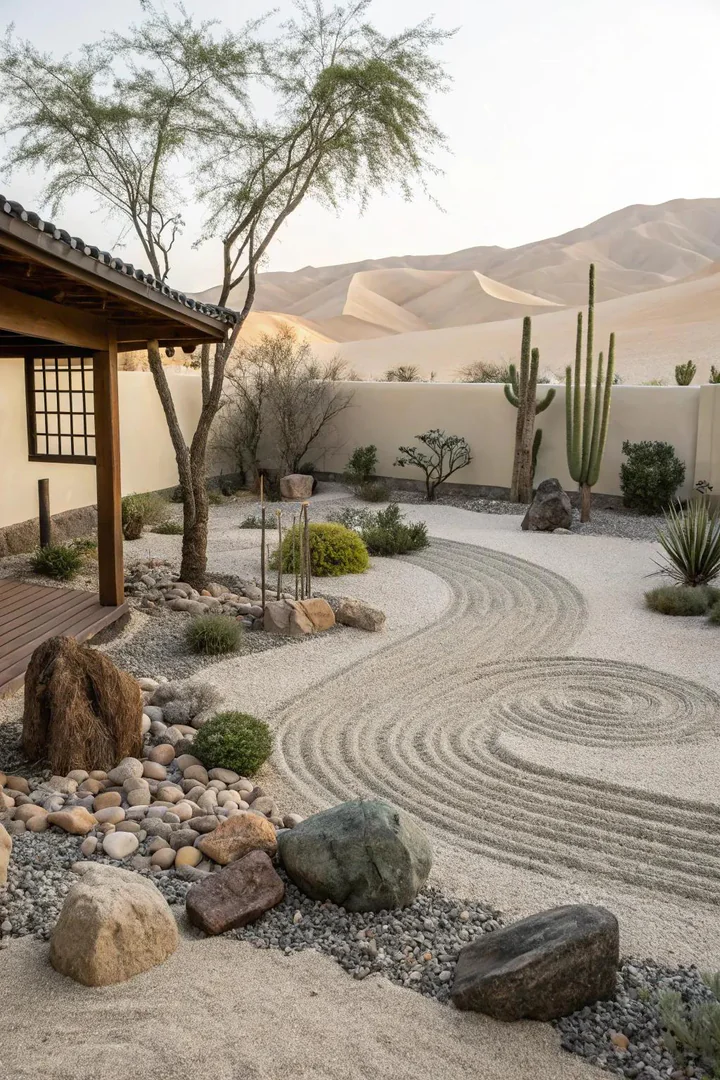
A zen garden zone within a desert backyard uses raked gravel, carefully placed stones, and minimal plantings to create a meditative space. Fill a 6×8-foot area with fine white or cream-colored gravel ($40-$60 per ton) and rake concentric patterns around 3-5 dark basalt boulders ($50-$200 each). A traditional wooden kumade rake ($15-$30) creates the parallel lines and swirl patterns associated with Japanese dry gardens.
The sparse composition of a zen garden matches the desert philosophy of doing more with less, and the maintenance requirement drops to occasional re-raking and weed pulling. Add a single specimen plant (a sculptural agave, a twisted desert willow, or a mature barrel cactus) as the living focal point. Position the zen area where you can view it from a window or seating area, since the design works as a visual meditation even when you’re not standing in it.
16. Textured Hardscaping
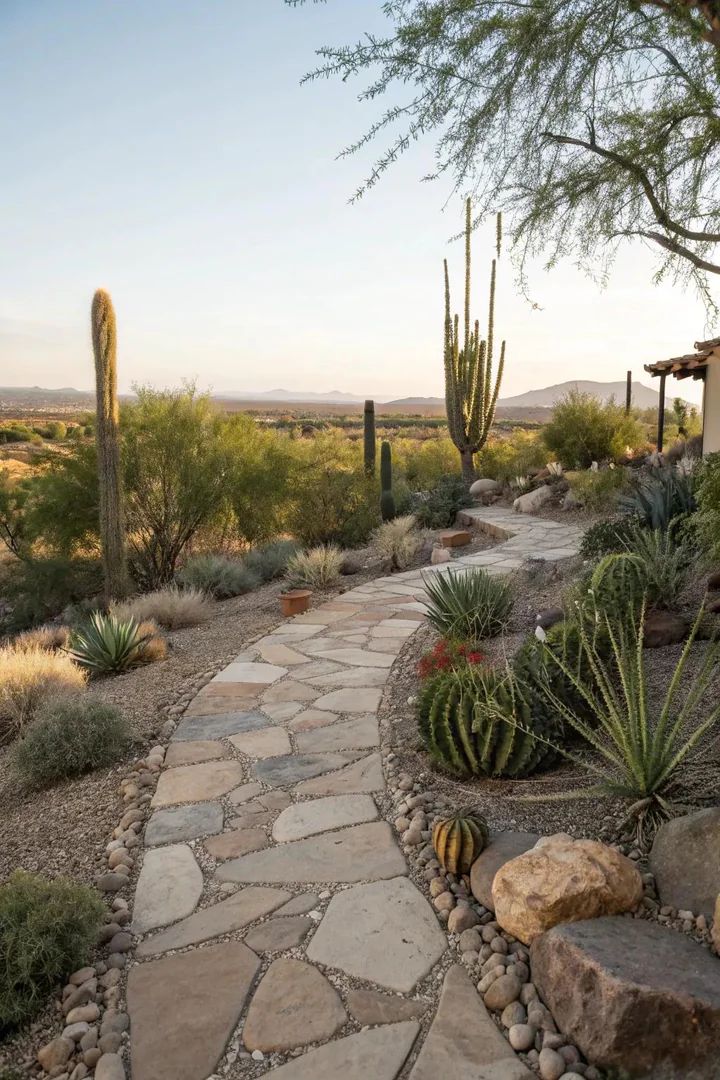
Mixing two or three hardscape textures (smooth concrete, rough flagstone, and raked gravel) adds depth and interest to a desert yard that has limited plant variety. Stamped concrete ($8-$15 per square foot) mimics the look of stone at half the cost, while real flagstone pavers ($10-$20 per square foot) bring natural variation in color and thickness that stamped patterns can’t replicate.
Exposed aggregate concrete ($10-$14 per square foot) reveals the natural stone embedded in the mix and creates a slip-resistant surface that stays cooler than smooth-finished concrete. Run a flagstone pathway through a gravel field, or border a concrete patio with a 12-inch band of river rock for a clean transition between hard and soft surfaces. A raised deck with corner stairs connecting two hardscape levels adds vertical interest to an otherwise flat desert lot.
17. Terracotta Elements
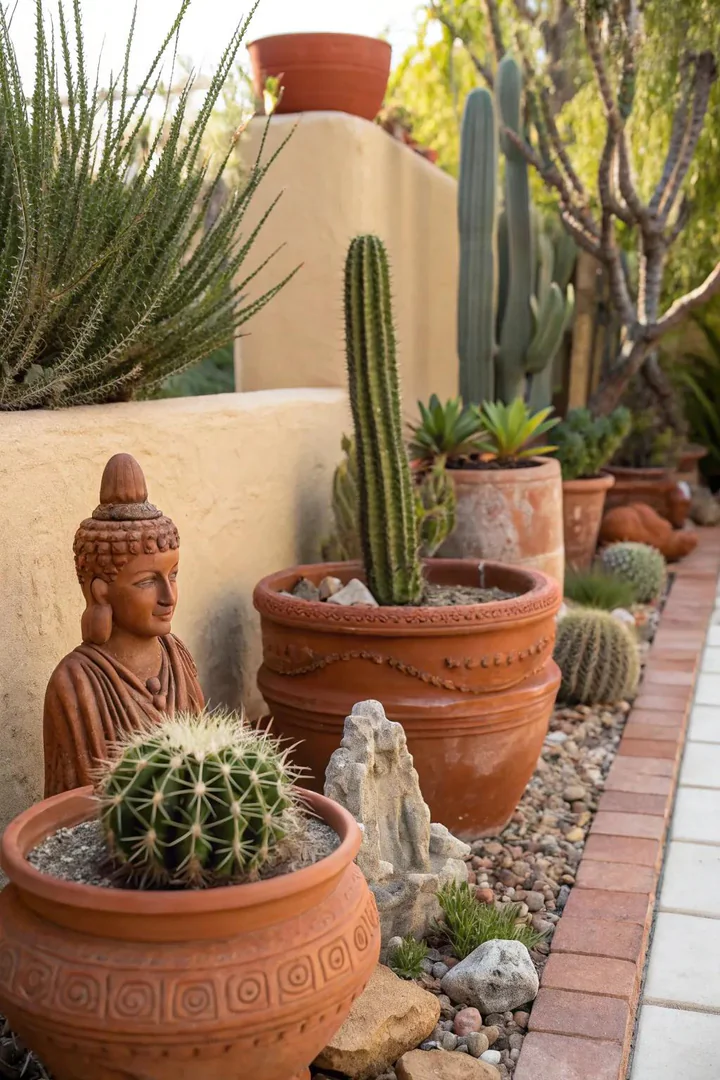
Terracotta pottery, tile, and architectural accents connect a desert backyard to the Southwestern and Mediterranean design traditions. Large terracotta planters ($20-$80 each from nurseries or import stores like World Market) hold agave, aloe, and bougainvillea while adding warm red-orange color to a neutral gravel backdrop. Talavera hand-painted tiles ($5-$15 per tile) inlaid into a concrete wall or stair riser bring bright pattern and folk-art character.
A clay chiminea ($80-$300) serves as both a fire feature and a sculptural focal point, channeling smoke upward through its chimney design. Choose frost-resistant terracotta rated for outdoor use in climates where overnight temperatures drop below freezing. Seal unglazed terracotta with Thompson’s Water Seal ($8-$12 per quart) to prevent moisture absorption and freeze-thaw cracking over winter.
18. Symmetry and Balance
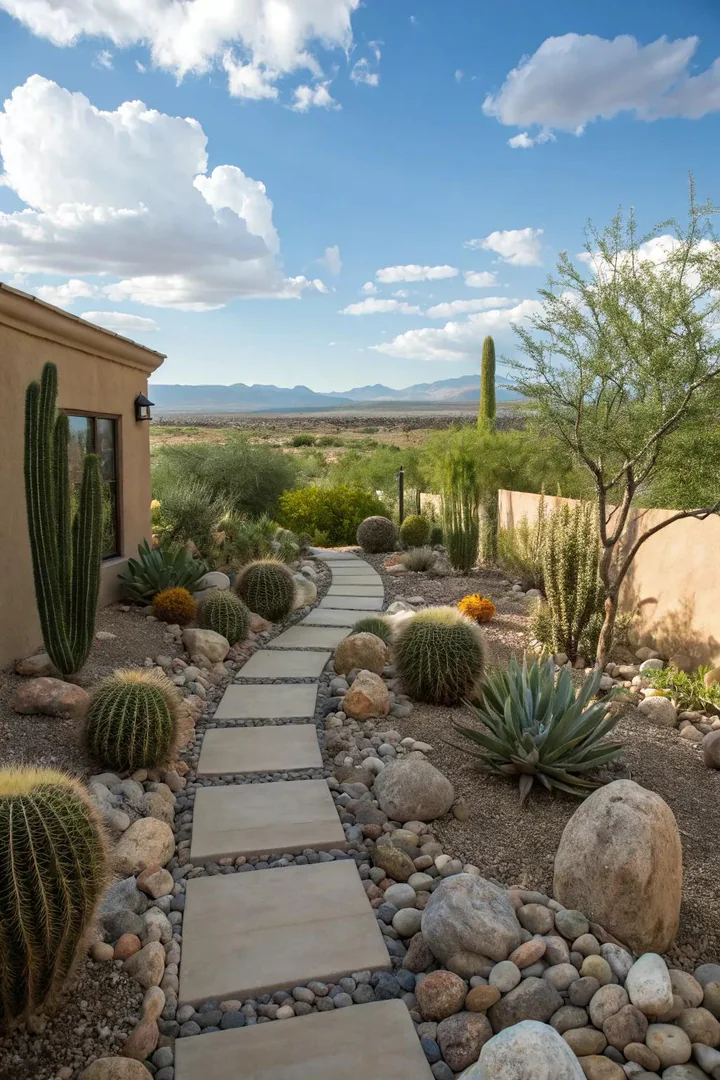
Symmetrical planting and hardscape arrangements give a desert garden a formal, designed appearance that stands out from the random scatter typical of unplanned yards. Place matching pairs of large pots, specimen plants, or boulders on either side of a pathway, entry, or seating area. Two identical blue agave ($30-$50 each) flanking a front walkway or a pair of desert spoon (Dasylirion wheeleri, $20-$40 each) framing a patio entrance create immediate visual order.
Run a straight gravel pathway down the center axis of the yard with symmetrical planting beds on each side for maximum impact. Use odd-numbered plant groupings (3 or 5) within each bed to add natural variety inside the symmetrical framework. A circular focal point (fire pit, fountain, or planting bed) centered at the far end of the axis anchors the composition and draws the eye through the garden.
19. Colorful Accents
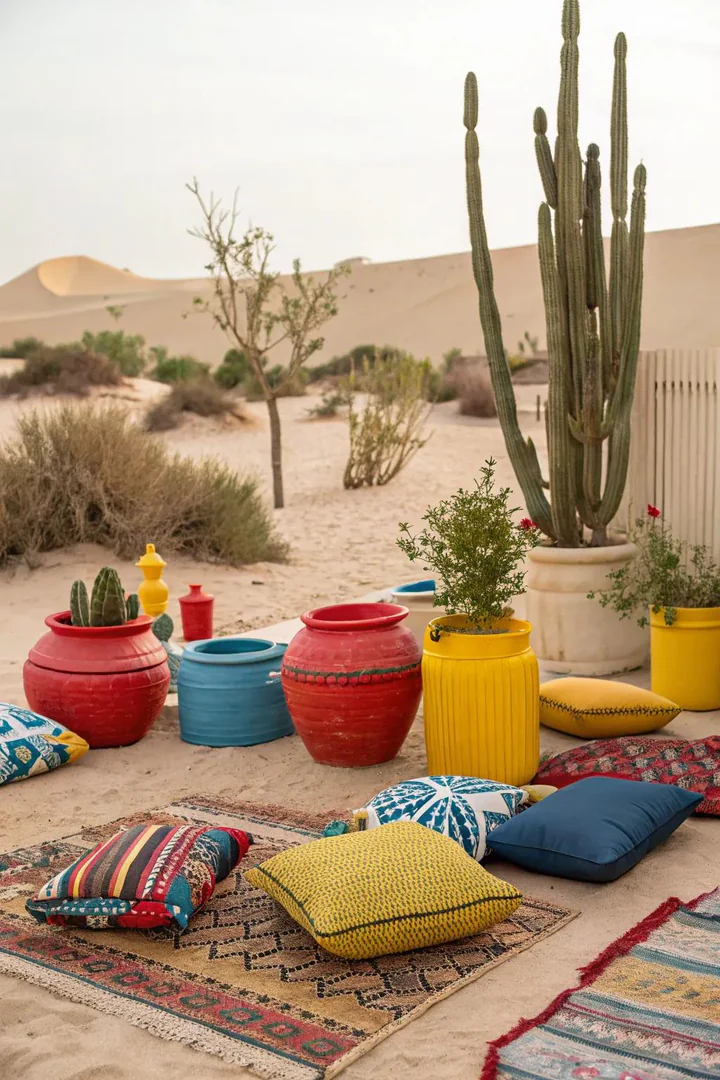
Desert gardens tend toward tan, brown, and green tones, making a single bold color accent stand out dramatically. Paint 3-5 terracotta pots ($5-$10 each) in turquoise, coral, or cobalt blue with exterior spray paint ($8-$12 per can) and group them at a focal point. A brightly painted accent wall (one section of fence or stucco wall, $20-$40 in exterior paint) creates a backdrop that makes green plants and brown gravel pop forward.
Colorful outdoor cushions ($15-$40 each) and a patterned outdoor rug ($40-$120) bring accent color to the seating area without permanent changes. Flowering desert plants like bougainvillea (magenta, orange, or white, $15-$30 per 5-gallon pot), red bird of paradise (Caesalpinia pulcherrima, $15-$25), and desert penstemon ($5-$10) add seasonal bursts of natural color from spring through fall.
20. Outdoor Lighting
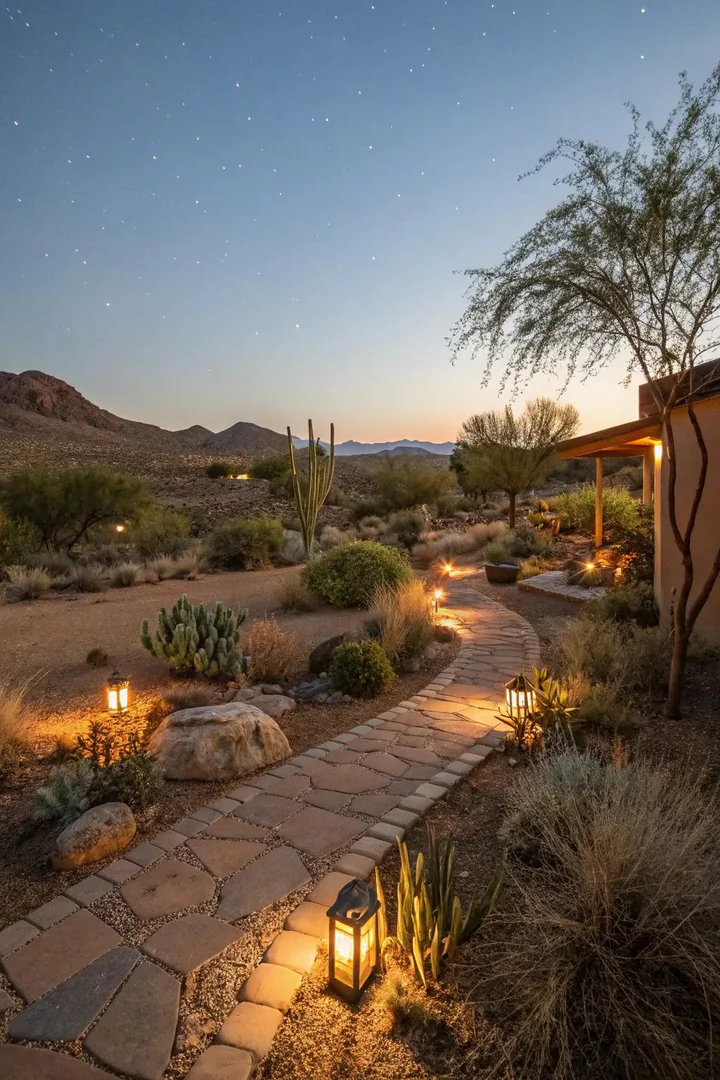
Desert backyards get dark fast after sunset with minimal light pollution from vegetation, making a well-planned lighting system the key to evening use. Solar path lights ($15-$30 for a 10-pack) charge fully in the intense desert sun and run 6-8 hours after dark. Low-voltage LED uplights ($15-$30 each from Kichler or WAC) aimed at the base of specimen cacti, agave, and boulders cast dramatic shadows on walls and fences.
String lights draped between pergola beams or fence posts ($20-$50 for a 48-foot strand) provide ambient overhead glow for the seating area. Desert gardens benefit from warm-white (2700K-3000K) lighting that matches the golden tones of DG, sandstone, and terracotta rather than cool-white (4000K+) that clashes with warm-toned materials. Set all lights on a photocell sensor or smart timer so they turn on automatically at dusk.
21. Recycled Materials
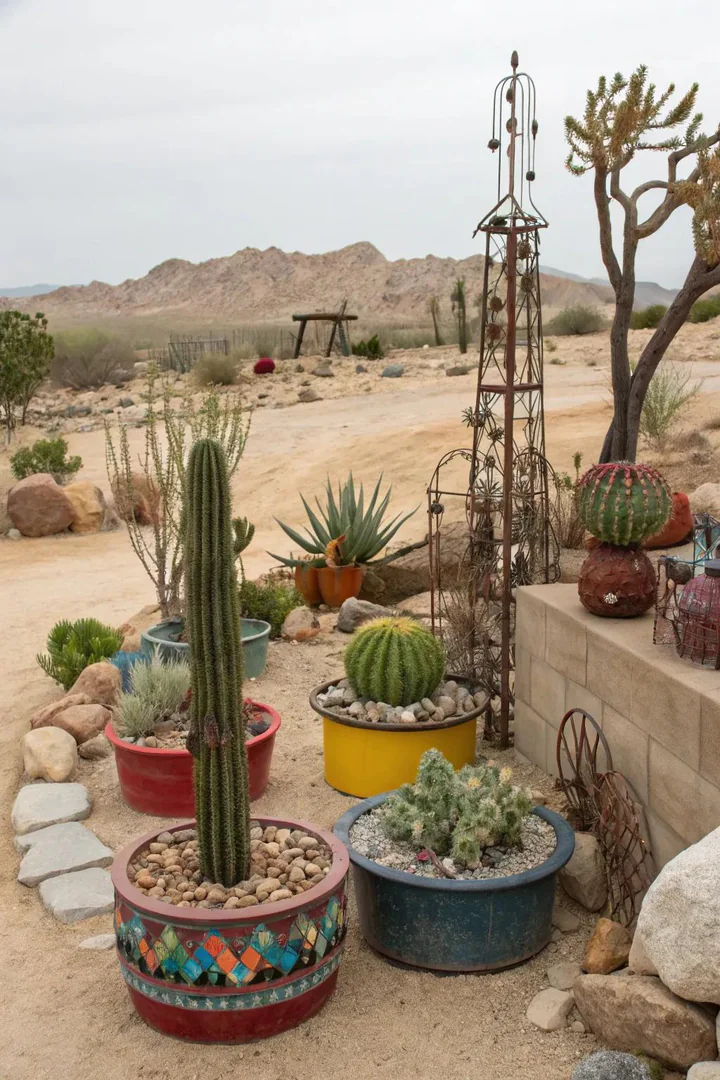
Recycled and repurposed materials add character to a desert backyard while keeping costs and waste low. Broken concrete chunks (urbanite, free from demolition sites) stack into retaining walls, edging, and seat walls without mortar. Reclaimed railroad ties ($15-$30 each from salvage yards) work as raised bed walls, step treads, and garden borders, though their creosote coating makes them unsuitable for food-growing beds.
Scrap metal sculptures and garden art from local welders and artists ($50-$500 per piece) weather naturally in the dry desert air and develop a rust patina that blends with the tan and brown color palette. Build an outdoor bar from reclaimed pallets for $50-$150 in materials, similar to the projects shown in DIY pallet bar ideas that pair recycled wood with outdoor entertaining. Recycled glass mulch ($20-$40 per 20-pound bag) in amber, cobalt, or green replaces traditional rock mulch around specimen plants with a sparkling accent.
22. Private Nook
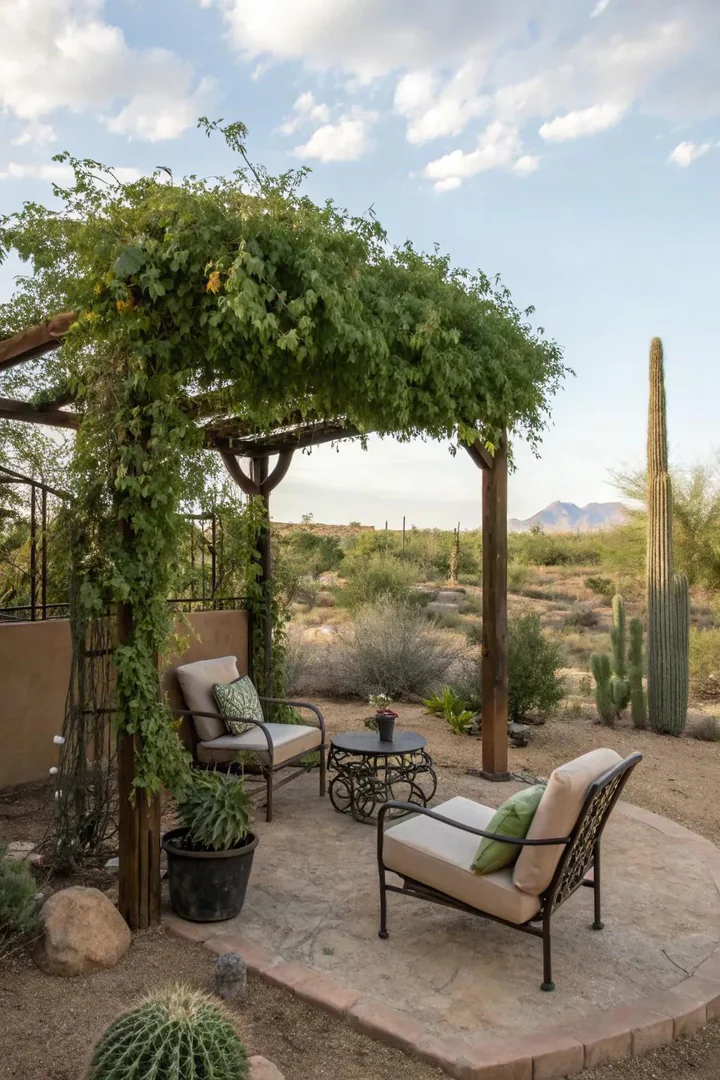
A private nook carved out of one corner of a desert backyard gives you a shaded, screened spot for reading, meditation, or quiet conversation. Build a 5-foot-tall stucco half-wall ($15-$25 per square foot) on two sides of a 6×6-foot area and fill the opening with a tall ornamental grass screen (Mexican feather grass or deer grass, $10-$20 per plant, 3-4 plants per row). Add a single lounge chair or hammock inside the enclosed space.
Overhead shade from a shade sail ($30-$80 for a 10×10-foot triangle) or a small ramada (post-and-beam shade structure, $500-$2,000) keeps the nook comfortable even during midday heat. Position the nook facing east or north to avoid direct afternoon sun exposure. A small side table, a battery-powered fan ($15-$30), and a tabletop fountain complete the retreat without requiring any electrical wiring to the corner of the yard.
Desert Backyard Material Comparison
| Ground Cover | Cost per Ton/Sq Ft | Coverage per Ton | Maintenance | Heat Absorption |
|---|---|---|---|---|
| Decomposed Granite | $25-$45/ton | 50-70 sq ft at 3 in | Replenish every 2-3 yrs | Low-Moderate |
| Pea Gravel | $35-$55/ton | 50-80 sq ft at 2-3 in | Rake and top off yearly | Low |
| River Rock (3-4 in) | $40-$80/ton | 40-60 sq ft at 3 in | Minimal | Low |
| Mexican Beach Pebble | $60-$100/ton | 30-50 sq ft at 2-3 in | Minimal | Moderate (dark) |
| Artificial Turf | $5-$12/sq ft installed | N/A | Monthly rinse | High (needs infill) |
| Concrete (poured) | $6-$10/sq ft | N/A | Seal every 2-3 yrs | Moderate-High |
| Flagstone | $10-$20/sq ft | N/A | Seal annually | Low-Moderate |
How to Convert a Lawn to Desert Garden
1. Remove Existing Turf
Kill the existing lawn by covering it with black plastic sheeting for 4-6 weeks during summer (solarization) or apply a non-selective herbicide to the green growth. Cut and remove the dead sod using a sod cutter rental ($60-$100 per day) or a flat-blade shovel. Dispose of the removed sod at your local green waste facility or compost it in a pile away from the conversion area.
2. Grade and Install Drainage
Regrade the bare soil to slope 1/4 inch per foot away from the house foundation and toward the yard perimeter or a designated drainage channel. Install a French drain (4-inch perforated PVC pipe in a gravel trench, $3-$6 per linear foot) along any low spots where water pools during monsoon storms. Compact the graded surface with a plate compactor rental ($50-$80 per day) to prevent settling.
3. Lay Weed Barrier and Edging
Roll out commercial-grade woven weed barrier fabric ($0.10-$0.30 per square foot) over the entire conversion area, overlapping seams by 6 inches and staking every 3 feet with fabric pins ($5-$10 per box of 100). Install metal or aluminum edging ($1-$3 per linear foot) along pathways, planting beds, and the property border to separate gravel zones and contain different ground cover materials.
4. Place Boulders, Hardscape, and Plants
Position boulders and large stones first (they set the focal points of the design), then install any pavers, stepping stones, or built structures. Cut X-shaped slits in the weed barrier at each planting location, dig the hole through the slit, and plant directly into the native soil amended with pumice or sand. Backfill around each plant with native soil and mound DG or gravel up to the plant collar.
5. Spread Ground Cover and Mulch
Pour DG, gravel, or river rock over the weed barrier to a depth of 2-3 inches using a wheelbarrow and flat rake. Spread material evenly and avoid burying plant crowns. Install drip irrigation lines ($0.10-$0.30 per linear foot of 1/2-inch poly tubing) on top of the weed barrier and below the gravel layer, with emitters at each plant location. Run drip irrigation on a timer for 30-60 minutes twice per week during the first growing season, then reduce to once per week or less as plants establish.
Frequently Asked Questions
How much water does a desert garden save compared to a lawn?
A desert garden uses 50-75% less water than a traditional lawn of the same size. A 1,000-square-foot bermudagrass lawn in Phoenix needs roughly 60,000-80,000 gallons of water per year, while the same area planted with native desert species and gravel ground cover uses 15,000-20,000 gallons per year (mostly during the first year of establishment). Many Southwest water utilities offer $1-$3 per square foot in rebates for turf-to-desert conversions.
What are the best desert plants for beginners?
Red yucca (Hesperaloe parviflora), desert marigold (Baileya multiradiata), and autumn sage (Salvia greggii) require almost no care after the first growing season and bloom reliably every year. For larger specimens, palo verde trees and desert willow grow fast and provide filtered shade. Avoid planting saguaro cactus (protected species in Arizona, 15-50 year growth timeline) and instead choose golden barrel cactus or hedgehog cactus for a dramatic cactus focal point that reaches display size in 3-5 years.
Does a desert backyard increase or decrease home value?
In water-scarce regions (Arizona, Nevada, Southern California), a professionally designed desert garden increases property value by 5-10% and reduces time on market compared to homes with water-intensive lawns. Buyers in these markets prefer low-maintenance yards that don’t require expensive irrigation systems. In regions where green lawns are the norm (Midwest, Northeast), a full desert conversion may polarize buyers, so consider keeping a small turf area near the house for broad appeal.
How do you keep a gravel yard from looking bare?
Vary the gravel color and size across different zones, add 5-8 specimen plants spaced evenly across the area, and include 2-3 non-plant focal points (boulders, a fountain, art, or a fire pit) at different depths in the yard. A gravel yard looks bare when the ground plane is a single uniform color with no vertical elements. Adding plants at three height levels (ground cover, mid-height shrubs, and one or two tall specimens) breaks up the flat expanse and makes the garden feel full.
Is artificial turf safe for pets in a desert backyard?
Artificial turf heats up to 150+ degrees Fahrenheit in direct desert sun, making it dangerous for pet paws during peak afternoon hours (11 AM – 4 PM in summer). Use a turf-cooling infill like ZeoFill zeolite to reduce surface temperature by 10-20 degrees, and provide shaded turf areas under a pergola or shade sail where pets can walk safely. Rinse turf weekly with an enzyme-based pet odor neutralizer ($10-$20 per bottle) to break down urine residue that bakes into the material in dry heat.