Small Front Porch Landscaping Ideas: 16 Easy Ways to Boost Beauty

Small front porch planting ideas turn a 4 x 6-foot or 6 x 8-foot entry area into a welcoming focal point with container gardens, climbing vines, path-edge borders, and seasonal color rotations that cost $50 to $300 total. Below are 16 front porch garden designs with specific plant picks, pot sizes, soil mixes, and layout plans sized for compact porches under 80 square feet.
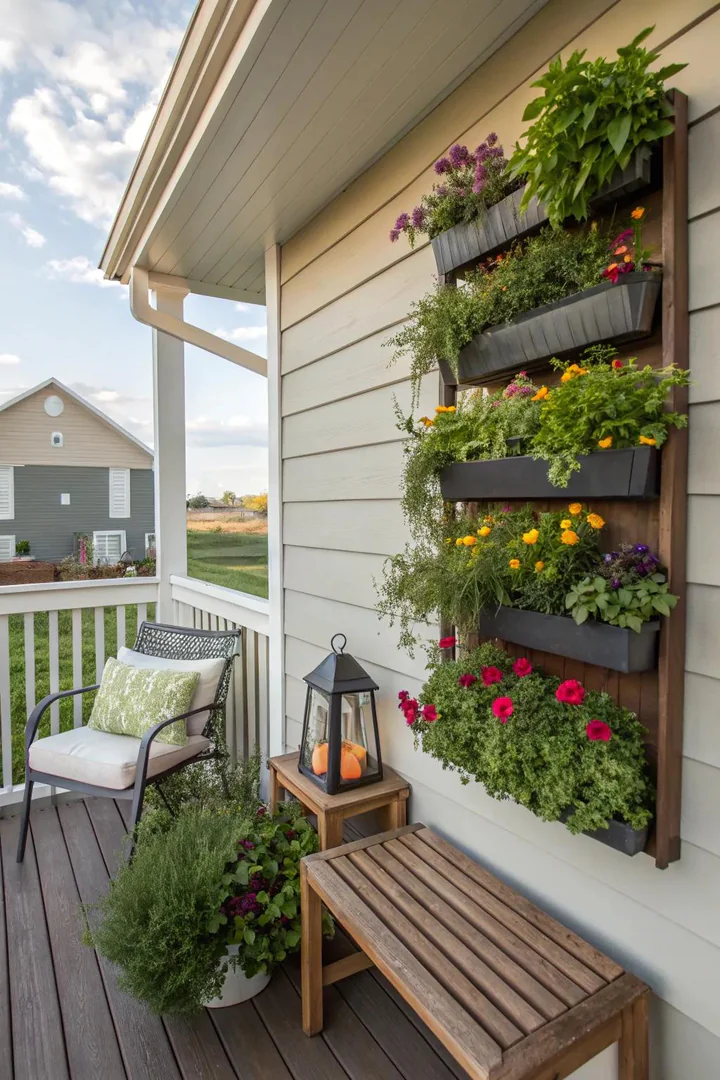
1. Vertical Garden Panel
A wall-mounted vertical garden (Florafelt 12-pocket panel at $85, or Woolly Pocket Living Wall Planter at $40 per 3-pocket strip) turns a blank porch wall into a green accent without using any floor space. Mount the panel on a south- or east-facing wall where plants receive 4 to 6 hours of morning sun, and fill each pocket with a lightweight mix of 50 percent peat moss, 25 percent perlite, and 25 percent compost.
Plant each pocket with trailing succulents (string of pearls, burro’s tail), compact herbs (thyme, oregano, parsley), or shade-tolerant ferns (button fern, maidenhair fern) depending on your porch’s sun exposure. Water the vertical panel from the top row and let gravity distribute moisture downward through the fabric pockets. A single 12-pocket panel holds 12 plants and covers roughly 2 x 3 feet of wall space at a total cost of $110 to $150 including the panel, soil, and starter plants.
2. Porch Seating with Potted Plants
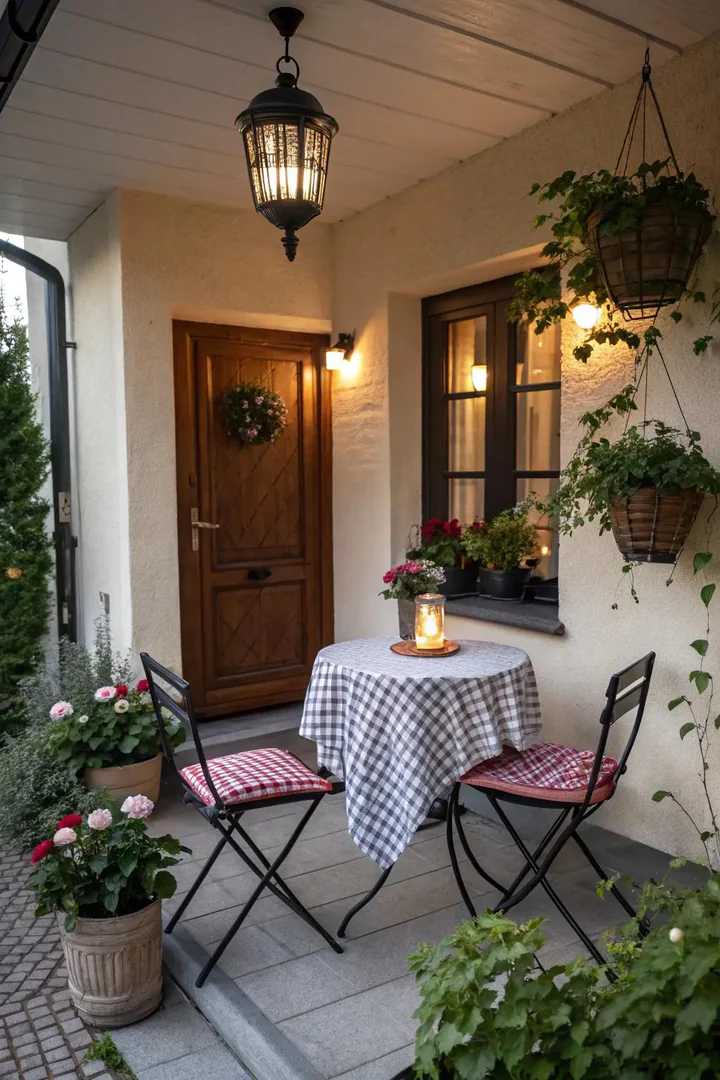
Two narrow outdoor chairs (Mainstays Wicker Bistro Set, $80 at Walmart, or IKEA APPLARO folding chairs at $35 each) flanked by 12 to 14-inch glazed ceramic pots ($15 to $30 each from Home Depot or Target) give a small porch a furnished, lived-in look. Set one pot on each side of the seating pair and plant with bushy annuals (geraniums, begonias, petunias) or dwarf evergreen shrubs (boxwood ‘Green Gem’, holly ‘Soft Touch’) for year-round structure.
Choose chairs that fold flat or stack for storage during winter months or heavy weather seasons. A complete seating-and-planter setup costs $130 to $250 and fits porches as narrow as 4 feet deep by 6 feet wide. Anchor lightweight pots with a 2-inch gravel layer in the bottom to prevent wind tipping during storms.
3. Railing Flower Boxes
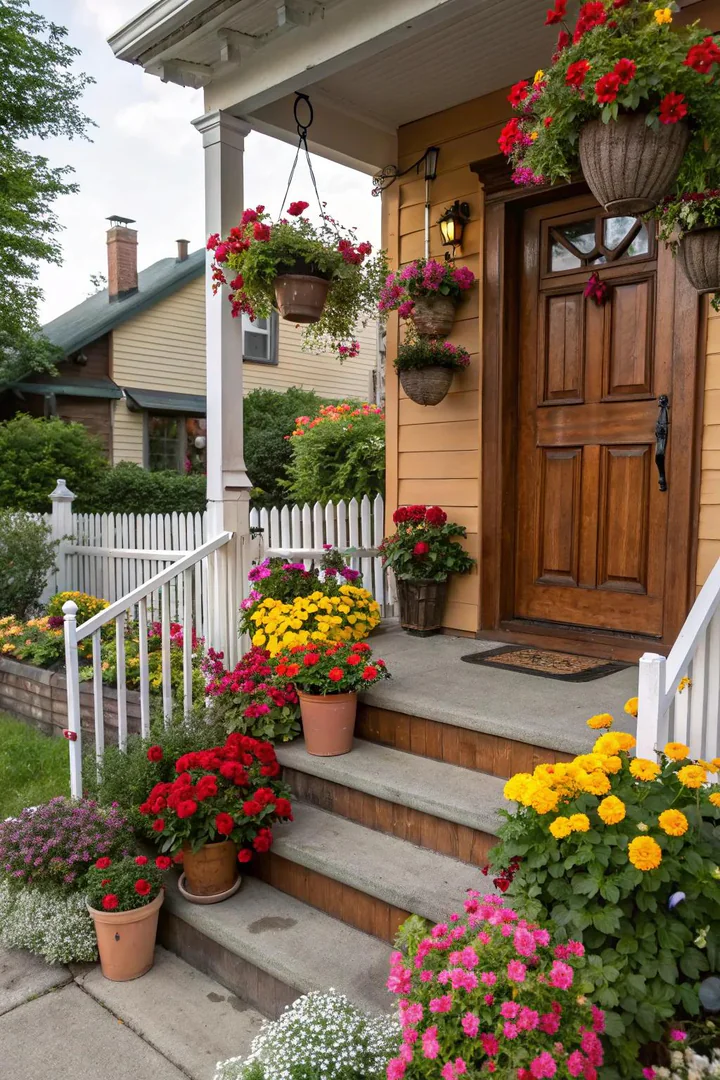
Window-box-style planters (24 to 36-inch resin or cedar boxes, $12 to $25 each) mounted on the porch railing with adjustable metal brackets (Panacea Over-the-Rail Brackets, $10 per pair) add vivid color at eye level without taking up any floor area. Fill each box with Miracle-Gro Moisture Control Potting Mix and plant densely with one upright variety (salvia, snapdragons, dwarf zinnias) in the center and one trailing variety (sweet alyssum, lobelia, calibrachoa) along the front edge.
Three 36-inch boxes cover 9 linear feet of railing and hold 18 to 24 plants at a total cost of $80 to $150 for boxes, brackets, soil, and 6-packs of annuals from the garden center. Deadhead spent blooms weekly and feed with water-soluble fertilizer (Jack’s Classic Blossom Booster, 10-30-20) every two weeks to keep the flowers producing from May through October in zones 5 through 9.
4. Solar Path and String Lighting
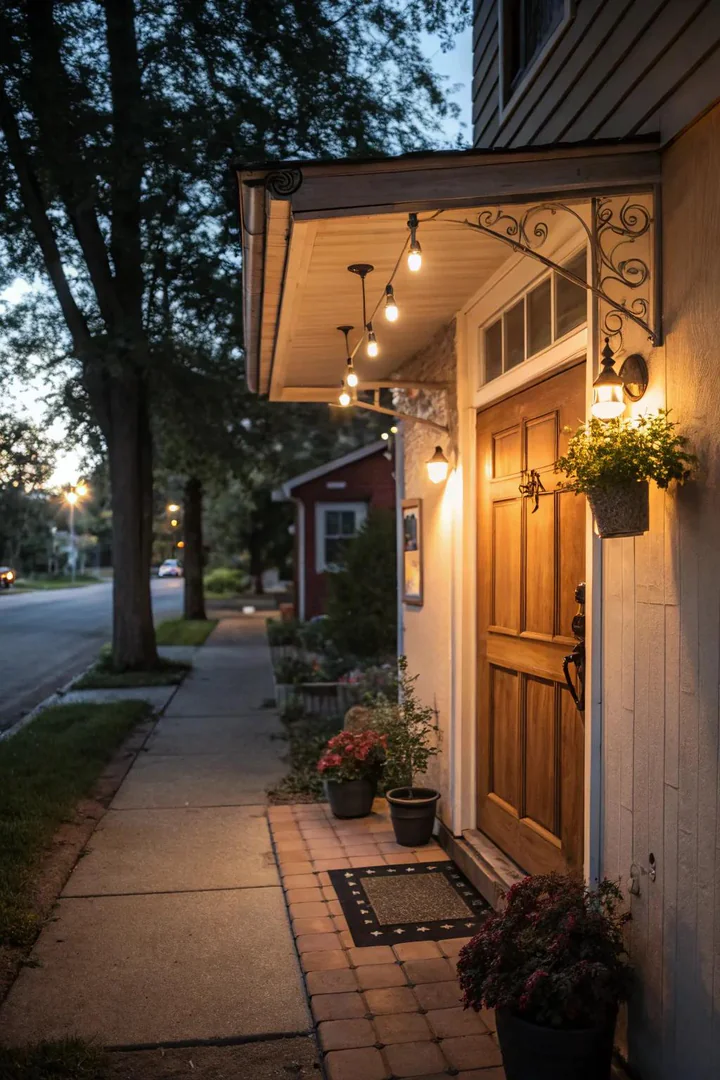
Solar-powered path lights ($20 to $40 for a 10-pack from GIGALUMI, SOLPEX, or BEAU JARDIN) lined along the front walkway and warm-white LED string lights ($12 to $20 for a 48-foot strand from Brightown or Addlon) draped along the porch ceiling or railing create a soft evening glow that highlights plants and makes the entry feel safer after dark.
Push path lights 6 to 8 inches into the soil on alternating sides of the walkway, 3 to 4 feet apart. Hang string lights from cup hooks ($3 for a 20-pack) screwed into the porch ceiling joists or fascia board. Both solar and plug-in LED options draw under 5 watts and cost less than $3 per year in electricity. A full lighting setup (10 path lights plus one string light strand) costs $30 to $60 and installs in under an hour with no wiring or electrician needed.
5. Natural Stone and Cedar Accents
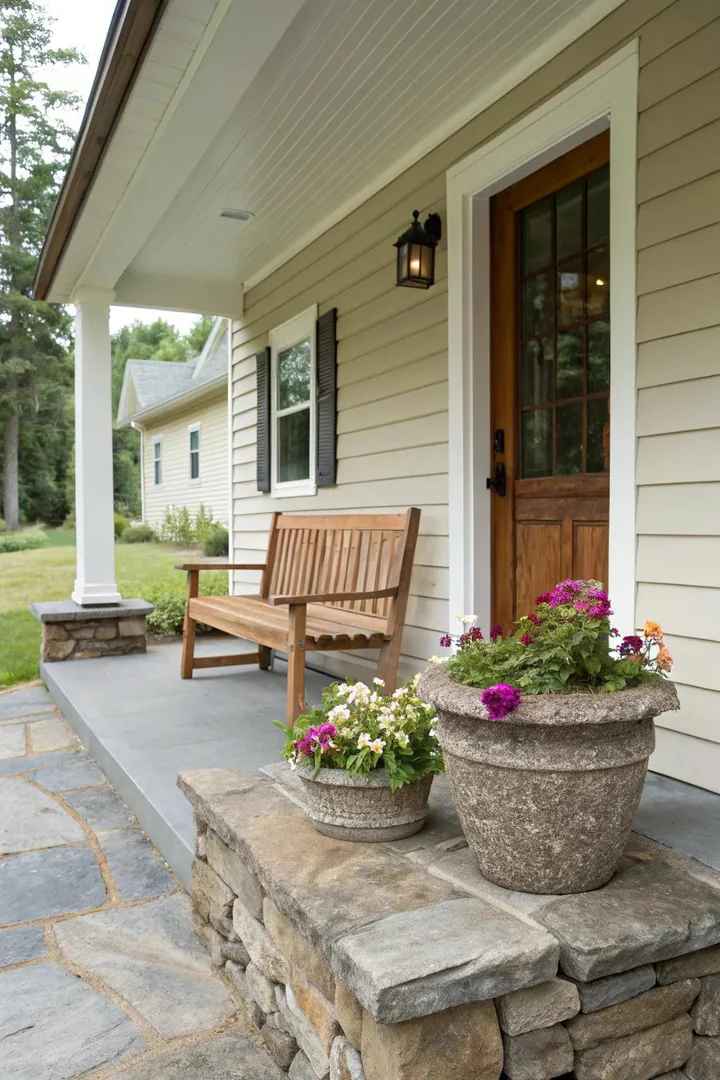
Replacing a plain concrete front step with natural flagstone treads ($3 to $8 per square foot for bluestone, limestone, or sandstone) and pairing them with a cedar planter box ($25 to $50 for a 36-inch box from Greenes Fence or CedarCraft) gives the porch an organic, textured appearance. Dry-set the flagstone treads on a 2-inch sand bed over the existing concrete for an afternoon project that requires no mortar or masonry skills.
Fill the cedar planter with tall ornamental grasses (Karl Foerster feather reed grass, dwarf fountain grass, blue oat grass) that sway in the breeze and add vertical movement to the porch entry. Cedar weathers to a silver-gray patina over 2 to 3 years without any stain or sealant, matching the natural stone color palette. The full stone-and-cedar upgrade costs $100 to $300 depending on the number of steps and planter size.
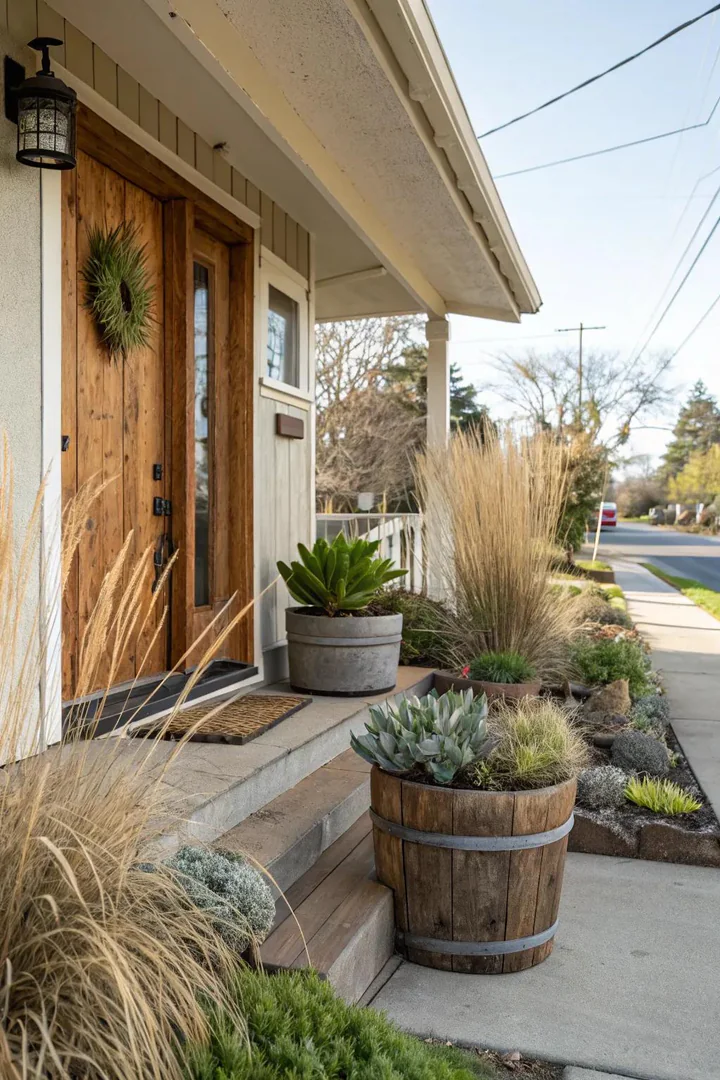
6. Low-Maintenance Evergreen Containers
Planting drought-tolerant evergreens (dwarf Alberta spruce at $20 to $35, Green Mountain boxwood at $15 to $25, or Sky Pencil holly at $25 to $40) in 14 to 16-inch frost-proof resin pots ($15 to $30 each) gives the porch year-round green structure with watering only once every 7 to 10 days in summer and almost never in winter. Group three to five pots in graduated sizes at the porch corners and beside the front door.
Add a 1-inch mulch layer (shredded cedar bark or decorative pebbles) on top of the soil in each pot to slow evaporation and keep roots cool. Evergreen containers need feeding only twice per year (spring and midsummer) with a slow-release granular fertilizer (Osmocote 14-14-14, $12 per 8-pound bag). A five-pot evergreen grouping costs $150 to $300 and looks finished in every season without replanting. Explore more budget outdoor projects for additional yard improvements.
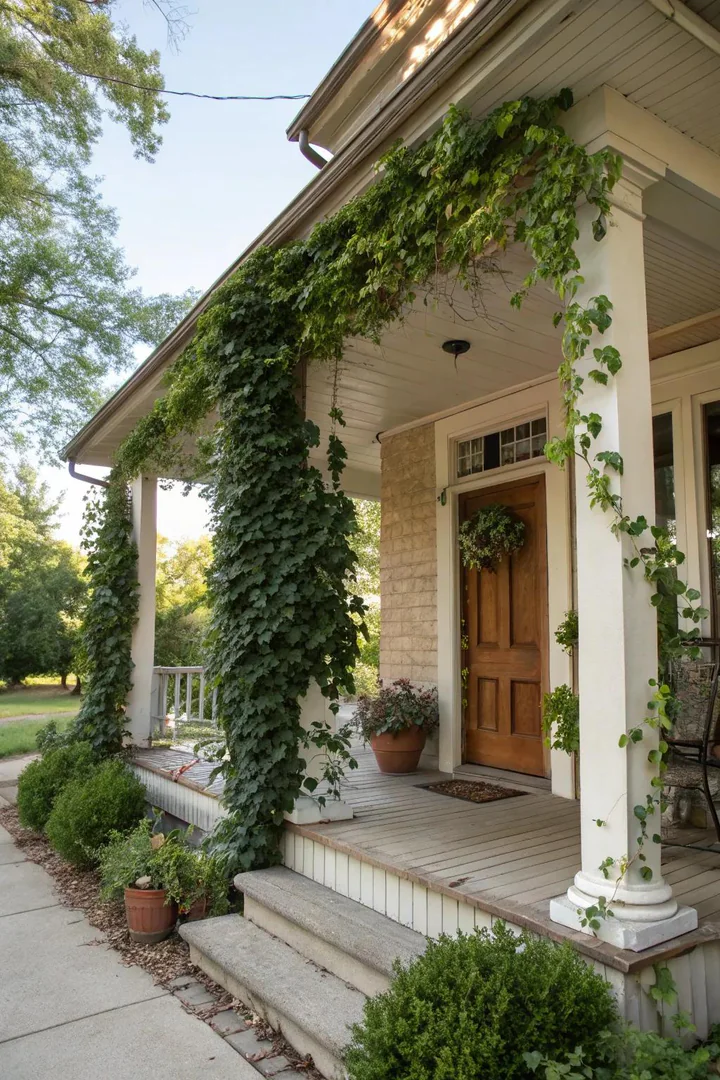
7. Climbing Vines on Porch Columns
Training a fast-growing climbing vine (star jasmine, clematis, mandevilla, or black-eyed Susan vine) up a porch column adds vertical greenery and fragrance without using floor space. Wrap a 5-foot section of galvanized wire garden trellis ($8 to $15 from Gardener’s Supply or Home Depot) around each column and secure with zip ties or small screw hooks, then plant the vine in a 12-inch pot at the column base.
Star jasmine (Trachelospermum jasminoides) is the best choice for small porches because it grows slowly (1 to 2 feet per year), stays evergreen in zones 8 through 10, and produces intensely fragrant white flowers from April through June. Clematis works better in cooler zones (4 through 8) and offers flower colors from deep purple to bright pink to pure white depending on the cultivar. Each column planting costs $20 to $40 for one vine, one pot, soil, and trellis wire.
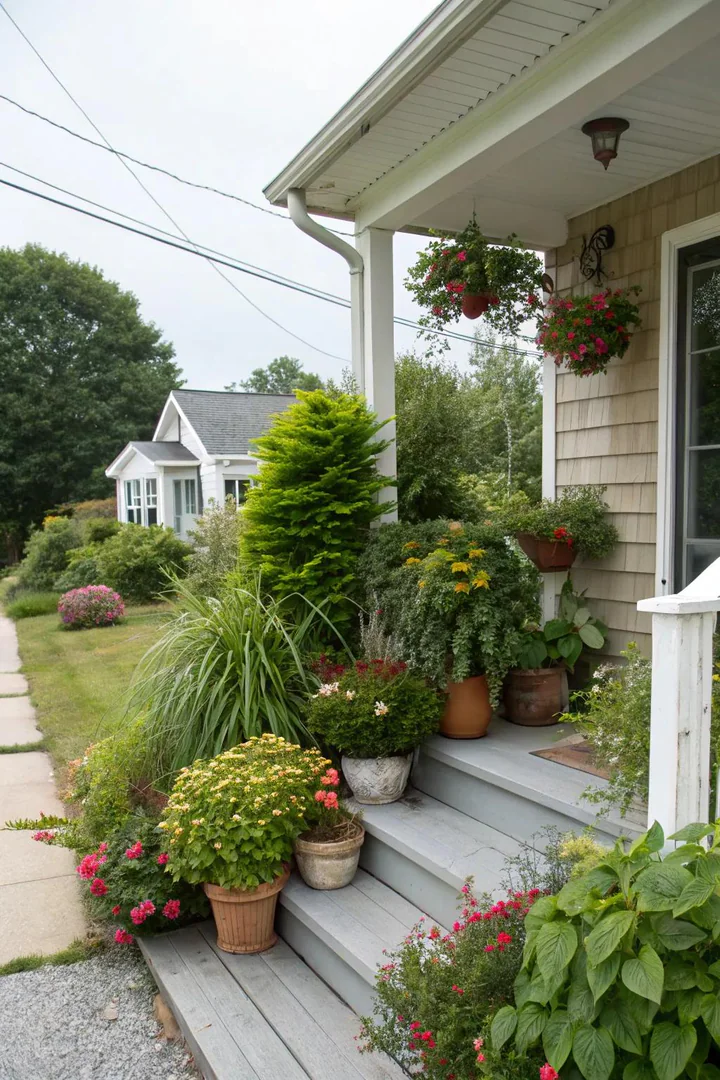
8. Layered Height Planting
Arranging plants in three height tiers (tall at the back or corners, medium in the middle, low at the front edge) creates depth and visual fullness on a small porch. Place 3 to 4-foot tall ornamental grasses or dwarf trees (Japanese maple ‘Shaina’, dwarf crape myrtle ‘Pocomoke’) in 16-inch pots at the back, 18 to 24-inch perennials (hostas, heuchera, astilbe) in 12-inch pots at mid-level, and 6 to 8-inch trailing groundcovers (creeping jenny, sedum, sweet potato vine) in 8-inch pots at the front edge.
The three-tier arrangement fits along one wall of a 4-foot-deep porch in a single row, taking up only 14 to 18 inches of floor depth. Choose plants that share the same sun and water requirements (all shade, all sun, or all part-shade) so the entire grouping thrives under the porch’s light conditions. A complete three-tier arrangement of six to eight pots and plants costs $100 to $250.
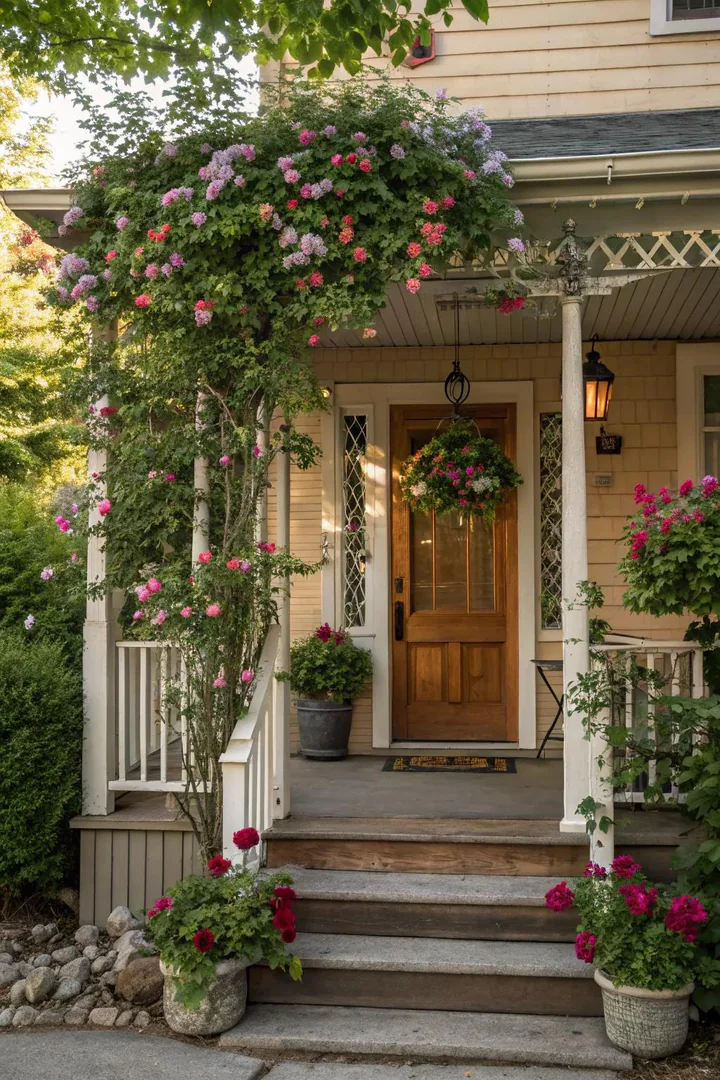
9. Freestanding Decorative Trellis
A freestanding wooden or metal trellis (60 to 72 inches tall, $30 to $80 from Wayfair, Amazon, or a garden center) placed against the porch wall or beside the front door adds structural height and a support structure for climbing plants without any wall mounting or drilling. Fan-style, obelisk, and lattice-panel trellises all work on small porches.
Anchor the trellis base in a heavy 14 to 16-inch pot filled with soil and a climbing rose (miniature ‘The Fairy’, ‘Drift Coral’, or ‘Oso Easy Cherry Pie’) or flowering vine (passion flower, mandevilla). A weighted pot keeps the trellis stable in wind without bolting into the porch floor or wall. One trellis-and-vine combination costs $50 to $120 and reaches full coverage in one growing season for annual vines or two seasons for perennial roses. See additional DIY backyard projects for more outdoor building ideas.
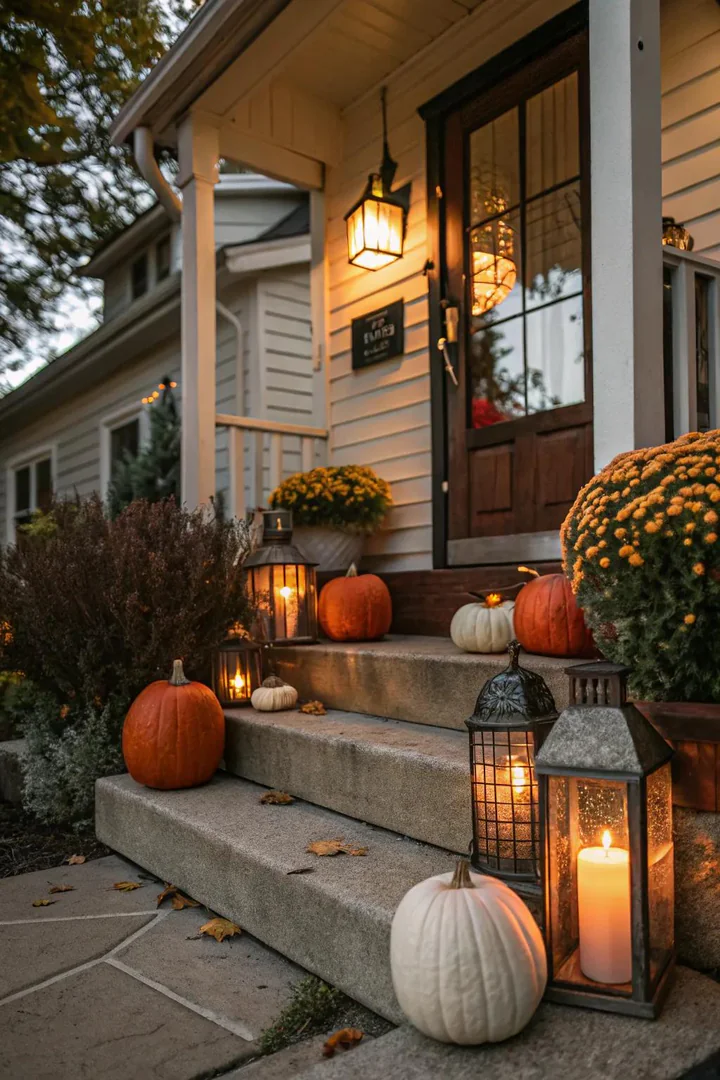
10. Seasonal Rotation Displays
Swapping porch decorations and plants four times per year (spring bulbs and pastels, summer annuals and bright colors, fall mums and pumpkins, winter evergreen boughs and LED lights) keeps the entry looking fresh without permanent planting commitments. Each seasonal changeover costs $20 to $60 in new plants and decorations, and the previous season’s containers get stored or composted.
Spring: tulips, daffodils, and hyacinths in 8-inch pots ($3 to $5 per pot of pre-planted bulbs). Summer: geraniums, petunias, and marigolds in hanging baskets and railing boxes. Fall: garden mums ($5 to $8 each), ornamental kale, mini pumpkins, and a corn-stalk bundle. Winter: a fresh pine wreath ($15 to $30), LED candle lanterns ($10 to $20 per pair), and potted dwarf Alberta spruce trees. Store reusable pots, lanterns, and brackets in a garage or shed between seasons.
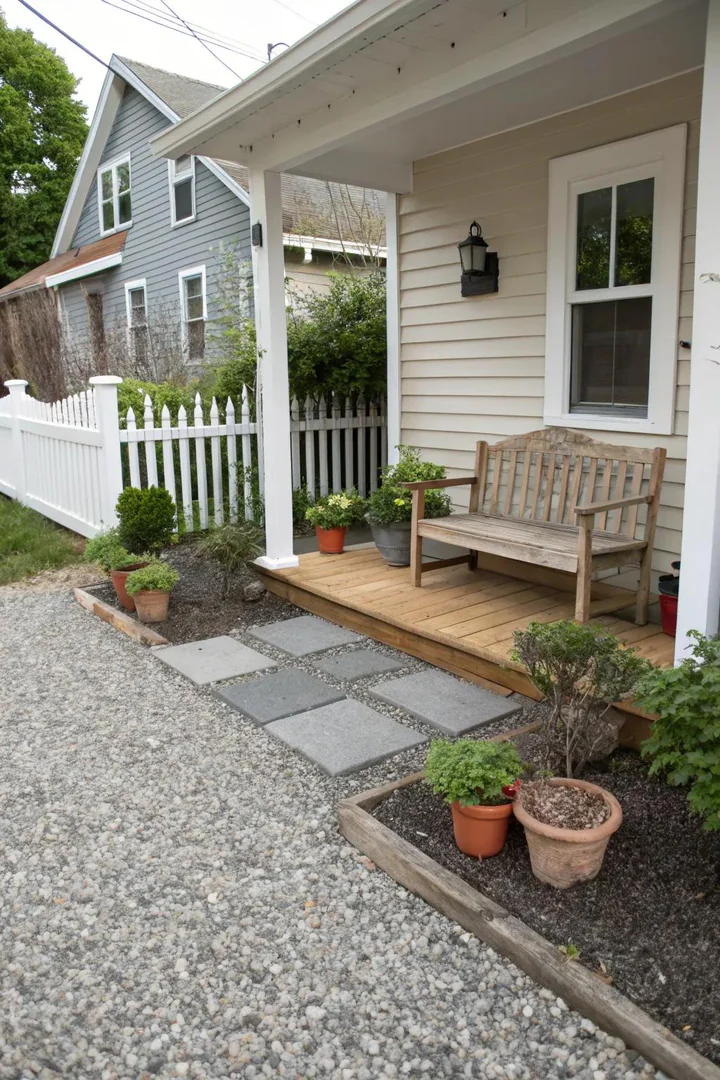
11. Gravel Border Along the Walkway
Replacing the grass strip between the front walkway and the porch foundation with a 2 to 3-foot-wide gravel border ($35 to $50 per ton of pea gravel, covering roughly 80 square feet at 2-inch depth) eliminates a hard-to-mow zone and creates a clean, low-care surface for displaying potted plants. Excavate 3 inches, line with garden fabric, and fill with 3/4-inch pea gravel, river rock, or decomposed granite.
Edge the gravel border with steel, aluminum, or black plastic edging ($1 to $2 per linear foot) to keep stones from migrating onto the walkway or into the lawn. Set two to three large 16 to 18-inch pots directly on the gravel surface as anchor plantings, and scatter a few flat stepping stones ($5 to $8 each) for walking access. A 30-square-foot gravel border costs $50 to $100 in materials and installs in half a day.
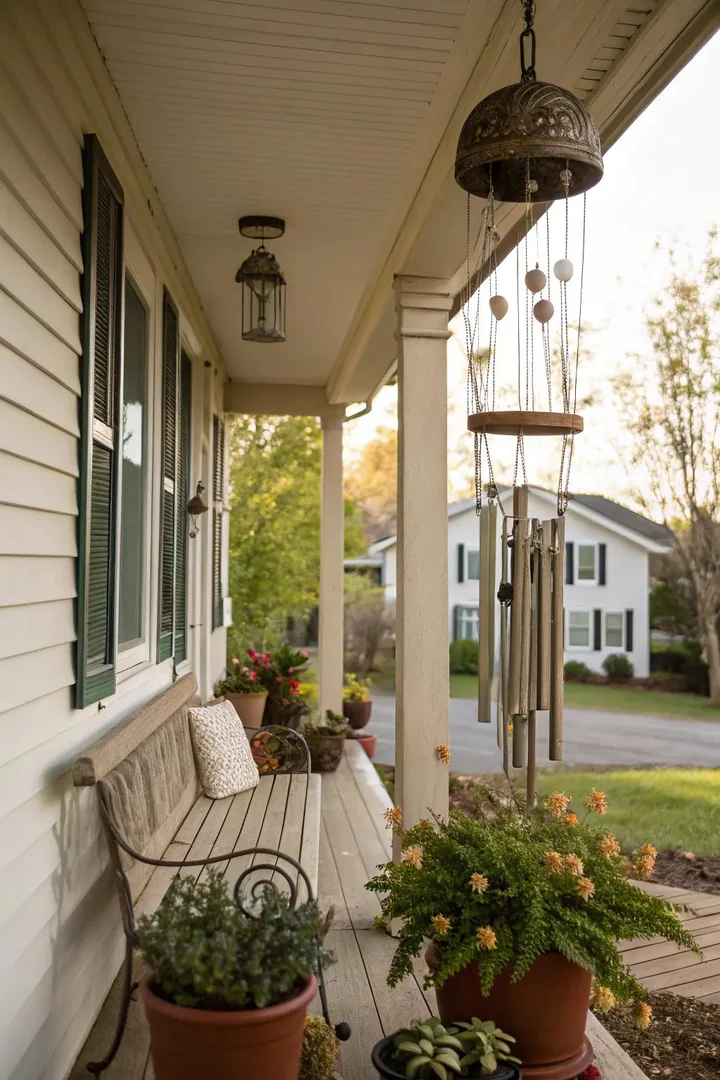
12. Wind Chimes and Hanging Ferns
A bamboo or aluminum wind chime ($15 to $40 from Woodstock Chimes, ASTARIN, or UpBlend Outdoors) hung from the porch ceiling alongside a hanging Boston fern ($10 to $20 in a 10-inch basket) adds both sound and movement to the entry without using any floor space. Hang the chime from a ceiling hook where it catches cross-breezes, and place the fern basket 2 to 3 feet away so the chime does not tangle in the foliage.
Boston ferns thrive in the shaded, sheltered conditions of a covered porch (zones 9 through 11 outdoors, or as a summer-only porch plant in colder zones). Water the fern daily in hot weather and mist the fronds twice a week to prevent browning. A chime-and-fern pair costs $25 to $60 and creates an immediate welcoming atmosphere at the front door.
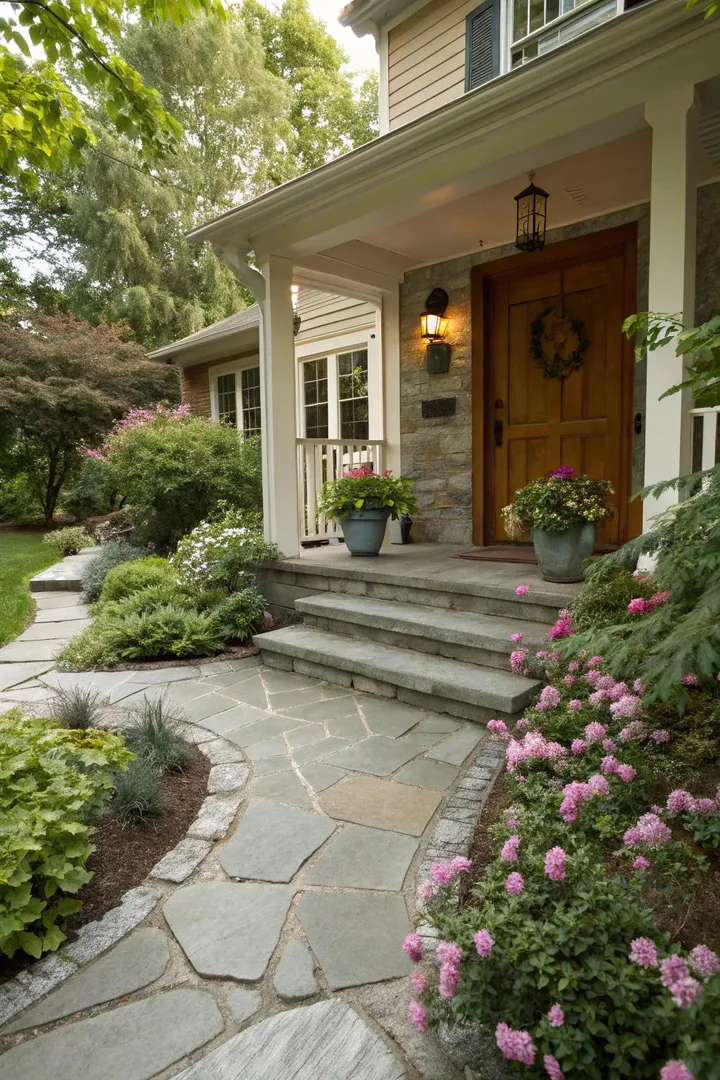
13. Stepping Stone Porch Path
Laying three to five natural stone stepping stones ($5 to $12 each for 18-inch rounds or irregular flagstone pieces) from the front walkway to the porch steps gives the approach a cottage-garden feel and defines foot traffic through planted areas. Set each stone on a 1-inch sand bed so it sits flush with the surrounding ground, and plant low-growing groundcovers (creeping thyme, Irish moss, blue star creeper) between the stones for a living-carpet effect.
Space the stones 4 to 6 inches apart (measured edge to edge) for a comfortable walking stride. A five-stone path costs $25 to $60 in stones plus $10 to $20 in groundcover starter plants, and the entire installation takes under two hours with just a shovel and a bag of sand. The stepping stone path also doubles as a drainage feature because rainwater flows between the stones instead of pooling on a solid concrete walkway.
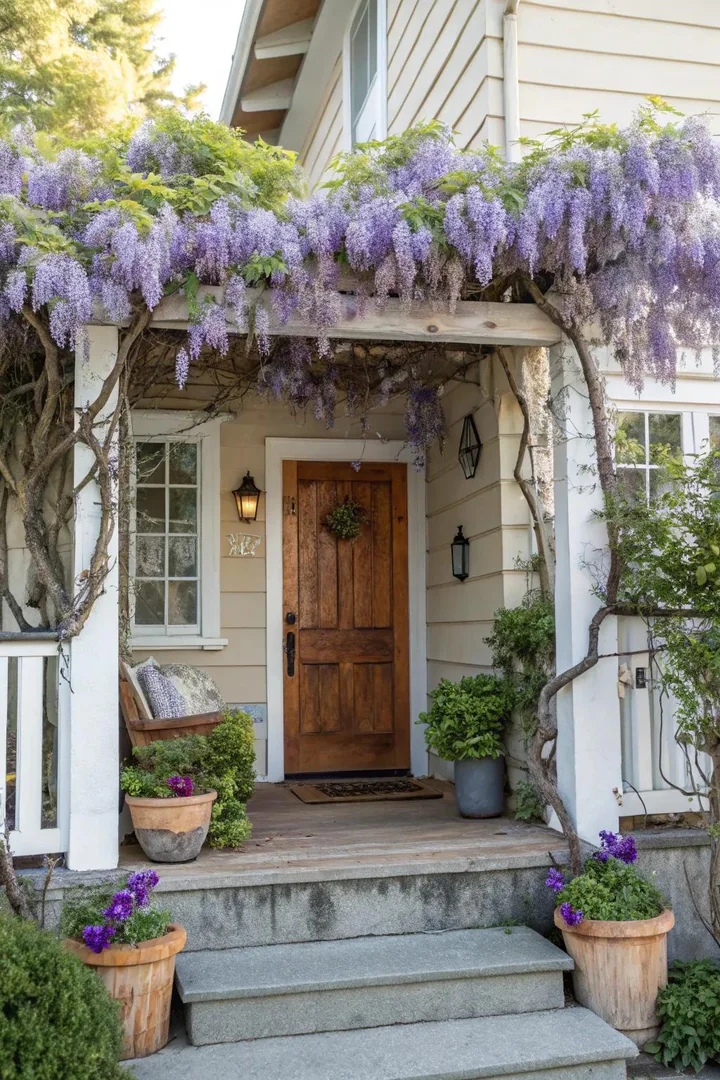
14. Entry Arbor Over the Steps
A 4-foot-wide cedar or pressure-treated pine arbor ($80 to $200 for a prefab kit from Vita, New England Arbors, or Dura-Trel) placed over the front porch steps frames the entry and creates a vertical structure for climbing roses, wisteria, or clematis. Anchor the arbor posts in 12-inch-deep post holes on each side of the walkway, or bolt them to the existing concrete pad with wedge anchors.
Most prefab arbors assemble in one to two hours with a drill, a level, and the included hardware. Plant one climbing rose or vine at the base of each post (two plants total, $15 to $25 each) and train the canes along the arbor crossbars with soft plant ties. A mature arbor covered in climbing roses produces 200 to 500 blooms per season and becomes the strongest visual feature of the front entry within two to three growing seasons.
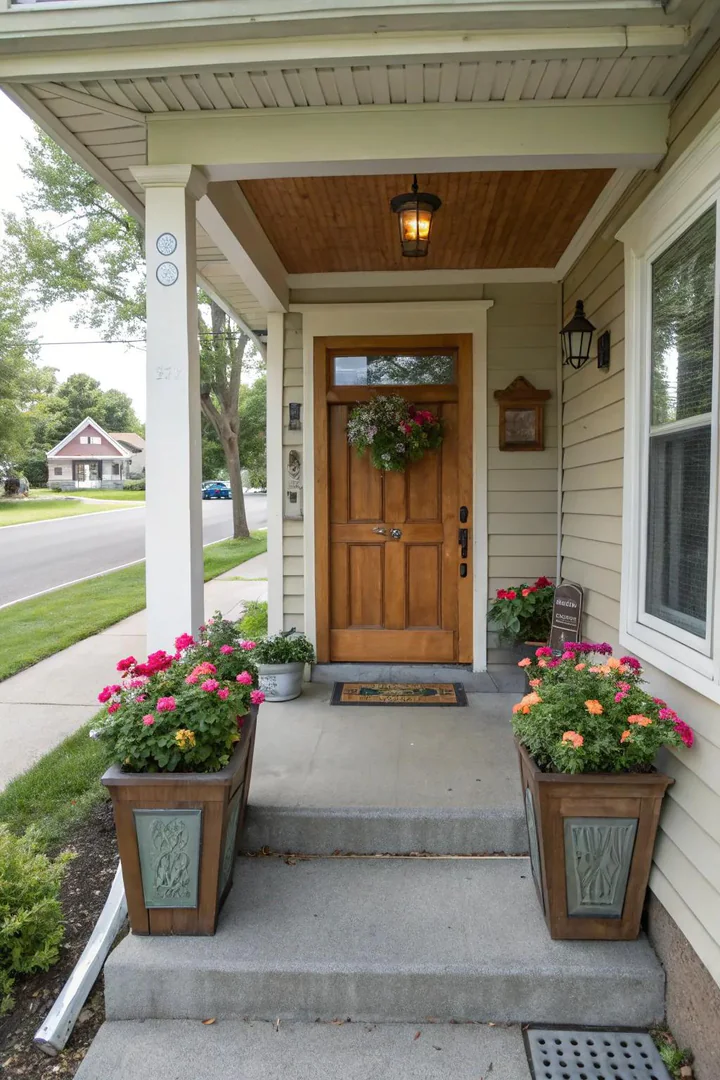
15. Symmetrical Topiary Flanking
Placing two identical topiaries (ball-on-stem bay laurel, spiral boxwood, or cone-shaped Alberta spruce) in matching pots on either side of the front door creates a formal, balanced entry that reads as intentional and well-maintained. Each pre-shaped topiary costs $30 to $80 depending on height and species, and matching 14-inch glazed ceramic or resin pots cost $20 to $40 each.
Trim the topiaries every 4 to 6 weeks with hand shears to maintain the geometric shape. Bay laurel works in zones 8 through 11, boxwood in zones 5 through 9, and Alberta spruce in zones 2 through 8. A symmetrical pair costs $100 to $240 total and anchors the porch design without adding clutter. Symmetrical plantings work best on porches with a centered front door and at least 2 feet of clearance on each side of the doorframe.
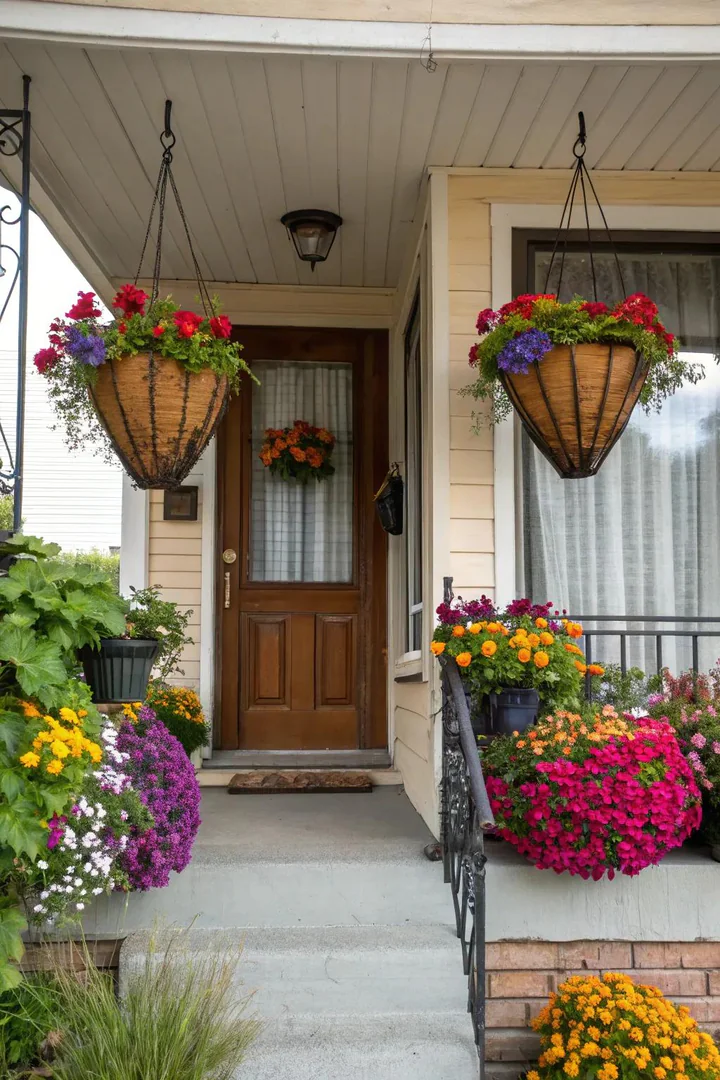
16. Trailing Hanging Baskets
Hanging baskets ($8 to $15 for a 12-inch coco-liner basket, or $20 to $30 pre-planted from a garden center) suspended from the porch ceiling on swivel hooks ($5 to $8 each) add color above head height and leave the porch floor completely open for foot traffic and furniture. Hang three baskets evenly spaced across the porch ceiling for a full, lush overhead canopy.
Plant each basket with trailing varieties: fuchsia, trailing petunias (‘Wave’ series), ivy geraniums, or million bells (calibrachoa). Water hanging baskets daily in summer because the exposed coco liner dries out faster than ground-level pots. Add water-absorbing polymer crystals (Soil Moist, $8 per 3-ounce jar) to the potting mix to extend the time between waterings by 2 to 3 days. Three pre-planted hanging baskets cost $60 to $90 and fill in within 3 to 4 weeks of planting. Visit metal roof patio covers for more overhead structure ideas, or browse all projects at The Designers Company.
How to Plan a Small Front Porch Garden
1. Measure the Porch and Map Sun Exposure
Measure the porch floor area (depth x width), ceiling height, railing length, and wall space. Note which direction the porch faces (north, south, east, or west) and observe how many hours of direct sunlight the porch receives on a typical summer day. South- and west-facing porches get 6 or more hours of direct sun (full sun plants). North- and east-facing porches get 2 to 4 hours of morning sun (shade or part-shade plants). Matching plants to light exposure is the single most important factor for porch garden success.
2. Choose a Layout Strategy
Arrange plants by function: floor-level pots at corners and beside the door, railing boxes for color at eye level, hanging baskets overhead, and wall-mounted panels or trellises for vertical coverage. Assign each zone a plant type so the porch has layered depth from floor to ceiling. Leave at least 30 inches of clear walkway from the door to the steps for comfortable entry and emergency egress.
3. Select Plants for Your Zone and Season
Pick plants rated for your USDA hardiness zone (check at planthardiness.ars.usda.gov). For year-round color, combine evergreen shrubs (boxwood, holly, dwarf spruce) as permanent anchor plants with seasonal annuals (petunias in summer, mums in fall, pansies in spring, ornamental cabbage in winter) rotated every 3 to 4 months. Buy starter plants in 4-inch pots or 6-packs from the garden center rather than gallon-size containers to save 40 to 60 percent on plant costs.
4. Prepare Containers and Soil
Fill all pots and boxes with a premium soilless potting mix (FoxFarm Ocean Forest, $18 per 1.5 cubic feet, or Espoma Organic Potting Mix, $12 per cubic foot) rather than garden soil from the yard, which compacts in containers and drains poorly. Add a 1-inch gravel layer in the bottom of pots without drainage holes, or drill three to four 1/2-inch drainage holes in solid-bottom containers. Mix slow-release fertilizer (Osmocote 14-14-14) into the top 2 inches of soil at planting time.
5. Install, Water, and Maintain
Plant, hang, and arrange all containers according to your layout plan. Water all new plantings thoroughly until water runs from the drainage holes, then establish a regular watering schedule (daily for hanging baskets in summer, every 2 to 3 days for floor pots, weekly for evergreen shrubs in fall and winter). Deadhead spent flowers weekly, feed with liquid fertilizer every 2 weeks during the growing season, and prune or replace any plant that outgrows its space or declines in health.
Porch Plant Picks by Sun Exposure
| Sun Exposure | Annual Flowers | Perennial / Evergreen | Trailing / Hanging | Vine / Climber |
|---|---|---|---|---|
| Full Sun (6+ hrs) | Petunias, zinnias, marigolds | Dwarf crape myrtle, lavender | Calibrachoa, trailing verbena | Mandevilla, black-eyed Susan vine |
| Part Shade (3-5 hrs) | Begonias, impatiens, coleus | Hostas, heuchera, astilbe | Fuchsia, ivy geranium | Clematis, climbing hydrangea |
| Full Shade (under 3 hrs) | Begonias (wax), torenia | Ferns, boxwood, cast iron plant | Boston fern, pothos (summer) | Star jasmine, creeping fig |
| Hot / Dry (SW facing) | Lantana, portulaca, vinca | Agave, yucca, rosemary | Trailing rosemary, ice plant | Bougainvillea, trumpet vine |
Frequently Asked Questions
How much does it cost to plant around a small front porch?
A basic porch planting with four to six containers, potting soil, and starter plants costs $80 to $200. Adding railing boxes, hanging baskets, solar path lights, and a small trellis brings the total to $200 to $500. Using recycled or thrift-store containers, propagating cuttings, and buying end-of-season clearance plants can cut costs by 30 to 50 percent. The biggest recurring expense is replacing annual flowers each season ($20 to $40 per changeover).
What plants grow best on a covered front porch?
Covered porches receive less direct sunlight than open yards, so shade-tolerant and part-shade plants perform best: Boston ferns, hostas, begonias, impatiens, coleus, caladium, fuchsia, and ivy geraniums all thrive with 2 to 4 hours of filtered or morning sun. Avoid full-sun plants (petunias, zinnias, roses) on deeply shaded porches because they will stretch, bloom poorly, and become leggy within a few weeks.
How do you keep porch plants alive in winter?
Move tender tropical plants (mandevilla, ferns, coleus) indoors before the first frost. Leave hardy evergreens (boxwood, Alberta spruce, holly) outside in their pots but wrap the containers with bubble wrap or burlap to insulate the root zone from freeze-thaw cycles. Push all outdoor pots against the house wall where residual building heat keeps the soil 5 to 10 degrees warmer than exposed locations. Stop feeding all outdoor plants by September so new growth has time to harden off before freezing temperatures arrive.
Can you grow vegetables on a small front porch?
Compact vegetable varieties grow well in 12 to 14-inch pots on a sunny porch (6+ hours of direct sun): cherry tomatoes (‘Tiny Tim’, ‘Tumbling Tom’), bush beans, lettuce, herbs (basil, mint, cilantro), peppers (‘Patio Fire’, ‘Lunchbox’), and strawberries all produce food in containers. A three-pot porch vegetable garden costs $20 to $40 in pots, soil, and seedlings and yields fresh herbs and salad greens from June through September in most zones. Check out outdoor BBQ shelter designs for covered cooking spaces that pair well with a porch herb garden.
How often should you water porch container plants?
Water frequency depends on pot size, plant type, and weather. Hanging baskets and 8-inch pots need water daily in summer. Floor pots (12 inches and larger) need water every 2 to 3 days. Evergreen shrubs in large pots (16 inches and up) need water once a week. Check moisture by pushing a finger 1 inch into the soil; water when the top inch feels dry. Overwatering (soggy soil, yellowing lower leaves) kills more porch plants than underwatering, so always confirm dryness before adding water.