Background Tiki Hut Ideas: 20 Ways to Create Island Paradise
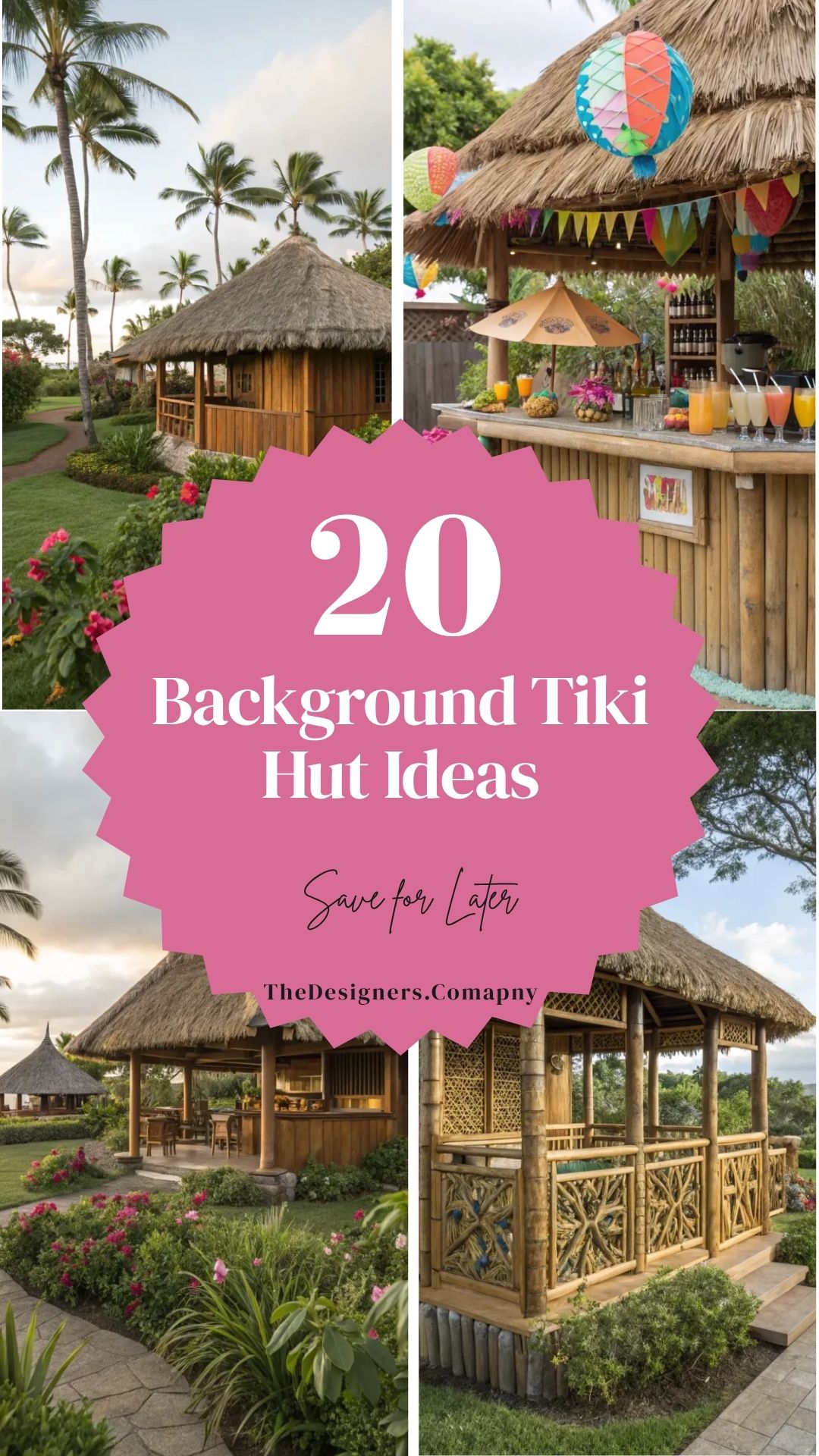
A backyard tiki hut brings the relaxed feel of a beach bar to your own property, and the setup ranges from a simple thatched umbrella over a folding table to a full-scale bar with running water, a blender station, and built-in seating. The key materials are palm thatch, bamboo, rattan, and natural stone, and all four are widely available from online tiki suppliers and local garden centres.
Building a tiki hut works on any outdoor surface: a concrete patio, a wood deck, a gravel pad, or bare grass. Most structures are freestanding and don’t require a building permit when under 120 square feet and a single storey, though you should check your local code before starting.
Here are 20 backyard tiki hut ideas that cover structure, furniture, lighting, decor, and the details that make the theme feel real rather than tacked on.
1. Surround with Tropical Plants
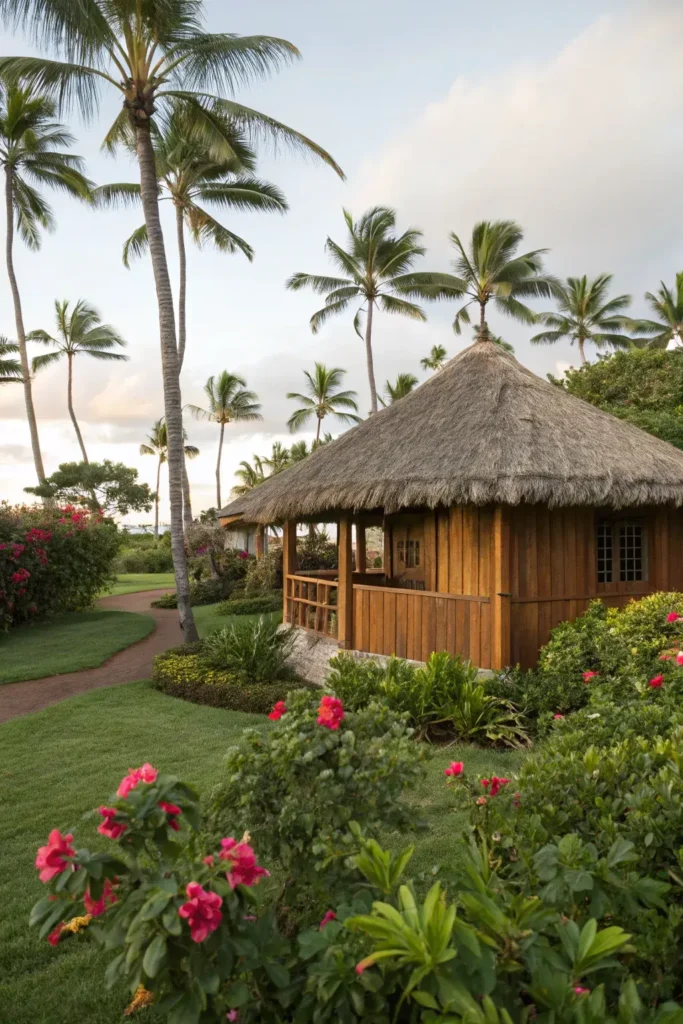
Border the tiki hut with bird of paradise, elephant ear (Colocasia), banana plants (Musa basjoo for cold climates), and hibiscus to build the tropical backdrop that makes the hut feel like a resort rather than a backyard project. Plant tall species (6+ feet at maturity) behind the hut and shorter varieties (2 to 3 feet) along the front and sides. A 10-foot perimeter border costs $200 to $500 in nursery plants.
Cannas, plumeria, and crotons add bold flower colour between the foliage plants. In zones 6 and 7, container-grow the tender tropicals and move them indoors before the first frost. Mulch the beds with 3 inches of cypress bark for a natural look that holds moisture and suppresses weeds.
2. Add Bamboo Accents
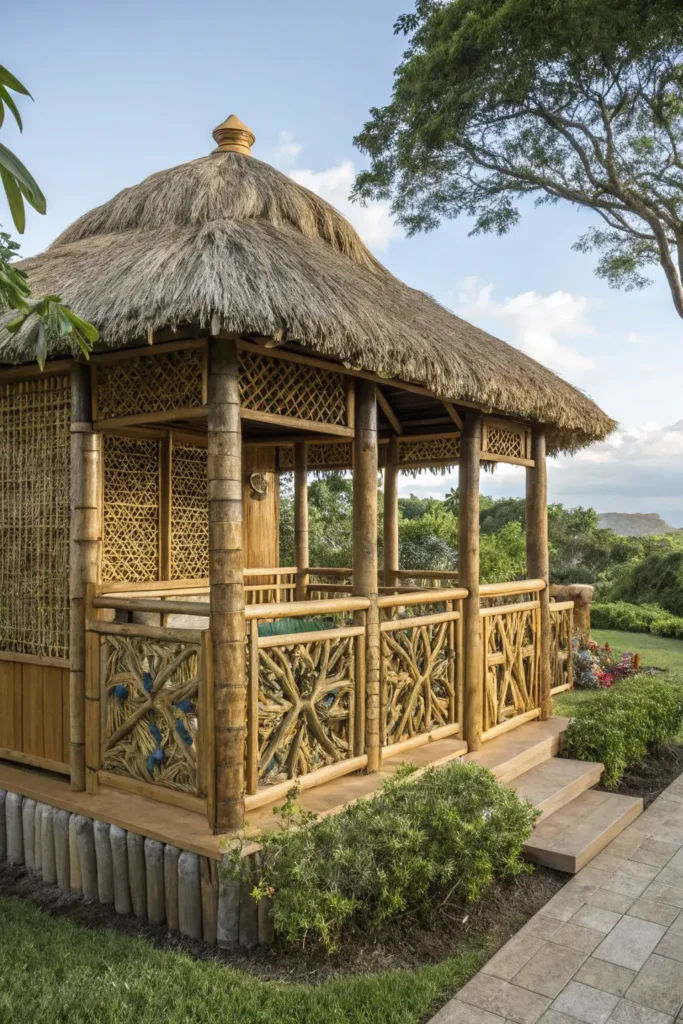
Wrap the support posts, bar edge, and railing of the tiki hut with split bamboo or full-culm bamboo poles lashed together with Manila rope or sisal twine. Forever Bamboo and Cali Bamboo sell 8-foot bamboo poles ($5 to $15 each) and split bamboo panels ($20 to $50 per 4×8-foot sheet) for wrapping and cladding. The natural variation in colour and diameter gives each post a handmade look.
Attach bamboo panels to plywood or OSB sheathing with stainless staples or small finish nails. Seal the bamboo with Total Wood Protectant or marine spar varnish once per year to prevent splitting, grey discolouration, and insect boring. A bamboo-wrapped bar front paired with a thatched roof overhead sets the core tiki aesthetic that everything else builds on.
3. Build a Thatched Roof
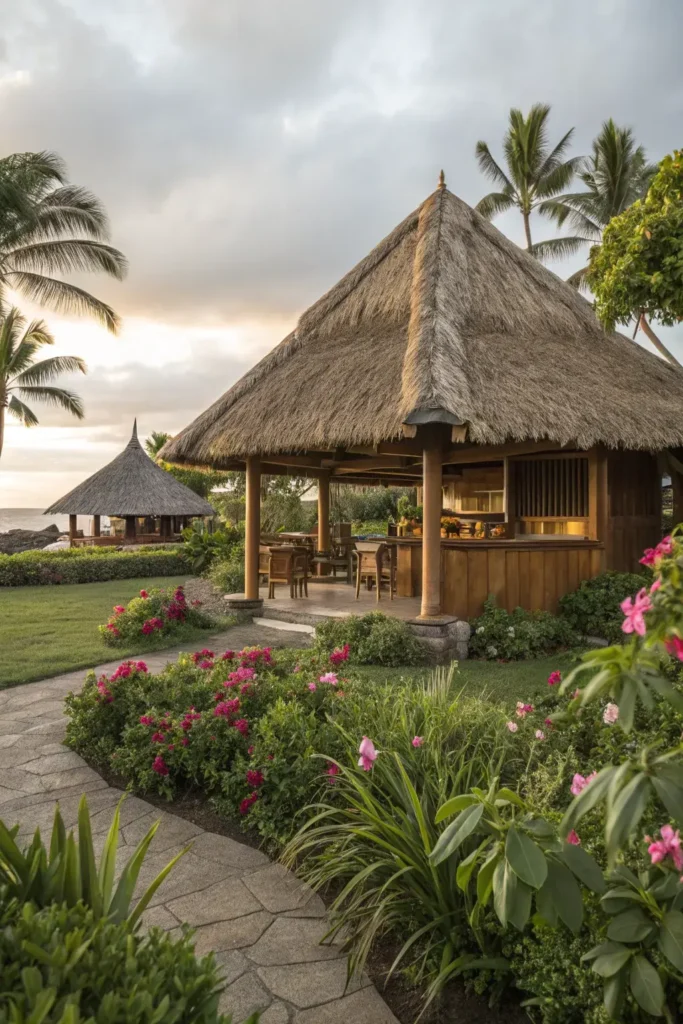
A Mexican rain cape (palapa) or Tahitian palm thatch roof is the defining feature of a tiki hut. Amacan and Endureed sell natural palm thatch panels that staple to a wood or bamboo rafter frame, starting at $8 to $15 per square foot of coverage. A 10×10-foot roof costs $800 to $1,500 in thatch material plus the underlying rafter structure. Synthetic thatch from Endureed ($15 to $25 per square foot) lasts 20+ years versus 3 to 5 years for natural palm.
Build the roof frame with 4×4 treated pine posts (or bamboo poles 3+ inches in diameter) set in concrete footings at least 36 inches deep. Slope the roof at a 30-degree pitch so rain sheets off the thatch without soaking through. A conical (round) roof on a centre post creates the classic tiki umbrella look, while a flat-pitch hip roof covers a rectangular bar area.
4. Set Up a Tiki Bar
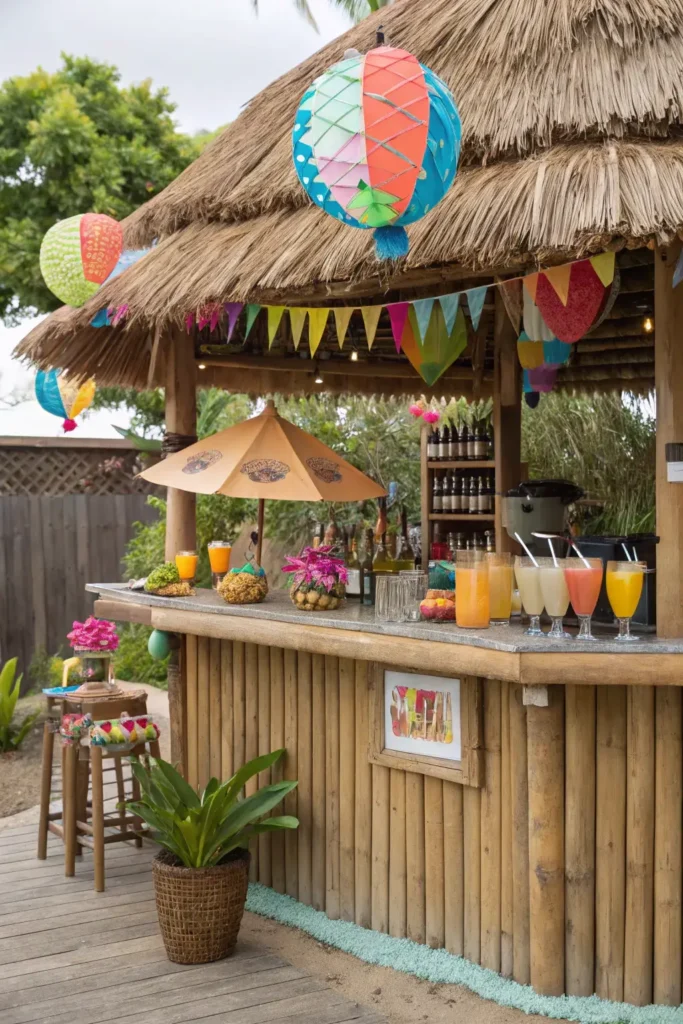
A freestanding tiki bar with 6 to 8 feet of counter space, a bamboo-wrapped front, and 3 to 4 bar stools turns the hut into a full-service drink station. Best of Times and TikiKev sell pre-built portable tiki bars for $200 to $800, while a custom-built cedar or pressure-treated version costs $500 to $2,000 in materials for a DIY build. A 42-inch bar height matches standard bar stools and keeps the bartender’s workspace separate from the guest side.
Add a speed rail ($20 to $40) along the bartender’s side for bottles, and mount a bottle opener and a bar towel hook on the inside face. A recessed stainless steel ice bin ($50 to $100) set into the countertop keeps drinks cold without a separate cooler. For a front porch version of the bar concept, our front porch decorating ideas guide covers drink-station setups and entertaining layouts.
5. Set the Mood with Lighting
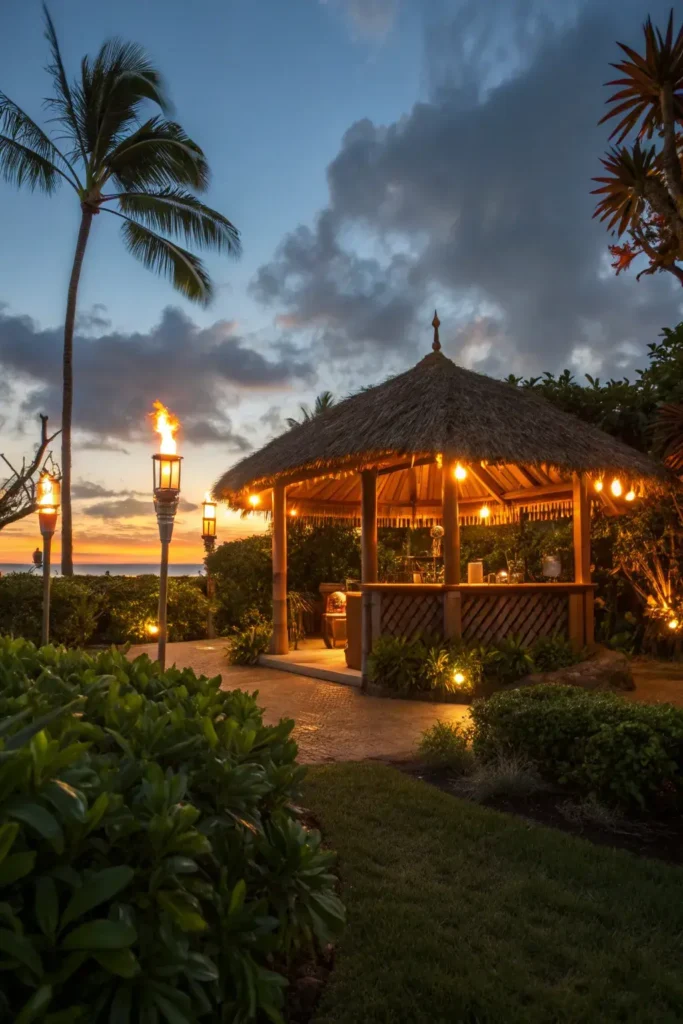
Warm-white LED string lights draped under the thatched roof, solar-powered pathway stakes along the walkway, and a colour-changing LED strip behind the bar shelf create a layered lighting setup that works from sunset through late night. Brightech Ambience Pro commercial-grade string lights ($25 to $50 for a 48-foot strand) use 2200K Edison bulbs that give off a golden glow without attracting as many bugs as cooler temperatures.
Drape the string lights in a zigzag pattern across the underside of the thatch, anchoring each run to the rafters with screw-in cup hooks. Add a dimmer or smart plug so you can lower the brightness during movie nights or raise it for party mode. A single hurricane candle lantern on the bar top adds a flickering flame accent that LED lights can’t fully replicate.
6. Arrange Comfortable Seating
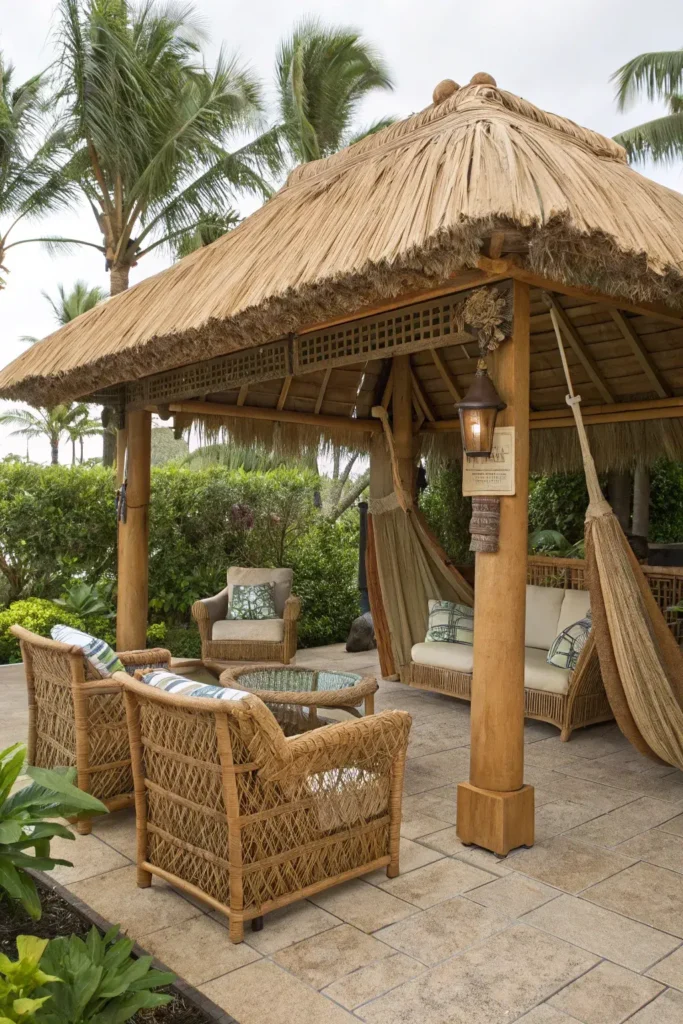
Swivel bar stools with woven backs, deep-cushion lounge chairs, and a hammock strung between two posts give guests seating options at every comfort level. Chic Teak and East at Main sell teak and wicker bar stools in tropical styles for $100 to $300 each, while a Pawleys Island rope hammock ($80 to $150) stretches between two posts set 12 to 15 feet apart.
Arrange lounge chairs in a semicircle facing the bar or fire pit so conversation flows naturally. Use Sunbrella cushion covers in tropical prints (palm leaves, monstera, hibiscus) for the lounge seating, and keep bar stools in a solid neutral so they don’t compete with the bar’s bamboo and thatch textures.
7. Add an Outdoor Sound System
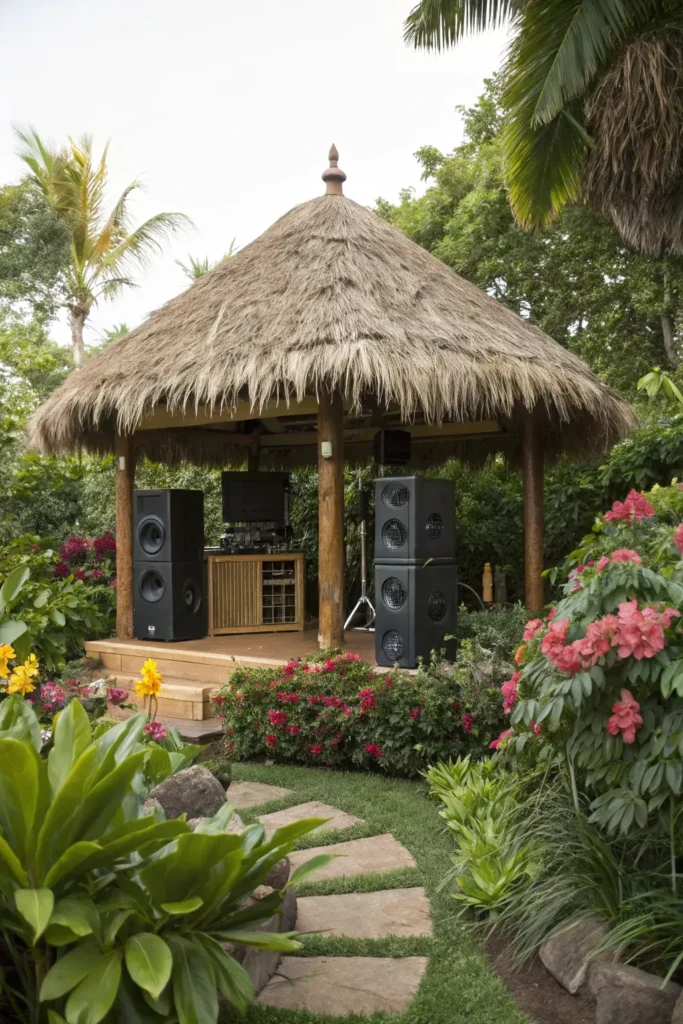
A weatherproof Bluetooth speaker or a wired outdoor speaker pair fills the hut area with island music, reggae, or surf rock that completes the tropical atmosphere. JBL Xtreme 3 ($200) and Sonos Roam ($180) are both IP67-rated portable speakers that handle rain, sand, and pool splashes. For a permanent install, Polk Audio Atrium or Yamaha NS-AW Series all-weather speakers ($80 to $200 per pair) mount under the rafters and connect to an indoor receiver or amplifier.
Aim speakers toward the seating area rather than toward the property line to keep the volume comfortable for neighbours. A dedicated outdoor subwoofer (like the Sonance Sonarray) adds bass that you feel in the lounge chairs without cranking the mid-range volume. Keep all speaker wiring inside conduit or UV-rated cable and run it along the rafter beams where the thatch hides it from view.
8. Decorate with Tiki Masks and Statues
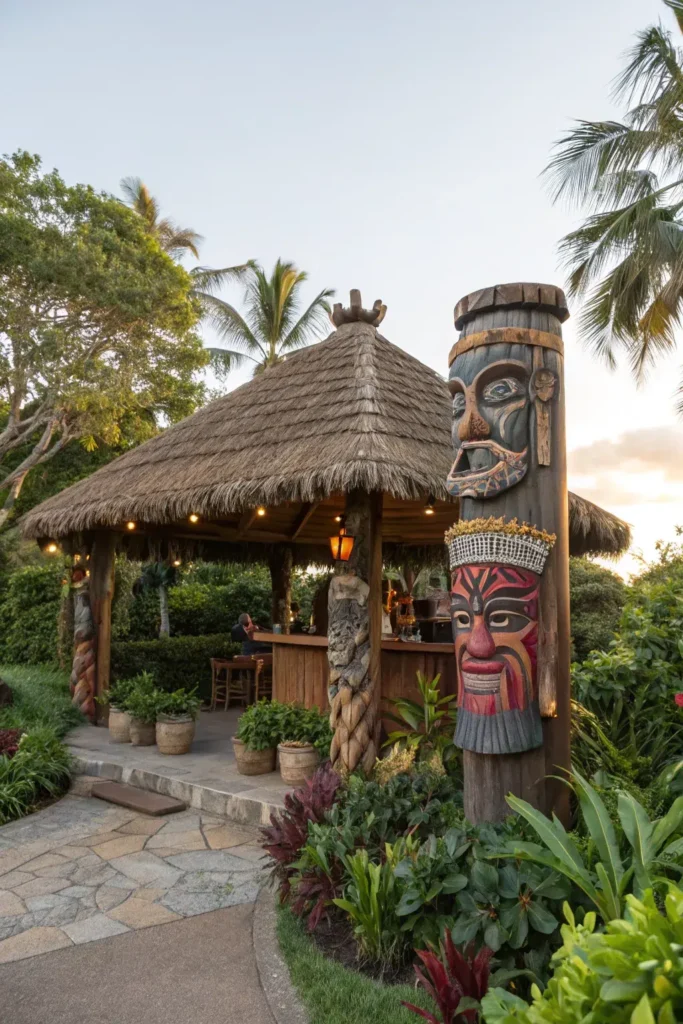
Hand-carved tiki masks mounted on the bar front, posts, and walls bring the Polynesian-inspired character that separates a real tiki hut from a generic patio cover. Tiki King and Tropical Expressions sell hand-carved albesia and suar wood masks in 12-to-36-inch sizes for $30 to $150 each. A pair of 4-foot tiki statues flanking the bar entrance costs $100 to $400 per statue and sets the scene from the walkway.
Mount masks with stainless steel screws or French cleats so they resist wind without pulling out of the bamboo or wood cladding. Space the masks at varying heights and sizes for a collected, layered look rather than lining them up in a straight row. Seal outdoor-displayed carved wood with Helmsman Spar Urethane every 2 years to prevent cracking and greying from UV and rain exposure.
9. Lay Natural Stone Accents
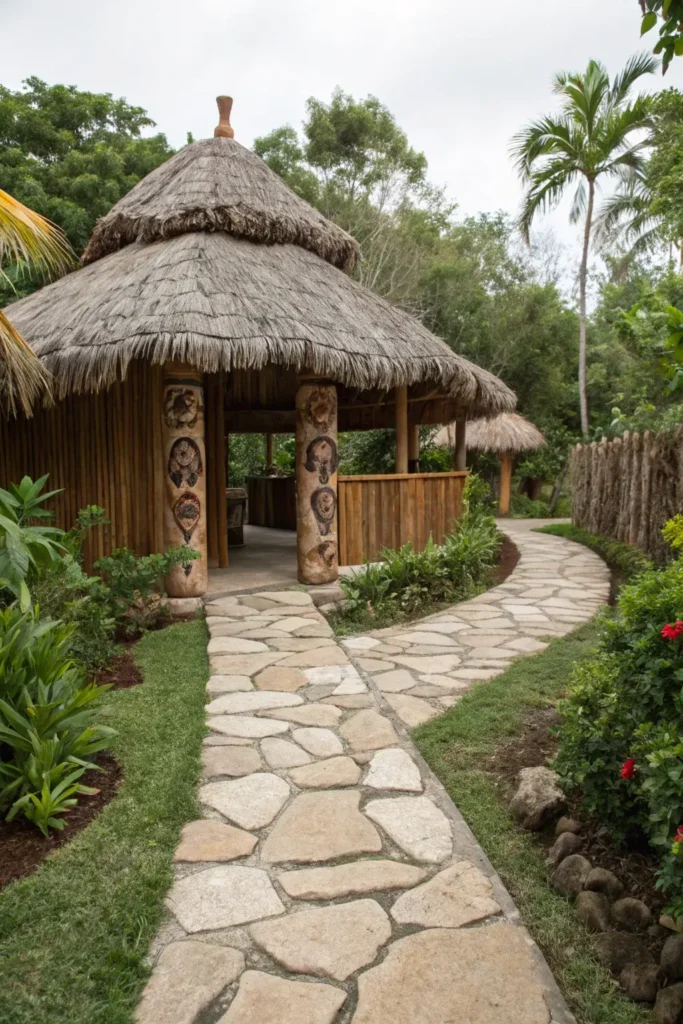
A stacked stone bar front, a flagstone patio floor, or a river rock border around the tiki hut base adds weight and permanence to the tropical theme. Dry-stack ledgestone veneer panels from Eldorado Stone or Cultured Stone adhere to a cement board backer on the bar front for $8 to $15 per square foot. A natural lava rock border around the hut’s post footings ties the structure to the ground and prevents grass from growing into the thatch.
Seal the stone veneer with a clear penetrating impregnator to prevent water staining, and fill any gaps between stones with colour-matched mortar for a clean finish. River rocks in 2-to-4-inch diameter, laid over weed fabric in a 6-inch-wide band, create a zero-maintenance border that also directs rainwater away from the hut’s post bases.
10. Install a Fire Pit
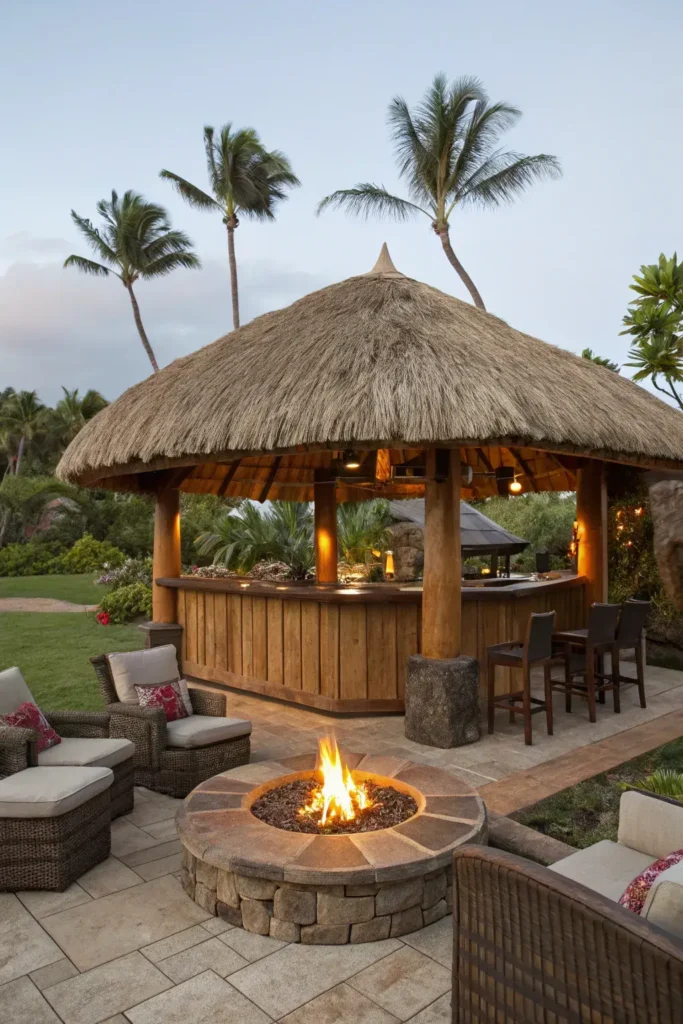
A gas or propane fire pit positioned 10 to 15 feet from the tiki hut adds warmth and a gathering point without risking the thatch. Outland Living and Endless Summer sell portable propane fire pits for $150 to $500 that sit on a paver pad or directly on a gravel surface. A built-in natural gas fire ring set in a stone surround costs $1,000 to $3,000 installed and runs off a dedicated gas line.
Keep the fire pit on a non-combustible surface (concrete, pavers, or gravel, never directly on wood decking or grass) and position seating in a circle 3 to 4 feet from the flame edge. Always keep the fire pit outside the tiki hut’s roof overhang, because even the smallest spark can ignite dried palm thatch in seconds.
11. Add a Water Feature
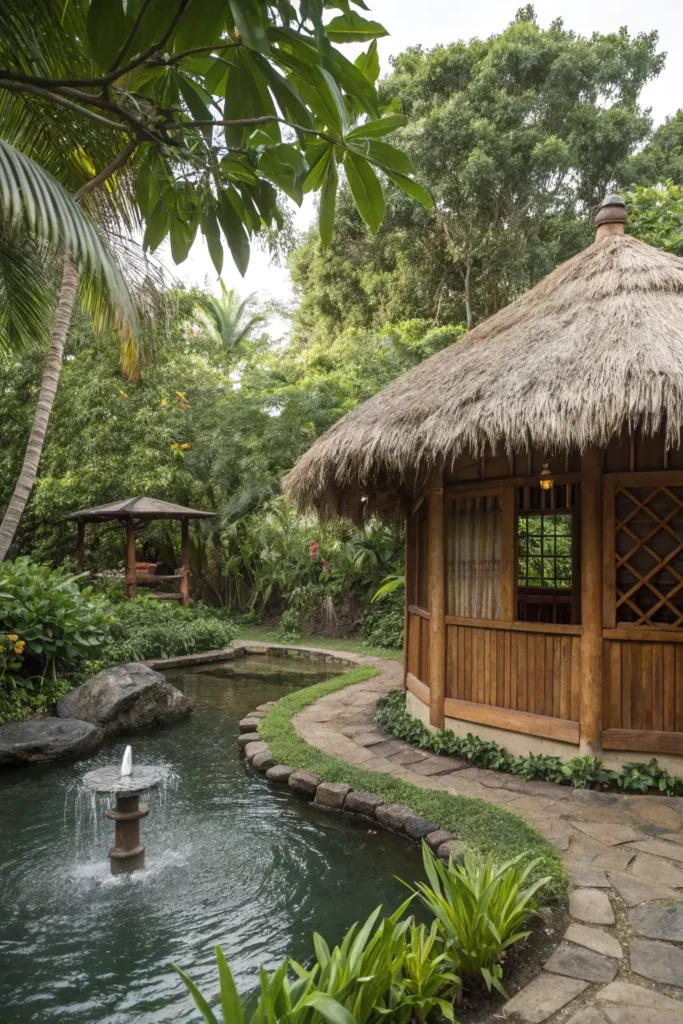
A small fountain or pondless waterfall near the tiki hut delivers constant background sound that masks street noise and sharpens the tropical feel. Aquascape sells pondless waterfall kits for $400 to $1,200 that recirculate water through a buried basin and stacked stone column, while Sunnydaze Decor offers plug-and-play tiered resin fountains for $100 to $350 that need only a GFCI outlet and a level surface.
Position the water feature 5 to 8 feet from the tiki hut so the splash mist carries into the seating area on warm days without soaking the thatch. A small submersible LED light ($10 to $20) placed inside the basin turns the flowing water into a glowing accent at night, and an inline ball valve on the pump line lets you dial the flow rate up or down depending on how loud you want the splash.
12. Hang String Lights
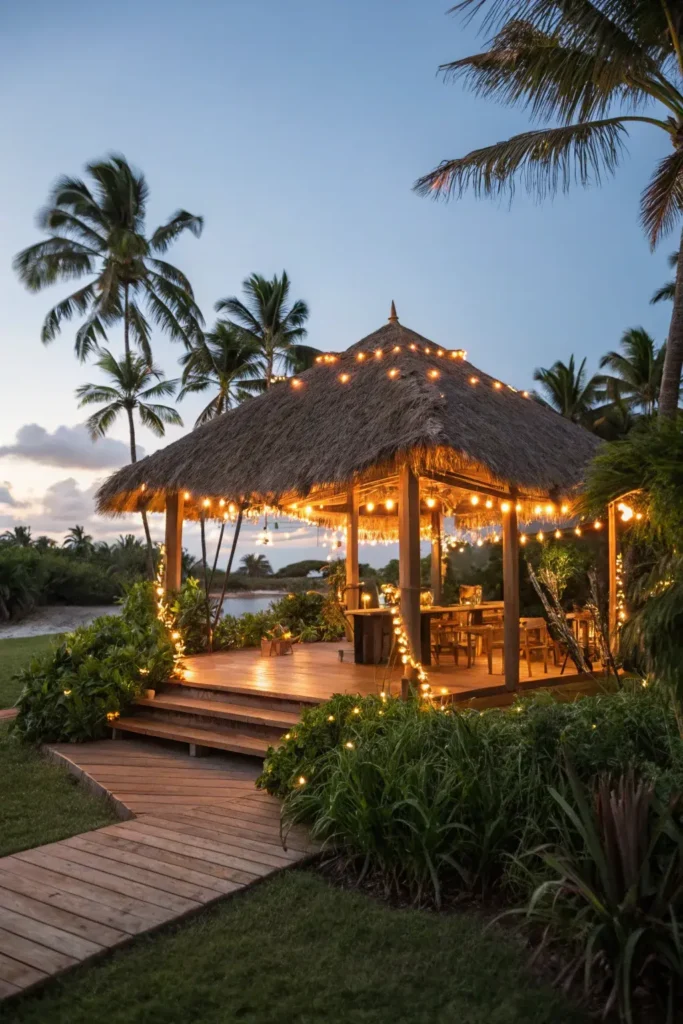
Commercial-grade S14 or G40 string lights on a weatherproof cord turn the tiki hut into a glowing centrepiece after dark. Run one strand along each roofline edge and a second strand in an X-pattern across the underside of the thatch for full coverage. Newhouse Lighting and Brightech sell 48-foot outdoor-rated strands for $20 to $40, and replacement bulbs cost $1 to $3 each.
Anchor the cord to the thatch rafters with screw-in cup hooks (not staples, which cut the wire insulation) and plug the strand into a GFCI outlet or an outdoor-rated extension cord. A photo-cell plug adapter ($5 to $10) turns the lights on at dusk and off at dawn automatically, so the hut glows every evening without a manual switch.
13. Display Colourful Lanterns
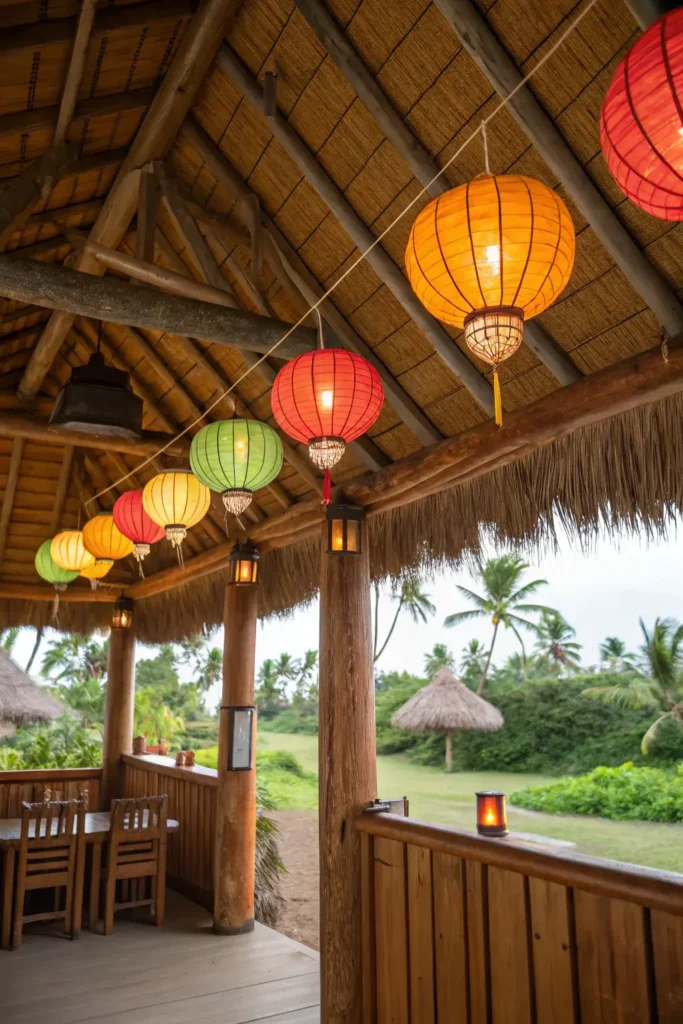
Hanging paper lanterns, glass-jar lanterns, and metal Moroccan-style lanterns in tropical colours (coral, turquoise, lime, mango) add mid-level light between the string lights above and the pathway stakes below. Paper lanterns ($1 to $5 each) work for one-night parties, while reusable nylon or metal lanterns ($10 to $25 each) last for an entire season. Hang them at varying heights from the rafters using fishing line or jute cord.
Solar-powered lanterns from GIGALUMI and LVJING ($15 to $25 for a pack of 4) charge during the day and glow for 8+ hours after dark without wiring. Mix 3 to 4 colours in the same warm family (coral + gold + amber + peach) rather than the full rainbow, so the lanterns feel coordinated rather than random.
14. Add a Tiki Umbrella for Shade
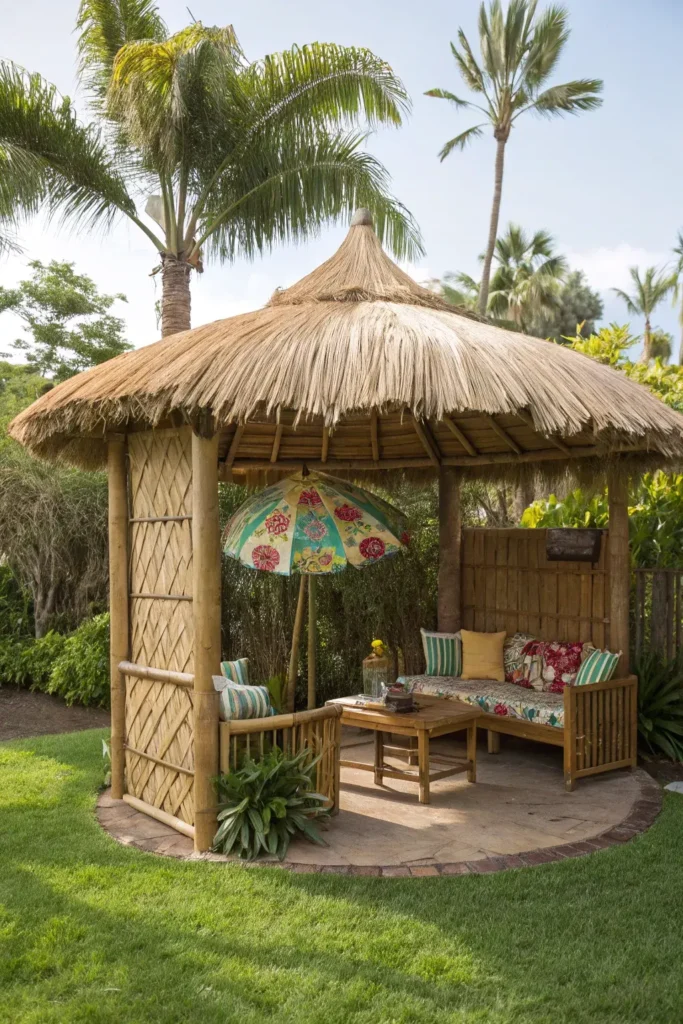
A 9-to-11-foot thatched tiki umbrella on a centre pole gives you instant shade and a tropical silhouette without building a full hut structure. Best of Times, Bayside21, and EasyGo sell tiki-style patio umbrellas for $80 to $250, with natural sea grass or raffia fringe over a steel or wood pole. Pair the umbrella with a weighted base (50 to 75 pounds) so it stays upright in wind up to 20 mph.
Position the umbrella over the dining table, bar, or lounge area so guests stay shaded during peak afternoon hours. Close the umbrella and secure it with the strap during storms and overnight to prevent wind damage. A thatch umbrella starts a tiki theme at the lowest possible cost and pairs with the other ideas on the list as you build out the full backyard setup over time.
15. Set Up an Outdoor Kitchen Area
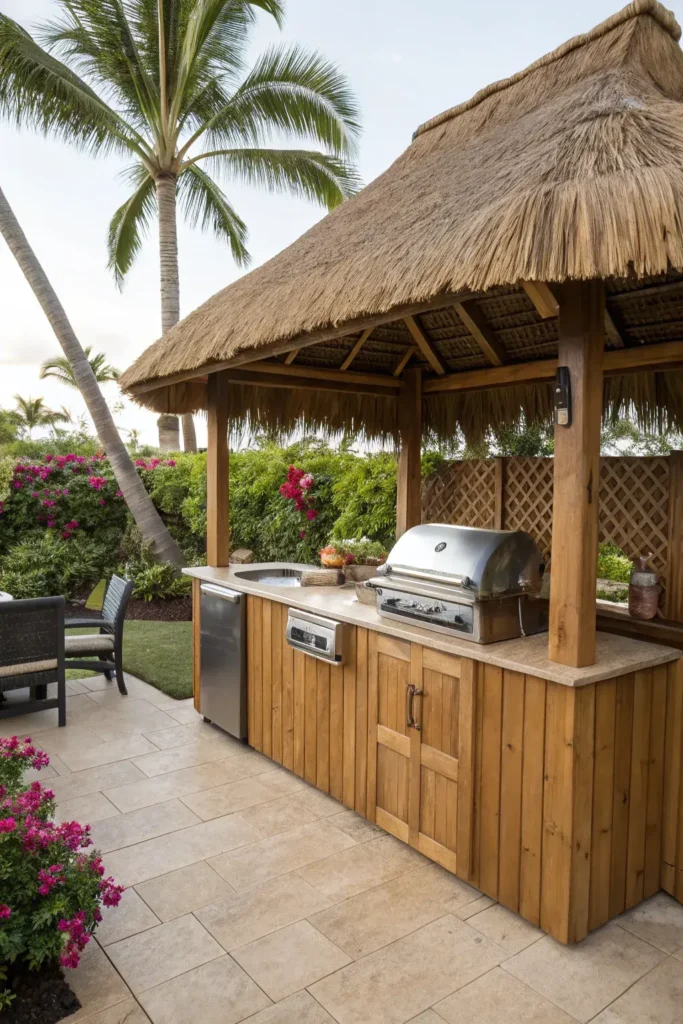
A cooking station beside or inside the tiki hut lets you grill, blend drinks, and serve food without running back to the indoor kitchen. A Weber Spirit 2-burner gas grill ($400 to $500), a stainless steel prep cart ($100 to $200), and a blender station with an outdoor outlet handle most tiki bar menus. For a permanent built-in, clad a steel-framed island with stone veneer and a concrete countertop for $2,000 to $5,000.
Keep the grill at least 10 feet from the thatch roof to prevent heat damage and grease fires. A stainless hood or angled deflector panel above the grill directs smoke away from the seating area. Mount a magnetic knife strip, utensil hooks, and a paper towel holder on the side of the bar for easy access during cooking.
16. Install a Mini Fridge
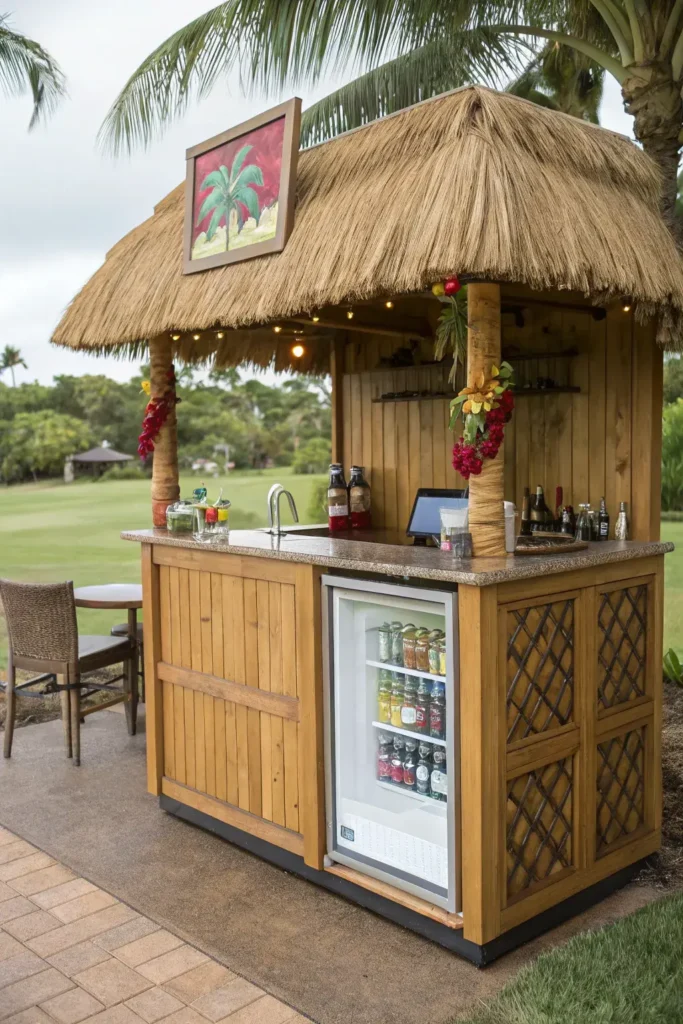
A UL-rated outdoor mini fridge under the bar counter keeps beer, mixers, and garnishes within arm’s reach of the bartender. Danby, NewAir, and EdgeStar make outdoor-rated compact fridges ($200 to $500) with stainless steel doors and compressors rated for temperatures up to 110°F. A 4.4-cubic-foot model holds 120+ cans and fits inside a standard 24-inch-wide cabinet opening.
Run a dedicated 15-amp outlet to the fridge location on a GFCI circuit, and keep the fridge on a raised platform or shelf to prevent water pooling around the compressor during rain. An outdoor fridge draws 60 to 100 watts, about the same as a light bulb, so the annual electricity cost runs $15 to $25.
17. Light Up with Tiki Torches
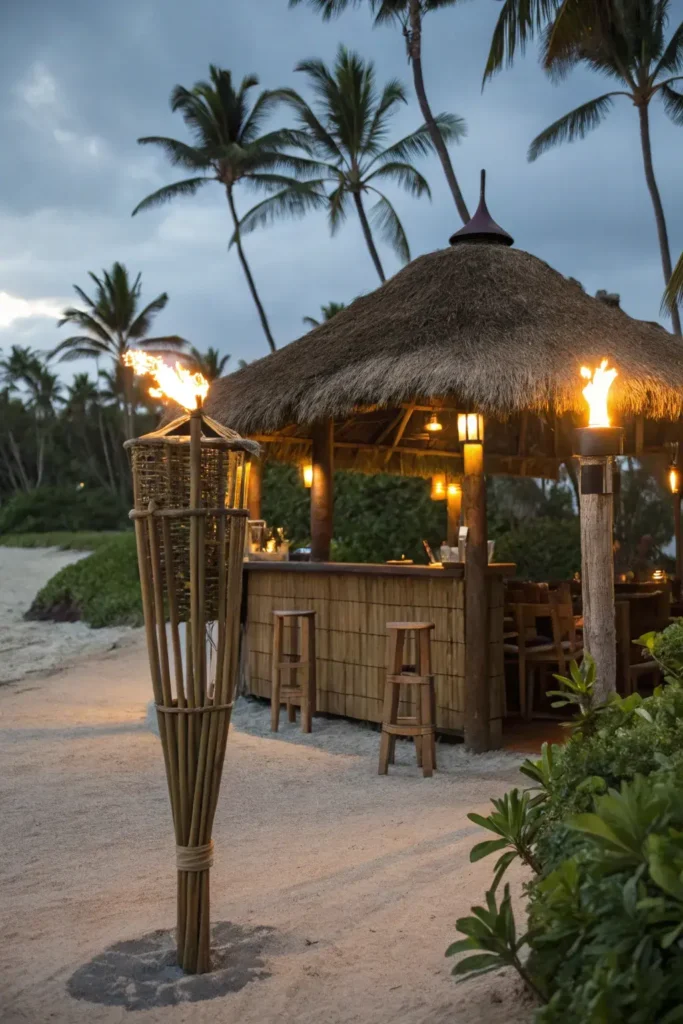
Bamboo tiki torches ($5 to $15 each) lining the walkway to the hut and flanking the bar entrance create a ceremonial entry path that feels like walking into a Polynesian village. Fill each torch with citronella fuel to repel mosquitoes while adding a warm flickering light. Space the torches 5 to 6 feet apart on alternating sides of the path, and push each stake at least 12 inches into the ground for stability.
TIKI Brand sells copper, bronze, and glass tabletop torches ($20 to $50 each) for the bar surface and dining table. Snuff each torch after the party rather than letting it burn out on its own, and store refuelled torches upright to prevent fuel leaks. Solar-powered LED tiki torches ($15 to $30 each) offer a no-flame alternative that provides a similar flicker effect without fire risk near the thatch.
18. Add Rattan Furniture
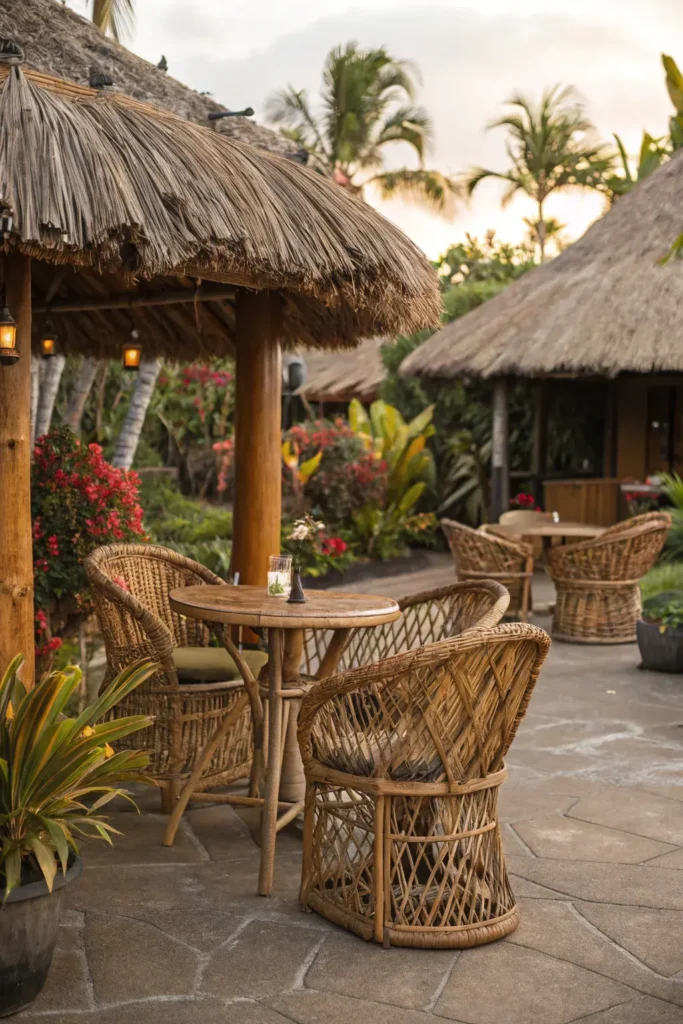
Natural rattan and synthetic PE wicker lounge sets in warm brown tones complement the bamboo and thatch materials of the hut without competing visually. A 4-piece rattan-look conversation set (loveseat, 2 chairs, coffee table) from Ohana Wicker or Best Choice Products costs $400 to $900 and comes with weather-resistant cushions. Natural rattan chairs from Serena and Lily ($300 to $600 each) add a premium feel under a covered hut.
Place the lounge set under the thatch overhang where the roof protects the cushions from direct rain. Wipe PE wicker frames monthly with a damp cloth, and treat natural rattan with boiled linseed oil once per season to prevent drying and cracking. Coordinate cushion colours with the overall hut palette: earth tones (tan, olive, rust) for a rustic vibe, or tropical brights (turquoise, coral, yellow) for a party atmosphere.
19. Add Personal Touches
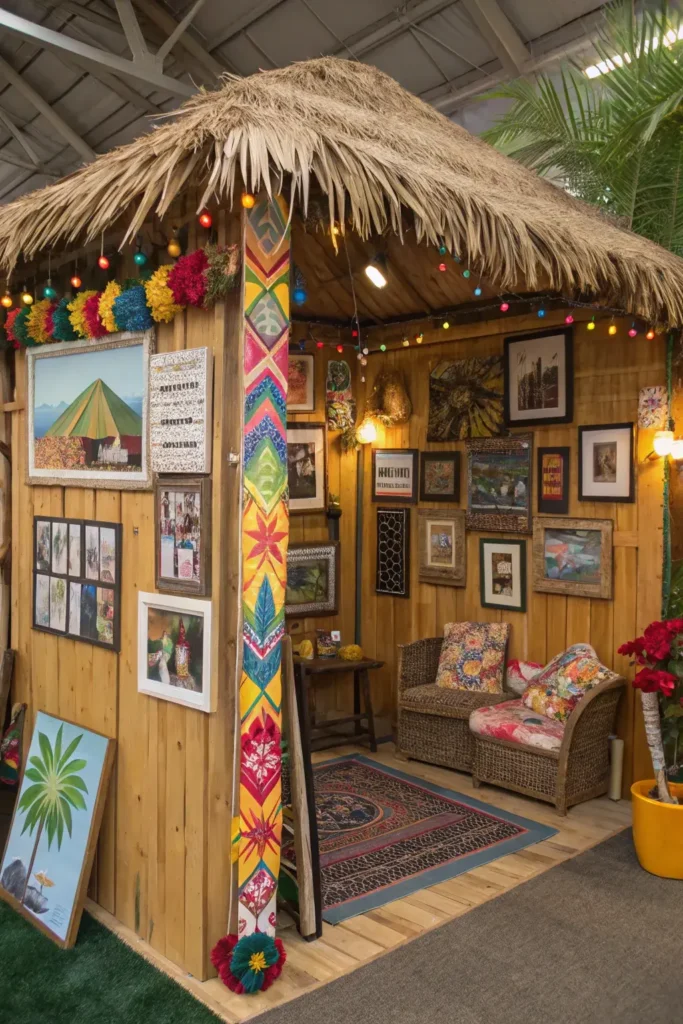
Souvenir tiki mugs from Tiki Farm and Mondo Tiki, vintage surfboard wall art, seashell collections, and a chalkboard drink menu personalize the hut and give it a story beyond the standard template. Mount a small ship’s wheel or outrigger paddle on the bar’s back wall as a conversation piece, and display collected tiki mugs on a floating shelf above the bar.
A chalkboard sign ($15 to $30) listing the day’s drink specials adds bar authenticity and changes with every party. Frame vacation photos from tropical trips and hang them on the inside posts with stainless picture wire. Layer personal items gradually over time rather than buying everything at once, so the decor looks collected rather than ordered from a single catalogue. For more layout ideas that work at the front of the house, our L-shaped front porch ideas cover angled and corner-based setups.
20. Pick a Tiki Colour Palette
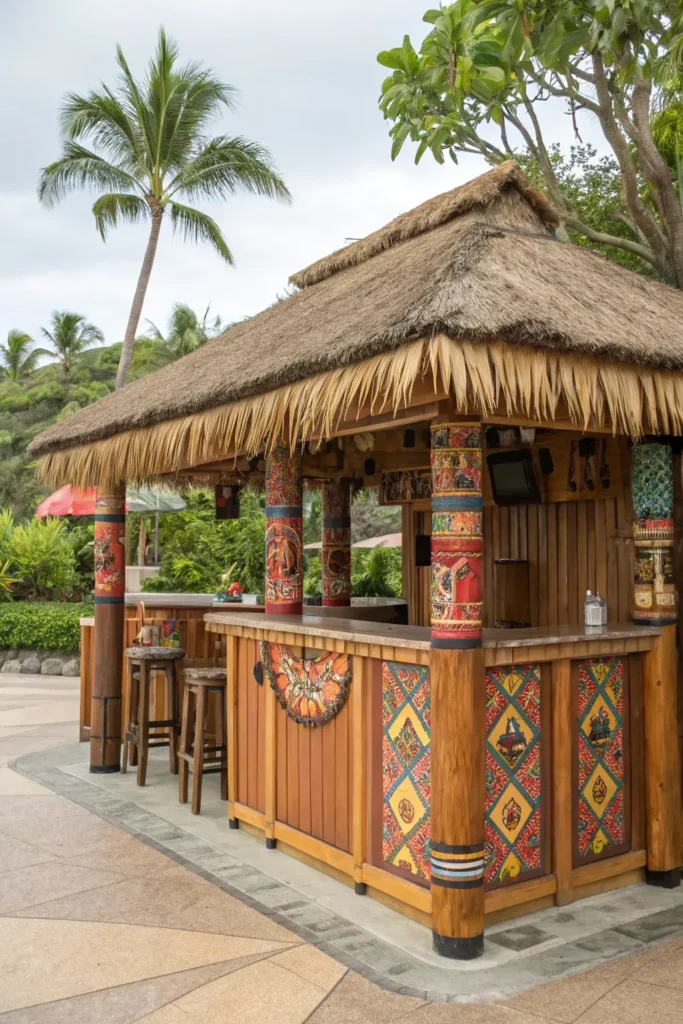
A tiki colour palette starts with a warm neutral base (bamboo tan, driftwood grey, coconut brown) and adds 2 to 3 accent colours pulled from tropical flowers and ocean tones. Classic tiki accents include hibiscus red, plumeria yellow, ocean turquoise, and palm green. Apply the base colour to the structure (bar, posts, floor) and the accents to the accessories (cushions, lanterns, tableware).
Limit the accent count to 3 colours maximum so the space reads as themed rather than chaotic. Pull the accent colours from one anchor piece (a printed fabric, a piece of art, or a set of tiki mugs) and repeat each colour in at least two other spots across the hut. A consistent palette holds the 20 ideas on this list together into a single, finished backyard retreat. For deck-level details like board inlay patterns and colour-blocked surfaces, our deck inlay ideas guide covers custom floor designs.
How to Build a Backyard Tiki Hut
1. Choose the Location and Size
Select a flat, well-drained spot at least 10 feet from the house, property line, and any overhead power lines. A 10×10-foot footprint fits a 6-foot bar with 3 stools and standing room for 4 to 6 guests. Mark the post locations at each corner using spray paint, and call 811 to mark underground utility lines before digging.
2. Set the Posts and Build the Frame
Dig 4 post holes 36 inches deep and 12 inches in diameter using a post hole digger or a rented power auger. Drop in 6×6 pressure-treated posts (or 4-inch-diameter bamboo poles for an authentic look), plumb each one with a level, and pour Quikrete Fast-Setting concrete around the base. Let the concrete cure for 24 hours before attaching the horizontal beams and roof rafters with Simpson Strong-Tie connectors.
3. Install the Thatched Roof
Lay 2×4 purlins across the rafters at 18-inch centres, then staple Mexican rain cape or Tahitian palm thatch panels starting from the bottom edge and overlapping each row by 4 to 6 inches. Work upward to the ridge line so water sheds downhill, sheet by sheet. Cap the ridge with a double layer of thatch or a bamboo ridge pole to seal the peak against leaks.
4. Build the Bar and Add the Finishing Details
Frame the bar from 2×4 studs at 42 inches tall, sheath the front with plywood, and clad the plywood with bamboo panels or stone veneer. Top the bar with a 24-inch-deep butcher block or concrete countertop sealed for outdoor use. Mount the mini fridge underneath, hang the tiki masks, connect the string lights, and arrange the seating. Total DIY cost for a 10×10-foot tiki hut with a thatched roof and bamboo bar runs $2,000 to $5,000 in materials.
Tiki Hut Roofing Materials Comparison
| Material | Cost (per sq ft) | Lifespan | Maintenance | Fire Rating |
|---|---|---|---|---|
| Natural Palm Thatch | $8–$15 | 3–5 years | Replace damaged panels yearly | Not rated (combustible) |
| Synthetic Thatch (Endureed) | $15–$25 | 20+ years | Hose off yearly | Class A fire rated |
| Reed/Grass Panels | $5–$10 | 2–3 years | Replace every 2 seasons | Not rated |
| Bamboo Roll Roof | $6–$12 | 3–5 years | Seal/varnish every 2 years | Not rated |
Frequently Asked Questions
How much does it cost to build a backyard tiki hut?
A basic 10×10-foot tiki hut with 4 posts, a thatched roof, and a bamboo-clad bar costs $2,000 to $5,000 in materials for a full DIY build. Hiring a contractor or a specialty tiki builder adds $3,000 to $6,000 in labour. Pre-fabricated tiki hut kits from Tiki Kev and Big Kahuna Tiki Huts start at $3,000 for a 10-foot round model and arrive partially assembled.
Do you need a permit to build a tiki hut?
Most jurisdictions treat a tiki hut as a freestanding accessory structure, and buildings under 120 square feet with no plumbing or electrical typically don’t require a building permit. Check with your local code enforcement office before starting, because some HOAs and coastal municipalities restrict thatched-roof structures due to fire and wind concerns. Synthetic thatch with a Class A fire rating may be required in fire-prone areas.
How long does natural palm thatch last?
Natural palm thatch lasts 3 to 5 years in a dry, warm climate and 2 to 3 years in areas with heavy rain, snow, or high humidity. Replacing individual damaged panels each spring extends the overall roof life without a full re-thatch. Synthetic thatch from Endureed or Palmex lasts 20 to 25 years and looks nearly identical to natural palm from ground level.
What is the best size for a backyard tiki hut?
A 10×10-foot (100-square-foot) hut accommodates a 6-foot bar, 3 bar stools, and standing room for 4 to 6 guests. Bump up to 12×14 feet for a full lounge area with a sofa and chairs beside the bar. Our ideas for small decks guide covers compact outdoor structures that apply to small tiki hut builds too.
Can you put a tiki hut on a deck?
A tiki hut works on a deck as long as the deck framing can support the post loads and the roof doesn’t exceed the deck’s wind-load capacity. Bolt the hut posts through the deck boards and into the deck’s rim joist or beam using Simpson Strong-Tie post connectors rated for the load. Consult a structural engineer or your local building department before placing a heavy tiki hut on a raised deck, because the added wind sail from the thatch roof increases lateral forces on the deck framing. Browse more outdoor project guides and seasonal decorating tips at The Designers Company.