Front Porch Ideas for Florida homes: 13 charming Ways to Beat the Heat

Front porch ideas for Florida homes address the state’s year-round heat, afternoon thunderstorms, intense UV exposure, salt air corrosion (on coastal properties), and hurricane-force wind loads with materials, furniture, and design strategies built specifically for subtropical and tropical climates. A Florida front porch serves as a transitional living space between the air-conditioned interior and the outdoor heat, and the best Florida porches provide shade, airflow, rain protection, and mosquito management so residents can sit outside comfortably during the 8 to 10 months of warm weather. Below are 13 front porch ideas for Florida homes with specific materials, products, costs, and installation methods, followed by a how-to planning guide, a comparison table, and FAQs.
1. Tropical Plant Arrangement
Grouping potted tropical plants along the porch perimeter and at entry corners creates a lush, green welcome that thrives in Florida’s USDA hardiness zones 9a through 11a without supplemental heating or cold protection for most of the year. Bird of Paradise (Strelitzia reginae, $20 to $50 for a 3-gallon pot from Home Depot or a local nursery) grows 4 to 6 feet tall in a large container and produces orange-and-blue flowers from fall through spring. Majesty Palm (Ravenea rivularis, $15 to $30 for a 10-inch pot) adds vertical height and feathery fronds that filter porch light.
Crotons (Codiaeum variegatum, $8 to $15 per plant) provide year-round red, orange, and yellow foliage color without blooming. Mandevilla vine ($12 to $25, trained up a porch column or trellis) produces trumpet-shaped pink, red, or white flowers from spring through fall. Group plants in clusters of 3 to 5 at different heights (floor-level pots, tabletop plants, and a hanging basket) to fill the corner without blocking walkway clearance. Use self-watering planters ($15 to $40 from Lechuza or Bloem Ariana) to reduce watering frequency during Florida’s hottest months.
2. Warm-Toned String Lights and Lanterns
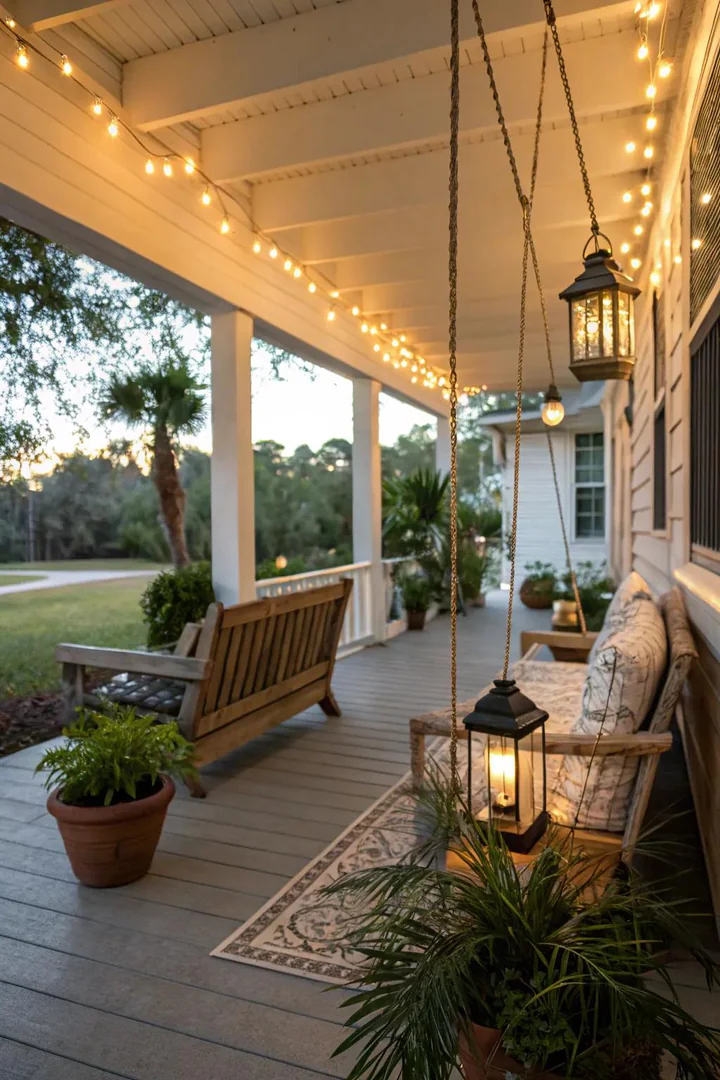
Hanging outdoor string lights (Brightech Ambience Pro, $25 to $40 for a 48-foot strand with 15 shatterproof LED bulbs; Hampton Bay 24-foot LED String Lights, $20 to $30 from Home Depot) along the porch ceiling or from column to column creates a warm, amber glow (2200K to 2700K color temperature) that makes the porch inviting after sunset without attracting as many insects as cool-white (5000K+) lights. LED bulbs rated for outdoor/wet locations (UL Listed for wet environments) resist Florida’s humidity, rain, and salt air without corroding sockets or shorting circuits.
Supplement string lights with solar-powered lanterns ($15 to $30 for a set of 2 from GIGALUMI or Hanging Solar Lanterns on Amazon) placed on side tables or hung from shepherd’s hooks at the porch edge. Solar lanterns charge during Florida’s 10 to 12 hours of daily sunlight and provide 6 to 8 hours of glow after dark with zero wiring and zero electricity cost. A battery-operated LED candle inside a hurricane glass ($10 to $20 from Luminara) on a porch table adds a flickering flame effect without fire risk during Florida’s dry-season burn bans.
3. Outdoor Curtains for Sun and Rain Screening
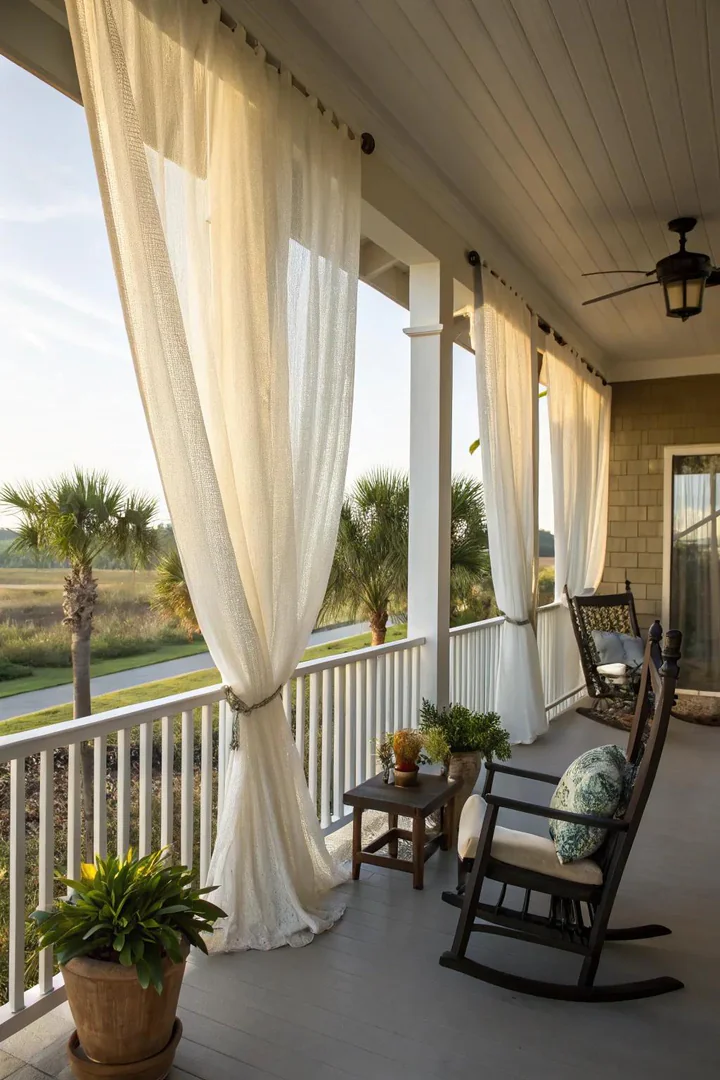
Outdoor curtain panels (NICETOWN Outdoor Curtains, $20 to $35 per panel, 52 by 84 inches, waterproof polyester; Sun Zero Valencia UV-blocking curtains, $15 to $25 per panel) hung from a stainless-steel curtain rod ($15 to $30 from Umbra or Home Depot) mounted between porch columns block 80% to 95% of UV radiation, reduce porch surface temperatures by 10 to 20 degrees Fahrenheit during afternoon sun exposure, and deflect wind-driven rain during Florida’s daily summer thunderstorms.
Choose Sunbrella fabric panels ($40 to $80 per panel) for maximum UV resistance (rated for 1,000+ hours of direct sunlight before fading) and mildew resistance in Florida’s 70% to 90% average humidity. Hang curtain panels with rust-proof stainless-steel or nylon grommets (not brass or iron, which corrode in salt air within 6 to 12 months). Tie back the curtains with rope cleats or fabric ties on calm days to allow cross-ventilation, and release them during afternoon storms for rain protection. A full porch curtain installation (4 to 6 panels, rod, and hardware) costs $100 to $300 and installs in 1 to 2 hours.
4. Nautical and Coastal Accents
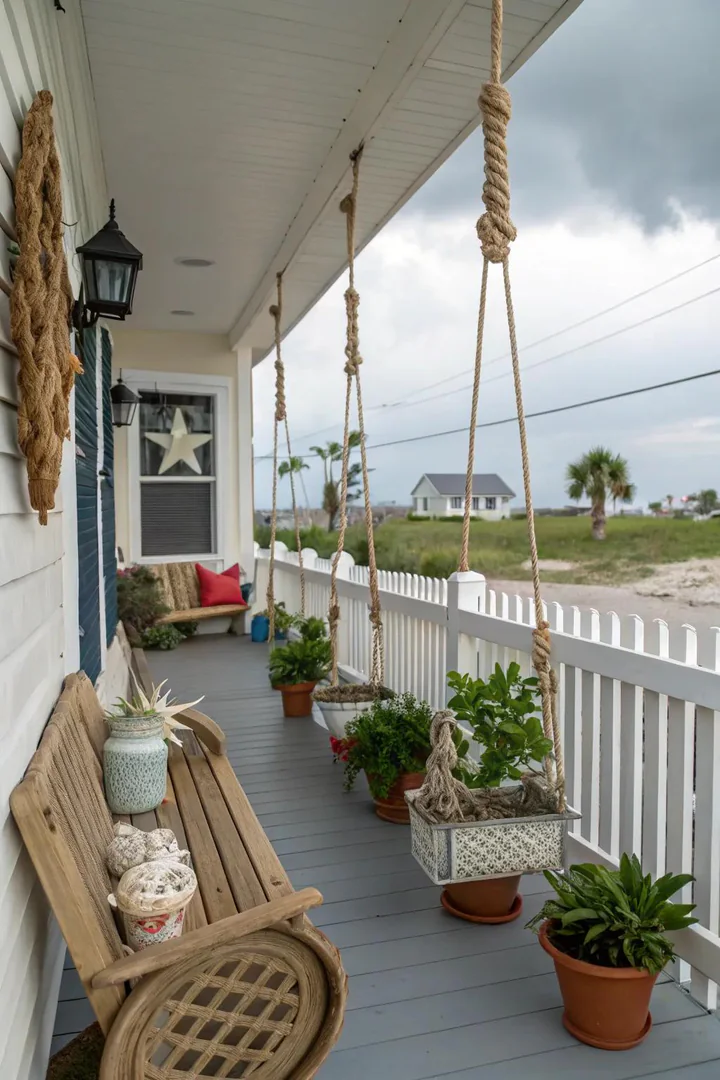
Adding nautical rope details (a jute or manila rope wrapped around porch columns, a rope-framed mirror, or a rope doormat) and coastal color accents (turquoise, coral, seafoam green, sandy beige) ties the porch design to Florida’s coastal identity without requiring a beachfront location. A ship’s wheel wall decoration ($25 to $60 from Wayfair or Amazon, 24 to 36 inches diameter, distressed wood or metal) mounted on the porch wall adds a focal point. A rope-wrapped column (wrap 1-inch manila rope from a marine supply store, $0.50 to $1 per foot, around a 6-to-8-foot porch column) costs $20 to $40 in materials and takes 30 to 60 minutes per column.
Place a galvanized metal lantern ($15 to $35 from Pottery Barn or Target’s Threshold line) on a side table or hang it from a ceiling hook for a dock-inspired look. Galvanized steel resists rust in salt air far longer than painted iron or untreated steel. A driftwood collection displayed on the porch railing or arranged in a large glass vase brings in natural coastal texture for free (collected from any Florida beach). Pair coastal accents with white or light blue exterior paint on the porch ceiling (see idea 7 below) to complete the beachside palette. Find more coastal-adjacent design ideas at DIY pallet bar ideas for outdoor entertaining setups.
5. Weather-Resistant Wicker and Resin Furniture
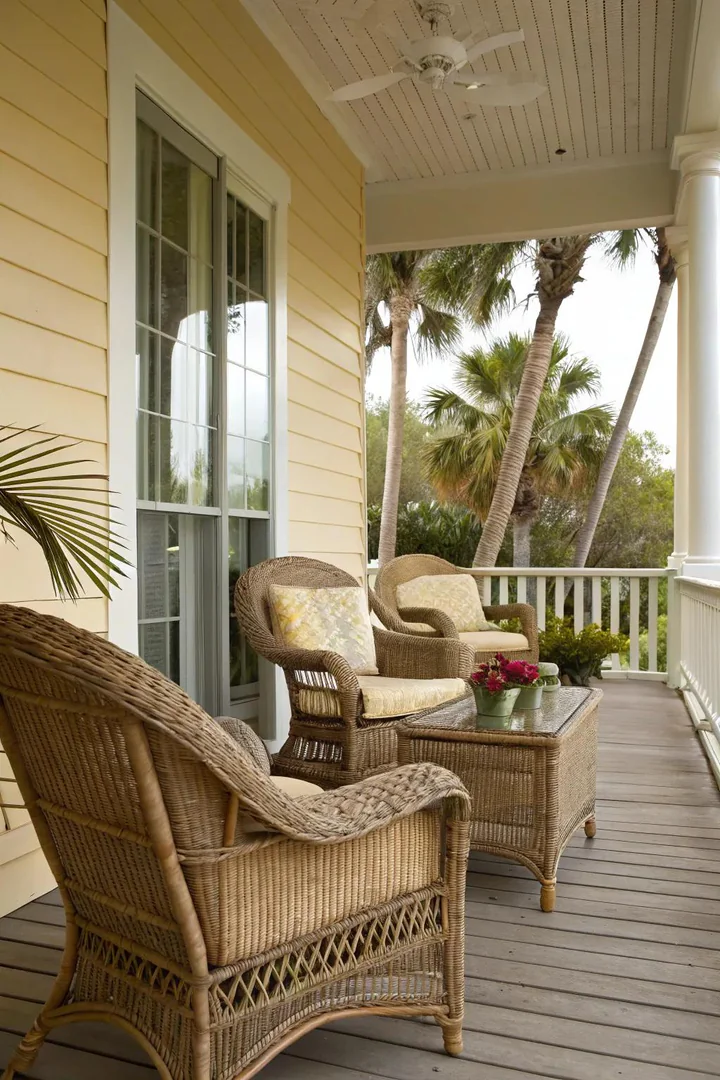
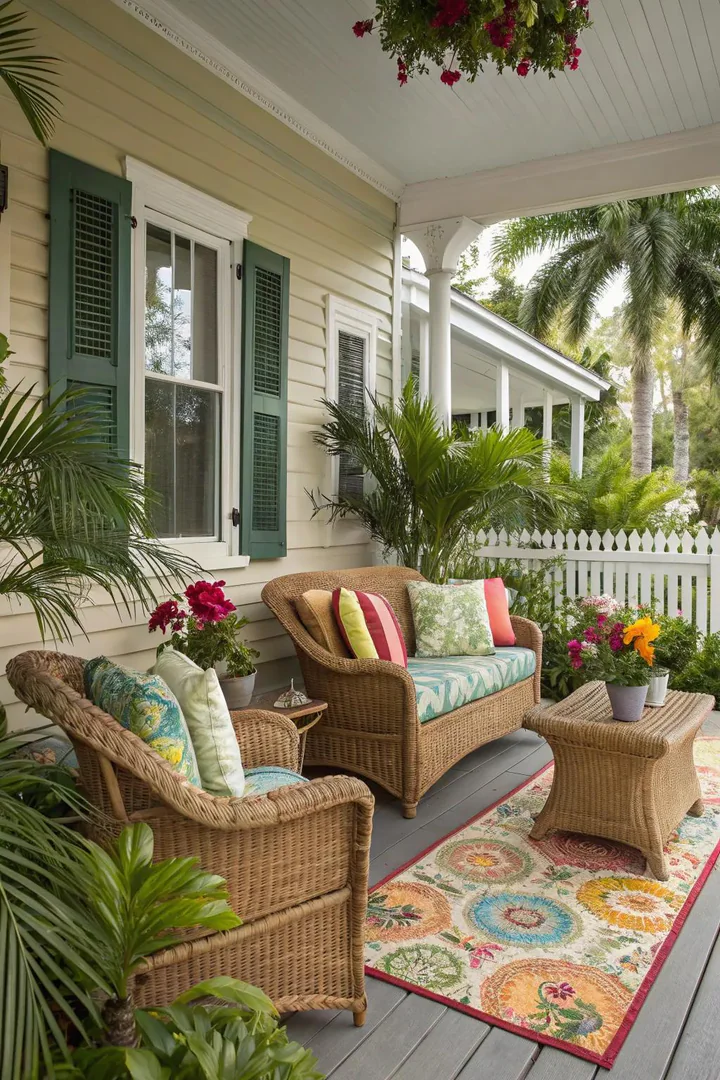
All-weather resin wicker (HDPE — high-density polyethylene wicker woven over powder-coated aluminum frames) resists Florida’s UV exposure, humidity, rain, and salt air without fading, cracking, peeling, or growing mold. Christopher Knight Home Puerta Outdoor Wicker Sofa Set ($400 to $600 for a 4-piece set with cushions) and Best Choice Products 4-Piece Outdoor Wicker Set ($300 to $450) provide full seating groups rated for year-round outdoor use in subtropical climates.
Avoid natural rattan, natural wicker, untreated wood, and uncoated iron furniture on Florida porches because these materials absorb moisture, grow mold, warp, and rust within 1 to 2 seasons of Florida weather exposure. Marine-grade polymer furniture (Polywood, $200 to $500 per chair, made from recycled HDPE lumber) provides the appearance of painted wood with zero maintenance, zero rot, and a 20-year residential warranty. Cover cushions with Sunbrella fabric (standard on most quality outdoor furniture) or Olefin fabric for mildew resistance and colorfastness in direct sunlight.
6. Wall-Mounted Water Feature
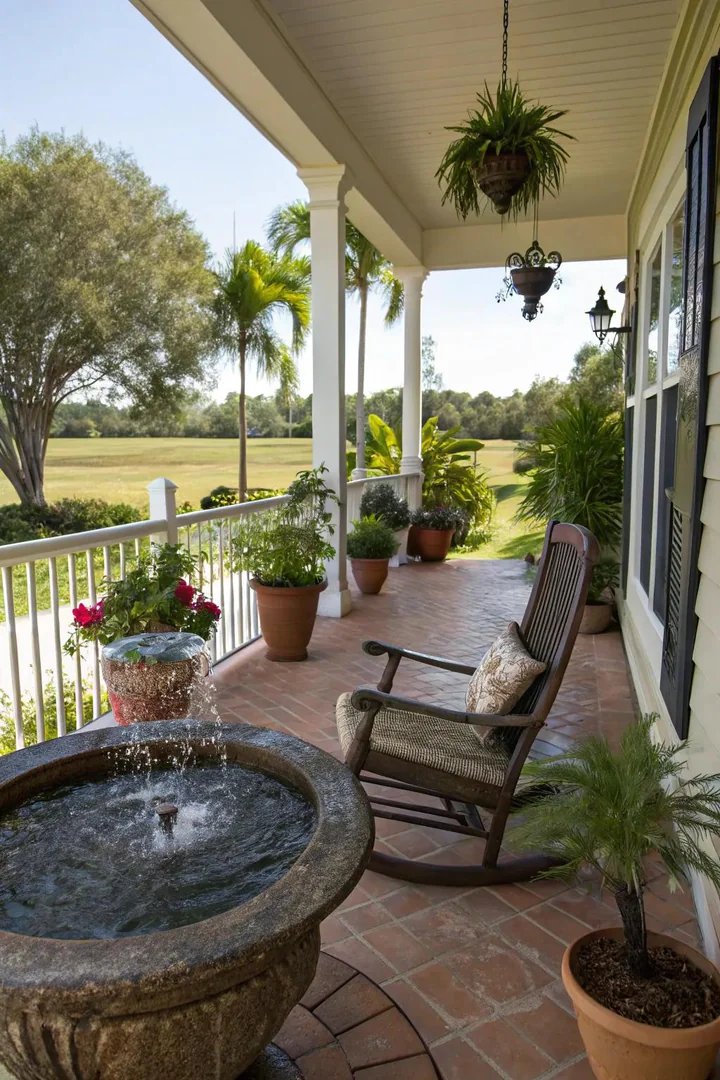
A wall-mounted fountain ($80 to $300 from Sunnydaze Decor, Alpine Corporation, or Wayfair; sizes range from 24 to 48 inches tall) hung on the porch wall creates a continuous trickling water sound that masks street noise, generates a cooling microclimate (evaporative cooling reduces the surrounding air temperature by 2 to 5 degrees Fahrenheit), and adds a focal point without consuming any floor space. A recirculating pump ($10 to $20 replacement, included with most fountain units) cycles the same 1 to 3 gallons of water through the fountain, requiring only a standard outdoor electrical outlet and a monthly water top-off to replace evaporation loss.
Choose a resin or fiberglass fountain (lighter than stone, rust-proof, UV-resistant) over natural stone or cast iron for a Florida porch because resin weighs 10 to 30 pounds (versus 50 to 150 pounds for stone) and can hang from two wall anchors without structural reinforcement. Add mosquito dunks ($8 for a 6-pack from Summit Chemical, available at Home Depot and Amazon; each dunk treats 100 square feet of water surface for 30 days) to the fountain basin to kill mosquito larvae without harming the pump, pets, birds, or plants. A fountain on a Florida porch without mosquito treatment becomes a mosquito breeding pool within 7 to 10 days during warm months.
7. Painted Haint Blue Porch Ceiling
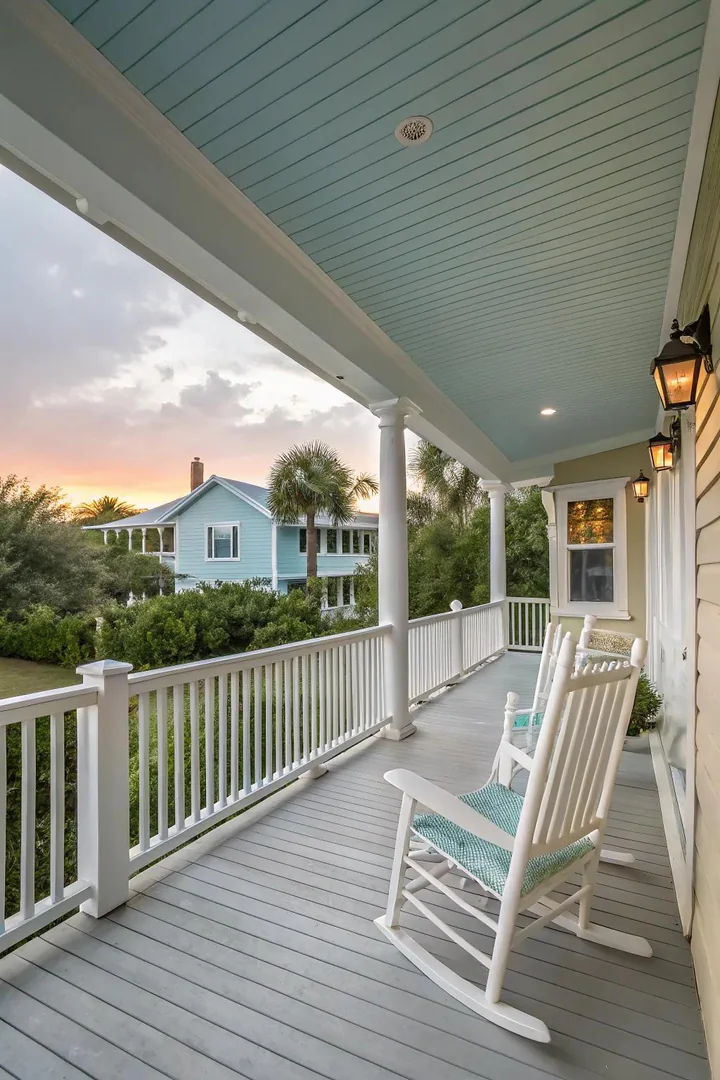
Painting the porch ceiling haint blue (a soft blue-green, traditionally believed in Southern folklore to repel insects and spirits) is a classic Florida and Southern porch tradition that also reflects sky tones, brightens the shaded ceiling, and creates a cooler visual temperature overhead. Sherwin-Williams Atmospheric SW 6505, Benjamin Moore Breath of Fresh Air 806, and Behr Watery S440-2 are popular haint blue shades. A gallon of exterior ceiling paint ($30 to $50) covers 350 to 400 square feet (enough for a 12-by-30-foot porch ceiling).
Use exterior ceiling paint with mildew-resistant additives (Zinsser Perma-White Exterior, $35 to $45 per gallon; or add M-1 Advanced Mildewcide, $8 per bottle, to any exterior paint) to prevent the black mold spots that form on Florida porch ceilings within 6 to 12 months of painting with standard interior paint. Prep the ceiling by pressure-washing (1,500 to 2,000 PSI), allowing 48 hours to dry, priming with an exterior primer, and applying 2 coats of the blue ceiling paint. A porch ceiling repaint costs $200 to $500 for professional labor or $50 to $100 in materials for a DIY weekend project.
8. Vintage and Salvage Finds
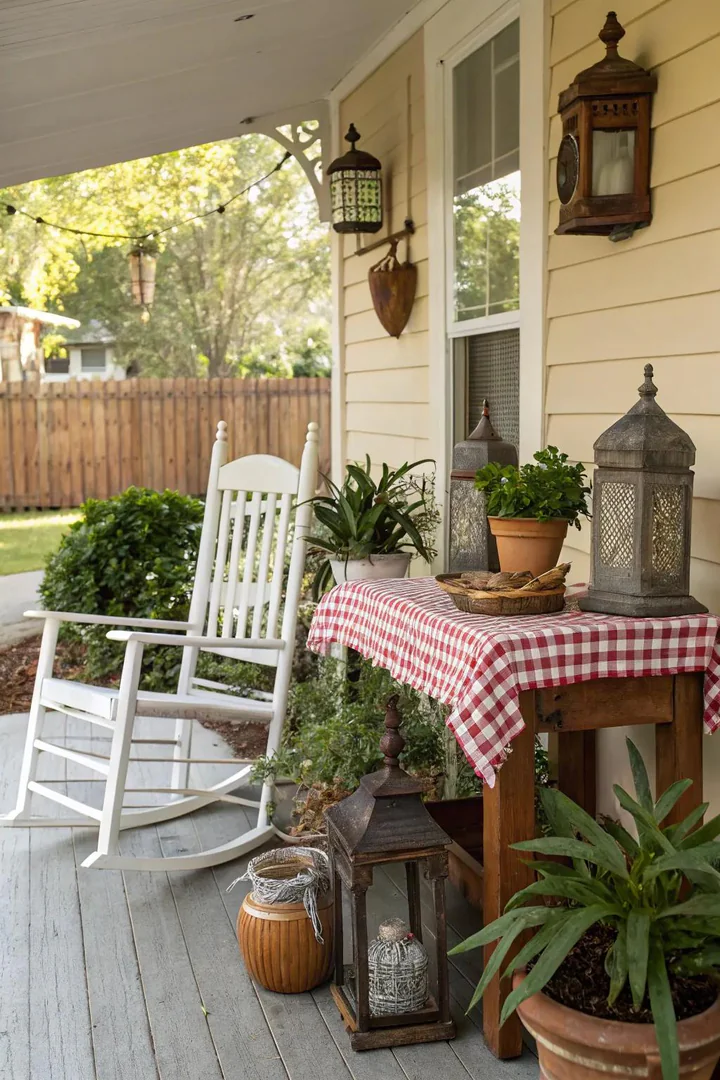
Placing salvaged architectural pieces (old shutters, reclaimed window frames, vintage metal signs, antique milk cans, or a weathered wooden bench) on the porch adds character and a lived-in, collected-over-time look that new furniture cannot replicate. Florida flea markets (Renninger’s in Mount Dora, Waldo Farmers and Flea Market near Gainesville, Flamingo Island Flea Market in Bonita Springs) and estate sales sell vintage porch-ready items for $5 to $100 depending on size and condition.
A vintage metal glider ($50 to $200 at estate sales and antique malls; $300 to $500 for a restored reproduction from Torrans Manufacturing or Hallman Porch Swings) provides a classic Florida porch seating experience with a gentle rocking motion. Sand and repaint a rusted vintage glider with Rust-Oleum Stops Rust spray paint ($5 to $8 per can) in a period-appropriate color (mint green, powder blue, buttercup yellow, or fire-engine red) for a 30-minute restoration that costs under $20 in materials. Seal the repainted surface with Rust-Oleum Clear Coat for added UV and moisture protection in Florida’s climate.
9. Potted Palms and Hanging Ferns
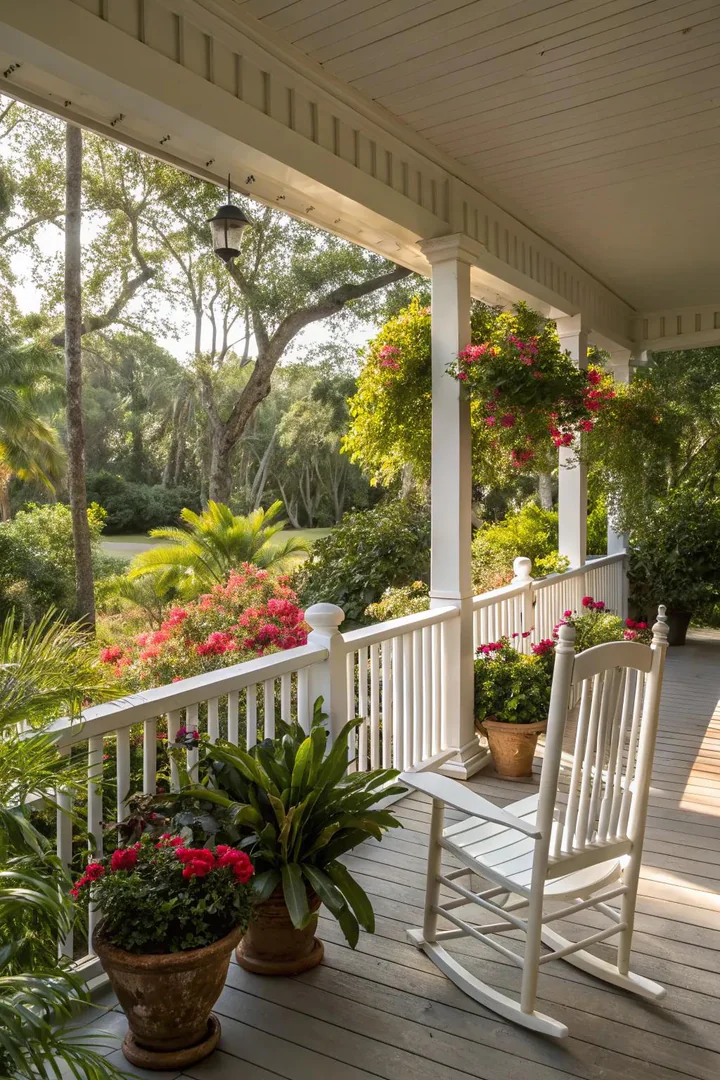
Boston Fern (Nephrolepis exaltata, $10 to $25 for a hanging basket from any Florida nursery or Home Depot) thrives in Florida’s humidity and filtered porch light, producing cascading 2-to-3-foot fronds that soften hard architectural edges and sway in the breeze. Hang 2 to 4 Boston Fern baskets from ceiling hooks ($3 to $5 each, stainless steel for rust resistance) spaced 4 to 6 feet apart along the porch beam for a full green canopy effect.
A Pygmy Date Palm (Phoenix roebelenii, $30 to $80 for a 7-gallon pot) in a large floor planter at the porch entry grows 6 to 10 feet tall at maturity and produces feathery, arching fronds that create a resort-style entrance. A Kentia Palm (Howea forsteriana, $40 to $100) tolerates lower light and indoor-outdoor transitions, making it a good choice for covered porches that receive indirect light only. Water ferns daily or every other day during Florida summers (90+ degree days with 80%+ humidity) and mist the fronds with a spray bottle to prevent browning at the tips. Browse more outdoor greenery arrangements at budget friendly patio ideas for affordable planting strategies.
10. Indoor-Outdoor Area Rug
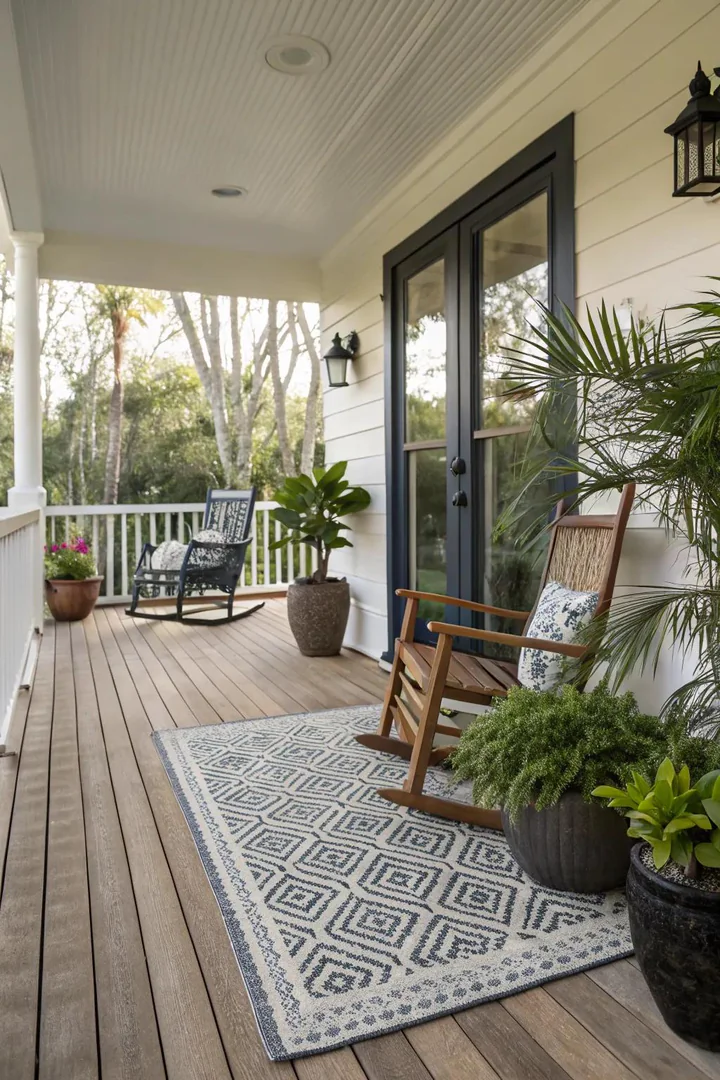
An outdoor-rated area rug (Safavieh Courtyard Collection, $50 to $150 for a 5-by-8; nuLOOM Gris Indoor/Outdoor Flatweave, $40 to $100; Dash & Albert Indoor/Outdoor Rugs, $100 to $250) defines the seating area, adds color and pattern to a plain concrete or tile porch floor, and provides a softer, warmer surface underfoot than bare concrete. Choose a polypropylene or polyester flatweave rug rated for outdoor use (mold-resistant, UV-stable, quick-drying) rather than a natural fiber rug (jute, sisal, or cotton), which absorbs moisture, grows mold, and rots within 1 to 2 Florida rainy seasons.
Secure the rug to the porch floor with outdoor rug tape ($10 to $15 per roll from Gorilla Tape or XFasten) or rug gripper pads ($15 to $25 from Gorilla Grip) to prevent the rug from lifting and flipping during afternoon wind gusts (common during Florida’s June-through-September storm season). Pressure-wash the rug ($0 — use the same washer you clean the porch with) every 2 to 3 months to remove pollen, mold spores, and dirt that accumulate in Florida’s humid air. Roll and store the rug indoors during active hurricane warnings to prevent it from becoming wind-borne debris.
11. Symmetrical Planters and Rocking Chairs
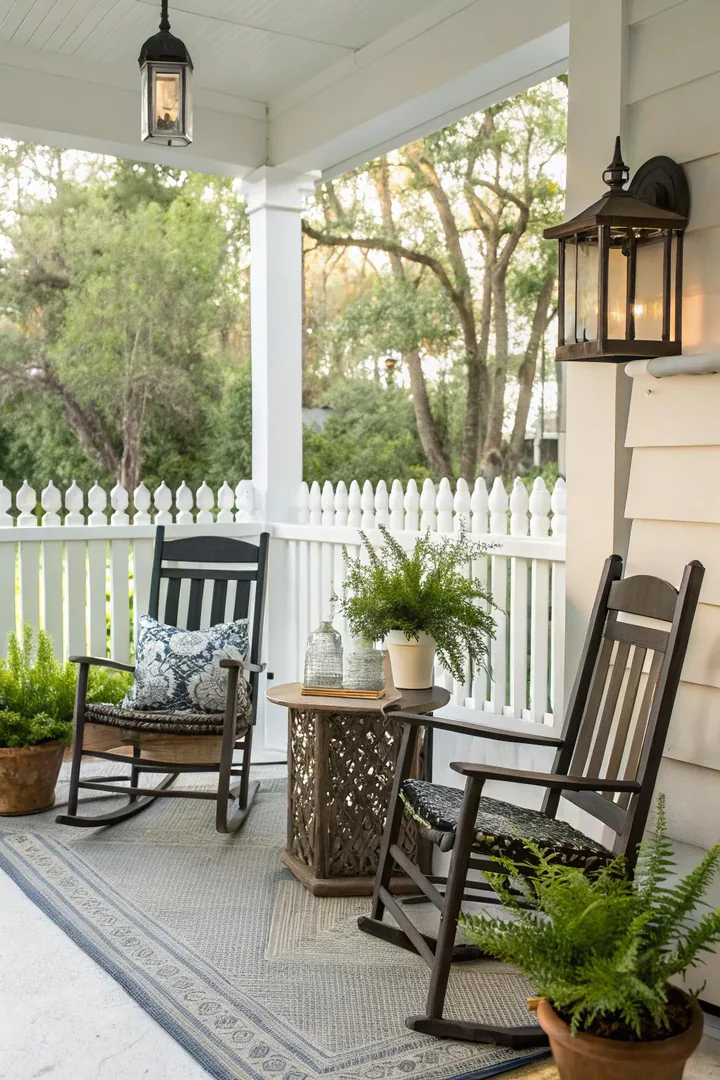
Placing matching planters on either side of the front door and matching rocking chairs flanking the door or centered on the porch creates a balanced, formal composition that reads as polished and intentional from the curb. Polywood Presidential Rocking Chair ($300 to $400 each, HDPE lumber, 20-year warranty, 19 color options) and CASA BRUNO Palm Coast Adirondack Rocker ($250 to $350, recycled HDPE) resist Florida sun, rain, and salt air without fading, warping, or requiring annual repainting.
Flank the front door with two identical tall ceramic or fiberglass planters (24 to 36 inches tall, $40 to $100 each from La Jolie Muse or Kante Lightweight Concrete Planters) filled with a matching pair of Foxtail Ferns (Asparagus densiflorus, $10 to $20 each, drought-tolerant, full sun, evergreen in Florida) or Sago Palms (Cycas revoluta, $20 to $50 each, extremely slow-growing, stately symmetrical form). Symmetry works best on porches with a centered front door; for off-center doors, place the rocking chairs on the wider side and a single large planter on the narrow side to balance the visual weight.
12. Personal Art and Wall Displays
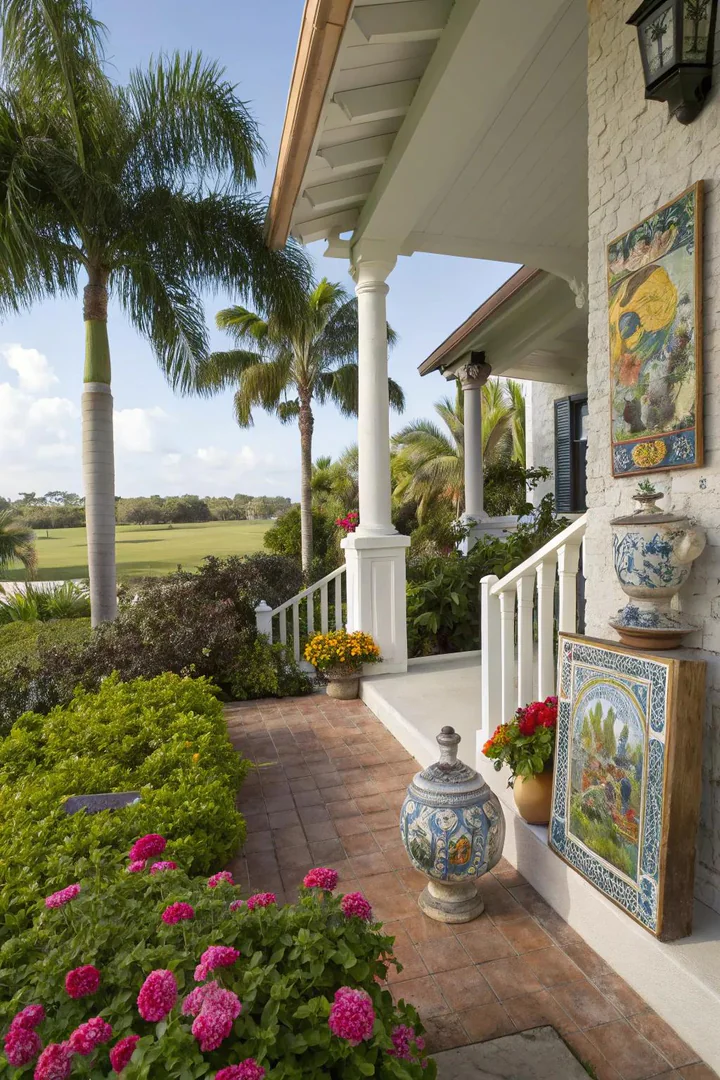
Hanging outdoor-rated wall art (metal sculptures, painted wood signs, ceramic tile panels, or UV-resistant canvas prints) on the porch wall between windows or above the seating area adds personality and color to an otherwise blank exterior wall. Metal wall art ($20 to $80 from Stratton Home Decor or Wayfair; palm trees, fish, sunbursts, and abstract shapes in powder-coated steel) resists rain, humidity, and UV exposure. A hand-painted address plaque ($15 to $40 from Etsy) or a custom house-number tile panel ($30 to $80, ceramic or hand-painted Mexican Talavera tiles) marks the home’s address with a decorative accent rather than generic hardware-store numbers.
Mount outdoor art with stainless-steel picture hangers or outdoor Command strips rated for humidity ($5 to $10 per pack) rather than standard iron nails or hooks, which rust and leave orange stain trails on the wall within months in Florida’s humidity. A gallery wall of 3 to 5 coordinated pieces (same frame color, varied sizes, 2 to 3 inches apart) creates a polished, collected look — arrange the pieces on the ground first to test the layout before drilling holes. Explore more outdoor wall display ideas at trellis arbor ideas for vertical structures that double as art supports and plant displays.
13. Florida-Style Porch Swing
A porch swing ($150 to $400 for a 4-to-5-foot wooden or HDPE swing from Porchgate Amish-Made, Highwood Weatherly Swing, or Polywood Vineyard Swing) hung from the porch ceiling with heavy-duty swing hangers ($15 to $25 per pair from Barn-Shed-Play or Amazon, rated for 500 to 800 pounds) provides a gentle rocking motion that catches the breeze and creates a second seating zone on a wide porch. A 5-foot swing seats 2 adults comfortably and requires a minimum 4-foot clearance in front and behind the swing arc (8 feet total depth of porch).
Hang the swing from ceiling joists (not from the ceiling boards alone — joists provide the structural support to hold 400 to 600 pounds of swinging load). Locate the joists with a stud finder, drill pilot holes into the joist, and thread the swing hanger bolts (3/8-inch diameter, 4 to 6 inches long) through the ceiling board and into the joist. Add outdoor swing cushions ($40 to $80 per set, Sunbrella fabric recommended) in coral, turquoise, or palm-print patterns for Florida color. A swing daybed (a wider, mattress-style swing, $300 to $800) turns the porch into an afternoon nap zone. Visit corner stairs deck ideas for porch-to-yard transition designs, or browse The Designers Company for the full outdoor living library.
How to Design a Florida Front Porch
1. Assess Sun Exposure and Wind Direction
Determine which direction the porch faces (north, south, east, or west) and how many hours of direct sunlight the porch receives during peak summer months (June through September). A south- or west-facing porch in Florida receives 6 to 10 hours of direct sun and afternoon temperatures of 95 to 100 degrees Fahrenheit, requiring shade solutions (curtains, ceiling fans, deep roof overhangs, or shade sails). A north- or east-facing porch receives 2 to 4 hours of morning sun and stays 10 to 15 degrees cooler in the afternoon, requiring less shade intervention. Note the prevailing wind direction (southeast in most of Florida) to position seating where cross-breezes flow across the porch.
2. Choose Hurricane-Rated Materials and Fasteners
Select porch materials and furniture that can withstand Florida’s June-through-November hurricane season. Anchor porch furniture with hurricane straps or tiedown anchors ($5 to $15 per strap from Stormguard or marine supply stores) that bolt to the porch floor and clip to furniture legs, preventing chairs, tables, and planters from becoming wind-borne projectiles in 75-to-130-mph winds. Use stainless-steel or hot-dipped galvanized fasteners (screws, bolts, hangers) for all structural attachments — standard zinc-plated hardware rusts and fails within 2 to 5 years in Florida’s salt-air environment.
3. Install a Ceiling Fan for Air Circulation
Mount a wet-rated ceiling fan (Hunter Cassius 52-inch, $100 to $150; Minka-Aire Concept II Wet 52-inch, $200 to $300; Big Ass Fans Haiku 60-inch, $400 to $700) on the porch ceiling to circulate air and reduce the perceived temperature by 4 to 8 degrees Fahrenheit through wind-chill effect. A wet-rated fan (UL Listed for wet locations) has sealed motor housings, stainless-steel hardware, and ABS or composite blades that resist warping and motor damage from direct rain and humidity. A damp-rated fan (less expensive) works on fully covered porches but is not rated for direct rain exposure.
4. Add Mosquito Management
Install a magnetic screen door ($15 to $30 from Amazon) across the porch entry or a retractable screen system (Phantom Screens, $300 to $800 per opening; Larson Retractable Screen, $100 to $200 per door) on one or more porch openings to create a screened-in zone that blocks mosquitoes while maintaining airflow. Place a Thermacell Patio Shield ($25, creates a 15-by-15-foot mosquito-free zone using a heated repellent mat) on the porch table during evening use for chemical-free mosquito suppression without sprays, coils, or candles.
Florida Front Porch Feature Comparison
| Feature | Cost | Weather Resistance | Maintenance | Best For |
|---|---|---|---|---|
| Resin wicker furniture | $300–$600 set | Excellent (UV, rain, salt) | Hose down monthly | Primary seating |
| Polywood rocking chair | $300–$400 each | Excellent (20-year warranty) | None required | Traditional Florida porch |
| Outdoor curtains | $100–$300 full porch | Good (Sunbrella best) | Wash 2x/year | Sun and rain screening |
| Ceiling fan (wet-rated) | $100–$700 | Excellent | Annual cleaning | Air circulation and cooling |
| Porch swing | $150–$400 | Good to Excellent | Annual oiling (wood) | Relaxation and socializing |
| Haint blue ceiling | $50–$100 DIY | Good with mildew paint | Repaint every 3–5 yr | Southern charm and tradition |
Frequently Asked Questions
What is the best flooring for a Florida front porch?
Porcelain tile ($3 to $8 per square foot, slip-resistant matte finish, frost-proof rating unnecessary in Florida but UV-stable and waterproof) and stamped or stained concrete ($8 to $18 per square foot for stamped, $2 to $4 for stained) are the most durable Florida porch flooring options. Both resist rain, humidity, mold, and UV without warping or rotting. Avoid untreated wood decking (rots within 3 to 7 years in Florida’s humidity) unless you use pressure-treated pine (treated with copper azole, $2 to $4 per linear foot) or composite decking (Trex or TimberTech, $5 to $12 per linear foot, zero rot, zero painting).
How deep should a Florida front porch be?
A minimum 8-foot depth (from the house wall to the porch edge) allows a seating arrangement, walking clearance, and enough roof overhang to shade the seating area during afternoon sun. A 10-to-12-foot depth accommodates a porch swing (which needs 4 feet of arc clearance in front and behind), a dining table, or multiple seating zones. A 6-foot-deep porch (common in older Florida homes) fits a pair of rocking chairs but not a full furniture set. The roof overhang should extend at least 3 to 4 feet beyond the last row of seating to protect furniture and occupants from Florida’s angled afternoon rain.
How do you keep a Florida porch cool?
Five cooling strategies that work together: (1) Install a wet-rated ceiling fan ($100 to $700) running counterclockwise to push air downward. (2) Hang outdoor curtains or shade sails on the sun-facing side to block direct UV. (3) Paint the ceiling a light, reflective color (white or haint blue) to reduce radiant heat absorption. (4) Add a wall-mounted recirculating fountain for evaporative cooling (2 to 5 degree temperature reduction). (5) Plant tall palms or install a shade tree (live oak, Royal Poinciana, or Tabebuia) on the sun-facing side of the porch to cast natural shade on the roof and walls during peak afternoon hours.
Do Florida porches need to be screened?
Screening is not required by code (unless the porch is enclosed and conditioned), but a screened porch is dramatically more usable in Florida because it blocks mosquitoes, no-see-ums (biting midges), and lovebugs that are active 8 to 10 months per year. A full porch screen enclosure ($1,500 to $5,000 for professional installation, $500 to $1,500 for a DIY screen-panel kit from Screen Tight) converts an open porch into a screened lanai. A less expensive alternative: install a retractable screen ($100 to $800 per opening) on 1 to 2 porch openings and use a Thermacell device for the remaining open sides.
What paint holds up best on Florida porch surfaces?
100% acrylic latex exterior paint with UV stabilizers and mildewcide performs best on Florida porches. Sherwin-Williams SuperDeck ($40 to $55 per gallon) for porch floors and Benjamin Moore Aura Exterior ($55 to $75 per gallon) for porch ceilings and trim both provide 7-to-10-year durability in Florida’s climate. Avoid oil-based paints on Florida porches (they yellow and peel faster in UV and humidity than acrylics). Apply a coat of exterior primer with mildew resistance before the finish coats, and never paint in direct sun or when the surface temperature exceeds 90 degrees Fahrenheit (the paint dries too fast and does not bond properly).