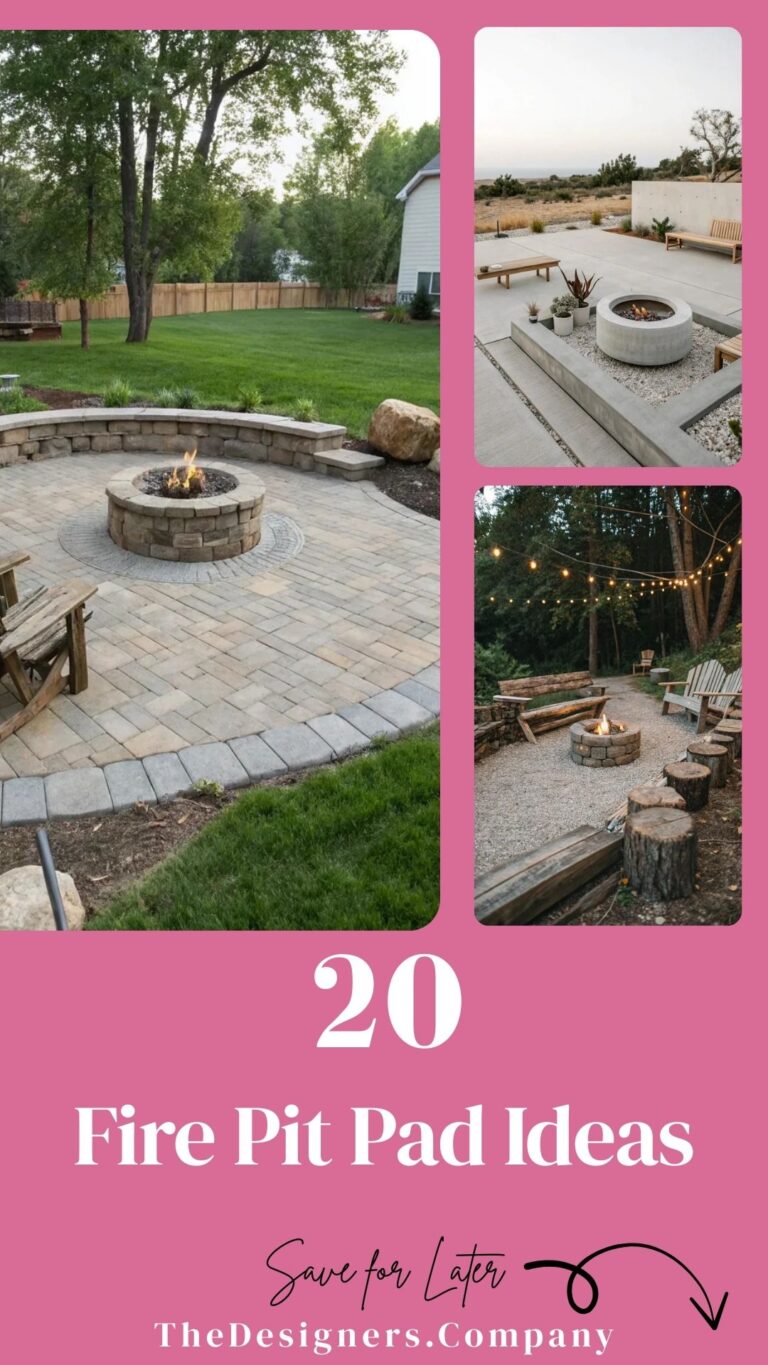
Small Backyard Ideas: 19 Brilliant Designs That Maximize Every Inch
A small backyard measuring 10×20 to 20×30 feet holds more potential than most homeowners expect. The right combination of scaled furniture, vertical planting, and smart zoning turns a compact yard into a functional outdoor room with dining, lounging, and gardening space. Most of the 19 ideas below cost under $500 each, and several projects finish in a single weekend with basic tools.
Whether your backyard needs a fire pit, a small deck platform, or a hidden storage system that keeps the space looking clean, these ideas include specific product names, dimensions, and prices so you can plan each upgrade with a clear budget in mind. Visit The Designers Company for hundreds of additional outdoor and interior project guides.
1. Create Cozy Corners
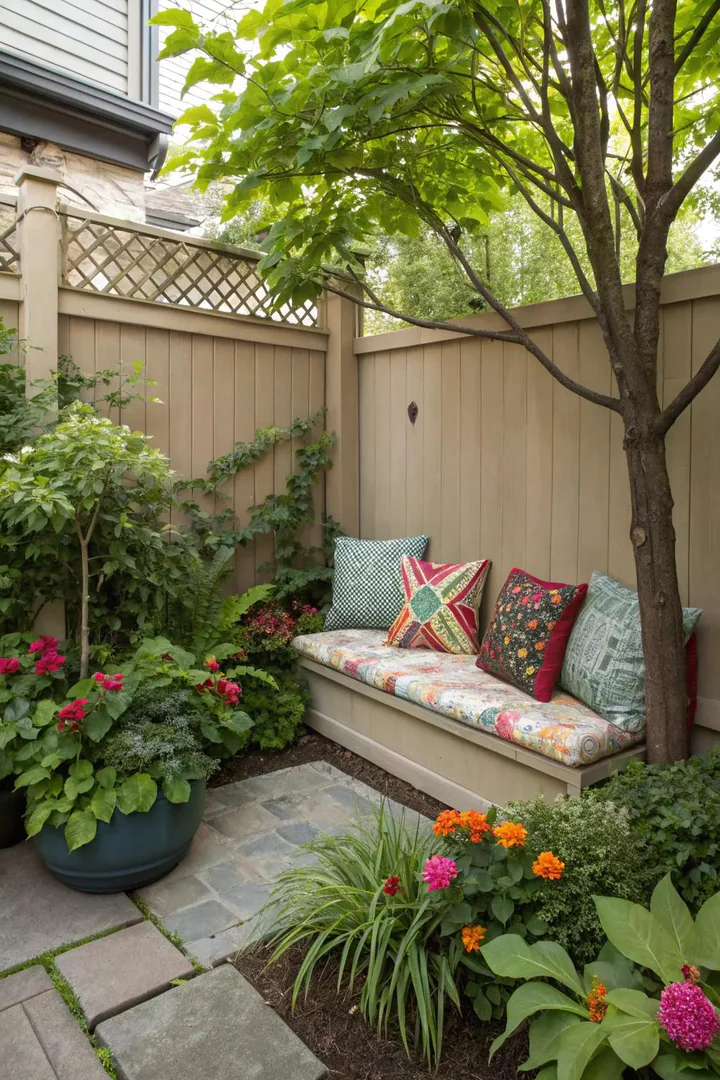
Dedicating one corner of your yard to a cushioned seating nook makes the space feel intentional rather than empty. A compact outdoor loveseat from IKEA’s APPLARO line ($250) or a 2-piece wicker set from Christopher Knight Home ($300-$500) fits a 5×5-foot corner and leaves the rest of the yard open for other uses.
Frame the corner with potted plants (three varying-height planters at $15-$40 each) and a small outdoor rug (3×5 feet, $25-$50) to define the seating zone visually. Add a string of Edison-style LED lights ($20-$40 for a 48-foot strand) draped overhead from the fence to the house wall for a warm glow after sunset. A single corner setup turns dead space into the most-used part of the yard.
2. Add a Water Feature
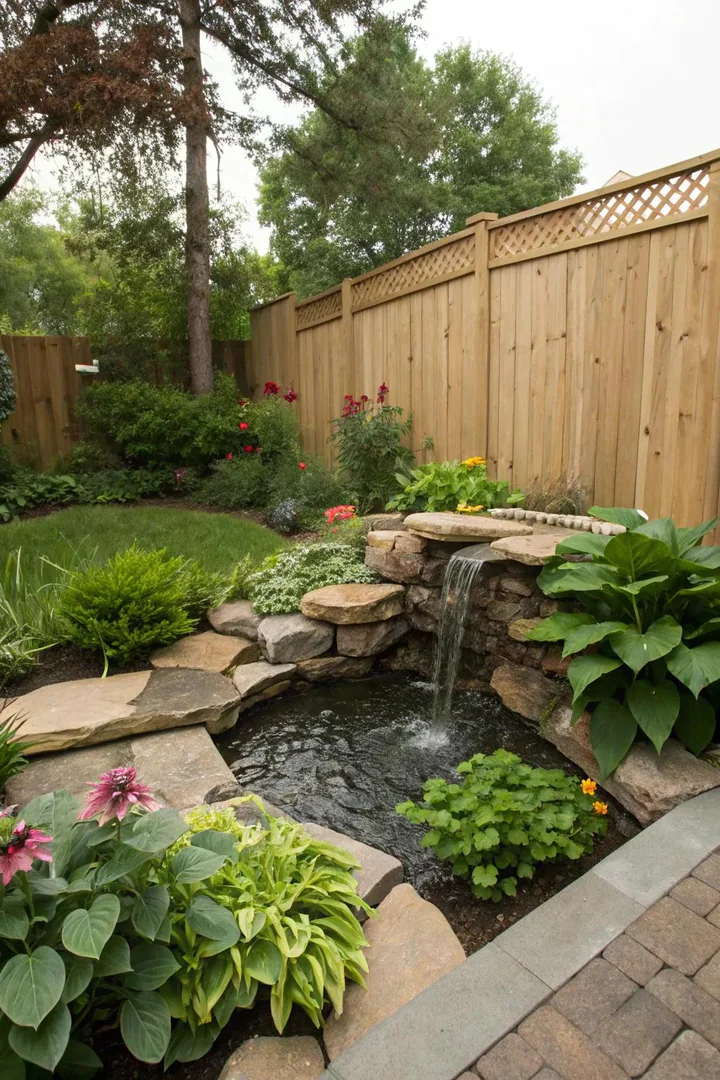
A tabletop or freestanding recirculating fountain masks street noise and adds movement to a still backyard for $40-$200. Sunnydaze and Alpine Corporation both make compact models (12-30 inches tall) that plug into a standard GFCI outlet and recirculate water through a low-watt pump drawing just 5-10 watts. Stacked slate, ceramic bowl, and bamboo spout designs all suit small yards.
A DIY bubbling rock fountain built from a drilled boulder ($50-$100 at a stone yard), a 15-gallon buried basin ($20-$30), and a Pondmaster 250 GPH pump ($30-$40) produces a natural-looking water feature for under $200 total. Position the fountain near your seating area so the sound of water reaches the spot where you spend the most time. For swimming and cooling options in compact yards, see ideas for small backyard pools.
3. Multi-Use Furniture
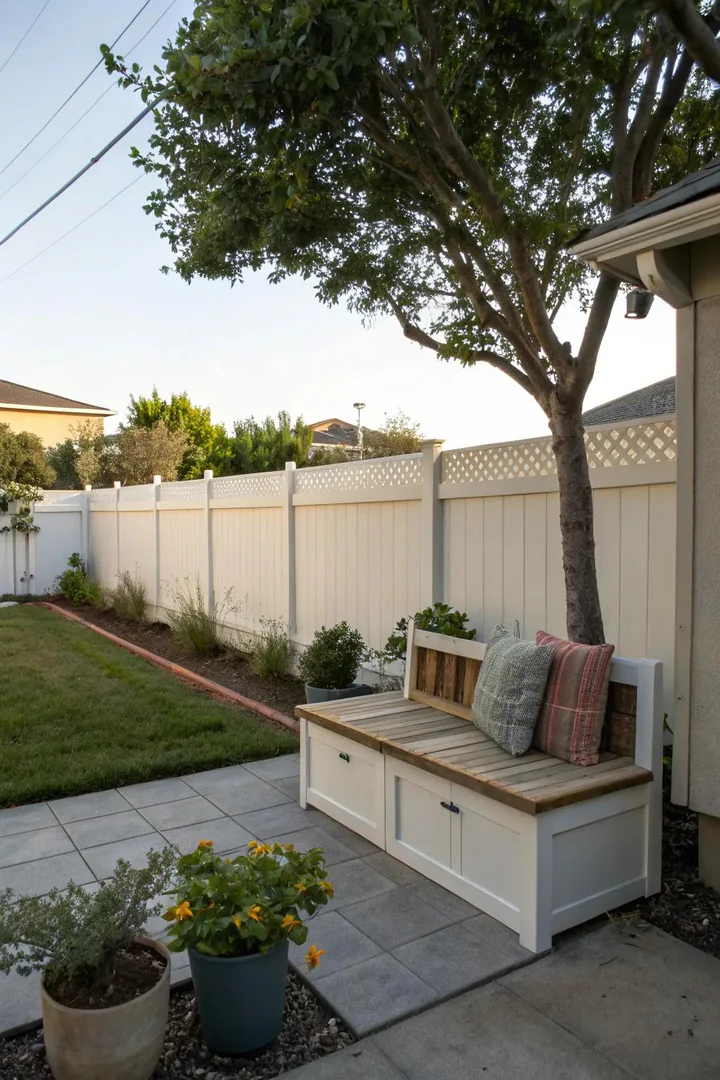
Furniture that doubles as storage, dining surface, or seating saves floor space in a small backyard. The Keter Eden 70-gallon storage bench ($90-$120) seats two adults on top while holding cushions, tools, and toys inside a waterproof resin compartment. Fold-flat dining sets from Fermob ($200-$500) and COSCO ($50-$100 for a 3-piece set) collapse against the fence when not in use.
A rolling bar cart ($50-$150) that doubles as a planting station during the week and a drink station on weekends maximizes the value of a single piece. Choose lightweight aluminum or resin furniture over heavy teak or cast iron so you can rearrange the layout in minutes depending on how many guests you have. Stack or nest pieces rather than lining them up against the fence to keep the center of the yard open for activities.
4. Install a Pergola
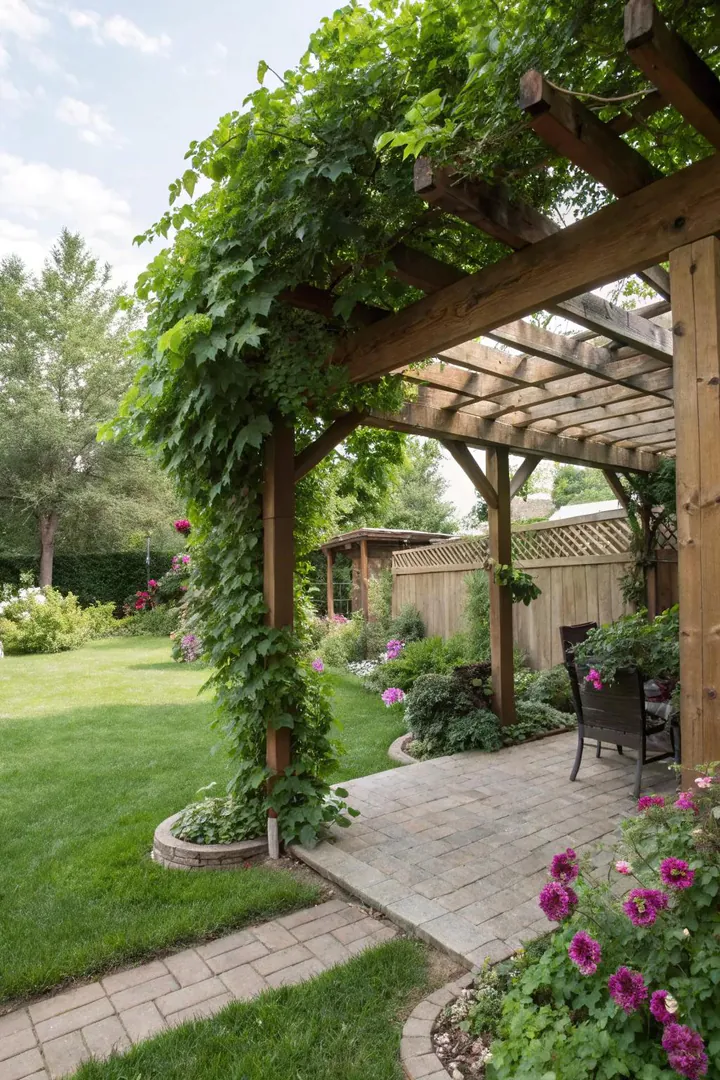
A wall-mounted pergola (8×8 or 8×10 feet) gives your backyard an overhead structure that defines an outdoor room without freestanding posts consuming floor space. TOJA Grid steel pergola brackets ($200-$400) connect standard 4×4 lumber into a modular frame that bolts to the house wall on one side. Total material cost for an 8×10-foot attached pergola runs $500-$1,200 depending on wood species.
Add a retractable shade canopy ($80-$200) across the rafters for on-demand sun blocking, or train wisteria or climbing hydrangea up the posts for living shade that fills in over 2-3 seasons. Hang string lights, planters, and a ceiling-mounted fan (Minka Aire outdoor-rated, $200-$400) from the pergola beams to create a fully functional outdoor ceiling above your seating area.
5. Fire Pit
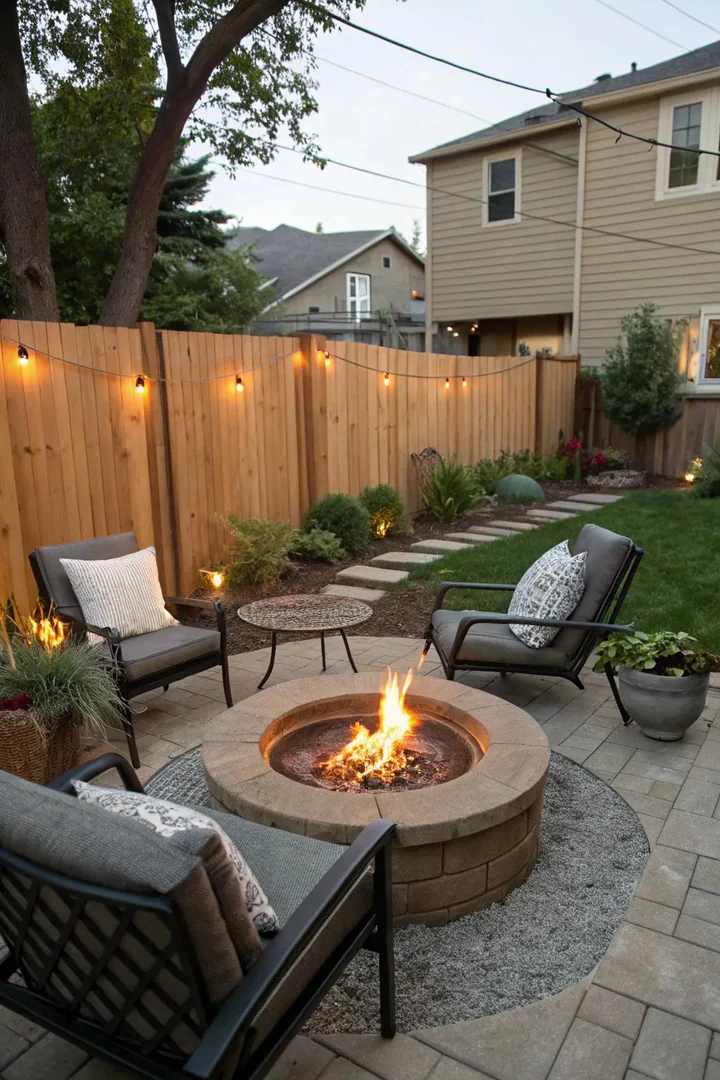
A tabletop or small freestanding propane fire pit fits a backyard as small as 10×10 feet while still meeting the 10-foot clearance most fire codes require from structures. Outland Living’s Firebowl 863 ($100-$140) measures 24 inches in diameter and produces 58,000 BTU from a standard 20-pound propane tank. Bond Manufacturing’s 18-inch tabletop fire bowl ($60-$90) sits on any flat surface and connects to a 1-pound camping propane cylinder.
Check your city’s fire ordinance before purchasing because many jurisdictions ban wood-burning fire pits in yards under a certain size but permit gas or propane units. Fill the fire pit with tempered glass beads ($15-$25 per 10-pound bag) in colors that match your patio furniture or planters for a polished look. Position the fire pit at the center of your seating arrangement so warmth radiates equally to every chair.
6. Creative Lighting
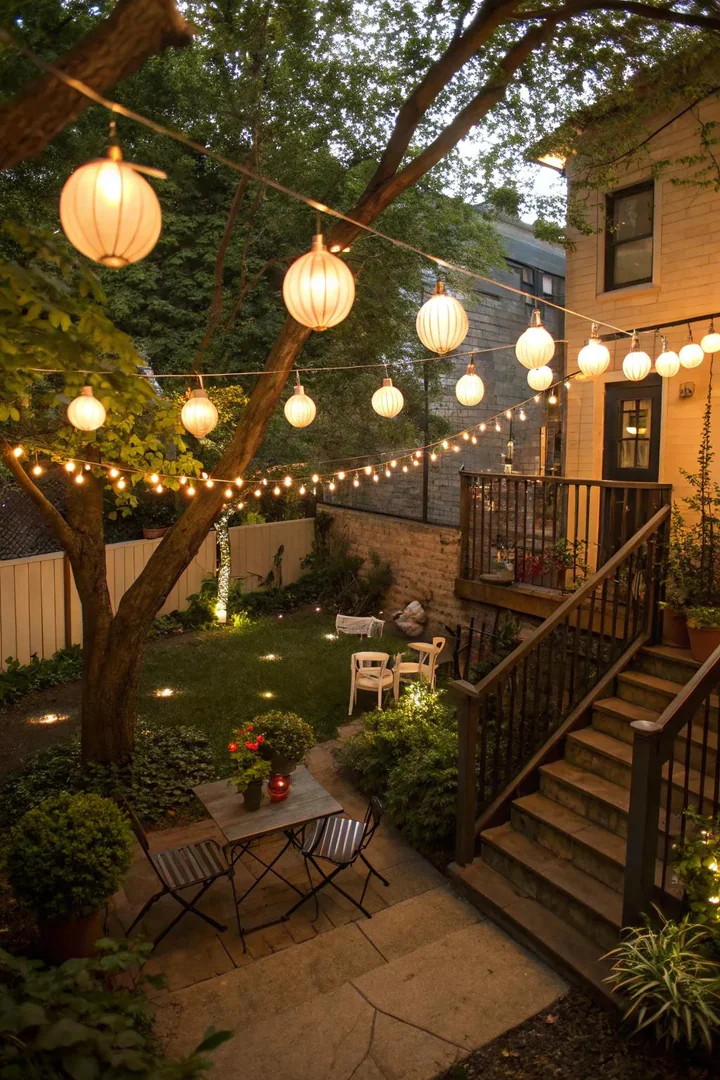
Layered lighting at three heights (ground, mid-level, and overhead) makes a small backyard feel larger after dark by drawing the eye to different focal points. Solar path lights ($15-$30 for a 10-pack from Hampton Bay or GIGALUMI) line walkways at ground level, while low-voltage LED uplights ($15-$30 each from Kichler or WAC) mounted at the base of trees or fence posts create dramatic shadows on walls and foliage.
Commercial-grade string lights ($20-$50 for a 48-foot strand) strung between the house and a fence post at 8-foot height provide the warm overhead glow that pulls the entire yard together at night. Set all lights on a smart plug timer ($15-$25 from Kasa or Wyze) that triggers at sunset and shuts off at a set bedtime. A well-lit backyard extends usable outdoor hours by 3-4 hours per evening and makes the space feel twice as large as it does in the dark.
7. Coordinated Color Palette
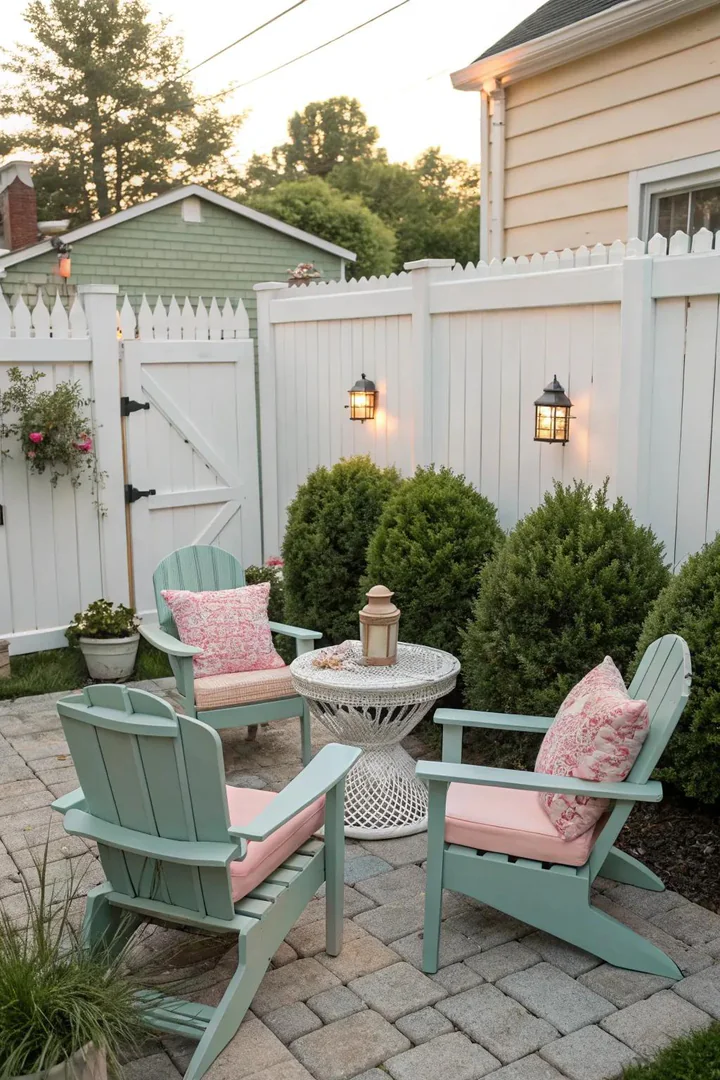
Limiting your outdoor accessories to a 2-3 color palette gives a small backyard a designed, cohesive look. Start with a neutral base (white, gray, or natural wood) for furniture frames and large surfaces, then add one accent color through cushions, planters, and throw pillows. Navy, terracotta, sage green, and mustard yellow all pair well with natural wood tones.
Carry the accent color through at least three different elements (cushion fabric, a planter, and a rug border or towel) for the eye to register it as intentional rather than accidental. Keep the accent at 20-30% of the total visible color and the neutral at 70-80%. Swap accent colors seasonally (aqua in summer, burnt orange in fall) by replacing just the cushions and small accessories for under $100.
8. Add a Pop of Color
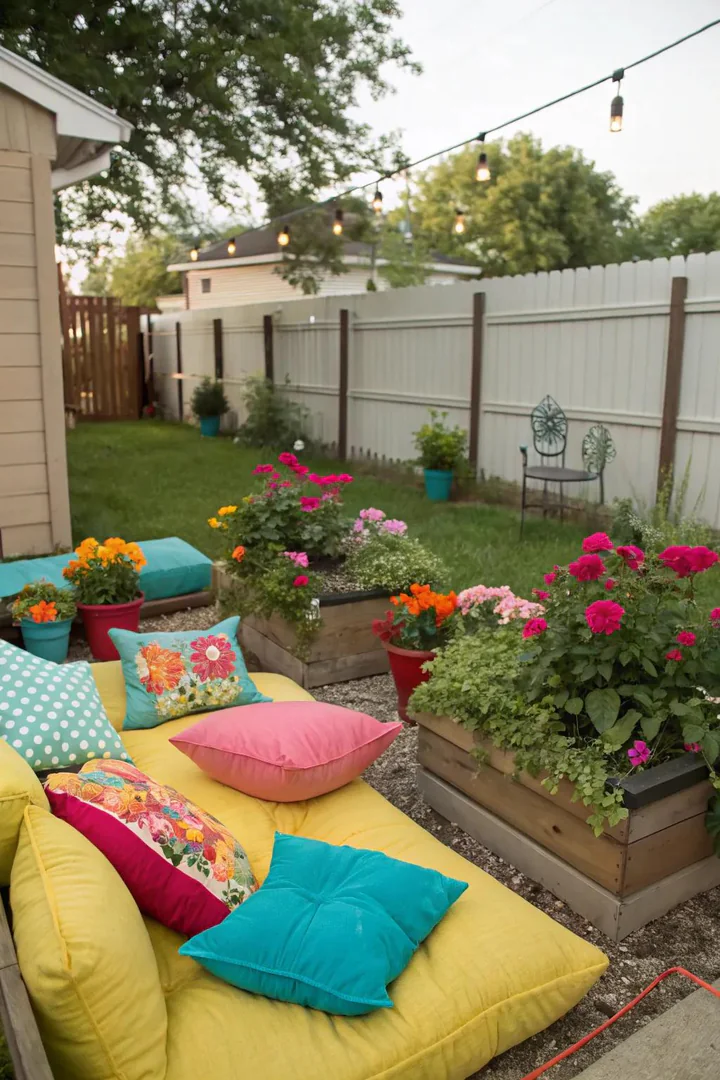
A single bold-colored element against a neutral backdrop draws the eye and makes a small backyard feel more interesting without visual clutter. Paint three matching planters ($5-$10 each for terracotta pots, $8-$12 for a can of spray paint) in a bright accent color (coral, cobalt, or lime green) and group them at the far end of the yard to create a focal point that pulls the eye outward.
A colorful outdoor rug (5×7 feet, $40-$120 from nuLOOM or Safavieh) placed under your seating area adds bold pattern at ground level. A painted fence accent panel (one section of fence in a contrasting color, $15-$30 in exterior paint) creates a backdrop for wall-mounted planters or string lights. One strong color statement per viewing angle keeps the yard from feeling busy.
9. Space-Saving Furniture
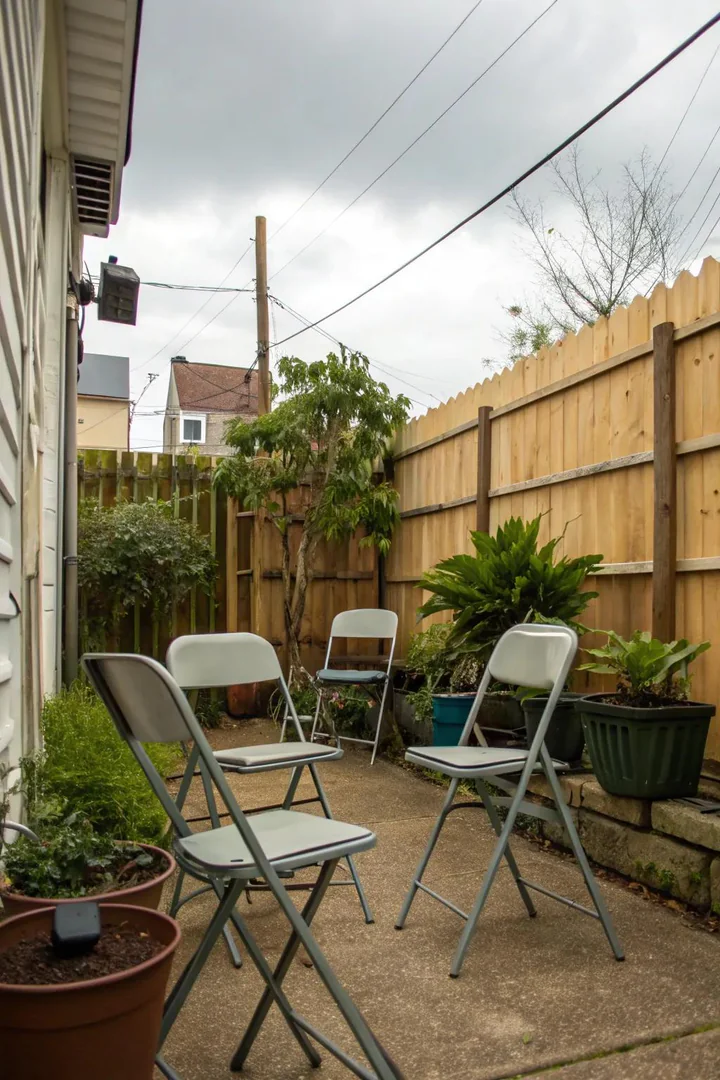
Folding, stackable, and wall-mounted furniture lets you switch between an open yard and a furnished patio in minutes. Fermob Bistro folding chairs ($250-$350 each) fold flat to 3 inches deep and hang on a wall-mounted hook when not in use. COSCO’s 3-piece folding bistro set ($50-$80) stores behind a door or in a shed and sets up in under a minute.
A wall-mounted drop-leaf table ($40-$100 in lumber and hardware for a DIY build) swings up from the fence to create a 24×36-inch dining or drink surface, then folds flat against the fence when you need the full yard. Nesting side tables ($40-$80 for a set of 3 from Outsunny or PatioSense) stack into a single footprint and separate into individual accent tables when guests arrive.
10. Native Plants
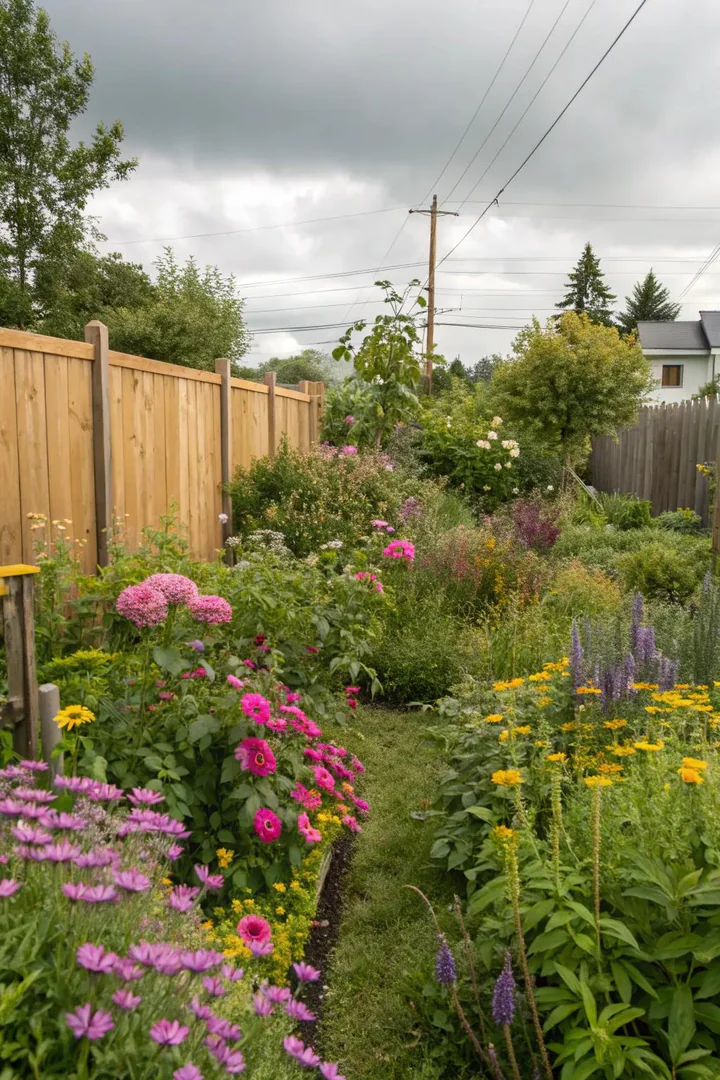
Planting native species cuts water use by 50-70% compared to a traditional lawn and eliminates the need for fertilizer and pesticide applications. Choose native plants from a local nursery or a mail-order supplier like Prairie Nursery or High Country Gardens ($5-$15 per plant) that stocks regionally appropriate wildflowers, grasses, and shrubs. A 4×8-foot native planting bed costs $80-$200 in plants and provides habitat for pollinators, butterflies, and songbirds.
Group plants by water needs (dry, moderate, wet) and place the driest-zone plants furthest from the hose bib. Native bunch grasses (little bluestem, switchgrass, blue grama) need zero supplemental water after the first growing season and provide year-round texture with golden fall color and winter seed heads. Pair natives with a decomposed granite or gravel mulch ($30-$50 per ton) that matches the dry-garden look and prevents weed growth.
11. Build a Small Deck
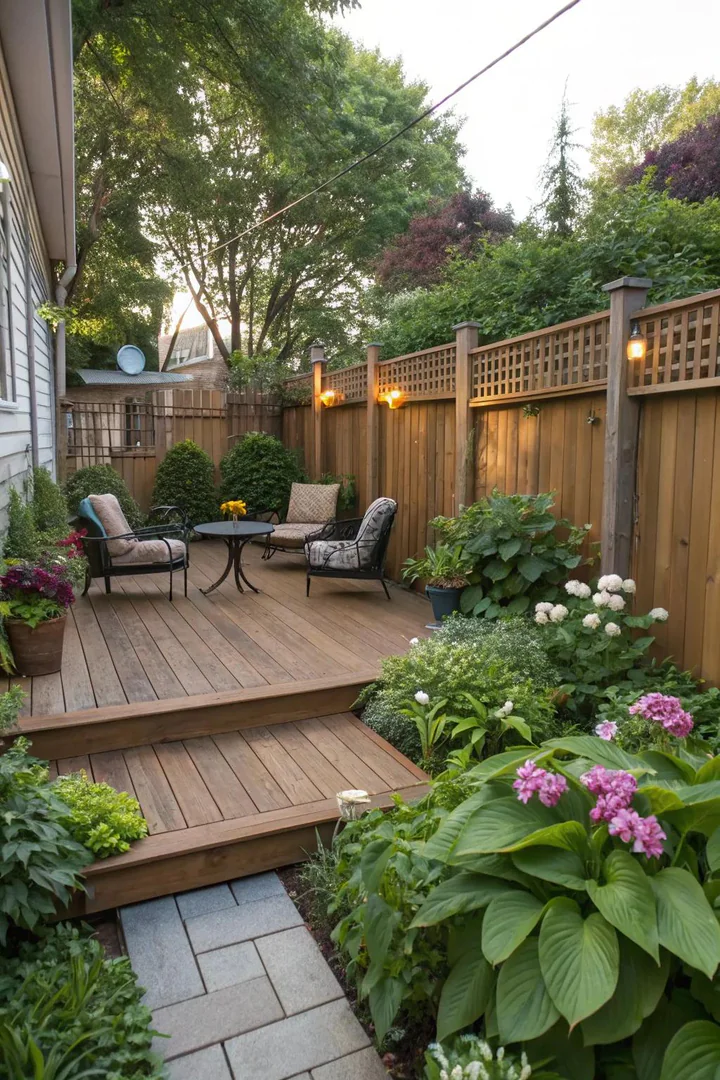
A ground-level floating deck (8×10 or 10×12 feet) covers uneven ground, cracked concrete, or patchy grass with a clean, level surface for furniture. Set concrete deck blocks ($5-$8 each) on compacted gravel every 4 feet and lay pressure-treated 2×6 joists across them. Top with composite or cedar decking boards for a total material cost of $400-$1,200 depending on board choice.
Floating decks under 200 square feet and under 30 inches above grade skip building permits in most jurisdictions. Use hidden fastener clips (Camo or Tiger Claw, $80-$120 per box of 350) for a screw-free surface that stays smooth underfoot. Position the deck against the house wall for a direct indoor-outdoor connection, or place it in the center of the yard as a freestanding island surrounded by gravel or plantings. Adding corner stairs to a raised deck gives easier access from multiple sides of the yard.
12. Hang a Swing
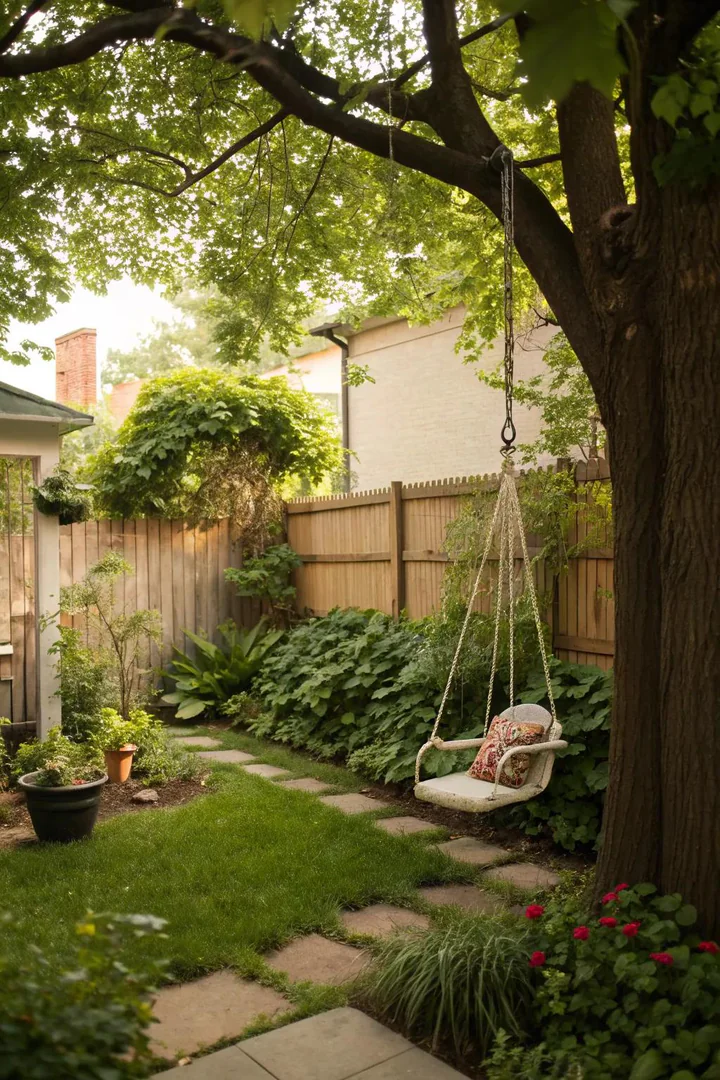
A hanging swing or hammock chair adds seating that floats above the ground, keeping the patio surface open beneath. Mount a porch swing ($150-$400 from Polywood or Trex) from a pergola beam or a freestanding swing frame ($100-$200) using 3/8-inch galvanized eye bolts rated for 500+ pounds. A single hammock chair ($50-$150) hangs from one point and swings in a 3-foot circle, making it ideal for tight corners.
Verify that any mounting beam can support 4x the rated load of the swing plus occupants (a 600-pound capacity swing needs a beam rated for 2,400 pounds to account for swinging force). A freestanding A-frame swing stand ($100-$200 from Vivere or Best Choice Products) requires no drilling or permanent mounting and moves anywhere in the yard. Add a waterproof throw pillow and a light blanket to make the swing a designated reading or napping spot.
13. Retaining Walls
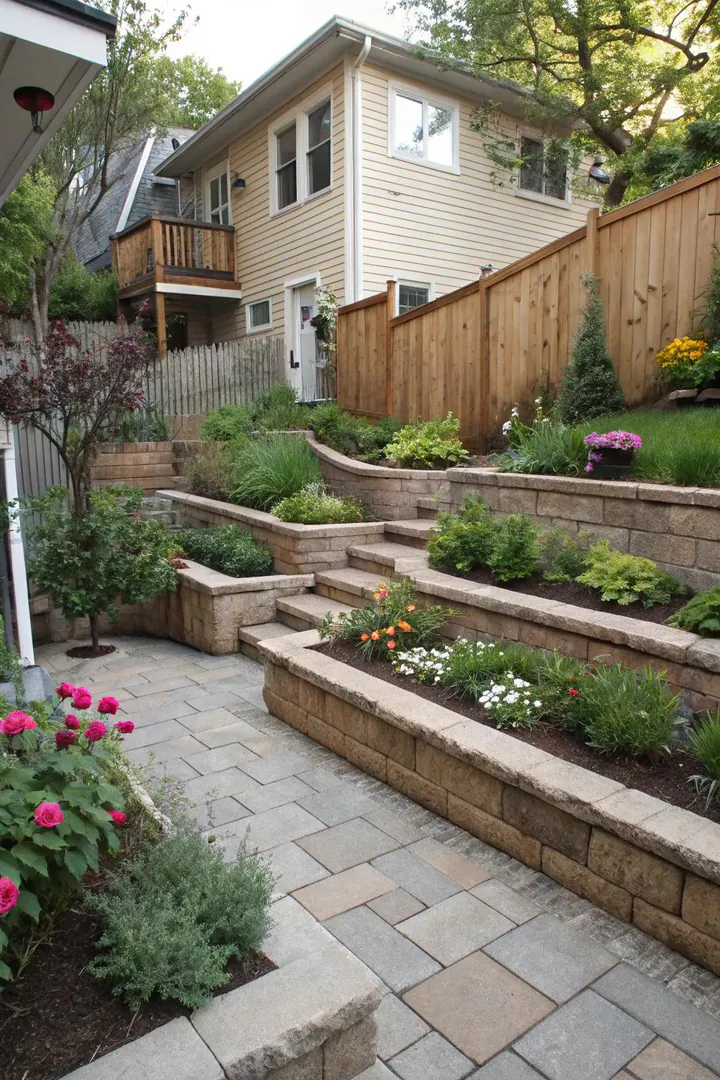
Retaining walls turn a sloped backyard into usable terraced levels for planting, seating, and dining. Interlocking concrete retaining wall blocks from Pavestone and Belgard ($3-$6 per block, covering roughly 0.5 square feet of wall face each) stack without mortar and curve to follow natural grade changes. A 2-foot-tall retaining wall measuring 20 feet long costs $300-$600 in blocks and requires no structural engineering for walls under 4 feet tall.
Build terraces in 18-24 inch height increments with a level planting bed or gravel sitting area behind each wall. Backfill with 3/4-inch crushed stone for drainage and cover with weed barrier fabric before adding topsoil or gravel. A terraced backyard with two or three levels effectively doubles the usable area of a sloped lot by creating flat zones where furniture, planters, and fire pits sit level and stable.
14. Privacy Screens
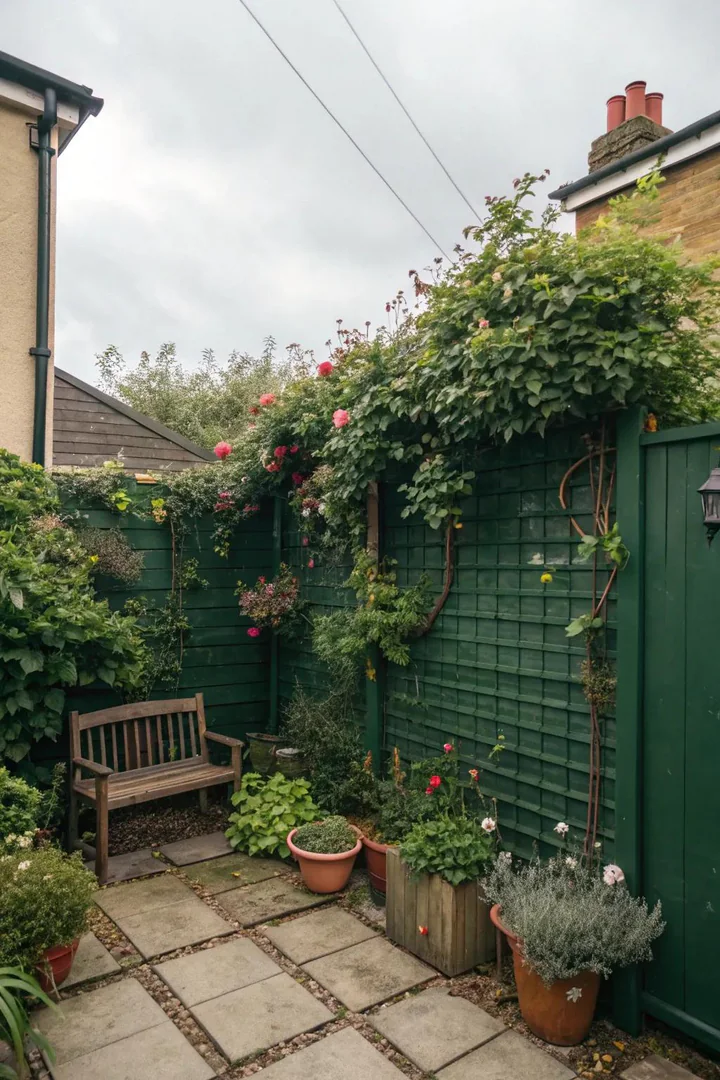
A privacy screen mounted to an existing fence or installed as a freestanding panel blocks sightlines from neighbors without building a full fence. Horizontal cedar slat screens ($8-$15 per linear foot in materials) with 1/2-inch gaps between boards let air pass through while blocking 80-90% of the view. Laser-cut metal panels from Outdeco ($25-$50 per 2×4-foot panel) add a decorative pattern and mount with simple fence brackets.
Living screens using tall grasses (Miscanthus sinensis, $15-$25 per 3-gallon pot) or clumping bamboo (Fargesia rufa, $30-$60 per 5-gallon pot) planted in a narrow bed or row of large containers provide natural screening that reaches 6-10 feet tall in 1-2 growing seasons. A screen on just one side of the yard (the side facing the most visible neighbor) often solves the privacy problem without enclosing the entire space. Build screening with materials that match your approach to a townhouse patio where privacy and space savings go hand in hand.
15. Small Greenhouse
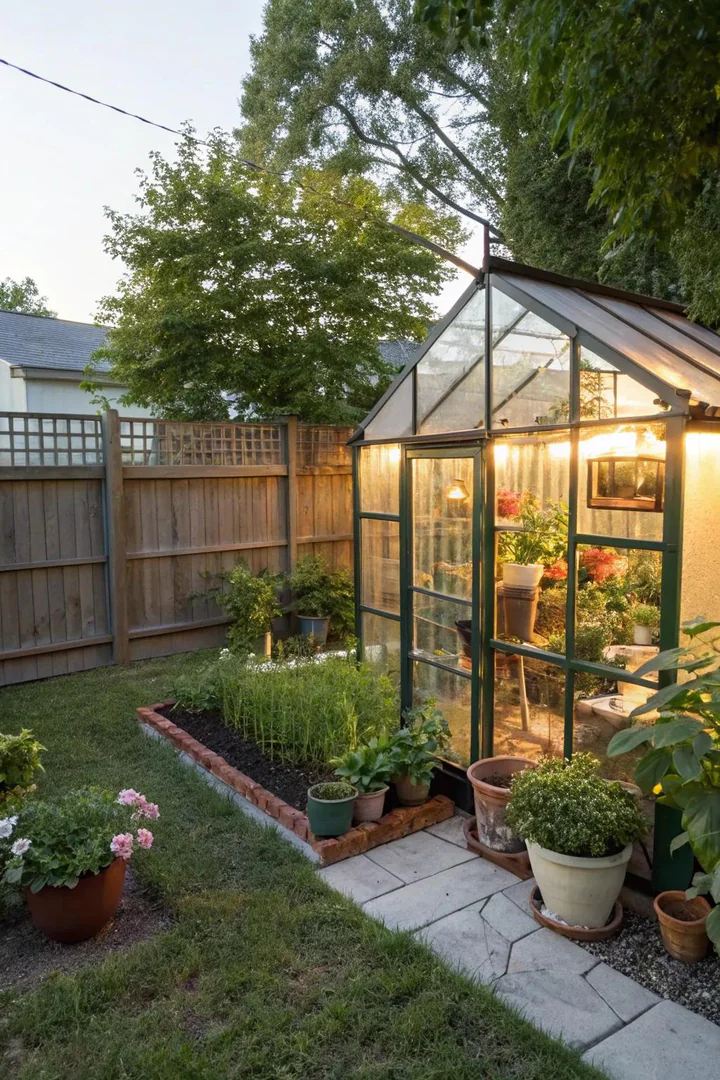
A lean-to greenhouse (4×6 or 4×8 feet) mounted against a south-facing fence or house wall extends the growing season by 2-3 months without occupying much yard space. Palram Canopia’s Lean-To 4×8-foot greenhouse ($400-$700) uses twin-wall polycarbonate panels that insulate to 10 degrees above the outside temperature and withstand hail, snow loads up to 15 psf, and UV exposure.
Budget mini-greenhouses from Outsunny ($50-$100 for a 3-tier walk-in unit) and Gardman ($30-$60 for a 4-shelf model) use PVC or polyethylene covers over a tubular steel frame and work well for seed starting and cold-weather herb growing. Position the greenhouse where it receives at least 6 hours of direct sun per day and keep a maximum-minimum thermometer ($10-$15) inside to monitor temperature swings.
16. Design with Symmetry
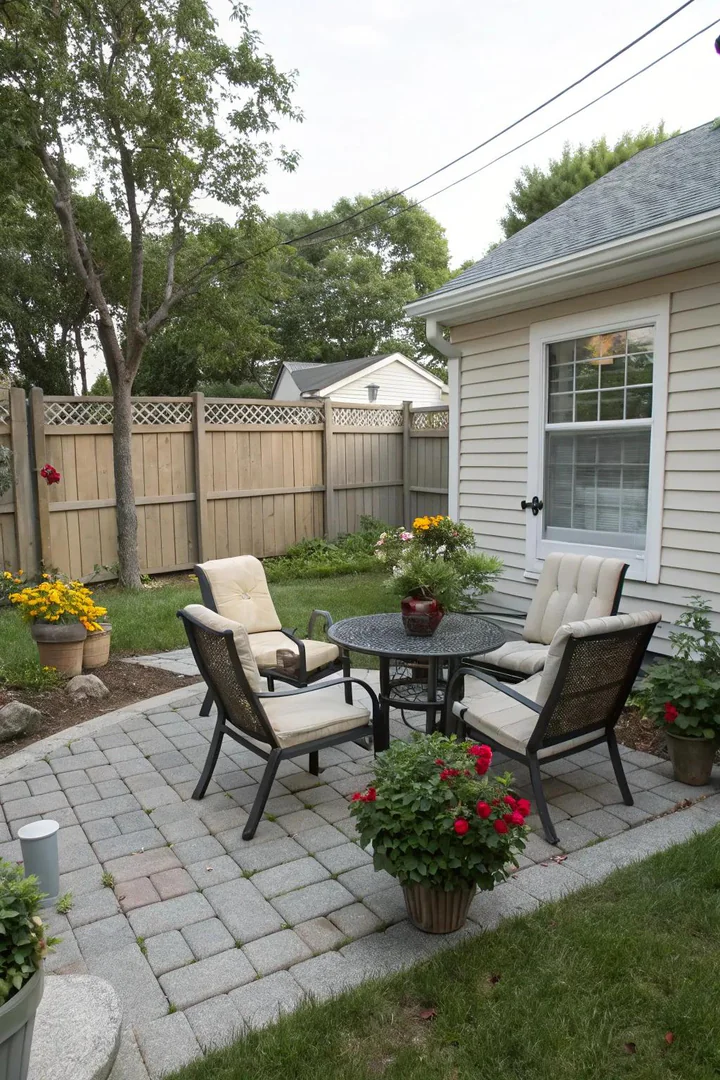
Symmetrical layouts make a small backyard feel organized and larger than it is by creating visual order. Place matching planters on either side of the back door, position identical chairs flanking a central path, and center a focal point (fountain, fire pit, or sculpture) at the far end of the yard on the same axis as the door. A symmetrical layout takes 5-7 elements versus 10-15 for an asymmetrical garden because each piece works harder in a paired arrangement.
Use matching pairs of everything visible from the main viewing angle: two identical planters ($15-$40 each), two matching chairs ($50-$300 per pair), and two path lights flanking the walkway. Run a straight path down the center of the yard using stepping stones or pavers to reinforce the axis of symmetry. Odd-numbered plant groupings (3, 5, 7) along the sides add natural variety without breaking the overall balanced framework.
17. Dining Nook
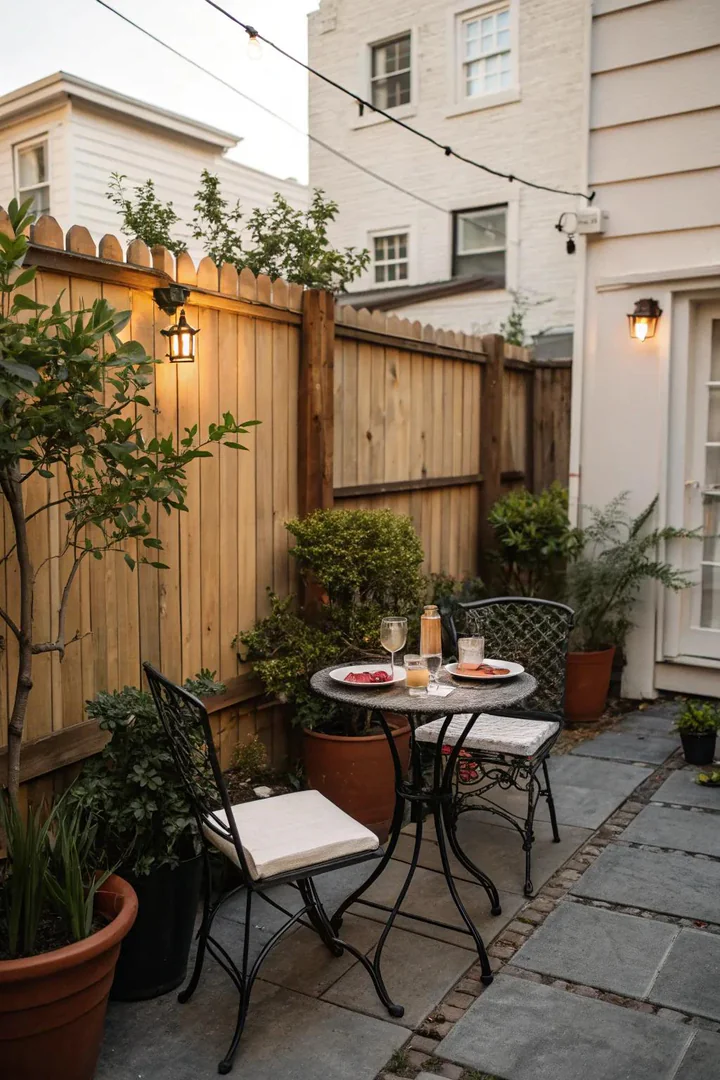
A dedicated dining zone in one corner of the yard seats 4-6 people for outdoor meals without taking over the entire space. A 36-inch round bistro table ($50-$200) seats 2-3 comfortably and leaves more open yard than a rectangular table. For 4-6 guests, an oval or rectangular table (48×30 inches, $100-$400) with bench seating on one side saves the 36 inches that individual chairs need to push back.
Built-in L-shaped bench seating ($200-$500 in lumber) against two fence walls creates a banquette-style dining nook that uses corner space no other furniture can fill. Add a small outdoor chandelier or pendant light ($30-$80, solar or plug-in) hung from a pergola beam or shepherd’s hook directly above the table for task lighting during evening meals. Surround the dining nook with aromatic herbs (rosemary, lavender, mint) in nearby planters for a pleasant scent while eating.
18. Natural Materials
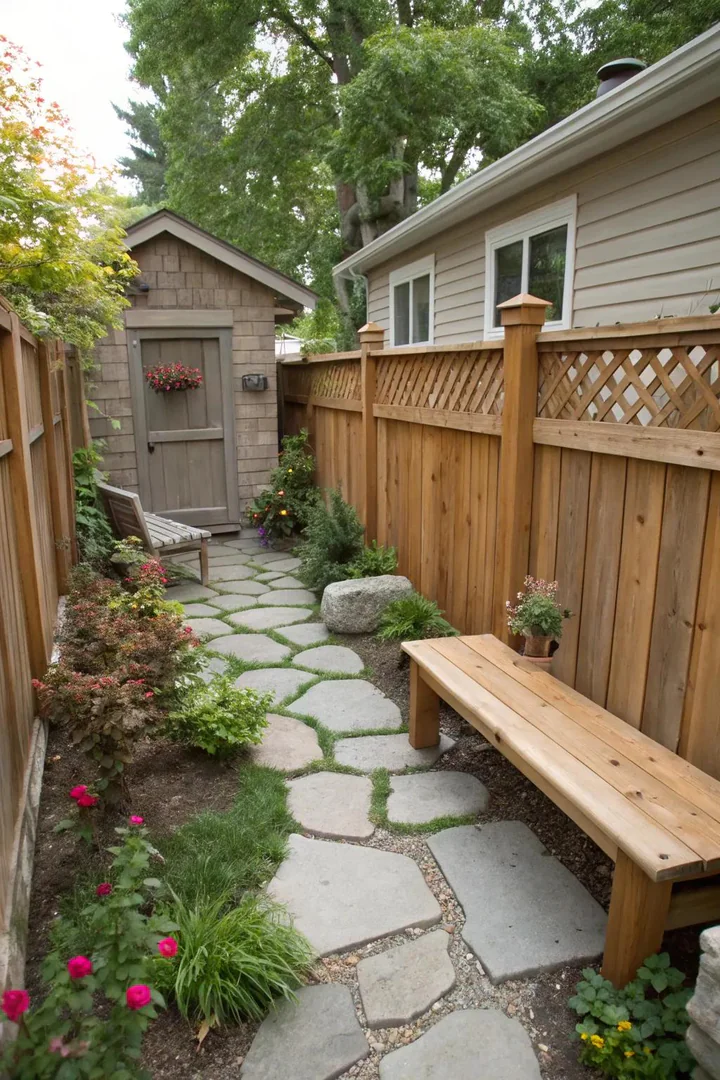
Building with stone, wood, and gravel rather than plastic and resin gives a small backyard a grounded, organic feel that ages gracefully. Flagstone pavers ($3-$7 per square foot) set in decomposed granite create a patio surface that blends with the surrounding garden. A cedar bench ($100-$300) and cedar planter boxes ($30-$60 each) develop a silver-gray patina over 2-3 years that pairs naturally with stone.
Pea gravel ($30-$50 per ton, covering 50-80 square feet at 2-3 inches deep) fills gaps between stepping stones and planting beds while suppressing weeds and allowing rainwater to drain naturally. Natural materials work especially well for water-wise backyards like those in backyard desert ideas where gravel, stone, and drought-tolerant plants replace water-hungry lawns. Avoid pressure-treated lumber in areas where children play or food plants grow, and choose naturally rot-resistant species (cedar, redwood, black locust) instead.
19. Storage Solutions
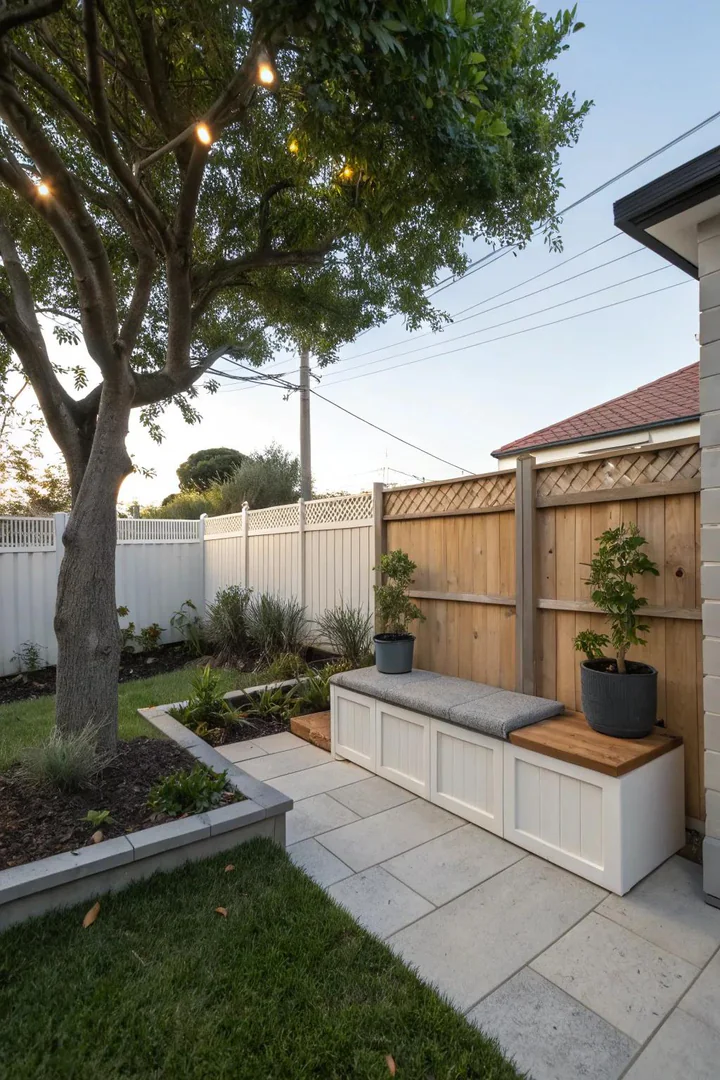
Hidden and multi-purpose storage keeps a small backyard tidy without dedicating visible space to bins and shelves. The Keter Premier 150-gallon deck box ($120-$160) holds cushions, garden tools, and pool supplies while serving as a flat bench surface on top. Suncast’s 99-gallon deck box ($80-$110) fits against a fence and measures just 24 inches deep, leaving the walkway clear.
Wall-mounted tool organizers ($15-$30 from Berry Ave or Anybest) hold rakes, shovels, and brooms vertically on the fence or garage wall using spring-loaded clips. A narrow vertical storage cabinet (22 inches wide, 63 inches tall, $70-$120 from Rubbermaid or Suncast) fits between a fence and a wall in a dead zone that no furniture can occupy. Declutter the yard surface completely by storing every item that isn’t currently in use, and your backyard will feel 30-40% larger with the same square footage.
Small Backyard Size and Project Guide
| Yard Size | Best Projects | Seating Capacity | Budget Range |
|---|---|---|---|
| Under 200 sq ft | Bistro set, vertical garden, string lights, wall planter | 2-3 | $100-$500 |
| 200-400 sq ft | Add floating deck, fire pit, privacy screen | 4-6 | $500-$2,000 |
| 400-600 sq ft | Add pergola, dining nook, native garden bed | 6-8 | $1,000-$4,000 |
| 600-800 sq ft | Add retaining walls, greenhouse, swing, deck stairs | 8-10 | $2,000-$6,000 |
How to Plan a Small Backyard Layout
1. Measure and Map the Space
Measure the length and width of your yard, then mark fixed obstacles (HVAC units, utility boxes, tree trunks, downspouts) on a simple grid drawing at 1-square-per-foot scale. Note which direction gets the most sun and which side faces the neighbors whose sightline you want to block. A measured layout prevents buying furniture that doesn’t fit and helps you see how much space each zone needs before committing.
2. Prioritize Your Top Two Uses
Pick the two activities you will do most often (dining and lounging, gardening and entertaining, or cooking and relaxing) and design the layout around those two zones first. A small backyard cannot accommodate every function well, so dedicating space to your top priorities and skipping the rest produces a better result than cramming everything in at reduced size. Add secondary features only if space remains after the primary zones are laid out.
3. Choose Furniture Before Hardscape
Select your furniture set and tape its footprint on the yard surface (or use cardboard cutouts at full scale) before pouring a patio or building a deck. Walking around the taped layout reveals clearance issues, sightline problems, and traffic flow conflicts that a plan on paper misses. Leave at least 30 inches between furniture edges for comfortable movement.
4. Go Vertical Wherever Possible
Wall-mounted planters, vertical gardens, hanging lights, fence-mounted shelves, and tall privacy screens add function and greenery without consuming any ground-level square footage. A 4×6-foot vertical garden holds as many plants as a 4×12-foot traditional bed while using zero floor space. Mount accessories at 5-6 foot height to keep the area below clear for walking and sitting.
5. Edit Ruthlessly
Remove anything from the yard that you haven’t used in the last 30 days. Every unused item (broken planter, spare hose reel, empty pot, leaning garden tool) takes up visual and physical space that makes the backyard feel smaller and messier. Store tools and seasonal items in a deck box or wall-mounted rack, and keep the visible yard surface limited to furniture, plants, and the features you actually use.
Frequently Asked Questions
What is the best ground cover for a small backyard?
Decomposed granite ($30-$50 per ton, covering 50-80 square feet) and pea gravel ($35-$55 per ton) provide low-maintenance ground cover that drains well and doesn’t need mowing. Artificial turf ($5-$12 per square foot installed) gives a green lawn look without watering, mowing, or fertilizing. Creeping thyme and dwarf mondo grass work as living ground covers that stay under 3 inches tall and tolerate light foot traffic.
How much does it cost to redesign a small backyard?
A basic small backyard makeover (new gravel or mulch, 5-10 plants, string lights, and a bistro set) costs $300-$800. A mid-range upgrade (floating deck, fire pit, pergola, and planting beds) runs $2,000-$5,000. A full outdoor room build (retaining walls, outdoor kitchen, lighting system, and a complete planting plan) costs $5,000-$15,000 depending on material choices.
Can you put a fire pit in a small backyard?
Yes, as long as you maintain the minimum clearance distance from structures (typically 10-15 feet depending on local code). Tabletop propane fire pits ($60-$160) and compact gas fire bowls ($100-$300) fit patios as small as 8×10 feet. Check your municipality’s fire code and HOA rules before purchasing because some jurisdictions ban open flames in yards under a certain size but allow enclosed gas units.
How do you make a small backyard feel bigger?
Light-colored surfaces, mirrors, diagonal pathway lines, and layered lighting at multiple heights all create the perception of more space. Remove visual clutter by limiting furniture to the minimum you actually use and storing everything else. A clear, open center with activity zones pushed to the edges makes the yard feel largest because the uninterrupted ground plane reads as spacious.
What plants grow best in a small backyard?
Columnar trees (Sky Pencil holly, Slender Silhouette sweetgum, $30-$60 each) grow 15-20 feet tall but only 3-4 feet wide, providing height without shade coverage that blocks the entire yard. Dwarf shrubs (Dwarf Burning Bush, Little Princess spirea, $15-$30 each) stay under 3 feet tall and wide. Vertical growers like clematis, star jasmine, and climbing hydrangea ($15-$30 each) cover fences and walls without spreading into the yard.