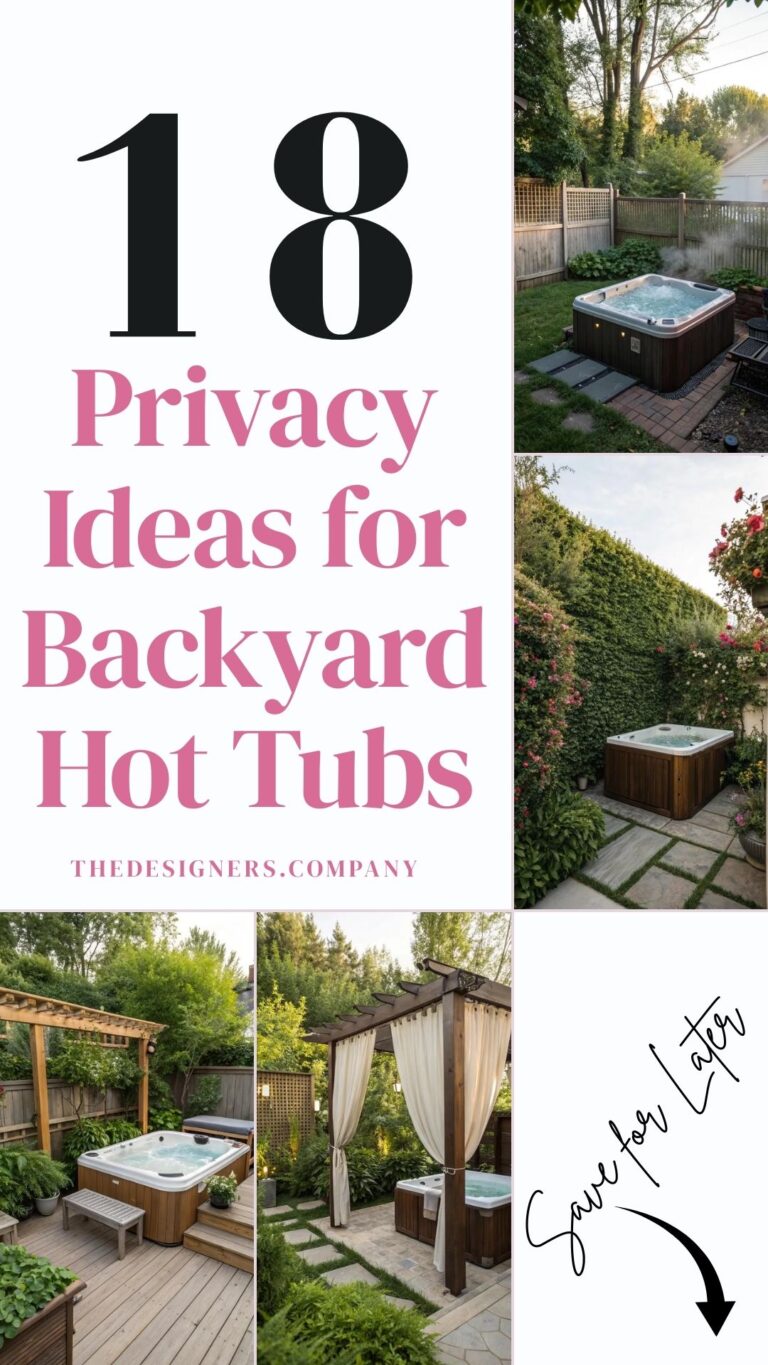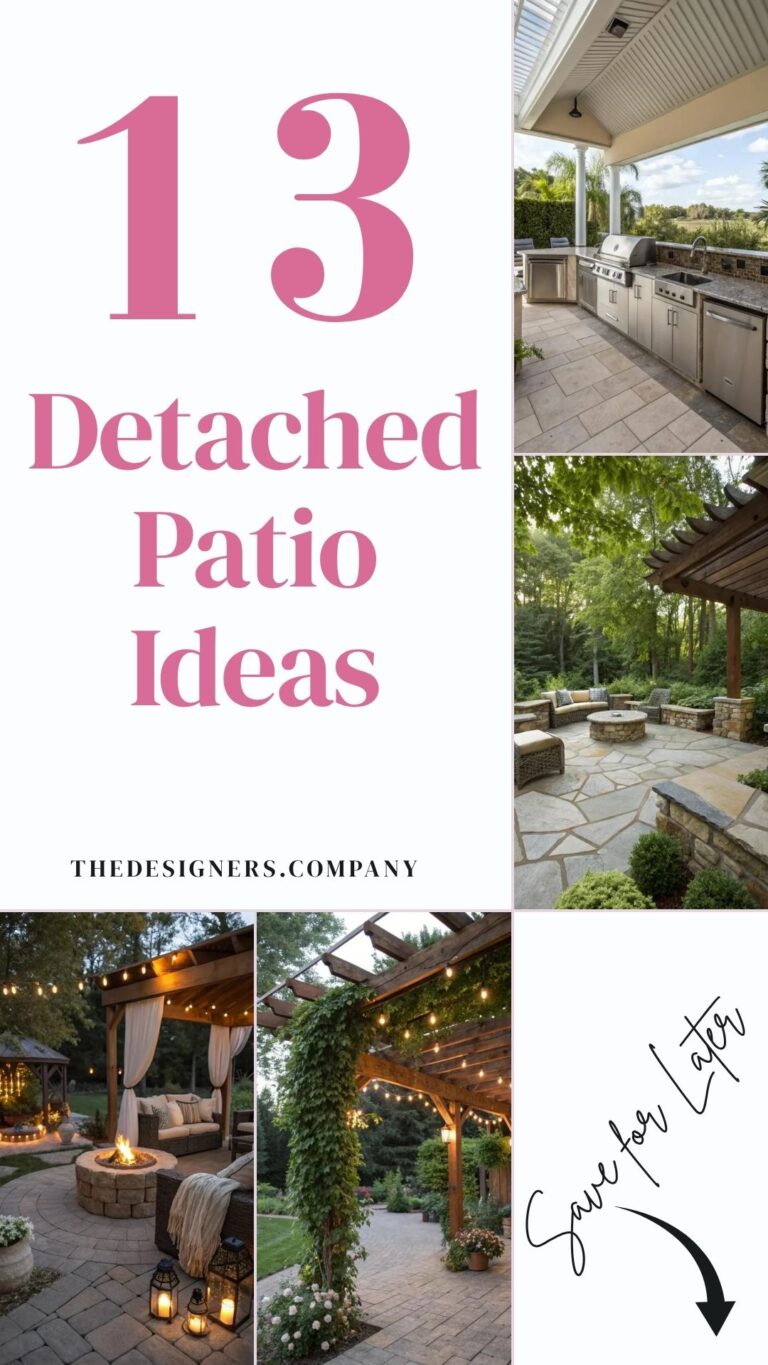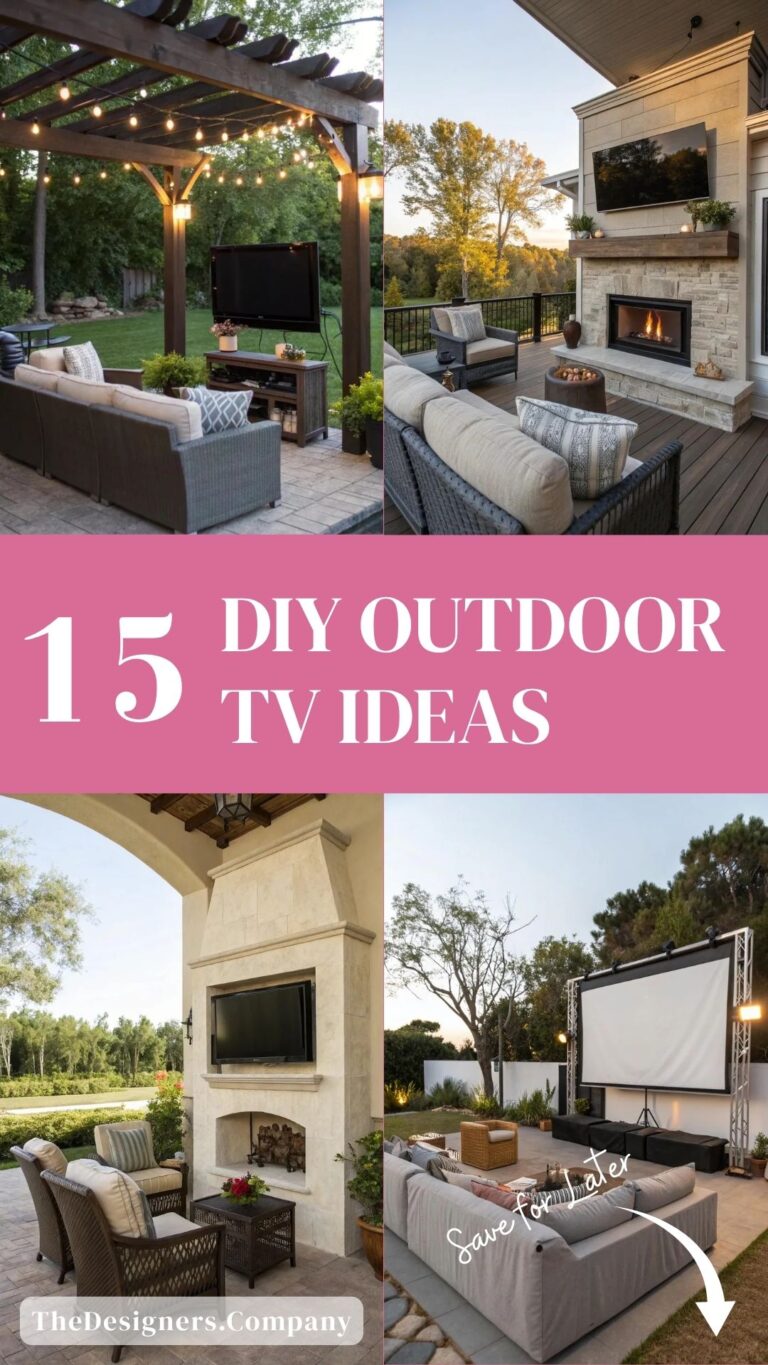
Hot Tub Landscaping Ideas: 20 Stunning Designs to Transform Your Yard

Hot tub surroundings need plants, hardscape, and screening that handle constant moisture, chlorine or bromine splash, and steam while looking good year-round. A well-planned planting and paving layout around a hot tub costs $1,500-$8,000 depending on the size of the surrounding area, choice of materials, and whether you hire a contractor or do the work yourself.
The 20 ideas below cover stone pathways, privacy hedges, pergola shade, deck extensions, low-maintenance ground covers, ambient lighting, water features, fire pits, vertical gardens, bamboo screens, outdoor seating, sunken installations, natural fencing, and colorful plantings around a hot tub. Visit The Designers Company for hundreds of additional outdoor living and patio project guides.
1. Natural Stone Pathway
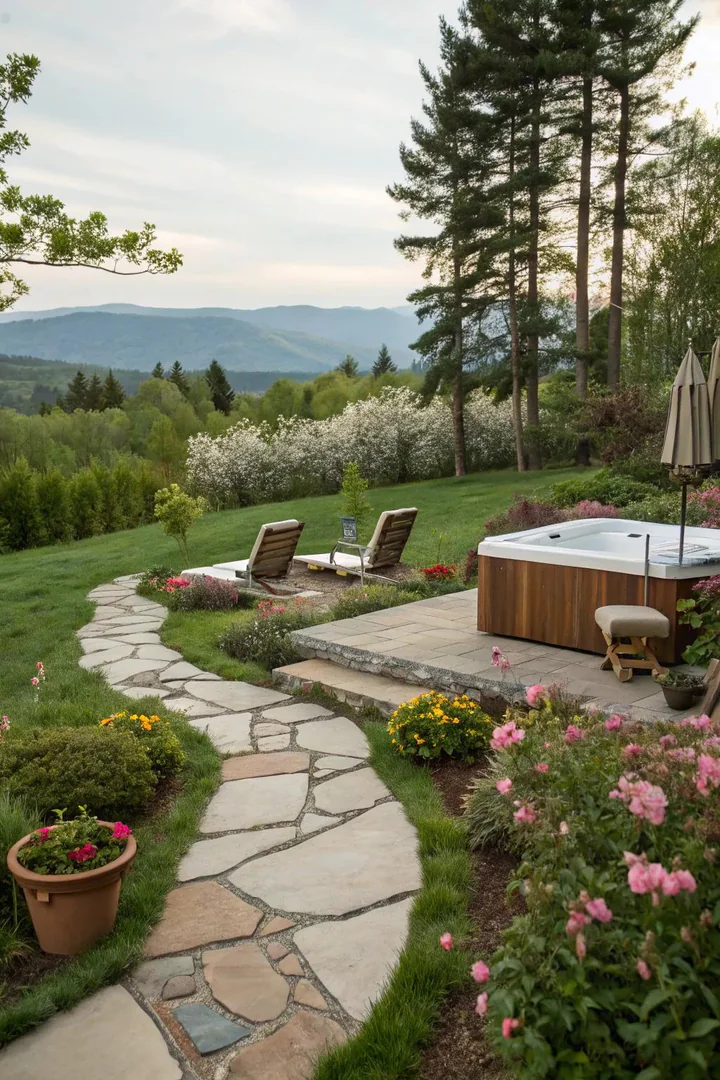
A flagstone or natural stone pathway from the house to the hot tub provides a non-slip, barefoot-friendly walking surface that drains quickly after rain. Irregular flagstone ($3-$8 per square foot) set in a 2-inch sand bed over compacted gravel creates a dry-laid path that shifts slightly with freeze-thaw cycles without cracking. Pennsylvania bluestone, Tennessee fieldstone, and Arizona sandstone are common regional choices with naturally textured surfaces that grip wet feet.
Space flagstones 1-2 inches apart and fill joints with polymeric sand ($20-$30 per 40-pound bag from Techniseal or Alliance) that hardens when wet to prevent weed growth between stones. Edge the pathway with low-growing ground covers (creeping thyme, Irish moss, or blue star creeper, $4-$8 per pot) that soften the stone edges and release fragrance when stepped on. Run a pathway at least 36 inches wide for comfortable single-file walking in bare feet or flip-flops.
2. Evergreen Privacy Hedge
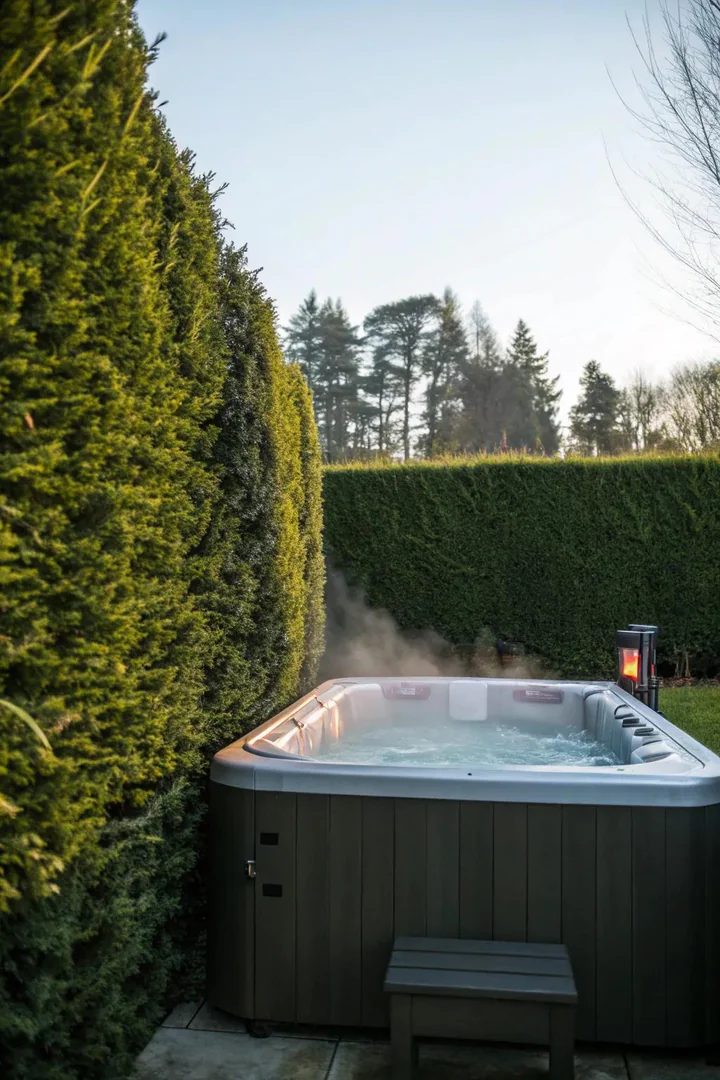
An evergreen hedge planted on 2-3 sides of the hot tub blocks sightlines from neighbors and passing traffic while maintaining green coverage through winter. Emerald Green arborvitae ($20-$40 per 5-gallon pot) grows 3-4 feet wide and reaches 12-15 feet tall when planted 3-4 feet apart. Nellie Stevens holly ($25-$50) offers a broader, denser screen that tolerates heavy pruning and grows in zones 6-9.
Plant the hedge row at least 5 feet from the hot tub edge so splash water and steam don’t directly contact the foliage, since chlorine and bromine damage leaves on most broadleaf and needle evergreens. Install a drip irrigation line ($0.10-$0.30 per linear foot of poly tubing) along the hedge row during planting to automate watering during the 1-2 year establishment period when newly planted hedges need 1 inch of water per week.
3. Pergola for Shade
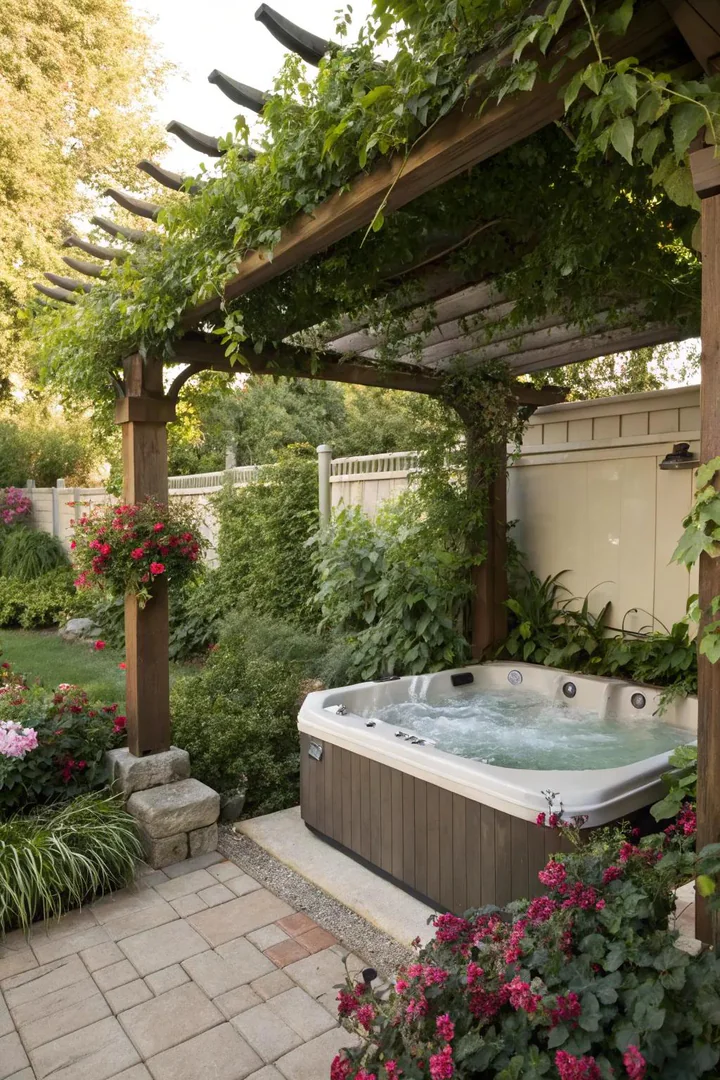
A pergola built directly over or beside the hot tub provides shade from midday sun and creates a defined overhead plane that makes the hot tub area feel like an enclosed room. A cedar or pressure-treated pine pergola kit ($1,200-$3,000 for a 10×12-foot unit from Yardistry or Backyard Discovery) covers the hot tub and a small seating area beside it. Space rafters 6-8 inches apart for 70-80% shade, or add a retractable canopy ($100-$300) across the top for full sun blocking on the hottest days.
Anchor pergola posts on concrete footings ($5-$8 per 80-pound bag of Quikrete, 2-3 bags per post hole) set 42-48 inches deep, or bolt posts to an existing concrete pad or deck framing using post base brackets ($10-$20 each from Simpson Strong-Tie). Hang outdoor curtain panels on 2-3 sides for additional privacy and wind screening. A pergola over the hot tub also provides attachment points for string lights, a ceiling fan, and Bluetooth speakers that bring evening ambiance to the soaking area.
4. Deck Extension
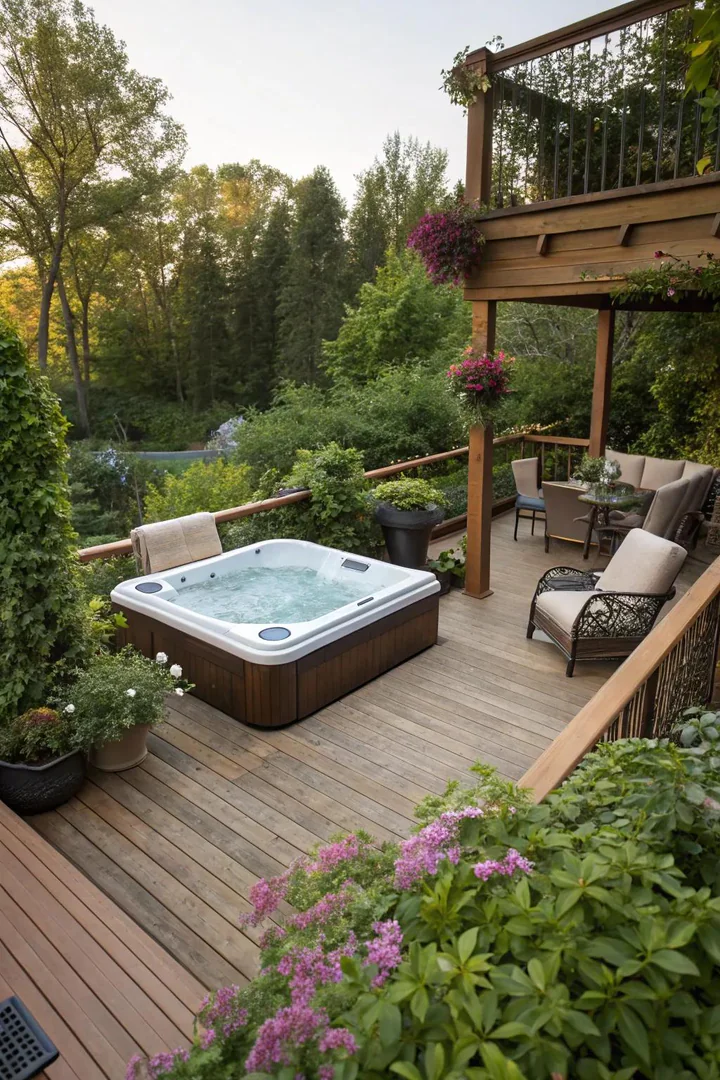
Extending an existing deck to surround the hot tub creates a flush, step-free transition from the house to the soaking area. Most hot tubs weigh 3,000-6,000 pounds when filled with water and occupants, so the deck framing under the tub requires doubled or tripled joists (2×10 or 2×12 at 8-12 inch centers) supported by additional posts and footings. Consult a structural engineer ($300-$800) or refer to the hot tub manufacturer’s structural requirements before building.
Composite decking (Trex, TimberTech, or Fiberon, $4-$7 per linear foot) resists the constant moisture around a hot tub better than wood, which warps and splinters in perpetually damp conditions. Leave a 2-inch access gap around the hot tub perimeter so the skirting panels can be removed for pump and plumbing service. Build a matching step or platform on one side for easy entry and exit, similar to the deck connection approaches shown in backyard pavilion ideas where the deck and structure meet at the same level.
5. Low-Maintenance Ground Cover
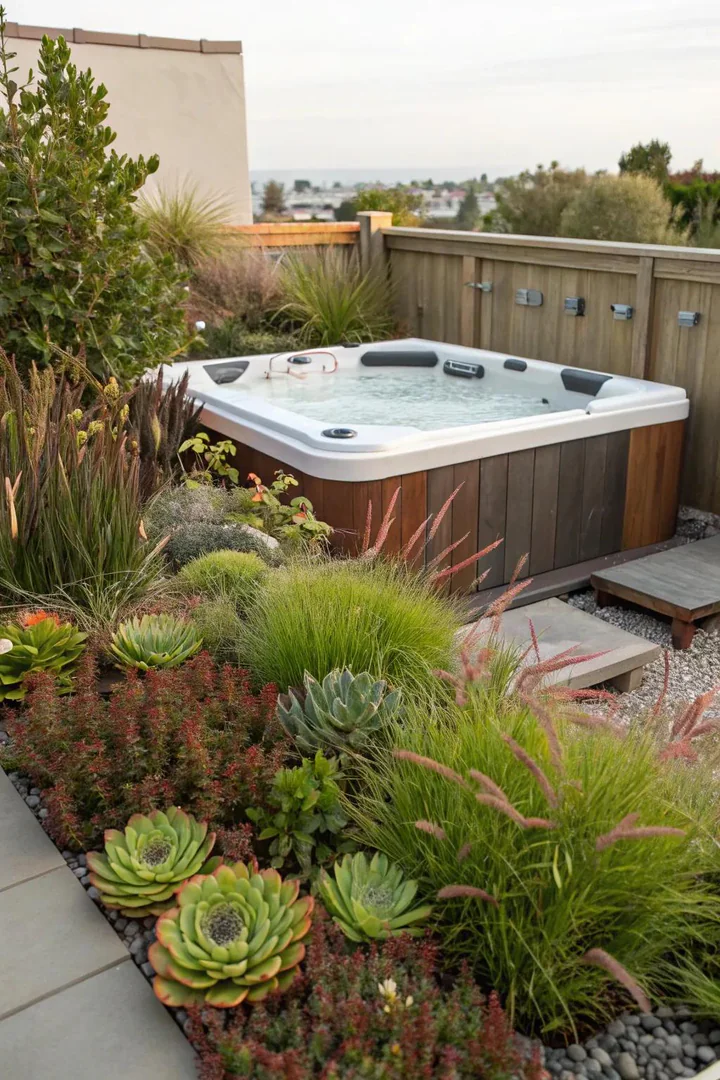
Ground cover plants spread to fill bare soil around the hot tub base, reducing mud, preventing erosion, and adding green texture without the mowing and watering demands of a lawn. Creeping thyme (Thymus serpyllum, $4-$8 per pot) handles foot traffic, releases fragrance when stepped on, and stays under 3 inches tall. Dwarf mondo grass (Ophiopogon japonicus ‘Nanus’, $5-$10 per pot) grows in shade or sun and tolerates occasional splash water.
Plant ground cover plugs 6-8 inches apart in amended soil and mulch between plants with 1-2 inches of fine gravel or decomposed granite until the plants fill in (typically 1-2 growing seasons). Avoid planting ground covers that attract bees (white clover, dandelion) directly around the hot tub where barefoot traffic is constant. A gravel or decomposed granite border ($25-$45 per ton) between the hot tub pad and the planted area prevents ground cover from creeping onto the hard surface.
6. Ambient Lighting
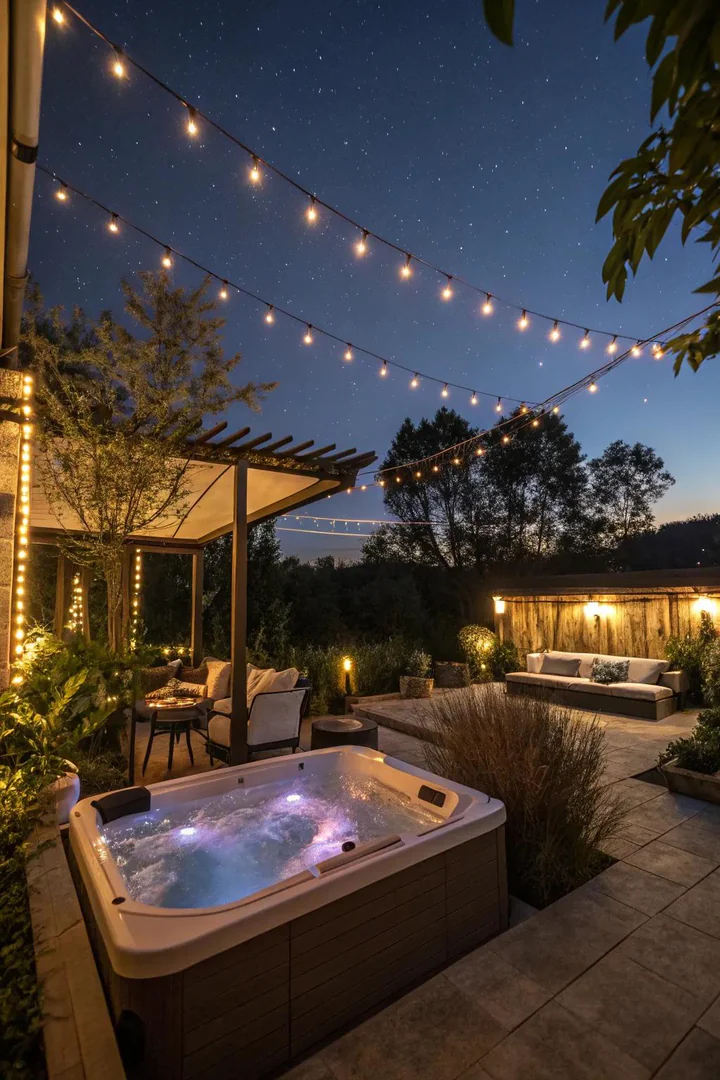
Warm outdoor lighting around the hot tub extends evening use and creates a spa-like atmosphere after dark. Solar path lights ($15-$30 for a 10-pack) lining the walkway from the house to the tub guide barefoot navigation in the dark. LED uplights ($15-$30 each from Kichler or WAC) aimed at nearby trees, boulders, or the privacy hedge cast dramatic shadows that frame the soaking area.
String lights draped overhead between posts, trees, or a pergola ($20-$50 for a 48-foot commercial-grade strand) provide general ambient glow. Choose warm white LEDs (2700K) that match the warm water vapor glow rising from the tub rather than cool white (4000K+) that clashes with the evening mood. Put all lighting on a photocell sensor or smart plug so lights activate automatically at dusk without fumbling for switches while wet.
7. Natural Stone Surround
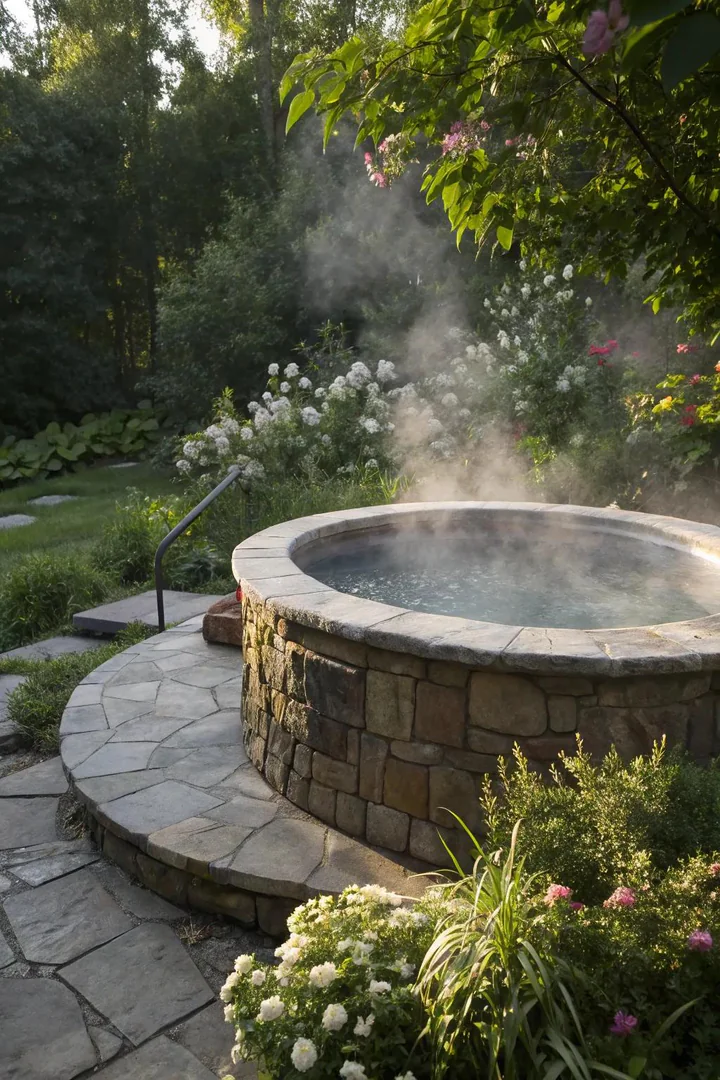
A stone surround (stacked stone veneer on a concrete block knee wall, $15-$25 per square foot installed) wraps the hot tub in a permanent stone enclosure that hides the tub’s factory skirting and gives the installation a built-in, custom look. Natural stone veneer from Eldorado, Coronado, or Cultured Stone ($8-$15 per square foot for the material alone) applies to a concrete block or plywood substrate with mortar or adhesive.
Build the stone surround with a removable access panel on the pump/heater side so the mechanical equipment stays reachable for service. Top the knee wall with a 12-18 inch wide flagstone cap ($10-$20 per linear foot) that serves as a shelf for drinks, towels, and candles while soaking. A stone surround adds 500-1,000 pounds of weight around the tub, so pour a 4-inch reinforced concrete pad ($6-$10 per square foot) underneath the entire installation area.
8. Zen Garden Setting
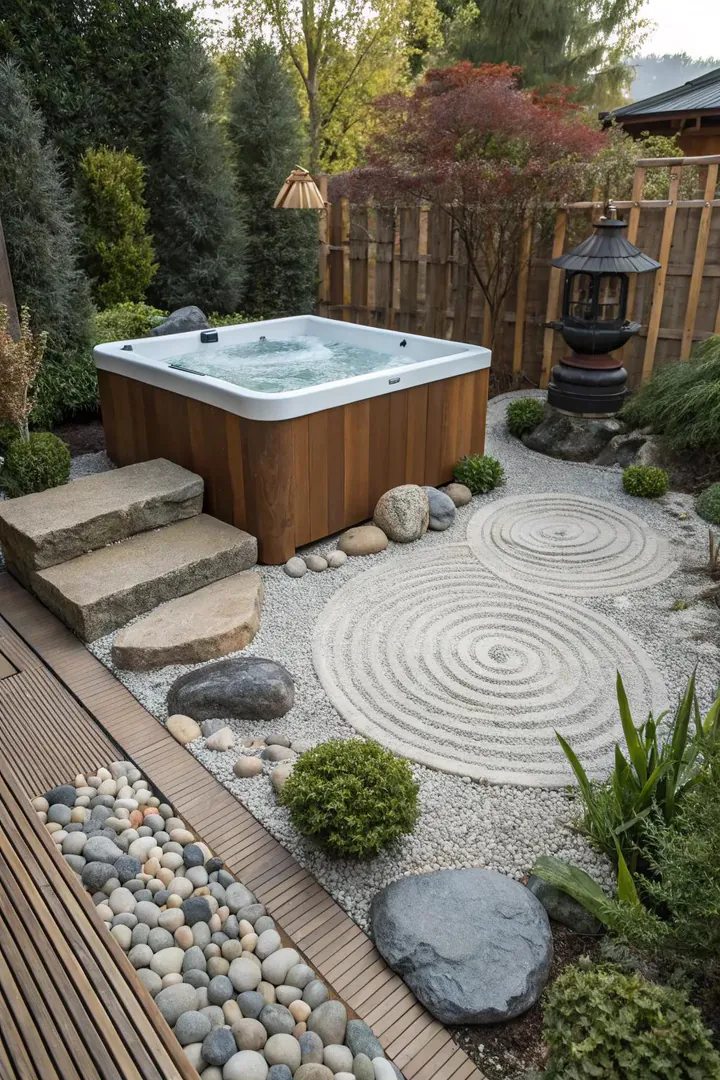
A zen garden around the hot tub uses raked gravel, carefully placed boulders, and a few specimen plants to create a calm, meditative setting for evening soaking. Spread fine white or cream gravel ($40-$60 per ton) in a 4-6 foot zone around the tub and place 3-5 dark basalt or granite boulders ($50-$200 each) at asymmetric positions. A Japanese maple ($40-$100 for a 5-gallon specimen) planted beside the tub provides overhead canopy and brilliant fall color.
Add a bamboo deer-chaser fountain (shishi-odoshi, $30-$80) that fills and tips rhythmically for a quiet water sound that pairs with the hot tub’s bubbling. Keep the planting palette limited to 2-3 species (Japanese maple, black pine, and a low-growing azalea or fern) for the restrained composition that defines Japanese garden design. Rake the gravel in concentric circles around each boulder to complete the dry-garden effect.
9. Secondary Water Feature
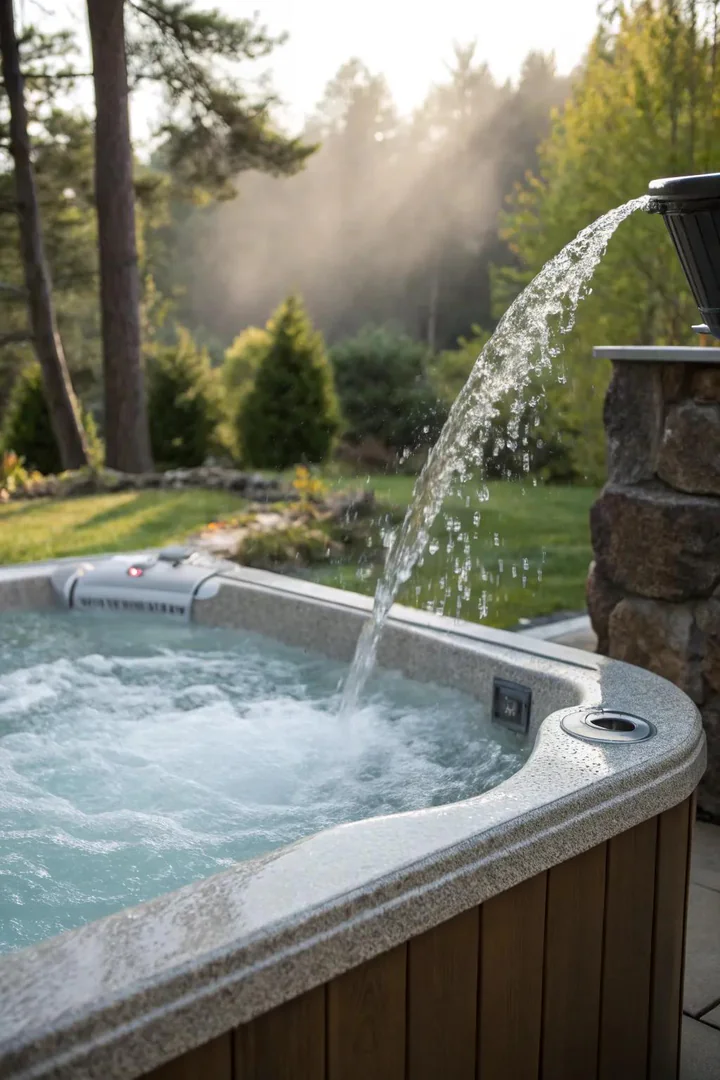
A stand-alone waterfall, fountain, or bubbling rock positioned 3-5 feet from the hot tub adds the sound of moving water that masks pump noise and neighborhood sounds during soaking. A stacked stone waterfall kit ($200-$600 from Aquascape or EasyPro) recirculates 200-500 gallons per hour through a buried reservoir using a small submersible pump ($30-$60). The waterfall runs independently from the hot tub plumbing on its own dedicated circuit.
Position the water feature where soakers can see and hear it from inside the tub, typically off to one side at the 2 o’clock or 10 o’clock position relative to the main seating. Run the water feature on a timer so it operates during evening use hours and shuts off overnight to conserve pump life. A bubbling boulder ($100-$300 for a drilled basalt column) offers a simpler alternative that requires only a buried 5-gallon reservoir, a pump, and 20 minutes of installation.
10. Fire Pit Pairing
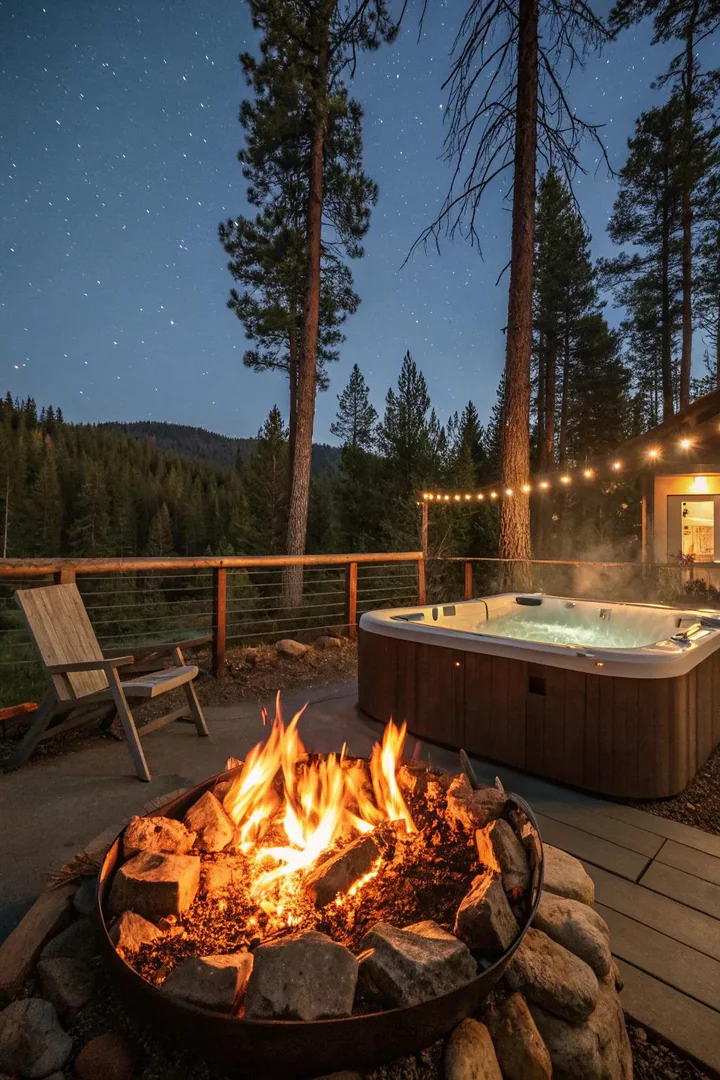
A fire pit positioned 8-12 feet from the hot tub creates a hot-and-cold contrast zone where soakers can move between warm water and fireside seating throughout the evening. A propane fire table ($150-$400 from Outland Living or Endless Summer) produces 40,000-60,000 BTU of smoke-free heat and runs from a standard 20-pound propane tank hidden inside the table base. Place the fire pit on a non-combustible surface (concrete, stone, or gravel) and keep at least 10 feet of clearance from structures, fences, and overhanging branches.
Arrange 4-6 Adirondack chairs or Polywood seating ($100-$300 per chair) in a half-circle around the fire pit facing the hot tub so guests can socialize across both zones. A fire pit near the hot tub also serves as a warming station on cool nights, letting soakers dry off and warm up before heading inside. See outdoor plant stand ideas for ways to stage potted plants around both the fire pit and hot tub areas using stands that keep greenery at eye level while seated.
11. Vertical Garden Wall
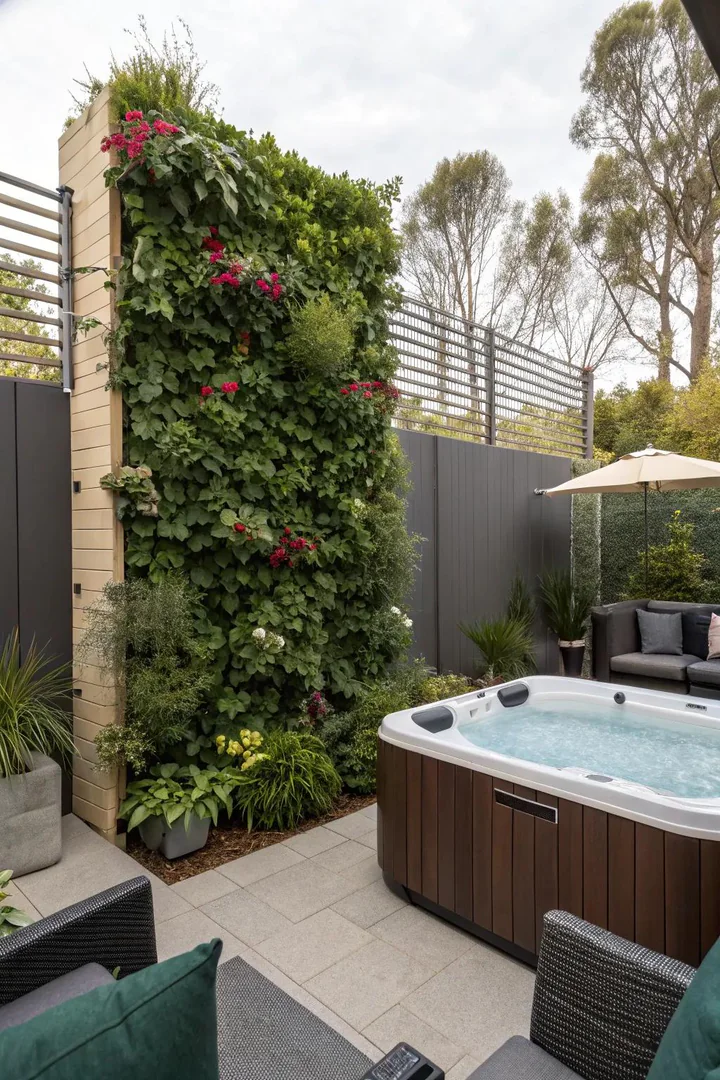
A vertical garden system mounted to the fence or wall behind the hot tub adds a living green backdrop without using any ground-level space around the tub. Pocket planters from Florafelt ($50-$100 for a 12-pocket panel) or Woolly Pocket ($30-$60 per module) mount directly to a fence or wall with screws and hold shade-tolerant plants like ferns, pothos, and creeping fig that thrive in the humid air around a hot tub.
Water vertical planters from the top pocket and let gravity feed moisture down through the lower pockets, or connect a drip line ($0.10-$0.30 per linear foot) across the top row on a battery-powered timer ($15-$25). Choose plants that tolerate humidity and occasional steam exposure: Boston fern, maidenhair fern, and string of pearls all perform well in the warm, moist microclimate near a hot tub. A 4×6-foot living wall using 24-36 plants costs $100-$300 in total materials.
12. Bamboo Screen
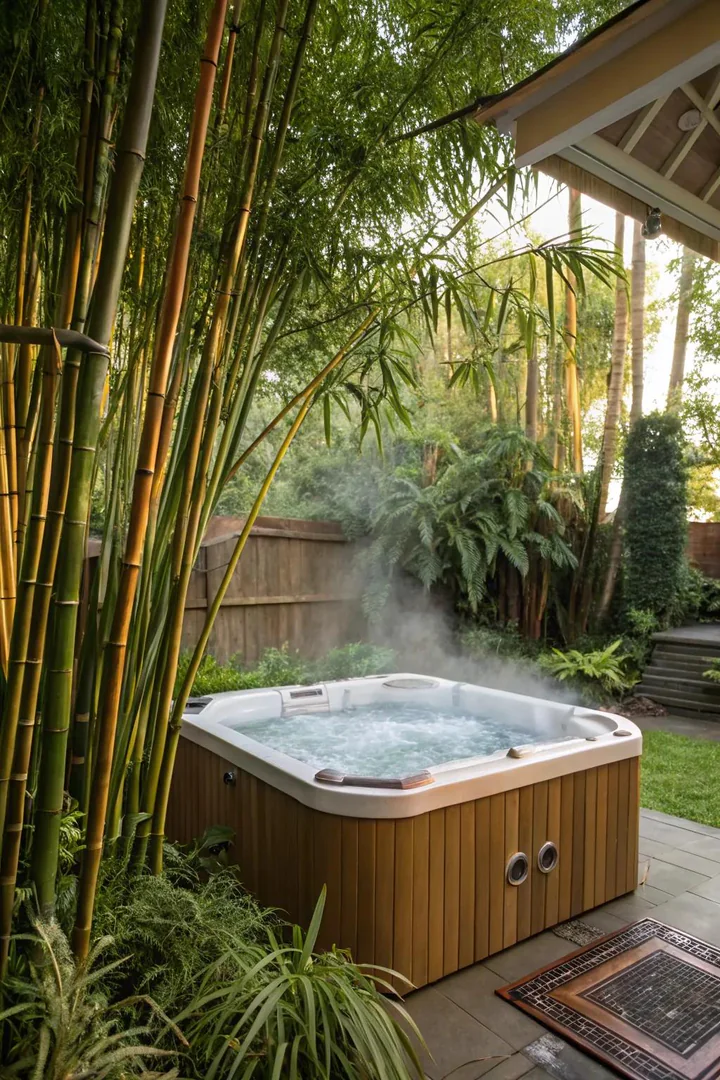
A bamboo screen provides instant tropical-style privacy around a hot tub using either living bamboo in containers or pre-made bamboo fencing panels. Clumping bamboo species (Bambusa multiplex, $30-$60 per 5-gallon pot) grow 8-15 feet tall and stay in a tight clump rather than spreading by runners. Plant in 24-inch or larger pots ($20-$40 each) lined up along the exposed side of the hot tub for a movable green screen.
Rolled bamboo fencing ($20-$40 for a 6×16-foot roll from Cali Bamboo or Forever Bamboo) attaches to existing fence posts or a simple 2×4 frame with zip ties or staples for a 15-minute installation. Black bamboo fencing creates a darker, more dramatic backdrop, while natural tan bamboo keeps a lighter, airier feel. Position bamboo screens 3-4 feet from the tub so steam doesn’t directly saturate the canes, which can promote mold on natural (untreated) bamboo.
13. Rustic Wood Deck Surround
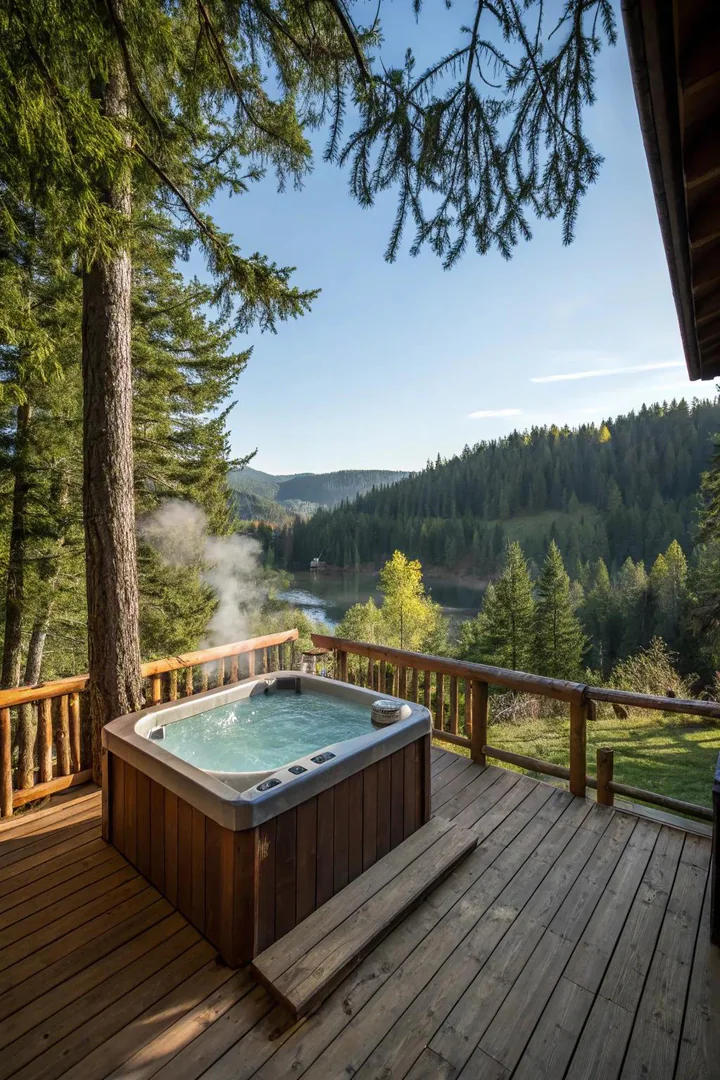
A rustic wood deck built from rough-sawn cedar, redwood, or reclaimed barn boards ($3-$8 per board foot) wraps the hot tub in a natural wood platform that complements wooded lots, cabin-style homes, and country properties. Leave the wood surface rough rather than sanded smooth for a weathered look and better barefoot grip when wet. Apply a single coat of penetrating oil stain (Cabot Australian Timber Oil or Ready Seal, $35-$50 per gallon) to protect the wood from UV graying while preserving the natural grain texture.
Build the deck frame from pressure-treated lumber (2×8 or 2×10 joists at 12-16 inch centers) and cover with the rustic decking boards for a combination of structural reliability and surface character. Add a matching wood step or bench along one side of the tub for entry and exit. A rustic deck surround ages with a silver-gray patina over 3-5 years that many homeowners prefer over the original stained color, especially in mountain and lakefront settings.
14. Outdoor Seating Area
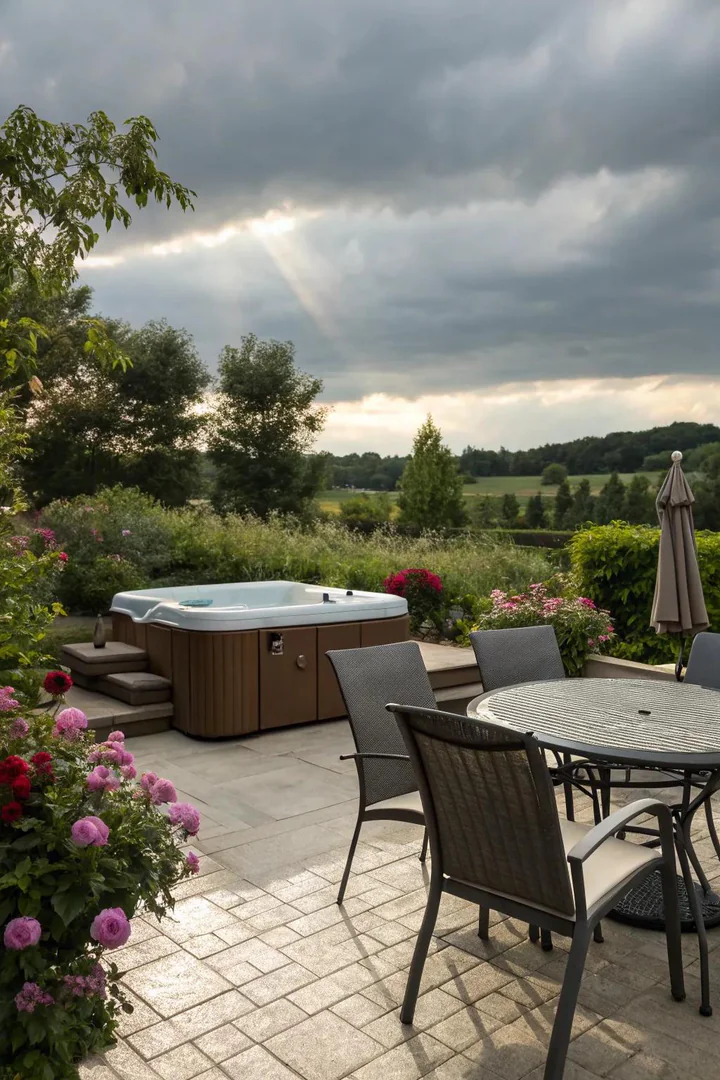
A dedicated seating zone beside the hot tub gives guests a place to sit, dry off, and socialize without crowding around the tub itself. Place 2-4 weather-resistant chairs ($50-$200 each from Polywood, Adams, or Christopher Knight Home) on a paver pad or gravel surface 4-6 feet from the tub edge. A small side table ($20-$50) between chairs holds drinks, phones, and towels at arm’s reach.
Choose furniture materials that handle constant moisture: HDPE plastic (Polywood), aluminum, or teak. Avoid cushioned seating directly beside the hot tub unless you use quick-dry Sunbrella fabric covers ($40-$80 per cushion) that resist mildew in a perpetually damp environment. Position seating so guests face the hot tub and any focal point (fire pit, waterfall, garden view) beyond it for a social layout that connects the dry zone to the wet zone visually.
15. Privacy Screen Panels
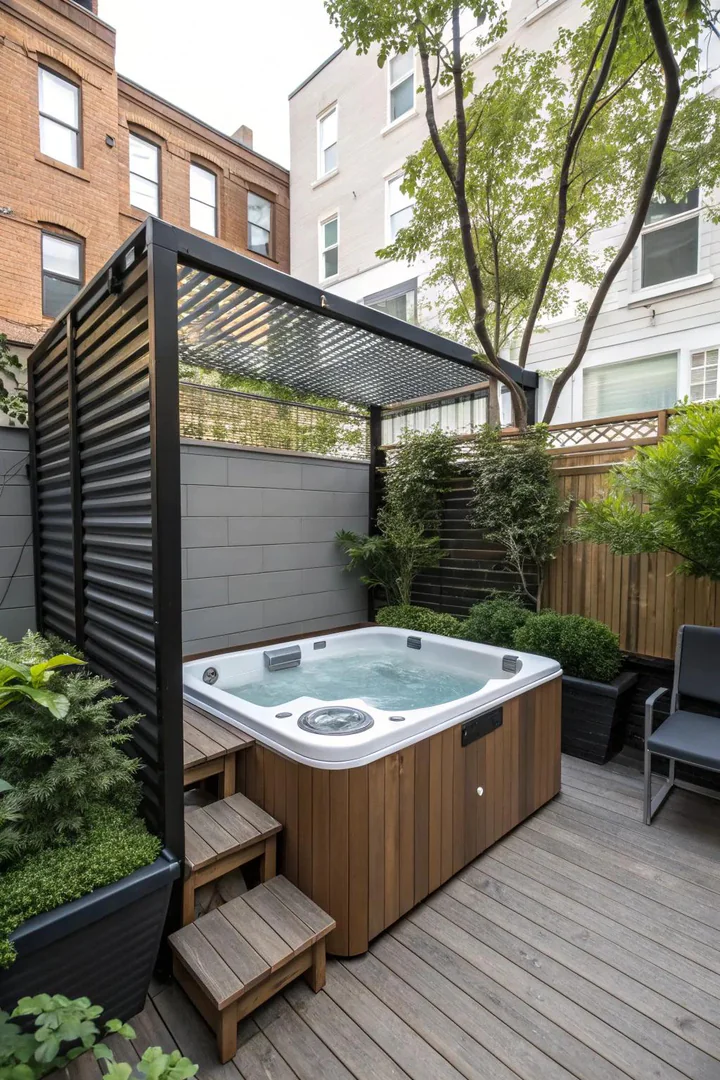
Decorative screen panels ($50-$150 per 4×6-foot panel from Modinex, Matrix, or Stratco) mount to posts or fence tops for instant privacy with airflow. Laser-cut patterns (leaf, geometric, Moroccan) allow wind to pass through while blocking 70-80% of sightlines. Metal (powder-coated aluminum or steel), composite, and HDPE plastic panels all handle outdoor moisture without rotting or warping.
Stack two panels vertically (one on top of the other) for a full 6-8 foot privacy wall, or mount a single panel at the top of an existing 4-foot fence to extend the total screen height to 8 feet. Position panels on the side of the hot tub that faces the most exposed sightline (neighbor’s second-story windows, a public sidewalk, or an adjoining yard). Leave the remaining sides open or planted with low hedges to avoid creating a boxed-in, claustrophobic feel.
16. Sunken Hot Tub
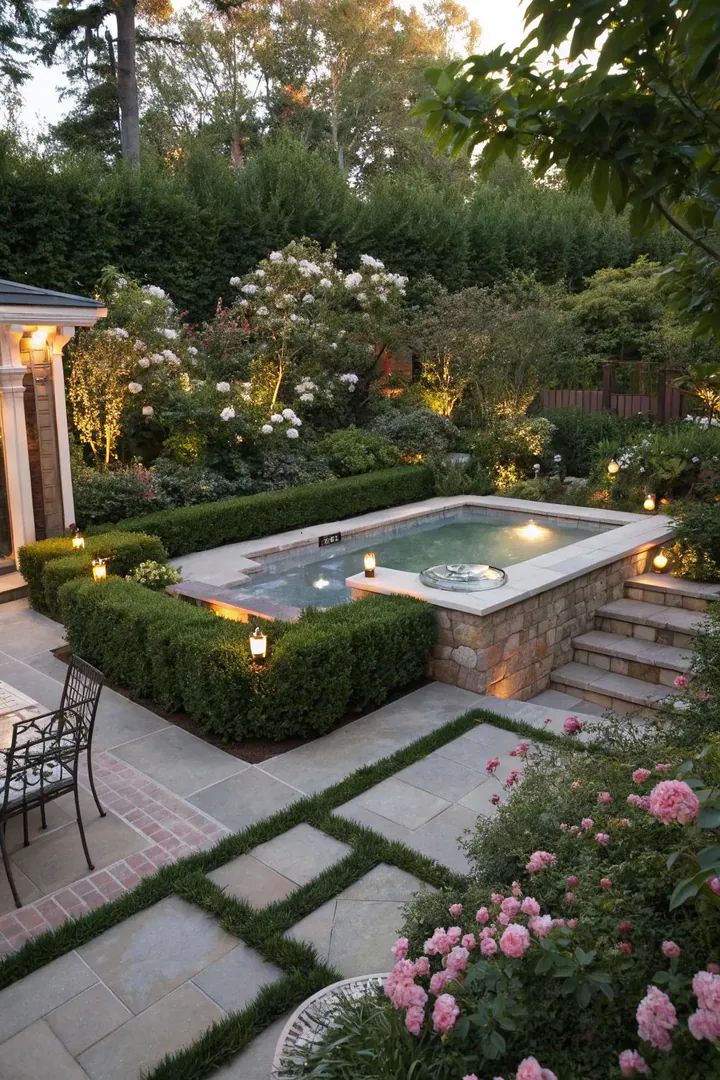
Sinking a hot tub into the ground so the rim sits flush with the surrounding patio or deck creates a built-in pool look that hides the tub’s plastic or acrylic shell. Excavate a pit 6-12 inches deeper than the hot tub height, pour a 4-inch concrete slab at the bottom ($6-$10 per square foot), and lower the tub into the pit. Leave a 12-18 inch access trench on the pump side for mechanical service.
Surround the sunken rim with pavers, natural stone, or composite decking that brings the finished surface level with the tub’s edge. Install a channel drain ($3-$8 per linear foot) around the perimeter to collect splash water and rain runoff before it floods the pit. A sunken installation costs $1,000-$3,000 more than an above-ground setup due to excavation, drainage, and the concrete pad, but the ground-level entry eliminates the need for steps and makes the hot tub look permanent rather than portable.
17. Natural Fencing
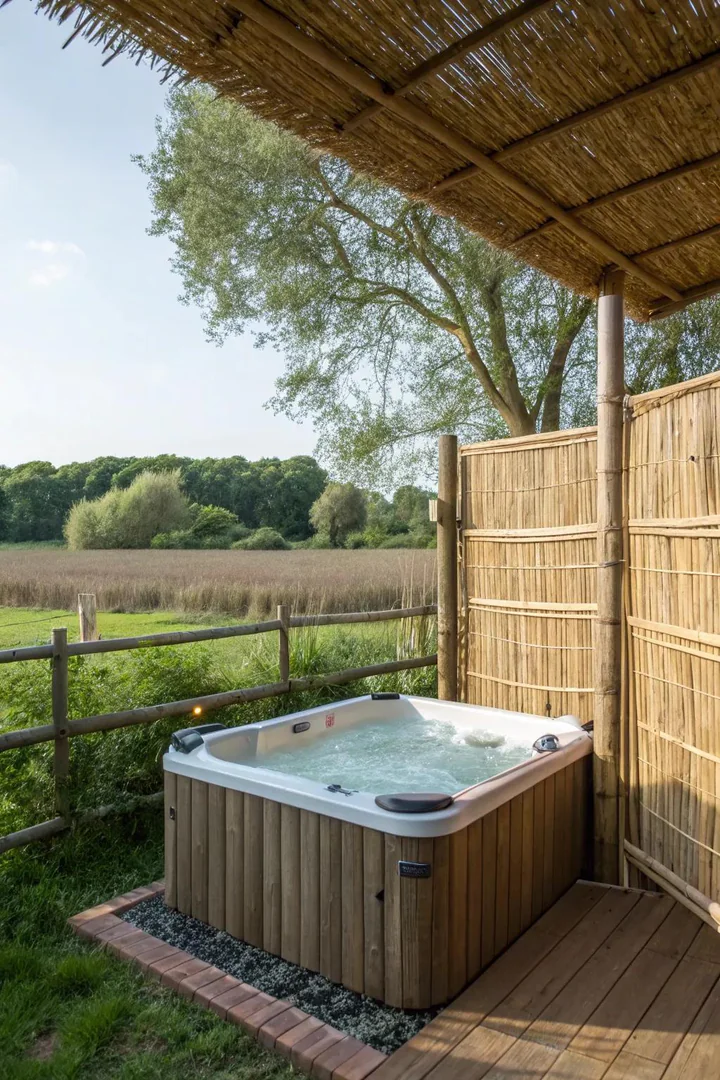
A natural wood fence built specifically for the hot tub area provides permanent privacy and wind protection without relying on plant growth. Western red cedar ($3-$6 per board for 1x6x6-foot fence boards) resists rot and insects naturally and weathers to silver-gray without treatment. Horizontal slat fencing (boards mounted flat with 1/4-inch gaps between) creates a modern look that allows airflow while blocking direct sightlines.
Build the fence 5-6 feet tall for seated privacy (hot tub users sit 18-24 inches below the tub rim) and position it 3-4 feet from the tub to leave room for walking and maintenance access. Seal the fence with a penetrating UV-blocking stain (Penofin or Ready Seal, $35-$50 per gallon) to maintain the warm wood tone, or leave it unfinished if you prefer the natural silver patina. Stagger the fence boards on alternating sides of the posts (shadow box pattern) for privacy from both directions with continuous airflow through the gaps.
18. Textured Hardscape Elements
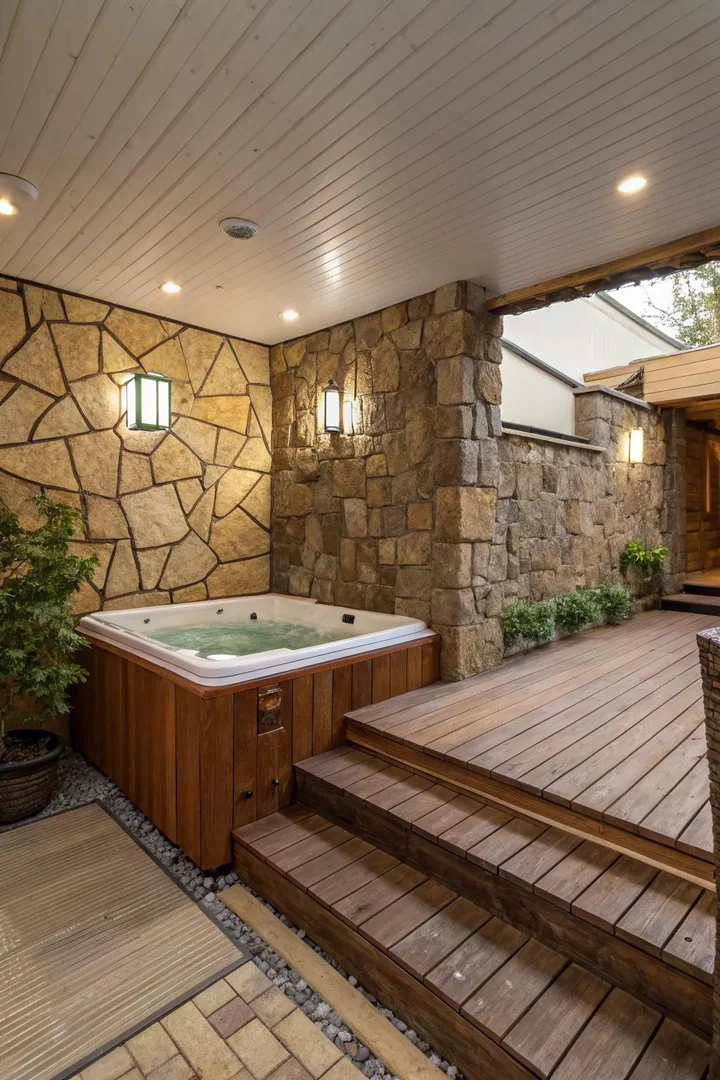
Combining 2-3 hardscape textures (smooth pavers, rough stone, and fine gravel) around the hot tub creates visual interest on what would otherwise be a flat, single-material pad. Use smooth concrete pavers ($3-$6 per square foot) for the primary walking surface, textured flagstone ($8-$15 per square foot) for accent borders, and pea gravel ($35-$55 per ton) for planting bed ground cover.
Separate material zones with aluminum or steel garden edging ($1-$3 per linear foot) pressed into the ground to prevent gravel from migrating onto the paver surface. Run the smoothest surface material from the house door to the hot tub steps for safe barefoot walking, and use rougher textures in the surrounding planting areas where shoes are worn. A contrast between light pavers and dark gravel (or the reverse) adds color depth that makes the pad area look larger than its actual footprint.
19. Existing Garden Integration
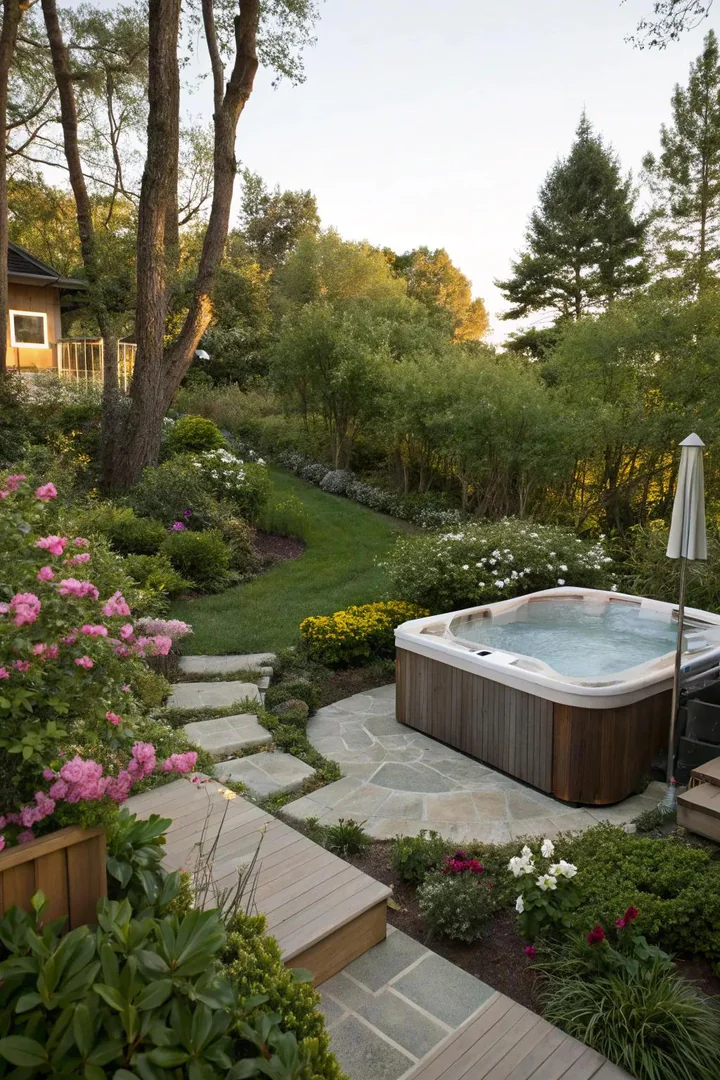
Placing the hot tub within an established garden bed (rather than on a separate concrete pad) makes the tub look like a natural part of the yard rather than an afterthought. Remove plants from a 10×10 to 12×12-foot area within the existing garden, install the tub pad (concrete, pavers, or compacted gravel), and replant around the tub with the same species already growing in the surrounding beds for a continuous garden flow.
Grade the soil to slope away from the tub on all sides (1/4 inch per foot minimum) so splash water and rainwater drain toward the garden rather than pooling at the tub base. Choose plants that tolerate occasional chlorinated splash water: ornamental grasses, sedums, daylilies, and Russian sage all handle diluted pool chemicals without leaf burn. A mulched walking path (shredded cedar, $4-$6 per 2-cubic-foot bag) from the main garden path to the tub connects the installation to the rest of the yard.
20. Colorful Plantings
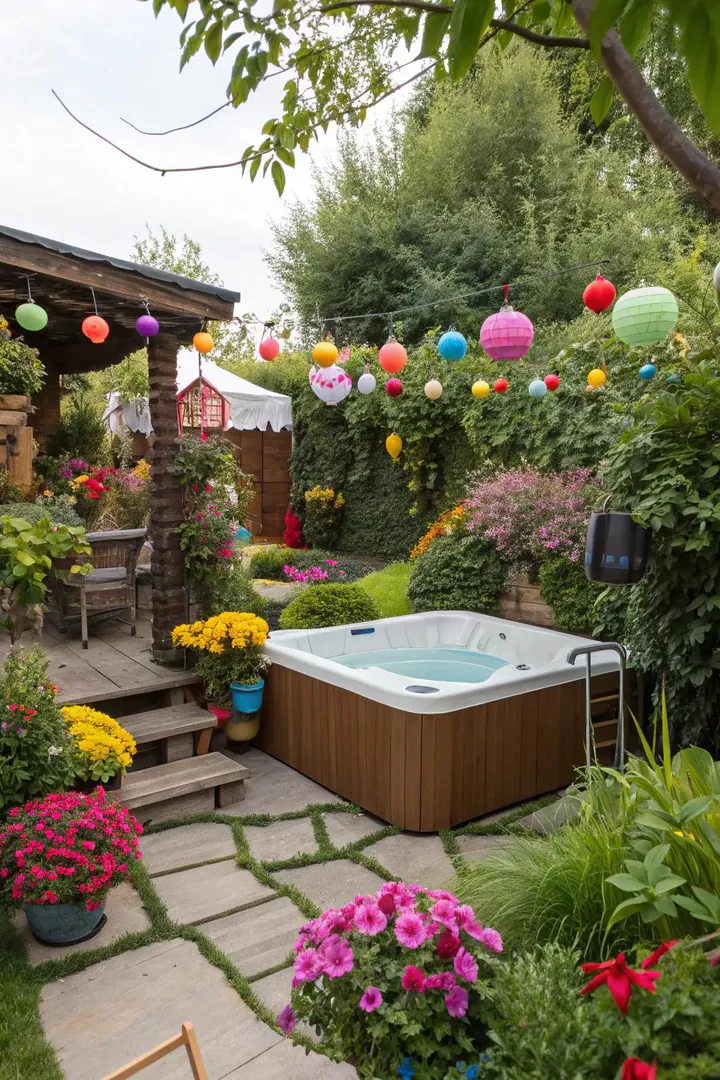
Flowering plants in pots and beds around the hot tub add seasonal color that changes with the calendar. Spring bulbs (tulips, daffodils, $10-$15 per bag of 25) give way to summer annuals (petunias, zinnias, marigolds, $3-$5 per 6-pack), followed by fall mums ($5-$10 per pot) and winter evergreen arrangements. Concentrate flower color at the 2-3 points most visible from inside the hot tub for maximum impact.
Plant flowers in large, matching containers ($20-$50 each in 14-16 inch diameter pots) rather than directly in the ground beside the tub, so you can rotate seasonal displays without disturbing permanent plantings. Choose containers with built-in drainage holes and set them on pot feet ($3-$5 per set of 3) to prevent water from pooling under the pot and staining the patio surface. A trio of tall planters with ornamental grasses or columnar evergreens at the back, surrounded by lower flowering pots at the front, creates a layered display visible from the covered deck and from inside the tub.
Hot Tub Surround Material Comparison
| Surface Material | Cost per Sq Ft | Slip Resistance | Heat Retention | Maintenance |
|---|---|---|---|---|
| Concrete Pavers | $3-$6 | Good | Moderate | Seal every 2-3 yrs |
| Natural Flagstone | $8-$15 | Very Good | Low | Seal annually |
| Composite Decking | $4-$7/lf | Good | Moderate-High | Annual wash |
| Pea Gravel | $35-$55/ton | Fair | Low | Rake yearly |
| Stamped Concrete | $8-$15 | Good (textured) | Moderate | Seal every 2-3 yrs |
| Porcelain Tile | $5-$12 | Variable | Low | Wipe clean |
| Rubber Pavers | $3-$8 | Excellent | Low | Hose off |
How to Prepare the Ground for a Hot Tub
1. Choose a Level Location Near the House
Select a spot within 50 feet of the house electrical panel (hot tubs require a dedicated 240V/50-amp GFCI circuit) on ground that is already level or can be graded level with minimal excavation. Check that the location supports the total weight (3,000-6,000 pounds for a filled tub plus occupants) on stable soil, not fill dirt or a steep slope. Position the tub where the prevailing wind is blocked by the house, a fence, or existing trees so heat loss from wind chill stays minimal during winter use.
2. Build the Foundation Pad
Pour a 4-inch reinforced concrete slab ($6-$10 per square foot) sized 12-18 inches larger than the hot tub footprint on all sides, with 6×6-inch welded wire mesh for crack resistance. A concrete slab provides the most stable, long-lasting foundation. Budget alternatives include a compacted gravel pad (6 inches of compacted 3/4-inch crushed stone, $2-$4 per square foot) or interlocking concrete patio blocks ($2-$5 per square foot) laid on a leveled sand bed.
3. Run Electrical and Plumbing
Hire a licensed electrician ($50-$100 per hour, typically $500-$1,500 for a complete hot tub hookup) to run a dedicated 240V/50-amp circuit from the house panel to a GFCI disconnect box ($50-$100 for the box) mounted within 5 feet of the tub and within line of sight. Run UF-rated cable in PVC conduit buried 18-24 inches underground from the panel to the disconnect, then from the disconnect to the tub connection point. A garden hose fills the tub, so no plumbing connection is needed for most portable hot tubs.
4. Install Drainage and Surround Materials
Grade the pad surface to slope 1/8 to 1/4 inch per foot away from the tub base so splash water and rain drain toward the yard rather than pooling around the equipment bay. Install pavers, flagstone, or decking around the pad perimeter, leaving the service access panel on the pump side clear. Add a DIY fire pit 8-12 feet away on the same pad or on an adjacent gravel surface for a paired hot-and-cold relaxation zone.
Frequently Asked Questions
What plants survive near a hot tub with chlorine splash?
Ornamental grasses (maiden grass, fountain grass, blue fescue), sedums, daylilies, Russian sage, and most broadleaf evergreens tolerate diluted chlorine splash without visible damage. Avoid placing delicate plants (ferns, Japanese maples, hostas) within 3 feet of the tub edge where direct splash contact is frequent. Rinsing nearby plants with a garden hose after heavy hot tub use washes residual chemicals off leaves before they cause burn spots.
How far should plants be from a hot tub?
Keep plants at least 3 feet from the tub edge to avoid direct splash contact, and at least 5 feet from the equipment bay for service access. Tall plants and trees should be far enough away that falling leaves and needles don’t land directly in the water (a floating debris cover solves most issues). Overhead trees should clear the tub opening by at least 8-10 feet to prevent sap, bird droppings, and branch debris from fouling the water between uses.
Do you need a fence around a hot tub?
Most local codes require a barrier (fence, locking cover, or both) around hot tubs that are accessible to children. Code requirements vary by jurisdiction, but a 4-foot tall fence with a self-closing, self-latching gate is the most common standard. A locking hard cover (included with most hot tubs) satisfies the barrier requirement in many areas without a separate fence, but check your local building code and HOA rules before relying on the cover alone.
How do you reduce hot tub noise for neighbors?
Mount the hot tub on a rubber anti-vibration pad ($30-$60 for a full-size mat from Diversitech or Custom Flow) to absorb pump vibration that transmits through concrete and deck structures. Build a 3-sided equipment enclosure from 2×4 framing and mass-loaded vinyl ($1-$3 per square foot) lined with acoustic foam ($10-$20 per 12×12-inch panel) around the pump bay. Position the pump side of the tub facing away from the nearest neighbor’s property line, and run the filtration cycle during daytime hours rather than overnight when ambient noise levels drop.
What is the best ground cover under a hot tub?
A 4-inch reinforced concrete slab is the best foundation under a hot tub for long-term stability. Compacted gravel (3/4-inch crushed stone, 6 inches deep and machine-compacted) provides a budget alternative that drains well and supports the load on stable, undisturbed soil. Avoid placing a hot tub directly on grass, bare dirt, or a standard wood deck without verifying the framing can support the 3,000-6,000 pound filled weight.