Ideas for Small Decks: 23 Smart Solutions to Boost Your Backyard

A small deck under 150 square feet can work just as hard as a full-size outdoor room when every inch serves a purpose. The key is choosing scaled-down furniture, vertical storage, and dual-purpose features that fit the footprint without making the space feel cramped.
Most small decks measure 8×10 or 10×12 feet, which is enough for a 2-person dining set, a lounge chair, and a few planters. Going beyond that takes strategy: fold-away tables, built-in benches, and wall-mounted accessories free up floor area for walking and entertaining.
Here are 23 ideas for small decks that pack function and style into a compact outdoor footprint.
1. Add a Privacy Screen
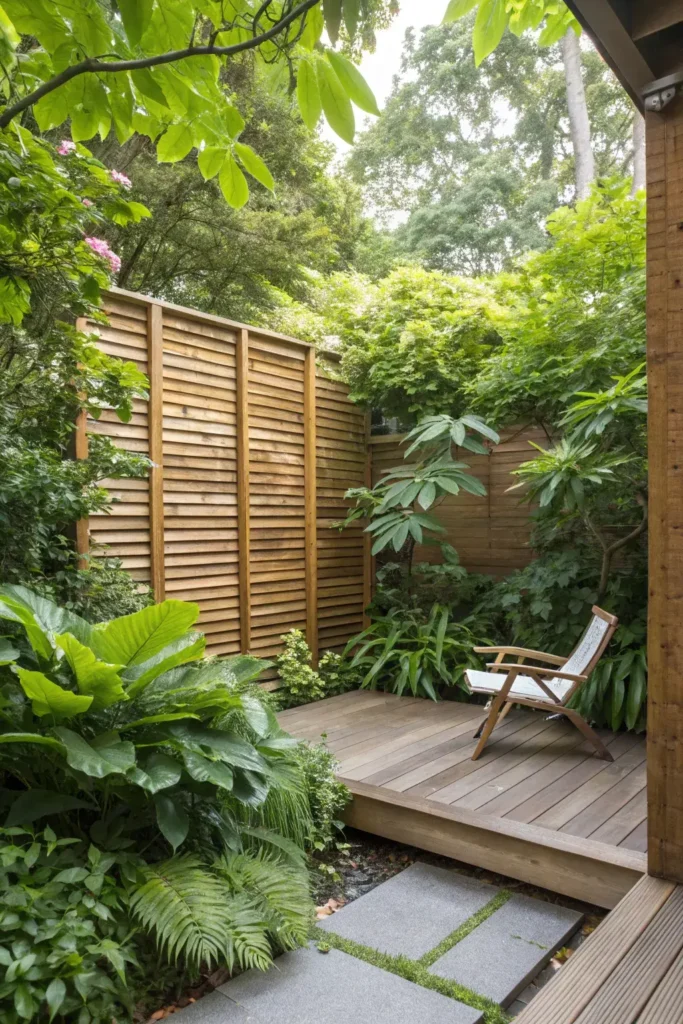
A slatted HDPE or cedar privacy screen along one side of a small deck blocks the neighbor’s view without closing off airflow. Pre-built panels from Enclo Privacy Screens mount to existing posts in under an hour, and 3-to-4-foot-wide panels ($50 to $150 each) fit tight spaces without overpowering the deck footprint. Choose horizontal slats spaced 1 inch apart for 80% coverage that still lets breeze through.
Angle the screen to block the worst sightline rather than boxing in all four sides, which would make a small deck feel like a closet. Mount planters on the screen’s interior face to double it as a vertical garden wall. For more screening methods, check our full screen porch furniture ideas guide covering both freestanding and mounted options.
2. Fill the Space with Plants
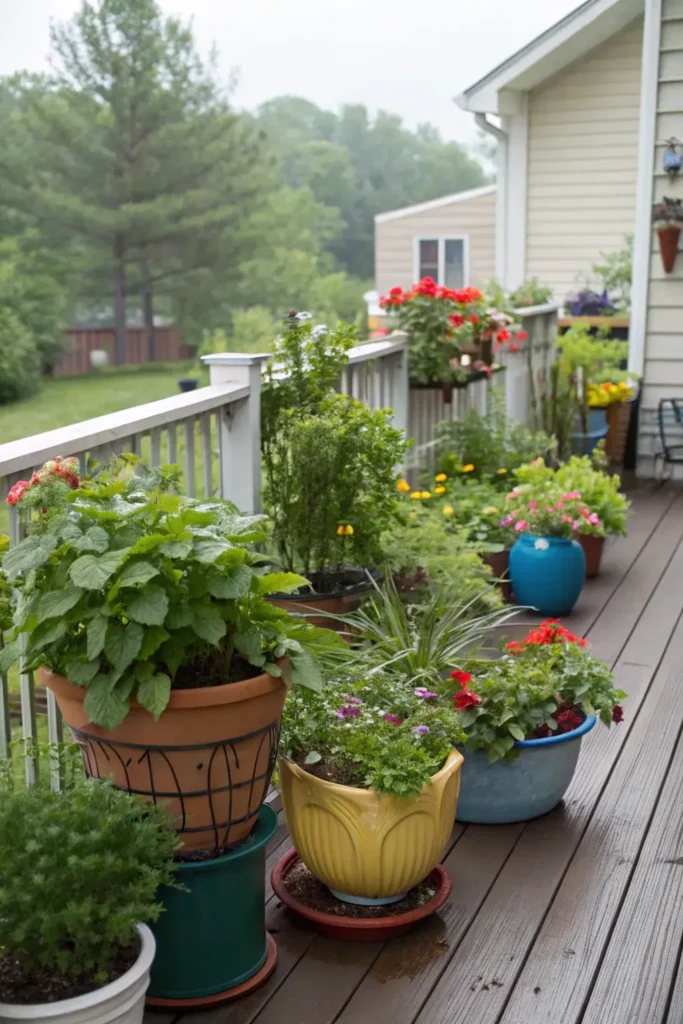
Grouping 6 to 10 potted plants around the deck perimeter creates a lush garden feel that softens railings and covers bare walls. Use tall planters (36+ inches) with ornamental grasses or bamboo palm in the corners, medium pots with geraniums and petunias along the railing, and trailing sweet potato vine or English ivy in hanging baskets from the overhead beams.
Keep all planters on the deck perimeter and overhead hooks so the centre floor stays open for a chair or small table. Self-watering pots from Lechuza and Bloem reduce watering to once per week, and a slow-release fertilizer like Osmocote feeds container plants for 4 months per application.
3. Add an L-Shaped Couch
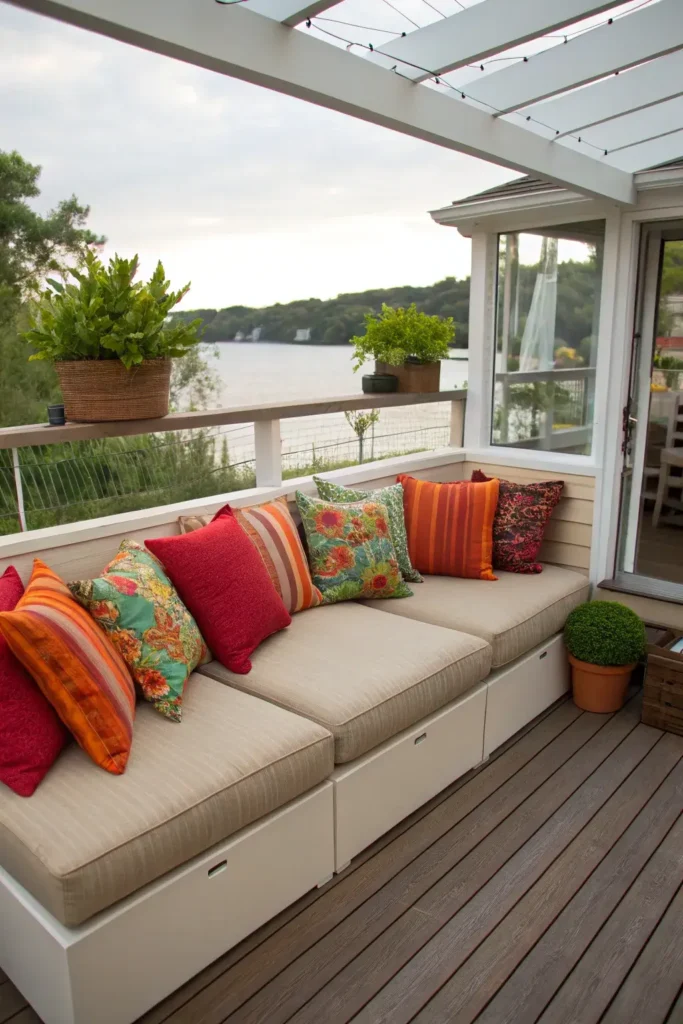
A compact L-shaped sectional tucks into a corner and seats 3 to 4 people using only two walls of the deck. Outer and Yardbird sell modular outdoor sectionals where each section measures 28 to 32 inches deep, so a 2-piece L fits an 8×8-foot corner. Budget versions from Best Choice Products and Devoko start at $300 to $500 for a 3-piece set with cushions.
Position the longer arm of the L along the railing and the shorter arm against the house wall, leaving the open corner for a side table or small planter. Deep-seat cushions (24 inches) work better than shallow (18 inches) on a sectional where the back wall acts as the armrest.
4. Build a Pergola
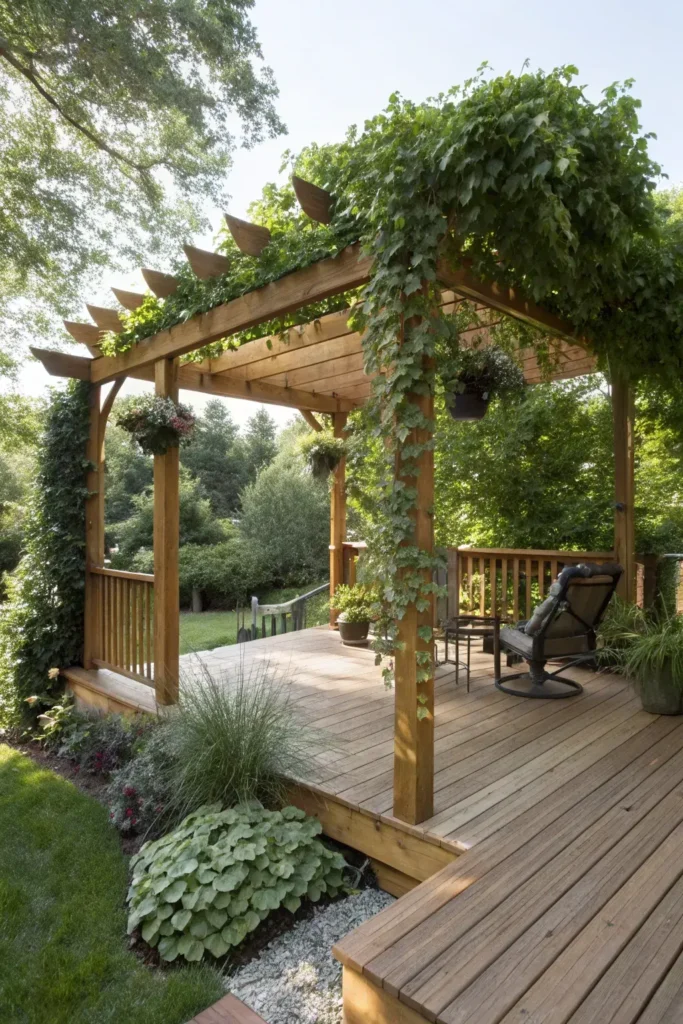
A small pergola (8×8 or 8×10 feet) frames the deck overhead and gives you a structure for shade cloth, string lights, and climbing vines. A cedar DIY pergola kit from Yardistry or Backyard Discovery costs $800 to $2,000 and assembles in a weekend with two people and basic tools. The overhead beams draw the eye upward and make the deck footprint feel larger than its actual square footage.
Attach the pergola posts to the deck’s rim joist using Simpson Strong-Tie post bases rather than digging separate footings, which saves space at ground level. Train star jasmine or clematis up one or two posts for seasonal shade that fills in over a single growing season.
5. Go Moody and Maximalist
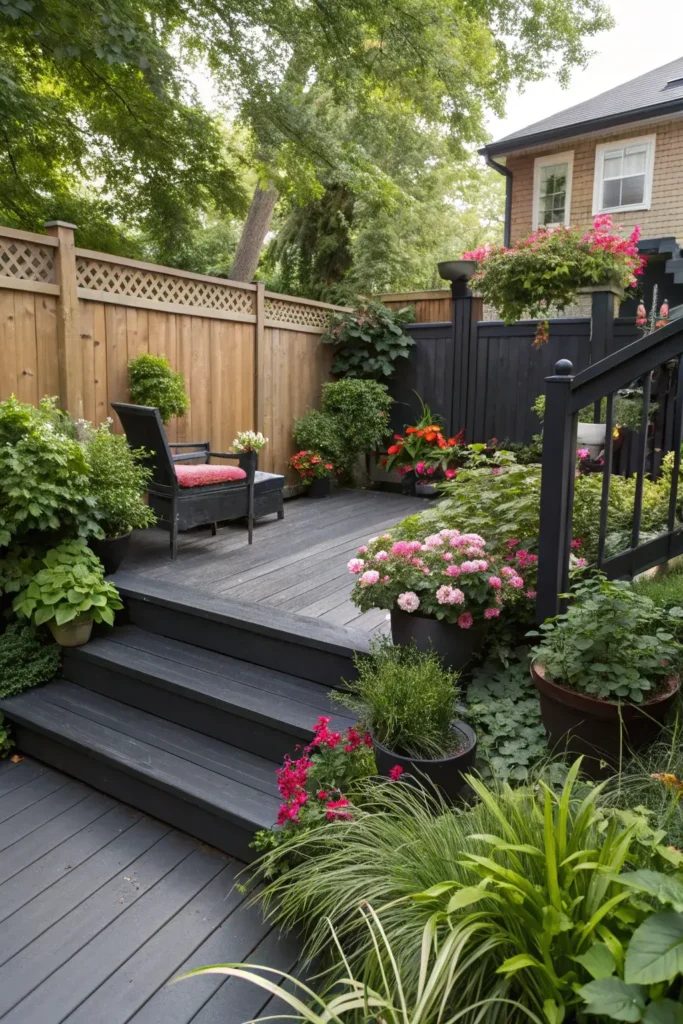
Dark-stained boards, deep-coloured cushions, and layered textiles make a small deck feel intentional rather than limited. Stain the deck surface in Cabot Semi-Solid Bark or Ready Seal Dark Walnut, and choose cushion fabrics in charcoal, hunter green, or burgundy. Add a patterned outdoor rug, brass lanterns, and potted dark-leaf plants like Purple Fountain Grass (Pennisetum setaceum) to complete the moody palette.
Maximalist decks work because the visual density distracts from the tight floor area. Layer 4 to 6 throw pillows, a couple of blankets, and 3 to 4 candle holders on a single side table to fill vertical space above the seating. Keep the walking path clear and let the accessories do the work on the seated side.
6. Hang a Swinging Chair
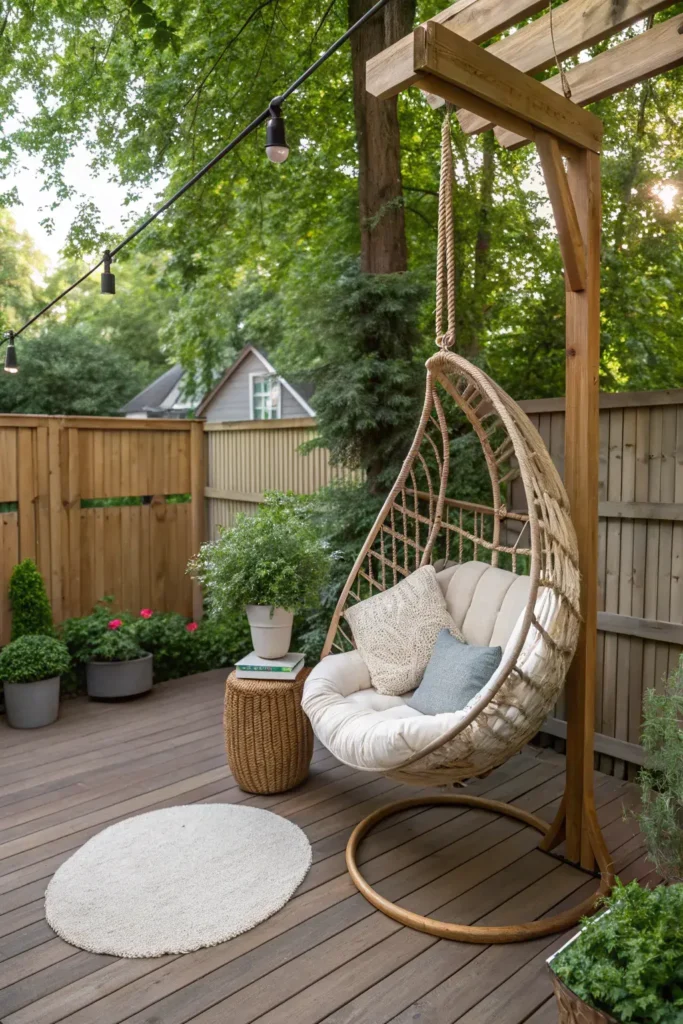
A hanging egg chair or macramé swing takes up zero floor space because it suspends from a ceiling beam or a freestanding steel frame. Christopher Knight Home and Modway sell wicker egg chairs with cushions for $250 to $500, while freestanding C-frame stands cost $100 to $200 and hold up to 300 pounds. The gentle swing motion makes the chair the most-used seat on any deck.
Bolt the ceiling mount into a structural beam (not just the ceiling boards) using a 3/8-inch eye bolt rated for 500+ pounds. Leave 18 inches of clearance behind the chair for full swing arc, and keep the seat height at 18 to 20 inches above the deck floor for easy getting in and out.
7. Build a Ground-Level Deck
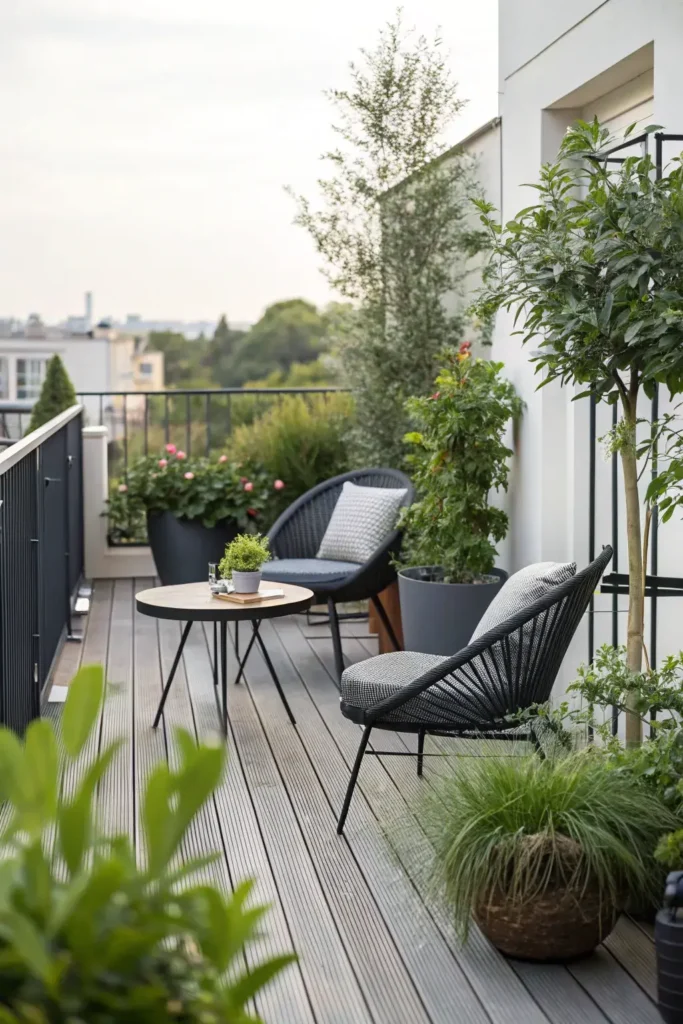
A ground-level (grade-level) deck sits 4 to 8 inches above the soil and skips the need for railings, stairs, and tall posts, which saves hundreds of dollars and keeps the visual profile low. Frame the deck on concrete deck blocks ($6 to $10 each at Home Depot) spaced 4 feet apart, with pressure-treated 2×6 joists at 16-inch centres. An 8×10-foot ground-level deck costs $500 to $1,200 in materials for a full DIY build.
Keep at least 4 inches of clearance between the bottom of the joists and the soil for air circulation, and lay weed barrier fabric under the deck area to prevent grass from growing up through the boards. A ground-level platform blends into the yard and makes the overall outdoor space feel continuous rather than broken into levels.
8. Prepare for Rain or Shine
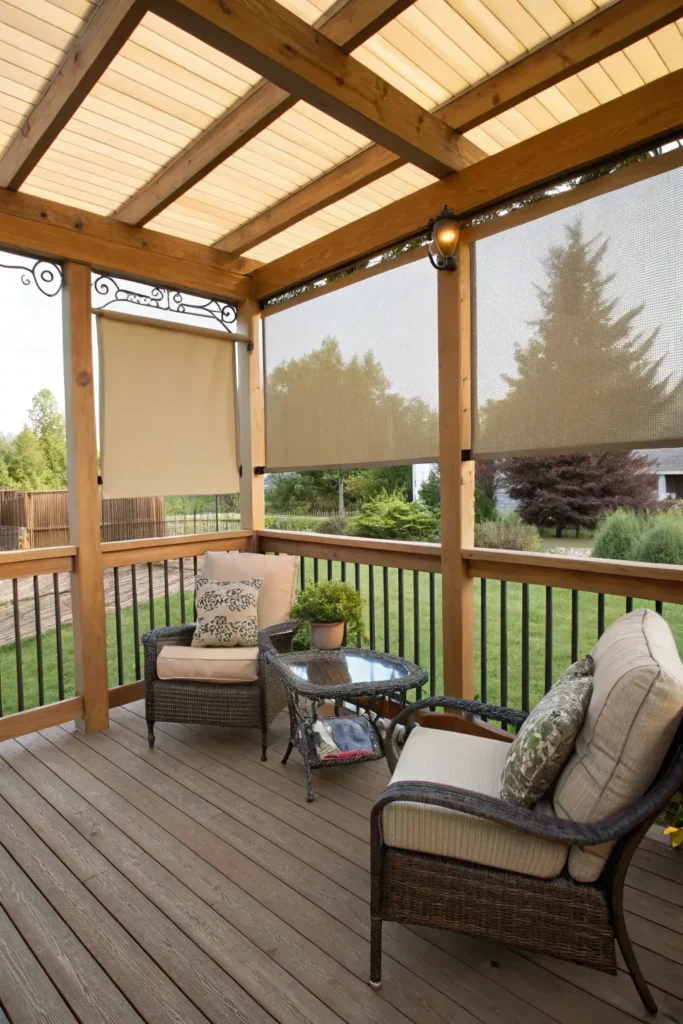
A retractable awning, pop-up canopy, or permanent roof extension keeps a small deck usable during light rain and intense midday sun. ShelterLogic pop-up canopies (10×10 feet) cost $100 to $200 and collapse for storage, while a mounted Sunsetter retractable awning ($1,500+) rolls out with a crank and provides shade on demand. Choose furniture and cushions rated for all-weather use so you don’t need to haul everything inside at the first sign of rain.
Quick-dry foam cushions from Sunbrella Rain shed water in minutes and prevent mould buildup inside the cushion core. Pair the waterproof seating with a polycarbonate roof panel for permanent overhead protection that lets 90% of natural light through while blocking all rain.
9. Add a Small Dining Space
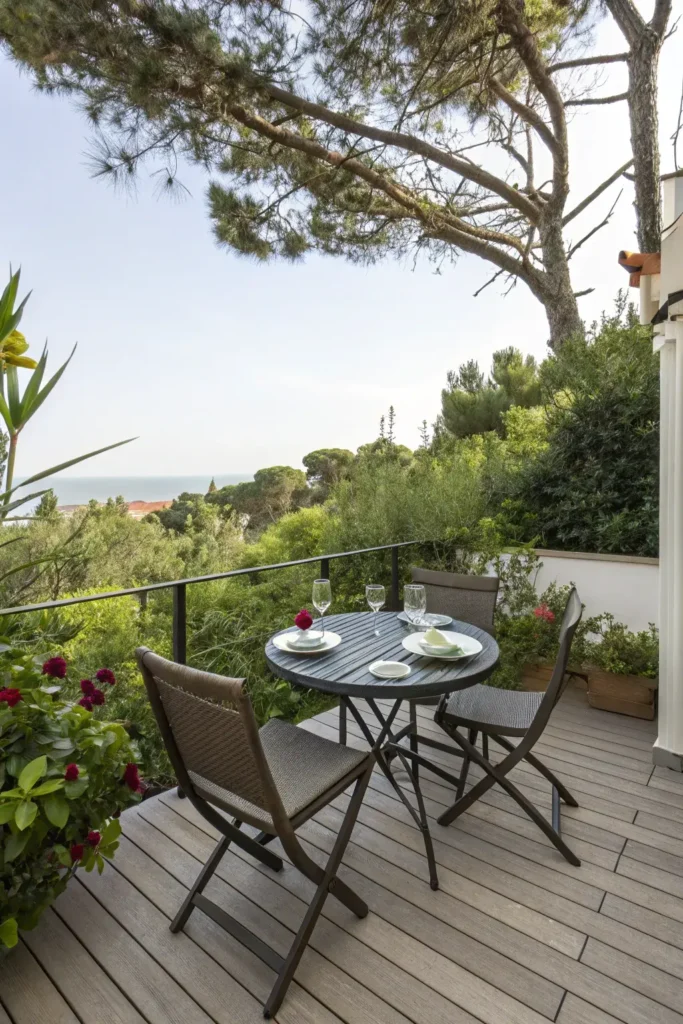
A 30-inch round bistro table with two folding chairs fits into a 4×4-foot area and gives you a dedicated eating spot for morning coffee or dinner for two. Fermob, Crosley, and Flash Furniture all make compact outdoor dining sets for $150 to $400. A wall-mounted fold-down table from Ikea NORBERG ($25) or a custom cedar version saves even more space by folding flat against the wall when not in use.
Position the dining spot near the kitchen door so food and drinks make a short trip from the counter to the table. A 24-to-28-inch table height works for dining; go with bar height (36 to 42 inches) for a standing or stool-height option that creates a different feel in the same footprint.
10. Plant Trees as a Privacy Wall
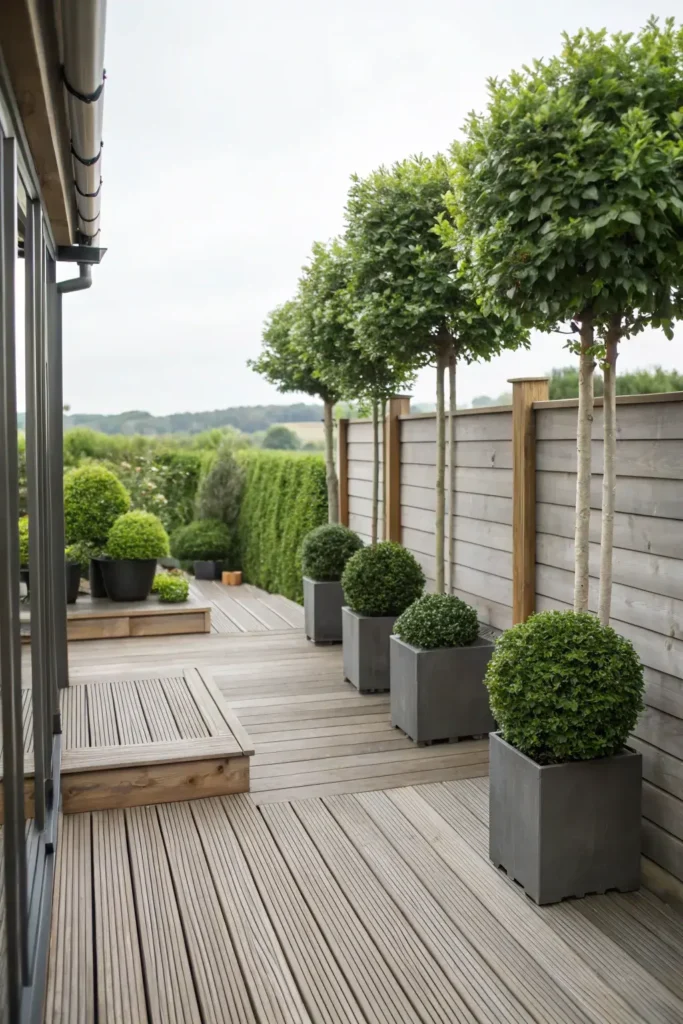
Two or three columnar trees planted just off the deck edge create a natural screen without taking up floor space. Sky Pencil holly (3 feet wide at maturity), Italian cypress (3 to 4 feet wide), and Spartan juniper (4 to 5 feet wide) all grow tall and narrow enough to fit beside a small deck without spreading into the walking area. Plant them 3 feet apart for a continuous wall within 2 to 3 years.
Container-grown columnar trees in 24-inch pots work for decks without adjacent soil. Place the pots at the deck corners and against the railing so the tree canopy rises above the railing height and blocks sightlines from neighbouring properties.
11. Add a Fire Table
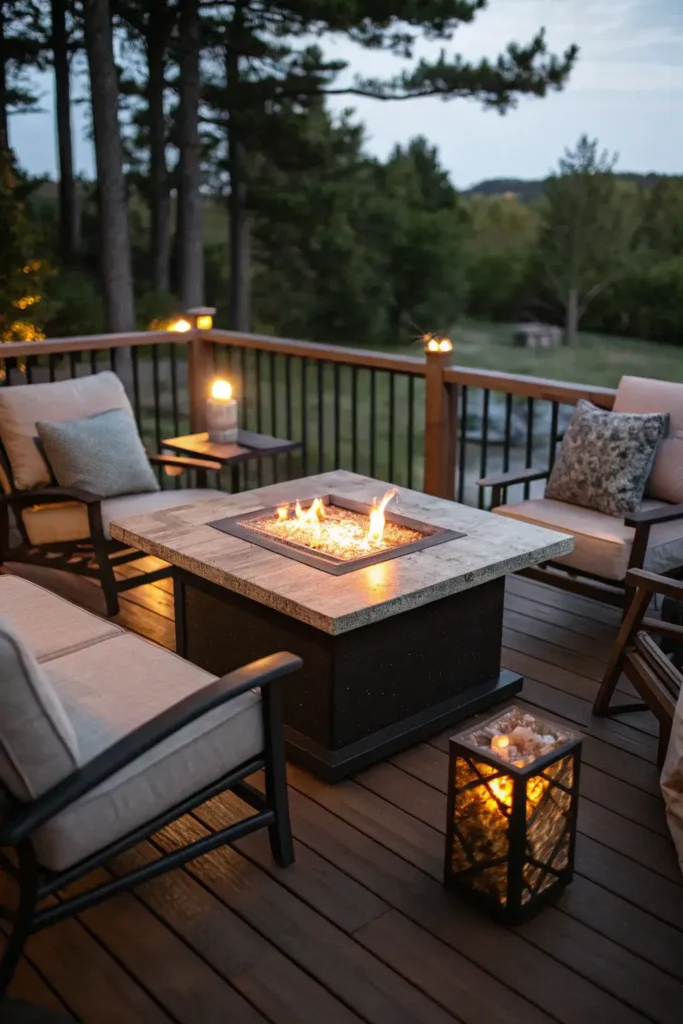
A propane fire table combines a coffee table surface with a gas flame centrepiece in a single piece that replaces two separate items. Outland Living and Bond Manufacturing sell 28-to-36-inch fire tables for $200 to $500 that run on a standard 20-pound propane tank tucked inside the base. The flames add warmth on cool evenings and serve as a focal point that draws seating around it naturally.
Keep the fire table at least 24 inches from railings, walls, and overhead structures per manufacturer guidelines. Choose a model with a wind guard (a tempered glass surround) to keep the flame steady on breezy decks. When the flame is off, the fire table surface doubles as a regular coffee table for drinks and snacks.
12. Skip the Deck Railing
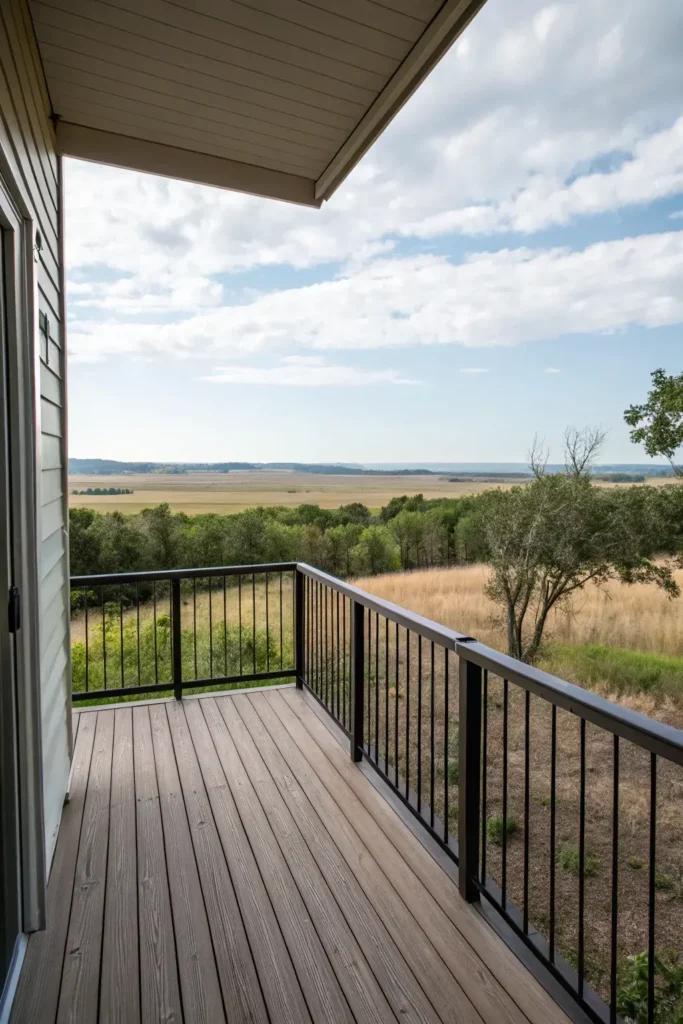
Decks under 30 inches above grade don’t require a railing in most building codes (check your local IRC adoption), and removing the railing opens the sightlines and makes a small deck feel twice its actual size. The unobstructed edge blurs the boundary between the deck surface and the surrounding yard, creating a floating-platform effect that works especially well on ground-level builds.
Without a railing, the deck edge becomes available for sitting, so cap the rim joist with a smooth 2×6 cedar or composite board that serves as a bench-height seat on all sides. For a colour-coordinated edge cap, our painted deck railing ideas article covers paint and stain choices that dress up exposed wood trim.
13. Build a Covered Deck
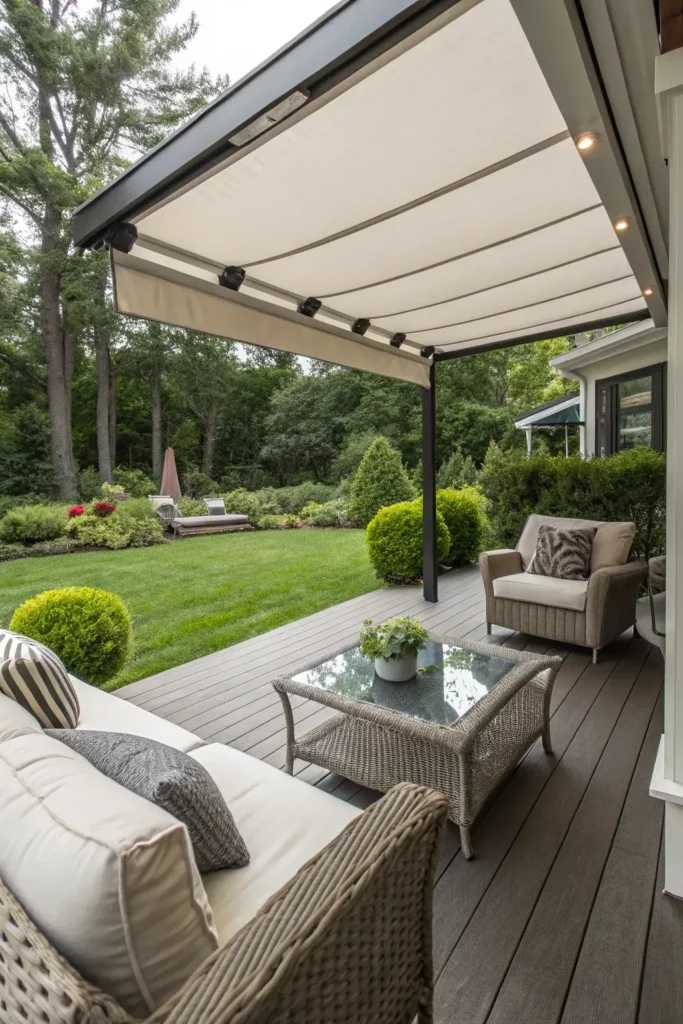
A permanent roof over a small deck turns the space into a three-season room that works in rain, wind, and harsh midday sun. Extend the existing roofline with a shed-style addition at a 2/12 pitch for water runoff, using matching asphalt shingles or metal roofing panels. A covered 8×12-foot deck addition costs $3,000 to $6,000 including structural posts, a ledger board attachment, and roofing materials.
Add recessed LED downlights in the ceiling for evening use, and mount a ceiling fan at the centre for air circulation. A covered deck keeps furniture, cushions, and rugs in better condition because UV and rain never reach the surfaces directly.
14. Lay Down an Outdoor Rug
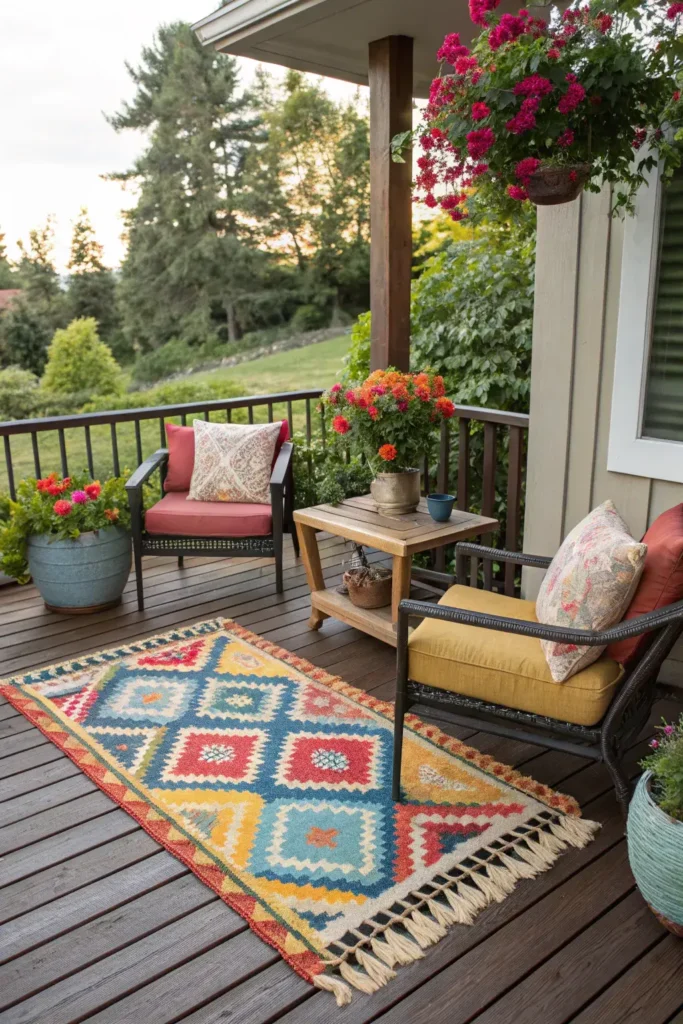
A flat-weave outdoor rug in a light colour opens up a small deck visually, while a bold pattern draws the eye inward and makes the seating area feel defined. A 5×7-foot rug fits an 8×10 deck without crowding the edges, and polypropylene rugs from Dash and Albert or Safavieh start at $80 to $150 in that size. Choose a rug with a tight weave so it dries fast after rain and doesn’t trap dirt between the fibres.
Place the rug under the front legs of the seating (not all four legs) to anchor the furniture without covering the entire deck surface. A non-slip pad underneath prevents the rug from shifting when people walk across it.
15. Set Up an Outdoor Kitchen
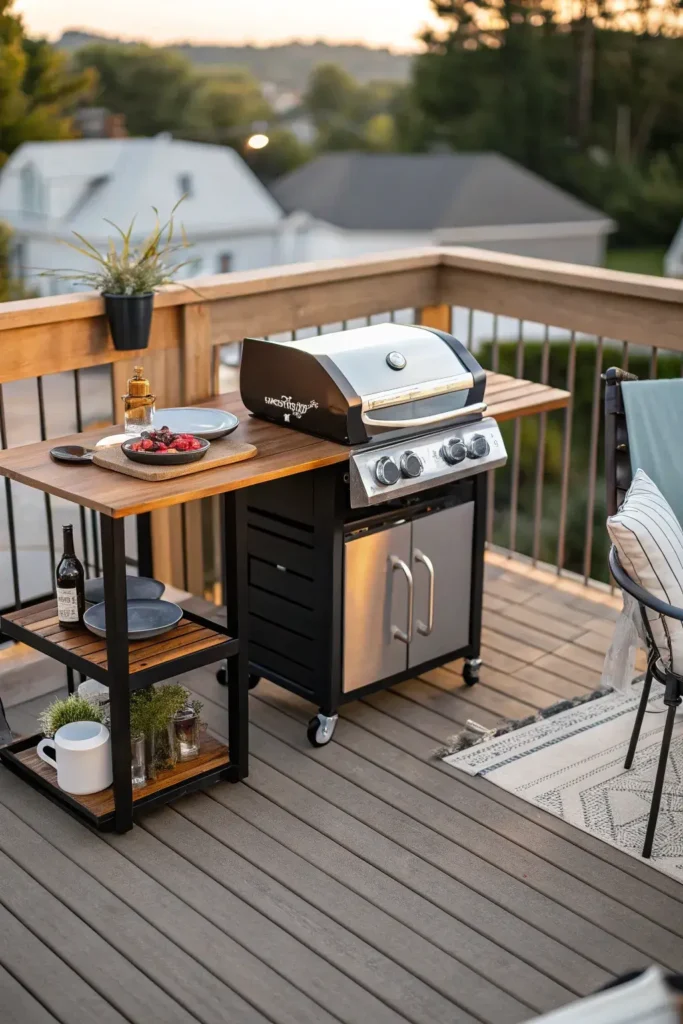
Even a compact deck supports a cooking station built around a 2-burner Weber Spirit or Char-Broil gas grill with a fold-out side table. Mount a 24-inch stainless steel shelf on the house wall beside the grill for prep space, and hang utensils from a magnetic strip or S-hooks above the shelf. A rolling kitchen cart from Origami or Seville Classics ($60 to $120) provides extra counter space and stores inside the house when not in use.
Position the grill at least 24 inches from the house siding and any combustible materials. A small sink plumbed with a garden hose connection gives you rinse and wash access without running indoor plumbing to the deck.
16. Add a Gazebo
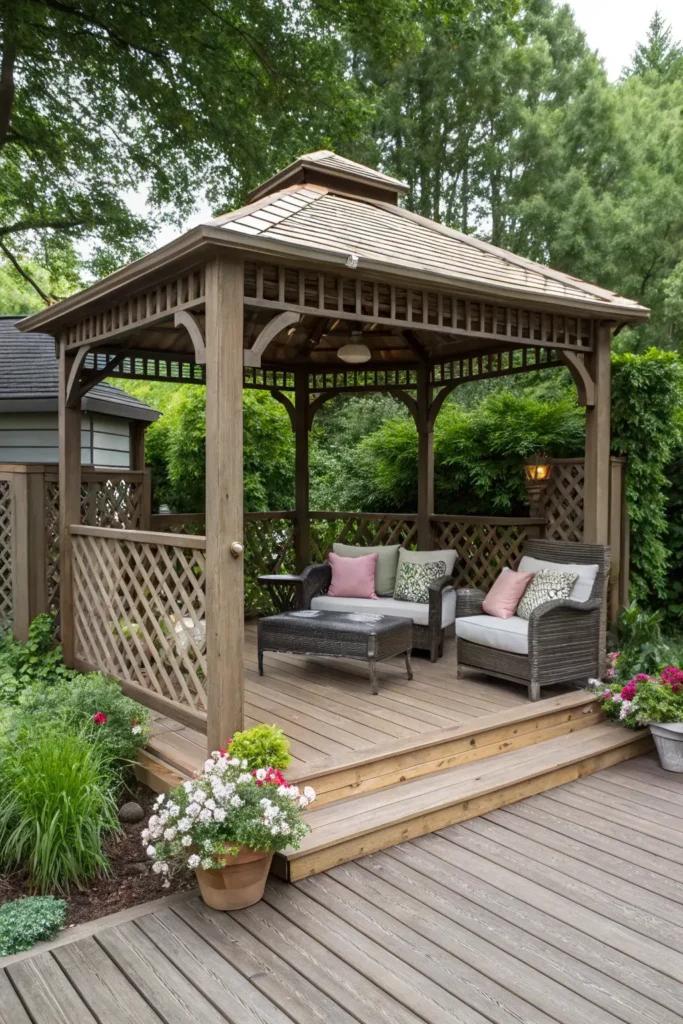
A pop-up or semi-permanent gazebo creates a defined outdoor room on top of your existing deck. Sojag Messina and Hampton Bay sell 10×10 and 10×12 hardtop gazebos for $1,000 to $2,500 that bolt to the deck surface and support up to 50 pounds of snow load on the roof. A soft-top gazebo from ABCCANOPY ($200 to $400) offers a budget-friendly alternative with zippered sidewalls for wind and rain protection.
A gazebo on a small deck covers the entire surface, so the structure becomes the room rather than sitting inside a larger open area. Hang curtains, string lights, and a small chandelier from the gazebo frame to complete the enclosed feel. An L-shaped porch layout pairs well with a gazebo placed at one end of the L, and our L-shaped front porch ideas guide covers setups that use corners for covered structures.
17. Use Turfgrass
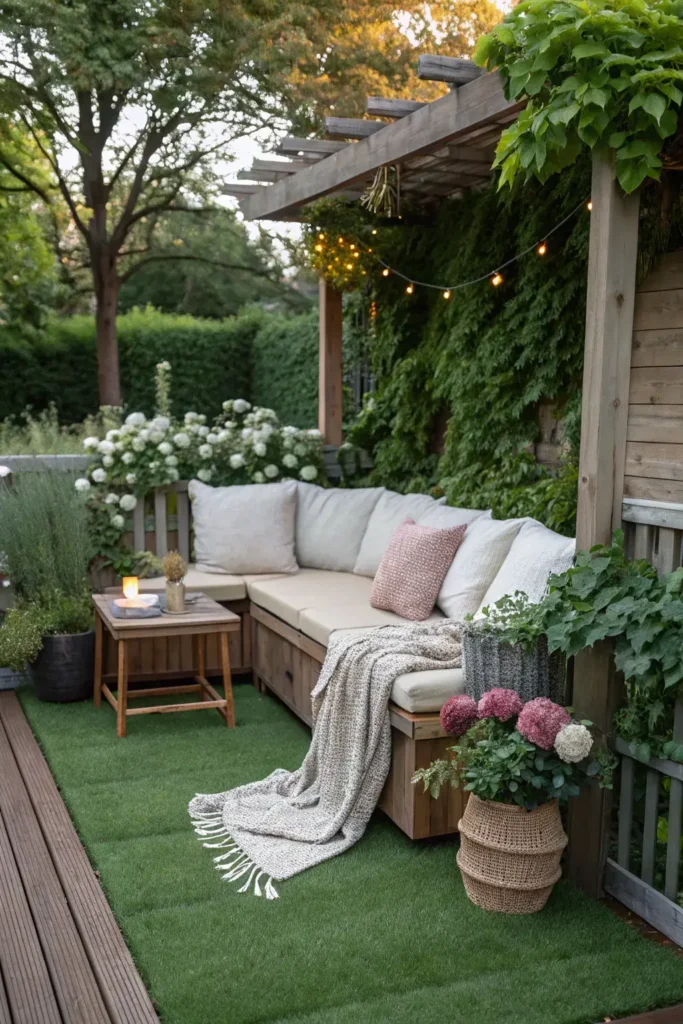
Artificial turfgrass laid on top of deck boards creates a soft, green surface that feels like a backyard lawn even on a second-floor or rooftop deck. ForeverLawn and SYNLawn sell outdoor-rated turf in rolls that cut to size with a utility knife and lay flat without adhesive on covered decks. A 10×10-foot piece costs $150 to $300 depending on pile height and backing quality.
Turf on a deck works best in areas where kids play barefoot or where pets need a relief spot. Hose down the turf monthly to prevent odour buildup, and lift it twice a year to sweep debris from the deck surface underneath. Choose a turf with drainage holes punched through the backing so water passes through to the deck boards and runs off through the board gaps.
18. Use a Table with Benches
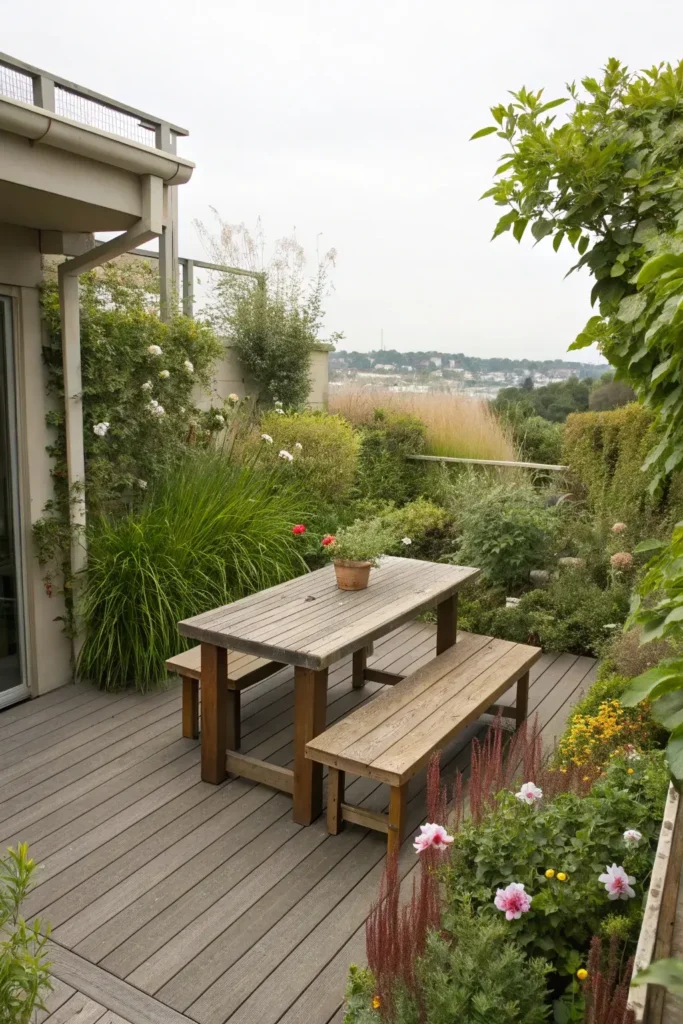
A picnic-style table with attached benches seats 4 to 6 people in the footprint of a standard dining table and chairs, because the benches tuck completely under the table when not in use. Lifetime and Polywood make all-weather picnic tables in 5-foot and 6-foot lengths for $300 to $600. A folding picnic table from Lifetime ($200) collapses flat for off-season storage in a garage or shed.
Position the table lengthwise on the deck so the benches run parallel to the railing rather than perpendicular, which keeps the walkway clear on the open side. Sand and stain a wood picnic table every 2 to 3 years to maintain the finish, or choose HDPE lumber for a zero-maintenance version that never needs sealing.
19. Choose Composite Decking
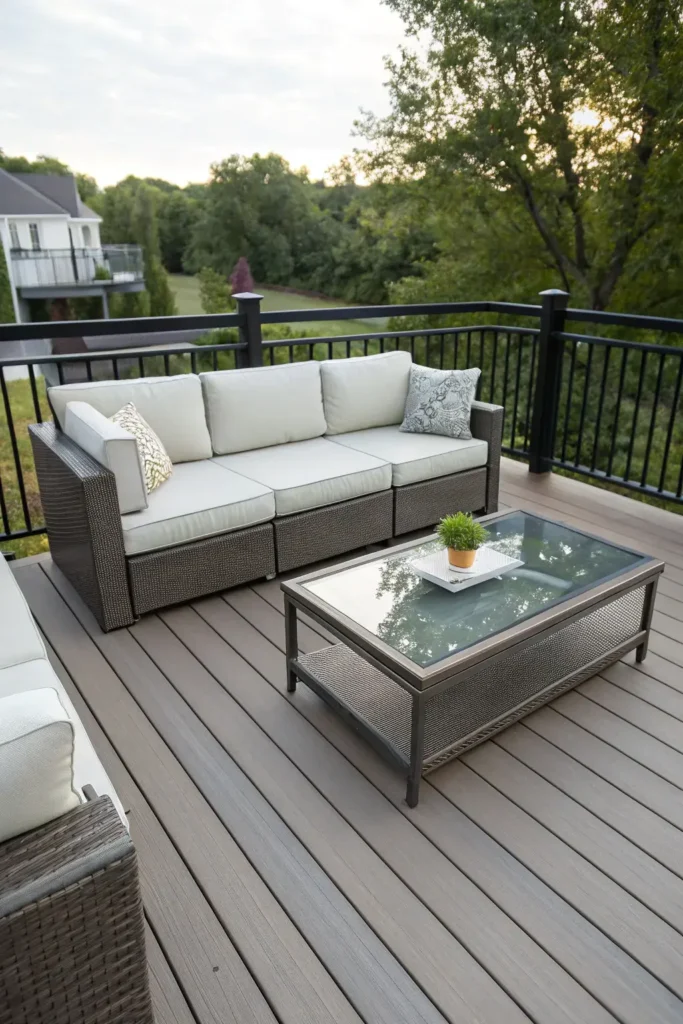
Composite boards from Trex, TimberTech, and Fiberon cost more upfront ($8 to $14 per linear foot) than pressure-treated pine ($2 to $5) but need zero staining, sealing, or sanding over a 25-year warranty period. On a small deck where every board is visible up close, the uniform colour and splinter-free surface of composite make a bigger visual difference than on a large deck where imperfections blend into the background.
Hidden clip fasteners give composite boards a screw-free surface that looks cleaner and feels smoother underfoot. Choose a single board width (5.5 inches is standard) and run all boards in the same direction for a consistent plane that makes the small deck look wider.
20. Double Up on Outdoor Couches
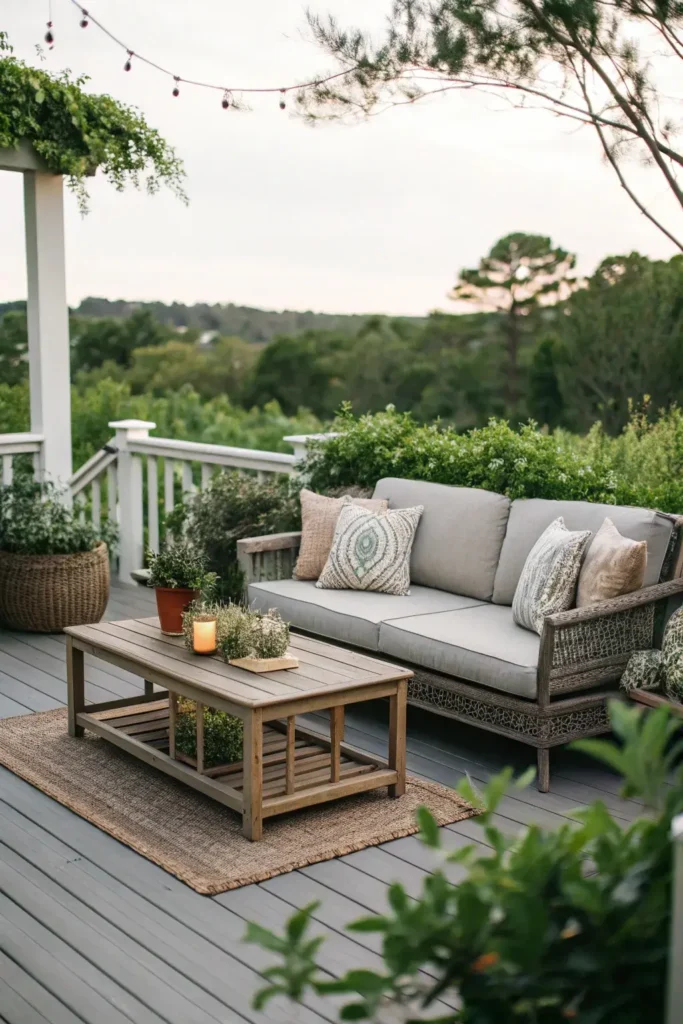
Two compact loveseats facing each other across a narrow coffee table create a conversation pit that seats 4 people and uses a 6×8-foot area. Castlery and Article sell apartment-size outdoor loveseats (50 to 55 inches wide) that fit side by side on a 10-foot-wide deck. Place the coffee table at 14 to 16 inches from each loveseat so drinks stay within reach from both sides.
Matching loveseats give a symmetrical look that reads as intentional and furnished rather than squeezed in. Add a single accent chair at one end to form a U-shape when extra guests arrive, and store the chair inside during daily use to keep the deck open.
21. Add Potted Plants
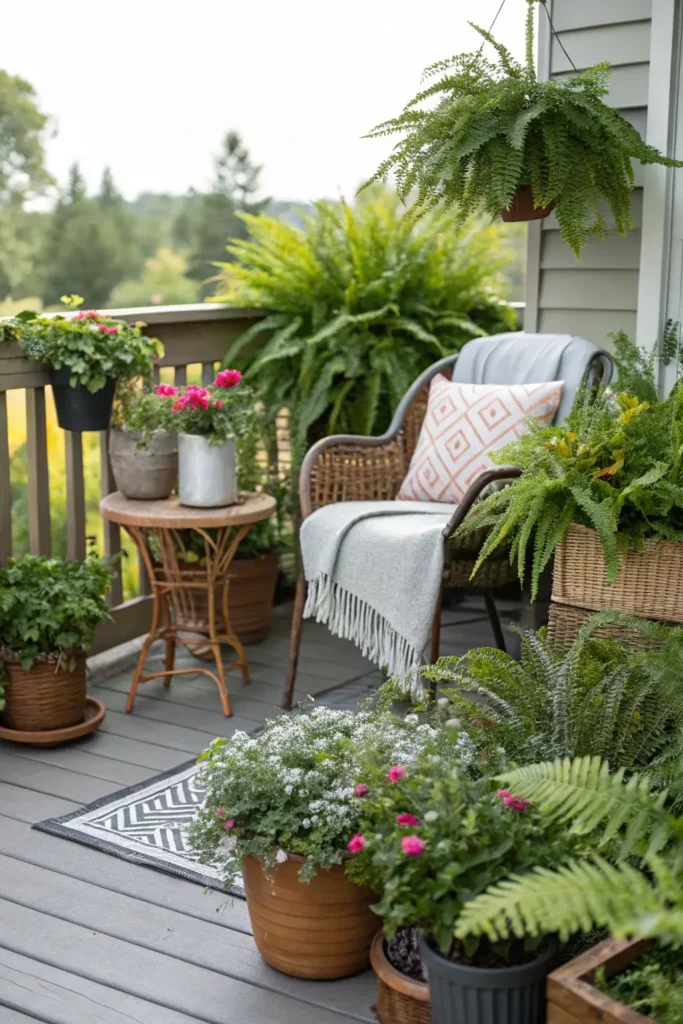
Three to five terracotta or glazed ceramic pots in graduated sizes (8, 12, and 16 inches) add colour and life without crowding a small deck. Place the tallest pot in a back corner with a dracaena or snake plant, medium pots along the railing with lantana or calibrachoa, and a small herb pot (basil, rosemary, mint) on the dining table for fresh garnishes. Total cost for pots and plants runs $50 to $150 from a local nursery.
Group pots in odd numbers (3 or 5) on one side of the deck rather than scattering them evenly on all sides, which fragments the visual flow. Raise each pot on pot feet or risers ($3 to $8 for a set of 3) so water drains freely and the deck surface dries between waterings.
22. Create a Gathering Space
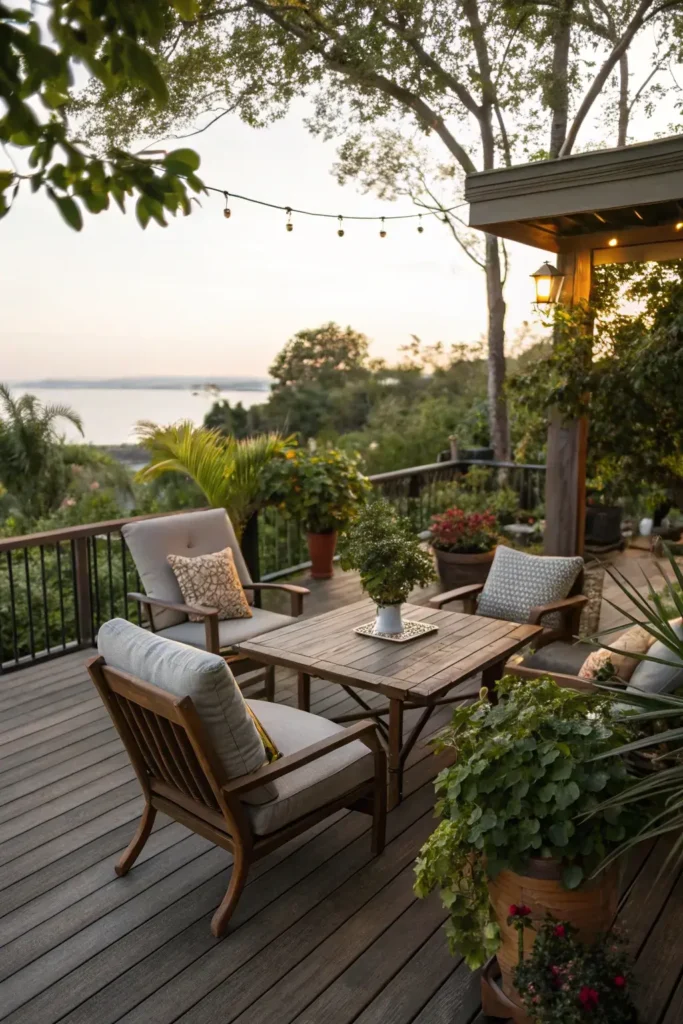
Arrange 4 to 6 lightweight Adirondack or stacking chairs in a loose circle around a fire table or lantern grouping for an intimate outdoor gathering spot that holds up to 6 people. Polywood Adirondack chairs ($200 to $300 each) and Fermob Luxembourg stackers ($350 each) both fit tight circles because the seat-back angle keeps the chair footprint compact.
Pull chairs 6 to 8 inches apart for conversation distance, and leave one opening in the circle as the entry point so people don’t have to step over chair arms. A tiki hut canopy over the gathering space adds a themed roof that defines the circle and makes the group feel enclosed even on an open deck.
23. Layer Throw Pillows and Blankets
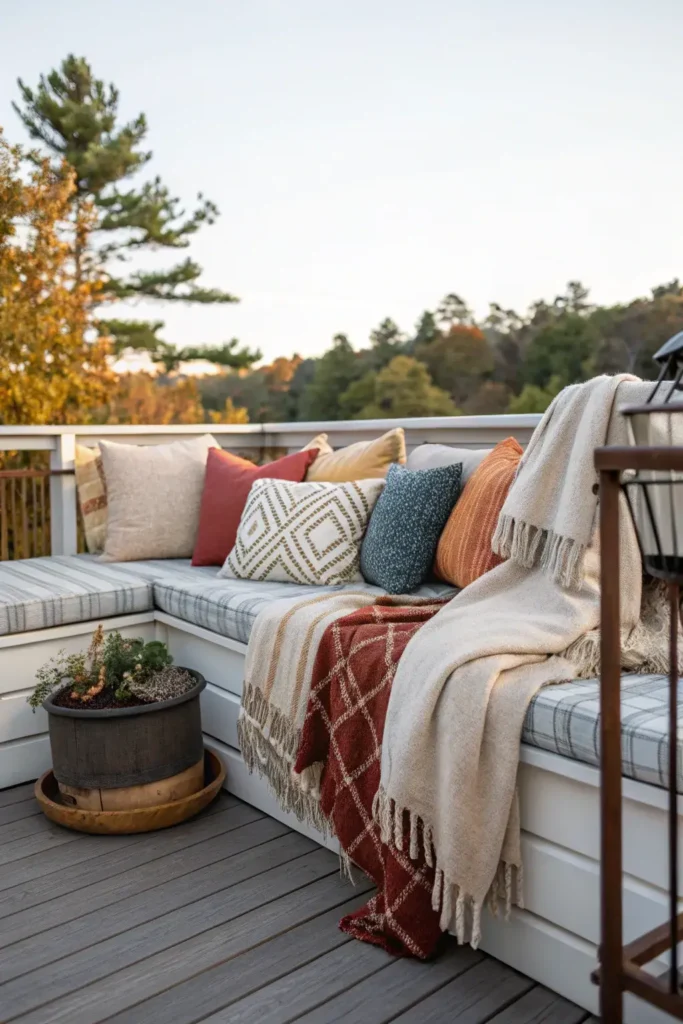
Outdoor throw pillows and lightweight blankets turn hard chairs and benches into seating you linger in for hours. Mix 2 to 3 pillow sizes (20×20, 18×18, 12×20 lumbar) per seat in coordinating patterns and textures within the same colour family. Sunbrella and Elaine Smith pillows ($40 to $100 each) resist UV fading and moisture, so they stay outside all season without cover.
A single cotton or acrylic throw draped over the back of each chair adds warmth for cool evenings and a layered look during the day. Store extra pillows and throws in a lidded storage bench or a waterproof deck box to keep them dry between uses. Visit The Designers Company for more outdoor styling guides that cover colour coordination, fabric choices, and seasonal accessory swaps.
How to Build a Small Deck on a Budget
1. Choose the Size and Location
Mark out a rectangle on the ground using stakes and string, keeping the deck under 100 square feet (8×12 or 10×10) to stay within a DIY-friendly scope and budget. Place the deck adjacent to a back door or kitchen window so the indoor-outdoor connection is direct. Check local building codes for setback requirements, height limits, and permit thresholds before buying materials.
2. Set the Foundation
Use precast concrete deck blocks as footings for a ground-level build, which avoids the cost and labour of pouring concrete piers. Place blocks at 4-foot intervals along each joist line, setting each block on a compacted 4-inch bed of 3/4-inch crushed gravel. Level each block with a 4-foot spirit level and shim with composite shims as needed.
3. Frame and Deck
Build the frame from pressure-treated 2×6 joists at 16-inch centres, with a double rim joist on each perimeter side for rigidity. Screw 5/4×6 pressure-treated or composite deck boards to the joists using exterior-grade 2.5-inch screws, pre-drilling each hole near the board ends to prevent splitting. Leave a 1/8-inch gap between boards for drainage and wood expansion.
4. Finish and Furnish
Sand all surfaces with 120-grit paper, then apply two coats of semi-transparent deck stain (Ready Seal or Cabot Australian Timber Oil) with a 4-inch brush or stain pad. Once the stain cures (48 hours), bring out the furniture: a folding bistro set, 2 to 3 planters, and an outdoor rug. Total build cost for an 8×10-foot ground-level deck in pressure-treated pine runs $400 to $900 in materials.
Small Deck Size and Seating Guide
| Deck Size | Square Feet | Comfortable Seating | Best Layout |
|---|---|---|---|
| 6×8 ft | 48 | 2 people | Bistro table + 2 chairs |
| 8×10 ft | 80 | 3–4 people | Loveseat + 1 chair + side table |
| 10×10 ft | 100 | 4–5 people | L-shaped sectional + coffee table |
| 10×12 ft | 120 | 5–6 people | Dining set OR lounge + fire table |
| 12×12 ft | 144 | 6–8 people | Dining + separate lounge zone |
Frequently Asked Questions
What is the smallest practical deck size?
A 6×8-foot (48-square-foot) deck holds a bistro table and two chairs, which is enough for morning coffee or a drink after work. Going smaller than 6×8 makes the space feel like a step rather than a room. A 6×8 ground-level deck in pressure-treated pine costs $250 to $500 in materials for a full DIY build.
How do you make a small deck look bigger?
Run the deck boards lengthwise (parallel to the longest wall) to draw the eye along the full length of the space. Choose light-coloured stain or composite (grey, blond, whitewash) over dark shades, because lighter surfaces reflect more light and feel more open. Skip the railing on decks under 30 inches high, and use transparent glass panels instead of solid balusters where a railing is required by code.
Do you need a permit for a small deck?
Most jurisdictions allow decks under 200 square feet and under 30 inches above grade without a building permit, but the exact thresholds vary by city and county. Attached decks (bolted to the house) often require a permit regardless of size because the ledger connection affects the house structure. Call your local building department before starting construction to confirm permit and inspection requirements.
What is the cheapest material for a small deck?
Pressure-treated southern yellow pine costs $2 to $5 per linear foot for 5/4×6 deck boards and $2 to $4 per linear foot for 2×6 framing lumber. An 8×10-foot deck in treated pine runs $400 to $700 in framing and decking materials, plus $50 to $100 for fasteners, gravel, and concrete blocks. Cedar costs roughly 50% more and composite costs 2 to 3 times more, making treated pine the clear budget choice.
Can you build a deck without footings?
Ground-level decks under 200 square feet can sit on precast concrete deck blocks placed directly on compacted gravel, skipping the poured footing step entirely. The blocks cost $6 to $10 each and support the full weight of the frame, decking, and furniture without sinking into stable soil. Avoid this method on clay-heavy or poorly drained soil where frost heave can shift the blocks during winter freeze-thaw cycles.