
Kitchen Cabinet Lighting Ideas: 19 Brilliant Ways to Illuminate
Kitchen cabinet lighting does more than illuminate the countertop — it defines the mood of the room after dark, highlights the materials you chose for your backsplash and countertop, and eliminates the shadow that your own body casts when standing between the overhead light and the work surface. A kitchen without cabinet lighting relies entirely on ceiling fixtures, which flatten everything and leave the counter in shadow at the exact moment you need to see what you are chopping.
The two main categories are task lighting (under-cabinet fixtures aimed at the countertop for food prep) and accent lighting (lights inside, above, or below cabinets that create atmosphere and showcase materials). Most well-lit kitchens use both — task lights where you cook and accent lights where you want to set a mood or highlight a display.
Below are 19 kitchen cabinet lighting ideas covering LED strips, puck lights, motion sensors, dimmable options, and vintage-inspired fixtures, each with product recommendations, installation guidance, and the specific situations where each type performs best.
1. LED Strip Lights
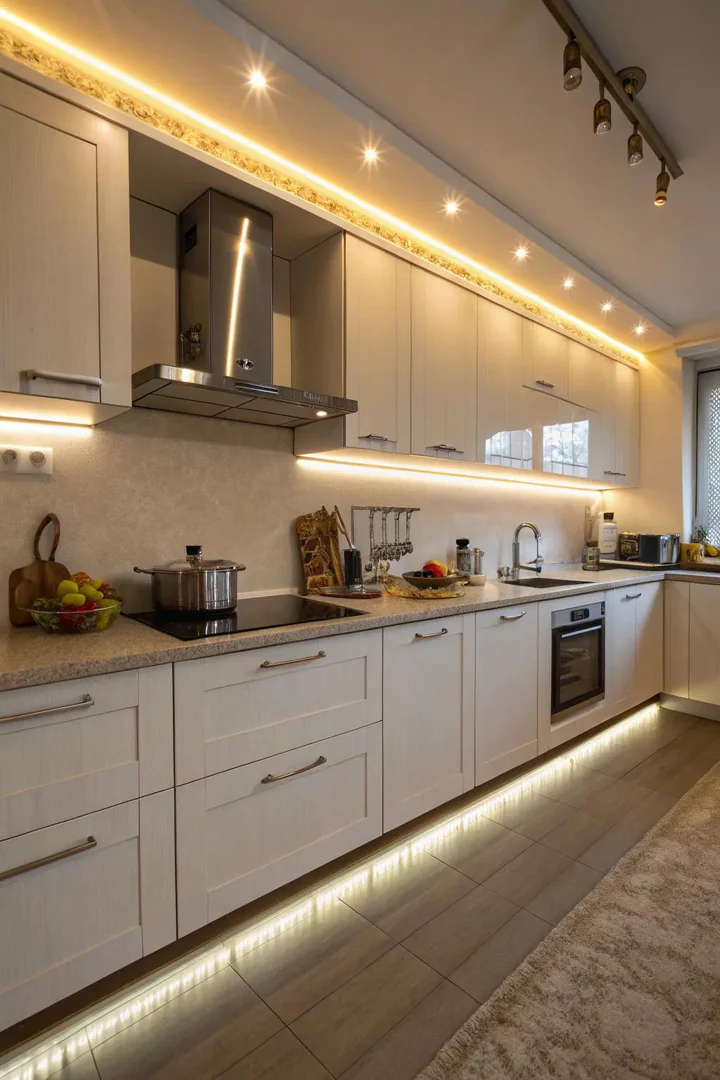
LED strip lights are the most popular under-cabinet lighting option because they produce continuous, even illumination with no visible hot spots or dark gaps between fixtures. Philips Hue Lightstrip Plus, Govee RGBIC strips, and HitLights commercial-grade strips all mount to the underside of upper cabinets with adhesive backing. Position the strip toward the front edge of the cabinet — about one inch from the face frame — so the light washes down the backsplash and across the countertop rather than pooling against the wall.
Choose a strip with a color temperature of 2700K to 3000K for a warm white glow that matches most kitchen lighting. Strips rated at 12 watts per foot or higher provide enough brightness for food prep, while lower-wattage strips work better as accent lighting. Most strips come with a plug-in driver, but hardwired drivers connected to a wall switch give you cleaner installation with no visible cords. A standard kitchen with eight linear feet of upper cabinets requires about forty dollars in LED strips and a twenty-dollar driver — one of the lowest-cost lighting upgrades in any room.
2. LED Puck Lights
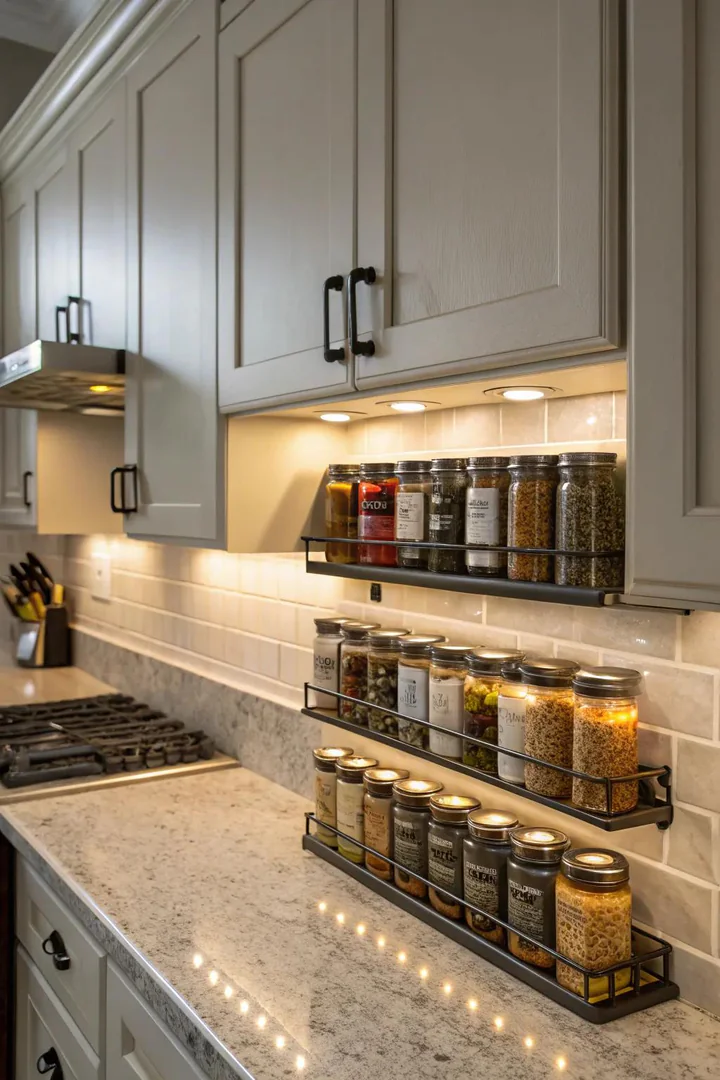
Puck lights are small, round fixtures — typically two to three inches in diameter — that mount individually under cabinets and cast a focused pool of light directly downward. GE Enbrighten, Brilliant Evolution, and WAC Lighting all make LED puck lights in both hardwired and battery-operated versions. Space puck lights eight to twelve inches apart for even countertop coverage, and mount them about one inch behind the cabinet face frame to prevent the light source from being visible to anyone standing at counter height.
Puck lights work best in kitchens where you need targeted illumination over specific work zones — above the cutting board area, above the stove backsplash, or inside a glass-front cabinet. The focused beam creates more dramatic light-and-shadow contrast than a continuous strip, which some homeowners prefer for its spotlight effect. The downside is that widely spaced puck lights leave visible scallop patterns on the wall — light cones separated by darker gaps — so if you want seamless, even illumination, LED strips are a better choice. For a deeper look at how to coordinate cabinet lighting with overhead and pendant fixtures, see our full kitchen lighting ideas guide.
3. Lighting Below Shelves
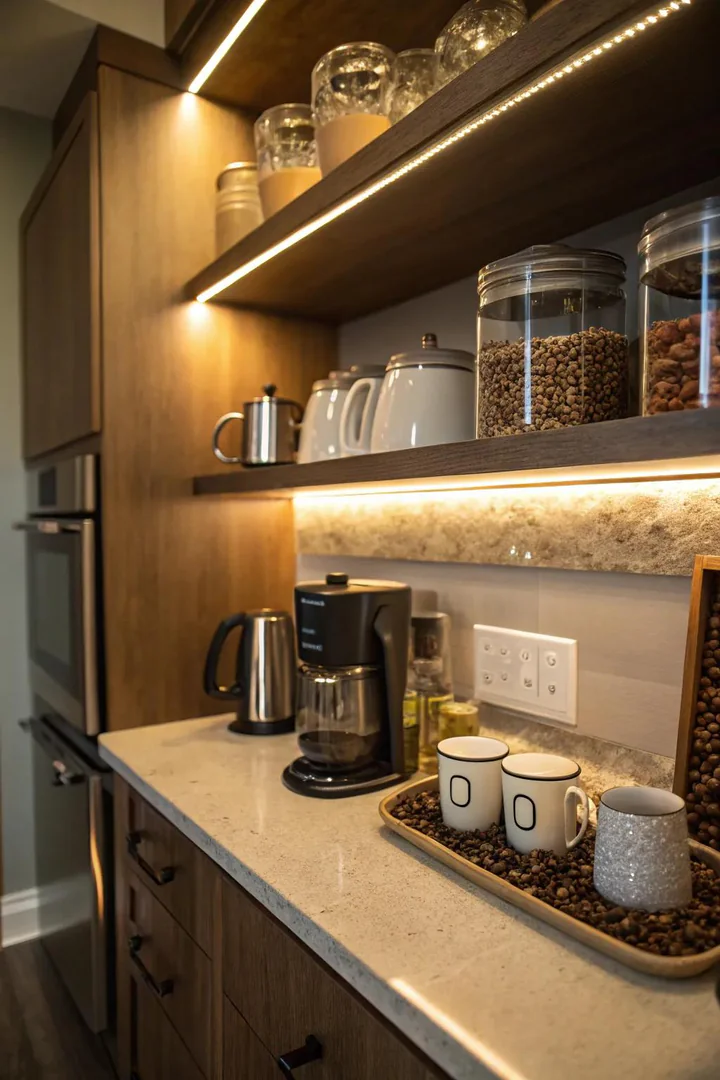
Open shelving has become a popular alternative to upper cabinets in modern kitchens, and under-shelf lighting serves the same role as under-cabinet lighting — it illuminates the countertop and objects on the shelf below while highlighting the backsplash between shelves. A slim LED strip or a linear light bar attached to the underside of each shelf provides a warm downward glow that makes the displayed items on the shelf below look museum-lit rather than randomly illuminated by the ceiling fixture.
Use a low-profile light bar like the Ikea Omlopp or the WAC Lighting BA series, which are thin enough to hide behind the shelf edge. Wire multiple shelf lights to a single switch or dimmer so you can control all levels at once. Under-shelf lighting is especially effective for coffee stations, bar areas, and open pantry displays where the objects on the shelf are both decorative and functional — the light draws attention to glassware, ceramic bowls, and plant pots while providing enough brightness for practical tasks like pouring coffee or reading a recipe label.
4. Lighting for Toe Kicks
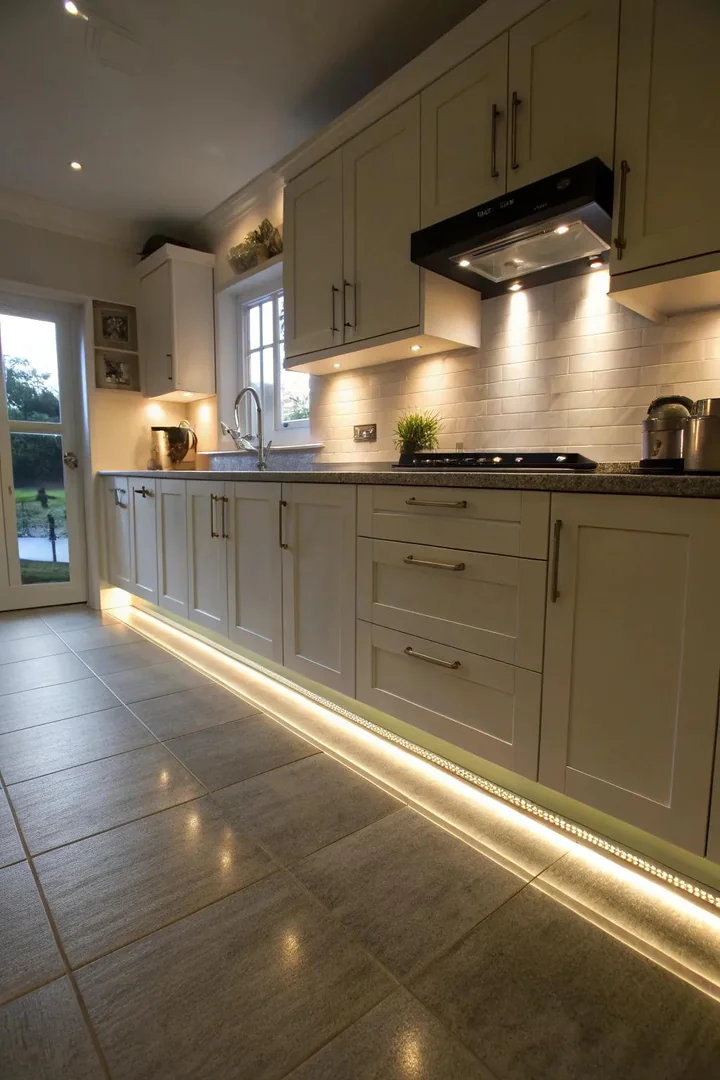
Toe kick lighting — LED strips mounted behind the recessed kick plate at the base of floor cabinets — makes the entire cabinet run appear to float above the floor. The effect is subtle during the day but striking after dark, when the soft glow along the floor acts as a low-level night light that lets you navigate the kitchen without turning on the overhead lights. HitLights and Inspired LED both sell waterproof LED strips specifically designed for toe-kick installation, where floor-mopping splashes and kicked-up debris are constant hazards.
Mount the strip behind the kick plate — the recessed panel between the cabinet bottom and the floor — using adhesive or clip channels. Run a wire channel along the back of the kick plates to connect multiple cabinet runs to a single driver and switch. Choose a warm white (2700K) strip at low brightness for a soft ambient glow, or connect the strip to a motion sensor so it activates when you walk into the kitchen at night. Toe kick lighting costs between thirty and seventy-five dollars for a full kitchen run and installs in under two hours.
5. Lights Powered by Batteries
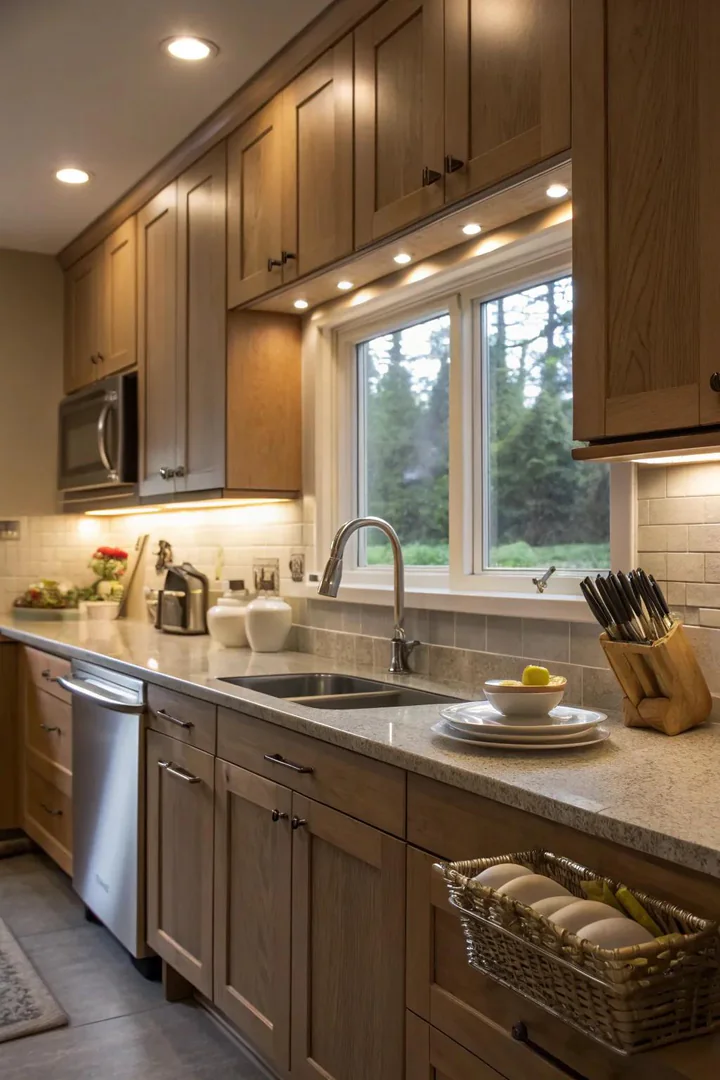
Battery-operated LED puck lights and stick-on bars are the easiest cabinet lighting to install because they require no wiring, no drilling, and no electrician. Mr. Beams, Brilliant Evolution, and OxyLED all make battery-powered under-cabinet lights that mount with adhesive pads and turn on with a tap, a remote, or a built-in motion sensor. Installation takes under five minutes per light, which makes battery lights the only realistic option for renters who cannot modify cabinets or electrical wiring.
The trade-off is that batteries need replacing every three to six months depending on usage, and battery lights produce less brightness than hardwired or plug-in alternatives — typically 50 to 150 lumens per unit versus 300 or more lumens from a hardwired strip. Use battery lights as accent or night-light-level illumination rather than primary task lighting. Position them inside pantry cabinets, closets, and deep corner cabinets where a motion sensor that activates when you open the door adds genuine daily convenience.
6. LED Lights That Change Color
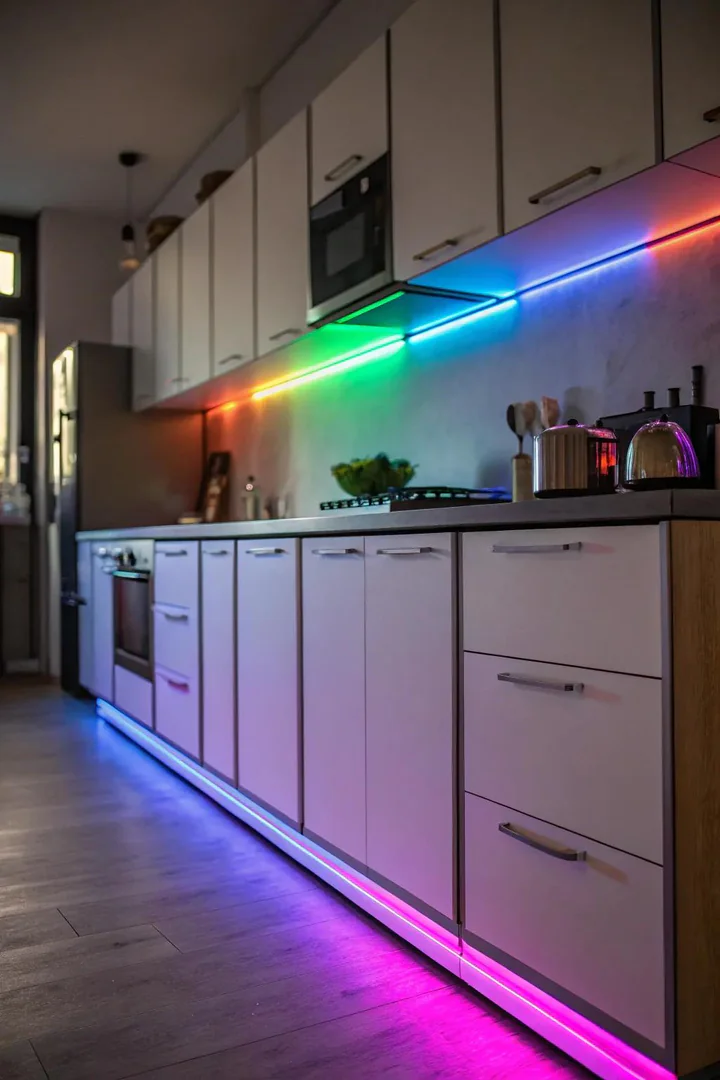
RGBIC and RGB LED strips let you change the under-cabinet light color from warm white for cooking to amber for evening ambiance to any saturated color for parties, holidays, or mood lighting. Govee RGBIC strips and Philips Hue Lightstrip Plus are the two most popular options — both connect to smartphone apps that let you set custom colors, program schedules, and sync the lights to music. Govee costs about half the price of Hue but lacks the deep smart-home integration (HomeKit, Alexa routines) that Hue offers.
For daily use, set the color-changing strip to a warm white between 2700K and 3000K so the kitchen looks natural and inviting. Switch to a saturated color — deep purple, ocean blue, or sunset orange — when you want the kitchen to feel like a different space for a dinner party or a movie night. Color-changing lights work best as accent lighting above cabinets, along toe kicks, or inside glass-front cabinets where the color effect is visible without interfering with food-prep visibility. Avoid using saturated colors under cabinets during cooking — colored light distorts the appearance of food and makes it difficult to judge doneness and freshness.
7. String Lights
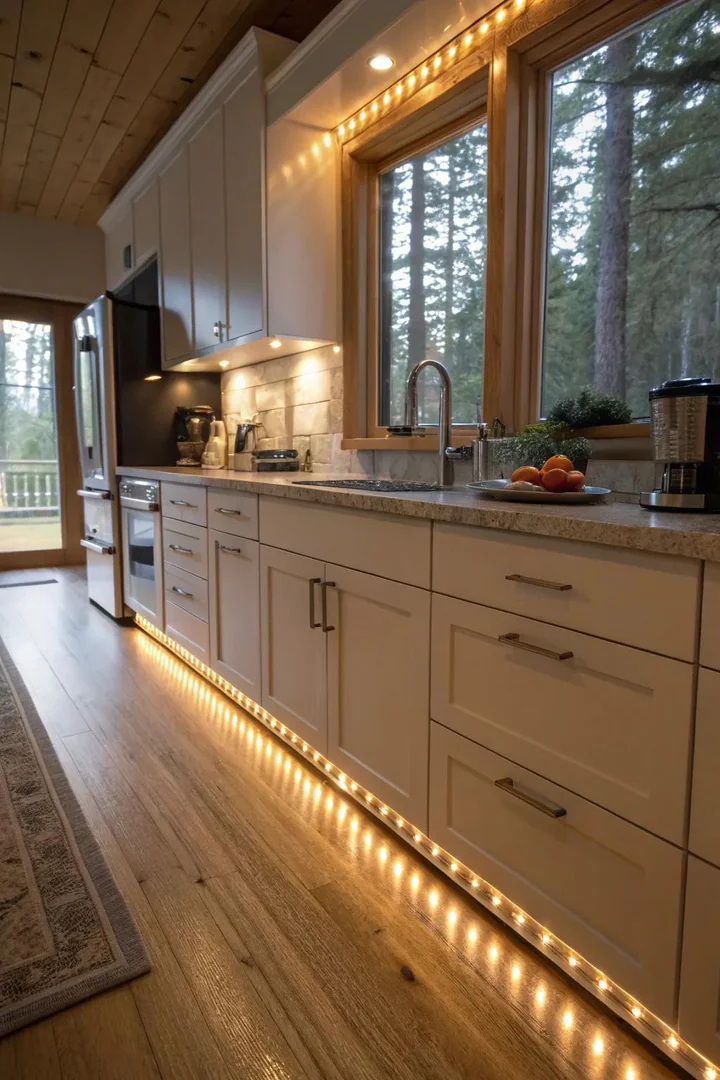
Rope lights — LEDs encased in a flexible clear or frosted tube — produce a soft, diffused glow that works well as accent lighting along the top of upper cabinets or underneath a cabinet toe kick. The tube enclosure hides the individual LED points and creates a smooth, continuous line of light rather than a dotted pattern. Commercial Electric and Westek both sell sixteen-foot rope light kits at Home Depot for under twenty dollars, making rope lights one of the cheapest cabinet lighting options available.
Mount rope lights with adhesive clips or small cable clamps along the back edge of the cabinet top for over-cabinet accent lighting, or tuck them behind the face frame underneath cabinets for a soft under-cabinet wash. Rope lights are thicker than flat LED strips — typically half an inch in diameter — so they are harder to hide in tight spaces, but the frosted tube diffuses the light more evenly than a bare strip. Use rope lights where you want gentle ambient glow rather than focused task lighting, and connect them to a dimmer for adjustable brightness.
8. Cabinet Light Strips
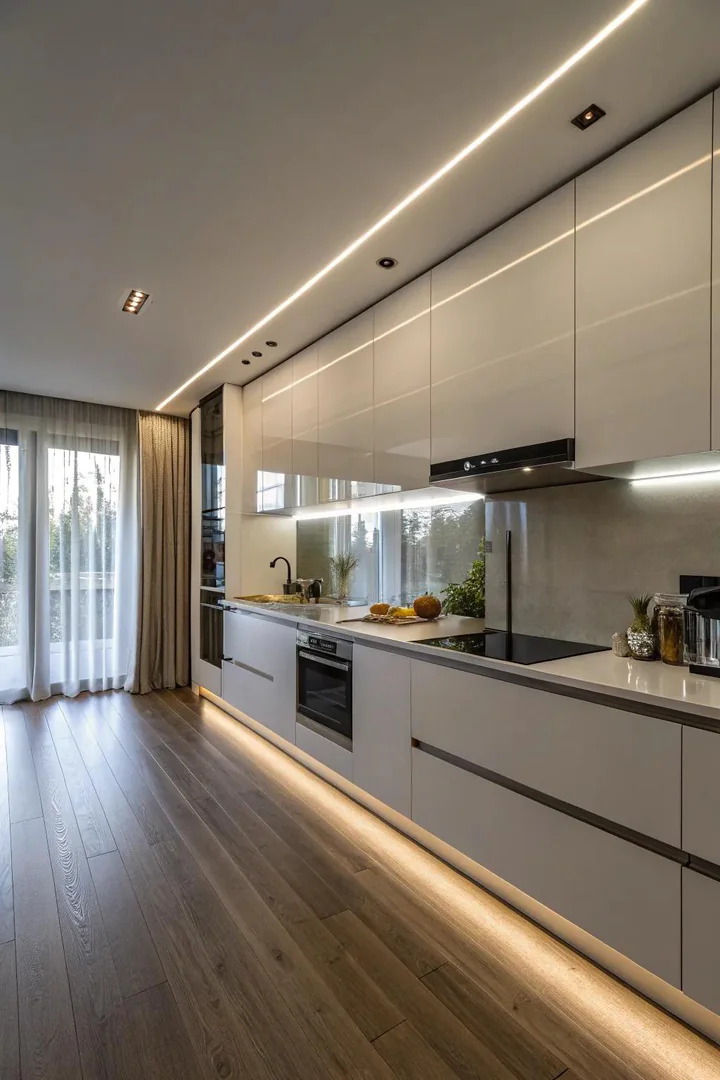
Light bars are rigid, self-contained LED fixtures between twelve and thirty-six inches long that mount under cabinets with screws or adhesive. Unlike flexible LED strips, light bars include their own housing, diffuser lens, and mounting hardware in a single slim package. The GE Premium Slim LED light bar, the Black and Decker PureOptics bar, and the Eshine LED bar are all well-reviewed options that produce clean, evenly diffused light along the full length of the bar.
Light bars install faster than LED strips because there is no driver to mount separately and no adhesive that might fail over time. Link multiple bars end-to-end with the included connector cables to span the full width of a cabinet run, and wire them to a single plug or hardwire connection. Most light bars are between half an inch and one inch thick, which makes them nearly invisible when mounted flush against the underside of the cabinet. Choose a light bar with a built-in dimmer switch or connect the bar to a compatible wall dimmer for adjustable brightness control.
9. Cordless LED Lighting
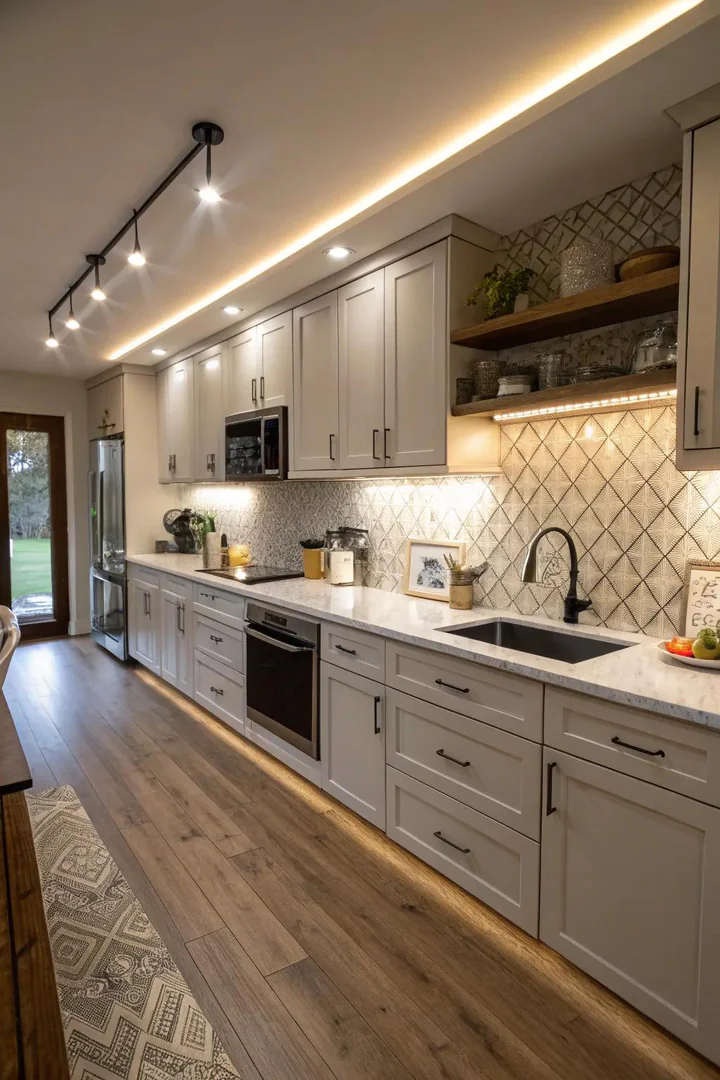
Wireless LED lights combine rechargeable batteries with adhesive or magnetic mounting for a truly cord-free installation. Unlike disposable-battery puck lights, rechargeable wireless lights — like the OxyLED T-02U or the BLS rechargeable bar — charge via USB-C or micro-USB and last between four and eight weeks per charge depending on daily usage. Detach the light bar, plug it into a USB charger overnight, and reattach it in the morning for another month of use.
Wireless rechargeable lights are the best option for renters, for temporary installations like holiday entertaining, or for cabinet locations where running a wire is impractical — inside a standalone pantry cabinet, underneath a kitchen island overhang, or inside a deep drawer. The brightness typically falls between battery-operated puck lights and hardwired strips, making wireless lights a solid middle ground for homeowners who want better-than-battery performance without the commitment of permanent wiring.
10. Adjustable Lighting Choices
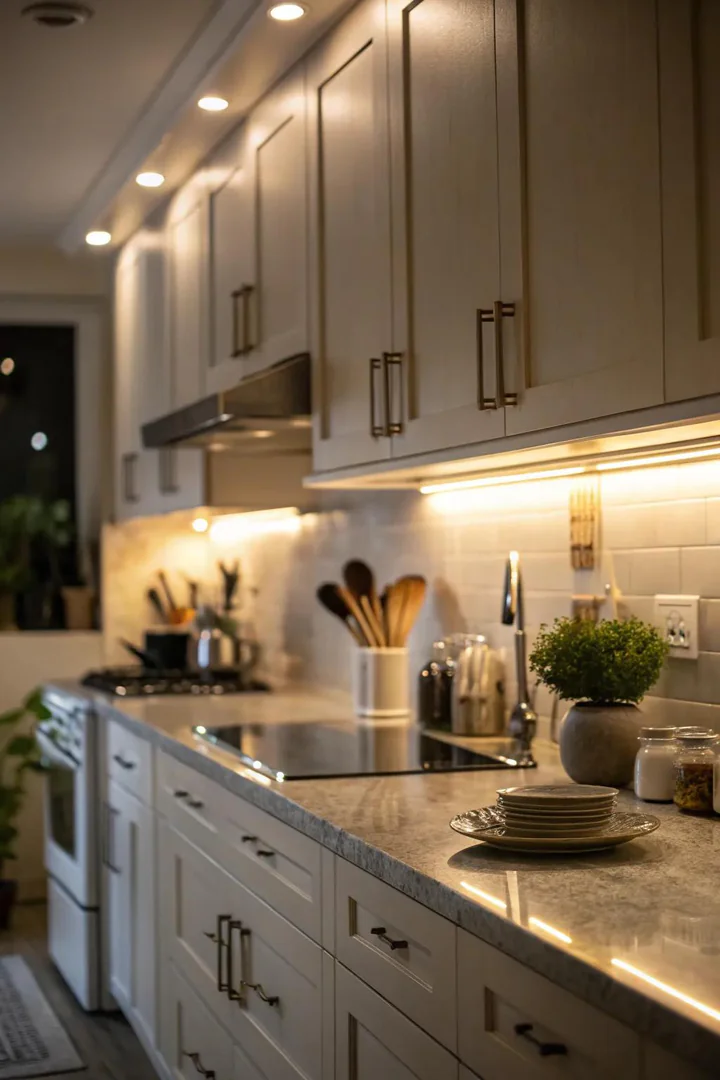
Dimmable under-cabinet lights let you shift between full brightness for chopping and sauteing and a low glow for evening ambiance — a single fixture that serves both task and mood functions. Most hardwired LED strips and light bars are compatible with standard triac or ELV dimmers when paired with a dimmable LED driver. Lutron Caseta and Lutron Diva are two of the most reliable dimmer switches for LED cabinet lighting because they handle the low wattage of LED strips without buzzing or flickering.
For plug-in systems, inline cord dimmers from Lutron and Leviton sit between the outlet and the light’s power adapter and let you dial brightness up or down with a rotary knob or a slider. Philips Hue and Govee smart strips offer app-controlled dimming plus voice control through Alexa, Google Assistant, and Siri. Dimmability is worth prioritizing when you shop for cabinet lighting because a bright white work light that you cannot dim becomes harsh and unwelcoming after dinner — the ability to lower the intensity by seventy percent turns the same fixture into a soft accent light.
11. Combined Motion Detection Sensors
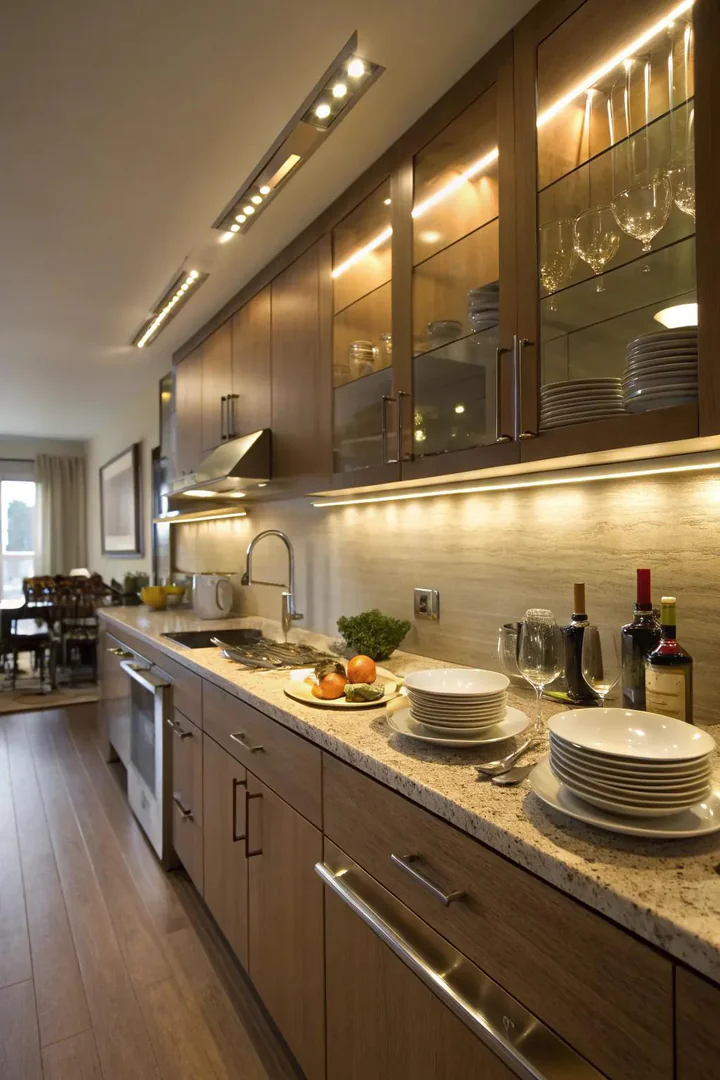
Motion-sensor cabinet lights turn on automatically when you walk into the kitchen or open a cabinet door, and turn off after a set delay — typically fifteen to sixty seconds of inactivity. This hands-free operation is especially useful when your hands are full of groceries, when you are carrying a toddler, or when you walk into a dark kitchen at night for a glass of water. Mr. Beams, Brilliant Evolution, and OxyLED all offer motion-sensor puck lights and light bars designed specifically for cabinet interiors and under-cabinet mounting.
Place motion-sensor lights inside deep cabinets, pantry closets, and under upper cabinets near the entry point of the kitchen where they activate as you approach. Choose lights with adjustable sensitivity and auto-off timing so the light does not trigger from ambient movement across the room. For under-cabinet task lighting, a motion sensor paired with a dimmable strip gives you the convenience of automatic activation with the flexibility to adjust brightness manually when you want to keep the lights on for an extended cooking session.
12. Crown Molding for Accent Lighting
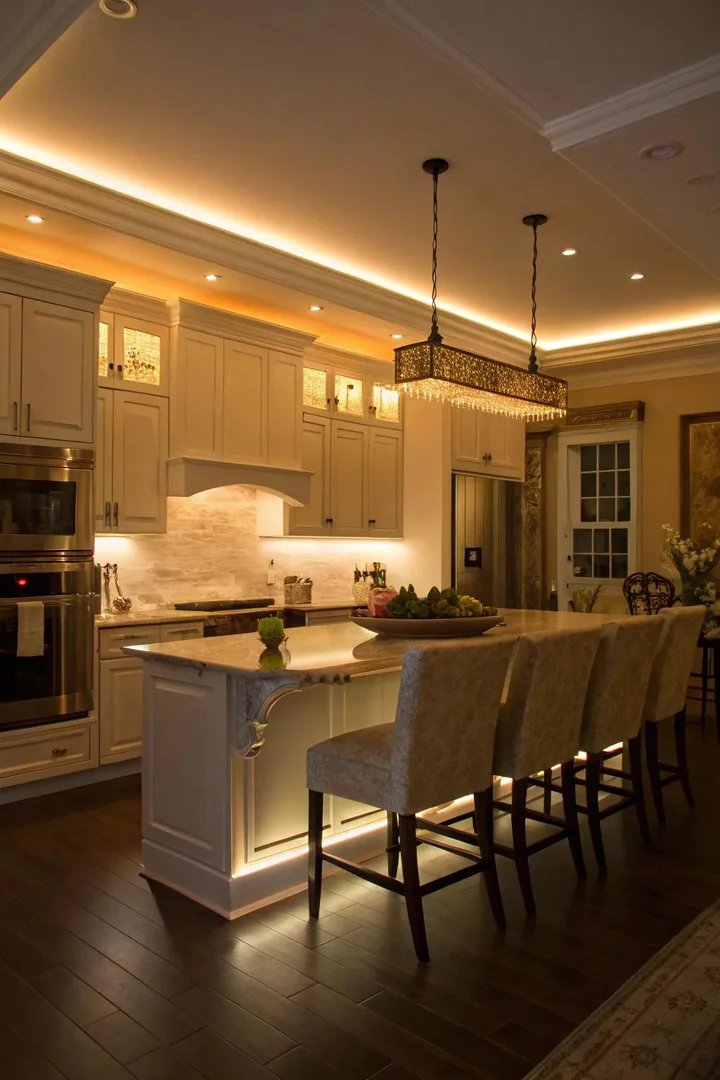
Installing crown molding on top of upper cabinets and tucking an LED strip behind it creates a soft upward glow that washes the ceiling with light while completely hiding the light source. The molding acts as a light channel — the LED strip faces upward behind the molding lip, and the reflected light bounces off the ceiling and fills the upper third of the kitchen with a warm ambient wash. This technique is called “cove lighting” and it is one of the most polished accent lighting effects you can create in a kitchen.
Use a simple three-inch cove molding or a standard crown molding profile mounted with a half-inch gap between the molding and the ceiling so the light can escape upward. A warm-white LED strip (2700K to 3000K) at medium brightness produces the best effect — too bright and the ceiling becomes a glare source, too dim and the effect disappears. Crown-molding accent lighting pairs well with under-cabinet task lighting on the same dimmer circuit so both layers dim together and the kitchen transitions smoothly from a bright work space to a warm, softly lit room for evening meals. For luxury modern kitchen design inspiration, this cove-lighting technique is one of the hallmarks that separates a professional result from a standard builder-grade kitchen.
13. Cabinet Under Spotlights
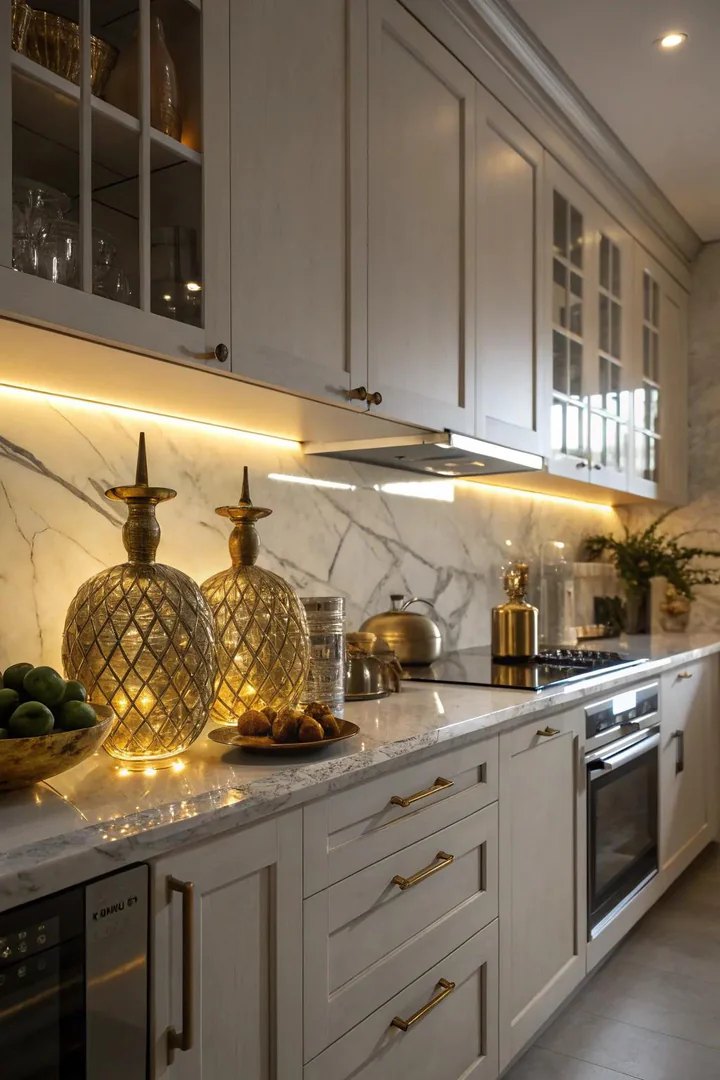
Under-cabinet spotlights use a focused, narrow beam to light a specific object or zone on the countertop — a backsplash detail, a decorative tile mural, or a frequently used work area. Unlike puck lights, which cast a wide cone of light, spotlights use a reflector and a narrow beam angle (fifteen to thirty degrees) to concentrate the light on a small target area. WAC Lighting and Juno both make low-voltage miniature spotlights designed for under-cabinet mounting that adjust on a swivel so you can aim the beam precisely.
Spotlights work best when used sparingly — one or two per kitchen to highlight a particular backsplash feature or art piece rather than for general countertop illumination. The focused beam creates dramatic shadows and highlights that add depth and visual interest to the backsplash surface. Pair spotlights with broader under-cabinet strips to create a layered lighting plan that combines even task lighting across the full counter with targeted accent lighting on the most interesting sections of the wall.
14. Versatile Tape Lighting
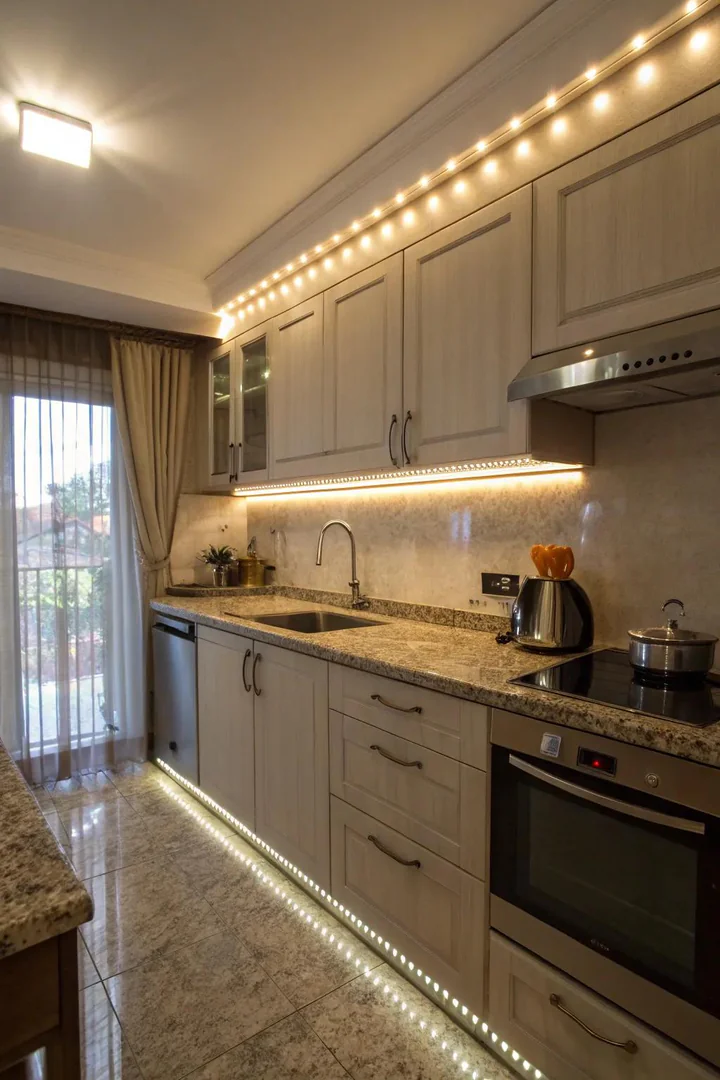
Flexible LED tape is essentially the same product as LED strip lights but in a thinner, more flexible form factor that bends around corners, follows curves, and fits into tighter channels than standard-width strips. HitLights, Elstar, and WAC Lighting InvisiLED all make ultra-thin LED tapes that are less than a quarter inch wide and bend to follow the inside corners of cabinets, the curves of arched openings, and the profiles of crown molding without crimping or breaking the circuit.
Use flexible tape in locations where a rigid light bar or a standard strip would not fit — inside a curved display niche, along the inside edge of a glass-front cabinet door, or wrapped around a column or post. Cut the tape at the marked solder points to create custom lengths that match your cabinet dimensions exactly, and rejoin cut sections with solderless snap connectors. Flexible tape shares the same brightness, color temperature, and driver requirements as standard LED strips, so it integrates into existing strip-light circuits without requiring separate power supplies.
15. Illumination for Glass Cabinets
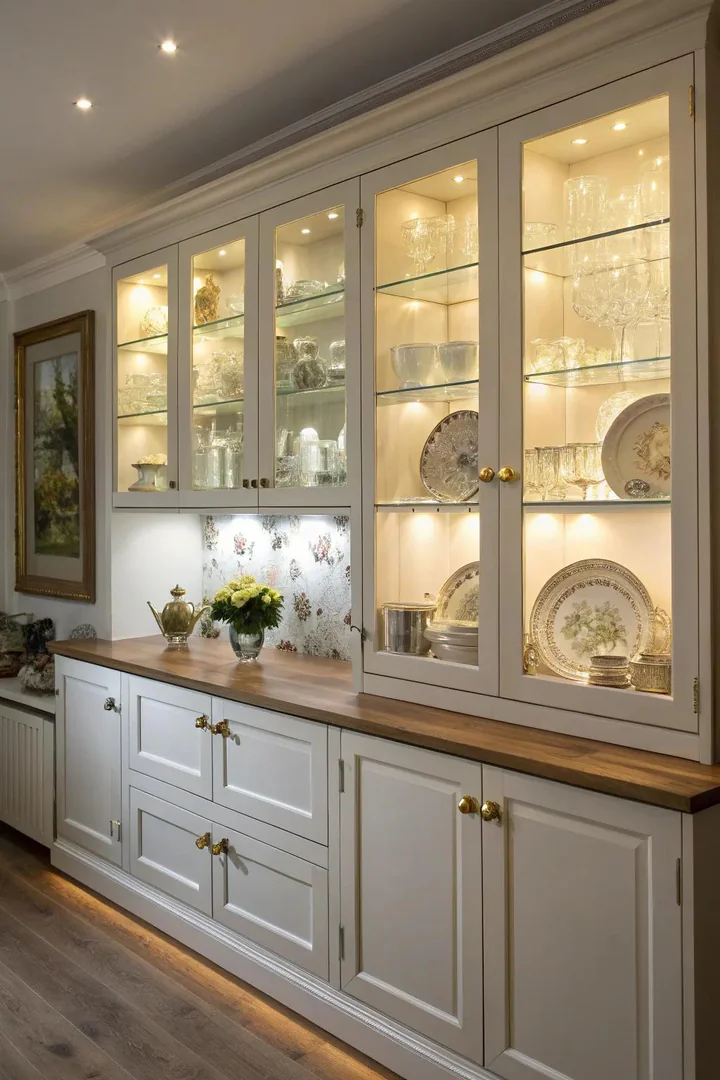
Glass-front and glass-shelf cabinets become display cases when you add interior lighting that illuminates the objects inside. Mount a slim LED strip along the inside top of the cabinet so the light shines downward through glass shelves, casting each shelf in a soft glow that highlights glassware, china, and decorative objects. Hafele Loox and WAC Lighting InvisiLED both make ultra-slim interior cabinet strips that are thin enough to tuck behind the face frame where they are invisible from the outside.
For cabinets with glass shelves, the downward-facing strip on the cabinet ceiling lights every shelf simultaneously because the light passes through the transparent shelves. For cabinets with wood shelves, add a small puck light or a strip under each individual shelf to ensure every level is lit. Connect the interior cabinet lights to a separate switch from the under-cabinet task lights so you can display-light your glassware in the evening without turning on the full task-lighting circuit. Interior cabinet lighting makes everyday dishes and glassware look like a curated collection, turning utilitarian storage into a design feature.
16. Task Lighting for Under Cabinets
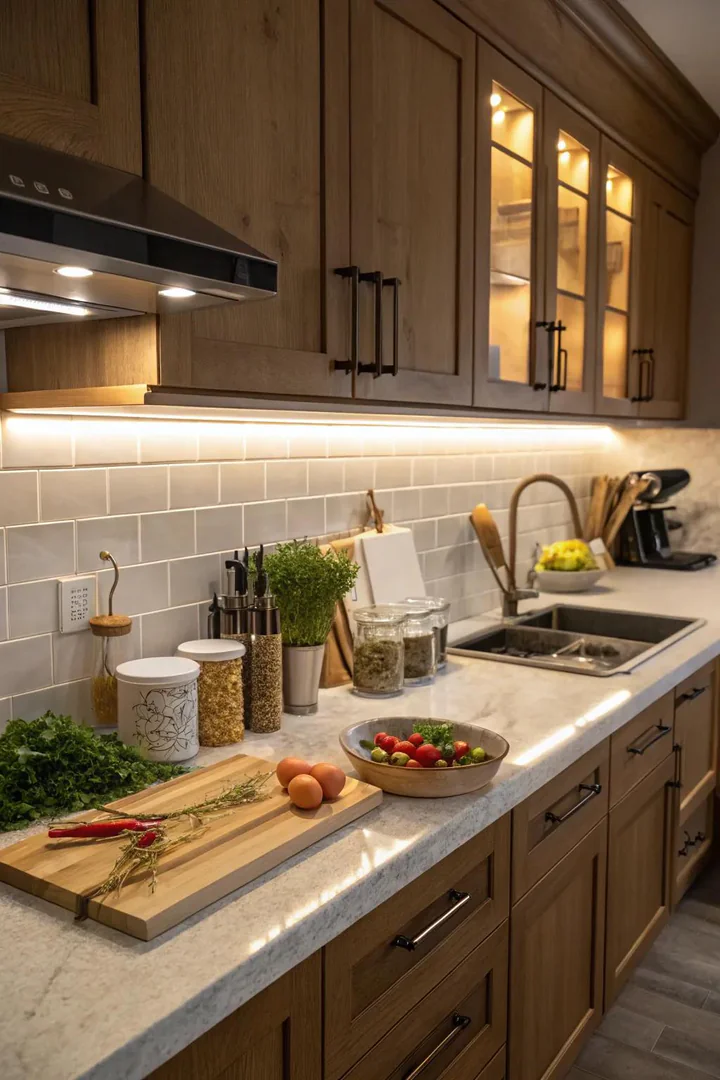
Task lighting under cabinets has one job: putting bright, even, white light on the countertop where you chop, measure, mix, and read recipes. The fixture should produce at least 250 lumens per linear foot at a color temperature between 3000K and 4000K — warm enough to feel pleasant but white enough to render food colors accurately. A strip or light bar in the 3500K range hits the sweet spot between the yellowish warmth of 2700K and the clinical bluishness of 5000K, making it the most functional color temperature for kitchen work.
Position the fixture one to two inches behind the cabinet face frame so the light source is hidden from anyone standing at normal viewing height. Run the fixture the full width of the cabinet — partial coverage leaves dark spots at the counter’s edges where you are most likely to place a cutting board or a mixing bowl. Wire all under-cabinet task lights to a single wall switch located near the kitchen’s main entry point so you can light the counters with one flip as you walk in. For ideas on how cabinet lighting integrates with broader kitchen cabinet layout ideas, our layout guide covers placement strategies for upper and lower cabinets that maximize both storage and lighting potential.
17. Light Panels for Under Cabinets
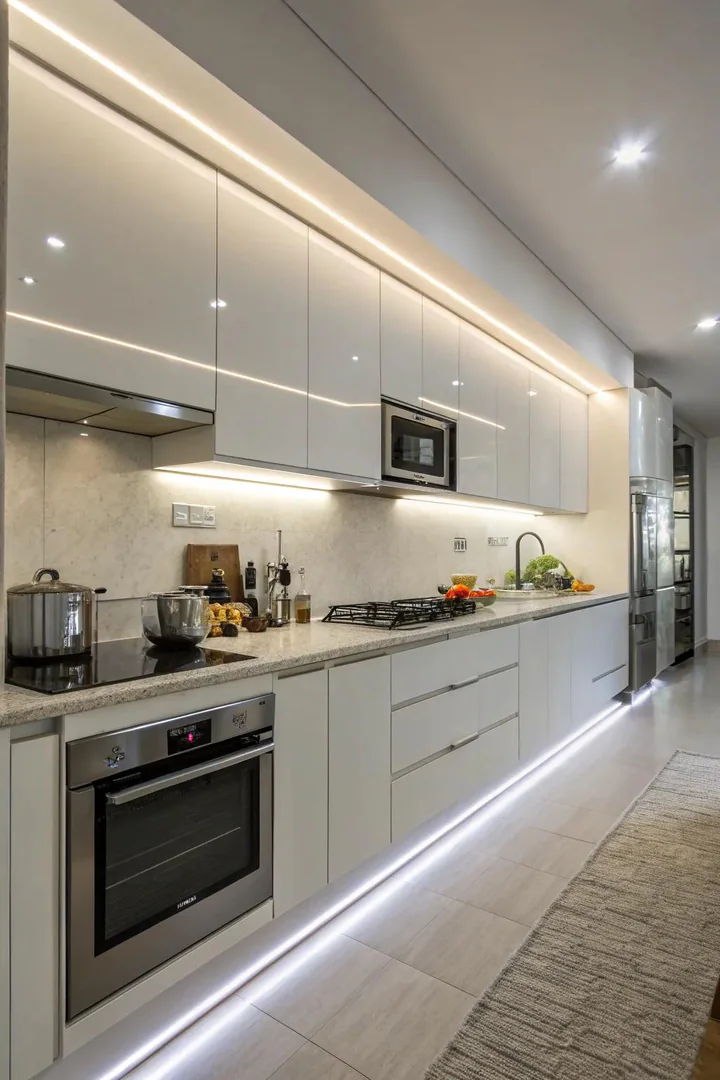
Flat LED light panels mount flush to the underside of upper cabinets and produce a broad, shadowless wash of light across the entire countertop. Unlike strips and bars, which create a linear light source, panels spread light in two dimensions — forward toward the countertop edge and sideways to eliminate the dark gaps between individual fixtures. Nanoleaf Essentials panels and Ikea Floalt panels are both designed for surface mounting and produce evenly diffused light with no visible LED dots.
Light panels are the thinnest under-cabinet option — most are less than half an inch thick — which makes them nearly invisible when viewed from the side. They work best on cabinets with smooth, flat undersides where the panel can sit flush without interference from cabinet hinges or molding. The downside is cost: light panels run two to three times the price of equivalent LED strips for the same coverage area. If budget is not a constraint and you want the cleanest, most uniform under-cabinet lighting possible, panels deliver the most polished result.
18. Sustainable Lighting Choices
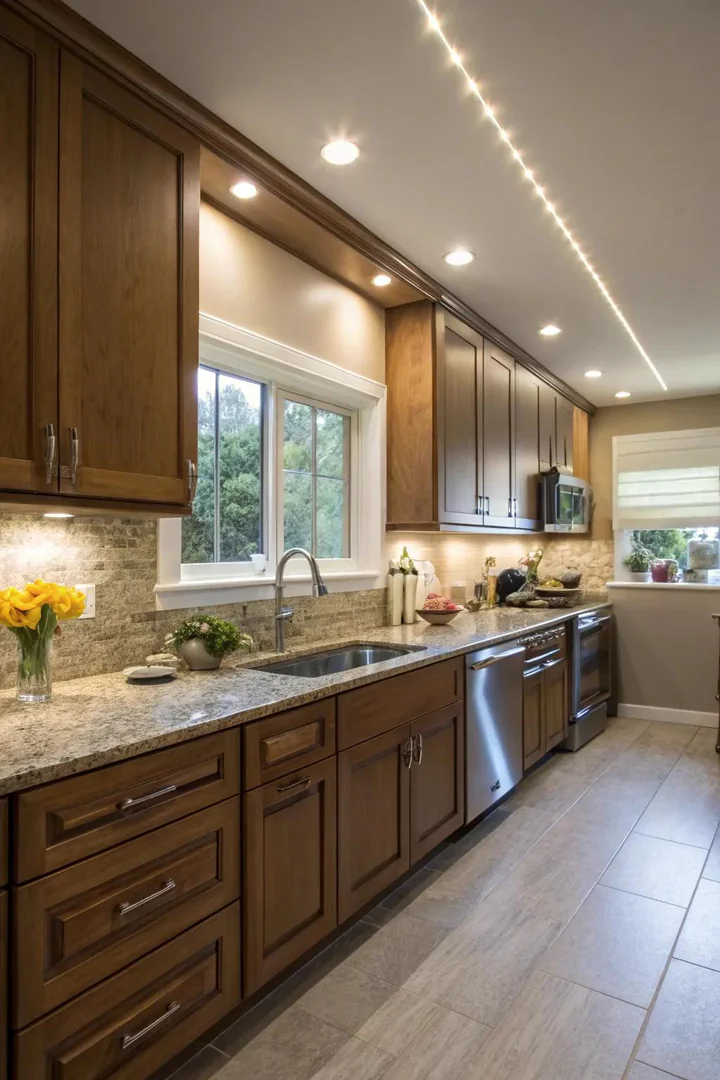
All LED cabinet lighting is inherently energy-efficient — LEDs use seventy-five to eighty percent less electricity than incandescent and halogen alternatives and last twenty-five to fifty times longer. A full kitchen of LED under-cabinet lighting running four hours per day costs less than five dollars per year in electricity, compared to thirty to fifty dollars per year for the halogen puck lights that were standard in kitchens built before 2010. If your kitchen still has halogen under-cabinet fixtures, swapping them for LED equivalents pays for itself in under two years through electricity savings alone.
Beyond energy consumption, look for LED fixtures made with recyclable aluminum housings and drivers with a rated lifespan of 50,000 hours or more — that is roughly twelve years of daily use. Brands like WAC Lighting and Philips publish Environmental Product Declarations (EPDs) that detail the carbon footprint and recyclability of their fixtures, which matters if you are building or renovating with sustainability goals in mind. Pairing efficient LED cabinet lighting with a smart dimmer or a timer switch reduces consumption further by ensuring lights are not running when the kitchen is empty.
19. Retro-Style Illumination
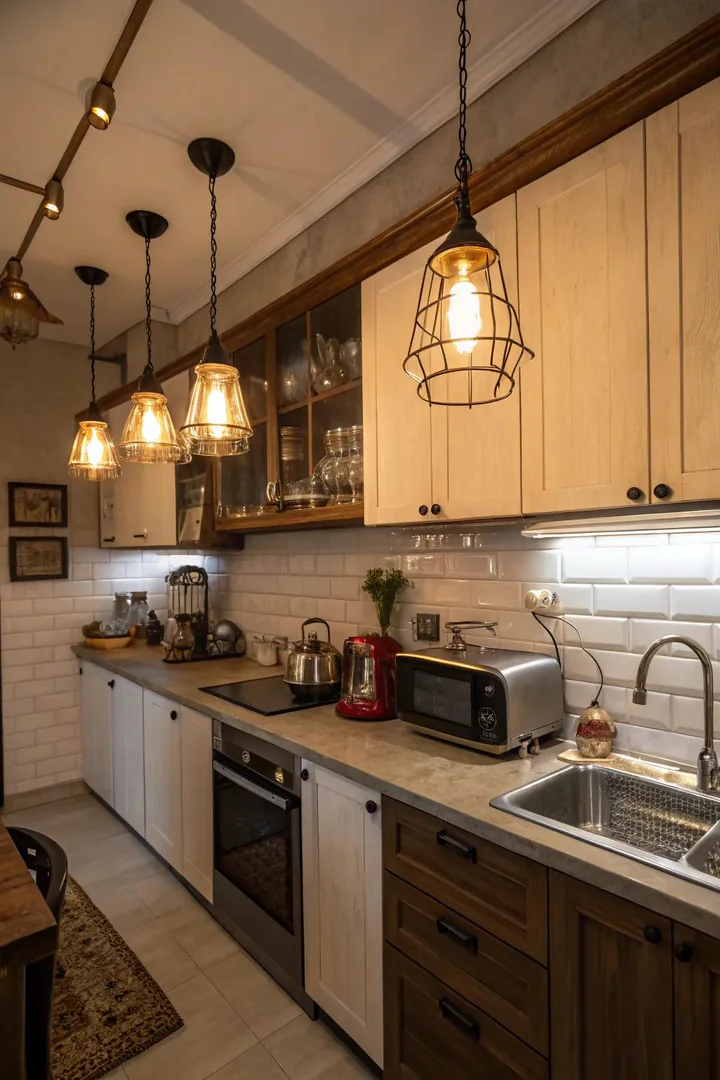
Vintage-style cabinet lighting uses Edison-bulb fixtures, brass or copper housings, and warm amber-toned LEDs to create a lighting effect that feels nostalgic rather than modern. Small brass picture lights mounted to the underside of open shelves, miniature Edison-bulb pendants hung from the bottom of upper cabinets, and warm-toned LED strips inside decorative channels all deliver a retro look while still using energy-efficient LED technology. Rejuvenation, Schoolhouse Electric, and Lostine all sell brass and copper light fixtures in small sizes suitable for under-cabinet and shelf applications.
Vintage lighting works best in farmhouse, cottage, and eclectic kitchens where the warm metallic finishes and amber light complement natural wood, open shelving, and collected decor. Avoid using vintage-style fixtures as primary task lighting — their warm amber tone (2200K to 2400K) is too yellow to render food colors accurately, which makes chopping and cooking more difficult. Use them as accent or display lighting above open shelves and inside glass cabinets, and pair them with a cooler-toned task light (3000K to 3500K) under the main work cabinets. Visit The Designers Company for more kitchen fixture recommendations and lighting-layer strategies that blend vintage charm with modern functionality.
How to Plan Kitchen Cabinet Lighting
Choosing Between Hardwired and Plug-In Options
Hardwired cabinet lights connect directly to your home’s electrical system through a wall switch, which eliminates visible cords and gives you the cleanest installation. This is the best option during a kitchen renovation when walls are open and an electrician is already on-site. Plug-in lights connect to a standard outlet and typically run a thin cord along the back wall of the counter to the nearest receptacle. Plug-in lights are faster and cheaper to install and do not require an electrician, but the visible cord is a trade-off that some homeowners find unacceptable. Battery and rechargeable wireless lights are the third option — no cords at all, but lower brightness and ongoing battery maintenance.
Selecting the Right Color Temperature
Color temperature is measured in Kelvin (K) and determines whether light looks warm and yellow or cool and blue. For kitchen cabinet lighting, 2700K matches the warm glow of traditional incandescent bulbs and feels cozy but slightly yellow. 3000K is slightly whiter and is the most popular kitchen choice. 3500K to 4000K is neutral white and provides the most accurate color rendering for food prep. Avoid 5000K and above for cabinet lighting — it looks clinical and harsh in a residential kitchen. If possible, choose a tunable-white fixture that lets you adjust color temperature depending on the time of day and the task.
Placement and Spacing Guidelines
For continuous lighting (strips and bars), mount the fixture one to two inches behind the front face frame of the cabinet so the light source is hidden from standing viewing height. For individual fixtures (puck lights and spotlights), space them eight to twelve inches apart for even coverage and align them in a straight line parallel to the cabinet edge. In all cases, run the lighting the full width of the cabinet run — ending the light short of the cabinet’s edge creates an unfinished look with a visible dark gap at the end. For glass-front cabinets, place the light at the top interior and ensure the beam angle covers the full depth of the cabinet.
Cabinet Lighting Options Comparison
| Type | Best Use | Installation | Price Range |
|---|---|---|---|
| LED strip lights | Even under-cabinet illumination | Adhesive + driver (DIY) | $20 – $60 |
| Puck lights | Focused task zones | Screws or adhesive | $15 – $50 |
| Light bars | Clean, professional look | Screws (DIY or pro) | $25 – $80 |
| Battery-operated | Rentals, closets, pantries | Adhesive (tool-free) | $10 – $30 |
| Color-changing RGB | Accent and mood lighting | Adhesive + app | $30 – $80 |
| Motion-sensor | Night navigation, pantries | Adhesive or screws | $15 – $40 |
| Crown-molding cove | Ceiling wash, ambient glow | Molding + strip (moderate DIY) | $50 – $150 |
| Glass-cabinet interior | Display lighting | Strip or puck (DIY) | $20 – $60 |
Common Cabinet Lighting Mistakes to Avoid
Using the wrong color temperature. A 5000K daylight strip under kitchen cabinets looks blue and clinical. A 2200K amber strip makes food look unappealing. Stick to the 2700K to 3500K range for cabinet lighting that feels warm and renders food colors accurately.
Leaving the light source visible. A bright LED strip visible from standing height creates glare that is uncomfortable and makes the installation look amateur. Mount all under-cabinet fixtures behind the face frame so the light washes the backsplash and counter without the source being visible to anyone at normal standing or seated height.
Ending the light short of the cabinet edge. A twenty-four-inch light bar under a thirty-six-inch cabinet leaves a visible dark zone at one end that makes the installation look incomplete. Run the lighting the full width of the cabinet for a finished, professional result.
Skipping dimmers. Cabinet lights at full brightness are perfect for cooking but harsh for evening ambiance. Adding a dimmer — even a simple inline plug-in dimmer — lets you lower the intensity by seventy to eighty percent for a soft glow that makes the kitchen feel warm and inviting after dinner.
Frequently Asked Questions
What is the best under-cabinet lighting for kitchens?
LED strip lights in a warm white (3000K) are the best all-around choice for under-cabinet kitchen lighting. They produce even, continuous illumination with no hot spots, mount with adhesive in under thirty minutes, and cost between twenty and sixty dollars for a full kitchen run. For a cleaner look with no visible components, self-contained LED light bars offer the same quality of light in a more polished package at a slightly higher price.
Can I install under-cabinet lighting myself?
Yes. Plug-in LED strips, adhesive puck lights, and battery-operated fixtures all install without tools and without an electrician. Hardwired fixtures require running electrical wire inside the wall and connecting to a switch, which most local building codes require a licensed electrician to perform. If you are comfortable with basic wiring, many municipalities allow homeowners to pull their own permits and do the work themselves, but check your local code first.
How bright should under-cabinet lights be?
For task lighting (food prep, reading recipes), aim for 250 to 400 lumens per linear foot of cabinet. For accent lighting (ambiance, display), 50 to 150 lumens per linear foot is sufficient. A dimmable fixture lets you switch between both levels without installing two separate systems — full brightness for cooking, dimmed to twenty percent for evening entertaining.
What color temperature is best for kitchen cabinets?
3000K (warm white) is the most widely recommended color temperature for kitchen cabinet lighting. It is warm enough to feel inviting but white enough to accurately render food colors and countertop materials. 2700K is slightly warmer and better for kitchens that prioritize ambiance over task visibility. 3500K to 4000K (neutral white) is preferred by homeowners who want the most accurate color rendering for food prep.
Do under-cabinet lights use a lot of electricity?
No. A full kitchen of LED under-cabinet strip lighting (eight linear feet) typically draws between 10 and 30 watts — less than a single incandescent light bulb. Running LED cabinet lights four hours per day costs less than five dollars per year in electricity. The energy cost of LED cabinet lighting is so low that it is not a meaningful factor in your utility bill.
Can under-cabinet lights be hardwired after the kitchen is finished?
Yes, but it requires cutting into the wall to run wire from the switch to the cabinet location, then patching and repainting the drywall. This is significantly more disruptive and expensive than doing it during a renovation when walls are already open. If your kitchen is finished and you want to avoid wall work, plug-in strips and light bars with thin cords routed along the back wall are a practical alternative that looks nearly as clean as hardwired when the cord is hidden behind the backsplash.
Conclusion
Kitchen cabinet lighting is one of the most cost-effective upgrades you can make — a forty-dollar LED strip and a twenty-dollar dimmer give you both task lighting for cooking and ambient lighting for evening meals, all from a single fixture hidden behind the cabinet face frame. Start with under-cabinet strips for the main work zones, add interior lighting to any glass-front cabinets, and consider toe-kick or crown-molding cove lighting if you want a polished, multi-layered lighting plan that makes the kitchen feel designed rather than simply lit.
Choose a color temperature between 2700K and 3500K, always mount the light source behind the face frame where it cannot be seen, and install a dimmer on every circuit so you can adjust brightness to match the task and the time of day. These three principles — right color, hidden source, adjustable brightness — apply to every type of cabinet lighting on this list and will produce a result that looks professional regardless of which fixture you choose.