Front Porch Decor Ideas: 19 Creative Styles That Welcome Guests

Front porch decor sets the first impression for every guest, delivery driver, and passerby who approaches your home. A well-decorated porch uses 3-5 coordinated elements (seating, plants, lighting, textiles, and a focal-point door treatment) to signal warmth and personality before anyone steps inside, and most of these updates cost $50-$300 total with no construction or permits required.
The 19 front porch decor ideas below cover seating arrangements, colorful planters, porch swings, outdoor rugs, paired lighting, natural materials, dining nooks, privacy drapes, door treatments, greenery walls, water features, wall art, vertical gardens, textiles, zoned layouts, DIY accents, balanced symmetry, ceiling fans, and paint color strategies. Visit The Designers Company for the full library of outdoor and home project guides.
1. Cozy Seating Area
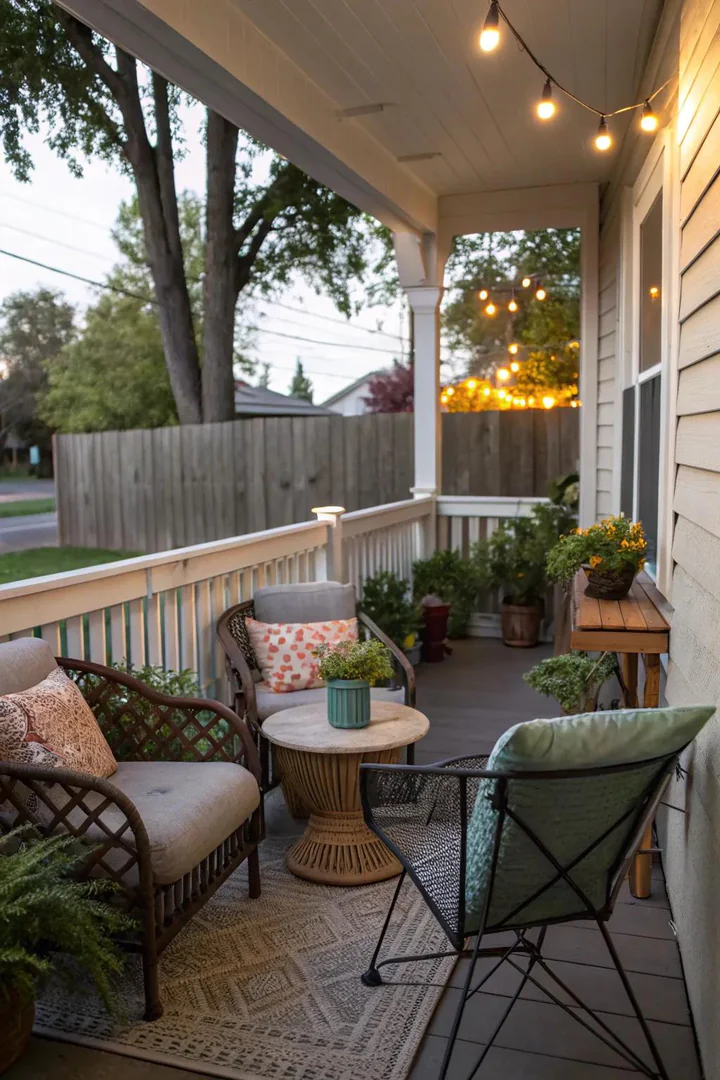
A pair of chairs or a loveseat ($100-$400 for wicker, Adirondack, or metal seating from Target, Wayfair, or Amazon) turns a bare porch into a sitting room that invites neighbors to stop and stay. Wicker and rattan sets ($200-$600 for a 4-piece conversation set) suit traditional and coastal porches, while metal bistro chairs ($50-$150 per pair from World Market or IKEA) fit narrow urban stoops where space is tight.
Add 4-inch outdoor seat cushions ($30-$80 per pair in Sunbrella or Olefin fabric) in a color that coordinates with your front door paint and planter pots. Place a small side table or garden stool ($20-$60) between the seats for drinks, books, and phones. Position the seating group to face the street or yard rather than the house wall so sitters look outward and see arriving visitors, which makes the porch feel open and connected to the neighborhood.
2. Colorful Planters
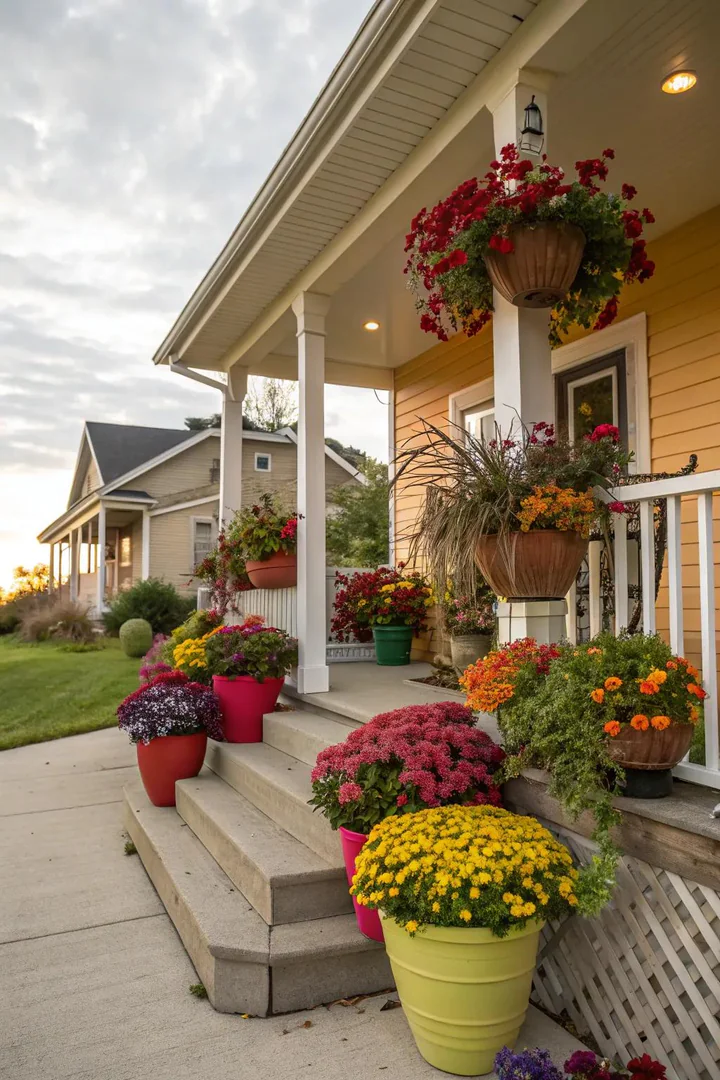
Glazed ceramic ($20-$60 per pot), painted terracotta ($10-$30), or powder-coated metal ($25-$50) planters in bold colors (cobalt blue, sunflower yellow, cherry red, emerald green) punch up a neutral porch and draw the eye to the front door from the street. Group 3-5 planters in graduated sizes (8, 12, and 16 inch diameters) at different heights beside the door, on the steps, and along the porch rail for a layered, full look.
Match planter colors to the front door, shutters, or house trim for a coordinated palette, or choose complementary colors (blue planters against an orange door, yellow pots beside a purple door) for higher contrast. Fill planters with trailing plants (sweet potato vine, creeping Jenny) that drape over the edges and upright plants (geraniums, ferns, ornamental grasses) that add height above the rim. Rotate seasonal flowers every 8-12 weeks to keep the display fresh through spring, summer, and fall.
3. Porch Swing
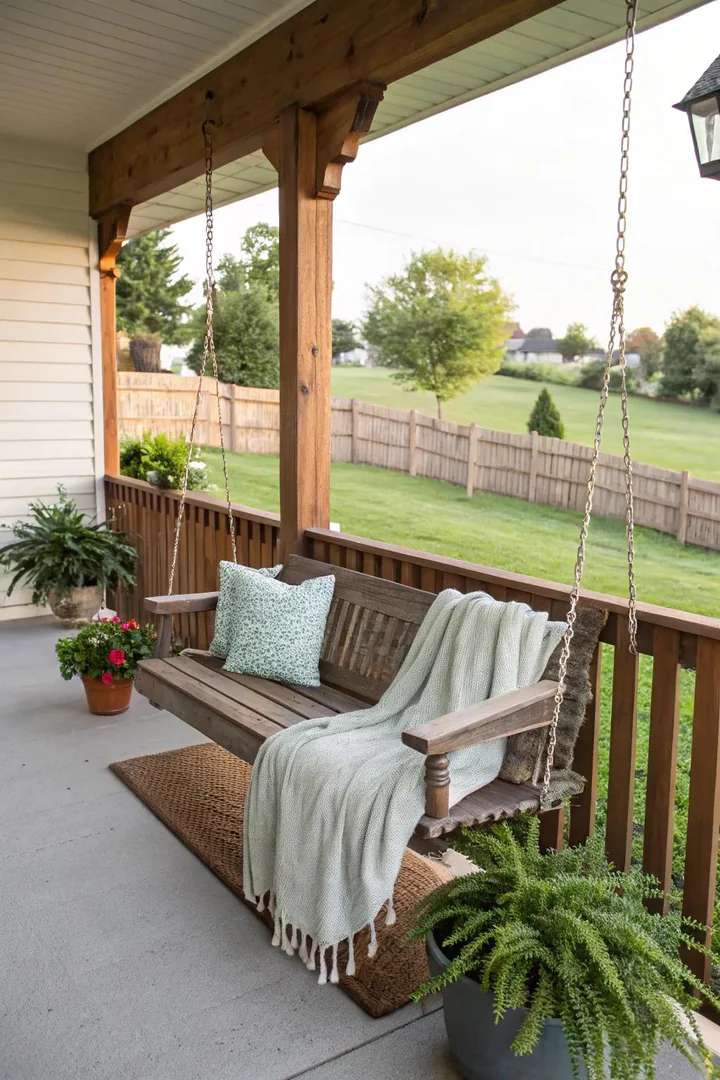
A porch swing ($100-$400 for a 4-5 foot wooden or poly lumber swing from Porchgate, Highwood, or Amazon) hanging from the porch ceiling creates the most-used seat on the property and adds motion, charm, and a reason to sit outside for hours. Mount the swing to ceiling joists (not just the ceiling boards) using heavy-duty screw hooks ($5-$10 per pair) rated for 500+ pounds, since a swing generates forces 2-3 times the static seated weight.
Hang the swing 18-20 inches off the porch floor (measured from the bottom of the seat to the floor) for a comfortable seated height that allows most adults to push off with their toes. Add a contoured seat cushion and 2-4 throw pillows ($15-$30 each) in weather-resistant fabric for extended sitting comfort. A porch swing needs a minimum ceiling height of 8 feet and 3-4 feet of unobstructed floor space in front and behind the swing arc to move freely without hitting walls, railings, or furniture.
4. Outdoor Rug
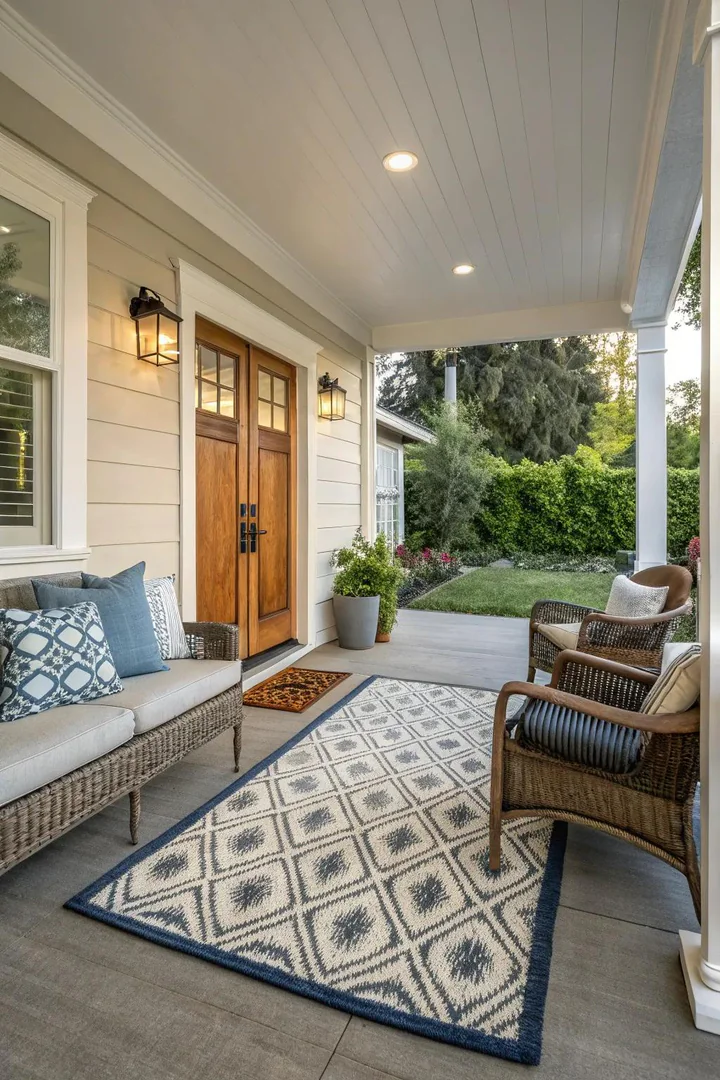
An outdoor rug ($30-$100 for a 5×7-foot polypropylene rug from Safavieh, nuLOOM, or Fab Habitat) defines a seating zone, adds color underfoot, and protects the porch floor from chair leg scratches and dirt accumulation. Polypropylene flatweave rugs dry quickly after rain, resist mold and mildew, and rinse clean with a garden hose. Position the rug so all furniture legs sit on it (or at minimum the front legs of each chair) to anchor the seating group visually.
Choose a rug pattern (stripe, geometric, medallion, or solid border) that adds visual interest without competing with busy plant arrangements or patterned cushion fabrics already on the porch. Secure the rug corners with double-sided carpet tape ($8-$12 per roll) or rug grippers ($5-$10 for a set of 4) to prevent wind lift and tripping edges. Shake or vacuum the rug weekly and flip it over monthly to equalize UV fading and foot traffic wear on both sides.
5. Matched Porch Lighting
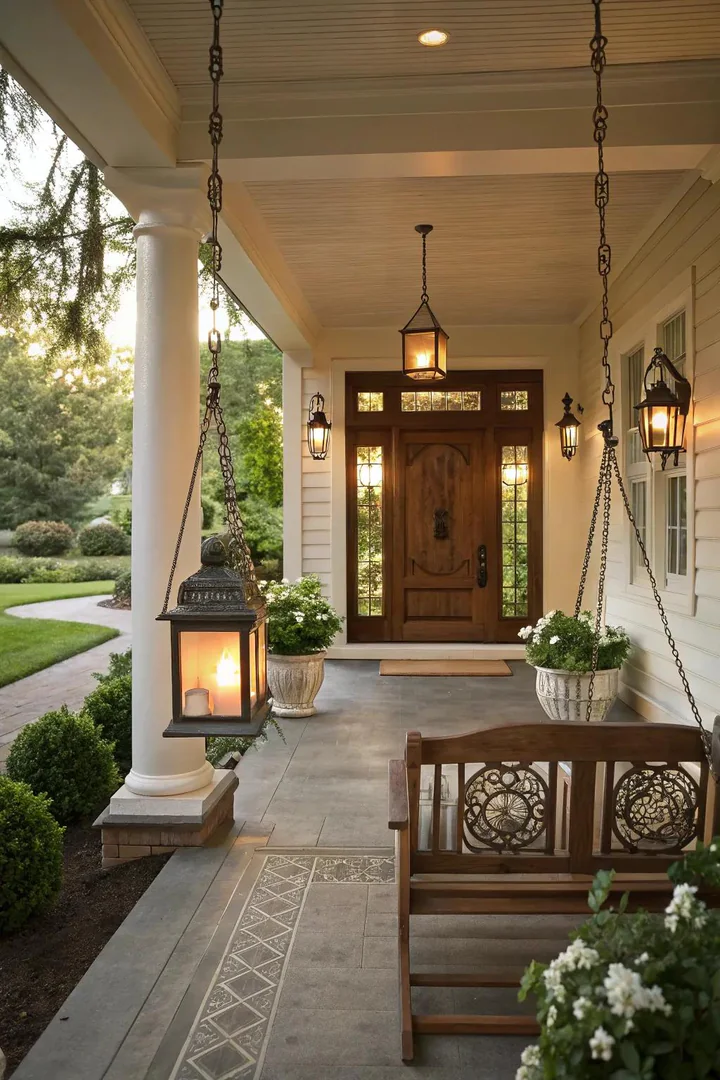
A pair of matching wall lanterns ($30-$100 each from Progress Lighting, Kichler, or Sea Gull Lighting) flanking the front door provides functional light for keys, packages, and visitors while framing the entry with balanced design. Size the lanterns to about one-quarter the height of the door (a standard 80-inch door takes 18-20 inch tall lanterns) and mount them at 66 inches from the porch floor (center of the fixture) for eye-level illumination.
Choose warm-white LED bulbs (2700K color temperature, $3-$8 per bulb) for a welcoming amber glow rather than cool-white (4000-5000K) bulbs that cast a harsh, institutional light. Add a dusk-to-dawn photocell ($10-$15 screw-in adapter from Westek or GE) or a motion-sensor base ($15-$25) to automate the lanterns so the porch is always lit when dark. Coordinate the lantern finish (matte black, oil-rubbed bronze, brushed nickel, or aged copper) with the door hardware, house numbers, and mailbox for a unified metal tone across the entry.
6. Natural Material Accents
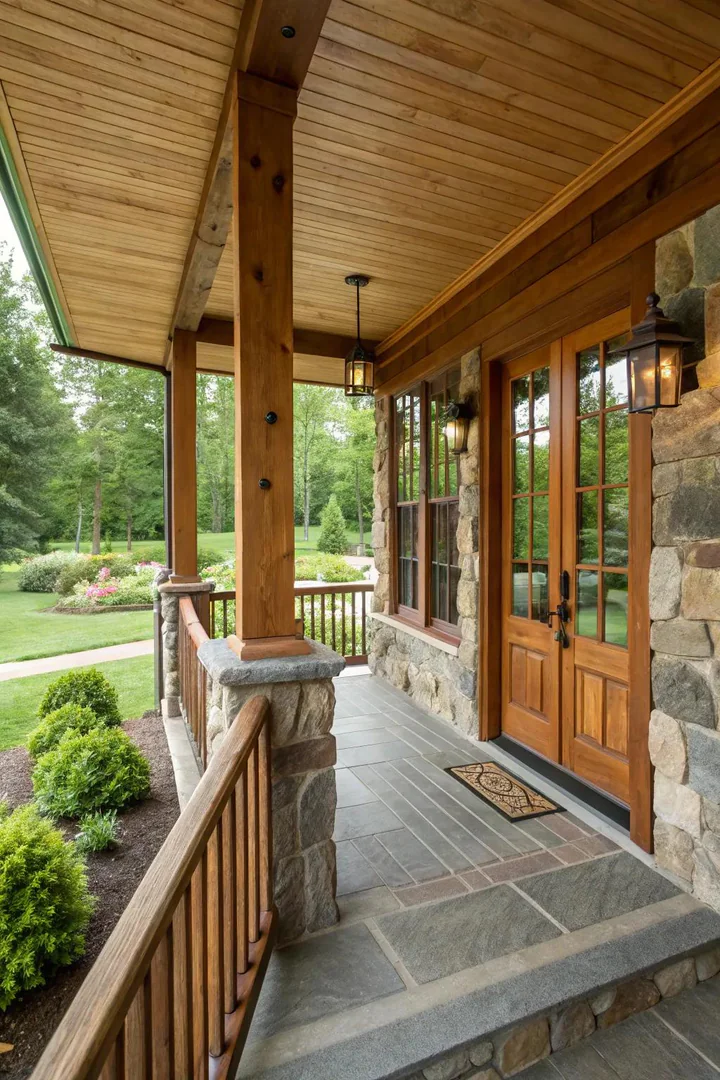
Woven baskets ($10-$25 each from Target, HomeGoods, or World Market), jute door mats ($15-$30 from Coir or Entryways), driftwood branches ($0 from a beach or $10-$30 from a craft store), and terracotta pots ($5-$20 each) layer natural textures onto a porch without adding bright colors or busy patterns. Group 2-3 woven baskets holding potted plants beside the door, lean a piece of driftwood against the wall, and replace a synthetic doormat with a coir or jute version for an organic, coastal, or farmhouse feel.
Natural materials weather and age gracefully outdoors, developing a patina that synthetic materials cannot replicate. Keep woven baskets under a porch roof or overhang where they stay protected from direct rain, since prolonged soaking causes mold and fiber breakdown within one season. Replace natural fiber doormats annually ($15-$30 per year) as they flatten and shed with regular foot traffic, or extend their life by shaking and hosing them weekly.
7. Porch Dining Nook
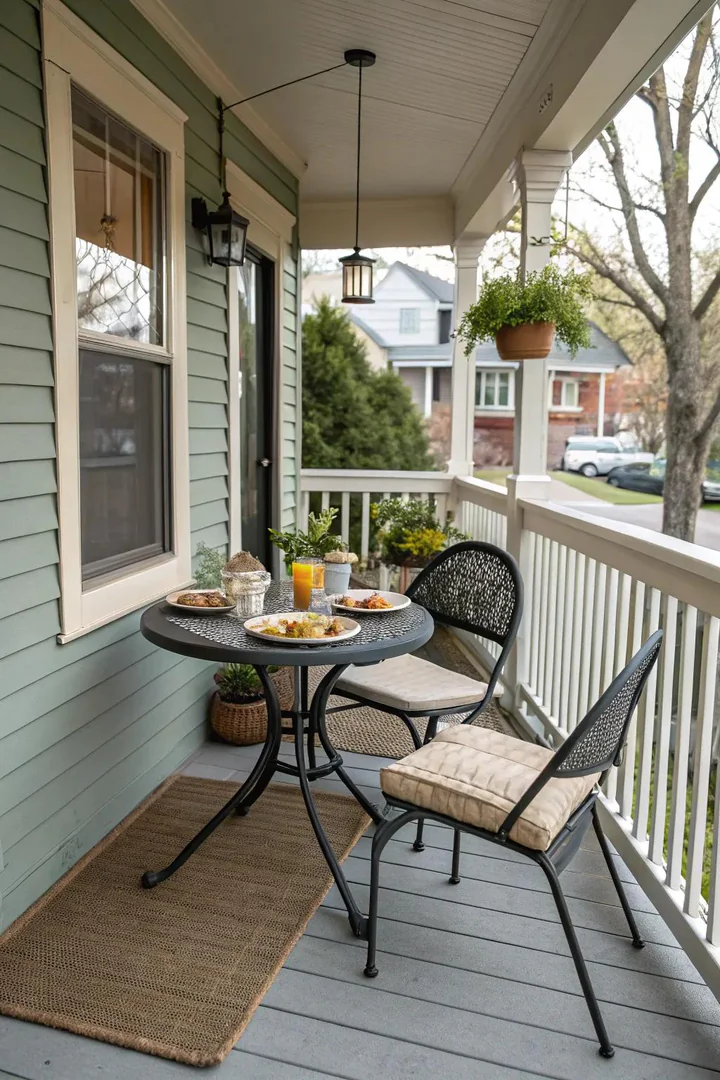
A small bistro table ($50-$150 from IKEA, Wayfair, or Target) and two chairs turn a front porch into a morning coffee spot, an evening dinner table, and a weekend brunch station. Round tables (24-30 inch diameter) fit porches as narrow as 6 feet deep, while square tables (28-32 inches) use space more efficiently when pushed against a wall or railing.
Choose a folding table and chair set ($80-$200 from Home Depot, Costco, or Amazon) for narrow porches where the furniture needs to flatten and store when not in use. Add a table runner or placemats ($10-$20 for a set) and a small centerpiece (a single potted herb, a candle in a hurricane glass, or a small flower arrangement) for a finished dining surface. Position the dining nook near the front door for easy access to the kitchen, and near an outdoor outlet if you want to plug in string lights, a fan, or a portable speaker.
8. Privacy Drapes
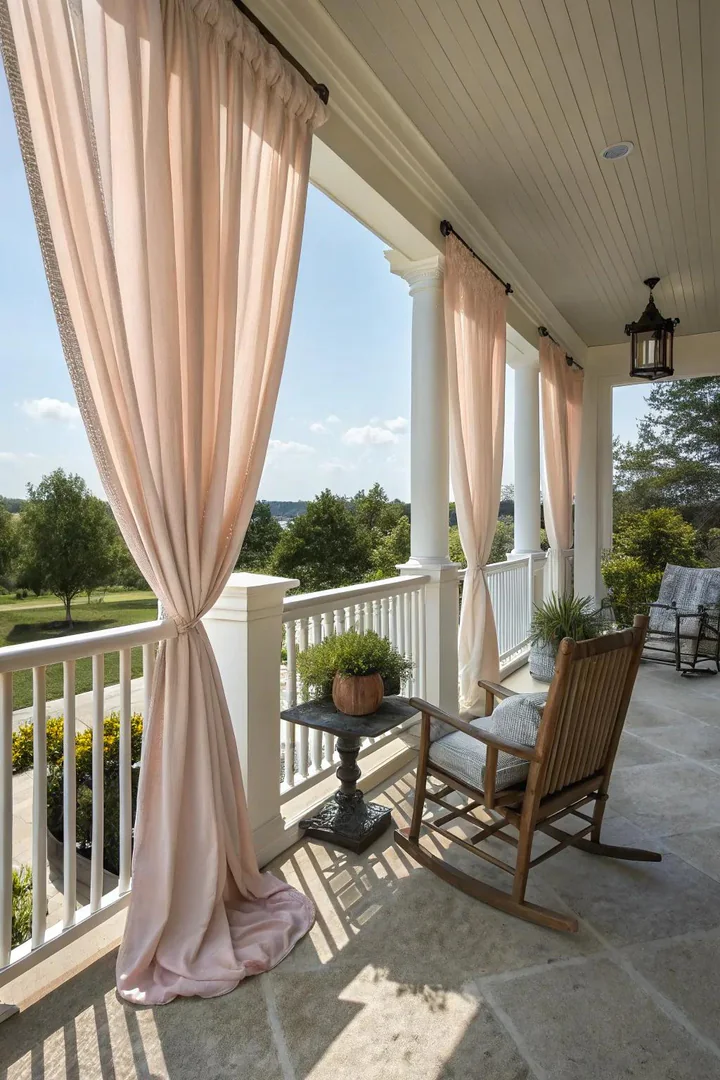
Outdoor curtain panels ($20-$60 per panel from Sun Zero, NICETOWN, or Exclusive Home) hung between porch columns or from the ceiling soffit create a soft privacy screen that blocks sightlines from the street without walling off the porch entirely. Sheer panels ($15-$30 each) filter light and soften the view while allowing breezes to pass through, while opaque panels provide full visual privacy for close-set houses and street-facing porches.
Hang curtains on a stainless steel cable wire ($5-$12 for a 15-foot cable kit with turnbuckles) or a 1-inch curtain rod ($10-$25 per 8-foot rod) mounted between columns or from ceiling hooks. Tie panels back with rope tiebacks or magnetic holdbacks ($5-$10 per pair) during the day when privacy is less of a concern, and close them in the evening when porch lights make the interior visible from the street. Privacy drapes also reduce wind exposure on breezy porches, keeping candle flames steady and napkins on the table. Related ideas for outdoor curtain use appear in fire pit seating areas and covered outdoor rooms.
9. Statement Front Door
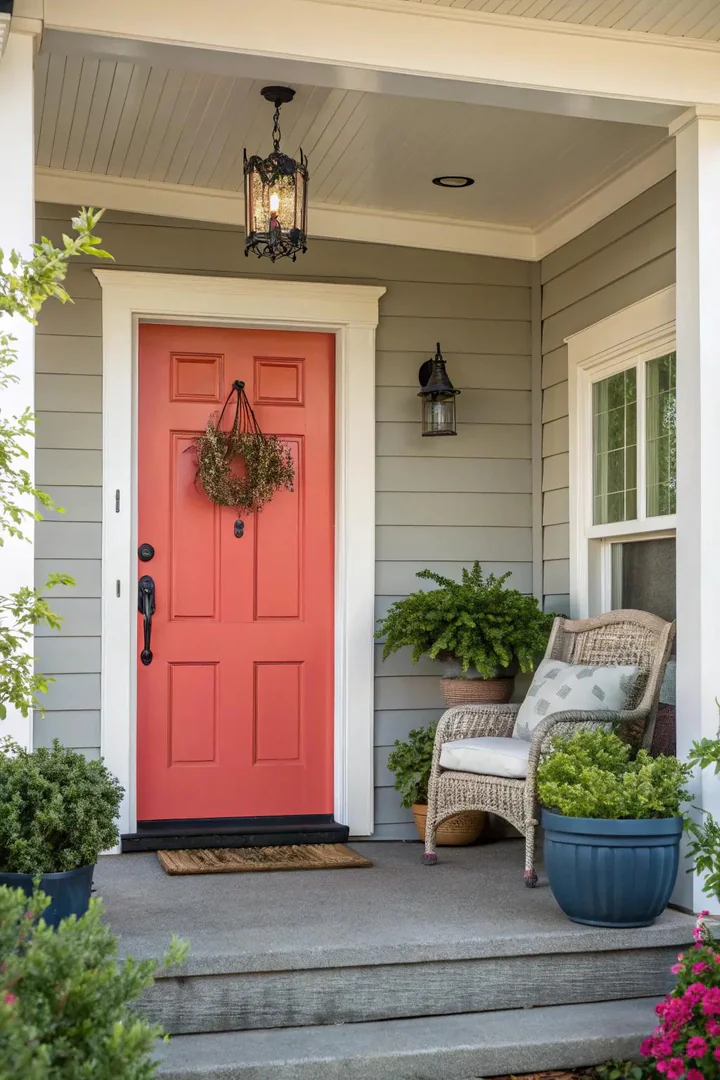
Painting the front door a bold color ($30-$50 for a quart of exterior door paint from Benjamin Moore, Sherwin-Williams, or Behr) is the single highest-impact, lowest-cost porch decor change available. Deep navy (BM Hale Navy), hunter green (SW Rookwood Dark Green), bright red (BM Heritage Red), and matte black (BM Onyx) are the four most popular front door colors and all pair well with white, gray, and neutral siding.
Add a seasonal wreath ($15-$40 from Etsy, Target, or a local florist), a brass or iron door knocker ($15-$50 from Rejuvenation, Anthropologie, or Amazon), and a new set of house numbers ($10-$30 for modern floating-mount or traditional nail-on numbers) to complete the door treatment. Upgrade the lockset and handle ($50-$150 for a Schlage, Kwikset, or Baldwin entry set) to match the door knocker finish for a polished, coordinated entry. A statement door pulls the eye from 50+ feet away, making it the strongest curb-appeal move on this list.
10. Layered Greenery
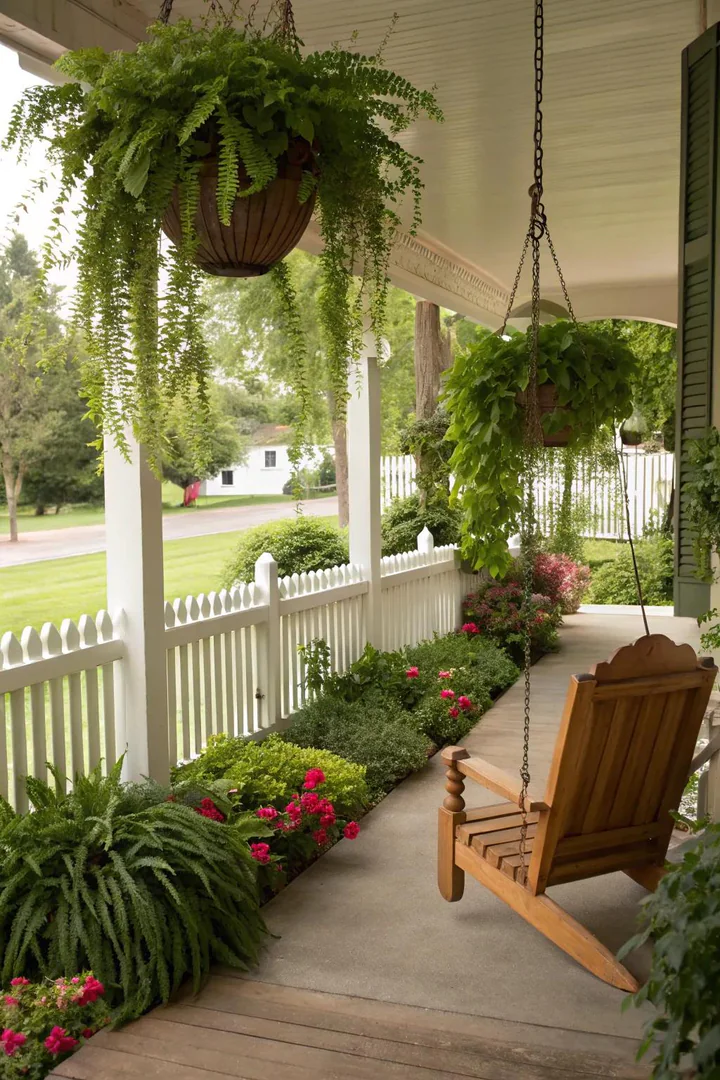
Layering plants at three heights (floor pots, railing planters, and hanging baskets) fills every visual zone of the porch with greenery and makes even a small porch feel like a garden room. Place large floor pots (14-18 inch diameter, $20-$60 each) with upright plants (ferns, palms, or topiary forms) at the corners, mount railing planters ($15-$30 per box from Gardener’s Supply or Amazon) along the top rail, and hang 2-4 baskets ($8-$15 each) from ceiling hooks.
Choose a mix of foliage textures (fine ferns, broad hostas, spiky dracaena, trailing ivy) rather than all-flower displays for year-round green coverage that doesn’t depend on seasonal blooms. Water hanging baskets daily in summer (they dry out faster than floor pots due to air circulation on all sides) and rotate floor pots a quarter turn weekly so all sides receive equal light. A fully planted porch uses 8-15 containers and costs $100-$300 in pots and plants for a display that fills out within 4-6 weeks of planting. Browse pallet garden furniture ideas for more budget-friendly ways to add greenery and function to outdoor spaces.
11. Tabletop Water Feature
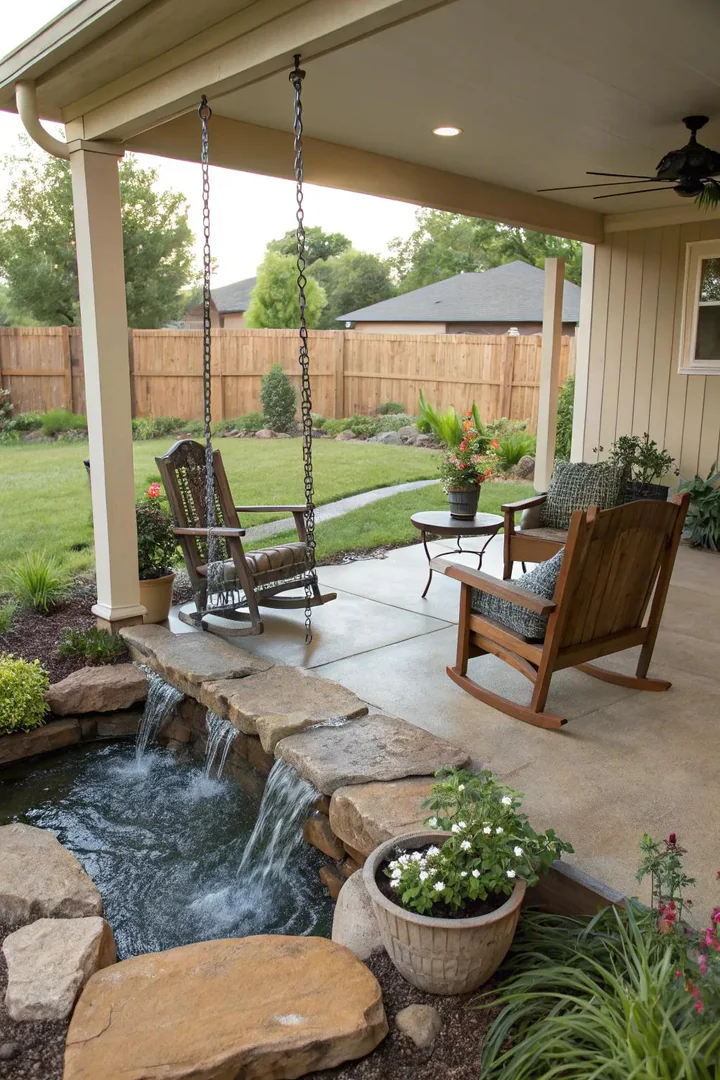
A tabletop fountain ($25-$80 from Amazon, Wayfair, or a garden center) with a recirculating pump adds the sound of running water to a porch, masking street noise, neighbor conversations, and traffic sounds. Stone, ceramic, and resin fountains in sizes from 10-18 inches tall fit on a side table, plant stand, or porch railing cap without taking up floor space.
Plug the pump into an outdoor outlet (GFCI-protected, $5-$15 for an outlet cover if yours lacks one) or choose a solar-powered fountain ($20-$40) that runs on a built-in solar panel during daylight hours. Refill the reservoir every 2-3 days in summer (more often in dry, windy climates) since evaporation drops the water level below the pump intake. Add a few drops of fountain algaecide ($5-$8 per bottle, lasts a full season) monthly to keep the water clear and prevent green film on the basin and stones.
12. Porch Wall Art
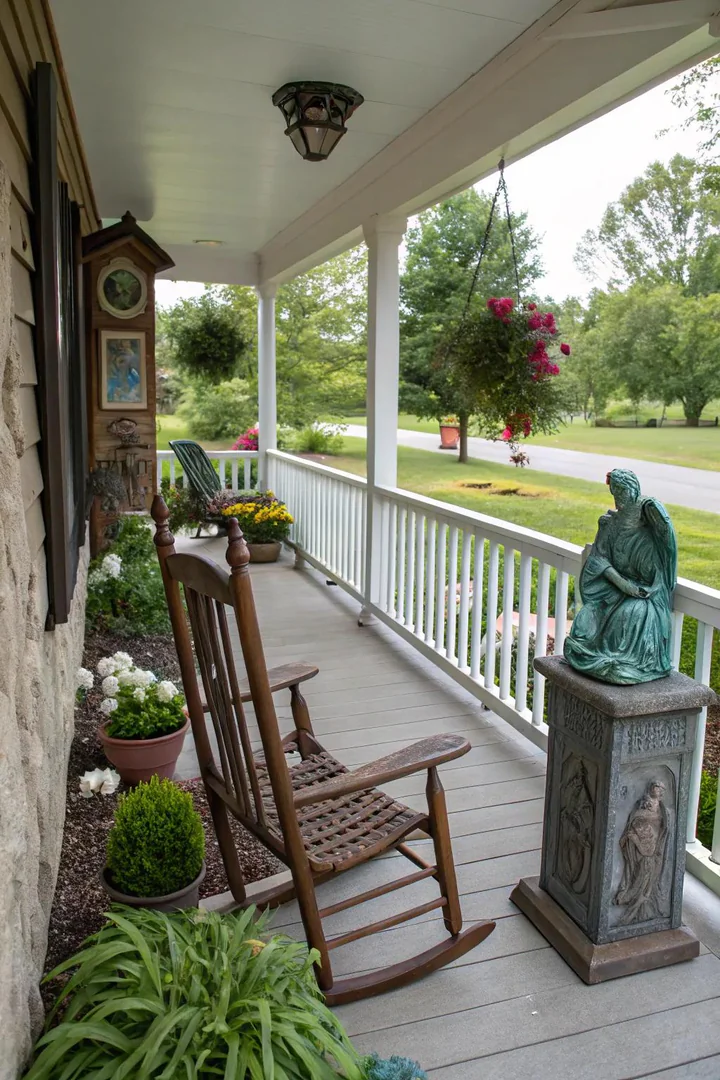
Metal wall art ($15-$60 from Amazon, Etsy, or HomeGoods), wooden signs ($10-$40), and outdoor-rated canvas prints ($20-$50 from Shutterfly or Canvas on Demand) add personality to blank porch walls that otherwise read as dead space. Mount art at seated eye level (48-54 inches center height) rather than standing eye level so it lines up with the view from the porch chairs.
Choose weather-resistant materials (powder-coated metal, marine-grade plywood, UV-coated canvas) for art that hangs on an uncovered or partially covered porch. A single large piece (24×36 inches or larger) makes a bolder statement than a cluster of small frames on an exterior wall where viewing distance is greater than indoors. Seasonal swaps (spring botanicals, summer beach scenes, fall harvest themes, winter evergreens) keep the porch wall fresh without committing to a single year-round display.
13. Vertical Garden Wall
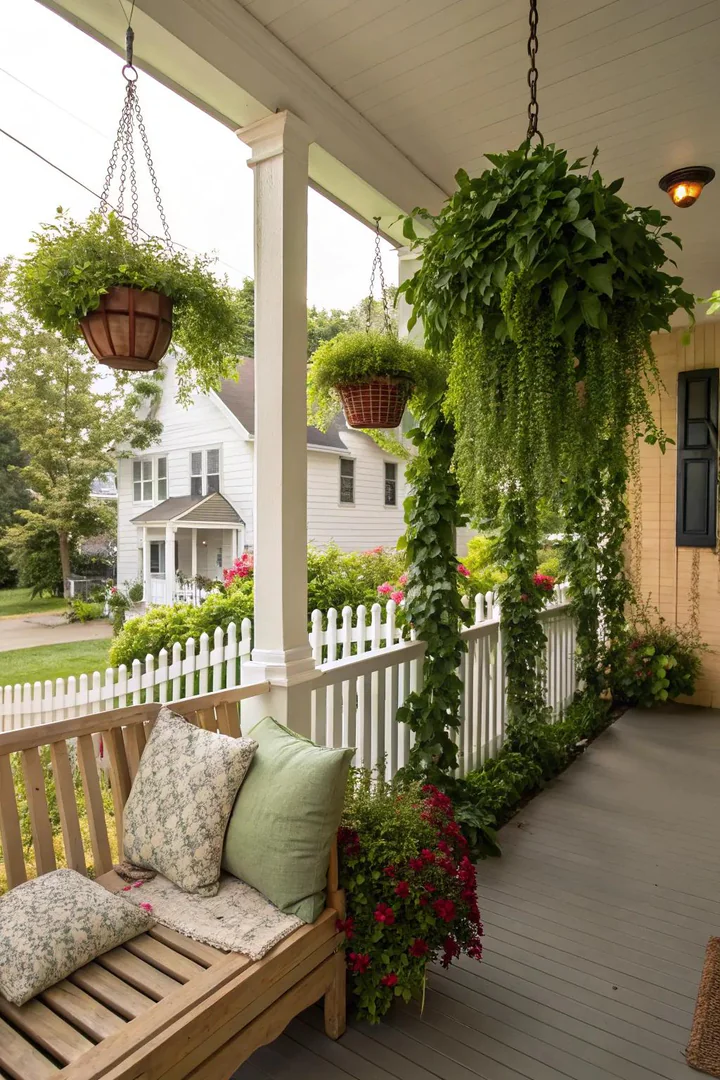
A vertical garden wall using pocket planters ($15-$30 per hanging felt pocket panel from Florafelt or Amazon), wall-mounted boxes ($10-$25 each), or a pallet planter ($0-$20 for a free pallet plus garden cloth) covers a blank porch wall with living greenery in zero floor space. Felt pocket planters hold 6-12 plants per panel, attach with two screws, and irrigate from top to bottom by gravity when watered from the upper pockets.
Plant trailing varieties (pothos, string of pearls, creeping fig) in the upper pockets and compact upright plants (succulents, small ferns, herbs) in the lower pockets for a layered wall that fills in within 4-8 weeks. Add a drip tray or gutter at the base of the vertical planter to catch excess water before it runs onto the porch floor. A vertical garden wall works best on porches with 6+ hours of filtered light, which suits north-facing and east-facing porches in warm climates and south-facing porches in cooler regions.
14. Layered Textiles
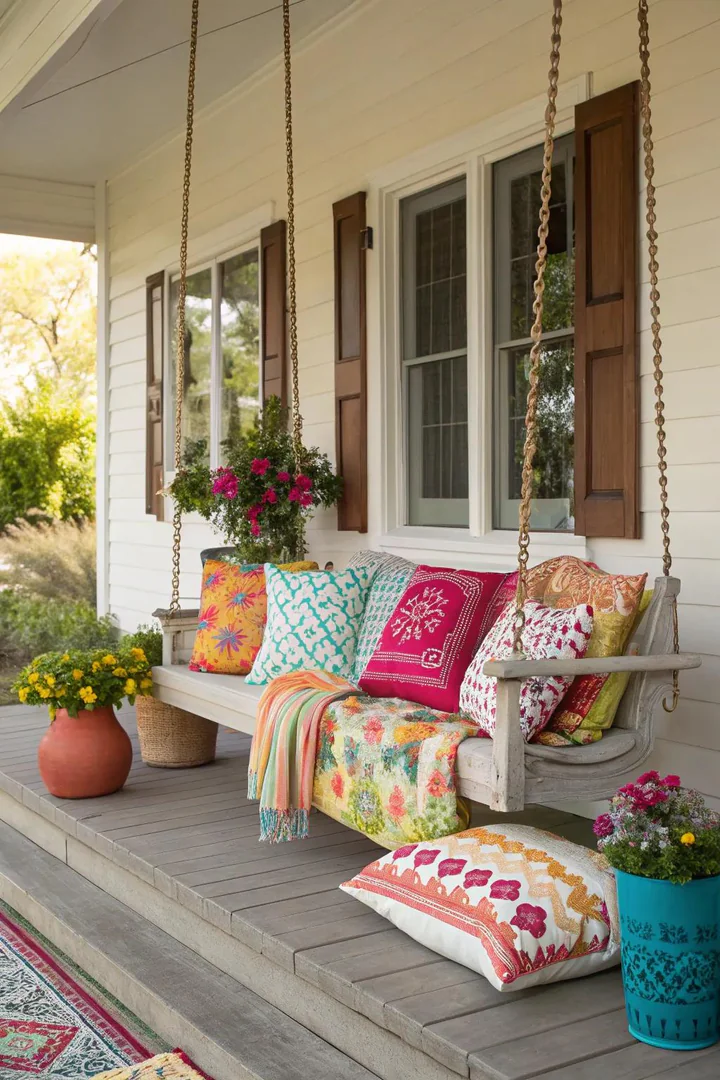
Outdoor throw pillows ($15-$30 each from Target, TJ Maxx, or Pottery Barn), seat cushions ($30-$80 per pair), and lightweight blankets ($20-$40 each from Amazon or World Market) soften hard porch furniture and make the space feel lived-in and welcoming. Choose Sunbrella, Olefin, or solution-dyed polyester fabrics that resist fading, mildew, and water absorption through a full outdoor season.
Layer 2-3 pillow sizes (12-inch, 16-inch, and 20-inch square) in coordinating patterns (one solid, one geometric, one floral or stripe) for a collected look that avoids the matchy-matchy feel of a boxed set. Store throw blankets in a waterproof deck box ($30-$60 from Keter, Suncast, or Rubbermaid) or a woven basket with a lid during rain and overnight. Swap textile colors and patterns seasonally (bright prints for spring/summer, warm plaids and solids for fall/winter) to refresh the porch look four times a year for $50-$100 per swap. Check covered deck ideas for more outdoor textile strategies on protected porches.
15. Multi-Zone Porch Layout
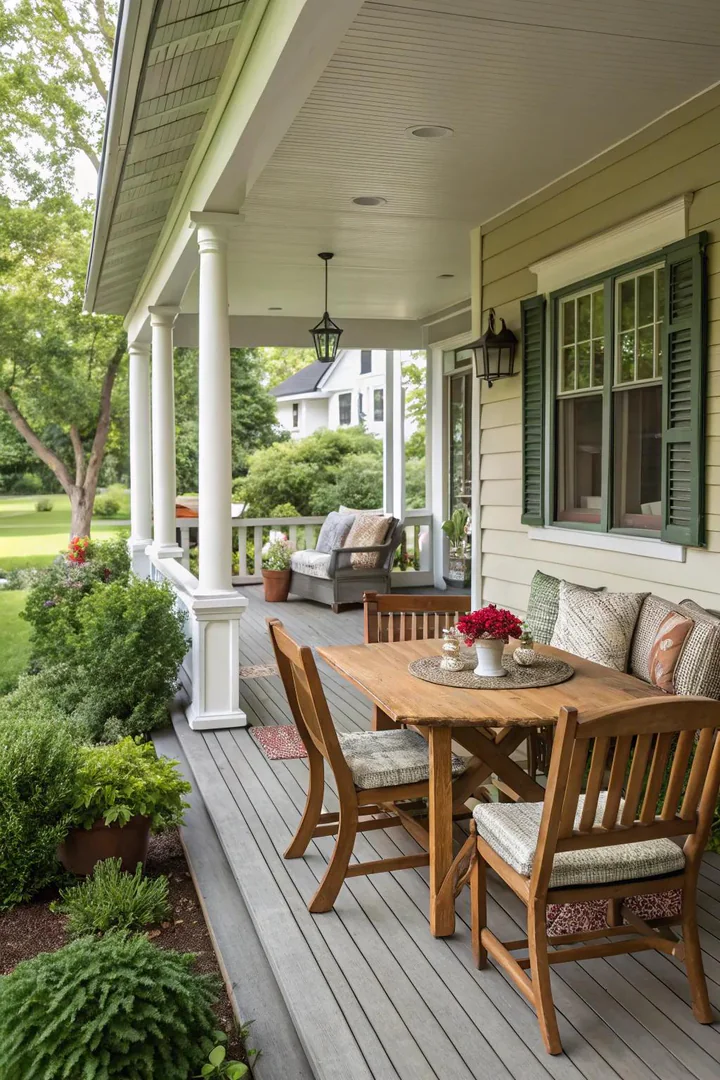
Dividing a wide or wrap-around porch (10+ feet deep, 20+ feet long) into 2-3 distinct zones (a seating area, a dining spot, and a plant display section) gives each activity its own space without one function crowding out the others. Separate zones with outdoor rugs ($30-$100 each), plant groupings, a change in furniture style, or a half-height screen ($30-$80 for a folding privacy panel).
Position the seating zone nearest the door for casual drop-in visits, the dining zone at the far end or corner for quieter meals, and the plant zone along the railing or stairs where greenery benefits from maximum light. Each zone should have its own lighting source (a table lamp, a string light section, or a wall lantern) so the occupied zone lights up independently without illuminating the entire porch. A three-zone porch layout works best on porches 8+ feet deep and 16+ feet long, where each zone gets a minimum 5×6-foot footprint.
16. DIY Decor Projects
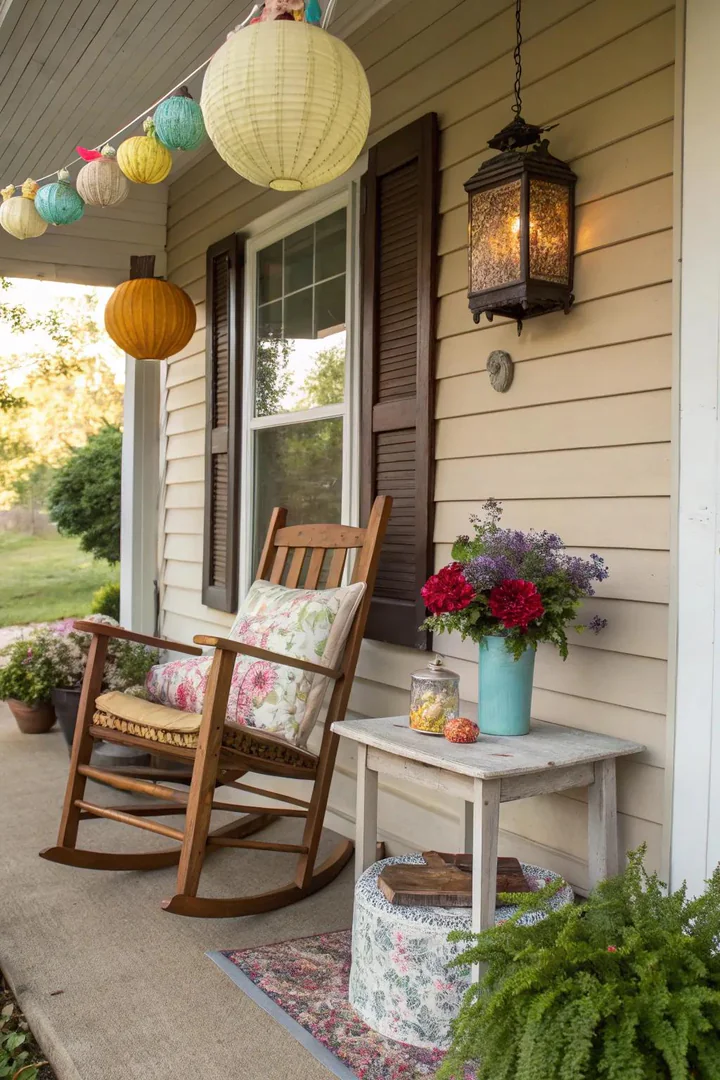
A hand-lettered welcome sign ($5-$15 in scrap wood and paint), painted terracotta pots ($2-$5 per pot plus spray paint), or a seasonal wreath made from foraged materials ($0-$10 for a grapevine wreath form plus clippings from your yard) adds a personal, one-of-a-kind element that store-bought decor cannot match. DIY porch projects cost 50-80% less than comparable retail pieces and make conversation starters that visitors notice and ask about.
Build a simple wooden bench ($20-$50 in 2×4 and 2×6 lumber), paint house numbers on a terracotta pot ($5-$10 for stencils and paint), or wrap a column with string lights and zip ties ($10-$20 per column) for quick weekend projects that upgrade the porch in under 2 hours each. Seal all DIY wood pieces with exterior polyurethane or spar urethane ($12-$18 per quart) before placing them outdoors, and repaint or reseal annually for a fresh look that lasts.
17. Balanced Symmetry
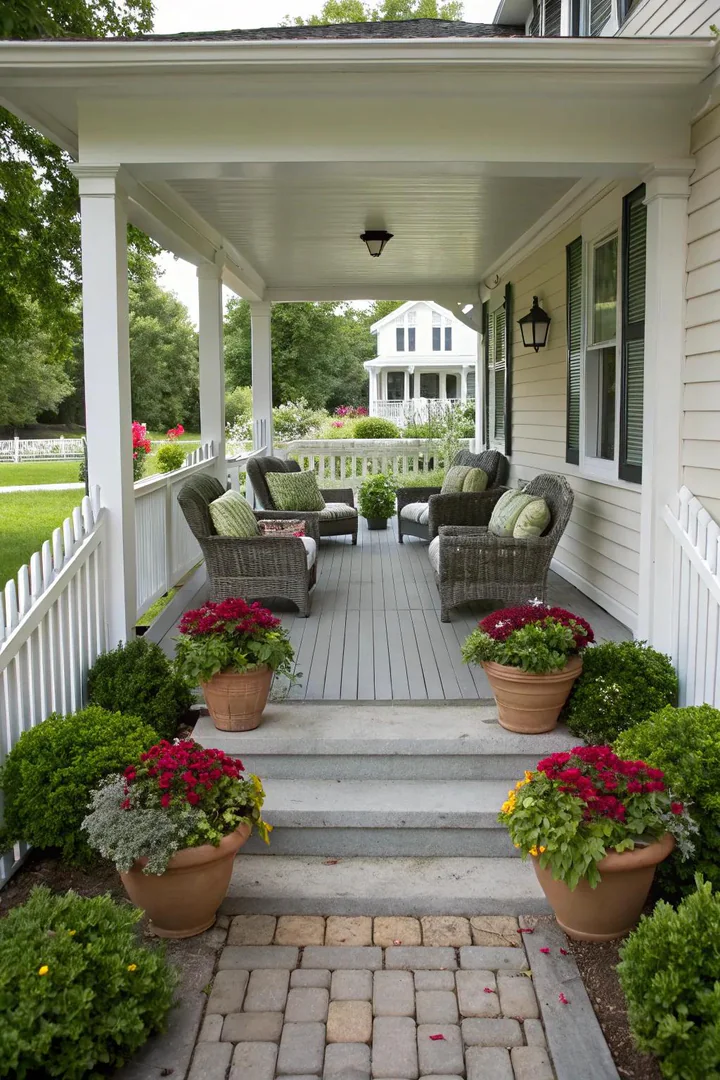
Placing identical elements (matching planters, matching lanterns, matching chairs) on each side of the front door creates a balanced, formal entry that suits Colonial, Georgian, Craftsman, and traditional home styles. Symmetry signals order and care, and studies on curb appeal consistently rank balanced entries higher in perceived property value than asymmetrical arrangements.
Start with a matched pair of planters ($40-$120 for the pair) flanking the door, add matching wall lanterns ($60-$200 for the pair), and finish with matching house-number hardware and door accessories. Strict symmetry works best on porches with a centered front door; off-center doors benefit from asymmetrical balance (a large planter on one side, two smaller planters on the other) that distributes visual weight without requiring exact mirroring.
18. Ceiling Fan for Comfort
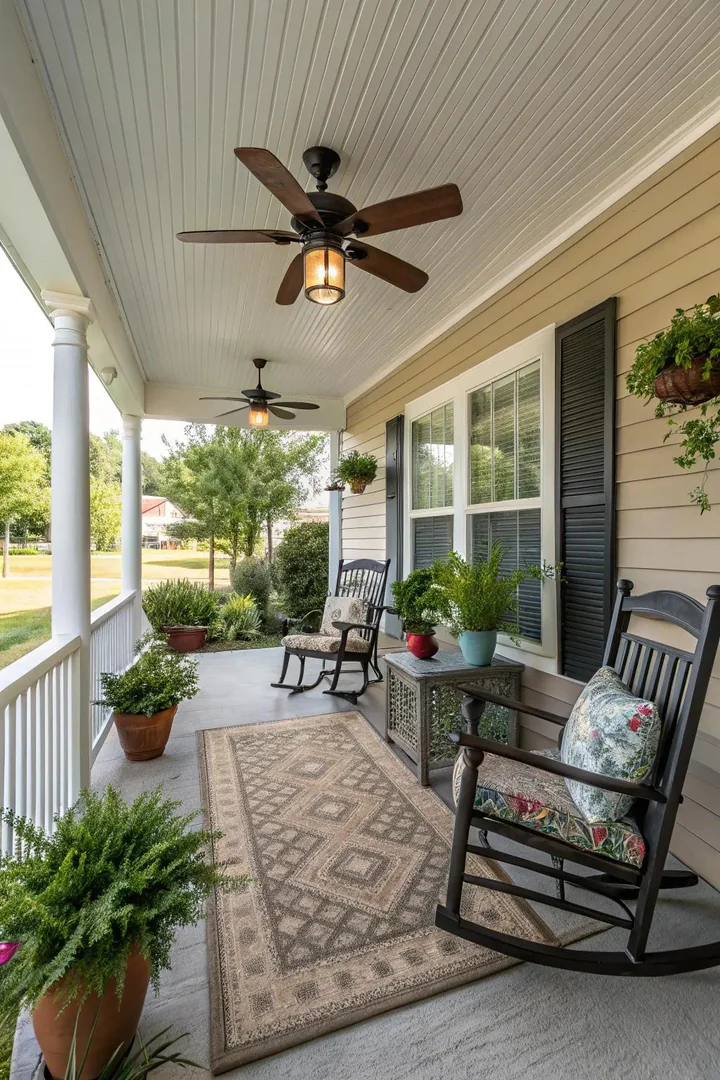
An outdoor-rated ceiling fan ($80-$250 for a damp-rated or wet-rated model from Hunter, Harbor Breeze, Minka Aire, or Honeywell) moves air across the porch, lowers the perceived temperature by 4-8 degrees, and discourages mosquitoes and gnats that struggle to fly in moving air. Damp-rated fans work on covered porches protected from direct rain, while wet-rated fans handle fully exposed ceilings where rain contacts the fan housing.
Size the fan blade span to the porch area: 42-44 inches for porches up to 100 square feet, 52-56 inches for 100-200 square feet, and 60-72 inches for porches over 200 square feet. Mount the fan with a 4-6 inch downrod ($5-$15) so the blades hang 8-9 feet above the floor and 10-12 inches below the ceiling for maximum airflow. Pair the fan with a wall switch or remote control ($15-$30) so speed adjustments are easy from the seating area without standing up.
19. Color-Coordinated Paint Scheme
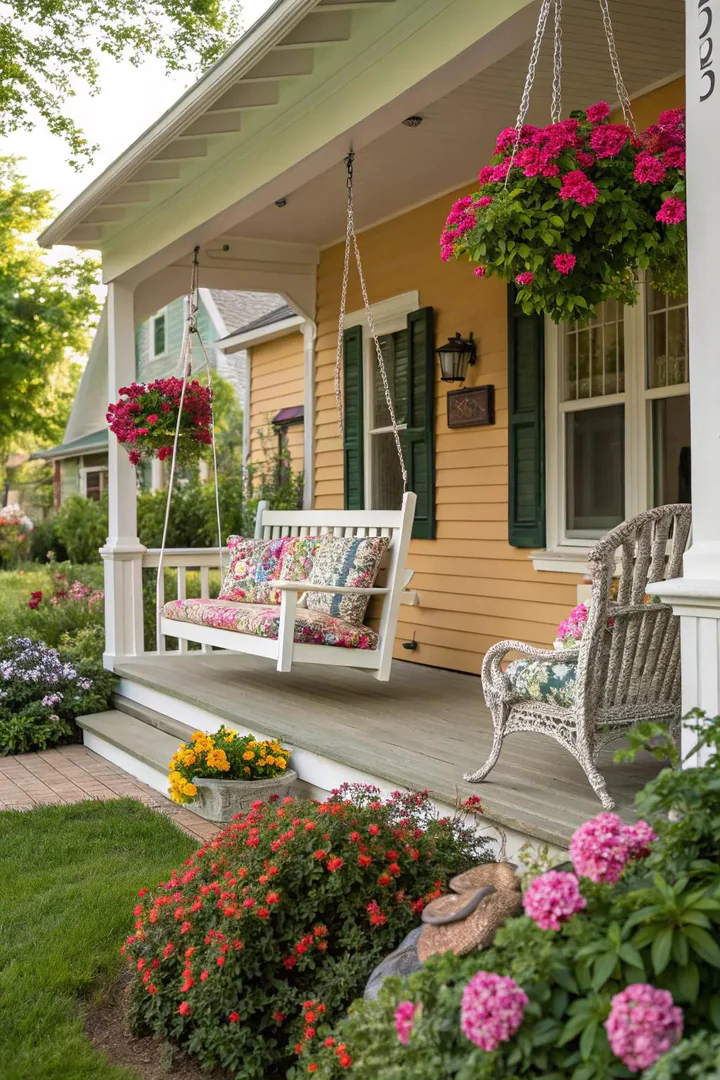
Painting the porch ceiling ($30-$50 per gallon of porch ceiling paint), floor ($30-$60 per gallon of porch and floor enamel), and railing ($20-$40 per quart of exterior trim paint) in a coordinated color scheme ties the entire porch together as a designed space rather than an afterthought. A classic combination: haint blue ceiling (BM Breath of Fresh Air or SW Tidewater), warm gray floor (BM Revere Pewter or SW Mindful Gray), and white railings and trim.
Porch ceiling blue (a pale blue-green traditionally called “haint blue” in the American South) reflects sky color onto the porch, keeps wasps from nesting (they avoid blue surfaces that resemble sky), and extends the visual height of the space. Porch floor paint ($30-$60 per gallon from KILZ, Behr, or Benjamin Moore) with a satin or semi-gloss finish resists scuffing, moisture, and UV fading better than flat finishes that stain and wear through within 1-2 seasons. Roll two coats on the floor with a 3/8-inch nap roller, letting each coat dry 24 hours before walking on it.
Front Porch Decor Budget Comparison
| Decor Element | Budget Option | Mid-Range | Premium |
|---|---|---|---|
| Seating | $50-$100 (used/folding) | $200-$400 (wicker set) | $500-$1,000 (teak/Polywood) |
| Planters (pair) | $10-$30 (terracotta) | $40-$80 (glazed ceramic) | $100-$200 (cast stone) |
| Door Paint | $15-$25 (Behr) | $30-$50 (BM/SW) | $50-$80 (Fine Paints) |
| Wall Lanterns (pair) | $30-$60 (Home Depot) | $80-$200 (Kichler/Progress) | $200-$500 (Rejuvenation/RH) |
| Outdoor Rug (5×7) | $30-$50 (polypropylene) | $60-$100 (recycled PET) | $100-$200 (Dash & Albert) |
| Ceiling Fan | $80-$120 (Harbor Breeze) | $150-$250 (Hunter) | $300-$500 (Minka/Big Ass) |
How to Style a Small Front Porch
1. Choose Scaled-Down Furniture
A single chair or a narrow bench (14-16 inches deep, 36-48 inches wide) fits porches as small as 4×6 feet without blocking the walkway to the door. Folding chairs ($20-$50 each from Home Depot or Target) store flat against the wall when not in use, doubling the available floor space. A wall-mounted fold-down shelf ($20-$40) serves as a drink rest or plant ledge when open and folds flush against the wall when closed.
2. Go Vertical with Plants and Decor
Hanging baskets, wall-mounted planters, and a vertical pocket garden use the porch’s vertical space (walls, ceiling, columns) instead of the limited floor area. Hang 2-3 baskets from ceiling hooks at staggered heights (offset by 4-6 inches each) to fill the upper zone, and mount a narrow shelf or picture ledge ($10-$20 from IKEA or Amazon) at eye level for small pots, lanterns, and decor objects.
3. Use a Single Bold Focal Point
A single large statement piece (a bold-colored door, an oversize wreath, a tall topiary in a statement pot) carries more visual weight on a small porch than a cluttered collection of small items. Pick one focal element that tells the story, and let the rest of the porch remain simple and uncluttered. A 24-inch wreath on an 80-inch door, a 36-inch tall topiary flanking the entry, or a deeply colored door (navy, black, forest green) against a white house creates enough visual impact to make the porch memorable.
4. Keep the Walkway Clear
Leave a minimum 36-inch wide clear path from the porch steps to the front door for comfortable, safe passage. Push furniture and planters to the edges and corners rather than centering them where they narrow the walking lane. A clear walkway makes the porch feel larger than it is, keeps delivery drivers from tripping, and meets ADA accessibility guidelines for visitors with mobility aids. Browse pool cabana ideas for more strategies on furnishing compact outdoor spaces.
Frequently Asked Questions
What color should you paint a front porch ceiling?
Haint blue (a pale blue-green) is the most popular front porch ceiling color in the United States, used historically across Southern homes to deter wasps and symbolize the sky. Benjamin Moore Breath of Fresh Air, Sherwin-Williams Tidewater, and Behr Blue Sky are three widely available haint blue shades. White and off-white ceilings ($25-$40 per gallon of ceiling paint) suit modern and minimalist homes, while natural wood stain on a tongue-and-groove ceiling ($4-$8 per linear foot plus $30-$50 per gallon of stain) adds warmth to Craftsman and farmhouse porches.
How do you hang string lights on a front porch?
Screw cup hooks ($3-$5 per pack of 20) into the ceiling rafters or fascia board at 24-36 inch intervals, drape the string light strand through the hooks in a zigzag or perimeter pattern, and plug into a GFCI outdoor outlet. Use outdoor-rated LED string lights ($15-$40 for a 48-foot strand from Brightech, Addlon, or Amazon) with shatter-resistant bulbs rated for wet locations. Secure excess cord against the ceiling or wall with adhesive cord clips ($5-$8 per pack) so the strand hangs at a uniform height without drooping or tangling.
What is the best outdoor furniture material for a porch?
HDPE poly lumber (Polywood, Trex Outdoor) is the most durable porch furniture material, lasting 20+ years outdoors with zero maintenance, zero painting, and full resistance to rot, insects, moisture, and UV fading. All-weather wicker over aluminum frames ($200-$600 per set) gives a traditional look with 10-15 years of durability under a porch roof. Natural wood furniture (teak, $400-$1,000 per set; cedar, $150-$400; pine, $50-$150) requires annual sealing or oiling but ages to a gray patina that many homeowners prefer.
How many plants should be on a front porch?
A well-planted porch uses 5-12 containers depending on the porch size, with 3-5 containers being the sweet spot for porches under 100 square feet and 8-12 for larger wrap-around or deep porches. Group containers in odd numbers (3, 5, 7) at varied heights for a natural, garden-like feel. Fewer plants in larger pots make a stronger visual statement than many small pots scattered across the floor, which reads as cluttered and makes sweeping and furniture moving difficult.
How do you decorate a front porch on a budget?
Paint the front door ($15-$30 in paint and supplies), add a coir doormat ($10-$15), and group 3 potted plants in repainted terracotta pots ($3-$5 per pot plus paint) for a complete porch refresh under $50. Add string lights ($15-$25), a single throw pillow per chair ($8-$15 each from Target or TJ Maxx), and a seasonal wreath ($10-$20 DIY from foraged materials) for a more layered look at $75-$100 total. Thrift store and yard sale finds (vintage chairs, old lanterns, wooden crates) cost $5-$15 each and add character that mass-market decor cannot match.