
Porch Ideas: 18 Creative Ways to Boost Your Home’s Charm Instantly

Porch ideas cover everything from compact reading corners and hanging egg chairs to full multi-zone layouts with fireplaces and outdoor curtains, so every entry size and budget has a workable plan. Below are 18 porch designs broken down by furniture style, lighting, plant arrangements, and structural features, each with product names, dimensions, material costs, and installation details you can act on this weekend.
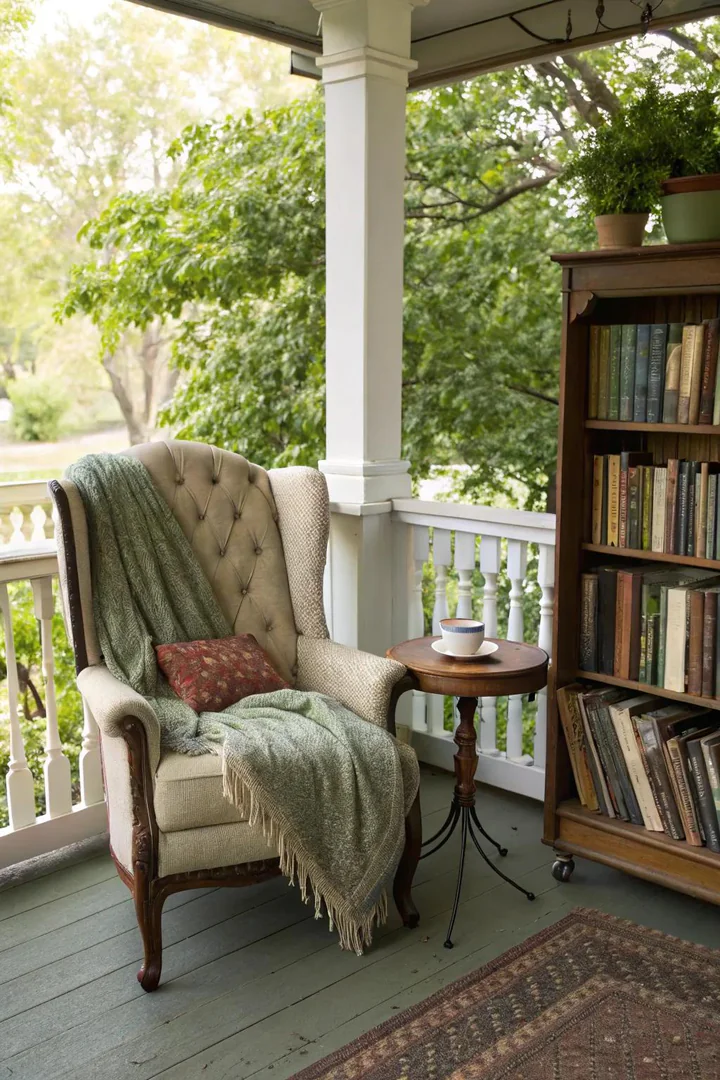
1. Cozy Porch Reading Nook
A dedicated reading corner needs only 4 x 5 feet of porch space, one deep-seated chair with 6-inch-thick outdoor cushions, a 16-inch round side table, and a small shelf or basket for books. Choose a resin wicker chair with a rust-proof aluminum frame (Hampton Bay Spring Haven or Better Homes & Gardens Campton Hills, $200 to $350) that stays outside year-round.
Add a clip-on battery-powered reading light (GearLight LED Clip Lamp, $15) to the chair arm for evening sessions. Position the nook in a corner where two walls meet to block cross breezes, and drape a cotton throw blanket over the chair back for cool nights. A 5 x 7-foot outdoor polypropylene rug ($30 to $60 from Safavieh or Unique Loom) defines the zone and keeps bare feet off cold concrete or wood.
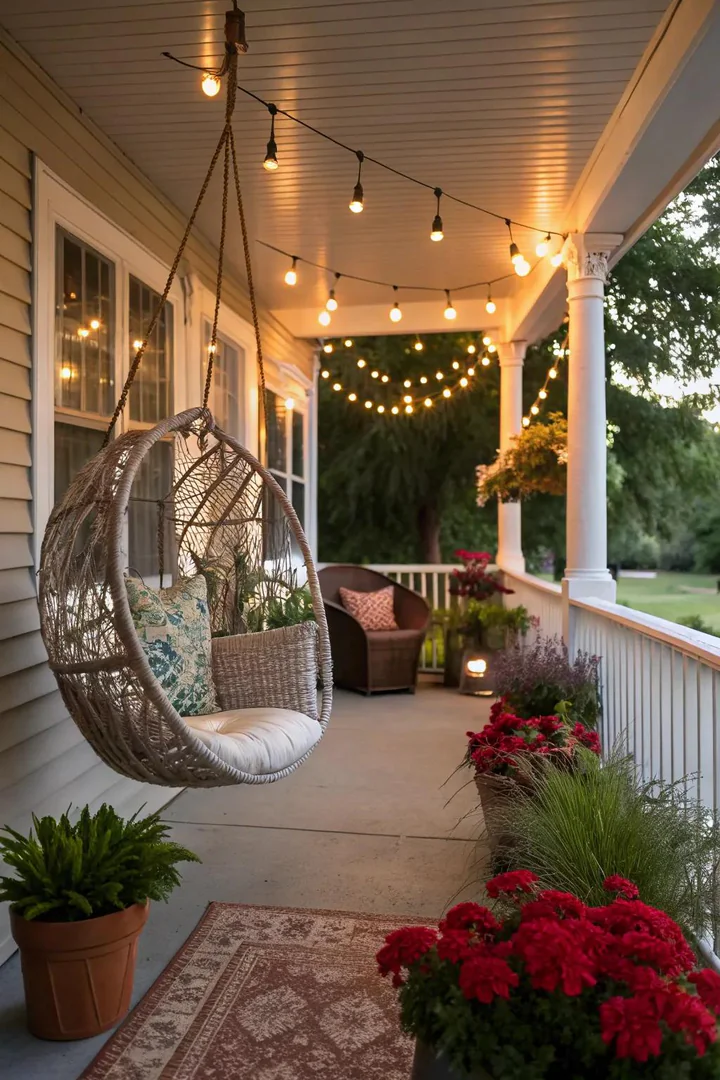
2. Hanging Chair Porch Setup
A hanging egg chair or macrame swing adds a floating seat that sways gently without taking up floor space for legs. Mount the chair from a ceiling joist (not drywall or thin soffit) using a heavy-duty swivel hook rated for 500 pounds (Porch Swing Hanging Kit from Barn-Shed-Play, $25 to $40). Drill a pilot hole through the ceiling board into the joist center, and secure with a 3/8 x 6-inch lag bolt.
Popular models include the Christopher Knight Home Swinging Egg Chair ($250 to $400), the Modway Hide Outdoor Swing ($350), and the Sunnydaze Resin Wicker Hanging Egg Chair ($300). Leave 3 feet of clearance in every direction so the chair swings freely without hitting walls, railings, or other furniture. A weight capacity of 250 to 350 pounds covers most single-adult use.
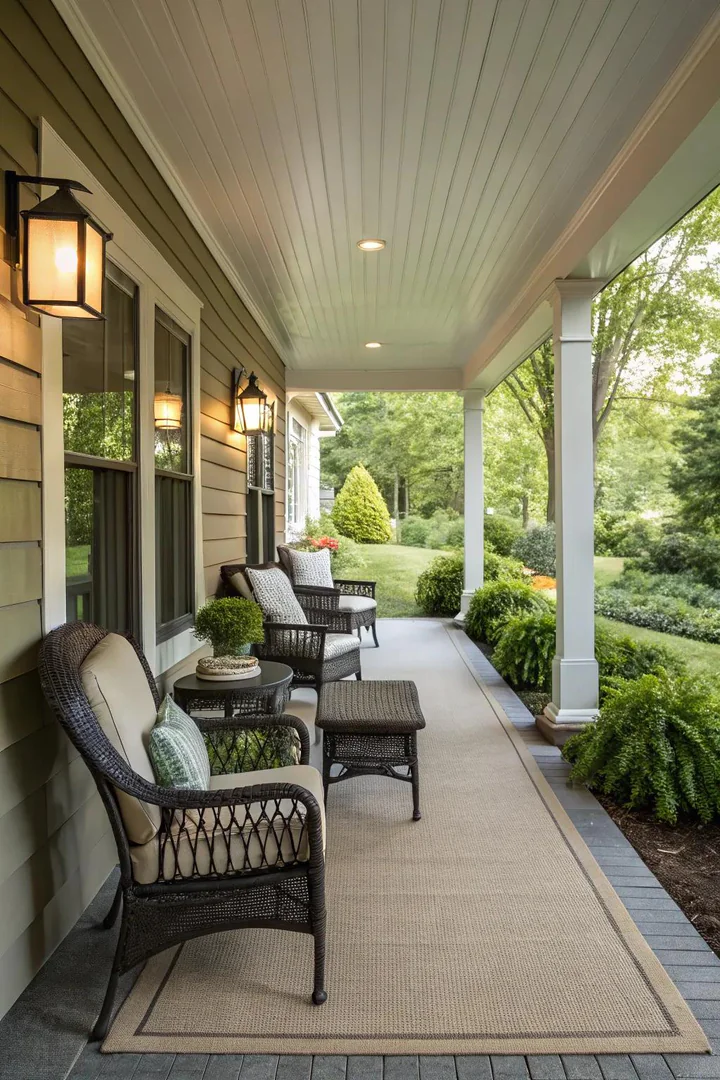
3. Symmetrical Seating Arrangement
Placing two identical chairs on either side of a center table or doorway creates a balanced, formal porch appearance that works on entries as narrow as 6 feet. Classic wooden rocking chairs (Polywood Presidential Rocker, $350 each, or Trex Outdoor Furniture Yacht Club, $300 each) made from recycled HDPE plastic resist splitting, fading, and moisture damage without any staining or sealing.
Set a 20 x 20-inch side table between the chairs and match the finish color exactly (white on white, black on black, mahogany on mahogany). Add matching square throw pillows in a weather-resistant Sunbrella fabric ($25 to $45 per pillow from Pottery Barn or Amazon) to reinforce the paired look. Leave 18 inches between each chair and the railing for comfortable passage.
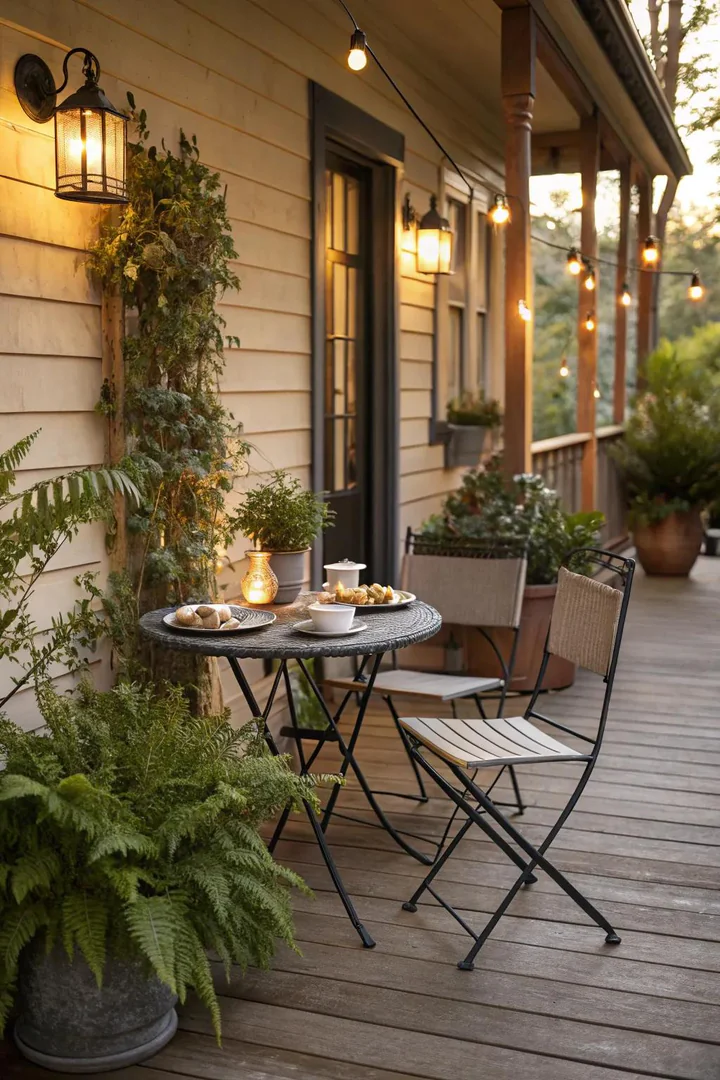
4. Rustic Bistro Set
A bistro set (one 24 to 30-inch round table, two folding chairs) fits on porches as small as 4 x 6 feet and folds flat for storage during winter. Wrought iron sets from Fermob ($400 to $700), Grand Patio ($120 to $180), or PHI VILLA ($90 to $150) come in 15-plus powder-coated colors and hold up to 300 pounds per chair.
Pair a dark iron set with terra cotta herb pots (6-inch clay pots at $3 to $5 each from Home Depot) planted with basil, mint, and rosemary for a farmhouse dining feel. Set rubber furniture caps on all chair and table legs to prevent scratching wooden porch floors and to stop metal legs from sliding on painted surfaces. A small paver patio pad under the set defines the dining zone on an open porch.
5. Potted Plant Porch Display
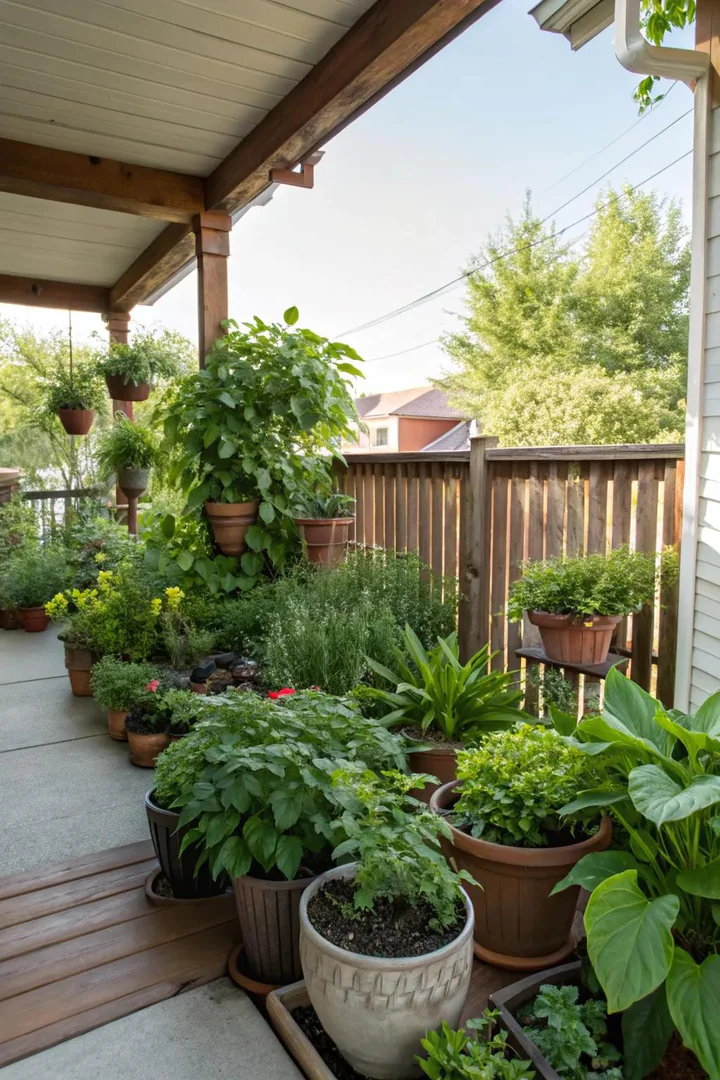
Grouping potted plants in clusters of three to five at different heights fills an empty porch corner with color and texture without permanent planting. Use a mix of tall (30 to 36-inch fiddle leaf fig or majesty palm), medium (18-inch Boston fern or coleus), and low (6-inch trailing pothos or creeping jenny) plants arranged on the porch floor, a plant stand, and a wall-mounted bracket.
Choose lightweight resin or fiberglass planters (Bloem Ariana, $8 to $20 each, or La Jolie Muse Tall Planter, $35 to $55) that look like ceramic or concrete but weigh 70 percent less. Group odd numbers of pots (three or five) for a natural arrangement and mix round, square, and tapered shapes. Water container plants every two to three days in summer and move frost-tender tropicals indoors when temperatures drop below 50°F.
6. Seasonal Decor Touches
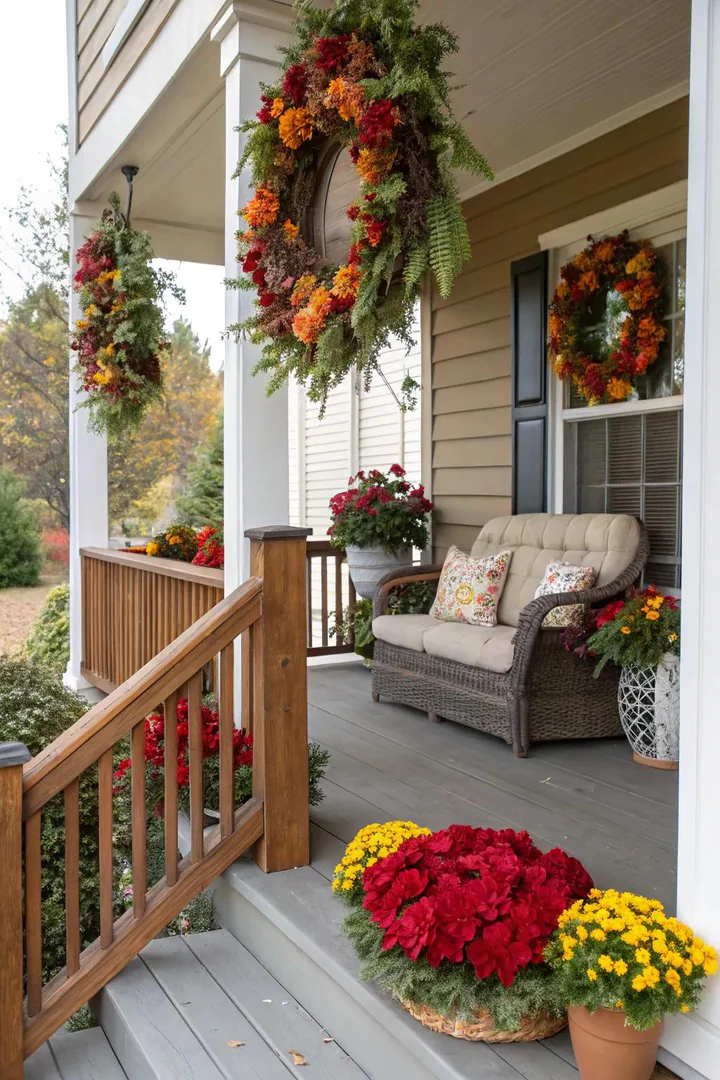
Rotating porch decor by season keeps the entrance looking fresh four times a year without major furniture changes. Fall calls for stacked pumpkins ($5 to $15 each at farmers markets), dried corn bundles ($8 to $12 per bunch), and a 24-inch grapevine wreath ($15 to $25 from Michaels or Hobby Lobby). Winter swaps in evergreen garland ($12 to $20 per 9-foot strand), LED-lit birch branches ($20 to $30), and a doormat with a holiday greeting.
Spring brings hanging baskets of petunias or trailing calibrachoa ($12 to $18 each from local nurseries) and pastel-colored pillow covers. Summer features citronella candle lanterns ($15 to $30 from TIKI Brand), patriotic bunting ($10 to $20 per flag), and bright potted geraniums. Store off-season decor in labeled plastic bins in the garage or basement to keep the rotation fast and organized.
7. Decorative Porch Railings
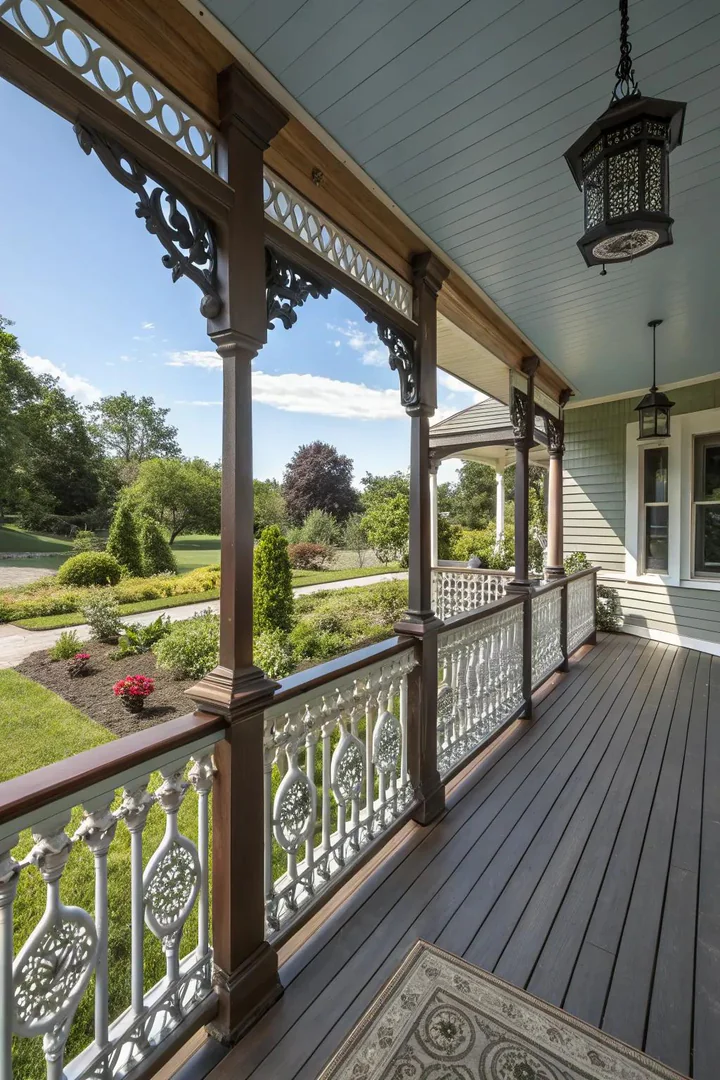
Replacing basic 2 x 2 balusters with turned spindles, flat-sawn cutouts, or cable rail systems changes the entire character of a front porch in a single weekend. Pressure-treated pine turned balusters cost $3 to $6 each at Lowe’s or Home Depot, while composite options from Deckorators or Fiberon run $5 to $10 per spindle and never need painting.
Code requirements in most US jurisdictions call for a minimum 36-inch railing height on porches 30 inches or more above grade, with baluster spacing no wider than 4 inches (per IRC R312.1 and R312.2). Toenail each baluster to the top and bottom rail with 2.5-inch stainless-steel trim-head screws for a clean look, or use baluster connectors (Deckorators Square Baluster Connectors, $15 per 20-pack) for faster installation.
8. Ambient Porch Lighting
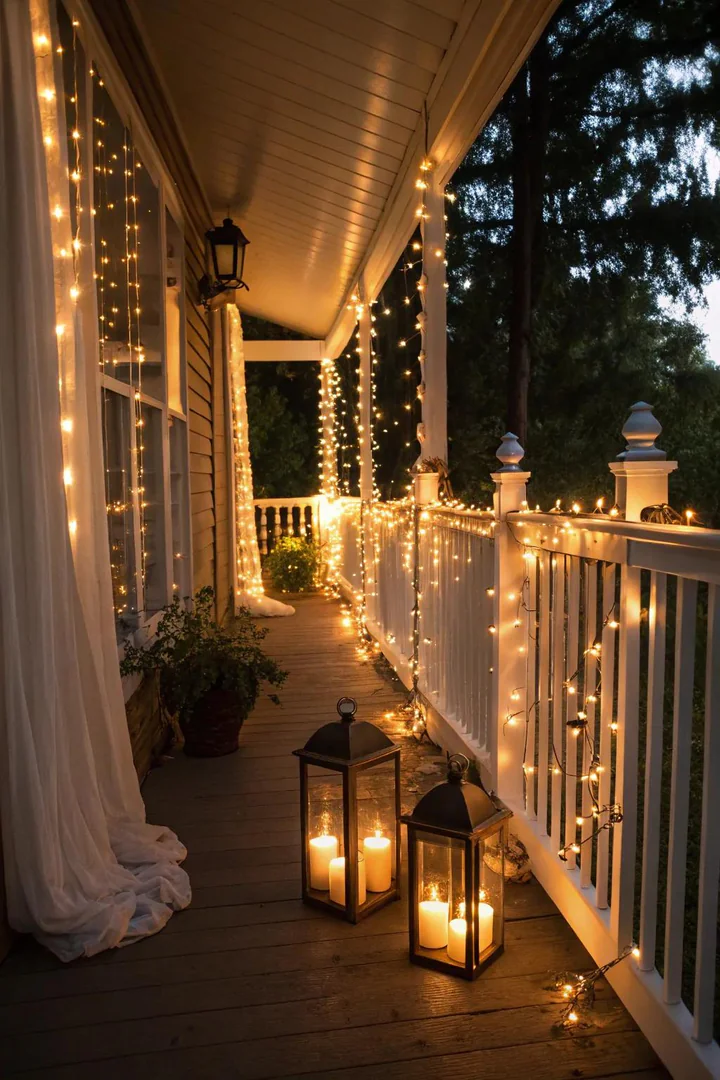
Layering three types of light (overhead string lights, mid-level lanterns, and low step lights) creates depth and warmth on a porch after dark. Run 48-foot commercial-grade string lights (Brightech Ambience Pro, $35 to $50, or Feit Electric 48-foot LED, $30) in a zigzag pattern across the ceiling using cup hooks screwed into rafters at 3-foot intervals.
Add two battery-operated LED lanterns (JHY Design Metal Cage, $20 to $30 per pair) on the porch steps or railing caps, and install solar-powered LED step lights (GIGALUMI, $25 for a 6-pack) on each tread riser. Warm white bulbs at 2200K to 2700K color temperature produce a golden glow that feels welcoming without the harsh blue tone of daylight-rated (5000K+) bulbs.
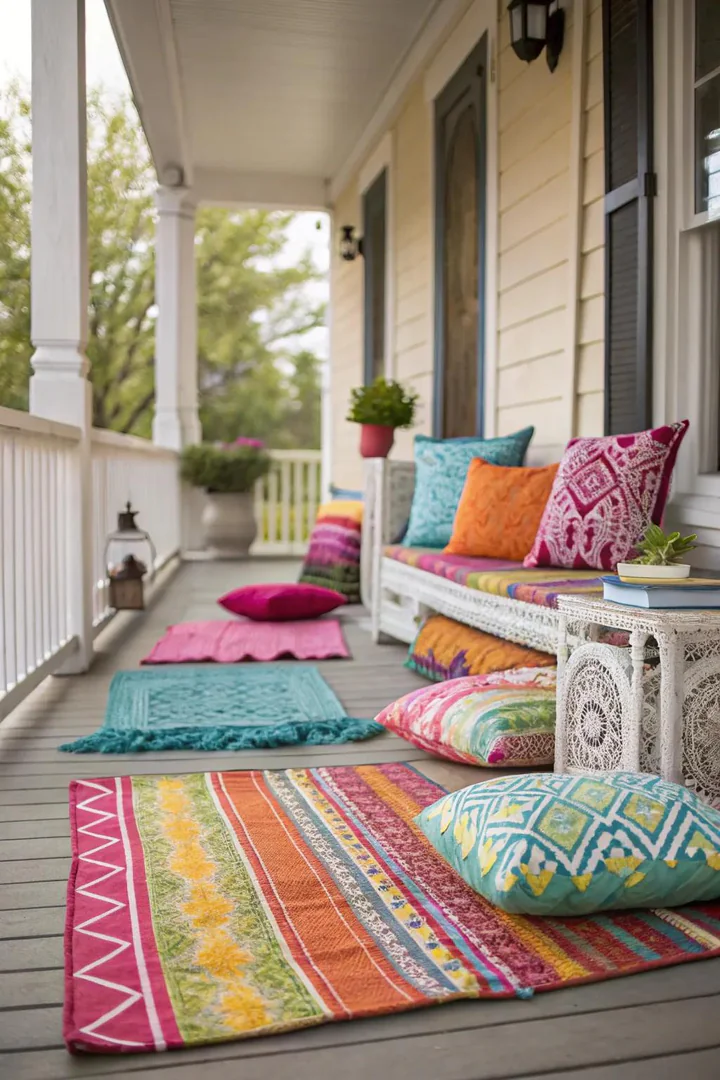
9. Textile-Layered Porch
Stacking outdoor-rated textiles on a porch swing or bench creates a lived-in, comfortable feel that bare furniture cannot match. Start with a base layer of 4-inch-thick bench cushions in Sunbrella fabric (custom-cut from Cushion Source, $80 to $150 per cushion), add two to four 18 x 18-inch throw pillows in mixed patterns (stripe, solid, geometric), and drape a lightweight cotton throw ($25 to $40 from Target or World Market) over one arm.
Lay a 5 x 8-foot flat-weave outdoor rug (Safavieh Courtyard or nuLOOM Outdoor, $40 to $80) under the seating area. All textiles should carry a UV and water-resistant rating for outdoor use. Bring cushions and throws inside during heavy rain or store them in a waterproof deck box (Keter Brightwood 120-gallon, $100 to $150) when not in use.
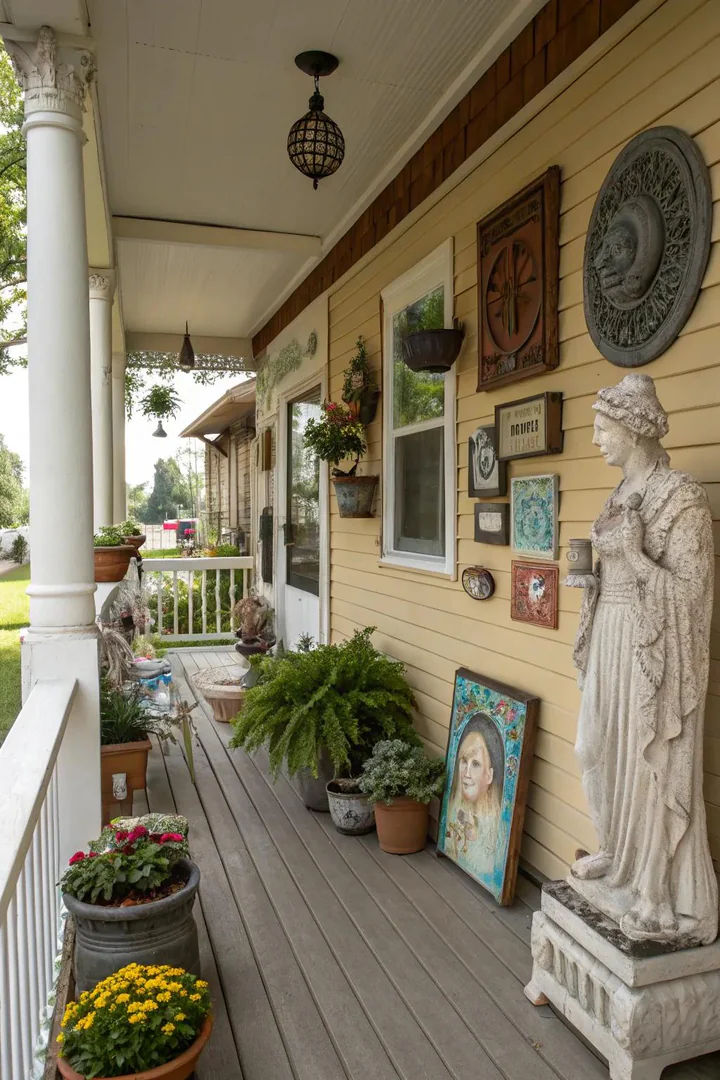
10. Artful Porch Accessories
Wall-mounted metal art, outdoor clocks, and hanging planters turn a blank porch wall into a gallery display. Choose powder-coated steel or aluminum wall sculptures ($20 to $60 from Amazon or Kirkland’s) rated for outdoor moisture exposure. Mount pieces with stainless-steel picture hangers on wood siding or masonry anchors on brick or stone.
An oversized 24-inch outdoor clock (La Crosse Technology or Infinity Instruments, $30 to $60) creates a focal point above a bench or doorway. Add three wall-mounted planters (Mkono Ceramic Hanging Planters, $15 for a set of three) staggered at different heights and planted with trailing string-of-pearls, pothos, or burro’s tail succulents for vertical greenery that does not crowd the floor.
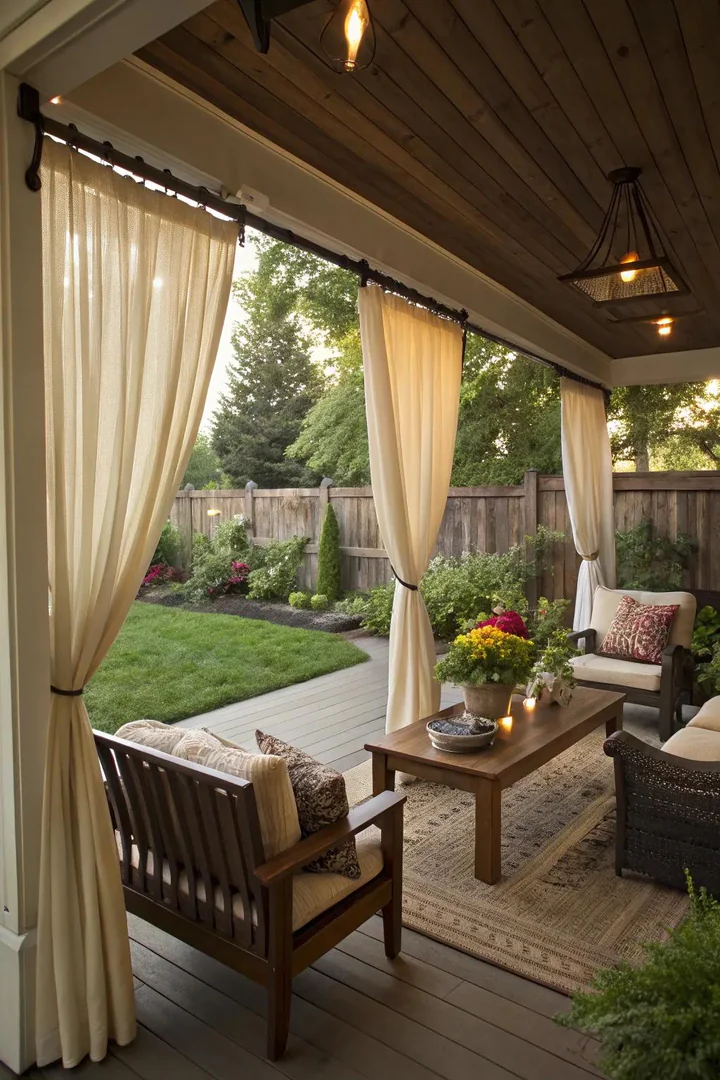
11. Outdoor Porch Curtains
Hanging curtains between porch columns or along the railing line adds privacy, wind protection, and a finished indoor-outdoor feel. Use outdoor-rated fabric panels (Exclusive Home Indoor/Outdoor Curtains, $25 to $40 per panel, or Sun Zero Valencia Woven Indoor/Outdoor, $20 per panel) in a neutral white, gray, or natural linen tone.
Mount a rust-proof curtain rod (Kenney Adler 1-inch diameter, $15 to $25) between columns or on wall brackets at the soffit line. Grommet-top panels slide freely and tie back with rope holdbacks ($5 to $10 per pair) during clear weather. Each panel should measure 1.5 times the span width for a full, gathered appearance. Sheer fabrics filter 30 to 50 percent of sunlight while still allowing airflow.
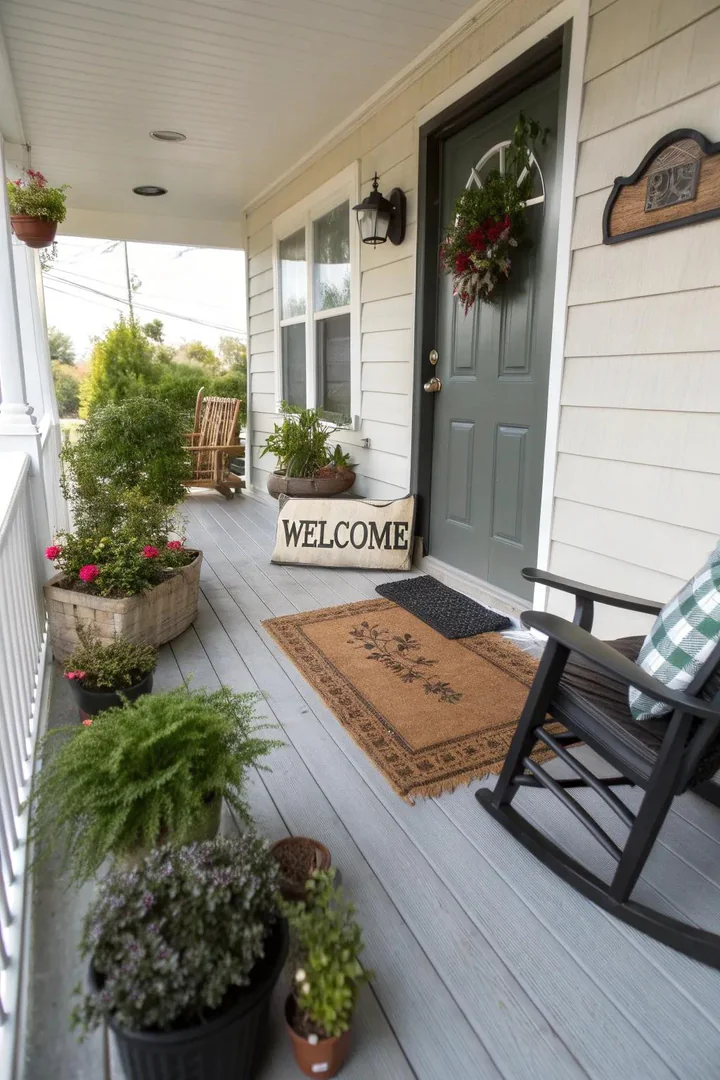
12. Welcoming Doormat Setup
Layering a decorative coir doormat on top of a larger rubber or woven base mat creates a two-tier entry that catches dirt and looks polished at the same time. Place a 24 x 48-inch solid-color rubber scroll mat ($15 to $25 from Entryways or Rubber-Cal) on the porch floor, and center an 18 x 30-inch printed coir mat ($10 to $20 from DII or mDesign) on top.
Coir (coconut fiber) mats scrape mud from shoe soles better than any other natural material but wear out in 12 to 18 months outdoors. Replace the top mat seasonally or whenever the fibers flatten and stop trapping debris. A boot tray ($15 to $30 from Mohawk Home) next to the door handles wet shoes and dripping umbrellas without water pooling on the porch surface.
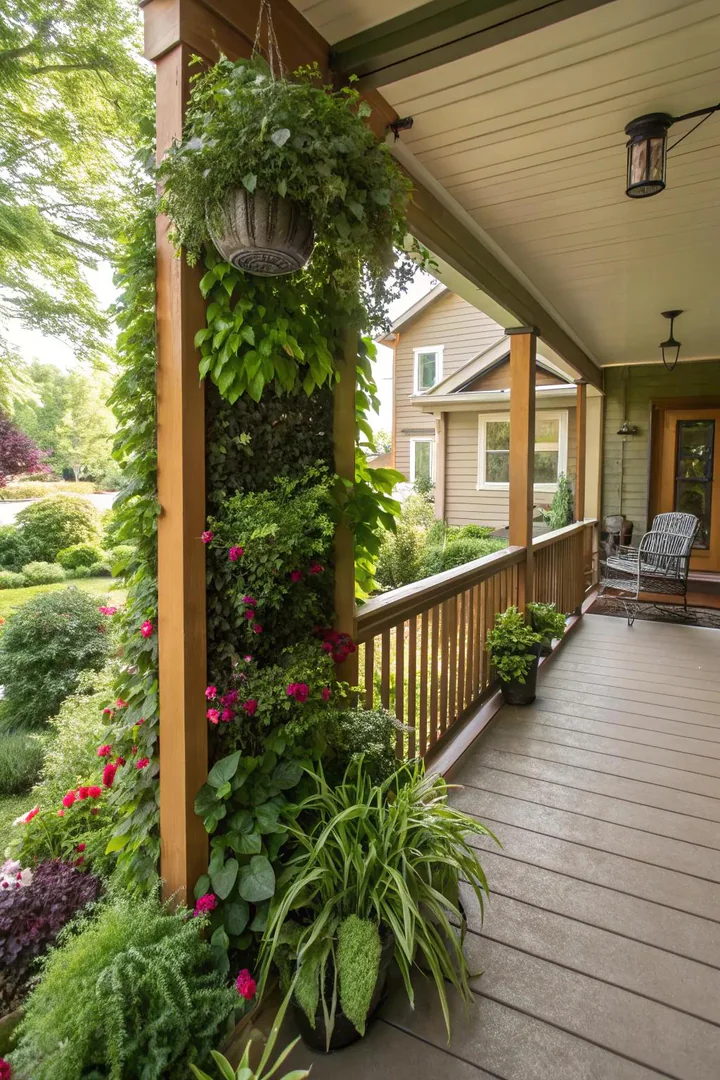
13. Vertical Garden Wall
A wall-mounted vertical planter system grows 20 to 36 plants in a 2 x 4-foot footprint, giving a small porch a full garden wall without sacrificing any floor area. Ready-made options include Florafelt (12-pocket panel, $120), Wally Pro (modular pockets, $20 each), and the Worth Garden self-watering 36-pocket hanging planter ($30 to $45).
Plant each pocket with a single herb, trailing annual, or compact ornamental: oregano, thyme, sweet alyssum, lobelia, and creeping phlox all grow well in shallow vertical containers. Water every one to two days in warm weather because vertical planters drain fast and soil volumes are small (0.5 to 1 quart per pocket). Attach the system to a porch wall with 2.5-inch wood screws into studs, or use a freestanding A-frame support if drilling into the wall is not an option.
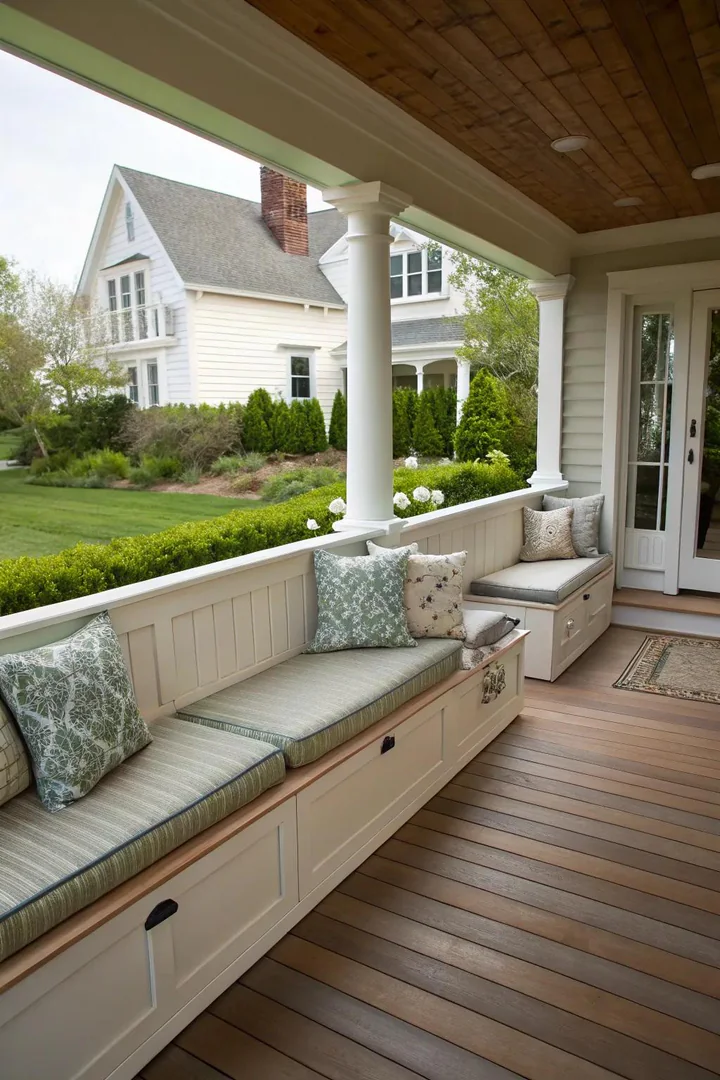
14. Built-In Porch Benches
A built-in L-shaped or straight bench along one or two porch walls provides permanent seating without movable chairs that blow around in storms. Build the bench frame from pressure-treated 2 x 4 lumber at 18 inches tall and 16 inches deep, and top with 1 x 6 cedar or composite boards screwed down with 2-inch stainless-steel deck screws.
Hinge the seat boards or add a lift-off panel to create hidden storage underneath for outdoor cushions, tools, or shoes. A 6-foot built-in bench costs $80 to $150 in lumber and hardware and seats three adults comfortably. Add 3-inch-thick custom foam cushions with Sunbrella covers ($50 to $100 per seat section from Cushion Connection or Custom Cushions) for long-term comfort.
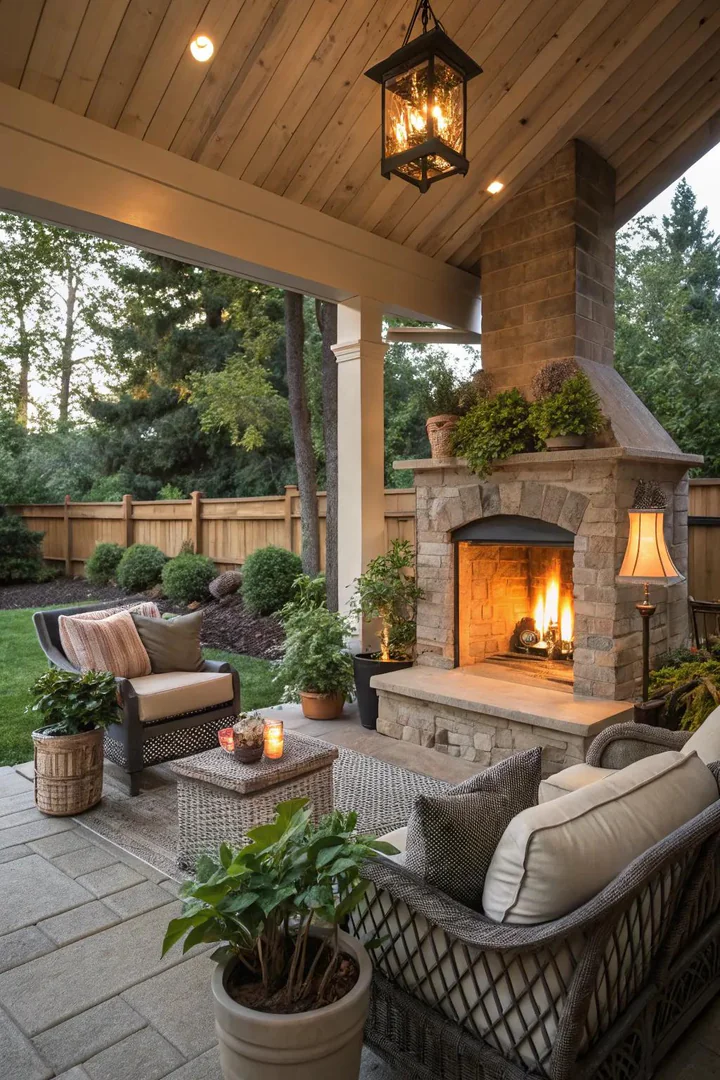
15. Porch Fireplace Focal Point
An outdoor fireplace on a covered porch extends the usable season from spring through late fall by providing radiant heat and a gathering point for conversation. A direct-vent gas fireplace (Napoleon Riverside 36 or Majestic Villawood, $1,500 to $3,000 for the unit alone) installs against an exterior wall and vents horizontally through the wall, requiring no chimney.
Frame the surround with cultured stone veneer (Eldorado Stone or GenStone, $8 to $15 per square foot) on a cement board substrate for a masonry appearance at one-third the weight. Add a 60-inch wood mantel shelf ($50 to $120 from Dogberry Collections or Pearl Mantels) above the firebox for candles, photos, or a clock. Keep combustible furniture and textiles at least 36 inches from the firebox opening per manufacturer clearance guidelines.
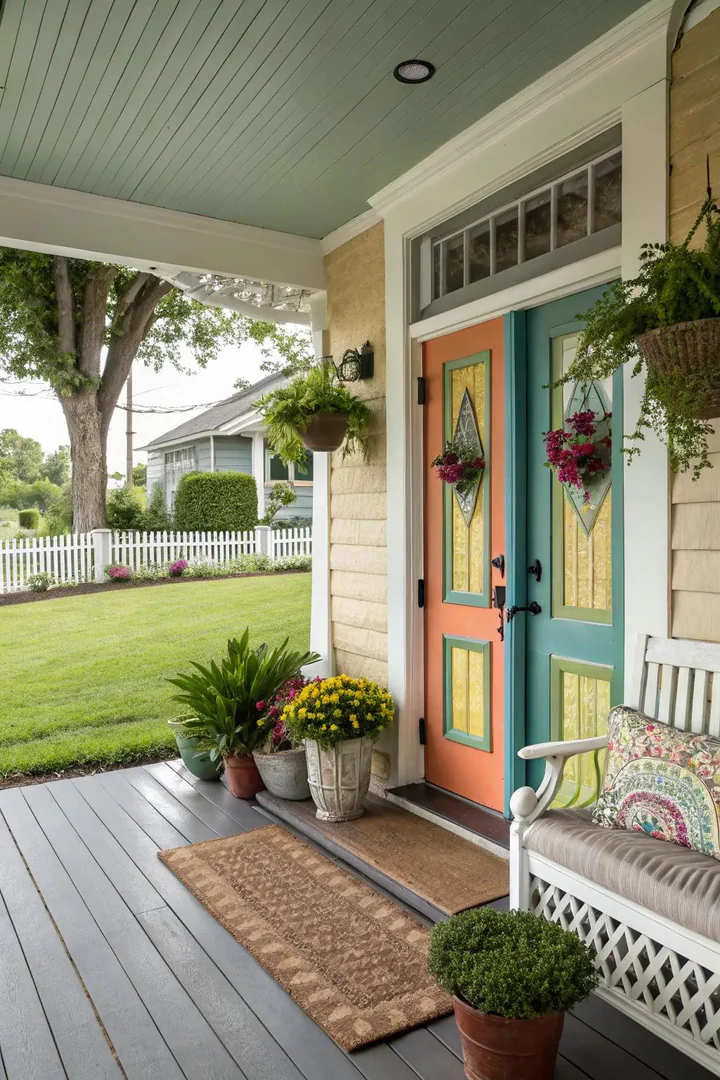
16. Colorful Front Door
Painting the front door a bold color (navy blue, sunshine yellow, hunter green, coral red, or matte black) takes two hours, costs $30 to $50 in paint and supplies, and changes the entire porch appearance instantly. Use a high-quality exterior door paint like Benjamin Moore Aura Exterior or Sherwin-Williams Emerald Exterior in a semi-gloss or high-gloss sheen for maximum durability and easy cleaning.
Prep the door by sanding with 150-grit paper, wiping with a tack cloth, and applying one coat of bonding primer (Zinsser Bulls Eye 1-2-3). Roll the flat panels with a 4-inch foam roller and brush the stiles and rails with a 2.5-inch angled sash brush for smooth coverage. Match one or two porch accessories (planter pots, pillow covers, or the doormat) to the door color for a coordinated entry. Visit small brick patio designs for more ways to upgrade your front entry area.
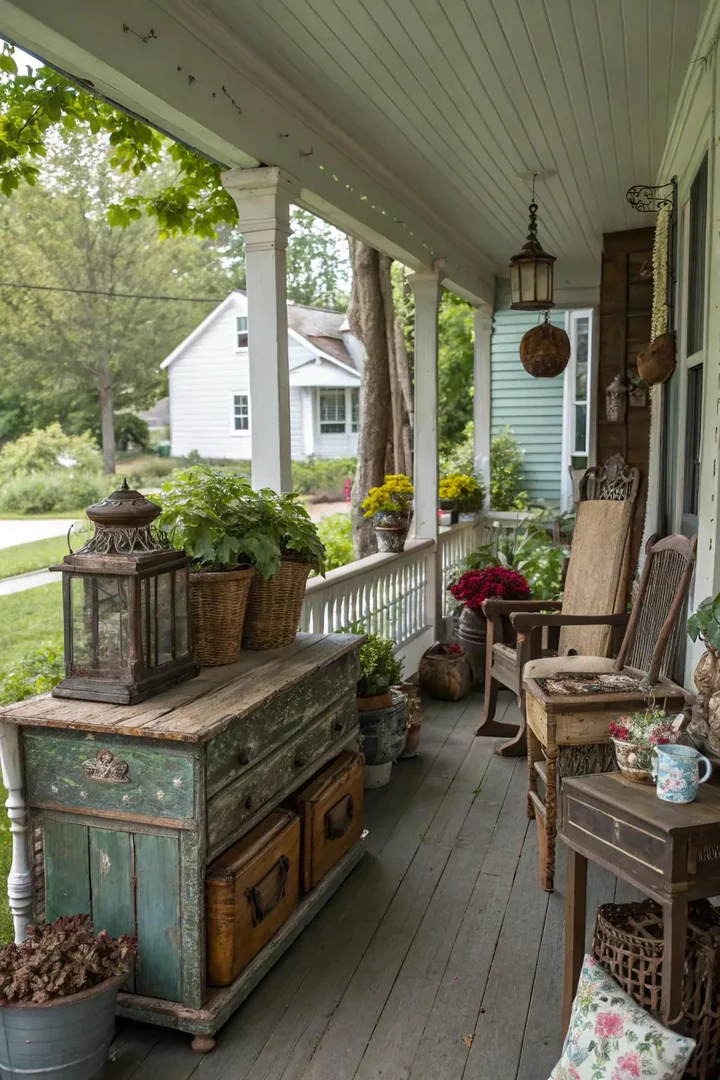
17. Vintage Finds Porch
Filling a porch with flea-market finds and antique store pickups costs far less than new outdoor furniture and creates a one-of-a-kind character that catalog sets cannot replicate. Scout for old wooden benches ($30 to $80 at estate sales), galvanized metal watering cans ($10 to $25), vintage milk crates ($5 to $15 each), and weathered shutters ($15 to $40 per panel) at thrift stores, barn sales, and Facebook Marketplace.
Stack milk crates vertically as an open-shelf plant stand, lean salvaged shutters against the wall as a decorative backdrop, and repurpose an old door as a porch sign or table top. Sand and seal any bare wood with Thompson’s WaterSeal to prevent further decay, but leave the original paint patina intact for aged character. A full vintage porch setup typically costs $100 to $300 in second-hand finds versus $500-plus for a comparable new furniture arrangement.
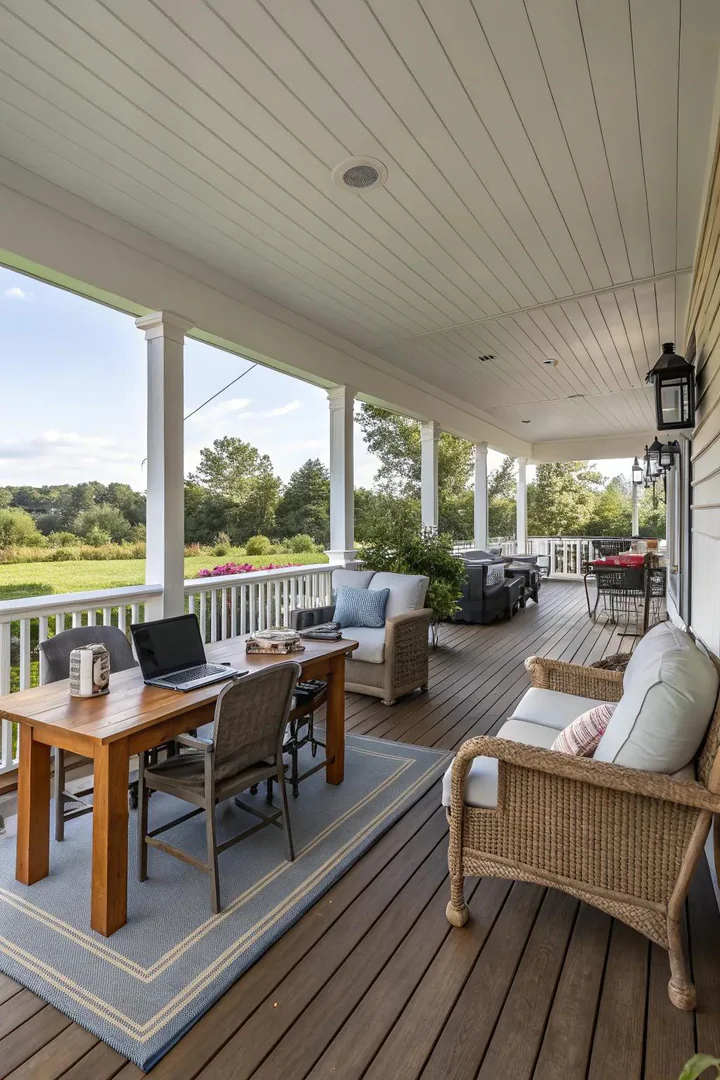
18. Multi-Zone Porch Layout
A porch longer than 16 feet benefits from splitting into two or three separate zones: a dining area near the kitchen door, a lounge section at the far end, and a plant display or reading nook in between. Define each zone with a separate outdoor rug (5 x 7-foot or 6 x 9-foot polypropylene, $40 to $80 each) and keep a 30-inch walking aisle between zones for comfortable foot traffic.
Use furniture scale to match each zone’s purpose: a 48-inch round dining table with four chairs for the eating area, a 3-seat outdoor sofa or porch swing for the lounge, and a tall plant stand or bookshelf for the transition space. Repeat one color or material across all three zones (matching throw pillows, same railing finish, identical lantern style) so the porch reads as one unified space rather than three random groupings.
How to Plan and Style a Front Porch
1. Measure the Space and Set a Budget
Measure the porch length, depth, and ceiling height with a 25-foot tape measure and sketch the footprint on graph paper at 1/4-inch scale. Note the locations of the front door, windows, columns, electrical outlets, and any permanent features like built-in benches or railings. Set a budget range before shopping: $200 to $500 covers a basic refresh (new cushions, rug, plants, doormat), $500 to $1,500 handles a mid-range redesign (furniture replacement, lighting, paint), and $1,500 to $5,000 funds a full renovation (new railing, ceiling fan, fireplace, flooring).
2. Choose a Layout That Fits Traffic Flow
Keep a minimum 36-inch-wide clear path between the steps and the front door so guests, delivery drivers, and anyone carrying groceries can pass without squeezing around furniture. On a 6-foot-deep porch, place all seating against the railing or wall and keep the center open. On an 8-foot or deeper porch, you have room for a center coffee table or conversation grouping without blocking the walkway.
3. Select Weather-Resistant Furniture
Choose materials rated for full outdoor exposure: recycled HDPE plastic (Polywood, Trex Outdoor), powder-coated aluminum, marine-grade teak, or all-weather resin wicker on an aluminum frame. Avoid untreated softwood, mild steel, and indoor fabrics, which rot, rust, or mildew within one season of outdoor use. Check weight capacity ratings (most outdoor chairs support 250 to 300 pounds) and test seat height (17 to 18 inches is standard dining, 14 to 16 inches is lounge).
4. Layer Lighting, Textiles, and Plants
Install overhead string lights first (they set the ceiling plane), then add mid-height lanterns and low step lights. Layer textiles from the ground up: rug, seat cushions, throw pillows, blanket. Group potted plants in odd-numbered clusters (three or five) at varying heights. Follow the 60-30-10 color rule: 60 percent dominant neutral (white, gray, wood tone), 30 percent secondary color (green from plants, blue from pillows), and 10 percent accent pops (red door, yellow planter). Check budget-friendly outdoor deck ideas for more affordable styling tips.
5. Maintain and Rotate Seasonally
Sweep the porch floor weekly and hose down furniture monthly with mild dish soap and water. Rotate throw pillow covers and doormat designs four times per year to match the season. Inspect railing connections, step treads, and ceiling fan mounting brackets each spring before the outdoor season starts. Store cushions in a waterproof deck box or bring them indoors during extended rain or freezing temperatures to extend their lifespan by two to three years. Visit The Designers Company for more outdoor living ideas and seasonal porch styling guides.
Porch Furniture Materials Comparison
| Material | Cost Range (Per Chair) | Weight | Lifespan | Maintenance | Best For |
|---|---|---|---|---|---|
| Recycled HDPE (Polywood) | $250 to $400 | 35 to 45 lbs | 20+ years | Soap and water only | Low-maintenance, coastal porches |
| Powder-Coated Aluminum | $100 to $300 | 8 to 15 lbs | 10 to 15 years | Wipe down, touch up chips | Lightweight, modern styles |
| Marine-Grade Teak | $300 to $800 | 25 to 40 lbs | 25 to 50 years | Oil annually or let gray | Premium, classic porches |
| Resin Wicker on Aluminum | $150 to $350 | 15 to 25 lbs | 8 to 12 years | Hose clean, check weave | Traditional, covered porches |
| Wrought Iron | $80 to $250 | 20 to 40 lbs | 15 to 25 years | Sand and repaint rust spots | Vintage, formal entries |
| Pressure-Treated Pine | $50 to $150 (DIY) | 20 to 35 lbs | 8 to 12 years | Stain every 2 to 3 years | Budget builds, painted styles |
Frequently Asked Questions
What size porch furniture fits a small front porch?
A porch measuring 6 x 8 feet (48 square feet) fits one 24-inch round bistro table, two folding chairs, and a doormat without blocking the walkway. A 4 x 6-foot porch holds one armchair and a small side table. Measure the clear floor area (subtract space for the front door swing, which needs 36 inches), and choose furniture pieces that leave at least 30 inches of walking clearance between the steps and the door.
How much does it cost to furnish a front porch?
A basic porch setup (two chairs, one side table, a rug, four throw pillows, and a doormat) costs $200 to $600 using mid-range outdoor furniture from Wayfair, Target, or Home Depot. A premium setup with a porch swing, string lights, multiple plant groupings, and custom cushions runs $800 to $2,000. DIY projects like painting the front door ($30), building a bench ($80 to $150), or hanging a planter wall ($30 to $45) stretch the budget further.
What is the best flooring for a covered porch?
Tongue-and-groove porch flooring in Douglas fir, Southern yellow pine, or ipe hardwood provides the strongest, most traditional surface. Composite porch boards from Trex (Transcend line) or TimberTech (Vintage Collection) cost $4 to $7 per linear foot and never need staining. Concrete porches can be stained with Behr Premium Concrete Stain ($30 per gallon) or covered with interlocking deck tiles (Bare Decor EZ-Floor, $3 to $5 per square foot) for a quick upgrade without demolition.
How do you protect porch furniture from weather damage?
Cover furniture with fitted polyester covers (Classic Accessories Ravenna or KoverRoos, $20 to $60 per piece) during storms and overnight. Store cushions in a waterproof deck box when not in use. Apply a UV-protectant spray (303 Aerospace Protectant, $15 per 32-ounce bottle) to resin, vinyl, and rubber surfaces twice per year to prevent fading and cracking. Tighten all hardware connections (bolts, screws, brackets) at the start of each season to prevent wobbling from freeze-thaw expansion cycles.
What plants grow best on a north-facing porch with limited sun?
Shade-tolerant plants for north-facing porches include Boston fern (Nephrolepis exaltata), coleus (Plectranthus scutellarioides), impatiens, begonias, caladium, and hosta in containers. All of these grow well with two to four hours of indirect light per day. Avoid sun-loving plants like petunias, geraniums, and lavender on north-facing porches because they stretch, stop flowering, and produce weak, leggy growth without six-plus hours of direct sun.