
Kitchen Accent Wall Ideas: 16 Gorgeous Ways to Add Drama Now
Kitchen accent wall ideas turn one wall of the kitchen into a focal point through bold paint colors, textured panels, patterned tile, reclaimed wood, chalkboard paint, mirrored surfaces, gallery displays, or open shelving that draws attention and adds personality to the room without remodeling all four walls. An accent wall works best on the wall you see first when entering the kitchen — typically the wall behind the range, the wall behind the sink, or the wall at the end of a galley layout. Below are 16 accent wall treatments with specific materials, products, and costs, followed by a how-to planning guide, a comparison table, and FAQs.
1. Geometric Tile Pattern
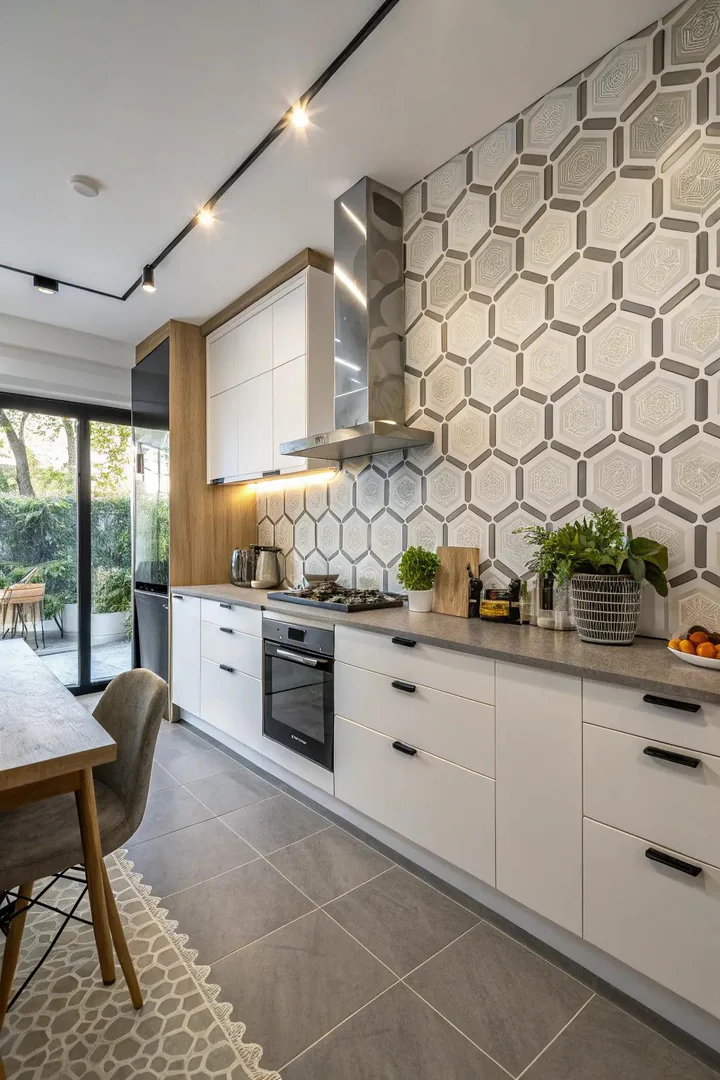
Installing geometric-patterned tile (hexagonal, chevron, herringbone, arabesque, or Moroccan-star shapes) on one wall behind the range or countertop creates a textured, three-dimensional accent that catches light from multiple angles. Hexagonal porcelain tile ($5 to $12 per square foot from Daltile, MSI, or Floor and Decor) in a single color or two alternating colors (white and gray, black and white, or blue and white) produces a honeycomb pattern that adds visual depth without competing with the rest of the kitchen.
A chevron or herringbone layout using standard 2×6 or 3×6 subway tiles ($3 to $8 per square foot) arranged at 45-degree angles produces a V-shaped or zigzag pattern from inexpensive rectangular tiles. The labor cost for herringbone installation ($8 to $15 per square foot, compared to $5 to $10 for standard brick-lay) is higher because each tile requires angle cuts and precise alignment. A single accent wall (typically 8 to 12 feet wide by 18 inches to 4 feet tall, depending on whether the tile covers just the backsplash zone or the full wall) uses 12 to 48 square feet of tile, costing $60 to $575 for tile alone.
2. Wallpaper or Mural
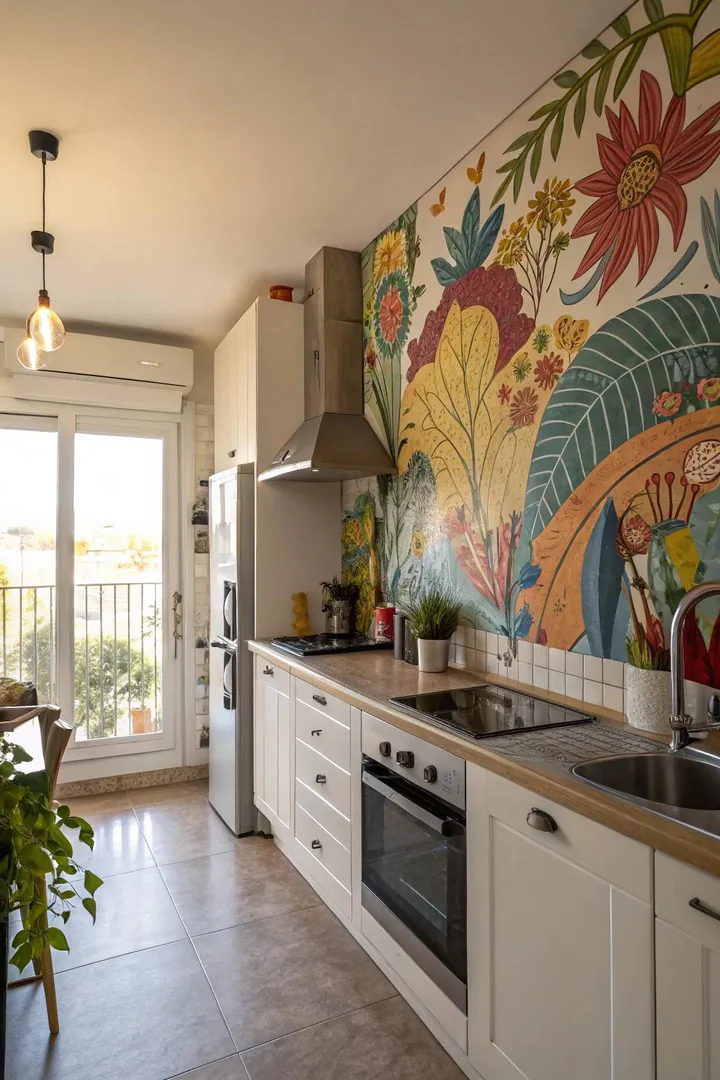
Applying peel-and-stick wallpaper ($25 to $60 per roll from Tempaper, NuWallpaper, or Spoonflower; each roll covers 28 to 56 square feet) or a printed wall mural ($50 to $200 for a custom-sized mural from Murals Your Way or Photowall) to one kitchen wall adds color, pattern, and visual complexity that paint alone cannot provide. Peel-and-stick wallpaper removes cleanly without damaging the wall surface, making it ideal for renters and homeowners who want a temporary or seasonal accent wall.
Popular kitchen wallpaper patterns: botanical and herb prints (sage, rosemary, and thyme illustrations on a white or cream background), Delft-style blue-and-white tile patterns (a printed wallpaper that mimics hand-painted Dutch tiles without the cost of real tile), citrus or fruit patterns (lemons, oranges, or figs on a bright background), and geometric Art Deco patterns in gold and white or black and white. Choose a vinyl-coated or washable wallpaper for the kitchen — uncoated paper wallpaper absorbs grease, steam, and food splashes and stains permanently within weeks. Browse accent wall materials and colors at small country kitchen ideas for farmhouse-style accent wall treatments.
3. 3D Textured Wall Panels
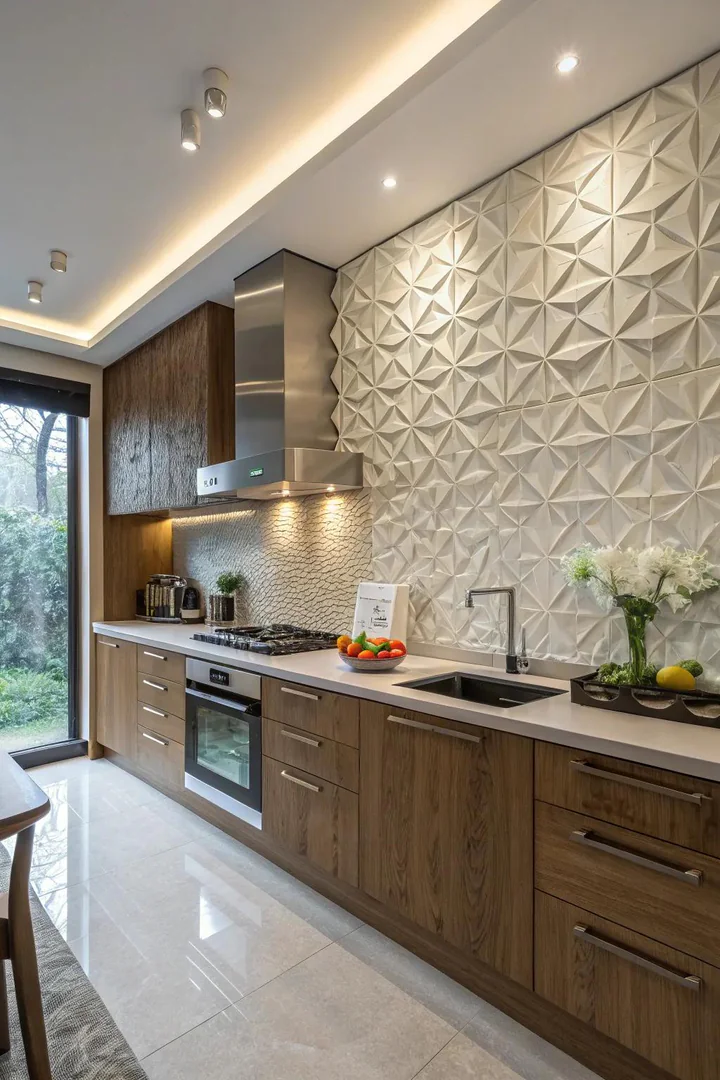
3D wall panels (Art3d PVC panels, $30 to $60 for a pack of 12 panels covering 32 square feet; WallArt plant-fiber panels, $40 to $80 for 12 panels covering 32 square feet) mount directly to the wall with adhesive or nails and create a sculptural, textured surface with raised geometric patterns (waves, diamonds, squares, or organic flowing shapes) that cast shadows and catch ambient light from different angles throughout the day.
Paint the 3D panels in the same color as the surrounding walls (the texture alone creates the accent through shadow and light, without a color change) for a subtle, architectural effect, or paint them in a contrasting color (dark navy, charcoal, or forest green against white surrounding walls) for a bold, gallery-like statement. 3D panels work best on the wall behind a dining table, a breakfast nook, or a bar seating area — not behind the stove or sink, where cooking grease and water splashes accumulate in the panel crevices and become difficult to clean.
4. Chalkboard Wall
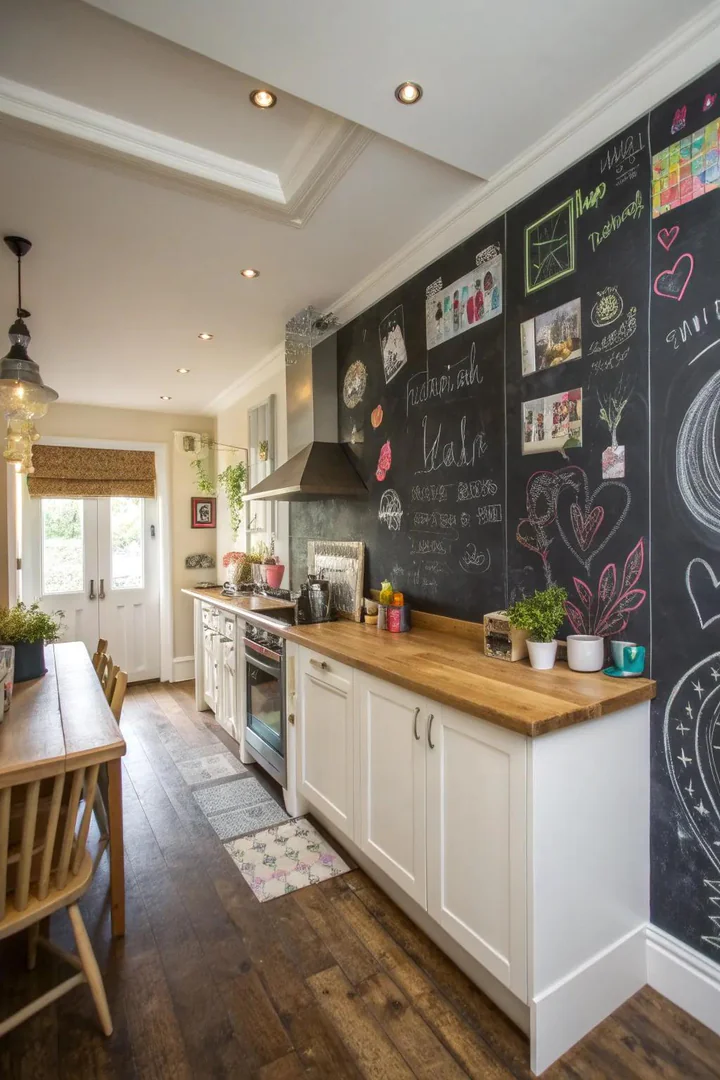
Painting one wall (or a section of one wall) with chalkboard paint (Rust-Oleum Specialty Chalkboard Paint, $10 to $15 per quart, covers 50 square feet per quart; Benjamin Moore Chalkboard Paint 307, $20 to $25 per quart) creates a writable, erasable surface for grocery lists, weekly menus, recipe notes, children’s drawings, and daily messages. Chalkboard paint goes over any smooth, primed wall surface and dries to a matte black (or matte green, if using the traditional schoolhouse-green version) in 24 hours.
After the paint dries fully (3 days), season the chalkboard by rubbing the entire surface with the side of a white chalk stick and then erasing it completely — seasoning prevents the first chalk writing from leaving a permanent ghost mark. Add a narrow chalk ledge ($5 to $15 for a small wood shelf or a repurposed picture-frame ledge) at the base of the chalkboard wall to hold chalk sticks, markers, and an eraser. A chalkboard wall works best in a farmhouse, cottage, or family kitchen where the informal, hand-written quality matches the room’s character. In a formal or modern kitchen, consider a magnetic chalkboard surface ($15 to $30 for a magnetic primer applied under the chalkboard paint) that holds recipes, photos, and notes with magnets.
5. Textured Stone or Brick
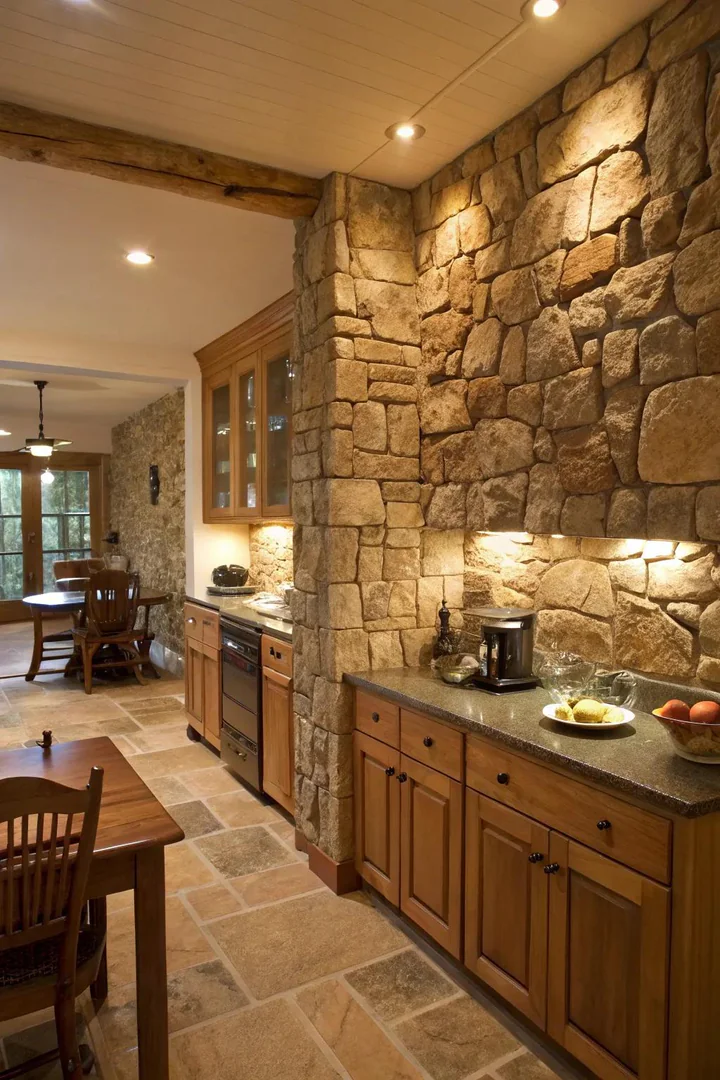
Applying stone veneer (GenStone or AirStone lightweight faux-stone panels, $6 to $12 per square foot, adhesive-mounted, no mortar required) or thin brick veneer ($5 to $10 per square foot from Old Mill Brick or Brick It) to one wall produces the texture and character of a full-depth stone or brick wall at 1/10 the weight and 1/3 the cost. A stone or brick accent wall behind the range creates a visual anchor that references traditional hearth cooking and adds warmth through earthy, natural material.
Faux-stone panels (made from polyurethane or concrete aggregate) weigh 1 to 3 pounds per square foot, compared to 10 to 25 pounds per square foot for real stone, and adhere to drywall with construction adhesive without any structural reinforcement. Thin brick veneer (real brick sliced to 1/2-inch thickness) weighs 3 to 5 pounds per square foot and mounts with thinset mortar or adhesive. Both products install in a day without a mason and cut with a standard miter saw. A whitewashed brick accent wall (thin brick veneer painted with a diluted white wash to soften the red and expose the texture) suits farmhouse and country kitchens, while dark stacked-stone veneer suits modern and industrial kitchens.
6. Bold Paint Color
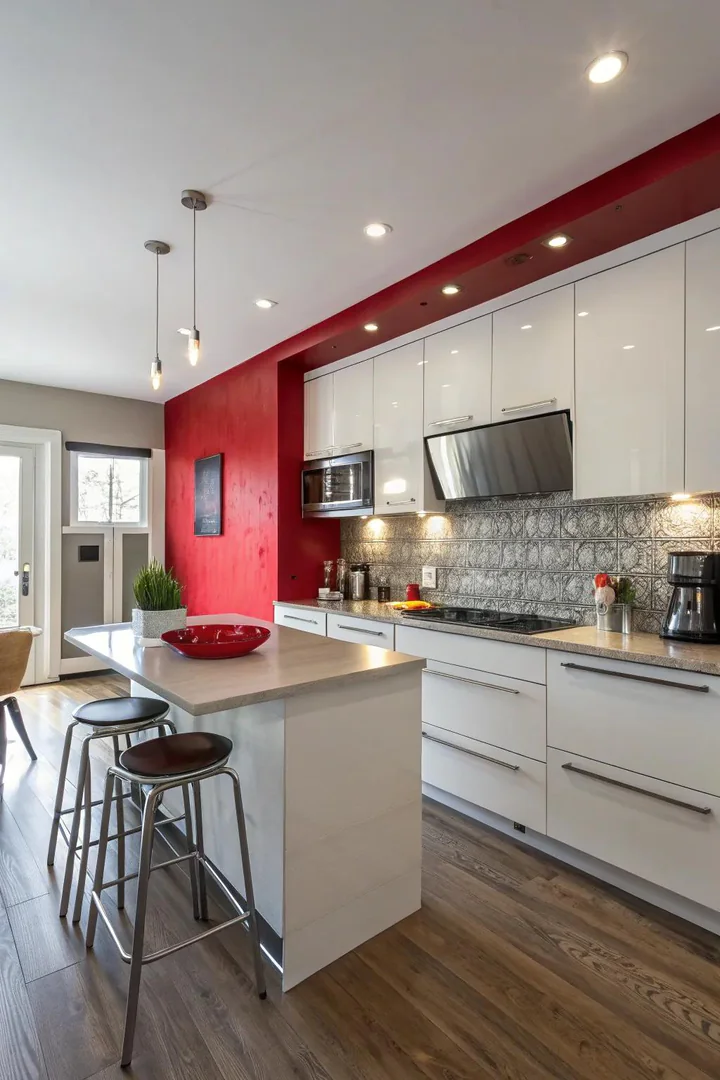
Painting one wall in a deep, saturated color (Benjamin Moore Hale Navy HC-154, a rich navy blue; Sherwin-Williams Peppercorn SW 7674, a warm charcoal; Farrow and Ball Inchyra Blue No. 289, a complex blue-gray; or Benjamin Moore Caliente AF-290, a deep true red) while keeping the remaining three walls white, cream, or light gray creates a dramatic color contrast that draws the eye to a single focal surface. A single accent wall in a deep color adds personality to the kitchen without the visual weight of painting all four walls dark.
Choose the wall with the most unbroken surface area (the fewest windows, doorways, and cabinet interruptions) for the boldest impact. A wall broken up by windows and cabinets dilutes the color punch because only narrow strips of painted surface remain visible between the interruptions. Apply 2 to 3 coats of paint (deep colors require more coats than light colors for full, even coverage) over a tinted primer (ask the paint store to tint the primer to a mid-tone version of the topcoat color, which reduces the number of topcoats from 4 to 2 or 3). A quart of premium paint ($15 to $25) covers 100 square feet and is enough for a single accent wall in most kitchens.
7. Mirror Wall
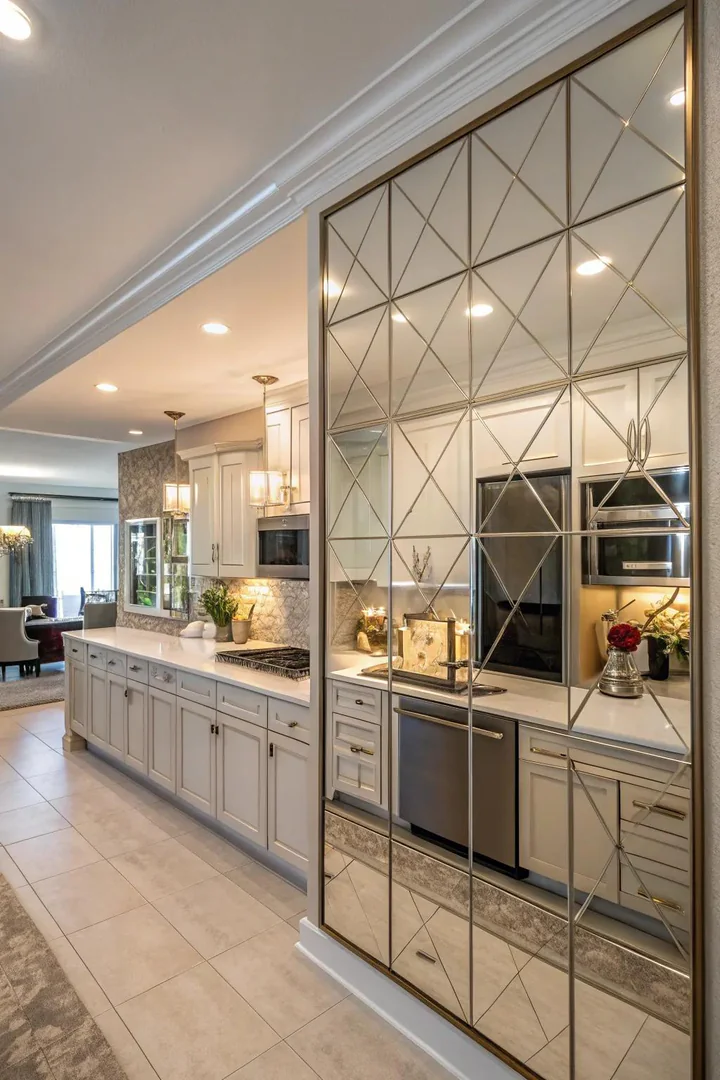
Covering one wall (or the backsplash zone of one wall) with mirror panels ($5 to $15 per square foot for custom-cut mirror from a local glass shop, adhered to the wall with mirror mastic) doubles the visual depth of the kitchen by reflecting the opposite wall, the window light, and the room behind the viewer. A mirrored accent wall in a small kitchen makes the room appear twice as wide and reflects both natural daylight and artificial light sources for a brighter space.
An antiqued mirror ($10 to $25 per square foot from specialty glass suppliers) with an acid-treated or spray-finished patina (dark spots, cloudy areas, mercury-glass effect) provides reflection with vintage character that suits traditional, farmhouse, and eclectic kitchens better than crystal-clear modern mirror. A beveled mirror tile ($8 to $20 per square foot from TileBar or Wayfair) in 3×6, 4×8, or 6×12-inch rectangles installed in a brick-lay or herringbone pattern creates a structured, tiled mirror wall with grouted seams that breaks the reflection into faceted panels rather than one continuous sheet. See more reflective surface strategies at wood kitchen cabinet color ideas for light-reflecting cabinet finishes.
8. Photo and Art Gallery Wall
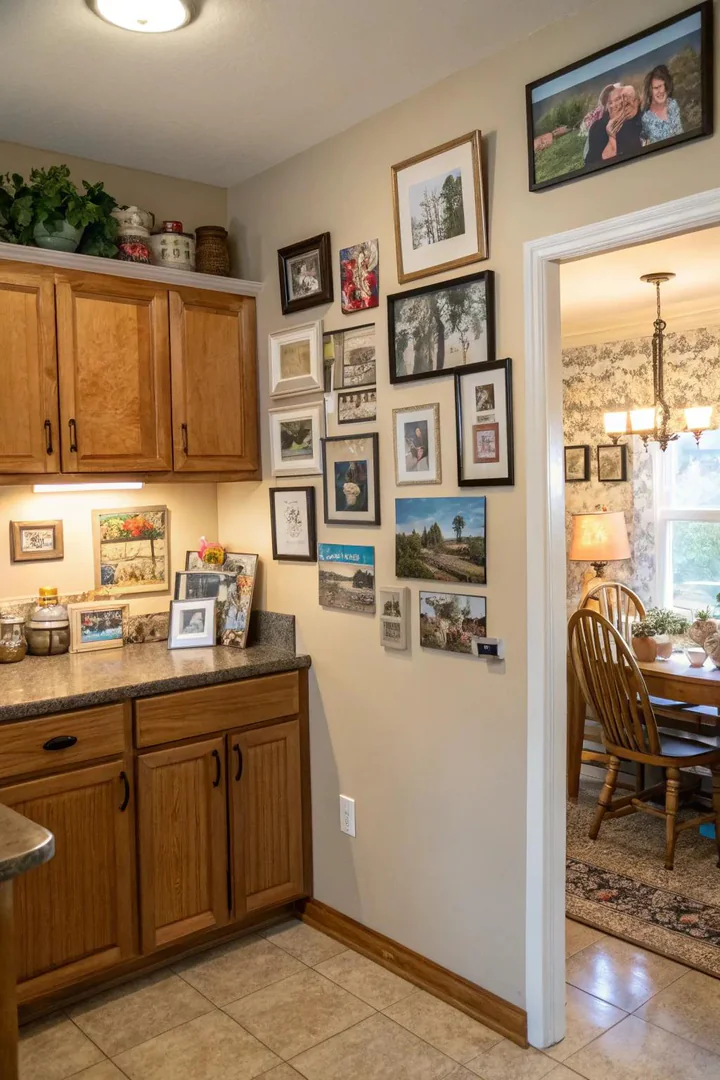
Arranging 8 to 15 framed photos, prints, and art pieces in a gallery-wall layout on one kitchen wall adds personality, color, and family history to the room. A gallery wall works best on the wall beside the dining table, the wall opposite the range, or the end wall of a galley kitchen — walls that are visible from the eating and socializing areas rather than the cooking zone (where steam, grease, and heat can damage frames and prints).
Start with a matching frame set ($20 to $50 for a set of 8 to 12 frames from IKEA Ribba or Target Room Essentials) in one frame color (all black, all white, all natural wood) for a cohesive look, or use mixed frames ($3 to $10 each from thrift stores and flea markets) in different sizes, materials, and colors for an eclectic, collected feel. Lay the gallery arrangement on the floor first, trace each frame position onto kraft paper, tape the paper templates to the wall, and hang the frames on the templates to ensure the spacing and composition work before putting nails in the wall. Space frames 2 to 3 inches apart for a tight, filled gallery or 4 to 6 inches apart for a more relaxed, open arrangement.
9. Contrasting Cabinet Color Wall
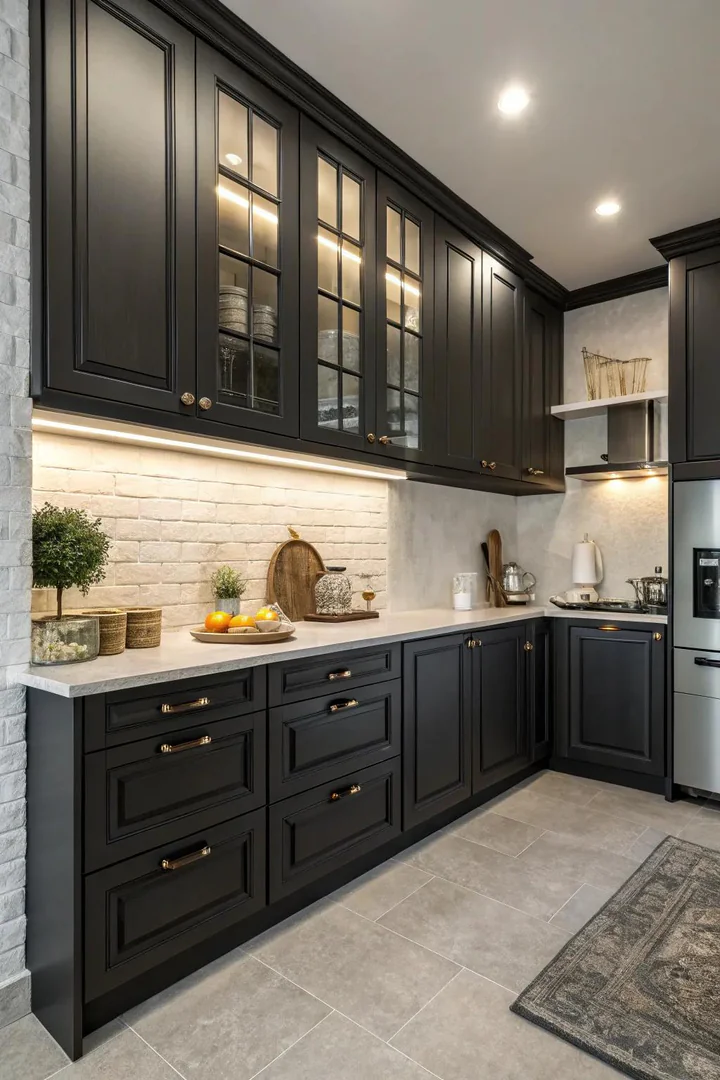
Painting the cabinets on one wall in a different color from the rest of the kitchen (dark-green cabinets on the range wall with white cabinets on the remaining walls, or navy-blue cabinets on the sink wall with cream cabinets elsewhere) creates an accent wall through cabinetry rather than paint or tile. The contrasting cabinets make that wall the focal point while the matching cabinets on the other walls provide a neutral background.
Common contrasting-cabinet pairings: navy blue accent cabinets + white perimeter cabinets (Benjamin Moore Gentleman’s Gray 2062-20 against Simply White OC-117), forest green accent + cream perimeter (Sherwin-Williams Rock Garden SW 6195 against Alabaster SW 7008), and charcoal accent + light-gray perimeter (Benjamin Moore Wrought Iron 2124-10 against Repose Gray SW 7015). Apply the contrasting color to the wall with the range or the wall with the most continuous cabinet run for maximum color impact. The contrasting color should be 3 to 5 shades darker or more saturated than the perimeter cabinets so the difference reads as intentional design rather than a mismatched paint batch.
10. Natural Material Wall
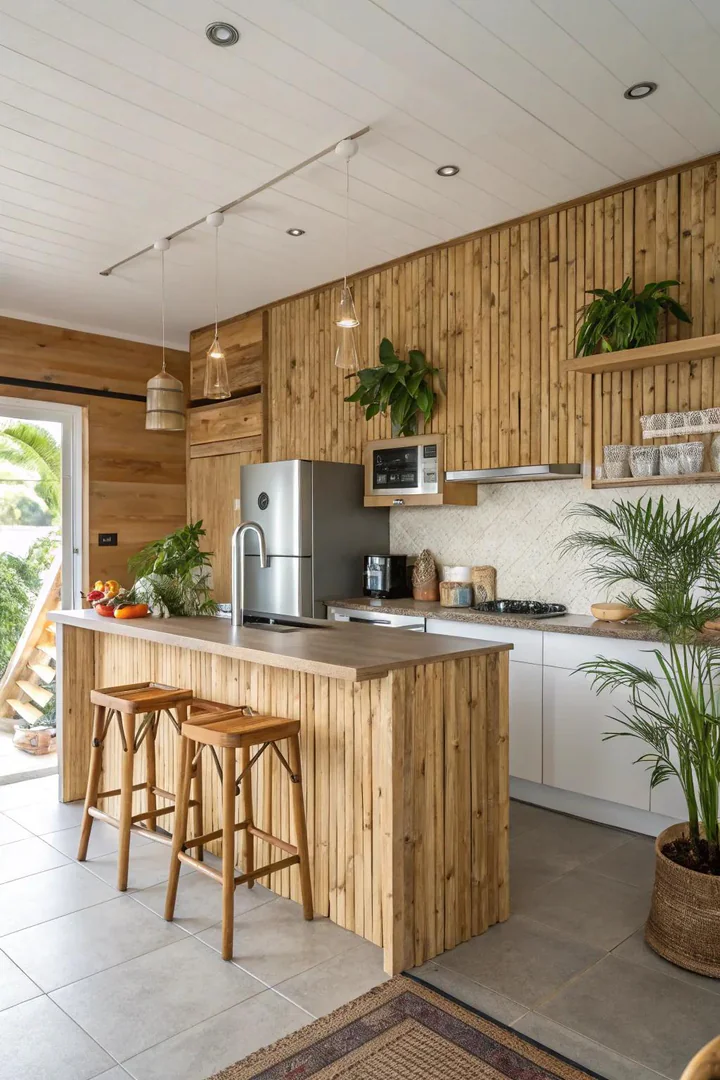
Covering one wall with a natural material (reclaimed barn wood, cork tiles, woven rattan panels, bamboo slats, or live-edge wood slabs) adds organic texture, warmth, and a tactile quality that painted or tiled walls cannot match. Reclaimed barn-wood planks ($5 to $15 per square foot from salvage dealers, Stikwood peel-and-stick planks, or Etsy sellers) install horizontally, vertically, or diagonally with construction adhesive or brad nails and produce a weathered, aged wall surface with visible nail holes, knots, and color variation.
Cork wall tiles ($3 to $8 per square foot from Jelinek Cork or Myfelt) provide a warm, sound-absorbing, naturally antimicrobial wall surface that pins notes, recipes, and photos directly into the cork without a bulletin board. Woven rattan or cane panels ($10 to $25 per panel from IKEA or craft suppliers) mounted in a grid or as a single large panel on the wall beside the dining table adds a bohemian or tropical texture. Natural material accent walls suit farmhouse, coastal, bohemian, and Scandinavian kitchens and pair best with light-colored surrounding walls and simple, clean cabinetry that lets the textured wall serve as the single focal element.
11. Decorative Elements Wall
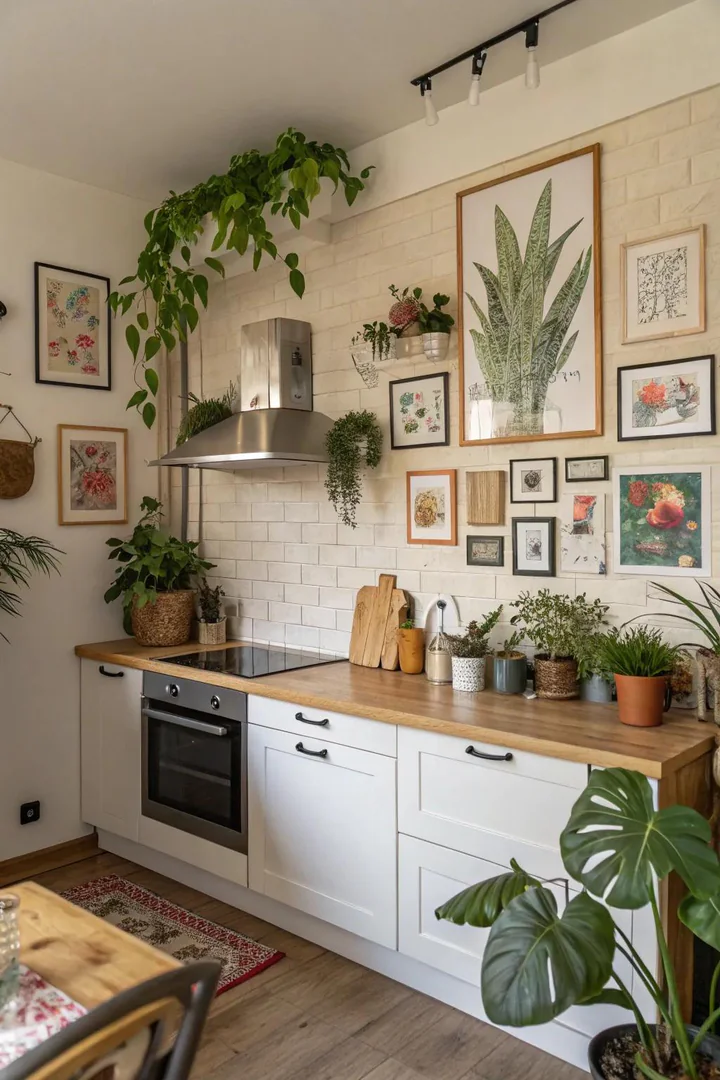
Mounting collected decorative objects (vintage plates, antique kitchen tools, woven baskets, ceramic molds, copper pans, or carved wooden spoons) directly on the wall creates a three-dimensional accent wall that serves as both decoration and a reflection of the homeowner’s interests and personality. A plate wall (8 to 15 vintage or decorative plates mounted with disc-style plate hangers, $2 to $4 each from Amazon or Hobby Lobby) in blue-and-white transferware, hand-painted Italian ceramics, or colorful mismatched patterns from flea markets creates a European-farmhouse focal point.
A collection of vintage cutting boards ($10 to $30 each from antique shops) in different wood tones and sizes, hung on leather straps or mounted with picture-hanging hooks, adds rustic warmth. A grid of woven baskets ($5 to $15 each from Target, World Market, or TJ Maxx) in different weave patterns and natural tones mounted on the wall with nails creates a textured, organic accent. Arrange decorative objects in an informal composition (varied spacing, mixed sizes, no strict grid) for a collected, lived-in quality. Browse more wall decor approaches at wheelchair accessible kitchen ideas for functional wall-mounted storage designs.
12. Funky Pattern Wall
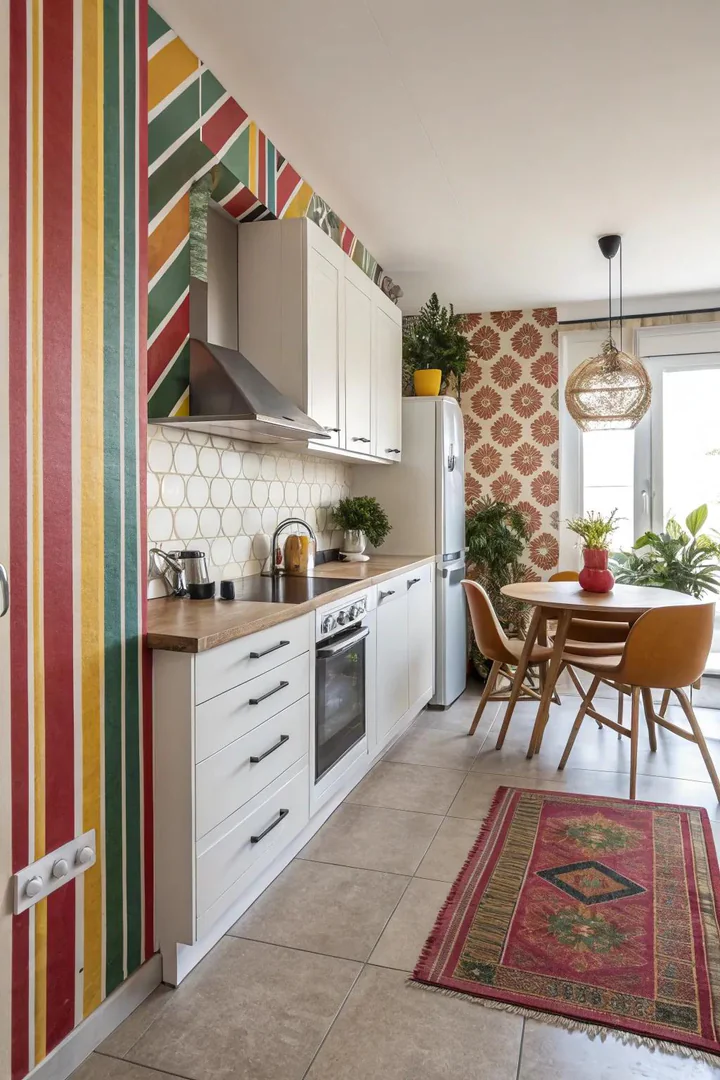
A bold, graphic pattern on one wall (hand-painted geometric shapes, a large-scale printed wallpaper, or patterned cement tiles) turns the kitchen accent wall into an art installation that dominates the room’s visual identity. Encaustic cement tiles ($8 to $20 per square foot from Cement Tile Shop, Granada Tile, or Riad Tile) in Moroccan, Spanish, or Mexican geometric patterns (stars, flowers, diamonds, arabesques) provide a handmade, artisan-quality pattern wall that doubles as functional backsplash.
A hand-painted mural or stenciled pattern ($10 to $30 for a large-format wall stencil from Cutting Edge Stencils or Royal Design Studio, plus $15 to $25 for a quart of contrasting paint) creates a custom pattern wall at a fraction of tile cost. Apply the stencil to a painted base wall using a small foam roller ($3 to $5) and a contrasting color for a crisp, repeating pattern. Popular kitchen stencil patterns: Moroccan trellis, herringbone, ogee, and fish-scale. A patterned accent wall demands restraint on the remaining surfaces — keep the other three walls, countertops, and cabinetry in solid, neutral colors so the pattern wall has breathing room.
13. Mixed Materials Accent
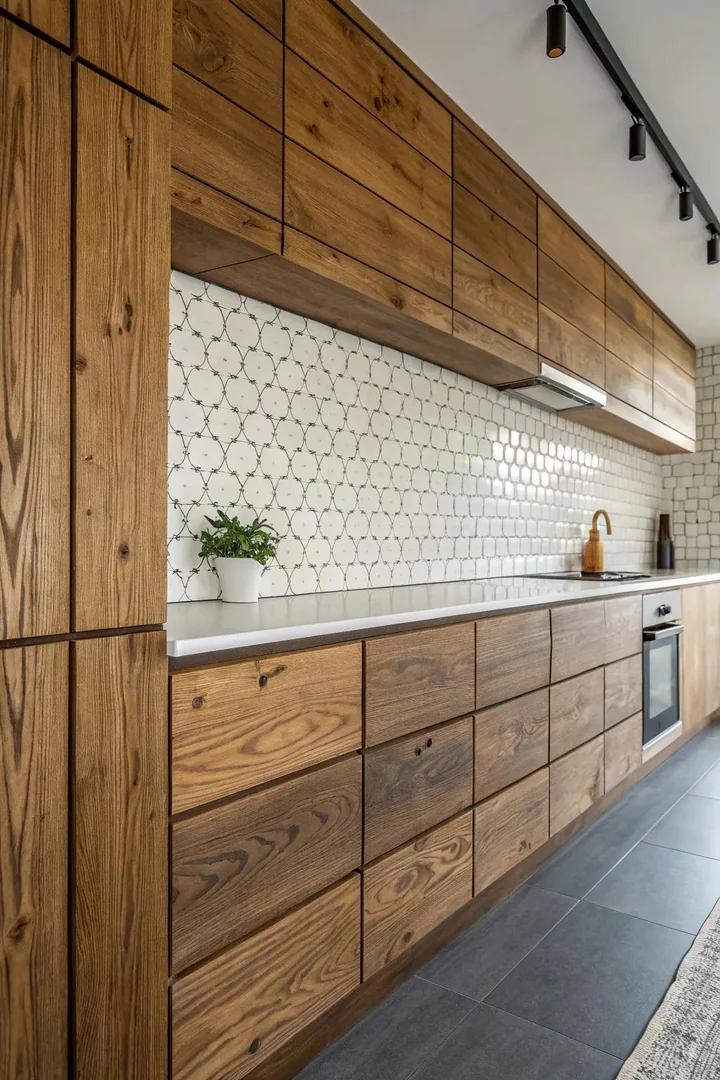
Combining two or three different materials on one wall (tile on the lower half with wood planks on the upper half, brick veneer around the range with painted drywall on the flanking sections, or stone veneer on the lower two-thirds with a floating shelf and painted wall above) creates a layered, textured accent wall with more depth and complexity than a single material. A common kitchen mix: subway tile from the countertop to 48 inches high ($3 to $8 per square foot) with shiplap or tongue-and-groove wood planks from 48 inches to the ceiling ($2 to $5 per square foot for MDF shiplap from Home Depot).
Separate the two materials with a chair-rail molding ($1 to $3 per linear foot for MDF or wood chair rail) or a wood shelf ($20 to $50 for a 36-to-48-inch floating shelf) that provides a clean transition line and a display surface for small items (plants, spice jars, framed photos). The lower material should be the more durable and washable surface (tile, stone, or brick) since it sits at counter and splash height, while the upper material can be less durable (wood, wallpaper, or textured panels) since it is above the active cooking zone. Explore more natural material combinations at small country kitchen ideas for rustic material pairings.
14. Shiplap Accent Wall
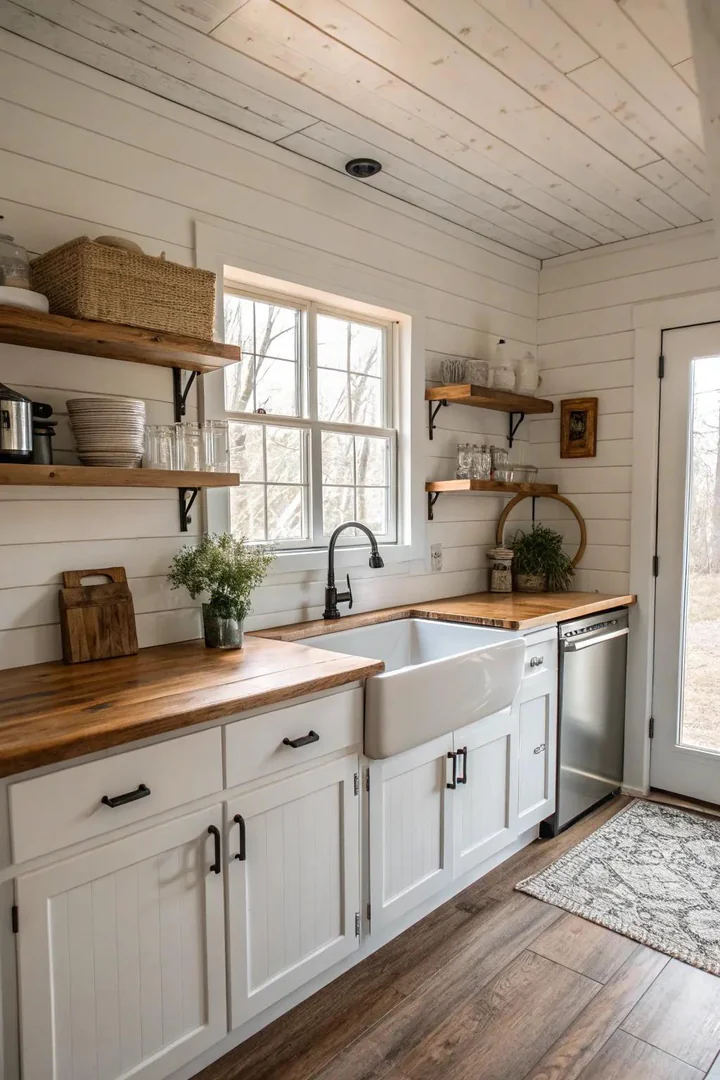
Shiplap (horizontal wood planks with a rabbeted (overlapping) edge that creates a uniform shadow line between each board) adds farmhouse texture and a nautical, coastal, or cottage character to one kitchen wall. MDF shiplap ($2 to $4 per square foot from Home Depot, pre-primed, 5.5-inch-wide planks in 8-foot lengths) provides the look of wood shiplap at half the cost and installs with a brad nailer and construction adhesive over existing drywall.
Real tongue-and-groove pine shiplap ($3 to $6 per square foot from a lumber yard) provides the authentic wood grain and knot detail that MDF cannot replicate. Paint shiplap in bright white for the classic farmhouse look, light gray for a coastal vibe, or black for a modern, dramatic focal wall. A shiplap accent wall behind open shelving (3 to 4 wooden shelves mounted on the shiplap surface) creates a layered, dimensional display wall where the horizontal shiplap lines provide a rhythm behind the shelf contents. A 10-by-8-foot accent wall requires 80 square feet of shiplap, costing $160 to $480 for material plus 4 to 8 hours of installation time.
15. Open Shelving Display Wall
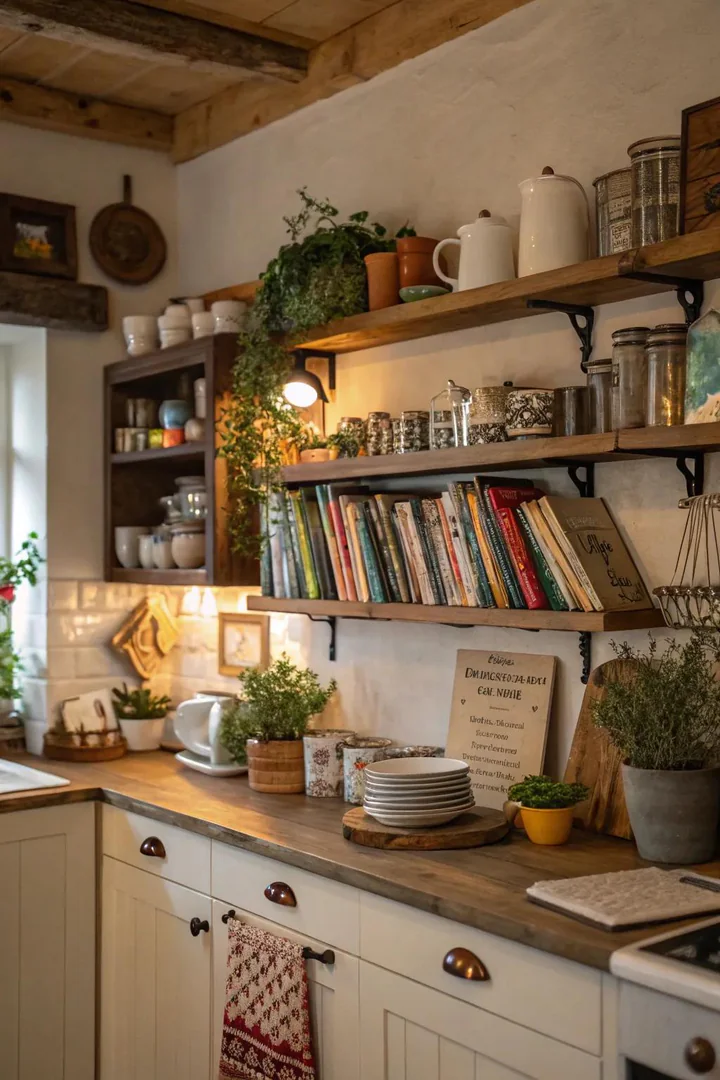
Removing upper cabinets from one wall and replacing them with 3 to 5 open wood shelves ($20 to $60 per shelf from Etsy, West Elm, or a local woodworker; mounted on iron brackets, $10 to $20 per pair) transforms a flat, closed cabinet wall into an open, styled display wall that functions as both storage and decoration. The accent comes from the styled arrangement of objects on the shelves rather than from the wall surface itself — the shelves create the focal point through their contents.
Style the shelves with a mix of everyday kitchen items (stacked white plates, coffee mugs, glass jars of dry goods) and decorative objects (a small potted plant, a framed print, a vintage scale, a candle) arranged in odd-numbered groups with varied heights. Paint the wall behind the open shelves in a contrasting color (dark navy, sage green, or charcoal) so the shelf contents pop against a colored backdrop rather than blending into a white wall. Open shelving as an accent requires weekly dusting and intentional organization — cluttered, overcrowded shelves read as messy storage rather than designed display. Visit The Designers Company for the full kitchen and home design library.
16. Wood Paneling Wall
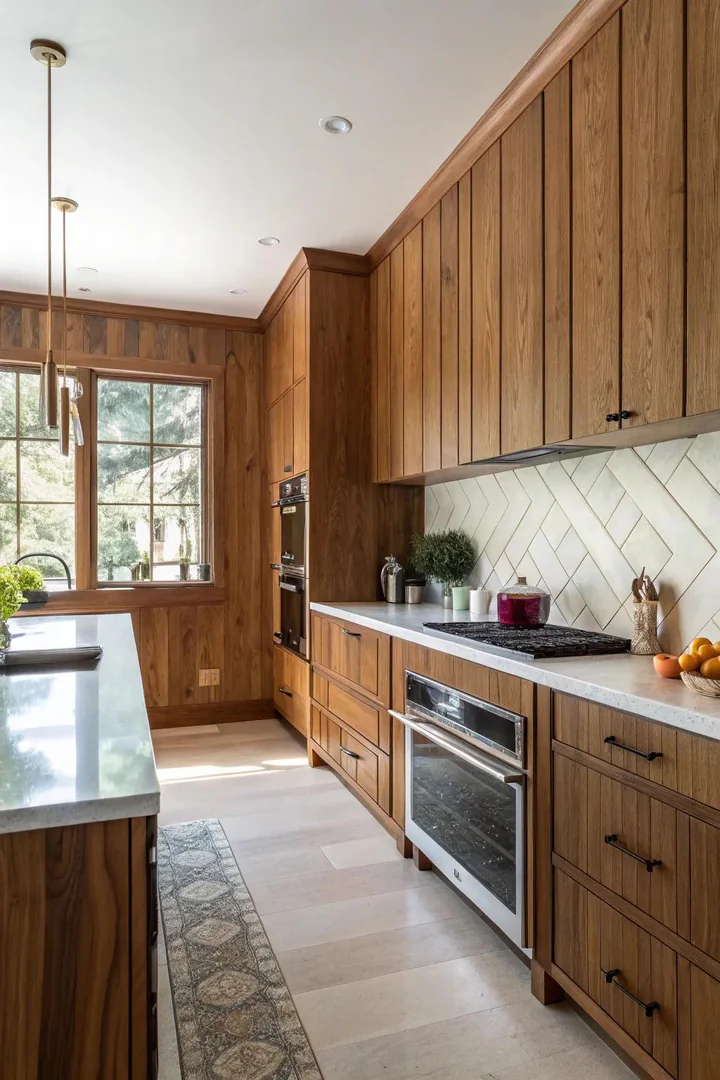
Installing wood paneling (vertical tongue-and-groove boards, horizontal shiplap, diagonal planks, or slatted wood-strip panels) on one wall adds warmth, texture, and natural material character to the kitchen. Vertical tongue-and-groove paneling (beadboard, V-groove, or flat-panel, $2 to $6 per square foot for pine or MDF from Home Depot) runs floor-to-ceiling and creates a tall, narrow visual rhythm that makes the ceiling feel higher.
A slatted wood-strip accent wall (1×2 or 1×3 wood strips mounted vertically with 1/2-to-1-inch spacing between strips, $1 to $3 per linear foot for clear pine or poplar strips) creates a mid-century modern or Japanese-inspired screen effect that adds depth through the shadow lines between the slats. Stain the slats in a natural or warm tone (golden oak, honey, or walnut) for warmth, or paint them in the same color as the wall behind them (the shadows between the slats create the accent through texture alone, not color). Wood paneling accent walls pair with minimalist, modern, or Scandinavian kitchens where the wood provides the single warm, organic element against an otherwise clean and neutral room.
How to Choose a Kitchen Accent Wall
1. Pick the Right Wall
Choose the wall that is most visible from the kitchen entrance and the dining or socializing area. A wall that is seen at an angle when entering the room (rather than a wall directly to the left or right of the doorway) has the strongest visual impact. The wall behind the range or cooktop is the most common accent wall location because range hoods, tile backsplashes, and open shelving create natural focal elements. Avoid accenting a wall that is mostly covered by cabinets, windows, or doorways — the interruptions break up the accent material and dilute the impact.
2. Match the Accent to the Kitchen Style
Farmhouse and country kitchens: shiplap, reclaimed wood, or brick veneer. Modern and contemporary kitchens: bold paint, geometric tile, or slatted wood strips. Coastal and Scandinavian kitchens: whitewashed wood, light-toned wood paneling, or mirror. Eclectic and bohemian kitchens: patterned cement tile, wallpaper mural, or a collected gallery wall. The accent wall material should amplify the kitchen’s existing style, not introduce a competing style from a different design language.
3. Balance the Accent with Neutral Surroundings
An accent wall works because it contrasts with the surrounding walls. Keep the remaining three walls in a neutral, solid color (white, cream, light gray, or warm beige) so the accent wall stands out as the clear focal point. A kitchen with four busy walls (tile on one, wood on another, paint on a third, and wallpaper on the fourth) has no focal point because everything competes for attention. One strong accent against three quiet walls is more effective than four moderate accents.
Kitchen Accent Wall Material Comparison
| Material | Cost per Sq Ft | DIY Difficulty | Best Kitchen Style | Durability |
|---|---|---|---|---|
| Bold paint | $0.15–$0.25 | Easy | Any style | High (washable) |
| Peel-and-stick wallpaper | $0.50–$1.50 | Easy | Modern, eclectic | Medium (removable) |
| Shiplap / wood planks | $2–$6 | Moderate | Farmhouse, coastal | High |
| Subway or geometric tile | $3–$12 | Moderate | Traditional, modern | Very high |
| Stone or brick veneer | $5–$15 | Moderate | Rustic, industrial | Very high |
| Encaustic cement tile | $8–$20 | Moderate to hard | Mediterranean, bohemian | Very high |
Frequently Asked Questions
Which wall should be the accent wall in a kitchen?
The best accent wall is the wall you see first and most often — usually the wall behind the range or cooktop (the focal wall when standing at the sink), the wall at the end of a galley kitchen (the terminus view when entering the room), or the wall behind the dining table or breakfast nook (visible during every meal). Avoid choosing a wall that is hidden behind a refrigerator or pantry cabinet, since the accent will be invisible from most angles.
Can you use an accent wall in a small kitchen?
An accent wall works well in a small kitchen when the material and color are chosen to expand rather than shrink the perceived space. Light-colored materials (white shiplap, light wood, mirror, light-toned tile) on the accent wall make the room feel larger. Dark, heavy materials (dark stone, dark paint, dark wood) on the accent wall can make a small kitchen feel more enclosed, but the effect is manageable when limited to one wall with the remaining three walls kept light. A mirror accent wall is the most space-expanding option — the reflection doubles the perceived room depth.
How do you make a kitchen accent wall look intentional?
Three rules: (1) Choose one wall only — accenting two or more walls dilutes the focal effect and creates visual competition. (2) Make the accent material or color distinctly different from the other three walls — a subtle shift (off-white accent on white walls) reads as a mistake rather than a design choice. (3) Repeat a color or material from the accent wall in one or two small details elsewhere in the kitchen (a navy accent wall echoed in navy bar stools, or a wood accent wall echoed in wood floating shelves on the opposite wall) to connect the accent to the room rather than isolating it.
Is an accent wall still in style?
Accent walls remain a widely used and designer-approved technique in kitchen design. The 2010s trend of painting one wall a slightly different shade of the same color (taupe accent on beige walls) has evolved into bolder, more material-driven accents: textured stone, reclaimed wood, patterned tile, and 3D panels that add physical depth and tactile interest rather than just a color change. A material accent wall (wood, tile, or stone) has more lasting design value than a paint-only accent because it adds texture and dimension that paint alone cannot provide.
How much does a kitchen accent wall cost?
Costs range from $15 to $25 (a quart of bold paint for a paint-only accent) to $500 to $1,500 (a full-wall installation of encaustic cement tile or natural stone veneer including labor). Mid-range options: peel-and-stick wallpaper ($25 to $60 per roll), MDF shiplap ($160 to $320 for an 80-square-foot wall), thin brick veneer ($400 to $800 for an 80-square-foot wall), and 3D PVC wall panels ($60 to $120 for 80 square feet). DIY installation eliminates the $300 to $800 labor cost that a professional installer charges for tile, stone, or wood accent walls.