Wood Kitchen Cabinet Color Ideas: 16 Stunning Shades That Shine
Wood kitchen cabinet color ideas range from pale blonde maple and honey oak to rich walnut, deep mahogany, and black-stained ash, and each wood species and finish produces a different visual temperature, grain pattern, and personality in the kitchen. Choosing a wood cabinet color means selecting both the wood species (which determines the grain pattern, hardness, and natural base color) and the finish (natural oil, stain, paint wash, lacquer, or polyurethane, which shifts the color lighter, darker, warmer, or cooler). Below are 16 wood cabinet color options with species names, stain products, cost ranges, and design pairings, followed by a how-to selection guide, a comparison table, and FAQs.
1. Dark Mahogany
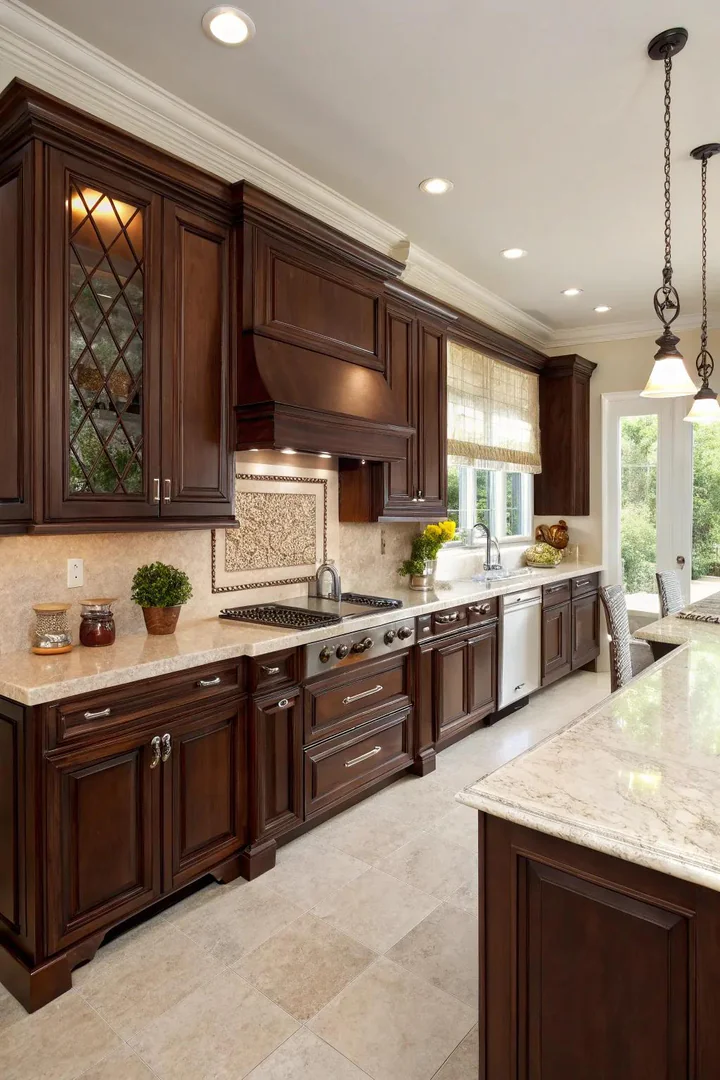
Mahogany ($8 to $15 per board foot for genuine mahogany, Swietenia macrophylla; $4 to $8 per board foot for African mahogany, Khaya ivorensis) produces a deep reddish-brown cabinet with a straight, interlocked grain and a natural luster that darkens from medium red-brown to a rich, almost-black burgundy over 2 to 5 years of light exposure. Mahogany cabinets suit formal, traditional, and colonial-style kitchens with white marble or light granite countertops ($40 to $80 per square foot installed) that contrast the dark cabinet face.
Finish mahogany cabinets with satin polyurethane ($15 to $25 per quart from Minwax or General Finishes) for a smooth, protective coat that reveals the grain without adding color, or darken the wood further with Minwax Dark Walnut 2716 stain ($8 to $12 per quart) before the topcoat. Mahogany rates 800 to 900 on the Janka hardness scale (softer than maple at 1,450, harder than pine at 690), making it durable enough for daily cabinet use but susceptible to dents from heavy pots dropped against the surface.
2. Pastel Wash
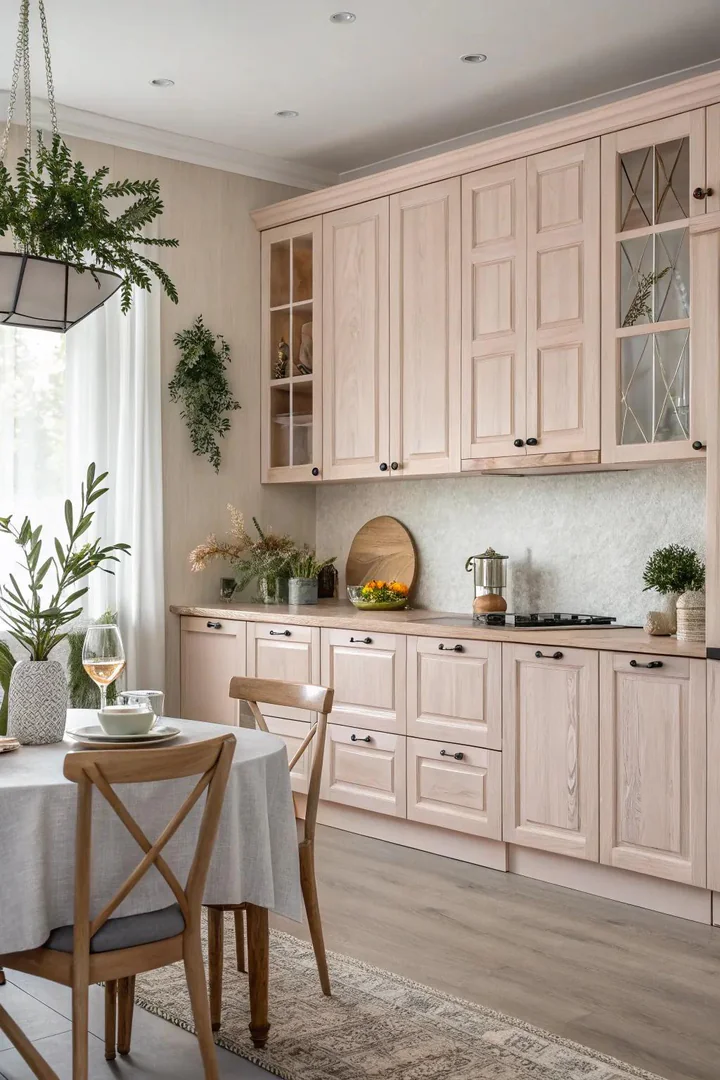
A pastel wash (a thinned-down paint applied with a brush or rag and partially wiped off before drying) adds a sheer layer of soft color — pale blue, sage green, blush pink, or lavender — over the natural wood grain, allowing the grain pattern and wood texture to show through the color. Mix latex paint ($15 to $25 per quart of Benjamin Moore Regal Select in any pastel shade) with water at a 1:1 ratio (equal parts paint and water), brush it onto the sanded cabinet door, wait 30 to 60 seconds, and wipe off the excess with a clean cotton rag. The paint settles into the grain valleys and pores while the rag removes paint from the raised grain ridges, producing a two-tone effect.
Pastel-washed cabinets work best on open-grain woods (oak, ash, elm) where the deep grain pores catch and hold the thinned paint for maximum contrast. A sage-green wash on white oak produces a Scandinavian or coastal look. A pale-blue wash on ash produces a French country or cottage look. Seal the dried wash with matte water-based polyurethane ($15 to $20 per quart from General Finishes) for a soft, non-reflective finish that protects the color while preserving the handmade, washed appearance. Browse more cabinet finish options at small U-shaped kitchen ideas for compact kitchen color strategies.
3. Natural Pine
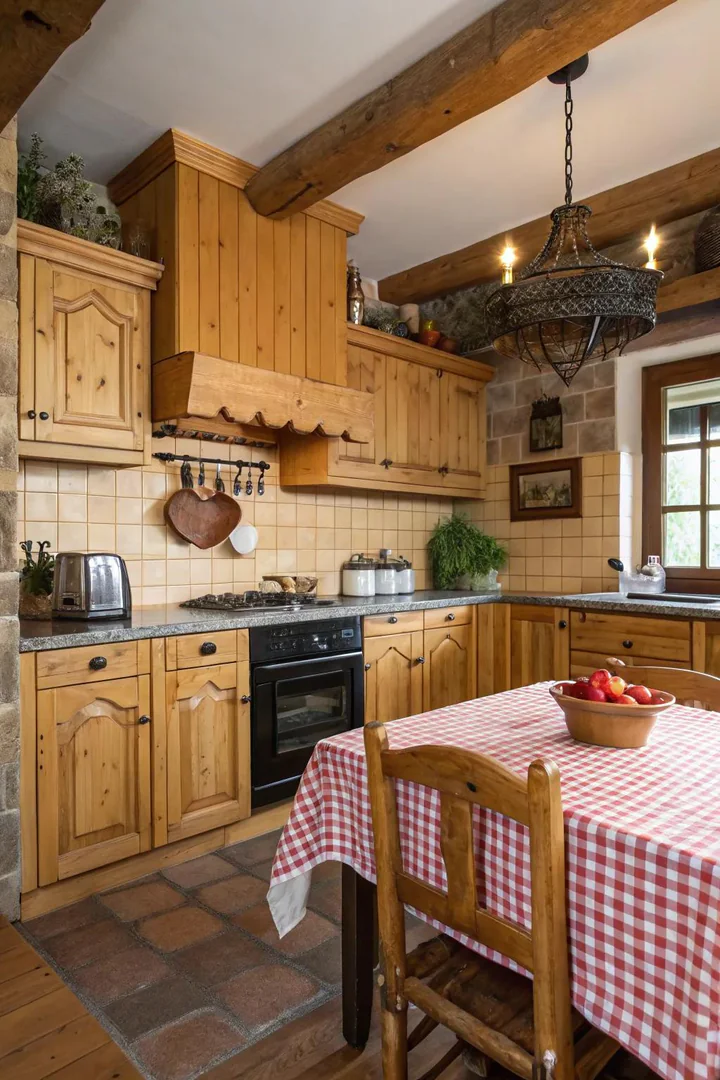
Pine ($2 to $5 per board foot, the most affordable domestic cabinet wood) has a pale yellow-to-cream base color with visible knots, pitch pockets, and a soft, uneven grain that gives pine cabinets a rustic, cottage, or cabin character. Knotty pine cabinets (made from boards with 3 to 8 knots per linear foot) produce the most rustic look; clear pine (boards graded select or better, with minimal knots) produces a cleaner, Scandinavian appearance.
Pine yellows and darkens naturally over 1 to 3 years of light exposure, shifting from pale cream to amber-gold. A water-based polyurethane ($12 to $20 per quart from Varathane or Minwax Polycrylic) preserves the light, fresh color without the amber yellowing that oil-based polyurethane adds on day one. Pine is soft (690 Janka hardness, the softest common cabinet wood) and dents easily from dropped cans, pot handles, and ring impacts — accept the dents as part of the rustic character, or choose a harder species if ding-free cabinets are a priority.
4. Ash Wood Grain
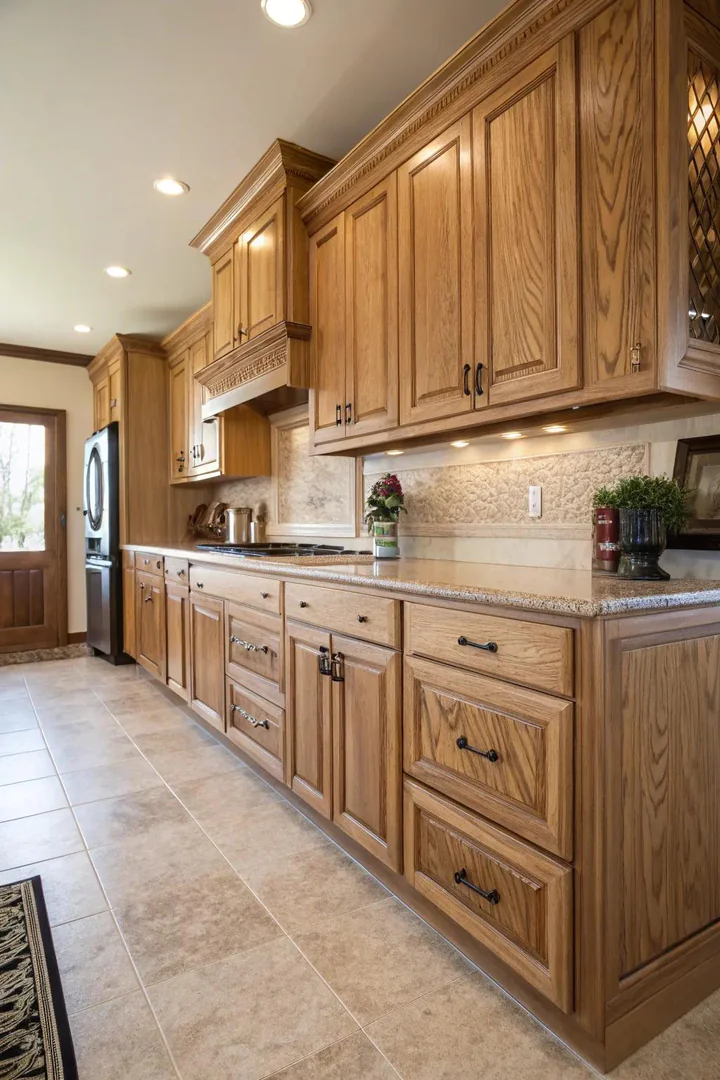
White ash ($4 to $8 per board foot, Fraxinus americana) has the most pronounced, dramatic grain pattern of any common cabinet wood: wide, sweeping cathedral arches in the flat-sawn boards and tight, parallel stripes in the quarter-sawn boards. Ash’s natural color is pale tan to cream-white, lighter than oak and warmer than maple, making it a strong choice for modern and Scandinavian kitchens that want visible grain texture without a dark or heavy wood tone.
Ash takes stain unevenly because the open grain pores absorb more stain than the tight grain ridges, producing a high-contrast, two-tone effect that emphasizes the grain pattern. A gray stain (Minwax Classic Gray 271, $8 to $12 per quart) on ash produces a contemporary, driftwood-like cabinet color that reads as modern rather than traditional. A natural finish (clear matte polyurethane or Danish oil, $10 to $15 per can) on ash lets the pale, light color and bold grain carry the visual weight. Ash is hard (1,320 Janka) and durable, comparable to white oak for cabinet use.
5. Light Maple
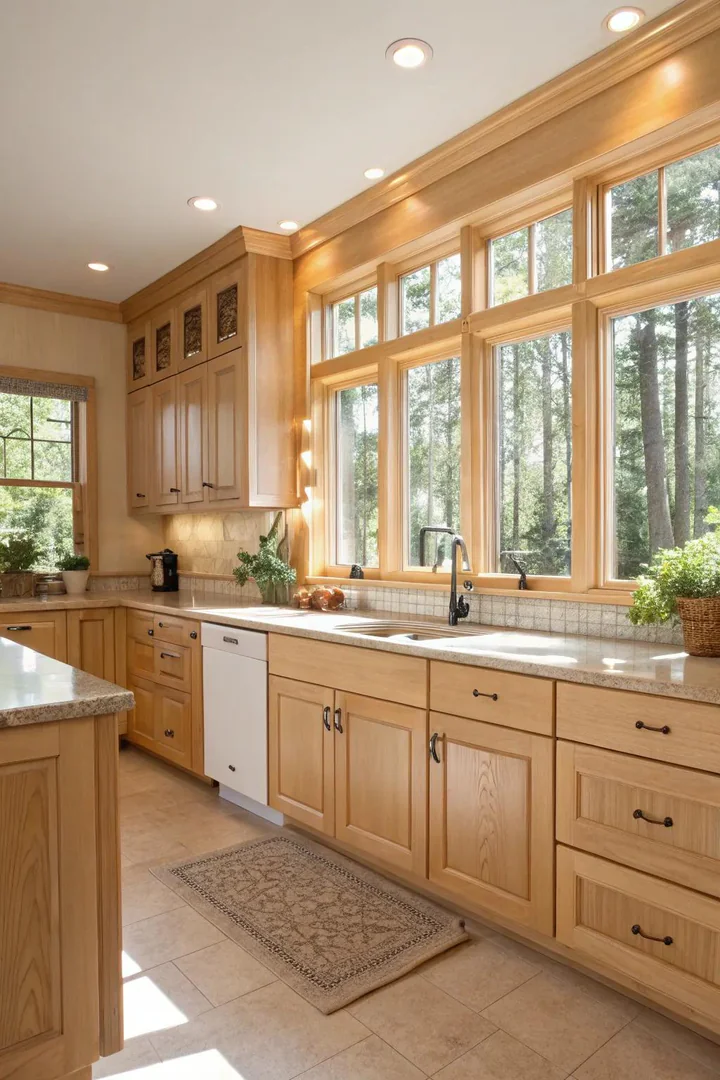
Hard maple ($4 to $8 per board foot, Acer saccharum, also called sugar maple or rock maple) has a pale cream-to-light-tan natural color with a fine, tight, mostly straight grain that produces the smoothest, most uniform cabinet surface of any common wood species. Maple cabinets read as modern, clean, and neutral — they blend into a contemporary kitchen the way white-painted cabinets do, but with the warmth, depth, and organic variation that paint cannot provide.
Maple is extremely hard (1,450 Janka, harder than oak, ash, cherry, and walnut) and resists dents, scratches, and wear better than any other cabinet wood. Finish maple cabinets with clear water-based polyurethane to keep the pale color, or with Rubio Monocoat Pure ($45 to $60 per can, a zero-VOC hardwax oil) for a matte, natural-looking finish that penetrates the wood rather than sitting on top. Maple does not take dark stains evenly — the tight grain resists stain absorption and produces a blotchy result. For a dark maple cabinet, use a gel stain (General Finishes Java Gel Stain, $15 to $20 per quart) that sits on the surface rather than penetrating the grain.
6. Bamboo
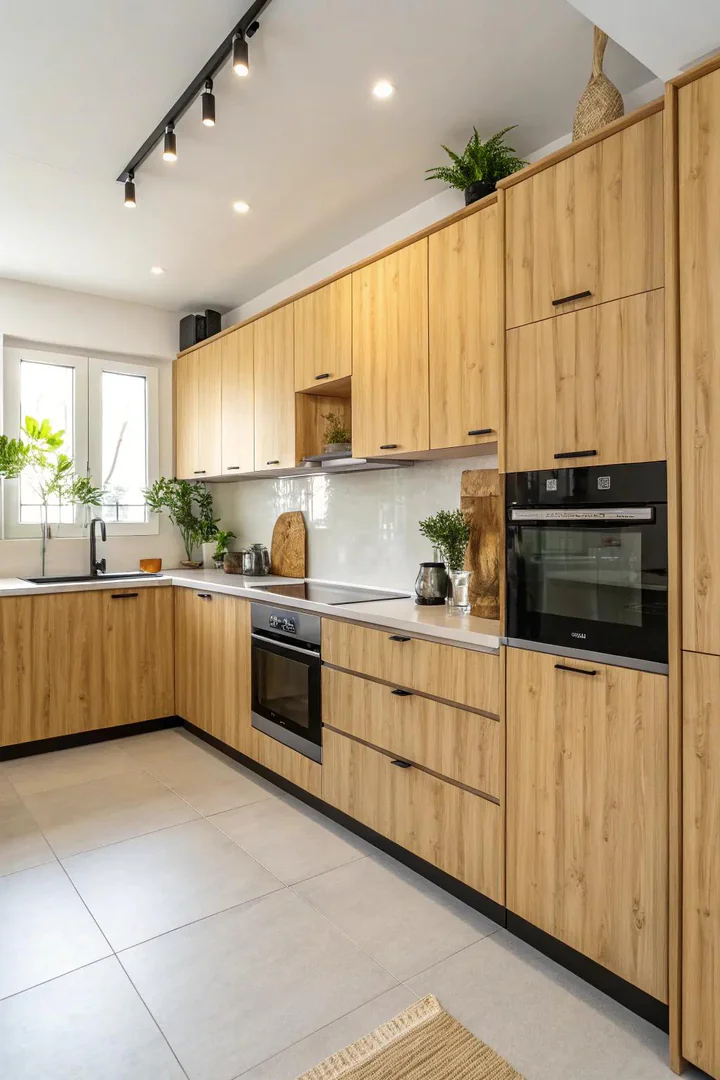
Bamboo cabinets ($150 to $350 per linear foot for stock bamboo cabinets from GreenCabinet or specialized suppliers) use laminated bamboo strips (horizontal-grain or vertical-grain construction) to produce a cabinet face with a distinctive stacked-line pattern unlike any traditional wood species. Natural bamboo has a pale blonde color similar to maple; carbonized bamboo (heat-treated to caramelize the natural sugars) darkens to a warm amber-brown that resembles light walnut.
Bamboo is a grass, not a wood, and grows to harvest maturity in 3 to 5 years (compared to 40 to 80 years for hardwood trees), making it the most rapidly renewable cabinet material. Strand-woven bamboo (compressed bamboo fibers fused under extreme pressure) rates 3,000 to 4,000 on the Janka hardness scale — harder than any commercial hardwood — and resists dents, scratches, and moisture better than oak, maple, or walnut. Bamboo cabinets suit modern, Asian-inspired, and eco-conscious kitchen designs and pair well with stone countertops, stainless-steel appliances, and neutral wall colors. Explore more wood tone options at red kitchen ideas for warm cabinet color pairings.
7. Classic Walnut
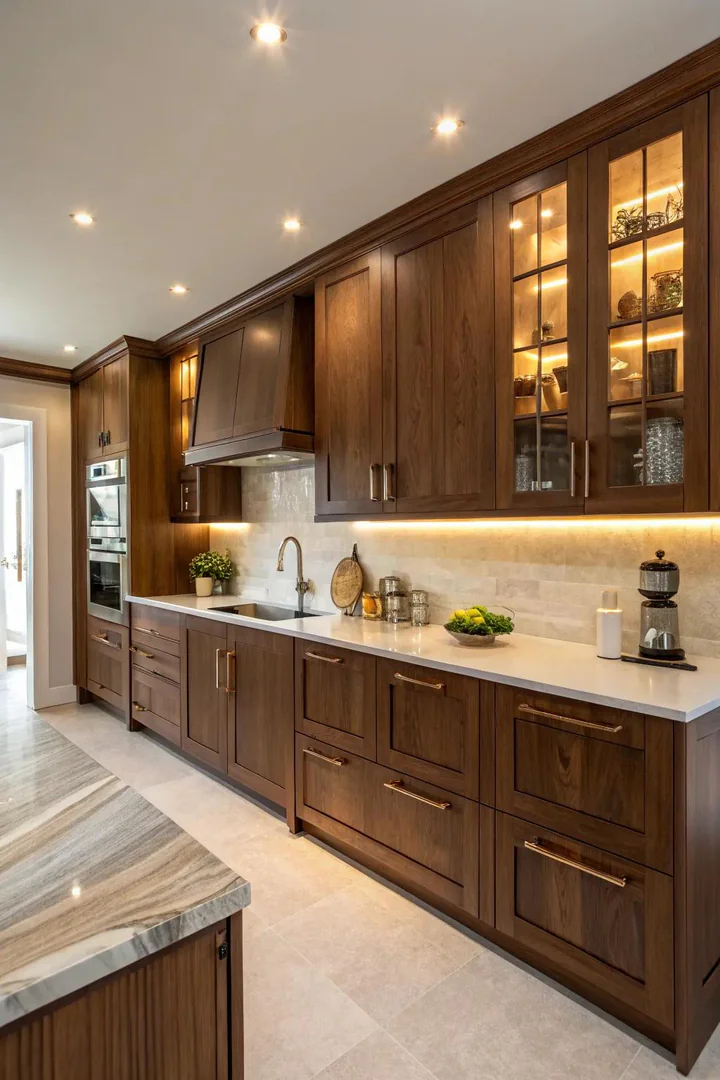
American black walnut ($8 to $14 per board foot, Juglans nigra) has a rich chocolate-brown heartwood with purple, gray, and reddish undertones and a moderate, flowing grain that produces the most sophisticated and universally admired wood cabinet color. Walnut cabinets read as high-end and contemporary in a modern kitchen with white countertops, or warm and traditional in a classic kitchen with marble and brass. Walnut’s dark color creates a grounding effect that anchors the kitchen from the cabinet face.
Walnut lightens over time (the opposite of cherry and mahogany, which darken), shifting from deep chocolate to a warm medium-brown over 3 to 10 years of light exposure. A UV-inhibiting finish (General Finishes Enduro-Var with UV absorbers, $25 to $35 per quart) slows the lightening process. Walnut is moderately hard (1,010 Janka) and works well for cabinet doors and drawer fronts but dents more easily than maple or oak. Pair walnut cabinets with white quartz countertops for maximum contrast or white marble (Carrara, $40 to $60 per square foot) for a warm, layered material palette.
8. Blonde Scandinavian
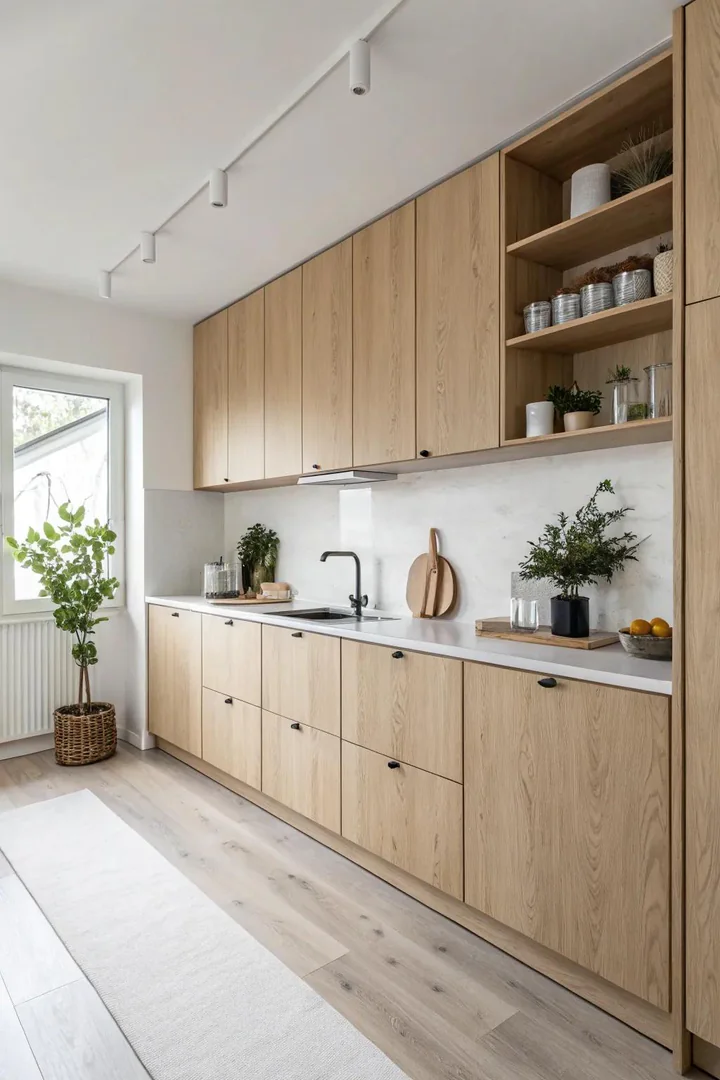
Blonde wood cabinets (white oak, birch, or maple finished with a clear water-based topcoat or white-tinted oil) produce the clean, bright, naturally warm Scandinavian kitchen look that dominates contemporary Nordic and Japanese-inspired design. White oak ($5 to $10 per board foot) has a slightly golden-tan natural color with a visible but moderate grain pattern. Birch ($3 to $6 per board foot) has a pale cream color with a fine, tight grain similar to maple but with more natural color variation between heartwood (reddish-tan) and sapwood (cream).
Finish blonde wood cabinets with Rubio Monocoat Oil Plus 2C in Pure ($45 to $60 per can, a single-coat hardwax oil that preserves the natural pale color without ambering) or Osmo Polyx-Oil in Clear Satin 3032 ($35 to $50 per can). Avoid oil-based polyurethane on blonde wood: it adds an immediate amber-yellow cast that shifts the wood from a cool, pale blonde to a warm, golden-orange within days of application. Blonde cabinets pair with white countertops, light concrete, or pale gray quartz for a minimal, airy kitchen, or with matte black hardware and fixtures for a graphic Scandinavian-modern contrast.
9. Warm Honey Tones
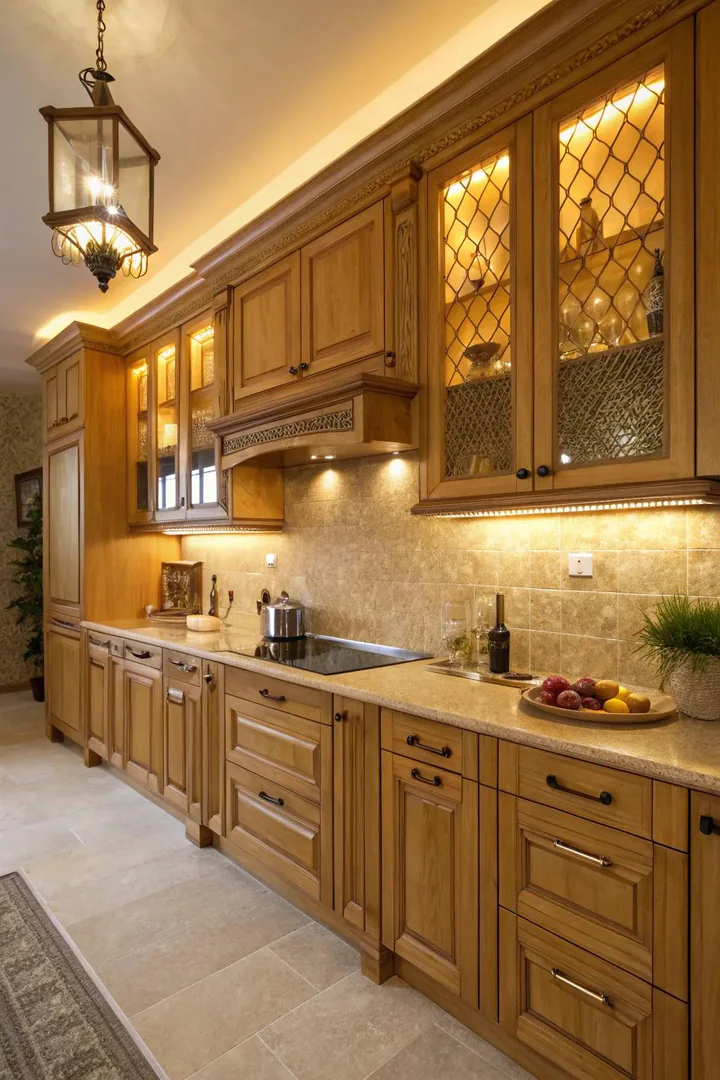
Honey-toned cabinets (red oak, alder, or hickory stained or naturally finished to a golden-amber color) produce a warm, glowing kitchen that feels sun-lit even on overcast days. Red oak ($3 to $7 per board foot) has a prominent cathedral grain pattern and a natural pinkish-tan color that shifts to golden-honey with a coat of Minwax Golden Oak 210B stain ($8 to $12 per quart). Alder ($3 to $6 per board foot, a Pacific Northwest softwood) has a uniform, fine grain with a natural reddish-tan color that stains to a warm honey with almost any warm-toned oil or stain.
Honey-toned cabinets dominated kitchen design from the 1980s through the early 2000s (particularly in builder-grade red-oak kitchens), which gives them a dated association for some homeowners. To modernize honey-toned wood: pair with matte black hardware ($2 to $5 per pull from Amerock) rather than brass, use a white or gray quartz countertop rather than a matching golden-granite, and add white or light-gray walls rather than beige or yellow. The wood color itself is timeless; the dated feeling comes from the surrounding finishes and hardware of the original installation.
10. Black-Stained Wood
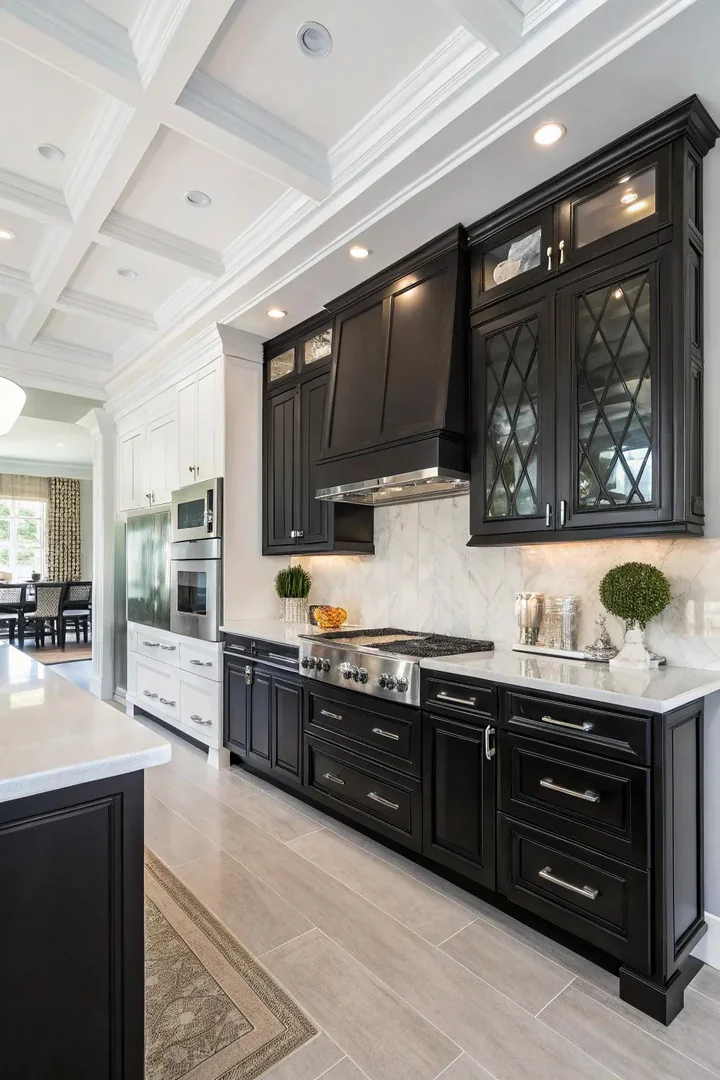
A black stain (Minwax True Black 274, $8 to $12 per quart; Varathane Ebony 269395, $8 to $10; or India ink applied straight from the bottle, $5 to $10 per 2-ounce bottle for a deep, permanent black) on an open-grain wood (oak, ash, or elm) produces a black cabinet with visible wood grain texture — darker and more dramatic than any natural wood, but with more depth and organic character than flat black paint. The grain ridges absorb less stain than the grain valleys, producing a subtle two-tone effect (dark gray ridges against black valleys) that catches light across the surface.
Black-stained cabinets shrink a kitchen visually (black absorbs light, reducing the perceived room size), so reserve them for kitchens with abundant natural light (large windows, skylights, or an open floor plan) or use them on the lower cabinets only with white uppers for a tuxedo kitchen. Pair black-stained wood cabinets with white marble or white quartz countertops ($50 to $80 per square foot installed) and brushed brass hardware ($5 to $10 per pull from Martha Stewart Living or Emtek) for a high-contrast, upscale look.
11. Cherry Wood
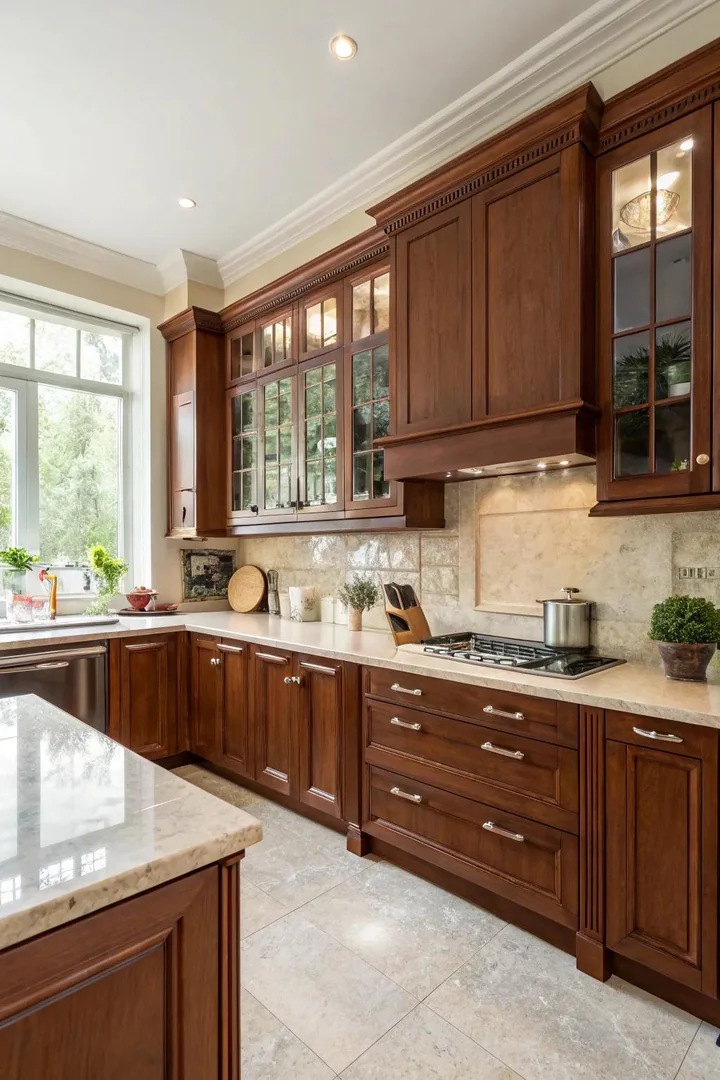
American cherry ($5 to $10 per board foot, Prunus serotina) has a warm pinkish-tan heartwood that deepens dramatically over time, shifting from a pale salmon-pink when freshly milled to a deep, rich reddish-brown within 6 to 12 months of light exposure. Cherry’s color change is the most pronounced of any domestic hardwood — a cherry cabinet door left in sunlight for one year will be a noticeably different color than a door stored in a dark closet for the same period.
Cherry has a fine, smooth, closed grain with subtle, flowing figure that produces a refined, furniture-grade cabinet surface. Cherry cabinets suit traditional, transitional, and Shaker-style kitchens and pair with cream or light-green walls, granite or soapstone countertops, and oil-rubbed bronze or antiqued brass hardware. Cherry is moderately hard (950 Janka) and develops a rich patina over years of use that improves the cabinet’s appearance over time. Avoid placing cherry cabinets in direct sunlight on only one side of the kitchen; the sun-exposed side darkens faster than the shaded side, creating a noticeable color mismatch within 6 months.
12. Rustic Oak
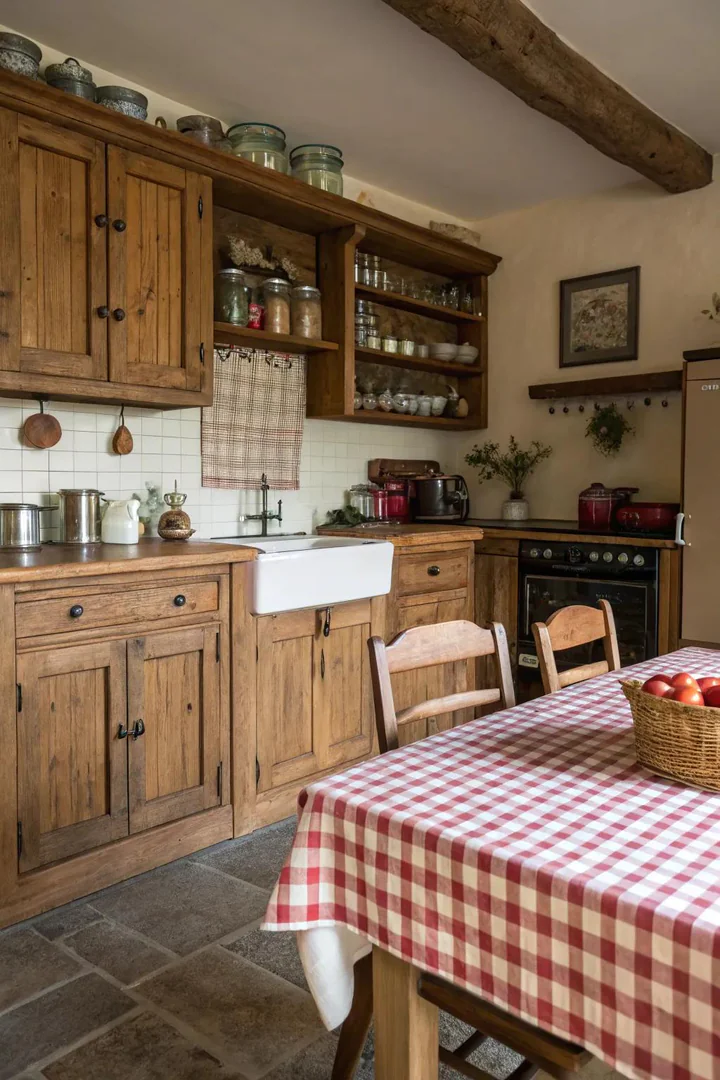
White oak ($5 to $10 per board foot, Quercus alba) and red oak ($3 to $7 per board foot, Quercus rubra) are the two most common cabinet woods in North America, and their prominent, cathedral-arch grain pattern defines the rustic, farmhouse, and traditional kitchen style. White oak has a cooler, tan-to-gray base color with tighter grain, while red oak has a warmer, pinkish-tan base with a more open, coarse grain.
For a rustic or farmhouse oak cabinet, use a wire brush ($5 to $15, a handheld or drill-mounted steel-bristle brush) to texture the surface before staining: brushing along the grain removes soft wood fibers from the spring growth layers, leaving the hard summer-growth ridges raised, which creates a physical texture (called brushed, cerused, or fumed oak) that catches stain unevenly for a weathered, antique appearance. Finish wire-brushed oak with a white or gray lime wax (Briwax Liming Wax, $12 to $18 per can) rubbed into the open grain pores to fill them with a contrasting white paste — this cerusing technique produces a two-tone, vintage oak cabinet that looks decades old. Find more warm wood tones at small country kitchen ideas for country-style kitchen wood applications.
13. Two-Tone Wood
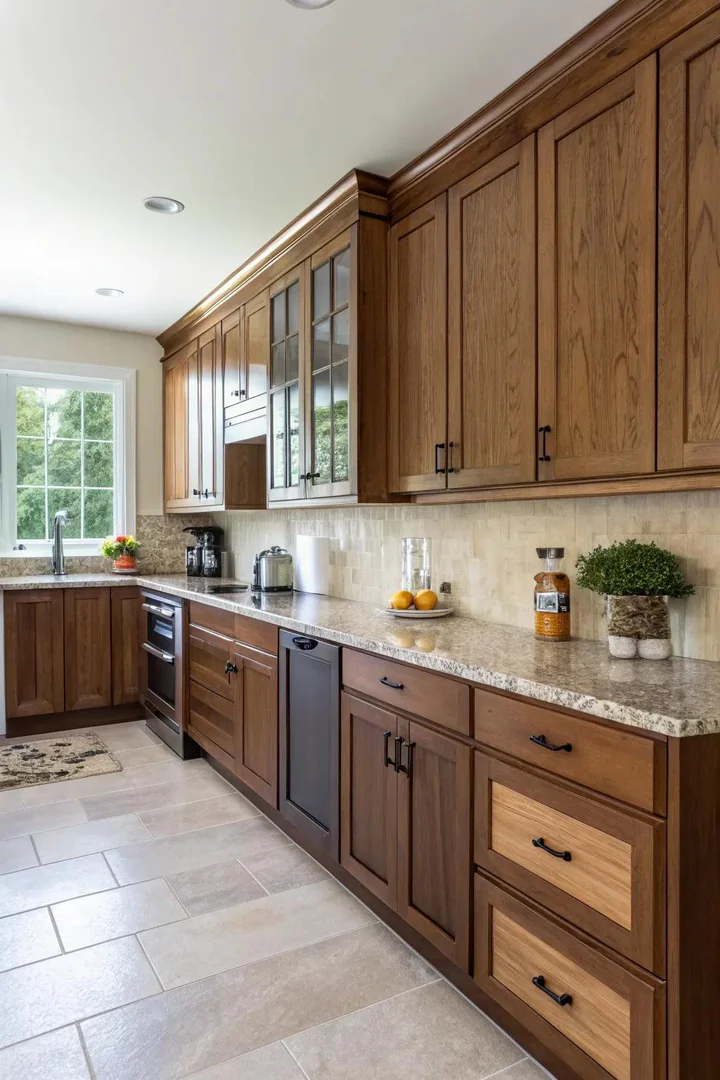
Combining two different wood species or two different stain colors on the upper and lower cabinets (or on the perimeter cabinets and the island) adds depth and visual interest to a kitchen that a single wood tone cannot achieve. Common two-tone wood pairings: walnut lowers with white-oak uppers (dark base, light top), cherry island with maple perimeter cabinets (warm focal point, neutral surround), and ebony-stained oak lowers with natural maple uppers (maximum contrast).
The two woods should share a common element (similar grain scale, similar undertone family, or a matching hardware finish) that connects them visually. Pairing two woods with wildly different grain scales (very fine maple with very coarse oak) and different temperature undertones (cool gray-washed oak with warm golden cherry) creates a disjointed, mismatched look. A safe two-tone formula: choose one light and one dark tone from the same wood species (light-stained oak uppers, dark-stained oak lowers) so the grain pattern matches while the color changes. Add a countertop that bridges the two tones — white quartz works with any two-tone wood combination.
14. Gray-Washed Wood
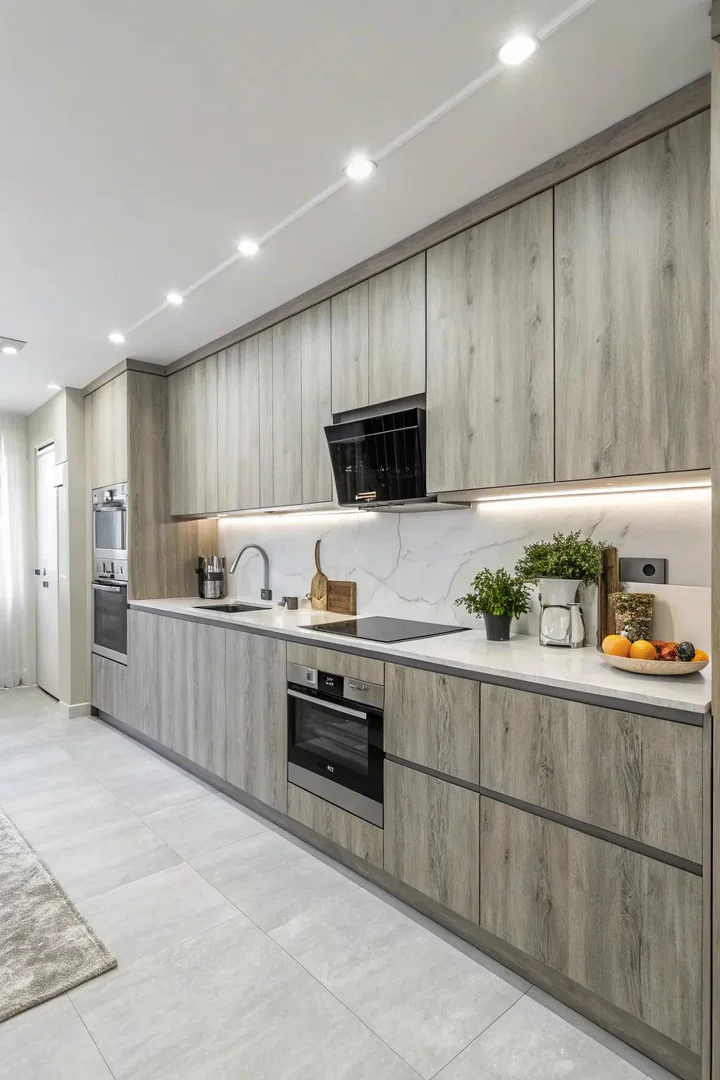
A gray stain or gray wash on oak, ash, or maple produces a contemporary, neutral cabinet color that sits between natural wood warmth and painted-gray coolness. Minwax Classic Gray 271 ($8 to $12 per quart), Varathane Weathered Gray 313830 ($8 to $10), and Rubio Monocoat Gris Belge ($45 to $60 per can) each produce slightly different gray tones: Classic Gray leans warm (brownish-gray), Weathered Gray leans cool (blue-gray), and Gris Belge sits neutral.
Gray-washed wood cabinets bridge the gap between the warmth of natural wood and the modernity of painted gray, keeping the grain visible (so the cabinets read as wood, not paint) while shifting the color away from traditional golden and brown tones. Gray-washed cabinets pair with white marble or white quartz countertops for a clean, bright look, or with concrete countertops ($40 to $80 per square foot for cast-in-place concrete) for a matching gray tonal palette. Gray-washed wood suits modern, Scandinavian, coastal, and industrial kitchen styles equally well.
15. Driftwood Finish
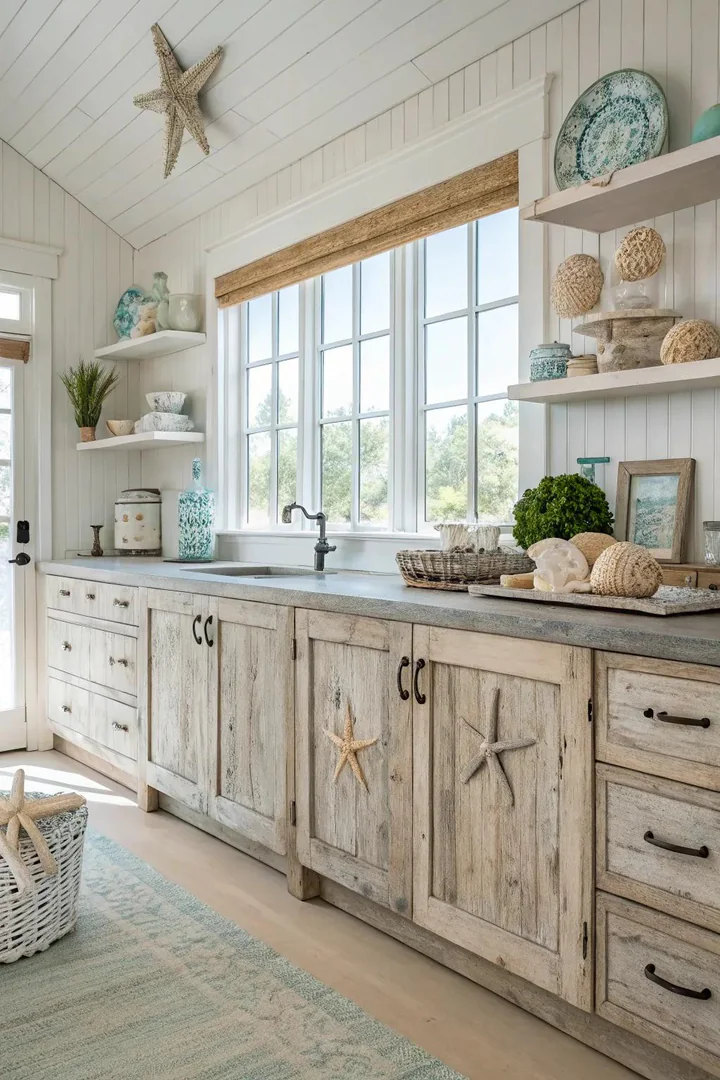
A driftwood finish (a multi-step process that combines wire-brushing, bleaching, gray-washing, and lime-waxing to simulate the weathered, sun-bleached appearance of seaside driftwood) produces a pale silver-gray cabinet with visible grain ridges, a soft matte texture, and an authentically aged appearance. Start with an open-grain wood (white oak, ash, or elm), wire-brush the surface to raise the grain, apply a wood bleach (Zinsser Wood Bleach, $10 to $15 per kit) to strip the natural color, then apply a thin gray wash followed by Briwax Liming Wax rubbed into the grain pores.
A driftwood finish is the lightest and coolest wood cabinet option — lighter than natural maple, cooler than any brown or golden stain, and more textured than painted gray. Driftwood cabinets suit coastal, beach house, and nautical kitchens and pair with white Carrara marble countertops ($40 to $60 per square foot), white shiplap walls ($1 to $3 per square foot for MDF shiplap from Home Depot), and brushed-nickel or chrome hardware ($2 to $5 per pull). The multi-step finish process adds 2 to 4 hours of labor per cabinet door compared to a simple stain-and-poly finish. See more weathered and aged finish ideas at kitchen accent wall ideas for textured kitchen surfaces.
16. Antique Whitewash
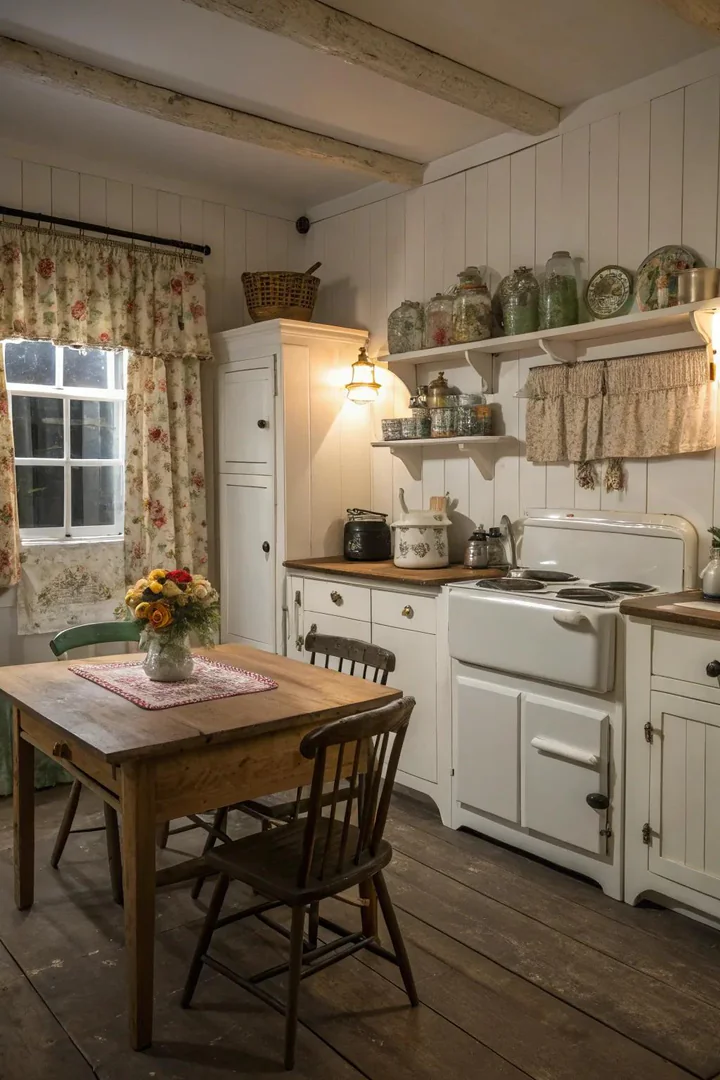
A whitewash (white paint thinned with water or a commercial whitewash product like Minwax White Wash Pickling Stain 618604444, $8 to $12 per quart) applied over natural wood produces a hazy, semi-transparent white coating that softens the wood color while allowing the grain, knots, and natural imperfections to show through. Whitewash originated as a lime-and-water paint used on colonial and farmhouse furniture and produces an aged, antique appearance that ranges from lightly hazed (one thin coat wiped off quickly) to nearly opaque white (three coats wiped off slowly).
Whitewashed cabinets work best on open-grain, light-colored woods (pine, oak, ash) where the whitewash settles into the grain valleys and pore structure. On a tight-grained wood (maple, cherry, birch), whitewash sits on the surface without penetrating the grain and can peel or flake over time. Seal whitewashed cabinets with matte water-based polyurethane ($12 to $20 per quart) to protect the fragile whitewash coat from abrasion and moisture. Whitewashed cabinets pair with butcher-block countertops (the warm wood countertop against the cool white-hazed cabinets), farmhouse sinks, and oil-rubbed bronze hardware ($3 to $7 per pull) for a full country or cottage kitchen. Visit The Designers Company for the full kitchen cabinet and design library.
How to Choose a Wood Cabinet Color
1. Match the Wood Tone to Your Kitchen’s Light
Kitchens with abundant natural light (south-facing windows, skylights, or an open floor plan with large windows) can support dark wood cabinets (walnut, mahogany, black-stained oak) without feeling cave-like. Kitchens with limited natural light (small windows, north-facing, or galley layouts) look best with light wood cabinets (maple, birch, blonde oak, whitewashed pine) that reflect available light. Test a stain sample or a wood cabinet door sample ($5 to $20 from most cabinet companies) in the kitchen at morning, midday, and evening to see how the wood color shifts under different light conditions.
2. Coordinate with Countertop and Backsplash
Dark wood cabinets pair best with light countertops (white quartz, white marble, light gray concrete) for high contrast. Light wood cabinets pair with both light countertops (tone-on-tone, airy) and dark countertops (black granite, dark soapstone, for contrast from the countertop rather than the cabinet). Medium-toned wood (cherry, honey oak, hickory) pairs with medium-toned countertops (beige granite, warm quartz, butcher block) for a blended, unified look, or with white countertops for a clean separation.
3. Decide on Grain Visibility
Wood grain ranges from invisible (tight-grained maple with a natural finish) to dramatic (open-grained ash with a contrasting stain). The grain visibility is a design choice: minimal grain produces a modern, clean cabinet face that reads almost like paint; bold grain produces a rustic, organic, textured cabinet face that reads as wood from across the room. Choose the grain level to match the kitchen style: modern and Scandinavian kitchens suit fine-grained maple or birch; farmhouse and rustic kitchens suit open-grained oak or ash; traditional kitchens suit medium-grained cherry or walnut.
Wood Cabinet Color Comparison
| Wood / Finish | Cost per Board Foot | Janka Hardness | Color Family | Best Kitchen Style |
|---|---|---|---|---|
| Maple (natural) | $4–$8 | 1,450 | Pale cream | Modern, Scandinavian |
| White oak (natural) | $5–$10 | 1,360 | Golden tan | Transitional, farmhouse |
| Cherry (natural) | $5–$10 | 950 | Reddish brown (darkens) | Traditional, Shaker |
| Walnut (natural) | $8–$14 | 1,010 | Chocolate brown | Modern, upscale |
| Pine (natural) | $2–$5 | 690 | Pale yellow | Cottage, cabin, rustic |
| Bamboo (carbonized) | $3–$7 (panel) | 3,000+ | Amber brown | Modern, eco-conscious |
| Oak (gray wash) | $5–$10 | 1,360 | Cool gray | Coastal, Scandinavian |
| Oak (black stain) | $5–$10 | 1,360 | Black with grain | Modern, dramatic |
Frequently Asked Questions
Are wood kitchen cabinets out of style?
Wood kitchen cabinets are not out of style. White-painted cabinets dominated kitchen design from 2010 to 2020, but natural wood cabinets (especially white oak, walnut, and blonde-finished species) returned as a top trend starting in 2021 and remain a leading cabinet choice through 2026. The shift is toward flat-panel or Shaker-style doors in lighter, more natural wood tones (white oak, ash, maple) rather than the raised-panel, dark-stained oak and cherry that defined the 1990s and 2000s.
What is the most durable wood for kitchen cabinets?
Hard maple (1,450 Janka) is the hardest common domestic cabinet wood and resists dents, scratches, and daily wear better than oak (1,360), cherry (950), walnut (1,010), or pine (690). Hickory (1,820 Janka) is harder than maple but has a wilder, more variable grain pattern that limits its use in contemporary kitchens. Strand-woven bamboo (3,000+ Janka) is the hardest cabinet material available but is classified as grass, not wood.
How do you maintain natural wood cabinets?
Wipe wood cabinets weekly with a damp microfiber cloth (water only, no chemical cleaners) to remove grease, dust, and cooking residue. For stubborn grease buildup (common around the stove and range hood), use a solution of 1 tablespoon white vinegar per quart of warm water applied with a soft cloth and immediately dried. Reapply oil or wax finishes (Danish oil, tung oil, Rubio Monocoat) every 12 to 24 months to refresh the sheen and protect against moisture. Polyurethane-finished cabinets do not need periodic recoating but may develop wear spots at pull and handle locations after 5 to 10 years.
Can you change the color of existing wood cabinets without replacing them?
Four methods: (1) Stain — sand the existing finish, apply a new stain color, and topcoat with polyurethane ($50 to $200 in materials for a full kitchen, 2 to 3 weekends of labor). (2) Paint — sand, prime with a bonding primer, and paint with cabinet paint ($100 to $300 in materials). (3) Gel stain — apply General Finishes Gel Stain ($15 to $20 per quart) over the existing finish without stripping (gel stain adheres to previously finished surfaces). (4) Reface — apply new wood veneer or rigid thermofoil (RTF) over the existing cabinet boxes and replace the doors and drawer fronts ($1,000 to $5,000 professionally, 50% to 70% less than full cabinet replacement).
What finish protects wood cabinets best?
A catalyzed conversion varnish (a professional-grade, spray-applied finish used by cabinet manufacturers and refinishers) provides the hardest, most chemical-resistant, most moisture-resistant finish available for wood cabinets. For DIY application, General Finishes High Performance Water-Based Topcoat ($25 to $35 per quart, available in satin, semi-gloss, and gloss) is the most recommended consumer-grade cabinet finish: it self-levels, dries clear without ambering, and cures to a hard, washable surface within 21 days.