
Small Country Kitchen Ideas: 17 Charming Ways to Maximize Space
Small country kitchen ideas bring farmhouse warmth, vintage character, and handmade charm into kitchens under 120 square feet through open shelving, natural wood, painted cabinets, mixed-material finishes, and collected accessories. A country kitchen differs from a modern kitchen in three ways: it shows storage rather than hiding it (open shelves, plate racks, hanging pot rails), it uses natural and reclaimed materials rather than manufactured surfaces (wood, stone, ceramic, iron rather than laminate, acrylic, and stainless steel), and it accumulates character over time through layered accessories rather than achieving a finished look on day one. Below are 17 design strategies for small country kitchens with specific products, materials, and costs, followed by a how-to planning guide, a comparison table, and FAQs.
1. Space-Saving Galley Layout

A galley layout (cabinets and countertops along two parallel walls with a 3-to-5-foot walkway between them) puts every cabinet, drawer, and work surface within one step in each direction, making it the most space-efficient configuration for a country kitchen in a narrow room (7 to 10 feet wide). Place the sink on one wall and the stove on the opposite wall, 4 to 6 feet apart across the walkway, for a compact work triangle that requires zero walking.
A galley country kitchen uses the same layout as a professional restaurant kitchen (chefs work in galley kitchens because the short distances between stations maximize speed and efficiency). Add open shelving above one wall and closed cabinets on the other wall to prevent the two-wall layout from feeling like a corridor. A window at the end of the galley (or both ends, if the layout allows) draws the eye through the room and provides natural light and ventilation. Paint both walls and the ceiling in a light, warm color (Benjamin Moore White Dove OC-17 or Farrow and Ball Pointing No. 2003) to maximize light reflection in the narrow space. For more kitchen layout strategies that prioritize easy movement and accessibility, see wheelchair accessible kitchen ideas.
2. Seasonal Decor Rotation
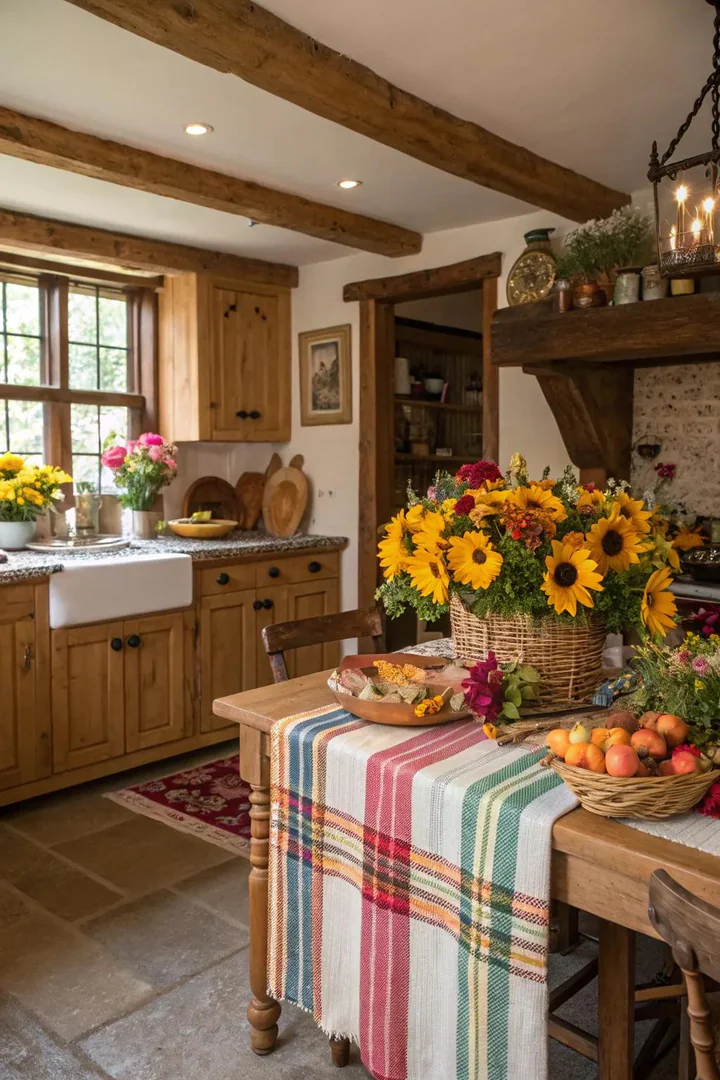
Rotating seasonal accessories on open shelves, windowsills, and countertops keeps a small country kitchen feeling fresh without remodeling or repainting. Spring: a mason jar of fresh wildflowers ($0 to $5), a pastel linen table runner ($10 to $20 from Target or Etsy), and robin’s-egg blue ceramic bowls ($8 to $15 per bowl). Summer: a basket of fresh tomatoes and herbs from the garden, a striped cotton dish towel set ($8 to $15 for a set of 3), and a sunflower arrangement in a stoneware pitcher ($10 to $25 for the pitcher).
Fall: dried wheat or corn stalks ($5 to $10 from a craft store or farm stand), pumpkin-spice-colored candles ($5 to $15 from Yankee Candle or Bath and Body Works), and a woven plaid table runner ($10 to $20). Winter: evergreen sprigs in a glass jar ($0 to $5), red-and-white striped kitchen towels ($8 to $12), and cranberry-scented candles ($5 to $15). Seasonal rotation works because a small kitchen has limited display space — 3 to 5 seasonal items on the shelves and windowsill make a visible difference without cluttering the room.
3. Natural Wood Accents
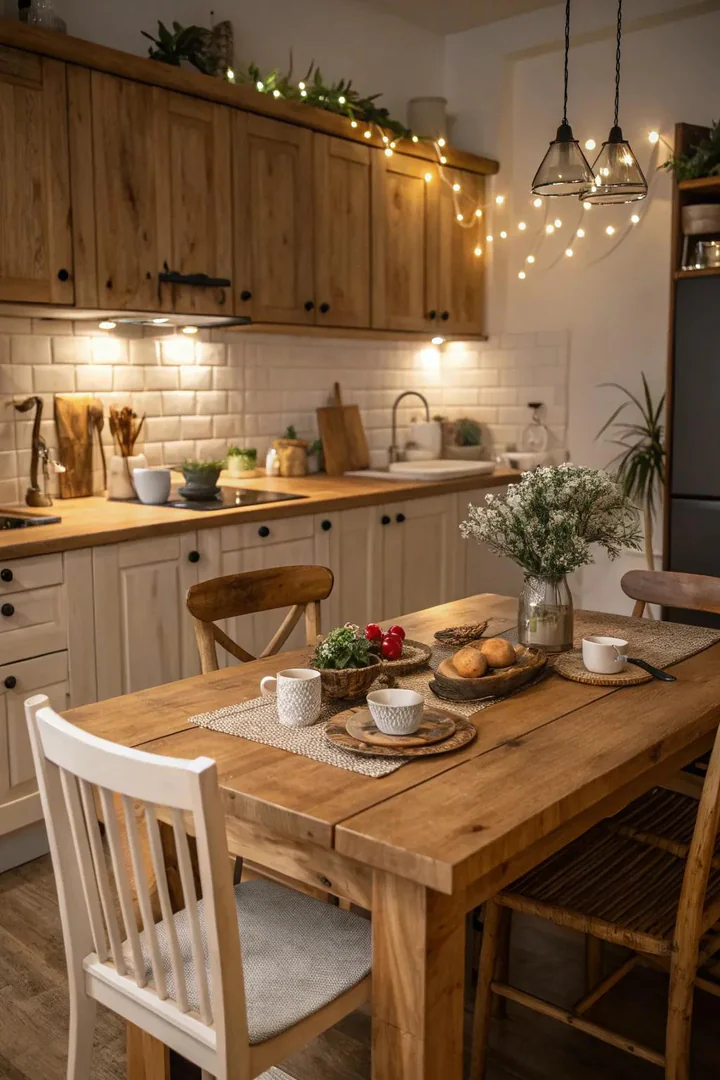
Adding raw or lightly finished wood surfaces (a butcher-block countertop, reclaimed barn-wood open shelves, a pine plate rack, or a rough-sawn cedar ceiling beam) introduces the warmth and organic texture that defines country kitchen character. A butcher-block countertop (IKEA Karlby in walnut or oak, $90 to $180 for a 74-inch slab; or John Boos maple block, $200 to $400 for a 25-by-60-inch piece) provides a warm, natural work surface that is softer and quieter than stone or quartz.
A reclaimed barn-wood shelf ($20 to $60 from a salvage dealer or Etsy) mounted on wrought-iron brackets ($15 to $30 per pair from Etsy or a local blacksmith) replaces one section of upper cabinets with an open display surface for stoneware, copper pots, or cookbooks. Wood accents in a country kitchen should look weathered, aged, or hand-finished rather than factory-smooth: wire-brushed, hand-planed, or slightly rough-sawn surfaces have more visual and tactile character than sanded-smooth, high-gloss wood. Browse more natural wood applications at wood kitchen cabinet color ideas for species comparisons and stain options.
4. Natural Light Maximization
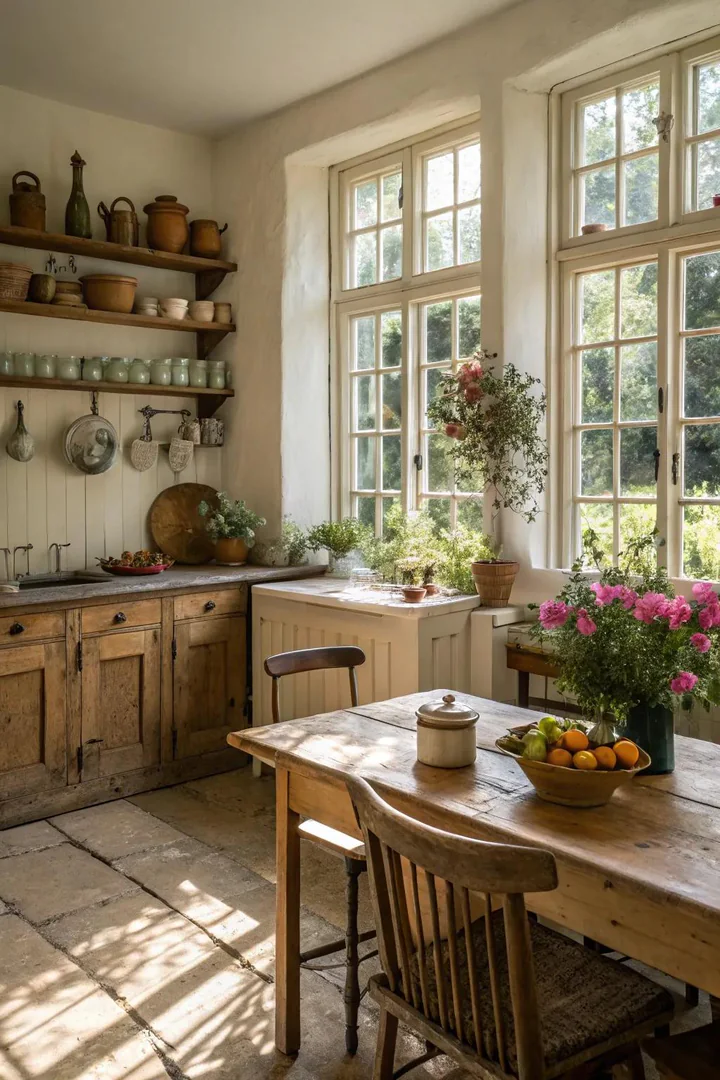
Removing heavy curtains, blinds, or window treatments and replacing them with bare windows, cafe curtains, or sheer linen panels lets maximum daylight into a small country kitchen. A cafe curtain ($10 to $25 per panel from Target, IKEA, or Etsy; hung on a tension rod at the midpoint of the window, covering only the lower half) provides privacy at eye level while leaving the upper half of the window open for full sunlight.
A sheer linen curtain ($15 to $30 per panel in white or natural linen from IKEA Aina or Pottery Barn) diffuses harsh direct sunlight into a soft, even glow without blocking the view. Position the sink under the window (the traditional country kitchen placement) so the cook works in natural light during daytime. Paint the window trim in bright white gloss ($12 to $18 per quart from any paint brand) to reflect light deeper into the room from the window frame edges.
5. Exposed Ceiling Beams
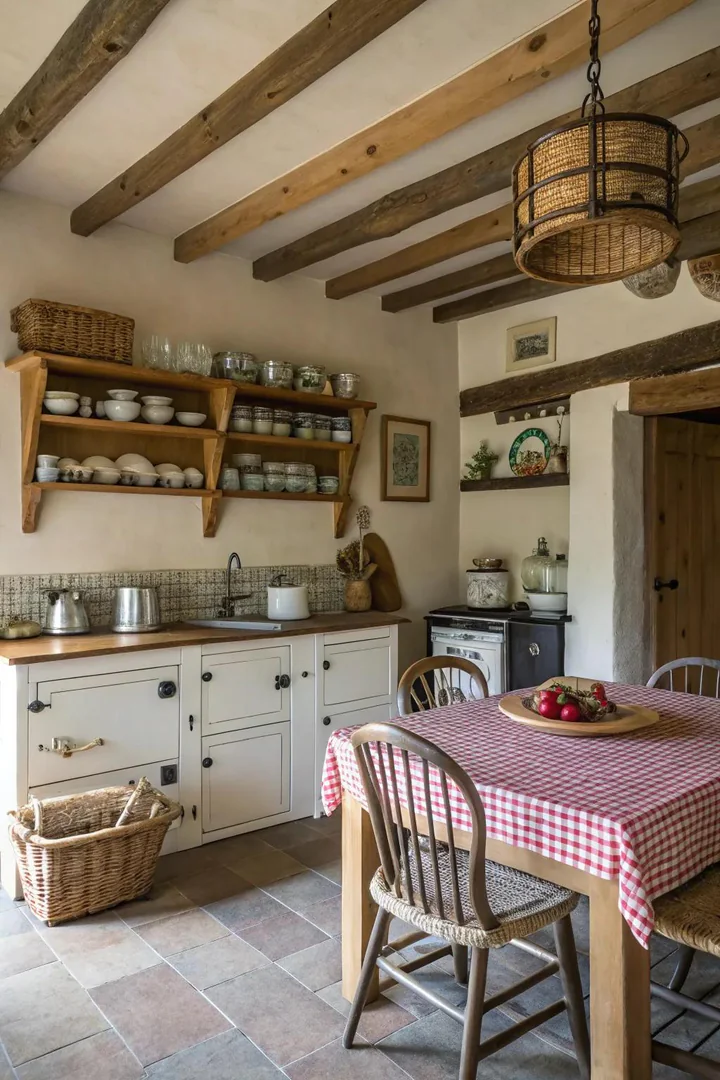
Adding exposed wood beams (real structural beams revealed by removing a dropped ceiling, or decorative faux beams mounted to the ceiling surface) gives a small country kitchen the aged, hand-built character of a farmhouse or cottage without changing the floor plan. Faux wood beams (Barron Designs or Volterra Architectural Products, $8 to $30 per linear foot for hollow polyurethane beams that look identical to solid wood at ceiling height) mount directly to the ceiling joists with screws and weigh 1 to 3 pounds per foot (compared to 10 to 20 pounds per foot for solid wood beams).
Space 3 to 4 beams evenly across the ceiling of a small kitchen (one beam every 3 to 4 feet), running perpendicular to the longest wall. Stain the beams dark (dark walnut, espresso, or weathered gray) against a white or cream ceiling for maximum contrast — the dark beams draw the eye upward and add perceived height to the room by creating vertical depth between the white ceiling plane and the dark beam faces. For a lighter, coastal-country look, whitewash the beams or leave them in natural, unfinished wood.
6. Organized Pantry Storage
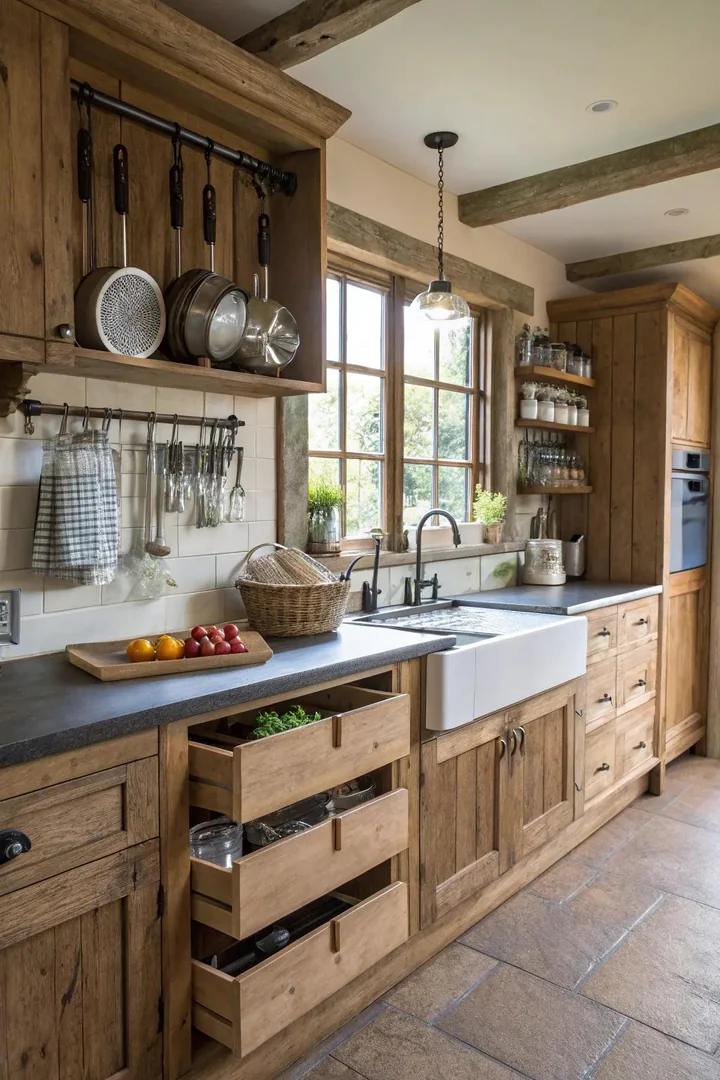
A pull-out pantry cabinet ($200 to $600 for a Rev-A-Shelf 5700 Series or 5300 Series pull-out system that installs inside a 6-to-12-inch-wide cabinet slot) stores 30 to 50 cans, jars, and boxes in a slim, slide-out tower that takes only 6 to 12 inches of wall space. A wall-mounted spice rack ($15 to $40 from SimpleHouseware or Kamenstein) mounts inside a cabinet door or on the wall beside the stove, keeping 20 to 30 spice jars visible and within arm’s reach without using counter or shelf space.
A rolling kitchen cart ($80 to $200 from IKEA Bekvam, $50, birch wood; or Origami Foldable Kitchen Cart, $80 to $120) provides a portable pantry shelf, prep surface, and serving station that rolls against the wall when not in use and pulls into the center of the kitchen during meal preparation. A country-style pantry solution uses glass jars with wooden lids ($8 to $20 for a set of 4 from Anchor Hocking), woven baskets ($10 to $25 each from Target Threshold or World Market), and labeled stoneware canisters ($15 to $35 for a set of 3) rather than matching plastic containers for a collected, farmhouse look.
7. Mirrored Backsplash
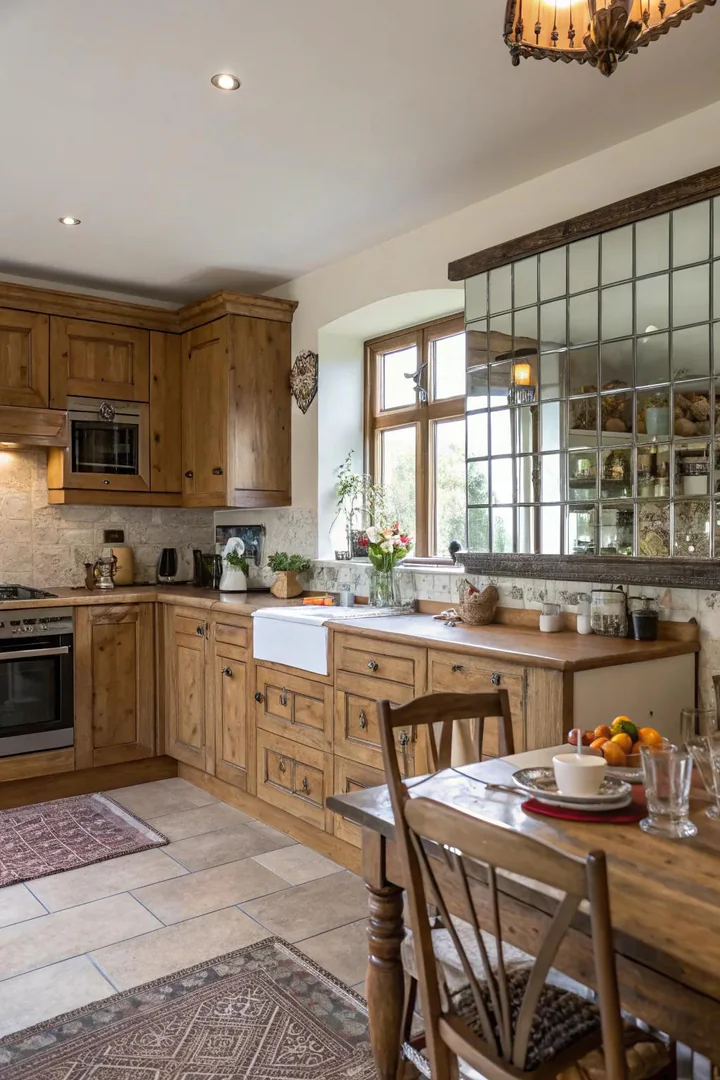
A mirrored backsplash (custom-cut mirror panels, $5 to $15 per square foot from a local glass shop, adhered to the wall with mirror mastic) doubles the visual depth of a small kitchen by reflecting the opposite wall, the window, and any under-cabinet light back into the room. A mirror backsplash between the countertop and upper cabinets in a small country kitchen makes the 18-inch backsplash zone feel like an open window rather than a wall, expanding the perceived size of the room.
An antiqued mirror (mirror glass treated with acid or spray-on antiquing solution to produce dark spots, cloudy areas, and an aged patina, $10 to $25 per square foot from specialty glass suppliers or Etsy sellers) provides the same reflective benefits as clear mirror but with a vintage, imperfect quality that suits a country kitchen better than a clean, modern mirror. Mount the antiqued mirror in a beveled or framed panel format (3 to 4 panels per wall section rather than one continuous sheet) for a divided, leaded-glass appearance that references Victorian and colonial kitchens.
8. Warm Color Palette
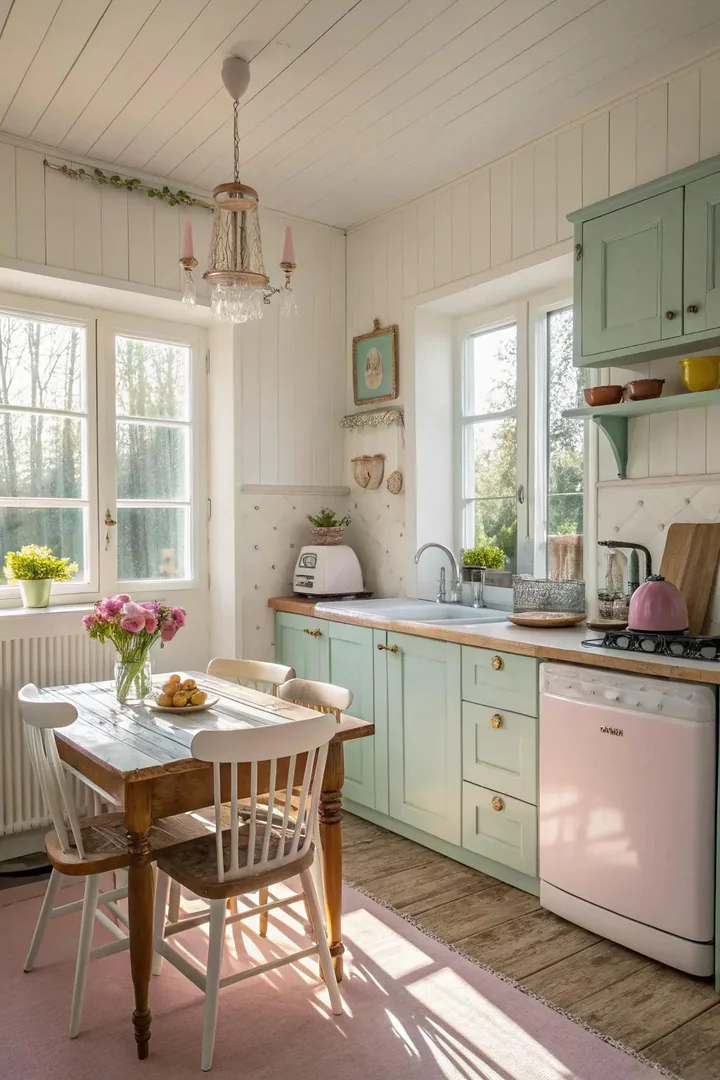
Country kitchens use warm, muted, nature-derived colors (cream, butter yellow, sage green, dusty blue, terracotta, soft coral, and warm white) rather than the pure white, cool gray, and black of modern and contemporary kitchens. Benjamin Moore Gentle Cream OC-96 (a warm, buttery off-white), Farrow and Ball Sage Green No. 80 (a soft, muted green), and Sherwin-Williams Accessible Beige SW 7036 (a warm gray-beige) are classic country kitchen wall colors that make a small room feel bright without the clinical coldness of pure white.
Paint the walls in one warm neutral and the cabinets in a second, slightly different warm tone (cream walls with sage-green cabinets, or butter-yellow walls with white cabinets) for a layered, collected look. A country kitchen should feel like the colors were chosen over time, not from a single paint-chip card. Add a third warm color through accessories: copper pots ($20 to $60 each from Mauviel or vintage shops), terracotta plant pots ($3 to $10 each), and warm-toned dish towels ($8 to $15 for a set) bring in amber, rust, and gold tones that complement the wall and cabinet colors.
9. Compact Kitchen Island
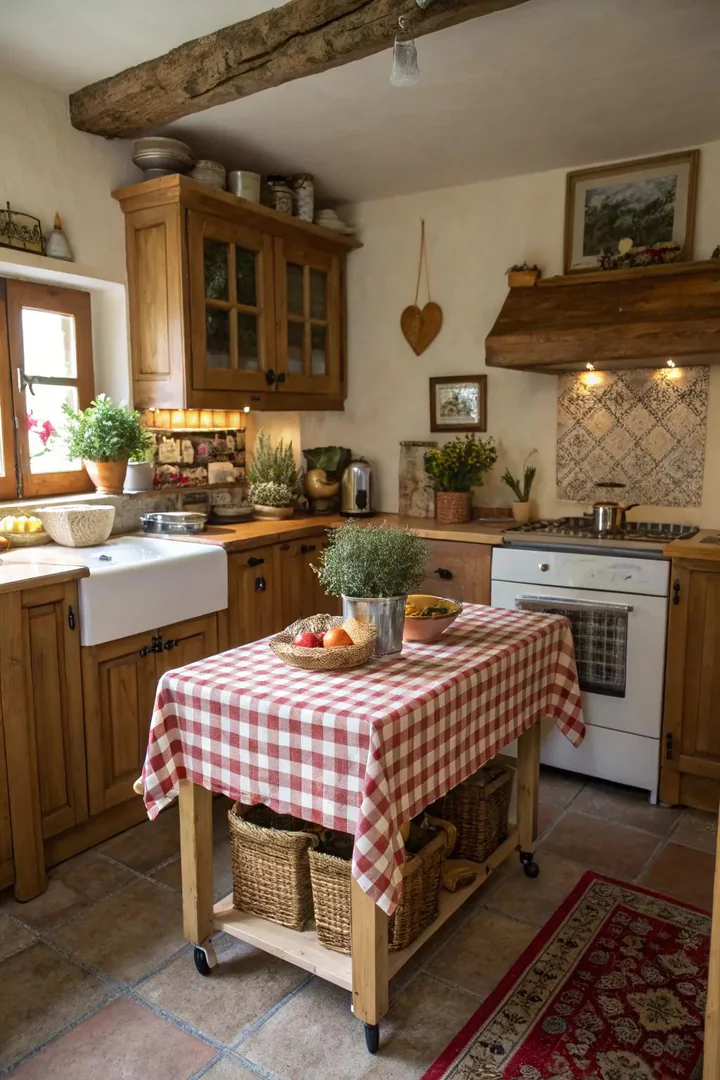
A small, freestanding kitchen island (24 to 30 inches wide, 36 to 48 inches long) adds prep surface, storage, and a visual centerpiece to a small country kitchen without a permanent built-in installation. A butcher-block cart (IKEA Bekvam, $50, 22-by-23-inch top, birch wood, 2 shelves, on casters; Chris and Chris Pro Stadium Kitchen Island, $200 to $400, 24-by-40-inch rubberwood top with stainless-steel shelf and towel bar) rolls into place for meal prep and tucks against the wall or into a corner when not needed.
A repurposed vintage table or dresser (a small farm table, an antique wash stand, or a salvaged desk, $30 to $150 from Habitat for Humanity ReStore, Craigslist, or estate sales) painted in a contrasting color to the kitchen cabinets serves as a one-of-a-kind island with more country character than any factory-made unit. Top the vintage piece with a cutting-board insert or a marble pastry slab ($20 to $50 from Fox Run or Sur La Table) for a usable, food-safe work surface. A freestanding island in a contrasting color (a green island in a white kitchen, or a blue island in a cream kitchen) adds the layered, collected quality that defines country style. See more compact kitchen designs at small U-shaped kitchen ideas for small-footprint layout strategies.
10. Farmhouse Wall Art
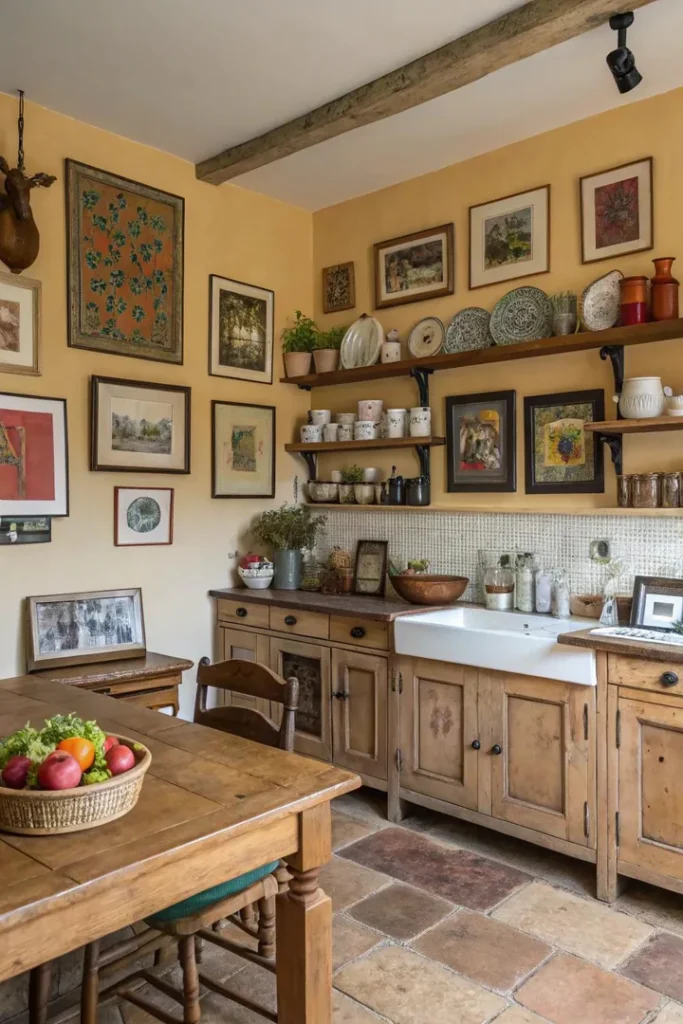
Hanging vintage farm prints, botanical illustrations, hand-lettered signs, or antique kitchen tools on the walls adds personality and a sense of history to a small country kitchen. A set of vintage botanical herb prints ($10 to $30 for a set of 4 to 6 from Etsy or antique shops) in simple white or natural-wood frames arranged in a grid on the wall above the dining area or beside the window creates a mini gallery with country character.
A vintage enamelware collection (white enamel pitchers, pans, and ladles with blue or red trim, $5 to $25 each from flea markets and estate sales) mounted on the wall with small hooks or displayed on a narrow shelf becomes functional wall art. Antique wooden cutting boards ($10 to $30 each from vintage shops) in different sizes and wood tones leaned against the backsplash or hung on the wall with leather straps add warmth and texture. Country wall art should feel collected over time — avoid matching sets of brand-new farmhouse signs and instead mix genuine vintage items with handmade or printed pieces.
11. Glass-Paneled Cabinet Doors
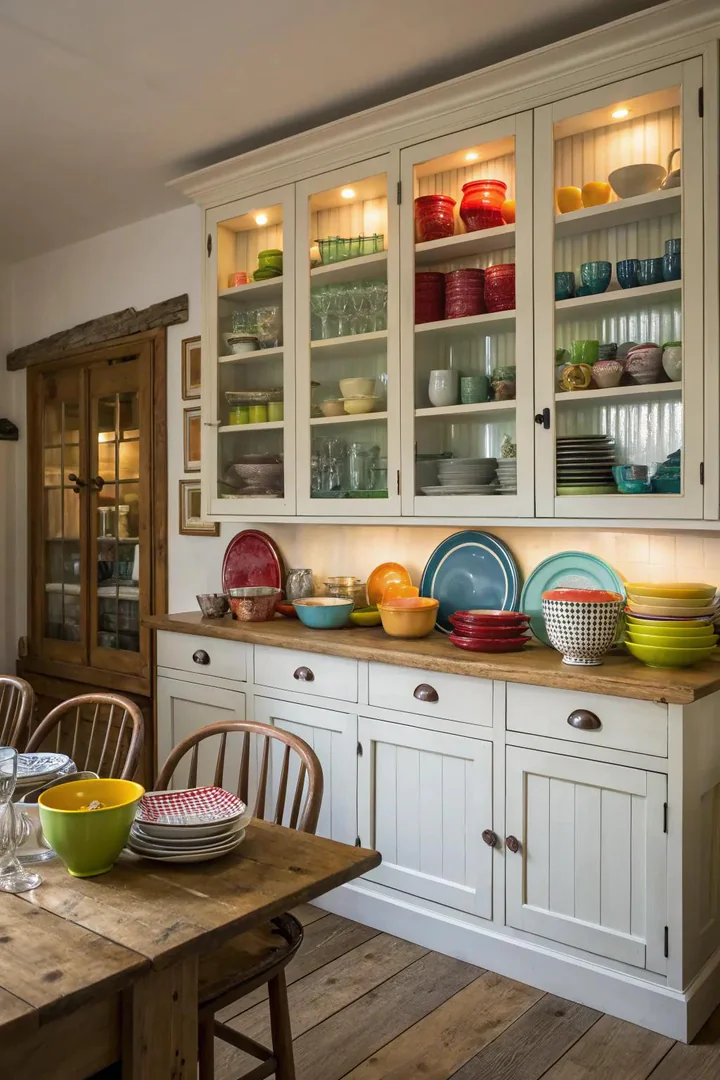
Replacing 2 to 4 upper-cabinet doors with glass-paneled doors (clear glass, seeded glass, or wavy antique glass set into the existing Shaker or raised-panel cabinet door frame) opens the visual density of the upper cabinets and creates display windows for stoneware, vintage dishes, and glassware. Seeded glass (glass with small bubbles trapped in the pane, $20 to $40 per panel from Dulles Glass) obscures the contents slightly while maintaining the visual openness, which suits a country kitchen better than crystal-clear glass because the imperfect glass references colonial and Victorian-period windows.
Install glass panels on the cabinets flanking the sink window (where natural light passes through the glass from behind, illuminating the cabinet contents) and keep solid doors on the remaining uppers for a mix of open and closed storage. Paint the interior back wall of the glass-front cabinets in a contrasting color (Benjamin Moore Sage Green HC-114 or Sherwin-Williams Naval SW 6244) to create a colored backdrop behind the dishes and glassware, adding depth and a surprise pop of color that is only visible through the glass.
12. Layered Textiles
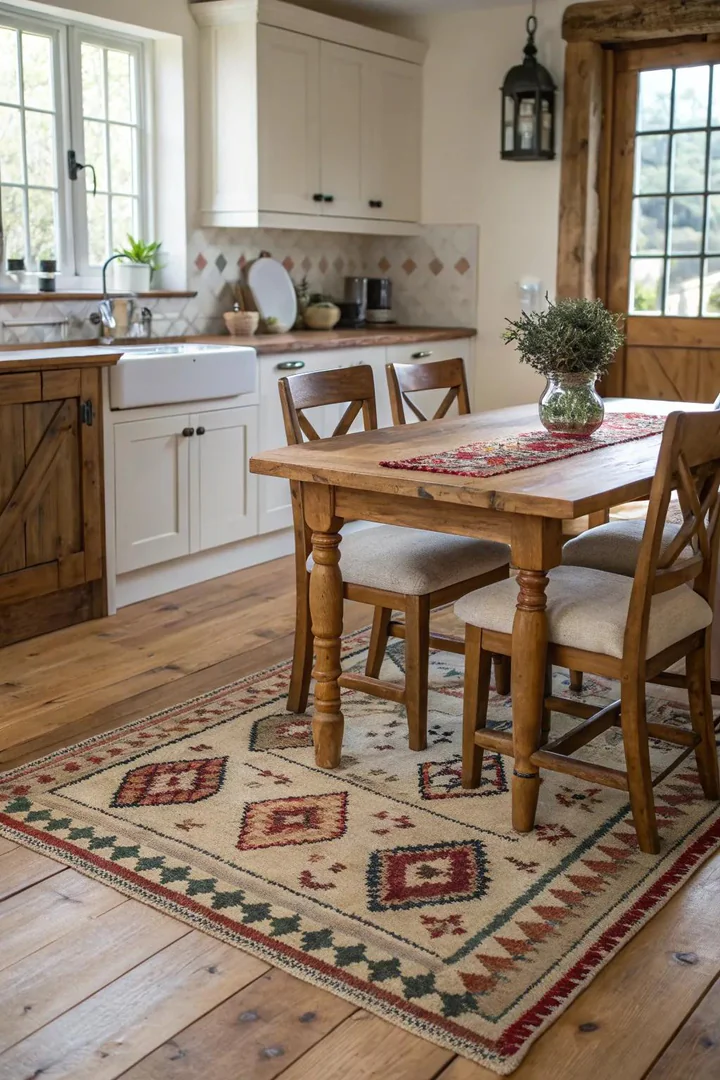
Adding fabric softness to a hard-surface room (where every wall, floor, counter, and appliance is stone, tile, wood, or metal) through dish towels, chair cushions, table runners, curtains, and rugs is the fastest and cheapest way to make a small kitchen feel warm and lived-in. A washable cotton rug ($15 to $40 for a 2-by-3-foot or 2-by-4-foot rug from Ruggable or Target) in a buffalo-check, floral, or striped pattern placed in front of the sink adds softness underfoot and color to the floor.
A linen or cotton table runner ($10 to $25 from Etsy or World Market) on a small kitchen table or island adds a horizontal fabric layer. Gathered-check or floral cafe curtains ($10 to $25 per panel) on the window add a vertical fabric layer. Quilted pot holders ($5 to $12 for a set from Williams Sonoma or Target) hung from hooks beside the stove add functional fabric at wall level. Country textiles should be natural fiber (cotton, linen, or hemp), patterned (gingham, ticking stripe, toile, floral), and machine-washable for easy cleaning in a room where grease, flour, and food splashes are constant.
13. Antique Lighting Fixtures
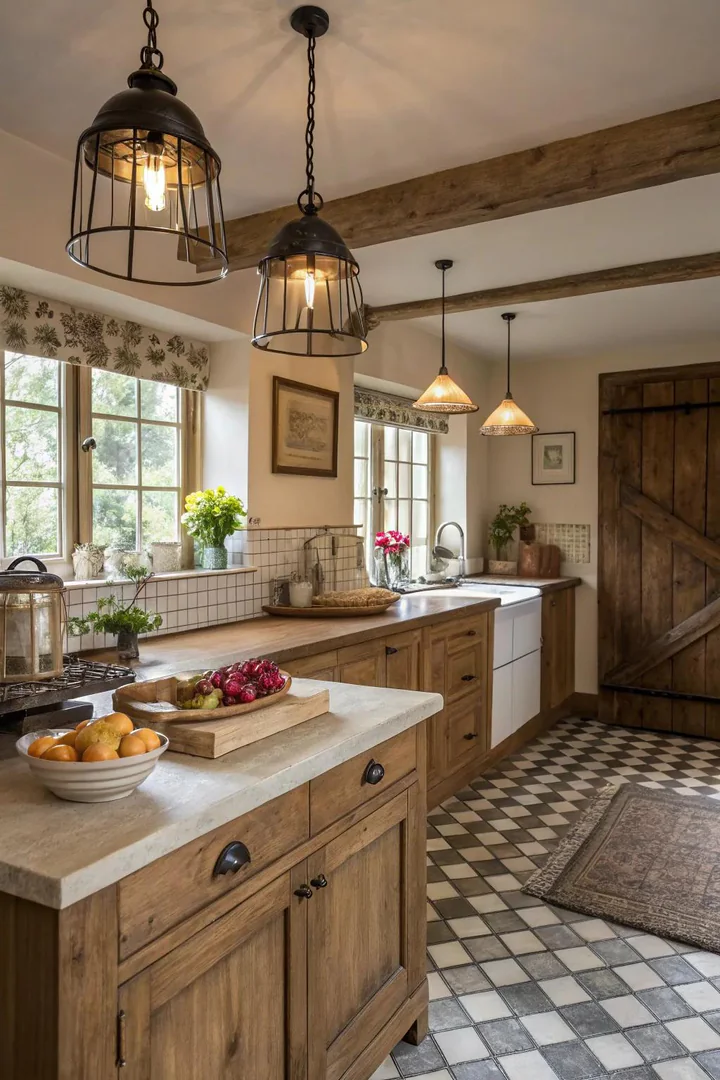
Replacing a standard builder-grade flush-mount ceiling light with a vintage or vintage-reproduction pendant light ($30 to $150 for a single pendant) instantly shifts the kitchen’s character from generic to country. A white enamel barn-light pendant ($40 to $100 from Barn Light Electric or Amazon) in a 12-to-16-inch dome shade suits a farmhouse country kitchen. A wrought-iron chandelier ($50 to $150 from Wayfair or Pottery Barn) with 3 to 5 candle-style sockets suits a French country or English cottage kitchen.
A mason-jar pendant ($15 to $40 DIY or from Etsy; a clear glass mason jar fitted with a pendant-light socket kit, $10 to $20 from Mason Jar Merchant) provides warm, amber-tinted light that references canning season and farmhouse food preservation. Hang the pendant light 30 to 36 inches above the countertop or table surface and use a warm-white LED Edison-style bulb ($5 to $10 per bulb from Feit Electric, 2200K to 2700K, with visible filaments) for a warm, golden light quality that flatters food, faces, and natural wood surfaces.
14. Wall-Mounted Hooks and Rails
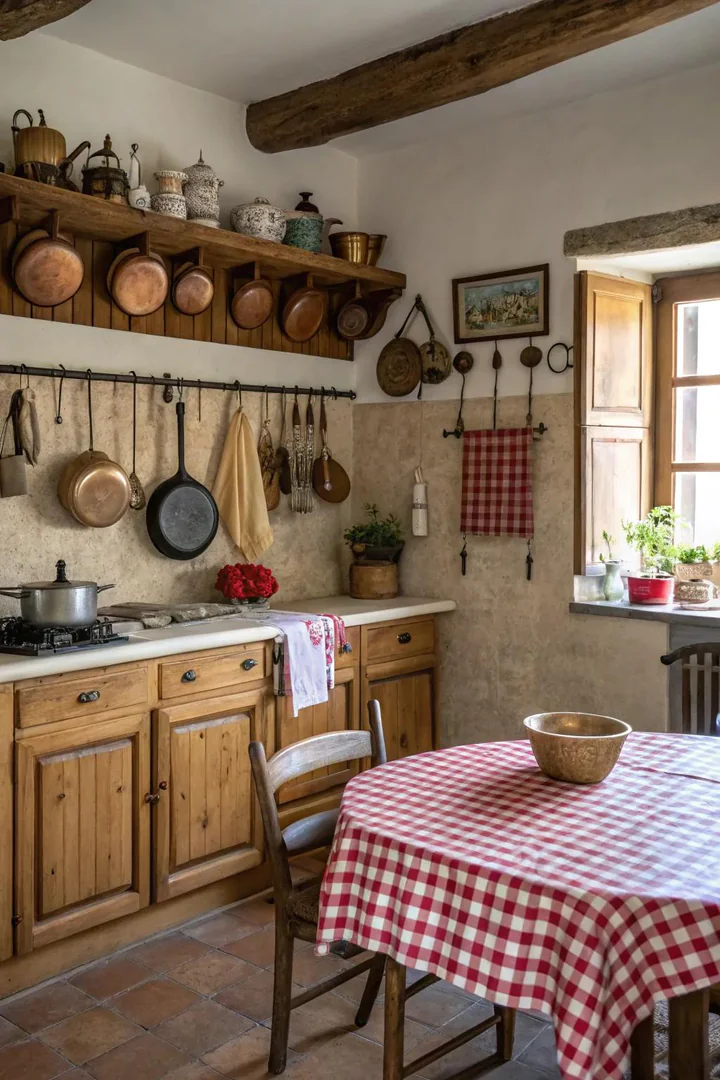
Mounting hooks, rails, and peg boards on available wall space between, above, and beside the cabinets puts pots, pans, utensils, mugs, towels, and oven mitts within arm’s reach while freeing drawer and cabinet space for items that cannot hang. A wrought-iron pot rail ($20 to $60 for a 24-to-36-inch rail with S-hooks from Enclume or Old Dutch) mounted on the wall above the stove or below the range hood holds 4 to 8 pots and pans by their handles.
A Shaker peg rail ($15 to $40 for a 24-to-36-inch rail with 4 to 8 pegs from Etsy or a local woodworker) mounted at 6 feet high on any available wall holds dish towels, aprons, oven mitts, and lightweight baskets. A magnetic knife strip ($15 to $25 from Woodsom) mounted on the wall between the counter and upper cabinets stores knives safely and visibly. Wall-mounted storage is a defining feature of country kitchens: historically, country and farmhouse kitchens had fewer cabinets than city kitchens, so hooks, rails, and shelves served as the primary storage system.
15. Decorative Accessories
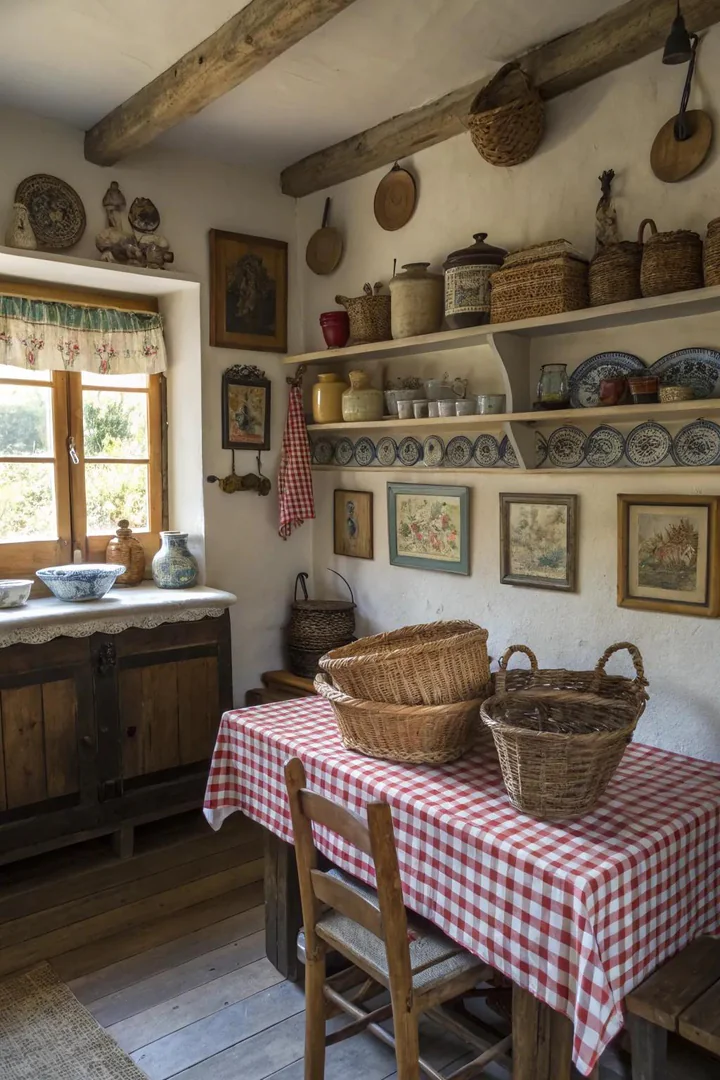
A country kitchen earns its character through collected, mismatched, and handmade accessories rather than a single matching set from one store. A stoneware pitcher ($15 to $35 from Farmhouse Pottery or a thrift store) holding wooden spoons and spatulas on the counter. A vintage scale ($20 to $60 from an antique shop or flea market) displayed on a shelf. A ceramic rooster or hen ($10 to $25 from World Market or Target) on the windowsill. A wire egg basket ($10 to $20) on the counter holding fresh eggs or fruit.
A bread box ($20 to $50 for a wooden or enamel bread box from Brabantia or Threshold at Target) keeps bread fresh while adding a functional accessory to the counter. A butter bell crock ($15 to $25 from Butter Bell) stores butter at room temperature (a country kitchen tradition). Limit decorative accessories to 5 to 8 items in a small kitchen to avoid visual clutter — each piece should earn its counter or shelf space by being both beautiful and either functional or personally meaningful. Explore more ways to add personality to kitchen walls at kitchen accent wall ideas for feature wall designs.
16. Colorful Cabinet Mix
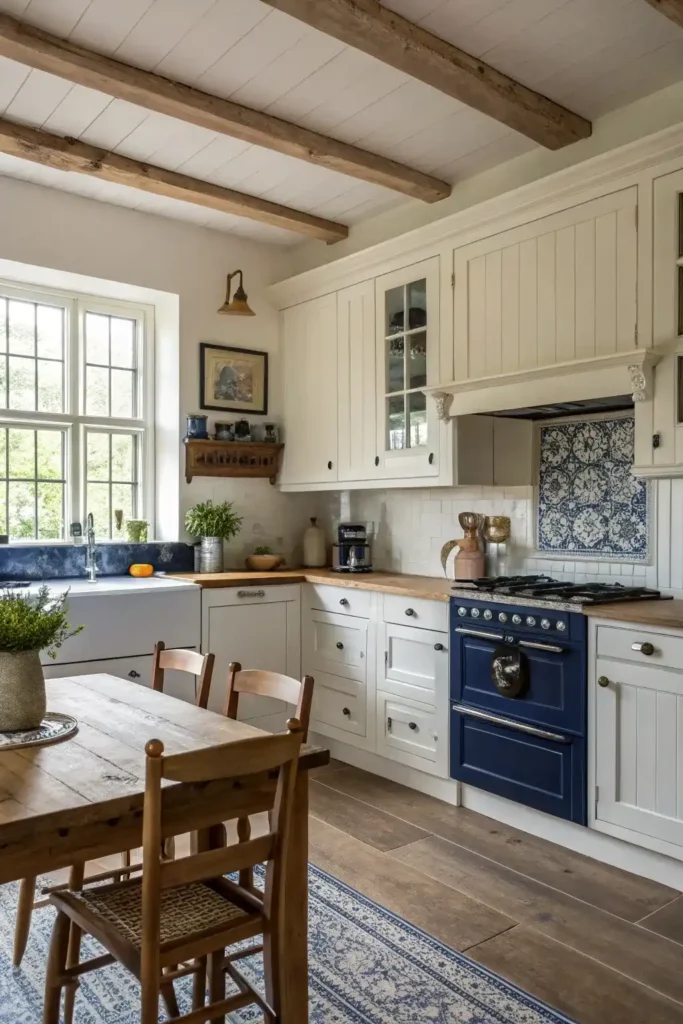
Painting cabinets in 2 to 3 different colors (rather than one uniform color across every door) creates the collected, evolved-over-time look that characterizes authentic country kitchens, where homeowners added cabinets and furniture pieces over decades rather than installing a matching set all at once. A common formula: white upper cabinets, sage-green lower cabinets, and a yellow or blue island (Benjamin Moore Wythe Blue HC-143, a soft, muted blue; Sherwin-Williams Butter Up SW 6681, a warm, soft yellow).
Each color should come from the same muted, low-saturation palette (dusty, chalky, or milky tones rather than bright, saturated primaries) to maintain the country-kitchen softness. Bold, saturated colors (fire-engine red, royal blue, sunflower yellow) read as modern or eclectic rather than country. Use chalk paint (Annie Sloan Chalk Paint, $35 to $40 per quart; Rust-Oleum Chalked, $15 to $20 per quart) for a matte, slightly rough finish that dries with a chalky texture and distresses naturally at the edges over time, revealing the wood or undercoat beneath the color for an aged, vintage appearance.
17. Open Display Shelving
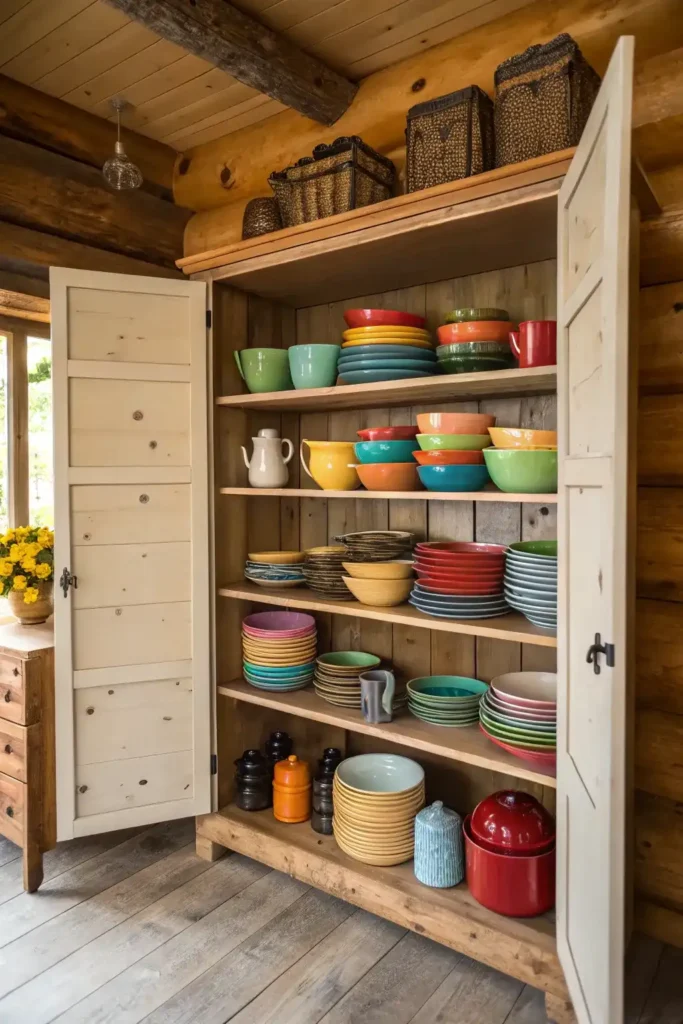
Replacing one or two sections of upper cabinets with open wood shelves (reclaimed barn-wood planks, rough-sawn pine, or finished oak on iron or wood brackets) opens the sightline, displays collected dishes and pottery, and gives the kitchen the unfitted, furniture-like quality that separates country kitchens from modern fitted ones. Two to three shelves stacked 10 to 12 inches apart on a 3-to-4-foot wall section ($20 to $60 per shelf including brackets) provide storage for everyday dishes, glassware, and serving pieces.
Style open shelves with a mix of functional and decorative items: everyday white plates and bowls stacked on the bottom shelf, vintage mixing bowls or colored pottery on the middle shelf, and a trailing pothos plant, a small framed print, and a candle on the top shelf. Arrange items in odd-numbered groups (3 plates, 5 mugs, 1 plant) and vary the heights across the shelf for a relaxed, unforced composition. Open shelving requires regular maintenance: wipe dust from the shelves and items weekly (open shelves collect kitchen grease and airborne particles faster than closed cabinets). Visit The Designers Company for the full kitchen and home design library.
How to Design a Small Country Kitchen
1. Start with the Cabinet Style and Color
Choose a Shaker-style cabinet door ($8 to $20 per door from IKEA or Cabinet Door World) for a clean country look or a beadboard panel door ($15 to $30 per door) for a more traditional cottage look. Paint the cabinets in a warm, muted color (cream, sage, soft blue, butter yellow) using Benjamin Moore Advance ($50 per gallon) or Annie Sloan Chalk Paint ($35 per quart) and add simple hardware (cup pulls in brass, iron, or ceramic, $3 to $8 each from D. Lawless Hardware).
2. Layer Natural Materials on Every Surface
Replace laminate countertops with butcher block ($30 to $80 per square foot installed) or honed soapstone ($60 to $100 per square foot). Add a ceramic or stone tile backsplash in a handmade-looking pattern (irregular subway, zellige, or tumbled stone, $5 to $15 per square foot). Install a wood or tile floor (wide-plank hardwood, $6 to $12 per square foot; ceramic tile in a stone or terracotta look, $3 to $8 per square foot). Layer these natural materials so no two adjacent surfaces are the same material: wood counter, stone backsplash, tile floor — each surface tells a different tactile story.
3. Collect Accessories Over Time
A country kitchen should not be fully styled on day one. Start with the cabinets, countertops, and lighting, then add accessories, artwork, and textiles over weeks and months as you find items at flea markets, estate sales, thrift stores, and artisan shops. A kitchen accessorized with items collected over 6 to 12 months has more authenticity and personal meaning than one styled entirely from a single store’s farmhouse collection.
Small Country Kitchen Feature Comparison
| Feature | Cost | Impact | Best For |
|---|---|---|---|
| Open shelving | $20–$60 per shelf | Opens sightline, displays items | Kitchens with attractive dishware |
| Butcher-block counter | $90–$400 | Adds warmth and character | Any country kitchen style |
| Chalk-painted cabinets | $70–$200 (paint only) | Vintage, matte, distressable | Cottage and farmhouse styles |
| Faux ceiling beams | $80–$300 | Adds height and character | Rooms with 8 ft+ ceilings |
| Vintage pendant light | $30–$150 | Changes room character instantly | Replacing builder-grade fixtures |
| Rolling kitchen cart | $50–$200 | Adds portable prep and storage | Kitchens without islands |
Frequently Asked Questions
What colors are used in a country kitchen?
Country kitchen colors are warm, muted, and nature-derived: cream, butter yellow, sage green, dusty blue, soft coral, warm white, barn red, and terracotta. Avoid bright, saturated primaries (electric blue, neon green, hot pink) and cool, modern neutrals (cool gray, charcoal, pure white) that belong in contemporary kitchens. The country palette mimics colors found outdoors: wheat-field gold, herb-garden green, sky blue, clay red, and cream milk.
How do you make a small kitchen feel more country?
Five changes with the greatest country-kitchen impact for the least cost: (1) Replace 2 upper-cabinet doors with glass-panel doors ($30 to $60 for the glass). (2) Add 2 to 3 open wood shelves ($40 to $180 total). (3) Hang a vintage-style pendant light ($30 to $100). (4) Replace chrome hardware with cup pulls in brass or iron ($3 to $8 each). (5) Add a cotton or linen rug, table runner, and cafe curtain ($30 to $75 total). Combined cost: $130 to $420 for all five changes.
Are country kitchens still in style?
Country kitchens evolved but never went out of style. The heavy, dark-wood, rooster-themed country kitchen of the 1990s gave way to a lighter, cleaner interpretation: white or soft-colored cabinets, open shelving, natural wood accents, and vintage-collected accessories rather than themed matching sets. Modern country kitchens (often called modern farmhouse, English cottage, or French country) maintain the warmth, natural materials, and collected character of traditional country style while incorporating contemporary lighting, streamlined hardware, and cleaner lines.
What is the difference between farmhouse and country kitchen style?
Farmhouse style is a specific subset of country style characterized by the apron-front (farmhouse) sink, shiplap walls, barn-style pendant lights, and a black-and-white or neutral color palette with natural wood accents. Country style is a broader category that includes farmhouse, French country (soft colors, curved furniture, toile patterns), English cottage (floral patterns, low ceilings, deep colors), and American country (folk art, quilts, stoneware). A farmhouse kitchen is always a country kitchen, but a country kitchen is not always specifically farmhouse.
What flooring works best in a small country kitchen?
Wide-plank hardwood (5-to-7-inch-wide planks of oak, maple, or pine, $6 to $12 per square foot) in a natural or lightly stained finish produces the most authentic country kitchen floor. Ceramic tile in a terracotta or stone look ($3 to $8 per square foot from Daltile or MSI) provides a durable, water-resistant alternative with country character. Luxury vinyl plank (LVP) in a wide-plank wood look ($2 to $5 per square foot from Lifeproof or Shaw) offers the wood appearance at a lower cost with waterproof performance. Avoid narrow-strip flooring (2.25-inch-wide hardwood strips) and high-gloss finishes, which read as modern rather than country.