
Mobile Home Kitchen Remodel Ideas: 15 Stunning Makeovers to Try
Mobile home kitchen remodel ideas address the unique constraints of manufactured housing: narrower floor plans (typically 12 to 14 feet wide for single-wides and 24 to 28 feet for double-wides), lower ceiling heights (7 feet 6 inches versus 8 to 9 feet in site-built homes), thinner walls (2×3 studs instead of 2×4), vinyl-covered drywall panels, and cabinetry attached with screws into lightweight framing rather than solid wood stud walls. Below are 14 remodel ideas with specific products, material costs, installation methods, and dimensions tailored to manufactured and mobile home kitchens, followed by a how-to budget planning guide, a comparison table, and FAQs on permits, financing, and return on investment.
1. Kitchen Island on Locking Casters

A rolling kitchen island on locking casters adds counter space, storage, and a casual eating bar without permanent installation or floor modifications. A Chris & Chris Pro Stadium Kitchen Island ($400 to $600, 30 by 24 inches with a solid wood top) fits a single-wide galley kitchen aisle. A Crosley Cuisine Kitchen Island ($200 to $350, 42 by 18 inches) provides a narrower footprint for tighter floor plans where a 30-inch-deep island would block the traffic lane.
Leave a minimum 36-inch clearance on all sides of the island for comfortable passage (42 inches if the aisle serves as the primary walkway). Lock the casters during food prep and release them to roll the island against a wall or into an adjacent room during parties or cleaning. A butcher-block top ($30 to $60 for a 24-by-18-inch Boos Block cutting board used as a surface topper) adds a warm wood work surface that doubles as a cutting board without replacing the island’s existing top.
2. Wood Countertops
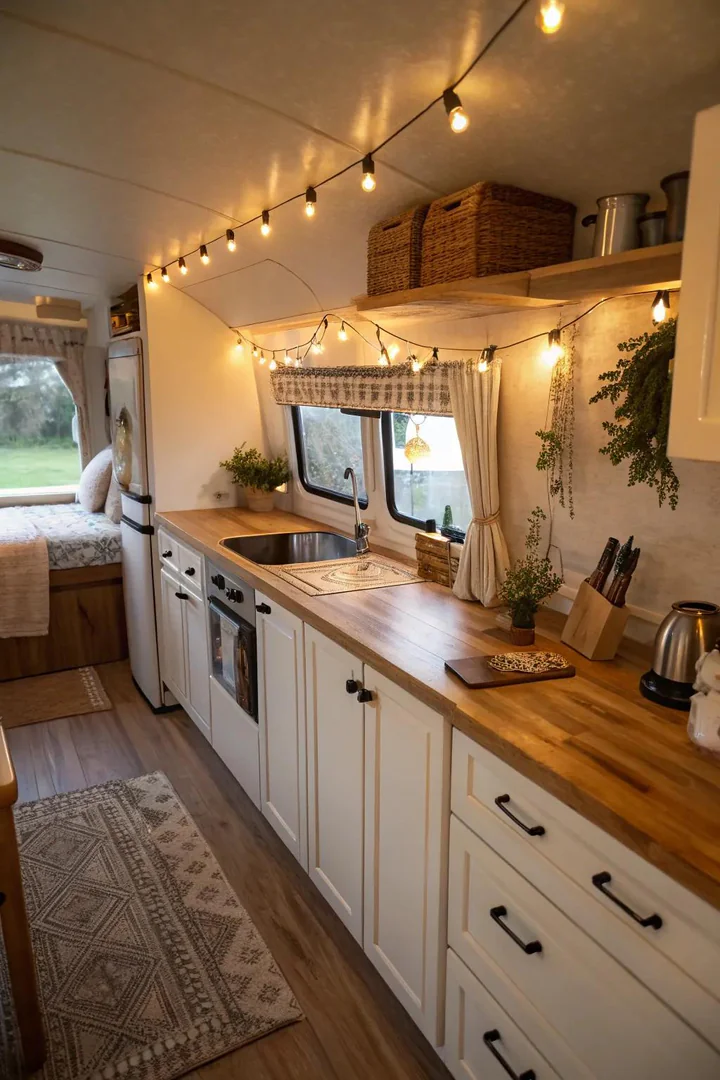
Butcher-block countertops from IKEA KARLBY ($150 to $250 for a 74-inch walnut or birch slab) or Lumber Liquidators/LL Flooring ($20 to $40 per square foot for maple, oak, or walnut) replace the standard laminate surfaces found in most manufactured home kitchens. Wood countertops suit mobile home kitchens because they install directly over the existing countertop substrate (or replace it entirely) without the heavy granite or quartz slabs that can stress the lightweight floor framing of a manufactured home.
A standard mobile home kitchen counter runs 8 to 12 linear feet. At $20 to $40 per square foot (25-inch-deep counter), a full butcher-block replacement costs $350 to $1,000 in materials. Seal the wood with Waterlox Original Tung Oil Finish ($30 per quart, 3 coats) or Rubio Monocoat ($45 per 350ml, 1 coat) for waterproofing and food-safe protection. Re-oil the surface every 6 to 12 months with food-grade mineral oil ($8 per bottle) to maintain the finish and prevent drying and cracking.
3. Mixed Cabinets and Open Shelving
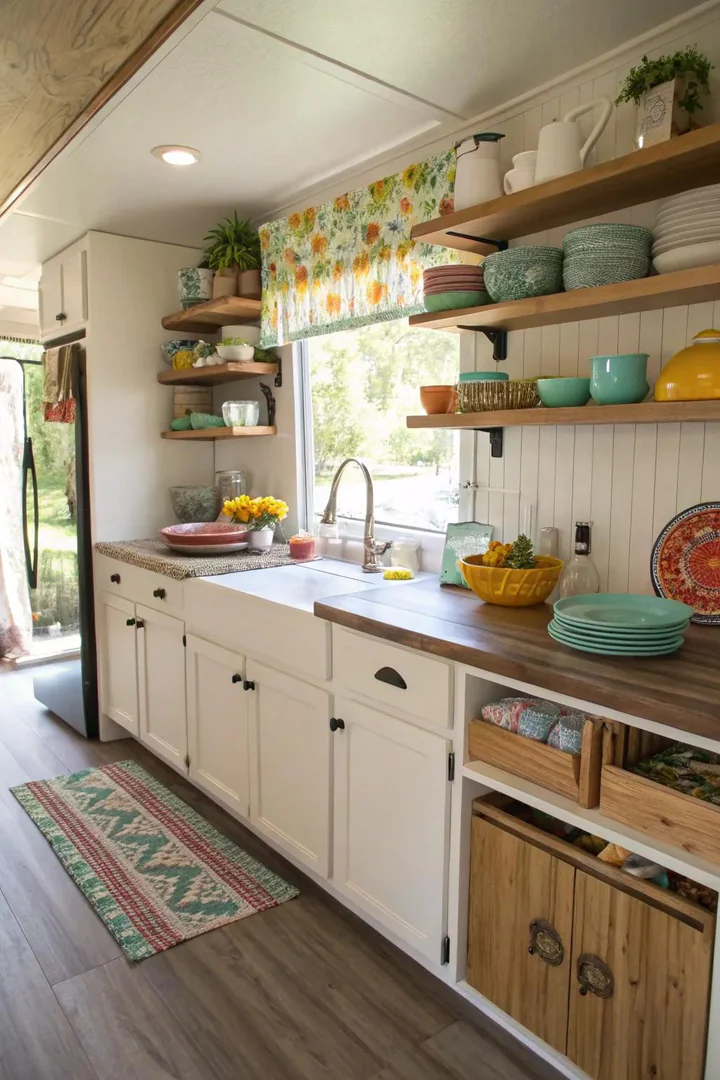
Removing the doors from one or two upper cabinets and replacing them with open floating shelves (or simply leaving the cabinet boxes doorless) creates an open, airy look that makes a small mobile home kitchen feel larger. A 36-inch pine or oak floating shelf ($20 to $40 from Home Depot, mounted on French cleats) replaces a dark, closed upper cabinet with a visible display shelf for dishes, mugs, and cookbooks.
Keep closed cabinets for items that look cluttered on display (plastic containers, mismatched dinnerware, cleaning supplies) and reserve open shelves for curated, uniform items (white dinner plates stacked by size, matching mugs in a row, a small herb planter). In a mobile home with 2×3 wall studs, use toggle bolts ($5 for a 10-pack from Home Depot) or heavy-duty hollow-wall anchors instead of standard wood screws when mounting shelves to ensure the thinner wall framing supports the shelf weight (30 to 50 pounds per shelf).
4. Backsplash Upgrade
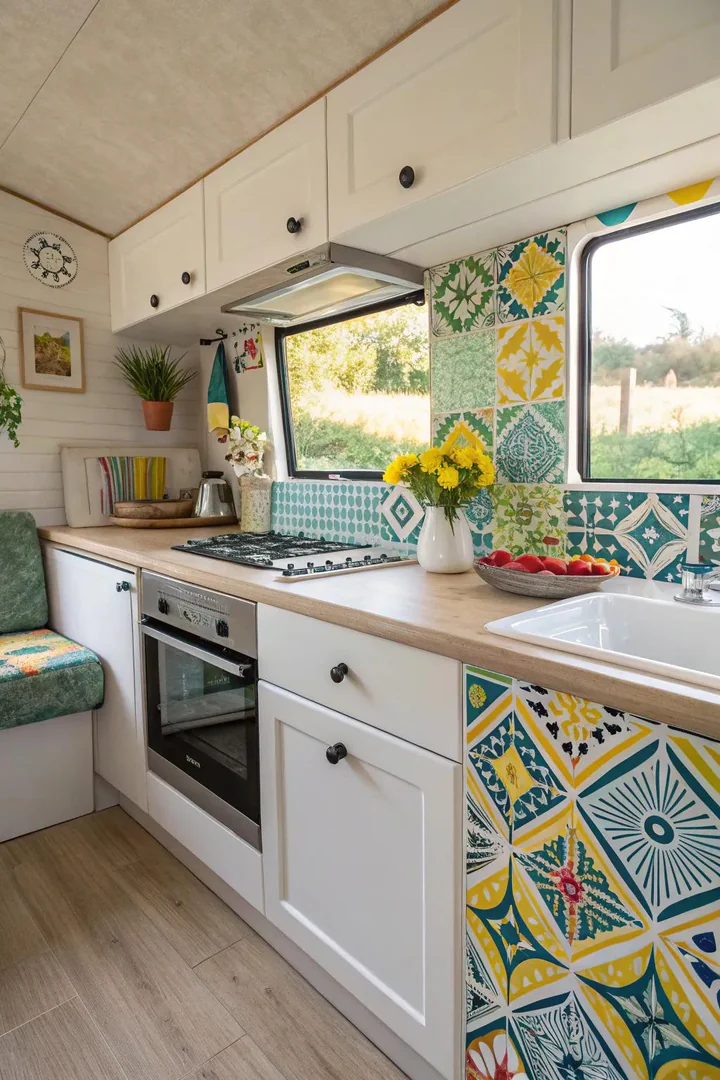
Replacing the factory-installed wallboard or vinyl strip backsplash with peel-and-stick tile from Aspect Peel & Stick ($25 to $40 for a 15-square-foot pack in subway or mosaic patterns) or traditional ceramic subway tile ($1 to $3 per square foot from Floor & Decor) transforms the kitchen’s visual focal point for $50 to $200 in materials. Peel-and-stick tile adheres directly over the existing smooth wall surface without mortar, grout, or tile-cutting tools, making the installation a 2-to-4-hour DIY project.
A standard mobile home kitchen backsplash covers 15 to 25 square feet (the area between the countertop and upper cabinets, extending 18 inches vertically). For traditional ceramic tile, apply Mapei Type 1 adhesive ($15 per gallon) directly to the wall (after scuffing the vinyl surface with 80-grit sandpaper for adhesion) and grout with Mapei Keracolor sanded grout ($12 per 10-pound bag). A white 3-by-6-inch subway tile in a brick-lay pattern costs $30 to $75 for a full backsplash and delivers a classic, timeless look that raises the kitchen’s perceived quality. Check more renovation approaches at windowless kitchen ideas.
5. Fresh Paint on Walls and Cabinets
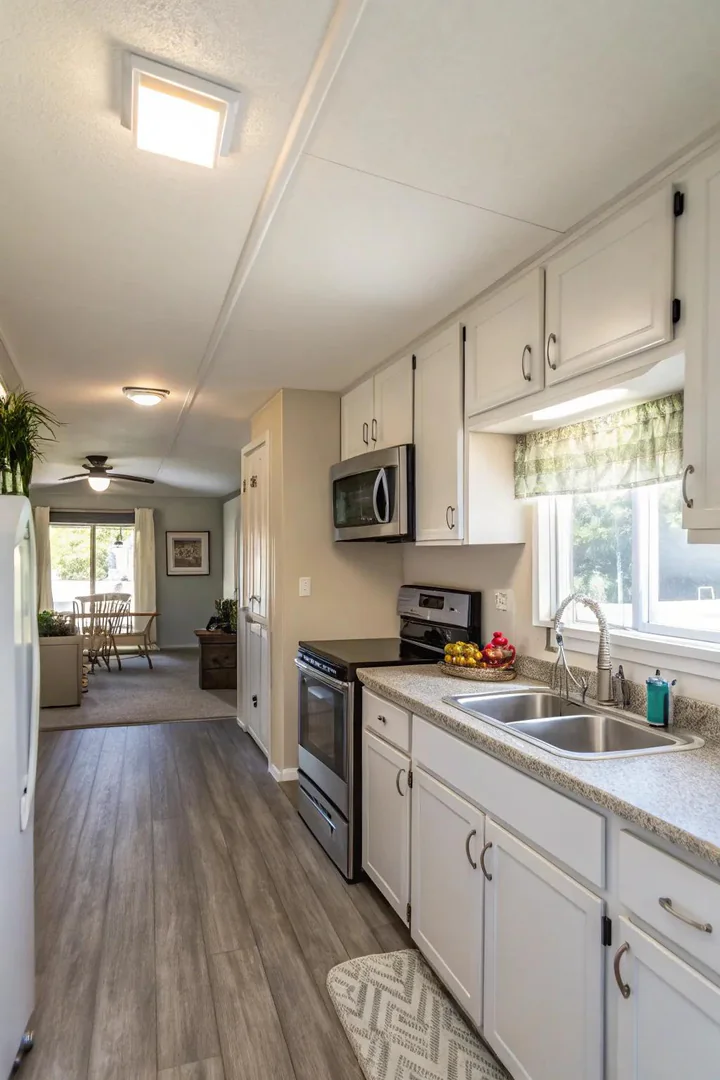
Painting the kitchen walls and cabinet faces is the highest-impact, lowest-cost mobile home kitchen remodel: 1 gallon of Benjamin Moore Advance ($55 per gallon, semi-gloss for cabinets) covers 30 to 40 cabinet faces, and 1 gallon of Benjamin Moore Regal Select ($55, eggshell for walls) covers 350 to 400 square feet of wall surface. A full kitchen paint job (walls + cabinets) costs $110 to $170 in paint, $30 in brushes, rollers, and tape, and takes a weekend to complete.
For mobile home walls covered in vinyl-over-drywall (VOG) panels, prime the vinyl surface with Zinsser Bulls Eye 1-2-3 primer ($25 per gallon) before applying the topcoat. The primer bonds to the slick vinyl surface and creates a paintable base that the topcoat adheres to permanently. For cabinets, lightly sand the existing finish with 150-grit sandpaper, prime with Zinsser BIN Shellac-Based Primer ($30 per quart, blocks tannin bleed from oak and maple), and apply 2 coats of Benjamin Moore Advance in the chosen color. White, soft gray, sage green, and navy are the four most popular mobile home cabinet colors because each one brightens a small kitchen and pairs with multiple countertop and hardware finishes.
6. Space-Saving Storage Solutions
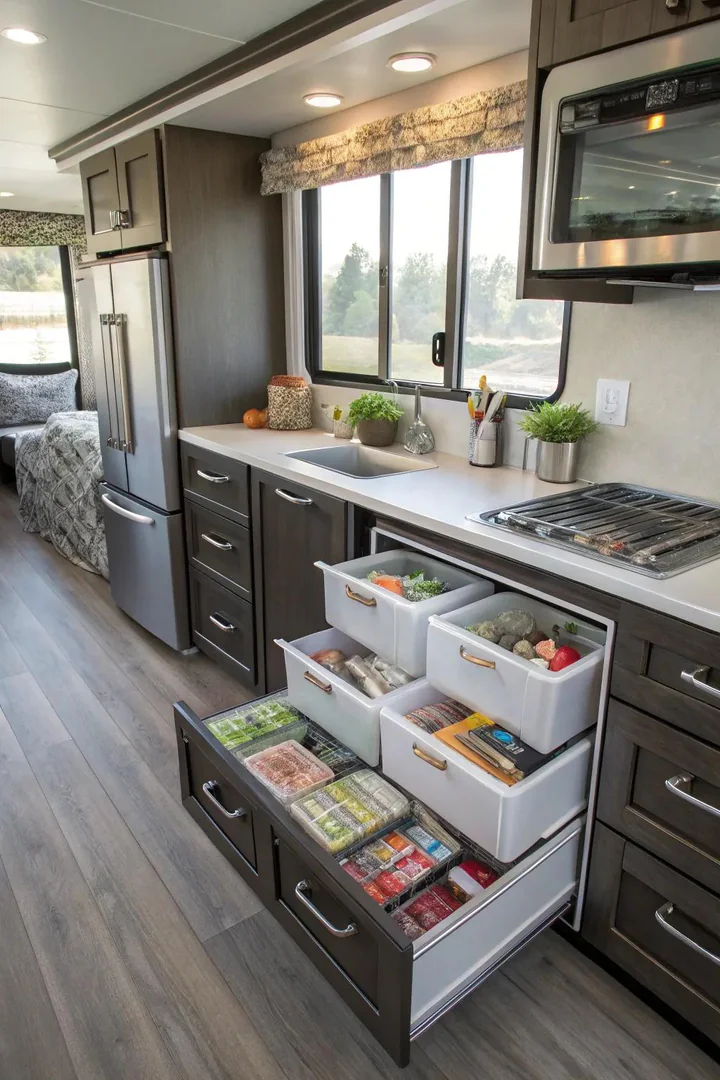
A wall-mounted magnetic knife strip ($10 to $25 from IKEA KUNGSFORS or Woodsom), inside-cabinet-door spice rack ($10 to $15 from SimpleHouseware), and over-the-door pantry organizer ($20 to $30 from SimpleHouseware) collectively recover 3 to 5 square feet of counter and drawer space by moving items onto walls, doors, and vertical surfaces. A mobile home kitchen with 10 to 15 total cabinets needs every square inch of storage optimized because the cabinet count is 30% to 50% lower than a standard site-built kitchen.
Install a pegboard panel (2 by 4 feet, $15 from Home Depot) on a blank wall between the countertop and upper cabinets to hang pots, pans, utensils, and measuring cups. Pegboard hooks ($8 for a 50-piece assortment) rearrange instantly as storage needs change. A tension rod ($5 for a 2-pack) installed vertically inside a cabinet creates instant dividers for baking sheets, cutting boards, and serving trays. Stacking wire baskets, shelf risers, and Lazy Susan turntables inside existing cabinets multiply the usable storage volume by 40% to 60% without adding new cabinetry. Find more organization strategies at kitchen organization ideas.
7. Farmhouse Sink
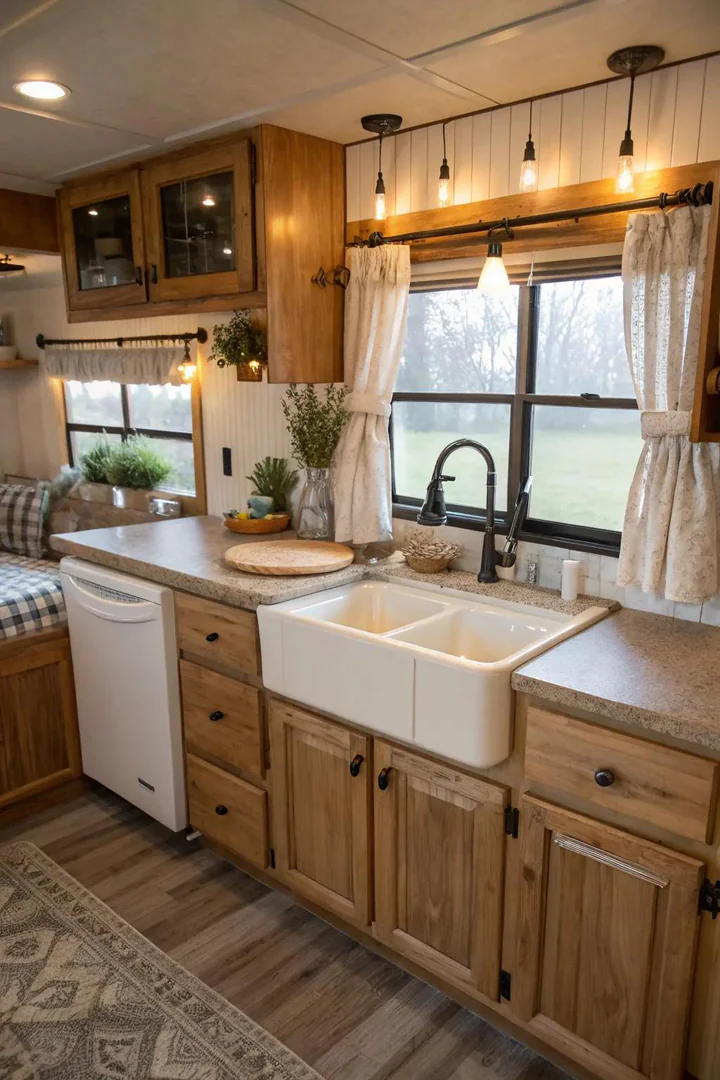
A 30-inch single-bowl farmhouse (apron-front) sink from Kraus KHF200-30 ($300 to $350 in 16-gauge stainless steel) or Sinkology Bradstreet II ($350 to $450 in fireclay) replaces the standard double-bowl stainless sink found in most manufactured homes. A farmhouse sink’s apron front extends over the cabinet face, creating a clean visual line and allowing the cook to stand closer to the basin without leaning over a countertop overhang.
Standard mobile home sink base cabinets measure 30 or 33 inches wide with a pre-cut opening. A 30-inch farmhouse sink fits the 30-inch cabinet with minor modifications: remove the existing sink, cut the front cross-rail of the cabinet to accommodate the apron front, and reinforce the bottom of the cabinet with a 3/4-inch plywood support shelf ($10) to bear the weight of the heavier farmhouse sink. A fireclay farmhouse sink weighs 60 to 90 pounds (versus 15 to 20 pounds for the original stainless sink), so reinforcing the cabinet bottom and verifying the floor framing beneath the cabinet supports the additional load is a required step in manufactured homes.
8. Efficient Overhead and Task Lighting
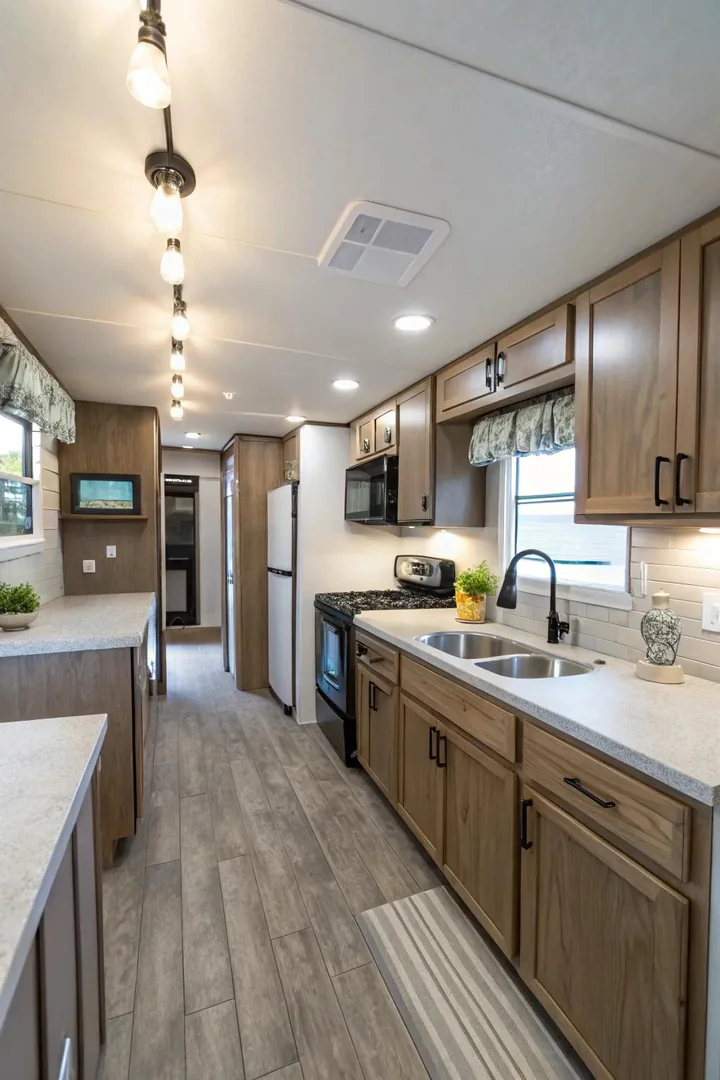
Replacing the single fluorescent ceiling fixture (standard in pre-2010 manufactured homes) with recessed LED wafer lights from Halo ($15 each for 6-inch wafer LEDs, flush-mount, no housing can required) or pendant lights over the island or dining bar transforms the kitchen’s ambiance and task visibility. Wafer LEDs mount directly to the ceiling electrical box with spring clips (no recessed can required), making them ideal for mobile home ceilings where the limited cavity depth (3 to 5 inches between the ceiling panel and the roof truss) cannot accommodate a standard 6-inch recessed can.
Add peel-and-stick LED strip lighting ($15 for a 16-foot warm-white strip from HitLights) under the upper cabinets for countertop task lighting. Under-cabinet LEDs eliminate the shadow cast by the cook’s body when overhead lights are the only source. A kitchen with 4 recessed wafer lights ($60) and a 16-foot LED strip ($15) produces a layered lighting scheme (ambient + task) for $75 total in fixtures. Wire the recessed lights on a dimmer switch ($20 for a Lutron Diva LED dimmer) to adjust brightness from bright task lighting during cooking to soft ambient lighting during dining.
9. Granite or Quartz Countertop Overlay
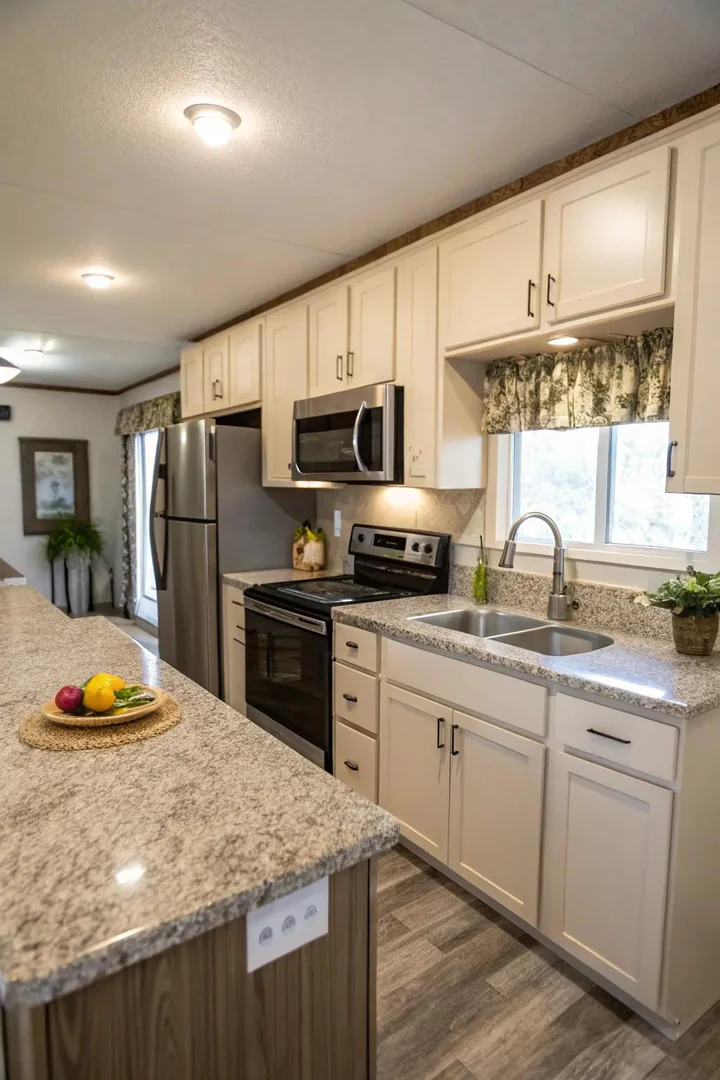
A thin granite overlay ($20 to $30 per square foot installed from Granite Transformations) or a prefabricated quartz countertop slab ($30 to $50 per square foot from Home Depot or Lowe’s) replaces the factory laminate with a natural or engineered stone surface. Granite overlay systems use a 1/4-inch-thick stone veneer bonded directly over the existing laminate countertop, avoiding the weight of a full 3/4-inch granite slab and the need for reinforced cabinet framing.
A standard mobile home kitchen (8 to 12 linear feet of counter, 25-inch depth) requires 15 to 25 square feet of countertop surface. A thin granite overlay costs $300 to $750 installed; a full prefabricated quartz slab costs $450 to $1,250 installed. Popular mobile home countertop colors: Bianco Romano granite (white/gray with subtle veining), Luna Pearl granite (gray speckled), Calacatta quartz (white with gray veining from Cambria or Silestone), and Steel Gray granite (dark gray with silver flecks). Seal granite annually with Tenax Hydrex Stone Sealer ($15 per quart) to prevent staining. Quartz requires no sealing.
10. Compact and Counter-Depth Appliances
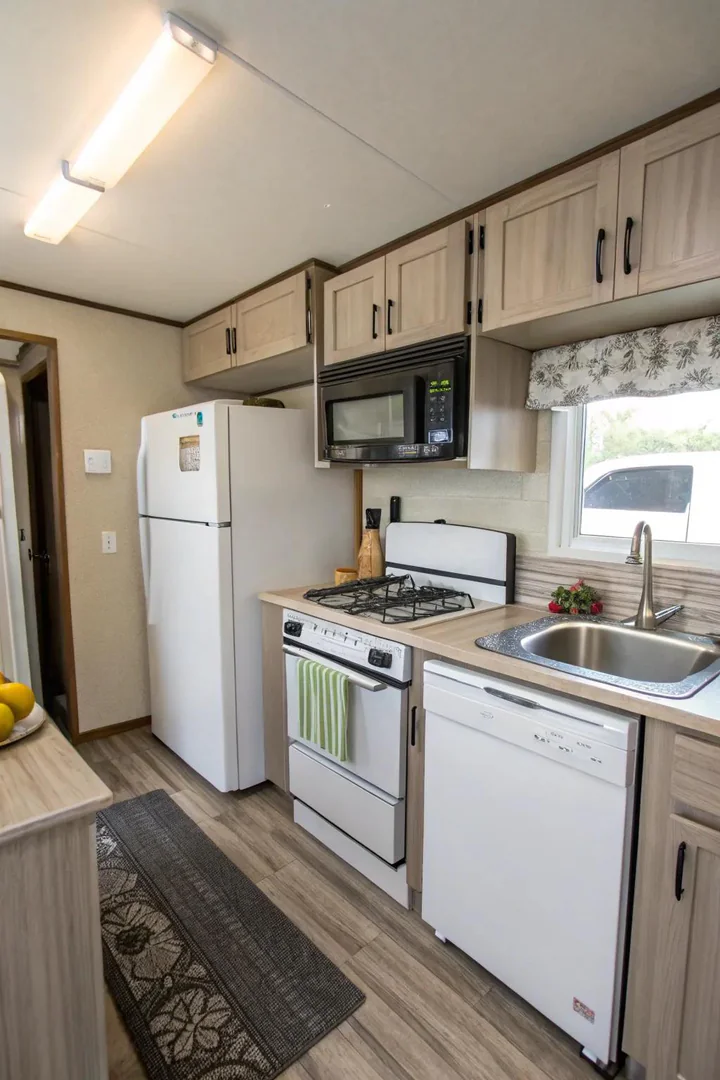
Replacing standard-depth appliances with counter-depth models recovers 4 to 6 inches of aisle width because counter-depth refrigerators and ranges sit flush with the 25-inch-deep countertop instead of protruding 30 to 32 inches into the kitchen aisle. A Samsung 22.5 cu. ft. counter-depth French door refrigerator ($1,500 to $2,000) measures 30 inches deep including doors, versus 35 inches for a standard-depth model. A GE 24-inch compact dishwasher ($450 to $600) fits the 24-inch cabinet bay standard in mobile homes where an 18-inch compact unit would leave a gap.
For single-wide mobile homes with a galley-style kitchen (cabinets and appliances on both walls of a 10-to-12-foot-wide room), every inch of aisle width matters. A counter-depth refrigerator adds 4 to 6 inches of clear floor space to the aisle, often the difference between a 30-inch aisle (tight for two people passing) and a 36-inch aisle (comfortable). A 24-inch range ($400 to $600 from GE or Frigidaire) fits a tight layout where a 30-inch range would consume too much counter run. Measure the appliance bay dimensions (width, depth, height) before purchasing to ensure the new appliance fits the existing cutout without modification.
11. Decorative Trim and Molding
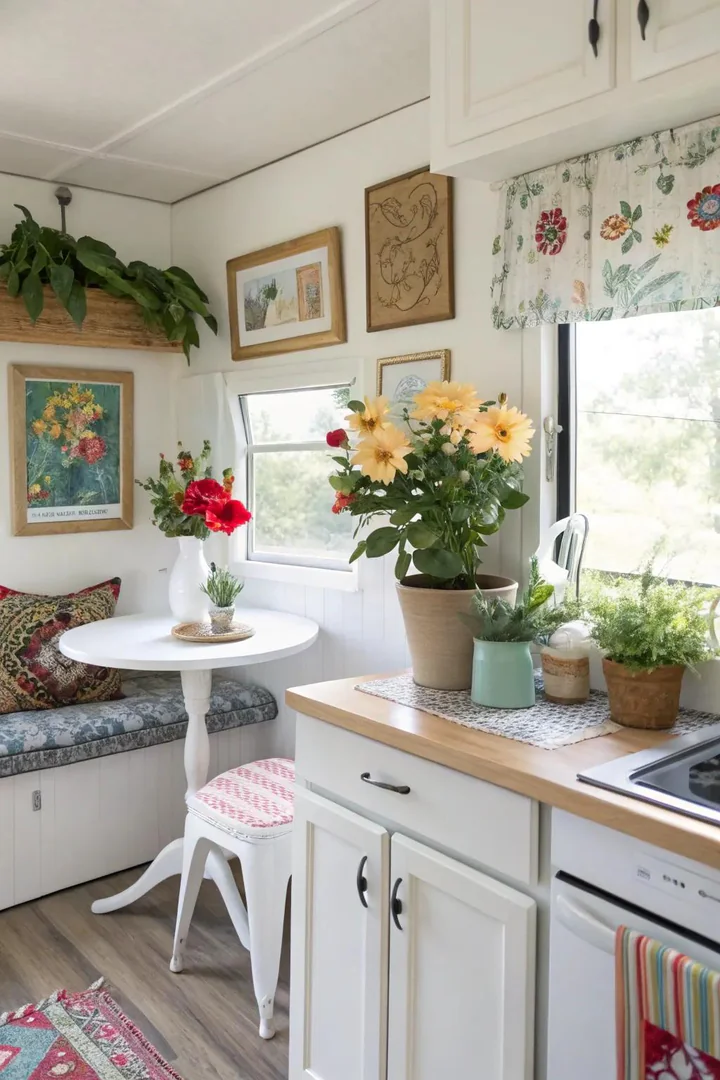
Adding crown molding ($2 to $5 per linear foot for primed MDF from Home Depot) above the upper cabinets, baseboard trim ($1 to $3 per linear foot), and light rail molding ($3 per linear foot) below the upper cabinets upgrades the kitchen from factory-finished to custom-built in appearance for $50 to $150 in materials. Crown molding closes the gap between the top of the upper cabinets and the ceiling (typically 6 to 12 inches in mobile homes with 7.5-foot ceilings), eliminating the dust-collecting ledge and giving the kitchen a finished, floor-to-ceiling look.
Attach crown molding to the cabinet tops with brad nails (18-gauge, 1.5-inch) from a Ryobi AirStrike brad nailer ($100) or a manual pin nailer. For mobile home walls with thin paneling, use construction adhesive (Liquid Nails, $5 per tube) in addition to brad nails to distribute the load and prevent the lightweight paneling from pulling away. Fill nail holes and seams with DAP Alex Plus caulk ($5 per tube), sand smooth, and paint to match. A finished molding treatment takes 4 to 6 hours for a standard mobile home kitchen perimeter and dramatically upgrades the perceived quality of the cabinetry.
12. Colorful Accent Details
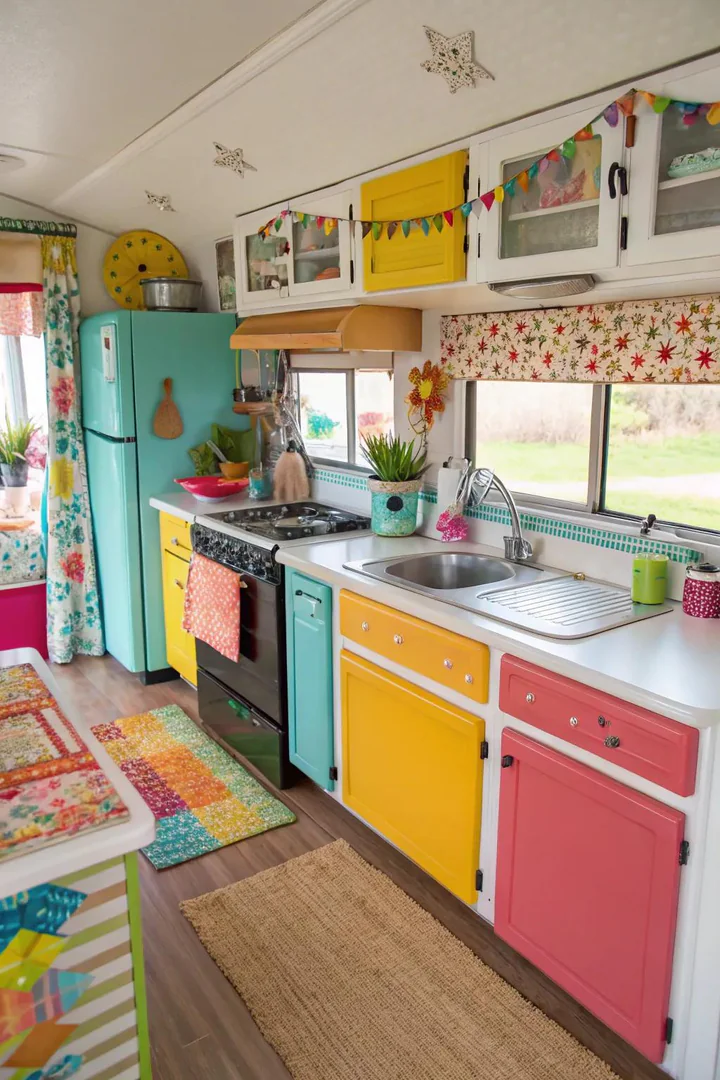
Adding color through hardware (cabinet knobs and pulls in brass, matte black, or brushed copper, $2 to $5 per pull from Amerock or Franklin Brass at Home Depot), a painted accent wall (one wall in a bold color like navy, forest green, or terracotta against white or neutral remaining walls), and colorful textiles (linen tea towels, a patterned rug, bright seat cushions) injects personality into a neutral mobile home kitchen without permanent structural changes.
Replace factory-installed cabinet hardware (typically brass-toned or white plastic knobs) with uniform pulls in a single finish. A kitchen with 15 to 20 cabinet doors and 5 to 8 drawers needs 20 to 28 pulls at $2 to $5 each ($40 to $140 total). 128mm center-to-center bar pulls in matte black from Goldenwarm ($2 each on Amazon) deliver a modern, clean look at the lowest price point. Hardware swap-outs require no tools beyond a screwdriver and take 30 to 60 minutes for the entire kitchen. Match the hardware finish to the faucet, light fixtures, and any visible hinges for a coordinated aesthetic. Browse more lighting and fixture inspiration at kitchen ergonomics and layout planning.
13. Natural Light Maximization
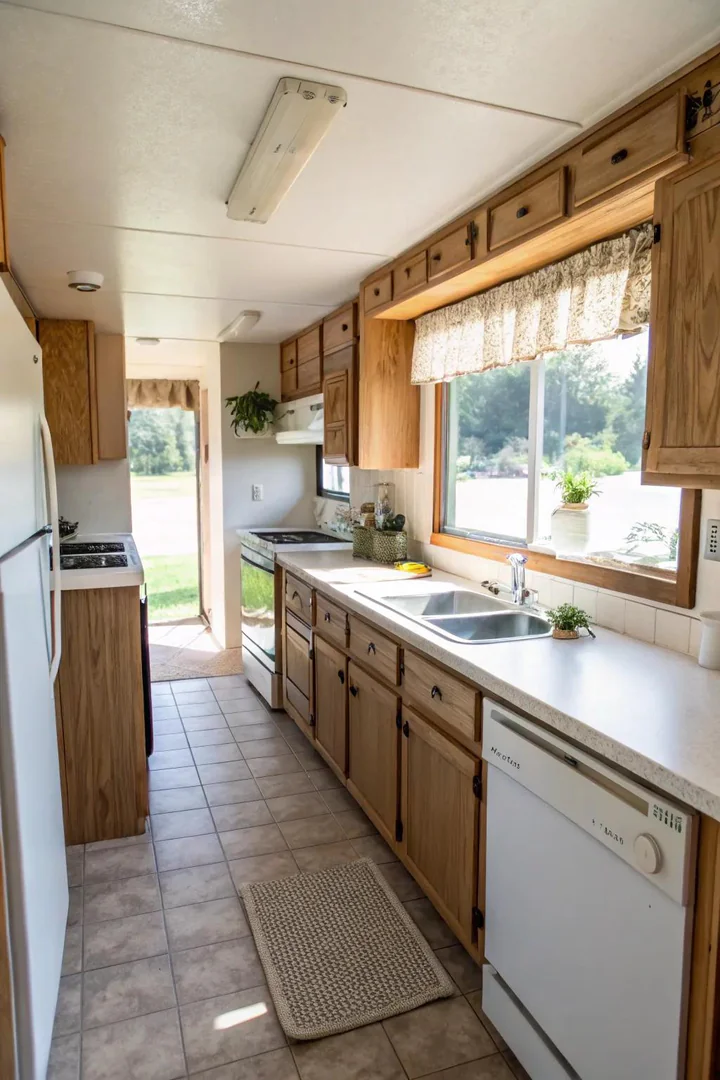
Replacing the small, single-pane kitchen window (standard in pre-2000 manufactured homes) with a larger double-hung or sliding vinyl window from Pella 250 Series ($200 to $400 per window) or Ply Gem Pro Series ($150 to $300 per window) increases the daylight entering the kitchen and reduces reliance on artificial lighting during daytime hours. A window upgrade from a 24-by-36-inch single-pane to a 36-by-48-inch double-pane vinyl window doubles the glass area and improves energy efficiency (double-pane Low-E glass blocks 70% of solar heat gain and reduces heating loss by 50% versus single-pane).
A mobile home window replacement requires matching the window to the mobile home’s specific rough opening dimensions (mobile home windows use non-standard sizes compared to site-built homes). Kinro and Ply Gem manufacture windows sized specifically for manufactured housing rough openings. A solar tube (tubular skylight) from Solatube ($500 to $700 installed for a 10-inch tube) channels daylight from the roof through a reflective tube into the kitchen without the structural concerns of a traditional skylight (which requires cutting through the roof truss system). A solar tube delivers 300 to 500 lumens of natural light, equivalent to 2 to 3 recessed LED fixtures.
14. Modern Faucet and Fixtures
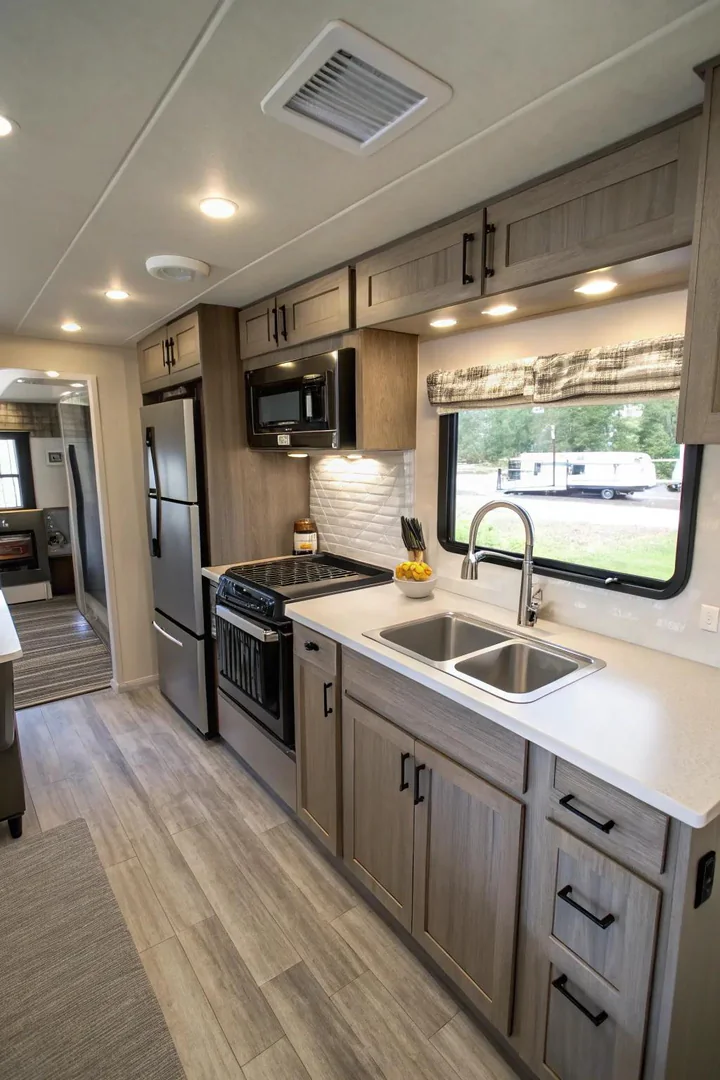
Replacing the factory-installed chrome faucet (typically a basic two-handle model) with a single-handle pull-down kitchen faucet from Moen Align ($200 to $250 in matte black or spot-resist stainless) or Delta Leland ($180 to $230 in champagne bronze or chrome) upgrades the kitchen’s most-used fixture and its most visible hardware element. A pull-down sprayer with a 60-inch braided hose reaches every corner of the sink basin and doubles as a pre-rinse wand for large pots and baking sheets.
Mobile home plumbing connections use standard 3/8-inch compression fittings and 1/2-inch supply lines, compatible with all major faucet brands without adapters. Turn off the water supply valves under the sink, disconnect the old faucet supply lines with a basin wrench ($12), remove the old faucet mounting nut, drop in the new faucet through the existing sink hole (most mobile home sinks have 1, 3, or 4 pre-drilled holes), and connect the supply lines hand-tight plus a quarter-turn with a wrench. A faucet swap takes 30 to 60 minutes and requires no plumber. Match the faucet finish (matte black, brushed gold, stainless) to the cabinet hardware, light fixtures, and door handles for a unified finish palette across the kitchen. Visit The Designers Company for the full mobile home remodel library.
How to Budget a Mobile Home Kitchen Remodel
1. Assess the Current Kitchen Condition
Walk through the kitchen and list every surface, fixture, and appliance that needs replacing, refinishing, or updating. Check countertops for delamination, cabinets for water damage or broken hinges, flooring for soft spots, plumbing for leaks, and electrical for outdated wiring. Photograph the kitchen from every angle and measure the room dimensions, cabinet run lengths, and appliance bay sizes. A condition assessment identifies whether the remodel is cosmetic (paint, hardware, backsplash, lighting = $300 to $1,000) or structural (cabinets, countertops, flooring, plumbing = $2,000 to $8,000).
2. Set a Realistic Budget Range
A cosmetic mobile home kitchen remodel (paint walls and cabinets, new hardware, peel-and-stick backsplash, new faucet, under-cabinet lighting) costs $500 to $1,500. A mid-range remodel (adds butcher-block or granite countertops, new sink, new light fixtures, flooring) costs $2,000 to $5,000. A full remodel (new cabinets, stone countertops, new appliances, new flooring, new plumbing fixtures, window replacement) costs $5,000 to $15,000. Allocate 10% to 15% of the budget as a contingency for unexpected issues (water damage behind walls, subfloor rot, outdated wiring discovered during demolition).
3. Prioritize by Impact per Dollar
Rank each improvement by the visual and functional impact it delivers per dollar spent. Paint ($110 to $170) delivers the highest impact per dollar. Hardware swap ($40 to $140) delivers the second-highest. Backsplash ($50 to $200) ranks third. Countertops ($300 to $1,250) and lighting ($75 to $200) round out the top five. Tackle improvements in impact-per-dollar order so the kitchen looks noticeably better at every budget checkpoint, even if the full remodel takes months or years to complete.
Mobile Home Kitchen Remodel Cost Comparison
| Improvement | DIY Cost | Pro Cost | Time (DIY) | Impact Rating |
|---|---|---|---|---|
| Paint walls + cabinets | $110–$170 | $500–$1,000 | Weekend | 10/10 |
| Cabinet hardware swap | $40–$140 | N/A | 1 hour | 8/10 |
| Peel-and-stick backsplash | $25–$80 | $150–$300 | 2–4 hours | 8/10 |
| Butcher-block countertops | $350–$1,000 | $800–$1,500 | 1 day | 9/10 |
| Granite overlay | N/A | $300–$750 | N/A (pro only) | 9/10 |
| Farmhouse sink | $300–$450 | $600–$900 | 3–5 hours | 7/10 |
| LED lighting upgrade | $75–$200 | $300–$500 | 3–4 hours | 7/10 |
| New faucet | $180–$250 | $350–$500 | 30–60 min | 6/10 |
Frequently Asked Questions
Do you need a permit to remodel a mobile home kitchen?
Permit requirements vary by municipality and scope. Cosmetic changes (paint, hardware, backsplash, new faucet) never require a permit. Electrical changes (new circuits, moving outlets, adding recessed lights) require an electrical permit in most jurisdictions. Plumbing changes (moving the sink location, adding a dishwasher line) require a plumbing permit. Structural changes (removing a wall, enlarging a window opening) require a building permit and often a HUD-code compliance review for manufactured homes. Contact the local building department before starting work that involves electrical, plumbing, or structural modifications.
How much does a full mobile home kitchen remodel cost?
A cosmetic refresh costs $500 to $1,500. A mid-range remodel with new countertops, sink, lighting, and flooring costs $2,000 to $5,000. A full gut renovation with new cabinets, countertops, appliances, flooring, and plumbing costs $5,000 to $15,000. A high-end remodel in a double-wide manufactured home (custom cabinets, quartz countertops, stainless appliances, tile backsplash, hardwood flooring) can reach $15,000 to $25,000. Labor typically adds 50% to 100% on top of material costs when hiring a contractor.
Can you put granite countertops in a mobile home?
Standard 3/4-inch granite slabs weigh 12 to 15 pounds per square foot (180 to 375 pounds for a typical mobile home counter run). Most mobile home base cabinets and floor systems support this weight, but the cabinetry may need reinforcement: add a 3/4-inch plywood build-up strip across the cabinet tops to distribute the weight evenly, and verify the floor beneath the cabinets shows no soft spots or deflection. A thin granite overlay (1/4-inch thickness, 3 to 5 pounds per square foot) eliminates the weight concern entirely and costs less than a full slab installation.
What is the best flooring for a mobile home kitchen?
Luxury vinyl plank (LVP) flooring ($1.50 to $4 per square foot from LifeProof, COREtec, or NuCore) is the top choice for mobile home kitchens because LVP is waterproof, installs over the existing subfloor as a floating floor (no glue, no nails), resists the subtle floor flex common in manufactured homes (rigid tile would crack), and mimics the look of hardwood or stone at a fraction of the cost and weight. A full mobile home kitchen floor (80 to 120 square feet) costs $120 to $480 in LVP materials. See how kitchen floors pair with natural stone at marble floor kitchen ideas.
Does a kitchen remodel increase mobile home value?
A kitchen remodel in a manufactured home returns 50% to 75% of the investment at resale (compared to 60% to 80% in site-built homes). A $3,000 kitchen remodel in a mobile home valued at $40,000 adds $1,500 to $2,250 in resale value. More importantly, an updated kitchen sells a manufactured home faster: homes with updated kitchens sell in 30 to 60 days on average versus 90 to 120 days for homes with original, dated kitchens. The return is highest on cosmetic improvements (paint, hardware, backsplash, countertops) and lowest on structural changes (new cabinets, wall removal) because buyers perceive the visual upgrade but rarely pay a premium for behind-the-wall work they cannot see.