
Sunflower Kitchen Cabinets: 12 Stunning Ideas to Brighten Your Home
Sunflower kitchen cabinet ideas bring the warm golden tones, rustic charm, and cheerful energy of sunflowers into the kitchen through painted designs, decorative hardware, fabric accents, tile installations, and art displays applied directly to or around the cabinets. Sunflowers (genus Helianthus, native to North America, growing 3 to 12 feet tall with flower heads 6 to 12 inches in diameter) have been a kitchen decor motif since the early 1900s, appearing on everything from Fiesta dinnerware to Italian majolica tiles to American folk-art stencils. Below are 12 sunflower cabinet design approaches with specific products, materials, placement strategies, and complementary color schemes, followed by a how-to guide, a comparison table, and FAQs.
1. Hand-Painted Sunflower Cabinet Door Art
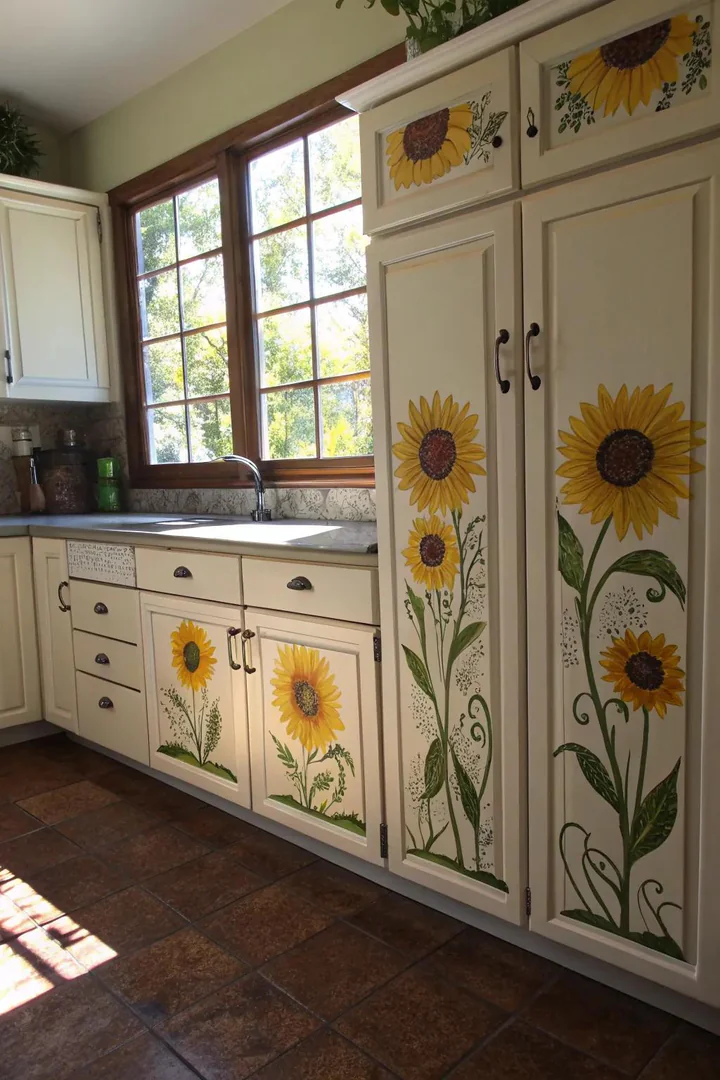
Painting a sunflower directly onto a flat-panel or raised-panel cabinet door with FolkArt Acrylic Paint ($2 per 2-ounce bottle from Walmart or Michael’s in School Bus Yellow, Burnt Sienna, Thicket Green, and Licorice Black) turns a plain cabinet door into a one-of-a-kind art panel. A single sunflower bloom (8 to 10 inches in diameter, centered on the door panel) on 2 to 4 cabinet doors in a row creates a garden-inspired focal wall above or below the countertop.
Prep the door surface with a light scuff-sand (220-grit), sketch the sunflower outline with a pencil, and paint the petals, center disk, and stem with small artist brushes ($5 for a 10-piece brush set from Royal & Langnickel). A single sunflower takes 1 to 2 hours to paint. Seal the finished design with 2 coats of Minwax Polycrylic Protective Finish ($12 per 8-ounce can, satin) to protect the acrylic paint from kitchen moisture, grease, and cleaning wipes. Painted sunflower doors work on white, cream, sage green, or light blue cabinet backgrounds where the golden-yellow petals contrast sharply against the base color.
2. Dark Cabinet and Sunflower Contrast
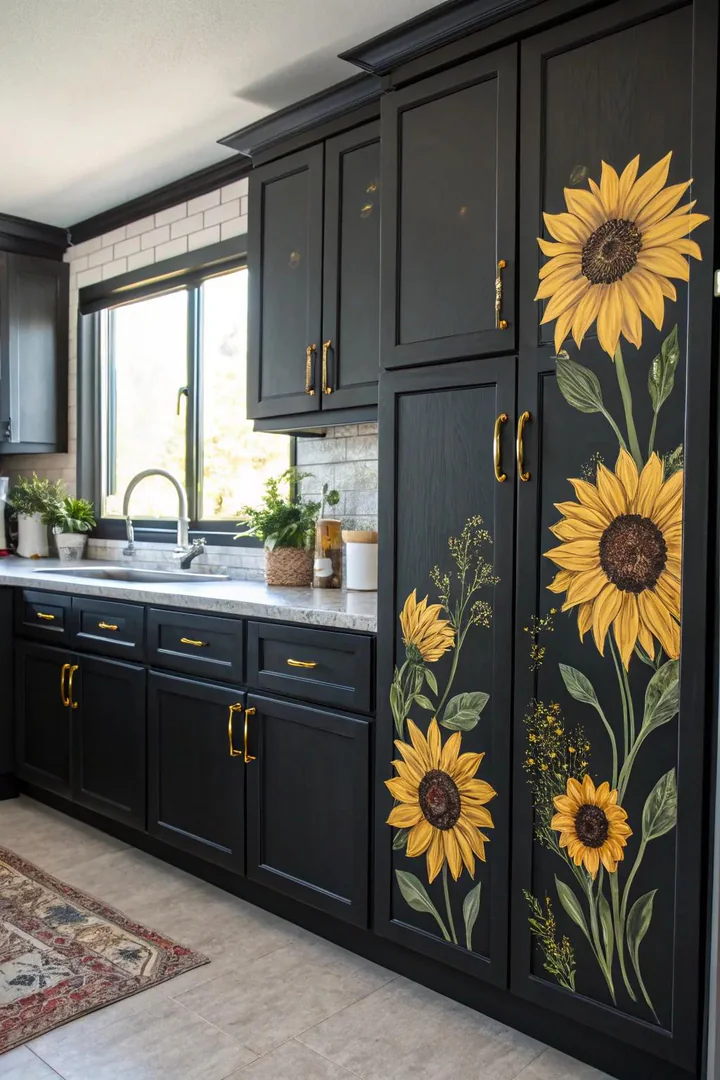
Dark-stained or dark-painted cabinets (Benjamin Moore Black Beauty 2128-10 or Sherwin-Williams Tricorn Black SW 6258, $50 to $55 per gallon) provide the deepest contrast for sunflower accents. A sunflower-yellow backsplash tile, a golden-yellow pendant light, or a row of ceramic sunflower knobs on black or espresso cabinets creates a dramatic pop of color that draws the eye to the sunflower element without competing background tones.
Place a sunflower-print kitchen mat ($20 to $35 from Mohawk Home, 20 by 45 inches, machine-washable) in front of the dark cabinets to anchor the sunflower theme at floor level. A golden-yellow stand mixer (KitchenAid Artisan in Majestic Yellow, $350) on a dark countertop adds a functional sunflower accent that combines decor and cooking utility. The rule for dark-cabinet sunflower kitchens: limit sunflower accents to 3 to 5 carefully placed elements rather than covering every surface, so each accent reads as intentional against the dark background. Pair dark cabinets with more color exploration at painted kitchen cabinet ideas for additional dark-cabinet color strategies.
3. Vintage Sunflower Knobs and Pulls
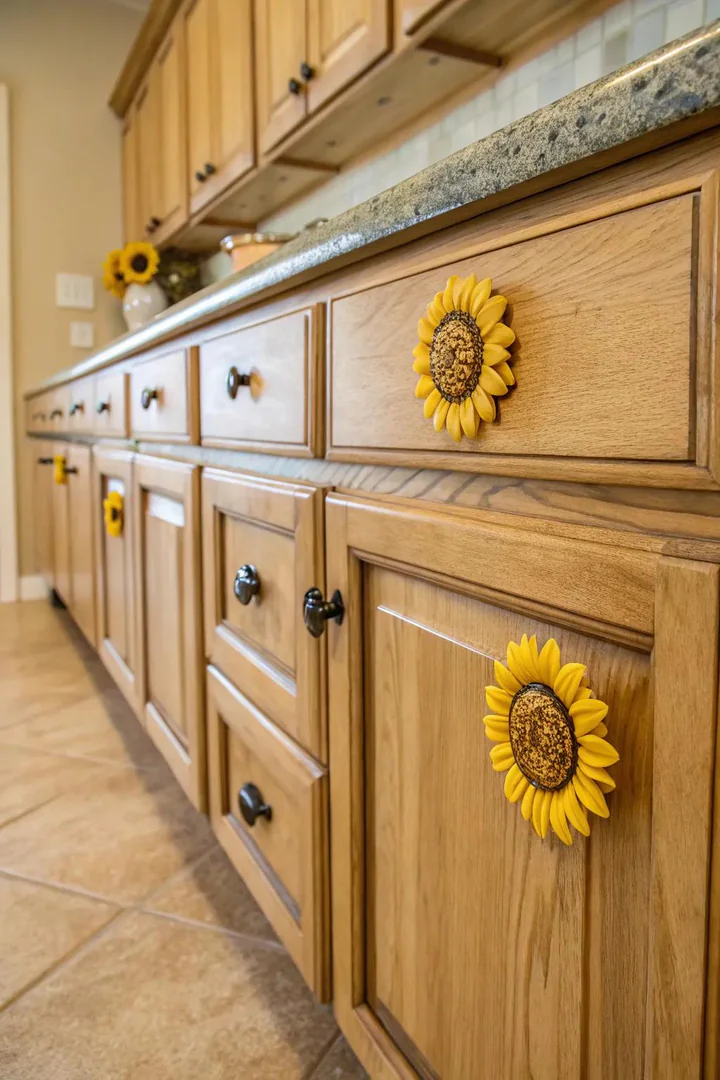
Replacing standard cabinet hardware with ceramic sunflower knobs ($3 to $8 each on Amazon or Etsy, available in hand-painted yellow, vintage-wash brown, and glazed porcelain finishes) adds the sunflower motif to every cabinet door and drawer without permanent modification. A kitchen with 20 to 30 cabinet doors and drawers requires 20 to 30 knobs, totaling $60 to $240 for a complete hardware swap that takes 30 to 60 minutes to install with a screwdriver.
Choose knobs with a 1.25-to-1.5-inch diameter for standard cabinet doors and a 1.5-to-2-inch diameter for larger pantry doors or island drawers. A vintage-wash ceramic sunflower knob (hand-painted with brown and gold tones, then glazed with a crackle finish) suits farmhouse, cottage, and French-country kitchens. A bright-yellow glazed sunflower knob suits cheerful, modern, and eclectic kitchens. Mix sunflower knobs on upper cabinets with solid brass or bronze bar pulls on lower drawers for a layered look that avoids hardware monotony.
4. Sunflower-Yellow Accent Cabinet
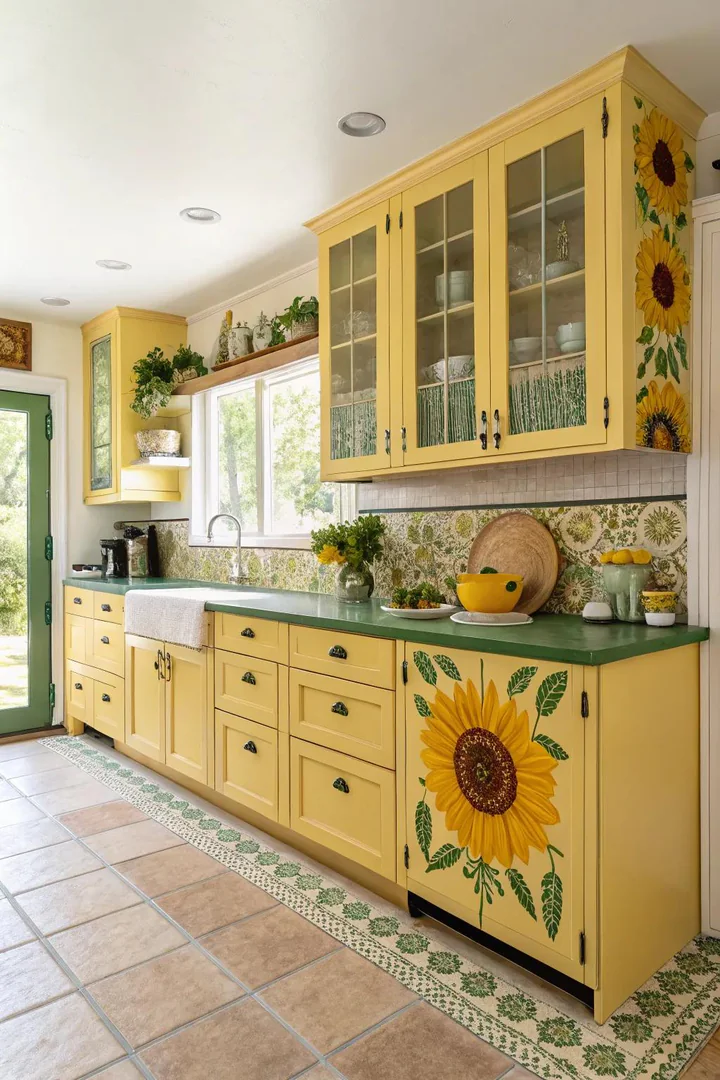
Painting a single cabinet, a pair of cabinets, or the kitchen island in sunflower yellow (Benjamin Moore Hawthorne Yellow HC-4, $50 per gallon, or Sherwin-Williams Bee SW 6683, $55 per gallon) creates a bold accent that anchors the sunflower theme without painting the entire kitchen yellow. A sunflower-yellow island with white perimeter cabinets and butcher-block countertops delivers a farmhouse kitchen with a cheerful centerpiece.
A sunflower-yellow upper cabinet (a single open-shelf unit or a glass-front display cabinet) positioned above the coffee station or beside the range provides a pop of color at eye level. Pair the yellow accent cabinet with green accessories (a sage-green ceramic vase, an olive-green tea towel, a forest-green herb planter) to create a sunflower-in-a-garden color story where the yellow reads as a flower petal and the green reads as foliage and stem.
5. Sunflower Decal Cabinet Doors
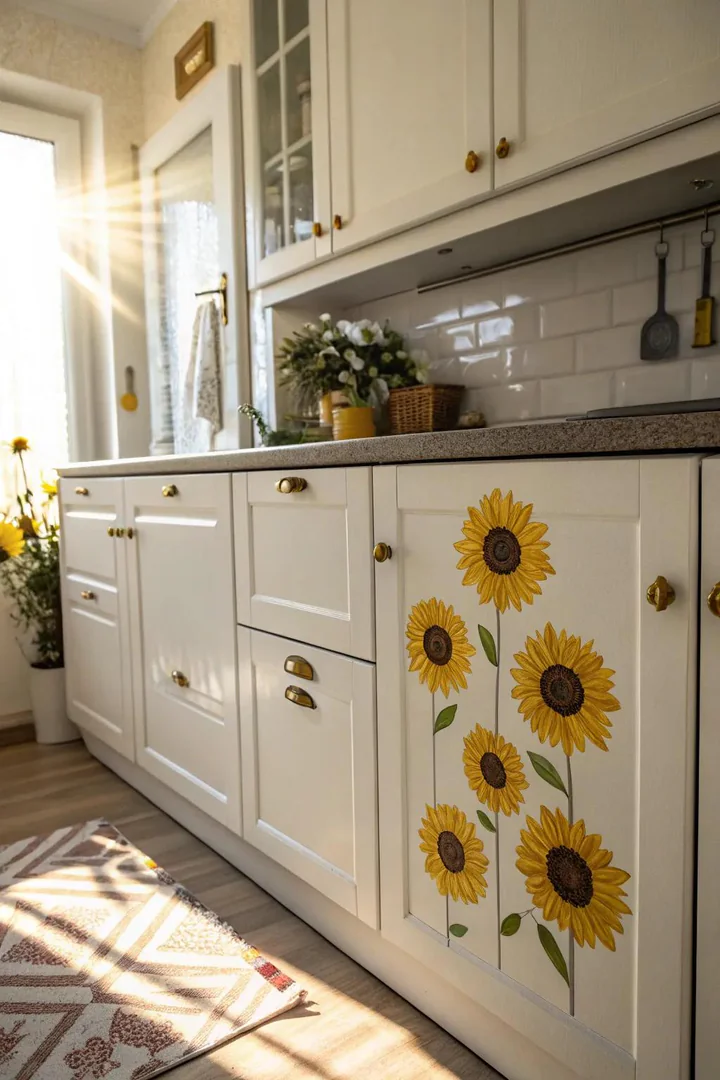
Vinyl sunflower decals ($8 to $15 for a pack of 4 to 8 decals on Amazon or Etsy, waterproof and removable) provide a renter-friendly, commitment-free way to add sunflowers to cabinet doors. Peel-and-stick decals apply in seconds, last 3 to 5 years on smooth surfaces, and remove cleanly without damaging the paint or finish underneath. Available in photorealistic prints, watercolor styles, vintage botanical illustrations, and simplified graphic silhouettes.
Place decals on the center panel of raised-panel doors, on the flat face of slab doors, or on the glass insert of glass-front cabinet doors (applied to the inside of the glass for a shadow-box effect). A single large decal (6 to 8 inches) on each of 4 to 6 cabinet doors in a row creates a repeating sunflower gallery. Smaller decals (2 to 3 inches) scattered across 8 to 12 doors at varying heights and angles create a whimsical, garden-scattered arrangement. Clean the cabinet surface with rubbing alcohol before applying decals to remove oils and residue that weaken the adhesive bond.
6. Sunflower Mosaic Tile Insert
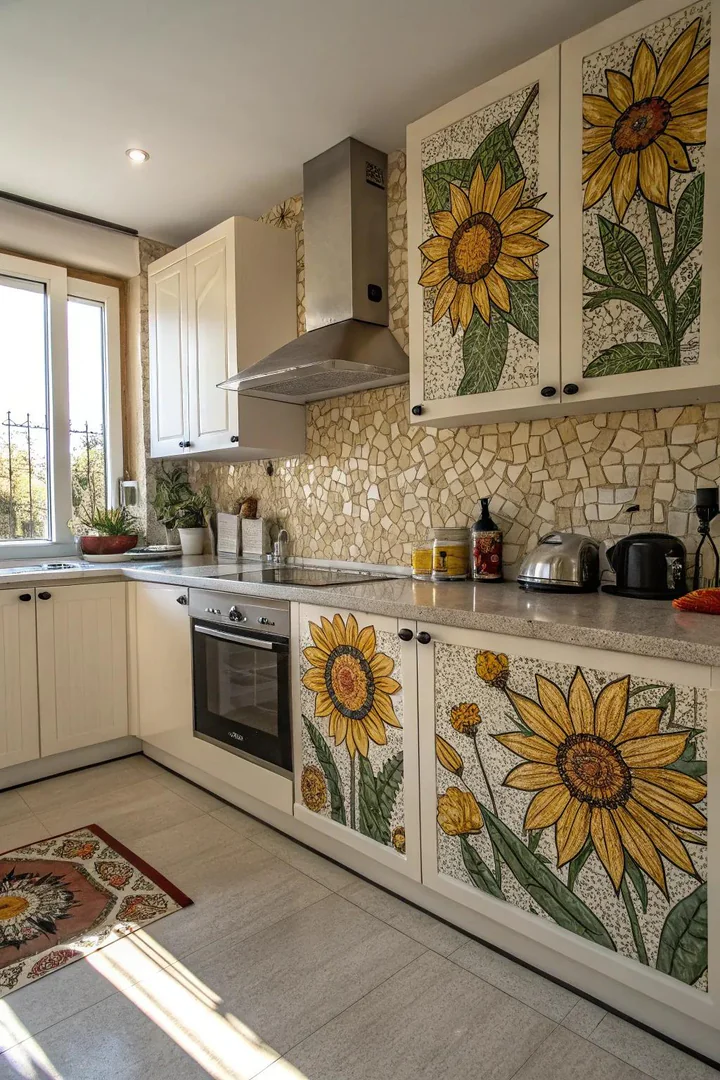
Installing a sunflower mosaic tile medallion ($30 to $80 for a 12-by-12-inch pre-assembled mosaic on mesh backing from Tile Bar or Direct from Mexico) on the backsplash directly behind the stove or centered above the sink creates a permanent, grout-set sunflower focal point that ties the cabinet zone to the tile zone. Hand-cut glass mosaic tiles in golden yellow, amber, brown, and green form a sunflower bloom that reads as fine art embedded in the kitchen wall.
A mosaic medallion requires thinset mortar ($8 for a 10-pound bag of Custom Building Products VersaBond), a 1/4-inch notched trowel ($5), and unsanded grout ($12 for a 10-pound bag in white or cream). Set the medallion into the backsplash tile layout during installation (or cut a section of existing backsplash tile to create a recessed niche for the medallion in a retrofit). A 12-by-12-inch medallion takes 2 to 3 hours to install including mortar set time and grouting. Browse more ways to incorporate mosaic and tile art at kitchen backsplash ideas for full-wall tile design strategies.
7. Sunflower Backsplash Tiles
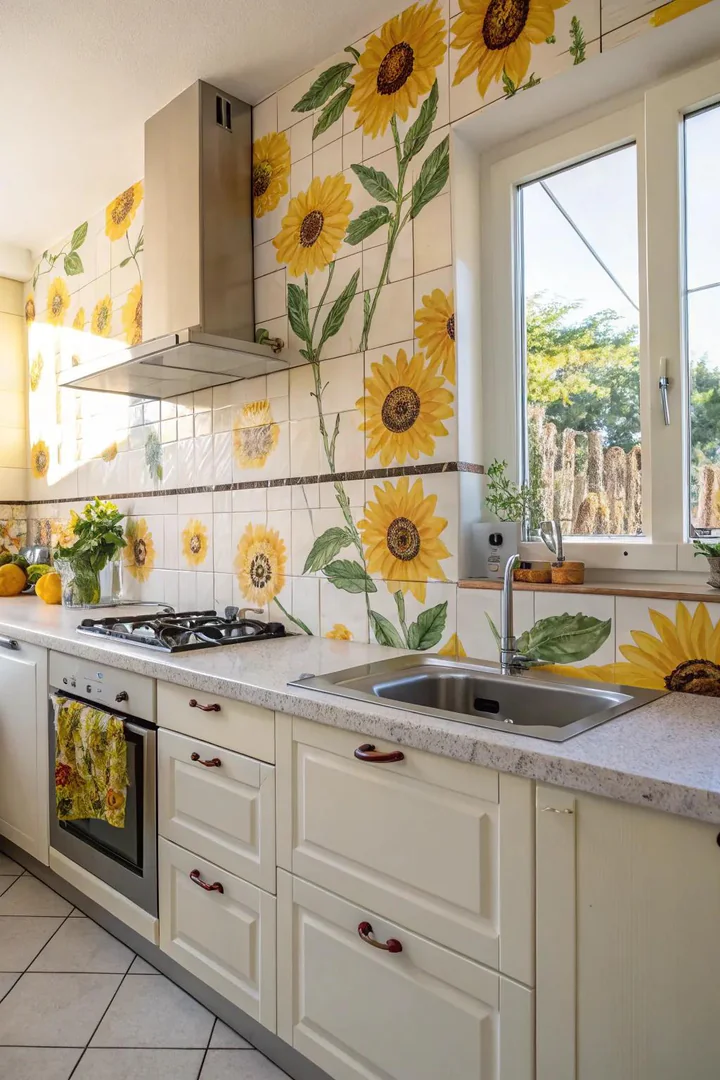
A full backsplash of sunflower-patterned ceramic tiles ($8 to $15 per square foot from Wayfair, Tile Bar, or specialty importers like Fireclay Tile) covers the wall between the countertop and upper cabinets (typically 18 inches of height across 8 to 15 linear feet of counter) with a repeating sunflower pattern. Hand-painted Italian or Mexican tiles feature individual sunflower blooms on each 4-by-4-inch or 6-by-6-inch tile, creating a patchwork garden across the backsplash.
A sunflower-tile backsplash pairs with solid-colored cabinets (white, cream, sage green, or natural wood) because the busy tile pattern needs a quiet cabinet surface to prevent visual overload. Patterned tiles on the backsplash plus patterned cabinet doors plus patterned countertops creates a kitchen that feels chaotic. A single-pattern rule (one busy surface per kitchen zone) keeps the sunflower theme cheerful rather than overwhelming. Use a coordinating solid-color grout (golden yellow or warm cream) to blend the grout lines into the tile pattern rather than creating a contrasting grid.
8. Subtle Sunflower Accents
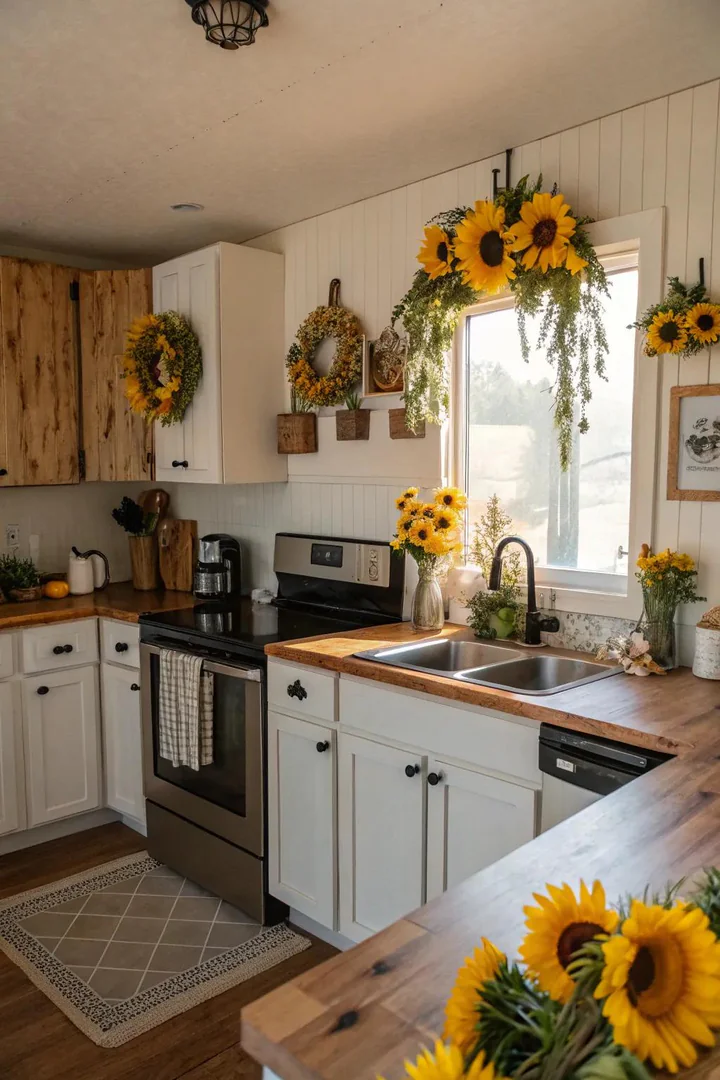
A restrained sunflower kitchen uses one or two understated accents rather than a full-theme saturation: a single sunflower ceramic vase on the open shelf, a sunflower-embroidered linen tea towel ($12 from Williams-Sonoma or Crate & Barrel) hanging from the oven handle, or a sunflower-printed ceramic trivet ($8 from Sur La Table) beside the stove. Subtle accents suit modern, minimalist, and transitional kitchens where a full sunflower theme would conflict with the clean-line design language.
A small arrangement of dried sunflowers ($15 to $25 for a 6-stem bunch from a florist or dried-flower shop) in a white ceramic pitcher on the countertop brings the sunflower motif into the kitchen through a natural, non-permanent element that can be swapped seasonally. Dried sunflowers last 1 to 3 years when kept away from direct sunlight and moisture. A sunflower-yellow candle ($8 to $15 from Voluspa or Paddywax) in a kitchen-safe glass jar adds golden color and warm fragrance without any installation or permanent commitment.
9. Sunflower-Themed Kitchen Island
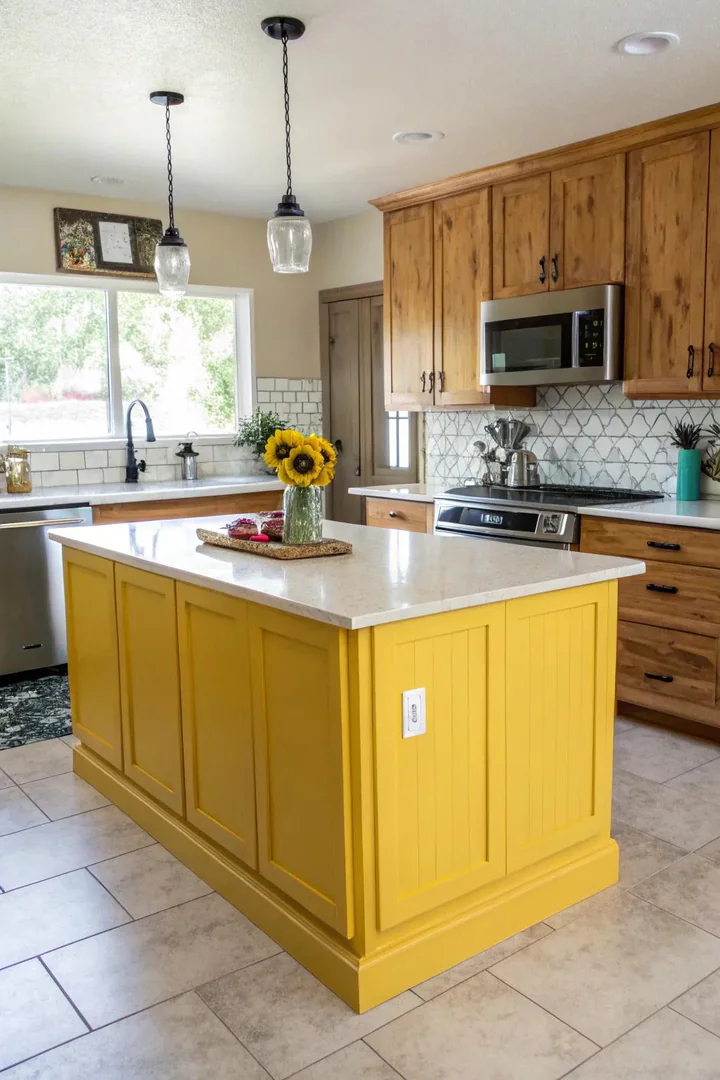
A kitchen island painted sunflower yellow on the base cabinets and finished with a contrasting countertop (butcher block in walnut or acacia, $189 to $300 from IKEA Karlby or Home Depot Hampton Bay; or dark granite like Uba Tuba, $40 to $55 per square foot installed) creates a freestanding sunflower centerpiece in the kitchen. A yellow island in a white kitchen reads as a giant sunflower bloom surrounded by white petals (the perimeter cabinets).
Add a sunflower mosaic tile panel to the island’s end cap (the short side facing the dining or living area) for a decorative surface visible from the seating area. A hand-painted sunflower mural on the island end cap (12 by 24 inches, painted with acrylic craft paint and sealed with polyurethane) turns the island into a gallery piece. Hang 2 to 3 pendant lights with amber-tinted glass shades (West Elm Sculptural Glass Globe Pendant in Amber, $99 each) above the island to cast warm, golden-toned light that reinforces the sunflower color story throughout the kitchen.
10. Sunflower Curtain and Valance Accents
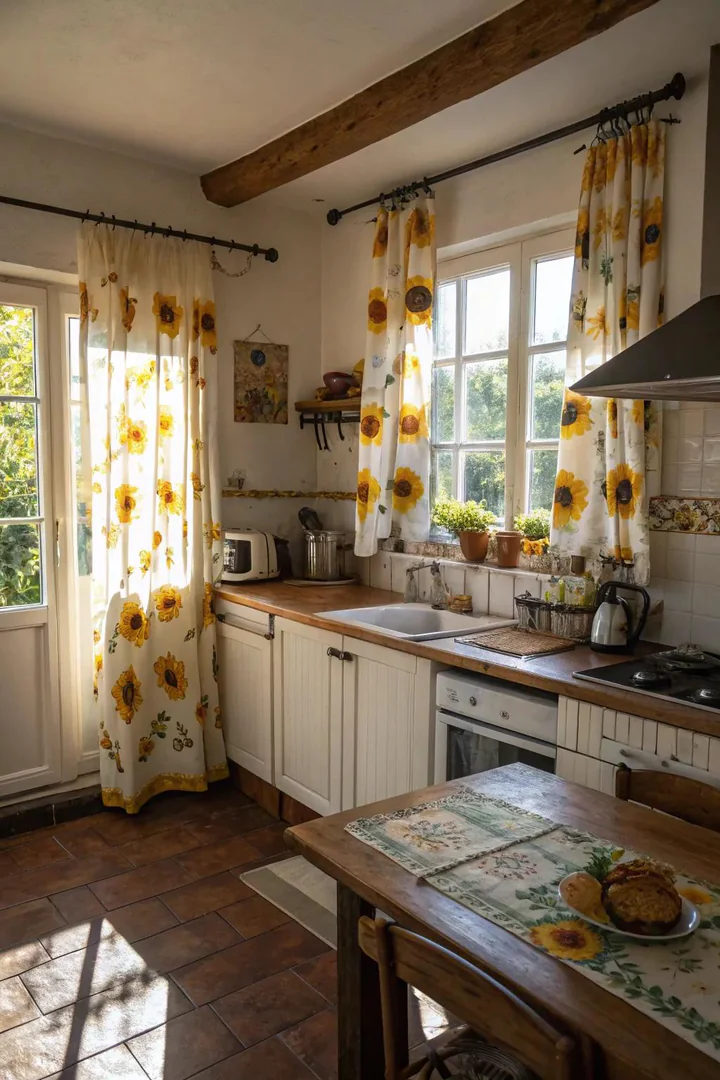
Hanging a sunflower-print curtain or valance ($12 to $30 from Amazon, Wayfair, or Target) on the kitchen window, below an open shelf, or across the lower portion of an open cabinet (replacing a missing door or creating a cottage-style fabric door) adds the sunflower motif through soft, washable fabric. A sunflower valance (10 to 14 inches deep) across a window above the sink frames the view with golden-yellow blooms and green leaves.
A cafe curtain (covering only the lower half of the window, hung from a tension rod at the window’s midpoint) in sunflower-print cotton provides privacy for ground-floor kitchens while admitting full upper-window light. Sunflower cafe curtains pair with a matching or coordinating sunflower table runner ($10 to $20) on a nearby dining table or breakfast bar for a coordinated soft-goods theme. Machine-wash sunflower curtains in cold water every 2 to 3 months to remove kitchen grease and cooking odors that fabric absorbs from the air.
11. Rustic Sunflower Cabinet Stencils
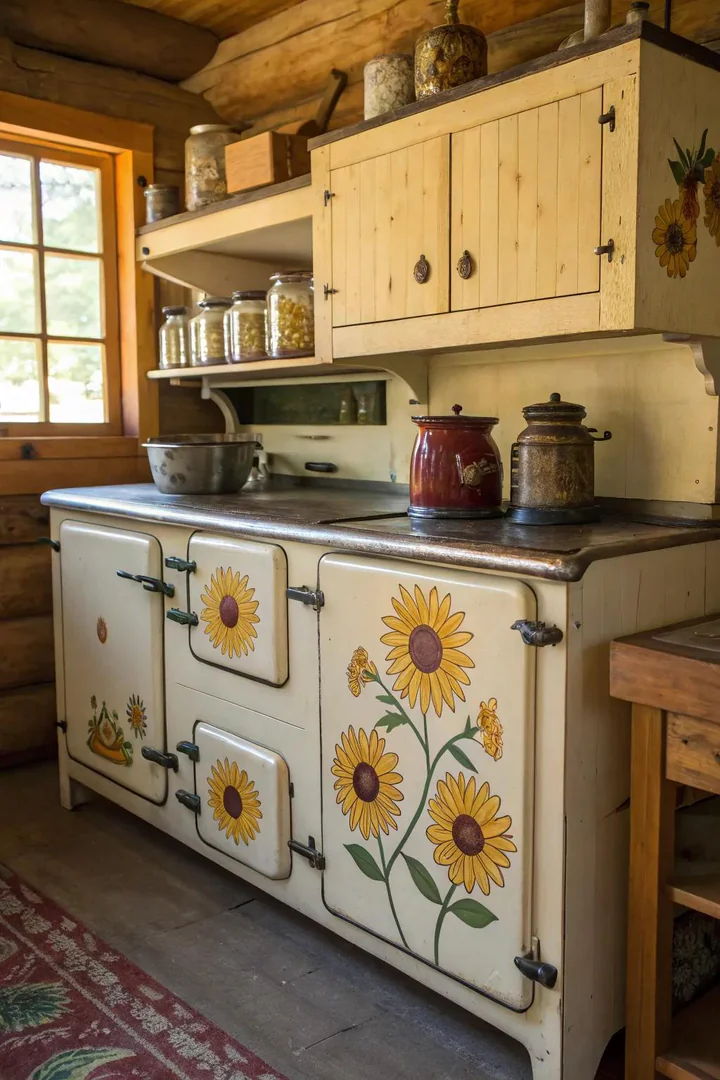
A reusable sunflower stencil ($8 to $15 from Stencil Revolution or Amazon, laser-cut Mylar, washable and reusable for 50+ applications) pressed against a cabinet door and dabbed with paint through a stencil brush ($5 for a 3-pack of round stipple brushes) creates a uniform, repeating sunflower pattern across multiple doors. Stenciling produces a cleaner, more consistent result than freehand painting while maintaining the handmade quality that distinguishes stenciled cabinets from factory-printed surfaces.
A rustic sunflower stencil in brown and gold tones (using FolkArt Antiquing Medium, $4, over a yellow base) on distressed white cabinets creates a French-country or Provencal kitchen feel. Secure the stencil to the cabinet door with low-tack painter’s tape (FrogTape, $7 per roll), dab the paint through the stencil openings with a dry, lightly loaded brush (excess paint bleeds under the stencil edges), and lift the stencil cleanly before the paint dries. Repeat on as many doors as desired. Coordinate with handmade art accents at polymer clay kitchen wall art ideas for sunflower-themed wall pieces that complement stenciled cabinets.
12. Sunflower Wallpaper Behind Open Shelving
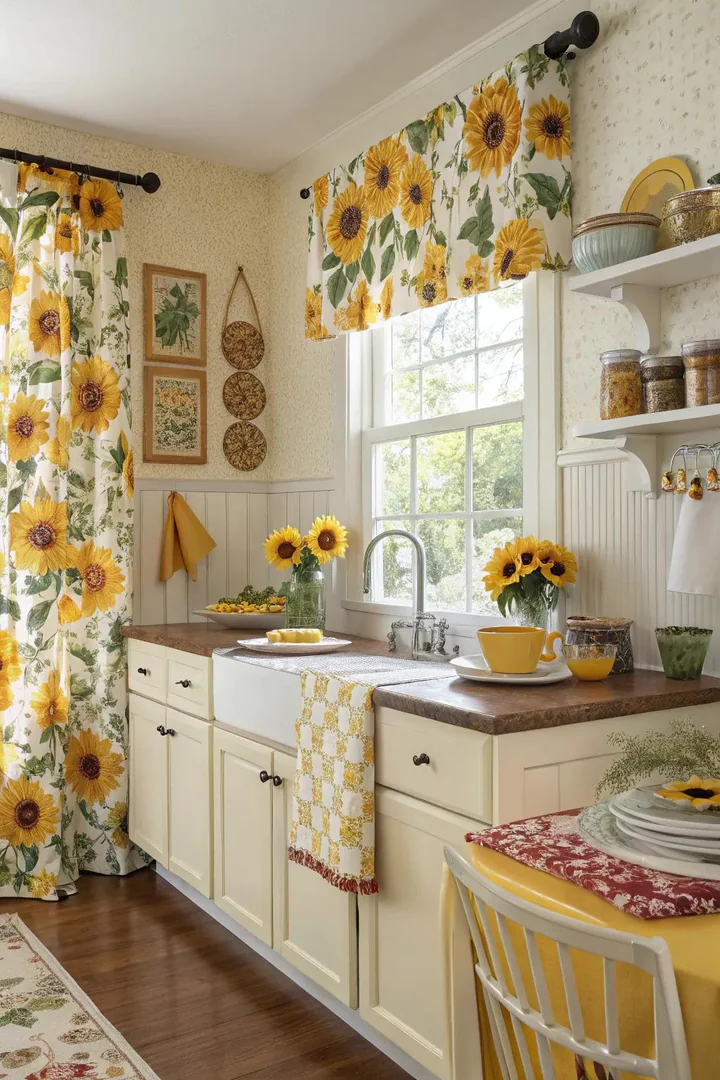
Applying sunflower-print peel-and-stick wallpaper ($25 to $40 per roll from Tempaper, Spoonflower, or WallPops; 20.5 inches wide by 16.5 feet long, covers approximately 28 square feet per roll) to the wall behind open shelving, inside a recessed cabinet niche, or on the back wall of a butler’s pantry creates a sunflower backdrop that frames the items displayed in front of it. Peel-and-stick wallpaper is renter-friendly, repositionable during installation, and removable without wall damage.
A sunflower wallpaper accent works best on a single wall section (4 to 8 feet wide) rather than a full-room application because the large-scale botanical print needs surrounding solid surfaces (painted walls, solid cabinet fronts) to prevent visual overload. Choose a wallpaper with a dark background (navy, black, or forest green with sunflower blooms) for a dramatic, gallery-wall effect behind white or natural-wood open shelving. Choose a light background (cream, white, or pale yellow with sunflower blooms) for a cheerful, cottage-garden effect. Browse more kitchen wall treatments at french country kitchen ideas for patterns that pair with the sunflower palette, or visit The Designers Company for the full kitchen design library.
How to Add Sunflower Accents to Kitchen Cabinets
1. Choose the Accent Level
Decide between full-theme (sunflower elements on cabinets, backsplash, textiles, and accessories), focal-point (one or two statement sunflower pieces that anchor the theme), or subtle (a single sunflower accent that adds warmth without declaring a theme). A full-theme sunflower kitchen suits cottage, farmhouse, and country styles. A focal-point approach suits transitional and eclectic kitchens. A subtle approach suits modern and minimalist kitchens where one golden accent adds warmth without competing with clean lines.
2. Select the Right Yellow
Match the sunflower yellow to the kitchen’s existing warm or cool undertones. A warm golden yellow (Benjamin Moore Hawthorne Yellow HC-4, Sherwin-Williams Bee SW 6683) suits kitchens with warm wood tones, brass hardware, and cream walls. A cool lemon yellow (Benjamin Moore Lemon Meringue 2023-50) suits kitchens with cool gray cabinets, chrome hardware, and blue or white walls. The wrong yellow undertone clashes with the surrounding materials and makes the sunflower accent feel disconnected.
3. Apply the Sunflower Element
For painted designs: sand the cabinet surface with 220-grit, apply the design with acrylic paint, and seal with 2 coats of Polycrylic. For decals: clean the surface with rubbing alcohol and press the decal firmly from center to edges to prevent air bubbles. For hardware swaps: measure the existing screw-hole spacing (the center-to-center distance between screw holes) and order knobs or pulls that match the existing hole pattern to avoid drilling new holes. For fabric: use a tension rod for curtains (no drilling required) or mount a fabric panel behind a face-frame opening with hook-and-loop tape ($5 for a roll of Velcro brand strips).
4. Coordinate the Surrounding Palette
Build the color palette around the sunflower’s natural colors: golden yellow (petals), dark brown (center disk), and green (stem and leaves). A kitchen with sunflower accents benefits from a warm white or cream wall color, warm-toned wood or butcher-block countertops, and green accents (potted herbs, a sage-green tea towel, olive-green canisters) that complete the botanical color story. Avoid competing warm accent colors (orange, red, pink) that clash with the golden yellow and create visual noise.
Sunflower Cabinet Accent Comparison
| Accent Type | Cost | Permanence | Skill Level | Best Kitchen Style |
|---|---|---|---|---|
| Hand-painted door art | $20–$40 | Permanent (removable with repaint) | Intermediate | Farmhouse, cottage |
| Ceramic sunflower knobs | $60–$240 (full set) | Reversible (swap back anytime) | Beginner | Any style |
| Vinyl decals | $8–$15 | Removable (3–5 year life) | Beginner | Modern, rental |
| Mosaic tile medallion | $50–$120 | Permanent | Intermediate to advanced | Mediterranean, Tuscan |
| Peel-and-stick wallpaper | $25–$40/roll | Removable | Beginner | Cottage, eclectic |
| Cabinet stencil | $15–$30 | Permanent (removable with repaint) | Beginner to intermediate | French country, Provencal |
Frequently Asked Questions
What colors pair best with sunflower kitchen cabinets?
Sunflower yellow pairs naturally with warm white (Benjamin Moore White Dove OC-17), cream (Benjamin Moore Navajo White OC-95), sage green (Sherwin-Williams Evergreen Fog SW 9130), navy blue (Benjamin Moore Hale Navy HC-154), and warm brown (walnut, oak, or espresso wood tones). Green provides the strongest natural complement because sunflower petals and green foliage form a botanical color pair. Navy blue creates a bold, high-contrast combination. Warm white and cream provide a neutral background that lets the yellow stand forward.
Are sunflower decals durable enough for kitchen cabinets?
High-quality vinyl decals (waterproof, UV-resistant, rated for indoor use) last 3 to 5 years on smooth cabinet surfaces when applied to clean, grease-free surfaces. Decals near the stove may lift sooner due to heat and grease exposure. Replace stove-adjacent decals every 1 to 2 years. Decals on upper cabinets, pantry doors, and island panels (away from direct heat and grease) last the full 3-to-5-year lifespan. Remove old decals with a hair dryer (30 seconds of warm air softens the adhesive) and a plastic scraper.
Can you mix sunflower accents with other floral themes?
Sunflowers pair well with other warm-toned, rustic flowers: daisies, black-eyed Susans, zinnias, and marigolds. Avoid mixing sunflowers with cool-toned florals (lavender, hydrangea, blue delphinium) because the warm-yellow and cool-blue color clash creates visual tension. A mixed wildflower theme (sunflowers, daisies, and zinnias in a shared warm palette) reads as a meadow garden. A single-species sunflower theme (only sunflower motifs) reads as more intentional and cohesive.
How do you maintain painted sunflower cabinet doors?
Clean painted and sealed cabinet doors with a soft damp cloth and mild dish soap (1 drop of Dawn in 1 cup of warm water). Avoid abrasive sponges, powdered cleansers, and ammonia-based cleaners that can scratch or dull the protective clear coat. Reapply a coat of Minwax Polycrylic every 3 to 5 years (or sooner if the finish dulls or shows wear) to maintain the moisture barrier over the painted design. Touch up chips and scratches with the original paint colors and a fine-tip artist brush.
What cabinet door style works best with sunflower designs?
Flat-panel (slab) doors provide the smoothest canvas for painted sunflower designs, decals, and stencils because the uninterrupted flat surface displays the design without the visual interruption of molding profiles. Raised-panel and Shaker-style doors work with hardware swaps (sunflower knobs on the center panel) and small decals (placed within the recessed center panel). Beadboard doors suit subtle sunflower accents (a single knob or a small decal) because the vertical grooves compete visually with detailed painted designs.