
Kitchen Towel Holder Ideas: 13 Smart Solutions to Upgrade Your Space
A kitchen towel holder sounds like a minor detail until you realize how often you reach for a dish towel during cooking, cleaning, and drying. The average home cook grabs a towel dozens of times a day, which means placement, accessibility, and drying airflow matter more than most people think when choosing where and how to hang towels in a kitchen.
The best towel holder fits your kitchen’s layout, matches your design style, and keeps towels within arm’s reach of the sink and stove without cluttering counter space. Whether you have a galley kitchen with zero spare wall area or a large open-plan cooking space with room to spare, there is a towel holder solution that works for your situation.
Below you will find 13 kitchen towel holder ideas covering wall-mounted racks, countertop stands, magnetic bars, pegboard systems, and hidden pull-out solutions. Each one includes installation details, product recommendations, and styling tips so you can pick the right holder and install it this weekend.
1. DIY and Rustic Creations
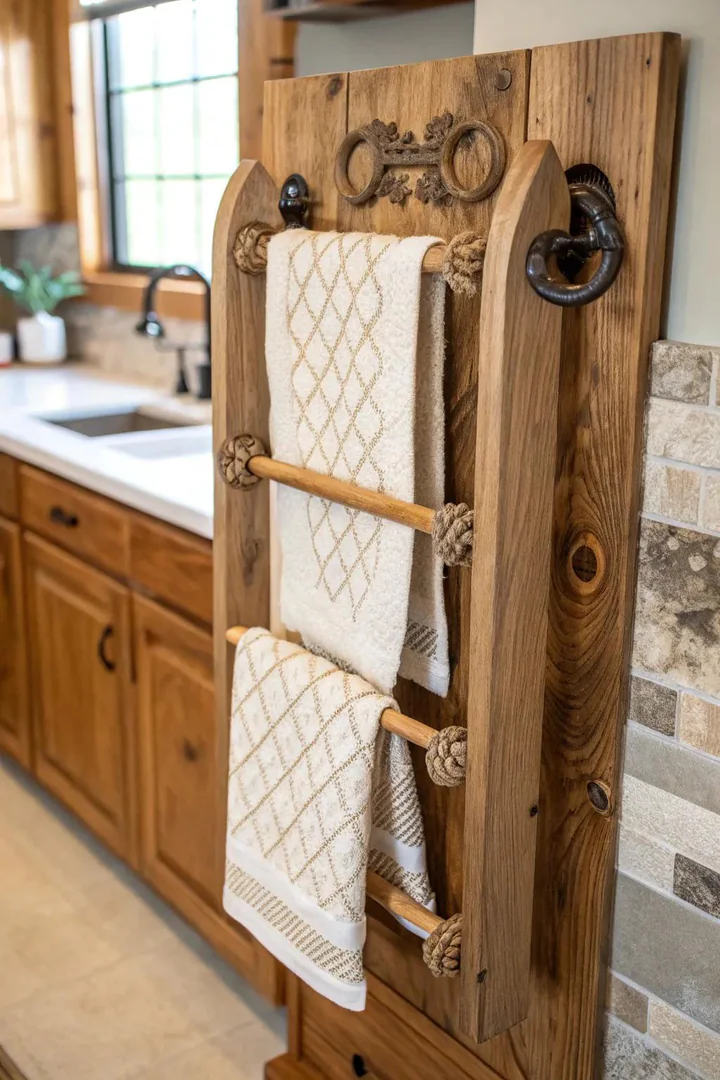
A handmade towel holder built from reclaimed materials gives your kitchen a one-of-a-kind character that store-bought holders cannot match. Start with a piece of reclaimed barn wood — a board roughly eighteen inches long, six inches wide, and one inch thick works well — and sand it to 120-grit to remove splinters while preserving the weathered grain. Attach two or three wrought-iron coat hooks from Liberty Hardware or Richelieu along the bottom edge, spacing them six inches apart, and mount the board to the wall with two drywall anchors rated for at least thirty pounds each.
For a more refined rustic look, use a section of copper pipe instead of hooks. Cut a half-inch copper pipe to sixteen inches, attach it to the board with pipe-strap brackets, and let the copper develop a natural patina over time — or seal it with Briwax clear paste wax to lock in the shiny finish. If you enjoy hands-on kitchen projects, our DIY clay kitchen decor ideas guide covers more handmade pieces you can build in an afternoon to pair with your custom towel holder.
2. Towel Holders for Corners
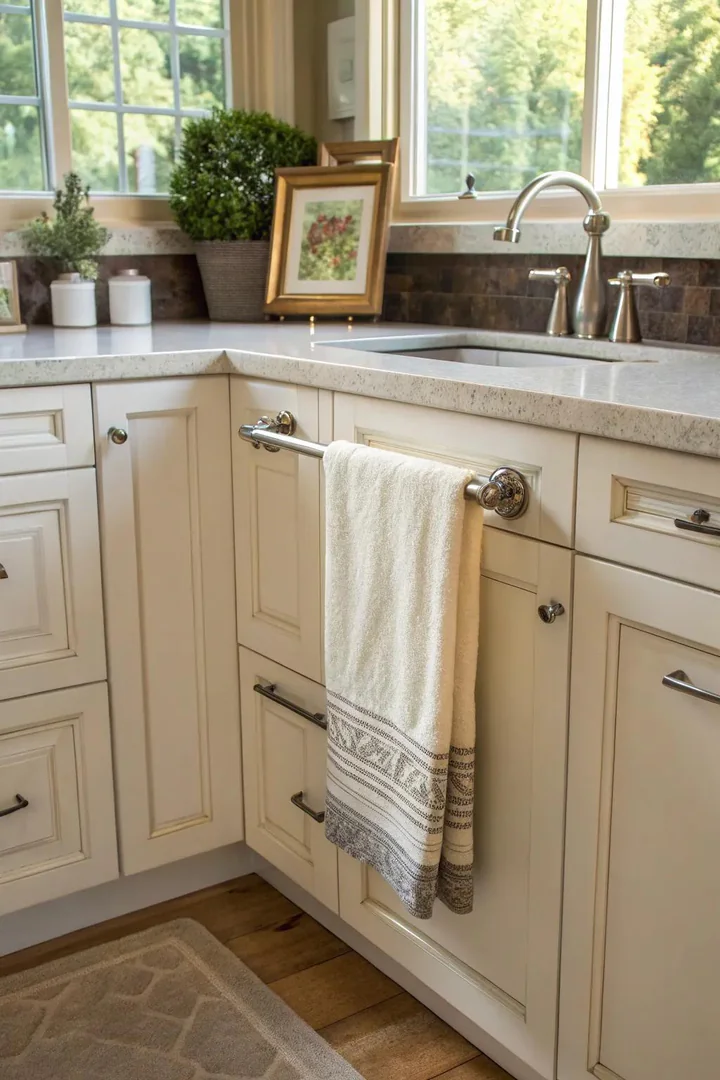
Corner towel holders reclaim dead space where two walls meet — an area that usually collects dust and nothing else. A triangular floating shelf with a small bar mounted beneath it turns that corner into a functional towel station that holds two folded towels on the shelf and one hanging towel on the bar below. The Rev-A-Shelf corner tray and the Umbra Sinkin corner caddy both fit standard ninety-degree wall corners and mount with adhesive or two small screws.
For a more permanent installation, build a simple L-bracket shelf from two eight-inch poplar boards mitered at forty-five degrees, glued and pocket-screwed together, with a stainless-steel towel bar from KES or Moen mounted underneath. Paint or stain the shelf to match your kitchen trim so it looks built in. If you are working with limited wall space throughout the kitchen, our small kitchen storage ideas guide covers more space-saving solutions for corners, cabinet interiors, and unused vertical surfaces.
3. Shelf-Under Rods
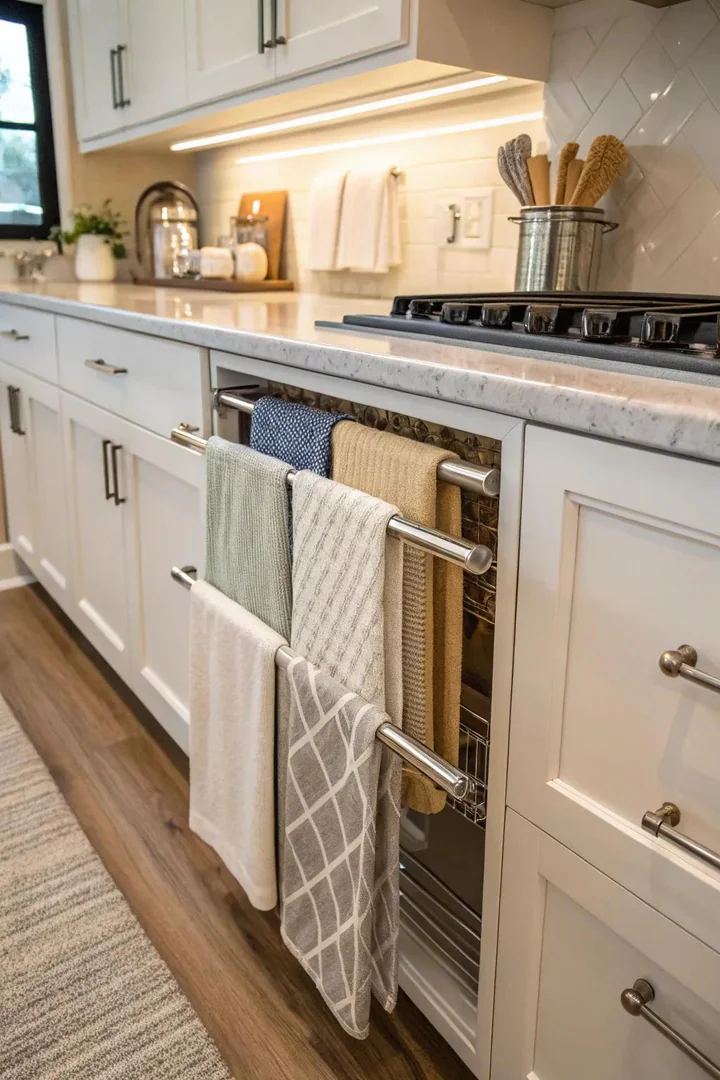
Mounting a slim towel rod beneath an existing shelf or upper cabinet puts the towel right where you need it without taking up any additional wall or counter real estate. A tension rod — like the Simple Houseware adjustable rod — wedges between the underside of a shelf and the back wall in seconds with no tools and no holes. For a permanent setup, screw a stainless-steel rod into the underside of the cabinet rail using pre-drilled flanges; the Ikea Kungsfors rail system includes flanges and rods that fit this purpose at under ten dollars.
Position the rod six to eight inches from the front edge of the shelf so hanging towels do not block the items stored on the shelf below. Leave at least twelve inches of clearance between the rod and any surface beneath it — this gives the towel enough hanging room to dry properly rather than bunching up. If you hang multiple towels on a single rod, fold each one lengthwise so they overlap rather than bunch, which speeds drying and prevents the musty smell that trapped moisture creates.
4. Sustainable Wooden Rings
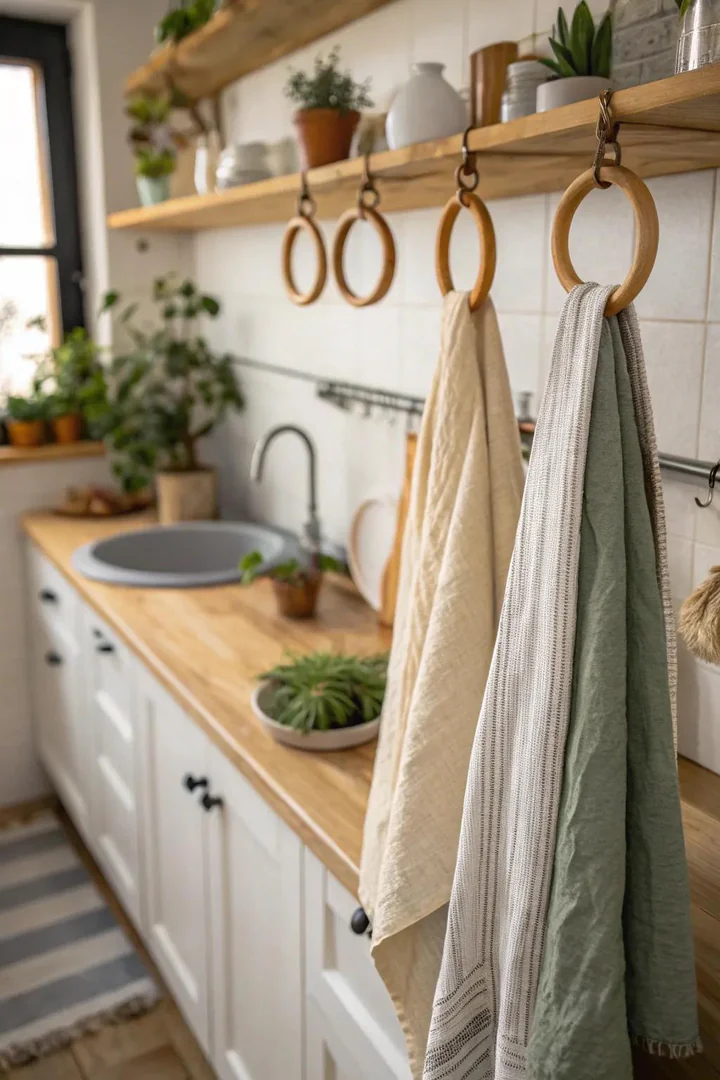
A wooden towel ring brings an organic, warm accent to the kitchen while keeping the towel accessible and airing out between uses. Rings made from bamboo, teak, or acacia wood hold up well in kitchen humidity because these species have naturally high oil content that resists moisture without heavy chemical treatment. The Moen Align towel ring in a wood-look finish and the West Elm Mid-Century ring in walnut both mount with a single screw and hold a standard kitchen towel folded in thirds.
Install the ring at a height of forty to forty-eight inches from the floor, which puts the bottom of the hanging towel at a comfortable grab height for most adults. Place it within two feet of the sink or stove so you can reach it without stepping away from your cooking station. If you want a truly natural look, coat an unfinished wood ring with food-safe mineral oil or Howard Butcher Block Conditioner — both protect the wood from water absorption without adding a plastic-looking sheen. Reapply monthly or whenever the wood starts looking dry.
5. Racks Mounted on Walls
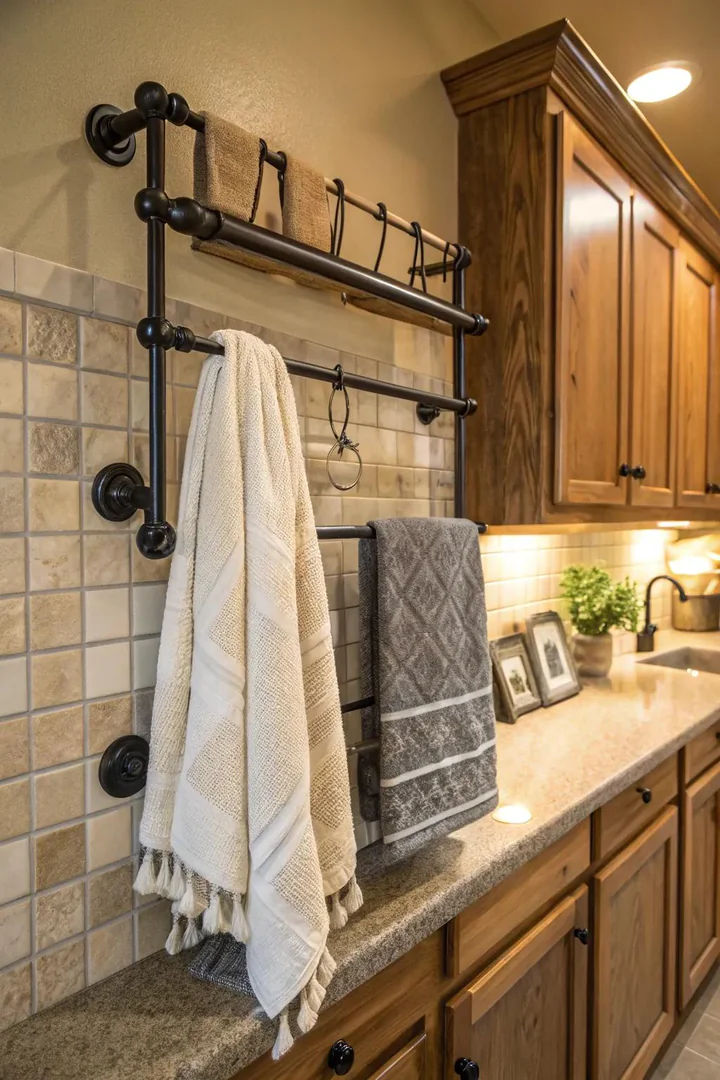
A wall-mounted rack with multiple bars or hooks handles three or four towels at once, which is exactly what you need if you use separate towels for dishes, hands, and general cleanup. The Ikea Grundtal rail in stainless steel mounts with two brackets and accepts hanging hooks, S-clips, and small baskets from the same system. For a more polished look, the Pottery Barn Mercer towel rack in antique bronze or polished nickel holds three towels on individual swinging arms that fold flat against the wall when not in use.
Mount the rack on a stretch of wall between the sink and the stove — this is the towel hot zone where you reach for one most frequently. Use wall anchors rated for the combined weight of the rack and four wet towels, roughly five to eight pounds. If the wall area next to your sink is blank and you are looking for more ways to use it, our guide to blank wall above kitchen sink ideas covers shelves, tile art, and decor options that pair nicely with a towel rack.
6. Countertop Holders
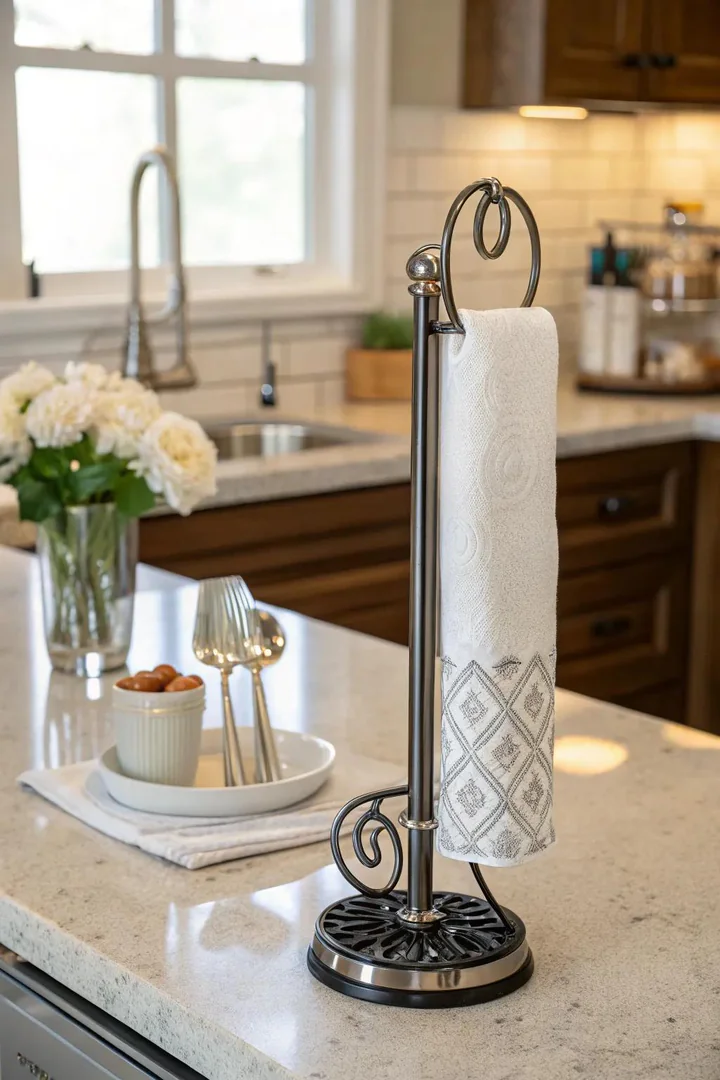
A freestanding countertop towel stand is the simplest option — no drilling, no anchors, no landlord objections. The OXO Good Grips Simply Tear paper-towel holder has a weighted, non-slip base and a spring-loaded arm that accommodates both paper-towel rolls and folded cloth towels draped over the arm. For a more decorative stand, the Crate & Barrel Teakwood towel holder and the Williams Sonoma Marble base stand both look good enough to leave out permanently without cheapening the countertop aesthetic.
The downside of countertop holders is they consume four to six inches of counter depth, which matters in kitchens under twenty linear feet of counter space. If counter real estate is tight, push the stand into a corner or against the backsplash where it uses space that would otherwise sit empty. Choose a stand with a heavy base — at least twelve ounces — so it does not tip when you pull a towel off quickly with one hand. A weighted base also prevents the holder from sliding on polished stone or laminate countertops when the towel catches on a passing elbow.
7. Pegboard Options
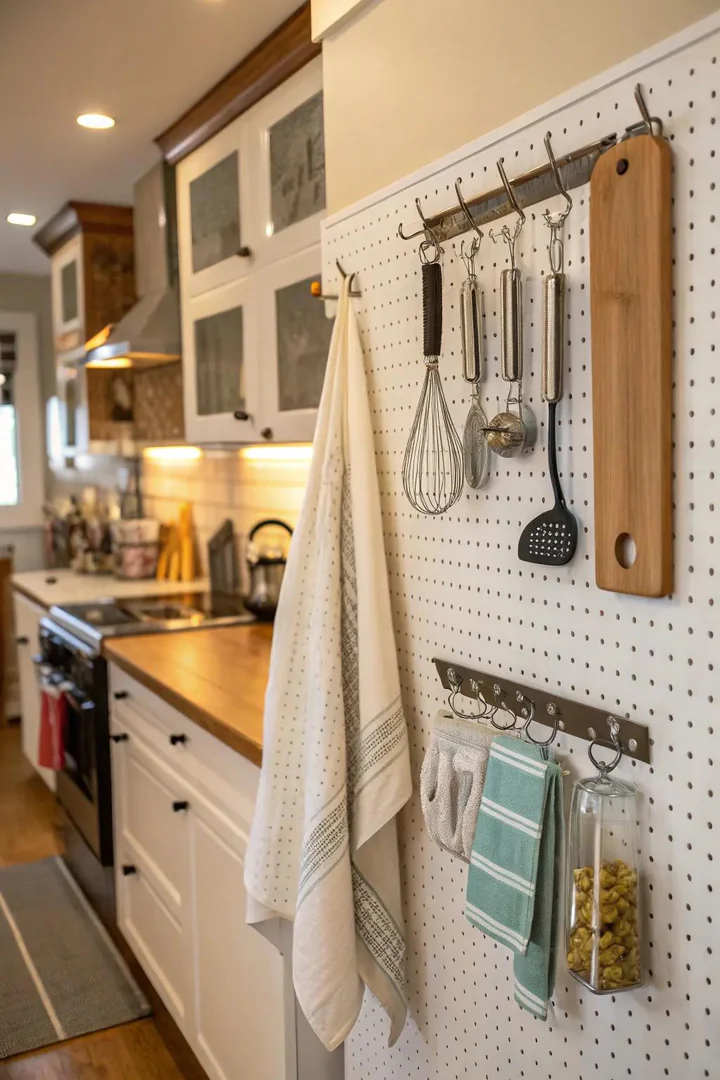
A pegboard mounted on a kitchen wall gives you infinite flexibility — you can rearrange hooks, add shelves, and swap accessories any time your storage needs change without drilling new holes. A two-by-four-foot Triton LocBoard or a Wall Control metal pegboard panel mounts with four screws into studs and accepts standard quarter-inch pegboard hooks as well as proprietary locking accessories that resist falling out when you grab items quickly. Paint the pegboard to match your wall color so it recedes visually, or go bold with a contrasting color like matte black or sage green to make it a feature wall.
Dedicate one section of the pegboard to towel storage using J-hooks or short dowel pegs spaced six inches apart. Fold each towel into a rectangle and drape it over the peg so it hangs evenly on both sides — this maximizes airflow for drying and keeps the towels from piling up in one spot. The remaining pegboard area can hold pot holders, utensils, measuring cups, and small hanging baskets for spice packets. This single panel replaces three or four separate wall-mounted accessories, which cuts down on visual clutter considerably.
8. Reused Hooks
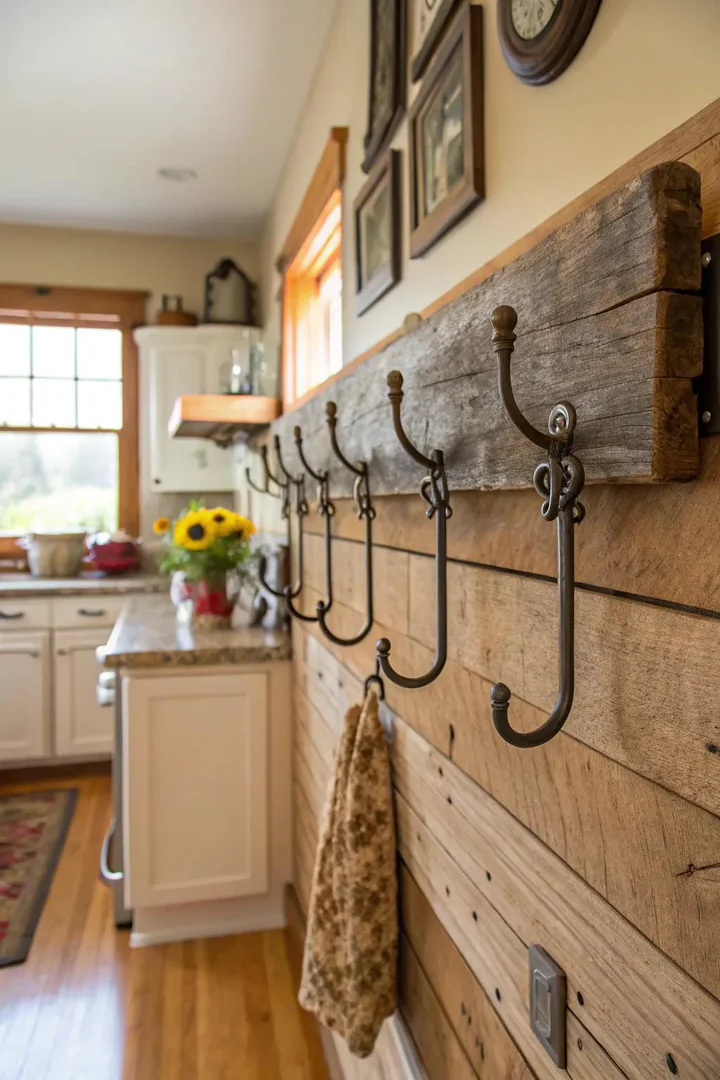
Old door knobs, vintage spoons bent into hooks, salvaged gate hardware, and antique drawer pulls all make excellent towel hooks when mounted on a board or directly into the wall. A set of three mismatched crystal door knobs from a salvage yard — ReStore, Architectural Salvage, or a local flea market — costs five to fifteen dollars and creates a towel rack with more personality than anything at a home-improvement store. Attach each knob to the wall with its original threaded shaft and a toggle bolt for a secure hold.
Bent vintage spoons are another popular repurposed hook. Choose large serving spoons or tablespoons with thick handles, clamp the bowl end in a vise, and bend the handle backward at a ninety-degree angle. Drill a hole through the flattened spoon bowl and screw it to the wall or to a mounting board. Sand the bend point lightly to remove stress marks, and spray a clear lacquer coat to prevent tarnishing. These one-of-a-kind hooks add charm and a conversation piece to any kitchen style, from farmhouse to eclectic modern.
9. Hooks for Over-the-Door Use
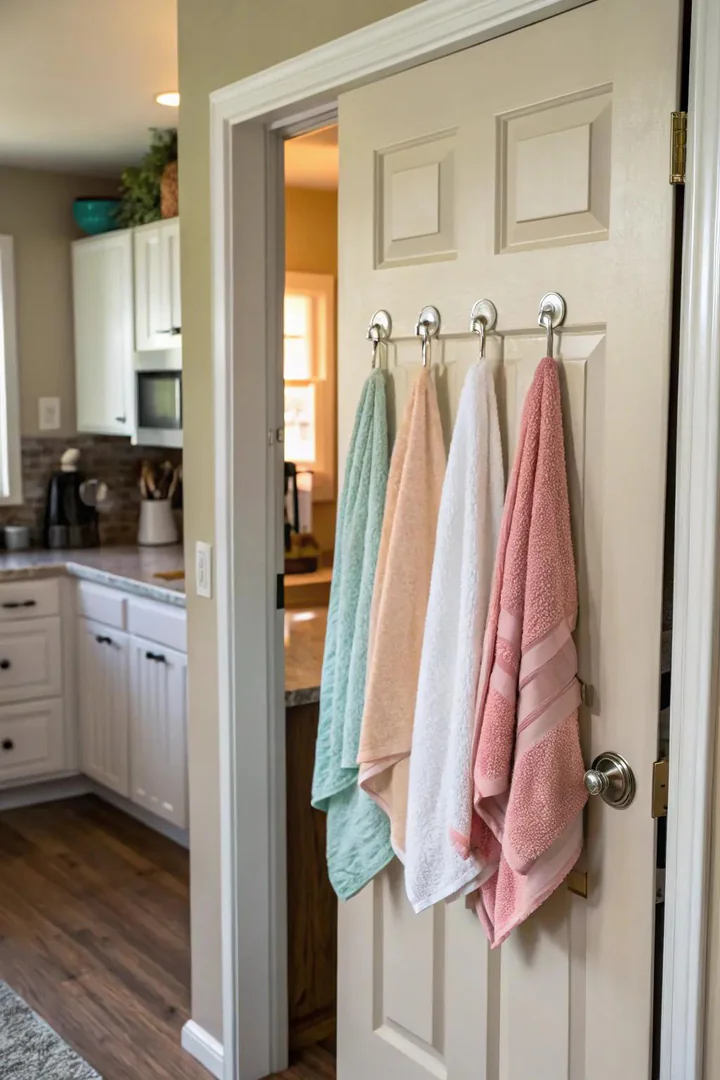
Over-the-door hooks require zero installation — they hang over the top edge of a cabinet door or a pantry door and hold towels on the back side where they stay hidden when the door is closed. The iDesign Forma over-cabinet hook and the SimpleHouseware over-door organizer both fit standard three-quarter-inch-thick cabinet doors without adhesive or hardware. These hooks work especially well on the inside of the sink cabinet door, putting the towel within arm’s reach of the faucet while keeping it completely out of sight.
Choose hooks with a foam or silicone pad on the contact points to protect the door finish from scratches and prevent the hook from rattling when the door opens and closes. If you hang a wet towel on the inside of a closed cabinet door, crack the door open for thirty minutes after use to let moisture escape — otherwise the trapped humidity can promote mildew growth on both the towel and the cabinet interior. For heavier towels, use a double-hook version that distributes the weight across a wider area of the door edge.
10. Retro Ladder Showcase
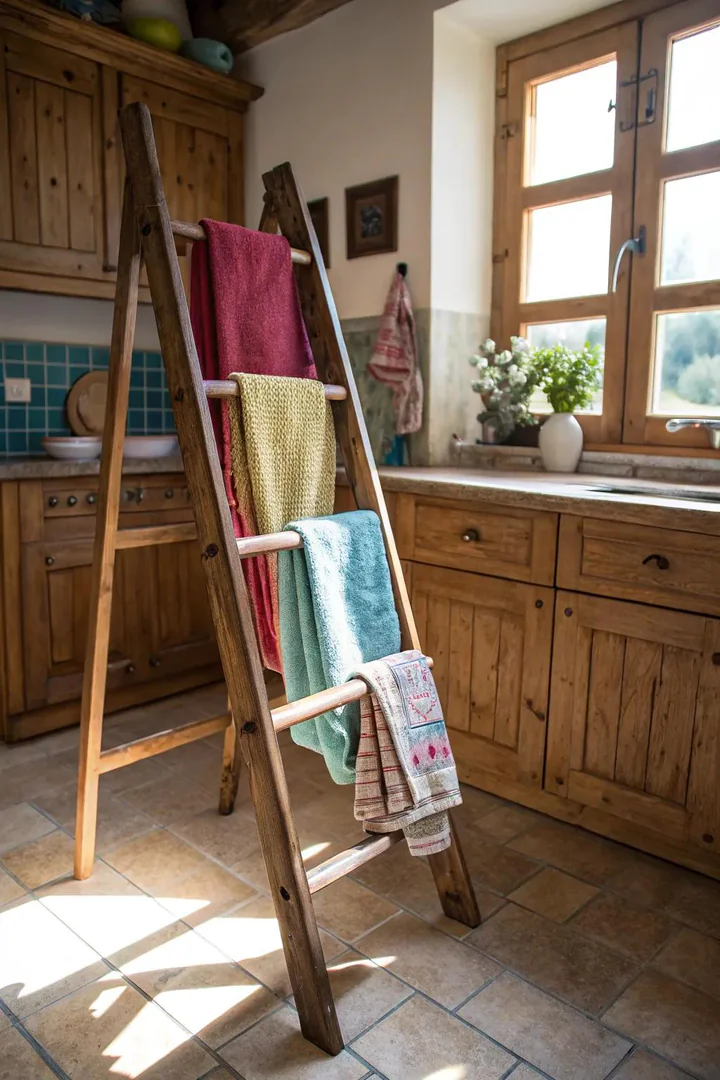
A reclaimed wooden ladder leaned against the wall holds four to six towels on its rungs while doubling as a vertical display piece that adds farmhouse character to the room. Look for old orchard ladders or painter’s A-frame ladders at antique shops, barn sales, or online marketplaces — a five-to-six-foot ladder fits most kitchen wall heights without reaching the ceiling. Sand any rough spots, check for loose rungs and re-glue with Titebond III waterproof wood glue, and apply a coat of Varathane water-based satin polyurethane to protect the wood from kitchen steam.
Secure the top of the ladder to the wall with a small L-bracket or a pair of adhesive wall clips so it cannot slide or tip if someone bumps it while walking past. Drape towels over alternating rungs rather than every rung — this keeps the display airy and allows each towel enough space to dry. You can hang the towels flat or roll them and tuck them into the rung gaps for a spa-like display. The rungs also hold small S-hooks for hanging pot holders, herb-drying bundles, or small wire baskets.
11. Unseen Towel Racks
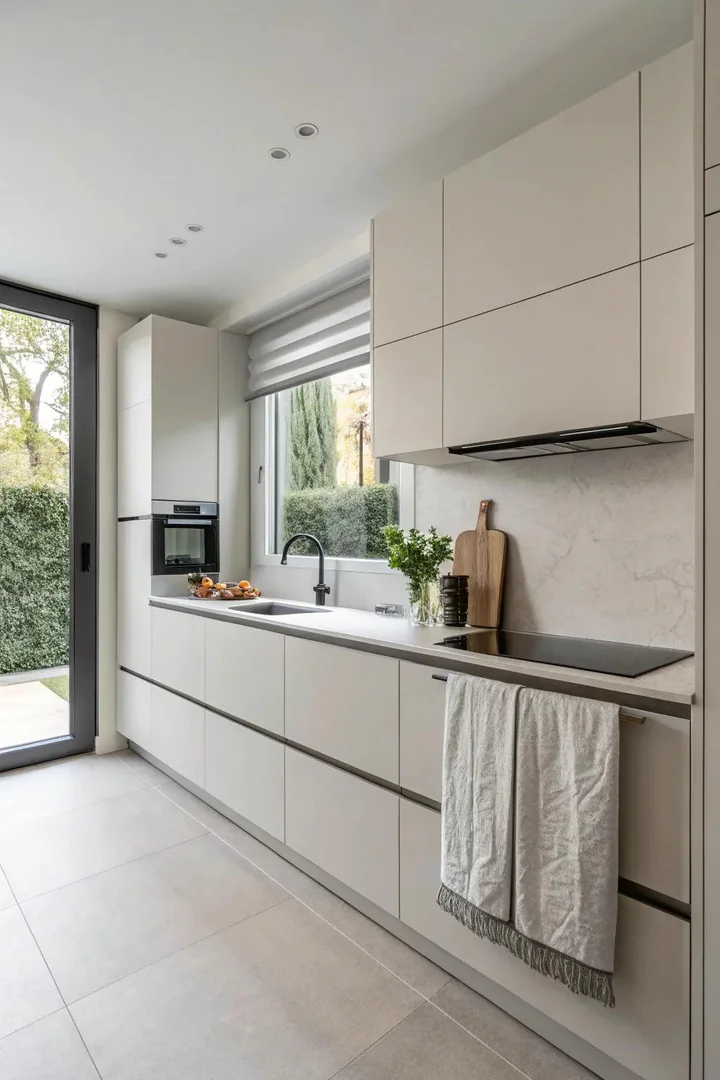
Hidden towel rails built into the cabinet face frame or recessed into the edge of the countertop overhang keep towels accessible while maintaining a clean, hardware-free kitchen appearance. The Richelieu recessed pull-towel bar and the Hafele built-in towel rail both mount flush with the cabinet surface so nothing projects into the walking path. These rails sit below the countertop lip on the sink base cabinet, putting the towel right at the point where you reach for it most frequently.
For a true invisible installation, route a shallow channel into the underside of the countertop overhang and press-fit a slim aluminum bar into the groove. The towel drapes over the bar and hangs behind the cabinet face, visible only if you look from below. This approach works best with countertop overhangs of at least one-and-a-half inches, which gives the bar enough material to grip without weakening the stone or solid surface above. If your kitchen leans toward the minimalist end of the design spectrum, visiting The Designers Company gives you more ideas for keeping daily-use items hidden without sacrificing convenience.
12. Magnetic Towel Racks
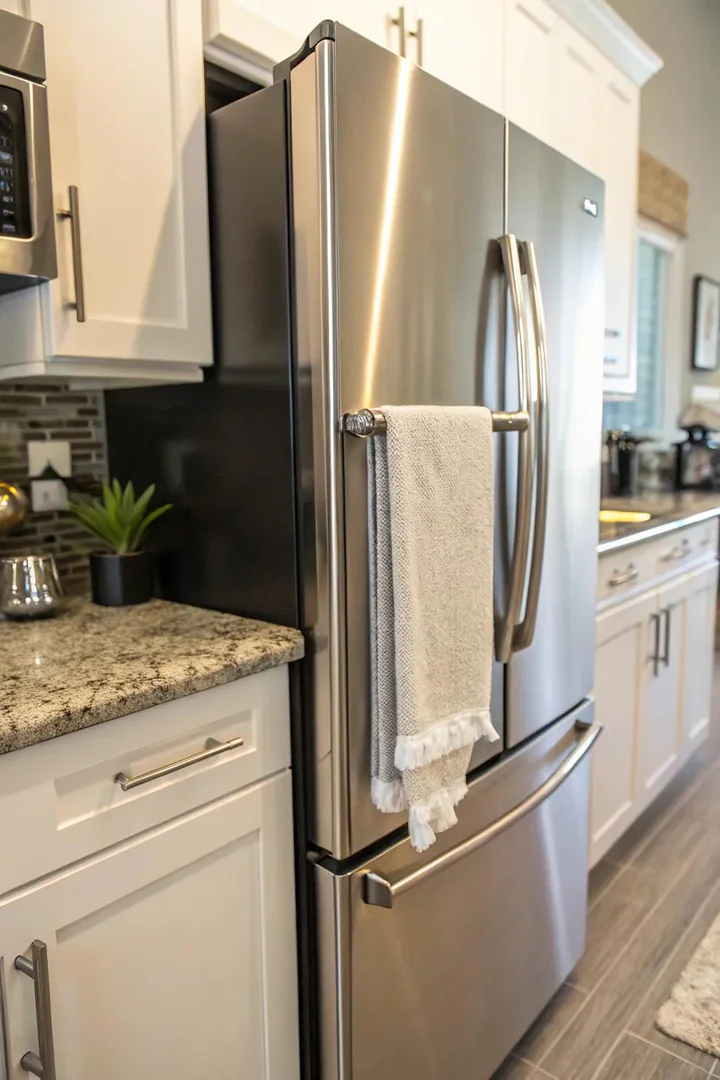
Magnetic towel bars attach to any ferrous metal surface — the side of a refrigerator, the front of a dishwasher, or a steel range hood — without screws, adhesive, or any permanent modification. The Spectrum Diversified magnetic towel bar and the mDesign magnetic paper-towel holder both use strong neodymium magnets that grip stainless-steel appliance surfaces firmly enough to hold a damp terry-cloth towel without sliding. Move them to a new spot in two seconds flat if your workflow changes or you rearrange the kitchen layout.
Choose a magnetic bar with a rubberized or silicone-coated magnet face to prevent scratching the appliance finish. Check that your appliance surface is actually magnetic before purchasing — some stainless-steel refrigerators use non-ferrous alloys that repel magnets, in which case you will need an adhesive-backed steel plate (available from most magnetic-bar manufacturers) applied to the surface first. Magnetic bars work especially well in rental kitchens where you cannot drill holes, and they pair nicely with the over-the-door hooks mentioned earlier for a fully non-destructive towel-storage setup.
13. Retractable Holders
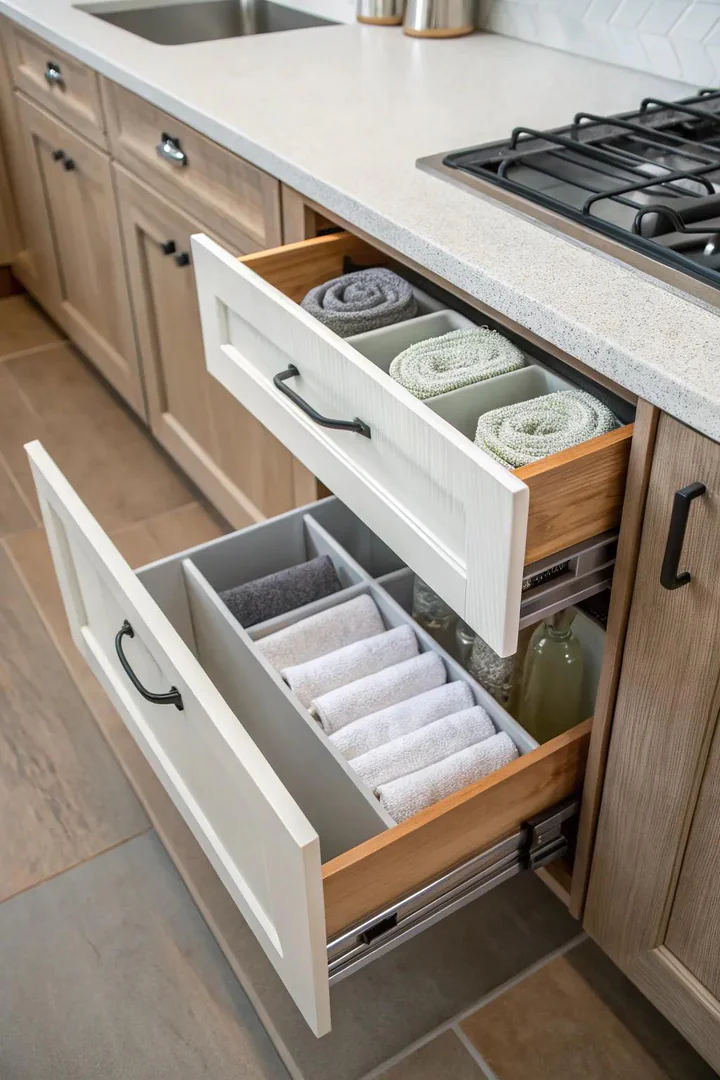
Pull-out towel racks mount inside a cabinet and slide out on rails when you need a towel, then push back in and disappear behind the closed door. The Rev-A-Shelf pull-out towel bar and the Hafele Towel Rail Pull-Out both install inside a base cabinet using four screws and standard side-mount ball-bearing slides. They hold two to three towels at once and extend fully so you can grab the towel without reaching deep into the cabinet.
Install the pull-out in the sink base cabinet or the cabinet immediately to the left or right of the sink — these are the locations where you reach for a towel most frequently during dishwashing and food prep. Leave the towels unfolded and draped loosely over the bars so air circulates on both sides; a towel crammed tightly into a closed cabinet stays damp and develops odor within hours. If the cabinet has a trash pull-out already, consider a narrow three-inch-wide pull-out towel rack mounted on the opposite side of the same cabinet — most sink bases are wide enough to accommodate both without interference.
How to Choose the Right Towel Holder
Mounting Method
Your mounting options depend on your kitchen’s surfaces and your willingness to drill holes. Wall-mounted racks and screw-in hooks offer the strongest hold and support heavier towels, but they require drywall anchors or stud mounting. Adhesive hooks and magnetic bars work on smooth surfaces without any holes, making them ideal for renters. Over-the-door hooks and countertop stands skip wall attachment entirely. Choose the method that matches both your kitchen’s construction and your lease terms if applicable.
Material and Finish
Stainless steel and brushed nickel resist kitchen humidity and wipe clean easily. Matte black hardware suits modern and industrial kitchens. Brass and bronze finishes pair with traditional and farmhouse styles but require occasional polishing unless you choose a lacquered version. Wood holders add warmth but need a moisture-resistant finish like tung oil or polyurethane to prevent swelling. Match the towel-holder finish to your existing kitchen hardware — faucet, cabinet pulls, light fixtures — for a coordinated look.
Capacity and Accessibility
Count the towels you use daily before choosing a holder. Most households use two to four kitchen towels at a time — one for dishes, one for hands, and one or two for general cleanup. A single hook handles one towel. A multi-bar wall rack holds three or four. A pegboard section accommodates five or more. Place the holder within a two-step radius of both the sink and the stove so you can grab a towel mid-task without crossing the kitchen. The fewer steps between you and the towel, the more likely you will actually use the holder rather than draping towels over the oven handle.
Towel Holder Comparison Guide
| Type | Mounting | Best For | Price Range |
|---|---|---|---|
| Wall-mounted rack | Screws into wall/studs | Multi-towel homes, permanent setups | $15 – $60 |
| Countertop stand | Freestanding, no install | Renters, quick access near prep area | $10 – $45 |
| Magnetic bar | Magnets on metal surface | Renters, appliance-side placement | $8 – $25 |
| Over-the-door hook | Hangs over cabinet door edge | Small kitchens, hidden storage | $5 – $20 |
| Pegboard system | Screws into wall | Multi-use storage walls, flexible layouts | $25 – $80 (full panel) |
| Pull-out cabinet rack | Screws inside cabinet | Minimalist kitchens, hidden towel storage | $20 – $50 |
Common Towel Holder Mistakes to Avoid
Placing the holder too far from the sink. A towel holder on the opposite wall from the sink means wet hands drip across the floor every time you reach for it. Mount or place the holder within arm’s reach of the faucet — ideally on the cabinet face directly below the sink or on the wall immediately beside it.
Using adhesive on textured surfaces. Adhesive-mount hooks rely on a smooth, flat surface for maximum grip. Textured paint, rough tile, or unfinished wood will cause adhesive hooks to fail within days, sending the hook and towel to the floor. On textured walls, use screw-in mounting or switch to a magnetic or over-the-door option instead.
Overloading a single hook. Hanging three wet towels on one hook traps moisture between the layers and prevents drying, which leads to mildew and a sour smell within hours. If you use more than one towel at a time, choose a multi-bar rack or spread towels across separate hooks spaced at least six inches apart.
Ignoring towel material. Thick terry-cloth towels need wider hooks or bars to hang properly and longer drying time. Thin flour-sack towels dry fast on any hook but slip off narrow bars easily. Match the holder style to the towels you actually use — a wide bar for thick terry, a clip or ring for thin linen.
Frequently Asked Questions
Where is the best place to hang a kitchen towel?
Mount your towel holder within arm’s reach of the sink — this is where you reach for it most often during cooking and cleaning. The front face of the sink base cabinet, the wall directly beside the sink, or the side of the nearest appliance are all ideal spots. Avoid hanging towels on the oven handle, because they can fall onto a hot burner or block the oven vent.
How do I keep kitchen towels from smelling musty?
Musty odor comes from trapped moisture. Hang towels so air circulates on both sides — a bar or a hook is better than a closed drawer for daily-use towels. Swap to a fresh towel every one to two days, and wash used towels on hot with a cup of white vinegar in the rinse cycle to kill odor-causing bacteria. Avoid fabric softener on kitchen towels because it coats the fibers and reduces absorbency.
What type of towel holder works best for renters?
Over-the-door hooks, magnetic bars, adhesive-mount hooks (on smooth surfaces), and freestanding countertop stands all work without drilling holes or modifying walls. Magnetic bars on the refrigerator side panel are especially popular in rental kitchens because they hold firmly, move easily, and leave no marks when you move out. Command brand adhesive hooks are another reliable option for smooth-painted drywall.
How high should a kitchen towel holder be mounted?
Mount the holder so the bottom of the hanging towel sits roughly thirty to thirty-six inches from the floor, which puts it at a natural grab height for most adults. For wall-mounted bars and hooks, this typically means placing the hardware at forty to forty-eight inches above the floor, depending on towel length. If children use the towels, mount a second lower hook at twenty-four to twenty-eight inches.
Can I use a towel ring instead of a bar in the kitchen?
Yes. A towel ring holds one folded towel and takes up less wall space than a bar, making it a good fit for narrow walls and tight corners. The trade-off is capacity — a ring handles one towel comfortably, while a bar can hold two or three. Rings also let the towel bunch at the bottom, which slows drying slightly compared to a flat bar where the towel hangs in a single layer.
How often should I replace kitchen towels?
Replace everyday kitchen towels every one to two years or when they lose absorbency, develop permanent stains, or start to fray. High-quality cotton terry towels from Williams Sonoma or Sur La Table last toward the upper end of that range if washed on hot regularly and air-dried to preserve fiber integrity. Budget towels from discount stores may need replacing every six to twelve months under heavy daily use.
Conclusion
A well-chosen towel holder keeps your kitchen organized, your towels dry and odor-free, and your countertops clear of draped cloth. Whether you go with a rustic DIY rack, a sleek magnetic bar, or a hidden pull-out system, the right option depends on your kitchen layout, your mounting preferences, and how many towels you cycle through daily.
Pick a holder that sits within arm’s reach of the sink, matches your kitchen’s hardware finish, and provides enough airflow for towels to dry between uses. Install it this weekend, and you will notice the difference in your daily routine immediately — no more soggy towels on the oven handle and no more hunting for a dry corner of the kitchen to wipe your hands.