
Kitchen Backsplash Ideas: 20 Stunning Designs That Transform
Kitchen backsplash ideas protect the wall between the countertop and upper cabinets from water splashes, cooking grease, and food stains while adding color, pattern, texture, and visual interest to the most visible vertical surface in the kitchen. A backsplash typically covers 15 to 22 inches of wall height across 8 to 20 linear feet of counter run, totaling 10 to 30 square feet of material. Below are 20 backsplash designs with specific tile names, costs per square foot, grout recommendations, and installation notes, followed by a how-to guide, a comparison table, and FAQs on maintenance, durability, and cost.
1. Classic Subway Tiles
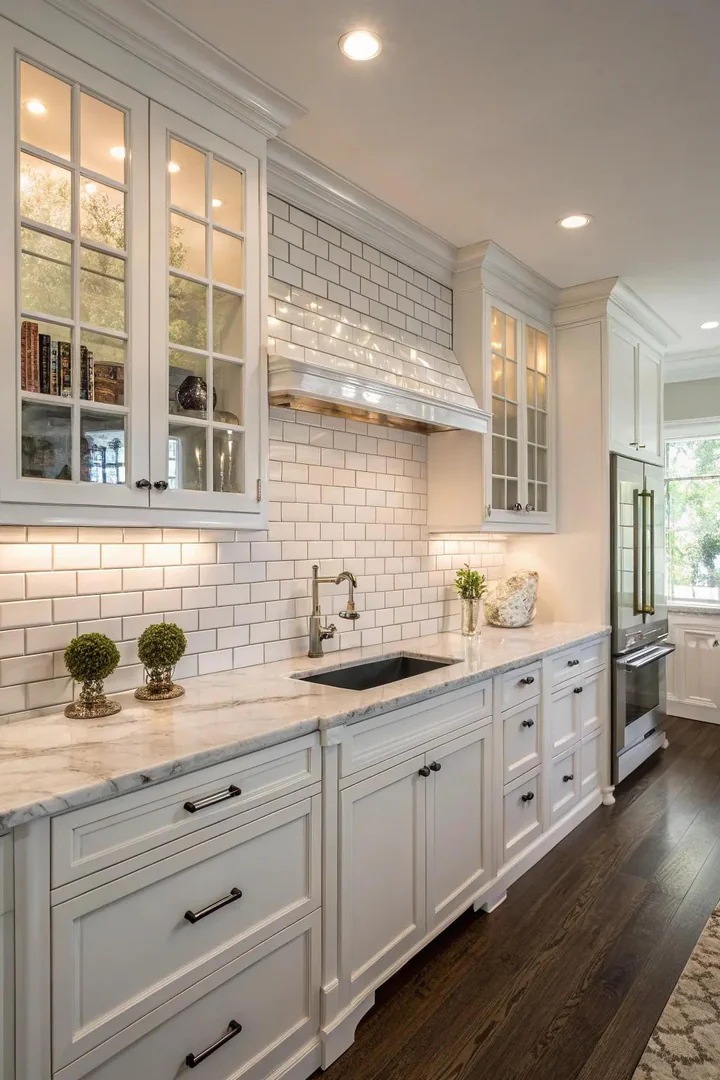
3-by-6-inch white ceramic subway tiles ($1 to $3 per square foot from Home Depot, Lowe’s, or Daltile) in a running bond (brick) pattern create the most popular kitchen backsplash in American homes because the clean, rectangular format works with every cabinet color, countertop material, and kitchen style from farmhouse to modern. Daltile Rittenhouse Square ($1.50 per square foot in Arctic White) and MSI Arctic White Subway ($2 per square foot) are the two best-selling white subway tiles in the United States.
A white subway backsplash with dark grout (Mapei Keracolor U in Charcoal, $15 per 10-pound bag) creates a bold grid pattern where each tile is outlined. A white subway backsplash with white grout (Polyblend Plus in Bright White) creates a monochromatic, continuous surface where the grout lines disappear. A herringbone, vertical stack, or crosshatch pattern (using the same 3-by-6-inch tile turned at angles) adds visual movement without changing the tile itself.
2. Vibrant Mosaic Patterns
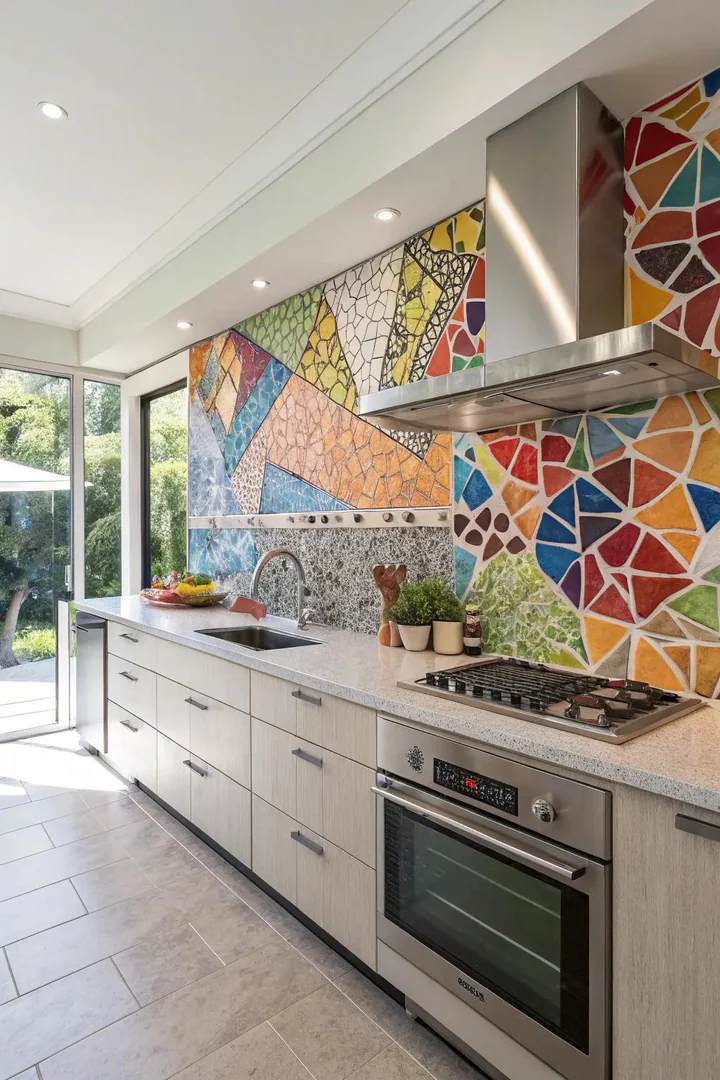
Glass mosaic tiles ($8 to $25 per square foot from Tile Bar, Mosaic Tile Outlet, or Daltile) in 1-by-1-inch or 2-by-2-inch squares mounted on mesh-backed sheets (12 by 12 inches per sheet) create a multi-colored, highly reflective backsplash with intense color depth. Glass mosaics reflect 20% to 40% more light than ceramic tiles because the translucent glass body allows light to pass through, bounce off the adhesive or wall behind, and return through the glass surface, producing a depth of color that opaque ceramic cannot match.
Popular glass mosaic blends: Jeffrey Court Morning Blend ($15 per square foot, blue-green-white), Elida Ceramica Earth Stone ($10 per square foot, brown-tan-cream), and MSI Calypso Interlocking ($14 per square foot, gray-white-blue). A full-wall mosaic backsplash (countertop to ceiling, 15 to 30 square feet) costs $150 to $500 in tile. Glass mosaics require white thinset mortar (not gray, which darkens the glass from behind) and unsanded grout (sanded grout scratches the glass surface during installation).
3. Hexagon Tile Designs
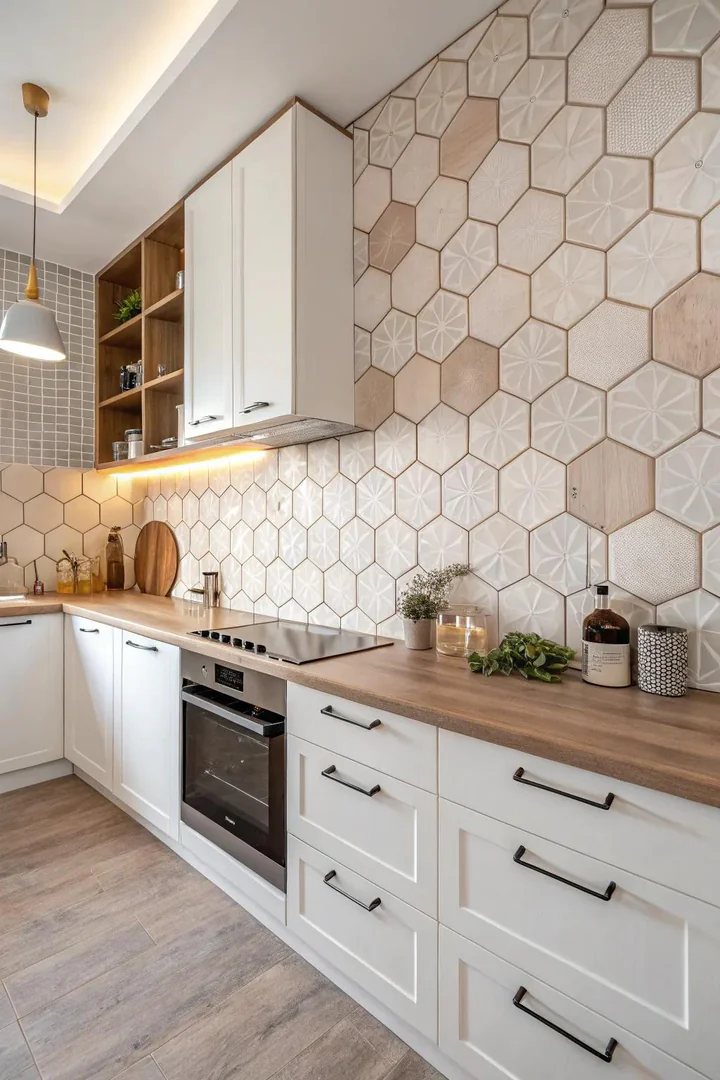
Hexagonal tiles ($5 to $15 per square foot in porcelain, marble, or ceramic) in 2-inch, 3-inch, or 4-inch sizes create a honeycomb pattern that reads as modern-geometric while maintaining an organic, natural feel. A white marble hexagon (Carrara White 2-inch Hexagon Mosaic, $12 per square foot from The Tile Shop or Floor & Decor) provides the timeless elegance of marble in a contemporary format. A matte porcelain hexagon in black, navy, or forest green ($6 to $10 per square foot) creates a bold, saturated backsplash.
Hexagon tiles allow creative edge treatments: a clean, straight horizontal cut line at the top of the backsplash (standard) or a raw, unfinished edge where individual hexagons extend above and below the line in a staggered, organic fade (trending, requires careful layout planning and additional tile for waste). A hex backsplash with a raw-edge top line that dissolves into the painted wall above creates a decorative transition found in upscale kitchen renovations.
4. Rustic Brick Veneer
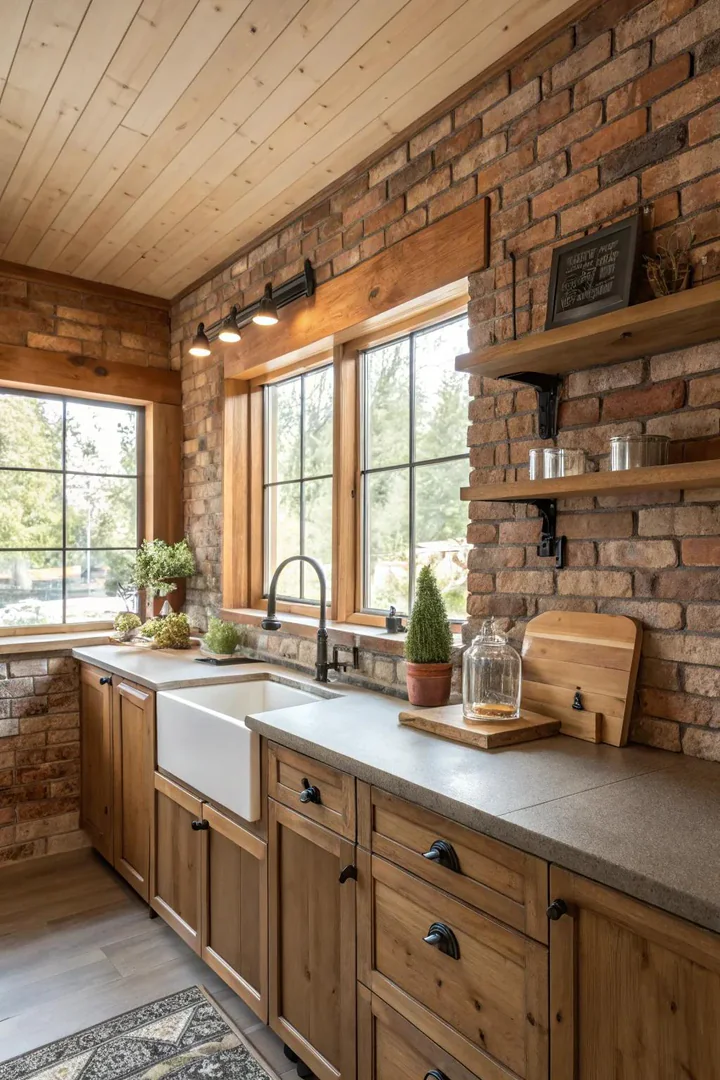
Thin brick veneer tiles ($6 to $12 per square foot from Old Mill Brick at Home Depot, Brickweb, or General Shale) in 1/2-inch-thick slices of real fired clay brick create an exposed-brick backsplash with the authentic texture, color variation, and aged character of full bricks at a fraction of the weight and thickness. Thin brick installs directly on drywall with construction adhesive or modified thinset, eliminating the structural reinforcement required by full-depth brick.
Choose whitewashed brick (brick veneer coated with a diluted white paint or lime wash for a faded, European farmhouse look), natural red-orange brick (classic American industrial), or reclaimed-look brick (tumbled edges and varied color for an aged appearance). Seal the brick surface with a penetrating brick sealer ($20 per quart from Thompson’s WaterSeal or Seal-Krete) to prevent cooking grease and food splashes from staining the porous clay surface. Brick veneer suits farmhouse, industrial, and loft-style kitchens where the rough, textural surface complements natural wood, iron, and concrete materials.
5. Marble Slab Backsplash
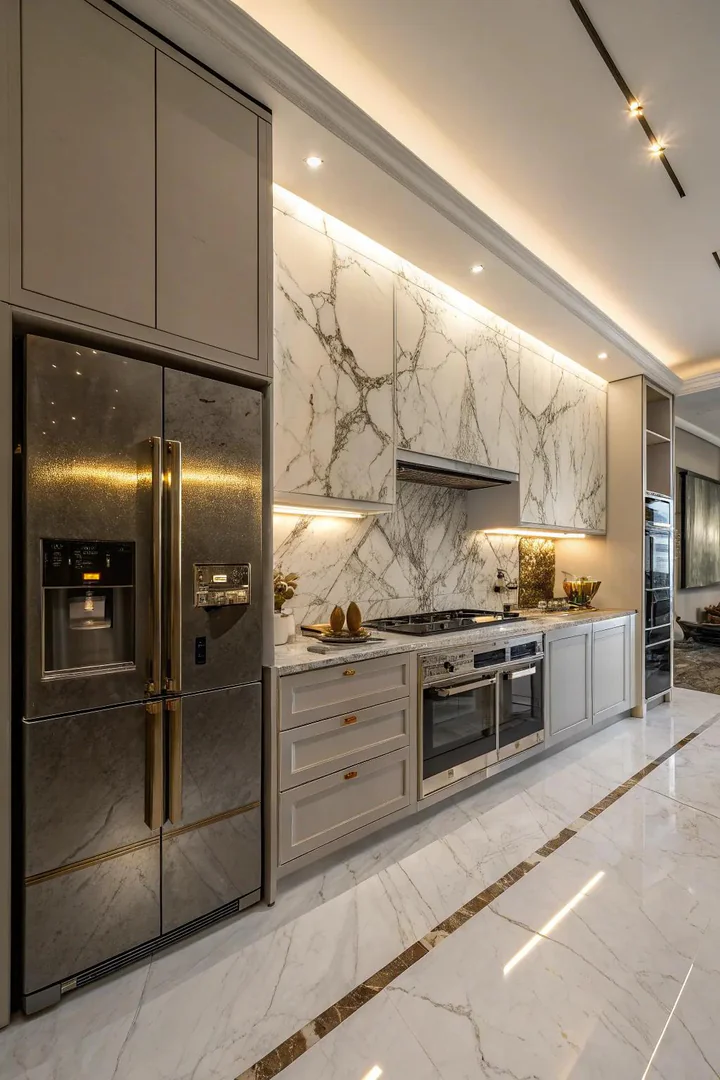
A full-slab marble backsplash ($40 to $100 per square foot installed for Calacatta Gold, Statuario, or Carrara marble) cut from the same slab as the countertop creates a continuous, vein-matched stone surface that flows from the horizontal counter up the vertical backsplash wall without a grout line or material change. A bookmatched marble backsplash (two slabs cut sequentially and opened like a book to create a mirrored vein pattern) is the highest-end backsplash treatment found in luxury kitchen renovations.
Marble requires sealing with a penetrating stone sealer (StoneTech BulletProof Sealer, $35 per quart, applied every 6 to 12 months) to resist staining from olive oil, red wine, lemon juice, and tomato sauce. Honed (matte) marble hides etching and wear better than polished marble but shows oil stains more visibly. A slab backsplash eliminates grout lines (the most stain-prone and maintenance-intensive part of any tiled backsplash), making cleaning a single wipe across a smooth stone surface.
6. Mirrored Glass Panels
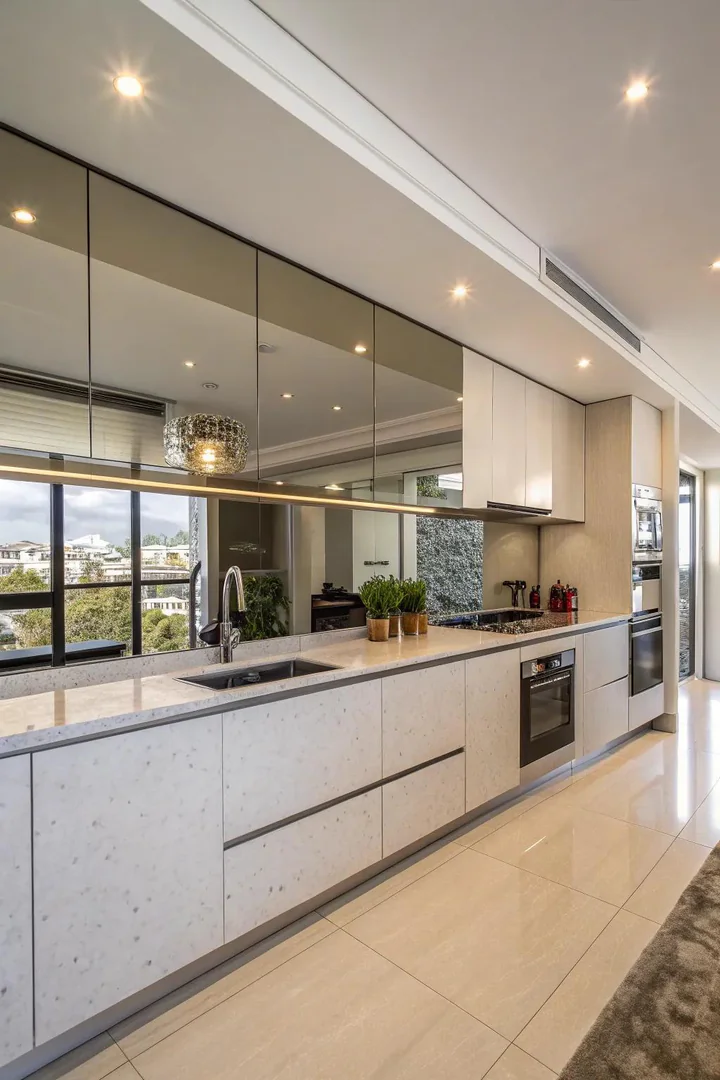
Antiqued mirror panels ($15 to $30 per square foot for custom-cut antiqued mirror from a local glass shop) or mirrored subway tiles ($10 to $20 per square foot from Tile Bar or BuildDirect) create a backsplash that doubles the visual depth of the kitchen by reflecting the opposite wall, ceiling, and lighting. Antiqued mirror (created by chemically removing portions of the silver backing to produce a clouded, spotted, vintage-mercury-glass effect) adds reflectivity without the clinical, bathroom-mirror look of clear modern mirror.
A mirrored backsplash works best in small kitchens (under 100 square feet) where the reflection doubles the perceived room size, and in dark kitchens where the mirror bounces available light across the room. Clean mirrored backsplash surfaces with a glass cleaner ($4 per bottle of Windex or Sprayway) and a microfiber cloth. Mirror panels show fingerprints, water spots, and grease more visibly than opaque tiles, requiring more frequent wiping (daily in a busy kitchen). See more small-space strategies at wainscoting ideas for your kitchen for wall treatments that add depth without losing space.
7. Hand-Painted Artisan Tiles
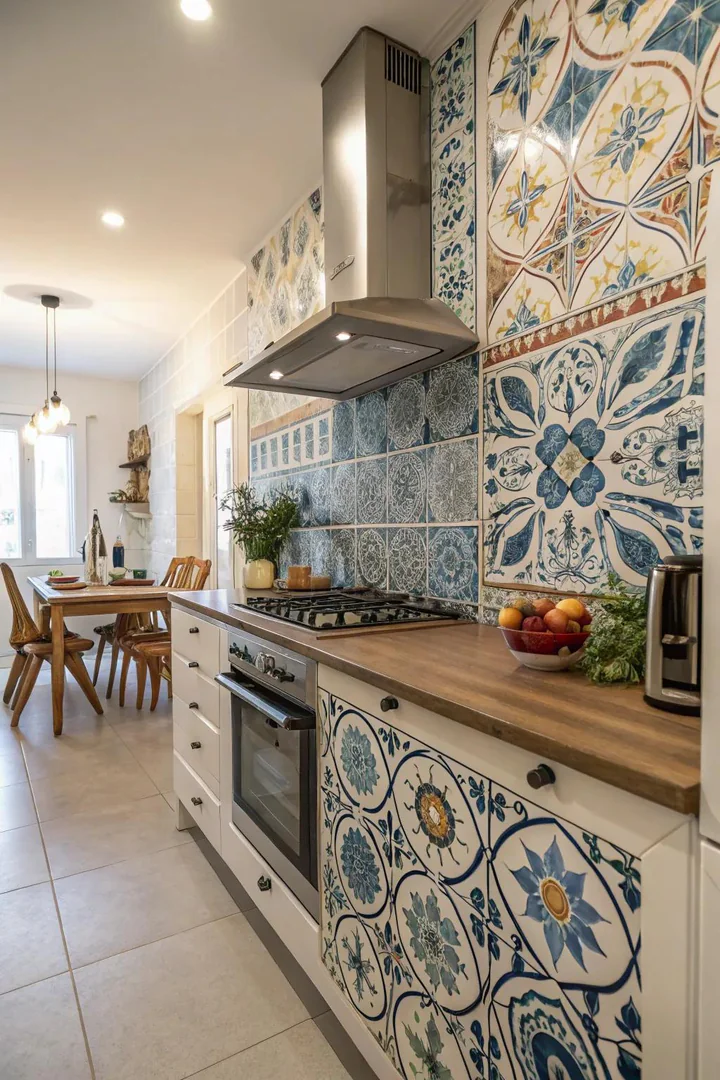
Hand-painted ceramic tiles ($15 to $40 per square foot from Tabarka Studio, Cle Tile, or imported directly from Portuguese, Spanish, Mexican, or Moroccan tile workshops) feature individually painted floral, geometric, or scenic designs where each tile varies slightly from the next due to the artisan’s hand. A hand-painted backsplash reads as custom art installed in the kitchen wall, not mass-produced decorative tile.
Popular hand-painted styles: Portuguese Azulejo (blue-and-white geometric and scenic tiles, $20 to $35 per square foot), Mexican Talavera (multicolored floral and animal motifs, $10 to $25 per square foot from Direct from Mexico or MexicanTiles.com), and Moroccan Zellige (hand-cut, hand-glazed terracotta tiles in a single solid color with glaze variations, $15 to $30 per square foot from Cle Tile). Hand-painted tiles suit Mediterranean, French country, Spanish colonial, and eclectic kitchens where the artisan quality adds character and warmth.
8. Metallic Tile Accents
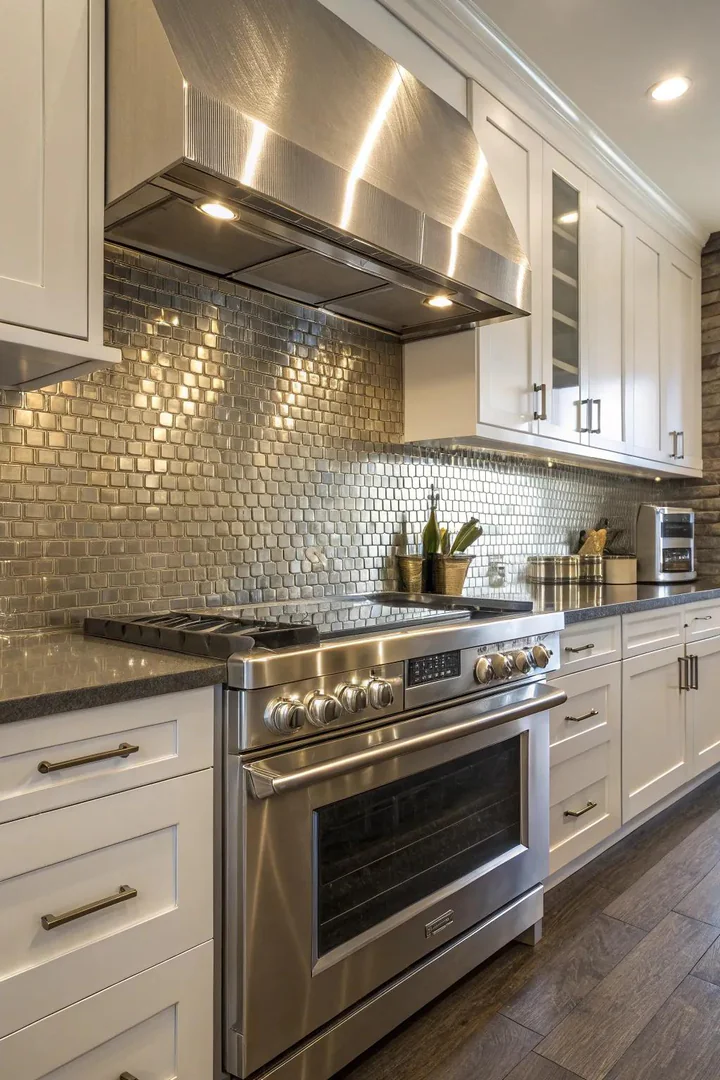
Stainless-steel, copper, or brushed-nickel mosaic tiles ($10 to $30 per square foot from Aspect Peel & Stick Metal Tile, $8 per square foot for a budget option, or Eden Mosaic Tile, $20 to $30 per square foot for premium real-metal mosaics) create a reflective, industrial-modern backsplash that coordinates with stainless-steel appliances, pot racks, and range hoods. Metal tiles in a 1-by-3-inch brick pattern, a 1-by-1-inch square grid, or a random-size linear mosaic add texture and light play to the backsplash zone.
A full metallic backsplash reads as commercial or restaurant-inspired. A metallic accent strip (a single horizontal row of metal tiles at the midpoint or top of a ceramic or stone backsplash, or a 4-by-4-inch metallic tile inserted among plain tiles at regular intervals) adds shimmer without overwhelming the kitchen. Copper tiles develop a natural patina (darkening from bright orange to warm brown over 6 to 12 months) that adds living character; seal copper with a clear lacquer ($12 per can from Rust-Oleum) to preserve the original bright finish.
9. Nature-Inspired Stone Tiles
Natural stone mosaic tiles ($10 to $25 per square foot) in pebble, river rock, stacked ledgestone, or split-face travertine create a textured, organic backsplash that brings the outdoors into the kitchen. Sliced pebble tiles ($12 per square foot from Emser Tile or Island Stone, flat-cut pebbles mounted on mesh for a smooth, grout-able surface) in tan, gray, white, or mixed earth tones add a spa-like, natural element to the backsplash.
Stacked ledgestone panels (Norstone Charcoal Rock Panel, $15 per square foot; MSI Golden Honey Ledger Panel, $8 per square foot) in 6-by-24-inch interlocking panels create a 3D textured wall with 1/2-inch to 1-inch depth variation. The textured surface catches shadows and creates visual depth that flat tiles cannot achieve. Seal natural stone backsplashes with a penetrating sealer before grouting and again after grouting to prevent grease and food stains from penetrating the porous stone surface.
10. Polished Concrete
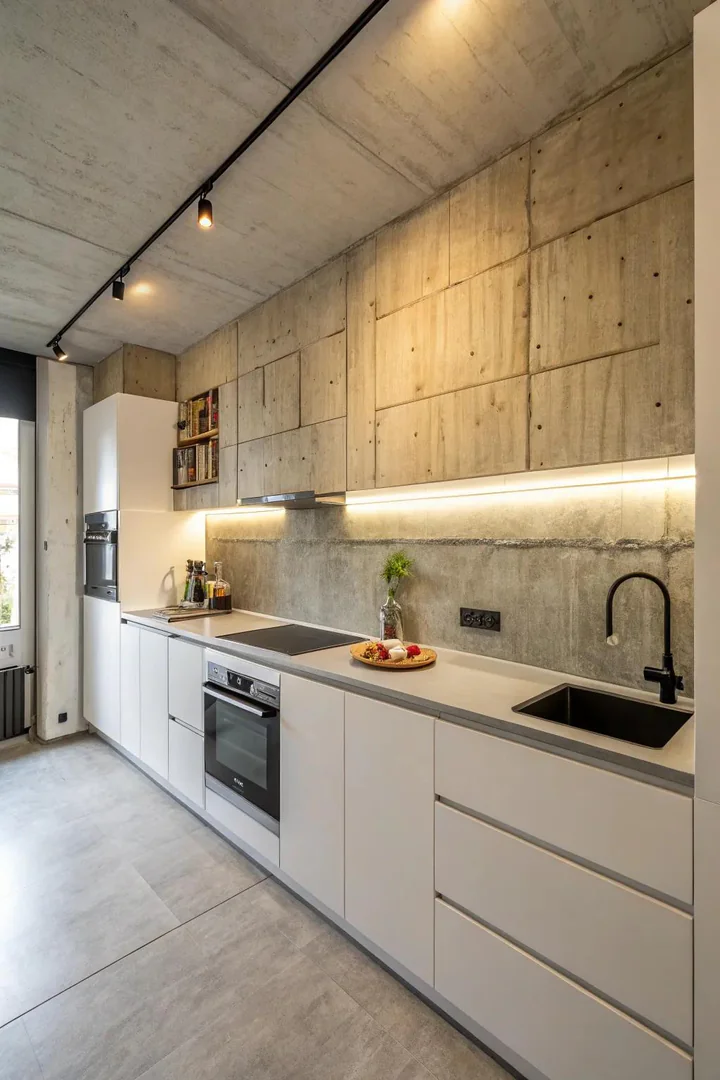
A microcement or concrete overlay backsplash ($8 to $15 per square foot for materials; Ardex Pandomo Loft, $40 per bag covering 30 to 50 square feet, or Beton Cire, $60 per kit covering 25 square feet) applied directly over existing tile, drywall, or plaster creates a continuous, grout-free surface with the industrial-modern look of poured concrete. Microcement applies in 2 to 3 thin coats (each 1/16 to 1/8 inch thick) with a steel trowel, producing a smooth, slightly textured surface with subtle color variation.
Available in gray, charcoal, white, beige, and custom tinted colors, microcement backsplashes suit minimalist, industrial, and contemporary kitchens where the absence of grout lines and tile edges creates a calm, monolithic wall surface. Seal the cured microcement with a food-safe polyurethane sealer ($20 per quart from Seal-Once or Ghostshield) to prevent water and oil absorption. A concrete backsplash paired with concrete countertops creates a unified material story; paired with warm butcher-block countertops, the contrast between industrial gray and warm wood adds textural tension.
11. Textured Natural Stone
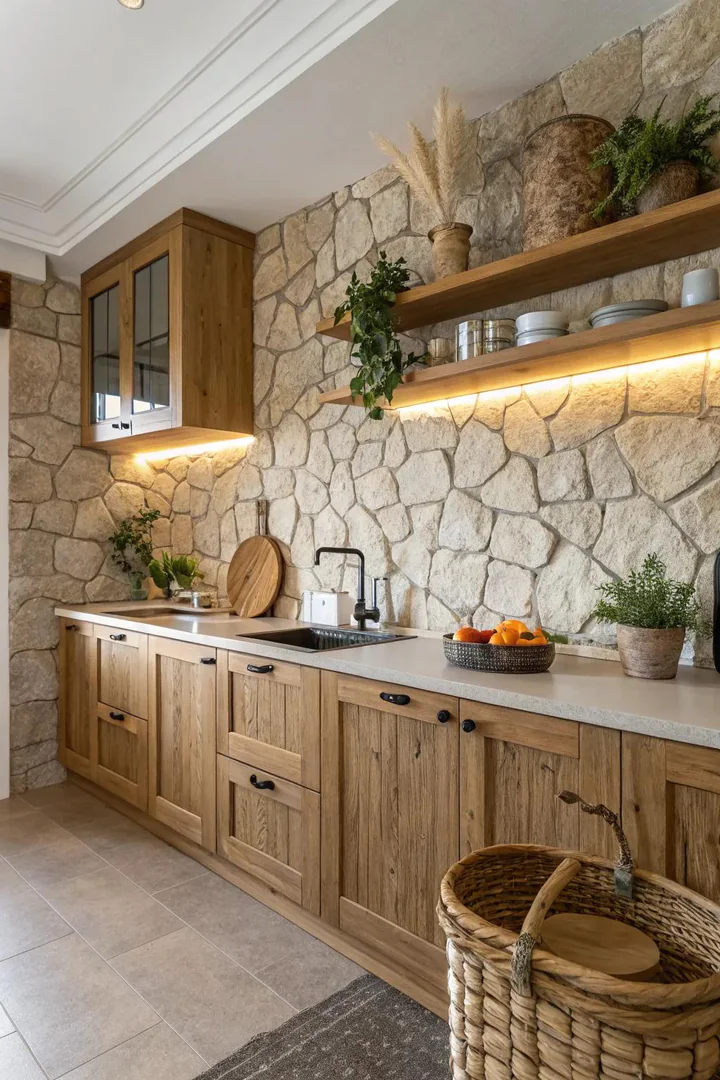
Tumbled travertine ($4 to $10 per square foot from Floor & Decor or Home Depot in 4-by-4-inch or 3-by-6-inch formats), honed slate ($5 to $12 per square foot in charcoal, copper, or multicolor), or sandstone ($8 to $15 per square foot) tiles with naturally rough, pitted, or riven surfaces create a tactile backsplash with physical texture that smooth ceramic tiles lack. Tumbled travertine (travertine tiles mechanically tumbled in a drum to round the edges and pit the surface) has a soft, aged appearance that reads as Mediterranean or Old World.
The natural pitting and texture in tumbled stone traps grease and food particles more readily than smooth surfaces, requiring a food-safe penetrating sealer applied before grouting and reapplied annually. Use a sanded grout ($12 per 10-pound bag of Mapei Keracolor S) with tumbled stone because the wide, irregular grout joints (1/8 to 1/4 inch) require the structural strength of sand-reinforced grout. Choose a grout color close to the stone’s dominant tone (warm beige for travertine, charcoal for slate) to create a blended, natural-looking installation.
12. Penny Round Tiles
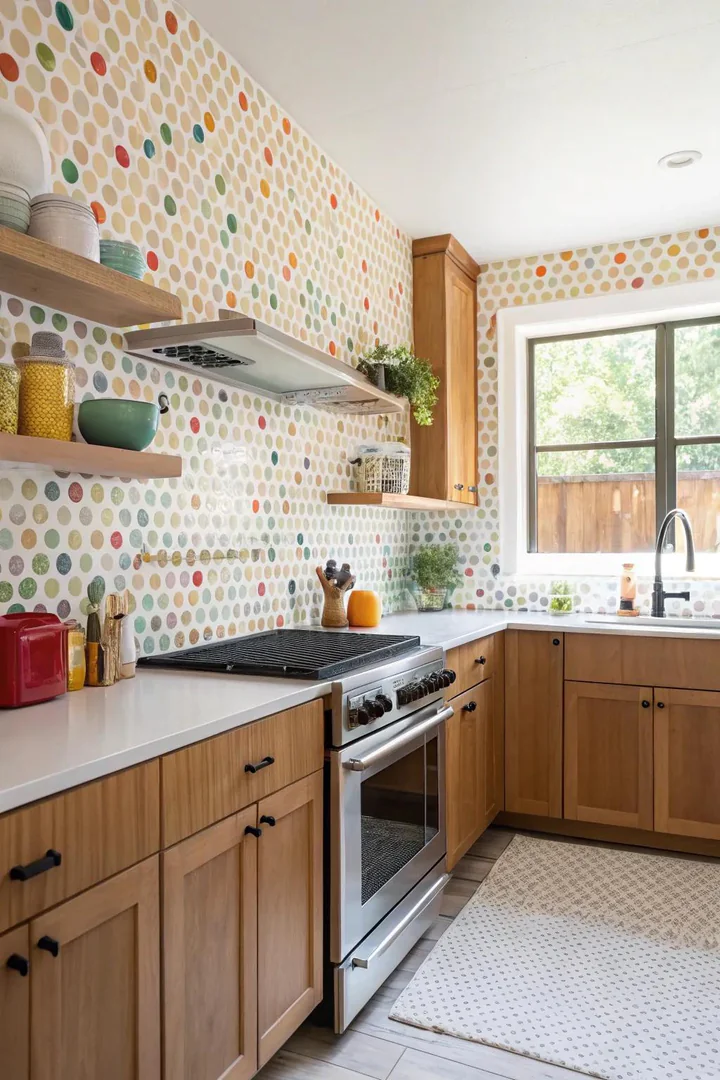
Penny round tiles ($5 to $15 per square foot in porcelain, ceramic, or glass; 3/4-inch diameter circles mounted on 12-by-12-inch mesh-backed sheets) create a vintage-inspired backsplash with a repeating circular pattern that reads as retro, playful, and textural. Merola Tile Hudson Penny Round ($8 per square foot in matte white, glossy black, or mixed pastels from Home Depot) is the most popular penny-round tile for kitchen backsplashes.
Penny tiles in a single color (all white, all black, all sage green) create a subtle texture pattern. Penny tiles in mixed colors (random blend of 3 to 5 coordinated tones) create a confetti-like visual energy. A penny-tile backsplash requires unsanded grout (the narrow joints between 3/4-inch circles are too tight for sanded grout) and careful grout application (a grout float pressed diagonally across the curved tile surfaces, followed by a damp sponge wipe within 15 minutes). Penny tiles suit vintage, mid-century modern, retro, and cottage kitchens.
13. Warm Terracotta Tones
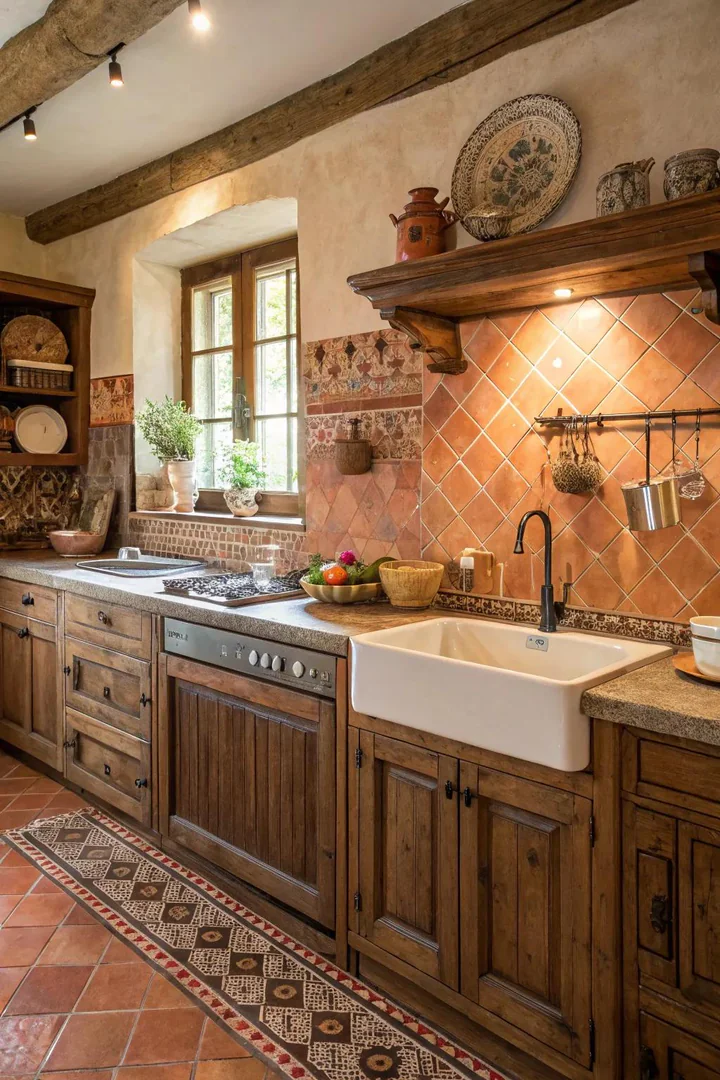
Terracotta backsplash tiles ($6 to $15 per square foot for handmade terracotta from Tabarka Studio, Cle Tile, or imported directly from Italian, Portuguese, or Mexican workshops; $3 to $6 per square foot for machine-made terracotta-look porcelain from Merola Tile or Roca) bring warm, earthy, sun-baked color into the kitchen. Handmade terracotta has natural color variation (ranging from pale peach to deep rust-red within a single batch) and surface irregularities (slight warping, dimpling, and glaze pooling) that machine-made tiles lack.
A terracotta backsplash pairs with cream or white cabinets, sage-green walls, and warm wood countertops for a Mediterranean, Spanish colonial, or French provincial kitchen. Terracotta-look porcelain tiles provide the warm color and visual character of terracotta with the low-maintenance durability of porcelain (no sealing required, stain-resistant, dishwasher-safe cleaning). Authentic handmade terracotta requires annual sealing with a penetrating stone sealer to prevent oil and moisture absorption through the porous clay body. Browse more Mediterranean-inspired kitchen designs at french country kitchen ideas for matching backsplash, flooring, and cabinet combinations.
14. Moroccan Patterned Tiles
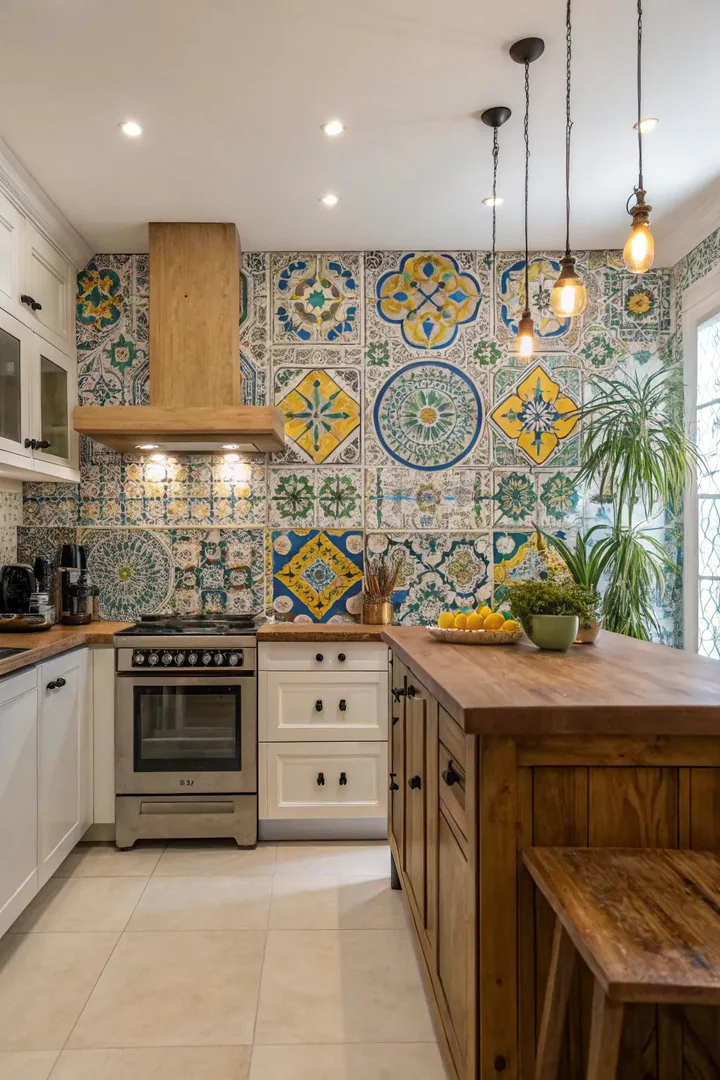
Encaustic cement tiles ($8 to $20 per square foot from Cement Tile Shop, Granada Tile, or Villa Lagoon Tile) in 8-by-8-inch squares with hydraulic-pressed geometric or floral patterns create a bold, high-contrast backsplash with the handcrafted character of traditional Moroccan and Mediterranean tile work. Encaustic tiles are not painted or glazed; the pattern is created by pouring colored cement into a divided metal mold, which embeds the pattern through the full 5/8-inch thickness of the tile.
Popular Moroccan patterns: Fez (a star-and-cross geometric in black and white), Alhambra (an interlocking arabesque in blue and white), and Casablanca (a bold floral medallion in multiple colors). Encaustic cement tiles require sealing before and after grouting with a penetrating tile sealer ($25 per quart from Miracle Sealants 511) because the unglazed cement surface absorbs grout pigment and stains permanently if unsealed. A 4-tile repeating pattern (each tile rotated 90 degrees to form a larger motif) is the traditional installation method.
15. Glass Tile Backsplash
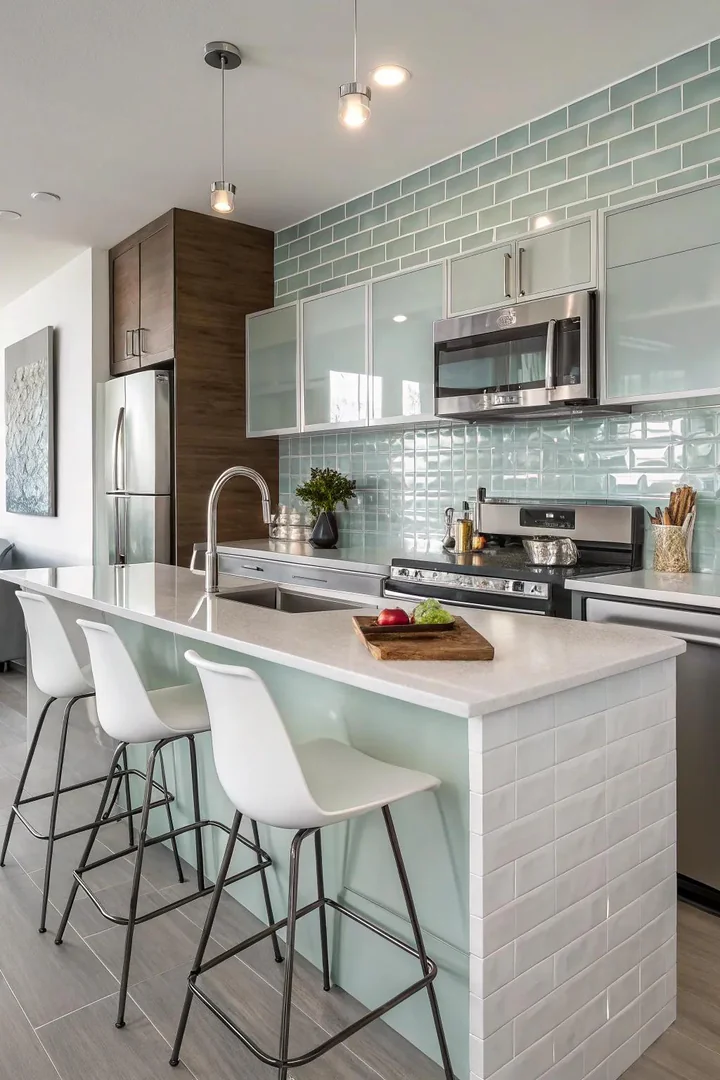
Glass subway tiles ($8 to $20 per square foot from Tile Bar, Glass Tile Oasis, or Ann Sacks) in 3-by-6-inch or 3-by-12-inch formats create a luminous, light-catching backsplash with a depth of color that ceramic subway tiles cannot match. A glass subway tile has a translucent body (the color is applied to the back of the tile, and light passes through the glass, reflects off the backing, and returns through the glass) that makes the tile glow from within under kitchen lighting.
Glass tiles scratch more easily than ceramic or porcelain and show scratches visibly because the transparent surface reveals every mark. Avoid abrasive sponges and powdered cleansers on glass backsplashes; clean with a soft cloth and glass cleaner. Glass tiles are impervious to moisture (zero water absorption) and resist mold and mildew growth, making glass a superior backsplash material for the zone behind the sink where daily water splashing occurs.
16. Patterned Cement Tiles
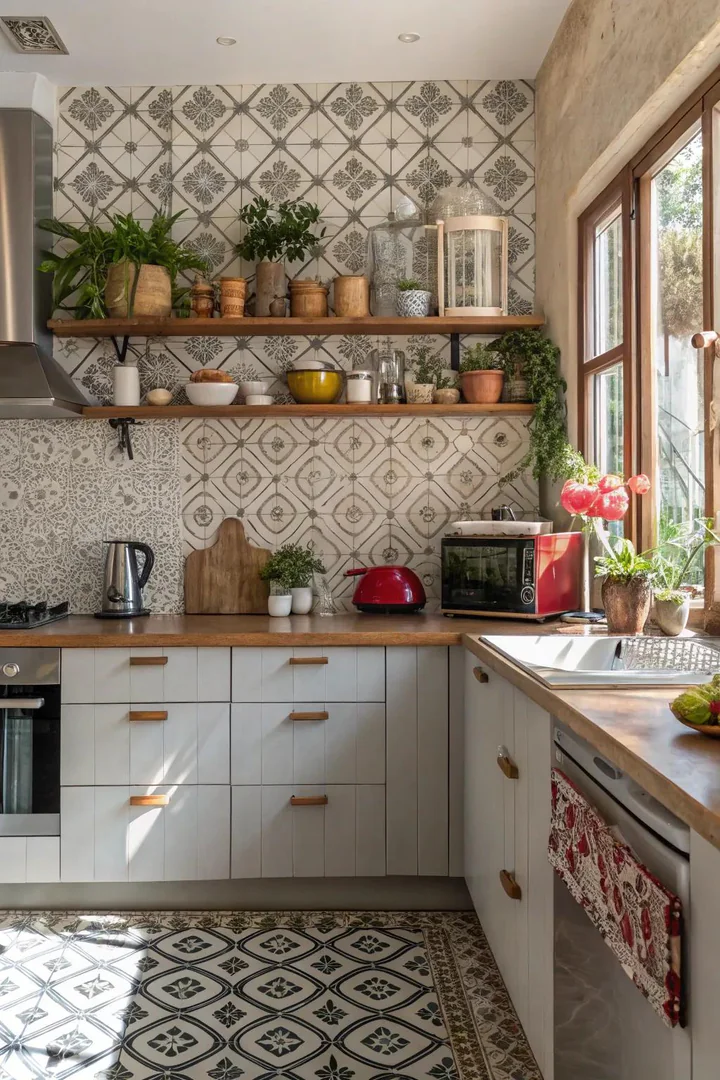
Modern geometric cement tiles ($10 to $20 per square foot from Cement Tile Shop, Clé Tile, or Popham Design) in contemporary patterns (chevron, herringbone, diamond, half-circle, and abstract graphic motifs) in 2-color or 3-color palettes create a statement backsplash that functions as wall art. Modern cement tiles update the traditional Moroccan encaustic format with graphic, minimalist patterns that suit contemporary and mid-century modern kitchens.
A black-and-white geometric cement tile backsplash ($12 per square foot) paired with white cabinets and dark countertops creates a high-contrast, graphic kitchen. A pastel-toned geometric (soft pink, mint, and cream) paired with natural wood cabinets creates a Scandinavian-modern kitchen. Cement tiles weigh more than ceramic (approximately 3 pounds per tile versus 1 pound) and require a sturdy substrate (cement board or 3/4-inch plywood, not drywall alone for full-height installations) to support the additional weight.
17. Minimalist White Tiles
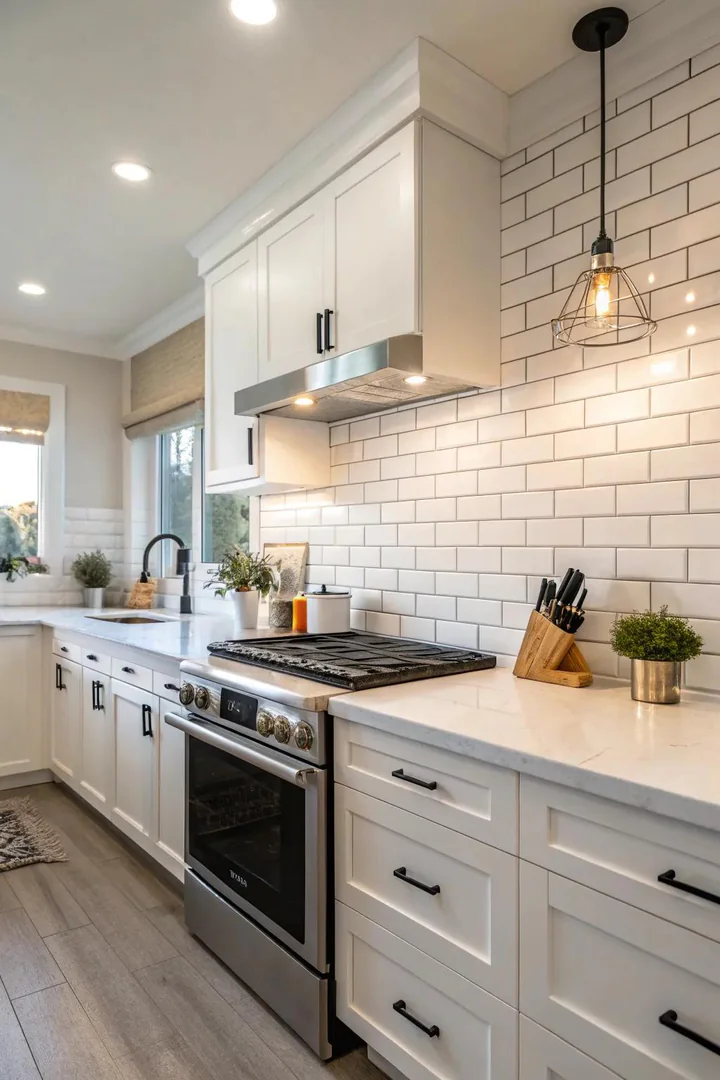
A large-format white tile (12-by-24-inch, 4-by-16-inch, or 6-by-24-inch porcelain in matte or satin finish, $3 to $8 per square foot from Daltile, MSI, or Florida Tile) creates a minimalist backsplash with fewer grout lines than standard subway tile, producing a cleaner, more modern look. A 12-by-24-inch tile in a running bond pattern has 60% fewer grout lines than a 3-by-6-inch subway tile covering the same area, reducing visual clutter and simplifying cleaning.
A matte white large-format tile reads as Scandinavian-modern. A satin white (subtle sheen, not full gloss) reads as contemporary-classic. A textured white (3D wave, linen-texture, or ribbed surface) adds tactile interest without introducing color, maintaining the all-white minimalist palette while preventing the backsplash from looking flat or sterile. Use a matching white grout (Mapei Keracolor in White) with minimal grout joints (1/16 inch with a precision tile spacer) for the cleanest, most grout-free appearance.
18. Wood-Look Porcelain Tiles
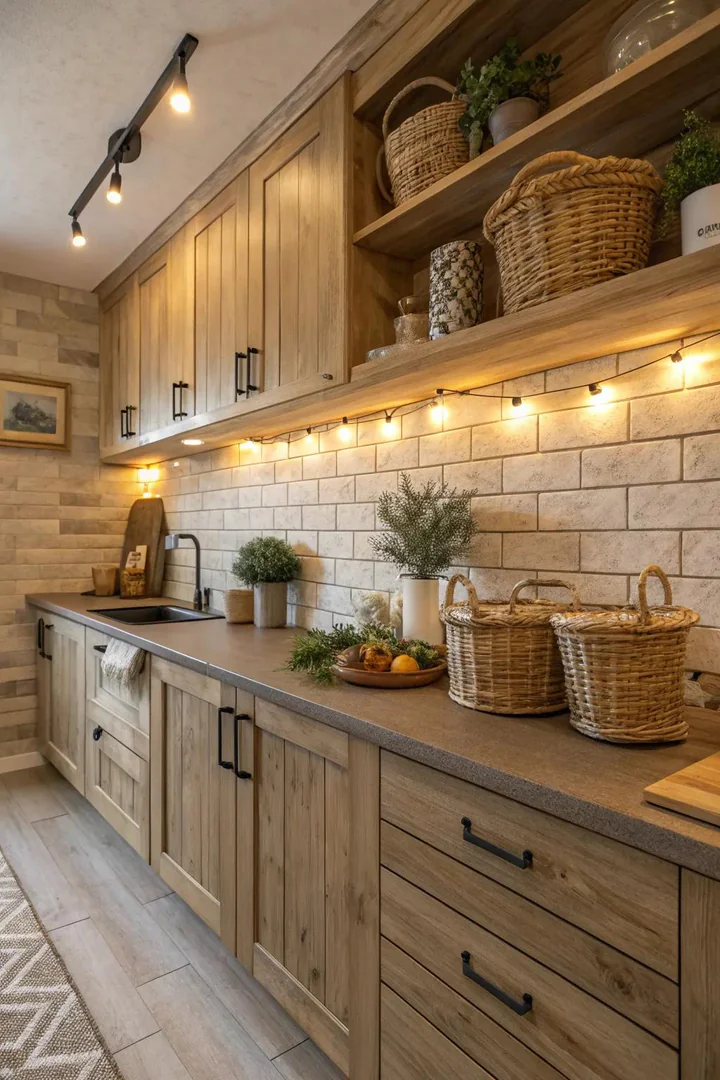
Wood-look porcelain plank tiles ($3 to $10 per square foot from Daltile, MSI, or Marazzi; 6-by-24-inch or 8-by-36-inch planks) in oak, walnut, reclaimed-barn-board, or driftwood finishes create a warm, natural backsplash that provides the visual warmth of real wood with the moisture resistance and durability of porcelain. Real wood backsplashes warp, stain, and degrade in the wet, greasy zone behind the sink and stove; wood-look porcelain resists all three.
Install wood-look planks in a horizontal running bond (the most common wood-floor pattern applied to the wall), a vertical stack (creating a board-and-batten wall effect), or a herringbone pattern (for a high-end parquet look). A wood-look backsplash in a warm oak tone paired with white cabinets and white countertops adds a natural accent wall. A dark walnut wood-look backsplash paired with sage-green cabinets and brass hardware creates a nature-inspired, organic-modern kitchen. Use a grout color matched to the dominant plank tone to minimize visible grout lines and maintain the wood-plank illusion. Pair wall textures with coordinating accents at wheelchair accessible kitchen ideas for accessible wall treatments.
19. Chevron Pattern Tiles
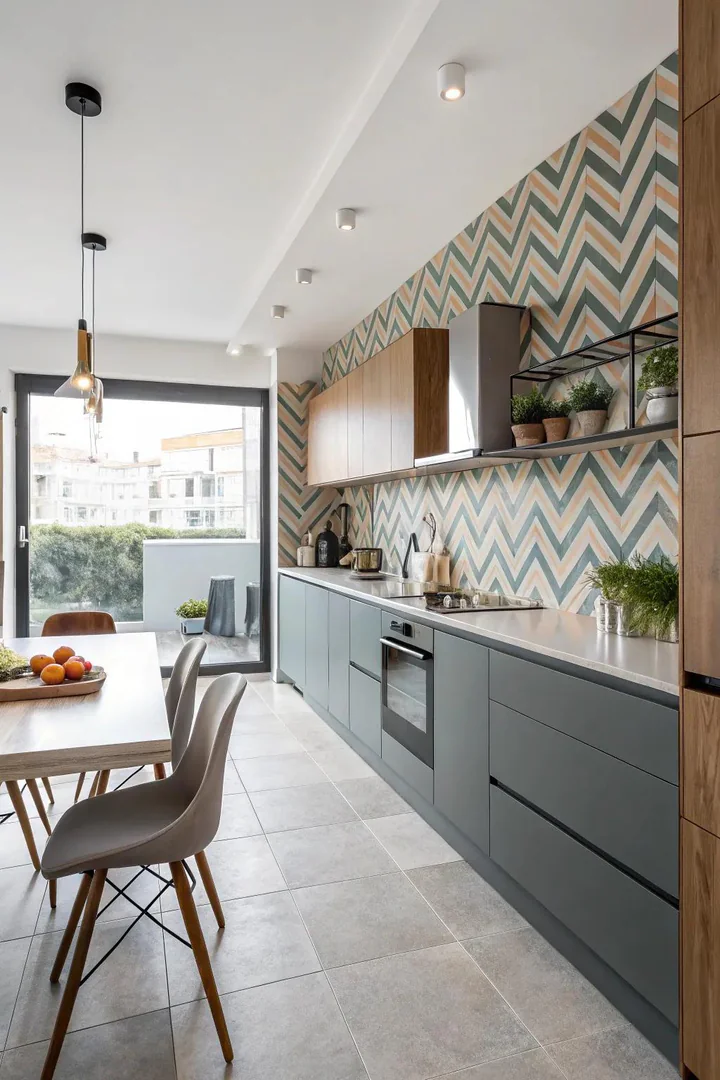
Chevron tiles ($8 to $18 per square foot in marble, porcelain, or ceramic; parallelogram-shaped tiles cut at angles that form a continuous zigzag V pattern) create a directional backsplash with strong diagonal movement. A white marble chevron (Carrara White Chevron Mosaic, $15 per square foot from the Tile Shop) produces a classic, refined zigzag with natural veining running through the pattern. A matte porcelain chevron in a bold color (navy, emerald, or terracotta) produces a modern, graphic statement.
Chevron differs from herringbone: chevron tiles are cut at matching angles so the zigzag lines form a clean, continuous V, while herringbone uses rectangular tiles (no angled cuts) that create a broken, staggered zigzag. Chevron is more precise and formal; herringbone is more casual and forgiving of slight installation variations. A chevron backsplash in a contrasting color (dark chevron on a light wall, or light chevron in a dark kitchen) maximizes the pattern’s visual impact.
20. Geometric Shape Tiles
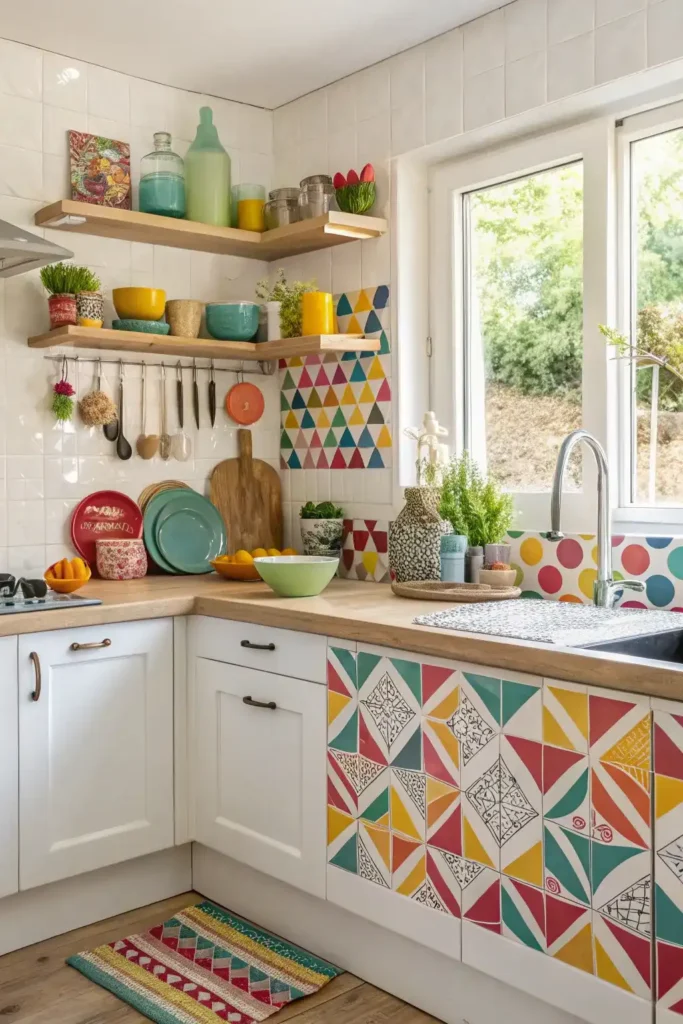
Geometric tiles in non-standard shapes (arabesque/lantern, fish-scale/fan, diamond, picket/elongated hexagon, triangle, and ogee) cost $8 to $25 per square foot and create a backsplash with architectural pattern interest that rectangular and square tiles cannot achieve. A fish-scale tile (Merola Tile Concha, $10 per square foot in glossy white, matte black, or blue) creates a scalloped, mermaid-inspired wall with overlapping half-circles that catch light at varying angles.
An arabesque/lantern tile (MSI Whisper White Arabesque, $12 per square foot) in glossy white ceramic creates a Moorish-inspired backsplash with elongated curves. A picket tile (an elongated hexagon, 3 inches wide by 10 to 12 inches tall, $8 to $15 per square foot) installed vertically creates a modern, streamlined wall pattern. Geometric tiles require more careful layout planning than rectangular tiles because the irregular shapes create complex edge conditions at the backsplash perimeter, often requiring custom cuts with a wet tile saw. Browse the full design library at sunflower kitchen cabinets for color-coordinating tile and cabinet combinations, or visit The Designers Company for more kitchen design ideas.
How to Install a Kitchen Backsplash
1. Prepare the Wall Surface
Turn off power to any electrical outlets in the backsplash zone at the breaker panel. Remove outlet covers and switch plates. Clean the wall with TSP solution ($5 per 1-pound box, mix 1/4 cup per gallon of warm water) to remove grease and kitchen residue. Fill holes and dents with drywall spackle ($5 per 8-ounce tube), sand smooth with 120-grit sandpaper, and prime the wall with a bonding primer if installing peel-and-stick tiles or if the wall surface is glossy paint.
2. Plan the Tile Layout
Measure the backsplash area (height from countertop to upper cabinet bottom, width of each wall section). Calculate square footage (height times width for each section, then total all sections). Order 10% to 15% extra tile for cuts, waste, and future repairs. Dry-lay tiles on the countertop to plan the pattern, centering the layout so cut tiles at the edges are equal on both sides. Mark a level horizontal reference line on the wall 1 tile height above the countertop using a 4-foot level ($15 from Stanley or Empire).
3. Set Tiles with Thinset and Grout
Spread modified thinset mortar ($8 per 10-pound bag of Custom Building Products VersaBond) onto the wall with a 1/4-inch square-notch trowel ($6), covering a 2-to-3-square-foot section at a time. Press tiles into the mortar with a slight twist, insert tile spacers (1/16-inch for minimal grout lines, 1/8-inch for standard), and check level after every row. Allow 24 hours for the mortar to cure before grouting. Mix grout ($12 per 10-pound bag), spread with a rubber grout float held at 45 degrees, and wipe excess with a damp sponge within 15 minutes.
4. Seal and Finish
Apply a penetrating grout sealer ($10 per 8-ounce bottle of Miracle Sealants 511 Spray-On Grout Sealer) to all grout lines 48 hours after grouting. Seal natural stone tiles (marble, travertine, slate, terracotta) with a stone-specific penetrating sealer before and after grouting. Reinstall outlet covers (use outlet-box extenders, $1 each, if the tile thickness pushes the outlet box behind the new tile surface). Apply a bead of clear silicone caulk ($5 per tube from DAP or GE) at the seam where the backsplash meets the countertop to create a flexible, waterproof joint.
Backsplash Material Comparison
| Material | Cost/sq ft | Maintenance | Durability | Best Kitchen Style |
|---|---|---|---|---|
| Ceramic subway | $1–$3 | Low (wipe clean) | 30+ years | Any style |
| Glass mosaic | $8–$25 | Low (glass cleaner) | 20+ years | Modern, contemporary |
| Natural marble | $40–$100 | High (seal 1–2x/year) | Lifetime | Traditional, luxury |
| Encaustic cement | $8–$20 | Medium (seal annually) | 20+ years | Mediterranean, eclectic |
| Porcelain (large format) | $3–$10 | Very low | 30+ years | Minimalist, modern |
| Thin brick veneer | $6–$12 | Medium (seal once) | 20+ years | Industrial, farmhouse |
Frequently Asked Questions
How much does a kitchen backsplash cost?
A kitchen backsplash costs $300 to $2,500 for a typical kitchen (15 to 30 square feet of coverage). Budget backsplashes ($300 to $600) use ceramic subway tiles at $1 to $3 per square foot plus $150 to $300 in supplies (mortar, grout, sealer, tools). Mid-range backsplashes ($600 to $1,500) use glass mosaic, porcelain, or cement tiles at $8 to $20 per square foot. High-end backsplashes ($1,500 to $2,500 or more) use natural marble slab, hand-painted artisan tiles, or custom mosaic installations. DIY installation saves $500 to $1,500 in labor costs.
Can you install backsplash tile over existing tile?
New tile can install directly over existing tile if the old tile surface is flat, firmly bonded to the wall (no loose, cracked, or hollow-sounding tiles), and clean. Sand the old tile surface with 80-grit sandpaper or a sanding block to create a rough tooth for the thinset mortar bond. Apply a bonding agent (Mapei ECO Prim Grip, $30 per gallon) to the old tile surface before spreading thinset for the new tiles. The new installation adds 3/8 to 1/2 inch of thickness to the wall, which may require outlet-box extenders for electrical outlets.
What backsplash is easiest to clean?
Large-format porcelain or ceramic tiles (12-by-24-inch or larger) with minimal grout lines are the easiest backsplash to clean because grout absorbs stains and requires scrubbing, while the glazed tile surface wipes clean with a damp cloth. Glass tiles and glass slab backsplashes are equally easy to clean (smooth, non-porous, no absorption) but show water spots and fingerprints more visibly. Natural stone (marble, travertine, slate) is the hardest to clean because the porous surface absorbs stains and requires periodic sealing.
How high should a kitchen backsplash be?
A standard kitchen backsplash extends from the countertop surface to the bottom of the upper cabinets, typically 15 to 20 inches of height. A full-height backsplash (countertop to ceiling, 42 to 54 inches) creates a more dramatic look and protects the entire wall. A 4-inch backsplash (a single row of tile or a stone slab strip just above the countertop) provides minimal splash protection and minimal visual impact. The area behind the range often extends higher (to the range hood, 24 to 36 inches above the countertop) even when the rest of the backsplash stops at the upper-cabinet line.
What is the most timeless backsplash material?
White ceramic subway tile in a 3-by-6-inch running bond pattern has remained in continuous use for over 120 years (first installed in the New York City subway system in 1904) and shows no signs of going out of style. White marble (Carrara, Calacatta, or Statuario) has been used in kitchens for centuries and remains a premium, enduring choice. Both materials work with every cabinet color, hardware finish, and kitchen style, making them the safest long-term backsplash investments for homeowners concerned about resale value and design longevity.