
Kitchen Bay Window Ideas: 16 Stunning Ways to Transform Your Space
A kitchen bay window gives you something most rooms lack — a pocket of extra floor space pushed out past the exterior wall, surrounded on three sides by glass. That combination of depth and light makes the bay window one of the most versatile architectural features in any kitchen, yet it often ends up empty or treated as a cluttered shelf for random items that have nowhere else to go.
The key to making a bay window work is deciding up front whether you want it to serve a function or make a visual statement. A breakfast bar, storage bench, or herb garden turns the alcove into a working part of the kitchen. Shutters, drapes, or a bold paint treatment turns it into the room’s focal point. Some of the best setups split the difference — a cushioned bench seat with hidden storage underneath, or a coffee station framed by floor-length curtains.
Below you will find 16 kitchen bay window ideas organized from structural additions like countertops and built-in shelving down to finishing touches like blinds and color treatments. Each idea includes specific product recommendations, sizing guidance, and installation tips so you can move from inspiration to action without a second research session.
1. Add Shutters for Timeless Charm

Plantation shutters fitted to each panel of a bay window give you precise control over light and privacy while adding a clean, architectural finish that works in traditional and modern kitchens alike. Choose two-and-a-half-inch louvers from brands like Hunter Douglas NewStyle or Norman Woodlore Plus for a kitchen setting — the smaller louver size blocks more of the view from outside while still letting you tilt the slats open for full daylight. Composite and PVC shutters outperform real wood in kitchens because they resist the moisture and grease that accumulate near cooking surfaces.
Mount the shutters inside the window frame for a flush, built-in look that does not interfere with the bay window’s angles. Each panel should open independently so you can swing the side panels flat against the wall for cleaning while keeping the center panel closed. Expect to spend between three-hundred and eight-hundred dollars per panel for custom-fit plantation shutters, with professional installation adding another one-hundred to two-hundred dollars. The investment pays back in energy efficiency — closed shutters add a measurable layer of insulation during winter months, reducing heat loss through the glass by up to forty-five percent.
2. Add a Breakfast Bar
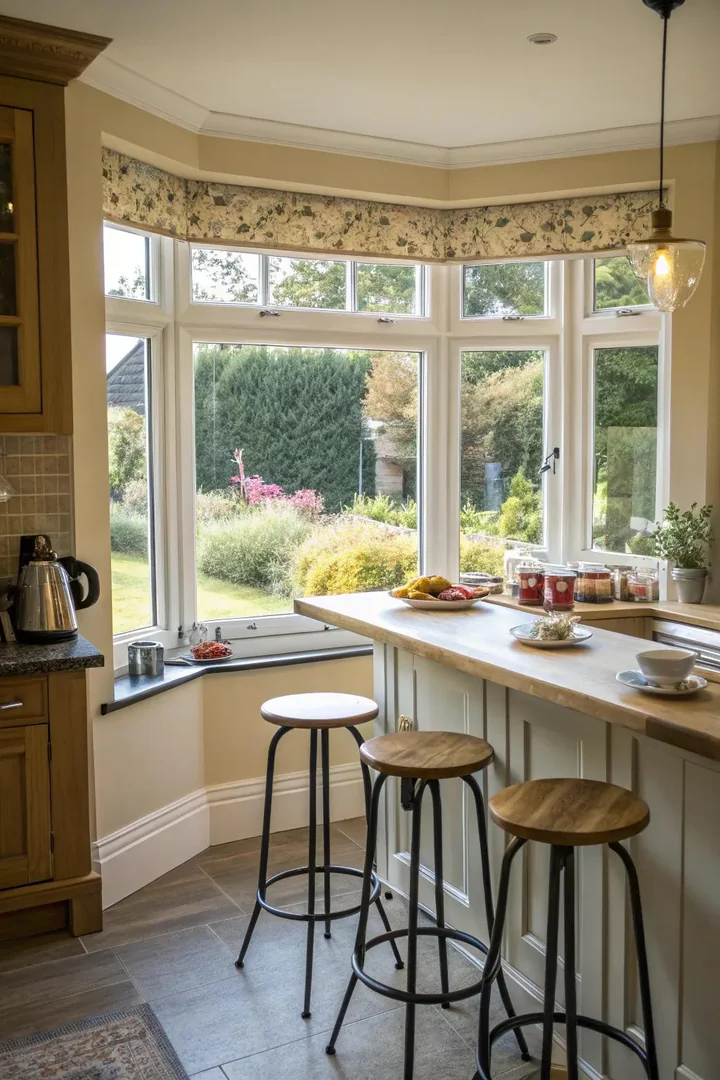
A breakfast bar running along the interior face of a bay window seats two to three people at counter height while keeping the center of the kitchen open for cooking. Build the bar from a single slab of butcher block — Ikea Karlby in walnut or John Boos maple are popular choices — cut to follow the bay window’s angles, and support it with heavy-duty steel angle brackets or hairpin legs at each end. A twelve-inch-deep bar gives enough surface for a plate and a mug without crowding the sill.
Pair the bar with backless stools that tuck underneath when not in use — the CB2 Flint or the Article Esse stool both clear standard counter height and slide completely under a twelve-inch overhang. Morning light pours across the bar from three directions, which makes this spot feel brighter and more spacious than any other seat in the kitchen. If your bay window sits near a kitchen window seat or banquette, the breakfast bar extends your seating capacity without requiring a second table.
3. Create a Seasonal Display Corner
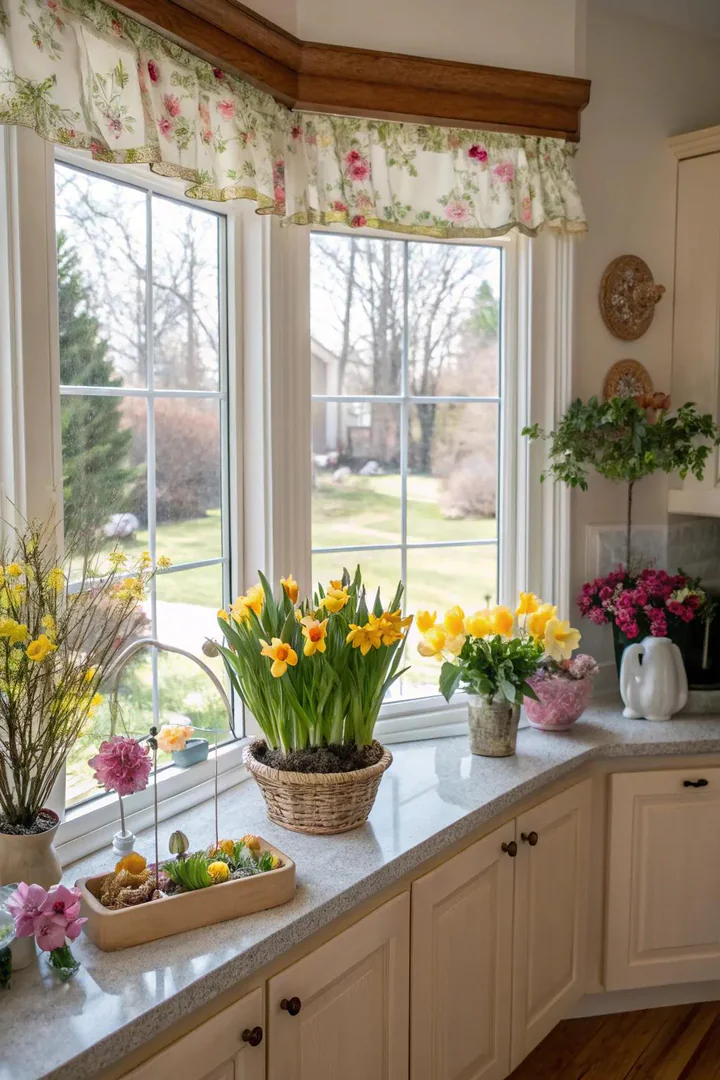
A bay window sill wide enough to hold a few objects becomes a rotating seasonal display that keeps the kitchen feeling fresh throughout the year. In spring, line the sill with small terracotta pots of forced bulbs — paperwhites, hyacinths, and crocuses — grouped in odd numbers for a natural arrangement. Summer calls for a collection of colored glass bottles or a single large vase of garden-cut flowers like dahlias or sunflowers. Autumn displays work best with dried wheat bundles, small pumpkins, and beeswax candles in amber tones grouped on a wooden tray.
Winter is the easiest season to decorate because evergreen clippings, pinecones, and a string of warm-white LED fairy lights fill the space with minimal effort. The trick to making a seasonal display look curated rather than cluttered is limiting yourself to three to five objects at a time and keeping all items within a single color family. Rotate the display at the start of each season — the swap takes ten minutes and gives the kitchen a noticeable refresh without spending money on permanent decor changes.
4. Incorporate a Storage Bench Seat
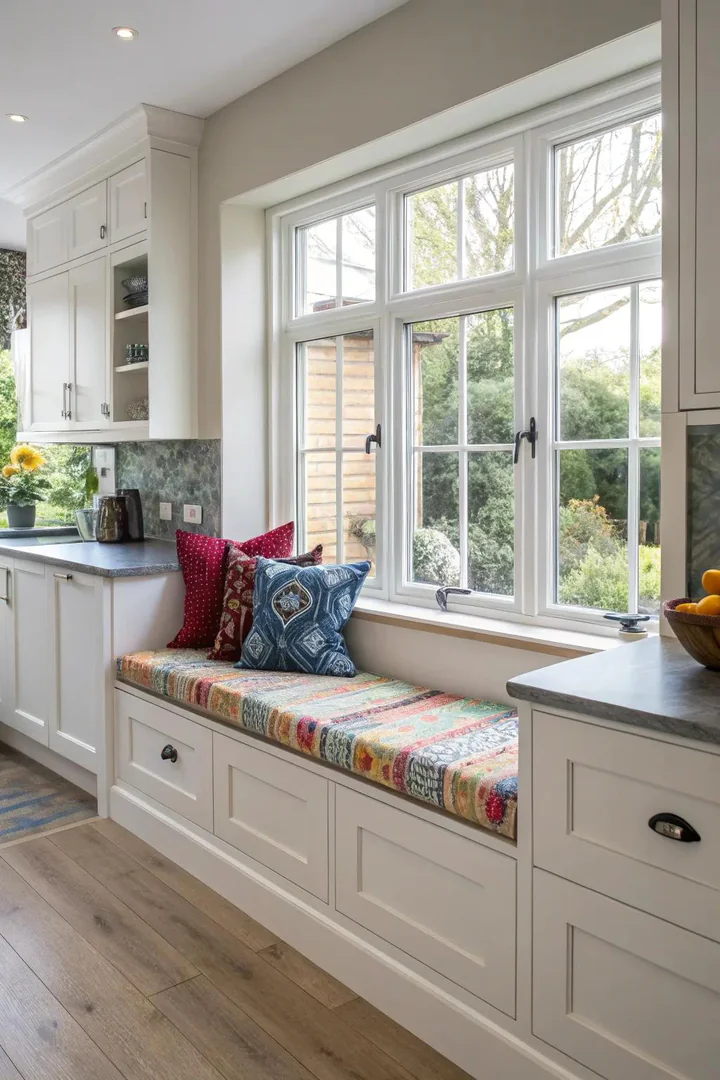
A built-in bench seat fitted to the full width of a bay window gives you a comfortable place to sit and a hidden storage compartment underneath — solving two problems with one piece of furniture. Build the bench frame from three-quarter-inch plywood with a hinged top panel so the entire seat lifts to reveal storage for table linens, seasonal cookware, or small appliances you use infrequently. A bench height of eighteen inches matches standard chair seat height and keeps the sill accessible above.
Top the bench with a three-inch-thick foam cushion covered in a performance fabric like Sunbrella or Crypton, both of which resist stains and wipe clean with a damp cloth — a must in a kitchen where spills happen daily. Add two or three throw pillows in a coordinating pattern to make the bench feel intentional rather than utilitarian. For kitchens where small kitchen storage is a constant challenge, the bench’s hidden compartment can hold the equivalent of two full cabinet shelves without taking up any additional floor space.
5. Adopt a Rustic Wooden Ceiling
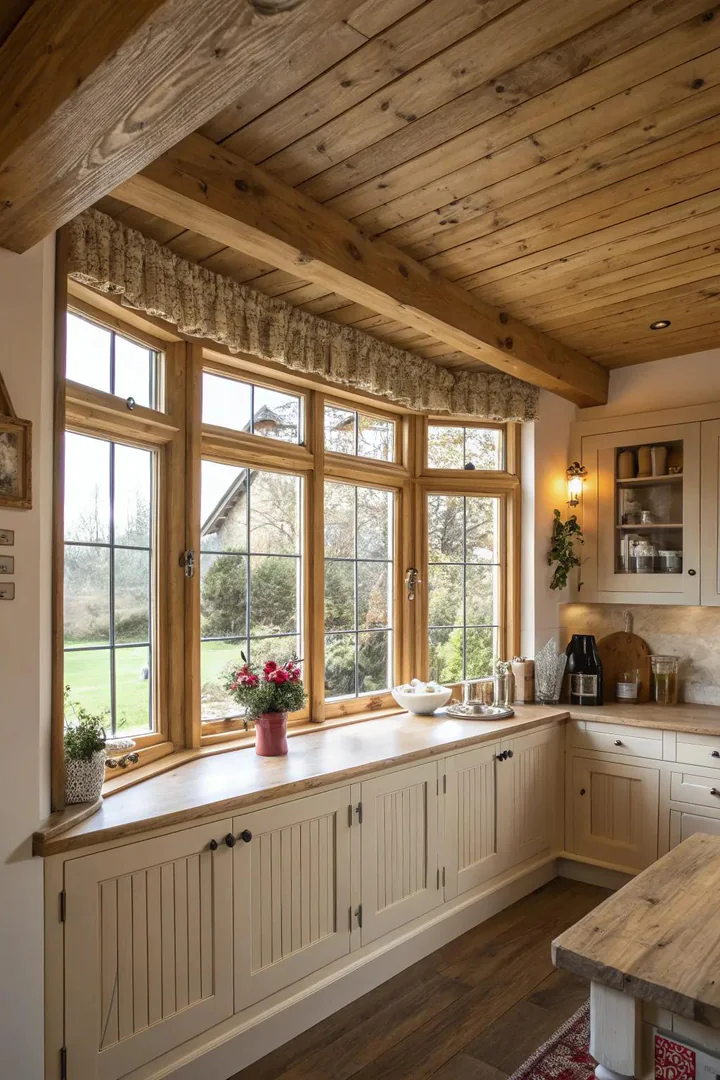
Cladding the ceiling of a bay window alcove in wood planks draws the eye upward and gives the nook a distinct identity that sets it apart from the rest of the kitchen. Tongue-and-groove pine or cedar planks — available at Home Depot and Lowe’s in six-foot lengths — install with a brad nailer directly over the existing drywall ceiling. Stain the planks in a warm walnut or honey oak tone to create contrast against white or light-grey kitchen walls, or whitewash them for a coastal look that keeps the space feeling bright.
Run the planks perpendicular to the window wall so the lines lead the eye outward toward the glass — this makes the bay window feel deeper than it actually is. Seal the wood with a matte polyurethane to protect against kitchen humidity and grease. The material cost for a typical bay window ceiling runs between seventy-five and one-hundred-fifty dollars, and the installation takes a handy homeowner four to six hours. The finished effect makes the bay window read as a separate room within the kitchen, giving it a sense of importance that flat drywall cannot match.
6. Add Extra Counter Space
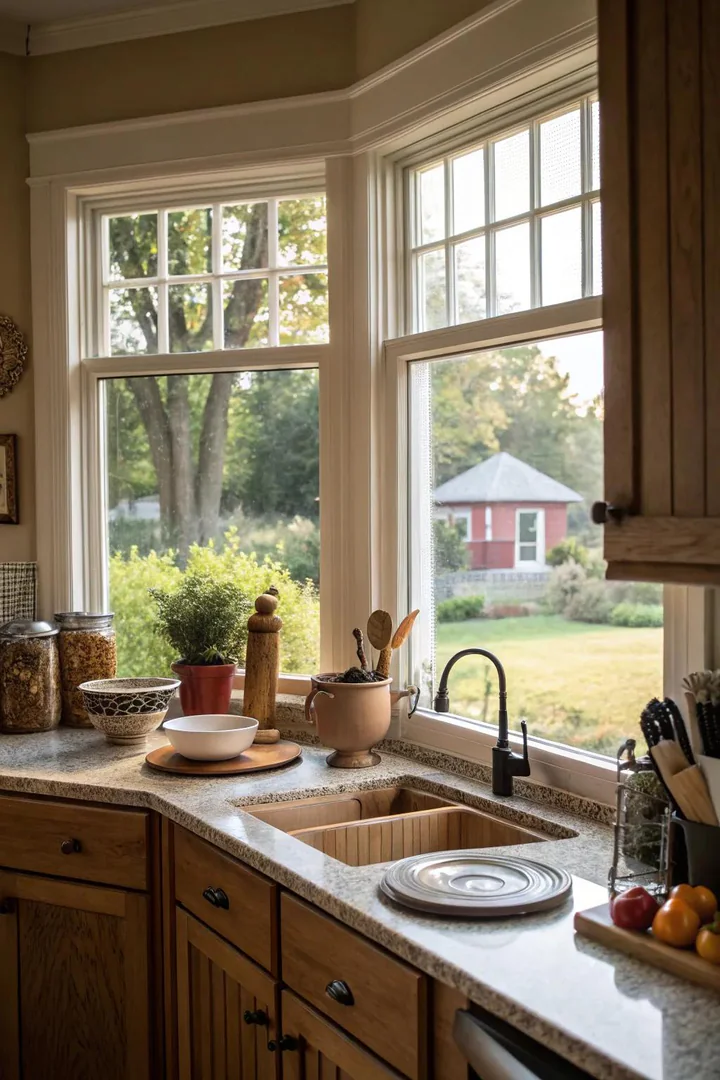
Extending the kitchen countertop into the bay window alcove adds between six and twelve square feet of usable work surface — enough room for a stand mixer, a cutting board, and a prep bowl without crowding the main counter. Match the countertop material to the rest of the kitchen for a seamless look: quartz from Caesarstone or Silestone, butcher block from John Boos, or laminate from Wilsonart all work well. The countertop should sit at standard thirty-six-inch height and follow the bay window’s angles precisely, which usually requires a custom template cut by a fabricator.
Support the extended counter with base cabinets or open shelving underneath to maximize the storage value of the alcove. If cabinets feel too heavy, use slender steel legs or a single pedestal support to keep the area below the counter visually open. Position a few small appliances on the bay window counter — a toaster, an electric kettle, or a spice grinder — to free up the primary work zone for active cooking. The natural light flooding in from three sides makes this counter the best-lit workspace in the kitchen, which is especially useful for tasks that require visual precision like decorating baked goods or plating dishes.
7. Set Up Integrated Shelving
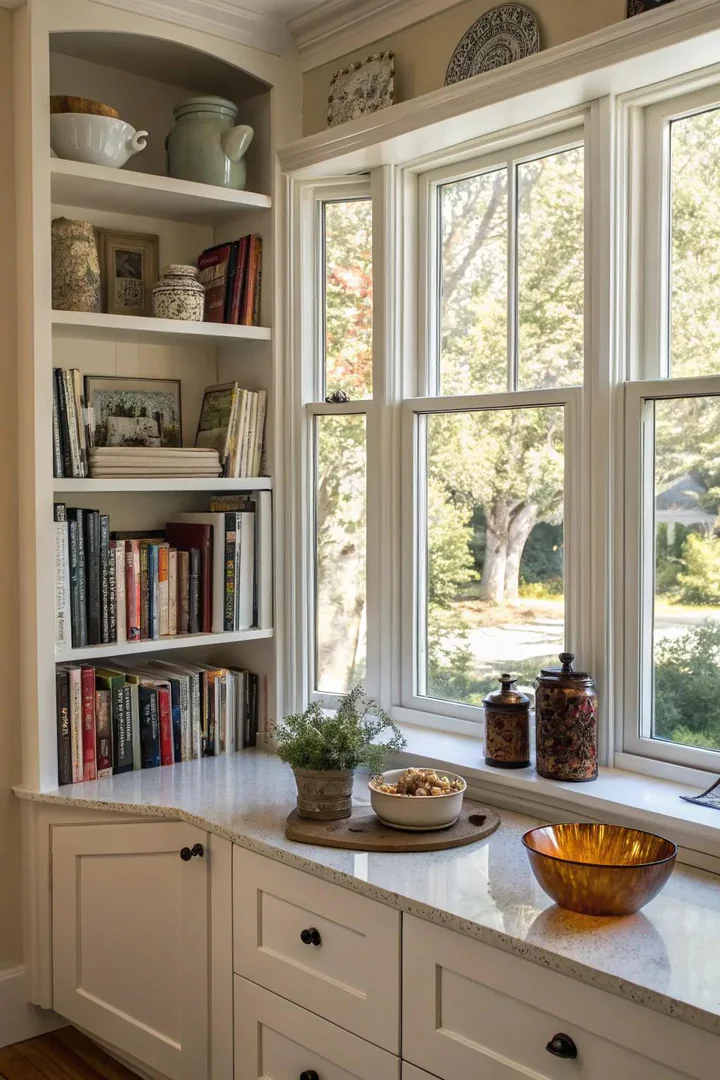
Built-in shelves spanning the side walls of a bay window create a framed display area that holds cookbooks, ceramics, and small plants without blocking the center panes of glass. Install narrow floating shelves — five to six inches deep — on the angled side walls of the bay, stacking three shelves per side at eight-inch intervals. Paint the shelves the same color as the window trim so they blend into the architecture rather than looking like afterthoughts bolted to the wall.
Style each shelf with a mix of functional and decorative items — a cookbook propped open, a small succulent in a ceramic pot, a salt cellar, and a framed postcard or photo. Keep each shelf to three items maximum so the display stays clean and the shelves do not compete with the view through the window. If your kitchen leans toward a collected, eclectic style, browse our kitchen decor ideas guide for object-grouping techniques and color-coordination strategies that work particularly well on open shelving.
8. Create a Dining Space
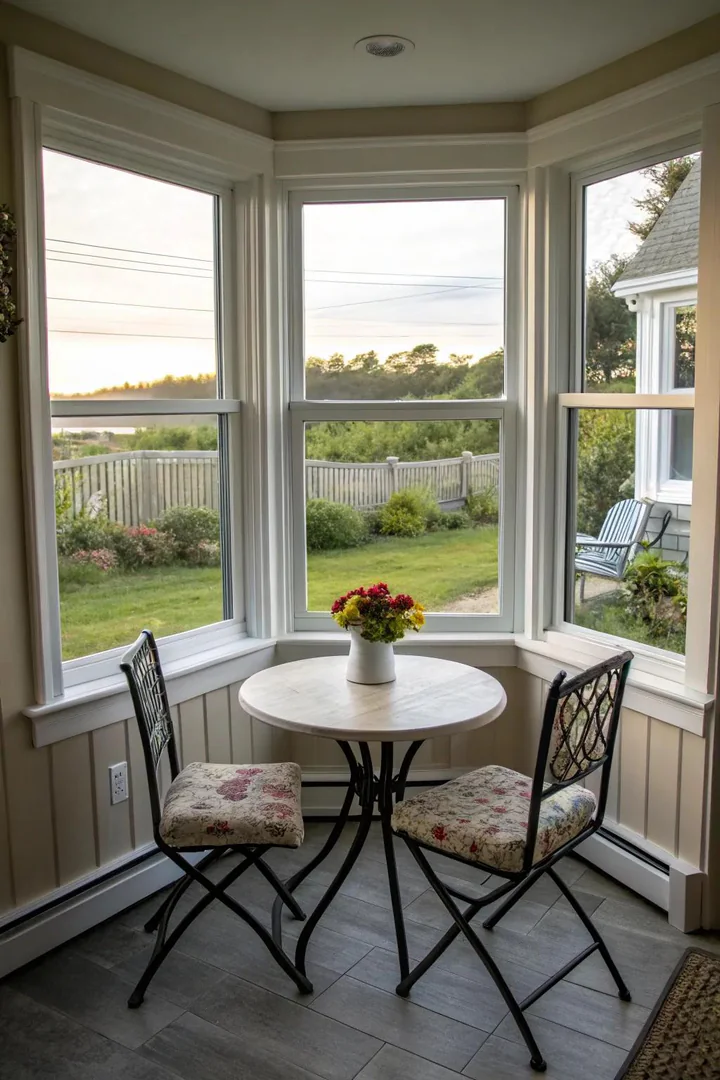
A round or oval pedestal table tucked into a bay window creates a dining area that seats four comfortably without consuming floor space in the main kitchen. A forty-two-inch round table fits most standard bay windows and leaves enough clearance for chairs to pull out on all sides. Choose a pedestal base rather than four legs so chairs slide in and out freely — the Ikea Ingatorp, the West Elm Linden, and the Article Conan are all pedestal tables that fit a kitchen-scale bay window.
Pair the table with chairs that have slim profiles — Thonet bentwood chairs, Wishbone-style chairs, or molded-shell chairs from Hay or Vitra keep the sight lines open so the window remains the focal point. Hang a single pendant light or a small chandelier centered above the table to define the dining zone as its own space within the kitchen. Eating breakfast with morning sun streaming in from three sides and dinner with a view of the garden or street turns an ordinary kitchen meal into something that feels closer to dining out.
9. Opt for Stylish Blinds
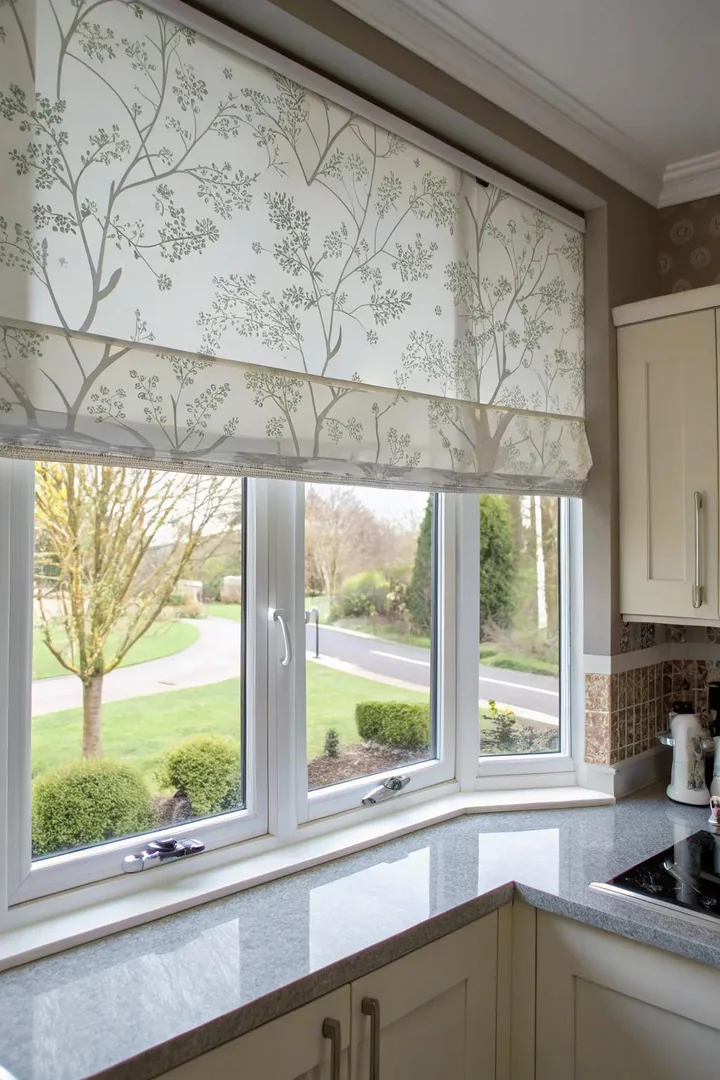
Roller blinds or Roman shades mounted inside each panel of a bay window give you a clean, modern window treatment that controls light without the visual weight of curtains. Roller blinds from Blinds.com or The Shade Store come in hundreds of fabrics and mount flush inside the window frame with a compact cassette headrail that disappears behind a slim valance. Choose a light-filtering fabric in a neutral tone — linen, oatmeal, or soft grey — that lets diffused daylight through while blocking direct glare and UV rays that fade countertops and upholstery.
Each panel of the bay window should have its own independently operated blind so you can adjust each section based on the sun’s position throughout the day. Motorized roller blinds from Lutron Serena or Ikea Fyrtur add convenience and eliminate dangling cords, which is a safety advantage in kitchens where children or pets spend time. The clean horizontal line of a fully lowered blind echoes the horizontal lines of countertops and cabinet rails, which makes roller blinds the most architecturally consistent window treatment for modern and transitional kitchens.
10. Design a Comfortable Reading Corner
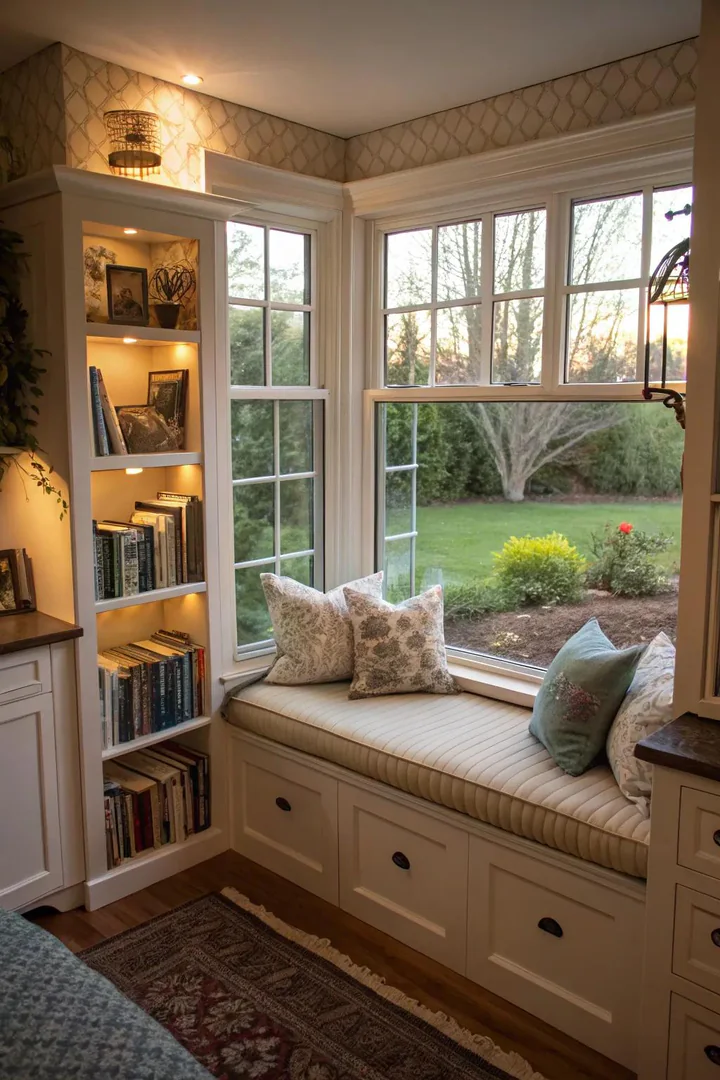
A bay window reading nook works best when you build a cushioned platform that spans the full width of the alcove and sits low enough to lean against the sill. Set the platform at sixteen to eighteen inches — standard seat height — and top it with a four-inch-thick custom cushion in a durable, washable fabric like Sunbrella Canvas or Crypton Home. Add a bolster pillow at each end so you can lean against the side walls and stretch your legs across the bench while reading.
Mount a slim shelf or a wall sconce with a directional light on one side wall so you have a reading lamp that does not take up seat space. Keep a small basket or bin under the bench for books and magazines so the nook stays tidy. The bay window’s three-sided natural light makes this the brightest reading spot in the house during the day, and the enclosed feeling of the alcove creates a sense of shelter that makes it easy to settle in for an hour with a book while something simmers on the stove behind you.
11. Design a Space That Accommodates Pets
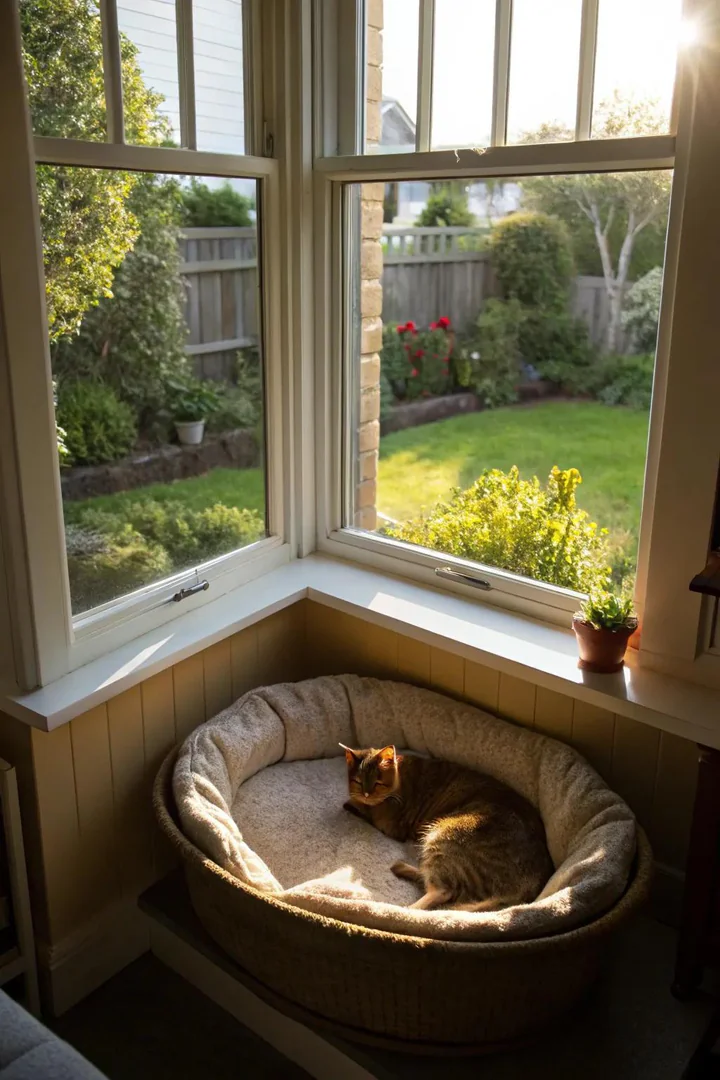
Cats and dogs naturally gravitate toward bay windows because the wide sill and wraparound glass give them a warm perch with a panoramic view of the yard, the street, and any passing wildlife. Build or buy a padded window seat at sill height and cover it with a removable, machine-washable cover — Orvis and Molly Mutt both make durable pet-bed covers that fit custom bench cushions and survive weekly washing. For cats, add a sisal scratching post or a wall-mounted climbing shelf on one side wall so the bay window becomes a self-contained activity zone.
Protect the window glass and trim by applying a removable window film to the lower panes — it blocks nose prints and paw scratches without reducing light. Keep the sill clear of breakable objects and plants that are toxic to pets — lilies, pothos, and sago palm are all common kitchen windowsill plants that are dangerous if chewed. A pet-friendly bay window keeps your animal entertained and out of the active cooking zone, which makes meal prep safer and less interrupted.
12. Be Daring with Color and Design
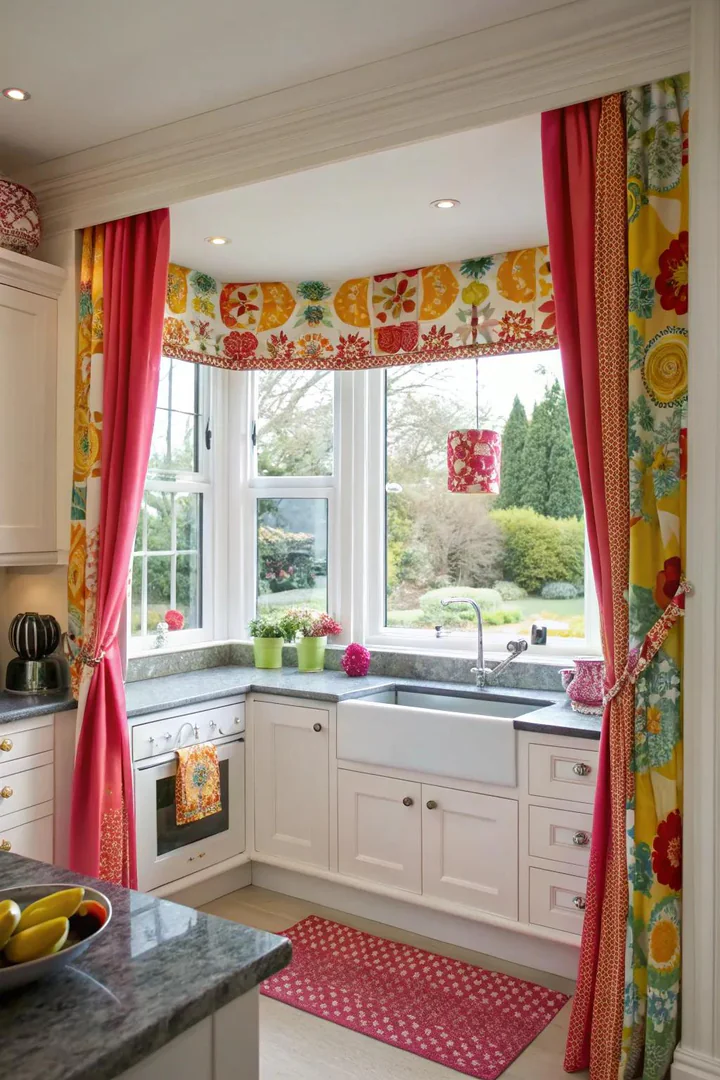
Painting the interior walls of a bay window alcove in a bold accent color sets the nook apart from the rest of the kitchen and gives the space its own personality. Choose a saturated hue that contrasts with your main kitchen palette — Benjamin Moore Hale Navy, Farrow and Ball Calamine pink, or Sherwin-Williams Evergreen Fog all read as strong statements without feeling garish. Paint the three interior walls and the ceiling of the bay in the accent color to create a color-drenched alcove effect that feels intentional and immersive.
If solid color feels too flat, add pattern through a patterned tile backsplash on the sill wall, a bold wallpaper on the back panel, or patterned cushion fabric on a bench seat. The bay window’s recessed shape naturally frames whatever pattern or color you put inside it, so even a strong choice reads as contained rather than overwhelming. For guidance on selecting kitchen colors that balance bold accent walls with neutral cabinetry, our dedicated color guide walks through tested combinations and undertone matching.
13. Choose Theatrical Curtains
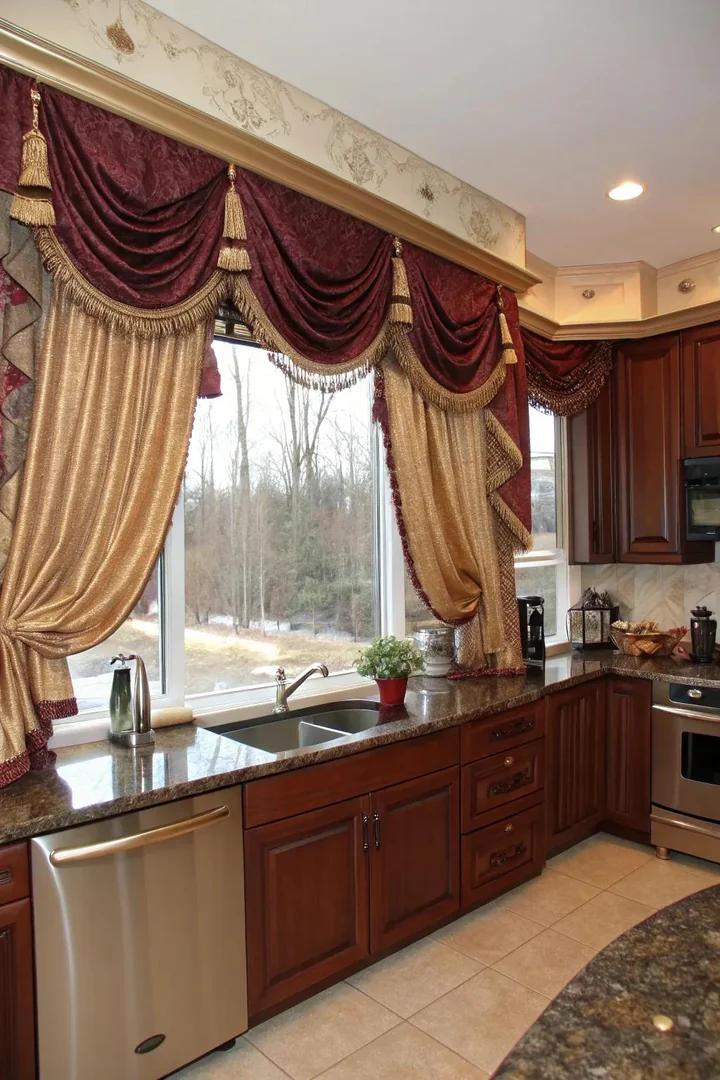
Floor-length curtains hung from a ceiling-mounted curved track turn a bay window into the most dramatic feature in the kitchen. Use a flexible curtain track from Silent Gliss or Kirsch that bends to match the bay window’s exact angles, and hang panels that pool one inch on the floor for a tailored look or puddle two to three inches for a softer, more relaxed feel. Linen and linen-blend fabrics drape well and handle kitchen humidity better than silk or velvet — look at Pottery Barn’s Emery Linen or Restoration Hardware’s Belgian Linen for kitchen-appropriate options.
Choose a curtain color that is one or two shades deeper than the wall color for a tone-on-tone effect that adds depth without competing with the view through the glass. Install the track six inches above the window frame — or at the ceiling line if your ceilings are under nine feet — to make the window appear taller. Tie the panels back with simple rope or leather holdbacks during the day so the full width of glass is exposed, then release them in the evening for privacy and a soft, enclosed feeling in the kitchen.
14. Design a Cozy Home Office Space
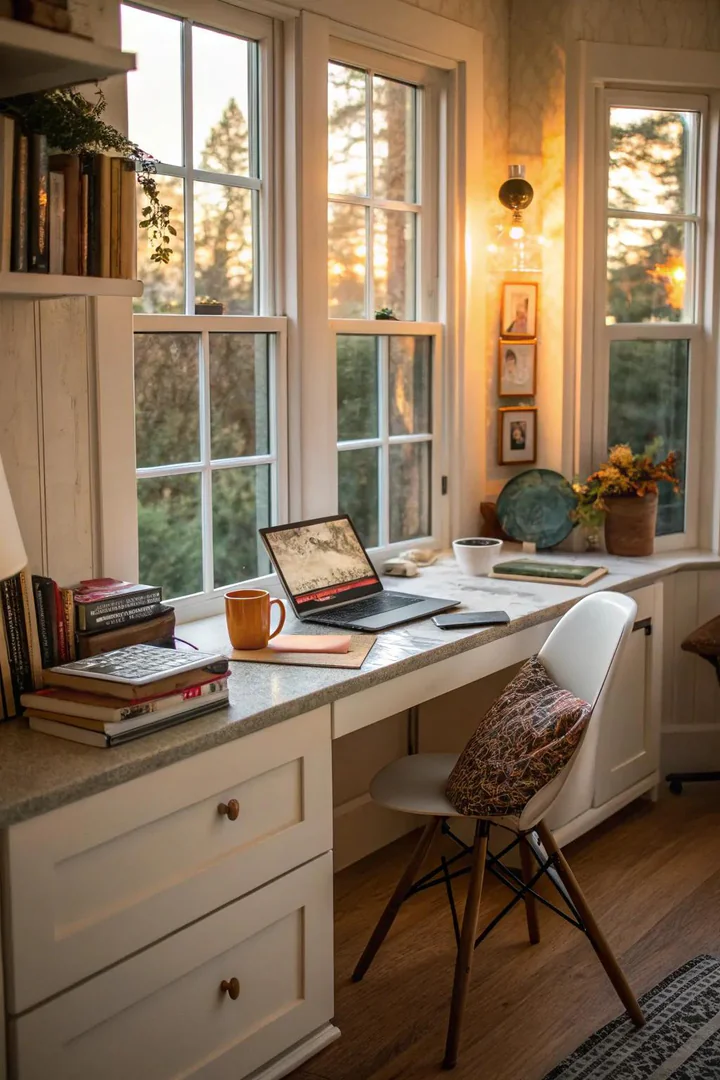
A narrow desk fitted across the back wall of a bay window creates a compact home office with the best natural light in the house. A floating desk or a wall-mounted fold-down desk — the Prepac Wall Mounted Desk or the Ikea Norberg — keeps the floor clear and folds away when you need the bay window for other uses. Position the desk so you face the window while working: the three-sided daylight reduces eye strain from screens and studies consistently show that natural light improves focus and mood during work hours.
Add a small task lamp clamped to the desk edge for evening work, and mount a narrow floating shelf above the desk for notebooks, pens, and a small plant. Run a cable management tray along the desk’s underside to keep laptop chargers and phone cables out of sight. The bay window’s recessed shape naturally separates the workspace from the rest of the kitchen, which helps you mentally shift between cooking mode and work mode — a useful trick in open-plan homes where the kitchen doubles as the default workspace.
15. Cultivate a Herb Garden Indoors
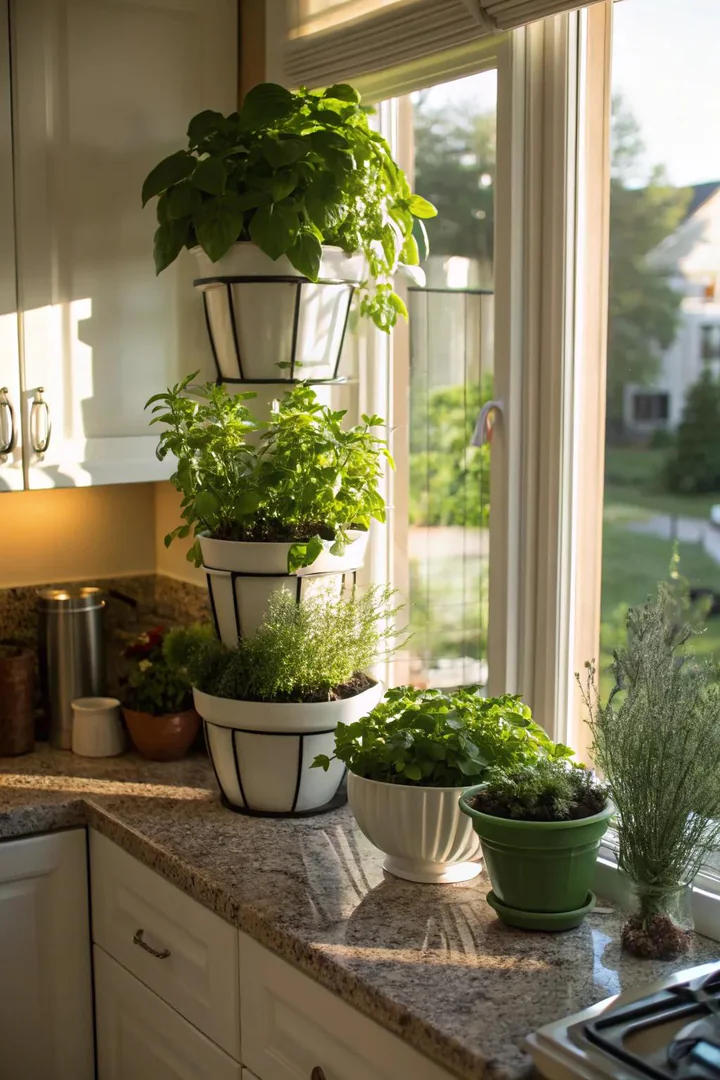
A bay window that faces south or west gives you the strongest natural light in the kitchen — enough to grow basil, cilantro, parsley, thyme, rosemary, and mint year-round without supplemental lighting. Plant each herb in its own four-to-six-inch pot with drainage holes, and set the pots in a shallow tray or a window box that catches excess water. Self-watering planters from Lechuza or Cole and Mason take the guesswork out of moisture levels and keep herbs alive even if you forget to water for a few days.
Arrange taller herbs like rosemary and basil at the back of the sill and shorter herbs like thyme and oregano at the front so every plant gets adequate light. Harvest frequently by pinching off the top sets of leaves — regular harvesting encourages bushy, productive growth and prevents herbs from bolting to seed. Having fresh herbs within arm’s reach of the stove changes how you cook: you reach for a sprig of rosemary or a handful of basil on impulse rather than skipping the herb because the grocery store is too far away.
16. Establish a Coffee Bar
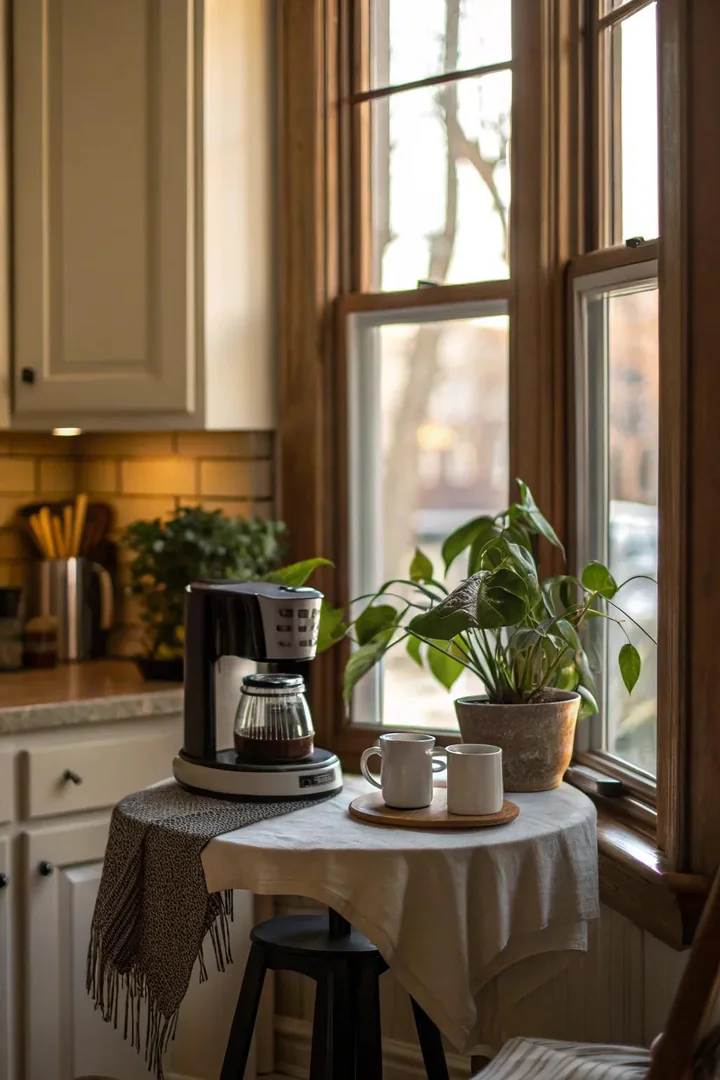
A dedicated coffee station in the bay window keeps your espresso machine, grinder, and mugs together in one spot and frees up counter space in the main kitchen for cooking. Set a small table or a narrow console — eighteen to twenty-four inches deep — against the back wall of the bay and outfit it with your coffee maker of choice: a Breville Barista Express for espresso, a Chemex or Hario V60 for pour-over, or a simple drip machine for large-batch mornings. Store mugs on hooks underneath a wall-mounted shelf or on a mug tree beside the machine.
Add a small tray for sugar, creamer, and stirring spoons so everything you need sits within one arm’s reach. The morning light flooding the bay window while you make coffee turns a two-minute routine into a moment that feels deliberate and calm. If you entertain often, the coffee bar doubles as a self-serve station — guests can pour their own cup without navigating the active cooking zone, which keeps foot traffic out of the chef’s way. Visit The Designers Company for more kitchen station setups and styling ideas that keep countertops organized and visually clean.
How to Design a Kitchen Bay Window That Works
Matching the Bay Window to Your Kitchen Style
The bay window treatment should echo the kitchen’s existing design language, not introduce a new one. In a farmhouse kitchen with shaker cabinets and open shelving, a wood-planked ceiling and a cushioned bench seat with linen fabric feel natural. In a modern kitchen with flat-panel cabinets and quartz countertops, roller blinds and a clean-lined breakfast bar maintain the same minimalist vocabulary. If the bay window treatment clashes with the kitchen’s style — ornate curtains in a minimalist kitchen, or industrial pipe shelving in a traditional space — it reads as a mistake rather than a feature.
Managing Natural Light and Temperature
Bay windows let in significantly more light and heat than flat windows because glass faces three directions instead of one. In south-facing kitchens, this can overheat the alcove during summer afternoons and fade fabrics, wood finishes, and countertop surfaces over time. Address this with a window treatment that filters UV rays — cellular shades from Hunter Douglas Duette block up to ninety-nine percent of UV while still admitting visible light. In winter, the same multi-pane exposure loses heat faster than insulated walls, so consider double-pane or triple-pane glass upgrades if your bay window still has original single-pane glazing.
Choosing the Right Materials for the Bay Area
The bay window alcove sits closer to exterior walls than any other part of the kitchen, which means it experiences wider temperature swings and higher humidity near the glass during cold weather. Use materials that tolerate moisture and temperature changes: sealed wood, composite lumber, quartz, tile, and performance fabrics all hold up well. Avoid MDF, unsealed particleboard, and natural fabrics like raw silk or untreated cotton — they absorb moisture, swell, and develop mildew in conditions that shift between warm kitchen air and cold window-glass condensation.
Kitchen Bay Window Ideas Comparison
| Idea | Primary Benefit | Difficulty | Budget Range |
|---|---|---|---|
| Shutters | Light control and privacy | Professional install | $300 – $800 per panel |
| Breakfast bar | Extra seating | Moderate DIY | $150 – $400 |
| Storage bench seat | Seating plus hidden storage | Moderate–High | $200 – $600 |
| Counter extension | Additional prep surface | Professional fabrication | $500 – $2,000 |
| Built-in shelves | Display and light storage | Easy DIY | $50 – $150 |
| Herb garden | Fresh herbs within reach | Easy | $30 – $100 |
| Coffee station | Dedicated beverage zone | Easy | $50 – $200 |
| Floor-length curtains | Visual drama and softness | Moderate | $100 – $400 |
Common Kitchen Bay Window Mistakes to Avoid
Blocking the glass with too much furniture. The whole point of a bay window is the light and the view. Tall shelving units, oversized furniture, or stacked objects that rise above the sill line defeat the purpose. Keep everything below the sill or mounted to the side walls so the center panes stay unobstructed.
Ignoring the angles. Bay windows are not flat walls. Furniture, countertops, and shelving need to follow the window’s precise angles or they leave awkward gaps. Measure each panel and each angle with a digital angle finder before ordering custom pieces — standard ninety-degree furniture rarely fits a bay window without modification.
Forgetting about temperature extremes. The glass panels of a bay window transfer heat and cold more aggressively than insulated walls. Placing heat-sensitive items — candles, chocolate, electronics — directly on the sill in a south-facing bay window invites melting and overheating. In winter, condensation on the glass can drip onto wood sills and damage unfinished surfaces. Seal, finish, or protect any material that sits in direct contact with the window frame.
Using a single window treatment for all panels. Each panel of a bay window faces a different direction and receives different light at different times of day. Individual blinds, shades, or shutters per panel let you control each section independently, which gives you far more flexibility than a single curtain drawn across the entire opening.
Frequently Asked Questions
How much does it cost to add a bay window to a kitchen?
Adding a new bay window to an existing kitchen wall costs between three-thousand and ten-thousand dollars depending on the window size, the framing modifications required, and whether structural support like a header beam needs to be added. A standard three-panel bay window unit from Andersen, Pella, or Marvin runs between one-thousand and four-thousand dollars for the window itself, with labor and framing adding another two-thousand to six-thousand dollars. If your kitchen already has a bay window, decorating the interior costs far less — most of the ideas in this guide range from fifty to eight-hundred dollars.
What is the best window treatment for a kitchen bay window?
Composite plantation shutters offer the best combination of durability, light control, and style for kitchen bay windows. They resist moisture and grease, clean with a damp cloth, and operate independently on each panel. If shutters exceed your budget, cellular shades or roller blinds mounted inside each panel provide good light control at a lower price point while maintaining a clean, modern look that does not interfere with the window’s architectural lines.
Can I put a sink in a bay window?
Yes. A kitchen sink centered in a bay window is a classic layout that puts you in front of natural light and a view while washing dishes. The plumbing runs through the base cabinet below, which needs to be built at the correct depth to fit the bay window’s alcove. Expect to pay a plumber between five-hundred and fifteen-hundred dollars to rough in or relocate the supply and drain lines if you are moving the sink from another wall to the bay window location.
How do I insulate a bay window to save energy?
Start with double-pane or triple-pane glass if you have single-pane windows — this is the single most impactful upgrade. Add cellular shades, which trap air in honeycomb pockets and add a measurable layer of insulation when lowered. Seal any gaps between the window frame and the wall with spray foam insulation or silicone caulk. In winter, insulated curtain panels with a thermal lining reduce heat loss through the glass by up to twenty-five percent compared to unlined curtains.
How do I keep a bay window from getting too hot in summer?
Apply a UV-blocking window film to the glass — brands like 3M Prestige and Llumar offer films that block up to ninety-nine percent of UV and significantly reduce solar heat gain without darkening the view. Pair the film with a light-filtering shade or blind that you lower during peak sun hours. If the bay window faces south or west and overheating is severe, consider installing an exterior awning or a solar shade screen on the outside of the glass, which blocks heat before it enters the room rather than after.
What plants grow best in a kitchen bay window?
Herbs like basil, parsley, cilantro, rosemary, and thyme thrive in the bright, indirect light of a bay window and give you fresh ingredients within arm’s reach. Pothos, spider plants, and English ivy do well in lower-light bay windows that face north or east. Succulents and small cacti work in south-facing bay windows that receive intense direct light. Avoid placing large, leafy tropical plants in a bay window — they block the view and the light, which defeats the purpose of the window.
Conclusion
A kitchen bay window gives you extra square footage, three walls of natural light, and a built-in architectural frame that makes whatever you place inside it look intentional. Whether you fill it with a breakfast bar and stools, a cushioned reading bench, or a row of potted herbs, the right treatment turns the alcove from dead space into the part of the kitchen you use and enjoy the most.
Pick the idea that matches how you actually spend time in the kitchen — not just how you want it to look in a photo — and start with the simplest version you can build this weekend. A cushion on the sill, a few potted herbs, or a fresh coat of paint inside the alcove costs almost nothing and changes the way the bay window feels immediately. The bigger projects like counter extensions and built-in benches can come later once you have lived with the space and know exactly what you need from it.