Glass Backsplash Kitchen Ideas: 7 Modern Ways to Upgrade
Glass backsplash tile does something that no other backsplash material can do: it reflects light. A ceramic subway tile absorbs and scatters light. A stone slab diffuses it. But glass bounces it back, which means a glass backsplash amplifies whatever light already exists in the room — natural light from a window, under-cabinet LED strips, pendant fixtures over the island. In a kitchen with limited natural light, that reflective quality makes the room feel brighter and more open without adding a single fixture.
Glass is also non-porous, which means it does not absorb water, grease, or staining agents. A splash of red wine, a splatter of tomato sauce, or a grease pop from a skillet wipes clean with a damp cloth — no sealing, no special cleaners, no grout penetration. The 7 glass backsplash kitchen ideas below cover the full range of glass options, from colorful mosaic tile to mirrored panels, 3D textured glass, and back-lit installations, each with specific product recommendations and installation guidance.
1. Vibrant Mosaic Designs
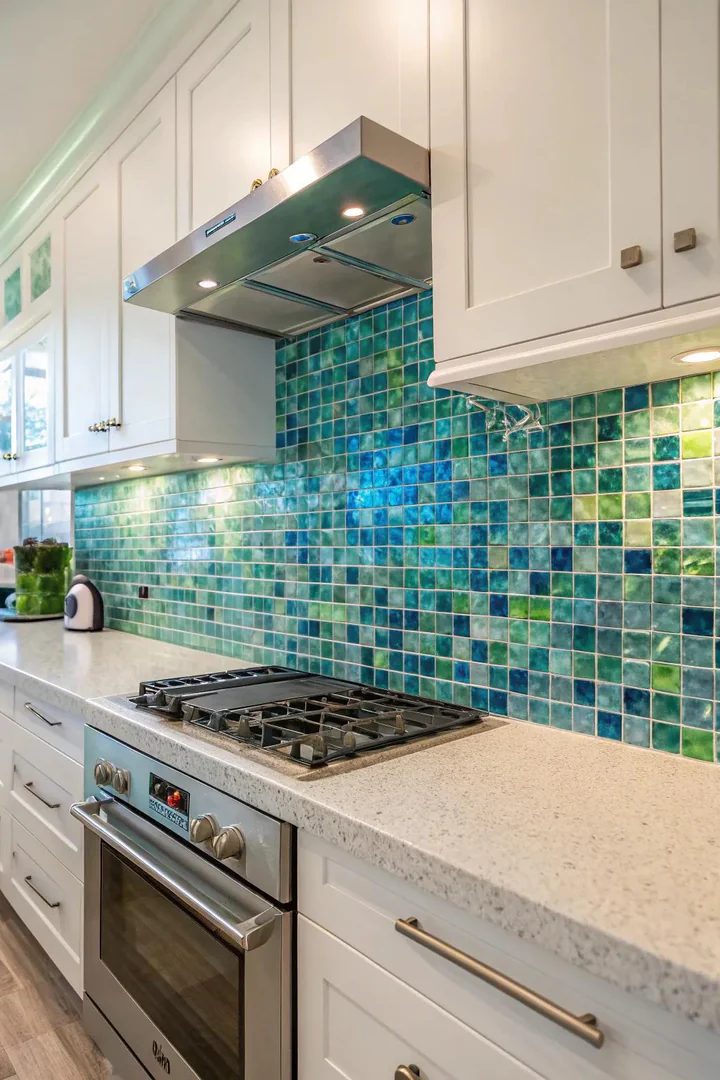
Glass mosaic tiles — small pieces of colored glass mounted on mesh-backed sheets — create backsplash patterns that range from subtle tone-on-tone gradients to bold, multi-color compositions that dominate the kitchen wall. Oceanside Glasstile, Lunada Bay Tile, and Modwalls all manufacture glass mosaic tiles in one-inch, two-inch, and mixed-format sizes with glossy, matte, and iridescent finishes. A blend of three to four complementary colors — blues and greens for a coastal look, warm amber and cream for a Mediterranean feel, or grey and white for a modern palette — creates a mosaic pattern that reads as unified rather than chaotic.
The mesh backing makes installation straightforward: spread thin-set adhesive on the wall, press the mosaic sheet into position, and grout after twenty-four hours of cure time. Use a non-sanded grout in a color that matches the darkest tile so the grout lines recede and the glass colors dominate. Glass mosaic tile costs between eight and thirty dollars per square foot depending on the manufacturer and the glass type, and a typical kitchen backsplash requires fifteen to thirty square feet of material. For complementary kitchen color ideas that pair with mosaic glass, our guide covers wall and cabinet tones that let a colorful backsplash stand out without clashing.
2. Integration of Functional Lighting
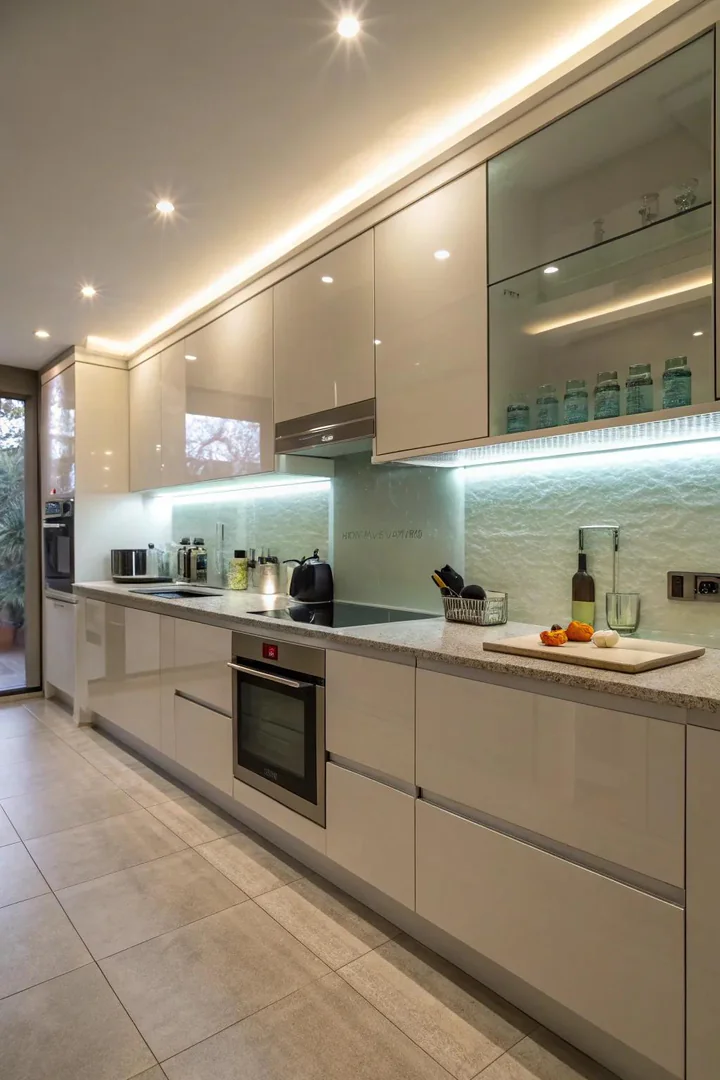
A back-lit glass backsplash — where LED strip lights are mounted behind a translucent or frosted glass panel — turns the backsplash into a light source that illuminates the countertop below while creating a glowing wall effect that replaces traditional under-cabinet task lighting. ThinkGlass and CBD Glass both fabricate back-painted and frosted glass panels designed to be lit from behind with color-tunable LED strips. The glass diffuses the LED light evenly across the panel surface, eliminating the hot spots and visible LED dots that can show through thinner materials.
Choose a warm-white LED strip (2700K to 3000K) for cooking and dining ambiance, or install a tunable-white or RGB strip from Philips Hue or LIFX that lets you shift the backsplash’s color temperature or hue throughout the day. The back-lit effect is strongest in the evening and at night when the ambient light drops and the glowing backsplash becomes the room’s dominant light source. For more guidance on pairing backsplash lighting with under-cabinet and overhead fixtures, our kitchen cabinet lighting ideas guide covers layered lighting plans that include back-lit glass installations.
3. Creative Accent Wall
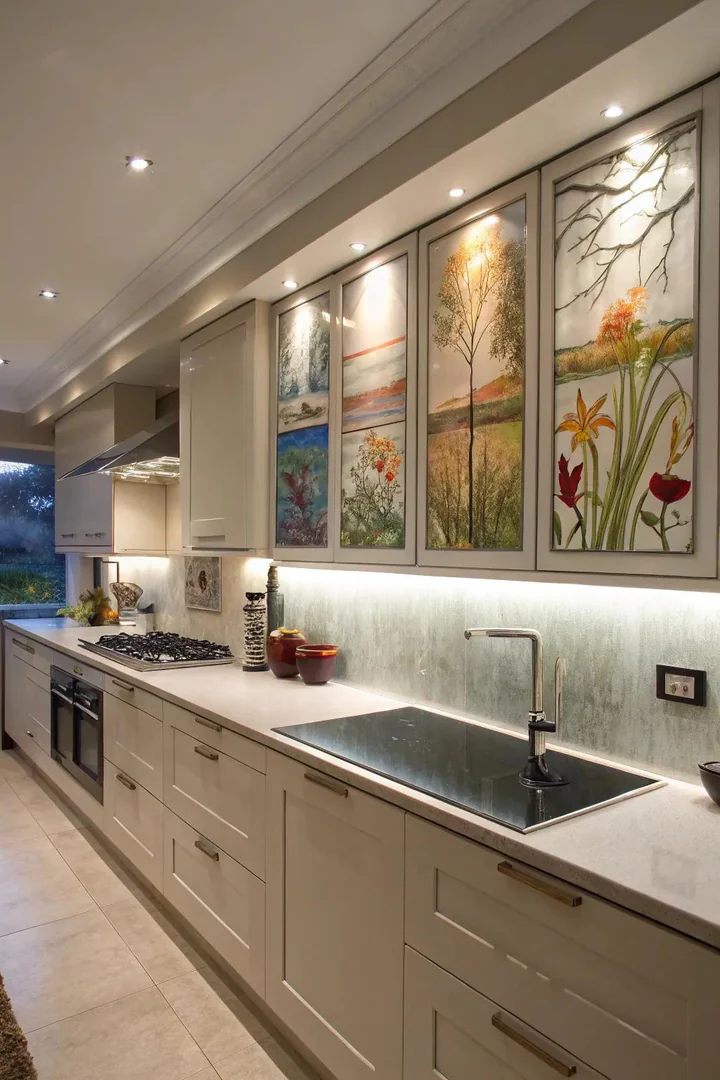
Extending the glass backsplash beyond the standard eighteen-inch backsplash height to cover a full wall — from countertop to ceiling — creates a feature wall that anchors the kitchen’s design. A floor-to-ceiling back-painted glass panel in a bold color (deep emerald, navy, charcoal, or burnt orange) makes a statement that replaces wallpaper, paint, and traditional tile as the wall’s primary finish. The glass surface is easier to clean than any of those alternatives and reflects light across the entire wall height, which makes the room feel taller.
A printed or digitally decorated glass panel takes the feature-wall concept further — companies like Glassart Design and Artscape print custom images, patterns, or abstract designs directly onto tempered glass panels that mount flush to the wall. A botanical print, a geometric pattern, or a custom photograph printed on a six-by-four-foot glass panel turns the kitchen wall into a piece of art that is also completely waterproof and wipeable. The printed glass panel installs with construction adhesive or a hidden bracket system and costs between forty and one-hundred dollars per square foot for custom work.
4. Elegant Reflection
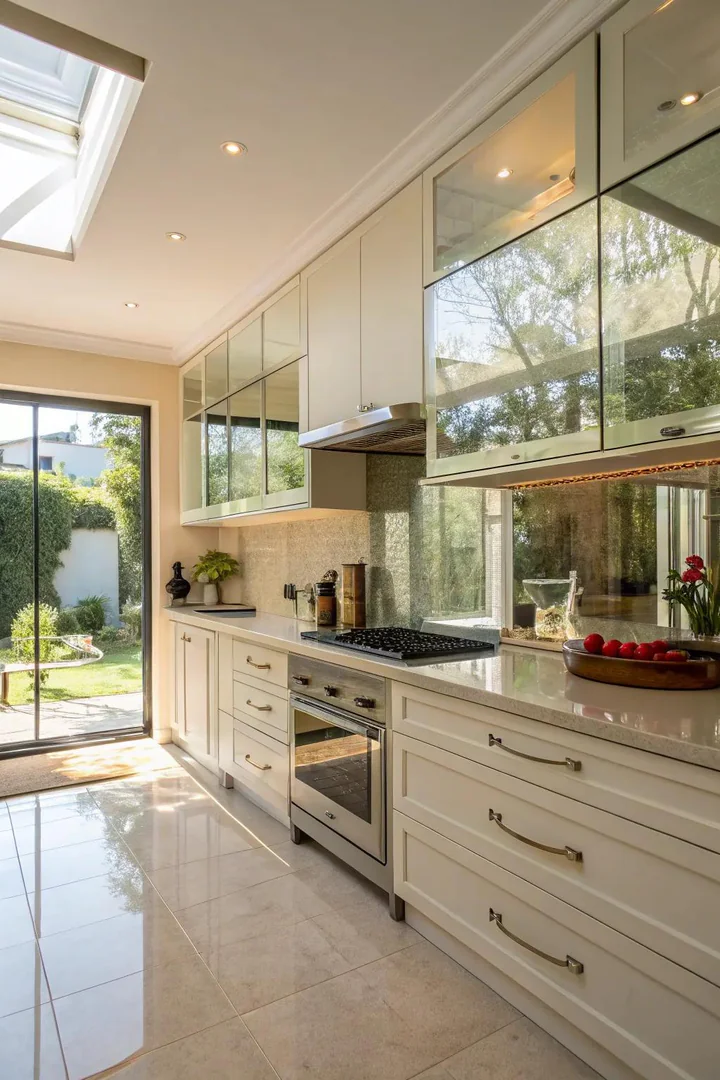
A clear or lightly tinted glass backsplash with a high-gloss finish reflects the kitchen back on itself, creating a mirror-like depth effect that visually doubles the room. This is especially powerful in kitchens with a window on the opposite wall — the glass backsplash captures the window’s natural light and bounces it across the countertop and the lower cabinets, reducing the need for artificial task lighting during daylight hours. Back-painted glass in white, light grey, or soft blue amplifies this effect while adding a subtle color layer behind the reflection.
The reflective surface does show fingerprints, water spots, and cooking splatter more visibly than matte tile, which means a reflective glass backsplash requires more frequent wiping to maintain its clean appearance. A microfiber cloth and a glass cleaner (or a mix of water and white vinegar) is all you need — the same supplies and technique you would use on a window or a mirror. The trade-off is worth it for kitchens that need every available photon of light: the reflective surface adds brightness that no matte material can match. Pairing reflective glass with warm copper accents creates a particularly striking effect, as the glass amplifies the copper’s warm metallic glow across the entire backsplash surface.
5. Three-Dimensional Glass Tiles
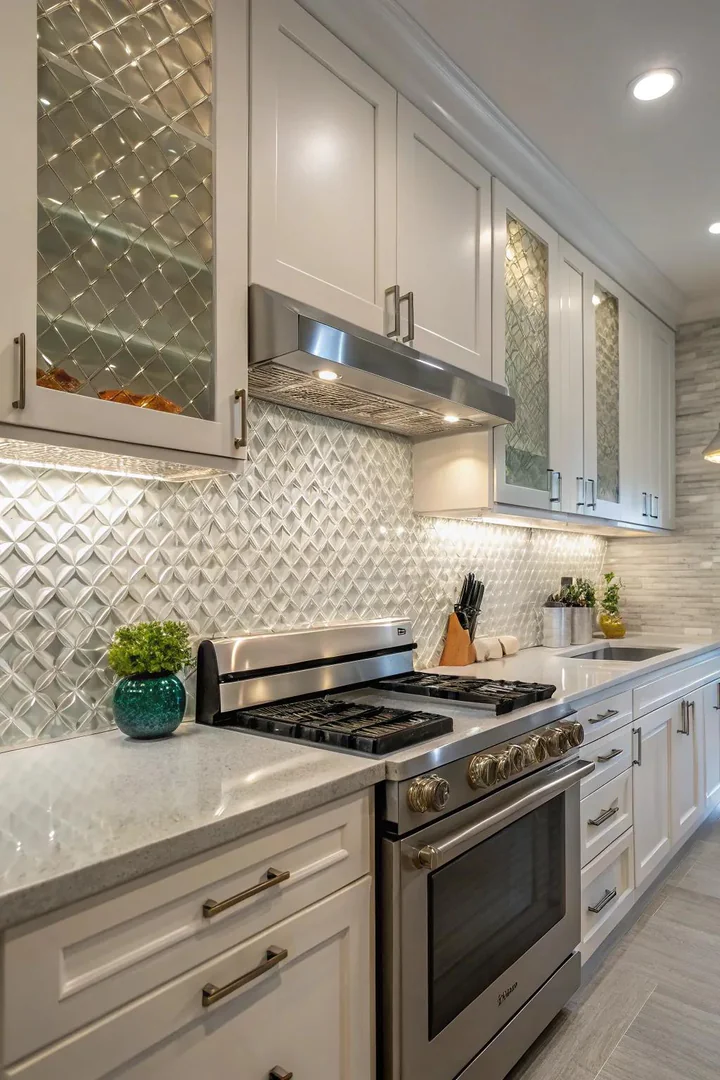
Three-dimensional glass tiles add physical depth to the backsplash by using molded, faceted, or layered glass shapes that project from the wall surface rather than sitting flat against it. Soho Studio, Anatolia Tile, and Glass Tile Oasis all manufacture 3D glass tiles in wave patterns, diamond facets, hexagonal pillows, and stacked-block configurations that cast shadows and create light play across the backsplash as the room’s lighting shifts throughout the day. The shadow patterns change with the angle of light, which gives the backsplash a living quality that flat tiles lack.
Three-dimensional glass tiles cost more than flat glass tiles — typically fifteen to forty-five dollars per square foot — and require more careful installation because the uneven surface means grout lines vary in depth. Use a skilled tile installer who has experience with dimensional tile, and choose a grout color that blends with the glass rather than contrasting it, so the grout fills the recessed areas without creating dark lines that interrupt the 3D pattern. The visual payoff is a backsplash that looks like a sculptural installation rather than a wall covering.
6. Glitz of Reflective Glass
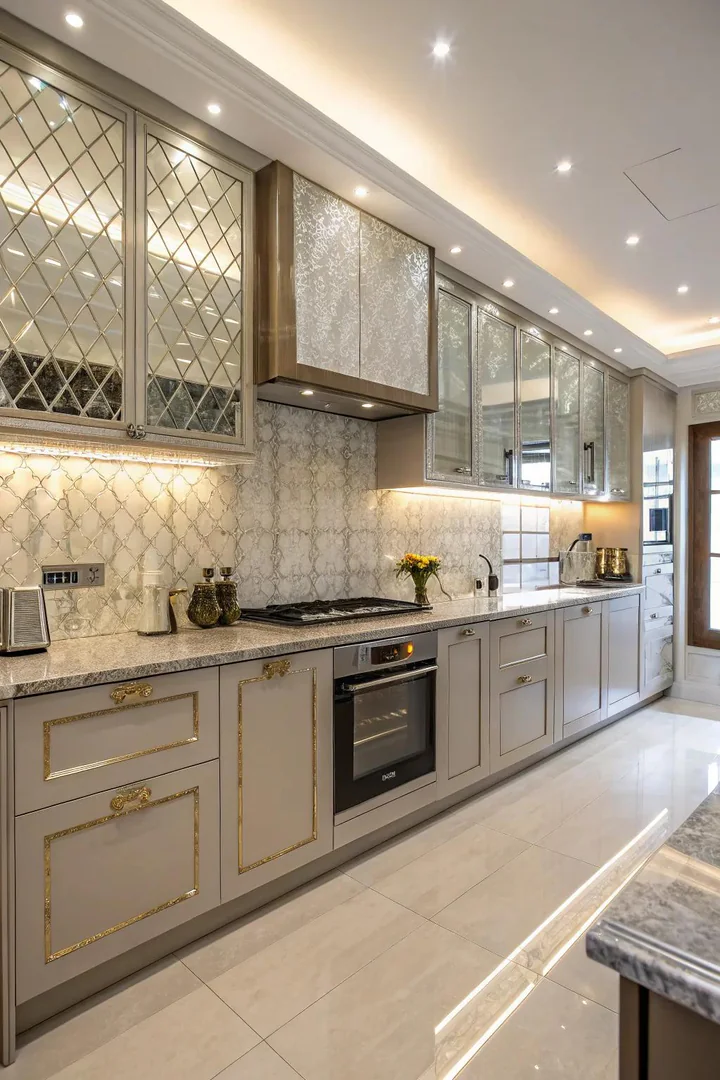
Mirrored glass tile — glass tiles with a reflective metallic coating on the back surface — creates a backsplash that functions as a fragmented mirror, reflecting the kitchen in dozens of small panels that sparkle and shift as you move through the room. Antique-finish mirrored glass tiles from Jeffrey Court and Susan Jablon have a distressed, smoky quality that reflects light without creating a clear mirror image, which avoids the disorienting effect of a full-mirror backsplash while preserving the glamorous sparkle. Beveled-edge mirrored tiles add a diamond-cut facet to each piece that catches light at sharp angles.
Mirrored glass works best as an accent — a single wall behind the range, a band above the countertop, or a column flanking the window. A full kitchen of mirrored tile can feel overwhelming and reflects every object on the counter twice, which amplifies clutter rather than concealing it. Use mirrored glass tile in combination with a matte or satin-finish tile on the adjacent walls to create contrast between the sparkling accent zone and the quieter surrounding surfaces. The mirrored section becomes a jewel-like feature rather than the room’s entire identity.
7. Glass Tiles with Texture
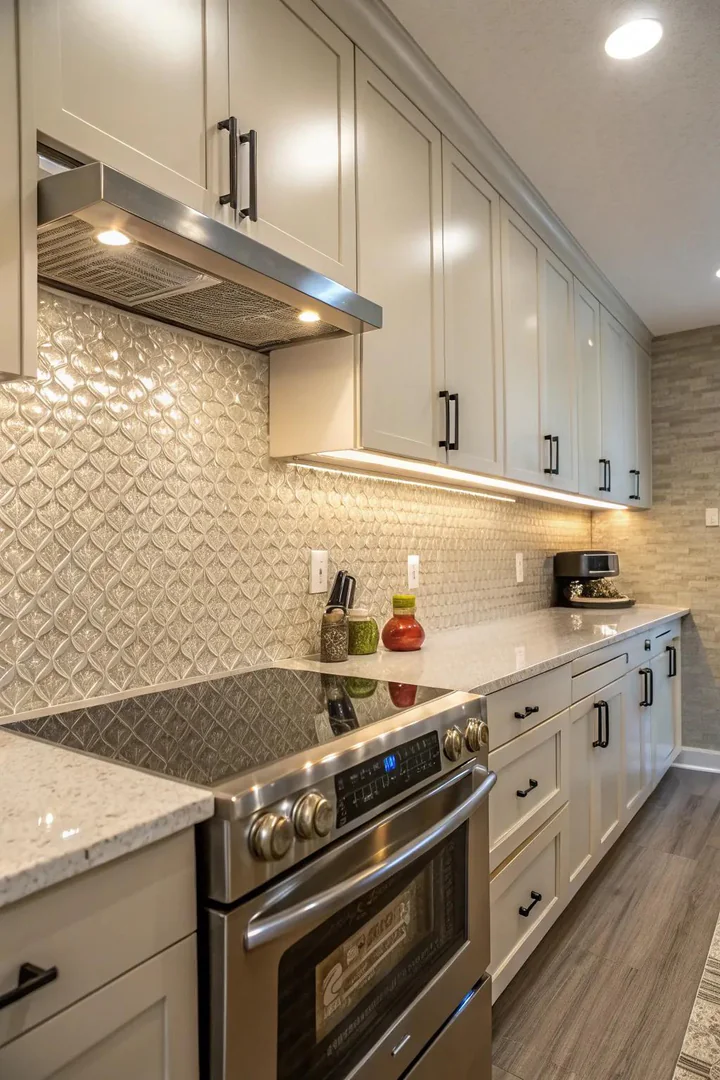
Textured glass tiles have a surface treatment — sandblasting, acid-etching, kiln-forming, or hand-pressing — that creates a tactile finish you can feel when you run your fingers across the tile. The texture diffuses light rather than reflecting it sharply, which produces a softer, warmer glow compared to the crisp reflection of smooth glass tiles. Rocky Point Tile, Crossville, and Island Stone all manufacture textured glass tiles in subway, square, and herringbone formats with finishes that range from barely-there frosting to deep hand-pressed ripples.
Textured glass hides water spots and fingerprints better than smooth glass because the uneven surface scatters light rather than reflecting a clean image — splatter that would be visible on a smooth glass tile is much less noticeable on a frosted or rippled surface. This makes textured glass a practical choice for the backsplash directly behind the stove where cooking splatter is heaviest. The trade-off is that textured surfaces can trap grease in the grooves if the texture is deep, so choose a shallow texture (frosted or lightly etched) behind the stove and save the deeper textures for backsplash areas away from the cooking zone. Visit The Designers Company for more backsplash material comparisons, glass tile sourcing guides, and kitchen design ideas across every style and budget.
How to Choose a Glass Backsplash
Selecting the Right Glass Type
Back-painted glass panels (a single sheet of tempered glass painted on the back surface) provide a seamless, grout-free look that is easiest to clean. Glass mosaic tiles on mesh backing offer the most color and pattern flexibility and install like standard tile. Tempered glass sheets are the strongest option and resist thermal shock from stove heat. For areas directly behind the range, always use tempered glass rather than standard glass — tempered glass withstands temperature differentials that would crack standard annealed glass.
Choosing Colors and Finishes
White and light grey glass backsplashes are the safest choices for resale value and long-term versatility — they coordinate with almost any cabinet and countertop combination. Bold colors (blue, green, red, black) create stronger visual impact but tie the kitchen to a specific palette. Glossy finishes reflect the most light and make the room feel largest. Matte and frosted finishes hide fingerprints and splatter better. Iridescent finishes shift color with the viewing angle and add depth that solid colors lack. Choose the finish based on your maintenance tolerance: glossy shows everything, matte shows almost nothing.
Installation and Maintenance
Glass tile installs with white thin-set adhesive (not grey, which shows through translucent glass) and unsanded grout. Hire a tile installer experienced with glass — glass tiles crack if scored too aggressively or set with too much pressure. For full glass panels, use a specialty glass installer who can template, cut, and mount the panel with construction adhesive or a concealed bracket system. Maintenance is minimal: wipe daily with a damp microfiber cloth and clean weekly with a glass cleaner or a vinegar-water solution. Avoid abrasive pads and acidic cleaners, which can scratch or etch the glass surface over time.
Glass Backsplash Types Comparison
| Glass Type | Light Effect | Maintenance | Cost per Sq Ft |
|---|---|---|---|
| Glass mosaic tile | Color and sparkle | Moderate (grout lines) | $8 – $30 |
| Back-painted glass panel | Smooth, even color | Low (no grout) | $20 – $50 |
| Mirrored glass tile | High reflection | High (shows everything) | $15 – $40 |
| 3D glass tile | Shadow and depth | Moderate (recessed grout) | $15 – $45 |
| Textured/frosted glass | Soft, diffused glow | Low (hides splatter) | $10 – $35 |
| Back-lit glass panel | Glowing wall effect | Low (no grout) | $40 – $100 |
Common Glass Backsplash Mistakes to Avoid
Using grey thin-set behind translucent glass. Grey adhesive shows through clear, lightly tinted, and translucent glass tiles, creating a dull, muddy appearance that defeats the purpose of using glass. Always use white thin-set adhesive so the glass color stays true and the reflective quality is preserved.
Choosing a dark grout with light glass tile. Dark grout lines between light glass tiles create a grid pattern that dominates the backsplash and makes the individual tiles look like a checkerboard rather than a continuous surface. Match the grout color to the lightest tile in the field so the grout recedes and the glass reads as a unified wall of color.
Installing standard glass behind the stove. Standard annealed glass can crack when exposed to the heat differential between a hot stove and a cool wall. Always specify tempered glass for any backsplash area within twelve inches of a cooktop or range. Tempered glass is rated for thermal shock and costs only ten to fifteen percent more than standard glass.
Covering all walls in mirrored glass. A full kitchen of mirrored tile reflects every object on the counter — dirty dishes, paper towels, a full drying rack — and amplifies visual clutter. Use mirrored glass as an accent behind the range or flanking a window, and pair it with a matte or painted surface on the remaining walls to balance the sparkle.
Frequently Asked Questions
Is a glass backsplash more expensive than ceramic tile?
Glass tile ranges from eight to forty-five dollars per square foot, while standard ceramic subway tile costs two to eight dollars per square foot. Glass is more expensive per square foot, but the total project cost difference is smaller than the material price suggests because a typical backsplash is only fifteen to thirty square feet. The material premium for glass over ceramic on a standard kitchen backsplash is usually one-hundred-fifty to five-hundred dollars — a modest upcharge for a material that reflects more light, resists staining without sealing, and creates a distinctly different visual effect.
Can I install a glass backsplash myself?
Glass mosaic tiles on mesh backing install with the same tools and technique as ceramic mosaic tile — thin-set adhesive, a notched trowel, tile spacers, and unsanded grout. A confident DIYer with prior tiling experience can complete a standard backsplash in a weekend. Individual glass tiles that require wet-saw cutting are more difficult — glass cracks unpredictably under a standard tile saw blade. Use a diamond-blade wet saw with a slow feed rate and practice on scrap pieces before cutting visible tiles. Full glass panels should be templated and installed by a professional.
Does a glass backsplash show dirt easily?
Smooth, glossy glass shows fingerprints, water spots, and cooking splatter more than ceramic or stone tile. The visibility depends on the glass finish: high-gloss clear or mirrored glass shows everything, frosted and textured glass hides most marks, and back-painted glass falls in between. If low maintenance is your priority, choose a frosted, textured, or matte glass finish rather than a high-gloss or mirrored one.
Is glass backsplash safe behind a stove?
Yes, if you use tempered glass. Tempered glass is heat-treated to withstand the thermal shock from a stove — it handles temperature differentials that would crack standard annealed glass. All major glass backsplash manufacturers specify tempered glass for areas near heat sources. Check the product specification sheet before purchasing, and confirm that any custom glass panel is tempered before installation.
What colors work best for a glass backsplash?
White and light grey are the most versatile — they pair with every cabinet and countertop color, reflect the most light, and have the broadest resale appeal. Blue and green glass create a fresh, coastal feel. Black glass adds drama and reads as modern. For a timeless choice that still has personality, consider a soft sage green or a pale blue-grey that adds color without overwhelming the kitchen’s palette. Coordinate the glass color with your cabinet color so the backsplash complements rather than competes with the dominant surface in the room.
How long does a glass backsplash last?
Glass backsplash tile is essentially permanent — the glass itself does not degrade, fade, stain, or absorb moisture, so it maintains its appearance indefinitely with normal cleaning. The grout between glass tiles may need refreshing every five to ten years (regrouting or grout pen touch-up), but the glass tiles themselves will look the same in twenty years as they did on installation day. A grout-free back-painted glass panel has no grout to maintain and can last the lifetime of the kitchen with no intervention beyond regular cleaning.
Conclusion
Glass backsplash tile turns the kitchen’s most functional surface — the wall between the counter and the upper cabinets — into a light-reflecting, stain-resistant, visually striking design feature. Whether you choose a colorful mosaic, a back-lit panel, a 3D textured tile, or a simple back-painted glass sheet, the material’s inherent reflectivity and non-porous surface give it an advantage over ceramic, stone, and metal alternatives.
Start by deciding how much light you want the backsplash to reflect (high-gloss for maximum brightness, frosted for a softer glow) and how much maintenance you are willing to accept (glossy shows more, textured hides more). Then choose a format — tile for pattern flexibility, panel for a seamless look — and a color that complements your countertop and cabinets. A well-chosen glass backsplash makes every other surface in the kitchen look better by amplifying the room’s light and adding a layer of depth that opaque materials cannot provide.