
Ideas for Stylish Kitchen Trash Cans: 20 Chic Ways to Upgrade Now
Your kitchen trash can does more work than almost anything else in the room, yet most people treat it as an afterthought. A dented plastic bin shoved behind the pantry door does the job, sure, but it also drags down a space you spent real money designing. The good news is that today’s waste bins pair genuine engineering with materials and finishes that actually belong in a well-planned kitchen.
We pulled together 20 ideas for stylish kitchen trash cans that cover every layout, budget, and design preference. Whether you cook in a galley apartment or a sprawling open-concept space, there is a bin here that handles odor, capacity, and daily convenience without clashing with your cabinets. If you are also rethinking how the rest of your kitchen decor comes together, a polished trash can is one of the easiest upgrades to make first.
Read through each option below, then check the buying guide and size chart near the end to narrow your shortlist before you order.
1. Two-Section Garbage Bin

A dual-compartment bin splits trash and recycling into one footprint, so you stop juggling two separate cans and reclaim floor space instantly. Most models use a 40-liter total capacity divided roughly 60/40, giving the larger side to general waste and the smaller side to bottles, cans, and paper. Brands like simplehuman and Brabantia offer fingerprint-proof stainless versions with color-coded inner buckets that lift out for easy bag changes.
Place the bin at the end of your counter run, ideally near the sink where most food prep waste is generated. If your household produces a lot of recyclables, look for a model with removable dividers so you can adjust the split as needed. A dual-compartment bin also teaches kids to sort waste without making the process complicated, since everything stays in one spot.
2. Pull-Out Trash Bin for Cabinet
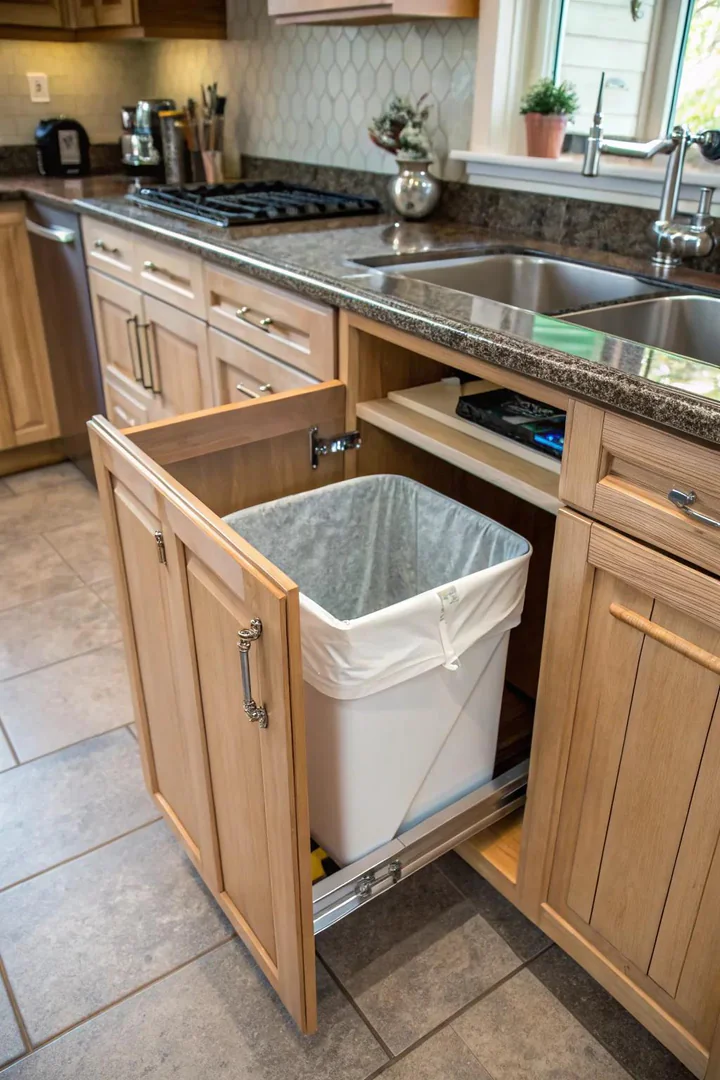
Pull-out trash systems mount inside a base cabinet on full-extension slides, keeping the bin completely hidden when the door is closed. Rev-A-Shelf is the most widely installed brand, offering single and double 35-quart configurations that fit standard 15-inch and 18-inch cabinet widths. The slides run on ball bearings, so the drawer glides open even when the bin is full.
Installation is straightforward if you are comfortable with a drill and a level. The frame screws into the cabinet floor, and the bins hang from the rails. For a cleaner look, choose a model with a door-mount kit so the cabinet door swings open with the drawer instead of requiring a separate handle pull. Pull-out bins work especially well in kitchen islands where a freestanding can would block the walkway.
3. Foot-Operated Trash Bin
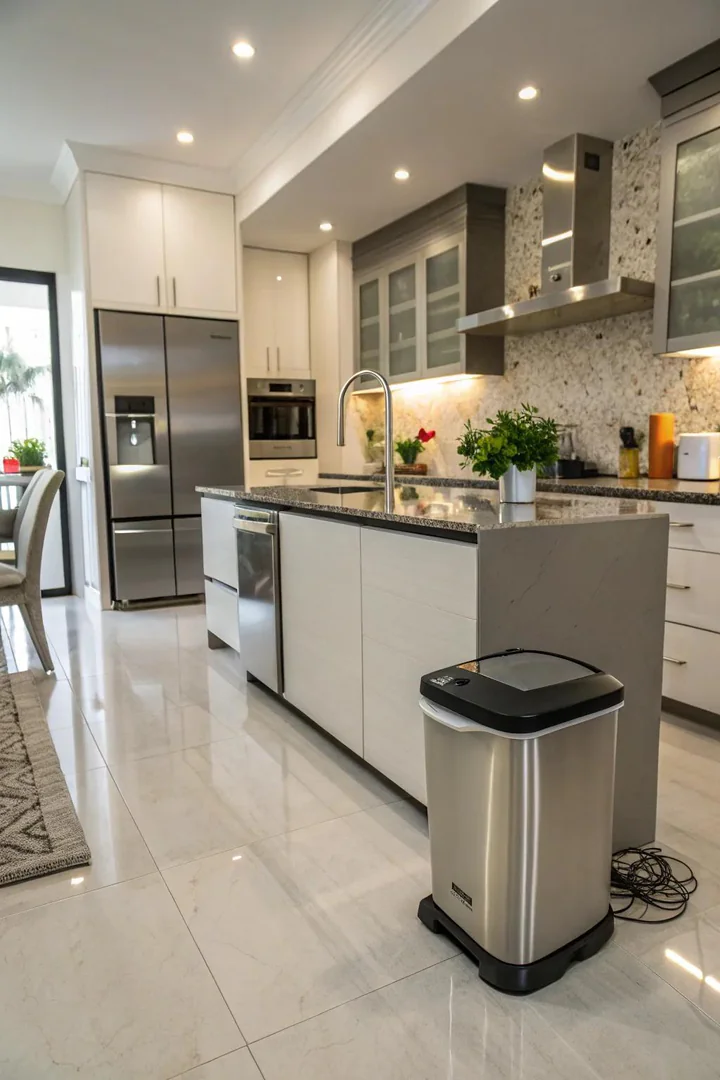
A step-on pedal can is the classic hands-free solution, and the mechanism has only gotten better over the years. Modern versions from brands like Brabantia and EKO use steel pedals with a flat profile that resist bending, paired with a silent-close damper so the lid never slams. You step down, drop the scraps, and lift your foot. The entire motion takes about one second.
Pedal cans work well near the prep area where your hands are frequently wet or covered in raw chicken. Because they require no batteries or sensors, there is nothing to recharge or recalibrate. Look for a model with a stay-open feature, which lets you lock the lid in the raised position for hands-free cleanups or when you are loading a new liner bag.
4. Trash Can with Voice Activation
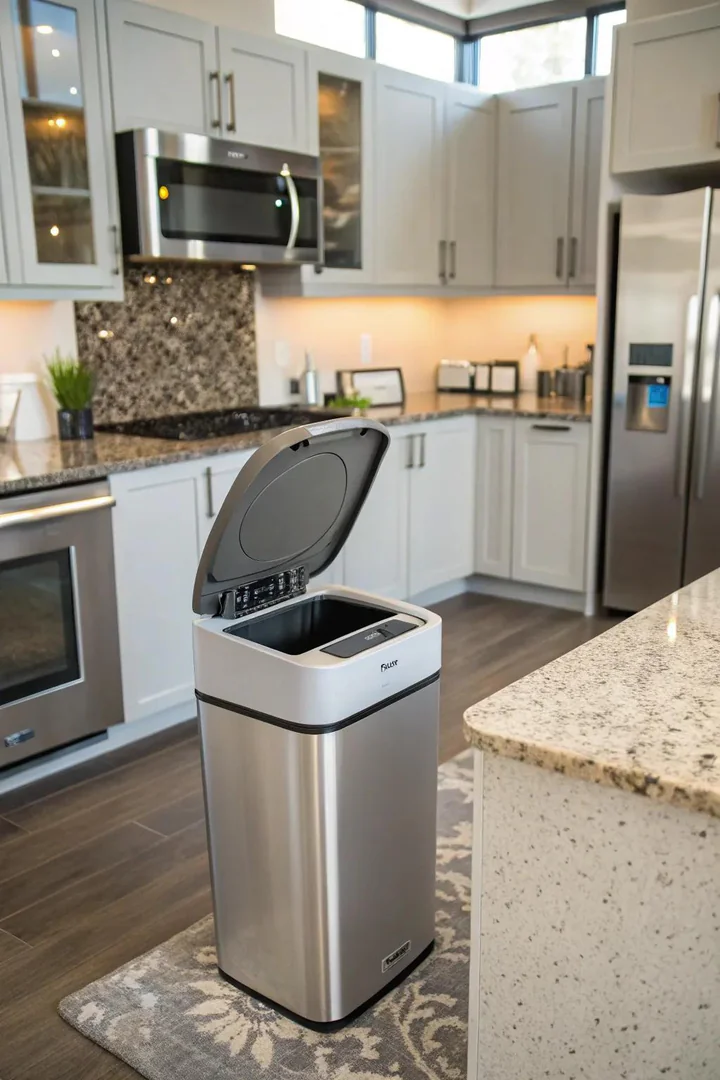
Voice-activated trash cans connect to your existing smart-home ecosystem through Alexa or Google Assistant, opening the lid when you say a trigger phrase. The simplehuman Voice + Motion model is the most popular option, responding to commands like “open can” and closing automatically after a set interval. It also features a motion sensor as a fallback, so the lid still opens if your speaker is offline.
This style is a genuine time-saver during heavy cooking sessions when both hands are occupied and your foot is not near the pedal. Battery life on rechargeable models typically lasts three to four months on a single charge. Keep in mind that voice activation adds cost, usually $40 to $60 over a comparable non-smart model, so weigh whether you will actually use the feature daily or if a simple pedal serves you just as well.
5. Vintage Design Waste Bin
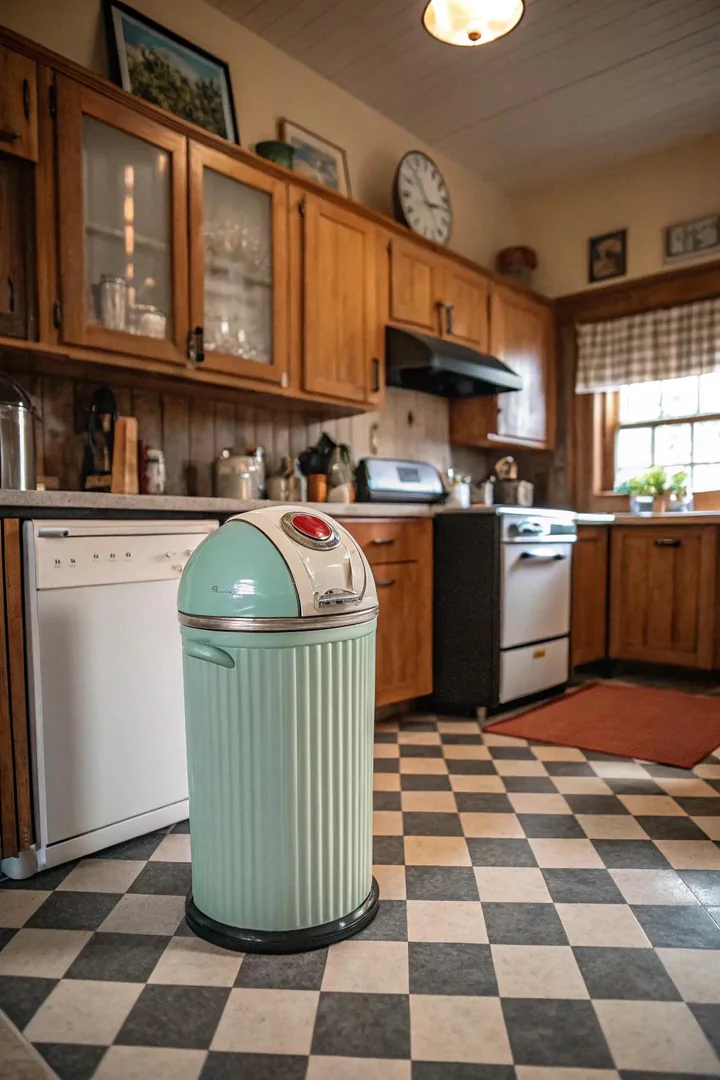
Retro trash cans borrow the domed lids and rounded silhouettes of 1950s diners, making them a natural fit for farmhouse, cottage, and mid-century kitchens. Brands like WESCO and Typhoon produce powder-coated steel models in colors like mint green, candy red, and cream that hold up far better than the spray-painted knockoffs flooding online marketplaces. If you are drawn to warm neutrals for your cooking space, pair a cream retro bin with the muted palettes shown in our grey and beige kitchen ideas guide.
The dome lid on most retro cans lifts manually, which some people find less convenient than a pedal or sensor. However, the visual payoff is considerable: a well-chosen vintage bin acts as a design accent rather than something you hide. Look for models with a removable inner bucket for easy cleaning, and avoid bins with thin plastic liners that crack after a few months of use.
6. Steel Waste Bin
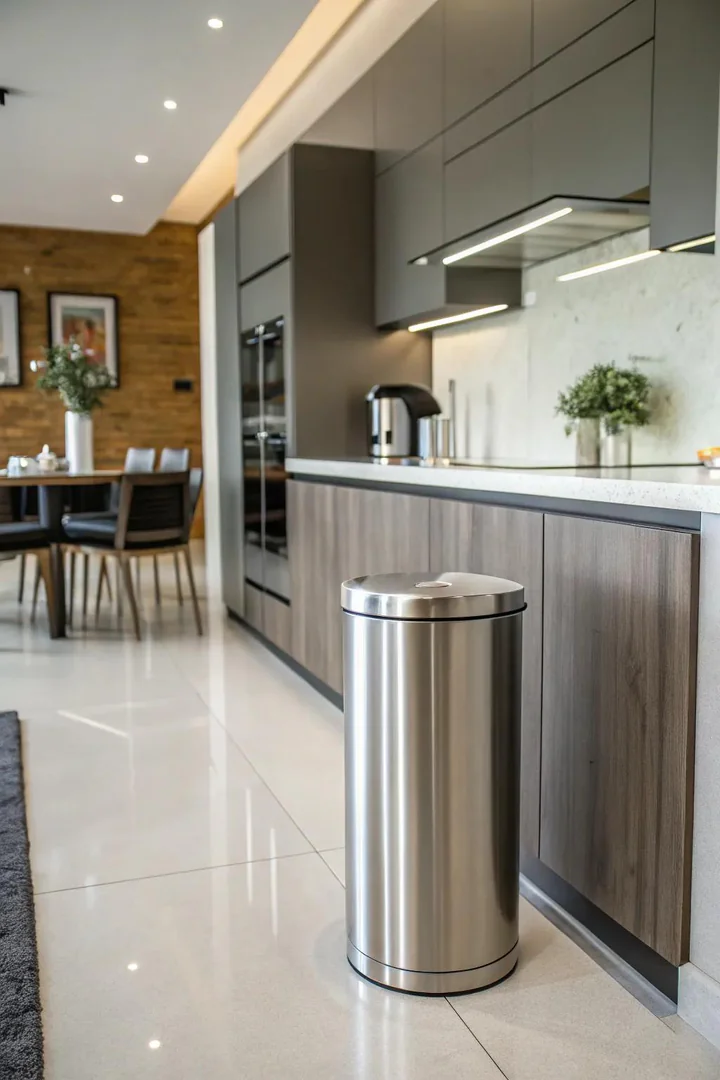
Stainless steel remains the default material for modern kitchen trash cans because it resists odor absorption, cleans with a single wipe, and matches almost every appliance finish on the market. Brushed steel hides fingerprints better than polished mirror finishes, while black stainless and rose gold options let you match the newer appliance color trends without committing to a bold hue on a permanent fixture.
When shopping, pay attention to the gauge of the steel. Thinner 430-grade stainless dents easily and may show magnetic marks, while 18/8 (304-grade) stainless holds its shape and resists corrosion over years of daily use. The price difference between a cheap import and a well-built simplehuman or EKO model is usually $30 to $50, and the longevity makes the upgrade worthwhile.
7. Small Kitchen Compact Garbage Bin
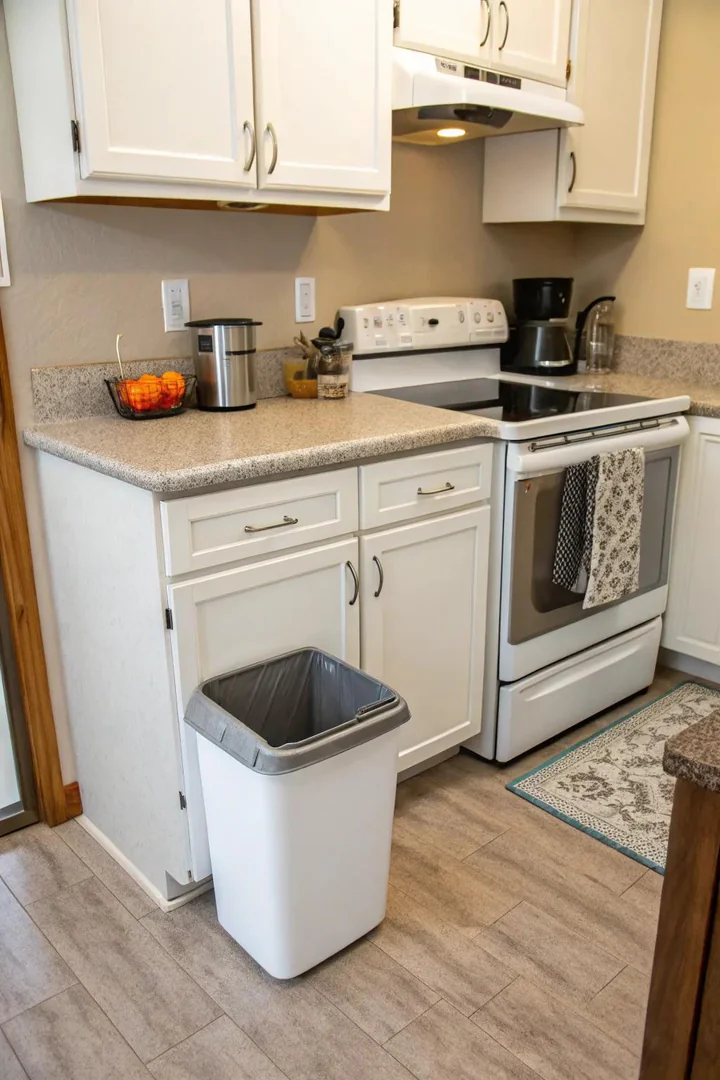
Compact bins in the 6- to 10-liter range tuck into the narrow gap between a counter and the refrigerator or slide under a wall-mounted shelf where a standard 13-gallon can would never fit. Slim rectangular profiles work better in tight kitchens than round cans because they sit flush against the wall and do not stick out into the walkway. If you are working with a small kitchen, organizing countertop accessories like a stylish fruit basket alongside a compact bin can keep the space looking put together without crowding it.
The tradeoff is emptying frequency. A 6-liter bin needs a fresh bag nearly every day in an active household, so keep a roll of small liners stored directly underneath the can or inside a nearby drawer. Some compact models, like the Joseph Joseph Stack series, compress waste with a built-in press, stretching each bag to hold roughly 30 percent more before it needs replacing.
8. Tap-Activated Waste Bin
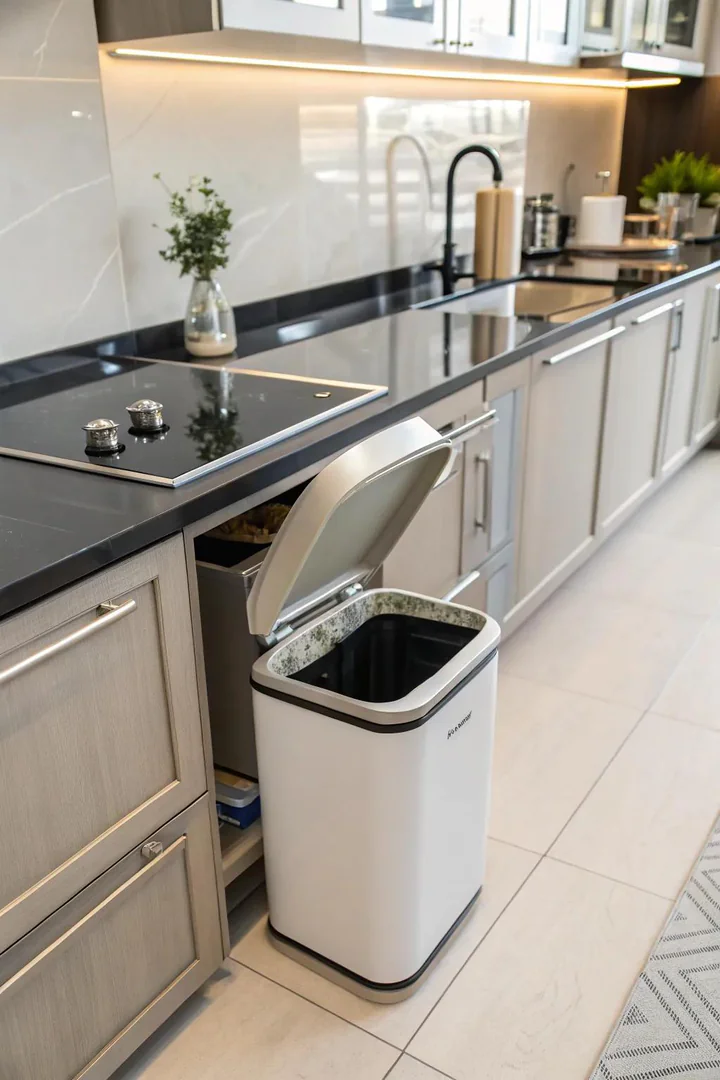
A touch-top bin opens with a light tap on the lid and closes again on a spring or gravity mechanism. Because there is no pedal, no sensor, and no battery, the design is about as reliable as a kitchen tool gets. The lid swing is typically dampened so it closes softly instead of snapping shut, which keeps the kitchen quieter during late-night cleanup.
Touch-top bins come in every material from matte black powder-coated steel to bamboo, making them easy to match to most kitchen styles. The one consideration is that you do need to touch the lid, so if hygiene during raw-meat prep is your top concern, a pedal or motion-sensor model may be a better fit. For everyone else, the simplicity and low cost of a touch-top make it an excellent all-around choice.
9. Combination of Recycling and Waste
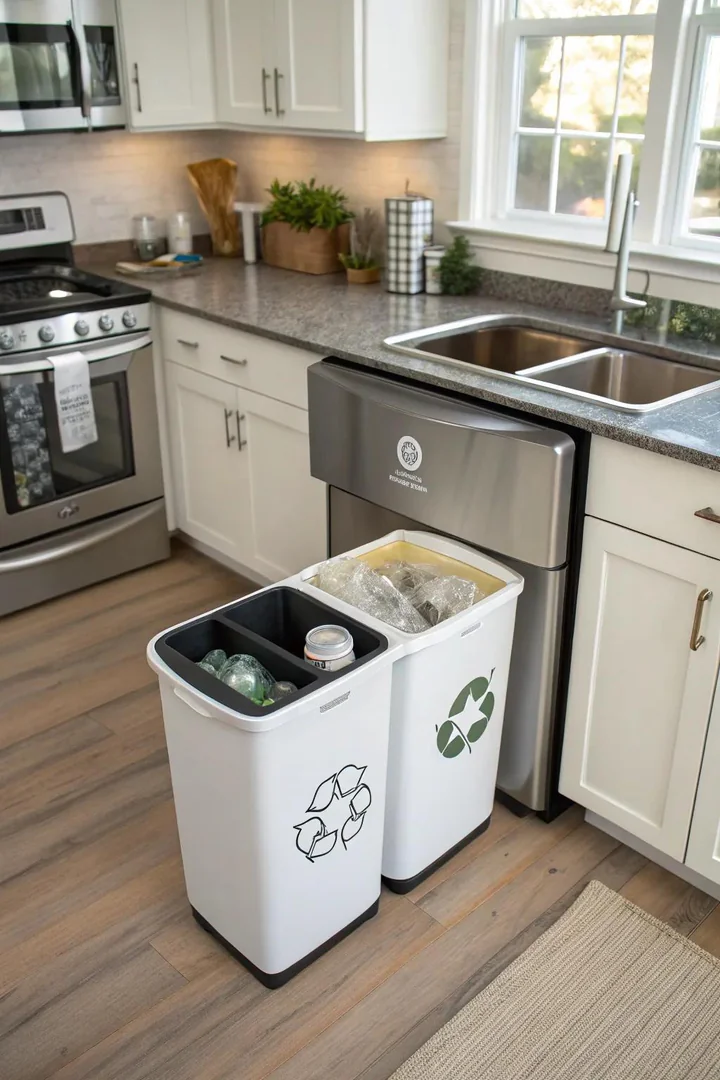
A recycling-and-trash combo unit goes a step further than a simple dual-compartment bin by offering three or even four sorted sections: general waste, paper, plastics, and sometimes glass. Brands like Joseph Joseph Totem and Brabantia Bo Touch Bin produce tall, narrow stacking systems that use vertical space instead of spreading across the floor. This approach works particularly well in galley kitchens where width is the limiting factor.
Color-coded lids or labels on each compartment help every member of the household sort correctly without guessing. Before buying, check your local recycling guidelines since some municipalities require glass to be separated from mixed recyclables. A four-section system is overkill if your curbside program accepts everything in one stream, while a two-section model might not be enough if your area mandates strict sorting.
10. Ornamental Waste Bin
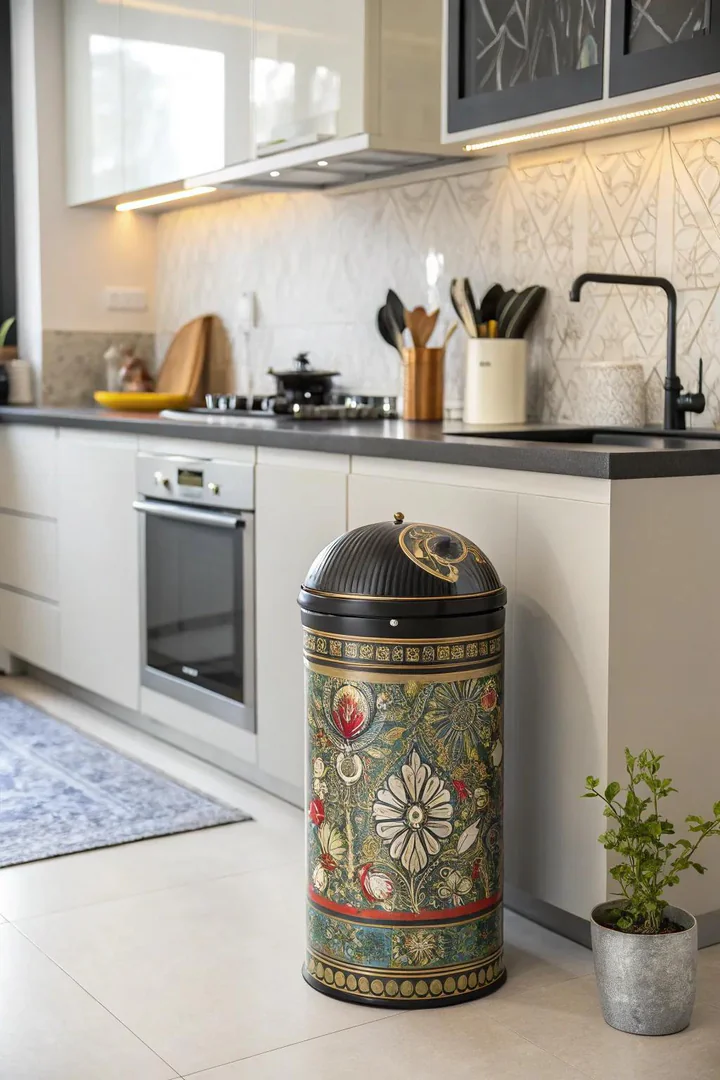
Ornamental bins treat the trash can as a deliberate design element rather than something to camouflage. Hand-painted ceramic bins, hammered copper cans, and woven rattan baskets with removable liners all fall into this category. These pieces look at home in kitchens where every visible object is chosen for its texture or color contribution, and they work best as a secondary bin near the dining area or breakfast nook rather than the main high-volume waste station by the sink.
Capacity on decorative bins tends to be smaller, typically 3 to 8 liters, so reserve them for dry waste like napkins, packaging, and fruit peels. Anything wet or heavy should go in your primary bin. If you use a liner, choose a compostable bag that stays out of sight rather than a grocery bag that bunches over the rim and ruins the look.
11. Trash Can with Motion Sensor
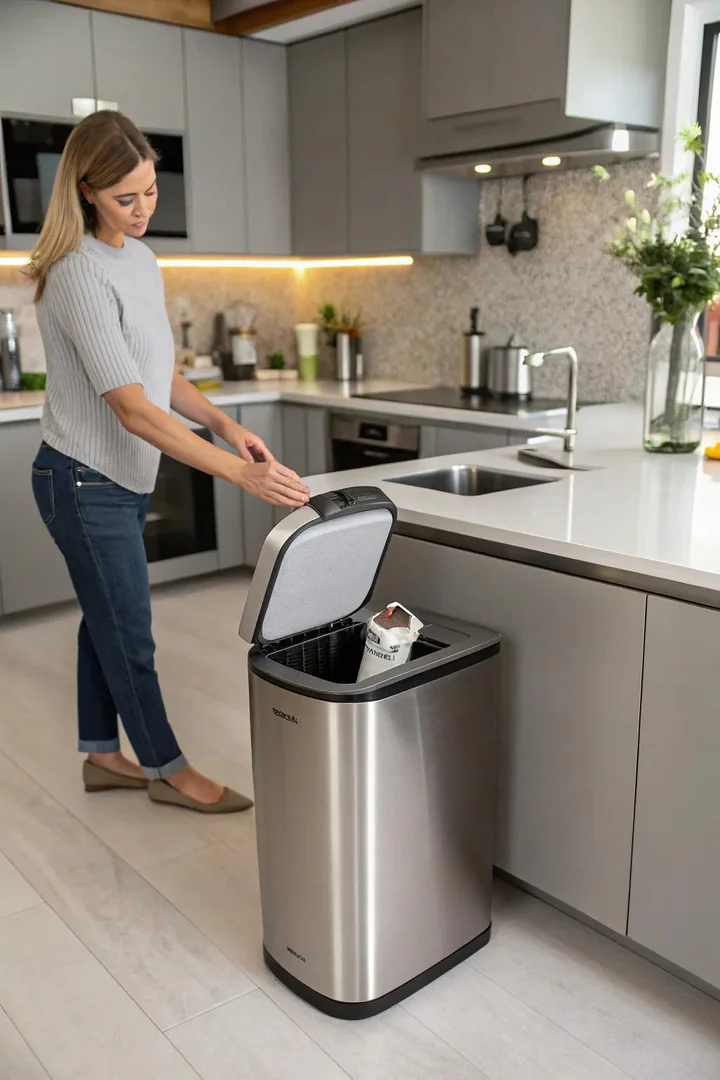
Motion-sensor bins use an infrared detector near the rim that opens the lid when your hand passes within roughly six inches. The sensor reacts in under half a second, so the lid is already open by the time you are ready to drop the scraps. After a set delay, usually five to eight seconds, it closes on its own. The iTouchless and Nine Stars lines dominate this category, with rechargeable models lasting up to four months per charge.
One common complaint about sensor bins is phantom openings when a pet or child walks past. Higher-end models address this with a downward-facing sensor cone that only triggers when something approaches from directly above, not from the side. If false opens are still a problem, most units include a manual lock switch that disables the sensor entirely until you re-engage it.
12. Animal-Resistant Garbage Bin
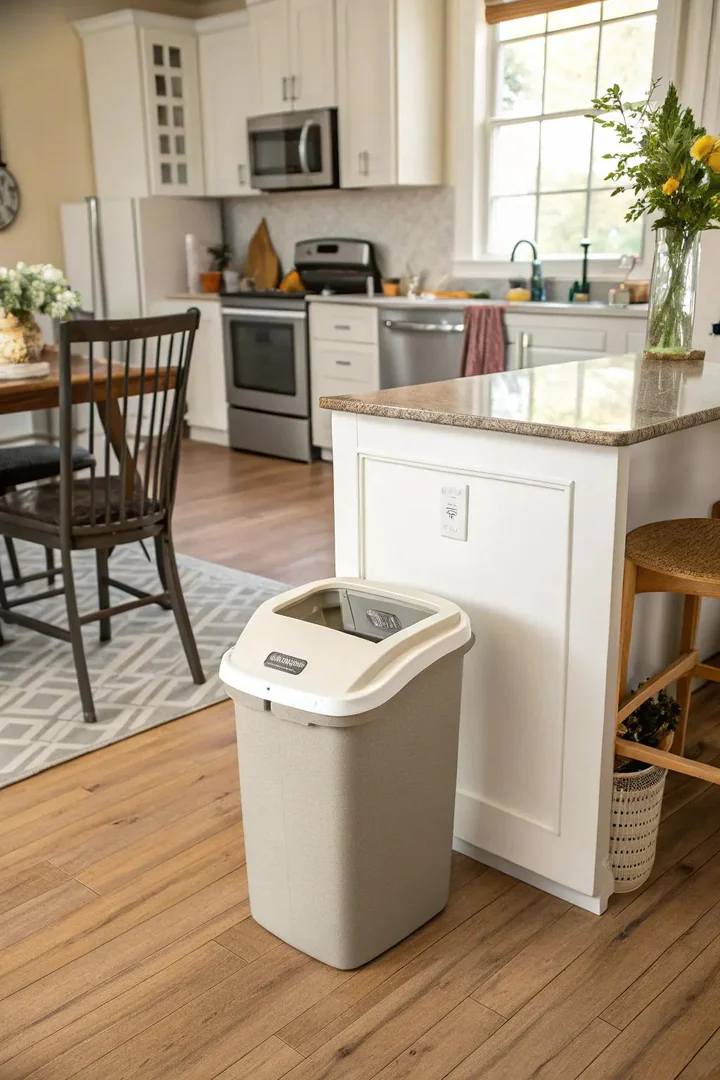
Pet-proof bins use locking lids, weighted bases, or both to keep dogs and cats from raiding the trash the moment you leave the room. The simplehuman Butterfly Lid can is a popular pet-proof choice because its split lid opens from the center and closes with enough resistance that most medium-sized dogs cannot paw it open. For larger or more determined breeds, a latch-lock pedal can from brands like iTouchless adds a physical locking mechanism that requires human dexterity to release.
Beyond the lock, placement matters. Position the bin in a corner or against a wall so your pet cannot tip it by nudging from the side. Tall, narrow cans with a low center of gravity resist tipping better than wide, squat models. If your dog has already learned to step on a pedal, switch to a motion-sensor or touch-top design that does not reward the behavior.
13. Trash Can with Minimalist Design
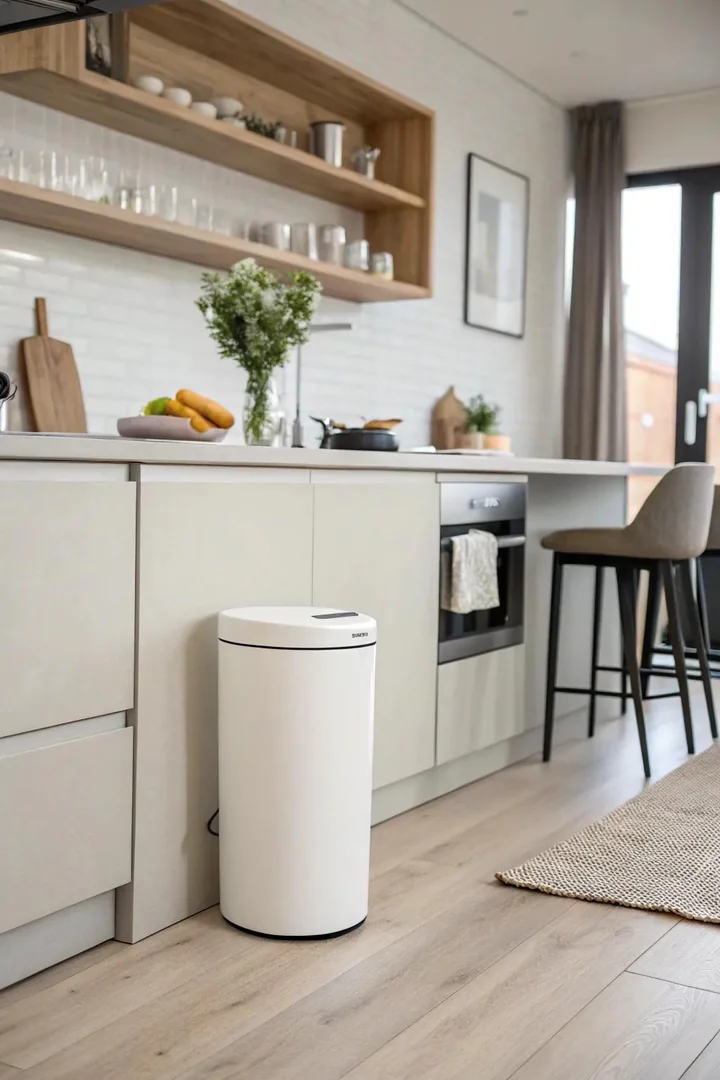
Minimalist bins strip away logos, visible hinges, and decorative flourishes, leaving a clean geometric shape that almost disappears against flat-panel cabinetry. Matte white, matte black, and concrete grey are the most popular finishes in this category, and they pair well with Scandinavian, Japanese, and modern European kitchen layouts. The Brabantia Bo Hi and the Blomus Nexio are two standouts that deliver the pared-back look without sacrificing build quality.
To maintain the minimalist effect, choose a model with a built-in liner pocket that hides the bag edges inside the rim. Nothing breaks the clean-line illusion faster than a plastic bag flopping over the top of an otherwise pristine bin. Keep the area around the can equally tidy with an adjacent wall hook for a dustpan or a small shelf for cleaning supplies so the entire corner reads as intentional.
14. Self-Closing Garbage Bin
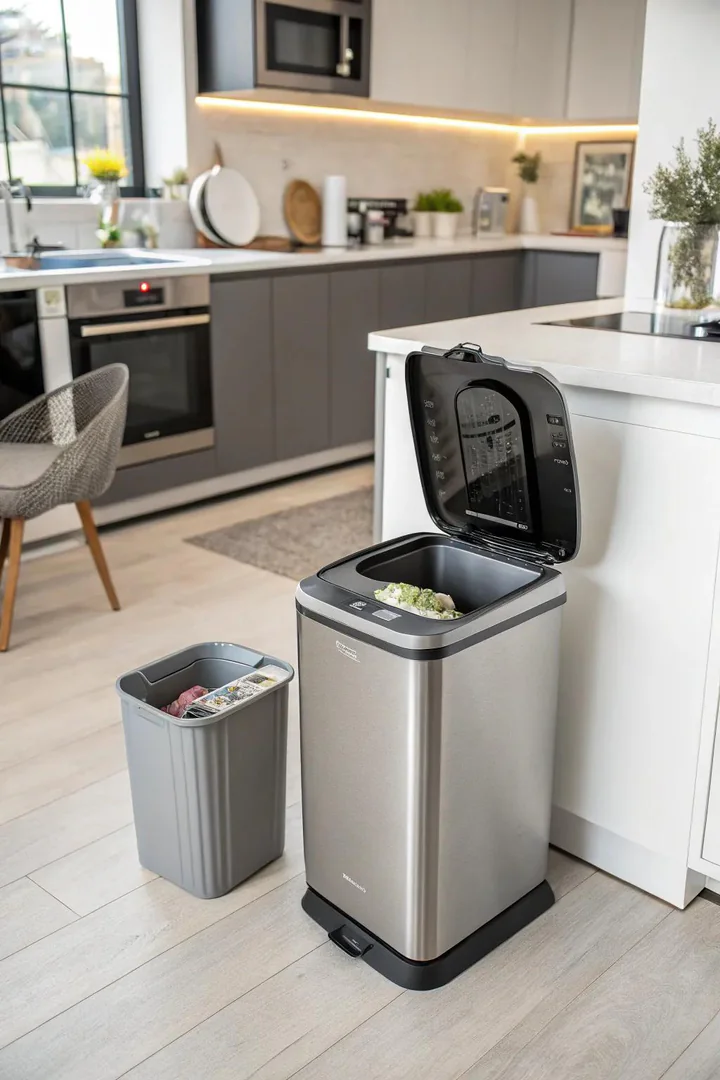
Self-closing bins use a spring-loaded or gravity-hinged lid that returns to the shut position on its own after every use. This matters most for odor control: a lid that stays closed between uses traps smells inside the can instead of letting them drift through the kitchen. Models with a rubber gasket along the rim seal even tighter, which is especially helpful in warmer months when food waste breaks down faster.
The best self-closing mechanisms are damped so the lid settles quietly rather than clapping shut. Check product reviews for noise complaints before buying, because a loud slam every time someone tosses a wrapper defeats the purpose of the soft-close concept. If you cook with strong-smelling ingredients like fish or garlic regularly, pair a self-closing lid with odor-absorbing carbon filters, which most premium brands sell as a replaceable insert.
15. Trash Can with Soft-Close Lid
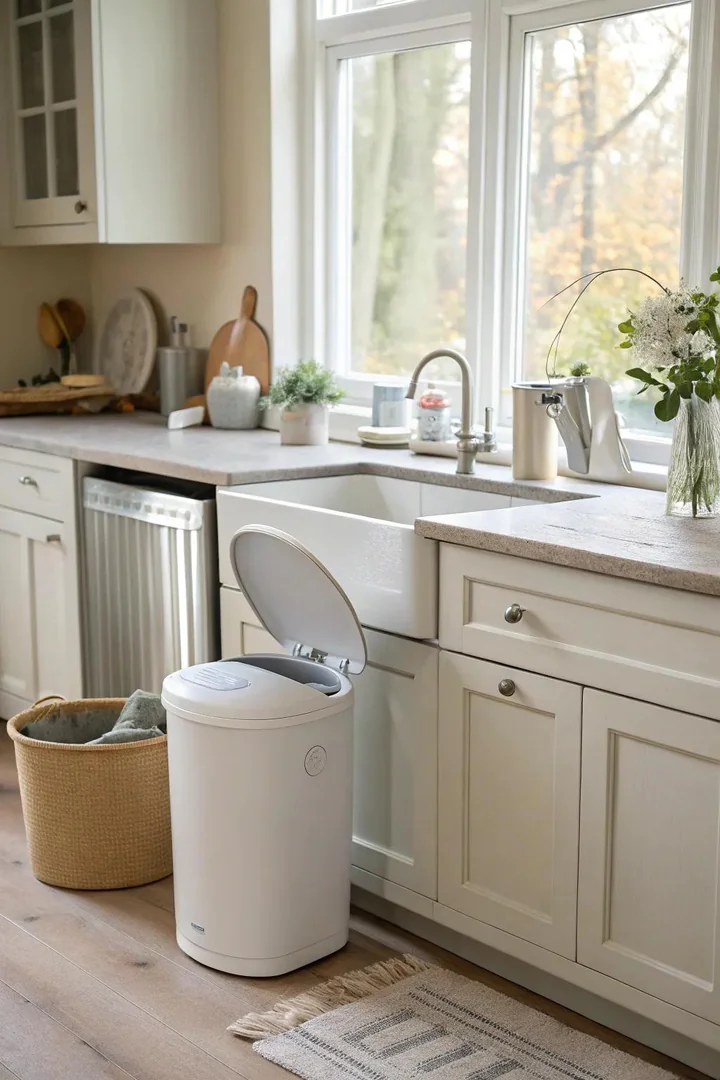
Soft-close lids rely on hydraulic dampers, the same technology used in high-end cabinet hinges, to slow the lid during the last few degrees of its arc. The result is a silent close every single time, regardless of how quickly you release the lid. In open-plan homes where the kitchen flows into the living and dining areas, this detail makes a real difference. No one wants to hear a metal lid clanging while someone is watching a movie ten feet away.
Soft-close dampers do wear out over time. Budget brands may lose their dampening effect within a year, while premium models from simplehuman and EKO guarantee the mechanism for five to ten years. When the damper eventually fails, replacements are usually available as a spare part, so you can swap it without buying an entirely new can.
16. Trash Can with Tilt-Out Design
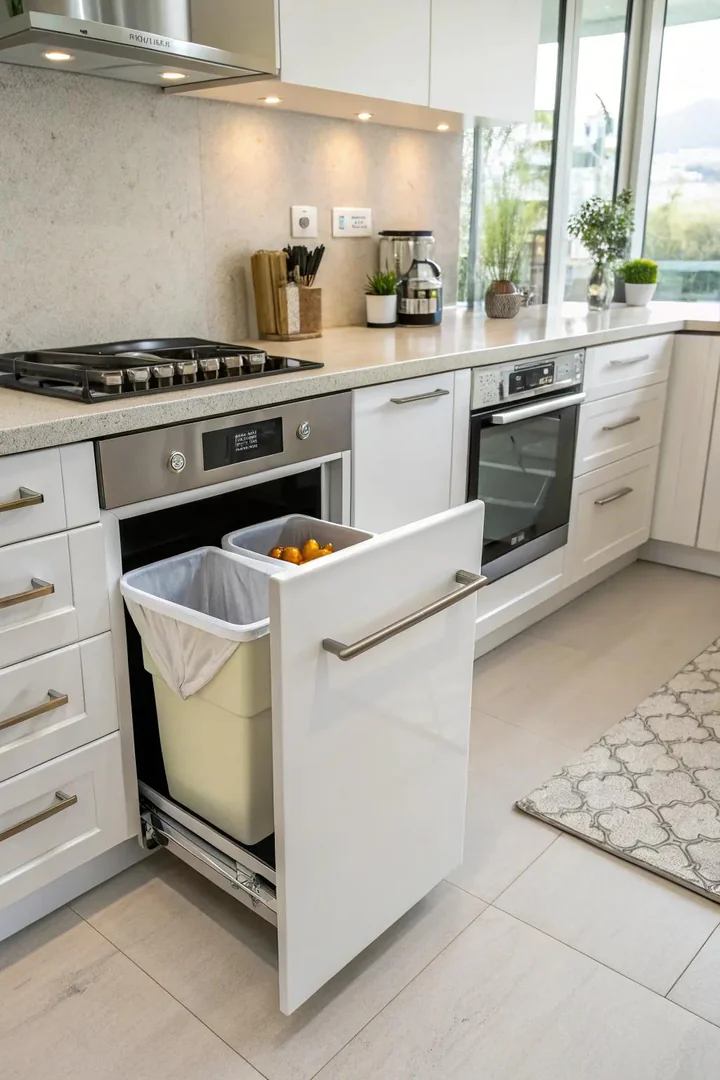
Tilt-out bins are built into a freestanding cabinet or installed behind a false drawer front, so they look like a regular piece of cabinetry until you push the panel and the bin tilts toward you. This design hides the trash completely and keeps odors behind a solid wood or MDF barrier. It is one of the most requested features in custom kitchen renovations because it preserves clean sight lines throughout the room.
The main limitation is capacity. Most tilt-out frames accommodate a single 30- to 40-liter bin, which fills up fast in a busy household. You can install two side-by-side tilt-outs if the cabinet width allows, giving you a hidden recycling station as well. Make sure the tilt mechanism has a positive stop so the bin does not swing all the way out and dump its contents on the floor when you push the panel.
17. Suspended Garbage Bin
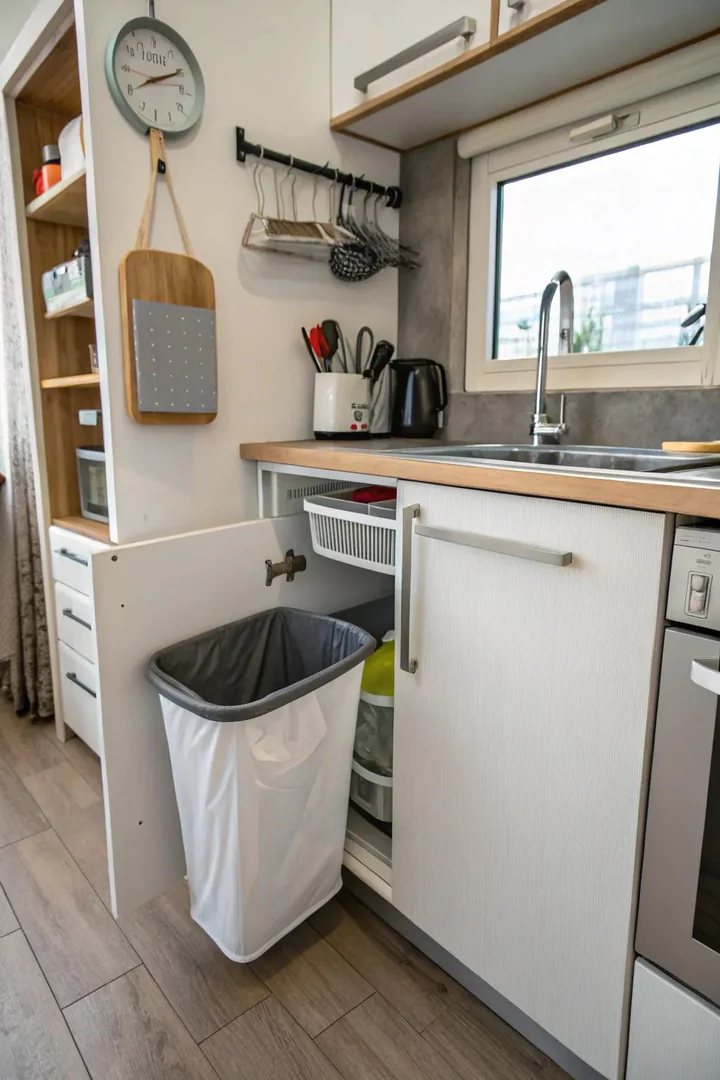
Hanging bins hook over a cabinet door or mount to the inside of a door panel with adhesive brackets, keeping the can off the floor entirely. This frees up every square inch of floor space for foot traffic, which is a real benefit in a narrow galley layout where a freestanding bin would force you to step around it every time you walk past. Most hanging bins hold between 5 and 10 liters, enough for food scraps and small wrappers generated during a single cooking session.
Placement matters: hang the bin on the cabinet door closest to your cutting board so you can sweep peelings and trimmings straight in without walking across the kitchen. Avoid hanging a wet-waste bin on a cabinet door that swings near the stove, since heat and grease can weaken the adhesive mount over time. For a more secure attachment, choose a model that screws into the door panel directly.
18. Upcycled Wood Waste Bin
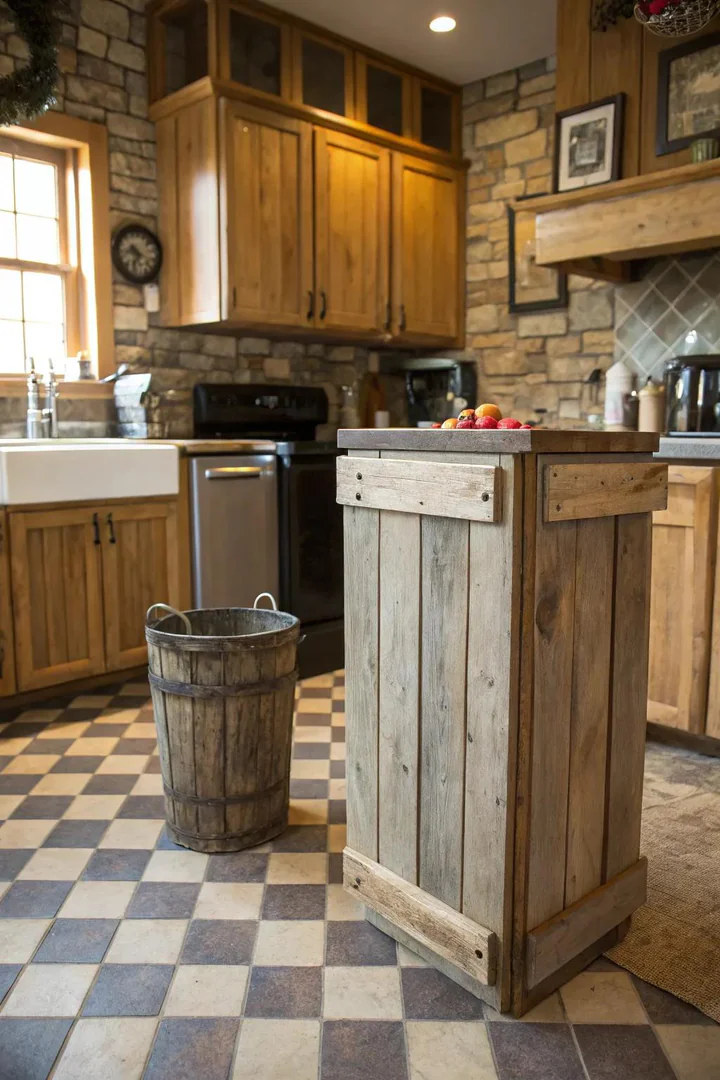
Reclaimed-wood bins bring natural texture and warmth into kitchens that lean toward farmhouse, rustic, or Scandinavian aesthetics. Each piece of salvaged timber carries unique grain patterns, nail holes, and color variations that make the finished bin one of a kind. Etsy and small woodworking shops are the best sources for handmade versions, while mass-market options from brands like mDesign offer the look at a lower price point, though with less character in the wood.
Wood is porous, so a removable metal or plastic liner is essential to protect the exterior from moisture, leaks, and staining. Apply a food-safe sealant or mineral oil finish to the outside every few months to prevent the wood from drying out and cracking. Reclaimed-wood bins pair beautifully with butcher-block countertops and open shelving, reinforcing the organic material palette throughout the room.
19. Trash Can for Under the Sink
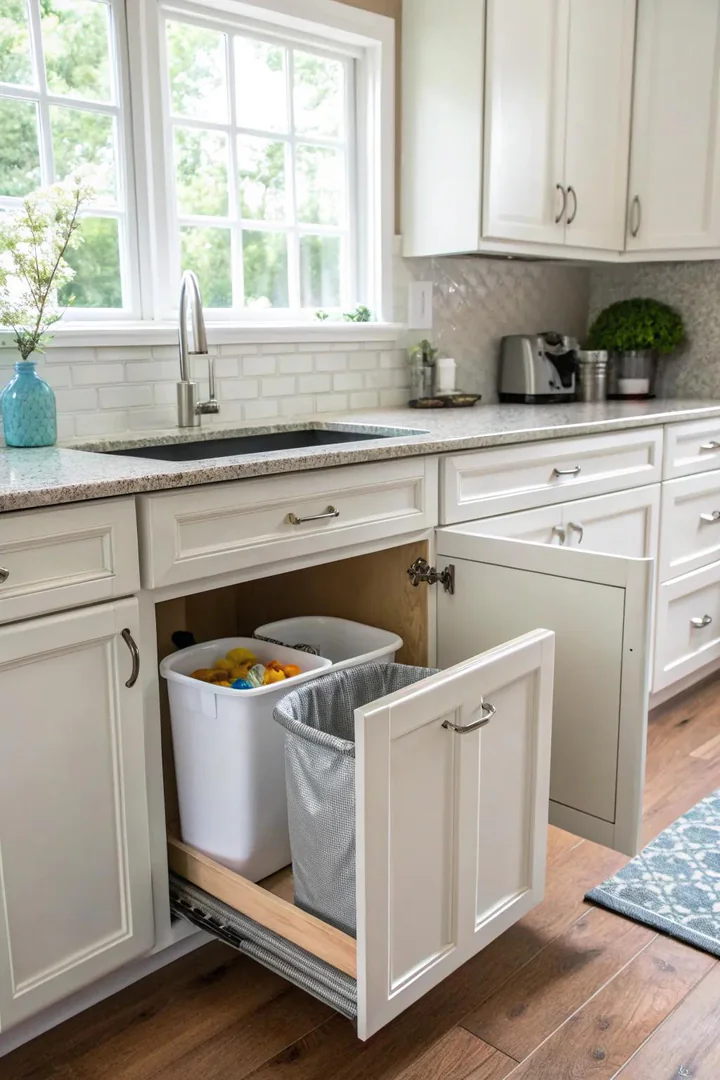
Under-sink bins exploit dead space that most households waste on a jumble of cleaning bottles and grocery bags. A purpose-built under-sink can fits around plumbing pipes and typically measures no taller than 14 inches, leaving room for a garbage disposal unit or a water filter above it. Models with a door-mount rail pull the bin out automatically when you open the cabinet, so you never have to crouch down and fish for the can in the dark.
The biggest challenge is moisture. The under-sink area is prone to drips and condensation, so choose a bin made from polypropylene or stainless steel rather than bare wood or cardboard. Line the cabinet floor with a waterproof mat to catch any leaks before they reach the bin. If space allows, mount a secondary mini bin next to the main one for compostable scraps so you can separate food waste at the source.
20. Stylish Waste Bin
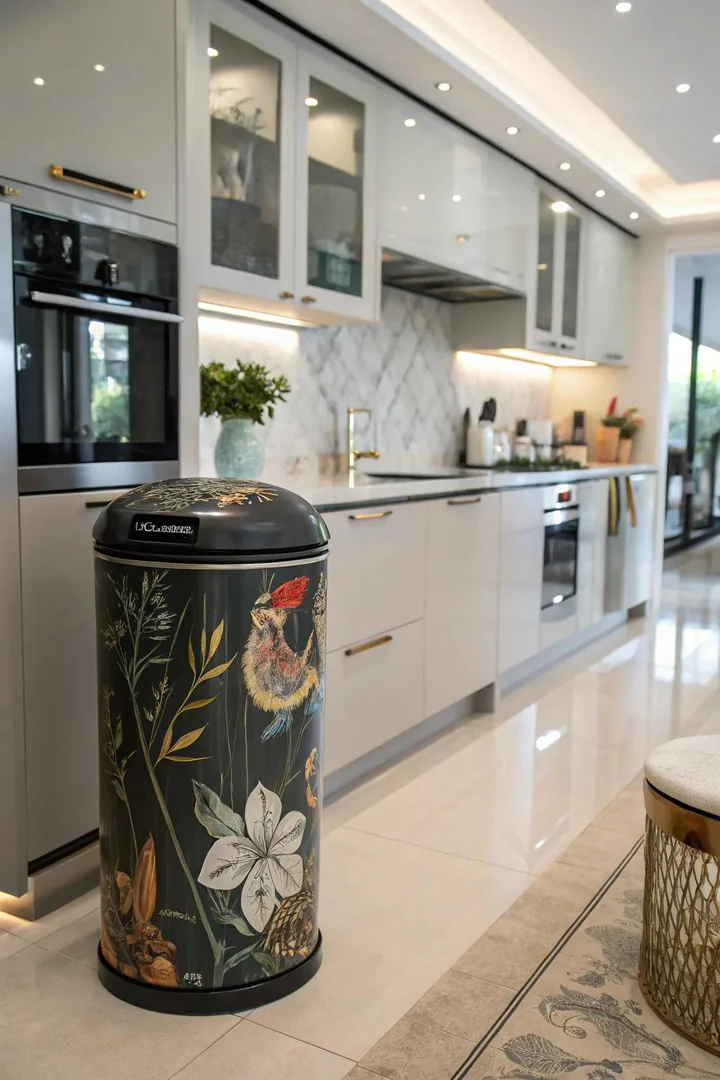
Designer bins from brands like Vipp, Kartell, and Alessi treat the trash can as a piece of industrial design worthy of a museum shop. The Vipp 14, for instance, uses a single-pedal stainless body with no visible screws, a damped lid, and a removable inner bucket, all wrapped in a silhouette that has remained unchanged since 1939. These bins command premium prices, often $250 and up, but they hold their value and can last decades with basic care.
A designer bin makes the most impact in kitchens where every detail is intentional: handleless cabinetry, integrated appliances, and a restrained color palette. Choose a finish that echoes your hardware or faucet so the bin reads as part of the same visual language rather than a standalone statement piece. If you are updating the wall color at the same time, browse our ideas for paint on kitchen walls to find tones that complement a polished metal bin.
How to Choose the Right Kitchen Trash Can
With twenty options on the table, narrowing down to one or two requires a clear set of priorities. Focus on three factors and the decision gets much simpler.
Size and Capacity
A 13-gallon (50-liter) can is the standard for a household of three to four people, producing one to two full bags per day. Couples or single-person households can get away with an 8-gallon (30-liter) model and empty it every other day. Oversized 16-gallon cans save bag changes but take up more floor space, so they only make sense in kitchens with room to spare.
Opening Mechanism
Pedal, motion sensor, touch-top, voice-activated, or manual lift: each mechanism suits a different workflow. Pedal and sensor are the most hygienic because you never touch the lid. Touch-top is the simplest and cheapest. Voice activation is a convenience luxury that works best in homes already running a smart speaker. Match the mechanism to how you actually cook, not to what sounds impressive on a spec sheet.
Material and Finish
Stainless steel is the most durable and easiest to clean. Powder-coated steel offers more color choices but can chip over time. Plastic is lightweight and budget-friendly but absorbs odors. Wood and rattan look distinctive but need a waterproof liner and periodic maintenance. Pick the material that fits both your kitchen’s aesthetic and your willingness to maintain it.
Kitchen Trash Can Size Guide
Use this quick-reference table to match bin size to your household before you start shopping.
| Size | Capacity | Best For | Emptying Frequency |
|---|---|---|---|
| Small | 5-10 L (1-3 gal) | Countertop scraps, hanging bins, compost collection | Daily |
| Compact | 15-25 L (4-7 gal) | Apartments, galley kitchens, secondary bins | Every 1-2 days |
| Standard | 30-50 L (8-13 gal) | Most households of 2-4 people | Every 1-2 days |
| Large | 55-65 L (14-17 gal) | Families of 5+, heavy cooking households | Every 2-3 days |
Common Kitchen Trash Can Mistakes to Avoid
Buying the wrong bin wastes money and creates daily frustration. These are the errors we see most often.
Choosing Style Over Capacity
A gorgeous bin that fills up by noon forces you into multiple bag changes per day. Always calculate your household’s daily waste volume first, then find a can that meets that number and still looks good. Function has to come before appearance, or you will resent the purchase within a week.
Ignoring Bag Compatibility
Some designer bins only accept proprietary liners that cost two to three times more than generic bags. Over a year, that markup adds up to more than the bin itself. Before buying, confirm that standard-size trash bags from your usual brand will fit the can. If proprietary bags are required, factor the ongoing expense into your budget.
Placing the Bin Too Far From the Prep Area
A trash can across the kitchen from your cutting board means you will either walk back and forth constantly or start tossing scraps onto the counter. Position your primary bin within one step of where you do most of your food prep. If the layout does not allow that, add a small hanging or countertop compost bin as a satellite station.
Frequently Asked Questions
What size kitchen trash can do most people need?
A 13-gallon (50-liter) can handles the daily output of a household with two to four people. If you cook frequently and generate more food scraps, step up to a 16-gallon model. For studio apartments or minimal-waste households, an 8-gallon can works well and saves floor space.
How often should I clean my kitchen trash can?
Wipe the exterior once a week and deep-clean the interior with warm soapy water or a baking-soda solution every two to four weeks. Stainless steel cans need only a damp cloth and a streak-free spray. If you notice persistent odor, sprinkle baking soda in the bottom of the can between bag changes to absorb smells.
Are motion-sensor trash cans worth the extra cost?
For households where hygiene is a priority, especially families with young children or anyone who handles raw meat regularly, motion-sensor bins justify the $30 to $60 premium over a manual lid. They also reduce cross-contamination risk in flu season. If you rarely cook or live alone, a simple pedal can offers similar hands-free convenience at a lower price.
Can I use regular trash bags in a designer trash can?
Most standard 13-gallon tall kitchen bags fit the majority of 45- to 50-liter bins regardless of brand. Some brands like simplehuman sell custom-fit liners labeled by letter code (Code M, Code K, etc.) that sit flush inside the rim for a cleaner look, but generic bags typically work fine. Always check the manufacturer’s recommended bag size before buying in bulk.
What is the most hygienic type of kitchen trash can?
Hands-free models, whether pedal, motion-sensor, or voice-activated, are the most hygienic because you never touch a contaminated surface while cooking. Among these, a stainless steel pedal can with a rubber-sealed lid offers the best combination of odor containment, easy cleaning, and zero-contact operation at a reasonable price point.
How do I stop my kitchen trash can from smelling?
Start with a can that has a sealed lid, not an open-top basket. Replace liners before they are completely full, sprinkle baking soda in the bottom of the can, and deep-clean the interior every two weeks. Activated-carbon odor filters, available as snap-in inserts from most premium brands, absorb smells between cleanings and last about six months before needing replacement.
Conclusion
A well-chosen trash can should work as hard as your dishwasher and look as intentional as your backsplash. The 20 ideas above cover every price point from a $15 hanging bin to a $300 designer pedal can, every opening mechanism from manual lift to voice command, and every style from mid-century retro to Scandinavian minimalism. Pick the option that fits your kitchen’s footprint, your household’s daily waste volume, and the finish palette you have already committed to.
If you are updating more than just the bin, explore our full collection of fruit basket ideas for your kitchen for another easy styling win, or head to the homepage to browse every room and category we cover. A single smart swap in the kitchen often sparks a chain of small upgrades that make the whole room feel considered rather than cobbled together.