
Kitchen Countertop Ideas: 17 Gorgeous Options You’ll Love Forever
Kitchen countertop ideas range from natural stone slabs ($40 to $200 per square foot installed) to budget-friendly laminates ($10 to $40 per square foot installed), and the right surface depends on your cooking habits, maintenance tolerance, and design style. A countertop covers 25 to 50 square feet in a typical kitchen, making the material choice one of the highest-impact visual and functional decisions in any remodel. Below are 17 countertop materials with real brand names, installed costs, durability ratings, and maintenance requirements, followed by a how-to guide for selecting the right surface, a cost comparison table, and FAQs on heat resistance, stain removal, and resale value.
1. Marble Countertops

Calacatta and Carrara marble from Italian quarries produce the signature white-with-gray-veining pattern that has anchored luxury kitchens for centuries. A 3-cm-thick Calacatta Gold slab costs $75 to $200 per square foot installed, while Carrara (more uniform, subtler veining) runs $40 to $100 per square foot. Marble rates 3 on the Mohs hardness scale (softer than granite at 6 to 7), meaning acidic liquids like lemon juice, tomato sauce, and red wine etch the polished surface within minutes if not wiped immediately.
Sealing marble every 6 to 12 months with a penetrating sealer like Tenax Proseal ($30 per quart) slows staining but does not prevent etching. Honed (matte) marble finishes camouflage etching better than polished finishes because the low-sheen surface masks the dull spots that acid creates. Marble suits homeowners who accept patina as part of the material’s character rather than a flaw. A kitchen with marble countertops, peninsula layouts, and brass hardware creates an Old World European aesthetic that photographs beautifully.
2. Quartz Countertops
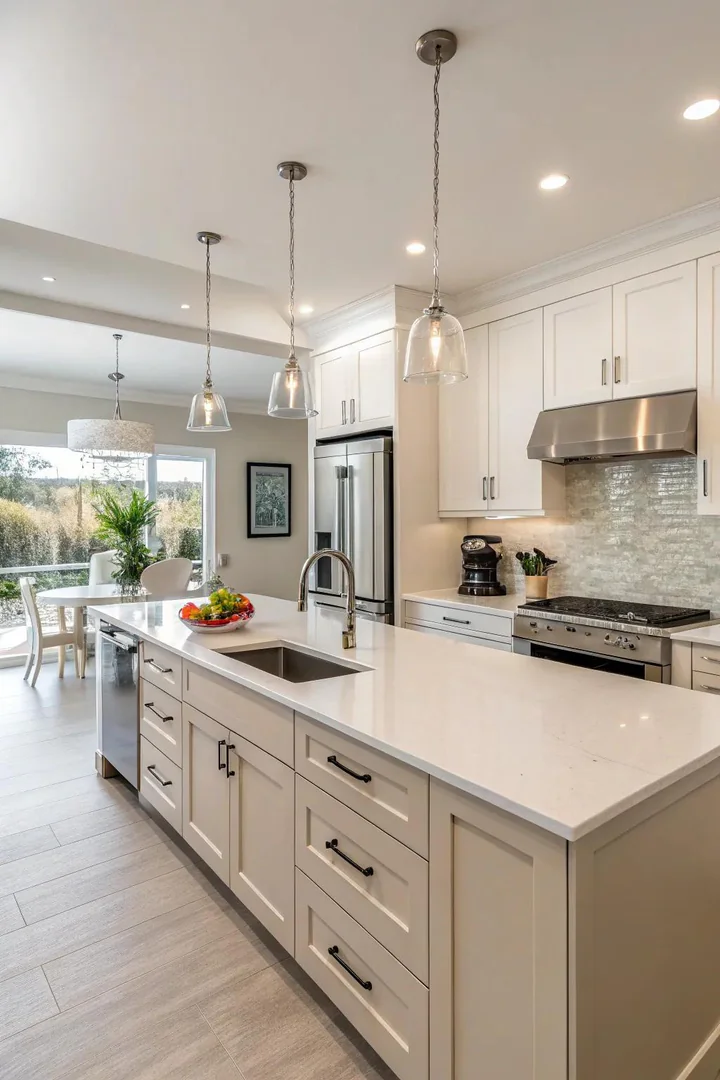
Engineered quartz from Caesarstone, Cambria, Silestone, and MSI Q Quartz combines 90% to 94% ground natural quartz crystals with polymer resin binders and pigments, producing a non-porous surface that resists staining without sealing. Installed costs range from $50 to $150 per square foot depending on brand, edge profile, and color. Caesarstone Calacatta Nuvo 5131 ($70 to $90 per square foot) mimics Calacatta marble’s veining pattern without marble’s vulnerability to acids.
Quartz resists scratches, stains, and bacteria better than any natural stone because the resin binder eliminates the microscopic pores that absorb liquids. Maximum heat tolerance sits around 300°F (150°C), meaning hot pans placed directly on quartz can crack or discolor the resin. Always use a trivet or hot pad. Quartz cannot be used outdoors because prolonged UV exposure yellows the resin in light-colored slabs. For indoor kitchens, quartz delivers the lowest maintenance of any countertop material at a mid-to-high price point.
3. Butcher Block Countertops
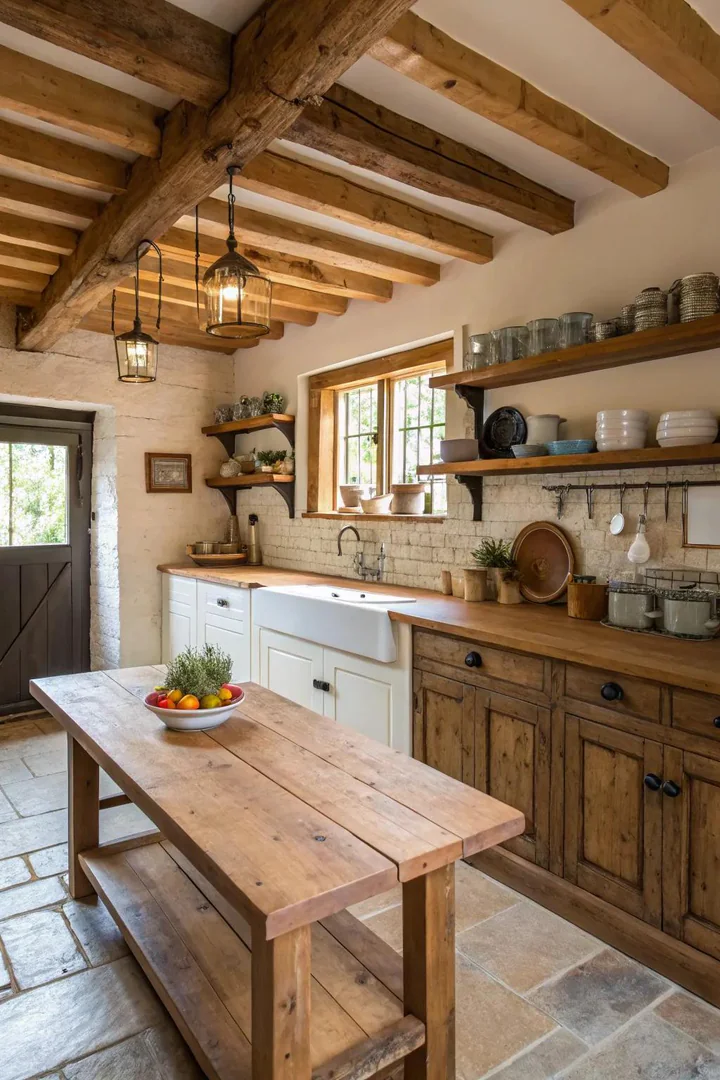
Hard maple, white oak, walnut, and cherry butcher block countertops cost $40 to $100 per square foot installed and bring natural grain variation, warmth, and a workable cutting surface into the kitchen. John Boos ($60 to $90 per square foot for 1.5-inch-thick edge-grain maple) and IKEA KARLBY ($150 for a 74-inch walnut-veneer top) are the two most common sources. Edge-grain construction (boards glued side by side) costs less than end-grain (checkerboard pattern) but shows knife marks more readily.
Oiling butcher block monthly with Howard Butcher Block Conditioner ($12 per 12-ounce bottle) or mineral oil ($8 per quart) prevents the wood from drying and cracking. Sanding out scratches and stains with 150-grit sandpaper followed by a fresh oil coat restores the surface without professional help. Wood is the only countertop material a homeowner can refinish at home with basic tools. Butcher block pairs naturally with white or gray painted cabinets, where the wood grain provides a warm counterpoint to the cool cabinet color.
4. Concrete Countertops
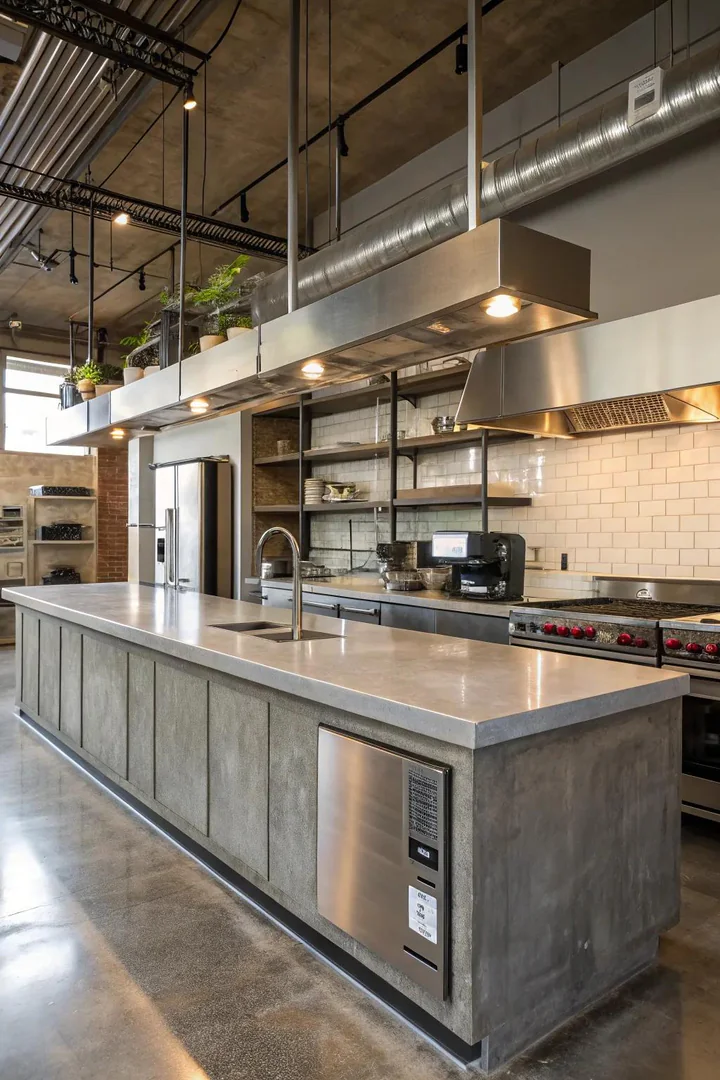
Cast-in-place or precast concrete countertops cost $65 to $135 per square foot installed and deliver an industrial, raw-material aesthetic that no manufactured surface replicates. A concrete countertop fabricator mixes Portland cement with sand, aggregate, water, and pigments, then pours the mixture into custom forms built to the exact dimensions of the kitchen layout. Fiber reinforcement and steel rebar embedded in the slab prevent cracking under load.
Concrete accepts integral color (pigment mixed into the wet cement), acid staining (chemical reaction that produces marbled, mottled tones), and embedded objects (recycled glass chips, seashells, metal filings) for a one-of-a-kind surface. Sealing cured concrete with a penetrating sealer (Cheng Concrete Countertop Sealer, $60 per quart) fills the porous surface and prevents staining. Re-sealing every 1 to 3 years maintains protection. Concrete develops hairline cracks over time as part of the material’s natural aging process, which most owners regard as patina rather than damage.
5. Stainless Steel Countertops
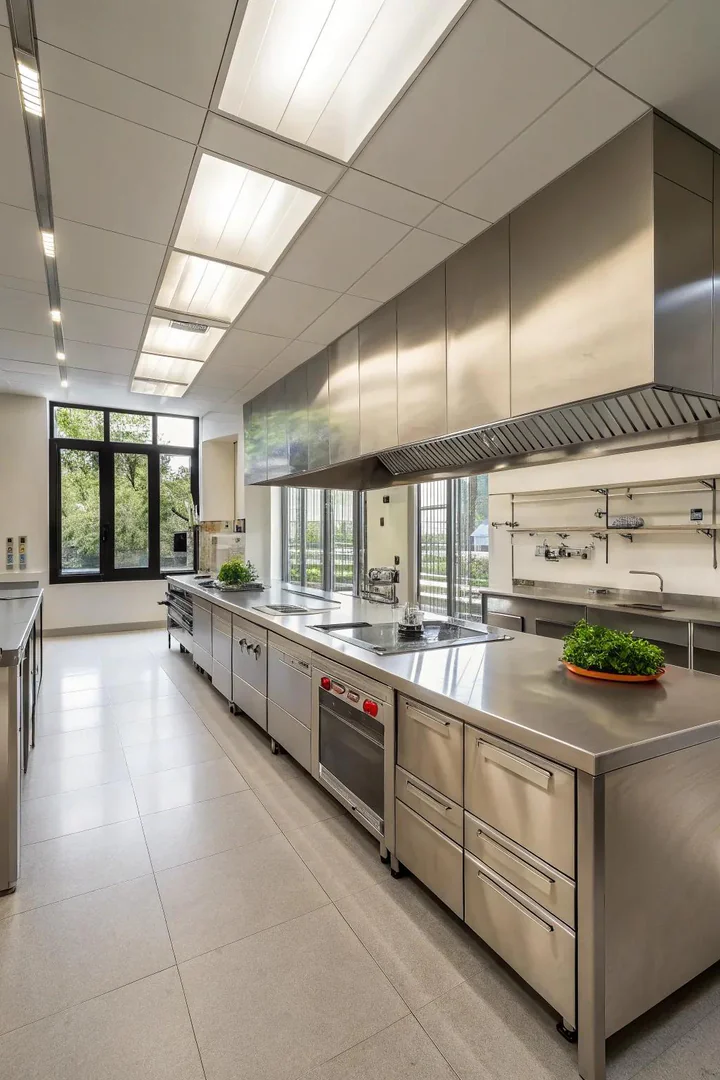
Commercial-grade 16-gauge or 18-gauge 304 stainless steel countertops cost $75 to $150 per square foot installed and bring the same surface material used in restaurant kitchens, hospital labs, and food processing plants into a residential kitchen. Stainless steel resists heat (no maximum temperature limit), bacteria (non-porous surface), stains, and corrosion. A fabricator welds and polishes the steel sheet over a plywood or MDF substrate, forming the countertop, backsplash, and integrated sink from a single piece.
Stainless steel shows fingerprints, water spots, and fine scratches on its polished surface. A brushed (satin) finish hides these marks better than a mirror-polished finish. Cleaning with Bar Keepers Friend ($3 per canister) and a microfiber cloth removes water deposits and restores the surface. Stainless steel pairs naturally with modern and industrial kitchen styles, especially when combined with concrete floors, exposed ductwork, and black steel shelving. The material is 100% recyclable at end of life.
6. Ceramic Tile Countertops
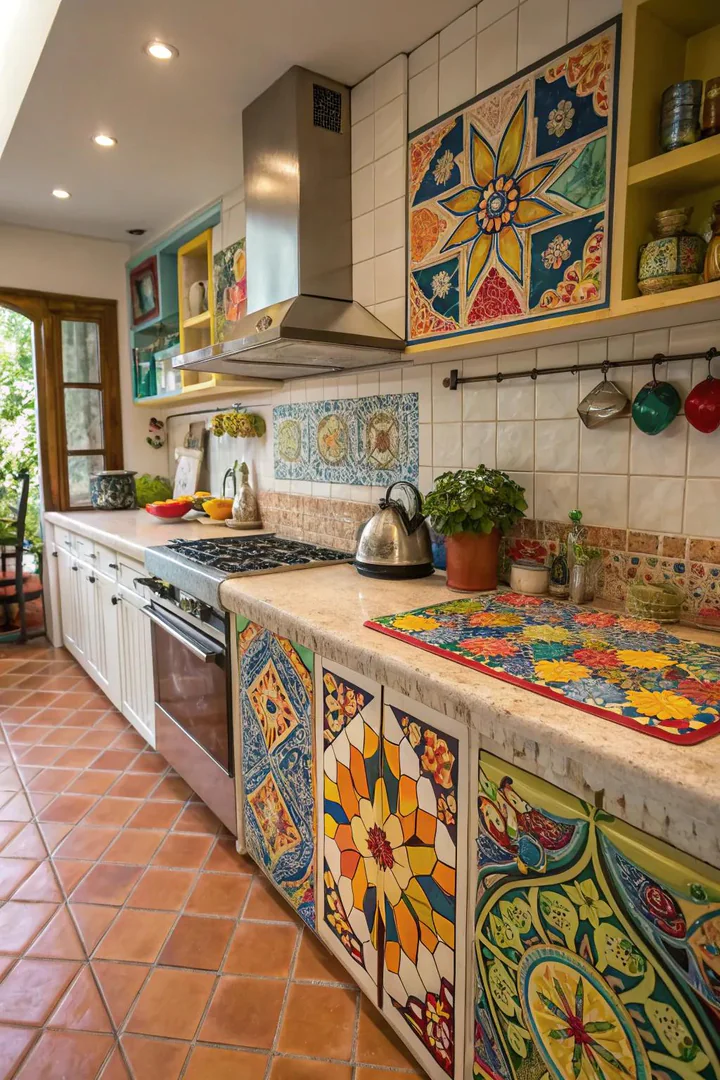
Ceramic and porcelain tile countertops cost $10 to $80 per square foot installed (depending on tile quality and size) and offer the widest color, pattern, and shape selection of any countertop material. Fireclay Tile ($15 to $40 per square foot for handmade glazed tiles), Daltile ($3 to $15 per square foot), and Merola Tile from Home Depot ($5 to $20 per square foot) cover the range from artisan to budget. A 4-by-4-inch or 3-by-6-inch subway tile in a hand-glazed glaze produces a Mediterranean or Spanish Colonial kitchen aesthetic.
Grout lines between tiles collect stains, grease, and mildew unless sealed with a penetrating grout sealer (Aqua Mix Sealer’s Choice Gold, $30 per quart) and re-sealed annually. Large-format porcelain tiles (24-by-48-inch slabs from Cosentino Dekton or Neolith, $50 to $100 per square foot) reduce grout lines to near zero and provide a slab-like appearance. Tile is the most DIY-friendly countertop material because a homeowner with a wet saw, thinset, and grout float can install a tile countertop in a weekend for material costs alone.
7. Recycled Glass Countertops
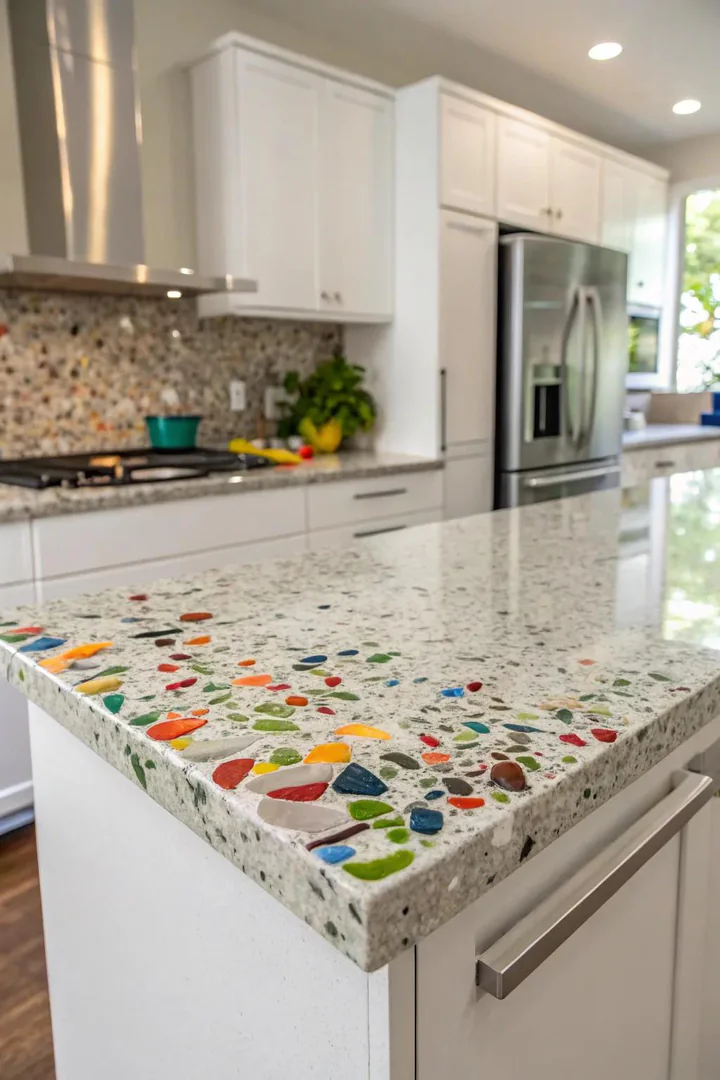
Recycled glass countertops from Vetrazzo ($80 to $150 per square foot installed) and IceStone ($75 to $125 per square foot) embed crushed post-consumer glass (wine bottles, beer bottles, windows, windshields) in a cement or resin binder, producing a terrazzo-like surface with visible glass chips in colors from sea-green to cobalt blue to clear. Each slab contains 75% to 100% recycled content by weight, making recycled glass one of the most environmentally responsible countertop materials available.
The cement-based versions (Vetrazzo, IceStone) require sealing every 1 to 2 years to prevent staining, similar to concrete. The glass aggregate itself does not scratch, stain, or absorb bacteria. Recycled glass countertops suit kitchens designed around sustainability: reclaimed wood cabinets, bamboo flooring, low-VOC paints, and Energy Star appliances. The speckled, multicolored glass surface adds visual texture and conversation-starting storytelling (guests notice the recycled bottle bottoms embedded in the surface).
8. Laminate Countertops
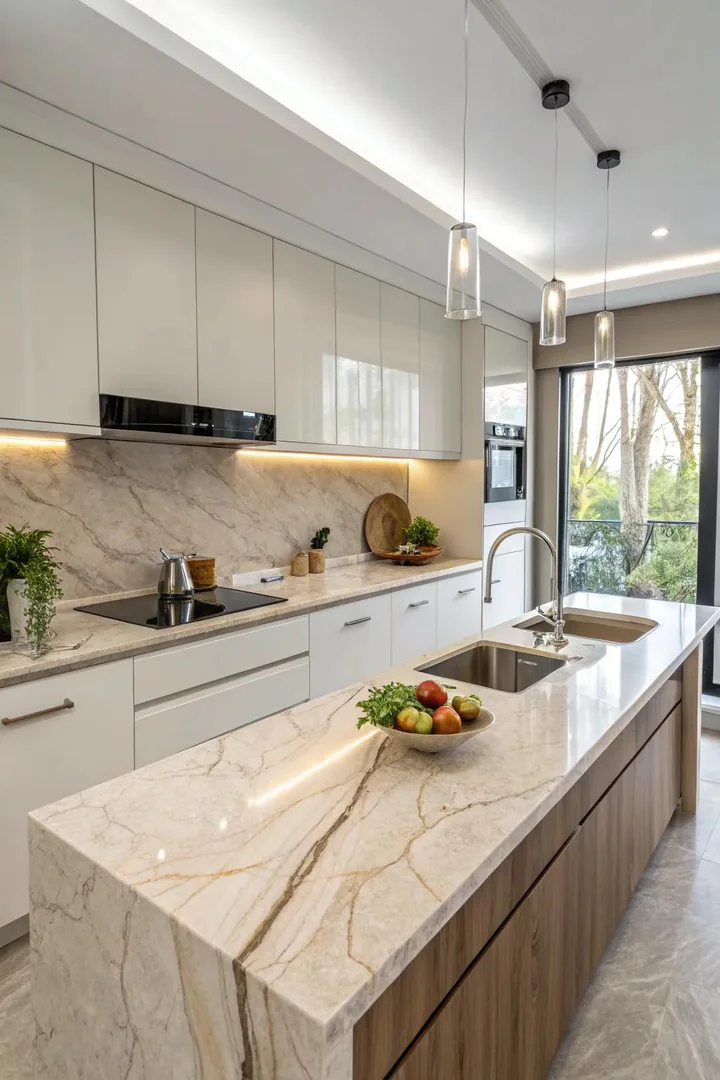
Formica, Wilsonart, and VT Industries laminate countertops cost $10 to $40 per square foot installed, making laminate the most affordable countertop material by a wide margin. Modern high-definition laminate prints replicate marble, granite, butcher block, and concrete patterns with surprising realism at 1/5 to 1/10 the cost of the real material. Formica 180fx ($4 to $8 per square foot for the laminate sheet alone) produces large-scale stone patterns that avoid the repetitive tiling visible in older laminate prints.
Laminate resists stains and moisture but scratches under knife cuts and burns under hot pans. A post-formed laminate countertop (with a rounded, built-up front edge) from a home center costs $200 to $500 for a 10-foot section ready to install. A custom-fabricated laminate countertop with a mitered edge profile and undermount sink cutout costs $30 to $50 per square foot installed. Laminate works well in rental properties, starter homes, and budget renovations where the countertop may be upgraded later.
9. Quartzite Countertops
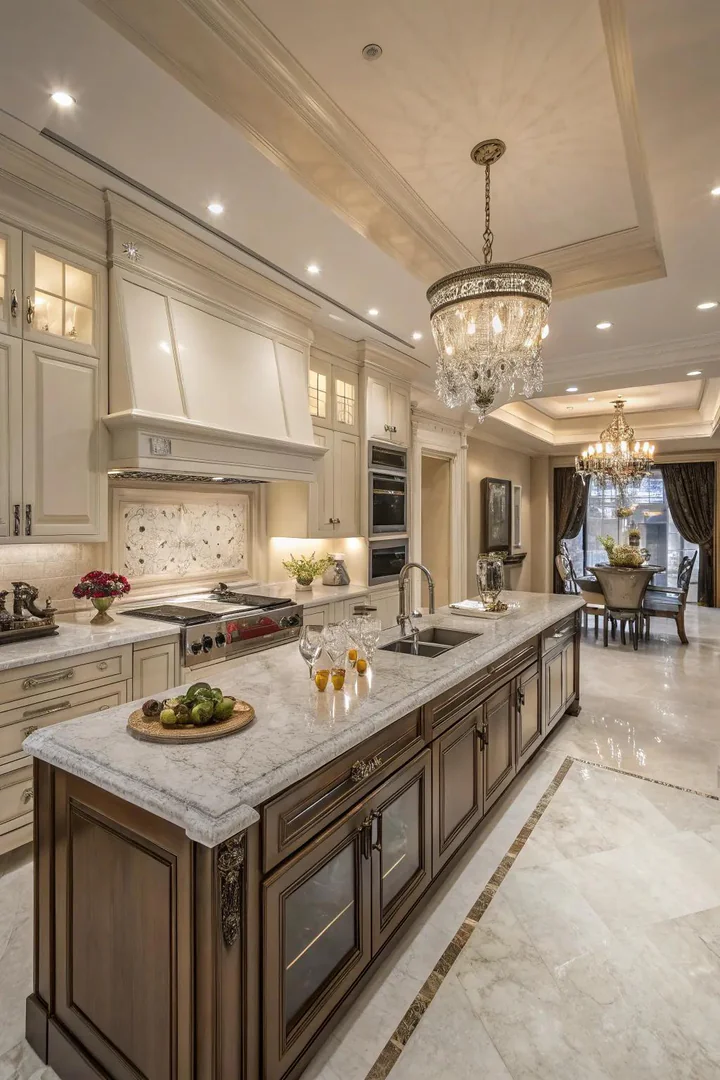
Quartzite (a natural metamorphic stone, not to be confused with engineered quartz) ranks 7 on the Mohs hardness scale, harder than granite (6 to 7) and far harder than marble (3). Taj Mahal quartzite ($60 to $120 per square foot installed) produces soft gold-and-cream veining on a warm white background. Super White quartzite ($50 to $100 per square foot) delivers a marble-like white-with-gray-veining appearance with quartzite’s superior scratch and heat resistance.
Quartzite handles hot pans, sharp knives, and acidic spills better than marble while producing a similar visual effect. Sealing every 1 to 2 years with a penetrating stone sealer protects the surface from oil and wine stains. Some stones sold as “quartzite” at fabrication shops are actually dolomite or marble, which are softer and more acid-sensitive. Test with a sharp knife (quartzite will not scratch) and a drop of lemon juice (quartzite will not etch) before purchasing. True quartzite delivers the beauty of marble with the durability of granite.
10. Solid Surface Countertops
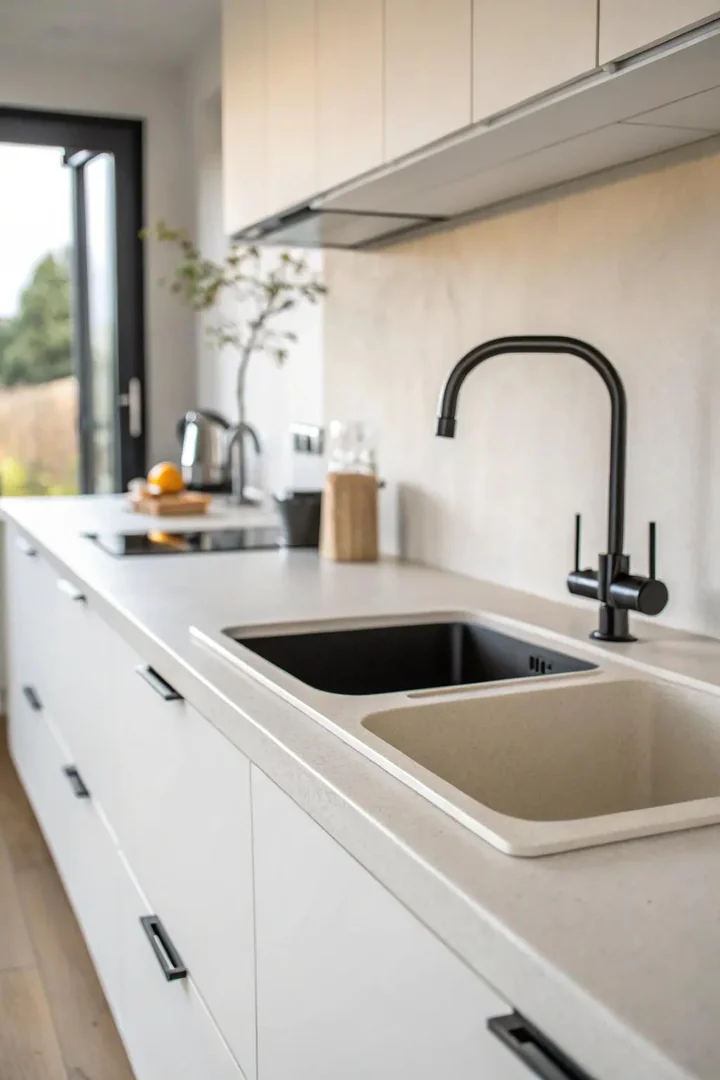
Corian (by DuPont, now Corian Design), Staron (by Samsung), and Hi-Macs (by LG Hausys) solid surface countertops cost $40 to $100 per square foot installed and offer a non-porous, repairable surface that can be thermoformed into curves and bonded together at invisible seams. Solid surface material consists of acrylic or polyester resin mixed with mineral filler (aluminum trihydrate), producing a uniform color throughout the full thickness of the slab.
Scratches and burns on solid surface countertops sand out with 400-grit sandpaper and a Scotch-Brite pad, restoring the original finish without professional help. Fabricators bond solid surface sections together with color-matched adhesive, creating joints invisible to the eye and watertight against moisture intrusion. An integrated solid surface sink (formed from the same material as the countertop) eliminates the seam between sink and counter where mold and bacteria collect. Solid surface suits healthcare, hospitality, and residential kitchens where clean lines around the sink area and repairability matter more than stone’s prestige.
11. Granite Countertops
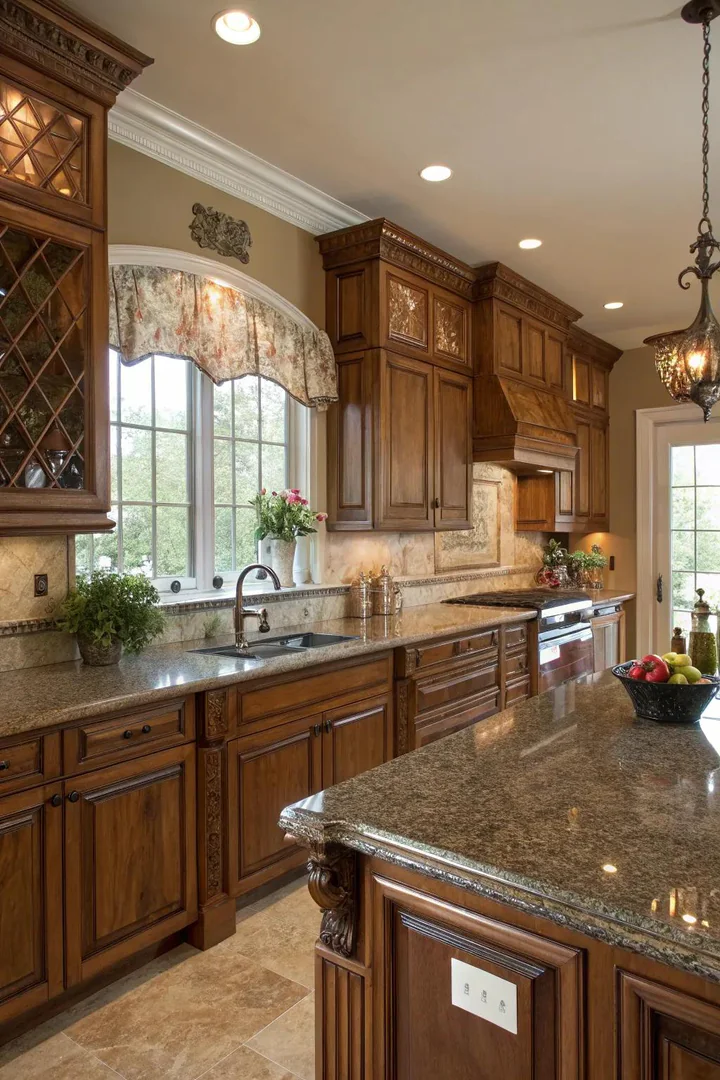
Granite remains the most popular natural stone countertop in North America, with installed costs ranging from $40 to $200 per square foot depending on color, origin, and rarity. Common colors like Uba Tuba (dark green-black, $40 to $60) and Santa Cecilia (gold-brown, $35 to $55) cost significantly less than exotic varieties like Blue Bahia ($150 to $300) or Van Gogh ($200+). Granite rates 6 to 7 on the Mohs hardness scale, resisting scratches from everyday kitchen use.
Granite’s natural porosity requires sealing every 1 to 2 years with a penetrating stone sealer like StoneTech BulletProof ($40 per quart). A water droplet test reveals when re-sealing is needed: if water beads on the surface, the seal holds; if water absorbs and darkens the stone within 5 minutes, the granite needs re-sealing. Granite handles hot pans directly without damage, a functional advantage over quartz, laminate, and solid surface. Each granite slab carries a unique mineral pattern that no other slab exactly duplicates.
12. Soapstone Countertops
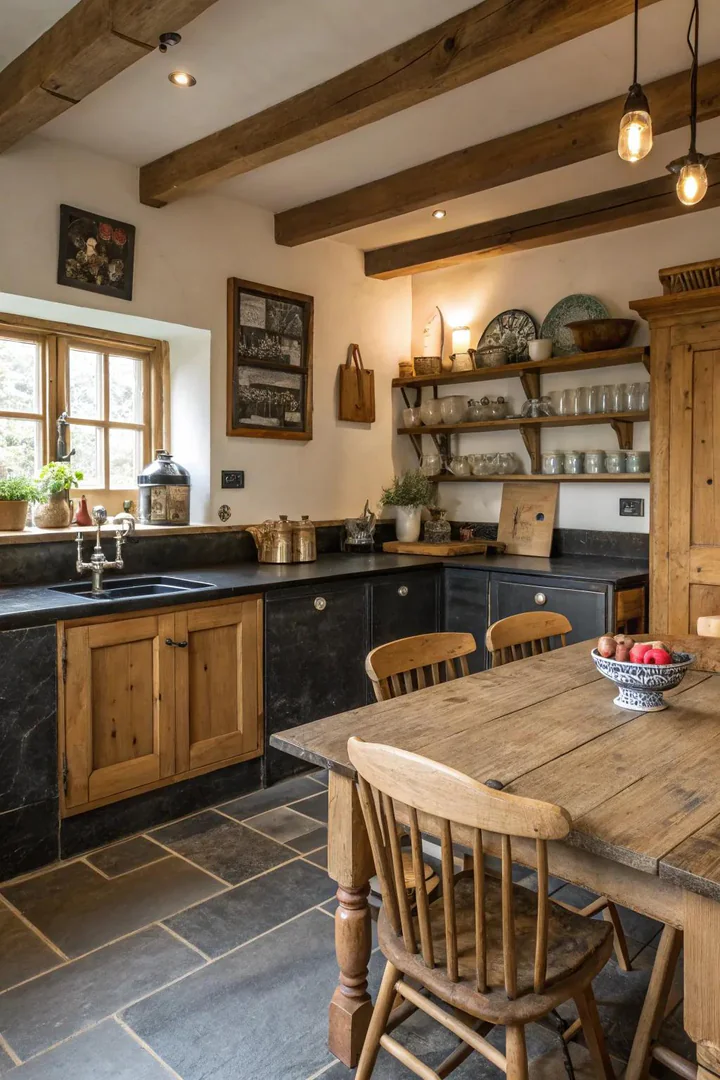
Soapstone (a talc-rich metamorphic rock) costs $70 to $120 per square foot installed and produces a silky, matte, dark-gray surface with subtle lighter veining. Soapstone is naturally non-porous (requires no sealing), acid-resistant (lemon juice, vinegar, and tomato sauce cause zero etching), and heat-resistant (laboratory countertops have used soapstone for over a century for handling Bunsen burners and hot chemical reactions).
Soapstone rates only 1 to 2 on the Mohs hardness scale, making the surface soft enough to scratch with a fingernail. Regular application of mineral oil ($8 per quart) accelerates the natural darkening (oxidation) process, evening out the color from light gray to deep charcoal-black over 6 to 12 months. Scratches in soapstone sand out with 80-grit sandpaper and disappear under a fresh coat of mineral oil. The material suits farmhouse, traditional, and historic kitchen styles where a lived-in, naturally aging surface adds warmth and character.
13. Glass Countertops
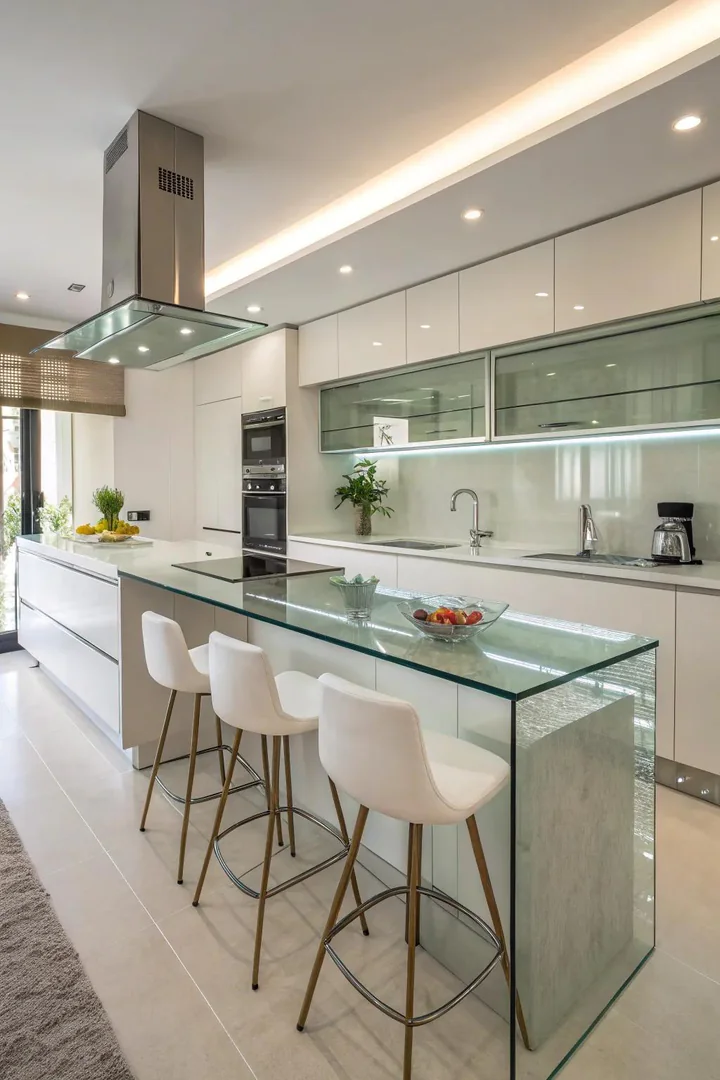
Tempered glass countertops (1-inch to 1.5-inch thick) cost $75 to $125 per square foot installed and produce a translucent, ultra-modern surface that no other material replicates. ThinkGlass (a Canadian manufacturer) and CBD Glass custom-fabricate glass countertops with back-painted colors, embedded LED lighting, and textured surfaces. A back-painted tempered glass countertop in pure white, matte black, or cobalt blue creates a high-gloss, perfectly flat surface with no grout lines, veining, or grain pattern.
Glass resists heat, stains, bacteria, and moisture without any sealing or maintenance. Tempered glass is 4 to 5 times stronger than standard glass and breaks into small, rounded pieces rather than sharp shards if fractured. Glass countertops show fingerprints and water spots on their reflective surface, requiring frequent wiping with a glass cleaner. The material suits ultra-modern, minimalist, and high-design kitchens where the countertop functions as a visual statement piece rather than a workhouse prep surface.
14. Live-Edge Wood Countertops
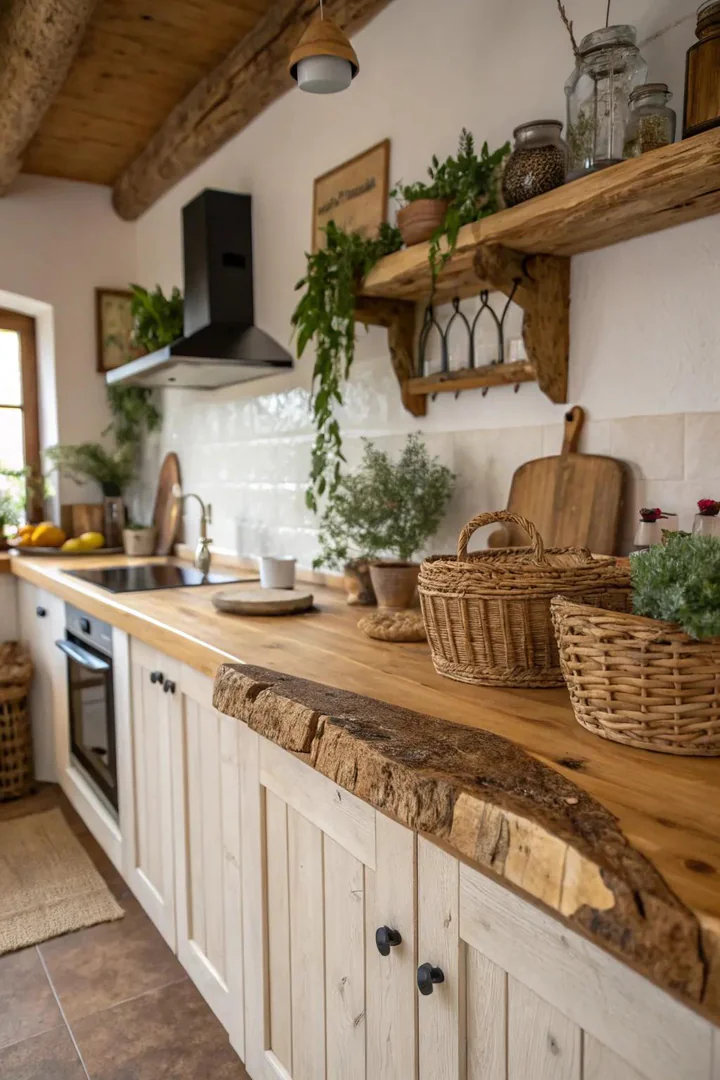
A live-edge slab from black walnut, white oak, maple, or cherry costs $50 to $200 per square foot depending on species, width, and grain figure. The live edge (the natural outer contour of the tree trunk, often with bark intact or bark-stripped to reveal the cambium layer) runs along one or both sides of the countertop, producing an organic, one-of-a-kind silhouette. A 2-inch-thick, 36-inch-wide black walnut slab from a lumber mill ($20 to $60 per board foot) requires kiln-drying to 6% to 8% moisture content before fabrication.
Filling natural voids, cracks, and bark inclusions with tinted epoxy resin (clear, black, or turquoise-blue from TotalBoat, $60 per quart kit) stabilizes the slab and creates dramatic contrast between the wood grain and the resin fill. Finishing with Rubio Monocoat ($40 per 350-mL can) or Waterlox Original ($35 per quart) produces a food-safe, water-resistant surface. Live-edge countertops suit rustic, cabin, mid-century modern, and artisan kitchen designs where the countertop functions as the room’s sculptural focal point.
15. Bamboo Countertops
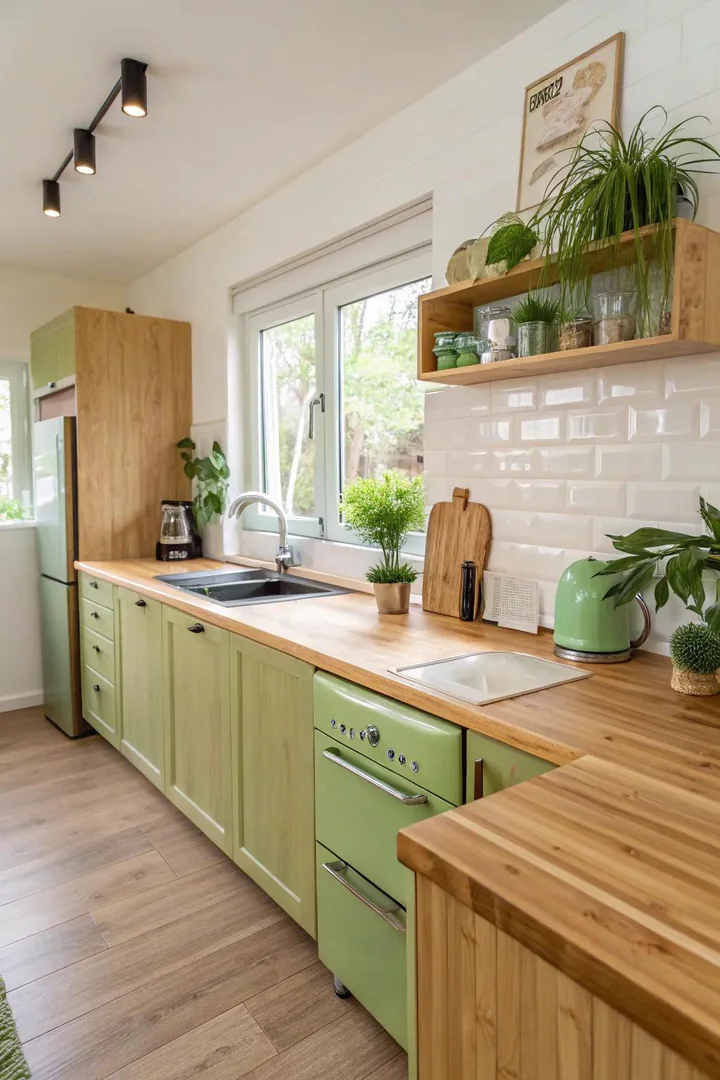
Bamboo countertops cost $40 to $80 per square foot installed and offer a sustainable alternative to traditional hardwood. Bamboo (technically a grass, not a tree) reaches harvest maturity in 3 to 5 years compared to 20 to 60 years for hardwood trees, making the material rapidly renewable. Teragren ($50 to $70 per square foot for 1.5-inch-thick strand-woven bamboo) and Smith & Fong Plyboo ($45 to $65 per square foot) produce the highest-density bamboo countertop panels available.
Strand-woven bamboo (fibers compressed under high pressure with adhesive) rates 3,000+ on the Janka hardness scale, harder than maple (1,450), oak (1,290), and walnut (1,010). The compressed fiber structure resists denting, scratching, and moisture absorption better than traditional butcher block. Maintaining a bamboo countertop requires monthly oiling with mineral oil and avoiding prolonged water exposure (standing water darkens and swells the fibers). Bamboo’s light honey-tan color and linear grain pattern suit modern, Scandinavian, and eco-conscious kitchen designs.
16. Bold-Colored Quartz Countertops
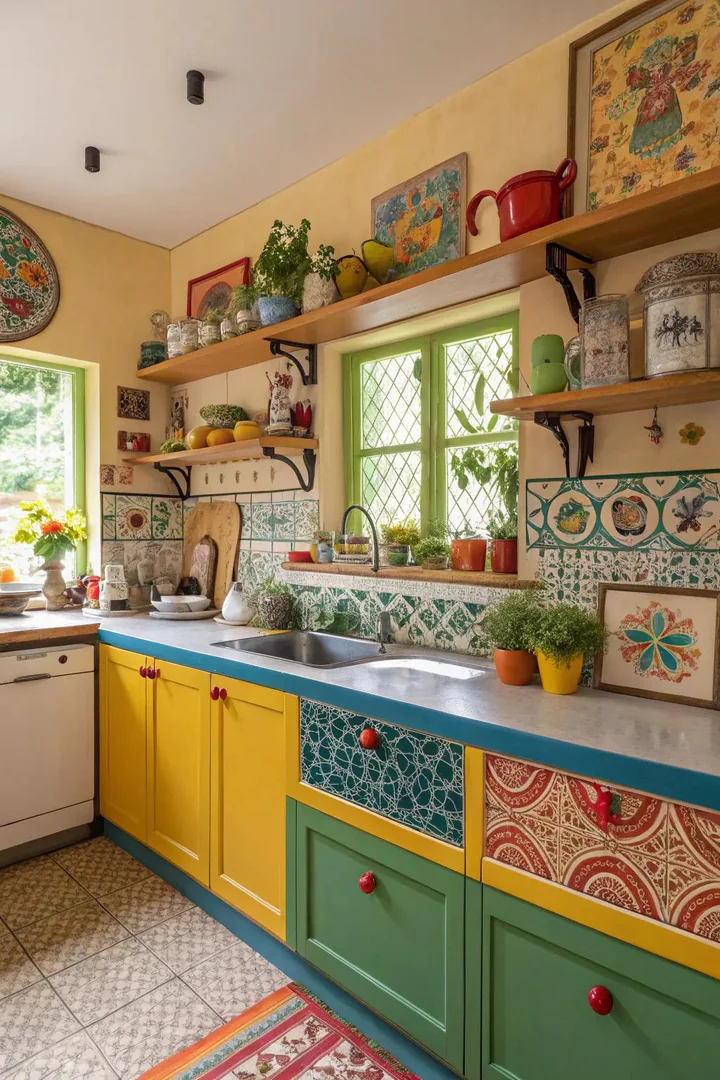
Engineered quartz manufacturers produce countertops in colors natural stone cannot deliver: Caesarstone Piatto Black 5101 (matte charcoal), Silestone Blanco Zeus Extreme (bright white), Cambria Skara Brae (warm caramel), and MSI Calacatta Laza (high-contrast white with dramatic dark veining). Bold-colored quartz installed costs range from $60 to $130 per square foot depending on brand and color. A saturated countertop color against white or neutral cabinets becomes the kitchen’s visual anchor.
Matte-finish quartz (honed rather than polished) conceals fingerprints and water spots better than high-gloss and produces a contemporary, understated look. Concrete-finish quartz from Caesarstone ($80 to $110 per square foot) mimics cast concrete’s matte, slightly textured surface without concrete’s sealing and cracking issues. Choosing a bold countertop color requires committing to a neutral cabinet and backsplash palette to prevent the room from reading as visually chaotic. See how bold countertops work in cozy kitchen designs where warm colors anchor the room.
17. Porcelain Slab Countertops
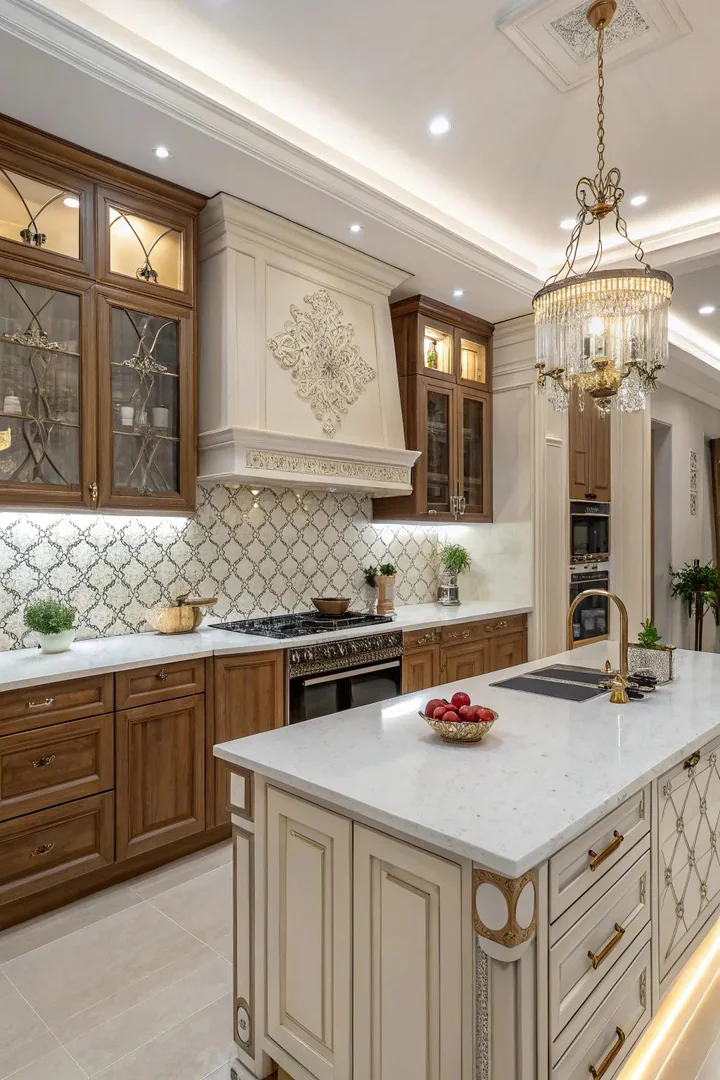
Porcelain slab countertops from Neolith ($50 to $120 per square foot installed), Cosentino Dekton ($60 to $130 per square foot), and Laminam ($45 to $100 per square foot) are sintered from natural raw materials (clay, feldspar, silica, mineral oxides) at 2,200°F under 5,900 PSI of pressure. The sintering process produces a surface that resists scratches, stains, UV light, heat (up to 600°F), and chemicals without any sealing or maintenance.
Porcelain slabs come in sizes up to 126 by 60 inches (10.5 by 5 feet), large enough to cover most kitchen countertops with zero or minimal seams. Thicknesses range from 1/4 inch (for wall cladding) to 3/4 inch and 1.25 inches (for countertops with built-up edges). Porcelain replicates marble, concrete, metal, and wood patterns with inkjet-printed surfaces that carry the pattern through the body of the slab. A porcelain countertop performs outdoors and indoors without UV degradation, making the material suitable for indoor-outdoor kitchen designs with DIY-friendly installation when pre-cut by the fabricator.
How to Choose the Right Kitchen Countertop Material
1. Assess Your Cooking and Prep Habits
Heavy home cooks who chop, slice, and prep daily need a scratch-resistant, heat-tolerant surface: granite, quartzite, or stainless steel. Bakers who work with flour, butter, and rolling pins benefit from marble’s naturally cool temperature (marble stays 10°F to 15°F below room temperature). Households with children need stain-resistant, easy-to-clean surfaces: quartz or solid surface. A kitchen used primarily for reheating and casual meals can accommodate a lower-maintenance material like laminate.
2. Set a Realistic Budget Per Square Foot
Measure the total countertop area (length times depth for each section, minus sink and cooktop cutouts) and multiply by the installed cost per square foot. A 40-square-foot countertop in laminate costs $400 to $1,600 total; in quartz, $2,000 to $6,000; in marble, $1,600 to $8,000. Budget an additional $200 to $500 for sink cutout, edge profiling, and backsplash fabrication. Request quotes from 3 fabricators with the same slab and edge profile specified to compare pricing accurately.
3. Match the Material to Your Maintenance Tolerance
Zero-maintenance options (no sealing, no oiling, no special cleaning): quartz, porcelain slab, stainless steel, glass, laminate. Low-maintenance options (seal every 1 to 2 years): granite, quartzite, recycled glass. Medium-maintenance options (monthly oiling or annual sealing): butcher block, bamboo, concrete, soapstone, marble. Matching maintenance expectations to lifestyle prevents buyer’s remorse 6 months after installation.
4. Order a Sample Before Committing
Every major countertop brand ships 4-by-4-inch or 6-by-6-inch samples for $5 to $20 each (many are free). Place the sample on your existing countertop under your kitchen’s actual lighting (not showroom lighting) for 3 days. View the sample in morning daylight, afternoon shade, and evening artificial light. A sample that looks warm-white under showroom LEDs may read yellow under your kitchen’s incandescent bulbs.
Kitchen Countertop Material Comparison
| Material | Cost/sq ft (Installed) | Heat Resistance | Scratch Resistance | Sealing Required | Best For |
|---|---|---|---|---|---|
| Marble | $40–$200 | High | Low (Mohs 3) | Every 6–12 months | Luxury, baking |
| Quartz | $50–$150 | Moderate (300°F max) | High | None | Busy families |
| Butcher block | $40–$100 | Low | Moderate | Monthly oiling | Warm, rustic style |
| Concrete | $65–$135 | High | Moderate | Every 1–3 years | Industrial, custom |
| Stainless steel | $75–$150 | Very high | Low (scratches) | None | Pro-style kitchens |
| Ceramic tile | $10–$80 | High | High | Grout sealing | Budget, DIY |
| Recycled glass | $75–$150 | Moderate | High | Every 1–2 years | Eco-conscious |
| Laminate | $10–$40 | Low | Low | None | Budget, rentals |
| Quartzite | $50–$200 | Very high | Very high (Mohs 7) | Every 1–2 years | Marble look, durability |
| Solid surface | $40–$100 | Moderate | Moderate | None | Healthcare, integrated sinks |
| Granite | $40–$200 | Very high | High (Mohs 6–7) | Every 1–2 years | Traditional, resale value |
| Soapstone | $70–$120 | Very high | Very low (Mohs 1–2) | None (oil optional) | Farmhouse, historic |
| Glass | $75–$125 | High | High | None | Modern, minimalist |
| Live-edge wood | $50–$200 | Low | Moderate | Annual finishing | Artisan, statement |
| Bamboo | $40–$80 | Low | High (Janka 3000+) | Monthly oiling | Eco-friendly, modern |
| Porcelain slab | $45–$130 | Very high (600°F) | Very high | None | Indoor/outdoor, low maintenance |
Frequently Asked Questions
Which kitchen countertop material adds the most resale value?
Granite and quartz countertops add the most consistent resale value because real estate buyers and appraisers universally recognize both materials as premium upgrades. The National Association of Realtors reports that a minor kitchen remodel (including countertop replacement) recovers 75% to 80% of its cost at resale. Marble and quartzite add prestige value in luxury markets ($500,000+ homes) but can deter budget-conscious buyers who worry about maintenance. Laminate and tile countertops neither add nor subtract value in homes under $300,000.
Can you put a hot pan directly on quartz countertops?
No. Quartz (engineered) contains polymer resin binders that soften and discolor above 300°F (150°C), leaving a permanent white mark or thermal crack where the hot pan sat. Always use a trivet or hot pad. Granite, quartzite, soapstone, stainless steel, and porcelain slab all handle direct hot-pan contact without damage. Marble handles heat but not the thermal shock of an extremely hot pan on a cold slab (rapid temperature change can crack any natural stone).
How do you remove stains from a marble countertop?
Mix a poultice paste from baking soda and water (for oil-based stains) or baking soda and hydrogen peroxide (for organic stains like coffee, tea, or wine). Spread the paste 1/4 inch thick over the stain, cover with plastic wrap, tape the edges, and leave for 24 to 48 hours. The poultice draws the stain out of the marble pores as the paste dries. Remove the dried paste, rinse, and repeat if the stain persists. Etching (dull spots from acid contact) requires professional re-polishing with diamond pads, not a poultice.
What is the most durable kitchen countertop for families with children?
Quartz is the most durable low-maintenance option for families: non-porous (no bacteria or stain absorption), no sealing required, scratch-resistant, and available in hundreds of colors and patterns. Porcelain slab (Dekton, Neolith) matches quartz in durability and adds heat resistance for hot pans. Both materials clean with soap and water. Avoid marble (etches from juice boxes and ketchup), butcher block (absorbs spills), and stainless steel (shows every fingerprint and scratch from toys and utensils dragged across the surface).
How long do kitchen countertops typically last before replacement?
Natural stone (granite, marble, quartzite, soapstone) lasts 50 to 100+ years with proper sealing and care. Quartz lasts 25 to 50 years. Solid surface lasts 20 to 30 years. Porcelain slab lasts 25 to 50+ years. Butcher block lasts 10 to 20 years before refinishing or replacement. Laminate lasts 10 to 20 years. Concrete lasts 20 to 50 years with periodic re-sealing. Most homeowners replace countertops for aesthetic reasons (dated color, style change) rather than material failure. Visit The Designers Company for the full kitchen countertop and design library.