
Luxury Modern Kitchen Design Ideas: 16 Stunning Ways to Transform Now
A luxury modern kitchen is built on three pillars: premium materials that look and feel exceptional, technology that makes cooking easier, and a layout that flows naturally between prep, cooking, and entertaining. The best high-end kitchens combine all three without any single element overwhelming the others — every surface, fixture, and appliance earns its place through both function and visual impact.
Planning a luxury kitchen requires a clear budget framework, a realistic timeline, and an understanding of which upgrades deliver the most value. A Sub-Zero refrigerator and a Wolf range may anchor the room, but it is the less obvious choices — cabinet hardware, grout color, edge profiles, lighting layers — that separate a truly refined kitchen from one that merely has expensive appliances sitting in a generic layout.
These 16 luxury modern kitchen design ideas cover the full spectrum from architectural decisions like window placement and indoor-outdoor flow to detail-level choices like mixed metals and backlit cabinetry. Each idea includes real product recommendations, material specs, and design principles you can hand directly to your contractor or kitchen designer.
1. Spacious Windows for Abundant Natural Light

Floor-to-ceiling windows or a wall of glass behind the sink area flood a kitchen with natural light that makes every surface — marble countertops, hardwood floors, polished hardware — look its absolute best. Marvin Ultimate or Pella Lifestyle series windows offer thermally broken aluminum frames that stay slim enough to maximize glass area while meeting modern energy codes. For kitchens oriented south or west, specify low-E glass with a solar heat gain coefficient below 0.30 to control heat buildup without dimming the light you are trying to capture.
Position the primary work triangle — sink, range, refrigerator — so at least one station sits within arm’s reach of window light. This ensures you have natural illumination during daytime prep without relying solely on artificial task lighting. If your kitchen includes a kitchen window seat, place it at the widest window to create a secondary zone for morning coffee or casual meals that takes full advantage of the view. Use minimal window treatments — a simple roller shade in a sheer linen — so the glass remains the dominant element in the room.
2. Dramatic Lighting Statements

An oversized pendant or sculptural chandelier above the island functions as the kitchen’s jewelry — the one piece that signals luxury before a visitor notices anything else. The Roll & Hill Agnes chandelier, the Apparatus Studio Cloud series, and the Lindsey Adelman Branching Bubble all deliver gallery-level presence without blocking sightlines across an open-plan space. Hang the fixture so its lowest point sits thirty to thirty-six inches above the island surface; any lower and it obstructs conversation, any higher and it loses its visual weight.
Layer statement lighting with recessed downlights on a separate dimmer circuit and under-cabinet LED strips for task work. A Lutron RadioRA 3 or Crestron lighting system lets you program scenes — full brightness for cooking, fifty-percent ambient for dinner parties, ten-percent night-light mode — controllable from a wall keypad, your phone, or a voice assistant. For more fixture styles and placement strategies, our kitchen lighting ideas guide covers everything from flush mounts to track systems at every price point.
3. Flexible Designs for Effortless Integration
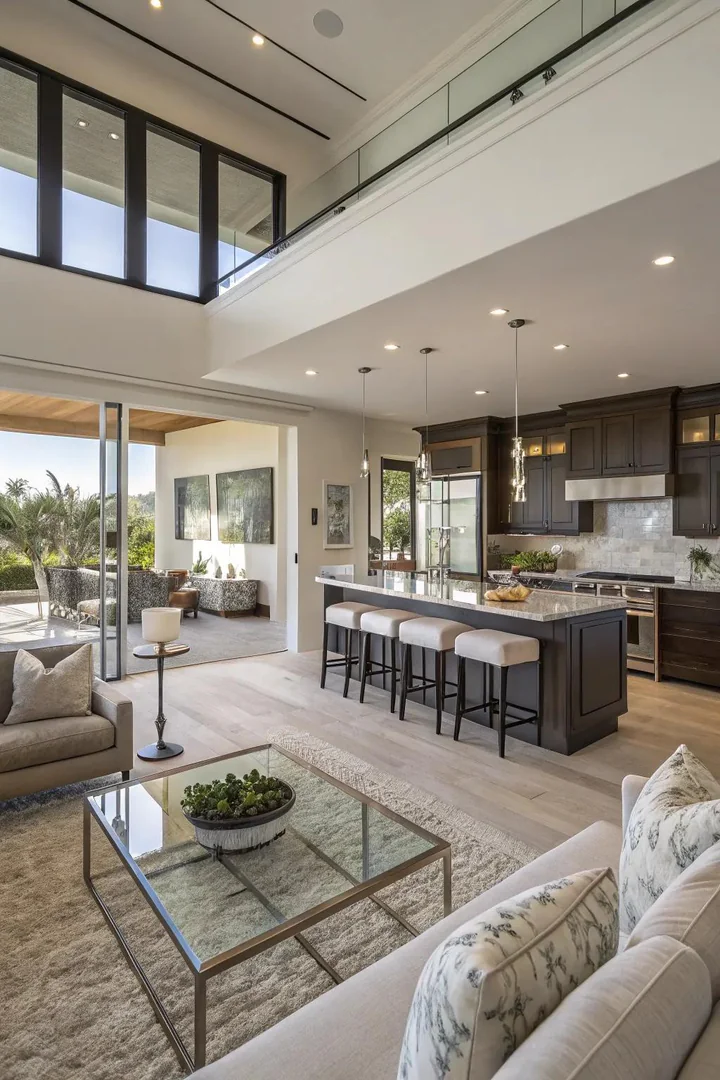
An open-plan layout that merges the kitchen with the living and dining areas is the foundation of most luxury modern homes built after 2010. Removing the wall between the kitchen and the adjacent room doubles the perceived square footage and lets the cook participate in conversation rather than working in isolation. If a structural wall stands between you and the open plan, a structural engineer can typically replace it with a concealed steel beam — an LVL or W-flange — for three-thousand to eight-thousand dollars depending on span length and local labor rates.
Once the wall is gone, define zones with subtle material transitions rather than physical barriers. Use hardwood flooring in the living area and large-format porcelain tile in the kitchen zone, meeting at a flush brass transition strip. A waterfall island with bar seating on the living-room side acts as a soft boundary that separates prep mess from entertaining space while still allowing eye contact and conversation across the room. Keep ceiling heights consistent across both zones so the open plan reads as one continuous volume rather than two rooms forced together.
4. Versatile Functional Islands
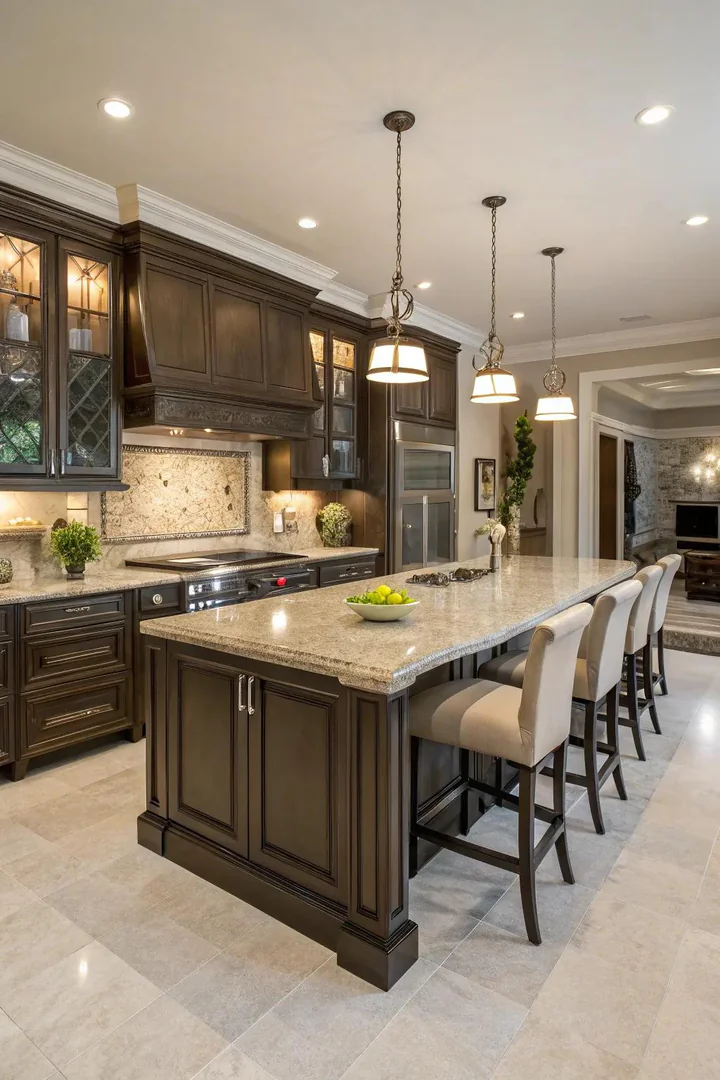
The island is the hardest-working surface in a luxury kitchen — it handles prep, cooking, serving, homework, and socializing in a single day. Size it at minimum eight feet long and four feet deep to accommodate a cooktop, a prep sink, and a seating overhang on one side without crowding any single function. A Gaggenau Vario 400 series induction cooktop drops flush into the stone, and a small Rohl prep sink at one end keeps wet tasks contained without sending you back to the main sink constantly.
Below the countertop, allocate storage by use frequency: wide pull-out drawers with Blum Legrabox slides for daily cookware, a built-in trash and recycling pull-out near the prep zone, and deep cabinets at the far end for less-used entertaining pieces. Specify a waterfall edge on the seating side so the stone wraps down to the floor, hiding the cabinetry structure and creating a monolithic look. Power outlets recessed into the island’s side face — flush-mount Lew Electric or Mockett pop-up units — keep phones and tablets charged without visible cords cluttering the countertop.
5. Integration of Intelligent Technology
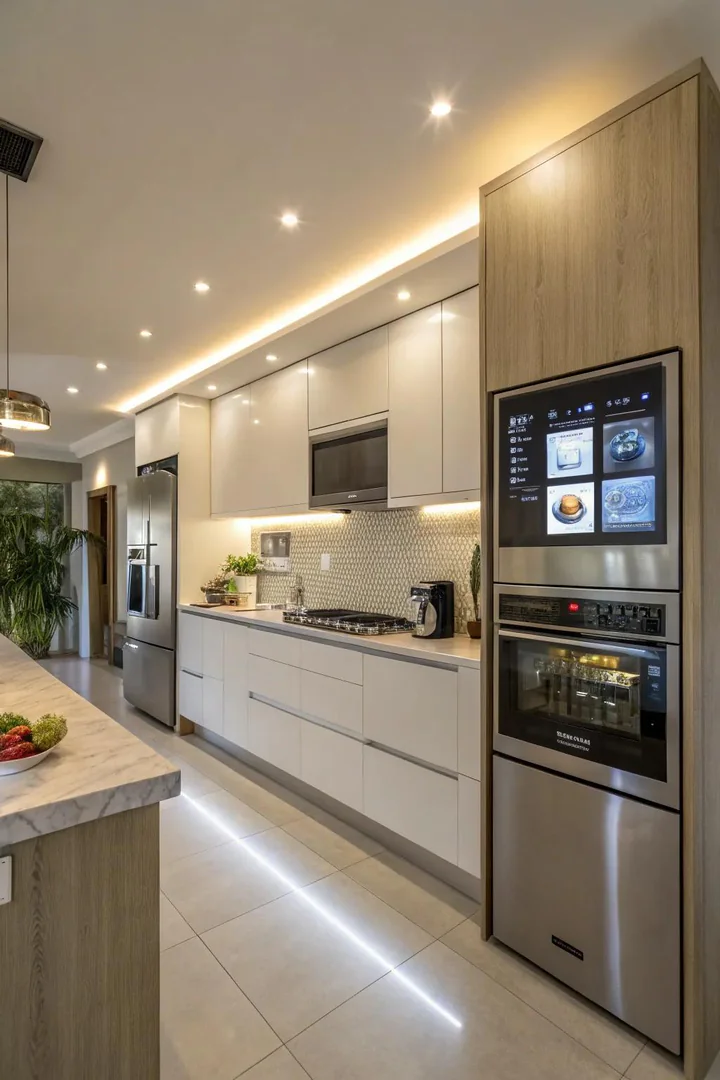
Smart technology in a luxury kitchen goes beyond voice-controlled lights. A Miele Generation 7000 oven with the TasteControl system monitors internal food temperature and adjusts the cooking cycle automatically, while a Thermador Freedom induction cooktop lets you place any pot anywhere on the surface and the electronics detect it. Plumbing-connected coffee systems from Miele or Gaggenau build espresso machines directly into the cabinetry, delivering barista-quality drinks without a countertop appliance taking up space.
Touchless faucets from Kohler Sensate or Moen MotionSense respond to a hand wave, keeping the handle clean when your fingers are covered in raw chicken or flour. A whole-home automation system — Crestron, Control4, or Savant — ties the kitchen’s lighting, music, window shades, and climate into a single interface on a wall-mounted touchscreen or your phone. Wire the infrastructure during construction or renovation to avoid chasing cables through finished walls later. Plan for Cat6 ethernet to the island and at least two dedicated twenty-amp circuits for smart appliances that draw more power than traditional ones.
6. Art That Serves a Purpose as a Centerpiece

A custom range hood is the single best opportunity to introduce sculptural art into a kitchen without sacrificing counter or wall space. The Futuro Futuro Murano series features hand-blown Italian glass panels that glow when the internal LED lights activate, while a blackened-steel hood from a local metalworker can be shaped into a tapered pyramid, a flared bell, or a minimal flat canopy depending on your design direction. Size the hood to extend three inches beyond the cooktop on each side and mount it twenty-eight to thirty-six inches above the cooking surface, depending on the manufacturer’s minimum clearance specs.
Beyond hoods, consider functional art in other kitchen elements: a hand-hammered copper farmhouse sink from Native Trails, a custom mosaic tile backsplash from an artisan tile maker like Fireclay or Clé, or a live-edge walnut breakfast bar that doubles as a wood sculpture. Each piece adds a one-of-a-kind quality that mass-produced kitchens cannot replicate. The key is limiting yourself to one or two statement functional art pieces so the kitchen stays cohesive rather than looking like a gallery with appliances.
7. Illuminated Cabinets for Atmosphere

LED strip lighting mounted behind glass-front upper cabinets or along the underside of floating shelves creates a warm halo effect that makes the kitchen glow after dark. Use LED tape with a CRI (color rendering index) of ninety or higher — Häfele Loox5 and WAC InvisiLED Pro both exceed CRI 93 — so the light renders food, dishware, and cabinet finishes in their true colors. Route the tape inside an aluminum channel with a frosted diffuser to eliminate hot spots and visible LED dots that cheapen the effect.
Backlit toe kicks are an underused detail that adds a floating illusion to base cabinets, making a heavy run of cabinetry appear lighter and more modern. Install the LED strip behind a recessed channel at the bottom of each cabinet box, angled downward toward the floor. Pair this with in-cabinet lighting behind glass doors to illuminate a display of glassware, pottery, or heirloom dishware — the glass diffuses the light softly, turning everyday storage into a curated showcase that guests notice the moment they walk in.
8. Bicolor Cabinets for Distinction

Two-tone cabinetry — dark lowers and light uppers, or a contrasting island color against uniform perimeter cabinets — creates depth and visual interest that a single-color kitchen cannot achieve on its own. A popular luxury combination pairs white oak or natural maple uppers with a deep navy or charcoal base, grounding the room while keeping the upper portion of the kitchen bright and open. Brands like Bulthaup and SieMatic offer factory two-tone programs where both finishes are applied under the same quality-control process, ensuring consistent sheen and durability.
If you are going the custom route, have your painter spray both colors from the same paint line — Benjamin Moore Advance or Sherwin-Williams Emerald Urethane — and in the same sheen so the finish quality matches even though the colors differ. For guidance on which color pairs work best, our kitchen cabinet color ideas guide covers trending combinations and timeless pairings. Use the same hardware finish across both tones — satin brass, matte black, or brushed nickel — to unify the two halves into a single cohesive design.
9. Creative Storage Options

Luxury storage means every item has a home and nothing sits on the countertop unless you want it there. Blum Space Tower pull-outs turn a tall pantry cabinet into a walk-in-pantry alternative with full-extension trays that bring contents to you at eye level. A Hafele Le Mans II corner unit swings outward in two kidney-shaped trays, recovering the dead space that lazy Susans waste. Drawer-within-drawer systems — like the Blum Inner Dividing System — let you stack utensils on top and pots below in the same drawer footprint, doubling effective capacity.
Appliance garages behind retractable tambour doors or Blum Aventos bi-fold lift systems hide toasters, blenders, and stand mixers when they are not in use, keeping the countertop clear without requiring you to unplug and stow heavy appliances in lower cabinets. A dedicated knife drawer with a built-in magnetic strip protects blade edges better than a countertop block, and a pull-out spice rack mounted inside a narrow cabinet beside the range puts every jar within arm’s reach while cooking. Design storage around your cooking habits, not generic templates.
10. Blending Metals for a Distinctive Appearance

Mixing two or three metal finishes in the same kitchen adds richness that a single-metal scheme cannot match. The current luxury standard is a dominant metal — say satin brass on cabinet hardware and the faucet — plus a secondary accent metal — stainless steel on the range and hood — tied together by a third metallic element like a bronze pendant light. Keeping the dominant and secondary metals at a two-to-one ratio prevents the mix from looking random: roughly sixty percent brass, thirty percent stainless, and ten percent bronze, for example.
Match finishes across brands carefully. “Brushed gold” from Brizo looks different from “satin brass” from Kohler, so order samples and hold them side by side under your kitchen’s actual lighting before committing. If exact matching is impossible, separate conflicting metals by distance — put one finish on the island and the other on the perimeter wall — so they never sit adjacent. Mixing warm metals (brass, gold, copper) with cool metals (chrome, nickel, stainless) creates the most visual tension and interest, while mixing two warm metals together produces a subtler, more unified warmth.
11. Combining Materials for Texture

A luxury kitchen that uses only one material — all stone, all wood, or all lacquer — can feel flat despite its expense. Layering three to four materials builds the tactile and visual depth that makes a space feel designed rather than decorated. Start with your countertop stone as the anchor material, add wood cabinetry or open shelving as the warm counterpoint, introduce a metal in the hardware and fixtures, and finish with a textured backsplash — fluted glass, zellige tile, or stacked natural stone — to round out the palette.
When mixing materials, vary the surface textures within each category. Pair polished marble countertops with honed marble on the backsplash so the same stone reads differently in each location. Use rift-sawn oak with its linear grain on the cabinets and live-edge oak on the bar top for contrast within the same wood species. If you enjoy exploring how different surfaces pair with luxury marble, that guide covers specific stone-and-material combinations in detail. The goal is a kitchen that rewards a closer look — each surface reveals a different texture when you run your hand across it.
12. Sleek Design for a Neat Appearance

Minimalist luxury strips the kitchen to its essential elements and executes each one at the highest level. Handleless cabinets with push-to-open mechanisms — Blum Tip-On or Hettich Push-to-Open Silent — eliminate visible hardware entirely, leaving unbroken planes of lacquer, veneer, or matte laminate. Brands like Bulthaup b3, Poggenpohl +Segmento, and Leicht Bondi deliver factory-level minimalism with tolerances measured in fractions of a millimeter, and their integrated channel handles are machined into the cabinet edge rather than mounted on the surface.
Keep countertops completely clear — no knife blocks, no paper-towel holders, no decorative items. Every object should have a hidden home: a retractable outlet strip that pops up when needed and disappears when not, a built-in paper-towel dispenser inside a drawer, and a charging station behind a cabinet door. The visual payoff of a truly empty countertop is dramatic — the stone surface, the clean cabinet lines, and the architecture of the room become the only things to look at, which is exactly the point of minimalism done well.
13. Soft Elegance Through Curved Features

Curved islands, rounded cabinet ends, and arched range hoods soften the hard angles that dominate most kitchens and create a more welcoming, organic atmosphere. A kidney-shaped or racetrack-oval island gives diners a curved seating edge that feels more sociable than a straight bar — everyone naturally angles toward each other rather than sitting in a rigid line. CNC-cut curved panels from manufacturers like Poggenpohl and SieMatic can wrap around island ends in a continuous sweep of veneer or lacquer.
Arched doorways between the kitchen and the adjacent room introduce a classical element that contrasts beautifully with otherwise modern cabinetry. If a full arch is too traditional for your taste, a subtly radiused soffit above the range hood — a gentle curve rather than a sharp ninety-degree corner — achieves a similar softening effect with less visual commitment. Pair curved elements with rounded-edge countertop profiles and tubular bar stools like the CB2 Rake or the West Elm Cora to reinforce the theme across multiple surfaces.
14. Sophisticated Neutral Color Scheme

A neutral palette built on whites, warm greys, taupes, and soft greiges gives a luxury kitchen a timeless quality that survives trend cycles. Benjamin Moore White Dove (OC-17) on the cabinets, Revere Pewter (HC-172) on the walls, and a warm grey quartz or marble countertop create a three-tone neutral scheme that feels layered without introducing any single strong color. The lack of bold hues forces the eye to appreciate material quality and craftsmanship — the grain in the wood, the sheen of the hardware, the pattern in the stone.
Prevent a neutral kitchen from reading as bland by varying textures aggressively. A matte cabinet finish, a polished stone surface, a brushed-metal faucet, and a textured linen Roman shade each catch light differently and keep the room visually active even within a narrow color band. Add one organic accent — a potted olive tree, a bowl of lemons, a vase of dried eucalyptus — for a controlled burst of color that can change seasonally. This approach lets you refresh the kitchen’s personality without repainting or refinishing a single surface.
15. Seamless Transition Between Indoor and Outdoor Spaces

Multi-slide or bi-fold glass door systems — NanaWall, LaCantina, or Western Window Systems — open an entire wall of the kitchen to a patio, deck, or garden, doubling the entertaining footprint in warm weather. Specify a flush sill track so the interior floor meets the exterior surface at the same level with no step-over threshold. This zero-transition detail makes the indoor and outdoor zones feel like one continuous room and eliminates a tripping hazard for guests carrying drinks or plates.
Extend the kitchen’s material palette outdoors to reinforce the connection. If the kitchen floor is a grey porcelain tile, use the same tile — or the same manufacturer’s outdoor-rated version — on the patio. A built-in outdoor grill and bar counter positioned within ten feet of the kitchen’s open wall creates a secondary cooking station that lets the host move between indoor and outdoor prep without crossing a long distance. Visit The Designers Company for more ideas on bridging indoor kitchens with outdoor living spaces.
16. Premium Materials for an Elegant Finish

Premium materials communicate luxury through sight and touch in ways that budget alternatives cannot replicate. Calacatta marble, rift-sawn white oak, unlacquered brass hardware, and hand-made zellige tile each carry a visual depth and tactile warmth that mass-produced laminates, veneers, and chrome simply lack. When budgeting, prioritize the surfaces you touch and see most often — countertops, cabinet fronts, and the faucet — and save on hidden elements like cabinet box interiors and toe kicks where plywood and melamine perform identically to premium alternatives.
Material sourcing matters as much as material selection. Visit stone yards in person to choose the exact slab rather than relying on a small sample — two slabs of “Calacatta Gold” from different blocks can look completely different. Order cabinet door samples from at least three manufacturers to compare paint adhesion, grain quality, and edge detailing side by side. And test your hardware finish against a cabinet sample in your kitchen’s actual lighting before ordering forty pulls, because a finish that looks warm gold under showroom halogen may read yellow-green under your cool LED recessed lights.
How to Plan a Luxury Modern Kitchen
Setting a Realistic Budget
Luxury kitchen renovations typically cost between seventy-five-thousand and two-hundred-thousand dollars for a full gut renovation in a major metro area, with appliances consuming roughly twenty to thirty percent of the total budget. Set aside a ten-to-fifteen-percent contingency for surprises behind walls — outdated plumbing, undersized electrical panels, or hidden structural issues that only appear once demolition begins. Prioritize spending on elements that are expensive to replace later — cabinetry, countertops, and flooring — and plan to upgrade accessories like hardware and lighting on a shorter cycle if needed.
Choosing an Appliance Suite
Luxury appliance suites from Sub-Zero/Wolf, Gaggenau, Miele, and Thermador each have a distinct design language. Sub-Zero and Wolf pair American industrial styling with proven reliability. Gaggenau offers European flush-mount integration that disappears into cabinetry. Miele delivers German engineering with a focus on washing, steam cooking, and coffee systems. Thermador’s Pro Harmony line includes a free dishwasher promotion that effectively saves two-thousand dollars. Choose one brand family for a cohesive look, or mix the best-in-class from each — many high-end kitchens pair a Sub-Zero refrigerator column with a Wolf range and a Miele dishwasher.
Working With a Kitchen Designer
A certified kitchen designer (CKD) or an NKBA-accredited designer brings layout expertise that a general contractor typically does not. They optimize the work triangle, specify exact cabinet dimensions to avoid filler strips, coordinate appliance rough-in measurements, and manage material lead times that can stretch to twelve or sixteen weeks for European cabinetry. Expect to pay between five-thousand and fifteen-thousand dollars in design fees, which is a fraction of the cost of correcting layout mistakes after cabinets are installed. Interview at least three designers and review completed projects in person before signing a contract.
Luxury Kitchen Feature Comparison
| Feature | Entry-Level Luxury | Mid-Range Luxury | High-End Luxury |
|---|---|---|---|
| Countertops | Engineered quartz ($50–$90/sq ft) | Carrara marble ($80–$120/sq ft) | Calacatta Gold marble ($150–$250/sq ft) |
| Cabinetry | Semi-custom (Kraftmaid, Medallion) | Custom domestic (Crystal, Plain & Fancy) | European (Bulthaup, SieMatic, Poggenpohl) |
| Appliances | KitchenAid, Bosch Benchmark | Thermador, Fisher & Paykel | Sub-Zero/Wolf, Gaggenau, Miele |
| Lighting Control | Standard dimmers | Lutron Caseta wireless | Crestron/Savant whole-home system |
| Estimated Total | $50K – $80K | $80K – $150K | $150K – $300K+ |
Common Luxury Kitchen Mistakes to Avoid
Spending on appliances but skipping the layout. A twelve-thousand-dollar range in a poorly designed kitchen with cramped counter space and awkward traffic flow will frustrate you daily. Invest in a professional layout first, then fill it with the best appliances your budget allows.
Choosing trendy finishes over timeless ones. High-gloss lacquer cabinets and rose-gold hardware may photograph well today but can date a kitchen within five years. Stick with matte or satin cabinet finishes and classic metal tones — satin brass, brushed nickel, matte black — that have proven staying power.
Underestimating lead times. European cabinetry, custom stone fabrication, and specialty appliances can take twelve to twenty weeks to arrive. Order these items before demolition begins, not after, to avoid a kitchen that sits half-finished for months while you wait on a single backordered component.
Ignoring ventilation. A powerful range demands a properly sized hood. The industry rule is one CFM per hundred BTU of burner output — a thirty-six-inch six-burner range producing seventy-thousand BTU needs a hood rated for at least seven-hundred CFM. Undersized ventilation leaves grease film on cabinets and persistent cooking odors throughout the home.
Frequently Asked Questions
How much does a luxury modern kitchen cost?
A full luxury kitchen renovation in the United States typically runs between seventy-five-thousand and two-hundred-thousand dollars, with ultra-high-end projects in cities like New York, Los Angeles, and San Francisco exceeding three-hundred-thousand. The biggest cost drivers are custom cabinetry, natural stone countertops, and premium appliance suites. A detailed line-item budget before construction prevents cost overruns.
What are the best appliance brands for a luxury kitchen?
Sub-Zero and Wolf are the most recognized names in American luxury kitchens, known for reliability and strong resale value. Gaggenau and Miele lead the European category with flush-mount designs and advanced cooking technology. Thermador offers strong mid-to-high-end value, especially with its bundled promotions. The best brand depends on your cooking style and design preferences — steam-oven enthusiasts lean toward Miele, while serious home cooks often prefer Wolf’s dual-fuel ranges.
Are handleless cabinets practical for everyday use?
Yes. Modern push-to-open and tip-on mechanisms from Blum and Hettich are engineered for hundreds of thousands of cycles and require minimal maintenance. They keep the cabinet surface clean and uninterrupted, which is the signature look of contemporary luxury kitchens. The only caveat is that greasy fingers can leave marks on matte finishes, so choose a semi-matte or satin finish that wipes clean easily.
How long does a luxury kitchen renovation take?
Plan for three to six months from design finalization to move-in, depending on the scope and material lead times. A straightforward cabinet-and-countertop replacement with stock materials can finish in eight to ten weeks. A full gut renovation with custom European cabinetry, structural changes, and specialty stone often takes four to six months. Always add a buffer for unexpected delays.
What countertop material is best for a luxury kitchen?
Natural marble — particularly Calacatta and Statuario — remains the gold standard for visual luxury, though it requires regular sealing and careful maintenance. Quartzite offers marble-like beauty with greater hardness and stain resistance. Engineered quartz from brands like Caesarstone and Cambria provides consistent patterns and near-zero maintenance. Your choice depends on whether you prioritize natural beauty or low maintenance.
Should I hire a kitchen designer or use a general contractor?
For a luxury kitchen, hire a dedicated kitchen designer in addition to your general contractor. A designer specializes in ergonomics, material selection, and appliance integration that a GC typically handles at a surface level. The designer’s fee — usually five-thousand to fifteen-thousand dollars — pays for itself by preventing expensive layout mistakes, optimizing storage, and coordinating the dozens of material and finish decisions that define a high-end result.
Conclusion
A luxury modern kitchen is the sum of its details — the right appliances in the right layout, premium materials installed by skilled tradespeople, and a lighting plan that makes everything look its best at every hour. These sixteen ideas give you a framework for building a kitchen that performs at the highest level while reflecting your personal style and cooking habits.
Start with the layout and the budget, choose your appliance suite and primary surfaces early to lock in lead times, and work with a qualified kitchen designer who can translate your vision into construction-ready drawings. The result will be a kitchen that feels as good to cook in on a Tuesday night as it does to show off at a Saturday dinner party.