Townhouse Patio Ideas: 16 Brilliant Designs That Maximize Your Space
Townhouse patios typically measure 8×10 to 12×16 feet, giving you just enough room for a dining set, a lounge chair, and maybe a small grill if you plan the layout carefully. The key to making a compact townhouse patio work is choosing furniture scaled to the space, going vertical with plants and storage, and using lighting, rugs, and screens to define separate zones without physical barriers.
The 16 ideas below cover everything from built-in bench seating and floating decks to compact outdoor kitchens and vertical gardens that make a small townhouse patio feel twice its size. Each entry includes specific product names, dimensions, and prices so you can plan your patio around a real budget. Visit The Designers Company for hundreds more outdoor and interior project ideas.
1. Cozy Outdoor Seating Area

A 2-piece loveseat and side table set fits a patio as narrow as 8 feet wide while still leaving room to walk past. The Outer Aluminum Loveseat ($2,200) and IKEA APPLARO 2-seat sofa ($250) both measure under 55 inches wide and come with weather-resistant cushions rated for full outdoor exposure. Add 2-3 outdoor throw pillows ($15-$30 each from World Market or Target’s Threshold line) in colors that complement your patio walls.
Arrange seating against the longest wall to keep the center of the patio open for foot traffic and airflow. A round side table (18-24 inches in diameter) takes up less visual space than a rectangular coffee table and allows easier movement around the furniture. Fold-flat bistro chairs from Fermob ($250-$350 each) or a COSCO folding set ($50-$100 for two chairs) store against the wall when you need the full patio for entertaining.
2. Vertical Garden
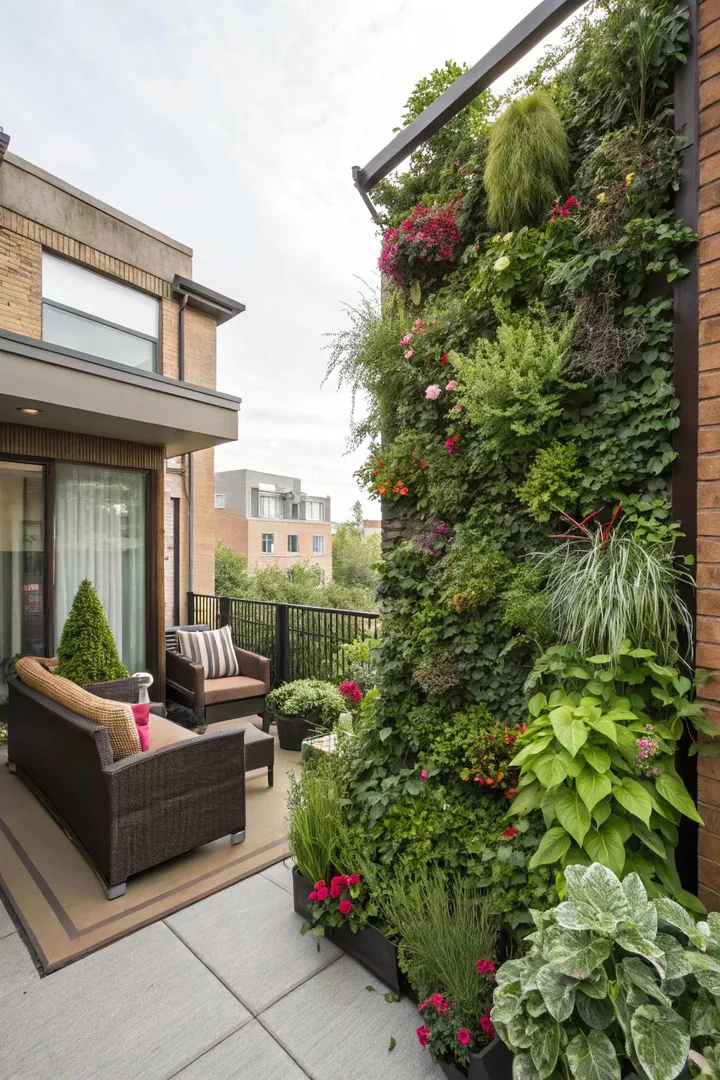
Vertical planters mounted to a wall or fence let you grow herbs, flowers, and trailing greenery without giving up any floor space. Woolly Pocket wall planters ($30-$50 each) and Florafelt living wall panels ($80-$200 per 12×12-inch module) attach directly to any flat surface using mounting screws. A 4×6-foot vertical garden holds 15-20 plant pockets and covers an otherwise blank wall with color and texture.
Plant herbs (basil, mint, rosemary, thyme) in the top pockets where sunlight is strongest and trailing varieties (pothos, string of pearls, creeping jenny) in the lower rows where they can hang freely. Connect a drip irrigation line ($15-$25 for a micro-drip kit from DIG or Rain Bird) to a hose-end timer ($20-$40) so every pocket gets watered automatically on a set schedule.
3. String Lights
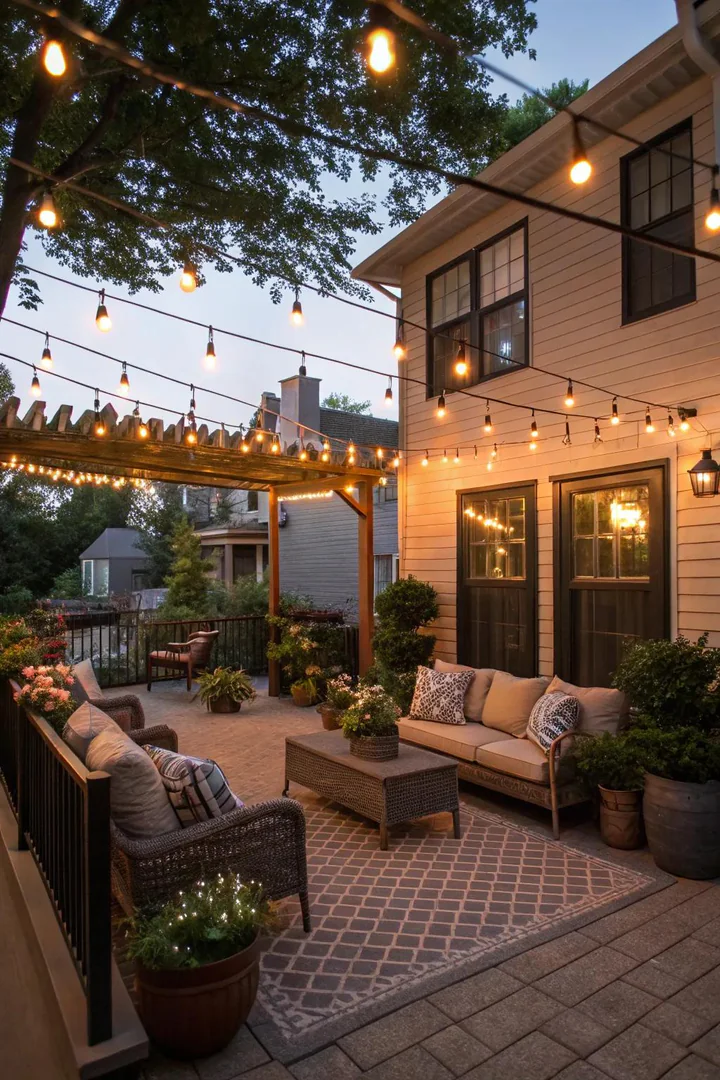
String lights are the single most effective patio upgrade per dollar spent, turning a bare concrete slab into a warm evening hangout for under $50. Commercial-grade S14 LED string lights from Brightown and Newhouse Lighting ($20-$40 for a 48-foot strand) use shatter-resistant bulbs and weatherproof sockets rated for permanent outdoor installation.
Run lights in a zigzag pattern between two opposite walls or fence posts using cup hooks ($3-$5 for a 20-pack) screwed into the top of the wall. Space the attachment points 6-8 feet apart for a gentle drape that hangs 7-8 feet above the patio surface. Use a smart outdoor plug ($15-$25 from Kasa or Wyze) to set automatic on/off schedules tied to sunset and bedtime so you never leave the lights burning all night.
4. Pergola for Shade and Style
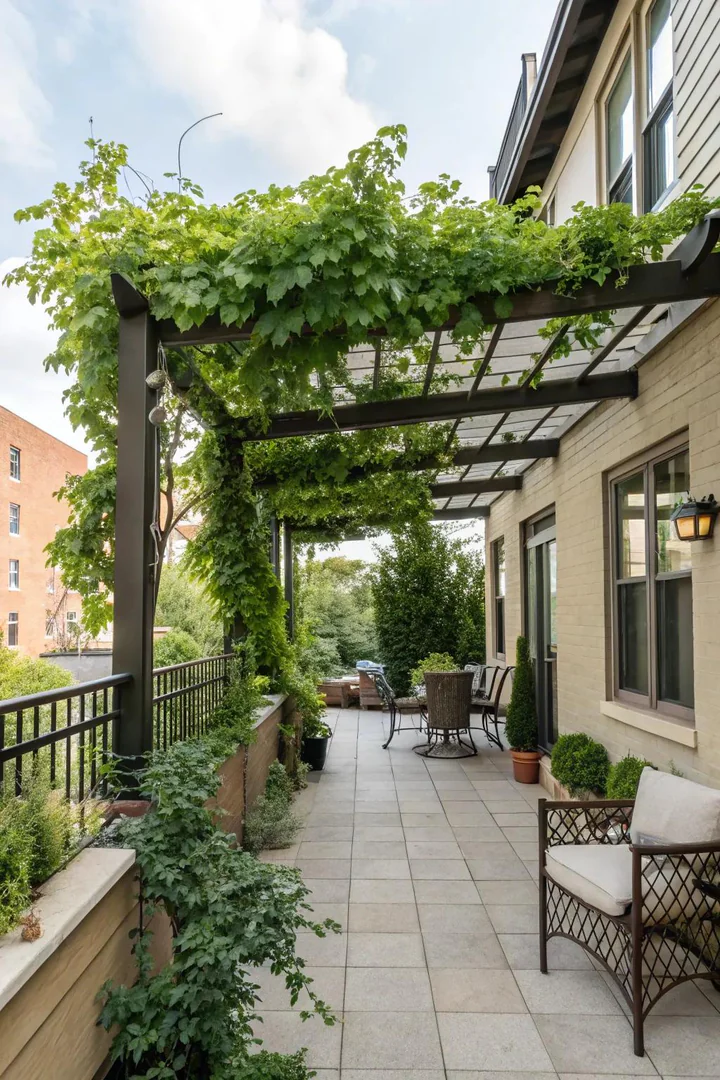
A wall-mounted pergola (also called a lean-to or attached pergola) adds partial shade to a townhouse patio without freestanding posts eating up floor space. TOJA Grid steel pergola brackets ($200-$400 for a 4-post kit) connect standard 4×4 or 6×6 lumber into a pergola frame using modular steel connectors, and the entire structure bolts to the house wall on one side. A 10×8-foot attached pergola costs $500-$1,200 in lumber and hardware.
Space rafters 10-12 inches apart for 50-60% shade coverage, or add a retractable shade canopy ($80-$200) across the top for full sun blocking on demand. The pergola also gives you a mounting structure for string lights, hanging planters, and outdoor curtains. For more ways to use inlay patterns on your patio floor beneath a pergola, check out deck inlay ideas that combine wood and stone in a single surface.
5. Fire Pit for Cozy Gatherings
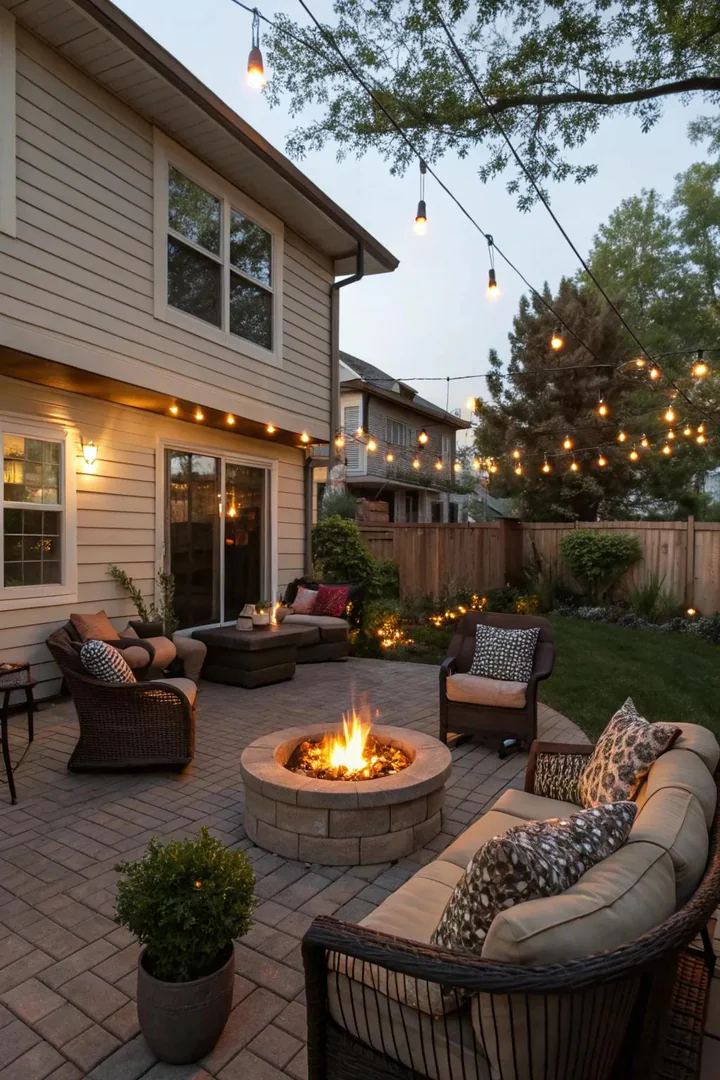
A tabletop or small freestanding propane fire pit works on even the tightest townhouse patio because compact models measure just 20-30 inches in diameter. Outland Living’s Firebowl 883 ($120-$160) runs on a 20-pound propane tank hidden beneath the table and produces 58,000 BTU of heat. Bond Manufacturing’s 18-inch tabletop fire bowl ($60-$90) sits on any flat surface and connects to a 1-pound camping propane cylinder.
Check your HOA rules before buying because many townhouse communities restrict open flames and require gas fire pits to maintain a minimum 10-foot clearance from buildings. Tabletop gel fuel and ethanol fire pits ($40-$100 from Regal Flame or Moda Flame) burn clean without smoke or gas connections and typically pass HOA restrictions more easily than propane models. Use fire glass beads ($15-$25 per 10-pound bag) instead of lava rock for a polished look that reflects the flame.
6. Small Water Feature
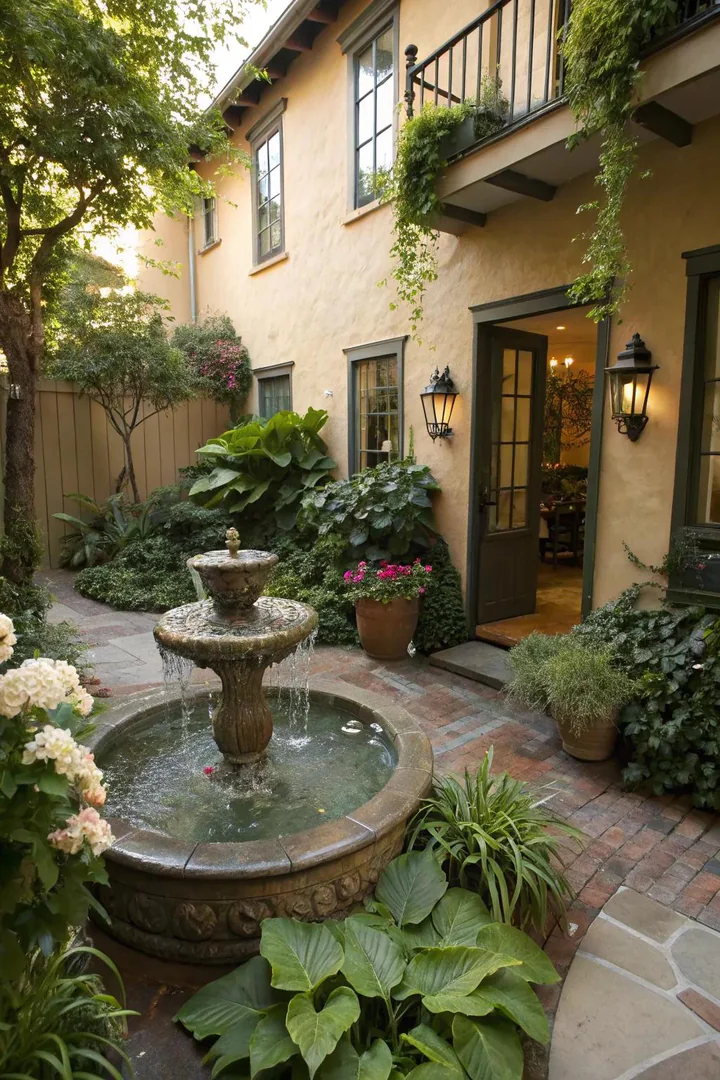
A tabletop or freestanding recirculating fountain adds the sound of running water to your patio without plumbing or floor drain requirements. Sunnydaze and Alpine Corporation make compact fountains ($40-$150) that plug into a standard outdoor GFCI outlet and recirculate 50-100 gallons per hour through a pump drawing just 5-10 watts.
Stacked stone, bamboo spout, and ceramic bowl designs all measure under 24 inches wide and fit on a side table, shelf, or directly on the patio surface. Run the fountain during evening hours to mask street noise and neighbor sounds that carry easily through townhouse party walls. Add a small amount of copper-based algaecide ($5-$8 for a season’s supply) to keep the water clear without harming nearby plants.
7. Outdoor Rug for Zoning
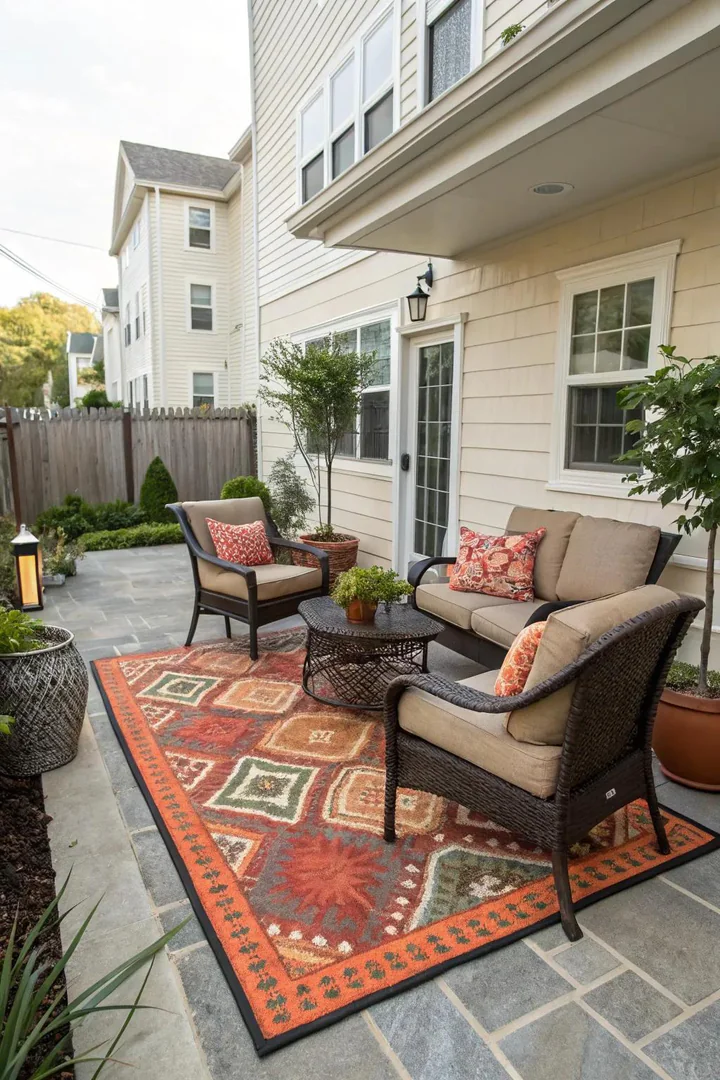
An outdoor rug visually separates your seating area from the walkway and cooking zone on a patio where physical dividers would feel crowded. A 5×7-foot polypropylene rug ($40-$120 from Safavieh, nuLOOM, or Unique Loom) covers just enough ground to anchor a loveseat and side table while leaving bare patio around the edges for grilling and foot traffic.
Choose a flatweave or low-pile construction that dries quickly and lies flat on concrete without curling edges. Secure corners with outdoor carpet tape ($8-$12 per roll) or rubber-backed corner grips ($5-$10 for a 4-pack). Geometric patterns and bold stripes make a small patio feel more designed and intentional, while neutral solid colors let the furniture and plants provide the visual interest.
8. Compact Outdoor Kitchen
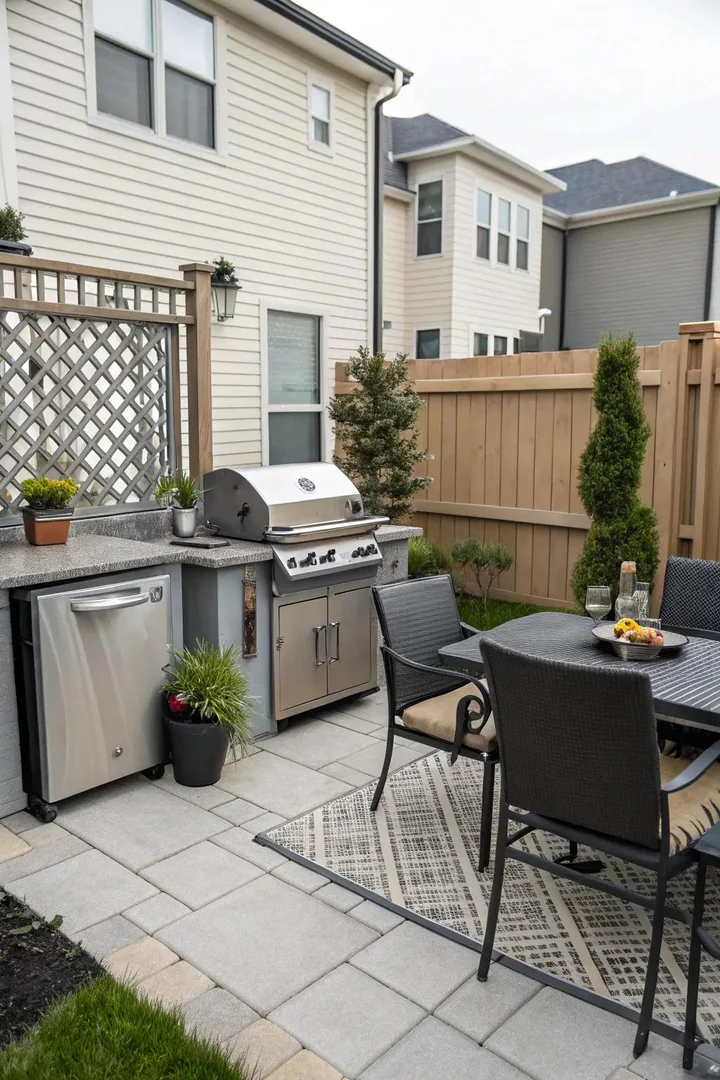
A single-wall outdoor kitchen station measuring 4-6 feet wide fits against one side of a townhouse patio and gives you a grill, prep counter, and storage in one unit. Prefab modular outdoor kitchen islands from NewAge Products ($1,500-$4,000) and Bull Outdoor Products ($2,000-$5,000) come in widths starting at 48 inches and include a built-in gas grill, stainless steel countertop, and a storage cabinet below.
For a budget build, mount a Weber Spirit 2-burner gas grill ($400-$500, 26 inches wide) on a rolling cart with a fold-down side shelf that doubles as a prep surface. Add a small outdoor bar cart ($50-$150) next to the grill for condiments, plates, and utensils. Keep all cooking equipment on a single wall and leave the opposite side open for seating so smoke and heat blow away from guests.
9. Space for Outdoor Games
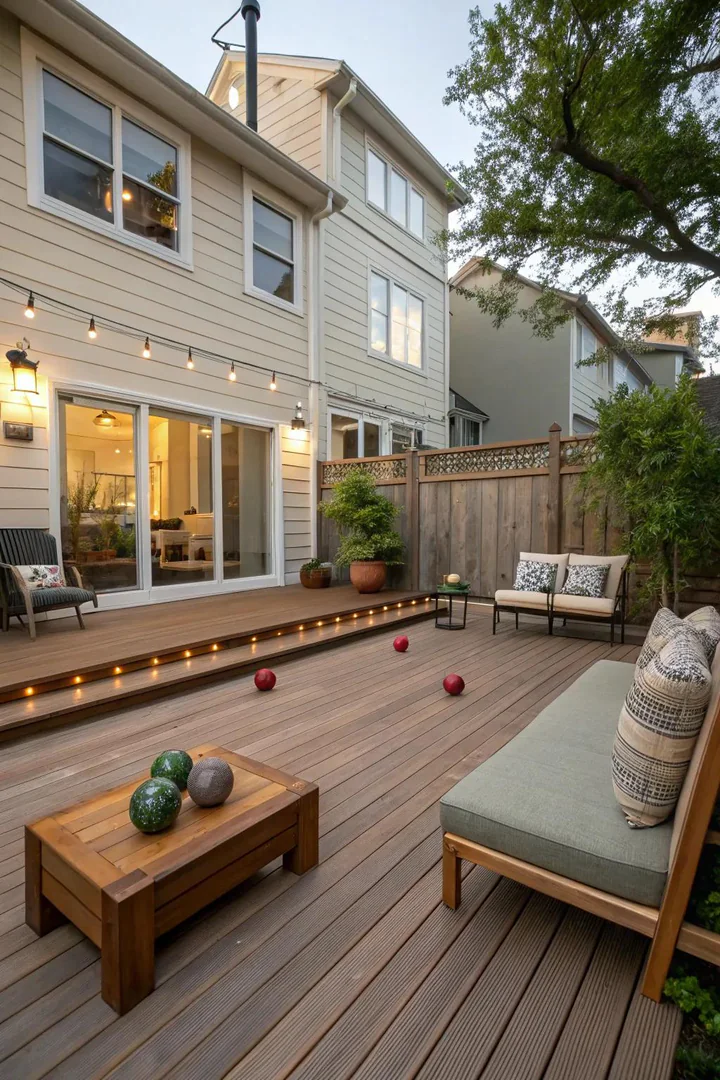
Reserving a 6×10-foot open zone on your patio gives you enough room for cornhole boards ($50-$150 from GoSports or Tailgating Pros), ladder toss ($30-$60), or a portable bocce set ($25-$50). Folding or stackable furniture lets you clear the game area in under two minutes by pushing chairs and tables against the wall.
Mount a dartboard ($30-$60 for a regulation bristle board plus cabinet) on the fence or wall if floor space is too limited for lawn games. A magnetic dartboard ($15-$25) works safely in shared outdoor spaces where traditional steel-tip darts could damage neighboring property. Store game equipment in a deck box (Keter 70-gallon, $60-$90; Suncast 99-gallon, $80-$120) that doubles as a bench seat along the patio wall.
10. Outdoor Bar or Drink Station
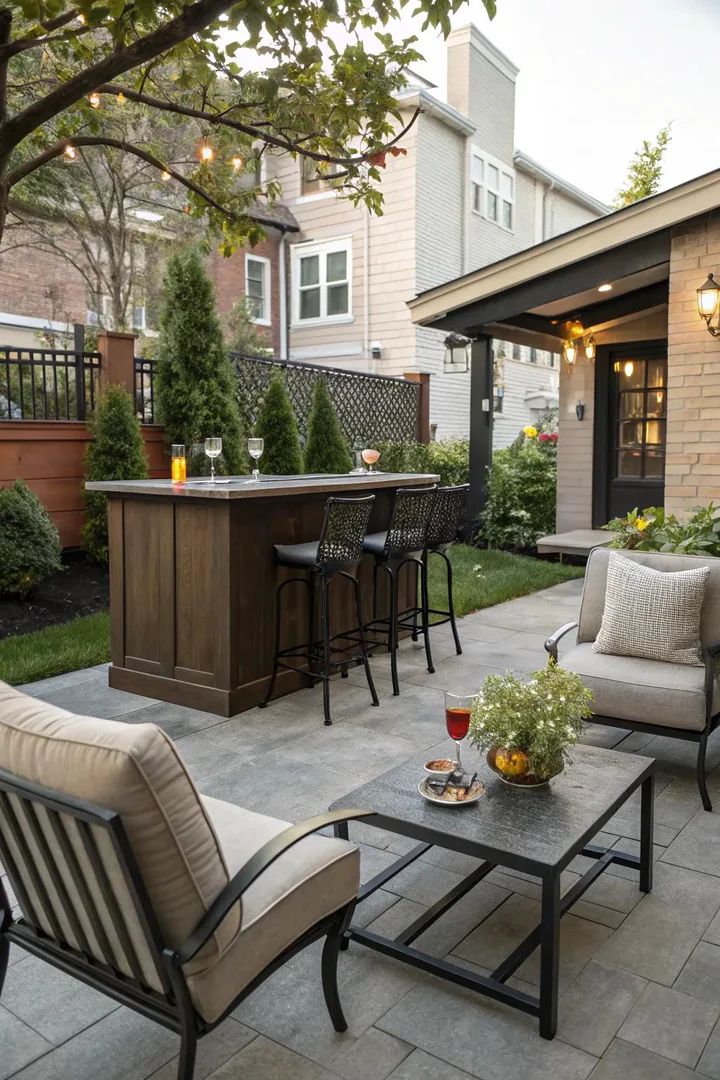
A wall-mounted drop-leaf bar counter folds flat when not in use and swings up to create a 12-18 inch deep drink ledge that seats 2-3 people on bar stools. Build one from a single 2×12 cedar board ($15-$25 for a 6-foot piece) hinged to the wall with heavy-duty folding shelf brackets ($20-$30 per pair rated for 200+ pounds). Total cost: under $60 for a custom wall bar.
A freestanding outdoor bar cart from Crosley or Christopher Knight Home ($100-$300) offers mobility and storage with shelves, bottle slots, and a removable serving tray on top. Position the cart against the wall during solo evenings and roll it next to the seating area during gatherings. Add a galvanized steel tub ($20-$30) filled with ice next to the cart for keeping drinks cold without an outdoor refrigerator.
11. Mirrors for Space Expansion
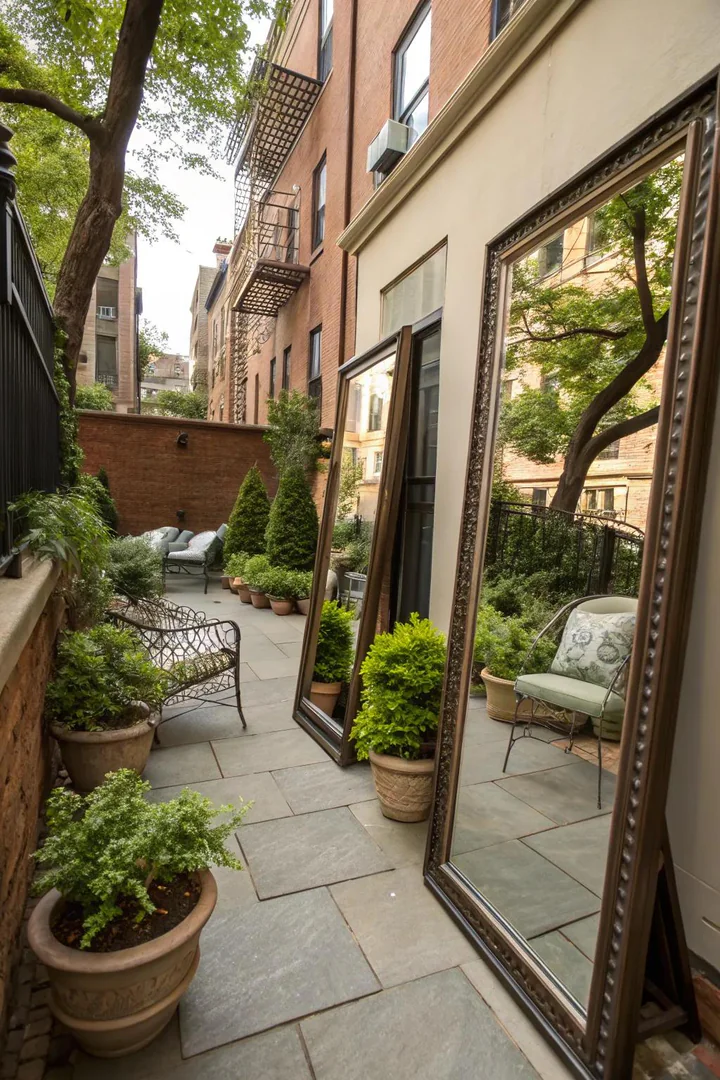
A large mirror mounted on a wall or fence reflects light and creates the visual illusion of double the patio depth. Acrylic mirrors ($30-$80 for a 24×36-inch panel) weigh a fraction of glass and resist shattering, making them safer for outdoor use in windy conditions or homes with children. Position the mirror on the wall directly opposite the patio entrance to maximize the reflected depth effect.
Framed outdoor mirrors in wrought iron or weathered wood ($50-$200) double as wall art while opening up the space. Avoid placing mirrors where they reflect direct afternoon sun back onto seating areas because concentrated reflected heat can make that zone uncomfortably warm. Tilt the mirror 2-3 degrees downward to reflect the patio surface and plants rather than the sky, which creates a more convincing sense of extended space.
12. Hot Tub Retreat
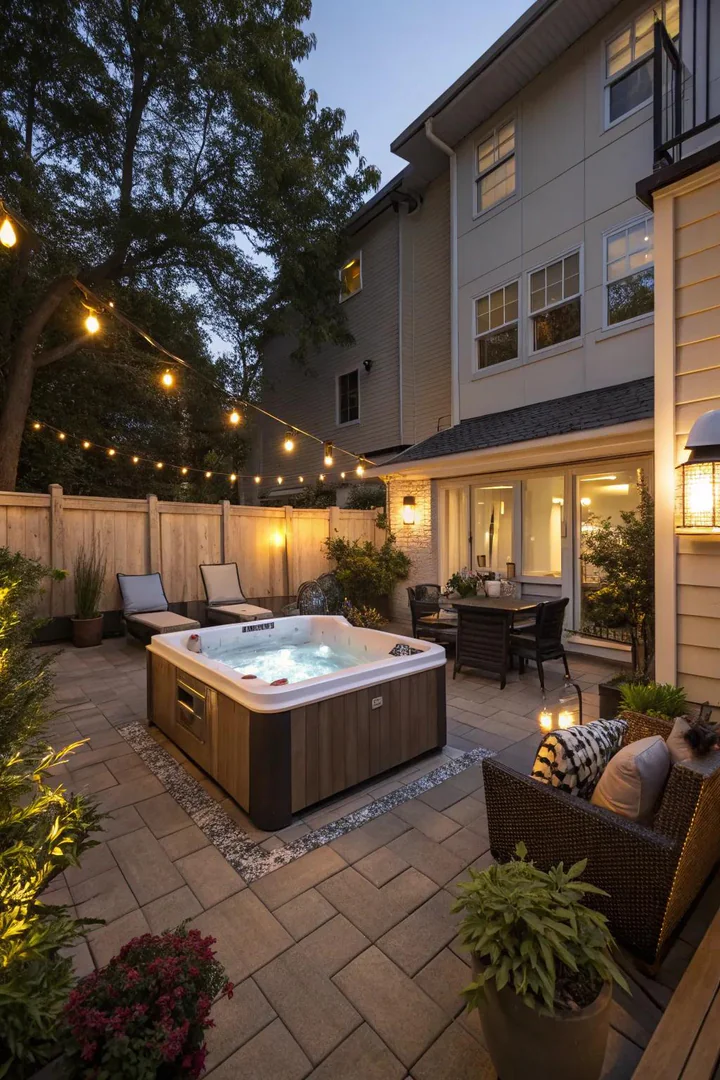
A 2-4 person plug-and-play hot tub fits on a townhouse patio as small as 8×10 feet. Plug-and-play models from Lifesmart, AquaRest, and Freeflow Spas ($2,000-$5,000) run on a standard 120V/15A household outlet and measure 5×5 to 6×6 feet. The smaller footprint and lower power requirements skip the need for a dedicated 240V circuit and a reinforced concrete pad, though a flat, level surface rated for 2,500-3,500 pounds is still required.
Screen the hot tub from neighboring patios with a 5-6 foot bamboo privacy fence ($3-$5 per linear foot for a roll of woven bamboo) or a slatted cedar screen built from 1×4 boards. Leave 12-18 inches of clearance on the equipment access side for pump and heater maintenance. For more options on planning a hot tub area with lighting, fire features, and seating, see hot tub patio ideas.
13. Small Raised Garden Bed
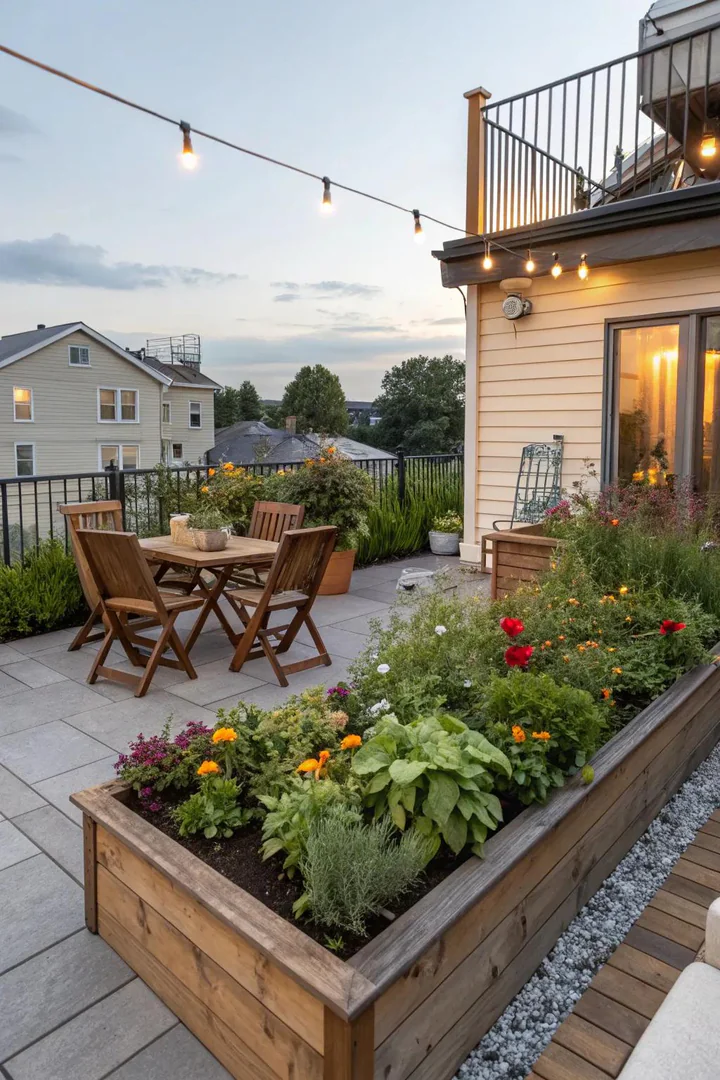
A narrow raised bed (12-18 inches wide, 4-8 feet long, 18-24 inches tall) fits against a patio wall and grows herbs, salad greens, and compact vegetables within arm’s reach of your outdoor kitchen. Cedar raised bed kits from Greenes Fence ($40-$80 for a 2×4-foot bed) and Gardener’s Supply Company ($60-$120 for a 2×8-foot bed) assemble in 15 minutes without tools.
Fill with a 50/50 mix of bagged garden soil and compost ($15-$25 per 2-cubic-foot bag, needing 4-6 bags for a 2×6-foot bed at 18 inches deep). Grow lettuce, spinach, radishes, and herbs in succession plantings every 3-4 weeks for continuous harvest through the growing season. For a larger growing setup that extends beyond the patio, explore small backyard ideas that combine raised beds with vertical planters and compact garden layouts.
14. Stylish Privacy Screens
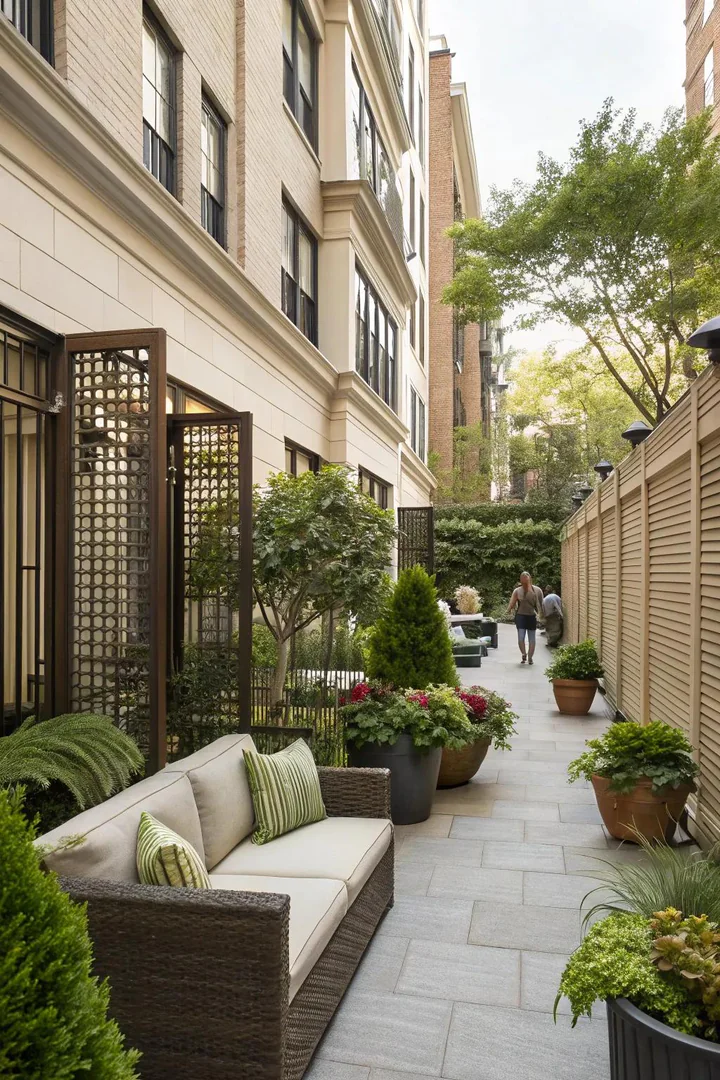
A decorative privacy screen blocks sightlines from neighboring units while adding an architectural feature to a plain patio wall. Laser-cut metal panels from Outdeco and Modinex ($25-$50 per 2×4-foot panel) come in geometric, botanical, and abstract patterns and mount directly to fence posts or wall brackets. Three panels side by side create a 6-foot-wide, 4-foot-tall screen for $75-$150 in materials.
Woven reed and bamboo roll-up screens ($15-$30 per 6×8-foot roll from Lewis Hyman) attach to the top of an existing fence with zip ties and unroll for instant privacy at a fraction of the cost of permanent panels. For a living screen, train climbing plants (star jasmine, Clematis, or passionflower) on a trellis panel ($20-$40 for a 4×8-foot lattice) mounted to the fence. Climbing plants reach full coverage in 1-2 growing seasons and add fragrance and flowers to the patio.
15. Floating Deck
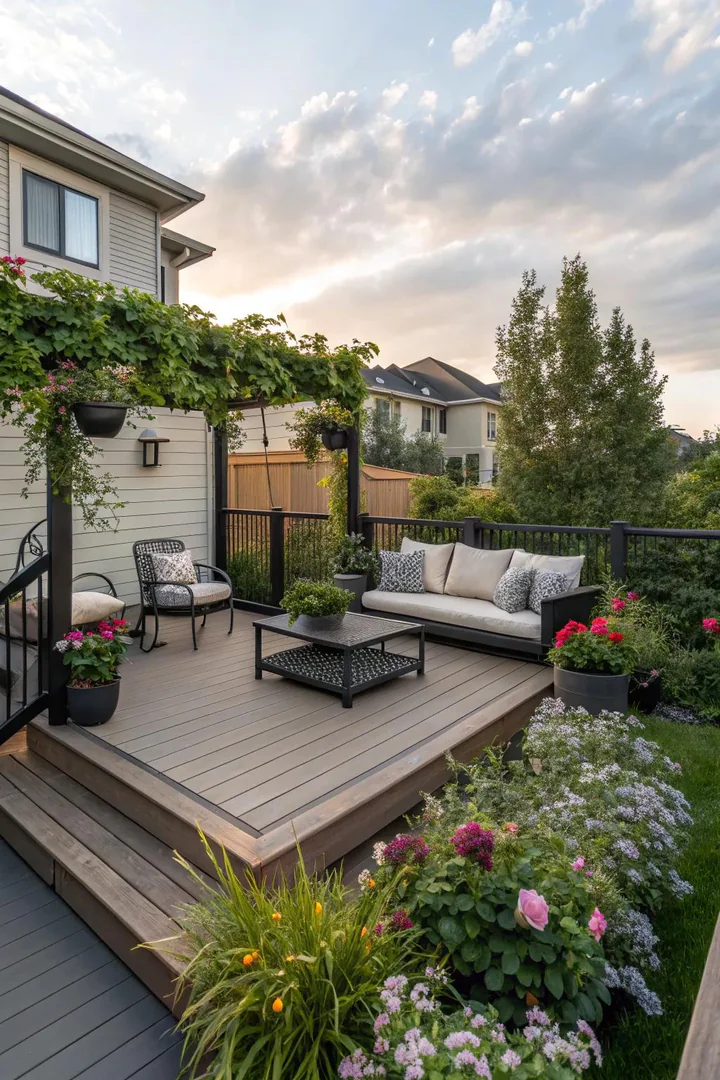
A floating deck (also called a platform deck) sits directly on the existing patio surface or on adjustable pedestals, covering cracked concrete or uneven pavers without demolition. Composite deck tiles from Ipe Clip and NewTechWood ($4-$8 per square foot, 12×12 or 12×24 inch interlocking tiles) snap together without screws and rest on rubber pads that protect the concrete below.
For a full-frame floating deck, set 4×6-inch concrete deck blocks ($5-$8 each at any home center) on the existing surface every 4 feet and lay pressure-treated 2×6 joists across them. Top with composite or cedar decking boards fastened with hidden clips. A 10×12-foot floating deck costs $600-$1,500 in materials and installs in a weekend without footings, permits, or concrete work in most jurisdictions. Add an above-ground pool adjacent to a floating deck for a two-zone outdoor area that combines swimming and lounging.
16. Built-In Bench Seating
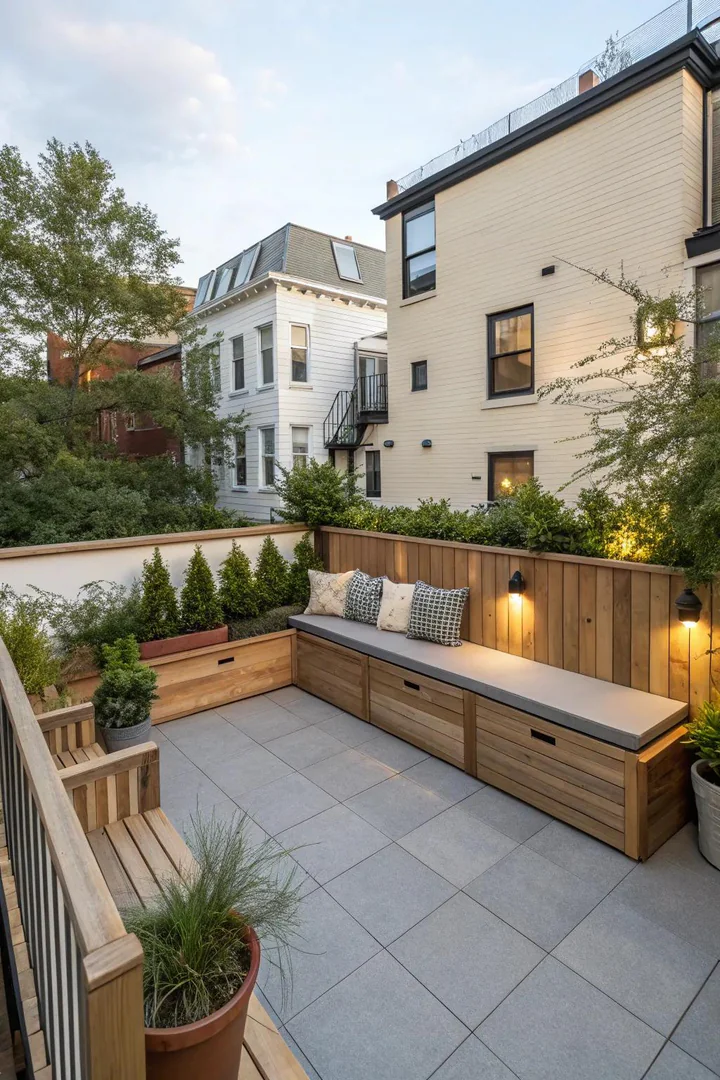
An L-shaped built-in bench along two walls of your patio seats 4-6 guests without any chairs taking up floor space. Build from pressure-treated 2×4 framing and 1×6 cedar or composite seat boards for $200-$500 in materials for an 8-foot by 6-foot L-shaped bench. Hinge the seat boards to create lift-up storage compartments underneath for cushions, tools, and outdoor gear.
Set the seat height at 17-18 inches (standard chair height) and the depth at 18-20 inches for comfortable sitting without back support, or 22-24 inches if you plan to add back cushions. Attach 4-inch-thick outdoor cushions ($30-$60 each) with non-slip backing or tie-on straps to keep them in place during wind. A built-in bench defines the seating zone permanently, freeing you from rearranging chairs every time you use the patio.
Townhouse Patio Size and Feature Guide
| Patio Size | Best Features | Seating Capacity | Budget Range |
|---|---|---|---|
| 6×8 ft (48 sq ft) | Bistro set, vertical garden, string lights | 2 people | $200-$800 |
| 8×10 ft (80 sq ft) | Add outdoor rug, fire pit, wall bar | 3-4 people | $500-$2,000 |
| 10×12 ft (120 sq ft) | Add compact grill, raised bed, bench | 4-6 people | $1,000-$4,000 |
| 12×14 ft (168 sq ft) | Add pergola, hot tub, outdoor kitchen | 6-8 people | $2,000-$8,000 |
| 12×16 ft (192 sq ft) | Add floating deck, games zone, full bar | 8-10 people | $3,000-$12,000 |
How to Design a Townhouse Patio Layout
1. Measure Your Space and Map Obstacles
Measure the full length and width of your patio, then mark door swings, HVAC units, dryer vents, and gas meter locations on a simple grid drawing. Account for the 36-inch-wide clear path that building codes require from your back door to the yard or exit point. Draw your layout on graph paper (1 square = 1 foot) or use a free tool like SketchUp to test furniture placement before buying.
2. Define Activity Zones
Divide the patio into 2-3 zones based on how you plan to use the space: dining, lounging, and cooking are the most common combination. Use rugs, planters, or a change in surface material to visually separate zones without walls or barriers. Place the cooking zone closest to the house door for easy access to the kitchen, and position the lounging area at the far end for maximum distance from cooking heat and smoke.
3. Choose Scaled Furniture
Measure every piece of furniture before purchasing and tape the outline on the patio floor to verify fit and walking clearance. Leave at least 24 inches between furniture edges for comfortable movement. Fold-flat, stackable, and nesting furniture designs maximize seating capacity during parties while clearing floor space for daily use.
4. Add Vertical Elements
Go up instead of out with wall-mounted planters, shelving, hanging lights, and tall privacy screens. A 6-foot-tall trellis with climbing plants adds greenery on a 6-inch-deep footprint. Hang shelves ($15-$30 per bracket set) at 5-6 foot height for herb pots, candles, and small decor that would otherwise sit on the floor or table surface.
5. Layer Lighting and Accessories
Combine overhead string lights with mid-level lanterns and ground-level path markers to create depth and dimension on a small patio. Add color and texture through outdoor cushions, a rug, and 2-3 potted plants rather than large furniture pieces. Swap accessories seasonally (lighter fabrics and brighter colors in summer, heavier textures and warmer tones in fall) to keep the patio looking fresh year-round.
Frequently Asked Questions
What is the minimum patio size for a dining table?
A 2-person bistro set needs a minimum 6×6-foot area, while a 4-person dining table requires at least 8×10 feet to allow 36 inches of clearance around the table for chairs to push back. Round tables (36-42 inch diameter) use space more efficiently than square or rectangular tables because guests can sit closer together without bumping elbows at the corners.
Can you put a hot tub on a townhouse patio?
Yes, if the patio surface is rated for the filled weight (2,500-5,000 pounds depending on tub size). Concrete slabs 4 inches thick with proper reinforcement handle most 2-4 person plug-and-play tubs. Check your HOA covenants and local codes for noise, drainage, and electrical requirements before purchasing. Many townhouse communities require written approval from the management company before hot tub installation.
How do you make a small patio feel bigger?
Use mirrors on the back wall to visually double the depth, choose furniture with open frames or glass tops that let light pass through, and run flooring material (tile, composite, or rugs) in a lengthwise direction to elongate the space. Light-colored surfaces reflect more ambient light and make walls feel further apart. Removing clutter and limiting the number of furniture pieces to the minimum you actually use has the biggest impact on perceived space.
Are townhouse patios covered by HOA rules?
Most townhouse HOAs regulate patio modifications including permanent structures (pergolas, fences, fire pits), paint colors, storage containers visible from common areas, and noise-producing equipment like hot tubs and speakers. Review your HOA’s architectural guidelines and submit a modification request before starting any project. Fines for unapproved modifications range from $50-$500 per violation in most communities, and removal of the modification at your expense is a common enforcement action.
What is the cheapest way to cover a concrete patio?
Interlocking composite deck tiles ($4-$8 per square foot) snap together over existing concrete without adhesive or tools, covering a 10×10-foot patio for $400-$800. Outdoor rugs ($40-$120 for a 5×7-foot size) cover the most visible area for the lowest cost. Concrete stain ($30-$50 per gallon, covering 200-400 square feet) changes the color and adds a semi-transparent finish to plain gray concrete for under $100 for a typical townhouse patio.