
Kitchen Utensil Holder Ideas: 21 Unique Styles to Transform Space
Kitchen utensil holder ideas range from repurposed vintage tins and ceramic pitchers to wall-mounted magnetic strips, industrial pipe racks, and bamboo caddies that keep spatulas, wooden spoons, whisks, and tongs within arm’s reach of the stove. A good holder matches the kitchen’s style, fits the counter depth (most counters run 25 inches deep with 15 to 18 inches of usable space after the backsplash), and holds 8 to 15 tools without tipping. Below are 21 holder styles covering countertop crocks, wall-mounted rails, hanging baskets, DIY upcycles, and tiered organizers, followed by a selection guide, a comparison table, and FAQs on sizing, materials, and cleaning.
1. Repurposed Vintage Advertising Tins

Large vintage tins from brands like Crisco, Droste cocoa, or Maxwell House coffee (pre-1960s prints) hold wooden spoons, spatulas, and whisks while adding a nostalgic graphic element to the counter. Tins with a 5- to 6-inch diameter and 7-inch height fit 10 to 12 standard utensils. Estate sales, Etsy vintage shops, and flea markets carry tins from $8 to $35 depending on brand recognition and condition.
Line the bottom with a folded dish towel or a 1-inch layer of dried rice to add weight and prevent the tin from tipping when a heavy ladle leans to one side. Tin does not absorb odors or stain from sauce drips the way unfinished wood does, and a damp cloth wipe keeps the exterior clean. Grouping two or three tins of different heights creates a collected, curated display that farmhouse and cottage kitchens favor.
2. Rustic Wooden Crate with Divided Compartments
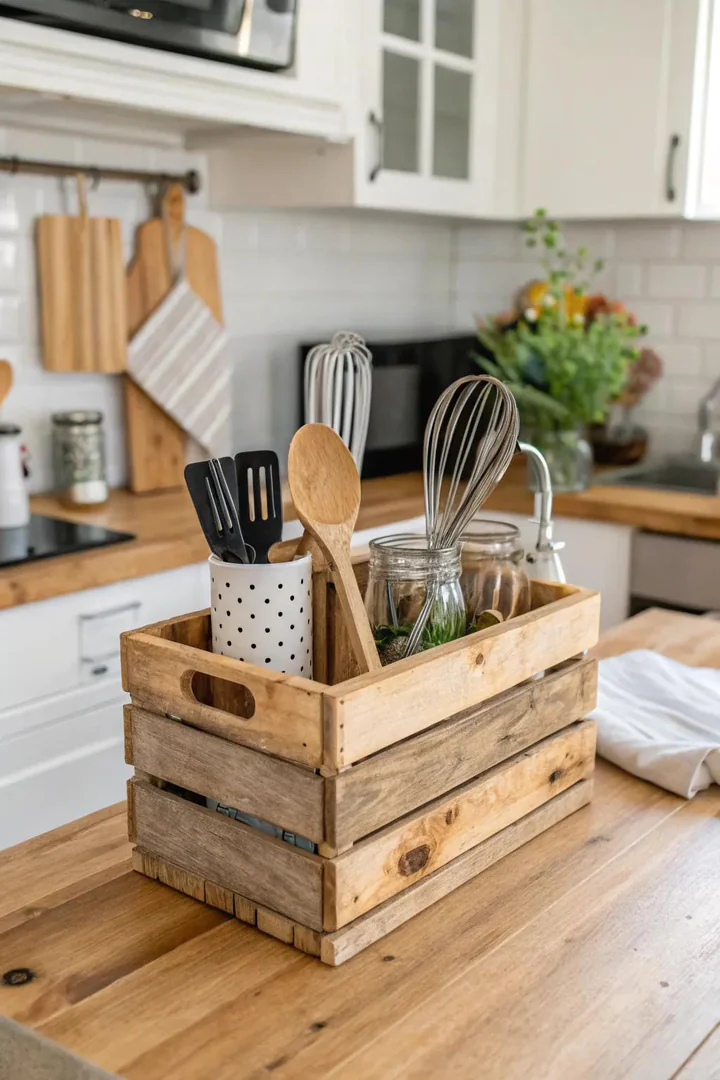
A small wooden crate from Michaels ($8) or IKEA Knagglig ($10) with interior dividers separates cooking spoons from spatulas from whisks without jumbling everything into one cylinder. Dividers made from thin plywood strips or cardboard wrapped in burlap create 3 to 4 compartments inside a single crate. The crate sits flat on the counter with handles on both ends for easy lifting during deep cleaning.
Sanding the raw pine and applying a coat of Minwax Early American (230) stain followed by matte polyurethane seals the wood against moisture and grease. A crate measures roughly 9 by 6 by 5 inches, fitting neatly beside the range without blocking the backsplash outlet. Wooden crate holders suit farmhouse, rustic, and transitional kitchens where natural materials already appear in cutting boards, open shelving, and butcher-block counters.
3. Clear Glass Cylinder Vase as a Utensil Display
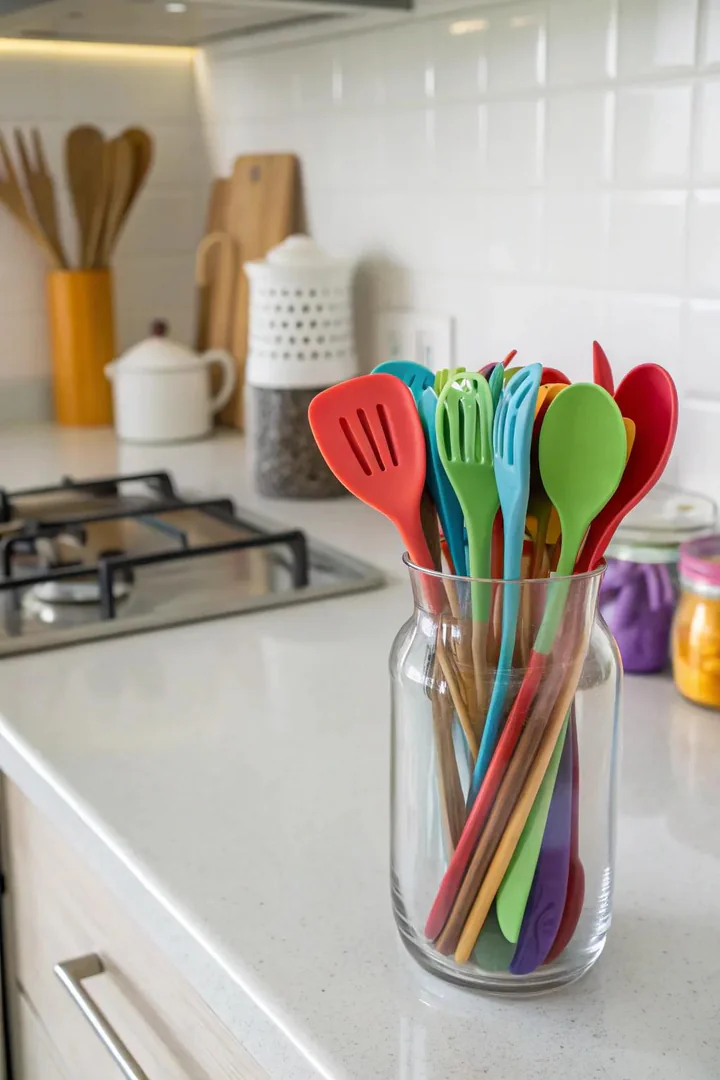
A tall clear glass cylinder vase (6 inches in diameter, 10 inches tall) from CB2 ($15) or Dollar Tree ($1.25 for a 9-inch version) shows every utensil handle and lets the collection itself become the decoration. Glass reflects under-cabinet lighting and adds a bright, airy quality that opaque crocks cannot match. The transparency forces the user to keep the utensil set edited, since mismatched plastic spatulas and bent whisks look messy through clear walls.
Fill the bottom 2 inches with white marble chips, dried lentils, or coarse sea salt to anchor the vase and cushion the utensil ends. Glass cleans with a quick soap-and-water rinse and does not absorb cooking odors. A cylinder vase works best in modern and Scandinavian kitchens where the counter display follows a “less is more” approach. Limit the vase to 6 to 8 matching wooden or silicone utensils for the cleanest look.
4. Hanging Metal Baskets from a Ceiling-Mounted Rail
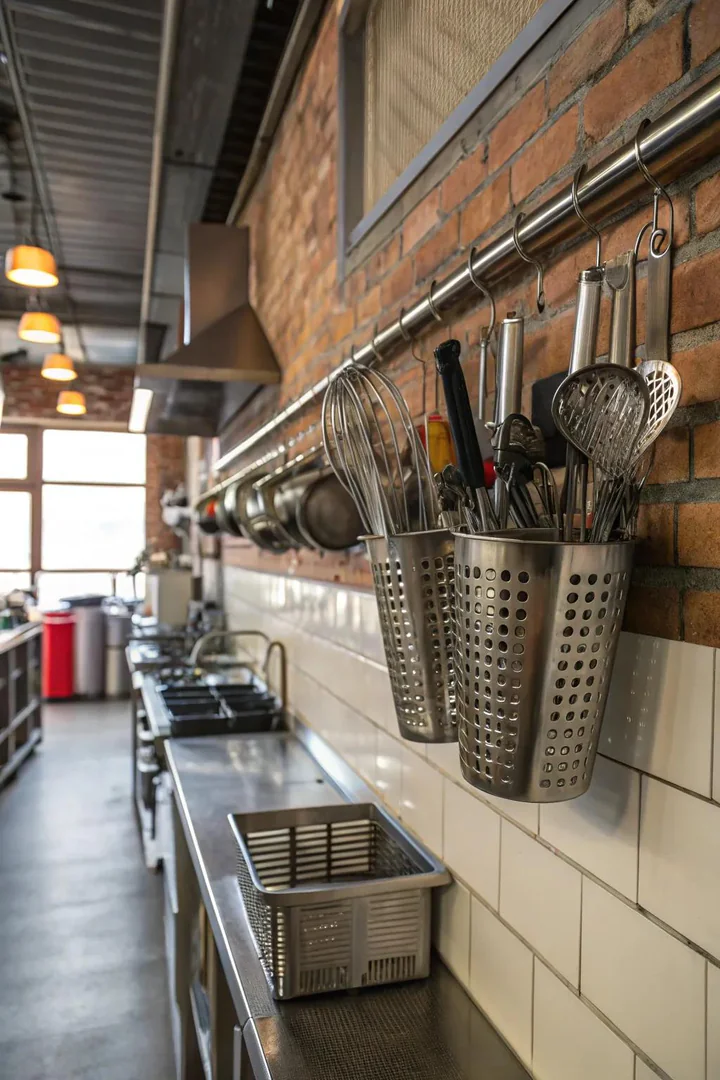
S-hooks on a ceiling-mounted iron pot rail from Enclume ($80 to $150) or Old Dutch International ($50) suspend small wire baskets that hold utensils above the island or range, freeing counter space entirely. Each basket measures 6 by 4 inches and holds 4 to 6 tools. Hanging the rail 18 inches below an 8-foot ceiling keeps the baskets at eye level for a 5-foot-8-inch user and out of the head-clearance zone.
Matching the rail and basket finish to the kitchen’s metal palette (matte black for industrial, brushed brass for transitional, chrome for modern) ties the overhead storage into the room’s hardware story. Ceiling-mounted rails require anchoring into joists or using toggle bolts rated for 50+ pounds. The hanging approach works best in kitchens with 9-foot or higher ceilings, where the rail has room to hang without feeling oppressive.
5. Glazed Ceramic Pitcher as a Utensil Crock
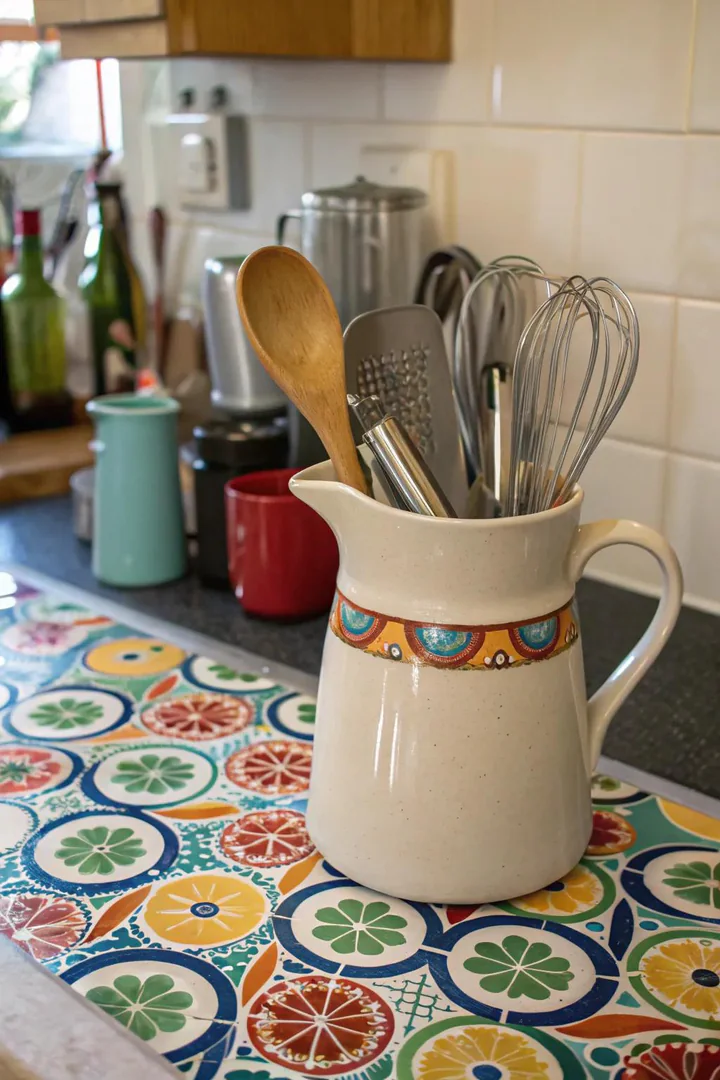
A large glazed stoneware pitcher from Anthropologie ($35) or Pottery Barn ($40) repurposed as a utensil holder brings an artisan, collected look to the counter. Pitchers with a 5- to 6-inch mouth opening and a 7- to 8-inch height hold 8 to 12 tools comfortably. The handle provides a grip for relocating the pitcher during counter wipedowns, and the pour spout creates a natural gap that separates taller ladles from shorter spatulas.
Reactive glazes in speckled cream, sage, slate blue, or amber vary between production runs, giving each pitcher a one-of-a-kind surface. Stoneware absorbs less moisture than terra cotta and resists chipping better than porcelain. A pitcher-style holder sits in the border zone between functional kitchen tool and decorative object, making the counter feel styled rather than cluttered.
6. Wall-Mounted Stainless-Steel Magnetic Knife and Utensil Strip
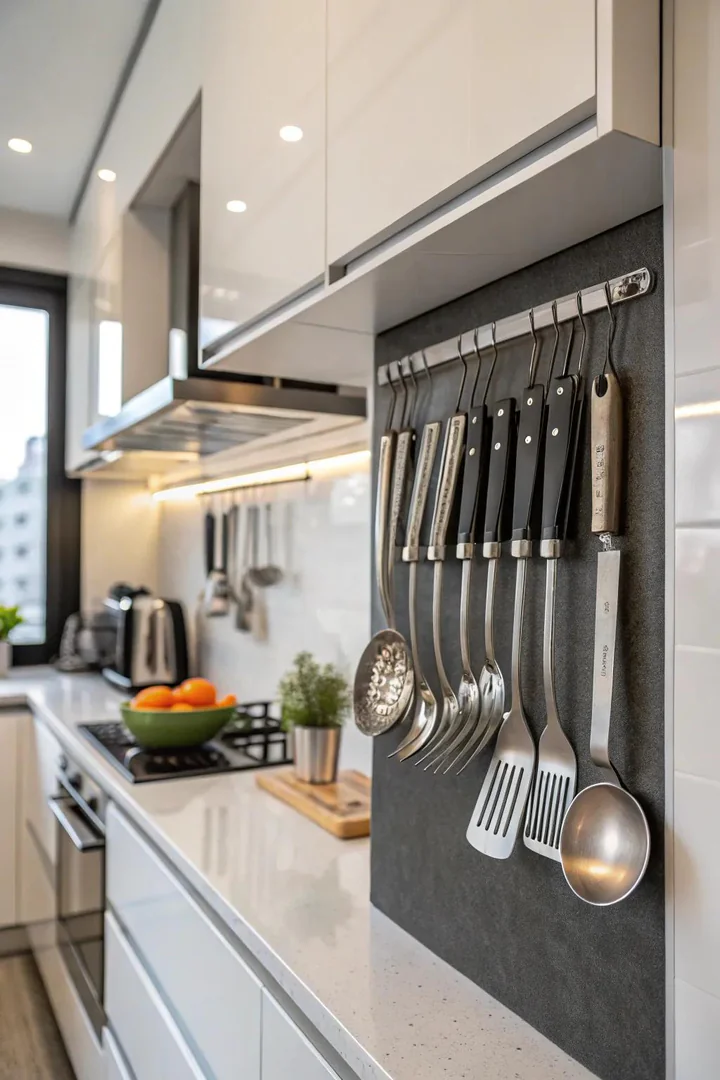
A 16- or 24-inch stainless-steel magnetic strip from Woodsom ($20) or Ikea Kungsfors ($10) mounts to the backsplash wall and holds metal utensils, knives, and scissors flat against the surface without a countertop footprint. Neodymium magnets embedded behind the stainless face grip a 12-ounce chef’s knife or a stainless-steel ladle firmly enough to resist vibration from nearby appliances.
Mount the strip 4 to 6 inches above the countertop and at least 18 inches from the range to keep utensil handles cool. Two #10 screws into wall studs or drywall anchors rated for 25 pounds per anchor hold the strip securely. Magnetic strips work for metal utensils only; wooden and silicone tools need a separate holder. Pair the strip with a small countertop crock for non-magnetic tools to cover the full utensil collection. Find more wall and counter organization strategies in our guide to ideas to maximize kitchen cabinet space.
7. Upcycled Wide-Mouth Mason Jar Cluster
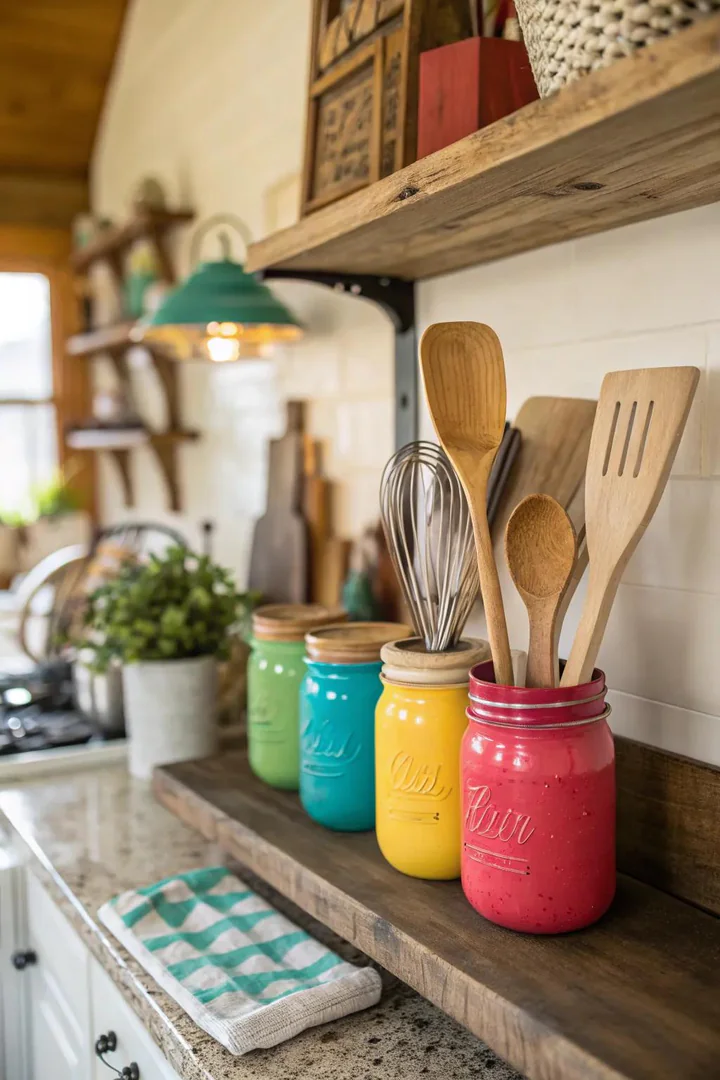
Three or four Ball wide-mouth quart Mason jars ($12 for a 12-pack at Walmart) grouped on a small wooden tray separate utensils by type: one jar for wooden spoons, one for silicone spatulas, one for whisks and tongs. The wide mouth (3.25-inch opening) fits most handle widths, and the glass walls show the contents at a glance. A quart jar stands 6.5 inches tall, matching standard countertop-to-upper-cabinet clearance.
Painting the jars with Rust-Oleum Chalked paint in Linen White or Country Gray adds an opaque farmhouse finish. Leaving the jars clear suits modern and minimalist kitchens. A reclaimed-wood serving board ($15 from World Market) under the cluster corrals the jars into a unified display and protects the counter from condensation rings. Mason jar clusters are one of the cheapest utensil holder solutions, costing under $5 for the jars alone.
8. Three-Tier Rotating Metal Caddy
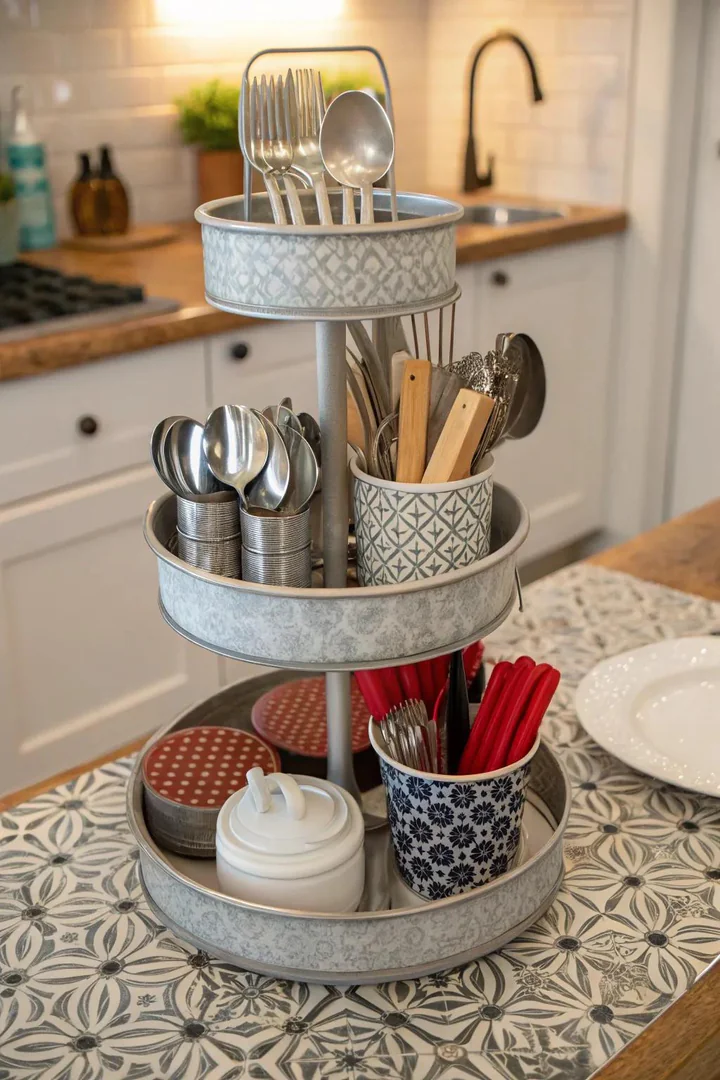
A three-tier rotating caddy from mDesign ($25) or iDesign York ($30) spins 360 degrees on a lazy-Susan base and stacks three open bins vertically, tripling the utensil capacity in a single 7-inch-diameter counter footprint. The bottom tier holds tall ladles and slotted spoons, the middle tier stores spatulas and turners, and the top tier corrals measuring spoons, peelers, and thermometers.
Powder-coated steel in matte black, satin gold, or brushed nickel resists kitchen grease and wipes clean with a damp cloth. The rotating base lets the cook spin to the needed tier without reaching around or lifting the caddy. Tiered caddies work well beside the range in kitchens with limited counter depth because the vertical stacking trades footprint for height. A caddy that stands 14 inches tall fits under most upper cabinets mounted at the standard 18-inch clearance.
9. Colorful Glazed Ceramic Crock Set
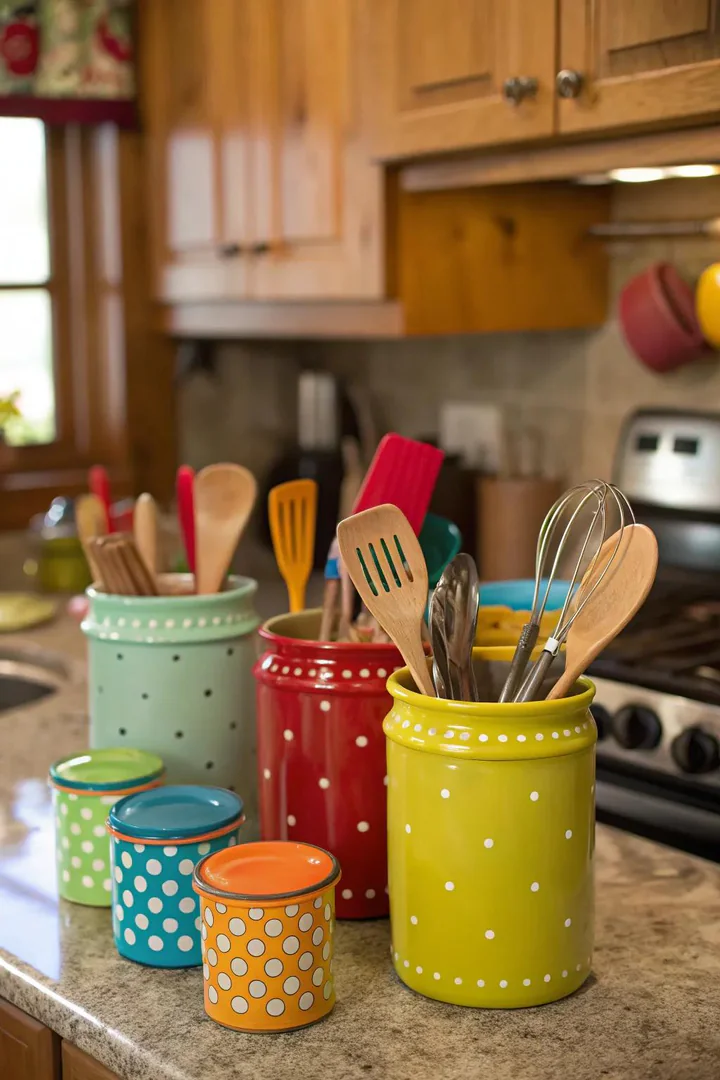
A set of two or three glazed ceramic crocks in coordinating colors from Le Creuset ($30 each in Flame, Marseille, or Meringue) or Now Designs ($18 each) lines up beside the stove and assigns each color to a utensil category. A red crock holds heat-resistant silicone tools, a white crock stores wooden spoons, and a blue crock corrals metal whisks and tongs. Color coding speeds tool retrieval during busy cooking sessions.
Le Creuset crocks measure 6.75 inches tall with a 4.5-inch mouth opening and weigh 2 pounds empty, providing enough base weight to resist tipping. The enameled glaze resists staining from tomato sauce, turmeric, and oil splatters. Matching the crock color to the kitchen’s accent palette (Le Creuset Flame with terracotta tiles, Marseille with blue cabinets) connects the utensil holder to the broader color story.
10. Terra Cotta Flower Pots Repurposed for Utensils
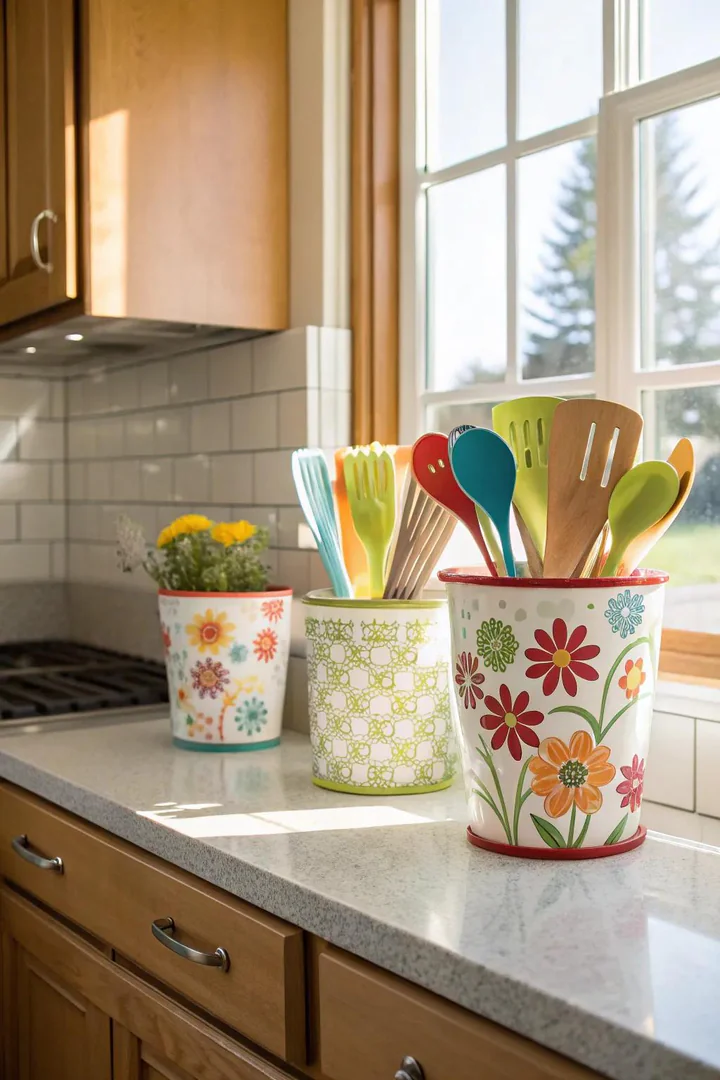
A standard 6-inch terra cotta pot from any garden center ($2 to $4) holds 8 to 10 utensils and brings a warm, earthy texture to the counter. Sealing the drainage hole with a cork plug or a dab of silicone caulk prevents crumbs and dust from falling through. A coat of Rust-Oleum Painter’s Touch spray paint in Satin Ivory or Warm Gray upgrades the raw clay to a finished look that matches modern kitchens.
Leaving the pot unfinished suits Mediterranean, Tuscan, and boho kitchens where raw materials set the tone. Terra cotta absorbs moisture, so lining the interior with a small plastic cup prevents water from utensil tips from seeping into the clay and causing mineral deposits on the outside. Stacking a 4-inch pot inside a 6-inch pot creates a two-tier nested display with small tools in the inner pot and tall tools in the outer ring.
11. Over-the-Cabinet-Door Metal Hook Rack
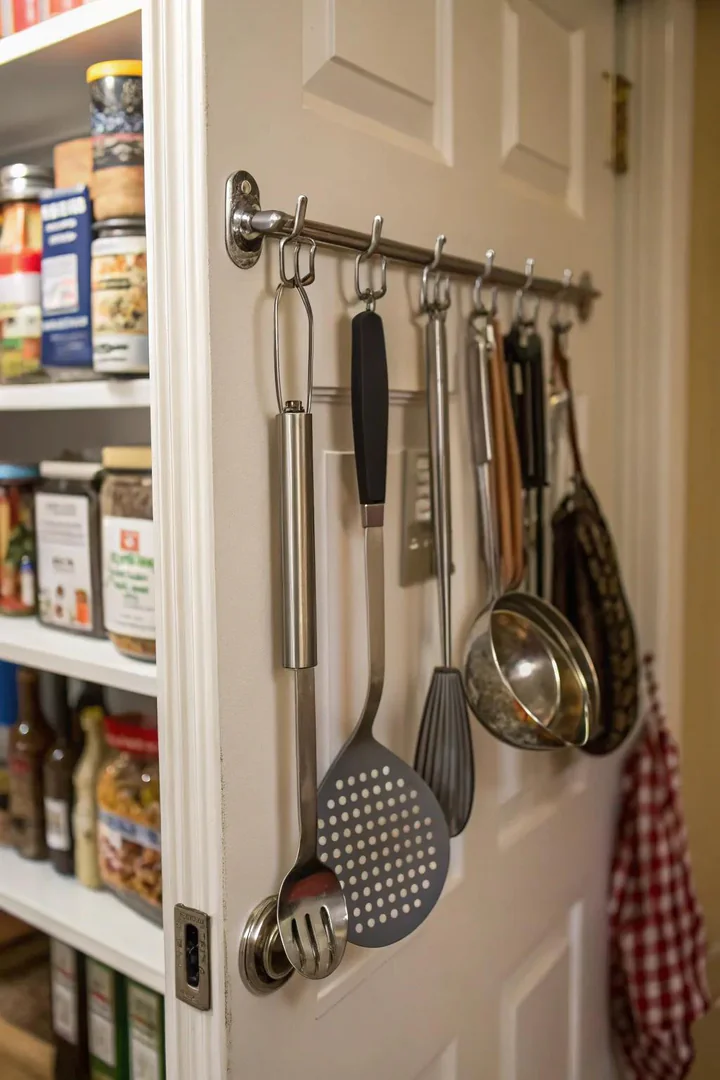
An over-the-door stainless-steel hook rack from SimpleHouseware ($12) or Command Damage-Free hooks ($8 for a 3-pack) hangs utensils with loop handles on the inside of a cabinet door, keeping them hidden when the door closes. Five to seven hooks spaced 2 inches apart hold slotted spoons, ladles, and measuring cups without drilling a single hole. The rack hooks over cabinet doors up to 3/4-inch thick.
Over-the-door storage works best on the cabinet closest to the range because the cook opens that door most frequently. Padding the hook bracket with adhesive felt strips prevents the metal from scratching the cabinet’s painted edge. A door-mounted rack combined with a small countertop crock for the most-used tools keeps 90% of the collection out of sight while leaving the daily-driver spatula and tongs within instant reach.
12. Vintage Enamelware Milk Pitcher
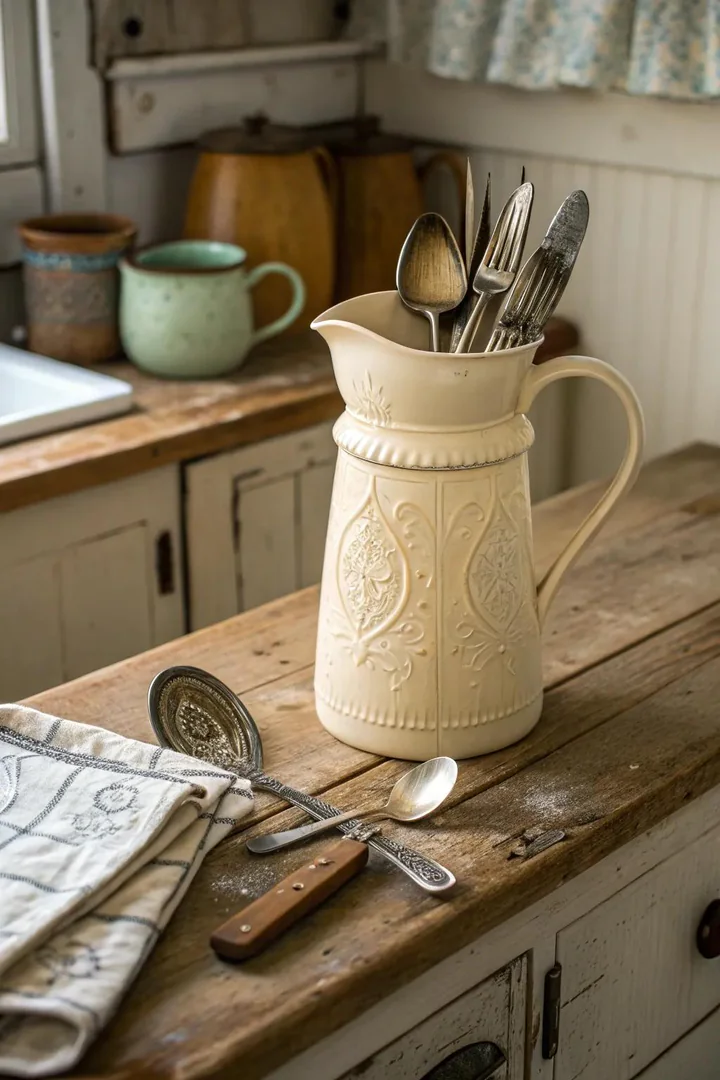
A white enamelware milk pitcher with a navy or red rim from Crow Canyon Home ($28) or a genuine vintage piece from an antique shop ($15 to $40) holds utensils in a vessel that looks like a farmhouse artifact. Enamelware is steel coated in porcelain enamel, making the pitcher lighter than ceramic and almost impossible to break when bumped off the counter. A 2-quart pitcher stands 8 inches tall with a 5-inch mouth, holding 10 to 12 tools.
Chips in the enamel coating reveal the steel underneath and add character rather than reducing function. A chipped rim becomes a rust spot only if exposed to standing water for extended periods, so drying the pitcher after washing prevents deterioration. Enamelware pitchers pair with white subway tile, open wood shelving, and apron-front sinks in kitchens that lean toward country, farmhouse, or vintage industrial aesthetics.
13. Industrial Black Pipe Utensil Rack
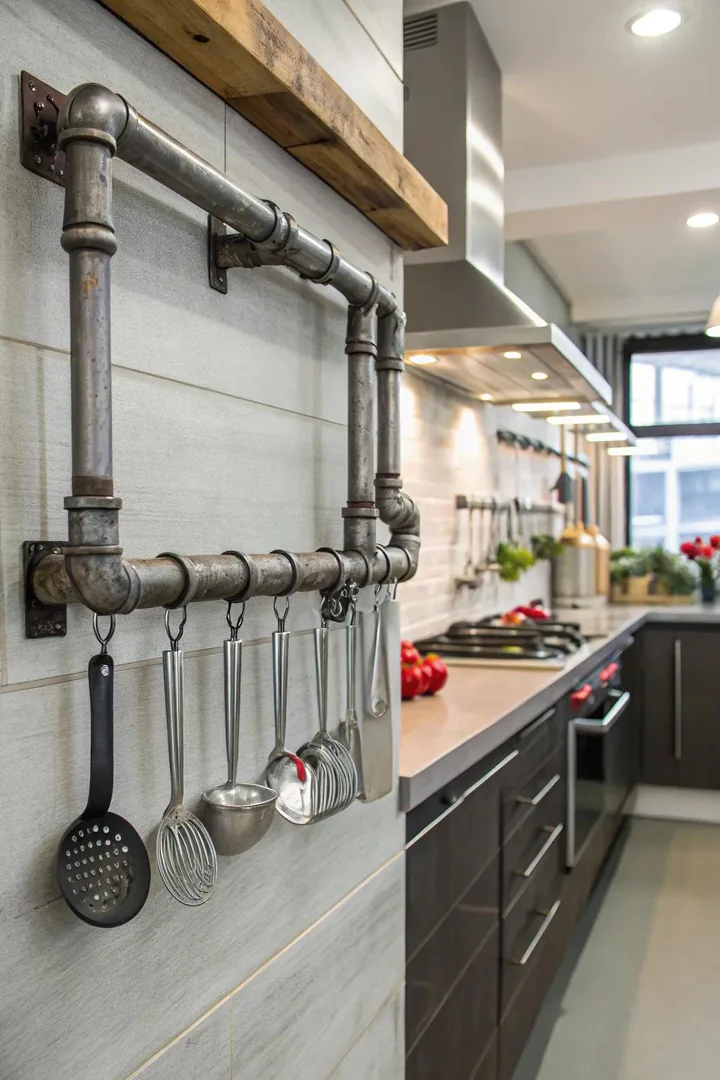
A wall-mounted rack built from 3/4-inch black iron pipe fittings (available at Home Depot or Lowe’s, $2 to $5 per fitting) with S-hooks creates an industrial utensil bar that holds tools at eye level. A 24-inch horizontal pipe supported by two floor-flange mounts screwed into wall studs carries 8 to 10 S-hooks ($8 for a 20-pack on Amazon). Total materials cost runs $20 to $35.
Spray the assembled pipe with Rust-Oleum Matte Black for a uniform finish, or leave the raw iron surface for an unfinished industrial look. Black pipe racks pair with exposed brick, concrete countertops, Edison-bulb pendant lights, and metal bar stools. The DIY assembly takes under 30 minutes with a pipe wrench and a drill. Mounting at 12 to 14 inches above the countertop keeps utensil handles accessible without blocking the backsplash outlet.
14. Woven Bamboo Utensil Caddy with Handle
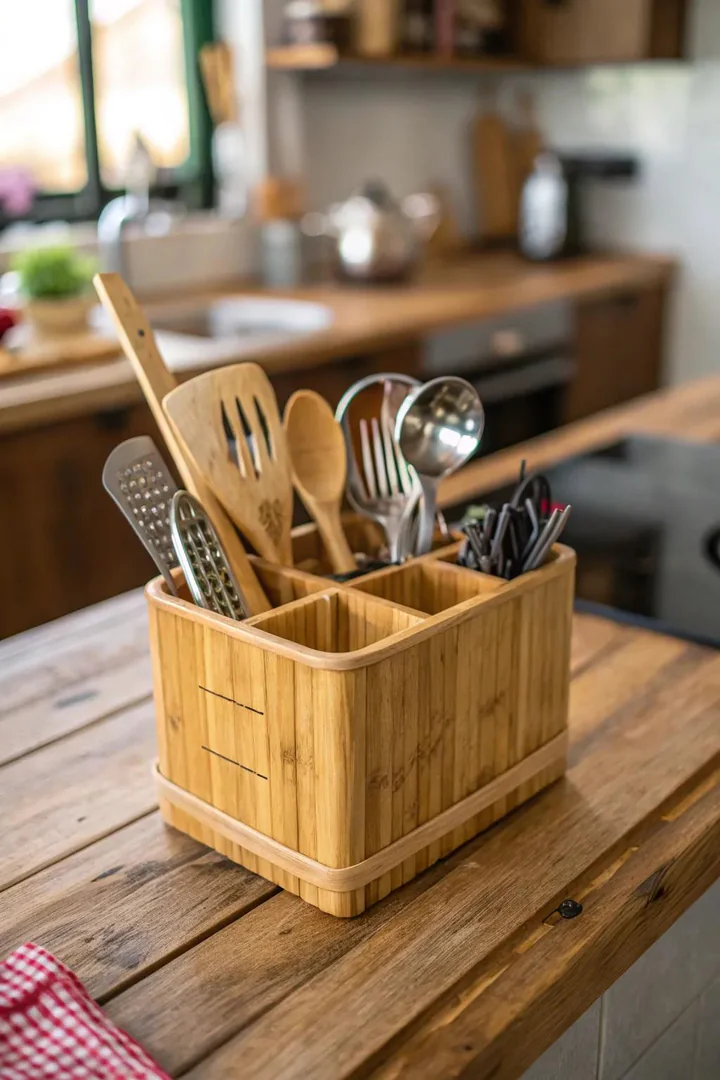
A woven bamboo caddy with a center handle from Lipper International ($15) or Totally Bamboo ($20) divides utensils into 3 to 4 compartments and carries from counter to table for serving. Bamboo resists moisture better than pine or birch and carries a warm, golden tone that coordinates with butcher-block counters and wood-framed open shelving. The center handle lifts the entire caddy for easy cleaning underneath.
A 10-by-7-inch caddy fits beside the stove without crowding the counter, and the compartments keep utensils upright and separated. Bamboo does not absorb odors from garlic or onion the way softwoods do, and a wipe with a damp cloth followed by air drying keeps the weave clean. Bamboo caddies suit Scandinavian, coastal, and transitional kitchens where natural textures soften the hard surfaces of stone and tile.
15. Decorative Wire Basket with Fabric Liner
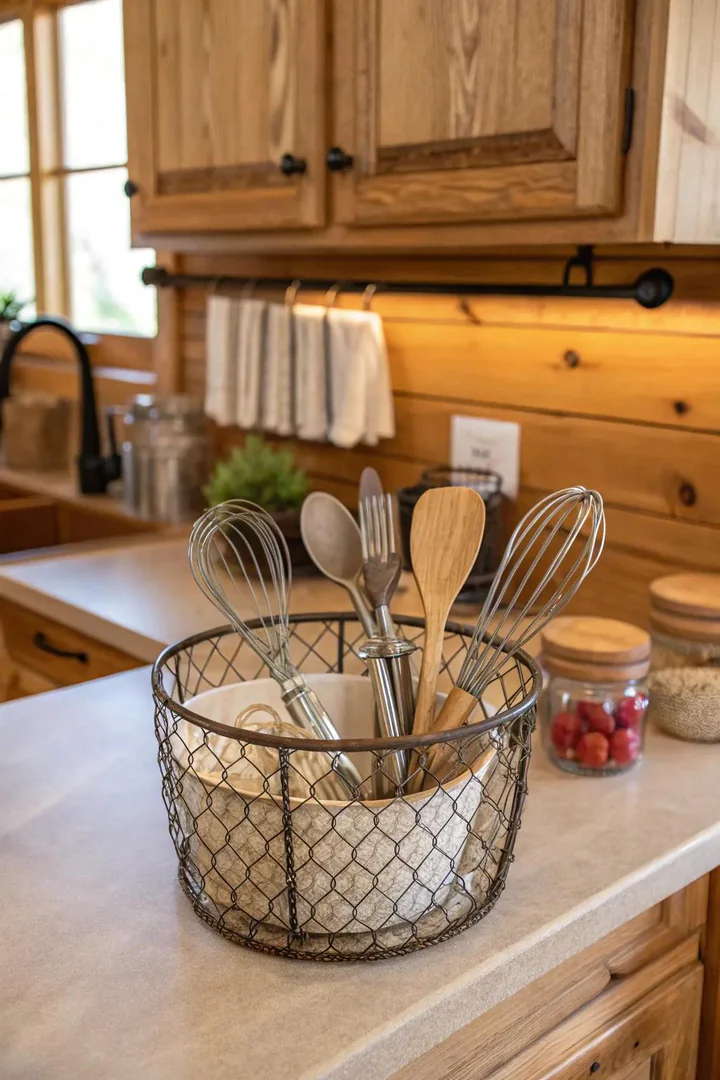
A small wire basket in gold, matte black, or white powder-coated steel from H&M Home ($12) or Target Hearth & Hand ($10) lined with a linen or cotton napkin creates a textured holder that blends metal and fabric. The wire walls allow air circulation around damp utensils, preventing the musty smell that closed crocks can develop in humid kitchens. A 6-by-6-inch basket holds 8 to 10 tools.
Swapping the liner fabric seasonally (linen stripe in summer, buffalo check in winter) refreshes the look without buying a new basket. The open wire construction weighs under 1 pound, making the basket easy to move one-handed. Wire baskets suit French country, shabby chic, and boho kitchens where layered textures and mixed materials define the style. Browse more ideas for organizing kitchen surfaces at The Designers Company.
16. Color-Coordinated Ceramic Canister Set
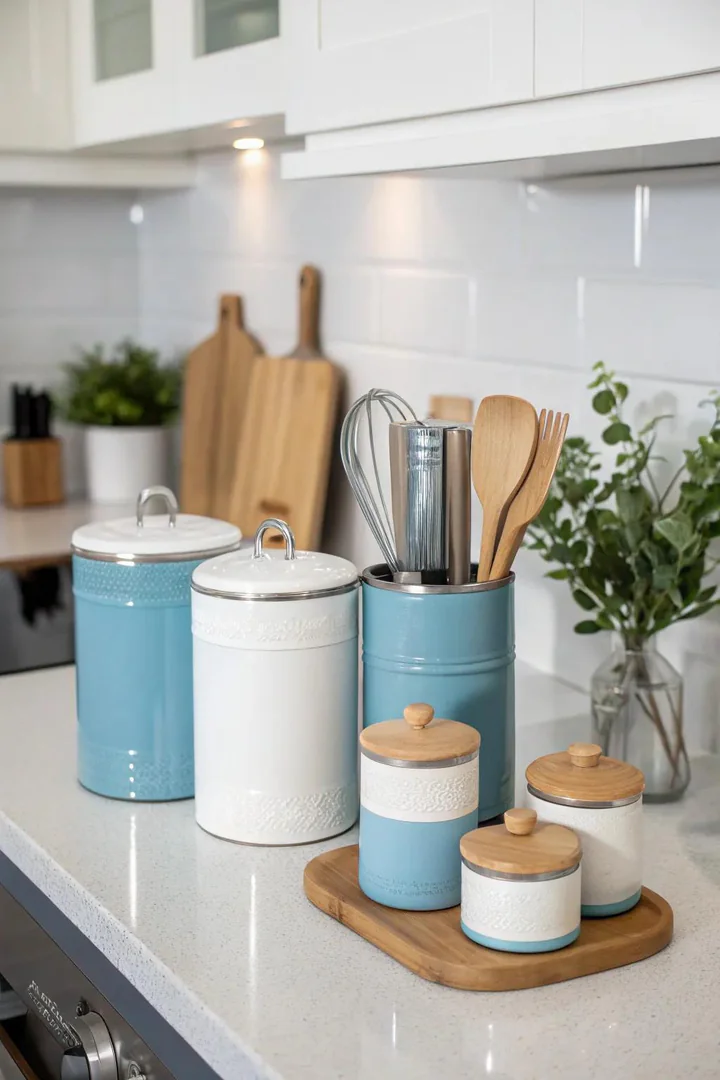
A set of 3 graduated ceramic canisters in a single color family from Now Designs ($45 for a set of 3) or Williams Sonoma ($60) stores utensils by height: tall ladles in the large canister, medium spatulas in the mid-size, and short peelers and openers in the small. Matching the canister color to the kitchen’s accent tone (sage green, dusty blue, terracotta) ties the countertop display into the room’s palette.
Canisters with wide mouths (4 to 5 inches) accept standard utensil handles without jamming. A silicone or cork gasket lid on each canister keeps dust out when the tools are not in daily rotation. Graduated sizing creates a staircase silhouette on the counter that reads as intentional styling rather than random accumulation. Homeowners looking for coordinated color palettes may also enjoy our guide to yellow, grey, and white kitchen ideas.
17. Repurposed Box Grater as a Utensil Stand
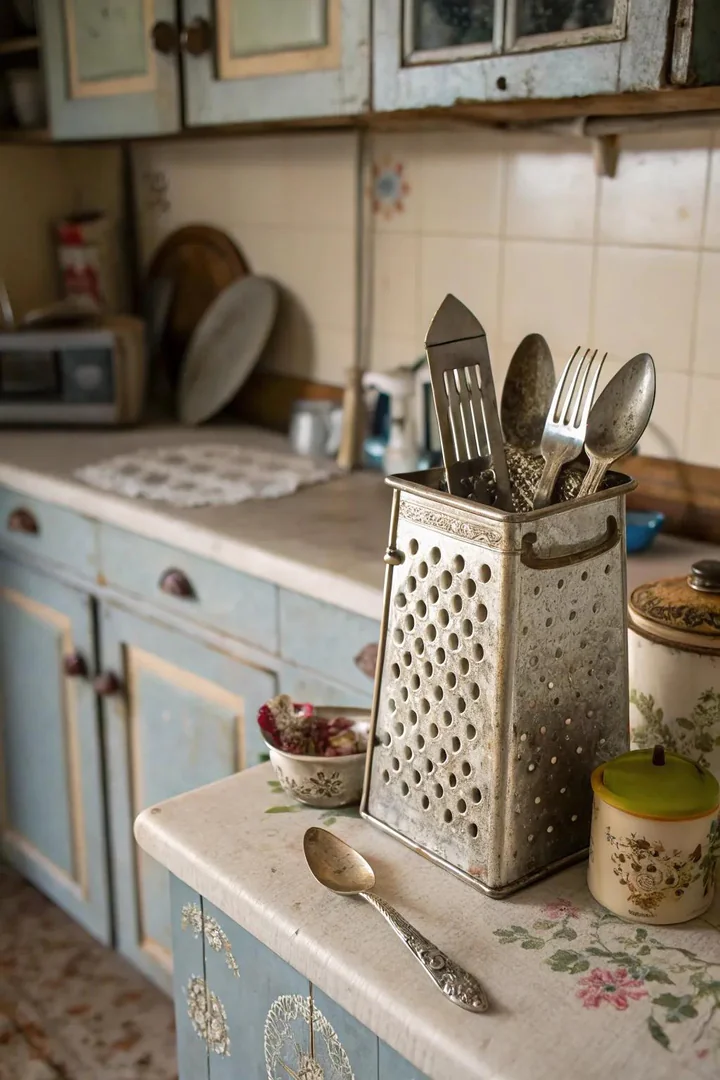
An old stainless-steel box grater turned upside down, with the handle removed, becomes a perforated utensil holder that drains water from freshly washed tools. The four flat sides stand stable on the counter, and the various hole sizes grip different handle widths. A vintage grater with a worn patina adds character, while a new grater ($12 from OXO or Microplane) provides a clean stainless surface.
Removing the handle requires a Phillips screwdriver and 30 seconds of work. Spray-painting the exterior in matte black or copper with Krylon Metallic turns the grater into a statement piece that guests rarely identify as repurposed kitchen equipment. The box grater hack costs nothing if the grater already sits unused in a drawer and serves as a conversation-starter centerpiece in eclectic and industrial kitchens.
18. Minimalist Matte Black Metal Stand with Hooks
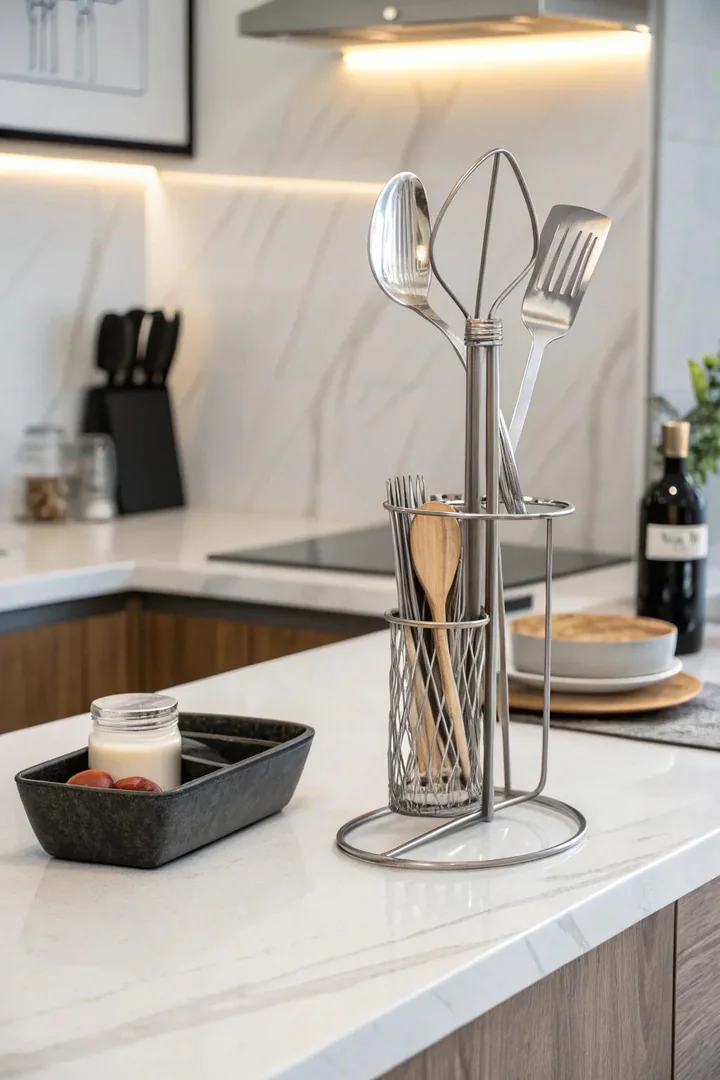
A freestanding matte black metal stand with a horizontal bar and S-hooks from Yamazaki Tower ($30) or Zack Stainless ($45) holds utensils vertically from hooks rather than standing them in a crock. The stand occupies a 6-by-4-inch base footprint and rises 14 inches, fitting under upper cabinets. Six S-hooks accommodate ladles, tongs, whisks, and scissors, keeping each tool visible and accessible from both sides.
The Yamazaki Tower line uses powder-coated steel with a soft-touch matte finish that resists fingerprints. The minimalist silhouette disappears against a dark backsplash or stands as a graphic element against white tile. Hook-based storage prevents utensils from touching each other, reducing handle scratches on wooden tools. A freestanding stand needs no wall mounting, making the holder renter-friendly and portable between kitchens.
19. Repurposed Vintage Coffee Can with Label Art
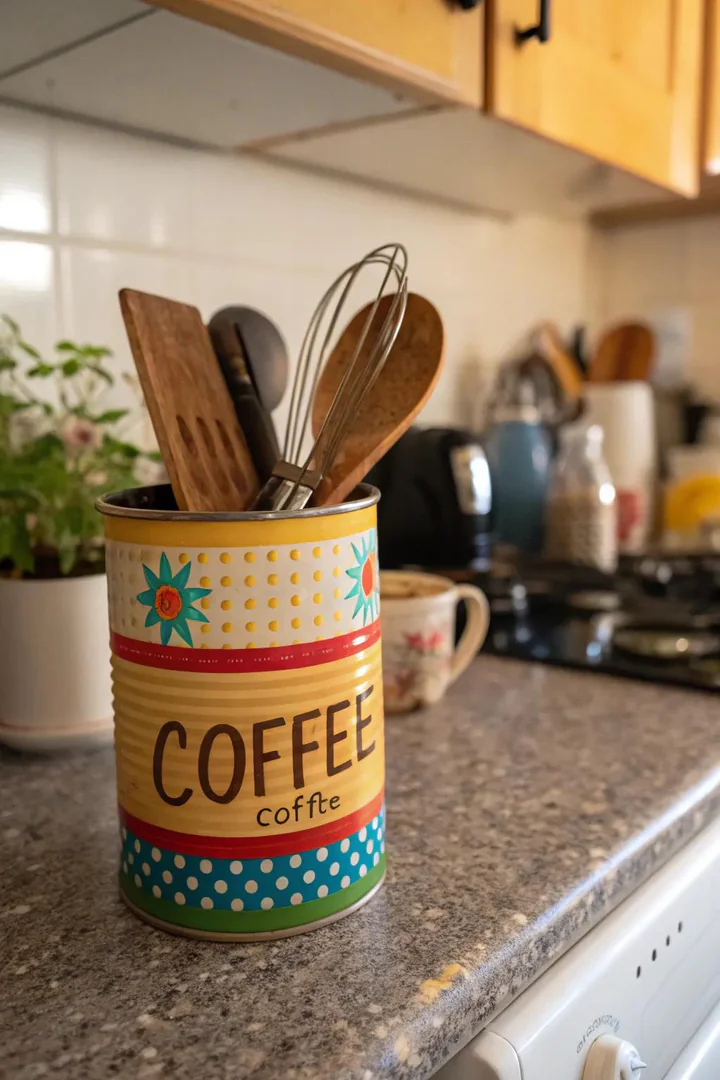
A large vintage coffee can from Folgers, Hills Bros., or MJB (1950s to 1970s era) with original label art holds utensils in a 6-inch-diameter, 7-inch-tall cylinder that doubles as retro wall art. Vintage coffee cans in good condition sell for $10 to $25 on eBay and Etsy. The steel body weighs enough to resist tipping, and the wide mouth accommodates 10 to 12 tools.
A modern alternative is a new reproduction tin from Nostalgia Tin Company ($15) printed with classic coffee-brand graphics. Clean the interior with warm soapy water and dry thoroughly before use. Coffee cans fit the same farmhouse and vintage aesthetic as enamelware pitchers and Mason jars, and grouping a coffee can with a vintage flour tin and a retro cookie jar creates a collected kitchen vignette. Pairing the cans with a solid neutral countertop like those covered in our dark beige kitchen cabinet ideas lets the vintage graphics stand out.
20. Over-the-Sink Telescoping Rail with Hooks
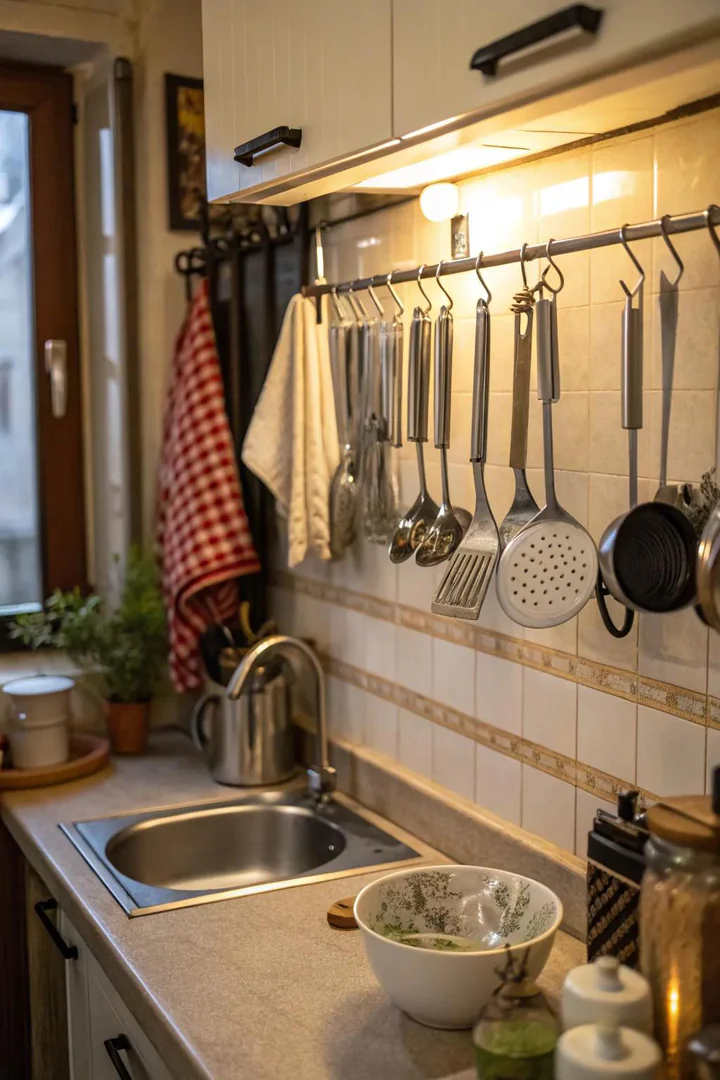
A telescoping stainless-steel rail from Umbra Mountie ($20) or SimpleHouseware Over-Sink Shelf ($25) extends between 19 and 27 inches and wedges inside the window frame or between two upper cabinets above the sink. S-hooks on the rail hold freshly washed utensils where they drip-dry directly into the basin. The rail uses tension pressure and requires no screws, making the installation damage-free.
Over-the-sink rails suit small kitchens and apartments where counter space beside the stove runs under 12 inches. Adjustable rubber end caps grip the window frame without scratching paint or wood. A rail with 8 hooks handles the daily-use utensil set (spatula, slotted spoon, ladle, whisk, tongs, peeler, scissors, turner) and keeps every tool visible for grab-and-go access. The over-sink position combines storage and drying into a single step, eliminating the dish-drying mat that would otherwise occupy counter space.
21. Custom-Stamped or Hand-Painted Ceramic Crock
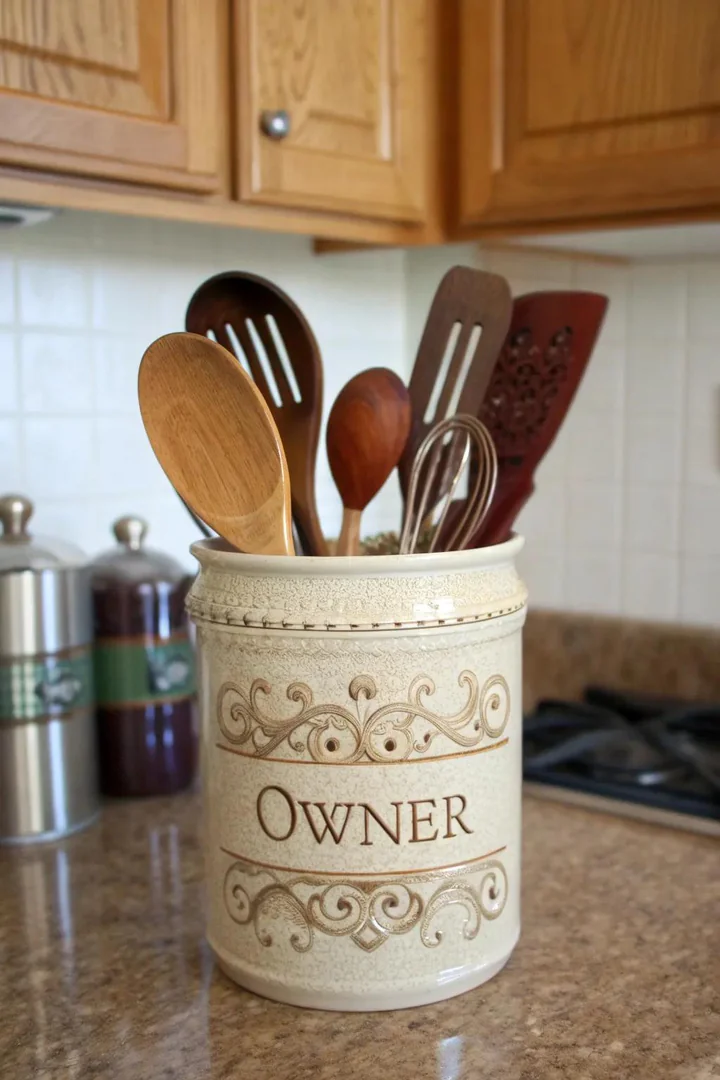
A hand-stamped or hand-painted ceramic crock from Etsy artisan shops ($35 to $65) or a DIY version using a plain white crock ($15 from Target) and Pebeo Porcelaine 150 paint markers ($12 for a set of 6) adds a one-of-a-kind piece to the counter. Custom text (“Grandma’s Kitchen,” a family name, a recipe in handwriting) turns a standard crock into a keepsake gift for housewarming parties, weddings, or holidays.
Pebeo markers cure in a home oven at 300°F for 35 minutes, creating a dishwasher-safe finish on glazed ceramic. Free-hand botanical sketches, geometric patterns, or a simple monogram in gold or black marker produce a professional result without pottery skills. A personalized crock makes a strong housewarming gift for the kitchen because the recipient gets a functional tool wrapped in a personal touch that mass-produced crocks cannot replicate.
How to Choose the Right Kitchen Utensil Holder
1. Count Your Daily-Use Utensils and Measure Their Handles
Pull every utensil out of the drawer and separate the tools used at least twice a week from the once-a-month specialty items. A typical daily set runs 8 to 12 pieces: spatula, slotted spoon, solid spoon, ladle, whisk, tongs, turner, peeler, and scissors. Measure the longest handle (usually the ladle at 12 to 14 inches) and the widest handle (usually the silicone spatula at 1.5 inches). The holder must accommodate both dimensions without the tallest tool tipping the container.
2. Match the Holder Material to Your Kitchen Style
Ceramic crocks and stoneware pitchers suit farmhouse, traditional, and transitional kitchens. Matte black metal stands and wire baskets fit modern, industrial, and Scandinavian rooms. Bamboo caddies and wooden crates complement coastal, boho, and cottage styles. Glass cylinders work in minimalist and contemporary spaces. Matching the holder material to at least one other surface in the kitchen (the cutting board, the open shelf, the pendant light) ties the piece into the room.
3. Measure the Available Counter Space Beside the Stove
Most cooks place the utensil holder within 12 inches of the range for quick grab-and-go access during cooking. Measure the counter depth from backsplash to front edge (usually 25 inches, with 15 to 18 usable after the backsplash) and the width between the range and the next appliance or sink. A round crock needs a 6-inch circle, a caddy needs a 10-by-7-inch rectangle, and a wall-mounted rail needs zero counter space. Choose the format that fits the available footprint without blocking the outlet or crowding the range.
4. Decide Between Countertop, Wall-Mounted, and Inside-Cabinet Storage
Countertop holders keep tools visible and within arm’s reach but consume surface area. Wall-mounted rails and magnetic strips free the counter entirely but require drilling or adhesive mounting. Inside-cabinet hooks and over-the-door racks hide the tools completely, suiting kitchens where the homeowner prefers clean, empty counters. Many kitchens combine two methods: a small countertop crock for the 4 most-used tools and an inside-cabinet hook rack for the remaining 8 to 10 specialty items.
Kitchen Utensil Holder Comparison
| Holder Type | Capacity | Counter Footprint | Price Range | Best Kitchen Style | Mounting |
|---|---|---|---|---|---|
| Ceramic crock | 8–12 tools | 5-inch circle | $15–$40 | Farmhouse, traditional | Countertop |
| Glass cylinder vase | 6–8 tools | 6-inch circle | $1–$15 | Modern, Scandinavian | Countertop |
| Wooden crate | 10–15 tools | 9×6 inches | $8–$15 | Farmhouse, rustic | Countertop |
| Bamboo caddy | 10–12 tools | 10×7 inches | $15–$25 | Coastal, transitional | Countertop |
| Rotating tiered caddy | 15–20 tools | 7-inch circle | $25–$35 | Modern, any style | Countertop |
| Magnetic strip | 6–10 metal tools | Zero | $10–$25 | Modern, industrial | Wall-mounted |
| Iron pipe rack | 8–10 tools | Zero | $20–$35 DIY | Industrial, loft | Wall-mounted |
| Over-door hook rack | 5–7 tools | Zero | $8–$15 | Any (hidden) | Door-hung |
| Metal stand with hooks | 6–8 tools | 6×4 inches | $25–$45 | Minimalist, modern | Freestanding |
Frequently Asked Questions
What size utensil holder works for a standard kitchen tool set?
A holder with a 5- to 6-inch mouth opening and a 7- to 8-inch height accommodates 8 to 12 standard utensils (spatula, slotted spoon, ladle, whisk, tongs, turner, peeler, scissors). The opening must be wide enough to let the cook grab a single tool without pulling out three others. A holder shorter than 6 inches causes tall ladles to lean and tip the container, so always match the holder height to the longest tool in the set.
How do you keep a utensil holder from tipping over?
Fill the bottom 1 to 2 inches with a weight anchor: dried rice, dried beans, glass marbles, or river stones. The added base weight lowers the center of gravity below the utensil handles that lean to one side. A ceramic crock weighing 2+ pounds empty (like Le Creuset at 2.2 pounds) rarely tips because the vessel weight alone counterbalances the tools. Lightweight holders (glass vases, tin cans, Mason jars) benefit most from a bottom fill.
Should utensil holders go beside the stove or near the sink?
Place the primary holder within 12 inches of the range because cooking tools are needed most during active stovetop work. A secondary holder or drying hook near the sink catches freshly washed utensils before they return to the main holder. Placing the only holder next to the sink forces the cook to walk back and forth during meal prep, adding unnecessary steps to every cooking session.
What material is easiest to clean for a utensil holder?
Glazed ceramic, stainless steel, and glass clean the fastest because their non-porous surfaces wipe down with a damp cloth and do not absorb grease or odors. Unfinished wood and bamboo require occasional oiling and should not soak in water. Wire baskets need a brush to reach the corners. Terra cotta absorbs moisture and develops mineral stains if not sealed or lined with a plastic insert. For the lowest maintenance, choose a glazed ceramic crock with a smooth interior.
Can a utensil holder replace a drawer organizer?
A countertop holder replaces a drawer organizer for the 8 to 12 most-used tools but cannot hold the full collection of specialty items (melon baller, corn holders, citrus zester, meat thermometer) that pile up over years. A combined approach works best: one countertop holder for daily-use tools and one drawer organizer (like an OXO Expandable Utensil Organizer, $20) for the rest. Moving the daily set out of the drawer frees a full drawer compartment for the specialty tools that previously competed for space with spatulas and spoons.