
Blank Wall Above Kitchen Sink Ideas: 16 Creative Ways to Fill Space
The wall directly above your kitchen sink is the spot you stare at more than any other surface in the room. Whether you are scrubbing pots, rinsing vegetables, or filling the coffee maker, that wall sits at eye level for minutes at a time — which means it deserves more thought than most homeowners give it. A blank wall here is wasted potential, while the right treatment turns a dead zone into a feature that adds storage, style, or both.
The challenge with decorating above a sink is moisture. Steam, water splashes, and soap spray hit this wall daily, so whatever you install needs to resist humidity, wipe clean easily, and hold up without peeling, warping, or developing mildew over time. Materials and finishes that work in a bathroom — glazed tile, sealed wood, glass, metal — are your safest options here too.
Below you will find 16 blank wall above kitchen sink ideas ranging from functional floating shelves and pegboard systems to purely decorative options like tile art, mirrors, and hanging plants. Each idea includes material recommendations, installation tips, and styling guidance tailored to the unique conditions of a sink-adjacent wall.
1. Display Floating Shelves
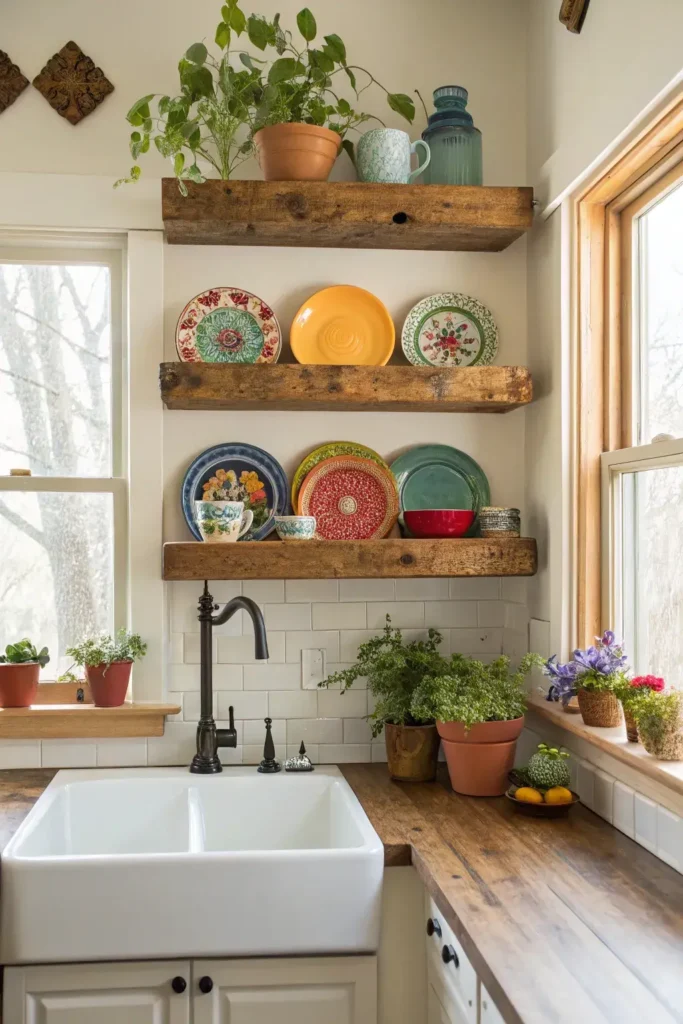
Floating shelves mounted above the sink give you display and storage space on a wall that would otherwise sit empty. Install two shelves — one at twelve inches above the faucet and a second eight inches above that — using heavy-duty concealed bracket shelves from Shelfology or Umbra. Choose shelves at least two inches thick in a solid hardwood like walnut or white oak, and seal them with three coats of water-based polyurethane to protect against the steam and splashes that rise from the sink daily.
Style the lower shelf with items you reach for often — a small potted herb like basil or rosemary, a bottle of dish soap decanted into a ceramic pump, and a dish towel draped over a small brass hook screwed into the shelf underside. Reserve the upper shelf for decorative objects like a framed print, a small vase, or a stack of two cookbooks. Keep each shelf to three or four items maximum so the display reads as intentional rather than cluttered. For more ways to add personality to your cooking space, browse our kitchen decor ideas guide for palettes and accessories that pair well with open shelving.
2. Forged Iron Details
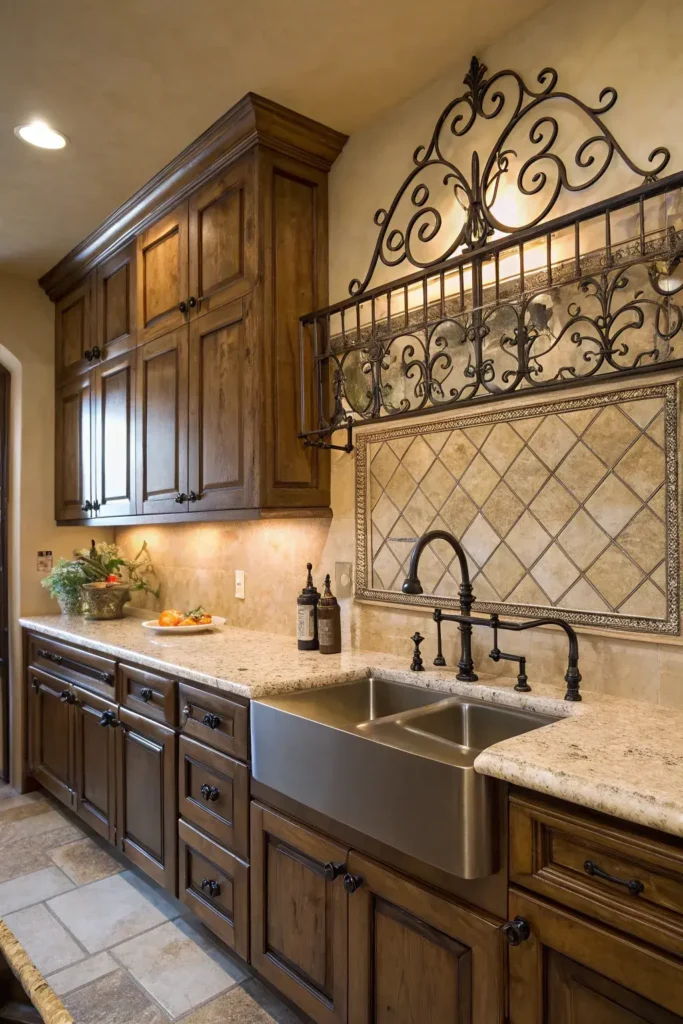
A wrought-iron wall accent above the sink introduces texture and weight that flat surfaces like paint and tile cannot deliver. Look for hand-forged iron pieces — a scrollwork bracket supporting a small shelf, an iron pot rack, or a decorative iron grate repurposed as wall art — at local blacksmith shops, Etsy artisan sellers, or architectural salvage yards. Iron pieces typically range from thirty to one-hundred-fifty dollars depending on size and complexity, and they last indefinitely with a light annual coat of paste wax to prevent rust.
Mount iron accents with heavy-duty wall anchors or toggle bolts rated for the piece’s weight — most decorative iron wall art weighs between five and fifteen pounds. Position the piece centered above the sink faucet and high enough that it does not interfere with the arc of the faucet spray. If your kitchen leans toward farmhouse or industrial styling, pair the iron accent with a matte black faucet and black cabinet hardware to create a cohesive metal story across the room. Brushed iron against a white subway-tile backsplash creates the strongest visual contrast.
3. Country-Style Wooden Wall Panels
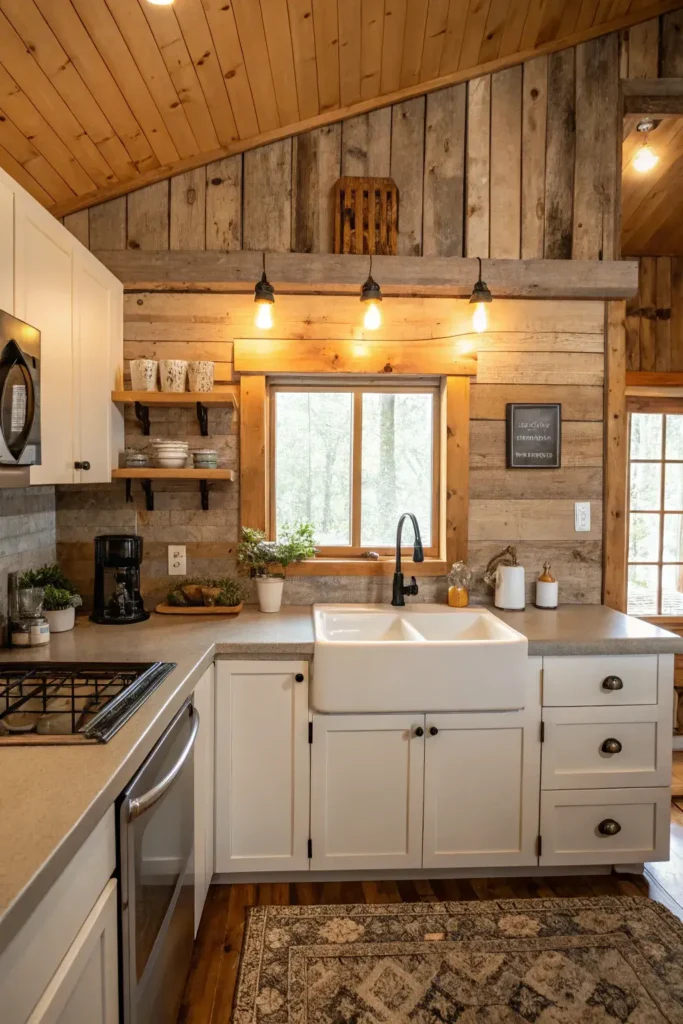
Reclaimed wood planks installed horizontally across the wall above the sink bring farmhouse warmth and a rough-hewn texture that drywall alone cannot achieve. Use tongue-and-groove planks — Stikwood peel-and-stick or Timberchic panels — for a tool-free installation that goes up in under an hour. These panels come prefinished with a moisture-resistant coating, which matters above a sink where steam rises directly into the wall surface multiple times a day.
Choose a plank finish that reads “weathered” rather than “new lumber” — grey-washed, whitewashed, or a mix of natural and stained boards creates the most authentic reclaimed look. Run the planks from the top of the backsplash tile up to the bottom of the upper cabinets, or all the way to the ceiling if no upper cabinets sit above the sink. To extend the rustic theme beyond the sink wall, explore our guide to paint on kitchen walls for color-wash and textured-paint techniques that complement raw wood accents without competing for attention.
4. Classic Utensil Showcase
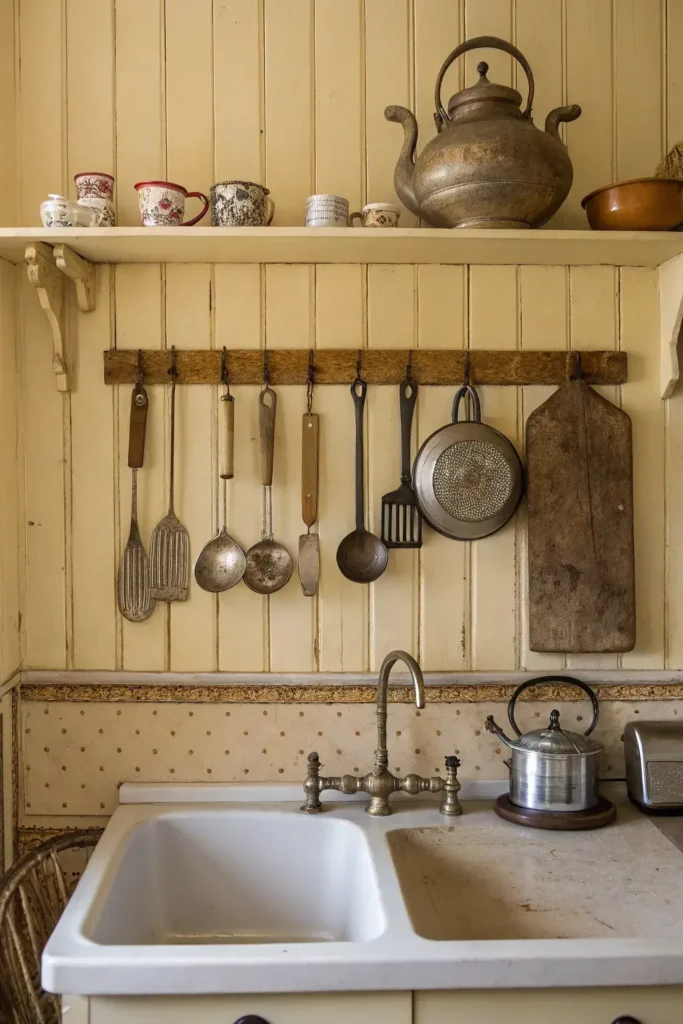
Hanging a curated collection of vintage kitchen utensils on the wall above the sink turns everyday tools into wall art with a story behind each piece. Wooden spoons, enamelware ladles, cast-iron trivets, and copper measuring cups all look striking when mounted on a horizontal rail or individual hooks in a loose grid pattern. Source pieces at estate sales, flea markets, and antique malls — a good vintage wooden spoon costs two to five dollars, while a copper ladle runs ten to twenty-five dollars depending on age and condition.
Mount a twenty-four-inch rail — the Ikea Fintorp or Hultarp rail works well — six inches above the sink backsplash, and hang utensils from S-hooks spaced three to four inches apart. Arrange pieces by size, putting the tallest items at the ends and the shortest in the center for a balanced composition. Sand any rough spots on wooden handles, and coat metal pieces with a clear lacquer spray to prevent rust in the humid sink zone. This display works especially well in cottage, farmhouse, and eclectic kitchens where personality matters more than uniformity.
5. Operational Pegboard
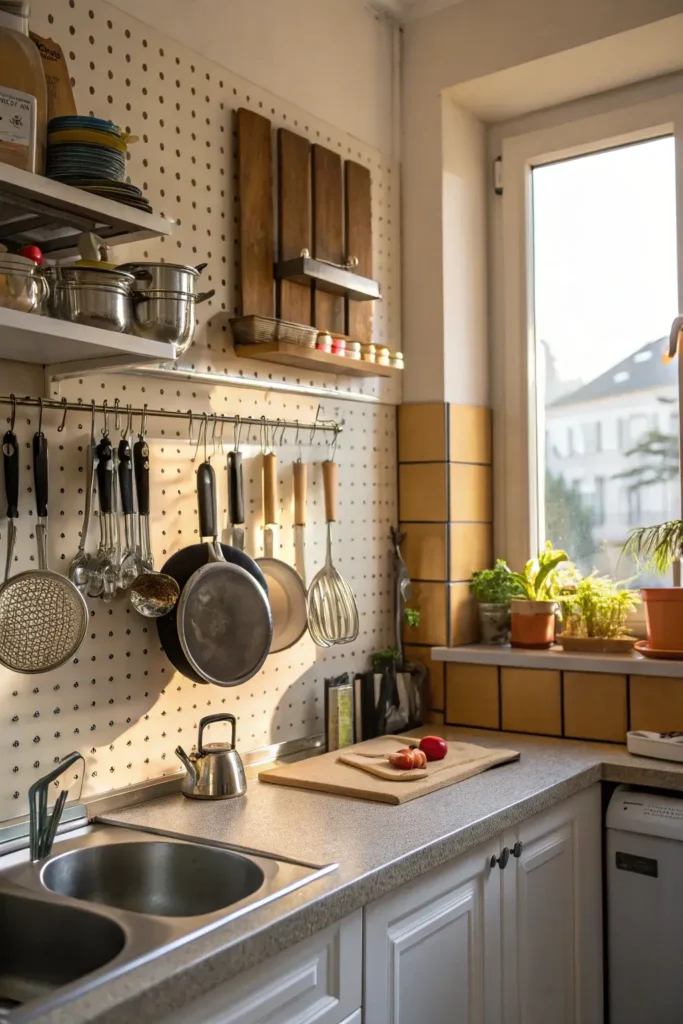
A pegboard panel above the sink puts cleaning supplies, dish brushes, and towels within arm’s reach while keeping the countertop beside the sink clear. A two-by-three-foot metal pegboard from Wall Control or a traditional Masonite pegboard from any hardware store mounts with four screws into wall studs. Paint the pegboard to match your wall color for a subtle, built-in look, or choose a contrasting color — matte black, sage green, or dusty blue — to make it a deliberate design feature.
Outfit the board with J-hooks for hanging dish towels, small wire baskets for sponges and scrub brushes, and a short shelf for dish soap and hand cream. Leave one section open so you can add or rearrange hooks as your needs change — this flexibility is the whole point of a pegboard over fixed shelving. The board also doubles as an impromptu drying rack: hang freshly washed reusable bags, silicon lids, and bottle brushes on the hooks and they drip-dry directly into the sink below. For more about keeping a kitchen towel holder within reach, our dedicated guide covers hooks, bars, and magnetic options you can pair with a pegboard setup.
6. Sophisticated Cabinetry
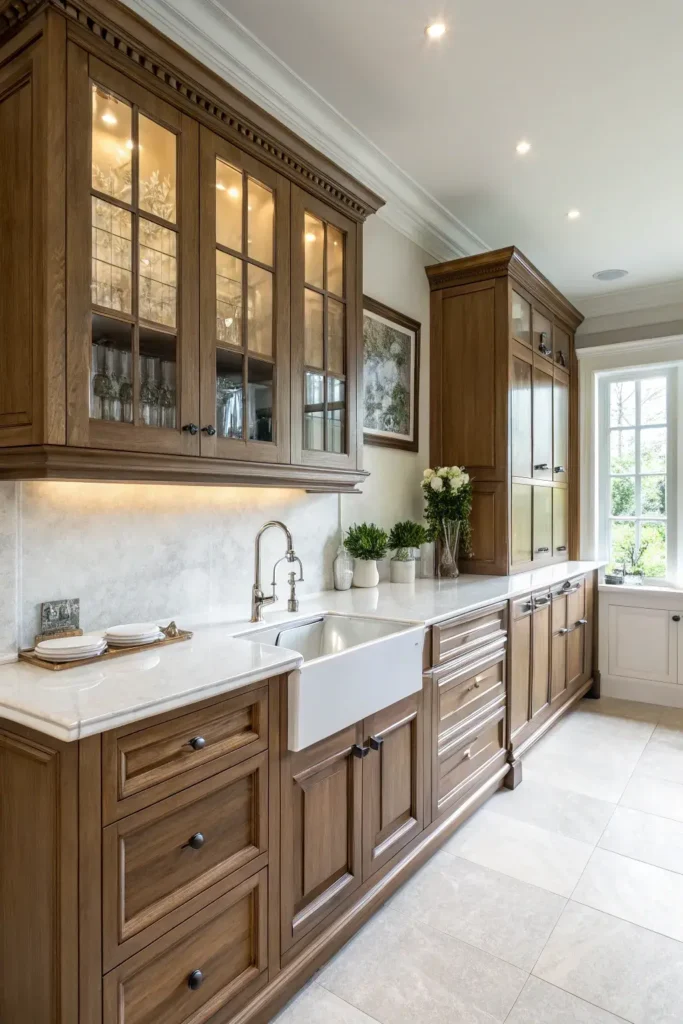
Installing an upper cabinet directly above the sink is a practical choice that adds enclosed storage in the most frequently used zone of the kitchen. A thirty-inch-wide wall cabinet with glass-panel doors lets you store everyday dishes and glassware where they are one step away from the drying rack, and the glass fronts keep the visual weight light enough that the cabinet does not make the sink area feel closed in. Choose a cabinet depth of twelve inches rather than the standard fifteen so it does not crowd your head when you lean over the sink.
Mount the cabinet so its bottom edge sits at least eighteen inches above the countertop — this gives you clearance for the faucet arc and enough room to operate a pull-down sprayer without banging into the cabinet face. Add interior LED puck lights or a strip light to illuminate the glass shelves, which turns the cabinet into a glowing display case after dark. Match the cabinet finish to the rest of your kitchen uppers so the addition reads as an original part of the design rather than an afterthought.
7. Creative Flair with Wall Decor
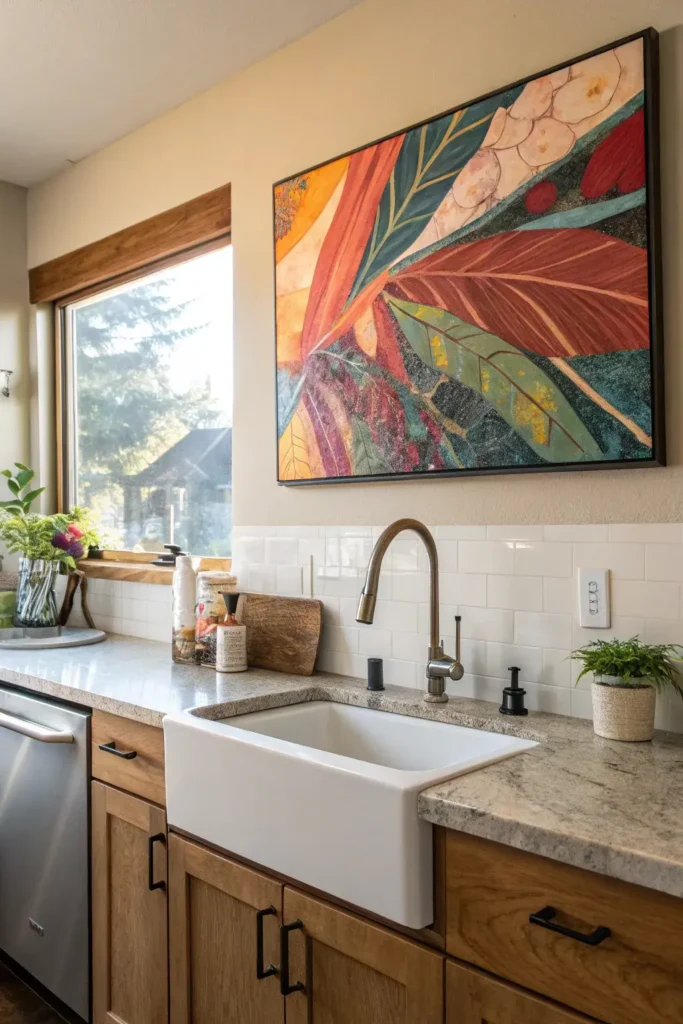
A single piece of wall art centered above the sink gives you something to look at during the minutes you spend washing dishes and prepping food. Choose a framed print, a canvas, or a metal wall sculpture that coordinates with your kitchen’s color palette — botanical prints in green and cream suit farmhouse kitchens, abstract color-block prints work in modern spaces, and vintage food-advertisement posters add charm to eclectic or retro layouts. Size the art so it fills roughly two-thirds of the wall width above the sink for balanced proportions.
Protect artwork from sink moisture by choosing pieces behind glass in a sealed frame, or opt for a metal or acrylic piece that handles humidity without damage. Hang the art with a picture-rail hook or a French cleat for easy removal when you need to wipe the wall behind it. Avoid placing irreplaceable original paintings above a sink — the humidity will eventually warp paper and crack oil paint. Canvas prints and giclees are better choices because they cost less to replace and resist moisture better than originals.
8. Bespoke Tile Artwork
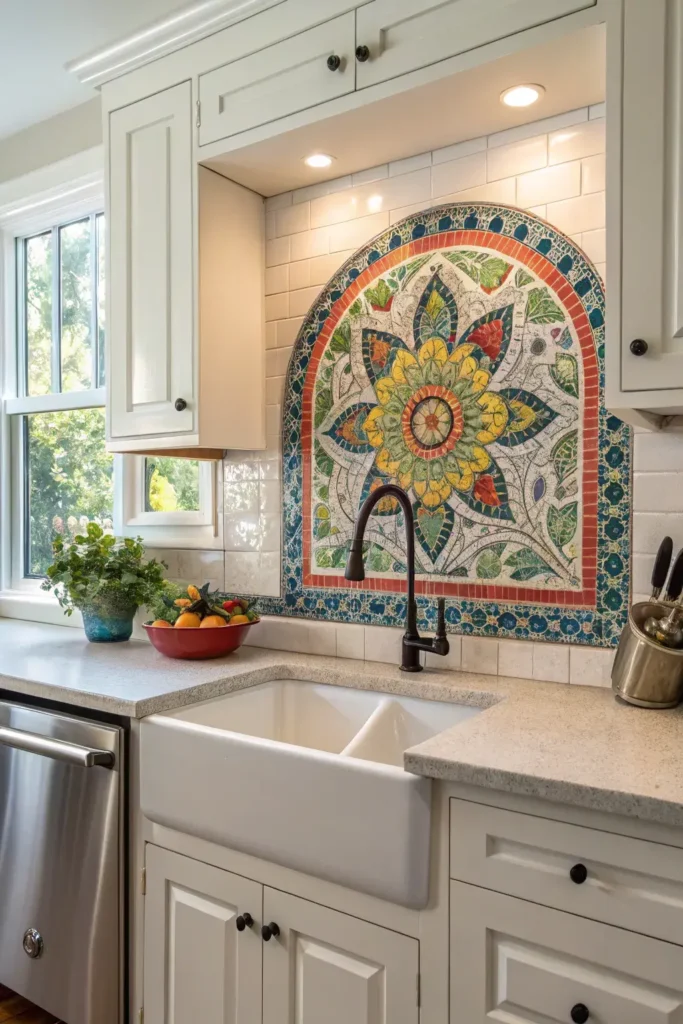
A custom tile mural above the sink turns the most-viewed wall in the kitchen into a permanent piece of art that doubles as a splash-proof surface. Artisan tile makers like Fireclay, Mercury Mosaics, and Julep Tile offer custom hand-painted panels sized to fit the exact dimensions of your wall. A typical mural covering a two-by-three-foot area runs between three-hundred and eight-hundred dollars for hand-glazed ceramic, or you can commission a local ceramicist for a truly one-of-a-kind design.
Set the tile panel on a bed of thinset mortar and grout with a matching or contrasting grout color — white grout on blue tile creates a crisp grid, while dark grey grout on the same tile emphasizes each tile’s individual shape. Seal the grout with a penetrating sealer like Miracle Sealants 511 Impregnator to prevent staining from splashes and steam. The tile surface wipes clean with a damp cloth and never fades, making it the most durable and low-maintenance option on this list for a wall that faces daily water exposure.
9. Creativity on a Chalkboard
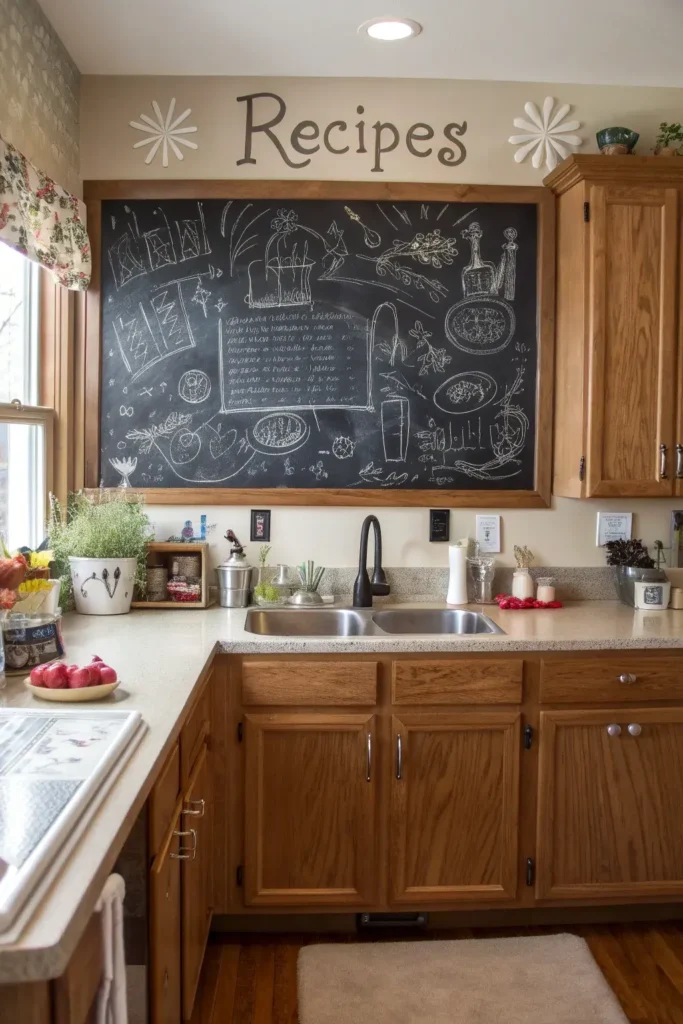
Chalkboard paint applied directly to the wall above the sink creates an ever-changing canvas for grocery lists, meal plans, recipe notes, and freehand doodles. Rust-Oleum Chalkboard paint and Benjamin Moore Chalkboard Coating both apply in two coats over primed drywall and cure fully in three days. Once cured, the surface accepts standard chalk and liquid chalk markers, and wipes clean with a damp cloth — making it practical for a splash zone where you need to erase and rewrite regularly.
Define the chalkboard area with a clean border — apply painter’s tape to create a rectangular frame before painting, and once dry, add a slim wood molding frame around the edges for a polished, finished look. Keep a small ledge or magnetic strip at the bottom to hold chalk sticks and an eraser. Families with young children especially love this option because kids can draw while you cook, keeping them engaged and within sight. Season the chalkboard before first use by rubbing the side of a chalk stick across the entire surface and then wiping it off — this prevents ghost images from your first writing permanently etching into the paint.
10. Paint with Geometric Patterns
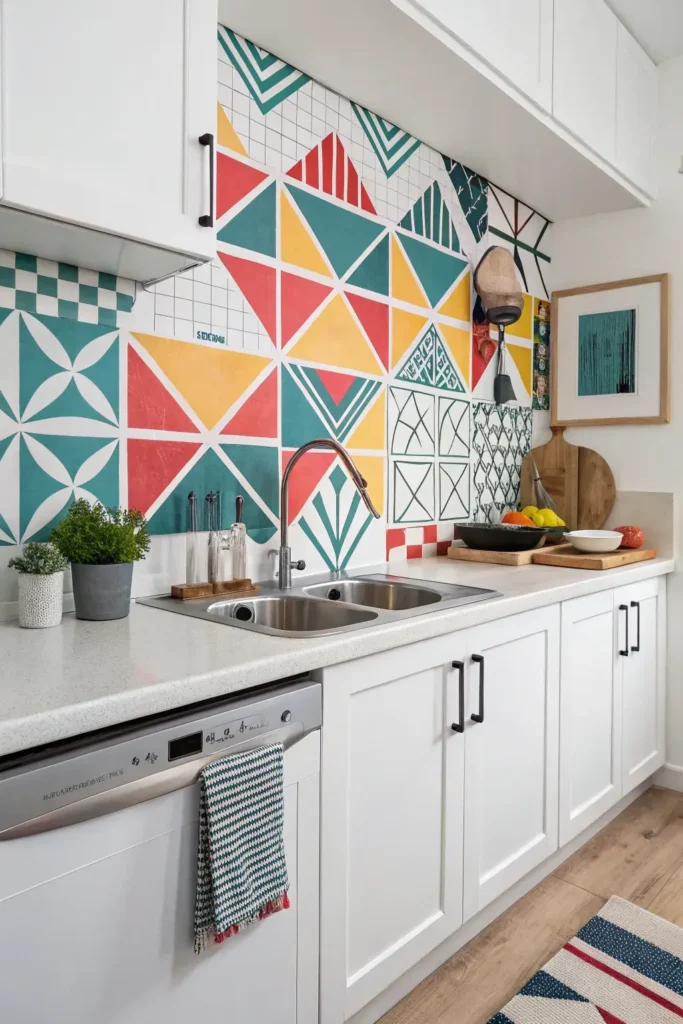
A geometric paint pattern adds visual energy to the sink wall without any three-dimensional installation. Use painter’s tape to mask off triangles, chevrons, diamonds, or a color-block grid, then paint each section with a different shade from the same color family for a cohesive look. Two or three values of the same hue — say, light grey, medium grey, and charcoal — produce a sophisticated tonal pattern, while contrasting colors like navy and mustard deliver a bolder, more playful effect.
Apply the paint in a semi-gloss or satin finish so the wall wipes clean when sink spray hits it — flat paint absorbs water and stains more easily. Pull the tape while the final coat is still slightly tacky for the sharpest edges. The whole project costs under thirty dollars in paint and tape and takes a Saturday afternoon to complete. If the pattern grows stale in a year, roll a fresh base coat over it and try a new design — geometric paint is the most commitment-free option on this list because it is fully reversible with a single coat of primer.
11. Vintage Mirror Collection
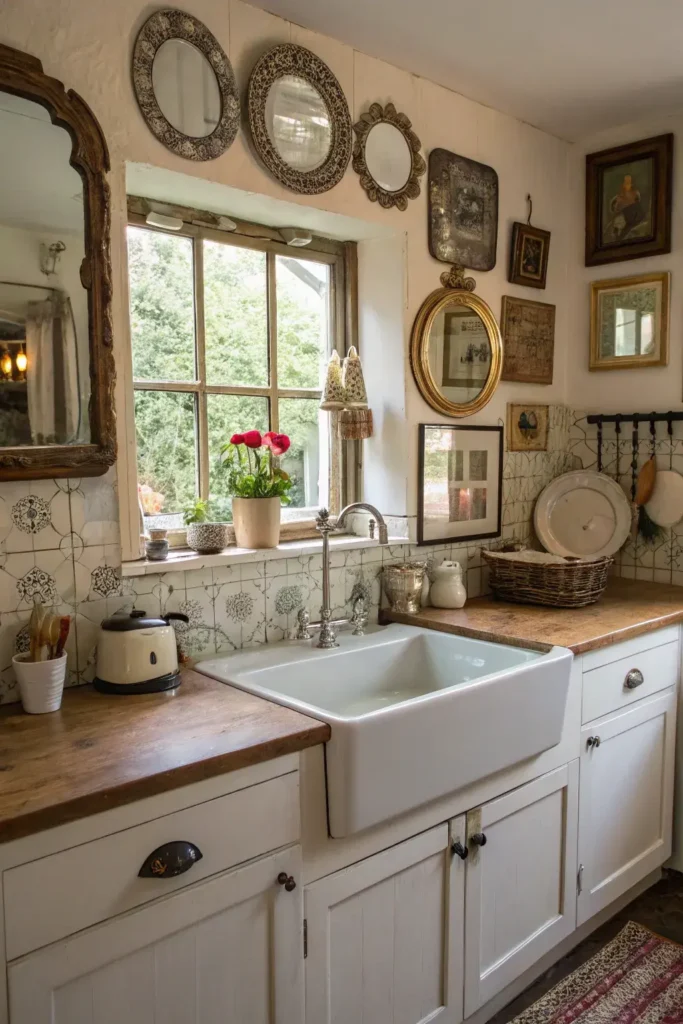
A collage of three to five antique mirrors in mismatched frames creates a gallery wall that bounces light around the kitchen while adding old-world character. Source mirrors at thrift stores, estate sales, and flea markets — a vintage mirror with an ornate frame typically costs ten to forty dollars, and the imperfections in the aged glass give each piece a warmth that new mirrors lack. Choose frames with a mix of shapes — one round, one oval, one rectangular — and finishes like tarnished gold, distressed white, and dark walnut to keep the arrangement visually dynamic.
Lay the mirrors on the floor first and arrange them until the composition feels balanced, then trace each mirror’s outline on craft paper, cut the shapes, and tape them to the wall to preview the layout before driving any nails. Hang each mirror with a picture hook rated for its weight, and leave two to three inches of space between frames so the arrangement breathes. The reflective surfaces amplify any natural light coming through the kitchen window, making the sink area feel brighter and larger — a particularly useful trick in kitchens that lack a window above the sink.
12. Framed Window Illusion
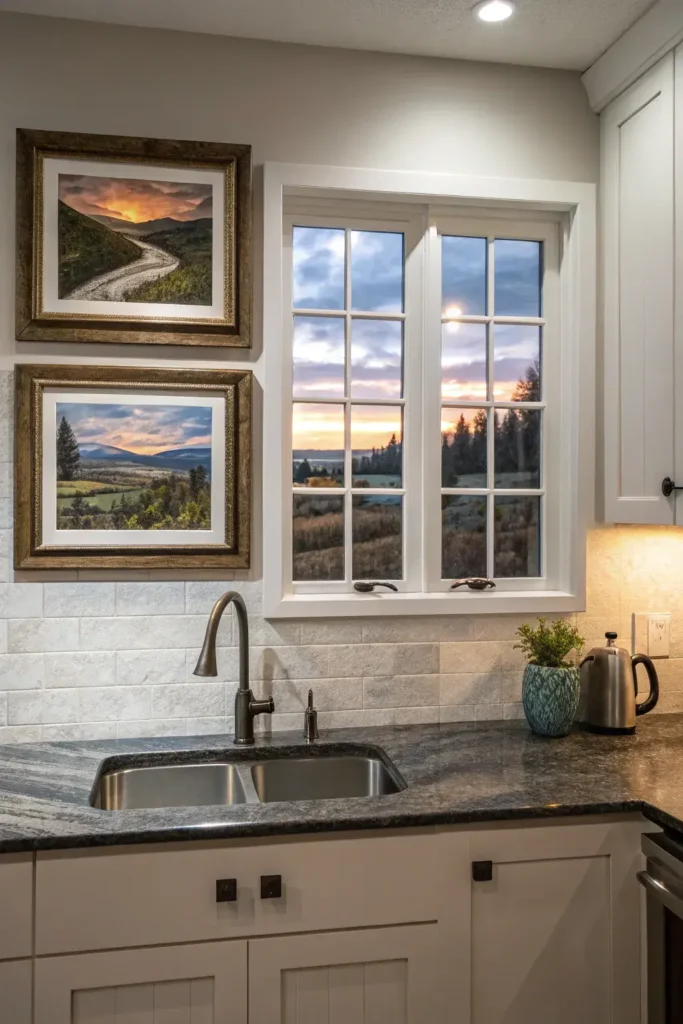
If your sink sits on an interior wall with no window, a faux window frame with a scenic print or a mirror behind it creates the illusion of a view where none exists. Build a simple four-pane window frame from one-by-two lumber, paint it white or black, and mount it over a large landscape photograph or a mirror cut to fit the frame’s interior dimensions. The frame’s mullion bars trick the eye into reading the flat surface as a real window, especially when viewed from across the room.
For a more polished version, buy a salvaged window sash from an architectural salvage yard — old single-pane sashes cost fifteen to thirty dollars — replace the glass with a mirror cut to size at a local glass shop, and mount the finished piece directly above the sink. Add a small sill shelf beneath the frame to hold a potted plant or a votive candle, which reinforces the window illusion by mimicking a real windowsill. If your kitchen window seat sits nearby at a real window, the faux window above the sink echoes the same architectural language and makes the room feel more balanced.
13. Mosaic Tiles with Artistic Designs
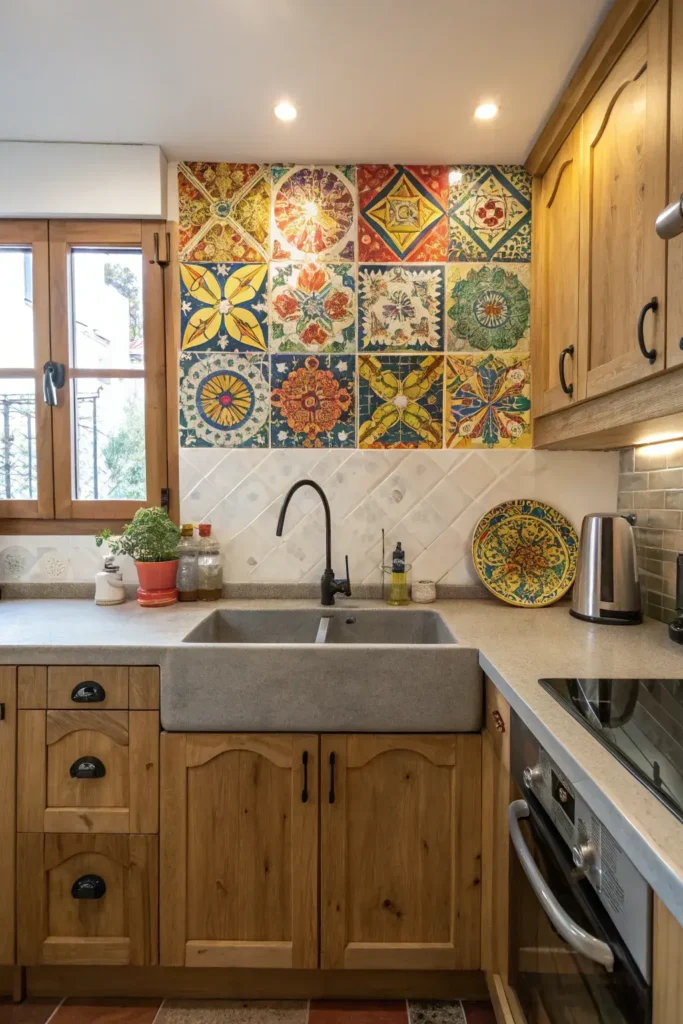
Mosaic tile above the sink gives you the durability of a backsplash with the visual impact of wall art. Glass mosaics from Lunada Bay or Oceanside Glasstile come in one-inch and half-inch squares on mesh-backed sheets that cover a two-by-three-foot area in under an hour. Choose an ombre pattern — dark at the bottom, fading lighter toward the top — for a subtle gradient effect, or mix colors randomly for a patchwork look that reads as handmade and organic.
Apply the mosaic sheets with white thinset mortar on a clean, primed wall, then grout with an unsanded grout in a color that either matches the dominant tile tone or contrasts sharply for a grid effect. Seal the grout with a penetrating sealer to prevent water absorption from sink splashes. Glass mosaic is the most splash-resistant material on this list — it is completely non-porous, never stains, and wipes clean with glass cleaner. The reflective surface of glass tiles also catches light from overhead fixtures and bounces it across the kitchen, adding brightness to the sink zone.
14. Plants Suspended Amidst Lush Greenery
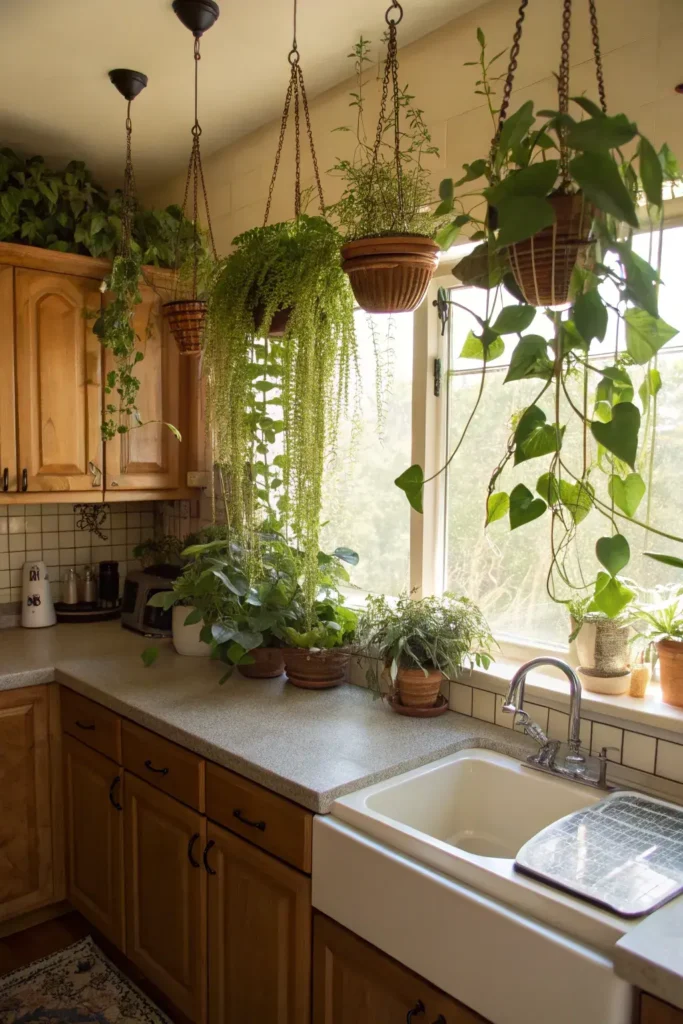
Hanging plants above the sink bring life and color to the kitchen while actually benefiting from the humidity the sink produces. Pothos, philodendron, spider plants, and string-of-pearls all thrive in the warm, moist air that rises from hot water and dish steam. Mount a slim curtain rod or a Ikea Fintorp rail across the wall above the sink, and hang plants in macrame holders, ceramic wall pockets, or small hanging pots clipped to S-hooks. Space the plants eight to twelve inches apart so each one gets adequate light and airflow.
Choose trailing varieties so the vines cascade down the wall and frame the sink area with living greenery — a mature pothos in a six-inch pot can trail three to four feet in a year. Water the plants by unclipping them from the rail and holding them over the sink for a thorough soak, then let excess water drain completely before re-hanging. This watering method is faster and neater than any other room in the house because you are already standing at the sink. Rotate the plants monthly so each side receives equal light exposure and the growth stays balanced.
15. Reflections for Deception
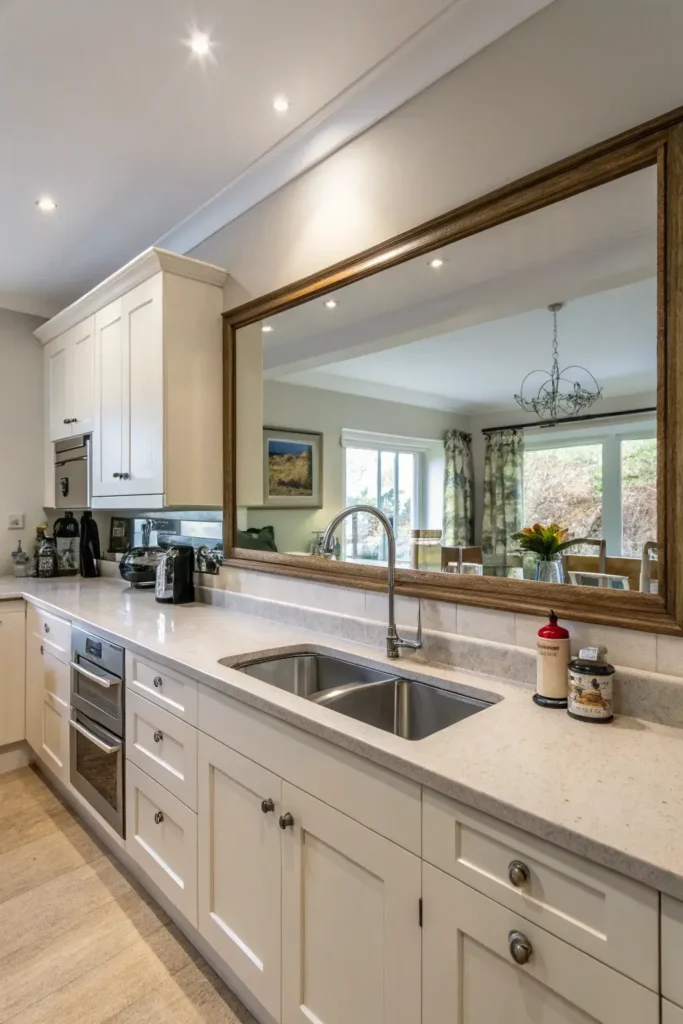
A single large mirror centered above the sink doubles the perceived depth of the wall and reflects any natural light from nearby windows back into the room. Choose a mirror sized to fill roughly seventy-five percent of the wall width above the sink — a twenty-four-by-thirty-inch mirror is a common fit for a standard thirty-six-inch sink base. Frame the mirror in a material that suits your kitchen’s style: a thin brass frame for modern kitchens, a chunky reclaimed-wood frame for farmhouse, or a frameless beveled edge for minimalist spaces.
Mount the mirror with heavy-duty mirror clips or a French cleat — avoid adhesive alone because humidity cycles can weaken adhesive bonds over time. Position the bottom edge at least ten inches above the faucet to avoid direct splash contact, and clean the mirror weekly with a glass cleaner sprayed onto a cloth rather than directly onto the glass, which prevents moisture from seeping behind the frame and causing black-spot corrosion on the mirror backing. In kitchens without a window above the sink, a mirror is the most effective single piece you can add to make the space feel open, bright, and twice as large as it actually is.
16. Arrangement of Decorative Plates
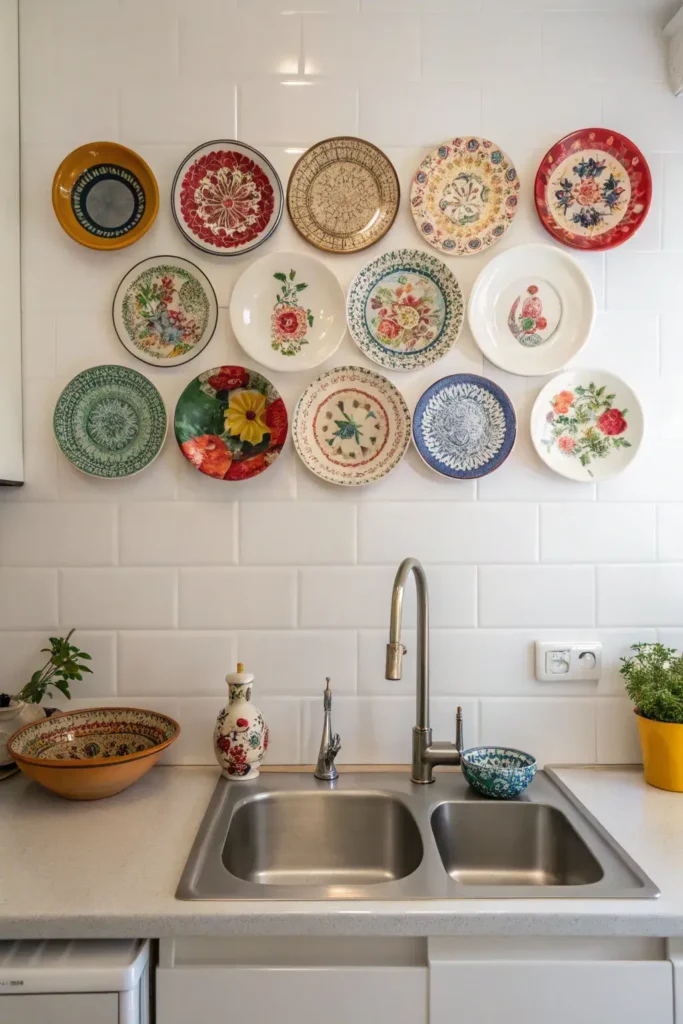
A cluster of decorative plates mounted on the wall above the sink creates a gallery display that adds color, pattern, and texture without any shelf or bracket projecting into the space. Use disc-style adhesive plate hangers — the Flatirons Disc brand holds plates up to two pounds and leaves no visible hardware from the front — and arrange five to seven plates in a loose organic cluster with two to three inches between each plate. Mix sizes from six-inch bread plates to twelve-inch dinner plates to create a composition that looks collected over time rather than bought as a set.
Source plates from thrift stores, antique shops, and specialty retailers. Blue-and-white transferware, hand-painted Italian ceramics, and mid-century modern geometric patterns are all popular choices that hold their visual interest across kitchen styles. Lay the plates on the floor or a table first and photograph the arrangement from above to preview the composition before committing to wall placement. Visit The Designers Company for more wall-art arrangement ideas and pattern-mixing strategies that work in kitchens, dining rooms, and living spaces alike.
How to Style the Wall Above Your Kitchen Sink
Choosing Between Functional and Decorative
Decide whether you need the wall to work (shelves, hooks, pegboard, cabinetry) or to look good (art, mirrors, tile, plates). In a small kitchen where counter and cabinet space is limited, functional options like floating shelves or a pegboard deliver daily value you will actually use. In a kitchen with plenty of storage already, a decorative treatment like a tile mural or a mirror collage adds personality without redundant storage. You can also split the difference — a single floating shelf with a decorative object and one practical item gives you both in minimal wall space.
Dealing With Moisture and Splashes
The wall above a sink is the wettest non-shower wall in your home. Any material you install here must handle daily humidity and occasional direct splashes. Glazed ceramic tile, glass mosaic, sealed wood, and painted surfaces in semi-gloss or higher sheens all perform well. Avoid unfinished wood, unsealed plaster, untreated fabric, and paper-based wallpaper — they absorb moisture, warp, and grow mildew within months. If you hang artwork, use glass-front frames with sealed backs, or choose metal and acrylic pieces that humidity cannot damage.
Sizing and Proportion
The decor or storage you add above the sink should feel proportional to the wall area. A general rule is to cover fifty to seventy-five percent of the available wall width and no more than eighty percent of the height between the backsplash top and the ceiling or upper cabinet bottom. An undersized piece — a six-inch plant on a four-foot wall — looks lost and random. An oversized piece that fills every inch feels cramped. Measure the wall, mark the target coverage zone with painter’s tape, and step back across the room to judge the proportions before installing anything permanently.
Above-Sink Wall Decor Comparison
| Option | Water Resistance | Installation Difficulty | Price Range |
|---|---|---|---|
| Floating shelves | High (sealed wood) | Moderate (stud mounting) | $30 – $120 |
| Ceramic/glass tile | Excellent | Moderate–High (thinset + grout) | $100 – $800 |
| Pegboard | Good (metal) / Fair (Masonite) | Easy (4 screws) | $25 – $80 |
| Chalkboard paint | Good (wipeable) | Easy (paint + frame) | $15 – $30 |
| Framed art or mirror | Good (glass-front) | Easy (hook or cleat) | $20 – $150 |
| Hanging plants | N/A (plants love moisture) | Easy (hooks or rail) | $15 – $60 |
| Decorative plates | Excellent (glazed ceramic) | Easy (adhesive disc hangers) | $20 – $100 |
Common Above-Sink Decor Mistakes to Avoid
Hanging items too low. Anything mounted within ten inches of the faucet gets splashed every time you run water. Keep the lowest edge of your decor at least twelve inches above the faucet head, and higher if you use a pull-down sprayer with a wide arc.
Using moisture-sensitive materials. Unsealed wood, unglazed paper prints, and fabric wall hangings absorb humidity from the sink and degrade within months. Stick to sealed, glazed, metal, or glass materials in this zone — anything you would feel comfortable using in a bathroom works here too.
Overcrowding the wall. A wall crammed with shelves, hooks, art, and plants looks chaotic and collects grease and dust. Choose one concept — functional storage or decorative display — and execute it cleanly with breathing room around each element. Less is more on a wall you stare at every day.
Forgetting about cleaning access. Whatever you hang above the sink needs to come down or wipe clean periodically. Kitchen walls accumulate a thin film of cooking grease over time, and the sink wall is no exception. Choose decor that is easy to remove, lift off hooks, or wipe with a damp cloth so you can clean the wall surface behind it at least twice a year.
Frequently Asked Questions
What should I put on the wall above my kitchen sink if there is no window?
A mirror is the most effective choice for a windowless sink wall because it reflects light from other parts of the kitchen and creates an illusion of depth. If you prefer something more decorative, a faux window frame with a scenic print behind it mimics the look of a real window. Tile art, floating shelves with LED accent lights, and hanging plants that thrive in low light are also strong options for interior walls.
How do I protect wall decor from water damage above the sink?
Keep the lowest edge of any decor at least twelve inches above the faucet. Choose water-resistant materials: glazed tile, sealed wood, metal, glass-front frames, or acrylic prints. Avoid unfinished paper, fabric, and unsealed wood. Wipe splashes off decor surfaces within a few hours to prevent water spots, and seal grout and raw wood surfaces annually to maintain their water resistance.
Can I install a shelf above the sink without hitting plumbing?
Yes. Kitchen plumbing runs behind and below the sink, not above it. The wall above the sink is standard drywall over studs, just like any other interior wall. Use a stud finder to locate framing, and drill into the studs for the strongest shelf support. If the studs do not align with your desired shelf position, use heavy-duty toggle bolts or snap-toggle anchors rated for the combined weight of the shelf and its contents.
What plants grow best above a kitchen sink?
Pothos, philodendron, spider plant, and English ivy all thrive in the warm, humid air that rises from a kitchen sink. These species tolerate low to moderate indirect light and benefit from the consistent moisture in the air. Herbs like basil, mint, and parsley also do well above the sink if the wall receives at least four hours of indirect light daily. Avoid succulents and cacti — they prefer dry air and will rot in a humid sink zone.
How do I hang heavy items above the sink safely?
Screw directly into wall studs whenever possible — a single stud can support up to fifty pounds with a standard wood screw. When studs are not available at the desired location, use toggle bolts or snap-toggle anchors rated for the item’s weight plus a safety margin of at least fifty percent. For mirrors and heavy shelves, a French cleat system distributes weight across a wider section of wall and lets you lift the item off cleanly for wall cleaning or redecorating.
Is it safe to put electronics or lighting above the sink?
Yes, as long as the fixture is rated for damp locations — look for the UL Damp or UL Wet listing on the product label. Battery-operated LED puck lights, hardwired under-cabinet lights, and damp-rated sconces are all safe above a sink. Avoid placing unprotected power strips, loose extension cords, or non-rated lighting directly above the splash zone. Hardwired fixtures should be installed by a licensed electrician who can ensure the circuit and connections meet local building codes.
Conclusion
The wall above your kitchen sink is the one surface you see more than any other in the room, so it deserves more attention than a coat of paint and nothing else. Whether you choose functional storage like floating shelves and a pegboard, or a purely decorative treatment like a tile mural or an antique mirror collage, the right choice depends on how much storage you need, how much moisture the wall faces, and what style fits the rest of your kitchen.
Pick one idea from this list, gather the materials this weekend, and turn that blank wall into a feature you actually enjoy looking at while you wash dishes, chop vegetables, and fill the morning coffee pot. A well-styled sink wall makes the time you spend at the kitchen sink feel a little less like a chore and a little more like time spent in a room you are proud of.