
White and Copper Kitchen Ideas: 23 Luxurious Ways to Upgrade
White and copper is a palette that works because it pairs the cleanest, brightest neutral with one of the warmest metals on the color wheel. Copper’s orange-pink tone introduces life and warmth to a white kitchen without adding a competing color — it functions as a metallic accent that catches light, develops a patina over time, and creates a thread of visual continuity when you carry it across hardware, fixtures, and accessories.
The key to a successful white and copper kitchen is deciding how much copper you want. A few knobs and a pendant light create a subtle accent. A full copper range hood, sink, and pot rack create a statement. Both approaches work, but mixing the two — some subtle, some statement — usually looks indecisive. Pick a lane and commit to it.
Below are 23 white and copper kitchen ideas that cover every surface and fixture in the room, from hardware and sinks to backsplashes, bar stools, and tableware, each with specific sourcing recommendations and styling guidance.
1. Kitchen Jewelry Made from Copper Hardware

Copper cabinet knobs and pulls are the lowest-commitment way to introduce copper into a white kitchen — you can swap them back in thirty minutes if you change your mind. Emtek, Rejuvenation, and Amerock all offer solid copper and copper-plated hardware in knob, cup-pull, and bar-pull styles that range from five to thirty dollars per piece. Choose unlacquered copper if you want the metal to develop a living patina that darkens and mottles over time, or lacquered copper if you prefer the bright penny-shine look to stay consistent.
Install copper hardware on all cabinets and drawers for a unified look — mixing copper with another metal finish (chrome faucet, nickel light fixtures) works in some kitchens but requires careful coordination to avoid looking accidental. A full set of copper knobs for a twenty-cabinet kitchen costs between one-hundred and three-hundred dollars total, making hardware the most affordable copper upgrade on this list.
2. An Elegant Copper Sink for Practical Use
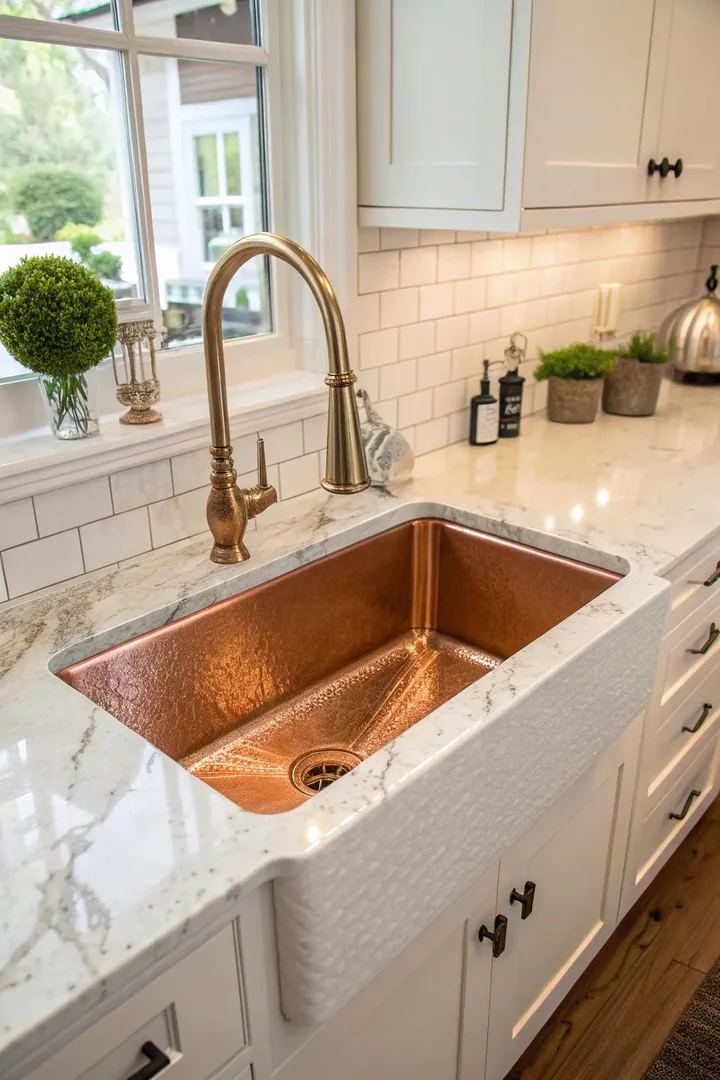
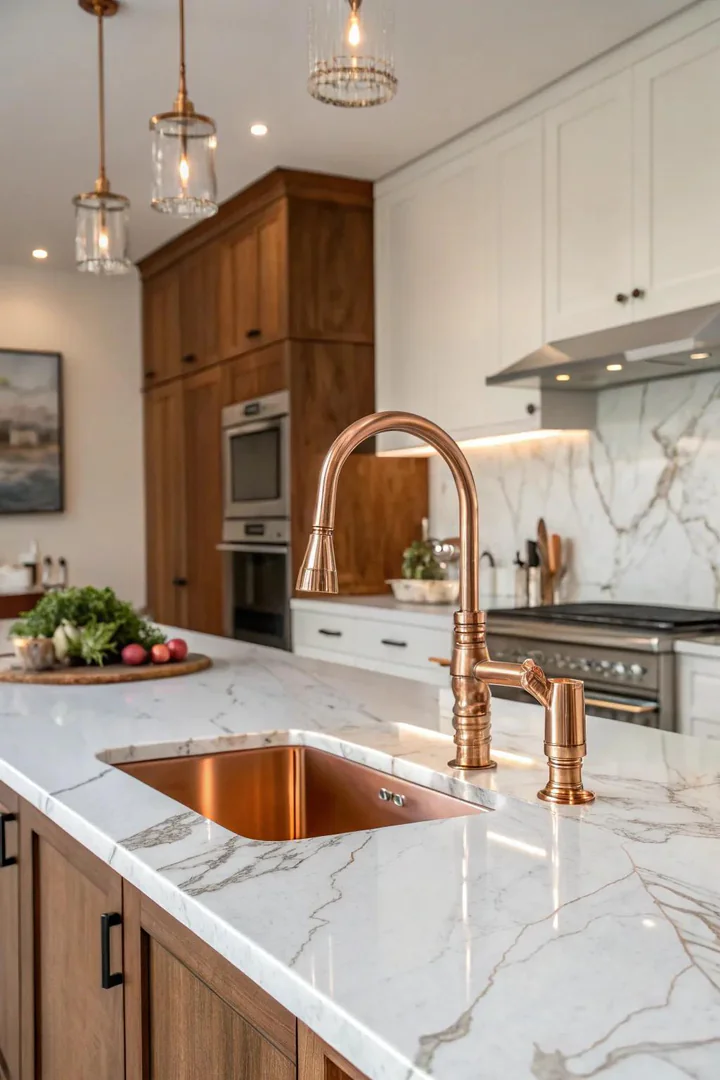
A hammered copper farmhouse sink set into a white countertop makes the sink the centerpiece of the kitchen. Sinkology, Native Trails, and Premier Copper Products all manufacture hand-hammered copper apron-front sinks that range from five-hundred to fifteen-hundred dollars depending on size and gauge. A sixteen-gauge copper sink is thicker and more dent-resistant than a twenty-gauge, and the hand-hammered texture hides water spots and minor scratches that would be visible on a smooth surface.
Copper sinks develop a rich brown patina within the first few months of use, which most homeowners find more attractive than the original bright copper. The patina is a natural protective layer — cleaning with mild soap and water maintains it, while acidic cleaners or citrus juice strip the patina and create light spots. Pair a copper sink with a matching copper faucet from brands like Brizo, Newport Brass, or Waterstone for a fully coordinated wet zone.
3. Statement Lighting with Copper Pendants
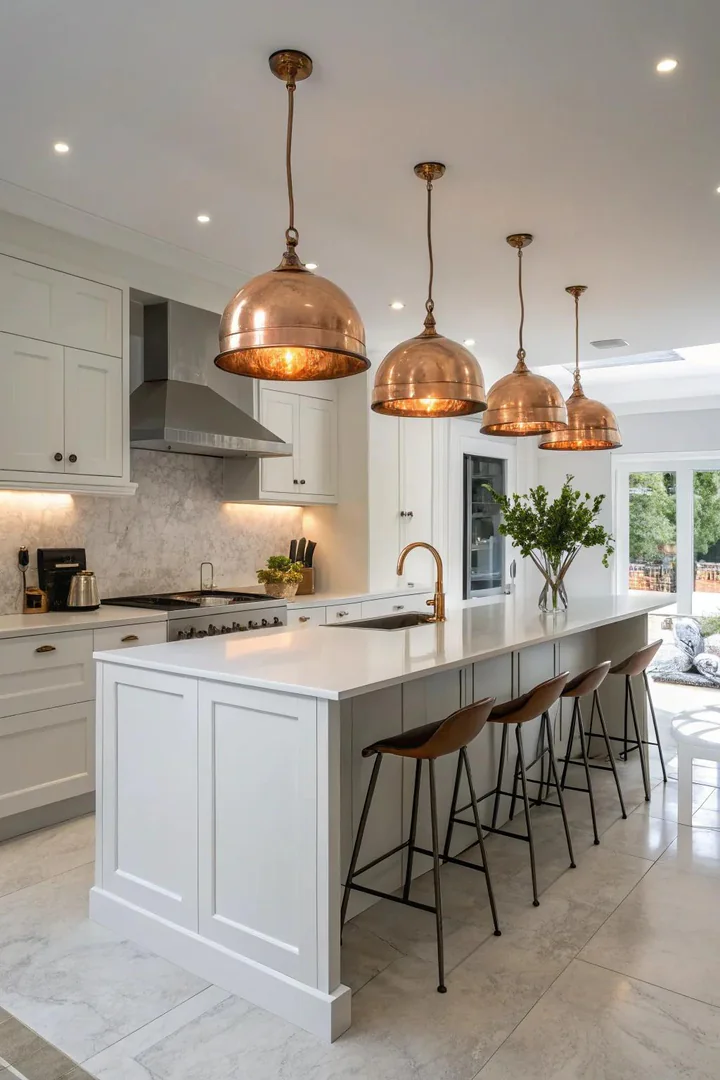
Copper pendant lights hung over an island or a breakfast bar bring copper to eye level where it catches the most attention. A cluster of two or three small copper pendants — the Pottery Barn Harmon pendant or the West Elm Sculptural Glass pendant in copper — creates a warm glow that bounces off white cabinets and countertops. Space pendants twenty-four to thirty inches apart and hang them thirty to thirty-six inches above the countertop for comfortable sight lines.
Choose a pendant shape that matches your kitchen’s style: a dome shape for farmhouse, a cylinder for modern, or a globe for transitional. The warm copper finish reflects a pinkish-amber light onto the countertop below, which makes food look more appealing than the cool blue-white light from chrome or stainless pendants. For more kitchen lighting ideas that pair with copper fixtures, our dedicated guide covers layering pendants, recessed lights, and under-cabinet strips into a cohesive lighting plan.
4. Bold Accent with a Copper Range Hood
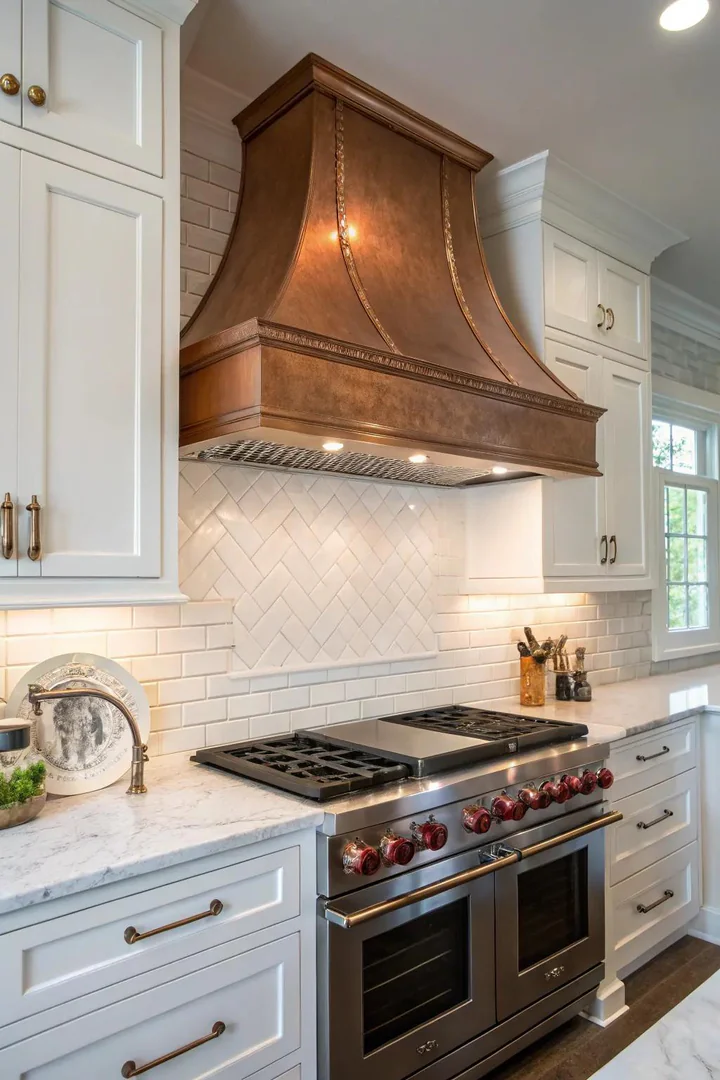
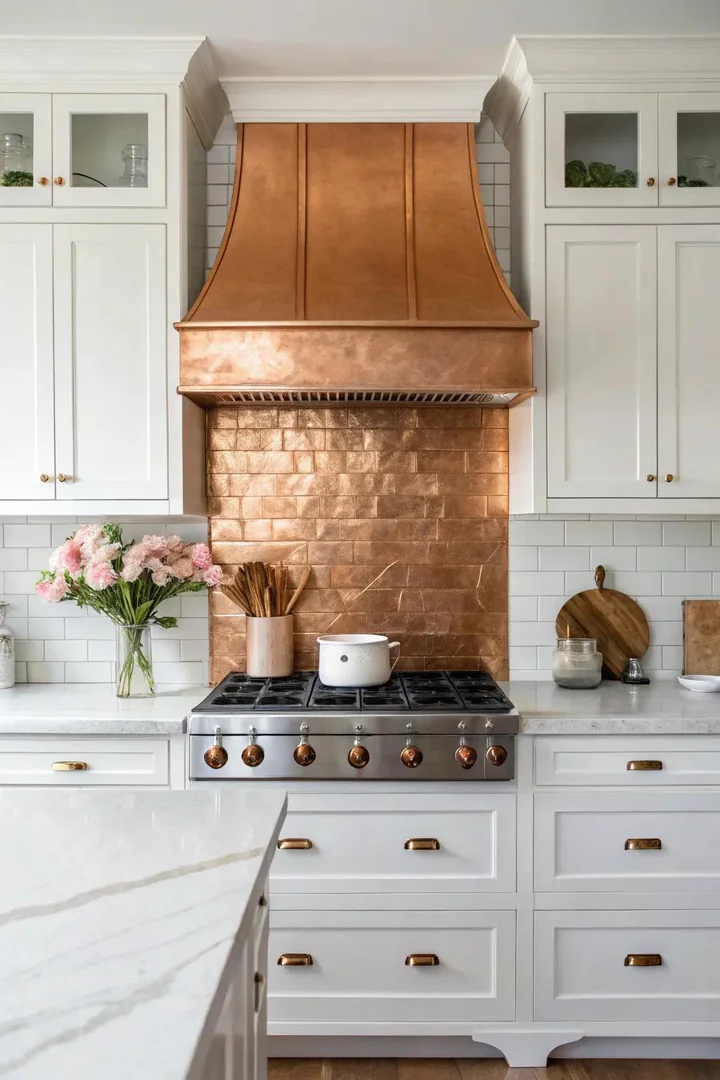
A custom copper range hood is the single most dramatic copper element you can add to a white kitchen. CopperSmith, World CopperSmith, and Havens Metal Works fabricate hand-hammered copper hoods in wall-mount and island-mount configurations that range from two-thousand to eight-thousand dollars depending on size and detail. The hood’s large surface area — typically thirty to forty-eight inches wide — makes it the dominant visual element on the wall, so it reads as the kitchen’s signature piece rather than just an appliance.
A copper hood against a white tile backsplash and white shaker cabinets creates a contrast that defines the cooking zone as the heart of the kitchen. The copper develops a natural patina over time that adds character, or you can specify a pre-patinated finish from the fabricator for a weathered look from day one. Match the hood’s copper tone to your hardware and faucet so all copper elements share the same finish temperature — mixing bright copper with dark-patina copper reads as mismatched rather than intentional.
5. Countertops with Copper Highlights
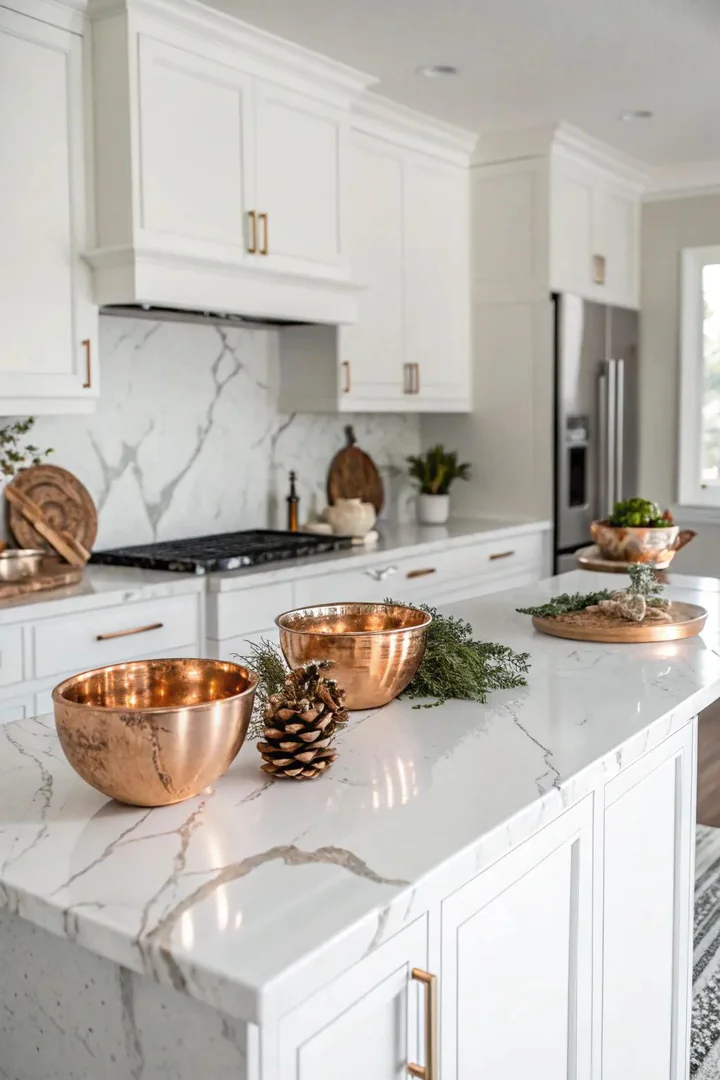
Copper countertop accents — a copper edge band along a butcher-block island, copper inlay strips in a marble counter, or a full copper countertop on a prep station — introduce the metal at work-surface level where you interact with it daily. A full copper countertop from Frigo Design or Custom Metal Home costs between seventy-five and one-hundred-fifty dollars per square foot and develops a patina that records every hot pan, every lemon, and every cut mark as part of its lived-in character.
If a full copper counter feels too bold, copper accessories at counter level — a copper utensil crock, a copper paper towel holder, a copper fruit bowl — deliver the same warm metallic presence without permanent installation. These accessories range from fifteen to fifty dollars each and can be swapped or moved as your style evolves. Counter-level copper works best in kitchens that already have copper hardware or a copper faucet, extending the metal to a second plane in the room.
6. Combining Copper and Marble
Copper and marble is one of the most luxurious material pairings in kitchen design because both are natural materials that age, patina, and wear in ways that synthetic surfaces cannot replicate. A white Calacatta marble countertop with grey and gold veining paired with copper hardware, a copper faucet, and copper pendant lights creates a palette that feels timeless and layered. The warm copper tone picks up the gold in the marble veining and amplifies it, making the stone look richer than it would against chrome or stainless fixtures.
Both materials require maintenance — marble needs sealing annually to prevent staining, and copper needs periodic polishing or acceptance of its evolving patina. For homeowners who enjoy materials that develop character over time, this combination rewards daily use rather than punishing it. Our luxury marble kitchen ideas guide covers marble types, sealing schedules, and styling approaches that pair particularly well with copper accents.
7. Copper Accents for a Sleek Appearance
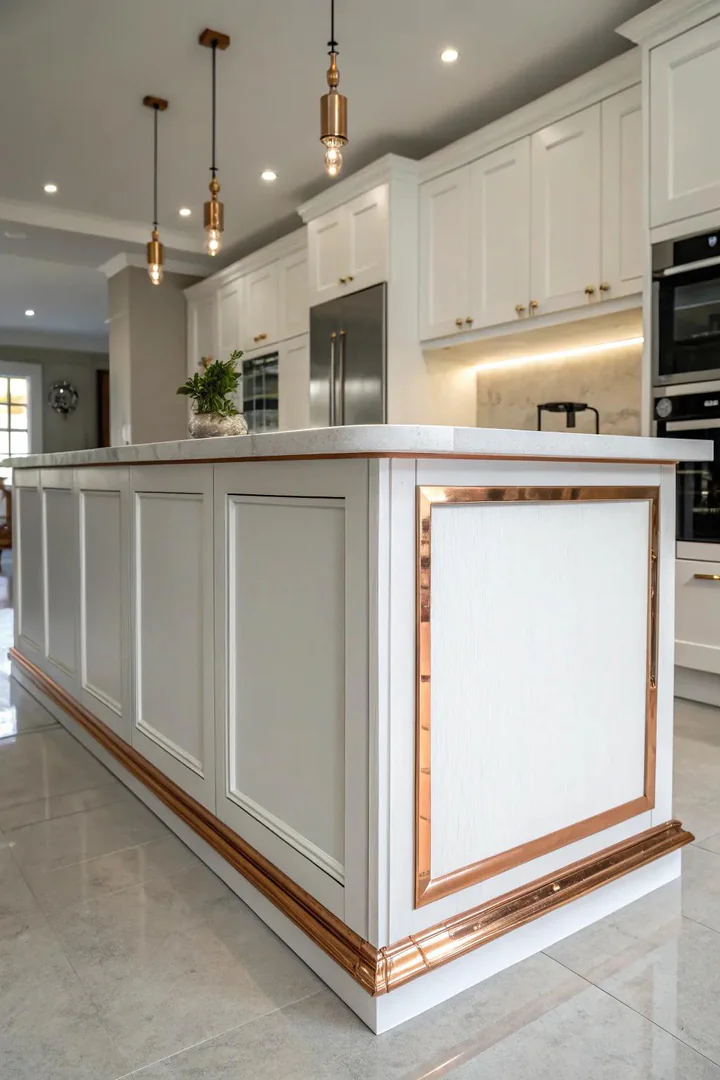
Copper trim — thin copper strips applied along cabinet edges, drawer faces, or shelf fronts — adds metallic definition without the visual weight of larger copper elements. Copper edge banding, available from specialty metal suppliers and Etsy fabricators, bonds to cabinet edges with adhesive backing and costs between two and five dollars per linear foot. The slim line of copper against a white cabinet face creates a picture-frame effect that makes each cabinet door and drawer front look deliberately finished.
Copper trim also works on open shelving, where a thin copper bracket or a copper-clad shelf edge adds a metallic accent at a fraction of the cost of solid copper fixtures. The trim approach is ideal for renters or homeowners who want to test the white-and-copper combination before committing to more expensive permanent elements like a sink or range hood. If the trim works, you can layer in larger copper pieces over time. If it does not, removing adhesive-backed trim takes minutes and leaves no damage.
8. Copper Cookware for Show
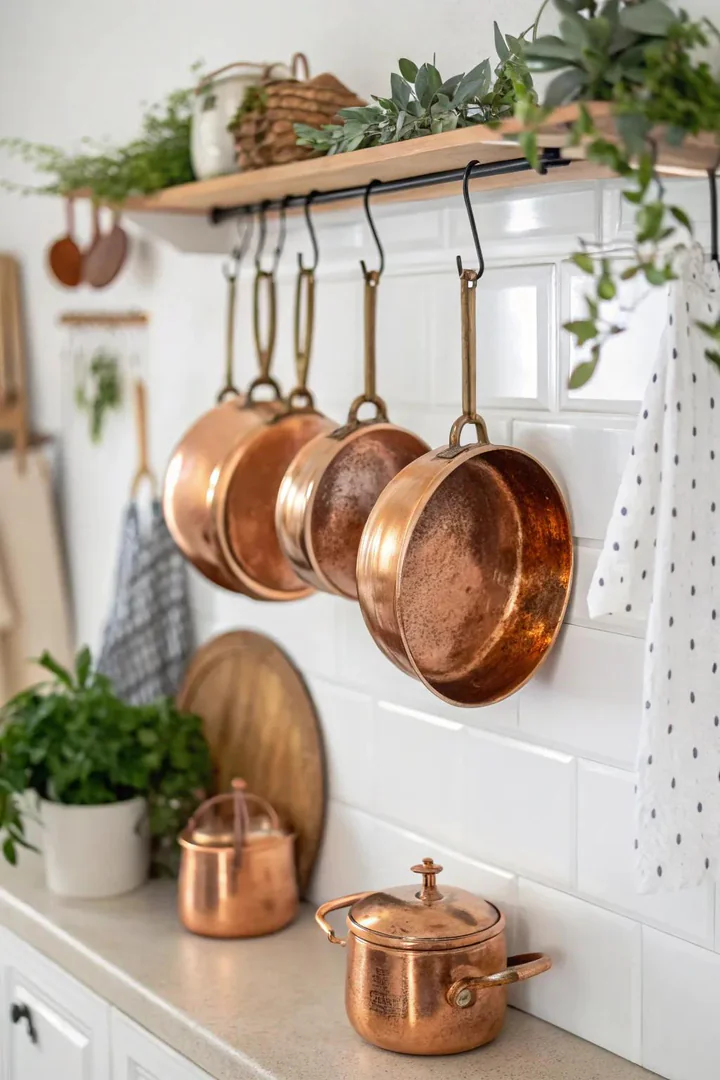
Hanging copper pots and pans from a ceiling-mounted pot rack or a wall-mounted rail turns your cookware into the kitchen’s primary decorative element. Mauviel, Ruffoni, and de Buyer all manufacture professional-grade copper cookware with stainless-steel or tin linings that conduct heat better than any other material. A three-piece copper set (skillet, saucepan, and stockpot) from Mauviel costs between four-hundred and eight-hundred dollars, but vintage copper pots from eBay and estate sales run thirty to one-hundred dollars per piece for the same visual impact.
Mount a pot rack from Enclume or Old Dutch International above the island and hang your best copper pieces where they catch overhead light and reflect warm amber tones onto the white cabinets and countertops below. Even cooks who rarely use copper for cooking find that the display-value of a well-polished copper pot on a rack justifies the purchase — the warm metallic glow against white surfaces creates a visual warmth that no other kitchen accessory can match.
9. Copper Accents for Understated Sophistication
Small copper accents — a copper soap dispenser, a copper paper towel holder, a copper salt-and-pepper mill set, a copper canister — bring the metal into the kitchen at a scale that reads as refined rather than showy. Target’s Hearth and Hand line, CB2, and Crate and Barrel all carry copper kitchen accessories in the ten-to-fifty-dollar range that coordinate with each other without being an identical set. Group three to five copper accessories on a single countertop area or shelf so the copper reads as a deliberate cluster rather than random individual objects scattered around the room.
The advantage of small accessories is flexibility — you can add, remove, or relocate them as your taste changes without any permanent installation. A copper fruit bowl on the island, a copper utensil crock beside the stove, and a copper tray on the countertop holding olive oil and salt creates a warm metallic presence across three zones of the kitchen without overwhelming any single area.
10. White and Copper Kitchen Island
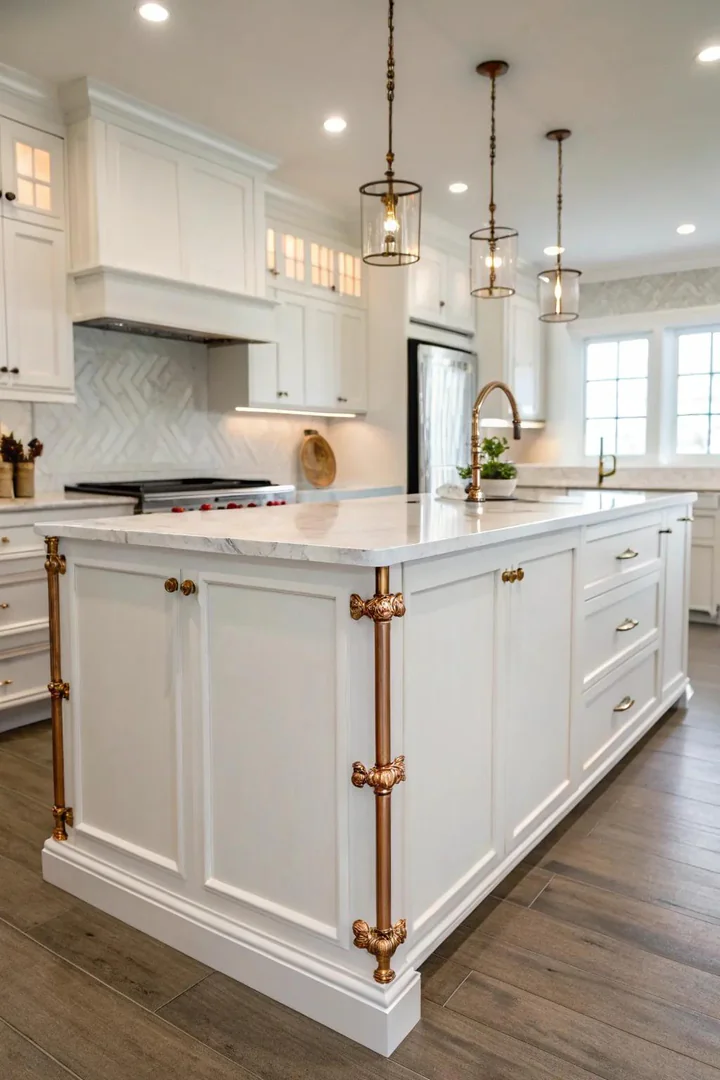
A white kitchen island with a copper countertop — or copper legs, a copper toe kick, or copper drawer pulls — becomes the room’s anchor point where the two materials meet at the highest concentration. A full copper countertop on the island makes the strongest statement: the warm metal surface glows under pendant lights and develops a patina that tells the story of every meal prepped on its surface. If a full copper top feels too bold, a white marble or quartz island top with copper legs or a copper base panel achieves the pairing at a lower commitment level.
Pair the island with two or three copper-framed bar stools or copper-legged stools so the seating echoes the island’s metallic accent. The island then reads as a self-contained copper-and-white composition within the larger white kitchen — a focal point that draws the eye without requiring copper on every surface in the room.
11. Modern Touch with Copper Appliances
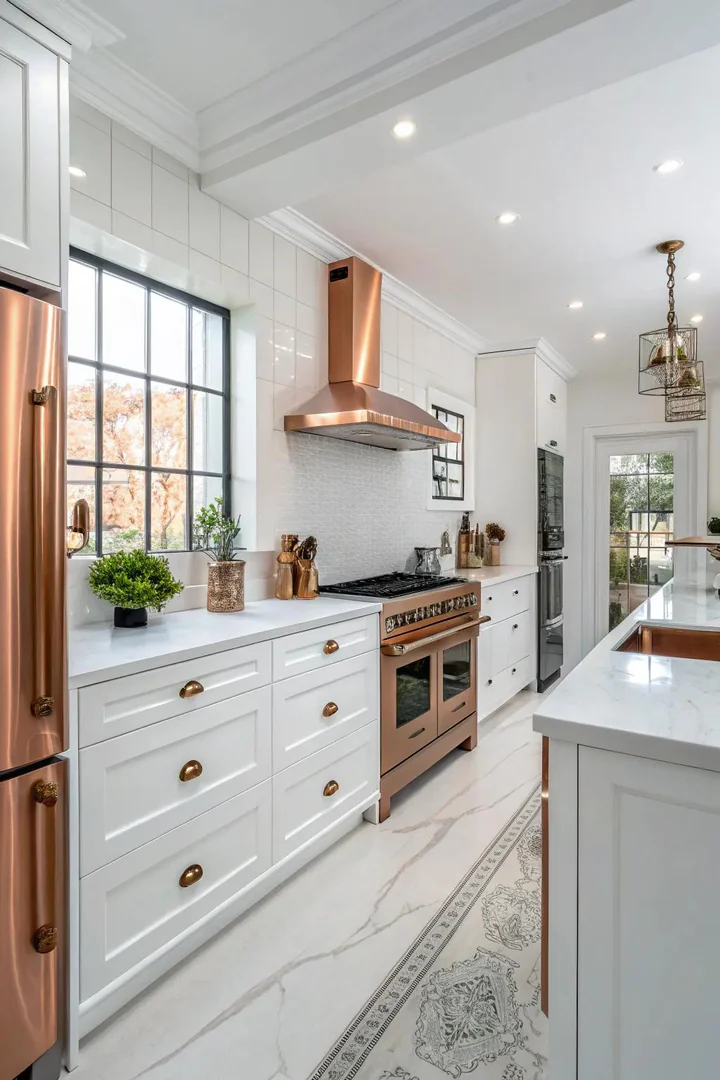
Copper-finish appliances from brands like Big Chill, BlueStar, andDERA introduce the metal at the largest scale — a copper refrigerator, range, or dishwasher panel turns an ordinary kitchen appliance into a design statement. Big Chill’s Classic Retro line offers full-size refrigerators and ranges in a copper finish that pairs naturally with white cabinetry, while BlueStar offers custom copper-tone finishes on professional-grade ranges for homeowners who want commercial performance in a residential kitchen.
Copper appliances work best when you commit to matching the finish across all major appliances so the kitchen reads as a coordinated suite. A single copper range next to a stainless refrigerator looks mismatched, while a copper range paired with a copper dishwasher panel and a copper range hood creates a cohesive metallic presence on the cooking wall. Copper appliances cost ten to thirty percent more than standard stainless finishes, but the visual impact in a white kitchen is significant.
12. Open Shelving with Copper Accents
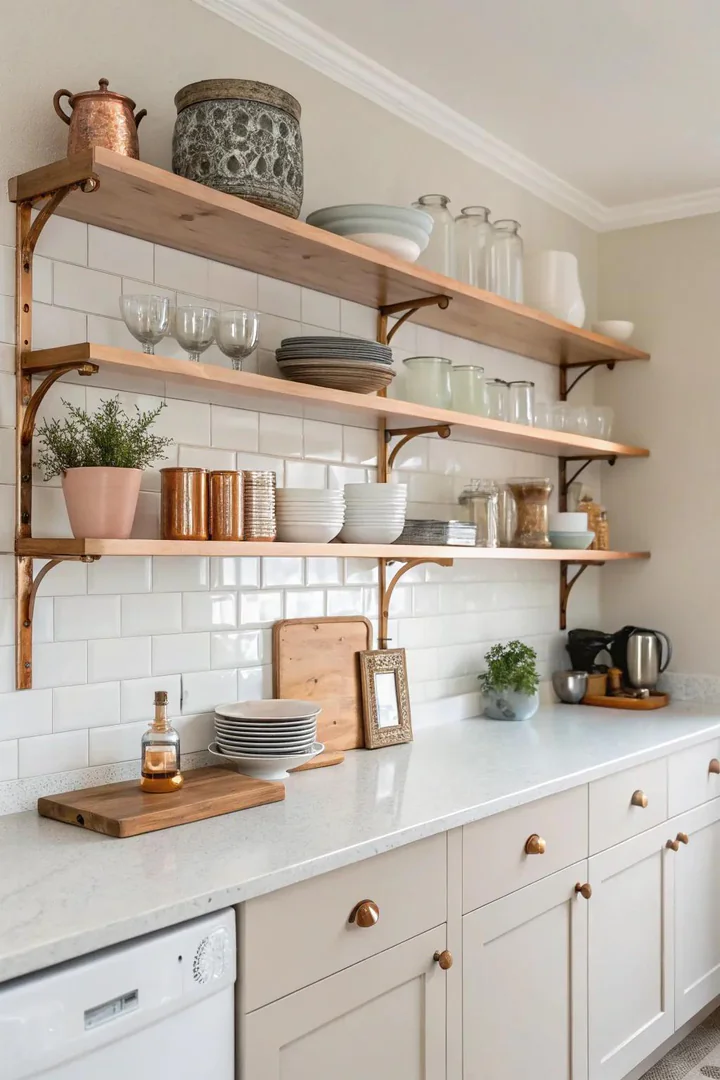
Open shelves supported by copper brackets or copper pipe frames introduce the metal at wall level where it is visible from across the room. Copper pipe shelving kits from Amazon and Etsy use standard half-inch copper plumbing pipe and fittings to create an industrial-chic bracket system that costs between thirty and seventy-five dollars per shelf. Pair the copper brackets with white-painted or natural wood shelves and display a mix of white dishes, glass jars, and a few copper accessories for a shelf that coordinates with the broader white-and-copper palette.
Copper pipe shelving works especially well as a replacement for upper cabinets in a kitchen where you want an open, airy feel. The exposed copper frame adds structural presence without the visual weight of solid cabinet boxes, and the shelves themselves provide display and light-duty storage for items you reach for daily — mugs, plates, cooking oils, and spice jars.
13. Bar Stools in Copper and White
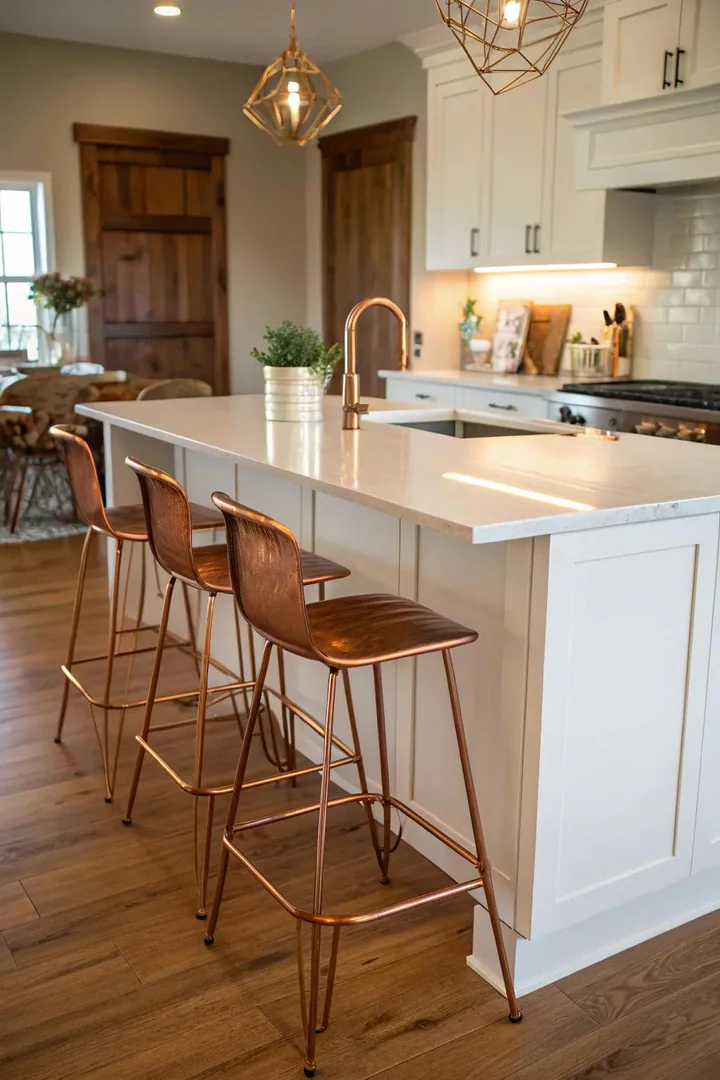
Copper-framed bar stools at the island or peninsula bring the metal down to floor level and create a visual connection between the upper kitchen (pendants, hardware) and the lower kitchen (flooring, base cabinets). The Tolix Marais bar stool in copper and the CB2 Flint stool in a copper-tone finish are both popular choices that hold up to daily kitchen use. Choose a stool with a white cushion, white seat shell, or natural wood seat to maintain the white-and-copper balance rather than introducing a third material.
Two or three matching copper stools tucked under a white island overhang create a warm metallic accent at exactly the height where visitors sit and interact with the kitchen — eye-level copper that guests notice immediately. Copper-finished metal stools also hide fingerprints and minor scratches better than polished chrome, which shows every mark.
14. Flooring with Copper and White Tiles
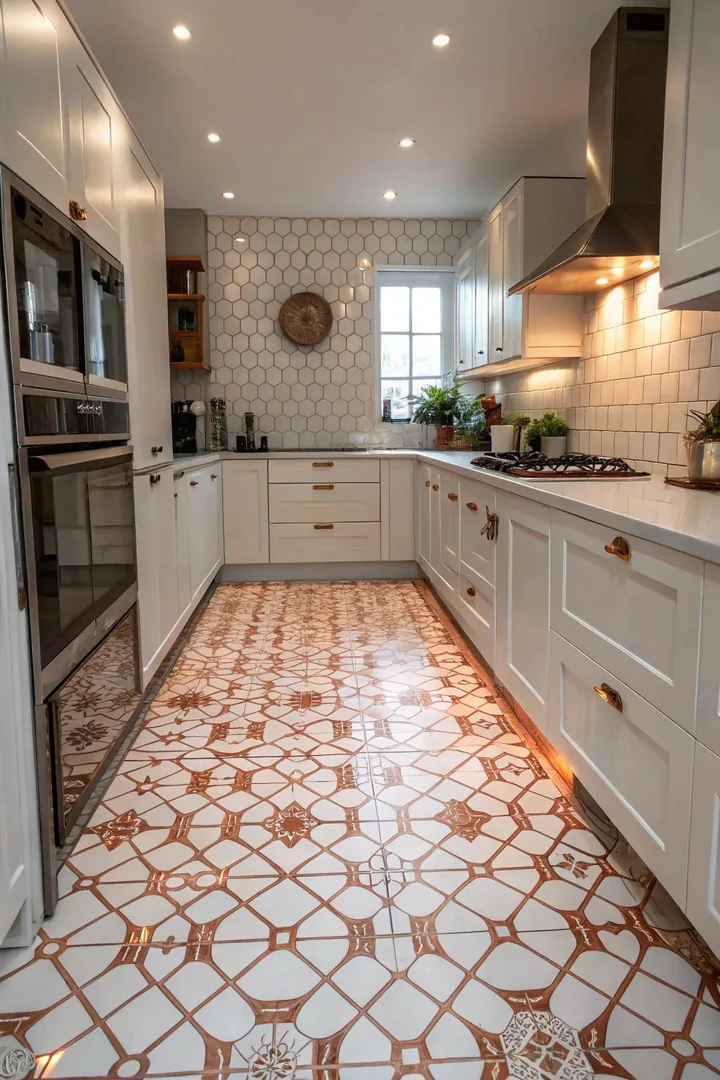
A floor tile pattern that mixes white and copper-toned tiles carries the palette down to the ground plane where it anchors the room. Use a white matte tile as the field and copper-glazed accent tiles as an inlay or border pattern — Bedrosians and Daltile both offer metallic-glazed tiles in copper tones that coordinate with copper fixtures without being literal metal. A herringbone or basketweave pattern with alternating white and copper tiles creates movement across the floor that keeps the eye engaged without overwhelming the room.
If a copper floor tile feels too bold, a warm-toned terracotta or honey-stained wood floor bridges the gap between white cabinets and copper accents by introducing a ground tone that shares copper’s warmth without being metallic. The floor does not need to be copper to support the white-and-copper palette — it just needs to carry enough warmth to connect the two materials visually.
15. Windows with Copper Frames
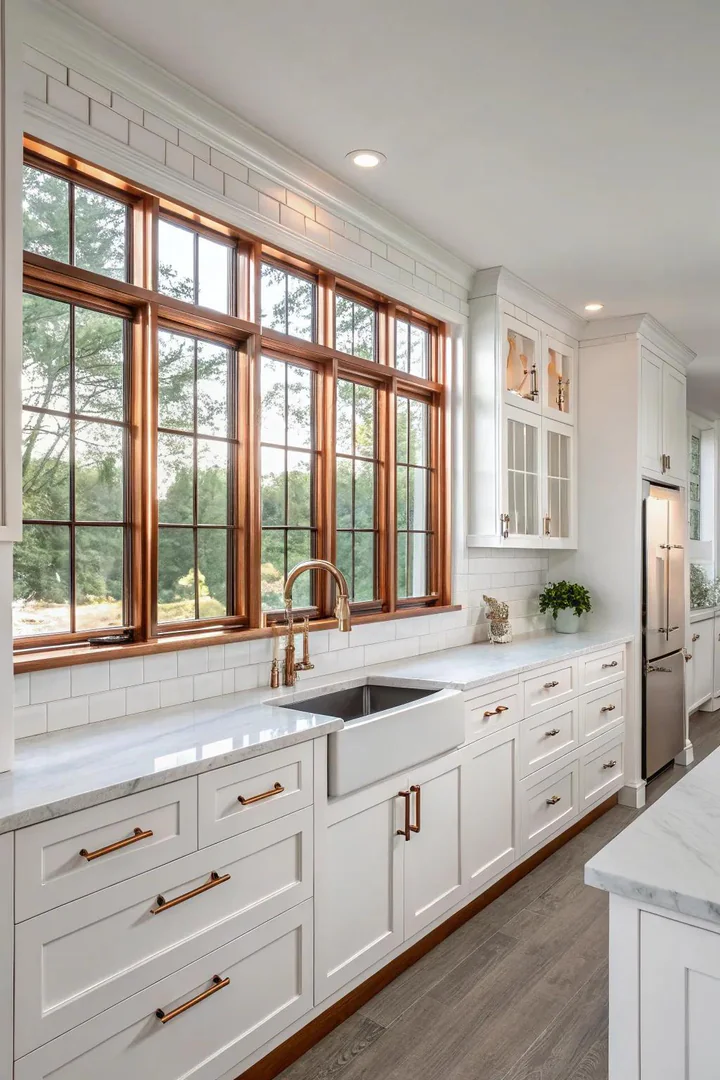
Copper or copper-clad window frames turn an ordinary kitchen window into an architectural feature that catches sunlight and reflects warm amber tones into the room. Custom copper-clad window frames from Marvin and Windsor Windows are available as a special-order finish for new construction and major renovations. For existing windows, copper-leaf or copper-paint treatments applied to the interior frame create a similar warm metallic effect at a fraction of the cost.
Copper window frames pair naturally with a white-painted window wall and white trim, creating a glowing metallic outline around the glass that draws the eye to the view. The copper frame catches morning and afternoon light differently, shifting from bright penny-copper in direct sun to a warm amber in diffused light, which adds subtle visual movement to the kitchen throughout the day.
16. Dining Table with Copper Plating
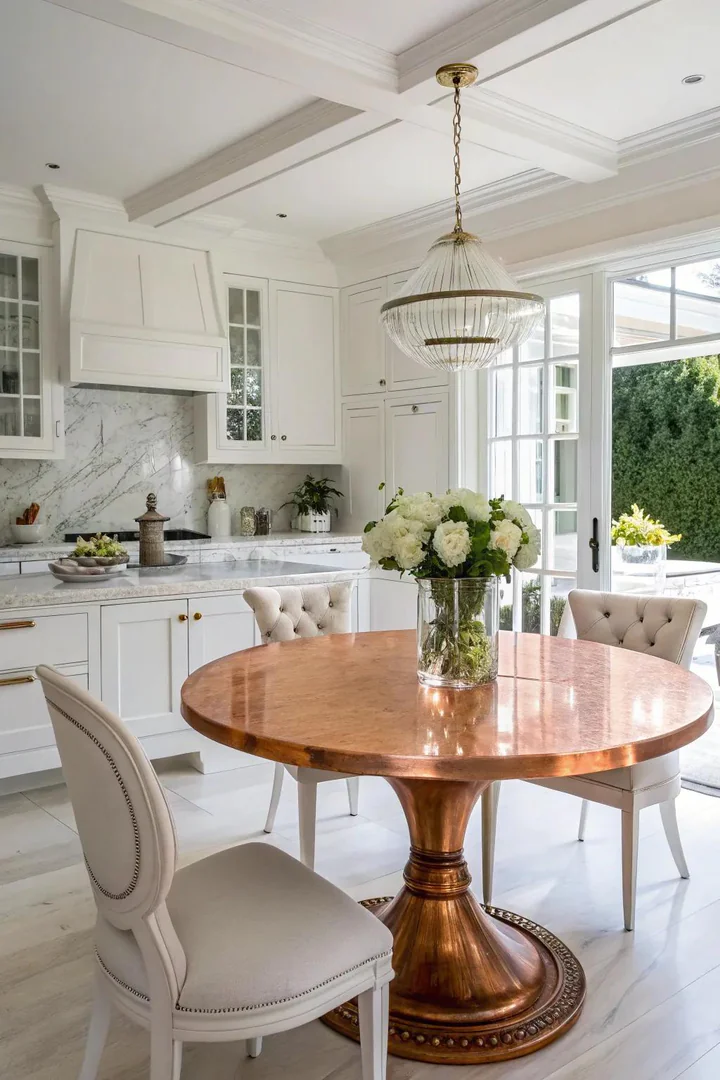
A copper-top or copper-plated dining table in an eat-in kitchen extends the white-and-copper palette from the cooking zone to the dining zone. A round or rectangular copper table from Restoration Hardware, Williams Sonoma Home, or custom metalwork shops pairs with white upholstered or white-painted dining chairs for a balanced look. A forty-two-inch round copper table seats four comfortably and costs between eight-hundred and two-thousand dollars depending on gauge and fabrication.
The copper surface develops a patina from daily use — water rings, heat marks, and normal wear add character to the metal over time. Place a white linen runner down the center to protect the surface during meals and to create a visual break between the copper and whatever dishes or centerpiece you place on top. The warm metallic surface reflects candlelight beautifully, which makes a copper dining table the ideal centerpiece for evening meals and dinner parties.
17. Glass Cabinets with Copper Lining
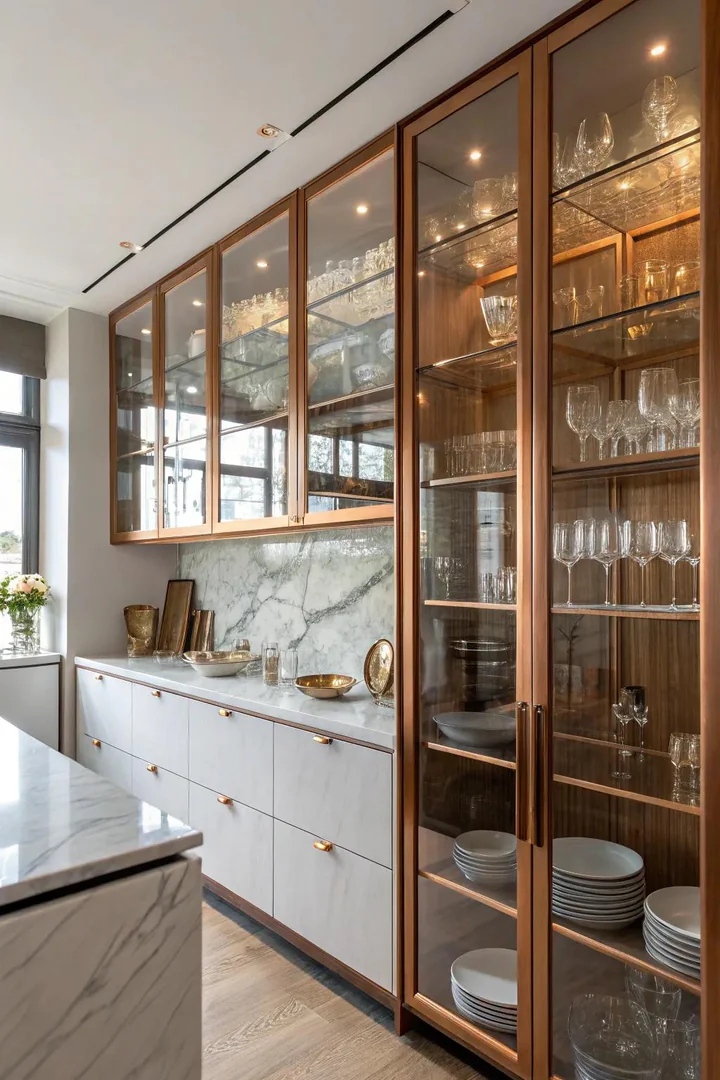
Lining the interior back panel of a glass-front cabinet with copper-leaf, copper-toned paint, or thin copper sheet creates a warm metallic backdrop that makes everything displayed inside the cabinet look richer. The copper surface reflects light from interior LED cabinet lighting back through the glass, creating a glowing showcase effect that turns everyday dishes and glassware into a curated display. Apply copper-leaf sheets with adhesive sizing for a genuine metallic finish, or use a metallic copper paint from Modern Masters for a simpler application.
Copper-lined glass cabinets work best as an accent — one or two cabinets with copper interiors flanking a window or a range hood add just enough warmth without turning the kitchen into a copper showroom. Keep the displayed items simple — white dishes, clear glassware, a few stacked bowls — so the copper backdrop has room to glow without competing with busy patterns or bright colors inside the cabinet.
18. Copper-Coated Shelf Accessories
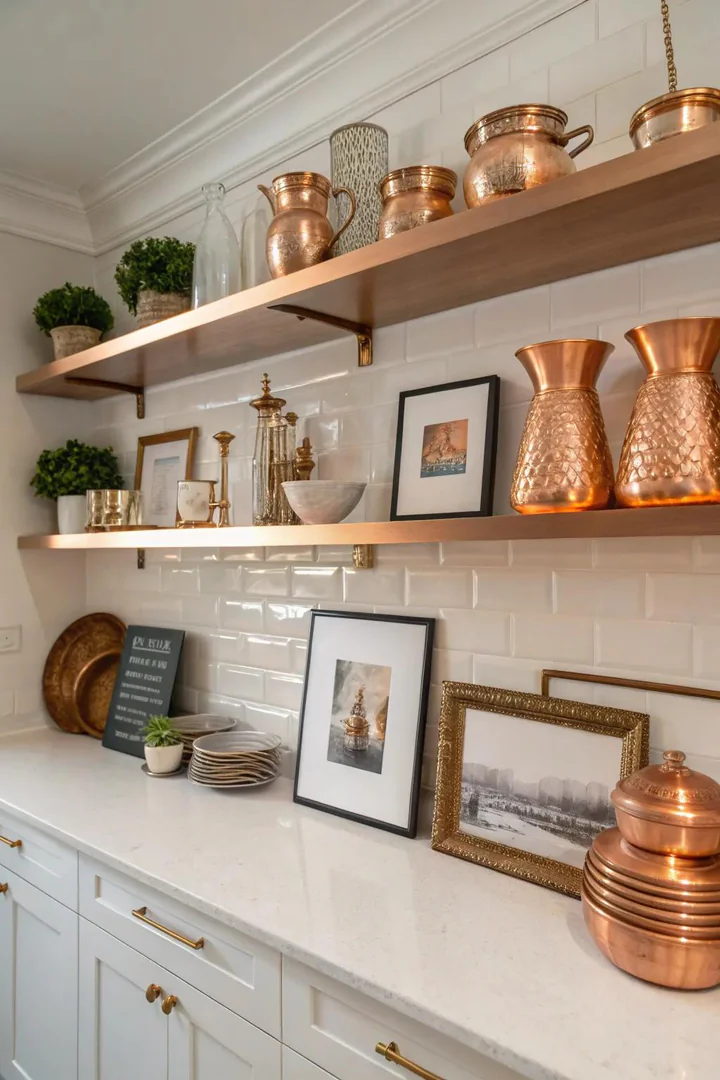
Copper-plated shelf accessories — bookends, small trays, candle holders, picture frames, and decorative objects — bring the metal onto open shelves and bakers racks where it adds warmth to the display without requiring permanent installation. CB2, West Elm, and Anthropologie carry copper-plated accessories in the ten-to-forty-dollar range that coordinate with each other while varying in shape and scale to keep the display visually interesting.
Mix copper accessories with white ceramic pieces and natural-toned items (wood, linen, dried flowers) so the shelf reads as a curated collection rather than a copper-only display. The rule of three applies: group a copper object with a white object and a natural object on each shelf to maintain the palette balance. Rotate accessories seasonally to keep the display fresh — swap a copper candle holder for a copper vase filled with seasonal flowers, or replace a copper frame’s photo with a seasonal print.
19. Copper and White Tableware Showcase
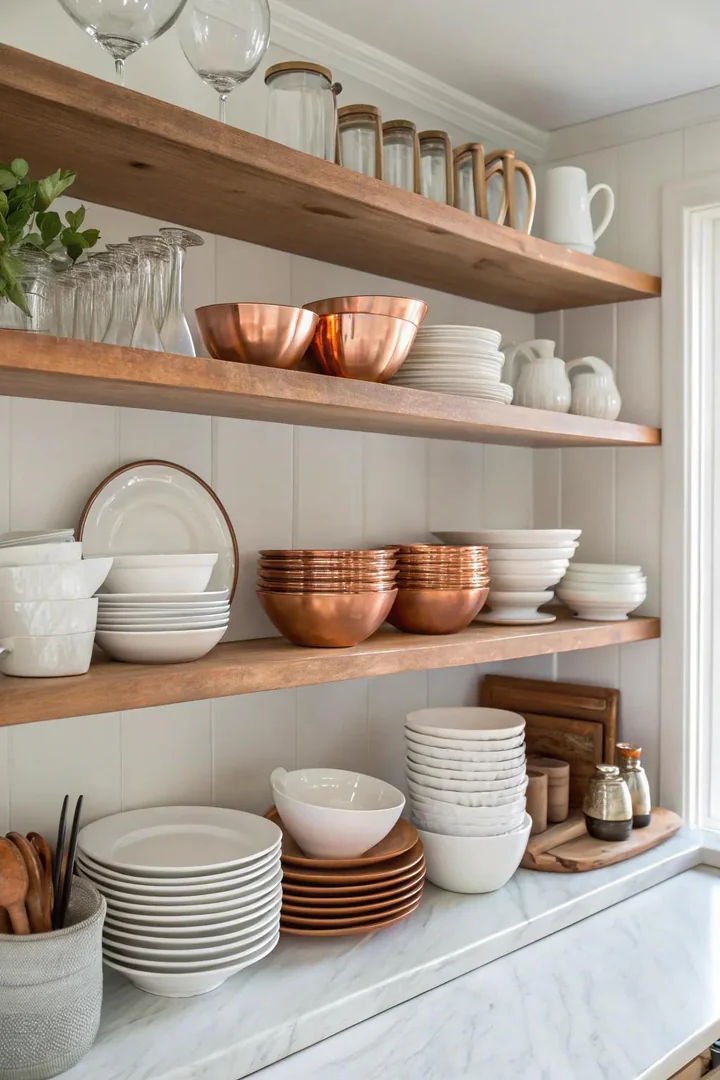
Displaying copper-rimmed plates, copper mugs, or copper flatware alongside white porcelain in open shelving or glass-front cabinets extends the palette to the tableware itself. Copper Moscow Mule mugs from Sertodo Copper or Old Dutch International double as display pieces when arranged on a shelf between white plates and bowls. Copper-rimmed dinnerware from Anthropologie and Williams Sonoma adds a metallic edge to the table setting that echoes the hardware and fixtures around the room.
Store copper and white tableware so it is visible from the kitchen’s main sightlines — behind glass cabinet doors at eye level or on open shelves flanking the sink or stove. The alternating warm and cool tones of copper and white dishes create a rhythmic pattern that makes the storage display feel intentional rather than random. Stack plates by alternating copper-rimmed and plain white to create a stripe effect that draws the eye.
20. Kitchen Island with Copper Accents
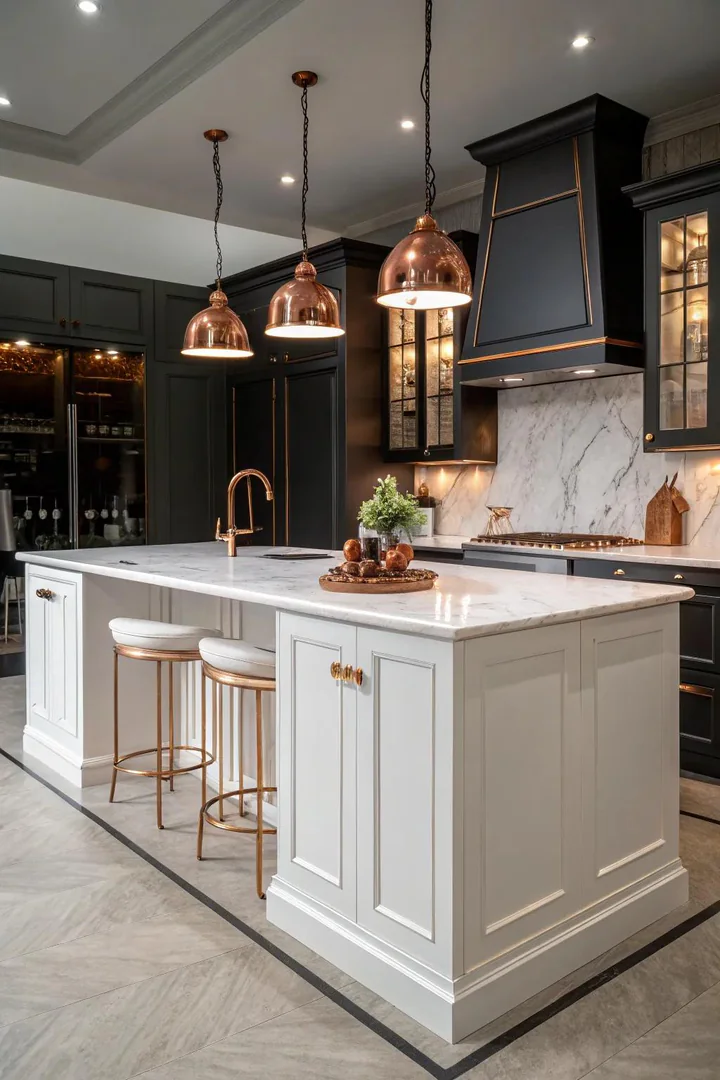
Adding copper accents to a white kitchen island — copper legs, a copper foot rail, copper drawer pulls, or a copper waterfall edge — concentrates the metal on the room’s most prominent piece of furniture. A copper foot rail running along the base of the island gives the piece a pub-like warmth and provides a functional rest for feet when sitting on bar stools. Chicago Brass and CopperSmith both fabricate custom foot rails in solid copper that mount with brackets at the base of the island face.
A simpler approach is to clad the island’s end panel or back panel in hammered copper sheet metal, creating a single large copper surface that acts as a backdrop when viewed from the dining or living area in an open-plan layout. The copper panel reflects warm light into the adjacent room and gives the island a finished, furniture-like quality that flat-painted panels lack.
21. Copper Highlights in Open Plan Kitchens
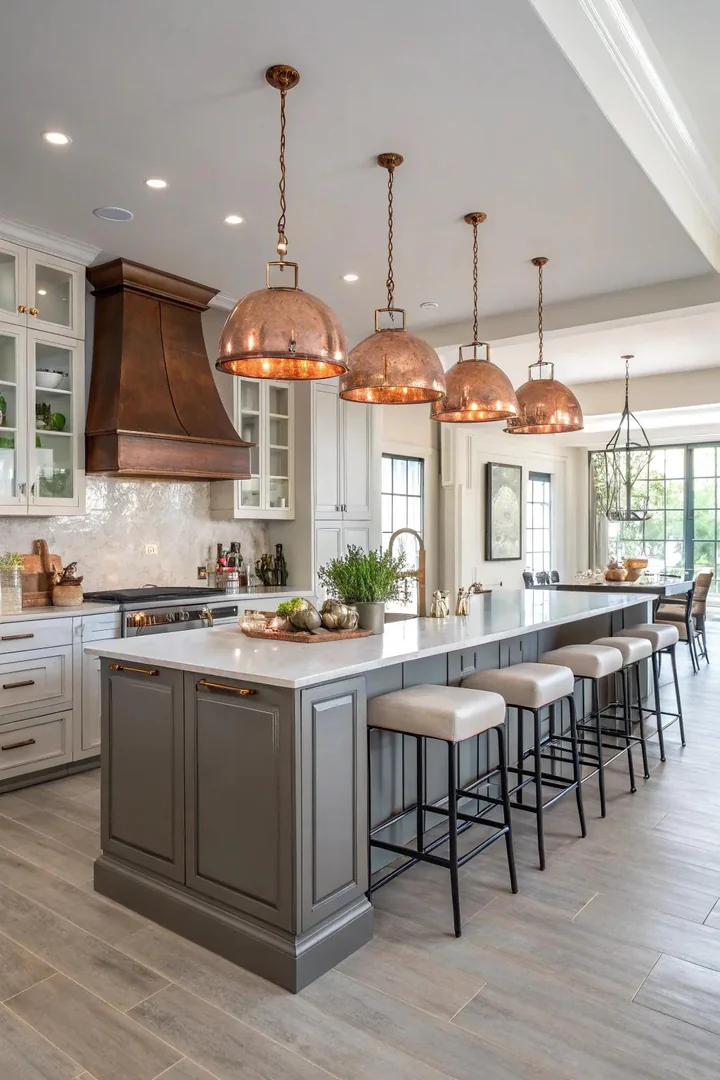
In an open-concept layout where the kitchen flows into the dining and living areas, copper accents create a visual thread that ties the three zones together. Use copper pendants over the kitchen island, copper table legs in the dining area, and a copper-framed mirror or lamp in the living space to carry the warm metal across the entire open floor plan. The consistent copper finish acts as a unifying element that reads as one cohesive design rather than three separate rooms sharing a floor.
The key is consistency — use the same copper finish (polished, brushed, or patinated) throughout all three zones so the eye recognizes it as intentional. Scale the copper presence from heaviest in the kitchen (where most of the copper fixtures live) to lightest in the living area (where one or two copper accessories are enough). This graduated approach prevents copper overload while maintaining the palette’s continuity across the open plan.
22. Copper Components in Kitchen Backsplash
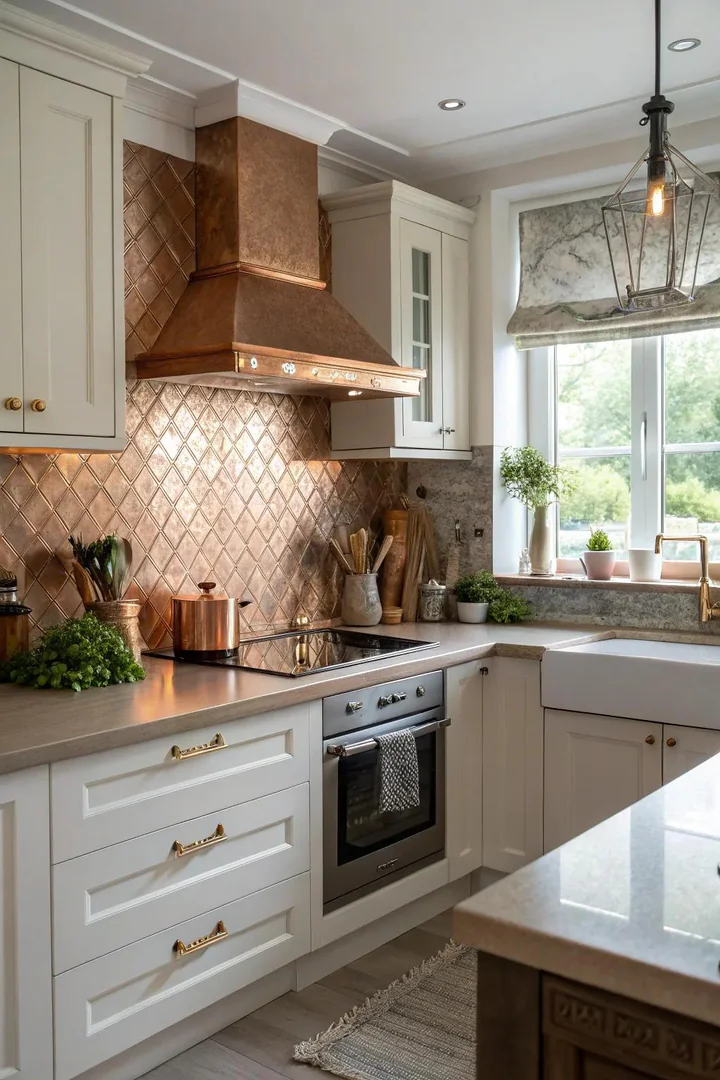
Copper backsplash tile, copper sheet metal, or copper-glazed ceramic tile behind the range creates a wall of warm metal that anchors the cooking zone. Solid copper penny tiles from TileBar and Modwalls come in one-inch rounds on mesh-backed sheets that install like standard mosaic tile. Copper sheet metal from Frigo Design mounts directly to the wall with adhesive and provides a seamless, ungrouted copper surface. Both options cost between fifteen and forty dollars per square foot installed.
A copper backsplash in a white kitchen makes the strongest visual impact when limited to the range wall — extending copper across the entire kitchen backsplash can feel overwhelming. Keep the remaining backsplash walls in white subway tile or white marble to maintain the palette’s balance. For more about glass backsplash kitchen ideas that add reflective depth alongside metallic accents, our guide covers transparent and tinted glass options that pair naturally with copper fixtures.
23. Copper Accents for Enduring Sophistication
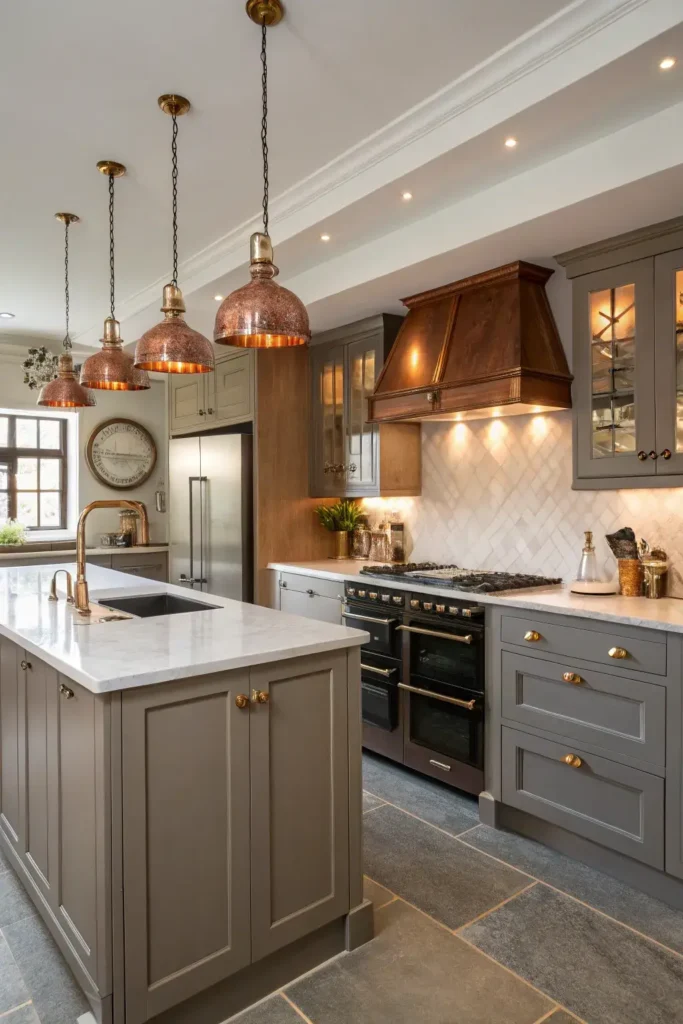
The reason copper works as a long-term kitchen metal is that it ages rather than deteriorates. A copper faucet, hood, or pot rack looks new on installation day and better five years later, because the patina that develops through daily use adds depth and warmth that the original bright finish lacked. Unlike chrome or stainless, which show fingerprints and water spots as flaws, copper absorbs them into an evolving surface that rewards use rather than punishing it.
For enduring sophistication, commit to copper across one category of fixtures — all hardware, all lighting, or all plumbing fixtures — rather than sprinkling a single copper piece here and there. A coordinated commitment to copper in one zone creates a cohesive story that carries the kitchen’s design for decades. Visit The Designers Company for more white-and-metallic kitchen combinations, material pairing guides, and sourcing recommendations for copper fixtures and accessories across every price range.
How to Design a White and Copper Kitchen
Choosing the Right Copper Finish
Copper comes in three primary finishes: polished (bright, mirror-like), brushed (matte with visible grain lines), and patinated (darkened with a brown or green-brown surface layer). Polished copper works in modern kitchens where you want the metal to sparkle and reflect light. Brushed copper suits transitional and farmhouse kitchens where a softer sheen feels more appropriate. Patinated copper reads as antique and rustic — it pairs with reclaimed wood, exposed brick, and vintage-style fixtures. Choose one finish and carry it across all copper elements so the kitchen reads as coordinated rather than collected from different sources.
Balancing Copper and White Ratios
A general guideline is seventy percent white surfaces to thirty percent copper accents. White dominates on the large planes — cabinets, walls, countertops — while copper appears on the smaller, higher-impact elements — hardware, fixtures, accessories, and one or two feature pieces like a range hood or pot rack. Pushing past thirty percent copper risks making the kitchen feel heavy and warm to the point of discomfort. Keeping copper below ten percent makes it look like an afterthought rather than a design decision.
Maintaining Copper Over Time
Copper develops a natural patina through exposure to air, moisture, and the oils from your hands. If you want to preserve the bright copper look, clean regularly with a paste of lemon juice and baking soda, then apply a thin coat of copper lacquer or Renaissance Wax to slow the oxidation process. If you prefer the patina, simply let the copper age naturally and clean it with mild soap and water to remove grease without stripping the patina layer. Avoid abrasive cleaners, steel wool, and chlorine-based products, which scratch the surface and create uneven wear patterns.
White and Copper Kitchen Elements Comparison
| Element | Visual Impact | Installation | Price Range |
|---|---|---|---|
| Copper hardware | Subtle accent | DIY (screwdriver) | $100 – $300 (full set) |
| Copper pendant lights | Moderate statement | Electrician recommended | $100 – $500 per fixture |
| Copper range hood | Major statement | Professional install | $2,000 – $8,000 |
| Copper sink | Focal point | Plumber required | $500 – $1,500 |
| Copper cookware display | Decorative feature | Pot rack mounting | $100 – $800 |
| Copper backsplash | Major wall feature | Tile/sheet install | $15 – $40/sq ft |
| Copper accessories | Subtle warmth | None (place and style) | $10 – $50 each |
Common White and Copper Kitchen Mistakes to Avoid
Mixing copper finishes unintentionally. A polished copper faucet next to a dark patinated copper hood looks mismatched. Choose one finish temperature — bright, brushed, or aged — and apply it consistently across all copper elements so the kitchen reads as a coordinated design.
Adding too many metals. Copper, chrome, nickel, and brass all in the same kitchen creates visual noise. Limit the kitchen to copper as the primary metal with one supporting neutral metal (stainless steel appliances are acceptable because they read as functional rather than decorative). Every metallic surface should either be copper or intentionally neutral.
Overdoing copper on large surfaces. Copper on every countertop, backsplash wall, and cabinet face overwhelms the white and turns the kitchen into a copper room with white accents — the inverse of what most homeowners intend. Keep copper to thirty percent or less of the total visual surface area and let white dominate the background.
Ignoring copper’s maintenance requirements. Copper changes color over time. If you expected permanent bright copper and did not lacquer or seal the surface, the patina will surprise you. Decide before installation whether you will maintain the bright finish or embrace the patina — either approach looks good, but an unplanned patina on a fixture you expected to stay bright feels like neglect rather than character.
Frequently Asked Questions
Does copper go with white kitchens?
Yes. White and copper is one of the most established material pairings in kitchen design because copper’s warm orange-pink tone contrasts with white’s cool brightness, creating visual interest without introducing a competing color. The combination works across every kitchen style from farmhouse to modern and has remained popular for decades, which makes it a safe long-term investment.
How do I keep copper from turning green?
The green patina (verdigris) develops when copper is exposed to moisture and air over extended periods — typically in outdoor or high-humidity environments. In a normal kitchen, copper develops a warm brown patina rather than green. To prevent any color change, apply a clear copper lacquer or Renaissance Wax to the surface after cleaning. Lacquered copper stays bright but needs reapplication every one to two years as the coating wears through from daily use.
Can I mix copper with other metals?
You can, but limit the mix to two metals total — copper as the accent metal and one neutral metal (stainless steel, polished nickel, or matte black) as the secondary. Adding a third metal creates visual confusion. The most common successful combination is copper hardware and fixtures with stainless steel appliances, which works because stainless reads as a neutral appliance finish rather than a competing decorative metal. For ideas on coordinating cabinet colors with mixed metals, our guide covers tested pairings.
Is copper too trendy for a kitchen?
Copper has been used in kitchens for centuries — long before it became a social-media trend. Professional-grade copper cookware from Mauviel and Ruffoni has been a kitchen staple since the 1800s, and copper sinks and fixtures have appeared in high-end kitchens for generations. The current popularity of copper in home design may fade from peak trendiness, but the material itself is timeless and will never look dated the way a fashion-driven color might.
What countertop goes best with copper fixtures?
White marble with gold veining (Calacatta Gold, Calacatta Borghini) is the classic pairing because the warm gold veins in the marble echo the copper tone and create a cohesive warm palette against the white background. White quartz with subtle grey veining also works well and requires less maintenance than marble. Butcher block in walnut or white oak pairs with copper in farmhouse and rustic kitchens where natural materials dominate.
Where should I start if I want to add copper to my white kitchen?
Start with hardware. Replacing cabinet knobs and drawer pulls is the fastest, cheapest, and most reversible way to introduce copper into a white kitchen. If you like the result, add a copper faucet or copper pendant lights next. Build the copper presence gradually rather than committing to expensive permanent fixtures before you know whether the warm metal suits your taste and your kitchen’s lighting conditions.
Conclusion
White and copper works because it pairs the most neutral background with one of the warmest, most expressive metals. The combination gives you a kitchen that feels bright and clean from a distance and warm and rich up close — a balance that pure white alone and pure copper alone cannot achieve independently. Whether you start with a set of copper knobs or commit to a full copper range hood, the key is consistency: pick one copper finish, carry it across your chosen fixtures, and let the white surfaces do the rest.
Start small, test the warmth against your specific lighting and countertop materials, and build the copper presence over time until the kitchen feels like it belongs to you. A few well-chosen copper pieces in a white kitchen make a stronger impression than copper on every surface, and the restraint is what makes the combination look designed rather than decorated.