Painted Kitchen Cabinet Ideas: 17 Bold Looks That Wow Every Time
Painted kitchen cabinet ideas give dated, worn, or builder-grade cabinets a fresh look for $200 to $600 in paint and supplies instead of the $5,000 to $25,000 cost of full cabinet replacement. A gallon of cabinet-grade paint ($40 to $70 from Benjamin Moore Advance, Sherwin-Williams Emerald Urethane Trim Enamel, or Behr Alkyd Semi-Gloss) covers 30 to 40 cabinet doors (a standard kitchen), and the transformation takes a single weekend for a skilled DIYer or 2 to 3 days for a first-timer. Below are 17 painted cabinet color schemes with specific paint names, sheens, hardware pairings, and countertop combinations, followed by a how-to painting guide, a comparison table, and FAQs on prep, primer, and durability.
1. Chic Charcoal Gray
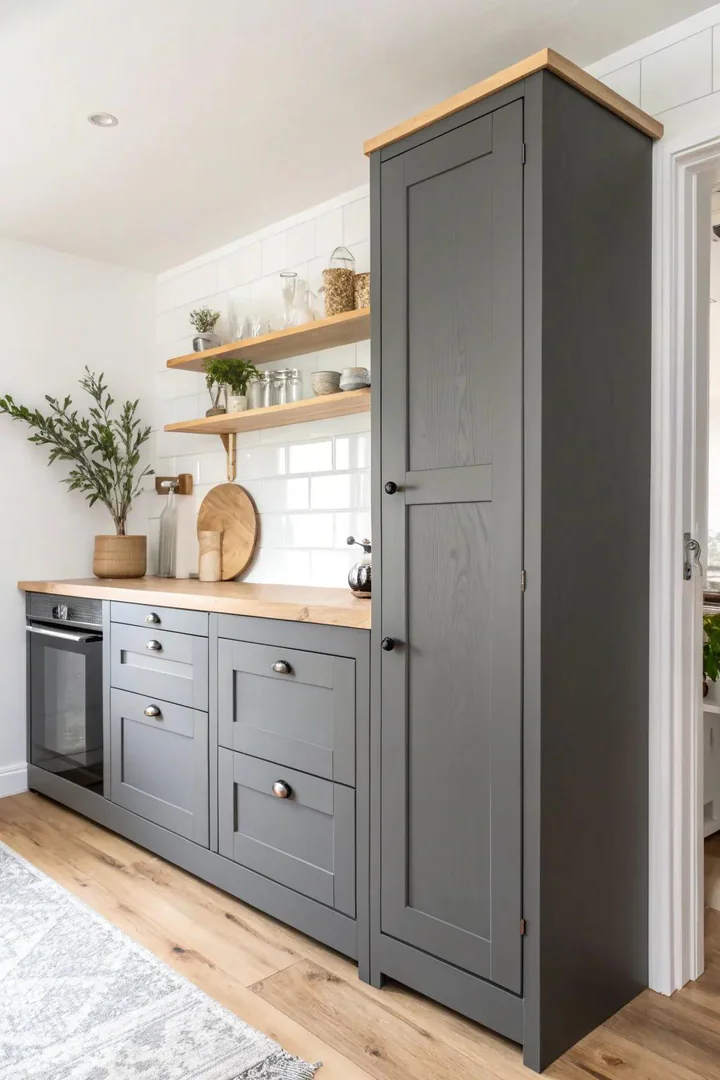
Benjamin Moore Kendall Charcoal HC-166 ($50 per gallon in Advance semi-gloss) delivers a rich, warm charcoal that reads as sophisticated without the stark coldness of pure black. Charcoal cabinets pair with white quartz countertops (Caesarstone Pure White 1141, $65 to $85 per square foot installed), brushed-nickel cup pulls ($4 each from Amerock), and a white subway-tile backsplash for a kitchen that balances darkness and light. Sand the existing cabinet finish with 220-grit sandpaper, prime with Zinsser BIN Shellac Primer ($26 per quart), and apply 2 coats of Kendall Charcoal with a 4-inch Purdy White Dove roller ($8) for a factory-smooth finish.
Charcoal works on Shaker-style doors, flat-panel doors, and raised-panel doors because the dark tone minimizes the visual weight of decorative molding profiles. A charcoal island paired with white perimeter cabinets creates a two-tone kitchen with built-in contrast. Charcoal cabinets show less grease splatter and fingerprint smudging than white or light-colored finishes, reducing the frequency of wipe-downs from daily to weekly in a busy household kitchen.
2. Soft Pink Blush
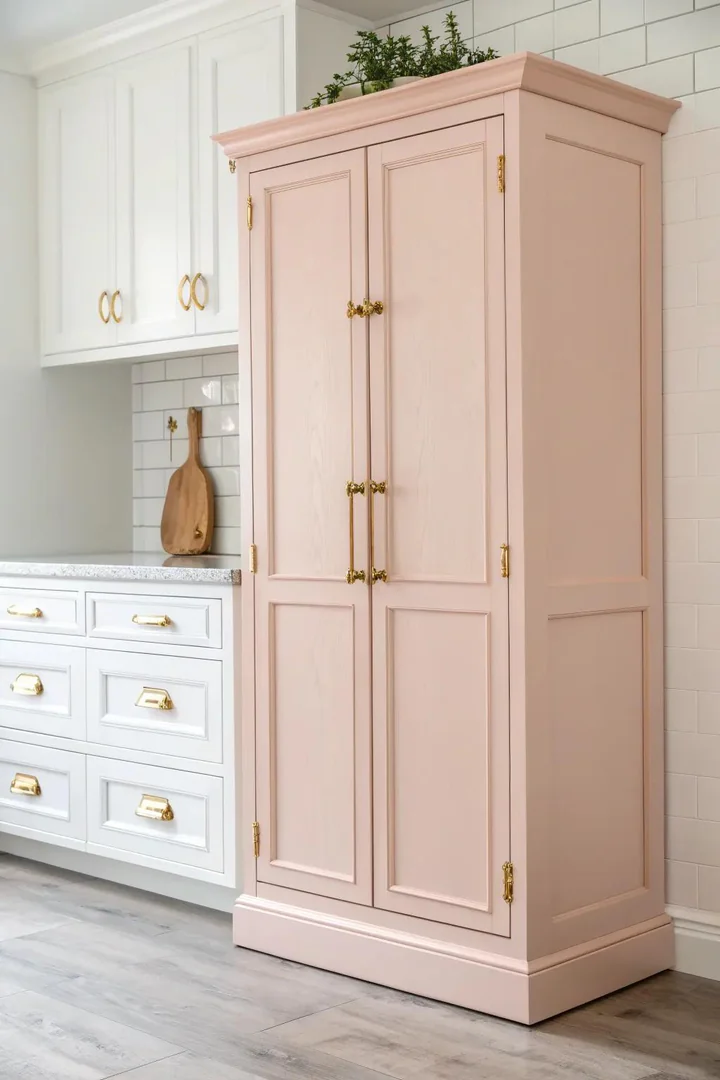
Farrow & Ball Setting Plaster No. 231 ($115 per gallon) or the budget alternative Benjamin Moore Odessa Pink HC-59 ($50 per gallon) creates a warm, muted blush that reads as a neutral rather than a statement pink. Blush cabinets pair with brass hardware (Rejuvenation Massey Pull, $18 each), white marble countertops, and open wooden shelving for a kitchen that feels warm, personal, and European-inspired without the formality of a traditional painted kitchen.
A blush lower cabinet paired with white uppers softens the kitchen without overwhelming the room with pink. The key to a sophisticated blush kitchen is choosing a pink with enough gray or brown undertone to prevent it from reading as “baby pink” or “bubble gum.” Farrow & Ball Setting Plaster contains a warm gray base that grounds the pink and allows the color to work with both cool (marble, stainless steel) and warm (brass, wood, terracotta) materials in the same room.
3. Classic Navy Blue
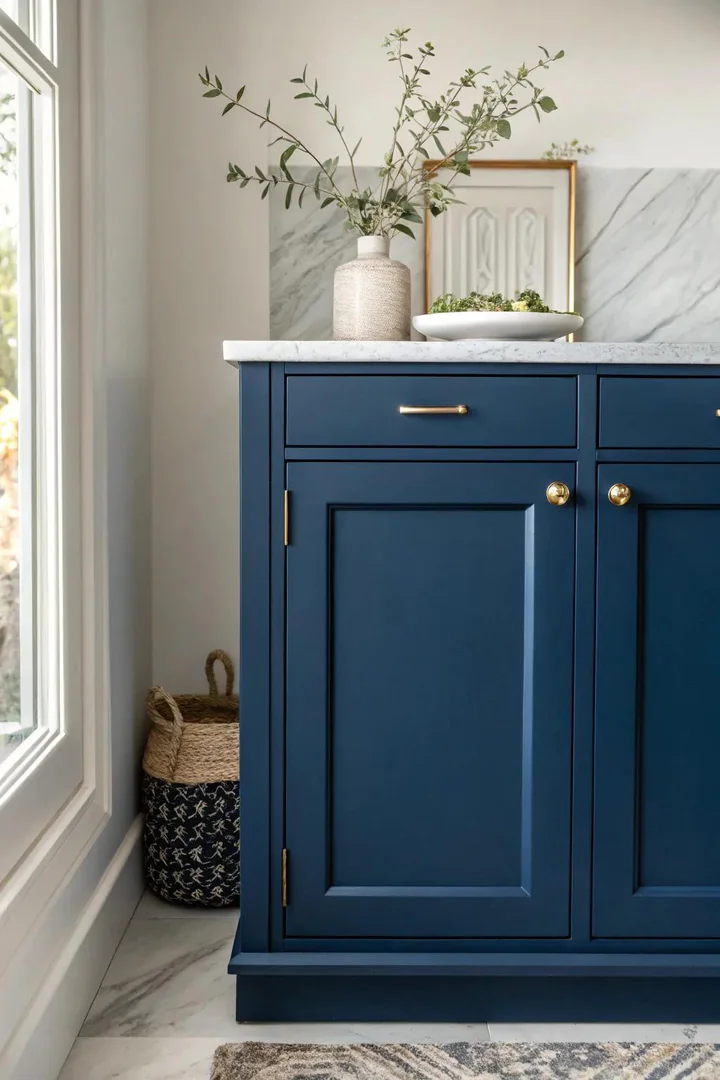
Benjamin Moore Hale Navy HC-154 ($50 per gallon in Advance satin) is the most popular navy for kitchen cabinets because its balanced blue-gray undertone works in kitchens with both warm and cool lighting. Navy lower cabinets paired with white upper cabinets, brass knobs (Martha Stewart Bedford Knob, $5 each from Home Depot), and butcher-block countertops (IKEA Karlby walnut, $189 for 74 inches) create a nautical-meets-farmhouse kitchen that photographs well in both natural daylight and warm evening light.
Navy absorbs light, so pair navy cabinets with under-cabinet LED task lighting ($15 to $80 per strip from GE 24-inch LED Bar or Wobane Warm White Strip) to prevent the counter area from feeling dark during evening cooking. Navy cabinets also work in a full-surround application (both upper and lower cabinets) in kitchens with large windows, white ceilings, and light-colored flooring (white oak, light maple, or white tile) that provide enough ambient light to balance the dark cabinet color. Discover more blue-toned cabinet approaches at sunflower kitchen cabinets for contrasting warm-and-cool color strategies.
4. Playful Pastels
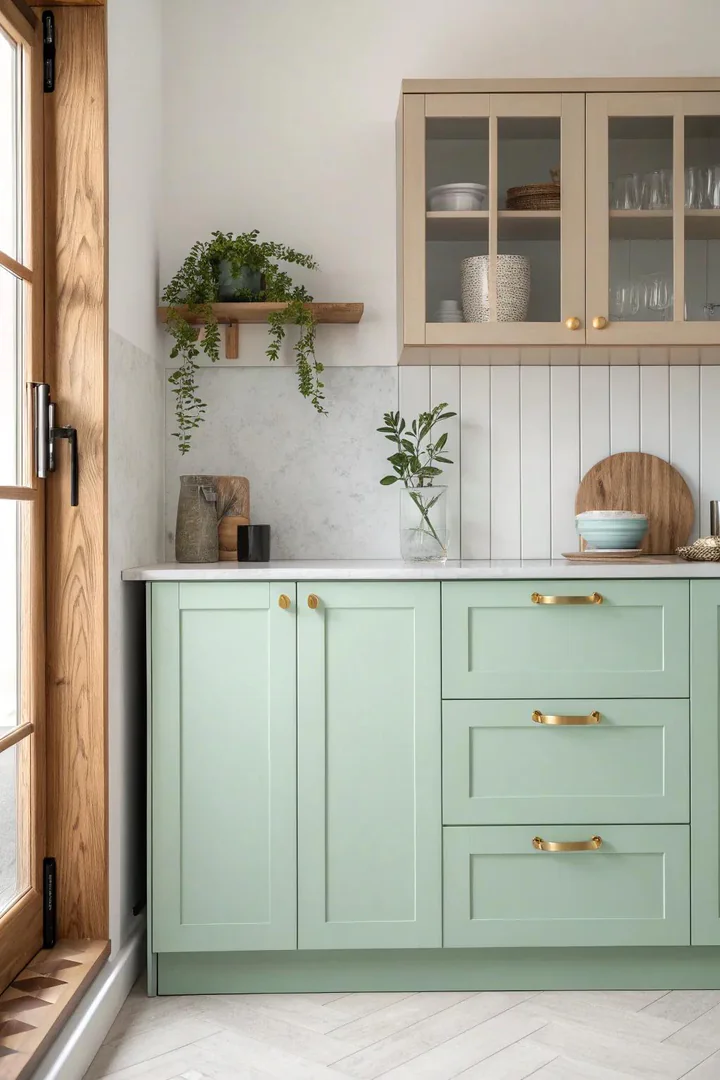
Painting each cabinet door or each row of cabinets in a different pastel shade (mint green, lavender, pale yellow, soft peach, powder blue) creates a retro-inspired or Scandinavian-modern kitchen with personality and warmth. Use Benjamin Moore Aura ($55 per gallon) in Crystalline AF-485 (mint), Lavender Ice 2069-60 (lavender), Lemon Soufflé 2151-60 (yellow), and Peach Cloud 2169-60 (peach) for pastels with enough gray in the base to prevent the colors from reading as juvenile or candy-colored.
A pastel kitchen works best with white countertops, matte-black hardware (Goldenwarm Black Cabinet Pulls, $2 each on Amazon for a 25-pack), and a neutral white or light-gray backsplash that lets the cabinet colors dominate the visual field. The matte-black hardware grounds the light colors and prevents the kitchen from looking washed-out. A single pastel color (all mint, all lavender) on every cabinet creates a calmer, more unified look than a multi-color approach.
5. Metallic Gold Accents
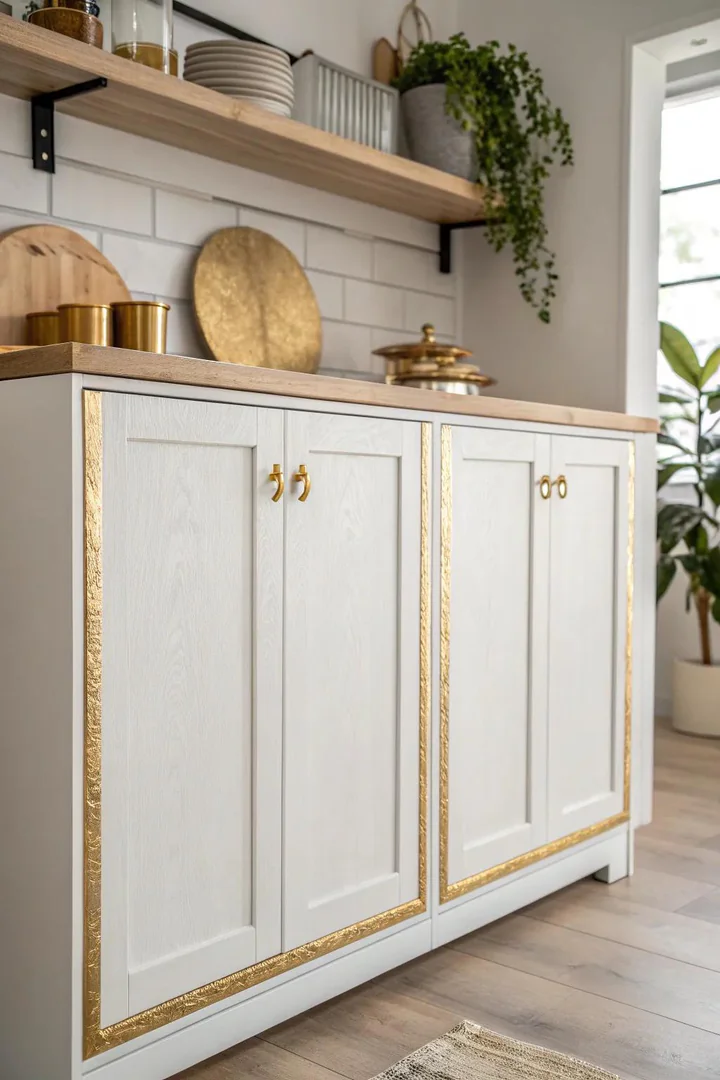
Painting the interior of glass-front cabinet doors, the back panel of open shelving, or a single accent cabinet door in Rust-Oleum Metallic Gold ($12 per quart, spray or brush) adds a glam accent without committing the entire kitchen to a metallic finish. A gold-painted island surrounded by matte white perimeter cabinets creates a jewelry-inspired focal point. Gold spray paint over a sanded and primed surface dries in 1 hour and delivers a reflective, brushed-gold finish that catches kitchen light.
Metallic accents work on trim moldings (crown molding on upper cabinets, base shoe on lower cabinets), the interior edges of Shaker-style door frames, and decorative corbels or bracket supports on a kitchen island. A full metallic cabinet (all doors gold) reads as commercial or theatrical; a single door, a shelf back, or a trim detail reads as intentional and curated. Pair gold accents with black granite or dark soapstone countertops ($60 to $120 per square foot installed) for maximum contrast.
6. Industrial Gray
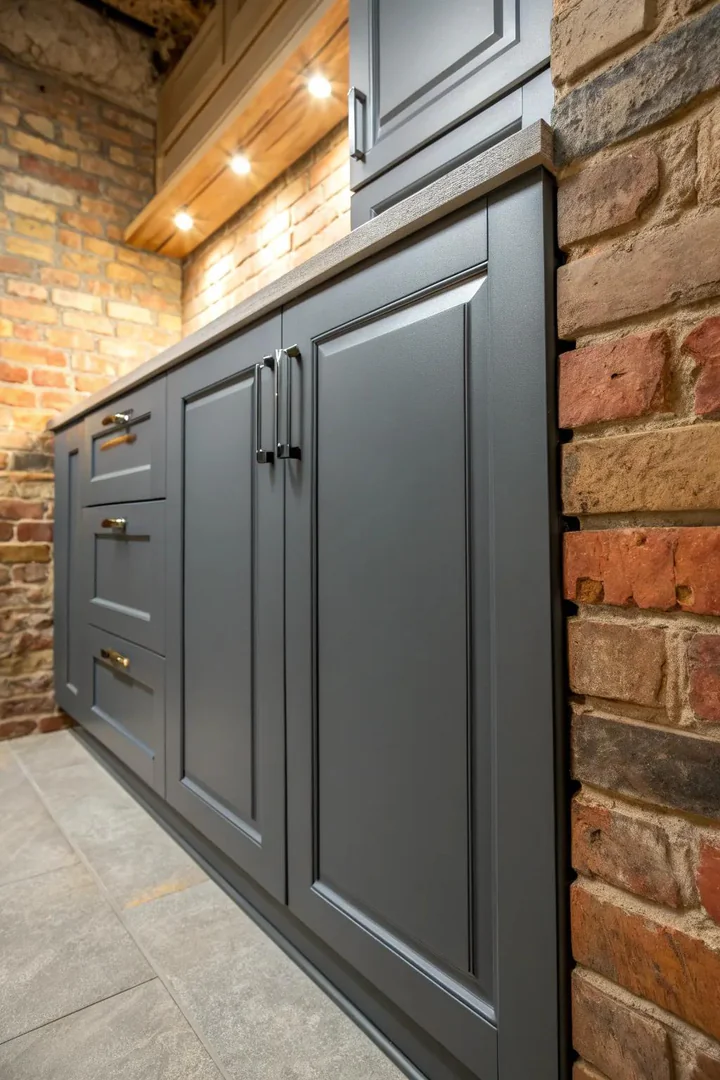
Sherwin-Williams Gauntlet Gray SW 7019 ($55 per gallon in Emerald Urethane satin) is a warm, medium gray with brown undertones that reads as industrial-chic rather than cold or sterile. Gauntlet Gray cabinets pair with concrete countertops ($65 to $135 per square foot), matte-black hardware, open metal shelving (Pottery Barn Industrial Shelving or DIY pipe-and-board shelves, $50 to $100 per shelf), and exposed Edison-bulb pendant lights for a loft-style kitchen.
An industrial gray kitchen benefits from warm textural counterpoints: a reclaimed wood floating shelf above the range, a woven jute rug in front of the sink, or leather-wrapped bar-stool seats at the island. Gray absorbs colored light from surrounding surfaces, so a gray cabinet next to a warm wood floor appears slightly warmer than the same gray next to a white tile floor. Test Gauntlet Gray samples ($4 for a 7.75-ounce sample can) on two or three cabinet doors for 48 hours before committing to the full kitchen to observe the color shift under morning, afternoon, and artificial lighting.
7. Two-Tone Contrast
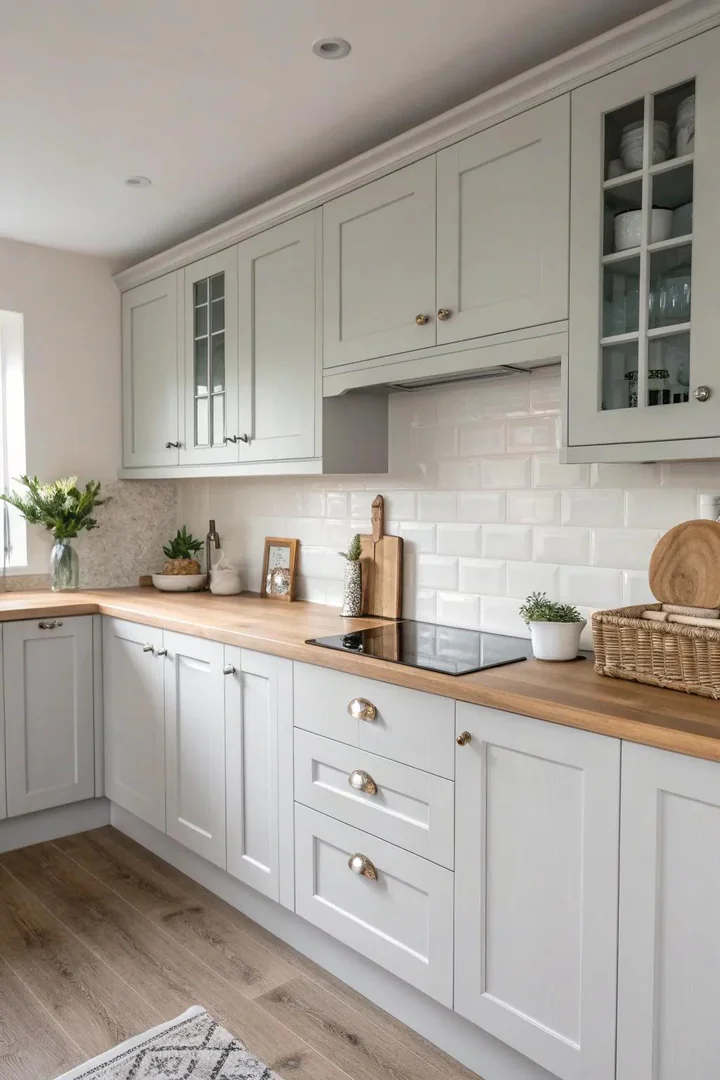
Painting upper cabinets one color and lower cabinets a different color creates a two-tone kitchen that breaks the visual monotony of a single-color cabinet run. The most popular two-tone combination is white uppers and a darker lower (navy, charcoal, forest green, or black), which grounds the lower half of the kitchen while keeping the upper zone light and open. White uppers in Benjamin Moore Chantilly Lace OC-65 ($50 per gallon, the whitest white with no yellow or blue cast) and dark lowers in Hale Navy HC-154 create the classic two-tone look.
A two-tone kitchen can also split by zone: all island cabinets in one color and all perimeter cabinets in another. A green island (Sherwin-Williams Pewter Green SW 6208, $55 per gallon) with white perimeter cabinets and butcher-block countertops creates a farmhouse kitchen with a statement centerpiece. The transition between the two colors should occur at a natural break point (the countertop line for upper/lower splits, the island edge for zone splits) rather than mid-run, where the color change looks accidental.
8. Bold Cobalt Blue
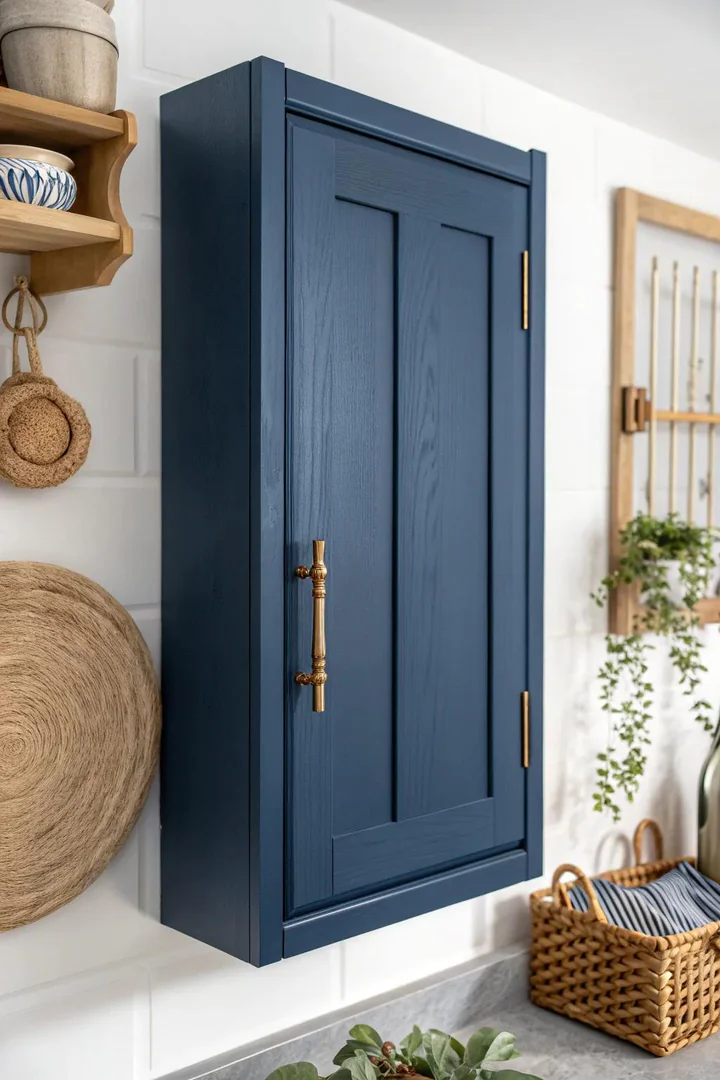
Sherwin-Williams Honorable Blue SW 6811 ($55 per gallon) or Benjamin Moore Blueberry 2063-30 ($50 per gallon) delivers a saturated cobalt that commands attention without crossing into neon or electric territory. Cobalt cabinets demand white or light countertops, simple hardware, and minimal competing colors on the walls and backsplash to prevent the kitchen from feeling chaotic. A single row of cobalt lower cabinets under a white quartz counter with chrome pulls creates a controlled pop of color.
Cobalt blue cabinets work best in kitchens with abundant natural light (south-facing or west-facing windows) because the saturated blue darkens noticeably in low-light kitchens. In a north-facing kitchen, cobalt reads as almost black by late afternoon. A cobalt accent (the island only, or a single bank of lower cabinets) provides the color impact without the room-darkening effect of a full cobalt surround.
9. Sunny Yellow
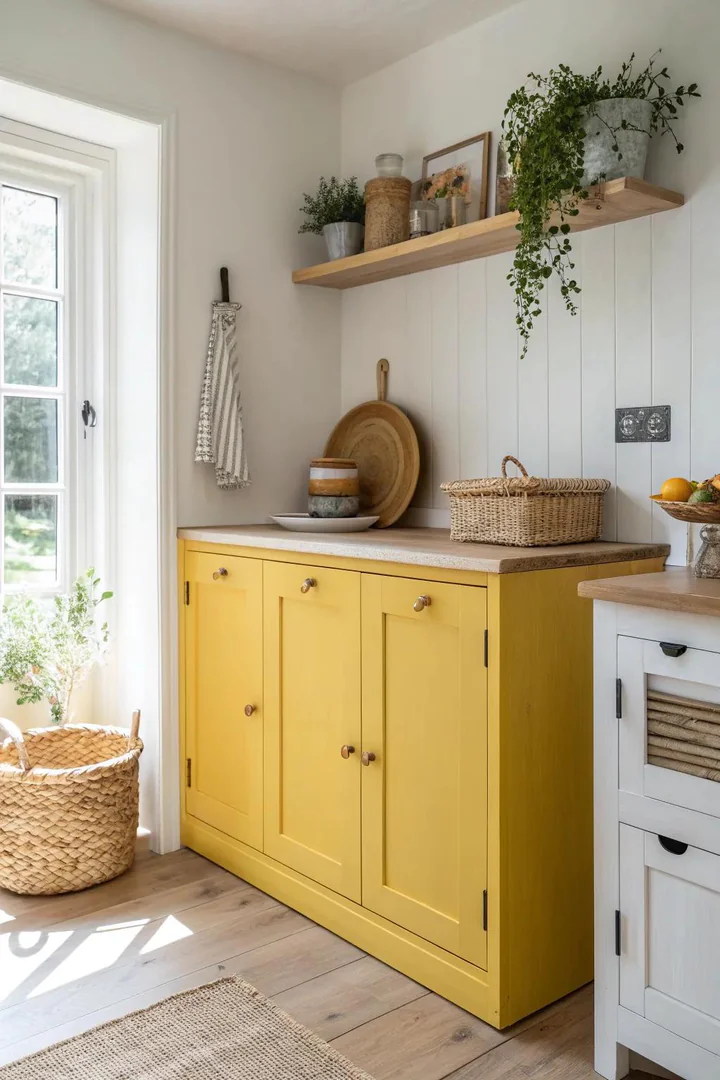
Benjamin Moore Hawthorne Yellow HC-4 ($50 per gallon) is a warm, golden yellow from the Historical Colors collection that reads as classic Americana rather than neon or childish. Hawthorne Yellow pairs with white countertops, oil-rubbed bronze hardware (Liberty Essentials Pulls, $3 each), and a cream or white subway-tile backsplash for a cottage or farmhouse kitchen that glows in morning light. Yellow cabinets bounce light into dark corners and make a north-facing or windowless kitchen feel sunlit.
Yellow is the most reflective cabinet color (after white) and visually expands a small kitchen by amplifying available light. A kitchen with yellow cabinets and white walls feels 10% to 15% brighter than the same kitchen with medium-gray cabinets under identical lighting. Pair yellow cabinets with a blue-and-white patterned backsplash tile (Merola Tile Lacma Blue, $8 per square foot from Home Depot) for a French-country color scheme that combines warmth and visual interest. See space-expanding strategies at french country kitchen ideas for more French-inspired design combinations.
10. Sage Green Serenity
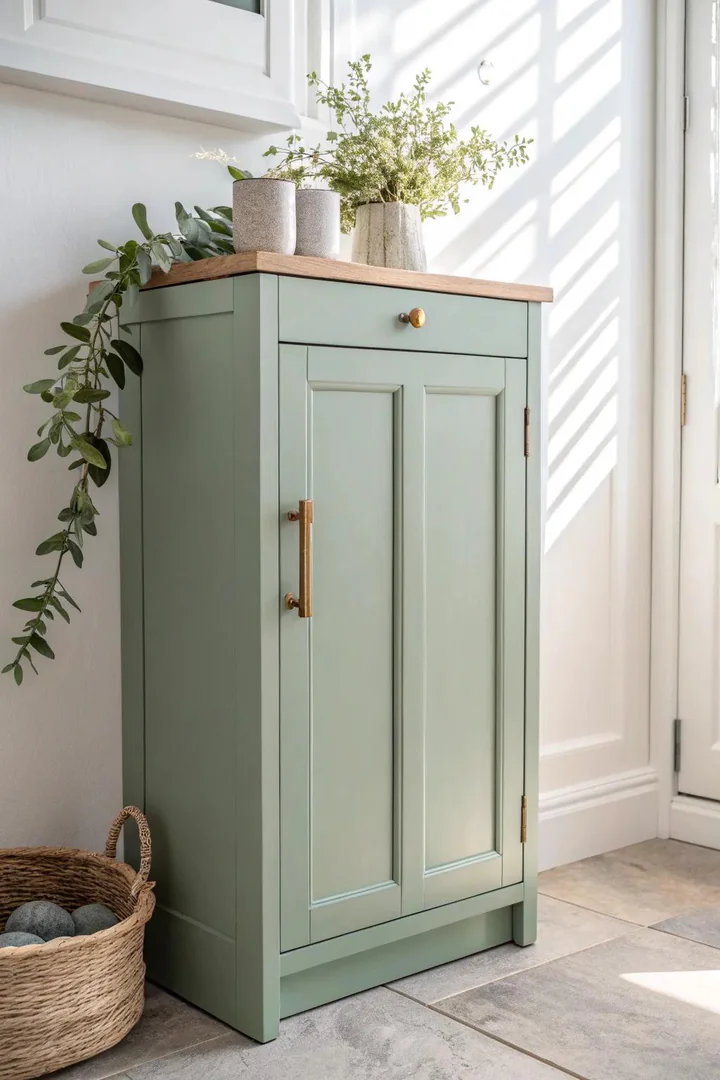
Benjamin Moore Sage HC-80 ($50 per gallon) or Sherwin-Williams Evergreen Fog SW 9130 ($55 per gallon, Sherwin-Williams 2022 Color of the Year) produces a muted, gray-green that reads as organic, calming, and grounded. Sage green cabinets pair with white oak open shelving, brass hardware, marble countertops with gray veining, and warm-toned wood floors for a kitchen that feels connected to nature without relying on plants or botanical wallpaper for its green presence.
Sage green works on flat-panel (slab) doors for a modern-organic look, on Shaker doors for a transitional-farmhouse look, and on beadboard doors for a cottage look. The gray undertone in sage green prevents the color from reading as mint, lime, or forest, which makes sage the most versatile green for kitchen cabinets across styles. A sage kitchen with black iron hardware (Richelieu Traditional Pull, $6 each) and a black faucet (Moen Align Matte Black, $250) creates a moody, organic-modern kitchen.
11. Elegant Emerald Green
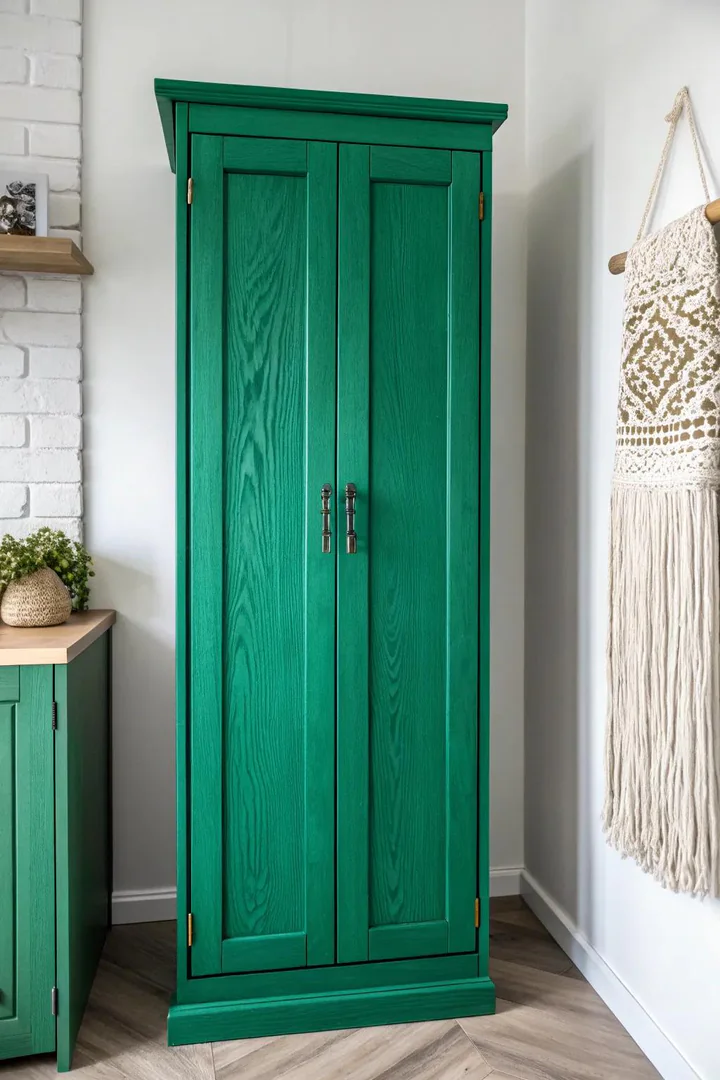
Benjamin Moore Forest Green 2047-10 ($50 per gallon) or Sherwin-Williams Hunt Club SW 6468 ($55 per gallon) delivers a deep, jewel-toned emerald that reads as luxurious and bold. Emerald cabinets pair with unlacquered brass hardware (which develops a living patina over time, $12 to $20 per pull from Schoolhouse Electric), white marble countertops with bold gray veining, and brass-framed pendant lights for a kitchen that channels a British club or a Parisian bistro.
Emerald green works best as a full-surround color (all upper and lower cabinets) because the deep, saturated tone needs visual commitment to read as intentional. An emerald island with white perimeter cabinets can work, but a single emerald accent door among neutral cabinets reads as a mistake. A high-gloss sheen (Benjamin Moore Advance High Gloss) amplifies the jewel-tone effect and makes the emerald cabinets reflect kitchen light like lacquered furniture. Explore more ways to introduce color through small kitchen updates at polymer clay kitchen wall art ideas for handcrafted accent pieces that complement bold cabinet colors.
12. Vintage Teal Blue
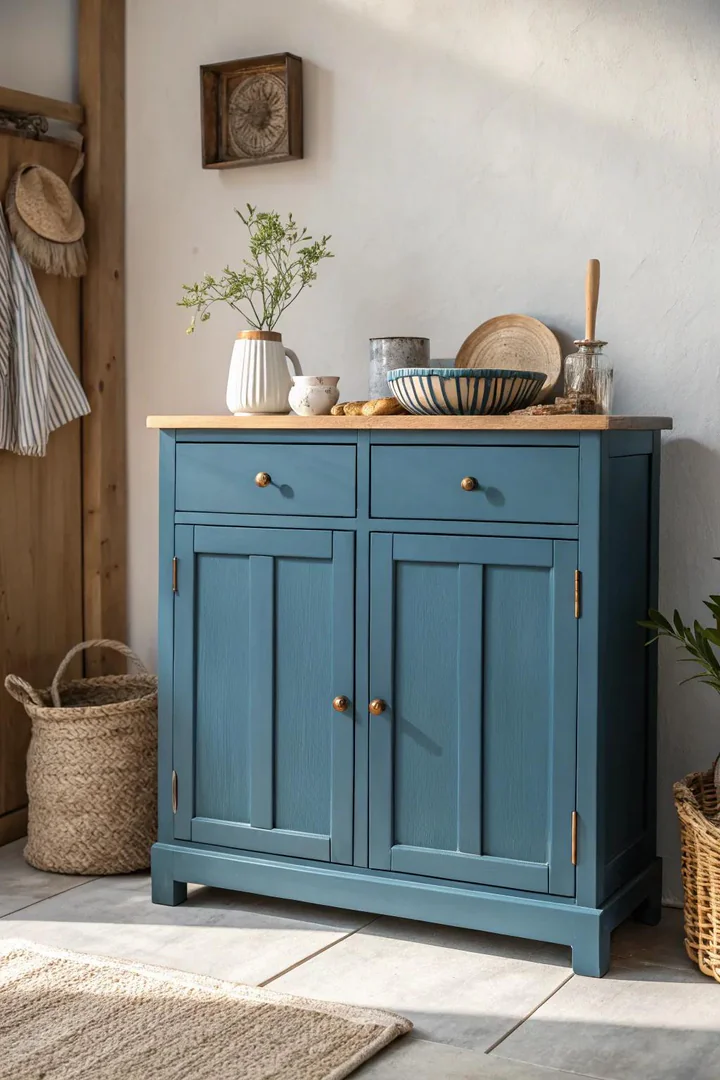
Sherwin-Williams Refuge SW 6228 ($55 per gallon) or Benjamin Moore Aegean Teal 2136-40 ($50 per gallon, Benjamin Moore 2021 Color of the Year) creates a blue-green teal that reads as vintage, collected, and layered. Teal cabinets pair with warm brass hardware, terracotta tile floors, open wooden shelving, and cream-colored walls for a kitchen with an old-world Mediterranean or coastal feel. The green undertone in teal keeps the color warm, distinguishing teal from cold true-blue options like navy or cobalt.
Teal cabinets photograph distinctly different under warm and cool light sources. Under warm incandescent bulbs (2700K), teal shifts toward green. Under cool daylight LEDs (5000K), teal shifts toward blue. Choose the lighting color temperature (warm for a cozy Mediterranean feel, cool for a crisp coastal feel) before selecting the exact teal shade, and test the paint sample under the intended bulb color. A teal kitchen with white shiplap walls, a farmhouse sink, and a reclaimed-wood island top creates a coastal-cottage kitchen.
13. Antique White with Glaze
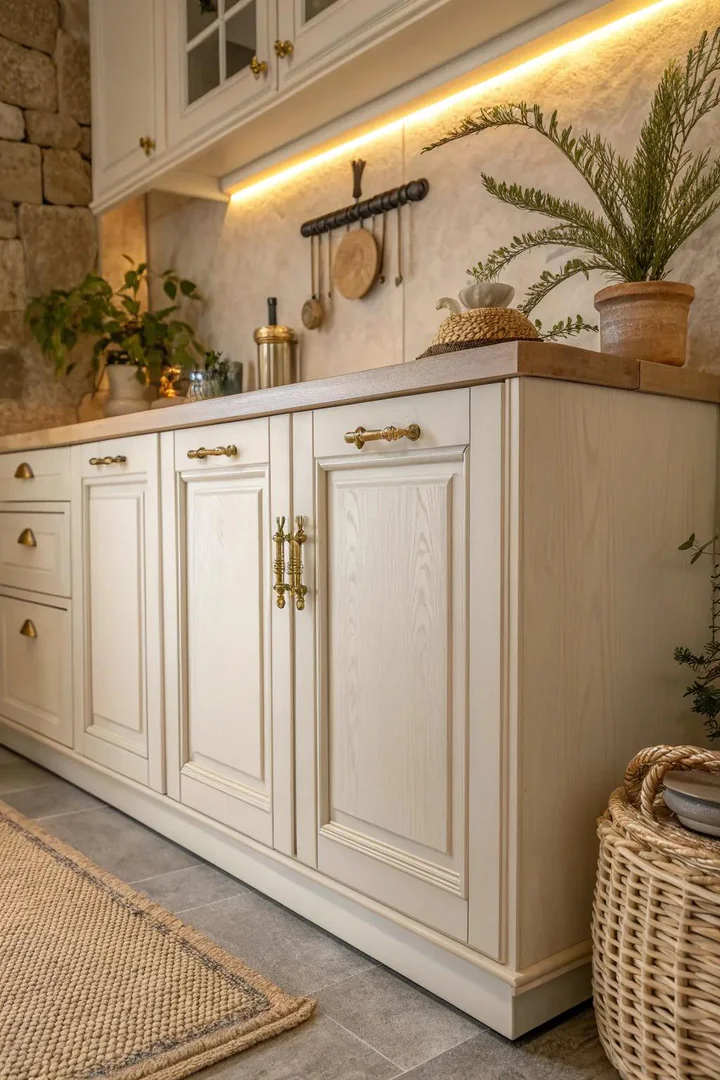
Painting cabinets Benjamin Moore White Dove OC-17 ($50 per gallon) and applying a brown or umber antiquing glaze (Valspar Antiquing Glaze, $16 per quart, in Raw Umber or Burnt Sienna) into the door profiles, panel grooves, and edges creates a hand-finished, antique look that mimics furniture from the 18th and 19th centuries. Apply the glaze with a chip brush ($2), work it into the grooves and corners, then wipe the flat surfaces clean with a cotton rag so the glaze remains only in the recessed areas, darkening the shadows and adding visual age.
Glazed cabinets work on raised-panel and cathedral-arch doors (which have deep grooves that collect and display the glaze) but not on flat-panel or slab doors (which have no grooves to catch the glaze). A white-and-brown glazed kitchen pairs with dark bronze hardware (Amerock Allison Oil-Rubbed Bronze Knob, $3 each), honed travertine or granite countertops, and a tumbled-stone backsplash for a Tuscan or traditional kitchen. Seal the glazed surface with General Finishes High Performance Top Coat ($22 per quart, satin) to protect the glaze from wear and kitchen cleaning chemicals.
14. Bright White Refresh
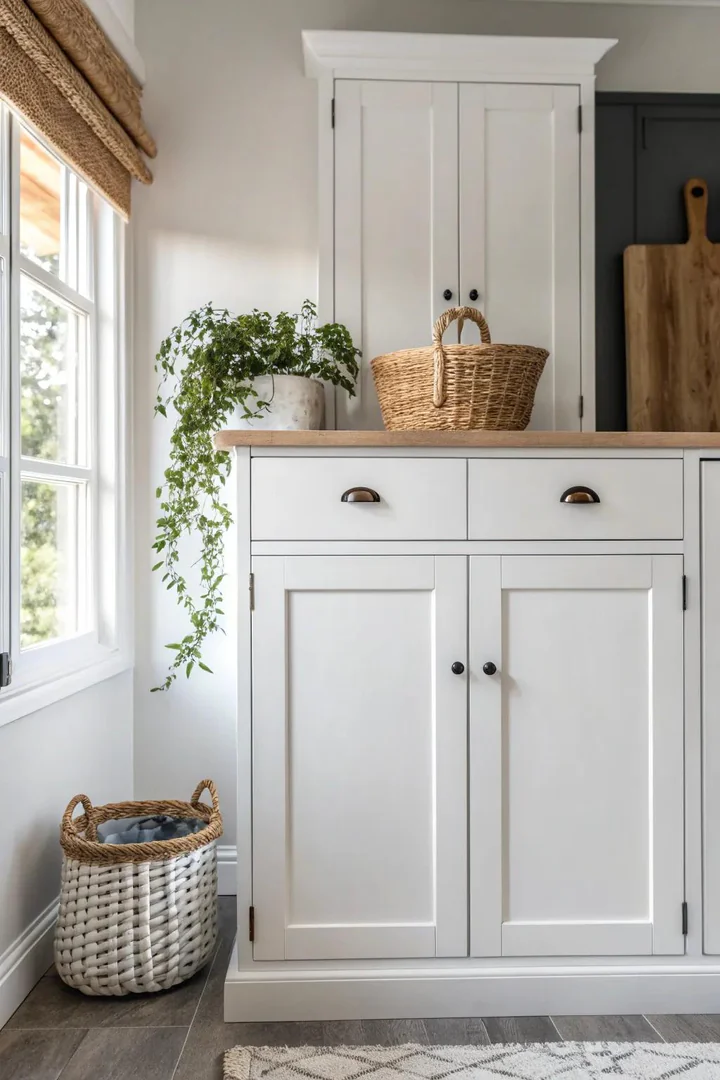
Benjamin Moore Chantilly Lace OC-65 ($50 per gallon in Advance semi-gloss) is the go-to bright white for kitchen cabinets because its zero-undertone formula reads as pure white under both warm and cool lighting without yellow-shifting (like most warm whites) or blue-shifting (like most cool whites). White cabinets pair with every countertop material (quartz, granite, marble, butcher block, concrete, laminate), every hardware finish (chrome, brass, black, nickel), and every backsplash style (subway tile, mosaic, marble slab, painted wall), making white the most versatile cabinet color.
A white cabinet refresh on dated oak, cherry, or maple cabinets is the single highest-ROI kitchen update: painting existing cabinets white costs $200 to $600 in materials and returns $3,000 to $7,000 in perceived kitchen value based on real-estate staging data. The critical step is primer: bare wood requires Zinsser BIN Shellac Primer ($26 per quart) to seal wood tannins that bleed through latex paint as yellow stains. Previously painted cabinets in good condition need only a light scuff-sand (220-grit) and 2 coats of Chantilly Lace.
15. Dramatic Matte Black
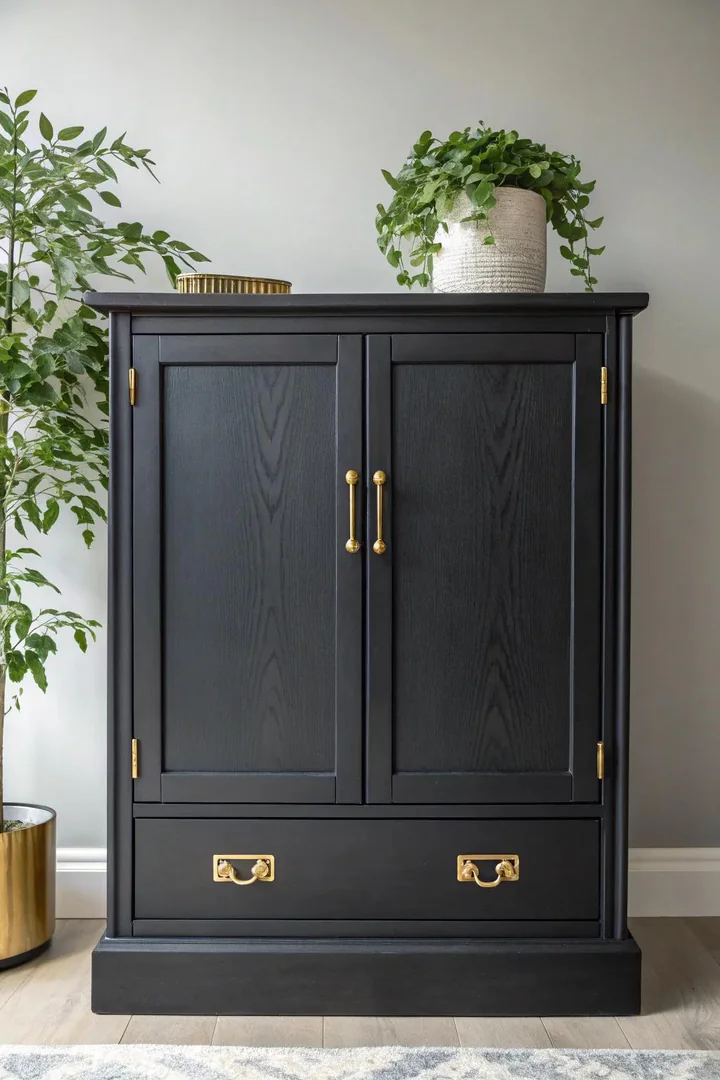
Benjamin Moore Black Beauty 2128-10 ($50 per gallon in Advance matte) or Sherwin-Williams Tricorn Black SW 6258 ($55 per gallon) in a matte or eggshell finish creates a dramatic, contemporary kitchen that reads as gallery-like when paired with white walls, white countertops, and minimal decor. A matte-black finish hides fingerprints, grease, and surface imperfections better than a gloss or semi-gloss black (which shows every smudge and dust particle).
Black cabinets absorb light aggressively, so a matte-black kitchen requires strong task lighting (under-cabinet LEDs, recessed ceiling cans, and a statement pendant over the island) to keep work surfaces visible during cooking. Black cabinets with brushed-brass hardware (Emtek Select Knurled Pull, $20 each) and white marble countertops create a tuxedo kitchen. Black cabinets with matte-black hardware and black countertops (Silestone Charcoal Soapstone, $55 to $75 per square foot) create a monochromatic, minimalist kitchen that requires white walls and abundant ceiling height to avoid feeling cave-like.
16. Rustic Barn Red
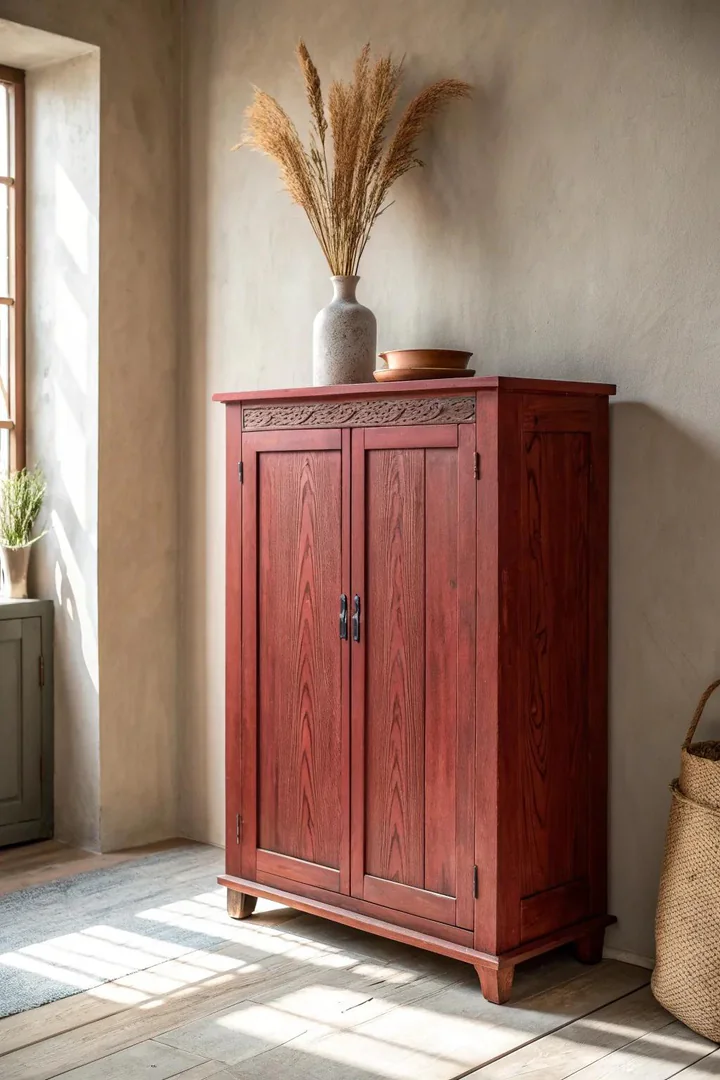
Benjamin Moore Cottage Red HC-184 ($50 per gallon) is a muted, earthy red with brown undertones that reads as rustic Americana rather than fire-engine bright. Cottage Red cabinets pair with cream-colored countertops (Formica Laminate Belmonte Granite, $12 per square foot, the budget option, or Cambria Bellingham quartz, $70 per square foot), black iron hardware, and exposed ceiling beams for a farmhouse or colonial kitchen.
Red cabinets work best on lower cabinets or the island, paired with cream or white upper cabinets, because a full-surround red kitchen can feel overwhelming. A red island in a white kitchen creates a barn-door-red focal point that grounds the room. Red cabinets also pair with open wooden shelving (replacing upper cabinets on one wall) to lighten the visual weight of the kitchen and prevent the red from dominating floor-to-ceiling. Browse more color pairing strategies at ideas for remodeling a small kitchen where cabinet color choices directly affect how spacious the room feels.
17. Warm Wood-Tone Painted Finish
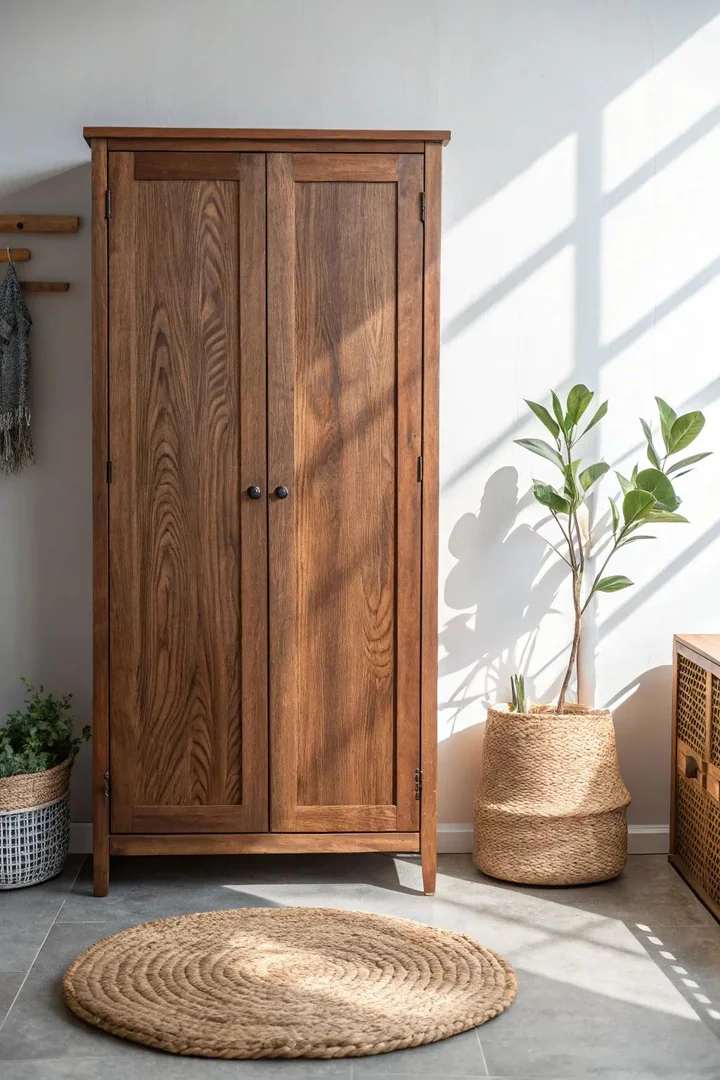
Painting cabinets in a warm, wood-inspired neutral (Sherwin-Williams Urbane Bronze SW 7048, $55 per gallon, Sherwin-Williams 2021 Color of the Year, a warm brown-gray) or Benjamin Moore Whitall Brown HC-69 ($50 per gallon, a rich chocolate brown) gives the kitchen the warmth of stained wood without the orange-toned oak or cherry that dates many 1990s and 2000s kitchens. A painted wood-tone finish covers the grain, eliminating the “oak kitchen” or “cherry kitchen” associations while keeping the warm color palette.
Urbane Bronze pairs with warm brass hardware, cream countertops, and warm-toned backsplash tiles (terracotta, cream subway, hand-painted Moroccan) for a kitchen that feels like a wrapped, cocooning space. Whitall Brown pairs with white marble countertops and chrome hardware for a more contemporary brown-and-white scheme. Both colors require the full prep sequence (degrease, sand, prime, 2 coats) because dark colors show roller marks, drips, and thin spots more visibly than light colors, and the primer prevents wood tannin bleed-through that turns brown paint muddy over time. Visit The Designers Company for the complete kitchen design library.
How to Paint Kitchen Cabinets
1. Remove Doors, Drawers, and Hardware
Label each door and drawer with a numbered piece of painter’s tape (door 1, drawer 1, etc.) and photograph the layout before removing anything. Remove all hinges, pulls, knobs, and catches. Store the hardware in labeled zip-lock bags. Labeling prevents the frustrating guessing game of which door goes where during reinstallation, especially in kitchens with 20 to 40 doors and drawers of slightly different sizes.
2. Clean and Degrease Every Surface
Wipe all cabinet surfaces (doors, drawers, face frames, end panels) with Krud Kutter Original Concentrated Cleaner ($8 per 32-ounce spray bottle) or a TSP (trisodium phosphate) solution ($5 for a 1-pound box, mix 1/4 cup per gallon of warm water). Kitchen cabinets accumulate years of cooking grease, fingerprint oils, and airborne kitchen residue that prevent paint from bonding. Paint applied over grease peels within months. Rinse with clean water after degreasing and allow 2 hours to dry.
3. Sand and Prime
Scuff-sand all surfaces with 220-grit sandpaper or a 3M Scotch-Brite Maroon Pad ($4 for a 3-pack) to create a tooth for the primer. Wipe sanding dust with a tack cloth ($2 for a 3-pack). Apply 1 coat of Zinsser BIN Shellac Primer (for bare or stained wood) or Zinsser Bulls Eye 1-2-3 ($20 per quart, for previously painted surfaces) with a 4-inch foam roller and a 2-inch angled brush for edges. Allow 1 hour dry time before sanding the primer lightly with 320-grit for a glass-smooth base.
4. Apply Two Coats of Cabinet-Grade Paint
Roll 2 thin coats of cabinet-grade paint (Benjamin Moore Advance, Sherwin-Williams Emerald Urethane, or Behr Alkyd Semi-Gloss) with a 4-inch high-density foam roller ($3 from Home Depot) for flat surfaces and a 2-inch Purdy Clearcut angled brush ($12) for edges, profiles, and inside corners. Allow 4 to 6 hours between coats (overnight is best). Thin coats dry harder and smoother than thick coats; thick coats drip, sag, and leave orange-peel texture.
5. Reinstall and Cure
Reattach hinges and hardware after the final coat has dried for 24 hours. Hang each labeled door in its original position. Allow the paint to cure for 7 to 14 days before stacking items inside the cabinets or wiping the painted surfaces with cleaning products. Curing allows the paint to reach full hardness; cleaning or heavy use during the curing period can dent, scuff, or mar the finish. Place felt pads ($3 for a 24-pack) on the hinge side of each door and on the inside lip of each drawer to prevent door-on-frame and drawer-on-frame paint rub during daily use.
Cabinet Paint Comparison
| Paint | Cost/Gallon | Finish Options | Dry Time | Self-Leveling | Best For |
|---|---|---|---|---|---|
| Benjamin Moore Advance | $50–$70 | Matte, satin, semi-gloss, high-gloss | 16 hr recoat | Excellent | Smooth, brush-mark-free finish |
| Sherwin-Williams Emerald Urethane | $55–$75 | Satin, semi-gloss | 4 hr recoat | Very good | Fast turnaround projects |
| Behr Alkyd Semi-Gloss | $35–$45 | Semi-gloss | 4 hr recoat | Good | Budget projects |
| General Finishes Milk Paint | $40–$50/qt | Flat (topcoat for sheen) | 2 hr recoat | Moderate | Distressed or farmhouse looks |
| Farrow & Ball Modern Eggshell | $110–$115 | Eggshell | 4 hr recoat | Very good | Designer color accuracy |
| Rust-Oleum Cabinet Transformations | $80/kit | Kit includes glaze | Varies | N/A (kit system) | All-in-one kit for beginners |
Frequently Asked Questions
How long do painted kitchen cabinets last?
Cabinet-grade paint (Benjamin Moore Advance, Sherwin-Williams Emerald Urethane) lasts 8 to 12 years on properly prepped and primed cabinets before showing wear on high-touch areas (around knobs, drawer-pull zones, and lower-cabinet kick areas). Repainting a kitchen costs $200 to $600 every 10 years compared to $5,000 to $25,000 for cabinet replacement. Touch-up paint (keep the original can sealed and stored in a cool, dry place) can extend the life of a painted finish by 2 to 3 additional years by addressing individual chips and scuffs as they appear.
Can you paint over laminate or thermofoil cabinets?
Laminate and thermofoil cabinets require a bonding primer (Zinsser BIN Shellac Primer or KILZ Adhesion Primer, $22 per quart) before painting because standard primers do not bond to the slick, non-porous surface. Scuff-sand the laminate with 220-grit sandpaper, apply 1 coat of bonding primer, allow 1 hour to dry, then apply 2 coats of cabinet-grade paint. The painted finish on laminate lasts 5 to 8 years (shorter than on wood) because the paint film bonds mechanically to the scratched surface rather than absorbing into the material.
Should you spray or brush-and-roll kitchen cabinets?
Spraying (with an HVLP sprayer like the Graco Magnum X5, $300) produces the smoothest, most factory-like finish because the atomized paint particles lay down without brush marks or roller texture. Brush-and-roll produces a near-professional finish when using self-leveling paints (Benjamin Moore Advance, Sherwin-Williams Emerald Urethane) and high-density foam rollers. Spraying adds 2 to 3 hours of setup and masking time but saves 30% to 50% of application time on kitchens with 30 or more doors and drawers.
What sheen is best for kitchen cabinets?
Semi-gloss and satin are the two most popular sheens for kitchen cabinets. Semi-gloss reflects more light, cleans more easily (fingerprints and grease wipe off with a damp cloth), and shows more surface imperfections (dents, wood grain, roller marks). Satin reflects less light, hides surface imperfections better, and provides a modern, muted finish. Matte finishes show the fewest imperfections but stain more easily and require more careful cleaning (no abrasive sponges). High-gloss finishes create a lacquered, furniture-like look but show every fingerprint and dust particle.
Do you need to prime cabinets before painting?
Priming is required for bare wood (to seal tannins and provide a uniform base), stained wood (to prevent stain bleed-through), laminate and thermofoil (to create a bondable surface), and any surface with visible stains, grease residue, or color variation. Previously painted cabinets in good condition (no peeling, no bare spots, no grease stains) can skip primer if scuff-sanded and cleaned, but a coat of primer adds $20 to $40 in material cost and 2 hours of work while providing better adhesion and a more uniform final color. Primer pays for itself in paint adhesion and coverage over the 8-to-12-year life of the finish.